New Ecommerce Tools: October 9, 2025

Every week we publish a handpicked list of new products and services for ecommerce merchants. This installment includes updates on shoppable ads, reverse logistics, customizable agents, cross-border delivery, generative engine optimization, conversational search, and more.

Got an ecommerce product release? Email releases@practicalecommerce.com.

New Tools for Merchants

Snapchat and Woo announce ad manager integration. Snapchat has launched an integration with WooCommerce, wherein merchants can build shoppable ads inside the Snapchat Ads Manager. The integration syncs a Woo merchant‘s entire product catalog with Ads Manager in one click. Merchants can also set up Snap Pixel and the Conversions API, which provide data for ad targeting and optimization.
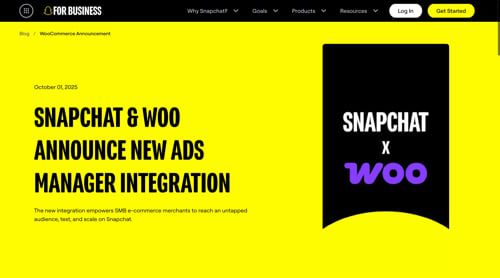
Web page by Snap announcing the Woo integration

Snapchat and Woo.

Squarespace and Perplexity partner for business creation in the AI era. Squarespace, a platform to build businesses online, and Perplexity, a generative AI engine, have partnered to help companies launch and grow in an AI-powered internet. Squarespace will serve as the website building and hosting partner for Perplexity‘s browser, Comet, helping entrepreneurs move from AI-powered research to launch, including guidance on domain registration, brand development, and design recommendations directly through Comet’s conversational interface.

Bloq.it launches Drop for reverse logistics. Bloq.it, a provider of out-of-home delivery, has launched Drop, a standalone drop-off solution to streamline returns. The drop-off device features a single slot for handovers, a built-in label printer, a QR and barcode reader, and a 10-inch color touchscreen to guide users through the process. When the drop-off is full, Drop sends a notification for a pickup, and couriers collect a single bag.

OpenAI introduces AgentKit to standardize building agents. OpenAI has launched AgentKit, a set of three tools to build, deploy, and optimize AI agents. According to OpenAI, developers can now design workflows visually and embed agentic UIs using building blocks. Agent Builder is a visual canvas for creating and versioning multi-agent workflows. ChatKit is for embedding customizable chat-based agent experiences. Connector Registry manages how data and tools connect across OpenAI products.
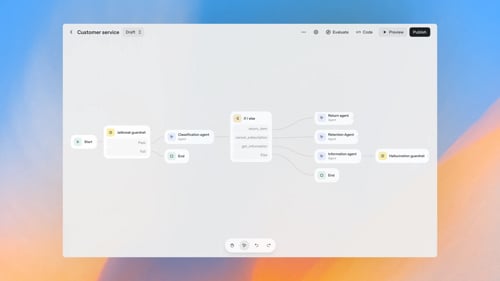
Web page for OpenAI's AgentKit

OpenAI’s AgentKit

Hellmann and SkyNet partner on cross-border logistics. Hellmann Worldwide Logistics and SkyNet Worldwide Express have partnered on a cross-border ecommerce logistics service, including warehousing, fulfillment, re-fulfillment, B2C deliveries, and returns management. According to the companies, combining Hellmann’s global freight capabilities with SkyNet’s experience in B2C delivery and partnerships with global retailers enables seamless digital integration, advanced customs clearance, and reliable last-mile operations. The service will be available initially for shippers in the E.U. or U.K., and then rolled out globally.

PayPal Ads Manager enables SMBs to leverage retail media. PayPal has launched Ads Manager, allowing small businesses to become their own retail media network. With no upfront cost and no minimum commitment, PayPal Ads Manager enables SMBs to opt in, integrate the software development kit, and select their advertising preferences. PayPal will then automatically place and serve the relevant ads based on those preferences and other factors. Businesses can control their performance within the PayPal Merchant Portal.

American Express unveils Amex Ads to connect card members to brands. American Express has launched Amex Ads, a digital advertising platform to help brands connect with American Express’s U.S. consumer card members. Beginning on AmexTravel.com and expanding to additional Amex-owned platforms, brands can serve high-spending card members timely contextual ads through a suite of digital media ad formats and backed by sophisticated measurement tools.

Pattern launches free GEO scorecard. Pattern, an ecommerce accelerator, has launched a free generative engine optimization scorecard to help brands understand how platforms such as ChatGPT showcase their products. The new tool provides brands with a score reflecting their brand’s presence in AI-driven commerce, a competitive analysis that benchmarks their standing against key competitors, and a prioritized list of actionable recommendations to improve content, sentiment, and ranking on genAI platforms.
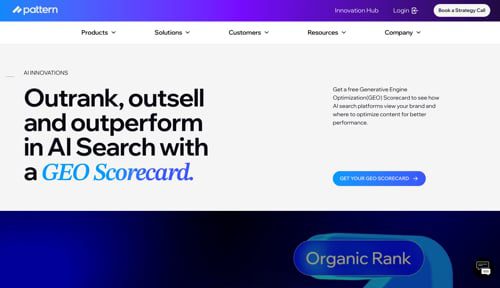
Web page for Pattern's GEO scorecard

Pattern’s GEO Scorecard

Aspire partners with Instagram for AI-powered conversational search. Aspire.io, a word-of-mouth commerce platform, has launched AI Instagram Discovery. Powered by Instagram’s first-party creator marketplace API, the tool enables brands to find high-performing creators via conversational AI search, advanced filters, lookalike recommendations, and richer performance data. Brands can narrow results to surface similar creators, track engagement KPIs, and evaluate candidates based on verified brand collaboration history.

eBay launches AI Activate program with OpenAI. eBay has launched AI Activate, providing small U.K. businesses with funded access to custom AI productivity tools and training. Developed in collaboration with OpenAI, the program is available to commercial eBay sellers. The program will offer access to ChatGPT Enterprise for up to 12 months. Additional support will include a dedicated eBay team to develop custom GPTs with sellers.

Meta debuts customizable AI agent for brands. Meta has unveiled Business AI, a customized AI agent for brands to guide shoppers and answer questions within the brands’ Meta ads and on their own websites. According to Meta, a brand can train Business AI on its offerings via Meta social posts, ad campaigns, product catalogs, and website content.

Yottaa launches interactive benchmarking tool for ecommerce. Yottaa, a website speed optimizer, has launched a new version of its Web Performance Index, which aggregates site performance data from over 500 million shopper sessions across 700 leading ecommerce brands. According to Yottaa, the enhanced Index reflects ongoing, commerce-specific site performance across Core Web Vitals, page load speed, bounce rate, and conversion indicators, filterable by industry, platform, and device.
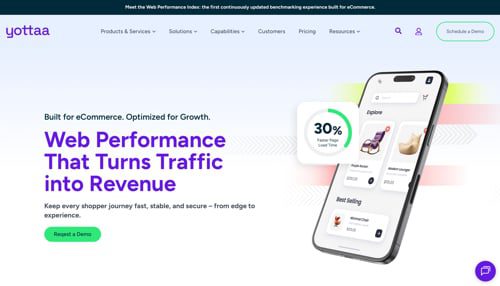
Home page of Yottaa

Yottaa

YouTube Launches Brand Pulse Report to Measure Full Brand Impact via @sejournal, @brookeosmundson

For years, marketers have struggled to measure the full picture of how their brand shows up on YouTube.

Paid campaigns have their own dashboards. Creator collaborations usually live in separate, manual spreadsheets. Organic and user-generated content rarely make it into the same conversation.

YouTube’s new Brand Pulse Report, just announced today looks to change that. It aims to offer brands a unified view of how their presence is represented and performing across every corner of the platform.

Read on to understand more about the report and how to use it to your advantage.

A Closer Look at the Brand Pulse Report

YouTube describes Brand Pulse as a new, AI-powered measurement solution that detects and quantifies a brand’s presence across the platform. It doesn’t look at just paid placements, but in creator videos, organic uploads, and even user-generated content.

It uses what YouTube calls multi-modal AI, meaning it analyzes videos across multiple dimensions:

  • Audio: detecting spoken mentions of a brand
  • Visuals: identifying logos, packaging, or even product shots
  • Text: reading brand mentions in titles, captions, or descriptions

This allows the tool to recognize where a brand appears, intentionally or organically, and then tie those signals back to viewer engagement metrics like “Total Unique Viewers” and “Share of Watch Time”.

For brands, that means visibility into where and how they show up across YouTube, even in content they didn’t create or sponsor directly.

Why the Brand Pulse Report is So Notable

Marketers have long been asking for better ways to measure YouTube’s brand impact beyond paid media.

Brand Pulse answers that request by connecting the dots between paid, organic, and creator-driven exposure. It gives the respective teams a more complete picture of influence.

YouTube also notes that the tool will show how brand exposure on the platform drives “Search Lift”, allowing advertisers to see how YouTube content contributes to increases in branded search queries. This connection between upper-funnel video exposure and mid-funnel intent is one of the most interesting aspects of the rollout.

As Google Ads Liaison Ginny Marvin explained on LinkedIn, the Brand Pulse Report is “helping brands finally connect the dots,” showing how paid and organic videos together influence real behaviors, not just views or likes.

YouTube’s move here mirrors a broader industry shift toward holistic measurement: tying together paid and organic activity to give brands a single narrative of influence.

Similar efforts are underway in Connected TV, social, and retail media, where advertisers increasingly want to understand how their brand performs in context, not just in isolation.

For YouTube, Brand Pulse also reinforces its positioning as more than just a performance or creator platform. It’s a brand-building ecosystem: one where paid, creator, and user content coexist in ways that shape real consumer behavior.

What Does This Mean For Brand and Media Teams?

For advertisers, this report could help solve one of the most persistent blind spots in video marketing: the inability to quantify the ripple effect of brand exposure.

Historically, a creator video might boost product awareness, a pre-roll ad might reinforce it, and organic search might capture it.

But, those signals lived in isolation.

Brand Pulse promises to bring those touchpoints together under one lens.

This unified visibility could help teams by:

  • Highlight how paid campaigns amplify creator and organic reach
  • Reveal where brand mentions are naturally gaining traction
  • Help benchmark visibility against competitors within the same category
  • Inform where future collaborations or ad placements could drive incremental reach

For many teams, it may also reshape how budgets are allocated.

For example, if the data consistently shows that paid YouTube campaigns drive organic or creator-based lift, it strengthens the case for reinvesting more heavily at the brand-building stage. Where previously, teams would rely solely on performance metrics like conversions or click-through rates (which we know isn’t the main goal for all YouTube campaigns).

Additionally, if the Brand Pulse report ties together how well each channel performs together, it may strengthen the case to continue investment in all of those channels. It could help signal that without one channel, others may suffer indirectly as a result of cutting.

Current Limitations and Questions to Ponder

The Brand Pulse Report is currently available only to select advertisers, so it’s still in its early days. And while the vision is ambitious, several questions may be top of mind:

  • How accurate is its multi modal AI? Will it correctly recognize a brand when it’s partially visible, mispronounced, or used in a negative context?
  • Are there any thresholds for brands to reach? For example, how long must a logo or mention appear for it to count as meaningful exposure?
  • Is there risk for attribution overlap? If a viewer sees both a paid ad and an organic mention, how will Brand Pulse avoid double-counting influence?

Marketers should also remain cautious about assuming correlation equals causation. While a lift in search volume or engagement may align with YouTube exposure, controlled testing will still be necessary to validate true impact.

A Move Towards Holistic Measurement

YouTube’s Brand Pulse Report represents a meaningful step toward closing one of the biggest gaps in digital measurement: connecting what people see with how they search, engage, and recall brands later on.

If successful, it could give marketers a truer sense of how awareness efforts on YouTube translate into tangible brand outcomes.

Still, adoption will depend on data accuracy and usability. The potential is significant, but the real proof will come from how well the report balances AI ambition with real-world reliability.

For now, Brand Pulse signals where measurement is headed: beyond impressions and clicks, toward understanding the total presence of a brand across the YouTube ecosystem.

2026: When AI Assistants Become The First Layer via @sejournal, @DuaneForrester

What I’m about to say will feel uncomfortable to a lot of SEOs, and maybe even some CEOs. I’m not writing this to be sensational, and I know some of my peers will still look sideways at me for it. That’s fine. I’m sharing what the data suggests to me, and I want you to look at the same numbers and decide for yourself.

Too many people in our industry have slipped into the habit of quoting whatever guidance comes out of a search engine or AI vendor as if it were gospel. That’s like a soda company telling you, “Our drink is refreshing, you should drink more.” Maybe it really is refreshing. Maybe it just drives their margins. Either way, you’re letting the seller define what’s “best.”

SEO used to be a discipline that verified everything. We tested. We dug as deep as we could. We demanded evidence. Lately, I see less of that. This article is a call-back to that mindset. The changes coming in 2026 are not hype. It’s visible in the adoption curves, and those curves don’t care if we believe them or not. These curves aren’t about what I say, what you say, or what 40 other “SEO experts” say. These curves are about consumers, habits, and our combined future.

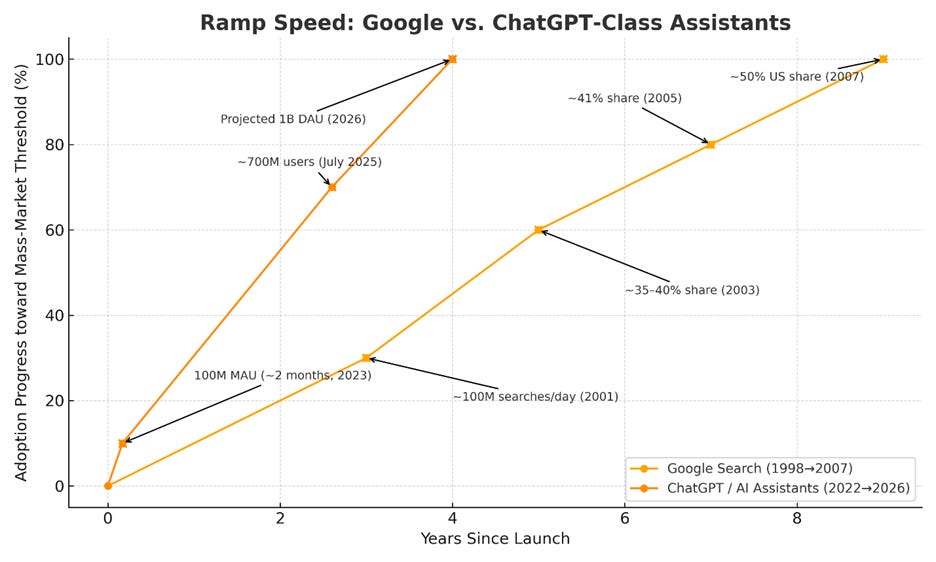
ChatGPT is reaching mass adoption in 4 years. Google took 9. Tech adoption is accelerating.

The Shocking Ramp: Google Vs. ChatGPT

Confession: I nearly called this section things like “Ramp-ocalypse 2026” or “The Adoption Curve That Will Melt Your Rank-Tracking Dashboard.” I had a whole list of ridiculous options that would have looked at home on a crypto shill blog. I finally dialed it back to the calmer “The Shocking Ramp: Google Vs. ChatGPT” because that, at least, sounds like something an adult would publish. But you get the idea: The curve really is that dramatic, but I just refuse to dress it up like a doomsday tabloid headline.

Image Credit: Duane Forrester

And before we really get into the details, let’s be clear that this is not comparing totals of daily active users today. This is a look at time-to-mass-adoption. Google achieved that a long time ago, whereas ChatGPT is going to do that, it seems, in 2026. This is about the vector. The ramp, and the speed. It’s about how consumer behavior is changing, and is about to be changed. That’s what the chart represents. Of course, when we reference ChatGPT-Class Assistants, we’re including Gemini here, so Google is front and center as these changes happen.

And Google’s pivot into this space isn’t accidental. If you believe Google was reacting to OpenAI’s appearance and sudden growth, guess again. Both companies have essentially been neck and neck in a thoroughbred horse race to be the leading next-gen information-parsing layer for humanity since day one. ChatGPT may have grabbed the headlines when they launched, but Google very quickly became their equal, and the gap at the top, that these companies are chasing, it’s vanishing quickly. Consumers soon won’t be able to say which is “the best” in any meaningful ways.

What’s most important here is that as consumers adopt, behavior changes. I cannot recommend enough that folks read Charles Duhigg’s “The Power of Habit” book (non-aff link). I first read it over a decade ago, and it still brings home the message – the impact that a single moment of habit-forming has on a product’s success and growth. And that is what the chart above is speaking to. New habits are about to be formed by consumers globally.

Let’s rewind to the search revolution most of us built our careers on.

  • Google launched in 1998.
  • By late 1999, it was handling about 3.5 million searches per day (Market.us, September 1999 data).
  • By 2001, Google crossed roughly 100 million searches a day (The Guardian, 2001).
  • It didn’t pass 50 % U.S. market share until 2007, about nine years after launch (Los Angeles Times, August 2007).

Now compare that to the modern AI assistant curve:

  • ChatGPT launched in November 2022.
  • It reached 100 million monthly active users in just two months (UBS analysis via Reuters, February 2023).
  • According to OpenAI’s usage study published Sept. 15, 2025, in the NBER working-paper series, by July 2025, ChatGPT had ~700 million users sending ~18 billion messages per week, or about 10 % of the world’s adults.
  • Barclays Research projects ChatGPT-class assistants will reach ~1 billion daily active users by 2026 (Barclays note, December 2024).

In other words: Google took ~9 years to reach its mass-adoption threshold. ChatGPT is on pace to do it in ~4.

That slope is a wake-up call.

Four converging forces explain why 2026 is the inflection year:

  1. Consumer scale: Barclays’ projection of 1 billion daily active users by 2026 means assistants are no longer a novelty; they’re a mainstream habit (Barclay’s).
  2. Enterprise distribution: Gartner forecasts that about 40 % of enterprise applications will ship with task-doing AI agents by 2026. Assistants will appear inside the software your customers already use at work (Gartner Hype Cycle report cited by CIO&Leader, August 2025).
  3. Infrastructure rails: Citi projects ≈ $490 billion in AI-related capital spending in 2026, building the GPUs and data-center footprint that drop latency and per-interaction cost (Citi Research note summarized by Reuters, September 2025).
  4. Capability step-change: Sam Altman has described 2026 as a “turning-point year” when models start “figuring out novel insights” and by 2027, become reliable task-doing agents (Sam Altman blog, June 2025). And yes, this is the soda salesman telling us what’s right here, but still, you get the point, I hope.

This isn’t a calendar-day switch-flip. It’s the slope of a curve that gets steep enough that, by late 2026, most consumers will encounter an assistant every day, often without realizing it.

What Mass Adoption Feels Like For Consumers

If the projections hold, the assistant experience by late 2026 will feel less like opening a separate chatbot app and more like ambient computing:

  • Everywhere-by-default: built into your phone’s OS, browser sidebars, TVs, cars, banking, and retail apps.
  • From Q&A to “do-for-me”: booking travel, filling forms, disputing charges, summarizing calls, even running small projects end-to-end.
  • Cheaper and faster: thanks to the $490 billion infrastructure build-out, response times drop and the habit loop tightens.

Consumers won’t think of themselves as “using an AI chatbot.” They’ll just be getting things done, and that subtle shift is where the search industry’s challenge begins. And when 1 billion daily users prefer assistants for [specific high-value queries your audience cares about], that’s not just a UX shift, it’s a revenue channel migration that will impact your work.

The SEO & Visibility Reckoning

Mass adoption of assistants doesn’t kill search; it moves it upstream.

When the first answer or action happens inside an assistant, our old SERP tactics start to lose leverage. Three shifts matter most:

1. Zero-Click Surfaces Intensify

Assistants answer in the chat window, the sidebar, the voice interface. Fewer users click through to the page that supplied the answer.

2. Chunk Retrievability Outranks Page Rank

Assistants lift the clearest, most verifiable chunks, not necessarily the highest-ranked page. OpenAI’s usage paper shows that three-quarters of consumer interactions already focus on practical guidance, information, and writing help (NBER working paper, September 2025). That means assistants favor well-structured task-led sections over generic blog posts. Instead of optimizing “Best Project Management Software 2026” as a 3,000-word listicle, for example, you need “How to set up automated task dependencies” as a 200-word chunk with a code sample and schema markup.

3. Machine-Validated Authority Wins

Systems prefer sources they can quote, timestamp, and verify: schema-rich pages, canonical PDFs/HTML with stable anchors, authorship credentials, inline citations.

The consumer adoption numbers grab headlines, but the enterprise shift may hit harder and faster.

When Gartner forecasts that 40% of workplace applications will ship with embedded agents by 2026, that’s not about adding a chatbot to your product; it’s about your buyer’s daily tools becoming information gatekeepers.

Picture this: A procurement manager asks their Salesforce agent, “What’s the best solution for automated compliance reporting?” The agent surfaces an answer by pulling from its training data, your competitor’s well-structured API documentation, and a case study PDF it can easily parse. Your marketing site with its video hero sections and gated whitepapers never enters the equation.

This isn’t hypothetical. Microsoft 365 Copilot, Salesforce Einstein, SAP Joule, these aren’t research tools. They’re decision environments. If your product docs, integration guides, and technical specifications aren’t structured for machine retrieval, you’re invisible at the moment of consideration.

The enterprise buying journey is moving upstream to the data layer before buyers ever land on your domain. Your visibility strategy needs to meet them there.

A 2026-Ready Approach For SEOs And Brands

Preparing for this shift isn’t about chasing a new algorithm update. It’s about becoming assistant-ready:

  1. Restructure content into assistant-grade chunks: 150-300-word sections with a clear claim > supporting evidence > inline citation, plus stable anchors so the assistant can quote cleanly.
  2. Tighten provenance and trust signals: rich schema (FAQ, HowTo, TechArticle, Product), canonical HTML + PDF versions, explicit authorship and last-updated stamps.
  3. Mirror canonical chunks in your help center, product manuals, developer docs to meet the assistants where they crawl.
  4. Expose APIs, sample data, and working examples so agents can act on your info, not just read it.
  5. Track attribution inside assistants to watch for brand or domain citations across ChatGPT, Gemini, Perplexity, etc., then double-down on the content that’s already surfacing.
  6. Get used to new tools that can help you surface new metrics and monitor in areas your original tools aren’t focused. (SERPReconRankbeeProfoundWaikayZipTie.dev, etc.)

Back To Verification

The mass-adoption moment in 2026 won’t erase SEO, but it will change what it means to be discoverable.

We can keep taking guidance at face value from the platforms that profit when we follow it, or we can go back to questioning why advice is given, testing what the machines actually retrieve, and trust. We used to have to learn, and we seem to have slipped into easy-button mode over the last 20 years.

Search is moving upstream to the data layer. If you want to stay visible when assistants become the first touch-point, start adapting now, because this time the curve isn’t giving you nine years to catch up.

More Resources:


This post was originally published on Duane Forrester Decodes.


Featured Image: Roman Samborskyi/Shutterstock

Preparing C-Level For The Agentic Web via @sejournal, @TaylorDanRW

Artificial intelligence is changing how the web works. Search engines, voice assistants, and generative platforms are altering how people find information and make decisions.

The internet is no longer built only for human visitors. Brands now operate in an environment where both people and intelligent systems interact with their content, reshaping how websites are designed, found, and measured.

Dual Audiences

The modern web now serves two audiences.

Websites are designed not only for people to read and navigate, but also for AI systems that interpret and act on information on behalf of users. This change is as significant as the move to mobile-first design.

Traditional search practices that focused on keyword visibility, human readability, and click-through rates are becoming less effective. AI-generated summaries in search results, along with tools like ChatGPT, Perplexity, and Gemini, surface information directly to users without them visiting a site. Website traffic and engagement data are becoming less reliable measures of success.

Brands need content that performs two functions. It must provide value and clarity for human visitors while also being structured in a way that can be understood and used by AI systems. This calls for new thinking around design, content structure, and data transparency.

Redefining Visibility

Visibility is no longer only about ranking highly on a search results page. It now depends on how often a brand’s information is cited or used by AI systems.

Brands with well-organized data, clear product details, and content that machines can interpret are more likely to appear in AI-driven environments. Websites should utilize modular, structured frameworks that separate content from design, allowing AI agents to easily process the information.

Modern SEO now extends beyond technical optimization and backlinks. It includes preparing data for language models and voice assistants, product feeds, and FAQ content to help make brand information accessible both to people and to machines.

Content strategies also need to evolve. Pages should be written to answer user questions directly, not just target keywords. AI systems prioritize clarity, authority, and logical structure. Brands that provide straightforward, useful information are more likely to appear in AI summaries and responses.

Personalization At Scale

AI is expanding how brands personalize content and recommendations. Machine learning and first-party data allow for tailored experiences at a scale that was not previously possible.

The challenge is maintaining a consistent brand identity while using automated personalization. Without strong frameworks, brand messaging can become inconsistent or lose tone.

To avoid this, organizations should build clear structures, tone-of-voice guidance, and defined data governance. Modular content systems make it possible to create personalized messages without losing consistency. Each variation should feel part of the same brand experience.

A strong data strategy is essential. Customer Data Platforms and analytics tools help brands understand context and behavior, enabling more relevant and timely communication. Human oversight remains important to ensure brand values and tone are respected across automated outputs.

Measuring Success In The AI Era

As AI reduces clicks and sessions, traditional marketing metrics are less meaningful. C-level leaders are focusing more on results than activity. The key question has become how effectively a brand’s content or product is being chosen or recommended by intelligent systems.

Brands can measure performance in three areas:

1. Agent Visibility And Selection

This reflects how often AI systems reference or prioritize a brand’s content. Tracking brand mentions and inclusion across AI platforms is becoming an important new visibility metric.

2. AI-Driven Traffic Referrals

Although click-throughs are fewer, visitors who arrive via AI recommendations often convert more quickly. Measuring how these users behave can reveal intent and content quality.

3. Brand Sentiment And Experience Quality

In personalized environments, success is not only about visibility but also how users feel. Measuring satisfaction, accuracy, and tone across AI interactions is key.

To do this effectively, brands need updated analytics. Tools that assess visibility in generative systems and track AI-driven referrals are beginning to emerge. Integrating these into broader measurement frameworks will be essential.

Preparing For The Open Agentic Web

The next phase of web development is the open agentic web, where AI systems can browse, interpret, and act across sites on behalf of users. These agents can make bookings, complete purchases, and retrieve information without direct user input.

New web standards are supporting this transition. Protocols such as NLWeb are helping make content easier for AI systems to access. This aims to create smoother interaction between users, brands, and intelligent systems.

Businesses should start adapting their digital infrastructure now. Content management systems, APIs, and data models should serve both human users and AI agents. Making information accessible in a structured, secure way will determine how effectively brands participate in this environment.

This shift also brings new decisions. Some brands may allow AI systems to use their content to improve visibility, while others may prefer to limit access. Each approach affects how visible and discoverable the brand becomes.

Leaders should see this as a major transition. Those who act early to build structured, machine-readable foundations will have an advantage. Those who delay risk losing visibility as AI systems become key gateways to information.

What C-Level Needs To Know

Executives should focus on three main areas as the open agentic web develops:

1. Build A Flexible Digital Infrastructure

Invest in structured, modular systems that can evolve with AI standards. APIs, data models, and schemas should be consistent and accessible.

2. Update Performance Metrics

Shift away from traffic and CTRs. Focus on agent selection, task completion, and performance outcomes that reflect both human and machine interactions.

3. Align Teams Around Data And Content

AI integration spans marketing, technology, and product functions. Shared frameworks are needed to ensure tone, data, and strategy stay consistent.

What Brand Teams Need To Do

Marketing teams should turn these strategies into practical action.

They need to create content that answers questions clearly, maintain clean data structures, and design experiences that both humans and machines can interpret. Testing structured formats such as conversational FAQs, knowledge hubs, and metadata-rich content will help future-proof visibility.

Measurement practices must also evolve. Teams should begin testing tools that monitor how often AI platforms reference their content and how structured data contributes to discoverability.

A New Web For Humans And Machines

The web is moving towards closer interaction between people and intelligent systems. Success will depend on how well brands design experiences that are both understandable and trustworthy for both parties.

For business leaders, the goal is to build digital systems that operate clearly and efficiently. For brands, it means creating content and structures that work with AI rather than against it.

The open agentic web will reward brands that connect visibility, personalization, and measurement into a single strategy. Those that act early will help shape how this new phase of the internet develops.

More Resources:


Featured Image: Anton Vierietin/Shutterstock

30-Year SEO Expert: Why AI Search Isn’t Overhyped & What To Focus On Right Now via @sejournal, @theshelleywalsh

Out of many direct conversations I’ve had in the industry, there’s a mixed reaction to how much AI might impact SEO and search. It depends on your business model as to just how much of a catastrophic effect LLM platforms have taken away your clicks and, more importantly, your end business outcomes.

Google still remains the dominant search engine, and right now is still referring the majority of traffic. Although, traffic volumes are significantly reduced, especially for news publishers.

From my conversations, many SEOs believe that despite this Google is not going anywhere and it’s business as usual.

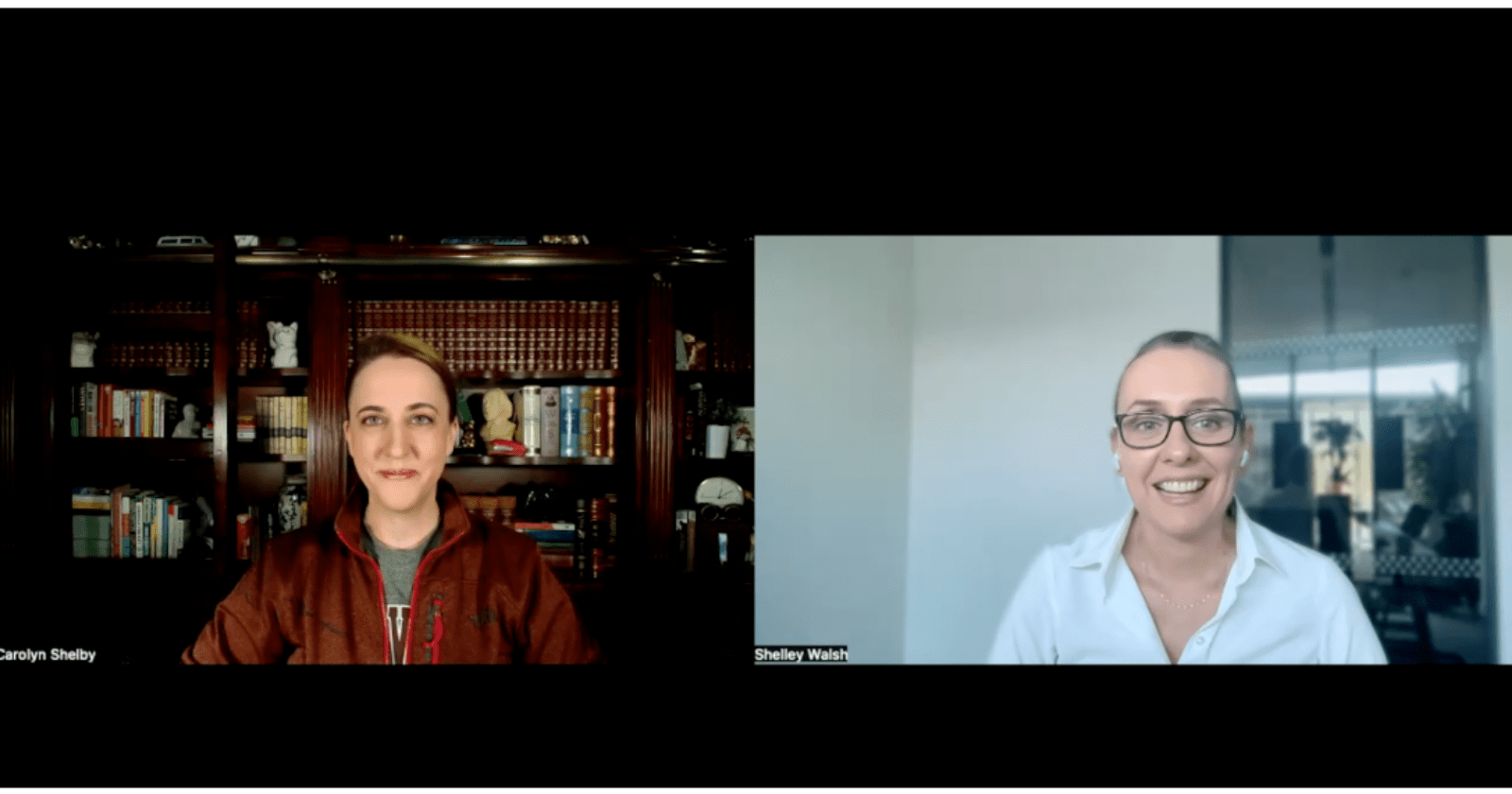
To dig into this topic, I spoke to Carolyn Shelby, who co-founded an ISP in 1994 and has worked in the search industry since for 30 years, working with major brands such as Disney, ESPN, and Tribune Publishing.

Over three decades, Carolyn has seen disruption in the industry many times over, so I asked for her IMHO: Is AI search overhyped?

Her opinion is that focusing on just 1% of a huge share is a good strategy, that we should be focused on technical accessibility and that no one should be ignoring AI search. She also thinks that Google is purposely throttling it’s own progression right now.

The Blogging Economy Is Imploding

Right now, AI and LLMs are dramatically changing search business models and how you can make money online. The biggest impact of this is within blogging for dollars and page views-for-AdSense business models.

As Carolyn said, “It’s not viable going forward as a sustainable business strategy to spin up garbage content sites and slap AdSense all over them and then make enough money to live. Hobby creators or people that are creating out of love will continue to create because they’re doing it for themselves, not for the money. And the amount of money they will make will be enough to maybe buy them coffee every month, but it is not going to be enough to pay their mortgage.

So, the people that are looking for the money to pay their mortgage or buy them a Lamborghini are going to go where there is money to be made, which is over to TikTok and over to YouTube and over to the video platforms.”

This isn’t a temporary disruption. Right now, we’re experiencing a fundamental restructuring of how value is created and captured on the internet.

The influence of TikTok has been building for a few years and is one platform that could be resistant and even flourish in the face of the changes happening in search.

SEO experts I have spoken to cited TikTok as a space where a startup could break into a niche.

1% Of A Trillion Is Traffic Worth Taking

Recently, in a podcast, Carolyn said that less than 1% of traffic comes from AI tools/platforms. On the surface, 1% might seem to be insignificant, but if you consider that 1% of a trillion is 10 billion, that’s a huge amount of traffic.

“If you told me today that if I focused on nothing but ChatGPT and I could guarantee I would monopolize the 1% of traffic, I would jump on that because that is so much traffic.” Carolyn said.

As marketers, we can easily get swept away by the big ‘trillion’ numbers, but if we remember that it can be far easier to gain traction in a smaller niche with less competition than to drown in a crowded space.

For example, SEOs have all been focused on Google because it has so much traffic potential. However, Bing is less competitive and could convert better, so it could be far more beneficial to invest in Bing.

Carolyn believes that the same logic applies to AI platforms. “It’s better to have the traffic from the people that convert, and it’s better to have people coming to your website that are going to convert in general. If you can increase that, increase that.”

Carolyn was clear that in her opinion AI is not overhyped. “I think if you ignore these other opportunities with the LLMs and with AI, then you’re doing yourself a disservice. I wouldn’t call this overhyped. I would call this a shifting mindset, a shift in a paradigm.”

Google Is Holding Back As A Strategic Play

I asked Carolyn if she thought that Google could claw back its dominance, and she has an interesting theory centered on how Google’s Department of Justice battles might be influencing its competitive behavior.

Carolyn explained that during the appeals process, Google needs to prove it’s not a monopoly, which creates an incentive structure.

“They need to prove that they don’t hold absolute control over absolutely everything that happens. Which means they’re going to be inclined to allow other people to encroach on their position because that reinforces their point that they’re not a monopoly.”

Think of it like a driver spotting a speed trap; you slow down until you’re out of range, then floor it again. Google is playing the long game.

Carolyn also identified Chrome data as a critical factor, as it’s Google’s biggest competitive advantage. User signals and behavioral data from Chrome give them insights that drive innovation and performance and forcing the search engine to share this data would fundamentally alter the competitive landscape.

“You take the Chrome data away, that’s a different story. And I think that would be taking the gas out of their engine.” Carolyn commented.

AI Mode Is Here To Stay

We moved the conversation on to AI Mode, and I asked what she thought of the Google AI-generated search results.

Carolyn’s opinion is that Google is not going to roll it back, and it’s here to stay. “I think they’re going to take steps to make sure that we all get used to it and that we all start using it the way they want us to use it to get the best results.”

Carolyn acknowledged that AI Mode creates friction for users conditioned to traditional keyword searches.

“I feel weird asking Google questions like I would ask ChatGPT,” she admitted. “I’m conditioned to interface with ChatGPT in one way and I’m conditioned to interface with Google in a different way and my habits just haven’t changed yet.”

Her belief is that adaptation is inevitable. Google’s dominance means it can guide users toward new interaction patterns.

“They’ll just keep giving us bad answers and we’ll keep trying again because that’s what we do until we figure out how to get the answers that we want out of the machine … together we’ll all keep iterating.”

Google has maintained a position at the forefront of industry development for the last 25 years with constant iteration, and it has wanted to be a personal assistant for years. AI is enabling that to happen.

“It would be ridiculous for Google to say, ‘We’re going to not evolve and we’re going to stay the way we’ve been doing things for 20 years while everyone else is doing AI.’” Carolyn commented. “There’s too much investment in the infrastructure. It’s to everyone’s benefit to learn how to operate within this new environment.”

What SEOs Should Focus On Right Now

My final question to Carolyn was to ask what she thought SEOs should focus on right now.

For me, the actual marketing strategy has been long overlooked in SEO, and Carolyn echoed this in her response to say there are a lot of marketing aspects that have been ignored.

Although in her opinion, the main focus should be on the technical aspects of SEO, not just for search engines but also for LLMs. She emphasized ensuring content accessibility at the machine level.

“I think focusing on the technical fundamentals.” Carolyn explained, “Can the machines [LLMs] traverse your site and retrieve the content and is the content retrievable in the way you need it to be retrievable?”

SEOs should be aware that different LLMs access content differently. Carolyn noted that some platforms, like Anthropic, only capture first-view content, missing anything in toggles or tabs.

“Your job is to figure out what is being found and making sure that the things that the message that you need to have conveyed is in that stuff that is being read. If it’s not, if it’s hidden in something, you have to unhide it.

“There are a lot of different things to do to get to that point, which is what constitutes SEO. Making sure that it’s accessible and it’s the message that you want seen, that if you boil it all down, that is your job.”

The Future Belongs To Those Who Adapt & Adopt

Rather than dismissing AI search as hype, Carolyn thinks we’re witnessing a fundamental transformation that requires strategic adaptation. Business models are changing, and success demands understanding how machines access and interpret content.

“If you ignore these opportunities with the LLMs and with AI, then you’re doing yourself a disservice.”

The future belongs to those who understand that 1% of a trillion is a huge market, who ensure their content is truly accessible to every machine that matters, and who can adopt real marketing.

The professionals who embrace AI will define the next era of SEO.

Watch the full video interview with Carolyn Shelby here:

Thank you to Carolyn Shelby for offering her insights and being my guest on IMHO.

More Resources: 


Featured Image: Shelley Walsh

WP Engine Vs Automattic & Mullenweg Is Back In Play via @sejournal, @martinibuster

WP Engine filed a Second Amended Complaint against Automattic and Matt Mullenweg in response to the September 2025 court order that dismissed several counts but gave WP Engine an opportunity to amend and fix issues in its earlier filing. Although Mullenweg blogged last month that the ruling was a “significant milestone,” that’s somewhat of an overstatement because the court had, in fact, dismissed the counts related to antitrust and monopolization with leave to amend, allowing WP Engine to amend and refile its complaint, which it has now done.

WP Engine Versus Automattic Is Far From Over

In last month’s court order, two claims were dismissed outright because of technical issues, not because they lacked merit.

Two Claims That Were Dismissed

  1. Count 4, Attempted Extortion: WP Engine’s lawyers cited a section of the California Penal Code for Attempted Extortion. The Penal Code is criminal law intended for use by prosecutors and cannot serve as the basis for a civil claim.
  2. Count 16, Trademark Misuse, was also dismissed on the technical ground that trademark misuse can only be raised as a defense.

The remaining counts that were dismissed last month were dismissed with leave to amend, meaning WP Engine could correct the identified flaws and refile. WP Engine’s amended complaint shows that Automattic and Matt Mullenweg still have to respond to WP Engine’s claims and that the lawsuit is far from over.

Six Counts Refiled

WP Engine refiled six counts to cure the flaws the judge identified in the September 2025 court order, including its Computer Fraud and Abuse Act claim (Count 3).

  1. Count 3: Computer Fraud and Abuse Act (CFAA)
  2. Count 12: Attempted Monopolization (Sherman Act)
  3. Count 13: Illegal Tying (Sherman Act)
  4. Count 14: Illegal Tying (Cartwright Act)
  5. Count 15: Lanham Act Unfair Competition
  6. Count 16: Lanham Act False Advertising

Note: In the amended complaint, Count 16 is newly numbered; the previous Count 16 (Trademark Misuse) was dismissed without leave to amend.

How Second Amended Complaint Fixes Issues

The refiled complaint adds further allegations and examples to address the shortcomings identified by the judge in the previous ruling. One major change is the inclusion of clearer market definitions and more detailed allegations of monopoly power.

Clearer Market Definition

The September 2025 order found that WP Engine’s earlier complaint did not adequately define the relevant markets, and the judge gave WP Engine an opportunity to amend. The amended complaint dedicates about 27 pages to defining and describing multiple relevant markets.

WP Engine’s filing now identifies four markets:

  1. Web Content Management Systems (CMS) Market: Encompassing both open-source and proprietary CMS platforms for website creation and management, with alleged monopoly power concentrated in the WordPress ecosystem.
  2. WordPress Web Hosting Services Market: Consisting of hosting providers that specialize in WordPress websites, where Automattic is alleged to influence competition through its control of WordPress.org and trademark enforcement.
  3. WordPress Plugin Distribution Market: Focused on the distribution of plugins through the WordPress.org repository, which WP Engine alleges Automattic controls as an essential and exclusive channel for visibility and access.
  4. WordPress Custom Field Plugin Market: A narrower segment centered on Advanced Custom Fields (ACF) and similar plugins that provide custom field functionality, where WP Engine claims Automattic’s actions directly suppressed competition.

By defining these markets in greater detail over 27 pages, WP Engine addresses the court’s earlier finding that its market definitions were inadequately supported and insufficiently specific.

New Allegations Of Monopoly Power

The September 2025 court order found that WP Engine had not plausibly alleged Automattic’s monopoly power or exclusionary conduct, and allowed WP Engine to amend its complaint.

The amended filing adds detailed assertions intended to show Automattic’s dominance:

  • Automattic allegedly controls access to the official WordPress plugin and theme repositories, which are essential for visibility and functionality within the WordPress ecosystem.
  • Matt Mullenweg’s dual roles as Automattic’s CEO and his control over WordPress.org’s operations are alleged to enable coordinated market exclusion.
  • The complaint cites WordPress’s scale, powering more than 40 percent of global websites, and argues that Automattic exercises significant influence over this ecosystem through its control of WordPress.org and related trademarks.

These new assertions are meant to show that Automattic’s influence over WordPress.org translates into measurable market power, addressing the court’s finding that WP Engine had not yet made that connection.

Expanded Exclusionary Conduct Examples

The court found that WP Engine framed Automattic’s control of WordPress.org and the WordPress trademarks too vaguely to plausibly show exclusionary conduct or resulting antitrust injury.

The amended complaint addresses this by detailing how Automattic and Matt Mullenweg allegedly used threats and actions involving WordPress.org access and distribution to:

  • Block or restrict WP Engine’s access to WordPress.org resources and community channels.
  • Impose conditions on access to WordPress trademarks and resources through alleged threats and leverage.
  • Pressure plugin developers and partners not to collaborate or integrate with WP Engine’s products.
  • Establish an alleged de facto tying arrangement, linking participation in the WordPress.org ecosystem to compliance with Automattic’s control over governance and distribution.

Together, these examples illustrate how WP Engine is attempting to turn previously vague claims of control into specific allegations of exclusionary conduct.

Abundance Of Evidence

Mullenweg sounded upbeat in his response to the September 2025 ruling:

“Just got word that the court dismissed several of WP Engine and Silver Lake’s most serious claims — antitrust, monopolization, and extortion have been knocked out!”

But WP Engine’s Second Amended Complaint makes it clear that those “serious claims” were dismissed with leave to amend, have since been refiled, and are not yet knocked out.

The amended complaint is 175 pages long, perhaps reflecting the comprehensive scope necessary to address the issues the court identified in the September 2025 order. None of this means WP Engine is winning; it simply means the ball is back in play. That outcome directly contradicts Mullenweg’s earlier claim that the antitrust, monopolization, and extortion counts had been “knocked out.”

Featured Image by Shutterstock/Nithid

The Download: carbon removal factories’ funding cuts, and AI toys

This is today’s edition of The Download, our weekday newsletter that provides a daily dose of what’s going on in the world of technology.

The Trump administration may cut funding for two major direct-air capture plants

The US Department of Energy appears poised to terminate funding for a pair of large carbon-sucking factories that were originally set to receive more than $1 billion in government grants, according to a department-issued list of projects obtained by MIT Technology Review and circulating among federal agencies.

One of the projects is the South Texas Direct Air Capture Hub, a facility that Occidental Petroleum’s 1PointFive subsidiary planned to develop in Kleberg County, Texas. The other is Project Cypress in Louisiana, a collaboration between Battelle, Climeworks, and Heirloom. Read the full story.

—James Temple

AI toys are all the rage in China—and now they’re appearing on shelves in the US too

Kids have always played with and talked to stuffed animals. But now their toys can talk back, thanks to a wave of companies that are fitting children’s playthings with chatbots and voice assistants.
 
It’s a trend that has particularly taken off in China: A recent report by the Shenzhen Toy Industry Association and JD.com predicts that the sector will surpass ¥100 billion ($14 billion) by 2030, growing faster than almost any other branch of consumer AI. But Chinese AI toy companies have their sights set beyond the nation’s borders. Read the full story.

—Caiwei Chen

2025 climate tech companies to watch: Pairwise and its climate-adapted crops

Climate change will make it increasingly difficult to grow crops across many parts of the world. Startup Pairwise is using CRISPR gene editing to develop plants that can better withstand adverse conditions.

The company uses cutting-edge gene editing to produce crops that can withstand increasingly harsh climate conditions, helping to feed a growing population even as the world warms. Last year, it delivered its first food to the US market: a less-bitter–tasting mustard green. It’s now working to produce crops with climate-resilient traits, through partnerships with two of the world’s largest plant biotech companies. Read the full story.

—James Temple

Pairwise is one of our 10 climate tech companies to watch—our annual list of some of the most promising climate tech firms on the planet. Check out the rest of the list here.

MIT Technology Review Narrated: How to measure the returns on R&D spending

Given the draconian cuts to US federal funding for science, it’s worth asking some hard-nosed money questions: How much should we be spending on R&D? How much value do we get out of such investments, anyway?

To answer that, in several recent papers, economists have approached this issue in clever new ways.  And, though they ask slightly different questions, their conclusions share a bottom line: R&D is, in fact, one of the better long-term investments that the government can make.

This is our latest story to be turned into a MIT Technology Review Narrated podcast, which we’re publishing each week on Spotify and Apple Podcasts. Just navigate to MIT Technology Review Narrated on either platform, and follow us to get all our new content as it’s released.

The must-reads

I’ve combed the internet to find you today’s most fun/important/scary/fascinating stories about technology.

1 How OpenAI and Nvidia are fueling the AI bubble 
Experts fear their circular deals could be artificially inflating the market. (Bloomberg $)
+ OpenAI will pay for AMD’s chips using, err, AMD’s own stock. (TechCrunch)
+ The Bank of England is concerned about AI inflating tech stocks. (FT $)
+ What comes next, that’s the big question. (NBC News)

2 Around 15% of the world’s working population is using AI
And countries in Europe are among the most enthusiastic adopters. (FT $)
+ The EU is keen to get even more of its citizens using it, too. (WSJ $)
+ Meanwhile, America’s public opinion towards AI is souring. (WP $)

3 Three quantum mechanics scientists have won the Nobel Prize for Physics
Two of whom were instrumental in building Google’s working quantum machines. (Bloomberg $)
+ Their work shone a light on behaviors of the subatomic realm. (NYT $)
+ Quantum particles behave in notoriously strange ways. (New Scientist $)

4 The CDC has finally signed off on covid vaccine recommendations
Despite the delay, access looks largely similar to last years’. (Ars Technica)
+ The Supreme Court isn’t sold on medical expertise these days. (Vox)

5 What makes TikTok so ‘sticky’ 
Even its hardcore users can be persuaded to keep scrolling for hours. (WP $)

6 ICE bought fake cell towers to spy on nearby phones
It’s used cell-site simulators in the past to track down alleged criminals. (TechCrunch)
+ Meet the volunteers tracking ICE officers in LA. (New Yorker $)

7 Watermark removers for Sora 2 videos are already readily available
No permission? No problem. (404 Media)
+ What about copyright for AI-generated art? (The Information $)
+ And what comes next for AI copyright lawsuits? (MIT Technology Review)

8 How diamonds can help to cool down chips
They’re remarkably good at transferring heat. (NYT $)

9 Amazon Pharmacy is launching electronic prescription kiosks
For drugs including antibiotics, asthma inhalers and treatments for high blood pressure. (Reuters)

10 Should you limit your smartphone use to two hours a day?
Japan thinks so. (The Guardian)
+ How to log off. (MIT Technology Review)

Quote of the day

“OpenAI is building the future of AI on infrastructure it doesn’t own, power it doesn’t control, and capital it doesn’t have.”

—Andrey Sidorenko, head of research at data firm Mostly AI, critiques what he calls the consolidation of the AI ecosystem in a post on LinkedIn.

One more thing

How AI can help make cities work better

In recent decades, cities have become increasingly adept at amassing all sorts of data. But that data can have limited impact when government officials are unable to communicate, let alone analyze or put to use, all the information they have access to.

This dynamic has always bothered Sarah Williams, a professor of urban planning and technology at MIT. Shortly after joining MIT in 2012, Williams created the Civic Data Design Lab to bridge that divide. Over the years, she and her colleagues have made urban planning data more vivid and accessible through human stories and striking graphics. Read the full story.

—Ben Schneider

We can still have nice things

A place for comfort, fun and distraction to brighten up your day. (Got any ideas? Drop me a line or skeet ’em at me.)

+ Life lessons from the one and only Ozzy Osbourne—what’s not to like?
+ Did you know that most countries have their own camouflage? Check the patterns out here.
+ These hamsters getting an MRI scan is the cutest thing you’ll see today.
+ Pumpkin chili sounds like a fantastic way to warm up.

You’re Writing a Book. Now What?

Having decided to add “author” to your résumé, your first task is setting the book up for success. Knowing the subject, audience, and goal is only the starting point. Consider how you’ll prioritize time, quality, speed, and budget. Assess your strengths and skills, and where you might need help.

Then envision the next steps.

This article is the second of my two-part series on publishing a book to benefit your company. Part one, “Can Writing a Book Grow Your Business?,” appeared last month.

Publishing Paths

The three main publishing paths are do-it-yourself, traditional, and hybrid. Each has pros and cons.

  • Self-publishing. If speed is important and budget is tight, DIY publishing in digital formats is the clear choice. Moreover, selling direct means you’ll know the buyers, which is unlikely through a publisher, distributor, or third-party website.
  • Traditional. If the goal is significant print sales, you’ll need an agent and a traditional publisher, though smaller publishers and university presses may accept un-agented book proposals.
  • Hybrid. Generally, with a hybrid publisher, the author pays some or all of the publishing expenses upfront (e.g., editorial, design, marketing) and, in turn, receives a larger share of book sales than with a standard royalty.

It’s unlikely your efforts alone — as a side hustle while running a business — will result in the best possible outcome, regardless of your expertise or writing skills. Casual writers such as your nephew the English major can help in the early stages. But like doctors, plumbers, mechanics, web designers, and digital marketers, editorial pros have much to offer.

Yes, AI tools are terrific aids for research, refining ideas, and organizing notes, but they lack the context, nuance, and judgment of experienced and connected humans.

Roles

Luckily, there are plenty of expert humans! Here are typical book development roles:

  • Researchers and fact-checkers can find information such as case studies, historical trends, and economic data, as well as verify references and quotations.
  • Writing coaches and groups can encourage and motivate, and provide useful, ongoing feedback.
  • Ghostwriters take on most of the composition, working closely to capture your voice, hone ideas, and organize the presentation. Partnering with a public co-author is another way to share the heavy lifting (and profits, if any).
  • Developmental editors and coaches help shape a book’s structure and flow, refine repetitive or unclear sections, and build on your strengths as a writer.
  • Copy editors and proofreaders check for errors and suggest corrections. A good copy editor will detect repetition or confusion and recommend alternatives, as well as fix grammar, spelling, and punctuation. Proofreaders focus on remaining errors as the final step before printing.

You as the author have final say with all editorial professionals over the manuscript. You are ultimately responsible for the book’s content. You may not require a team of cover designers, illustrators, indexers, agents, publishers, publicists, and audiobook narrators, but one or more will almost certainly improve the finished product.

Freelance marketplaces such as Upwork and Reedsy include editorial experts, as do professional membership organizations. The Chartered Institute of Editors and Proofreaders, the Association of Ghostwriters, ACES, the Editorial Freelancers Association, and Editors Canada have directories searchable by service, skills, location, experience, subject, and more. The sites also provide how-to on assessing needs and qualifications. The EFA (I’m a member) offers tips on hiring an editor, as well as descriptions and costs of the various editorial services.

Other helpful resources include publishing veteran Jane Friedman, the Alliance of Independent Authors, and the Authors Guild. Writer Beware alerts authors to potential scams.

Microsoft Explains How To Optimize Content For AI Search Visibility via @sejournal, @MattGSouthern

Microsoft has shared guidance on structuring content to increase its likelihood of being selected for AI-generated answers across Bing-powered surfaces.

Much of the advice reiterates established SEO and UX practices such as clear titles and headings, structured layout, and appropriate schema.

The new emphasis is on how content is selected for answers. Microsoft stresses there is “no secret sauce” that guarantees selection, but says structure, clarity, and “snippability” improve eligibility.

As Microsoft puts it:

“In traditional search, visibility meant appearing in a ranked list of links. In AI search, ranking still happens, but it’s less about ordering entire pages and more about which pieces of content earn a place in the final answer.”

Key Differences In AI Search

AI assistants break down pages into manageable parts, carefully assessing each for authority and relevance, then craft responses by blending information from multiple sources.

Microsoft says fundamentals such as crawlability, metadata, internal links, and backlinks still matter, but they are the starting point. Selection increasingly depends on how well-structured and clear each section is.

Best Practices Microsoft Recommends

To help improve the chances of AI selecting your content, Microsoft recommends these best practices:

  • Align the title, meta description, and H1 to clearly communicate the page purpose.
  • Use descriptive H2/H3 headings that each cover one idea per section.
  • Write self-contained Q&A blocks and concise paragraphs that can be quoted on their own.
  • Use short lists, steps, and comparison tables when they improve clarity (without overusing them).
  • Add JSON-LD schema that matches the page type.

What To Avoid

Microsoft recommends avoiding these practices to improve the chances of your content appearing in AI search results:

  • Writing long walls of text that blur ideas together.
  • Hiding key content in tabs, accordions, or other elements that may not render.
  • Relying on PDFs for core information.
  • Putting important information only in images without alt text or HTML alternatives.
  • Making vague claims without providing specific details.
  • Overusing decorative symbols or long punctuation strings; keep punctuation simple.

Why This Matters

The key takeaway is that structure helps selection. When your titles, headings, and schema are aligned, Copilot and other Bing-powered tools can extract a complete idea from your page.

This connects traditional SEO principles to how AI assistants generate responses. For marketers, it’s more of an operational checklist than a new strategy.

Looking Ahead

Microsoft acknowledges there’s no guaranteed way to ensure inclusion in AI responses, but suggests that these practices can make content more accessible for its AI systems.


Featured Image: gguy/Shutterstock

Google AdSense Replaces Ad Networks With Authorized Buyers via @sejournal, @MattGSouthern

Google is updating its demand source management by replacing the Ad Networks blocking control with a new Authorized Buyers control in AdSense.

This change affects how you control which demand sources can bid on your inventory. The transition begins on November 6. Existing blocks will remain in place, and new authorized buyers will be enabled by default.

What’s Changing

Google is discontinuing the Ad Networks blocking control within Brand Safety and introducing a new Authorized Buyers control.

As part of this update, the “Automatically allow new Google-certified ad networks” option is being eliminated. Instead, new authorized buyers will be permitted by default.

The Authorized Buyers list excludes inactive ad networks, test ad networks, and Display & Video 360 (DV360) networks.

Google states that the new page allows you to permit or block authorized buyers and offers improved visibility into parent–child relationships among buyers. However, DV360 accounts are not managed within the new control.

Timeline & Transition

Before launching, you can preview the view-only Authorized Buyers page in AdSense by navigating to Brand Safety → Content → Blocking controls → Authorized Buyers.

These controls will be active after November 6. Any modifications made to Ad Networks prior to launch will be saved and reflected in the Authorized Buyers section.

Once the change is live, control access by navigating to Brand Safety → Content → Blocking controls → Authorized Buyers. Here, you can permit or restrict specific authorized buyers and utilize search or filters to locate particular entries.

Google’s detailed “Allow and block authorized buyers” guide illustrates this process.

Ad Review Center & DV360

You’ll no longer be managing authorized buyers through the Ad Review Center. You can still allow or block Google ad accounts in the Advertiser section, including DV360 accounts, which stay outside the new Authorized Buyers system.

Looking Ahead

This update changes the default setting to permit new buyers, so tighter configurations might need a regular process to review and prevent unwanted buyers.

Preview the interface now to familiarize your team with control locations, then schedule a post-launch review to verify your existing blocks and any new entries. Maintain DV360 workflows in the Ad Review Center, and utilize the parent–child view to see how related buyers influence bidding and revenue.