The biggest AI flops of 2024

The past 12 months have been undeniably busy for those working in AI. There have been more successful product launches than we can count, and even Nobel Prizes. But it hasn’t always been smooth sailing.

AI is an unpredictable technology, and the increasing availability of generative models has led people to test their limits in new, weird, and sometimes harmful ways. These were some of 2024’s biggest AI misfires. 

AI slop infiltrated almost every corner of the internet

Generative AI makes creating reams of text, images, videos, and other types of material a breeze. Because it takes just a few seconds between entering a prompt for your model of choice to spit out the result, these models have become a quick, easy way to produce content on a massive scale. And 2024 was the year we started calling this (generally poor quality) media what it is—AI slop.  

This low-stakes way of creating AI slop means it can now be found in pretty much every corner of the internet: from the newsletters in your inbox and books sold on Amazon, to ads and articles across the web and shonky pictures on your social media feeds. The more emotionally evocative these pictures are (wounded veterans, crying children, a signal of support in the Israel-Palestine conflict) the more likely they are to be shared, resulting in higher engagement and ad revenue for their savvy creators.

AI slop isn’t just annoying—its rise poses a genuine problem for the future of the very models that helped to produce it. Because those models are trained on data scraped from the internet, the increasing number of junky websites containing AI garbage means there’s a very real danger models’ output and performance will get steadily worse

AI art is warping our expectations of real events

2024 was also the year that the effects of surreal AI images started seeping into our real lives. Willy’s Chocolate Experience, a wildly unofficial immersive event inspired by Roald Dahl’s Charlie and the Chocolate Factory, made headlines across the world in February after its fantastical AI-generated marketing materials gave visitors the impression it would be much grander than the sparsely-decorated warehouse its producers created.

Similarly, hundreds of people lined the streets of Dublin for a Halloween parade that didn’t exist. A Pakistan-based website used AI to create a list of events in the city, which was shared widely across social media ahead of October 31. Although the SEO-baiting site (myspirithalloween.com) has since been taken down, both events illustrate how misplaced public trust in AI-generated material online can come back to haunt us.

Grok allows users to create images of pretty much any scenario

The vast majority of major AI image generators have guardrails—rules that dictate what AI models can and can’t do—to prevent users from creating violent, explicit, illegal, and other types of harmful content. Sometimes these guardrails are just meant to make sure that no one makes blatant use of others’ intellectual property. But Grok, an assistant made by Elon Musk’s AI company, called xAI, ignores almost all of these principles in line with Musk’s rejection of what he calls “woke AI.”

Whereas other image models will generally refuse to create images of celebrities, copyrighted material, violence, or terrorism—unless they’re tricked into ignoring these rules—Grok will happily generate images of Donald Trump firing a bazooka, or Mickey Mouse holding a bomb. While it draws the line at generating nude images, its refusal to play by the rules undermines other companies’ efforts to steer clear of creating problematic material.

Sexually explicit deepfakes of Taylor Swift circulated online

In January, non-consensual deepfake nudes of singer Taylor Swift started circulating on social media, including X and Facebook. A Telegram community tricked Microsoft’s AI image generator Designer into making the explicit images, demonstrating how guardrails can be circumvented even when they are in place. 

While Microsoft quickly closed the system’s loopholes, the incident shone a light on the platforms’ poor content-moderation policies, after posts containing the images circulated widely and remained live for days. But the most chilling takeaway is how powerless we still are to fight non-consensual deepfake porn. While watermarking and data-poisoning tools can help, they’ll need to be adopted much more widely to make a difference.

Business chatbots went haywire

As AI becomes more widespread, businesses are racing to adopt generative tools to save time and money, and to maximize efficiency. The problem is—chatbots make stuff up and can’t be relied upon to always provide you with accurate information.

Air Canada found this out the hard way after its chatbot advised a customer to follow a bereavement refund policy that didn’t exist. In February, a Canadian small-claims tribunal upheld the customer’s legal complaint, despite the airline’s assertion that the chatbot was a “separate legal entity that is responsible for its own actions.”

In other high-profile examples of how chatbots can do more harm than good, delivery firm DPD’s bot cheerfully swore and called itself useless with little prompting, while a different bot set up to provide New Yorkers with accurate information about their city’s government ended up dispensing guidance on how to break the law.

AI gadgets aren’t exactly setting the market alight

Hardware assistants are something the AI industry tried, and failed, to crack in 2024. Humane attempted to sell customers on the promise of the Ai Pin, a wearable lapel computer, but even slashing its price failed to boost weak sales. The Rabbit R1, a ChatGPT-based personal assistant device, suffered a similar fate, following a rash of critical reviews and reports that it was slow and buggy. Both products seemed to be trying to solve a problem that did not actually exist. 

AI search summaries went awry

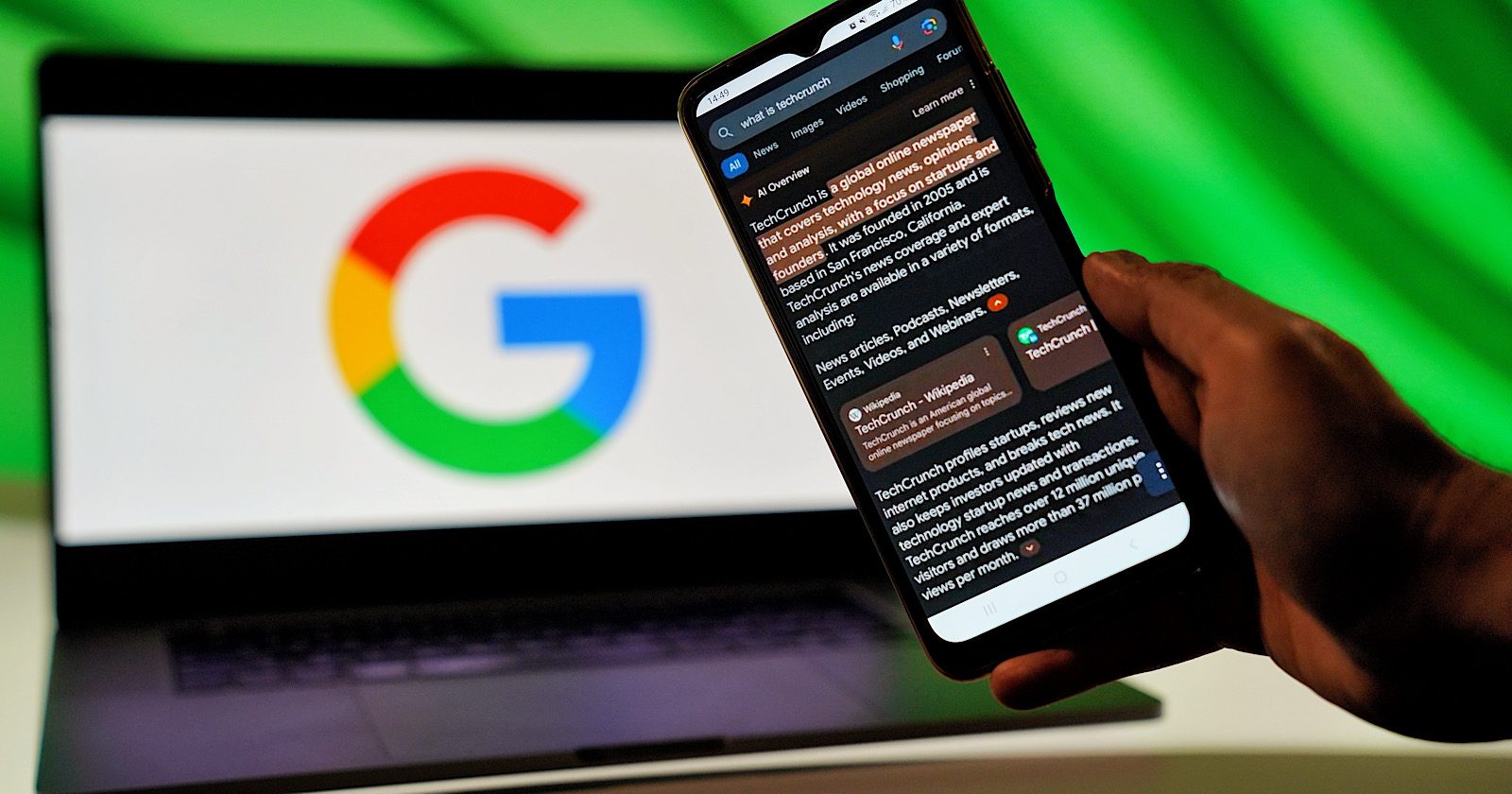
Have you ever added glue to a pizza, or eaten a small rock? These are just some of the outlandish suggestions that Google’s AI Overviews feature gave web users in May after the search giant added generated responses to the top of search results. Because AI systems can’t tell the difference between a factually correct news story and a joke post on Reddit, users raced to find the strangest responses AI Overviews could generate.

But AI summaries can also have serious consequences. A new iPhone feature that groups app notifications together and creates summaries of their contents, recently generated a false BBC News headline. The summary falsely stated that Luigi Mangione, who has been charged with the murder of healthcare insurance CEO Brian Thompson, had shot himself. The same feature had previously created a headline claiming that Israeli prime minister Benjamin Netanyahu had been arrested, which was also incorrect. These kinds of errors can inadvertently spread misinformation and undermine trust in news organizations.

Open a Facebook Shop in 2025

Social commerce is poised to take off in 2025, reaching 60% or more of Gen Z and Millennial shoppers worldwide, depending on the source.

TikTok is the trending social platform, with roughly 36 million shoppers, while Facebook is massive and established, with 68 million. Both are compelling options.

In this article, I will focus on Facebook Shop and its two key promotional opportunities.

Create a Facebook Page

Create a Facebook page by filling in a few fields and uploading images.

A Facebook Shop requires a Facebook page.

  • Log in to your personal Facebook account.
  • Go to the Pages section and create a new page.
  • Select the “Public Page” option.

Work through the six setup screens using Facebook’s interface as a guide. By the end, you will have a minimal Facebook page, ready to do business.

Set Up a Business Suite Account

Meta Business Suite is the single location for managing your pages, including the one you just created for your store. The setup process is straightforward.

  • Go to Business Suite.
  • Click “Create Account” and follow the prompts.
  • Add your Facebook page to Business Suite under “Business Settings” > “Accounts” > “Pages.”

Business Suite is a hub for Meta assets — Facebook, Instagram, WhatsApp.

Meta’s Business Suite is the dashboard for managing stores on Facebook, Instagram, and WhatsApp.

Set Up a Commerce Account

Next, prepare your Facebook Shop.

  • Go to the Facebook Commerce “Get started” page.
  • Select “Add Products.”
  • Toggle the “Connect to a partner platform” switch.
  • Complete the form.

Facebook Shop integrates directly with Shopify, BigCommerce, WooCommerce, and other stores. I will use Shopify for this example.

To start, enter your store’s Myshopify.com subdomain, located on the “Domains” tab in your Shopify account settings. Facebook will direct you to Shopify and add the Facebook and Instagram app.

Screenshot of Facebook integration screen

Facebook integrates with many ecommerce platforms, including Shopify, BigCommerce, and WooCommerce.

Connect Your Store

Facebook profiles associated with multiple pages may need to specify the one to integrate with Shopify. Then set your desired level of data sharing between Facebook and Shopify. Meta will use the data to improve advertising results but may require updates to your Shopify privacy policy and settings.

You’ll likely see approved products on your Facebook page in just a few minutes, although it sometimes takes up to two days.

Customize Your Facebook Shop

Once the Shopify store and Facebook Shop are synchronized, customize the latter via the Facebook Commerce Manager, adding payment types, layout, and verifications. Facebook permits some shop customization but will also pull from Shopify.

Facebook typically provides a checklist with a handful of tasks to complete before your shop is live.

Screenshot of Commerce Manager with customization options

Facebook permits some shop customization but will pull a lot from Shopify.

Promote the Facebook Shop

Most sellers promote Facebook Shops in two ways: Meta advertising and organic social media content.

Meta advertising. By accessing the shared Shopify data, Meta can confirm purchases, track website activity via its pixel, and view online chats.

All that information will guide Meta in identifying and targeting likely customers in a privacy-compliant manner. The optimized advertising should perform well. A few published reports, including one from Omnichat, describe a tenfold improvement in return on advertising spend for online merchants using Shopify and Facebook Shops.

Organic social media content. The second promotional opportunity comes from content marketing and email address capture.

Think of Facebook as a content distribution channel for your store. Share blog posts, product videos, and the like on that platform. Its algorithms (and your followers) will help expose the shop.

Always include email capture on your Facebook page and store. On the page, add a “newsletter” or “subscribe” custom action button linked to an email subscription form. Then include those subscribers in your store’s regular promotional email messages.

Google Speculates If SEO ‘Is On A Dying Path’ via @sejournal, @martinibuster

Google’s latest Search Off the Record podcast discussed whether ‘SEO is on a dying path’ because of AI Search. Their assessment sought to explain that SEO remains unchanged by the introduction of AI Search, revealing a divide between their ‘nothing has changed’ outlook for SEO and the actual experiences of digital marketers and publishers.

Google Speculates If AI Is On A Dying Path

At a certain point in the podcast they started talking about AI after John Mueller introduced the topic of the impact of AI on SEO.

John asked:

“So do you think AI will replace SEO? Is SEO on a dying path?”

Gary Illyes expressed skepticism, asserting that SEOs have been predicting the decline of SEO for decades.

Gary expressed optimism that SEO is not dead, observing:

“I mean, SEO has been dying since 2001, so I’m not scared for it. Like, I’m not. Yeah. No. I’m pretty sure that, in 2025,the first article that comes out is going to be about how SEO is dying again.”

He’s right. Google began putting the screws to the popular SEO tactics of the day around 2004, gaining momentum in 2005 with things like statistical analysis.

It was a shock to SEOs when reciprocal links stopped working. Some refused to believe Google could suppress those tactics, speculating instead about a ‘Sandbox’ that arbitrarily kept sites from ranking. The point is, speculation has always been the fallback for SEOs who can’t explain what’s happening, fueling the decades-long fear that SEO is dying.

What the Googlers avoided discussing are the thousands of large and small publishers that have been wiped out over the last year.

More on that below.

RAG Is How SEOs Can Approach SEO For AI Search

Google’s Lizzi Sassman then asked how SEO is relevant in 2025 and after some off-topic banter John Mueller raised the topic of RAG, Retrieval Augmented Generation. RAG is a technique that helps answers generated by a large language model (LLM) up to date and grounded in facts. The system retrieves information from an external source like a search index and/or a knowledge graph and the large language model subsequently generates the answer, retrieval augmented generation. The Chatbot interface then provides the answer in natural language.

When Gary Illyes confessed he didn’t know how to explain it, Googler Martin Splitt stepped in with an analogy of documents (representing the search index or knowledge base), search and retrieval of information from those documents, and an output of the information from “out of the bag”).

Martin offered this simplified analogy of RAG:

“Probably nowadays it’s much better and you can just show that, like here, you upload these five documents, and then based on those five documents, you get something out of the bag.”

Lizzi Sassman commented:

“Ah, okay. So this question is about how the thing knows its information and where it goes and gets the information.”

John Mueller picked up this thread of the discussion and started weaving a bigger concept of how RAG is what ties SEO practices to AI Search Engines, saying that there is still a crawling, indexing and ranking part to an AI search engine. He’s right, even an AI search engine like Perplexity AI uses an updated version of Google’s old PageRank algorithm.

Mueller explained:

“I found it useful when talking about things like AI in search results or combined with search results where SEOs, I feel initially, when they think about this topic, think, “Oh, this AI is this big magic box and nobody knows what is happening in there.

And, when you talk about kind of the retrieval augmented part, that’s basically what SEOs work on, like making content that’s crawlable and indexable for Search and that kind of flows into all of these AI overviews.

So I kind of found that angle as being something to show, especially to SEOs who are kind of afraid of AI and all of these things, that actually, these AI-powered search results are often a mix of the existing things that you’re already doing. And it’s not that it suddenly replaces crawling and indexing.”

Mueller is correct that the traditional process of indexing, crawling, and ranking still exists, keeping SEO relevant and necessary for ensuring websites are discoverable and optimized for search engines.

However, the Googlers avoided discussing the obvious situation today, which is the thousands of large and small publishers in the greater web ecosystem that have been wiped out by Google’s AI algorithms on the backend.

The Real Impacts Of AI On Search

What’s changed (and wasn’t addressed) is that the important part of AI  in Search isn’t the one on the front end with AI Overviews. It’s the part on the back-end making determinations based on opaque signals of authority, topicality and the somewhat ironic situation that an artificial intelligence is deciding whether content is made for search engines or humans.

Organic SERPs Are Explicitly Obsolete

The traditional ten blue links have been implicitly obsolete for about 15 years but AI has made them explicitly obsolete.

Natural Language Search Queries

The context of search users who ask precise conversational questions within several back and forth turns is a huge change to search queries. Bing claims that this makes it easier to understand search queries and provide increasingly precise answers. That’s the part that unsettles SEOs and publishers because , let’s face it, a significant amount of content was created to rank in the keyword-based query paradigm, which is gradually disappearing as users increasingly shift to more complex queries. How content creators optimize for that is a big concern.

Backend AI Algorithms

The word “capricious” means the tendency to make sudden and unexplainable changes in behavior. It’s not a quality publishers and SEOs desire in a search engine. Yet capricious back-end algorithms that suddenly throttle traffic and subsequently change their virtual minds months later  is a reality.

Is Google Detached From Reality Of The Web Ecosystem?

Industry-wide damage caused by AI-based algorithms that are still “improving” have unquestionably harmed a considerable segment of the web ecosystem. Immense amounts of traffic to publishers of all sizes has been wiped out since the increased integration of AI into Google’s backend, an issue that the recent Google Search Off The Record avoided discussing.

Many hope Google will address this situation in 2025 with greater nuance than their CEO Sundar Pichai who struggled to articulate how Google supports the web ecosystem, seemingly detached from the plight of thousands of publishers.

Maybe the question isn’t whether SEO is on a dying path but whether publishing itself is in decline because of AI on both the backend and the front of Google’s search box and Gemini apps.

Check out these related articles:

Google CEO’s 2025 AI Strategy Deemphasizes The Search Box

Google Gemini Deep Research May Erode Website Earnings

Google CEO: Search Will Change Profoundly In 2025

Featured Image by Shutterstock/Shutterstock AI Generator

Reddit Is Ready For Brands: How To Build Real Connections And Succeed via @sejournal, @brentcsutoras

Reddit has always been a tricky platform for brands to navigate.

As someone who has been active on Reddit since it launched nearly 20 years ago, I’ve seen firsthand how its fiercely loyal and highly skeptical user base can challenge brands.

It is quick to call out anything that feels inauthentic, which has long made Reddit a tough space for brands.

This resistance has deterred many brands, but with Reddit’s explosive growth and evolution, the opportunities are becoming too significant to ignore.

With 97.2 million daily active users, an estimated 1.2 billion monthly unique visitors, and users spending an average of 25 to 30 minutes on the platform daily, Reddit commands attention as a platform where users deeply engage with content.

Reddit’s influence goes beyond its user numbers. The platform has become a cultural force, with its content shaping trends and dominating search results.

Nearly 64% of desktop visits to Reddit come from organic search, often ranking prominently in Google’s “Discussions and Forums” sections.

The recent $60 million agreement with Google and OpenAI to integrate Reddit content into AI training models highlights the platform’s long-term value as a source of authentic insights.

To truly succeed on Reddit, brands must rethink their approach.

This is not just another social media channel; it is a network of communities where meaningful conversations drive engagement.

Done right, Reddit offers unparalleled access to some of the most engaged and opinionated audiences online. Done wrong, it can backfire spectacularly.

The Challenge Of Authenticity And The Shift In Sentiment

At its heart, Reddit thrives on authenticity. Users come to have real conversations, not to be marketed to.

Entire subreddits, such as r/HailCorporate, are dedicated to exposing inauthentic or heavy-handed brand efforts.

For years, this kept brands at arm’s length and reluctant to fully engage with a platform they did not understand. But things are shifting.

The platform’s user base has become more diverse, now 50% international, with significant growth among younger audiences who are more accustomed to seeing brands participate in online spaces.

High-profile examples, like The Economist’s AMAs or Mars’ creative campaigns, have helped redefine how brands can succeed on Reddit by focusing on genuine contributions and community engagement.

Reddit itself has matured as a platform. Leadership hires from Google and Meta have bolstered its ad capabilities, while the in-house creative agency KarmaLab guides brands in navigating the nuances of Reddit culture.

New tools, such as Reddit Pro and the upcoming Reddit Answers, are designed to help brands engage more effectively while respecting the platform’s core value of being user-first.

By offering AI-driven insights, summarizing threads, and facilitating authentic participation, these tools create real opportunities for meaningful interaction.

At the same time, subreddits have clarified their rules, making it easier for brands to contribute without overstepping or compromising the community’s integrity. It’s all about showing up authentically and adding value, not disrupting the conversation.

The Growing Opportunity For Brands

Reddit’s evolution has created a rare opportunity for brands to build lasting connections.

With 342.3 million weekly active users and over 100,000 active communities, Reddit offers a level of depth and engagement that few platforms can match.

Users are not just scrolling passively; they are actively seeking discussions, reviews, and insights. The numbers tell a compelling story.

Reddit users spend significantly more time per visit than on other social platforms, and many are inactive elsewhere.

Further, surveys show that 75% of Reddit users are more likely to consider brands they discover on the platform.

This, coupled with the fact that user-generated content from Reddit frequently shapes broader online discussions, makes it clear why Reddit’s influence continues to grow.

Strategies For Success

If you are considering Reddit as part of your marketing strategy, it is important to enter with the right mindset.

Success here is not about quick wins; it is about showing up consistently and adding value to the community. Brands that thrive on Reddit do not just talk; they listen, learn, and adapt.

Understand Your Audience

Reddit is a platform where users discuss niche interests with incredible depth. Start by identifying the subreddits relevant to your industry or audience.

For example:

  • Use Reddit’s search functionality to find communities discussing topics related to your product or service.
  • Explore the sidebar and pinned posts in each subreddit to understand the community rules and norms.
  • Monitor discussions using tools like Reddit Pro’s trend detection or even third-party tools to spot recurring questions and pain points.

Once you have this foundational knowledge, focus on providing solutions or insights instead of selling your product outright.

A fitness brand, for instance, might share detailed, evidence-based workout tips in r/Fitness before mentioning their product as a potential aid in a comment.

That said, there are times when directly offering your product is not only appropriate but welcome.

Redditors often ask for specific recommendations or solutions, and if your product genuinely meets their needs, responding directly can add value to the conversation.

The key is to ensure your participation aligns with the community’s expectations and the context of the discussion.

Avoid injecting your product into conversations where it doesn’t belong or promoting it in a way that feels forced. Instead, focus on building trust by being honest, helpful, and responsive to genuine inquiries.

Build Trust Through Consistent Engagement

Redditors value contributions that show genuine interest in the community over time.

Consider these methods for building trust:

  • Comment First: Instead of posting content right away, start by commenting on existing threads. Offer insights, answer questions, or join discussions to establish your credibility.
  • Create Thoughtful Posts: When you post, ensure it aligns with the subreddit’s tone and rules. Avoid overly polished or promotional language, as it may feel out of place.
  • Engage as a Person: Whether using a brand or employee account, approach conversations as a real person. Focus on being relatable, showing up consistently, and engaging in the community daily to build trust naturally over time.

Adapt Your Strategy Based on Feedback

Reddit is dynamic, and your strategy should reflect that flexibility. Monitor how users respond to your presence and adjust accordingly:

  • If your posts are not resonating, look at the comments to see why and consider revising your tone or content approach.
  • If a specific topic garners more engagement, lean into it with follow-up posts or comments.

Tap Into Community Expertise

Reddit users appreciate brands that bring unique value to their communities.

One way to do this is by leveraging your brand’s expertise in a way that educates or entertains:

  • Host an AMA with a knowledgeable member of your team. These can be highly engaging and help humanize your brand.
  • Share behind-the-scenes stories about your processes, innovations, or the challenges your company is solving.
  • Create resources, like guides or infographics, tailored to the subreddit’s interests.

Building Your Long-Term Presence

Reddit is not a platform where you can drop in, run a campaign, and disappear. It is a space where relationships are built over time.

By committing to thoughtful, authentic engagement, brands can become valued members of the communities they join, shaping conversations and driving real impact.

This isn’t just about selling a product. It is about building trust, fostering dialogue, and positioning your brand as a genuine contributor to the conversation.

To help brands succeed in building this presence, I encourage an exercise inspired by a blend of Brené Brown’s Rumbles and Shitty First Drafts that can uncover the right balance for meaningful engagement:

A Four-Part Exercise To Find Your Brand’s Place On Reddit

1. What Do Redditors Really Want From Your Brand?

Take a step back and consider what value your brand can genuinely add to Reddit communities.

What are users asking about in your niche? What problems are they trying to solve?

This isn’t about what you want to share; it’s about what they need or expect.

  • Exercise: Spend time lurking in relevant subreddits to observe conversations. Identify recurring themes, questions, or frustrations that align with your industry.

2. What Does Your Brand Have That Redditors Can Benefit From?

Honest self-reflection is critical. What unique value does your brand bring to the table?

This could be insider knowledge, educational resources, access to product development discussions, or behind-the-scenes insights that Redditors can’t get elsewhere.

  • Exercise: Make a list of three things your brand can offer that would resonate with your target communities. Then, prioritize these based on their relevance and impact on Redditors.

3. What Is the User Journey For Redditors Who Interact With Your Brand?

Understanding how a Redditor might encounter and engage with your brand is crucial.

Consider the steps they might take: from seeing your comment or post and visiting your site, to making a decision about your product or service.

  • Exercise: Map out the likely touchpoints Redditors will have with your brand, starting with their initial discovery. Think about what content, tone, or information would ‘BeUseful’ and guide them at each step.

4. How Can You Combine These Elements?

The key is finding the overlap between what Redditors want, what your brand can provide, and the user journey.

This is where your brand can show up at the right time, in the right community, with something they genuinely want and need.

  • Exercise: Create a positioning statement based on the intersection of these elements. For example, “We want to be the go-to resource for X in r/[SubredditName], offering insights and answering questions to help solve Y.”

When brands approach Reddit with this balance in mind, they are far more likely to build a presence that feels authentic and valuable.

This framework ensures that your efforts are guided by a clear understanding of your audience, your capabilities, and how the two can meet in a way that benefits both parties.

Key Takeaway

By consistently aligning your strategy with these principles, your brand can become an integral and respected part of the Reddit ecosystem, positioned for lasting success.

If you’re looking for additional guidance or have questions, feel free to connect with me on LinkedIn or reach out by email, and I’ll do my best to help.

More Resources:


Featured Image: Roman Samborskyi/Shutterstock

Paid Media Marketing In 2025: 7 Changes Marketers Should Make via @sejournal, @brookeosmundson

Paid media marketers, take a deep breath – 2024 was a whirlwind, wasn’t it?

AI officially moved from buzzword to business-as-usual, with tools like Google’s Gemini and Microsoft’s Copilot changing how we create ads, manage campaigns, and even analyze performance.

Privacy updates threw yet another curveball, with third-party cookies trying to fade into the sunset, but then Google reversed its decision, and platforms stepped up with new privacy-friendly targeting solutions.

Oh, and let’s not forget TikTok and Reddit leveling up their ad platforms, making them serious players for advertisers looking to diversify beyond Google and Facebook.

And then there’s Google’s AI-generated search overviews. If you haven’t seen them yet, they’re already shifting how ads show up in search results, adding new dynamics to a space we thought we had figured out.

Basically, the industry didn’t slow down this year – it sped up.

As we head into 2025, the message is clear: Staying still is not an option. The platforms are evolving, consumer behavior is shifting, and if you’re not testing, adapting, and optimizing, you’re falling behind.

Whether it’s leaning into AI, rethinking targeting, or getting smarter about how you spend your ad dollars, there’s no shortage of ways to level up your paid media game this year.

So, let’s talk about seven tangible changes you can make next year to keep your campaigns ahead of the curve.

These aren’t theoretical tweaks – they’re practical, actionable strategies you can implement today to drive better results tomorrow. Let’s dive in.

1. Embrace The Shift To Conversational AI In Ad Creation

Conversational AI tools like Google’s Gemini and Microsoft’s Copilot enable ad creation and optimization in a more fluid, interactive way.

They’re becoming essential for marketers who want to scale ad variations without exhausting creative resources.

If you’re looking to test and scale how this can work for you, start small with AI-generated ad copy tests. Use the conversational AI tools within the Google Ads platform to create a few new ad variations that differ from your standard copy.

For instance, if your current ads are heavily CTA-focused, let the AI suggest more storytelling or benefits-driven language and test these versions in a limited campaign to gauge performance.

Another tip is to start experimenting with ad personalization at scale. AI tools allow you to input audience insights, such as location or interests, to create tailored ad variations.

Create segmented ads that appeal to different demographics or psychographics and use split testing to identify which approach resonates best.

Lastly, whenever you’re using AI-generated content, make sure to set aside time to review those suggestions monthly. Take note of recurring suggestions that could highlight hidden opportunities or adjustments you may not have initially considered.

2. Refine Ad Targeting With Data Privacy In Mind

With the unreliability of third-party cookies, the upcoming year marks the need for refined targeting strategies that balance effectiveness with privacy.

Tools like Google’s enhanced privacy features and Microsoft’s predictive audience segmentation help ensure you’re reaching the right users in a compliant way.

Now’s the time to develop a robust first-party data strategy. Start by auditing your first-party data to identify gaps and potential sources for future data.

You can also utilize your customer relationship management (CRM) tools and website data collection to capture behavior-based insights and create audience segments you own.

Additionally, because both Google and Microsoft allow Customer Match solutions, it’s a great time to review those policies.

Google is updating its Customer Match policy in January 2025 to ensure that first-party data being used in campaign targeting has been collected with consent.

This leads to implementing a consent-based tracking strategy for your company.

Use tools like cookie consent managers and transparency banners to build trust and ensure you’re gathering data responsibly. If you don’t, you’re at risk of not being able to use first-party data solutions by the ad platforms.

When creating a consent-based tracking strategy, it’s also a good idea to proactively share with users how you use their data and offer clear opt-out options. Transparency is key in this two-way buyer and seller relationship journey.

3. Optimize For AI-Driven Search Ad Placements

AI-generated search summaries, especially in Google’s AI Overviews, are creating new ad placements and impacting traditional ad performance. This trend requires close monitoring and proactive adjustments to stay competitive.

As these new ad placements continue to roll out, here are a few tips to make sure your PPC ads are optimized for this new wave of AI content.

  • Monitor CTRs On AI-Influenced Placements: Start tracking the click-through rates of ads appearing in AI-generated results versus traditional SERPs. This insight can help you understand whether AI-generated placements impact user engagement and identify areas for improvement.
  • Create Specialized Assets For AI Overviews: Use images, headlines, and descriptions designed for short attention spans. For instance, include a compelling image and a clear, concise CTA in your ad to boost appeal in this new placement.
  • Review Performance Max Insights Regularly: Google’s Performance Max campaigns, which include AI-driven placements, provide insights into what combinations work best across channels. Use this data to refine ads in other campaigns where similar placements are available.

4. Lean Into Multi-Channel Campaign Integration

With consumers using multiple platforms interchangeably, paid media strategies must embrace an integrated, omni-channel approach.

Platforms like TikTok and Reddit have built out more robust ad offerings, providing marketers with more cross-platform synergy.

Start by mapping out a cross-platform customer journey. Outline your audience’s touchpoints across different platforms.

For instance, if your customer typically discovers products on TikTok but purchases through Google Shopping, ensure you’re present and active on both channels with consistent messaging.

Another item to keep in mind is utilizing platform-specific metrics to refine your strategy.

Each platform has unique engagement metrics. For example, on TikTok, you can monitor completion rates and engagement (likes, comments) to assess content effectiveness.

LinkedIn, on the other hand, is a place to focus on connection and message response rates.

Tailor your content based on what performs best on each channel. Each channel should have a different content strategy, not just putting the same ads across all platforms, hoping that one of them will click with a user.

5. Optimize Creative Customization With AI Image Editing

AI-powered image editing allows for rapid customization across visuals, which is critical for multi-audience campaigns.

Canva’s integration with Google Workspace and Microsoft’s AI image generator simplifies the creative process, enabling customization without extensive design resources.

To make the most of these AI editors and integrations, start with creating templates for faster customization.

Design or download templates on Canva that match your brand guidelines, making it easy to adjust colors, fonts, and messages for different audiences with minimal effort.

The templates can help you maintain visual consistency while catering to different segments.

To take it up a notch, try running A/B tests on custom visuals. Create two or more variations of AI-edited images to test different elements.

When testing creative, make sure to test differences that are noticeable enough. Track which visual styles drive the most engagement, and use those insights to guide future designs.

If you’re targeting multiple locations in your ads, use AI tools to adjust visuals for regional appeal.

For example, if you’re running an ad in New York and California, you can use AI to create images that feature landmarks or seasonal elements relevant to each location.

6. Enhance Attribution Tracking And Adjust KPIs Accordingly

A multi-device world demands better attribution tracking to understand the entire customer journey.

Google’s Enhanced Conversions and Microsoft’s Customer Insights provide more reliable data across touchpoints, helping marketers adjust KPIs to reflect complex engagement patterns.

To start, review enhanced conversions for first-party tracking to determine if this makes sense for your account.

Enhanced Conversions capture data from form fills or purchases to match offline actions back to Google Ads. When setting this up, make sure your campaigns reflect actual conversions, not just clicks, allowing for more accurate reporting.

Additionally, if you’re still using Last Click attribution models, you will be left in the dust.

It’s time to move beyond last-click attribution to track the impact of each customer touchpoint. You can use Google Analytics or Microsoft’s attribution reports to assess the role of each ad in a customer’s journey, and allocate credit accordingly.

Lastly, when it comes to measurement, it’s time to evolve your key performance indicators (KPIs). Not every channel in your marketing mix should be measured by direct purchases.

Just last year, in North America, the average person owned 13 devices – a 63% increase from 2018.

Users leverage multiple devices during their purchase journey, accounting for more visits but fewer conversions. No wonder conversion rates are decreasing!

For example, if you’re running a brand awareness campaign on TikTok for an audience who’s never heard of you, your KPIs should not be measuring purchases.

Track meaningful metrics like engagement rates, increase in branded search queries, or time on site to understand how those platforms contribute to long-term brand growth and loyalty.

7. Make Influencers Part Of Your Marketing Model

Small and large influencers alike are an awesome resource at your fingertips, just as long as your audiences align.

Even brands with a few thousand followers can utilize influencer marketing to make a big difference and gain traction in the market.

You can use AI tools to help you find the top influencers in your space. Then, figure out a Cost Per Acquisition (CPA) for working with them.

From there, you can create a win-win partnership that gets you more leads or purchases while the influencer earns income.

However, be sure to vet your influencers carefully. Users are quick to spot inauthentic content, so make sure that your influencer strategy includes real, authentic voices that truly love and use your product.

Whichever you choose, make sure the influencers you find are big enough to provide real value to your brand — and that you’re paying a CPA that makes sense for your budget and overall goals.

Your 2025 Plan Should Be Evolving

Paid media isn’t about keeping up – it’s about staying ahead.

The industry is moving faster than ever thanks to AI tools, helping us rethink how we work, while privacy changes and new ad formats force us to refine how we connect with our audiences.

The days of “set it and forget it” are long gone. Today, success means constantly testing, tweaking, and evolving your strategy to meet the moment.

The good news?

These changes shouldn’t be seen as obstacles, but opportunities.

By embracing AI for ad creation, experimenting with emerging platforms, and creating a truly user-first experience, you’re not just keeping up with the trends. You’re setting yourself up to thrive in a more competitive landscape.

The bottom line: This is your chance to get creative, think strategically, and use every tool at your disposal to drive results.

Paid media is evolving, and so should you. Let’s make this the year you push boundaries, test boldly, and grow your impact like never before.

More Resources:


Featured Image: TarikVision/Shutterstock

China wants to restore the sea with high-tech marine ranches

A short ferry ride from the port city of Yantai, on the northeast coast of China, sits Genghai No. 1, a 12,000-metric-ton ring of oil-rig-style steel platforms, advertised as a hotel and entertainment complex. On arrival, visitors step onto docks and climb up to reach a strange offshore facility—half cruise ship, half high-tech laboratory, all laid out around half a mile of floating walkways. Its highest point—the “glistening diamond” on Genghai No. 1’s necklace, according to China’s state news agency—is a seven-­story visitor center, designed to look like a cartoon starfish.  

Jack Klumpp, a YouTuber from Florida, became one of the first 20,000 tourists to explore Genghai’s visitor center following its opening in May 2023. In his series I’m in China with Jack, Klumpp strolls around a water park cutely decorated in Fisher-Price yellow and turquoise, and indoors, he is excited to spot the hull of China’s deep-sea submersible Jiaolong. In reality, the sea here is only about 10 meters deep, and the submersible is only a model. Its journey into the ocean’s depths is an immersive digital experience rather than real adventure, but the floor of the sub rocks and shakes under his feet like a theme park ride. 

Watching Klumpp lounge in Genghai’s luxe marine hotel, it’s hard to understand why anyone would build this tourist attraction on an offshore rig, nearly a mile out in the Bohai Strait. But the answer is at the other end of the walkway from Genghai’s tourist center, where on a smaller, more workmanlike platform, he’s taught how to cast a worm-baited line over the edge and reel in a hefty bream. 

Genghai is in fact an unusual tourist destination, one that breeds 200,000 “high-quality marine fish” each year, according to a recent interview in China Daily with Jin Haifeng, deputy general manager of Genghai Technology Company, a subsidiary of the state-owned shipbuilder Shandong Marine Group. Just a handful of them are caught by recreational fishers like Klumpp. The vast majority are released into the ocean as part of a process known as marine ranching. 

Since 2015, China has built 169 “national demonstration ranches”—including Genghai No. 1—and scores of smaller-scale facilities, which collectively have laid 67 million cubic meters of artificial reefs and planted an area the size of Manhattan with seagrass, while releasing at least 167 billion juvenile fish and shellfish into the ocean.

The Chinese government sees this work as an urgent and necessary response to the bleak reality that fisheries are collapsing both in China and worldwide, with catches off China’s coast declining 18% in less than a decade. In the face of that decline, marine ranches could offer an enticing win-win: a way to restore wild marine ecosystems while boosting fishery hauls. 

Marine ranches could offer an enticing win-win: a way to restore wild marine ecosystems while boosting fishery hauls. But before China invests billions more dollars into these projects, it must show it can get the basics right.

Genghai, which translates as “Sea Harvest,” sits atop what Jin calls an “undersea ecological oasis” constructed by developers. In the middle of the circular walkway, artificial marine habitats harbor shrimp, seaweed, and fish, including the boggle-eyed Korean rockfish and a fish with a parrot-like beak, known as the spotted knifejaw.

The facility is a next-generation showcase for the country’s ambitious plans, which call for 200 pilot projects by 2025. It’s a 5G-enabled, AI-equipped “ecological” ranch that features submarine robots for underwater patrols and “intelligent breeding cages” that collect environmental data in near-real time to optimize breeding by, for example, feeding fish automatically.

In an article published by the Chinese Academy of Sciences, China’s top science institute, one high-ranking fisheries expert sketches out plans for a seductive tech-driven future where production and conservation go hand in hand: Ecological ranches ring the coastline, seagrass meadows and coral reefs regrow around them, and autonomous robots sustainably harvest mature seafood. 

But now, Chinese researchers say, is the time to take stock of lessons learned from the rapid rollout of ranching to date. Before the country invests billions more dollars into similar projects in the coming years, it must show it can get the basics right.

What, exactly, is a marine ranch? 

Developing nations have historically faced a trade-off between plundering marine resources for development and protecting ecosystems for future generations, says Cao Ling, a professor at Xiamen University in eastern China. When growing countries take more than natural ecosystems can replenish, measures like seasonal fishing bans have been the traditional way to allow fisheries to recover. Marine ranching offers an alternative to restricting fishing—a way to “really synergize environmental, economic, and social development goals,” says Cao—by actively increasing the ocean’s bounty. 

It’s now a “hot topic” in China, says Cao, who grew up on her family’s fish farm before conducting research at the University of Michigan and Stanford. In fact, “marine ranching” has become such a buzzword that it can be hard to tell what it actually means, encompassing as it does flagship facilities like Genghai No. 1 (which merge scientific research with industrial-scale aquaculture pens, recreational fishing amenities, and offshore power) and a baffling array of structures including deep-sea floating wind farms with massive fish-farming cages and 100,000-ton “mobile marine ranches”—effectively fish-breeding aircraft carriers. There are even whole islands, like the butterfly-shaped Wuzhizhou on China’s tropical south coast, that have been designated as ranching areas. 

a person in a wetsuit at sunset sitting in a net
A scuba diver finishes cleaning the nets surrounding Genghai No. 1, China’s first AI-powered “ecological” marine ranch complex.
UPI/ALAMY LIVE NEWS

To understand what a marine ranch is, it’s easiest to come back to the practice’s roots. In the early 1970s, California, Oregon, Washington, and Alaska passed laws to allow construction of facilities aimed at repairing stocks of salmon after the rivers where they traditionally bred had been decimated by pollution and hydroelectric dams. The idea was essentially twofold: to breed fish in captivity and to introduce them into safe nurseries in the Pacific. Since 1974, when the first marine ranches in the US were built off the coast of California and Oregon, ranchers have constructed artificial habitats, usually concrete reef structures, that proponents hoped could provide nursery grounds where both valuable commercial stocks and endangered marine species could be restored.

Today, fish farming is a $200 billion industry that has had a catastrophic environmental impact, blighting coastal waters with streams of fish feces, pathogens, and parasites.

Marine ranching has rarely come close to fulfilling this potential. Eight of the 11 ranches that opened in the US in the 1970s were reportedly shuttered by 1990, their private investors having struggled to turn a profit. Meanwhile, European nations like Norway spent big on attempts to restock commercially valuable species like cod before abandoning the efforts because so few introduced fish survived in the wild. Japan, which has more ranches than any other country, made big profits with scallop ranching. But a long-term analysis of Japan’s policies estimated that all other schemes involving restocking the ocean were unprofitable. Worse, it found, releasing docile, lab-bred fish into the wild could introduce genetically damaging traits into the original population. 

Today, marine ranching is often considered a weird offshoot of conventional fish farming, in which fish of a single species are fed intensively in small, enclosed pens. This type of feedlot-style aquaculture has grown massively in the last half-century. Today it’s a $200 billion industry and has had a catastrophic environmental impact, blighting coastal waters with streams of fish feces, pathogens, and parasites. 

Yet coastal nations have not been discouraged by the mediocre results of marine ranching. Many governments, especially in East Asia, see releasing millions of young fish as a cheap way for governments to show their support for hard-hit fishing communities, whose livelihoods are vanishing as fisheries teeter on the edge of collapse. At least 20 countries continue to experiment with diverse combinations of restocking and habitat enhancement—including efforts to transplant coral, reforest mangroves, and sow seagrass meadows. 

Each year at least 26 billion juvenile fish and shellfish, from 180 species, are deliberately released into the world’s oceans—three for every person on the planet. Taken collectively, these efforts amount to a great, ongoing, and little-noticed experiment on the wild marine biome.

China’s big bet

China, with a population of 1.4 billion people, is the world’s undisputed fish superpower, home to the largest fishing fleet and more than half the planet’s fish farms. The country also overwhelms all others in fish consumption, using as much as the four next-largest consumers—the US, the European Union, Japan, and India—combined and then doubled. But decades of overfishing, compounded by runaway pollution from industry and marine aquaculture, have left its coastal fisheries depleted. 

Around many Chinese coastal cities like Yantai, there is a feeling that things “could not be worse,” says Yong Chen, a professor at Stony Brook University in New York. In the temperate northern fishing grounds of the Bohai and Yellow Seas, stocks of wild fish such as the large yellow croaker—a species that’s critically endangered—have collapsed since the 1980s. By the turn of the millennium, the Bohai, a densely inhabited gulf 100 miles east of Beijing, had lost most of its large sea bass and croaker, leaving fishing communities to “fish down” the food chain. Fishing nets came up 91% lighter than they did in the 1950s, in no small part because heavy industry and this region’s petrochemical plants had left the waters too dirty to support healthy fish populations.

As a result, over the past three decades China has instituted some of the world’s strictest seasonal fishing bans; recently it has even encouraged fishermen to find other jobs. But fish populations continue to decline, and fishing communities worry for their future

Marine ranching has received a big boost from the highest levels of government; it’s considered an ideal test case for President Xi Jinping’s “ecological civilization” agenda, a strategy for environmentally sustainable long-term growth. Since 2015, ranching has been enshrined in successive Five-Year Plans, the country’s top-level planning documents—and ranch construction has been backed by an initial investment of ¥11.9 billion ($1.8 billion). China is now on track to release 30 billion juvenile fish and shellfish annually by 2025. 

So far, the practice has produced an unlikely poster child: the sea cucumber. A spiky, bottom-dwelling animal that, like Japan’s scallops, doesn’t move far from release sites, it requires little effort for ranchers to recapture. Across northern China, sea cucumbers are immensely valuable. They are, in fact, one of the most expensive dishes on menus in Yantai, where they are served chopped and braised with scallions.

Some ranches have experimented with raising multiple species, including profitable fish like sea bass and shellfish like shrimp and scallops, alongside the cucumber, which thrives in the waste that other species produce. In the northern areas of China, such as the Bohai, where the top priority is helping fishing communities recover, “a very popular [mix] is sea cucumbers, abalone, and sea urchin,” says Tian Tao, chief scientific research officer of the Liaoning Center for Marine Ranching Engineering and Science Research at Dalian Ocean University. 

Designing wild ecosystems 

Today, most ranches are geared toward enhancing fishing catches and have done little to deliver on ecological promises. According to Yang Hongsheng, a leading marine scientist at the Chinese Academy of Sciences, the mix of species that has so far been introduced has been “too simple” to produce a stable ecosystem, and ranch builders have paid “inadequate attention” to that goal. 

Marine ranch construction is typically funded by grants of around ¥20 million ($2.8 million) from China’s government, but ranches are operated by private firms. These companies earn revenue by producing seafood but have increasingly cultivated other revenue streams, like tourism and recreational fishing, which has boomed in recent years. So far, this owner-­operator model has provided few incentives to look beyond proven methods that closely resemble aquaculture—like Genghai No. 1’s enclosed deep-sea fishing cages—and has done little to encourage contributions to ocean health beyond the ranch’s footprint. “Many of the companies just want to get the money from the government,” says Zhongxin Wu, an associate professor at Dalian Ocean University who works with Tian Tao. 

Making ranches more sustainable and ecologically sound will require a rapid expansion of basic knowledge about poorly studied marine species, says Stony Brook’s Yong Chen. “For a sea cucumber, the first thing you need to know is its life history, right? How they breed, how they live, how they die,” he says. “For many key marine species, we have few ideas what temperature or conditions they prefer to breed and grow in.”

A diver swims off the shore of Wuzhizhou Island, where fish populations multiplied tenfold after artificial reefs were introduced.
YANG GUANYU/XINHUA/ALAMY

Chinese universities are world leaders in applied sciences, from agricultural research to materials science. But fundamental questions aren’t always easy to answer in China’s “quite unique” research and development environment, says Neil Loneragan, president of the Malaysia-based Asian Fisheries Society and a professor emeritus of marine science at Murdoch University in Australia. 

The central government’s controlling influence on the development of ranching, Loneragan says, means researchers must walk a tightrope between their two bosses: the academic supervisor and the party chief. Marine biologists want to understand the basics, “but researchers would have to spin that so that it’s demonstrating economic returns to industry and, hence, the benefits to the government from investment,” he says. 

Many efforts aim to address known problems in the life cycles of captive-bred fish, such as inadequate breeding rates or the tough survival odds for young fish when they reach the ocean. Studies have shown that fish in these early life stages are particularly vulnerable to environmental fluctuations like storms and recent ocean heat waves. 

One of the most radical solutions, which Zhongxin Wu is testing, would improve their fitness before they’re released from breeding tanks into the wild. Currently, Wu says, fish are simply scooped up in oxygenated plastic bags and turned loose in ocean nurseries, but there it becomes apparent that many are weak or lacking in survival skills. In response, his team is developing a set of “wild training” tools. “The main method is swimming training,” he says. In effect, the juvenile fish are forced to swim against a current, on a sort of aquatic treadmill, to help acclimate them to the demands of the wild. Another technique, he says, involves changing the water temperature and introducing some other species to prepare them for seagrass and kelp forests they’ll meet in the world outside.

Wu says better methods of habitat enhancement have the greatest potential to increase the effectiveness of marine ranching. Today, most ranches create undersea environments using precast-con­crete structures that are installed under 20 meters of water, often with a rough surface to support the growth of coral or algae. The typical Chinese ranch aims for 30,000 cubic meters of artificial reefs; in the conservation-­focused ranching area around Wuzhizhou Island, for instance, 1,000 cast-concrete reef structures were dropped around the tropical island’s shores. Fish populations have multiplied tenfold in the last decade. 

This is by far the most expensive part of China’s ranching program. According to a national evaluation coauthored by Cao Ling, 87% of China’s first $1 billion investment has gone to construct artificial reefs, with a further 5% spent on seagrass and seaweed restoration. These costs have brought both questions about the effectiveness of the efforts and a drive for innovation. Across China, some initial signs suggest that the enhancements are making a difference: Sites with artificial reefs were found to have a richer mix of commercially important species and higher biomass than adjacent sites. But Tian and Wu are investigating new approaches, including custom 3D-printed structures for endangered fish. On trial are bungalow-­size steel ziggurats with wide openings for yellowtail kingfish—a large, predatory fish that’s prized for sashimi—and arcs of barrel-­vaulted concrete, about waist height, for sea cucumbers. In recent years, structures have been specifically designed in the shape of pyramids, to divert ocean currents into oceanic “upwellings.” Nutrients that typically settle on the seafloor are instead ejected back up toward the surface. “That attracts prey for high-level predators,” says Loneragan, including giant tuna-like species that fetch high prices at restaurants.

Has China found a workable model?

So will China soon be relying on marine ranches to restock the seas? We still don’t have anywhere near enough data to say. The Qingdao Marine Conservation Society, an environmental NGO, is one of the few independent organizations systematically assessing ranches’ track records and has, says founder Songlin Wang, “failed to find sufficient independent and science-based research results that can measurably verify most marine ranches’ expected or claimed environmental and social benefits.”

One answer to the data shortfall might be the kind of new tech on display at Genghai No. 1, where robotic patrols and subsea sensors feed immediately into a massive dashboard measuring water quality, changes in the ocean environment, and fish behavior. After decades as a fairly low-tech enterprise, ranching in China has been adopting such new technologies since the beginning of the latest Five-Year Plan in 2021. The innovations promise to improve efficiency, reduce costs, and make ranches more resilient to climate fluctuations and natural disasters, according to the Chinese Academy of Sciences. 

But Yong Chen, whose lab at Stony Brook partners with Chinese researchers, is skeptical that researchers are gathering and sharing the right data. “The problem is, yes, there’s this visualization. So what?” he says. “[Marine ranching companies] are willing to invest money into this kind of infrastructure, create that kind of big screen, and people will walk in and say ‘Wow, look at that!’” he adds. “Yeah, it’s beautiful. It definitely will impress the leadership. Important people will give you money for that. But as a scientist, my question to you is: How can it help you inform your decision-making process next year?” 

Will China soon be relying on marine ranches to restock the seas? We still don’t have anywhere near enough data to say.

“Data sharing is really difficult in China,” says Cao Ling. Most data produced by private companies remains in their servers. But Cao and Chen say that governments—local or central—could facilitate more open data sharing in the interest of guiding ranch design and policy. 

But China’s central government is convinced by what it has seen and plans to scale up investment. Tian, who leads the government committee on marine ranching, says he has recently learned that the next Ten-Year Plan will aim to increase the number of pilot ranches from 200 to 350 by 2035. Each one is expected to be backed by ¥200 million ($28 million)—10 times the typical current investment. Specific policies are due to be announced next year, but he expects that ranches will no longer be funded as standalone facilities. Instead, grants will likely be given to cities like Dalian and Yantai, which can plan across land and sea and find ways to link commercial fishing with power generation and tourism while cutting pollution from industry. 

Tian has an illustration that aims to visualize the coming tech-driven ecological ranching system, a sort of “marine ranching 3.0”: a sea cove monitored by satellites and restored to such good health that orcas have returned to its fish-filled waters. It’s a near-utopian image seemingly ripped from a 1960s issue of Popular Science. There’s even stranger research that aims to see if red sea bream like the one Jack Klumpp caught can be conditioned like Pavlov’s dogs—in this case to flock to the sound of a horn, so the ocean’s harvest would literally swim into nets at the press of a button. 

So far China’s marine ranching program remains far from any of this, despite the isolated signs of success. But ultimately what matters most is to find a “balance point” between commerce and sustainability, says Cao. Take Genghai No. 1: “It’s very pretty!” she says with a laugh. “And it costs a lot for the initial investment.” If such ranches are going to contribute to China’s coming “ecological civilization,” they’ll have to prove they are delivering real gains and not just sinking more resources into a dying ocean. 

Matthew Ponsford is a freelance reporter based in London.

New Web Design Tools, December 2024

Resources from the design community can enhance an ecommerce site. Here is a collection of new web tools and design elements (free and paid) to explore. There are video generators, page builders, image editors, tools to create and train AI agents, and a selection of new free commercial fonts. Before using a font, be sure to verify its terms.

New Design Tools

Pic Copilot is a new AI-powered ecommerce design tool from Alibaba International to save on photography and design costs. Pic Copilot provides 12 AI design features for swapping image backgrounds, editing images and videos, generating ads, and more. The tool’s virtual try-on facilitates multiple skin tones and body types, featuring more than 160 models and users’ own uploads. Price: Free. Premium plans start at $8.99 per month.

Home page of Pic Copilot

Pic Copilot

Trickle is an application to build, launch, and manage AI agents, web apps, landing pages, forms, and more. Using natural language, turn ideas into ready-to-use apps with built-in databases, AI models, analytics, and designs. Price: Free. Premium plans start at $20 per month.

Pollo.ai is an AI generator that creates an engaging video with just a simple text prompt. Pollo AI can identify the key elements in your text instructions and transform concepts into videos, from realistic scenes to imaginary stylistic animations. Price: Free. Premium plans start at $10 per month.

Home page of Pollo.ai

Pollo.ai

Tempo Labs is a visual editor for React.js, giving designers, engineers, and team members the ability to collaborate visually on code. Unlike traditional design tools, Tempo is built to run and edit a codebase directly, like an integrated development environment. Tempo supports Tailwind and most modern React frameworks. With its AI-powered logic, Tempo can generate functional frontend features rapidly while maintaining full control over design. Price: Free for individuals and early-stage startups. Paid licenses available for larger users and enterprises.

Agentplace is a platform to create AI web pages that adapt their content to user queries. No coding knowledge is required. Preview your AI agent, app, or website instantly as you write. Hit the “publish” link, and it’s immediately live. Price: Free. Premium plans start at $29 per month.

Coval automates the training of AI agents. Simulate thousands of scenarios from a few test cases. Create the prompts, and Coval simulates environments to test your agents from all directions. Coval can call your agent via voice as easily as text. Price: Plans start at $300 per month.

Home page of Coval

Coval

Stackfix is a tool to instantly compare software features and prices. Get an analysis from testing and feedback from experts. Browse applications for customer management, projects, support, marketing automation, and more. Price: Free.

AISmartCube is a low-code platform to create applications through graphical drag-and-drop interactions. The platform also offers a wide range of official templates, enabling users to directly access practical functions, such as large global models and plugin integrations for images, voice, data scraping, Notion, search engines, and more. Call on AI assistants in chat to engage the right tools. See website for pricing on points.

Draft Alpha is an AI tool that helps marketers create, enhance, and repurpose targeted content across all their distribution channels. Marketers can generate compelling talking points and messages to reinforce their core message in multiple languages. Price: Free. Premium plans start at $16 per month.

Home page of Draft Alpha

Draft Alpha

Image Matting from Aiarty by Digiarty Software is an AI-powered tool to streamline image processing for ecommerce businesses. Following the release of Aiarty’s Image Enhancer, Image Matting utilizes AI models for background removal and bulk background replacement. Together, the tools enable sellers to enhance product visuals across channels and remove and replace the backgrounds on up to 3,000 images at once. Price: Plans start at $49 per year.

Cap is an open-source video messaging tool to record, edit, and share videos. Record your screen, camera, or both simultaneously. Then receive a shareable Cap link to share with anyone. Price: Free. Premium plans start at $6 per month.

Paage is a link-in-bio tool made for commerce. Claim your personal Paage URL and add your products to start selling, as well as links, videos, podcasts, and more. Price: Free. Premium plans start at $6 per month.

Home page of Paage

Paage

New Free Fonts

Home page of Valentine Script

Valentine Script

Valentine Script is a handwritten calligraphy font with a warm and friendly feel.

Home page of January Snack

January Snack

January Snack is a modern display font that’s suitable for a banner.

Home page of Yesterday

Yesterday

Yesterday is a clean script font with character.

Home page of Luckybar

Luckybar

Luckybar is a chunky display font with a weight variance.

Home page of Funky Story

Funky Story

Funky Story is a slab serif font for displays and banners.

Google AI Overviews Claims More Pixel Height in SERPs via @sejournal, @martinibuster

New data from BrightEdge reveals that Google’s AI Overviews is increasingly blocking organic search results. If this trend continues, Google AI Overviews and advertisements could cover well over half of the available space in search results.

Organic Results Blocking Creeping Up

Google’s AI Overviews feature, launched in May 2024, has been a controversial feature among publishers and SEOs since day one. Many publishers resent that Google is using their content to create answers in the search results that discourage users from clicking through and reading more, thereby negatively influencing earnings.

Many publishers, including big brand publishers, have shut down from a combination of declining traffic from Google and algorithmic suppression of rankings. AI Overviews only added to publisher woes and has caused Google to become increasingly unpopular with publishers.

Google AIO Taking Over Entire Screen

BrightEdge’s research shows that AI Overviews started out in May 2024 taking up to 600 pixels of screen space, crowding out the organic search results, formerly known as the ten blue links. When advertising is factored in there isn’t much space left over for links to publisher sites.

By the end of summer the amount of space taken over by Google’s AIO increased to 800 pixels and continued to climb. At this pace BrightEdge predicts that Google could eventually reach 1,000 pixels of screen space. To put that in perspective, 600 pixels is considered “above the fold,” what users typically see without scrolling.

Graph Showing  Growth Of AIO Pixel Size By Height

Percentage Of Queries Showing AIOs

The percentage of queries that display Google’s AI Overviews have also been creeping up. Health related search queries have been trending higher than any other niche. B2B Technology, eCommerce, and finance queries are also increasingly showing AI Overview search results.

Healthcare search queries initially triggered AIO at around 70% of the time. Health related queries are now triggered over 80% of the time.

B2B technology queries started out in May 2024 showing AIO results at about 30% of the time. Now those same queries trigger AIO results almost 50% of the time.

Finance queries that trigger AI Overviews have grown from around 5% to 20% of the time. BrightEdge data shows that Google AIO coverage is trending upwards and is predicted to cover an increasing amount of search queries across other topics, specifically in travel, restaurants, and entertainment.

BrightEdge’s data shows:

“Finance shows most dramatic trajectory: starting at just 5.3% but projected to reach 15-20% by June 2025

-Healthcare led (67.5% in June)
-B2B Tech: 33.2% → 38.4%, projected 45-50%
-eCommerce: 26.9% → 35.1%, projected 40-45%
-Emerging sectors showing dramatic growth:

Entertainment (shows, events, venues): 0.3% → 5.2%
Travel (destinations, lodging, activities): 0.1% → 4.1%
Restaurants (dining, menus, reservations): ~0% → 6.0%”

BrightEdge explains that restaurant search query coverage started out small, focusing on long tail search queries like “restaurants with vegetarian food for groups” but is now is rolling out in higher amounts, suggesting that Google is feeling more comfortable with their AIO results and is expected to roll out across more search queries in 2025.

They explain:

“AIO’s evolved from basic definitions to understanding complex needs combining multiple requirements (location + features + context)

In 2025, expect AIO’s to handle even more sophisticated queries as they shift from informational to actionable responses.

-Healthcare stable at 65-70%
-B2B Tech/eCommerce will reach 40-50%
-Finance sector will surge from 5.3% to 25%
-Emerging sectors could see a 50-100x growth potential
-AIOs will evolve from informational to actionable (reservations, bookings, purchases)
-Feature complexity: 2.5x current levels”

The Takeaway

I asked BrightEdge for a comment about what they feel publishers should get ahead of for 2025.

Jim Yu, CEO of BrightEdge, responded:

“Publishers will need to adapt to the complexity of content creation and optimization while leaning into core technical SEO to guarantee their sites are seen and valued as authoritative sources.

Citations are a new form of ranking. As search and AI continue to converge, brands need to send the right signals to search and AI engines to help them decide if the content is helpful, unique, and informative. In a multi-modal world, this means schema tags about a publisher’s company, products, images, videos, overall site and content structure, reviews, and more!

In 2025, content, site structure, and authority will matter more than ever, and SEO has a huge role to play in that.

Key Questions marketers need to address in 2025

  • Is your content ready for 4-5 layered intents?
    Can you match Google’s growing complexity?
    Have you mapped your industry’s intent combinations?

Key Actions for 2025

The Pattern is clear: Simple answers → rich, context-aware responses!

  • Intent Monitoring: See which intents AIO’s are serving for your space
    Query Evolution: Identify what new keyword patterns are emerging that AIO’s are serving
    Citation Structure: Align content structure to intents and queries AIO’s are focused on to ensure you are cited
    Competitive Intelligence: Track which competitor content AIOs select and why

AIOs aren’t just displaying content differently – they’re fundamentally changing how users find and interact with information.

The takeaway from the data is that publishers are encouraged to create unambiguous content that directly address topics in order to rank for complex search queries. A careful eye on how AI Overviews are displayed and what kinds of content are cited and linked to is encouraged.

Google’s CEO, Sundar Pichai, recently emphasized increasing the amount of coverage that AI assistants like Gemini handle, which implies that Google’s focus on AI, if successful, may begin to eat into the amount of traffic from the traditional search box. That’s a trend to be on the watch for and a wakeup call to get on top of creating content that resonates with today’s AI Search.

The source of AIO data is from the proprietary BrightEdge Generative Parser™ and DataCubeX, which regularly informs the BrightEdge guide to AIO.

How Long Should An SEO Migration Take? [Study Updated] via @sejournal, @TaylorDanRW

Website migrations, specifically domain migrations, are often seen as one of the more complex parts of SEO.

They are becoming increasingly more common as businesses are consolidating websites and assets to reduce costs and consolidate efforts as more channels and platforms come into play.

As SEO professionals, we are tasked with mitigating as many risks and variables as possible so that the business doesn’t see organic performance issues – either at all or for a longer than necessary period of time.

When we ran this study in 2023, we looked at 171 migrations and found that it took 229 days (on average) for third-party tools to reflect organic traffic for the new domain to return to the same pre-migration levels of the original domain; 42% didn’t return at all.

The reason we’ve repeated this study is that we think it’s important that businesses (and SEO marketers) have data to work off to make informed decisions when planning domain migrations.

Over the years, I’ve been in a number of pitch meetings where the other agencies pitching have promised no traffic loss at all during migration, and more often than not, adequate preparation work, monitoring, or expectation setting has been done.

Study Methodology

This study aims to research and provide a data-led answer to “How long should an SEO migration take,” to help both in-house SEOs and consultants provide better estimations and communications with non-SEO stakeholders of their migration projects.

This is building off of last year’s study in which we looked at 171 domain migrations. This year, we’ve expanded the dataset to 892, thanks to fellow SEO professionals responding to information requests on various Slack channels and X (Twitter).

Using third-party tools, we then measured the number of days it took Domain B (the new domain) to achieve the same estimated organic traffic volume as Domain A (the old domain).

Data was collated on October 22nd, 2024.

Bias Factors

Bias in a quantitative study refers to systematic errors that can significantly skew the results, leading to incorrect conclusions.

These biases can arise at any stage of the research process, such as in the design, data collection, analysis, and interpretation stages.

Bias undermines the validity and reliability of the study’s results and can lead to misleading conclusions.

Where possible, we have taken steps to mitigate any bias from impacting the study.

  • Selection Bias: We have worked to eliminate this as much as possible, with a high percentage of the data coming from Ahrefs (unfiltered) and an open request to the SEO community. This should negate our own inputs from sectors we specialize in. This has led to a variety of domains in a variety of sectors.
  • Measurement Bias: As we’re using a third-party tool, the bias here is limited to the scope of the tool, database updates, and the keyword set. As we’re comparing two domains and making the assumption that they match in terms of the target keyword set, this bias should be mitigated.
  • Confounding Bias: As we’re comparing date periods within the same tool, no correlations are being made in terms of data analysis.
  • Publication Bias: This study was going to be published and submitted regardless of percentage/data findings. So, this bias is mitigated.

The data set contained domains of varying usage, from lead generation in SaaS, legal, and finance to blogs, local retail, and ecommerce.

Study Findings

The key takeaways from the domain study are:

  • On average, it took 523 days for Domain B to show the same level of organic traffic as Domain A.
  • The shortest times recorded were 19, 22, 23, and 33 days.
  • 17% of domain migrations in the sample didn’t see organic traffic return to the same levels after 1,000 days. This is a significant improvement versus the 42% from the previous study.
  • We classified three migrations as “In progress” as they were less than two years old, and traffic was returning slowly.
  • We classified 25 migrations (2.8%) as “Inconclusive” as Domain B traffic had hit the levels of Domain A, but wasn’t stable.

From the original data set, a number of domains dropped and are now redirected to domain squatters/private domain sellers.

As these aren’t “genuine” domain migrations, and the new domain was never intended to maintain the same keywords and traffic, these have been discounted and not included in the data.

Why Do Migration Results Differ?

No two websites are the same, and there are several variables in a website migration we can control – and several we can’t.

The discourse around migrations in the SEO industry has really not changed for a number of years, with basic best practices being established and then layering the basics with situation-dependent needs to mitigate risks.

Google rebuilds its index on a page-by-page basis, so opening up new crawl paths and URLs ahead of time could speed up the initial Discover and Crawl phases.

From experience, launching the new domain and URL structure 24-48 hours ahead of performing the migration, i.e. implementing redirects, can help speed up the process as Google has already began to crawl and start processing the new URL paths in the majority of cases. This coupled with the change of address tool in Google Search Console can smooth a lot of early migration lag.

Backlink Profiles & Migrations

While crowd-sourcing domains for this study, I also asked the community why there are “time lags” in migrations.

Natalia Witczyk proposed the idea that it’s related to backlink profiles and how long it takes Google to process profile transference:

From my experience, for the rankings and traffic to be back to normal levels, the backlink profile has to be recrawled and the redirects have to be reflected.

That takes close to no time if the backlink profile is non-existent, so the return to normal traffic levels happens fast. If the backlink profile is extensive, there’s more to recrawl and that would take Google more time.

This prompted me to look at the total number of referring domains each domain had, and there is some correlation to this being the case, but with a large number of outliers – likely due to how the migration was carried out.

For more information and best practices on website migrations, I’d recommend reading the below articles:

More Resources:


Featured Image: ParinPix/Shutterstock

Top 10 Digital Marketing Trends For 2025 via @sejournal, @gregjarboe

Digital marketing is changing and the industry is trying to adapt whilst accepting the uncertainty.

So, let me offer an alternative approach that you could take this year.

Invite all the key decision-makers in your organization – including C-level executives as well as the heads of digital analytics, digital advertising, SEO, content marketing, and social media marketing – to an off-site meeting to help them understand how the ten digital marketing trends mentioned below will shape your digital marketing strategy for 2025.

This is no ordinary time and you need to decide if your new digital marketing strategy will enable your organization to weather the coming storm.

To give you a starting point for crucial conversations, here is my take on the top 10 digital marketing trends for 2025:

1. Digital Marketing Fundamentals

In Digital Marketing Fundamentals, I mentioned that the Content Marketing Institute (CMI) and MarketingProfs conducted a survey that found:

“Content marketers are resilient. Most have met the challenges of the pandemic head-on.”

In response to the pandemic, B2B and B2C marketers:

  • Increased time spent talking with customers.
  • Revisited their customer/buyer personas.
  • Reexamined the customer journey.
  • Changed their targeting/messaging strategy.
  • Changed their distribution strategy.
  • Adjusted their editorial calendar.
  • Put more resources toward social media/online communities.
  • Changed their website.
  • Changed their products/services.
  • Adjusted their KPIs.
  • Changed their content marketing metrics (e.g., set up new analytics/dashboards).

I concluded:

“Both B2B and B2C marketers totally overhauled the process for creating a content marketing plan from stem to stern. For some, 2020 was the year of quickly adapting their content marketing strategy. For others, it was the year to finally develop one.”

This is now relevant again, so replace “content” with “digital” and 2020 with 2025.

2. Artificial Intelligence (AI)

From a senior executive’s point of view, the increasing reliance on AI for data analysis, customer segmentation, and personalized marketing campaigns raises concerns about the balance between automation and human touch.

Some might argue that your organization should “focus” all its attention and resources on the trend of AI. To prove a point, I used a generative AI tool to crank out 10 sub-trends of this megatrend below:

  1. Hyper-Personalization: Utilizing generative AI to craft highly tailored content and user experiences based on their behaviors, preferences, and demographics.
  2. AI-Driven Content Creation: Automating the production of content such as blog posts, social media updates, and product descriptions using generative AI tools, enabling marketers to scale their efforts efficiently.
  3. Voice and Conversational Marketing: Enhancing customer interactions and simplifying the purchasing process by adopting voice search optimization and conversational AI technologies like chatbots.
  4. Predictive Analytics for Customer Insights: Leveraging data-driven insights to help marketers make informed decisions and refine their strategies in real time.
  5. Augmented Reality (AR) and Virtual Reality (VR) Integration: Empowering customers to visualize products in their own space before making a purchase decision.
  6. AI-Powered Customer Journey Mapping: Using AI to analyze customer interactions, identify key touchpoints, and optimize the journey to minimize friction and boost satisfaction.
  7. Sustainability and Ethical AI: Prioritizing sustainable marketing approaches and the responsible use of AI, ensuring transparency and accountability in AI applications.
  8. Enhanced Data Privacy Measures: Implementing AI solutions that respect user consent and safeguard data, maintaining regulatory compliance while extracting valuable insights.
  9. Integration of Ecommerce and Social Media: Streamlining shopping experiences directly within social platforms to boost engagement and drive sales.
  10. AI-Enhanced Marketing Automation: Elevating campaign management through advanced automation, including features like A/B testing, real-time optimization, and personalized email strategies.

Yes, these sub-trends are driven by advancements in AI technology. And, yes, anyone can argue that AI should be considered the only digital marketing trend to focus on for 2025.

However, everyone should prepare to find the right balance between automation and the human touch. That’s what senior executives are concerned about.

3. Digital Analytics

I’d start with measurement. (No topic is more likely to get the attention of C-level executives than measuring results.)

Following an industry report, business outcomes, such as site visits, leads, and sales, have become the primary success metrics.

Since August 2007, when YouTube started offering video advertising, brands and their agencies have always prioritized reach and frequency. So, the key criteria for digital video investments has fundamentally changed.

But two-thirds of buyers, particularly smaller advertisers targeting niche audiences, cited issues across nine key areas of measurement:

  1. Co-viewing.
  2. Placement transparency.
  3. Brand safety/suitability.
  4. Viewability.
  5. Ads served on made-for advertising sites (MFAs).
  6. Ads served on TVs turned off.
  7. Getting sell-side data.
  8. Using multiple currencies.
  9. Standard sell-side targets.

So, what should digital analytics focus on for 2025?

In a recent post on LinkedIn, Avinash Kaushik recommended:

“Marketing’s Incrementality: Business results from marketing tactics that would not have occurred otherwise.”

He added:

“It is the absolute pinnacle of proving the value of Marketing. It is the only answer a smart CFO wants (and upon receiving it will give your CMO all the budget required to capture incremental revenue/profit!).”

He concluded:

“Very few in our ecosystem are focused on measuring incrementality. One reason is it requires sophisticated thinking, and that’s often missing. Another reason is that incrementality is actually measured, but it gets killed by the org because the results are so bad.”

4. Digital Advertising

If you’re the head of digital advertising for your organization, then you need to find the right balance between AI and human touch in 2025.

For example, I said decision-makers at your organization already know that the new AI-generated holiday ads from Coca-Cola attracted a lot of criticism.

Some described the three new AI versions as “the biggest branding blunder of the year,” and others said the AI campaign “earns Coca-Cola a lump of coal.

After measuring the emotional impact of holiday ads, and comparing the current AI-generated holiday ad with the original human-created 2020 version, Ian Forrester said:

“The difference between the AI and the original was most stark in their evocation of warmth, a mainstay of Christmas advertising. The original evoked intense warmth among 33.0% of viewers, whereas the AI versions were significantly below this. So, while the AI is producing images which on the face of it seem cute and heart-warming, the human viewer to some degree discerns their synthetic nature, which detracts from their impact.”

And Barney Worfolk-Smith, added:

“Some in the advertising community who feel a sense of ominous threat will instantly adopt a negative stance. I don’t blame them, but the reality is, the toothpaste is out of the tube, so we should all have a hand on the wheel of a human AI hybrid Christmas Coke truck to have a stake in the future.”

So, if you’re not in the driver’s seat for similar human-AI experiments in 2025, then someone else probably will be.

5. SEO

If you’re the head of SEO for your organization, then you might want to read, A New Era Of SEO: Leveraging YouTube, LinkedIn, And Cross-Channel Strategies For Success.

So, I don’t need to tell you that it’s time to re-envision your career path.

Going forward, you will need to invest more time in learning four additional disciplines: digital analytics, digital advertising, content marketing, and social media marketing.

And you will also need to demonstrate critical thinking about digital marketing strategy if you ever hope to climb the ladder in your organization.

Since that article was published, Rand Fishkin, asked How big is ChatGPT’s market share of search? And, using data from SimilarWeb and Datos, Fishkin estimates that Google’s cross-platform share of search in October 2024 was over 83.5%.

YouTube’s share was almost 7.0%. ChatGPT’s share was over 4.3%. Facebook, Twitter, LinkedIn, Reddit, Pinterest, and Perplexity’s combined share was almost 3.4%. And Bing’s share was almost 2.0%.

So, yes, I realize SearchGPT is the latest Bright Shiny Object (BSO). But it’s still 1.6 times more important to leverage YouTube – at least for the near future.

6. Content Marketing

If you’re the head of content marketing for your organization, then you should read Why AI in Demand Generation Is No Knight In Shining Armor [New Research].

If you do, you’ll know that most demand-gen marketers feel pressured to “get good” at generative AI so they can “do more with less.”

CMI surveyed marketers to see if they felt pressured to deliver results despite having limited budgets and resources. The response? A significant 56% said they feel this pressure “to a great extent,” while 39% admitted they feel it “to some extent.”

Just 5% reported feeling no pressure at all and a recent Deloitte study found that 79% of C-suite respondents expect gen AI to drive substantial organizational transformation in less than three years.”

However, the study also found that most organizations prioritize tactical advantages, such as boosting efficiency and cutting costs, over broader goals like driving growth and fostering innovation.

In the article above, Robert Rose recognizes an inconvenient truth: generative AI magnifies what already exists.

So, if you use a content calendar to crank out dull social media posts, boring in-person events, and bland emails, then AI will simply amplify those weaknesses.

Conversely, if your content strategy makes videos worth watching, creates content worth sharing, and provides experiences worth the price of admission, then AI will enhance those strengths.

So, AI isn’t a magic wand. It’s more like a booster that accelerates your existing efforts.

As this year’s findings demonstrate, successful demand generation remains a human-centered and complex task. Efficiency alone won’t transform ordinary efforts into extraordinary success.

True success lies in creativity, uniqueness, and the thoughtful execution of ideas.

In the end, the story is yours to tell — make it exceptional.

7. Social Media Marketing

If you’re the head of social media marketing for your organization, then you might want to pay attention to the growth of BlueSky.

Similarweb reported:

“On Nov. 6, the day after the US presidential election, both website traffic and app usage spiked for Bluesky in the US as it became the destination of choice for journalists and opinion leaders (as well as followers of those people) who decided to either stop using X or begin using it less.

Usage of the Bluesky app is up 519% compared to the first 10 months of the year. The UK echoed the trend, with Bluesky usage up 352% compared with the first 10 months of the year.”

Before you rush to add yet another platform to your social media portfolio, dig a little deeper into the latest data from Similarweb.

Below is the chart that Carr sent me of the top social networks worldwide based on desktop and mobile web visits in October 2024.

Image from author, December 2024

If you’re data-driven, then here’s the data:

  • YouTube got 29.1 billion visits that month.
  • Facebook got 12.5 billion.
  • Instagram got 6.0 billion.
  • X (formerly Twitter) got 4.6 billion.
  • Reddit got 3.5 billion.
  • TikTok got 2.2 billion.
  • LinkedIn got 1.8 billion.
  • Pinterest got 1.2 billion.
  • Threads got 154.1 million.
  • Snapchat got 130.3 million.

Although it doesn’t appear in the chart, Bsky.app got 75.9 million visits in October 2024.

So, if you’ve got 1,000 people on your social media marketing team, then shift one of them to BlueSky. But based on Similarweb’s latest data, 99.9% of us should shift more people to YouTube.

8. Digital PR

It may seem odd to include Digital PR in your list of the top 10 digital marketing trends for 2025.

But Spencer Stuart noticed that 34% of Fortune 500 CMOs lead functions in addition to marketing, such as communications.

So, if your organization is one of those companies, then you’ll want to invite your head of corporate communications to your off-site meeting.

You may also want to respectfully recommend that they read 7 Steps To Building A Kickass Digital PR Campaign before attending.

And your organization would really benefit by building a kickass digital PR campaign.

9. Influencer Marketing

Invite whoever heads up influencer marketing to your off-site – even if they report to the head of digital advertising, content marketing, social media marketing, or corporate communications.

The head of influencer marketing should argue that “schmooze optimization” is the cost-effective way to achieve your marketing goals.

And, suggest to your head of SEO that they read “SEO Industry Trends Report 2024: The Search Revolution Has Already Begun.

Kasumovic says:

“Kevin Indig reveals that only 6% of AI Overviews (AIOs) include the search query – indicating that the future of SEO lies in understanding user intent rather than keyword targeting.”

Kasumovic argues:

“The brands that rise to the top will be those that leverage the intersection of human expertise and AI automation – a balance that requires both creativity and data-driven discipline.”

He recommends:

“Collaborate with industry experts, influencers, and knowledgeable creators to build content that demonstrates deep expertise and credibility.”

10. Omnichannel Marketing

Your customers expect a seamless experience across all platforms. But if your marketing strategy is still siloed, then you might as well be using carrier pigeons to get your message across.

That’s why your organization needs to hammer out an agreement on a customer-centric strategy that integrates all your channels to create a consistent brand experience for customers.

But who is the voice of the customer in your organization? If there isn’t an obvious choice, there are three potential candidates:

  1. A digital analytics expert who recognizes a seamless customer experience across multiple channels will be essential.
  2. A digital advertising expert who knows that integrating PPC campaigns across multiple channels (search, social, display) will be vital for a cohesive customer journey.
  3. An SEO expert who understands search engines are increasingly considering user experience (UX) metrics as ranking factors.

In Summary: Get Key Decision-Makers Involved

This is my take on the top 10 digital marketing trends for 2025 which will hopefully give you a starting point to tailor a version for your organization.

What is important to remember is to get all the key decision-makers in your organization involved.

I suggest you take time to outline your priorities and where you need to go in 2025.

Get ready for the storm to face it head on.

More Resources:


Featured Image: Hurca/Shutterstock