A new system lets robots sense human touch without artificial skin

Even the most capable robots aren’t great at sensing human touch; you typically need a computer science degree or at least a tablet to interact with them effectively. That may change, thanks to robots that can now sense and interpret touch without being covered in high-tech artificial skin. It’s a significant step toward robots that can interact more intuitively with humans. 

To understand the new approach, led by the German Aerospace Center and published today in Science Robotics, consider the two distinct ways our own bodies sense touch. If you hold your left palm facing up and press lightly on your left pinky finger, you may first recognize that touch through the skin of your fingertip. That makes sense–you have thousands of receptors on your hands and fingers alone. Roboticists often try to replicate that blanket of sensors for robots through artificial skins, but these can be expensive and ineffective at withstanding impacts or harsh environments.

But if you press harder, you may notice a second way of sensing the touch: through your knuckles and other joints. That sensation–a feeling of torque, to use the robotics jargon–is exactly what the researchers have re-created in their new system.

Their robotic arm contains six sensors, each of which can register even incredibly small amounts of pressure against any section of the device. After precisely measuring the amount and angle of that force, a series of algorithms can then map where a person is touching the robot and analyze what exactly they’re trying to communicate. For example, a person could draw letters or numbers anywhere on the robotic arm’s surface with a finger, and the robot could interpret directions from those movements. Any part of the robot could also be used as a virtual button.

It means that every square inch of the robot essentially becomes a touch screen, except without the cost, fragility, and wiring of one, says Maged Iskandar, researcher at the German Aerospace Center and lead author of the study. 

“Human-robot interaction, where a human can closely interact with and command a robot, is still not optimal, because the human needs an input device,” Iskandar says. “If you can use the robot itself as a device, the interactions will be more fluid.”

A system like this could provide a cheaper and simpler way of providing not only a sense of touch, but also a new way to communicate with robots. That could be particularly significant for larger robots, like humanoids, which continue to receive billions in venture capital investment. 

Calogero Maria Oddo, a roboticist who leads the Neuro-Robotic Touch Laboratory at the BioRobotics Institute but was not involved in the work, says the development is significant, thanks to the way the research combines sensors, elegant use of mathematics to map out touch, and new AI methods to put it all together. Oddo says commercial adoption could be fairly quick, since the investment required is more in software than hardware, which is far more expensive.

There are caveats, though. For one, the new model cannot handle more than two points of contact at once. In a fairly controlled setting like a factory floor that might not be an issue, but in environments where human-robot interactions are less predictable, it could present limitations. And the sorts of sensors needed to communicate touch to a robot, though commercially available, can also cost tens of thousands of dollars.

Overall, though, Oddo envisions a future where skin-based sensors and joint-based ones are merged to give robots a more comprehensive sense of touch.

“We humans and other animals have integrated both solutions,” he says. “I expect robots working in the real world will use both, too, to interact safely and smoothly with the world and learn.”

Charts: Productivity through Automation

Increasing productivity is critical for businesses to stay competitive. Automation can streamline processes, lower human error, and free up staff for strategic projects.

Already, generative AI is a differentiator. Bain & Company’s June 2024 “Automation Scorecard” reported the findings from the firm’s survey of 893 global executives on using gen AI to save costs and drive productivity.

The report segregated responses into two categories: “leaders” plan to invest nearly four times more in generative AI than “laggards.”

Artificial intelligence and machine learning can spot patterns and trends humans might overlook, enabling quicker and more informed decision-making. According to PwC’s January 2024 “Global CEO Survey,” CEOs expect generative AI to substantially improve productivity, revenue, and bottom-line profits.

The Bain & Company report addressed company-wide automation in areas such as human resources, finance, marketing, and sales — citing potential time savings in marketing initiatives, sales follow-ups, and payroll processing. Accordingly, over 60% of “Leaders” and “Laggards” plan to “significantly” or “somewhat” increase automation investments in the next 12 months.

Automation helps companies of all sizes, not just global enterprise brands. A May 2024 survey from Brightpearl by Sage, an ecommerce software provider, addressed potential gains in automation when it queried roughly 1,000 employees of U.S. retailers — online and brick-and-mortar with annual revenue of $1 million to $100 million. On average, respondents spent approximately six hours per week on manual, repetitive tasks, impacting their overall productivity.

Google Offers Solutions for Inaccurate Product Pricing In Search via @sejournal, @MattGSouthern

In the latest edition of Google’s SEO office-hours Q&A video, Senior Search Analyst John Mueller addressed concerns about inaccurate prices in search results.

His advice may be helpful if you’re having similar problems with Google displaying the wrong prices for your products.

Ensuring Accurate Product Prices in Organic Search Results

One of the questions focused on ensuring accurate prices are displayed in organic text results for their products.

In his response, Mueller drew attention to Google Merchant Center feeds.

“I’d recommend using the Merchant Center feeds if you can,” Mueller advised.

He pointed out that Merchant Center offers ways to submit pricing data directly.

He recommends retailers look into this option, implying it’s a low-effort way to ensure accurate prices across search results.

Mueller continues:

“There are ways to submit pricing information in Merchant Center that don’t require a lot of work, so check that out. If you can’t find ways to resolve this, then please drop us a note in the help forums with the details needed to reproduce the issue.”

For those unfamiliar, Google Merchant Center is a tool that allows businesses to upload their product data to Google, making it available for Shopping ads, free listings, and other Google services.

This gives retailers more control over how their product information, including prices, appears across Google’s ecosystem.

Addressing Currency Discrepancies in Rich Results

Another question during the session concerned wrong currencies showing up in rich results.

This can impact how shoppers interact with search results, leading to confused customers and lost sales.

Mueller said this problem stems from Google’s systems potentially viewing pages as duplicates, especially when content is nearly identical across different regional site versions.

He explained,

“Often this is a side effect of Google systems seeing the page as being mostly duplicate. For example, if you have almost exactly the same content on pages for Germany and Switzerland, our systems might see the pages as duplicates, even if there’s a different price shown.”

To resolve this issue, Mueller suggests:

  1. Differentiate content: Pages for different regions or currencies should have sufficiently different content to avoid being flagged as duplicates.
  2. Use Merchant Center: As with the previous question, Mueller recommended using Merchant Center feeds for pricing information instead of relying solely on structured data.

Key Takeaways

This Q&A highlights a common challenge for online stores: Getting Google to show the correct prices in search results.

To help Google get it right, retailers should:

  • Think about using Google Merchant Center to feed in more accurate prices.
  • Ensure different country product page versions aren’t too similar to avoid duplicate content problems.
  • Monitor how prices and currencies look in search results and rich snippets.
  • Use Google’s help forums if there are problems you can’t fix.

Listen to the full Q&A session below:


Featured Image: Tada Images/Shutterstock

Google Casts Doubt On Popular SEO Audit Advice via @sejournal, @martinibuster

Google’s Martin Splitt questioned the usefulness of specific suggestions made by SEO auditing tools, noting that while some advice may be valid, much of it has little to no impact on SEO. He acknowledged that these audits can be valuable for other purposes, but their direct influence on SEO is limited.

Automated SEO Audits

There were two hosts of this month’s Google SEO Office Hours, John Mueller and Martin Splitt. It sounded like the person answering the question was Martin Splitt and the technical level of his answer seems to confirm it.

The person asking the question wanted to know what they should proceed with suggestions made by automated SEO tools that suggest changes that don’t match anything in Google’s documentation.

The person asked:

“I run several free website audits, some of them suggested me things that were never mentioned in the search central documentation. Do these things matter for SEO?”

Martin Splitt On Automated SEO Audits

Martin’s answer acknowledged that some of the suggestions made by SEO audit tools aren’t relevant to SEO.

He answered:

“A lot of these audits don’t specifically focus on SEO and those that don’t still mention a bunch of outdated or downright irrelevant things. unfortunately.

I’ll give you some examples. The text to code ratio, for instance, is not a thing. Google search doesn’t care about it.”

Text to code ratio is an analysis of how much code there is in comparison to how much text is on the page. I believe there was a Microsoft research paper in the early 2000s about statistical analysis of spam sites and one of the qualities of spammy sites that was noted was that there was more text on a typical spam page than code. That might be where that idea came from.

But back in the day (before WordPress) I used to create PHP templates that weighed mere kilobytes, a fraction of what a typical featured image weighs, and it never stopped my pages from ranking, so I knew first-hand that text to code ratio was not a thing.

Next he mentions minification of CSS and JavaScript. Minification is condensing the code by reducing empty spaces and line breaks in the code, resulting in a smaller file.

He continued his answer:

“CSS, JavaScript, not minified that you got apparently as well is suboptimal for your users because you’re shipping more data over the wire, but it doesn’t have direct implications on your SEO. It is a good practice though.”

SEO Is Subjective

Some people believe that SEO practices are an objective set of clearly defined with black and white rules about how to “properly” SEO a site. The reality is that, except for what Google has published in official documentation, SEO is largely a matter of opinion.

The word “canonical” means a known standard that is accepted and recognized as authoritative. Google’s Search Central documentation sets a useful baseline for what can be considered canonical SEO. Official documentation is the baseline of SEO, what can be agreed upon as what is verified to be true for SEO.

The word “orthodox” refers to beliefs and practices that are considered traditional and conventional. A large part of what SEOs consider best practices are orthodox in that they are based on beliefs and traditions, it’s what everyone says is the right way to do it.

The problem with orthodox SEO is that it doesn’t evolve. People do it a certain way because it’s always been done that way. A great example is keyword research, an SEO practice that’s literally older than Google but practiced largely the same way it’s always been done.

Other examples of decades-old SEO orthodoxy are:

  • Meta description should be under 164 words
  • Belief that keywords are mandatory in titles, headings, meta description and alt tags
  • Belief that titles should be “compelling” and “click-worthy”
  • Belief that H1 is a strong SEO signal

Those are the things that were important twenty years ago and became part of the orthodox SEO belief system, but they no longer impact how Google ranks websites (and some of those never did) because Google has long moved beyond those signals.

Limitations Of Google’s Documentation

Martin Splitt encouraged cross-referencing official Google documentation with advice given by SEO auditing tools to be certain that the recommendations align with Google’s best practices, which is a good suggestion that I agree with 100%.

However, Google’s official documentation is purposely limited in scope because they don’t tell SEOs how to impact ranking algorithms. They only show the best practices for optimizing a site so that a search engine understands the page, is easily indexed and is useful for site visitors.

Google has never shown how to manipulate their algorithms, which is why relatively noob SEOs who analyzed Google’s Search Quality Raters guidelines fell short and eventually had to retract their recommendations for creating “authorship signals,” “expertise signals” and so on.

SEJ Has Your Back On SEO

I’ve been in this business long enough to have experienced firsthand that Google is scrupulous about not divulging algorithm signals, not in their raters guidelines, not in their search operators, not in their official documentation. To this day, despite the so-called leaks, nobody knows what “helpfulness signals” are.  Google only shares the general outlines of what they expect and it’s up to SEOs to figure out what’s canonical, what’s outdated orthodoxy and what’s flat out making things up out of thin air.

One of the things I like about Search Engine Journal’s SEO advice is that the editors make an effort to put out the best information, even if it conflicts with what many might assume. It’s SEJ’s opinion but it’s an informed opinion.

Listen to the question and answer at the 11:56 minute mark:

Featured Image by Shutterstock/Ljupco Smokovski

Unlock Revenue Growth with These Holistic Marketing Strategies via @sejournal, @hethr_campbell

Want to boost your business-to-business marketing and drive more revenue? 

Check out our upcoming webinar on unlocking new revenue growth with holistic and comprehensive B2B marketing strategies. It will show you new ways to attract customers, keep them interested, and improve your collaboration with your sales team.

Mark your calendar for August 27, 2024, and join experts from Search Engine Journal and CallRail for:

B2B Leadership Series: Holistic Marketing Strategies That Drive Revenue [SaaS Case Study]

Why Attend This Webinar?

In today’s tough business market, you need to:

  • Plan out how customers interact with your company
  • Get your sales and marketing teams working together
  • Figure out if your efforts are making money

Our group of experts will share what’s working for successful companies right now.

What You’ll Learn

Save your seat, and prepare to hear our expert speakers cover:

  • Understanding Your Customers: Learn how to create content that speaks directly to your target audience at every step of their buying process.
  • Teamwork Between Sales and Marketing: Find out how to get these departments working together smoothly to turn interested people into actual customers.
  • Measuring Success: Discover ways to track the success of your marketing efforts and demonstrate their worth to the company.

Meet Our Expert Panel

  • Ryann Hogan – Senior Demand Generation Manager at CallRail
  • Heather Campbell – Search Engine Journal
  • Jessica Cromwell – Search Engine Journal

These experts will share their hands-on experience and insights, providing you with actionable strategies you can implement immediately.

Who Should Attend?

This webinar is perfect for:

  • B2B Marketing Executives
  • Demand Generation Specialists
  • Sales Leaders
  • Content Strategists
  • Anyone looking to boost their B2B marketing ROI

While the case study focuses on SaaS, the strategies discussed are applicable across all B2B sectors.

Live Q&A: Get Your Questions Answered

This isn’t just a one-way conversation. You’ll interact with people who know the business well, including our very own experts. 

Come to the live event to join in the conversation and ask your questions during our live Q&A following the presentation.

Don’t Miss Out!

B2B marketing is changing fast. Keep up by joining us on August 27 to sharpen your game plan.

Busy that day? No problem. Sign up anyway, and we’ll email you a video of the event later.

Learn how to improve your B2B marketing and boost your sales. See you there!

Google: Search Console Data Survives After Domain Expiration via @sejournal, @MattGSouthern

In the August edition of Google’s SEO office-hours Q&A video, John Mueller, Senior Search Analyst at Google, tackled a unique question about domain expiration and Search Console data.

The question highlights the potential risks to Search Console data when domains change hands.

A site owner facing the expiration of their domain and loss of hosting raised concerns about future domain owners’ potential misuse of their Search Console data.

They asked how to remove all URLs associated with the domain to prevent misuse after expiration.

Mueller’s Response

Mueller explained several important points about Search Console data:

  • Search Console info sticks with the website, not the user. New owners who prove they own the site can see all the old data.
  • There’s no “delete all” button for Search Console data.
  • To control the data, you need to keep owning the domain name.
  • If you keep the domain, you can regain ownership in Search Console without losing any old data.
  • If you’ve already taken down the website, you can use domain verification in Search Console to ask Google to hide it from search results temporarily. This doesn’t erase it from Google’s records; it just keeps it out of sight temporarily.
  • Mueller suggests telling the buyer if you have any active removal requests when selling a domain. This way, they can undo it if they want.

His full response:

“This is an interesting question that I don’t think we’ve run across yet. The data in search console is not tied to users, so anyone who verifies a site later on will see that data. There’s no way to reset the data shown there, so you’d have to prevent the domain name from expiring. The advantage of this process is that you can reverify in search console without any data loss.

To remove all content from search for a site that’s already removed from the server you can use the domain verification for search console and submit a temporary site removal request. This doesn’t remove the site from the index, but it will prevent it from being shown for a period of time.

If you’re selling the domain name it would be nice to tell the new owner of this removal request so that they can cancel it.”

Why This Matters

This topic is relevant for all website owners, especially those who might sell or lose their domain. It shows how Search Console data is retained from owner to owner.

It also reminds us to be careful with domain names and search data when ownership changes hands.

What To Do With This Info

  • If you plan to let your domain name expire, remember that whoever buys it next can see your old Search Console data.
  • Even if you’re not using your website anymore, it might be worth keeping the domain name to control who sees your Search Console info.
  • If you can’t access your website anymore, you can use Search Console to ask Google to hide it from search results for a while.
  • If you’re selling your domain, tell the buyer about any requests you’ve made to hide the site from search and about the old data in Search Console.

Understanding these points can help you protect your data and manage how content appears in search, even when domain ownership changes.

Hear the full question and answer below:

Google’s Mueller On August Core Update vs. Ranking Bug Effects via @sejournal, @MattGSouthern

Google recently rolled out two changes that affected website rankings: the August 2024 core update and a fix for a separate ranking problem. These happened around the same time, making it tricky for SEO experts to figure out which change caused what effect on their sites’ search rankings.

John Mueller, Senior Search Analyst at Google, commented on LinkedIn to help clarify things.

The conversation started when Rüdiger Dalchow asked how to tell apart the effects of the core update from those of the ranking issue fix since they happened so close together.

Mueller: Wait Before Analyzing Changes

Mueller’s main advice was to be patient.

He suggests not trying to separate the effects of the ranking fix from those of the core update while everything is still settling.

He pointed out that it’s normal to see rankings fluctuate during this time.

He stated:

“You’d really need to wait until the core update finishes rolling out to make any call about its effect. That’s not to say you should wait with working on your website, it’s just if you want to compare before vs after, waiting for it to be finished is important. From looking at social posts from SEOs tracking these things, there are often fluctuations during the rollout, I don’t think it’s worth trying to separate out the effects from the ranking issue.”

Mueller: Don’t Wait To Improve Your Website

Mueller said not to put off improving your website, but he stressed that it’s important to let the core update finish before jumping to conclusions about how it affected your site.

This is consistent with Google’s usual advice about core updates: wait until they’re fully rolled out before you examine what changed.

In the same conversation, Hans Petter Blindheim suggested adding a special notice in Google Search Console during core updates or when issues occur.

Mueller responded carefully, saying:

“Most websites don’t see big changes, so I’m hesitant to make it seem like an even bigger deal for them.”

He mentioned that Chrome add-ons are available for those who want to monitor these events more closely.

Why This Matters

This conversation shows how complicated Google’s search updates can be and how challenging it is to pinpoint exactly what caused changes in rankings.

While the August 2024 core update is rolling out, Mueller advises focusing on the big picture of site quality instead of figuring out which specific change caused what.

More Information

For those wanting to learn more, Google has recently updated its advice on core updates. This new guide gives more detailed tips for websites affected by these changes.

It includes a step-by-step walkthrough on using Search Console to check if your traffic has dropped and stresses making user-focused improvements to your content.

As always, we’ll monitor this core update closely over the next few weeks. Once it’s fully rolled out, we should have a clearer idea of how it’s affected websites.


Featured Image: Daniel Pawer/Shutterstock

Google Quietly Launches New AI Crawler via @sejournal, @martinibuster

Google quietly added a new bot to their crawler documentation that crawls on behalf of commercial clients of their Vertex AI product. It appears that the new crawler may only crawl sites controlled by the site owners, but the documentation isn’t entirely clear on that point.

Vertex AI Agents

Google-CloudVertexBot, the new crawler, ingests website content for Vertex AI clients, unlike other bots listed in the Search Central documentation that are tied to Google Search or advertising.

The official Google Cloud documentation offers the following information:

“In Vertex AI Agent Builder, there are various kinds of data stores. A data store can contain only one type of data.”

It goes on to list six types of data, one of which is public website data. On crawling the documentation says that there are two kinds of website crawling with limitations specific to each kind.

  1. Basic website indexing
  2. Advanced website indexing

Documentation Is Confusing

The documentation explains website data:

“A data store with website data uses data indexed from public websites. You can provide a set of domains and set up search or recommendations over data crawled from the domains. This data includes text and images tagged with metadata.”

The above description doesn’t say anything about verifying domains. The description of Basic website indexing doesn’t say anything about site owner verification either.

But the documentation for Advanced website indexing does say that domain verification is required and also imposes indexing quotas.

However, the documentation for the crawler itself says that the new crawler crawls on the “site owners’ request” so it may be that it won’t come crawling public sites.

Now here’s the confusing part, the Changelog notation for this new crawler indicates that the new crawler could come to scrape your site.

Here’s what the changelog says:

“The new crawler was introduced to help site owners identify the new crawler traffic.”

New Google Crawler

The new crawler is called Google-CloudVertexBot.

This is the new information on it:

“Google-CloudVertexBot crawls sites on the site owners’ request when building Vertex AI Agents.

User agent tokens

  • Google-CloudVertexBot
  • Googlebot”

User agent substring
Google-CloudVertexBot

Unclear Documentation

The documentation seems to indicate that the new crawler doesn’t index public sites but the changelog indicates that it was added so that site owners can identify traffic from the new crawler. Should you block the new crawler with a robots.txt just in case? It’s not unreasonable to consider given that the documentation is fairly unclear on whether it only crawls domains that are verified to be under the control of the entity initiating the crawl.

Read Google’s new documentation:

Google-CloudVertexBot

Featured Image by Shutterstock/ShotPrime Studio

Non-Digital Marketing Factors That Hurt Digital Marketing ROI via @sejournal, @coreydmorris

Digital marketing is hard.

The number of channels, networks, platforms, websites, technical factors, content needs, and the constant changes by search engines make it a very dynamic and ever-changing layer of overall marketing plans and strategies.

I have a lot of stories about brands who tried things and quit, convinced that it didn’t work for their company.

There are also stories of brands who were convinced it would eventually work and poured hundreds of thousands of dollars into it, hoping it would eventually pay off.

The number of variables and factors to success within digital marketing, ranging from having the right people to the right environment, is high enough.

Maybe your biggest challenges aren’t your personal, team, or department’s obstacles. Maybe they are outside of digital marketing.

No matter your situation – whether you’re eager to invest in digital marketing strategies and channels or are already investing and not getting the expected return – your problem might not be in the channels themselves or the disciplines of SEO and PPC.

You might have jumped to a phase of the digital marketing process without getting through some important prerequisites related to target audience definition, product/service development, brand strategy, and sales operations.

Without the right infrastructure or foundation in place, you might need to pause efforts or at least take a step back and evaluate your gaps to ensure that your digital marketing and search strategy is aligned with your company’s core essence and ongoing customer relationships.

I’ll unpack five hidden, or sometimes just hard to navigate, non-digital marketing aspects that can impact your digital marketing ROI.

1. Stakeholders Who Don’t Define The Target Audience

It goes without saying that at a base level, to do digital marketing – and especially SEO and PPC – you have to have an identified target audience.

In some cases, I have been handed a wealth of persona data, research data about prospects and customers, customer interviews, and intelligence to craft my search marketing strategy and plan.

Sometimes, I have been given just some information through my own discovery questions and have had to do a lot of my own research within keyword research tools, search intent research, and SERP features analysis.

Whatever the organization’s starting point and sophistication, if you ask some basic questions about the target audience to stakeholders responsible for product/service development, sales, finance, customer service, or even field technicians and get inconsistent or incomplete answers, then you have a yellow flag at best and possibly a red flag.

Even if you can target some people who were mentioned by some stakeholders and get them to convert, down the line, you may have issues with them getting all the way to a customer.

If you’re a search marketer or digital marketer focused on a specific channel, it typically isn’t your job to make corporate decisions on who to target or why.

However big or small your organization is, you will experience some of the same issues if you don’t have well-defined, consistent definitions of who your target audience is.

2. Clients Who Think They Have No Competitors

I’ve been down some interesting roads with clients who have brand-new products. It is always exciting to hear about a new idea, service, or product that someone invented.

I have been involved in or cheered on many product and service launches, some of which have created brand-new markets or disrupted entire industries.

Those are groundbreaking moments – and in some cases, the product or service was described as having no competitors.

That can be an issue if you can’t at least figure out who might be the right target or what competitors are selling something (even if different or inferior) when it comes to translating to audiences and targeting.

I can’t count the number of times a client has told me they have no competitors. I take them at their word and know that they are right about the product or service.

However, when it comes to other brands already in their industry or adjacent spaces, there’s always someone showing up for a Google search or eating up display inventory somewhere.

Or, if you’re the only one, then you need to go back to the target audience item that I noted previously, as you haven’t found a real audience but have one that is hypothetical and doesn’t know about the problem you’re solving.

Getting your product or service dialed in, defined, and consistently understood by your full organization is critical.

If you’re marketing to the wrong audiences, focusing on the wrong features or benefits, or using the wrong set of competitors as your reference points, your digital marketing results might drive some activity but suffer from not achieving the desired ROI.

3. A Lack Of Brand Strategy To Guide You

Knowing your audience and your product/service is important when it comes to your targeting, competitor research, and being on the same page to maximize who you can reach and convert.

However, in the absence of a brand strategy and guidance, you might find that you sound just like everyone else in the space or you have an audience of none.

Brand strategy is important – not just the visual identity or voice and tone, but knowing what is truly distinctive about the product, distilled down into messaging that will resonate with the target audience.

In my experience, that is a great blend of common language and knowledge so we can target our audience, but also unique storytelling, messaging, and aspects that set our products/services apart.

Whether you’re starting with a robust brand strategy with information handed to you or have to work through it on the fly, it is important; otherwise, you risk being inconsistent, off-brand, or lost in the crowd while spending a lot of ad dollars and labor to ultimately just blend in.

4. Not Knowing How The Product Is Being Sold

I won’t use this space to discuss all the exhaustive sales versus marketing battles or misalignments that happen. I’m going to assume you have a great relationship with sales.

Or, at the least, that any differences can be reconciled through some workshopping and hard work to get on the same page  – all topics for a different article, book, or training.

What you do need to know is how the team is selling your product or service. (For fully ecommerce, DTC, or zero touch sales process firms, then you can skip to the next section and double the impact of it.)

That might mean getting deep into how they use CRM, demos, sales scripts, what language they use, and all things related to their sales process.

Knowing all that, then digging deep into what a good lead is, a bad lead, qualification criteria, and how organized they are will help you tremendously.

Maybe there’s a sophisticated sales operation, maybe not.

In either case, knowing how products/services are sold, what language is used, what the process is, and how a digital marketing conversion becomes an actual customer can be really valuable for upstream targeting and messaging in your campaigns.

5. Not Having Insight Into Customer Service

A definite hidden issue in digital marketing ROI that isn’t typically in the marketing team’s responsibilities is customer service.

That includes everything from communication during the time products or services are being delivered, to every touchpoint someone might have with your brand.

Customer lifetime value is big to most companies I’ve worked with. It is much cheaper to have someone come back and continue to buy versus the cost of marketing to acquire a new customer.

Beyond that, the value in customer affinity due to referrals, word of mouth, and reviews they leave is important – even for businesses that have a high frequency of customers who only need them once in their lives.

Knowing what makes for a “good” customer, the type that has lifetime value, gives positive reviews, and who you can use for helpful information to target more people just like them, the easier it will make your job.

When customer service teams don’t have a lot of information, aren’t equipped, or are getting a lot of complaints, you can dig into the function itself, the product/service, the brand, or even the target audience who is buying and gain some valuable insights to help optimize not just your marketing, but broader business aspects that are outside of digital marketing yet impact your ROI.

Non-Digital Factors Can Help You Find An A-Ha Moment

Whether you’re someone in a digital marketing role accountable to ROI or oversee it at any level, knowing the full picture of what can impact success is important.

So long ago that I don’t want to mention the year, I was able to do a lot in SEO by myself and not have as many variables.

I’m not here to say the old days were better, though. I’m a big fan of getting things right, being distinctive as a brand, and being the right option for our target customers.

When we are the best for them, they find us, and they have an amazing experience, it is an authentic connection and we can celebrate the successes that come with it.

If you’re struggling with any missing info, not getting the conversions you expect, or aren’t making it through to meaningful ROI, before giving up or giving in, go back to the non-digital marketing factors and see if there’s an “ah ha” or something you can dig deeper into.

More resources: 


Featured Image: alphaspirit.it/Shutterstock

New Ecommerce Tools: August 20, 2024

This installment of our weekly rundown includes new merchant tools for AI-powered search, shipping, fraud prevention, payments, rewards, B2B and D2C services, and group messaging.

Got an ecommerce product release? Email releases@practicalecommerce.com.

New Tools for Merchants: August 20, 2024

Pivotree announces strategic partnership with Shopify. Pivotree, an ecommerce developer and consultancy, has announced a partnership with Shopify to assist in migrating enterprise customers to the Shopify platform. Combining Pivotree’s expertise in architecting advanced digital solutions with Shopify’s enterprise commerce platform, the collaboration will deliver scalable solutions to both B2B and D2C markets.

Pivotree home page

Pivotree

ShipEngine for Platforms launches in the U.K. ShipEngine, a shipping API, has launched ShipEngine for Platforms in the U.K., allowing ecommerce platforms to embed pre-integrated shipping components directly into their software. Ecommerce platforms can provide merchants a shipping experience blended into their product workflows without the need for custom software development. ShipEngine for Platforms is powered by ShipEngine Elements, providing address validation, rate shopping, shipping service selection, and label printing directly into systems.

ClearSale unveils retail fraud prevention tools. ClearSale, a business intelligence and risk prevention platform, has released a portfolio of fraud prevention tools for digital retail. The Preventative Intel suite introduces three solutions — Instant Decision, Automatic Decision, and Complete Decision – offering tools to prevent, combat, and protect against fraud. According to ClearSale, Instant Decision operates in real time. Automatic Decision identifies fraud while delivering accurate decisions and notifications. Complete Decision auto-approves valid orders, blocks fraud, and flags suspicious orders.

​​Ecommerce search provider GroupBy launches Enrich AI. GroupBy, a provider of AI-first search and product discovery for B2C and B2B retail, has launched Enrich AI, a product data enrichment platform. Leveraging generative AI algorithms and GroupBy’s retail expertise, Enrich AI helps retailers create rich shopping experiences with enhanced product data. By automating complex data enrichment tasks, Enrich AI extracts, standardizes, and enriches product data based on attributes, descriptions, and images at scale, making it easier to manage catalogs.

GroupBy home page

GroupBy

Moneris extends partnership with Wix for an all-in-one payment service. Moneris, a Canada-based provider of tools for mobile, online, and in-store commerce, has partnered with Wix to introduce Moneris Total Commerce, an omnichannel point-of-sale solution. Merchants purchase the hardware, which includes a Moneris Go smart terminal and a tablet, plug in the device, and log in to their Wix account. The release follows Moneris’s partnership with Wix to introduce Moneris Online, an all-in-one ecommerce platform.

Klarna launches personal accounts and cashback rewards. Klarna, the buy-now-pay-later provider, has launched two products for everyday spending. The first, Klarna Balance, allows consumers to store money in a Klarna account from a bank account, cashback rewards, or refunds. The second, Cashback, rewards consumers who shop in the Klarna app. Shoppers earn a percentage of purchases at participating retailers, and the money is stored in their Klarna Balance account.

Customer support platform Zendesk launches Relay for bulk messaging. Zendesk, an AI-powered customer support platform, has launched Relay, a messaging app for WhatsApp and SMS. Relay allows companies to connect with customers at scale using outbound messages in WhatsApp and manage all those conversations natively in Zendesk. Companies can use dynamic content and targeted audience data to tailor messages for specific customer segments. Administrators can create custom message templates directly within Zendesk and submit them for Meta’s approval.

Web page on Zendesk announcing Relay

Zendesk Relay

Inmar Post-Purchase Solutions partners with FedEx Office to expand return drop-off locations. Inmar Post-Purchase Solutions has announced the addition of 2,000 return drop-offs at FedEx Office locations across the contiguous U.S. Inmar Post-Purchase Solutions provides ecommerce returns solutions, enabling retailers and brands to offer a frictionless returns experience. This partnership streamlines returns for customers, merchants, and brands, providing a label-less, package-less experience at FedEx Office. Inmar Post-Purchase Solutions is a joint venture between Inmar (a data and analytics firm) and Doddle (a logistics service).

Zip, a digital financial services platform, partners with Stripe in the U.S. Zip, a digital financial services company, has announced its integration as a payment method for U.S. merchants using Stripe. Eligible merchants can enable Zip as a payment method with a single click. Merchants leveraging Stripe’s checkout interfaces, such as Payment Element and Checkout, can enable Zip with no code from their Stripe Dashboard. Zip is available to merchants in Australia and coming to U.S. merchants later this year.

Resecurity introduces AI-powered fraud prevention. Resecurity, a cybersecurity and risk management provider, has launched an AI-driven fraud prevention platform for ecommerce sites, marketplaces, banking, and more. According to the company, the platform utilizes AI algorithms to monitor transactions and user activities, detecting fraudulent actions such as account takeovers, payment fraud, and identity theft. Additionally, the platform enables marketplaces to spot fraudulent listings, fake reviews, and unauthorized transactions, preserving marketplace integrity and protecting buyers and sellers.

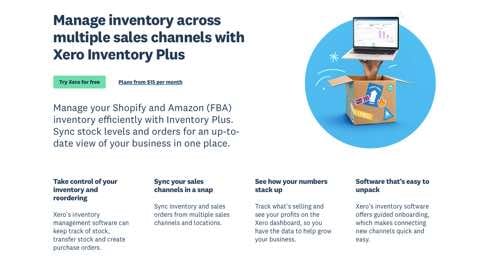
Xero releases inventory management software. Xero, a small-business accounting platform, has launched Inventory Plus management software for U.S. businesses. Inventory Plus helps businesses manage inventory across multiple locations and sales channels, including Fulfillment by Amazon.

Web page on Xero announcing Inventory Plus

Xero Inventory Plus