How Agencies Can Have Successful Client Partnerships [Part 2] via @sejournal, @coreydmorris

Let me start by saying that I know you’re successful and probably wonder what you can learn from me as an agency owner, leader, or staffer.

I will humbly admit that I can and do continue to learn from you; I have some great relationships with other agency owners and always learn something when I’m in the room with them – even if it sometimes feels more like a therapy session than one where we solve all of our problems.

The agency business is hard.

Whether we’re talking about advertising, digital, PR, or other niches and specializations, we’re in a hard industry. We care deeply about people – our own and those who are our clients – as well as the missions and causes that factor into the reasons we’re in our current gigs.

This article is my companion and “part 2” in this series. The first was about how brands can have successful relationships with agencies. In this one, I’m taking the other side.

I’m here today to share the 8 things I’ve learned over my nearly 20 years in agencies – mostly from the mistakes I have made – so if there’s anything you haven’t experienced, you don’t have to go through it yourself.

1. Know What You Want Or Need

This seems blunt, and I apologize if so. But it probably should be.

If you don’t fully push clients to share their goals or help define what success looks like for your partnership and their investment in an agency (or any resources), you’ll risk wasted dollars and time (for both sides) in getting to their ROI goals and risk churn or attrition of the client relationship.

For some clients, it is a process to figure out what they want and many agencies (including mine) have a robust planning and strategy process to help get to the definition and strategy mapping stage.

However, if you don’t work to elicit objectives and truths for their ROI math and measures that show if something is profitable or not, they might not be ready to go down the path of evaluating an agency partnership and, unfortunately, may sign on with you, but not last long.

2. Be Clear On Communication

I often emphasize to prospects and clients that I want them to be bold and honest and to share with us the details of when and how they want to be communicated with.

That is definitely not a one-way street.

Whether you have highly defined communication processes and cadences or typically adapt them to the client, I want to encourage you to be clear early in the relationship about what works best for your agency.

Be open to sharing how you like to communicate. That could be through email, Slack, text, phone calls, scheduled meetings, tickets, or messages in a project management system. Whatever it is, when it is, and what the response times they can expect, you are definitely best served in sharing about your communication parameters.

We never want clients guessing or our staff being caught up in out-of-cycle, off-hour messages or misaligned response windows.

Despite the constant change in subject matter (that we have to contend with), algorithms, and attribution, one of the biggest reasons prospects and clients still reach out to me is that they weren’t getting the communication they expected from their previous agency.

I know this is a two-way problem, and in many cases, the agency would probably acknowledge communication was an issue, too – or wish that they knew, as it is something that is, in many cases, easy to correct compared to the other challenges we face in meeting performance goals in an ever-changing marketplace.

3. Remember The Scope

My companion article mentions scope, and I want to make sure it isn’t lost or forgotten on the agency side as well. I’m as guilty as anyone of wanting to add value (aka over-service) to clients to show them love in the relationship.

Despite the goodwill built and the potential for growing lifetime value with a client, we have to make sure that our teams understand the scope.

If you have tailored scope documents to different clients, then maybe your team is really dedicated to scope management. However, regardless of what your scope management looks like, if you aren’t tracking utilization, efficiency, and profitability in your agency – down to the client level – then you’re likely operating without all of the information you need.

It is really easy for an owner, salesperson, or anyone to get a scope approved in a contract, SOW, MSA, or other document and then for the team to take over and not look back at it.

Be diligent about what is in scope and what is out of scope, and have dedicated processes to monitor and implement the proper change orders and management techniques to stay on budget in a professional manner.

4. Be Invested

This is a weird one. We all say that we are invested and excited about any client who comes through our doors and chooses to work with us—and that we choose to work with. However, I have seen a lot of strange things in my career.

Again, no judgment here, and I can’t say that my team has been fully engaged or invested in every single relationship. Naturally, there are clients and brands in some less-than-sexy industries.

There are clients who are not the easiest to connect with on a personal level. There are clients who are not themselves invested in the work. Or, there are clients who are not pleasant to interact with, and for any number of reasons, you can’t fire them at this moment.

In any situation, it shows when we aren’t invested in the client. Maybe they were the first to show it, or maybe we were. They could be quiet quitting on us.

Whatever it is, we need to show our commitment to not just the day-to-day but to being the idea-bringing, problem-solving, solution-seeking, and proactive communicating member of their team that we can be. We must show our commitment and do all that we can to be fully invested in the relationship.

5. Share Your Expectations

Understanding and managing client expectations is important in the agency/client relationship. It has been talked about forever and will continue to be.

Expectations, however, are a two-way street. We want to know what our clients expect and to help shape those expectations to be realistic based on the scope, our expertise, or the scale of the services we’re offering.

However, what if we also stated what we expect of our clients? I’m not saying it is a perfect process, as the party who is paying the bill typically wants to feel catered to and have their expectations met.

At the same time, as I think back on some of my team’s biggest challenges, they often stem from some type of asset, approval, deliverable, or step that a client hasn’t followed through on or done in a timely manner.

Did we do our best to clearly state our expectations on what we expected from the client? Did they know the consequences of not delivering?

Whether it is a balanced, mutual client agreement, a manifesto, bill of rights, or some other expectation-setting tool or document, I believe that agencies (including mine) should do a better job of stating our expectations while also trying to understand, manage, and set those of the client.

6. Be Patient, Yet Expect Accountability

This one is hard – sometimes really hard.

Accountability can be intimidating and something that is hard for agencies to accept as we typically, by default, don’t have control of client branding decisions, sales teams, ultimate marketing approvals, product roadmaps, or financial performance.

Yes, we often can get transparent ROI math, access to CRM, and possibly a seat at the marketing table.

The difficulty of accountability is that when we don’t have full control, we often can’t be fully accountable for results and actions. In relationships with little digital agency accountability, it is easy to stay on the search or marketing side of the table. That means doing what we can from the outside or a couple of levels deep.

We can report marketing metrics and KPIs and collaborate, but ultimately, it is up to the client to judge the effort’s ROI and connect all the dots.

On the other hand, to get to the depth we need in order to fully prove our ROI, we might not agree with or like the decisions being made and still have to settle for a certain level of accountability that isn’t totally fair to us.

In any situation, we must find a balance between being patient as we navigate getting as deep as possible with our clients versus pushing too hard or being walled off from information.

7. Provide A Clear Escalation Path

Most people in the business world are respectful and professional and want to maintain a positive reputation.

This leads to cordial relationships and often great camaraderie between people on the client and agency sides of the relationship.

However, if the day-to-day person on the agency side is close to the work or close to the client contact, chances are that the client contact may not feel super comfortable providing negative feedback.

Feedback is a great tool in general, as getting it early and often in a relationship allows for minor adjustments to strategy, communication, or other factors in the relationship. However, if someone doesn’t know where to give objective feedback or doesn’t feel they can do it without hurting feelings or being confrontational, then that is a problem.

I mentioned quiet quitting earlier.

I have observed a lot of quiet quitting of clients in agency relationships over the past couple of years. While I don’t know that having an escalation path is the biggest factor, I can definitely recommend making it clear and comfortable for the client to know how to give direct feedback, anonymous feedback, and feedback to others in the chain of command in a way that will be handled professionally so they aren’t shy about giving it.

8. Celebrate

This is possibly the most overlooked aspect of any agency relationship. It might be easy to keep the client at arms distance or even to assume they are celebrating their own wins separate from yours.

Assuming they have real wins in their company that have any attribution to or opportunity to bring in your agency for, then encourage it!

Good agencies care about their clients and their success. Companies who see that success and feel like their agency is a partner, not a vendor, should naturally want to celebrate together.

If you have a partnership that isn’t at arms length, please share your successes with the client and push them to share data and reasons to celebrate with you as well.

With how many years I’ve been doing this, I know our type. I know that we’re agency people who know how to properly party and celebrate things and love to hear about wins and share them.

Chances are, if we are good at sharing wins and cultivating a culture for our clients to share wins with us, we’ll be able to properly party with our clients and be one team instead of two in the relationship.

It might not seem like a big deal, but believe me – in the post-COVID era and in a decade with a lot of burnout, we need to celebrate wins more than ever.

Have Honest, Clear, and Difficult Conversations Earlier

While some of what I talked about might feel like tough love, please know that I will be the first to say that I’m not perfect, nor is my team.

Everything I have shared is what I believe in and is also something I want to be accountable for.

Whether it is setting expectations, making sure the fit with the client is right for both sides, being open to honest feedback, managing scope, or any number of other things that you can do to enhance the client experience and have smooth client relationships, I want to challenge you to test these things out and see how they improve retention, performance, and efficiency in your agency.

More resources: 


Featured Image: LightField Studios/Shutterstock

Google Is Now Indexing EPUB Files via @sejournal, @martinibuster

Google announced that it is now indexing .epub documents, a format commonly used to print books for e-readers. Google is already showing EPUB books in the search index.

EPUB File Format

EPUB is an XML-based eBook publishing format based on a standard developed by the International Digital Publishing Forum, which in 2016 was subsequently merged with the World Wide Wide Web Consortium (W3C). The goal of the merger was to bring together electronic book publishing with the Internet so that they would mutually enrich each other.

Google Indexing EBUB Content

The intent of merging e-publishing with the Internet aligns with Google’s decision to index (and at some point presumably rank) EPUB content. The only surprise should be that it took eight years to do so. The changelog notes that EPUB file format was added to Google’s documentation of indexable file types and offers no other details.

Google’s official changelog offers a matter of fact notation:

“Adding epub to indexable file types

What: Added EPUB to the list of indexable file types.

Why: Google Search now supports epub.”

Does Google Rank EPUB Content?

I did a site:search for EPUB content, noted the title of a scientific research about eating contaminated fish in Lake Ontario (“Consumption of Contaminated Lake Fish and Reproduction”) that was hosted on the journals.lww.com domain.

I next searched for that document in the regular search using the exact match keyword phrase and a variation of the keyword phrase (“Consumption of Contaminated Fish in Lake Ontario”) and Google didn’t surface the EPUB document but it did surface the webpage that contained the download to the EPUB document.

Screenshot Of EPUB Download Page

Google’s official indexable file type documentation only notes that the listed filetypes are indexable. At this time it’s fair to say that Google isn’t ranking EPUB documents but Google will surface them with a filetype:epub search.

Read Google’s official documentation:

File types indexable by Google

Featured Image by Shutterstock/Simple Line

The quest to type Chinese on a QWERTY keyboard created autocomplete

This is an excerpt from The Chinese Computer: A Global History of the Information Age by Thomas S. Mullaney, published on May 28 by The MIT Press. It has been lightly edited.

ymiw2

klt4

pwyy1

wdy6

o1

dfb2

wdv2

fypw3

uet5

dm2

dlu1 …

A young Chinese man sat down at his QWERTY keyboard and rattled off an enigmatic string of letters and numbers.

Was it code? Child’s play? Confusion? It was Chinese.

The beginning of Chinese, at least. These forty-four keystrokes marked the first steps in a process known as “input” or shuru: the act of getting Chinese characters to appear on a computer monitor or other digital device using a QWERTY keyboard or trackpad.

Stills taken from a 2013 Chinese input competition screencast.
COURTESY OF MIT PRESS

Across all computational and digital media, Chinese text entry relies on software programs known as “Input Method Editors”—better known as “IMEs” or simply “input methods” (shurufa). IMEs are a form of “middleware,” so-named because they operate in between the hardware of the user’s device and the software of its program or application. Whether a person is composing a Chinese document in Microsoft Word, searching the web, sending text messages, or otherwise, an IME is always at work, intercepting all of the user’s keystrokes and trying to figure out which Chinese characters the user wants to produce. Input, simply put, is the way ymiw2klt4pwyy … becomes a string of Chinese characters.

IMEs are restless creatures. From the moment a key is depressed, or a stroke swiped, they set off on a dynamic, iterative process, snatching up user-inputted data and searching computer memory for potential Chinese character matches. The most popular IMEs these days are based on Chinese phonetics—that is, they use the letters of the Latin alphabet to describe the sound of Chinese characters, with mainland Chinese operators using the country’s official Romanization system, Hanyu pinyin. 

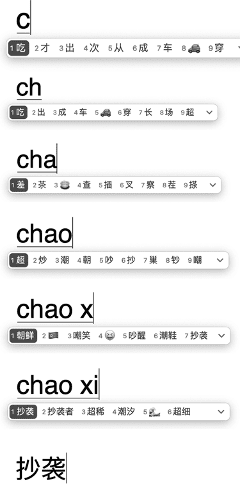
A series of screenshots of the Chinese Input Method Editor pop-up menu showing the process of typing (抄袭 / “plagiarism”).
Example of Chinese Input Method Editor pop-up menu (抄袭 / “plagiarism”)
COURTESY OF MIT PRESS

This young man’s name was Huang Zhenyu (also known by his nom de guerre, Yu Shi). He was one of around sixty contestants that day, each wearing a bright red shoulder sash—like a tickertape parade of old, or a beauty pageant. “Love Chinese Characters” (Ai Hanzi) was emblazoned in vivid, golden yellow on a poster at the front of the hall. The contestants’ task was to transcribe a speech by outgoing Chinese president Hu Jintao, as quickly and as accurately as they could. “Hold High the Great Banner of Socialism with Chinese Characteristics,” it began, or in the original:  高举中国特色社会主义伟大旗帜为夺取全面建设小康社会新胜利而奋斗. Huang’s QWERTY keyboard did not permit him to enter these characters directly, however, and so he entered the quasi-gibberish string of letters and numbers instead: ymiw2klt4pwyy1wdy6…

With these four-dozen keystrokes, Huang was well on his way, not only to winning the 2013 National Chinese Characters Typing Competition, but also to clock one of the fastest typing speeds ever recorded, anywhere in the world.

ymiw2klt4pwyy1wdy6 … is not the same as 高举中国特色社会主义 …  the keys that Huang actually depressed on his QWERTY keyboard—his “primary transcript,” as we could call it—were completely different than the symbols that ultimately appeared on his computer screen, namely the “secondary transcript” of Hu Jintao’s speech. This is true for every one of the world’s billion-plus Sinophone computer users. In Chinese computing, what you type is never what you get.

For readers accustomed to English-language word processing and computing, this should come as a surprise. For example, were you to compare the paragraph you’re reading right now against a key log showing exactly which buttons I depressed to produce it, the exercise would be unenlightening (to put it mildly). “F-o-r-_-r-e-a-d-e-r-s-_-a-c-c-u-s-t-o-m-e-d-_t-o-_-E-n-g-l-i-s-h … ” it would read (forgiving any typos or edits). In English-language typewriting and computer input, a typist’s primary and secondary transcripts are, in principle, identical. The symbols on the keys and the symbols on the screen are the same.

Not so for Chinese computing. When inputting Chinese, the symbols a person sees on their QWERTY keyboard are always different from the symbols that ultimately appear on the monitor or on paper. Every single computer and new media user in the Sinophone world—no matter if they are blazing-fast or molasses-slow—uses their device in exactly the same way as Huang Zhenyu, constantly engaged in this iterative process of criteria-candidacy-confirmation, using one IME or another. Not some Chinese-speaking users, mind you, but all. This is the first and most basic feature of Chinese computing: Chinese human-computer interaction (HCI) requires users to operate entirely in code all the time.

If Huang Zhenyu’s mastery of a complex alphanumeric code weren’t impressive enough, consider the staggering speed of his performance. He transcribed the first 31 Chinese characters of Hu Jintao’s speech in roughly 5 seconds, for an extrapolated speed of 372 Chinese characters per minute. By the close of the grueling 20-minute contest, one extending over thousands of characters, he crossed the finish line with an almost unbelievable speed of 221.9 characters per minute.

That’s 3.7 Chinese characters every second.

In the context of English, Huang’s opening 5 seconds would have been the equivalent of around 375 English words-per-minute, with his overall competition speed easily surpassing 200 WPM—a blistering pace unmatched by anyone in the Anglophone world (using QWERTY, at least). In 1985, Barbara Blackburn achieved a Guinness Book of World Records–verified performance of 170 English words-per-minute (on a typewriter, no less). Speed demon Sean Wrona later bested Blackburn’s score with a performance of 174 WPM (on a computer keyboard, it should be noted). As impressive as these milestones are, the fact remains: had Huang’s performance taken place in the Anglophone world, it would be his name enshrined in the Guinness Book of World Records as the new benchmark to beat.

Huang’s speed carried special historical significance as well.

For a person living between the years 1850 and 1950—the period examined in the book The Chinese Typewriter—the idea of producing Chinese by mechanical means at a rate of over two hundred characters per minute would have been virtually unimaginable. Throughout the history of Chinese telegraphy, dating back to the 1870s, operators maxed out at perhaps a few dozen characters per minute. In the heyday of mechanical Chinese typewriting, from the 1920s to the 1970s, the fastest speeds on record were just shy of eighty characters per minute (with the majority of typists operating at far slower rates). When it came to modern information technologies, that is to say, Chinese was consistently one of the slowest writing systems in the world.

What changed? How did a script so long disparaged as cumbersome and helplessly complex suddenly rival—exceed, even—computational typing speeds clocked in other parts of the world? Even if we accept that Chinese computer users are somehow able to engage in “real time” coding, shouldn’t Chinese IMEs result in a lower overall “ceiling” for Chinese text processing as compared to English? Chinese computer users have to jump through so many more hoops, after all, over the course of a cumbersome, multistep process: the IME has to intercept a user’s keystrokes, search in memory for a match, present potential candidates, and wait for the user’s confirmation. Meanwhile, English-language computer users need only depress whichever key they wish to see printed on screen. What could be simpler than the “immediacy” of “Q equals Q,” “W equals W,” and so on?

Tom Mullaney

COURTESY OF TOM MULLANEY

To unravel this seeming paradox, we will examine the first Chinese computer ever designed: the Sinotype, also known as the Ideographic Composing Machine. Debuted in 1959 by MIT professor Samuel Hawks Caldwell and the Graphic Arts Research Foundation, this machine featured a QWERTY keyboard, which the operator used to input—not the phonetic values of Chinese characters—but the brushstrokes out of which Chinese characters are composed. The objective of Sinotype was not to “build up” Chinese characters on the page, though, the way a user builds up English words through the successive addition of letters. Instead, each stroke “spelling” served as an electronic address that Sinotype’s logical circuit used to retrieve a Chinese character from memory. In other words, the first Chinese computer in history was premised on the same kind of “additional steps” as seen in Huang Zhenyu’s prizewinning 2013 performance.

During Caldwell’s research, he discovered unexpected benefits of all these additional steps—benefits entirely unheard of in the context of Anglophone human-machine interaction at that time. The Sinotype, he found, needed far fewer keystrokes to find a Chinese character in memory than to compose one through conventional means of inscription. By way of analogy, to “spell” a nine-letter word like “crocodile” (c-r-o-c-o-d-i-l-e) took far more time than to retrieve that same word from memory (“c-r-o-c-o-d” would be enough for a computer to make an unambiguous match, after all, given the absence of other words with similar or identical spellings). Caldwell called his discovery “minimum spelling,” making it a core part of the first Chinese computer ever built. 

Today, we know this technique by a different name: “autocompletion,” a strategy of human-computer interaction in which additional layers of mediation result in faster textual input than the “unmediated” act of typing. Decades before its rediscovery in the Anglophone world, then, autocompletion was first invented in the arena of Chinese computing.

Chrome Extensions for Search Console

Artificial intelligence is upending Google Search. Merchants who rely on organic search traffic must track a nonstop flow of changes and updates to maintain performance.

Search Console is the most reliable tool because it uses Google’s own data. Here are three Chrome extensions to better understand Search Console’s data.

GSC Guardian

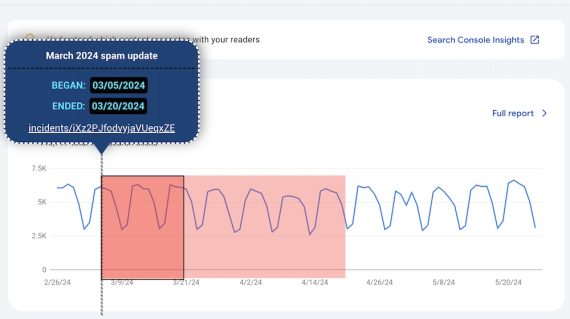
Sample overlay on Search Console from GSC Guardian.

Sample overlay on Search Console from GSC Guardian. Click image to enlarge.

GSC Guardian overlays Search Console reports with information from Google’s Search Status Dashboard. Users can create annotations on Search Console for tasks or observations and then export them to a CSV file or Google Sheet.

The extension helps correlate Google’s updates with your site’s traffic, to react accordingly.

Search Console Enhanced Analytics

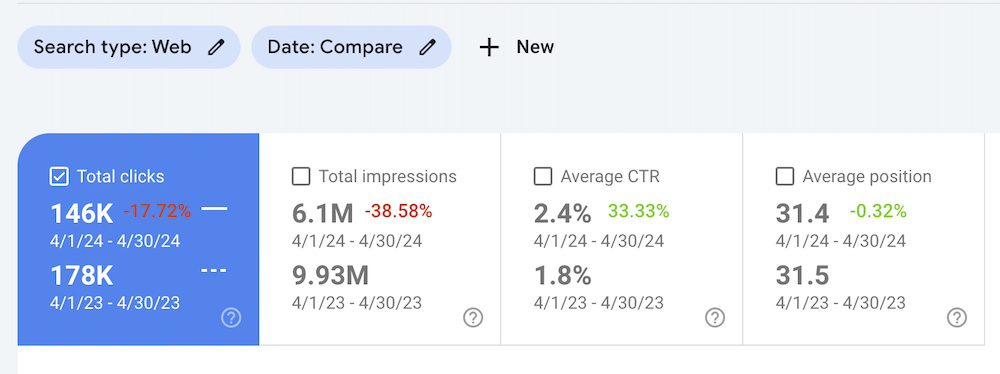
Screenshot of comparison screen on Google Search Console Enhanced Analytics

Google Search Console Enhanced Analytics compares clicks, impressions, and positions across periods. Click image to enlarge.

Google Search Console Enhanced Analytics compares clicks, impressions, and positions across two periods to analyze (via color coding) traffic fluctuations, trends, and more.

Use a premium feature to generate search volume for each query your site ranks for, per Search Console, at $0.05 per request.

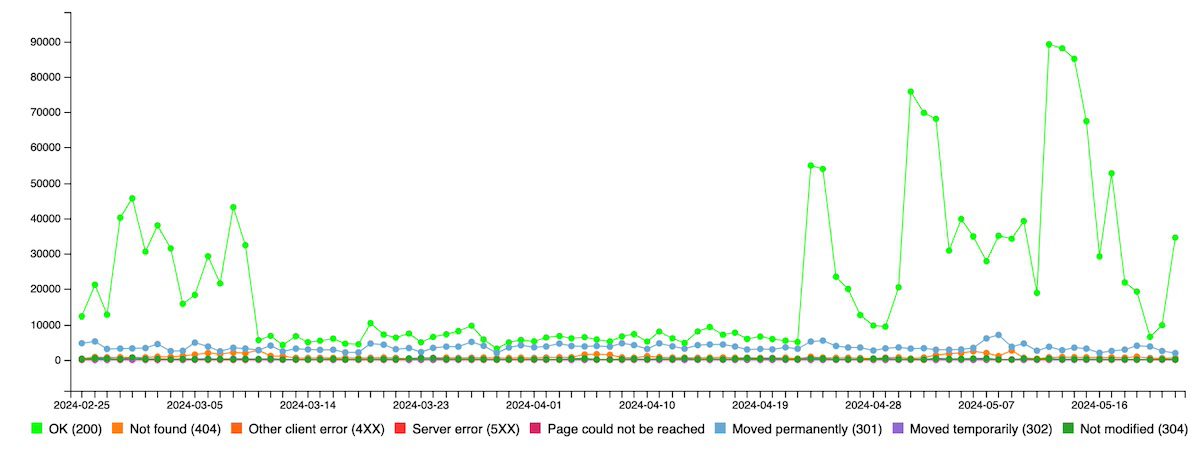
GSC Crawl Stats Downloader

Screenshot of sample GSC Crawl Stats Downloader visualization

GSC Crawl Stats Downloader builds a handy visualization of crawl activity. Click image to enlarge.

GSC Crawl Stats Downloader provides a better way to download crawl stats from Search Console. Instead of downloading multiple CSV files (by response, file type, purpose, Googlebot type, or summary), this extension can download everything with one click.

Google assigns a crawl budget for every site. Knowing how often Google visits your site is essential. The crawl frequency or page volume usually implies the priority (to Google) — sites with higher rankings typically see more crawls.

Conversely, it’s a possible structural problem if Google crawls many pages but fails to index them.

Install the extension and click it while viewing Search Console. The extension will identify and merge the crawl stats and build a handy visualization to show the crawl activity at a glance.

Google’s AI Overviews Shake Up Ecommerce Search Visibility via @sejournal, @MattGSouthern

An analysis of 25,000 ecommerce queries by Bartosz Góralewicz, founder of Onely, reveals the impact of Google’s AI overviews on search visibility for online retailers.

The study found that 16% of eCommerce queries now return an AI overview in search results, accounting for 13% of total search volume in this sector.

Notably, 80% of the sources listed in these AI overviews do not rank organically for the original query.

“Ranking #1-3 gives you only an 8% chance of being a source in AI overviews,” Góralewicz stated.

Shift Toward “Accelerated” Product Experiences

International SEO consultant Aleyda Solis analyzed the disconnect between traditional organic ranking and inclusion in AI overviews.

According to Solis, for product-related queries, Google is prioritizing an “accelerated” approach over summarizing currently ranking pages.

She commented Góralewicz’ findings, stating:

“… rather than providing high level summaries of what’s already ranked organically below, what Google does with e-commerce is “accelerate” the experience by already showcasing what the user would get next.”

Solis explains that for queries where Google previously ranked category pages, reviews, and buying guides, it’s now bypassing this level of results with AI overviews.

Assessing AI Overview Traffic Impact

To help retailers evaluate their exposure, Solis has shared a spreadsheet that analyzes the potential traffic impact of AI overviews.

As Góralewicz notes, this could be an initial rollout, speculating that “Google will expand AI overviews for high-cost queries when enabling ads” based on data showing they are currently excluded for high cost-per-click keywords.

An in-depth report across ecommerce and publishing is expected soon from Góralewicz and Onely, with additional insights into this search trend.

Why SEJ Cares

AI overviews represent a shift in how search visibility is achieved for ecommerce websites.

With most overviews currently pulling product data from non-ranking sources, the traditional connection between organic rankings and search traffic is being disrupted.

Retailers may need to adapt their SEO strategies for this new search environment.

How This Can Benefit You

While unsettling for established brands, AI overviews create new opportunities for retailers to gain visibility without competing for the most commercially valuable keywords.

Ecommerce sites can potentially circumvent traditional ranking barriers by optimizing product data and detail pages for Google’s “accelerated” product displays.

The detailed assessment framework provided by Solis enables merchants to audit their exposure and prioritize optimization needs accordingly.


FAQ

What are the key findings from the analysis of AI overviews & ecommerce queries?

Góralewicz’s analysis of 25,000 ecommerce queries found:

  • 16% of ecommerce queries now return an AI overview in the search results.
  • 80% of the sources listed in these AI overviews do not rank organically for the original query.
  • Ranking positions #1-3 only provides an 8% chance of being a source in AI overviews.

These insights reveal significant shifts in how ecommerce sites need to approach search visibility.

Why are AI overviews pulling product data from non-ranking sources, and what does this mean for retailers?

Google’s AI overviews prioritize “accelerated” experiences over summarizing currently ranked pages for product-related queries.

This shift focuses on showcasing directly what users seek instead of traditional organic results.

For retailers, this means:

  • A need to optimize product pages beyond traditional SEO practices, catering to the data requirements of AI overviews.
  • Opportunities to gain visibility without necessarily holding top organic rankings.
  • Potential to bypass traditional ranking barriers by focusing on enhanced product data integration.

Retailers must adapt quickly to remain competitive in this evolving search environment.

What practical steps can retailers take to evaluate and improve their search visibility in light of AI overview disruptions?

Retailers can take several practical steps to evaluate and improve their search visibility:

  • Utilize the spreadsheet provided by Aleyda Solis to assess the potential traffic impact of AI overviews.
  • Optimize product and detail pages to align with the data and presentation style preferred by AI overviews.
  • Continuously monitor changes and updates to AI overviews, adapting strategies based on new data and trends.

These steps can help retailers navigate the impact of AI overviews and maintain or improve their search visibility.


Featured Image: Marco Lazzarini/Shutterstock

Google Rolls Out Search Profile Feature For Reviewers via @sejournal, @MattGSouthern

Google is rolling out a new social profile feature that will allow you to view, manage, and share written reviews across Google’s various platforms.

This feature was announced via an email to people who have contributed reviews to Google Search.

In the email notification, Google states that the primary purpose of this feature is to “make your reviews more helpful to others.”

Please note that this is separate from users’ Google Maps review history, which is already public.

Centralized Review Management

Google’s search reviews profiles, accessible at profile.google.com, is a centralized hub for you to see all the reviews you’ve previously contributed, including reviews for TV shows, movies, and other content.

This new feature provides a more seamless experience for viewing, updating, and deleting past reviews.

Private Initially, Public Soon

Currently, these profiles are visible only to the individual users themselves.

On June 24th, other Google users can view your profile and written reviews by tapping our name or picture on any published reviews.

Privacy Considerations

By allowing users to access and explore each other’s review histories, Google is making the review ecosystem within its platforms more transparent.

While the profile will make your written reviews publicly accessible, Google has assured that personal details from individual Google Accounts, such as birthdays, won’t be displayed.

If you prefer not to have a public profile, you’ll have the option to delete it.

Why SEJ Cares

This centralized profile could be a helpful way to evaluate the credibility and consistency of reviewers, potentially influencing purchasing decisions.

Conversely, creators may need to adapt their review management strategies to account for the potential impact of individual reviewers.

As the June 24th rollout date approaches, expect to see this new feature integrated into the search experience.

How This Can Benefit You

If you actively contribute reviews on Google’s platforms, this increased visibility may enhance your influence and result in greater recognition within your area of expertise.

For creators, the ability to investigate reviewer profiles could help identify and address potentially misleading or fraudulent reviews, fostering a more trustworthy review ecosystem.

On the other hand, it may necessitate a more proactive approach to monitoring and responding to critical reviews, as they will now be more easily accessible to potential customers.


FAQ

What is the search reviews profile feature introduced by Google?

Google introduced a new type of social profile that allows users to view, manage, and share their written reviews across various platforms.

This feature aims to make users’ reviews more helpful by centralizing them in one hub. It makes it easier for users to update, delete, or view their past reviews. Initially private, these profiles will soon be visible to other users starting June 24th.

How will individual reviewer profiles impact online marketers?

This feature adds a layer of transparency to the review ecosystem. Online marketers might use these profiles to assess the credibility and consistency of reviewers, which can inform their strategies for managing customer feedback.

For reviewers, increased visibility can enhance their reputations, potentially influencing purchasing decisions and improving their authority in specific niches.

What are the key benefits of the new Google profiles for active review contributors?

Active review contributors stand to benefit from increased visibility and recognition. Their reviews will be easily accessible, enhancing their influence as trusted reviewers.

This can be particularly advantageous for users whose reviews focus on specific domains, as it may lead to greater acknowledgment and trust from the community.


Featured Image: BestForBest/Shutterstock

Why EQ Is Important At Work (And In SEO)

Emotional intelligence (EQ) is important in our work and personal lives. It helps us manage and resolve conflict and support others with empathy, which in turn helps us build stronger relationships with others.

EQ also helps us accept and deliver criticism calmly and be comfortable saying no, which are valuable skills we need at work.

But how does this fit in with SEO?

We work with and manage people from different backgrounds and cultures globally on a remote basis across many time zones, so delivering the goals set by different stakeholders can be difficult.

In SEO, we often work across disciplines, such as working with designers and developers. Every team has different key performance indicators (KPIs) and this requires negotiation.

It is important to understand others and communicate effectively so we can work towards the same goal.

Emotional intelligence helps us to better communicate and work together.

Being able to say “no” is also very important in SEO, as sometimes you may be the only SEO professional in the company and be expected to do many aspects of SEO.

Others might assume you will do technical support, content writing, strategy, and be a GA4 expert. This is unrealistic and will lead to you being overwhelmed and not reaching your KPIs.

What Is EQ?

EQ, also known as emotional intelligence, is how we handle our own emotions and perceive the emotions of others. It was first coined by psychologists Peter Salovey and John D. Mayer in 1990.

EQ is the:

“Ability to understand, use, and manage your own emotions in positive ways to relieve stress, communicate effectively, empathize with others, overcome challenges and defuse conflict.”

The primary components of EQ are:

  • Perceiving emotions.
  • Reasoning with emotions.
  • Understanding emotions.
  • Managing emotions.

Daniel Goleman revolutionized how we think about intelligence. He pioneered the idea that emotional intelligence is more important than IQ.

Prior to his book Emotional Intelligence: Why It Can Matter More Than IQ, IQ was always seen as more important.

Published in 1995, it was a best seller for a year and a half and has been translated into 40 different languages.

There Are 5 Elements Of EQ

  • Self-awareness.
  • Self-regulation.
  • Motivation.
  • Empathy.
  • Social Skills.

Self-Awareness

This involves knowing and understanding one’s own emotions and recognizing their impact on yourself and those around you.

It means understanding one’s own strengths and limits. When someone is able to recognize and understand their own feelings and emotions, they can understand others.

When we apply this to SEO, we should be able to recognize the different areas of SEO we know well and those where we need more support.

For example, if an SEO director does not grasp technical SEO well and does not admit they need help, they may be more defensive when talking to the development team.

Instead, they should ask the development team to explain in layman’s terms how to resolve a technical problem, and they could then learn from that.

This means the SEO director may end up having a difficult relationship with the development team, and technical changes may take longer.

Self-Regulation

Self-regulation is controlling one’s own behavior and emotions. It involves pausing between a feeling and an action.

It is about taking the time to think things through, make a plan, wait patiently, and then act. Often, children struggle with these behaviors, but surprisingly, many adults do too.

Motivation

This is the ability to self-motivate and not rely on external praise or rewards.

People with high motivation can focus on achieving internal or self-gratification, and they tend to be more committed and goal-focused than those who want constant praise and reassurance.

At work, there may be some team members who are only motivated if their manager praises them for their work. If many different teams are collaborating on a project and the KPIs do not align with those their manager gave them, they may be less likely to want to work on that task.

Being aware of these people in the team will help address these issues and find common KPIs that all will be happy to work towards.

Empathy

Empathy means being a good listener and slow to judge.

Those with empathy are less likely to be self-centered. They can recognize and understand how others are feeling and consider those feelings before responding in social situations.

Empathy also allows an individual to understand the dynamics that influence relationships, both personal and in the workplace.

Empathy is one of the most important leadership skills.

When building and running a team, especially in SEO, where there are different job roles such as developer, content creator, SEO specialist, and UX designer, it is important to set time aside in one-to-ones to discuss how employees are feeling at work.

Are they valued, do they feel they are being listened to, are they confused with the updates in search, do they have enough support? Empathy is also crucial when hiring especially when hiring remotely and to work in a remote team.

Social Skills

Those with great social skills find it easy to collaborate with others, and they tend to be great leaders.

They are able to manage the emotions of others through emotional understanding, and they can use this to build rapport and connect with others.

They are active listeners and are aware of nonverbal communication.

The (EI) Model

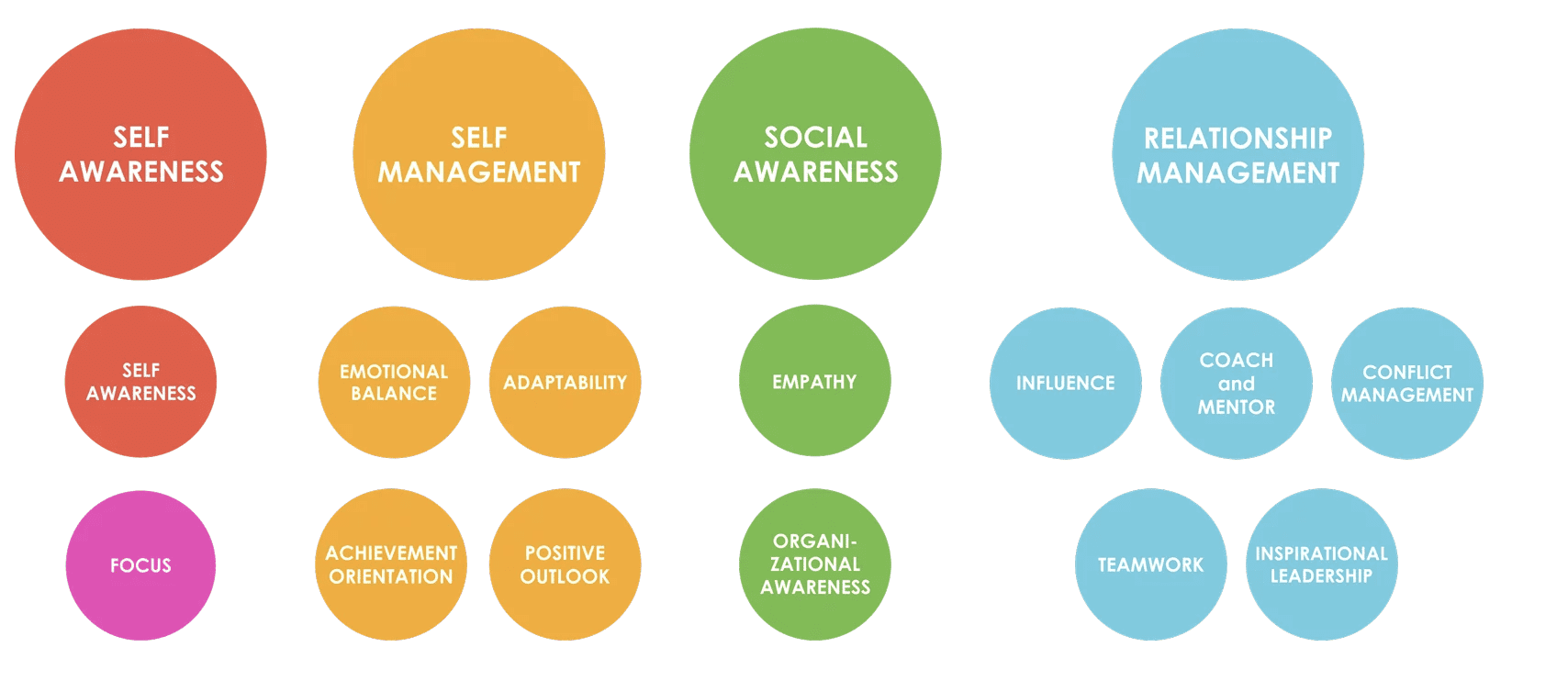
Daniel breaks the above into 12 essential competencies.

The Daniel Goleman Emotional Intelligence (EI) Model is shown below. His course helps individuals become better selves, great leaders, and build high-performance teams.

Read more details about Daniel Goleman’s framework.

Four Domains and Twelve CompetenciesImage from Daniel Goleman, May 2024

Why Is EQ Important?

There are numerous reasons:

Other reasons EQ is important is that it also impacts one’s physical health and mental health.

Physical Health

High levels of stress leads to increased blood pressure which then suppresses the immune system. This can result in being run down and so more susceptible to colds.

A suppressed immune system can lead to an increased risk of heart attack and stress can contribute to infertility. Stress also speeds up the aging process and affects mental health.

Mental Health

Uncontrolled emotions and stress can impact mental health. This then leads to anxiety and depression.

This means that a person is unable to form strong relationships, which in turn leads to loneliness and isolation which is not good for one’s mental health.

Why Is EQ Important For SEO?

When working to gain exposure for a brand, you message and connect with journalists. You reach out to them, have conversations about your brand, and build relationships.

EQ is an integral part of forming relationships and people want to work with those who they like.

Empathy is putting oneself in other shoes. When selling in SEO to the C-Suite to get buy-in, many may not understand it and only want to know about the revenue figure.

Therefore, it is important to understand the board’s KPIs, show them the data they want, and explain how SEO impacts their bottom line.

Without EQ, you would not know what the board is looking for, and you may not get their buy-in for key SEO projects.

Difference Between Low EQ And High EQ

Have you ever noticed some bosses (or colleagues) fly off the handle when you have not done exactly what they wanted? Or maybe they get annoyed if you do not answer them in a succinct manner.

They have not learned to control their emotions.

Below is a comparison to see a top-line view of the difference between those with low EQ and those with high EQ.

Those With Low EQ

  • Become upset easily.
  • Emotional outbursts (overwhelmed by emotions).
  • Do not listen to others.
  • Blame others for their problems.
  • Behave insensitively.
  • Feel misunderstood.
  • Struggle to make long-term relationships (have few close friends).
  • Have problems being assertive.

Those With High EQ

  • Remain calm and composed even during stressful situations.
  • Can handle difficult people with tact.
  • Forgive and forget (do not hold a grudge).
  • Influence others towards a common goal (even if not a leader).
  • Great team player (you want to work with them).
  • Understand the links between their emotions and how they behave.
  • Help others.

Test Your Own EQ

It is very important to know one’s own EQ, then we can start to be self-aware and build on this.

Once we are aware of our own emotions, we can start understanding others and react better in work and social situations.

Emotional intelligence has a positive correlation with success, both individually and in a team (for example, at work).

These sites offer free EQ tests:

This post cannot go into too much detail about the different types of tests.

However, please refer to this site, which has a list of here are many paid tests to learn more about EQ.

I highly recommend that all SEO teams have their staff take the EQ test and then share some of the insights and discoveries from it in a follow-up team meeting.

In one-to-ones, share the results only if you feel comfortable, and then try and align your own personal development plan to these.

How To Improve One’s EQ

These are a few ways to improve one’s emotional intelligence, but please note I am not a psychologist. I am sharing tips from what I have read and experienced.

Self-Aware And Self-Control

It is important to be aware of one’s own feelings and emotions. Once one understands these, one can recognize them in others.

Listen to yourself. When in a stressful situation, what are your emotions? How do you normally respond? How could you respond better?

We are sometimes too busy to sit back and listen to ourselves and take note of how we’re feeling.

A good way to understand your emotions is to keep a journal and write down your feelings every day.

Empathy

To improve one’s own EQ, try to put yourself in someone else’s shoes. Consider how others feel (please note that this is different from sympathy).

Especially as a team leader, find out if there are any key issues from the team, and ask them about their goals.

Find out how you relate to others by getting 180 feedback and having those deeper conversations with key colleagues, not just the “How was your week?”

For example, if you are a team leader or manager, ask thoughtful and provocative questions such as:

“How was the week? I appreciate there were some major updates in SEO and the clients were asking a lot of questions. Let’s sit down and prep for the client meeting on Monday.”

This will show that you genuinely care about your employees and you want to help them with the work.

Mindfulness

Practice this by fully focusing on the moment – not taking photos and tweeting or posting on social media. Enjoy the moment.

Do not think about the past or the future or worry about what may or may not happen. Some people practice meditation and breathing techniques.

If all the above is too much, I strongly recommend starting with active listening when you are next at work:

Active Listening Tips

  • Take note of how long you are speaking vs others in a call.
  • Listen to what is not being said – this is particularly true in team and client meetings.
  • Be present when the other person is talking; this is a two-way dialogue.
  • Do not interrupt to give your opinion – let them finish what they are saying or asking.
  • Listen to the tone of voice and emotions, what is the body language? For example, how is the client reacting to the quarterly results report in the meeting?
  • Are you building the other person’s self-esteem by asking deeper questions? Are you confirming what they are saying?
  • Are you present? Or do you just want to push out your agenda?
  • Or are you sitting quietly, waiting for the meeting to be over?

Do not drown in your emotions; be aware of them, then control and manage them.

Communicate better with others, try and understand their perspectives, and be a better collaborator.

This will help build long-lasting relationships both at work and in one’s personal life.

More resources:


Featured Image: Jo Juliana Turnbull

Amazon Marketplace Fears

The Amazon marketplace is a jungle. Savvy merchants can reach a massive audience and sell a lot of merchandise, but like a real jungle, there are reasons to be afraid.

Contributing to sellers’ fear are Amazon’s dominance in the U.S. market, advertising challenges, and Google’s generative search results. Let’s consider each.

King Amazon

Amazon delivery vans in a parking lot

In 2023 Amazon Logistics transported more packages than each UPS and FedEx, a first.

I set out to address the amazing Amazon Logistics and how it helps small and mid-sized ecommerce businesses.

The impetus was an annual Pitney Bowes report stating, “2023 is the first time in the Index history that Amazon Logistics surpasses UPS in parcel volume.”

The king of the ecommerce jungle, Amazon, transported 5.9 billion parcels in the United States in 2023, compared to 4.6 billion for UPS and 3.9 billion for FedEx.

Only the United States Postal Services (6.6 billion boxes and envelopes) had more parcel volume than Amazon Logistics. Of the big four — USPS, UPS, FedEx, and Amazon Logistics— only Amazon’s parcel volume increased in 2023, up some 800 million parcels from the prior year.

I asked a few Amazon marketplace pros about the impact on SMBs.

Two services — Amazon Logistics and Fulfillment by Amazon — streamline storage, packing, shipping, customer service, and returns, freeing sellers from the complexities of order fulfillment. Consumers love the service, with many packages — purchased on Amazon from small businesses and emerging DTC sellers — delivered the same day as ordered.

It is a strong opportunity, but not without risks. Those same experts noted that while Amazon’s dominance enables SMBs to sell and compete with massive retailers, it also makes them dependent.

“It shows how reliant sellers are on Amazon,” said Jon Elder, the founder of Black Label Advisor, a Texas-based Amazon consultancy.

“Amazon is nearing 50% of all ecommerce revenue in America, so it’s almost a monopoly now,” Elder said, adding that the dominance has allowed Amazon to raise its selling fee significantly.

“Margins are getting crushed,” Elder said.

Some in the industry have estimated that new logistics-related fees in February 2024 add about 15 cents to the cost of each item sold on the marketplace and managed via FBA. In Amazon’s defense, the increase was reportedly consistent with or even below the increases by other parcel carriers.

Nonetheless, a merchant that depends on Amazon for most of its revenue has no obvious choice but to pay.

Effective Advertising

Many marketplace sellers are reliant on more than shipping and fulfillment. Amazon Ads is vital, too.

Amazon’s advertising platform has several advantages over Meta Ads and Google Ads, such as:

  • Large, high-intent audience. Depending on the study, between 50% and 57% of all shopping intent searches in America start on Amazon.
  • Seamless shopping. Amazon Ads are integrated into the platform’s search results and product pages, enhancing visibility and conversions.
  • First-party data. Most Amazon shoppers are logged in when they see an ad. The hubbub about tracking cookies has little impact on performance.

Amazon Ads drives the bulk of sales for many sellers. That’s the opportunity. The concern is increasing costs and a disruption of some sort.

AI Search

Some marketplace professionals believe that Google’s AI Overviews (previously called Search Generative Experience) could drive some ecommerce and D2C companies to Amazon.

AI Overviews may reduce organic search traffic to sellers’ own ecommerce sites.

Imagine a consumer seeking trail running shoes. She searches Google for “the best running shoes for Appalachian trails.” An online shoe store has a comprehensive, search-optimized article about that very topic, pairing the perfect shoe with each type of Appalachian terrain.

Before Overviews, this query could lead her to the article on the store’s website, with its branding and merchandising. The odds were good she would click a shoe in the article and add it to the cart.

Google’s AI Overview can now provide the answer from the article without a clear link to the store.

In February 2024, research firm Gartner predicted that AI would reduce overall organic search traffic by about 25% by 2026.

Meanwhile, in May 2024, Raptive, a company that places ads on creators’ and publishers’ websites, expressed concern “about the implications of AI Overviews. Our initial analysis suggests it will significantly reduce search traffic to content creators’ websites, directly impacting their ad revenue and, by extension, their livelihoods.”

Ecommerce stores with a meaningful reduction in organic search traffic could seek new sales channels such as Amazon’s marketplace, resulting in more competition.

Google’s AI Overviews Go Viral, Draw Mainstream Media Scrutiny via @sejournal, @MattGSouthern

Google’s rollout of AI-generated overviews in US search results is taking a disastrous turn, with mainstream media outlets like The New York Times, BBC, and CNBC reporting on numerous inaccuracies and bizarre responses.

On social media, users are sharing endless examples of the feature’s nonsensical and sometimes dangerous output.

From recommending non-toxic glue on pizza to suggesting that eating rocks provides nutritional benefits, the blunders would be amusing if they weren’t so alarming.

Mainstream Media Coverage

As reported by The New York Times, Google’s AI overviews struggle with basic facts, claiming that Barack Obama was the first Muslim president of the United States and stating that Andrew Jackson graduated from college in 2005.

These errors undermine trust in Google’s search engine, which more than two billion people rely on for authoritative information worldwide.

Manual Removal & System Refinements

As reported by The Verge, Google is now scrambling to remove the bizarre AI-generated responses and improve its systems manually.

A Google spokesperson confirmed that the company is taking “swift action” to remove problematic responses and using the examples to refine its AI overview feature.

Google’s Rush To AI Integration

The flawed rollout of AI overviews isn’t an isolated incident for Google.

As CNBC notes in its report, Google made several missteps in a rush to integrate AI into its products.

In February, Google was forced to pause its Gemini chatbot after it generated inaccurate images of historical figures and refused to depict white people in most instances.

Before that, the company’s Bard chatbot faced ridicule for sharing incorrect information about outer space, leading to a $100 billion drop in Google’s market value.

Despite these setbacks, industry experts cited by The New York Times suggest that Google has little choice but to continue advancing AI integration to remain competitive.

However, the challenges of taming large language models, which ingest false information and satirical posts, are now more apparent.

The Debate Over AI In Search

The controversy surrounding AI overviews adds fuel to the debate over the risks and limitations of AI.

While the technology holds potential, these missteps remind everyone that more testing is needed before unleashing it on the public.

The BBC notes that Google’s rivals face similar backlash over their attempts to cram more AI tools into their consumer-facing products.

The UK’s data watchdog is investigating Microsoft after it announced a feature that would take continuous screenshots of users’ online activity.

At the same time, actress Scarlett Johansson criticized OpenAI for using a voice likened to her own without permission.

What This Means For Websites & SEO Professionals

Mainstream media coverage of Google’s erroneous AI overviews brings the issue of declining search quality to public attention.

As the company works to address inaccuracies, the incident serves as a cautionary tale for the entire industry.

Important takeaway: Prioritize responsible use of AI technology to ensure the benefits outweigh its risks.