Stem-cell therapies that work: 10 Breakthrough Technologies 2025

WHO

California Institute for Regenerative Medicine, Neurona Therapeutics, Vertex Pharmaceuticals

WHEN

5 years

A quarter-century ago, researchers isolated powerful stem cells from embryos created through in vitro fertilization. These cells, theoretically able to morph into any tissue in the human body, promised a medical revolution. Think: replacement parts for whatever ails you. 

But stem-cell science didn’t go smoothly. Not at first. Even though scientists soon learned to create these make-anything cells without embryos, coaxing them to become truly functional adult tissue proved harder than anyone guessed.

Now, though, stem cells are finally on the brink of delivering. Take the case of Justin Graves, a man with debilitating epilepsy who received a transplant of lab-made neurons, engineered to quell the electrical misfires in his brain that cause epileptic attacks.

Since the procedure, carried out in 2023 at the University of California, San Diego, Graves has reported having seizures about once a week, rather than once per day as he used to. “It’s just been an incredible, complete change,” he says. “I am pretty much a stem-cell evangelist now.”

The epilepsy trial, from a company called Neurona Therapeutics, is at an early stage—only 15 patients have been treated. But the preliminary results are remarkable.

Last June, a different stem-cell study delivered dramatic results. This time it was in type 1 diabetes, the autoimmune condition formerly called juvenile diabetes, in which a person’s body attacks the beta islet cells in the pancreas. Without working beta cells to control their blood sugar levels, people with type 1 diabetes rely on daily blood glucose monitoring and insulin injections or infusions to stay alive.

Explore the full 2025 list of 10 Breakthrough Technologies.

In this ongoing study, carried out by Vertex Pharmaceuticals in Boston, some patients who got transfusions of lab-made beta cells have been able to stop taking insulin. Instead, their new cells make it when it’s needed. 

No more seizures. No more insulin injections. Those are the words patients have always wanted to hear. And it means stem-cell researchers are close to achieving functional cures—when patients can get on with life because their bodies are able to self-regulate. 

Why EVs are (mostly) set for solid growth in 2025

MIT Technology Review’s What’s Next series looks across industries, trends, and technologies to give you a first look at the future. You can read the rest of them here.

It looks as though 2025 will be a solid year for electric vehicles—at least outside the United States, where sales will depend on the incoming administration’s policy choices.

Globally, these cleaner cars and trucks will continue to eat into the market share of gas-guzzlers as costs decline, consumer options expand, and charging stations proliferate.

Despite all the hubbub about an EV slowdown last year, worldwide sales of battery EVs and plug-in hybrids likely hit a record high of nearly 17 million vehicles in 2024 and are expected to rise about 20% this year, according to the market research firm BloombergNEF. 

In addition, numerous automakers are preparing to deliver a variety of cheaper models to auto showrooms around the world. In turn, both the oil demand and the greenhouse-gas emissions stemming from vehicles on the roads are likely to peak over the next few years.

To be sure, the growth rate of EV sales has cooled, as consumers in many regions continue to wait for more affordable options and more convenient charging solutions. 

It also hasn’t helped that a handful of nations, like China, Germany, and New Zealand, have eased back the subsidies that were accelerating the rollout of low-emissions vehicles. And it certainly won’t do the sector any favors if President-elect Donald Trump follows through on his campaign pledges to eliminate government support for EVs and erect trade barriers that would raise the cost of producing or purchasing them.

Industry experts and climate scientists argue that the opposite should be happening right now. A critical piece of any realistic strategy to keep climate change in check is to fully supplant internal-combustion vehicles by around 2050. Without stricter mandates or more generous support for EVs, the world will not be on track to meet that goal, BloombergNEF finds and others confirm. 

“We have to push the car companies—and we also have to help them with incentives, R&D, and infrastructure,” says Gil Tal, director of the EV Research Center at the University of California, Davis.

But ultimately, the fate of EV sales will depend on the particular dynamics within specific regions. Here’s a closer look at what’s likely to steer the sector in the world’s three largest markets: the US, the EU, and China.

United States

The US EV market will be a mess of contradictions.

On the one hand, companies are spending tens of billions of dollars to build or expand battery, EV, and charger manufacturing plants across America. Within the next few years, Honda intends to begin running assembly lines retooled to produce EVs in Ohio, Toyota plans to begin producing electric SUVs at its flagship plant in Kentucky, and GM expects to begin cranking out its revived Bolts in Kansas, among dozens of other facilities in planning or under construction.

All that promises to drive down the cost of cleaner vehicles, boost consumer options, create tens of thousands of jobs, and help US auto manufacturers catch up with overseas rivals that are speeding ahead in EV design, production, and innovation.

But it’s not clear that will necessarily translate into lower consumer prices, and thus greater demand, because Trump has pledged to unravel the key policies currently propelling the sector. 

His plans are reported to include rolling back the consumer tax credits of up to $7,500 included in President Joe Biden’s signature climate bill, the Inflation Reduction Act. He has also threatened to impose stiff tariffs on goods imported from Mexico, China, Canada, and other nations where many vehicles or parts are manufactured. 

Tal says those policy shifts could more than wipe out any cost reductions brought about as companies scale up production of EV components and vehicles domestically. Tighter trade restrictions could also make it that much harder for foreign companies producing cheaper models to break into the US market.

That matters because the single biggest holdup for American consumers is the lofty expense of EVs. The most affordable models still start at around $30,000 in the US, and many electric cars, trucks, and SUVs top $40,000. 

“There’s nothing available in the more affordable options,” says Bhuvan Atluri, associate director of research at the MIT Mobility Initiative. “And models that were promised are nowhere to be seen.” (MIT owns MIT Technology Review.)

Indeed, Elon Musk still has yet to deliver on his 18-year-old “master plan” to produce a mass-market-priced Tesla EV, most recently calling a $25,000 model “pointless.” 

As noted, there is a revamped Chevy Bolt on the way for US consumers, as well as a $25,000 Jeep. But the actual price tags won’t be clear until these vehicles hit dealerships and the Trump administration translates its campaign rhetoric into policies. 

European Union

The EV story across the Europe Union is likely to be considerably more upbeat in the year to come. That’s because carbon dioxide emissions standards for passenger vehicles are set to tighten, requiring automakers in member countries to reduce climate pollution across their fleet by 15% from 2021 levels. Under the EU’s climate plan, these targets become stricter every five years, with the goal of eliminating emissions from cars and trucks by 2035.

Automakers intend to introduce a number of affordable EV models in the coming months, timed deliberately to help the companies meet the new mandates, says Felipe Rodríguez, Europe deputy managing director at the International Council on Clean Transportation (ICCT).

Those lower-priced models include Volkwagen’s ID.2all hatchback ($26,000) and the Fiat Panda EV ($28,500), among others.

On average, manufacturers will need to boost the share of battery-electric vehicles from 16% of total sales in 2023 to around 28% in order to meet the goal, according to the ICCT. Some European car companies are raising their prices for combustion vehicles and cutting the price tag on existing EVs to help hit the targets. And predictably, some are also arguing for the European Commission to loosen the rules.

Sales trends in any given country will still depend on local conditions and policy decisions. One big question is whether a new set of tax incentives or additional policy changes will help Germany, Europe’s largest auto market, revive the growth of its EV sector. Sales tanked there last year, after the nation cut off subsidies at the end of 2023.

EVs now make up about 25% of new sales across the EU. The ICCT estimates that they’ll surpass combustion vehicles EU-wide around 2030, when the emissions rules are set to significantly tighten again.

China

After decades of strategic investments and targeted policies, China is now the dominant manufacturer of EVs as well as the world’s largest market. That’s not likely to change for the foreseeable future, no matter what trade barriers the US or other countries impose.

In October, the European Commission enacted sharply higher tariffs on China-built EVs, arguing that the country has provided unfair market advantages to its domestic companies. That followed the Biden administration’s decision last May to impose a 100% tariff on Chinese vehicles, citing unfair trade practices and intellectual-property theft.

Chinese officials, for their part, argue that their domestic companies have earned market advantages by producing affordable, high-quality electric vehicles. More than 60% of Chinese EVs are already cheaper than their combustion-engine counterparts, the International Energy Agency (IEA) estimates.

“The reality—and what makes this a difficult challenge—is that there is some truth in both perspectives,” writes Scott Kennedy, trustee chair in Chinese business and economics at the Center for Strategic and International Studies. 

These trade barriers have created significant risks for China’s EV makers, particularly coupled with the country’s sluggish economy, its glut of automotive production capacity, and the fact that most companies in the sector aren’t profitable. China also cut back subsidies for EVs at the end of 2022, replacing them with a policy that requires manufacturers to achieve fuel economy targets.

But the country has been intentionally diversifying its export markets for years and is well positioned to continue increasing its sales of electric cars and buses in countries across Southeast Asia, Latin America and Europe, says Hui He, China regional director at the ICCT. There are also some indications that China and the EU could soon reach a compromise in their trade dispute.

Domestically, China is now looking to rural markets to boost growth for the industry. Officials have created purchase subsidies for residents in the countryside and called for the construction of more charging facilities.

By most estimates, China will continue to see solid growth in EV sales, putting nearly 50 million battery-electric and plug-in hybrid vehicles on the country’s roads by the end of this year.

How wind tech could help decarbonize cargo shipping

Inhabitants of the Marshall Islands—a chain of coral atolls in the center of the Pacific Ocean—rely on sea transportation for almost everything: moving people from one island to another, importing daily necessities from faraway nations, and exporting their local produce. For millennia they sailed largely in canoes, but much of their seafaring movement today involves big, bulky, diesel-fueled cargo ships that are heavy polluters. 

They’re not alone, of course. Cargo shipping is responsible for about 3% of the world’s annual greenhouse-­gas emissions, and at the current rate of growth, the global industry could account for 10% of emissions by 2050. 

Marshallese shipping represents just a drop in the ocean of global greenhouse-gas pollution; larger, more industrially developed countries are responsible for far more. But the islands have been disproportionately experiencing the consequences of human-made climate change: warming waters, more frequent extreme weather, and rising sea levels.

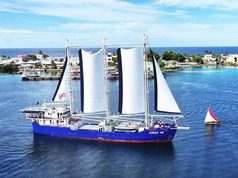
All this has created a sense of urgency for people like Alson Kelen, who lives and works in Majuro, the islands’ capital. He’s the founder of Waan Aelõñ, a Marshallese canoeing organization that is focused on keeping the region’s ancient and more environmentally sustainable maritime traditions alive. In doing so, he hopes to help his nation fully decarbonize its fleets. Efforts include training local youths to build traditional Marshallese canoes (to replace small, motor-powered speedboats) and larger sailboats fitted with solar panels (to replace medium-size cargo ships). He was also an advisor on construction of the Juren Ae, a cargo sailboat (shown at right) inspired by traditional Marshallese vessels, which made its maiden voyage in 2024 and can carry 300 metric tons of cargo. The Marshall Islands Shipping Corporation hopes it offers a blueprint for cleaner cargo transportation across the Pacific; relative to a fuel-powered cargo ship, the vessel could decrease emissions by up to 80%. It’s “a beautiful big sister of our little canoes,” says Kelen.

Though hyperlocal, Kelen’s work is part of a global project from the International Maritime Organization to reduce emissions associated with cargo shipping to net zero by 2050. Beyond these tiny islands, much of the effort to meet the IMO’s goals focuses on replacing gasoline with alternatives such as ammonia, methane, nuclear power, and hydrogen. And there’s also what the Marshallese people have long relied on: wind power. It’s just one option on the table, but the industry cannot decarbonize quickly enough to meet the IMO’s goals without a role for wind propulsion, says Christiaan De Beukelaer, a political anthropologist and author of Trade Winds: A Voyage to a Sustainable Future for Shipping. “If you take time into consideration, wind is indispensable,” he says. Studies show that deploying wind power on vessels could lower the shipping industry’s carbon dioxide emissions by 20%.     

“What wind does is it effectively cuts out a few uncertainties,” says De Beukelaer—variables such as the fluctuation of fuel prices and the costs from any carbon pricing scheme the industry may adopt. The IMO is technology agnostic, meaning it sets the goals and safety standards but lets the market find the best ways to attain them. A spokesperson from the organization says wind propulsion is one of many avenues being explored.      

Sails can be used either to fully power a vessel or to supplement the motors as a way of reducing fuel consumption for large bulk carriers, oil tankers, and the roll-on/roll-off vessels used to transport airplanes and cars worldwide. Modern cargo sails come in several shapes, sizes, and styles, including wings, rotors, suction sails, and kites.

“If we’ve got five and a half thousand years of experience, isn’t this just a no-brainer?” says Gavin Allwright, secretary-general of the International Windship Association.

Older cargo boats with new sails can use propulsive energy from the wind for up to 30% of their power, while cargo vessels designed specifically for wind could rely on it for up to 80% of their needs, says Allwright, who is still working on standardized measurement criteria to figure out which combination of ship and sail model is most efficient.

“There are so many variables involved,” he says—from the size of the ship to the captain steering it. The 50th large vessel fitted with wind-harnessing tech set sail in October 2024, and he predicts that maritime wind power is set to boom by the beginning of 2026. 


drone view over a ship at sea with vertical metal sails

COURTESY OF OCEANBIRD

Hard wings

One of the more popular designs for cargo ships is a rigid saila hard, winglike structure that is placed vertically on top of the vessel. 

“It’s very much like an airplane wing,” says Niclas Dahl, managing director of Oceanbird, a Swedish company that develops these sails. Each one has a main and a flap, which creates a chamber where the wind speed is faster on the outside than the inside. In an aircraft, that discrepancy generates lift force, but in this case, says Dahl, it propels the ship forward. The wings are rigid, but they can be swiveled around and adjusted to capture the wind depending on where it’s coming from, and they can be folded and retracted close to the deck of the ship when it is nearing a dock.

One of Oceanbird’s sailsthe 40-meter-high, 14-meter-wide Wing 560, made of high-strength steel, glass fiber, and recycled polyethylene terephthalatecould help cargo ships reduce fuel use by up to 10% per trip, according to the company’s calculations. Oceanbird is installing its first set of wings on a cargo vessel that transports cars, which was scheduled to be ready by the end of 2024.

Oceanbird, though, is just one manufacturer; by late 2024, eight cargo vessels propelled by hard wings were cruising around the world, most of them generalized bulk carriers and oil tankers.


COURTESY OF CARGOKITE

Kites

Other engineers and scientists are working to power cargo vessels with kites like those that propel paragliders. These kites are made from mixtures of UV-resistant polyester, and they are tethered to the ship’s bow and fly up to 200 to 300 meters above the ship, where they can make the best use of the constant winds at that altitude to basically tug the boat forward. To maximize lift, the kites are controlled by computers to operate in the sweet spot where wind is most constant. Studies show that a 400-square-meter kite can produce fuel savings of 9% to 15%.

“The main reason for us believing in kites is high-altitude winds,” says Tim Linnenweber, cofounder of CargoKite, which designs micro cargo ships that can be powered this way. “You basically have an increasing wind speed the higher you go, and so more consistent, more reliable, more steady winds.” 


COURTESY OF BOUND4BLUE

Suction sails

Initially used for airplanes in the 1930s, suction sails were designed and tested on boats in the 1980s by the oceanographer and diving pioneer Jacques Cousteau. 

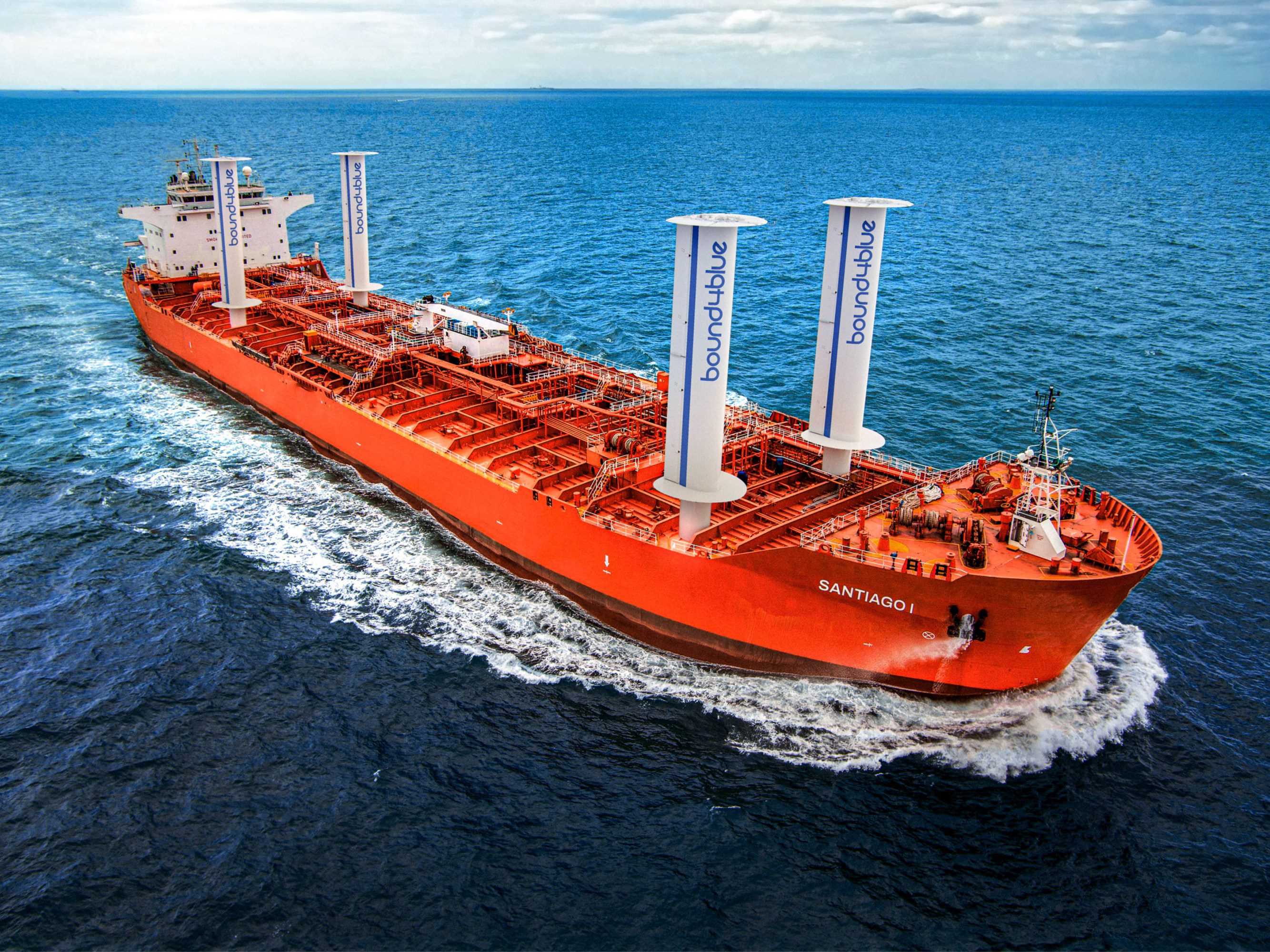
Suction sails are chubby metal sails that look something like rotors but more oval, with a pointed side. And instead of making the whole sail spin around, the motor turns on a fan on the inside of the sail that sucks in wind from the outside. Cristina Aleixendri, cofounder of Bound4Blue, a Spanish company building suction sails, explains that the vent pulls air in through lots of little holes in the shell of the sail and creates what physicists call a boundary layera thin layer of air blanketing the sail and thrusting it forward. Bound4Blue’s modern model generates 20% more thrust per square meter of sail than Cousteau’s original design, says Aleixendri, and up to seven times more thrust than a conventional sail. 

Twelve ships fitted with a total of 26 suction sails are currently operating, ranging from fishing boats and oil tankers to roll-on/roll-off vessels. Bound4Blue is working on fitting six ships and has fitted four alreadyincluding one with the largest suction sail ever installed, at 22 meters tall.


COURTESY OF NORSEPOWER

Rotor sails

In the 1920s, the German engineer Anton Flettner had a vision for a wind-powered ship that used vertical, revolving metal cylinders in place of traditional sails. In 1926, a vessel using his novel design, known as the Flettner rotor, crossed the Atlantic for the first time. 

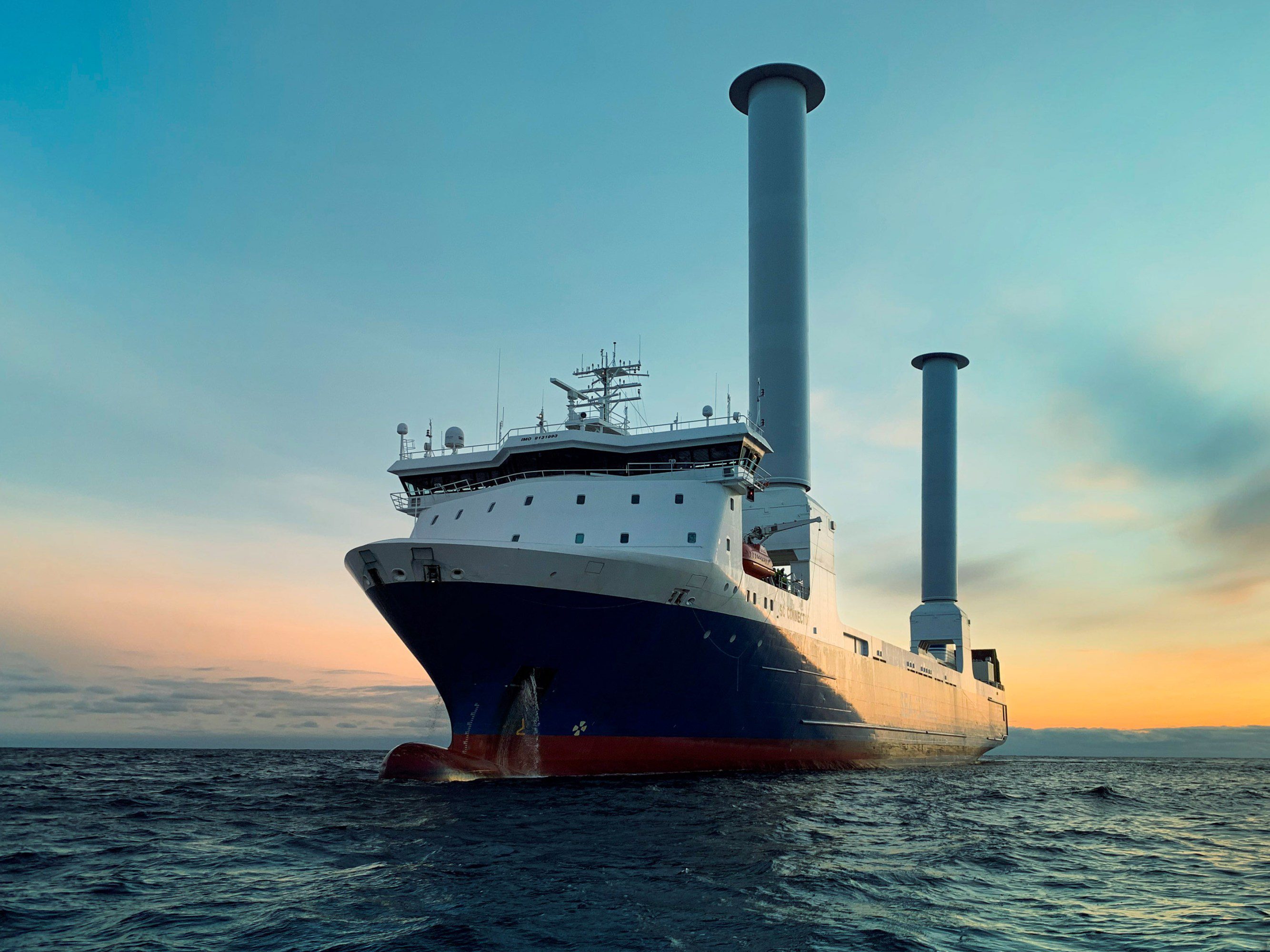
Flettner rotors work thanks to the Magnus effect, a phenomenon that occurs when a spinning object moves through a fluid, causing a lift force that can deflect the object’s path. With Flettner’s design, motors spin the cylinders around, and the pressure difference between the sides of the spinning object generates thrust forward, much like a soccer player bending the trajectory of a ball.

In a modern upgrade of the rotor sail, designed by the Finnish company Norsepower, the cylinders can spin up to 300 times per minute. This produces 10 times more thrust power than a conventional sail. Norsepower has fitted 27 rotor sails on 14 ships out at sea so far, and six more ships equipped with rotor sails from other companies set sail in 2024.

“According to our calculations, the rotor sail is, at the moment, the most efficient wind-assistive power when you look at eurocent per kilowatt-hour,” says Heikki Pöntynen, Norsepower’s CEO. Results from their vessels currently out at sea suggest that fuel savings are “anywhere between 5% to 30% on the whole voyage.” 

Sofia Quaglia is a freelance science journalist whose work has appeared in the New York Times, National Geographic, and New Scientist.

The Vera C. Rubin Observatory is ready to transform our understanding of the cosmos

High atop Chile’s 2,700-meter Cerro Pachón, the air is clear and dry, leaving few clouds to block the beautiful view of the stars. It’s here that the Vera C. Rubin Observatory will soon use a car-size 3,200-megapixel digital camera—the largest ever built—to produce a new map of the entire night sky every three days.

Generating 20 terabytes of data per night, Rubin will capture fine details about the solar system, the Milky Way, and the large-scale structure of the cosmos, helping researchers to understand their history and current evolution. It will capture rapidly changing events, including stellar explosions called supernovas, the evisceration of stars by black holes, and the whiz of asteroids overhead. Findings from the observatory will help tease apart fundamental mysteries like the nature of dark matter and dark energy, two phenomena that have not been directly observed but affect how objects in the universe are bound together—and pushed apart.  

Rubin is the latest and most advanced entrant into the illustrious lineage of all-sky surveyors—instruments that capture, or survey, the entire sky, over and over again. Its first scientific images are expected later this year. In a single exposure, Rubin will capture 100,000 galaxies, the majority invisible to other instruments. A quarter-­century in the making, the observatory is poised to expand our understanding of just about every corner of the universe.  

The facility will also look far outside the Milky Way, cataloguing around 20 billion previously unknown galaxies and mapping their placement in long filamentary structures known as the cosmic web.

“I can’t think of an astronomer who is not excited about [Rubin],” says Christian Aganze, a galactic archeologist at Stanford University in California.

The observatory was first proposed in 2001. Then called the Large-Aperture Synoptic Survey Telescope (LSST), it grew out of an earlier concept for an instrument that would study dark matter, the enigmatic substance making up 85% of the matter in the universe. LSST was later reenvisioned to focus on a broader set of scientific questions, cataloguing the night sky over the course of a decade. Five years ago, it was renamed in honor of the late American astronomer Vera Rubin, who uncovered some of the best evidence in favor of dark matter’s existence in the 1970s and ’80s. 

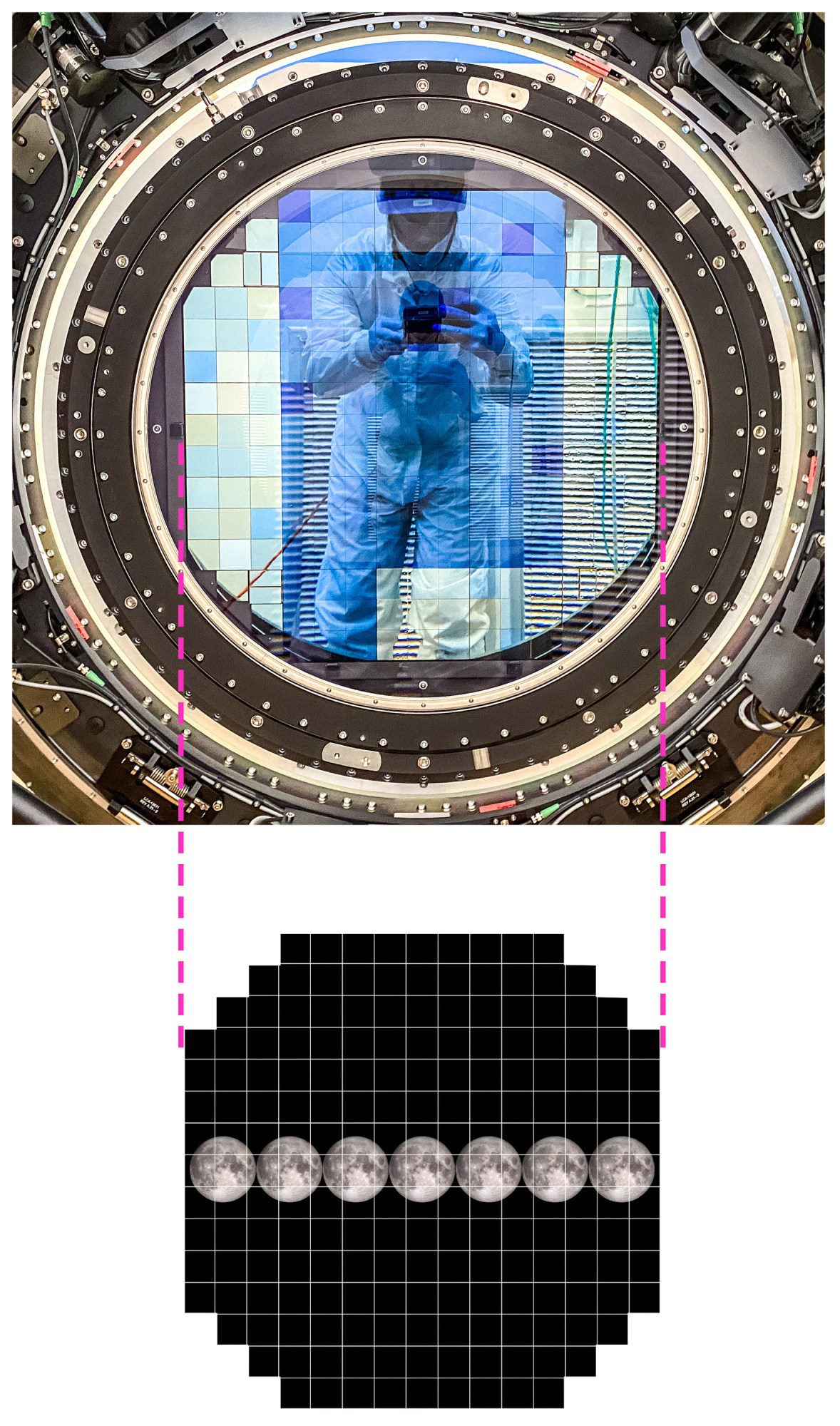
During operations, Rubin will point its sharp eyes at the heavens and take a 30-second exposure of an area larger than 40 full moons. It will then swivel to a new patch and snap another photo, rounding back to the same swath of sky after about three nights. In this way, it can provide a constantly updated view of the universe, essentially creating “this huge video of the southern sky for 10 years,” explains Anais Möller, an astrophysicist at the Swinburne University of Technology in Melbourne, Australia.

a man in a clean room suit shines a light at a device that spans the room.
A view of the back of the Rubin Observatory’s massive LSST camera, which boasts six filters designed to capture light from different parts of the electromagnetic spectrum.
SPENCER LOWELL
diagram of light hitting an exploded view of mirrors and lenses
1) Secondary mirror (M2); 2) Lenses; 3) Primary Mirror (M1); 4) Tertiary mirror (M3)
GREG STEWART/SLAC NATIONAL ACCELERATOR LABORATORY/NSF/DOE/RUBIN OBSERVATORY/AURA

To accomplish its work, Rubin relies on an innovative three-mirror design unlike that of any other telescope. Its primary mirror is actually made up of two separate surfaces with different curvatures. The outer section, 8.4 meters wide, captures light from the universe and reflects it onto a 3.4-meter-wide secondary mirror located above it. This bounces the light back onto the inner part of the primary, which stretches five meters across and is considered a tertiary mirror, before being reflected into a digital camera. The compact configuration allows the enormous instrument to be powerful but nimble as it shifts around to take roughly 1,000 photos per night. 

“It has five seconds to go to the next position and be ready,” says Sandrine Thomas, the deputy director for the observatory’s construction and project scientist for the telescope. “Meaning that it doesn’t move. It doesn’t vibrate. It’s just rock solid, ready to take the next image.” 

Technicians reinstall a cover on the secondary telescope mirror, to protect it before installation.
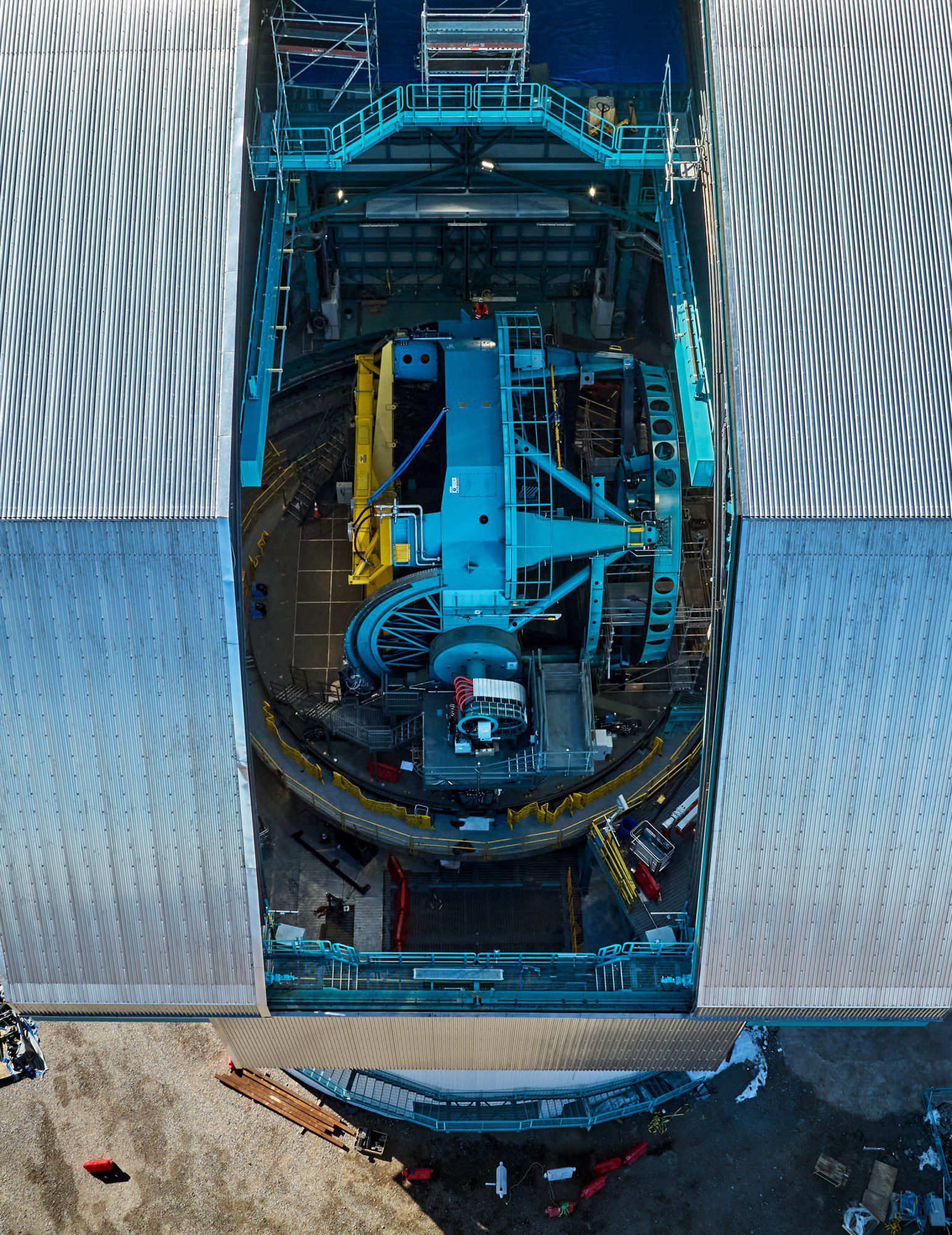
The observatory’s three mirrors and the housing of the LSST camera are mounted on a structure called the Telescope Mount Assembly. The assembly has been carefully engineered for stability and precision, allowing the observatory to track celestial objects and carry out its large-scale survey of the sky.
The primary and tertiary telescope mirrors are positioned below a chamber at the Rubin Observatory that is used to apply reflective coatings.
A view of the Telescope Mount Assembly from above, through the observatory’s protective dome shutter.

Rubin’s 3,000-kilogram camera is the most sensitive ever created for an astronomical project. By stacking together images of a piece of sky taken over multiple nights, the telescope will be able to spot fainter and fainter objects, peering deeper into the cosmos the longer it operates. 

Each exposure creates a flood of data, which has to be piped via fiber-optic cables to processing centers around the world. These use machine learning to filter the information and generate alerts for interested groups, says Möller, who helps run what are known as community brokers, groups that design software to ingest the nightly terabytes of data and search for interesting phenomena. A small change in the sky—of which Rubin is expected to see around 10 million per night—could point to a supernova explosion, a pair of merging stars, or a massive object passing in front of another. Different teams will want to know which is which so they can aim other telescopes at particular regions for follow-up studies. 

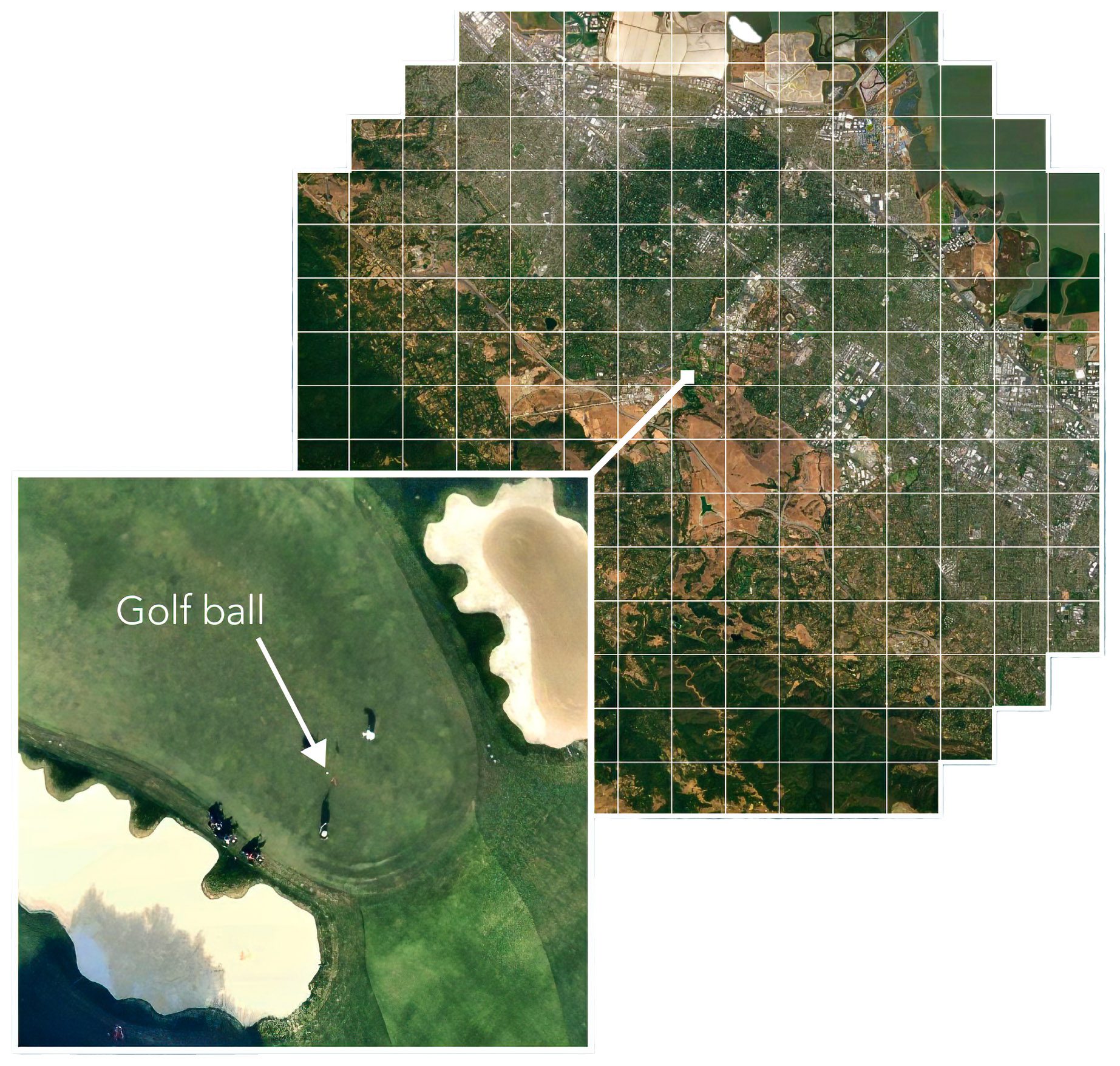
The focal plane of the LSST has a surface area large enough to capture a portion of the sky about the size of 40 full Moons. Its resolution is so high that you could spot a golf ball from 24 km (15 miles) away.

clusters of galaxies
Matter in the universe can warp and magnify the light from more distant objects. The Rubin Observatory will use this phenomenon, called gravitational lensing, to study dark matter— an as-yet-unidentified substance that makes up most of the universe’s matter.
ESA, NASA, K. SHARON/TEL AVIV UNIVERSITY AND E. OFEK/CALTECH

With its capacity to detect faint objects, Rubin is expected to increase the number of known asteroids and comets by a factor of 10 to 100. Many of them will be objects more than 140 meters in diameter with orbits passing near Earth’s, meaning they could threaten our world. And it will catalogue 40,000 new small icy bodies in the Kuiper Belt, a largely unexplored region beyond Neptune where many comets are born, helping scientists better understand the structure and history of our solar system. 

“We have never had such a big telescope imaging so wide and so deep.”

Anais Möller, astrophysicist, Swinburne University of Technology, Melbourne, Australia

Beyond our solar system, Rubin will see telltale flickers that signal exoplanets passing in front of their parent stars, causing them to briefly dim. It should also find thousands of new brown dwarfs, faint objects between planets and stars in size, whose positions in the Milky Way can provide insight into how the environments in which stars are born affect the size and type of objects that can form there. It will discover never-before-seen dim dwarf galaxies orbiting our own and look closely at stellar streams, remnant trails of stars left behind when the Milky Way tore other, similar galaxies apart.

The facility will also look far outside the Milky Way, cataloguing around 20 billion previously unknown galaxies and mapping their placement in long filamentary structures known as the cosmic web. The gravitational pull of dark matter directly affects the overall shape of this web, and by examining its structure, cosmologists will glean evidence for different theories of what dark matter is. Rubin is expected to observe millions of supernovas and determine their distance from us, a way of measuring how fast the universe is expanding. Some researchers suspect that dark energy—which is causing the cosmos to expand at an accelerated rate—may have been stronger in the past. Data from more distant, and therefore older, supernovas could help bolster or disprove such ideas and potentially narrow down the identity of dark energy too.  

An overhead view of the observatory.
SPENCER LOWELL

In just about every way, Rubin will be a monumental project, explaining the near-universal eagerness for those in the field to see it finally begin operations. 

“We have never had such a big telescope imaging so wide and so deep,” says Möller. “That’s an incredible opportunity to really pinpoint things that are changing in the sky and understand their physics.”  

Adam Mann is a freelance space and physics journalist who lives in Oakland, California.

The AI Hype Index: Robot pets, simulated humans, and Apple’s AI text summaries

Separating AI reality from hyped-up fiction isn’t always easy. That’s why we’ve created the AI Hype Index—a simple, at-a-glance summary of everything you need to know about the state of the industry.

More than 70 countries went to the polls in 2024. The good news is that this year of global elections turned out to be largely free from any major deepfake campaigns or AI manipulation. Instead we saw lots of AI slop: buff Trump, Elon as ultra-Chad, California as catastrophic wasteland. While some worry that development of large language models is slowing down, you wouldn’t know it from the steady drumbeat of new products, features, and services rolling out from itty-bitty startups and massive incumbents alike. So what’s for real and what’s just a lot of hallucinatory nonsense? 

The biggest AI flops of 2024

The past 12 months have been undeniably busy for those working in AI. There have been more successful product launches than we can count, and even Nobel Prizes. But it hasn’t always been smooth sailing.

AI is an unpredictable technology, and the increasing availability of generative models has led people to test their limits in new, weird, and sometimes harmful ways. These were some of 2024’s biggest AI misfires. 

AI slop infiltrated almost every corner of the internet

Generative AI makes creating reams of text, images, videos, and other types of material a breeze. Because it takes just a few seconds between entering a prompt for your model of choice to spit out the result, these models have become a quick, easy way to produce content on a massive scale. And 2024 was the year we started calling this (generally poor quality) media what it is—AI slop.  

This low-stakes way of creating AI slop means it can now be found in pretty much every corner of the internet: from the newsletters in your inbox and books sold on Amazon, to ads and articles across the web and shonky pictures on your social media feeds. The more emotionally evocative these pictures are (wounded veterans, crying children, a signal of support in the Israel-Palestine conflict) the more likely they are to be shared, resulting in higher engagement and ad revenue for their savvy creators.

AI slop isn’t just annoying—its rise poses a genuine problem for the future of the very models that helped to produce it. Because those models are trained on data scraped from the internet, the increasing number of junky websites containing AI garbage means there’s a very real danger models’ output and performance will get steadily worse

AI art is warping our expectations of real events

2024 was also the year that the effects of surreal AI images started seeping into our real lives. Willy’s Chocolate Experience, a wildly unofficial immersive event inspired by Roald Dahl’s Charlie and the Chocolate Factory, made headlines across the world in February after its fantastical AI-generated marketing materials gave visitors the impression it would be much grander than the sparsely-decorated warehouse its producers created.

Similarly, hundreds of people lined the streets of Dublin for a Halloween parade that didn’t exist. A Pakistan-based website used AI to create a list of events in the city, which was shared widely across social media ahead of October 31. Although the SEO-baiting site (myspirithalloween.com) has since been taken down, both events illustrate how misplaced public trust in AI-generated material online can come back to haunt us.

Grok allows users to create images of pretty much any scenario

The vast majority of major AI image generators have guardrails—rules that dictate what AI models can and can’t do—to prevent users from creating violent, explicit, illegal, and other types of harmful content. Sometimes these guardrails are just meant to make sure that no one makes blatant use of others’ intellectual property. But Grok, an assistant made by Elon Musk’s AI company, called xAI, ignores almost all of these principles in line with Musk’s rejection of what he calls “woke AI.”

Whereas other image models will generally refuse to create images of celebrities, copyrighted material, violence, or terrorism—unless they’re tricked into ignoring these rules—Grok will happily generate images of Donald Trump firing a bazooka, or Mickey Mouse holding a bomb. While it draws the line at generating nude images, its refusal to play by the rules undermines other companies’ efforts to steer clear of creating problematic material.

Sexually explicit deepfakes of Taylor Swift circulated online

In January, non-consensual deepfake nudes of singer Taylor Swift started circulating on social media, including X and Facebook. A Telegram community tricked Microsoft’s AI image generator Designer into making the explicit images, demonstrating how guardrails can be circumvented even when they are in place. 

While Microsoft quickly closed the system’s loopholes, the incident shone a light on the platforms’ poor content-moderation policies, after posts containing the images circulated widely and remained live for days. But the most chilling takeaway is how powerless we still are to fight non-consensual deepfake porn. While watermarking and data-poisoning tools can help, they’ll need to be adopted much more widely to make a difference.

Business chatbots went haywire

As AI becomes more widespread, businesses are racing to adopt generative tools to save time and money, and to maximize efficiency. The problem is—chatbots make stuff up and can’t be relied upon to always provide you with accurate information.

Air Canada found this out the hard way after its chatbot advised a customer to follow a bereavement refund policy that didn’t exist. In February, a Canadian small-claims tribunal upheld the customer’s legal complaint, despite the airline’s assertion that the chatbot was a “separate legal entity that is responsible for its own actions.”

In other high-profile examples of how chatbots can do more harm than good, delivery firm DPD’s bot cheerfully swore and called itself useless with little prompting, while a different bot set up to provide New Yorkers with accurate information about their city’s government ended up dispensing guidance on how to break the law.

AI gadgets aren’t exactly setting the market alight

Hardware assistants are something the AI industry tried, and failed, to crack in 2024. Humane attempted to sell customers on the promise of the Ai Pin, a wearable lapel computer, but even slashing its price failed to boost weak sales. The Rabbit R1, a ChatGPT-based personal assistant device, suffered a similar fate, following a rash of critical reviews and reports that it was slow and buggy. Both products seemed to be trying to solve a problem that did not actually exist. 

AI search summaries went awry

Have you ever added glue to a pizza, or eaten a small rock? These are just some of the outlandish suggestions that Google’s AI Overviews feature gave web users in May after the search giant added generated responses to the top of search results. Because AI systems can’t tell the difference between a factually correct news story and a joke post on Reddit, users raced to find the strangest responses AI Overviews could generate.

But AI summaries can also have serious consequences. A new iPhone feature that groups app notifications together and creates summaries of their contents, recently generated a false BBC News headline. The summary falsely stated that Luigi Mangione, who has been charged with the murder of healthcare insurance CEO Brian Thompson, had shot himself. The same feature had previously created a headline claiming that Israeli prime minister Benjamin Netanyahu had been arrested, which was also incorrect. These kinds of errors can inadvertently spread misinformation and undermine trust in news organizations.

China wants to restore the sea with high-tech marine ranches

A short ferry ride from the port city of Yantai, on the northeast coast of China, sits Genghai No. 1, a 12,000-metric-ton ring of oil-rig-style steel platforms, advertised as a hotel and entertainment complex. On arrival, visitors step onto docks and climb up to reach a strange offshore facility—half cruise ship, half high-tech laboratory, all laid out around half a mile of floating walkways. Its highest point—the “glistening diamond” on Genghai No. 1’s necklace, according to China’s state news agency—is a seven-­story visitor center, designed to look like a cartoon starfish.  

Jack Klumpp, a YouTuber from Florida, became one of the first 20,000 tourists to explore Genghai’s visitor center following its opening in May 2023. In his series I’m in China with Jack, Klumpp strolls around a water park cutely decorated in Fisher-Price yellow and turquoise, and indoors, he is excited to spot the hull of China’s deep-sea submersible Jiaolong. In reality, the sea here is only about 10 meters deep, and the submersible is only a model. Its journey into the ocean’s depths is an immersive digital experience rather than real adventure, but the floor of the sub rocks and shakes under his feet like a theme park ride. 

Watching Klumpp lounge in Genghai’s luxe marine hotel, it’s hard to understand why anyone would build this tourist attraction on an offshore rig, nearly a mile out in the Bohai Strait. But the answer is at the other end of the walkway from Genghai’s tourist center, where on a smaller, more workmanlike platform, he’s taught how to cast a worm-baited line over the edge and reel in a hefty bream. 

Genghai is in fact an unusual tourist destination, one that breeds 200,000 “high-quality marine fish” each year, according to a recent interview in China Daily with Jin Haifeng, deputy general manager of Genghai Technology Company, a subsidiary of the state-owned shipbuilder Shandong Marine Group. Just a handful of them are caught by recreational fishers like Klumpp. The vast majority are released into the ocean as part of a process known as marine ranching. 

Since 2015, China has built 169 “national demonstration ranches”—including Genghai No. 1—and scores of smaller-scale facilities, which collectively have laid 67 million cubic meters of artificial reefs and planted an area the size of Manhattan with seagrass, while releasing at least 167 billion juvenile fish and shellfish into the ocean.

The Chinese government sees this work as an urgent and necessary response to the bleak reality that fisheries are collapsing both in China and worldwide, with catches off China’s coast declining 18% in less than a decade. In the face of that decline, marine ranches could offer an enticing win-win: a way to restore wild marine ecosystems while boosting fishery hauls. 

Marine ranches could offer an enticing win-win: a way to restore wild marine ecosystems while boosting fishery hauls. But before China invests billions more dollars into these projects, it must show it can get the basics right.

Genghai, which translates as “Sea Harvest,” sits atop what Jin calls an “undersea ecological oasis” constructed by developers. In the middle of the circular walkway, artificial marine habitats harbor shrimp, seaweed, and fish, including the boggle-eyed Korean rockfish and a fish with a parrot-like beak, known as the spotted knifejaw.

The facility is a next-generation showcase for the country’s ambitious plans, which call for 200 pilot projects by 2025. It’s a 5G-enabled, AI-equipped “ecological” ranch that features submarine robots for underwater patrols and “intelligent breeding cages” that collect environmental data in near-real time to optimize breeding by, for example, feeding fish automatically.

In an article published by the Chinese Academy of Sciences, China’s top science institute, one high-ranking fisheries expert sketches out plans for a seductive tech-driven future where production and conservation go hand in hand: Ecological ranches ring the coastline, seagrass meadows and coral reefs regrow around them, and autonomous robots sustainably harvest mature seafood. 

But now, Chinese researchers say, is the time to take stock of lessons learned from the rapid rollout of ranching to date. Before the country invests billions more dollars into similar projects in the coming years, it must show it can get the basics right.

What, exactly, is a marine ranch? 

Developing nations have historically faced a trade-off between plundering marine resources for development and protecting ecosystems for future generations, says Cao Ling, a professor at Xiamen University in eastern China. When growing countries take more than natural ecosystems can replenish, measures like seasonal fishing bans have been the traditional way to allow fisheries to recover. Marine ranching offers an alternative to restricting fishing—a way to “really synergize environmental, economic, and social development goals,” says Cao—by actively increasing the ocean’s bounty. 

It’s now a “hot topic” in China, says Cao, who grew up on her family’s fish farm before conducting research at the University of Michigan and Stanford. In fact, “marine ranching” has become such a buzzword that it can be hard to tell what it actually means, encompassing as it does flagship facilities like Genghai No. 1 (which merge scientific research with industrial-scale aquaculture pens, recreational fishing amenities, and offshore power) and a baffling array of structures including deep-sea floating wind farms with massive fish-farming cages and 100,000-ton “mobile marine ranches”—effectively fish-breeding aircraft carriers. There are even whole islands, like the butterfly-shaped Wuzhizhou on China’s tropical south coast, that have been designated as ranching areas. 

a person in a wetsuit at sunset sitting in a net
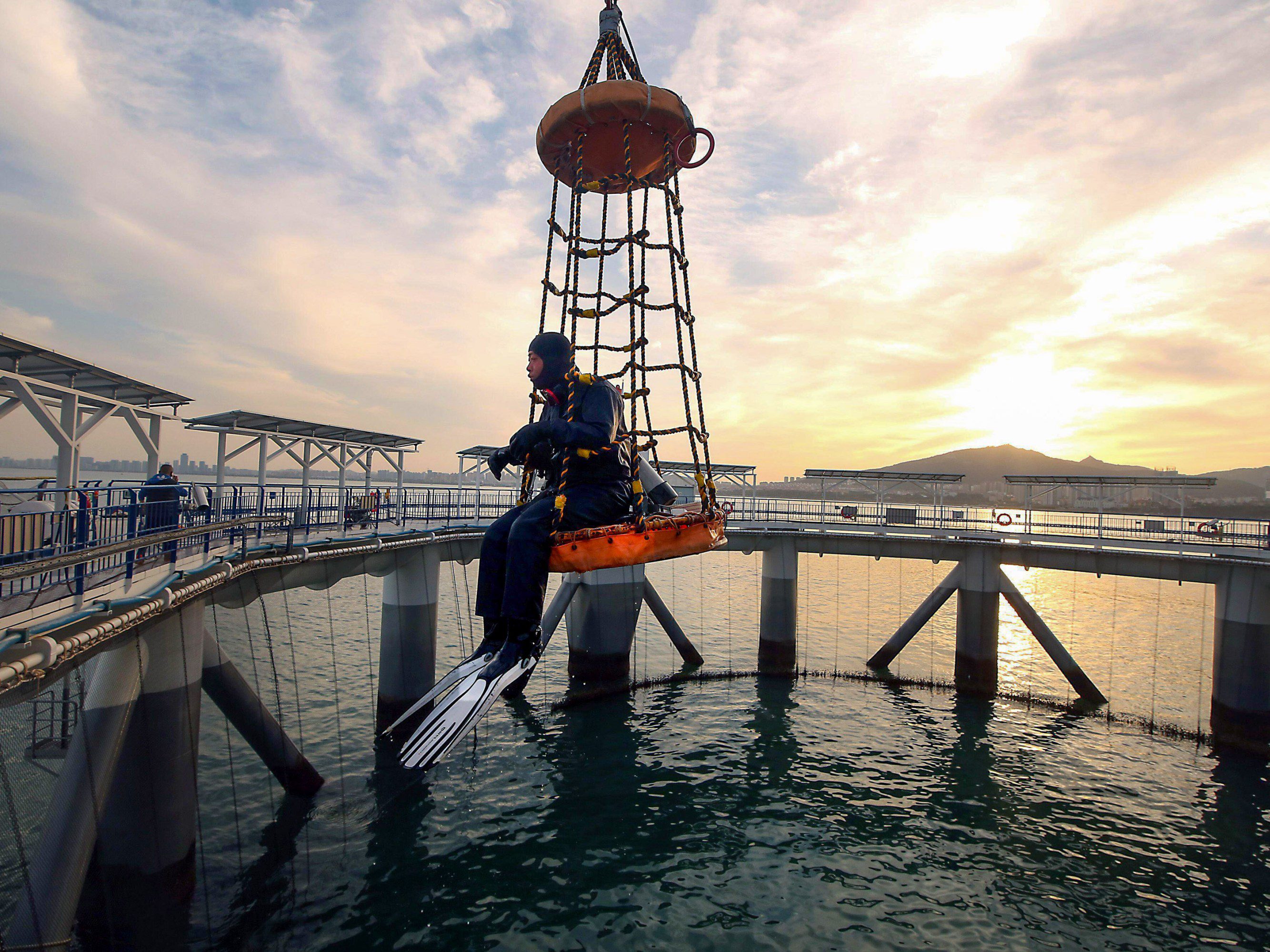
A scuba diver finishes cleaning the nets surrounding Genghai No. 1, China’s first AI-powered “ecological” marine ranch complex.
UPI/ALAMY LIVE NEWS

To understand what a marine ranch is, it’s easiest to come back to the practice’s roots. In the early 1970s, California, Oregon, Washington, and Alaska passed laws to allow construction of facilities aimed at repairing stocks of salmon after the rivers where they traditionally bred had been decimated by pollution and hydroelectric dams. The idea was essentially twofold: to breed fish in captivity and to introduce them into safe nurseries in the Pacific. Since 1974, when the first marine ranches in the US were built off the coast of California and Oregon, ranchers have constructed artificial habitats, usually concrete reef structures, that proponents hoped could provide nursery grounds where both valuable commercial stocks and endangered marine species could be restored.

Today, fish farming is a $200 billion industry that has had a catastrophic environmental impact, blighting coastal waters with streams of fish feces, pathogens, and parasites.

Marine ranching has rarely come close to fulfilling this potential. Eight of the 11 ranches that opened in the US in the 1970s were reportedly shuttered by 1990, their private investors having struggled to turn a profit. Meanwhile, European nations like Norway spent big on attempts to restock commercially valuable species like cod before abandoning the efforts because so few introduced fish survived in the wild. Japan, which has more ranches than any other country, made big profits with scallop ranching. But a long-term analysis of Japan’s policies estimated that all other schemes involving restocking the ocean were unprofitable. Worse, it found, releasing docile, lab-bred fish into the wild could introduce genetically damaging traits into the original population. 

Today, marine ranching is often considered a weird offshoot of conventional fish farming, in which fish of a single species are fed intensively in small, enclosed pens. This type of feedlot-style aquaculture has grown massively in the last half-century. Today it’s a $200 billion industry and has had a catastrophic environmental impact, blighting coastal waters with streams of fish feces, pathogens, and parasites. 

Yet coastal nations have not been discouraged by the mediocre results of marine ranching. Many governments, especially in East Asia, see releasing millions of young fish as a cheap way for governments to show their support for hard-hit fishing communities, whose livelihoods are vanishing as fisheries teeter on the edge of collapse. At least 20 countries continue to experiment with diverse combinations of restocking and habitat enhancement—including efforts to transplant coral, reforest mangroves, and sow seagrass meadows. 

Each year at least 26 billion juvenile fish and shellfish, from 180 species, are deliberately released into the world’s oceans—three for every person on the planet. Taken collectively, these efforts amount to a great, ongoing, and little-noticed experiment on the wild marine biome.

China’s big bet

China, with a population of 1.4 billion people, is the world’s undisputed fish superpower, home to the largest fishing fleet and more than half the planet’s fish farms. The country also overwhelms all others in fish consumption, using as much as the four next-largest consumers—the US, the European Union, Japan, and India—combined and then doubled. But decades of overfishing, compounded by runaway pollution from industry and marine aquaculture, have left its coastal fisheries depleted. 

Around many Chinese coastal cities like Yantai, there is a feeling that things “could not be worse,” says Yong Chen, a professor at Stony Brook University in New York. In the temperate northern fishing grounds of the Bohai and Yellow Seas, stocks of wild fish such as the large yellow croaker—a species that’s critically endangered—have collapsed since the 1980s. By the turn of the millennium, the Bohai, a densely inhabited gulf 100 miles east of Beijing, had lost most of its large sea bass and croaker, leaving fishing communities to “fish down” the food chain. Fishing nets came up 91% lighter than they did in the 1950s, in no small part because heavy industry and this region’s petrochemical plants had left the waters too dirty to support healthy fish populations.

As a result, over the past three decades China has instituted some of the world’s strictest seasonal fishing bans; recently it has even encouraged fishermen to find other jobs. But fish populations continue to decline, and fishing communities worry for their future

Marine ranching has received a big boost from the highest levels of government; it’s considered an ideal test case for President Xi Jinping’s “ecological civilization” agenda, a strategy for environmentally sustainable long-term growth. Since 2015, ranching has been enshrined in successive Five-Year Plans, the country’s top-level planning documents—and ranch construction has been backed by an initial investment of ¥11.9 billion ($1.8 billion). China is now on track to release 30 billion juvenile fish and shellfish annually by 2025. 

So far, the practice has produced an unlikely poster child: the sea cucumber. A spiky, bottom-dwelling animal that, like Japan’s scallops, doesn’t move far from release sites, it requires little effort for ranchers to recapture. Across northern China, sea cucumbers are immensely valuable. They are, in fact, one of the most expensive dishes on menus in Yantai, where they are served chopped and braised with scallions.

Some ranches have experimented with raising multiple species, including profitable fish like sea bass and shellfish like shrimp and scallops, alongside the cucumber, which thrives in the waste that other species produce. In the northern areas of China, such as the Bohai, where the top priority is helping fishing communities recover, “a very popular [mix] is sea cucumbers, abalone, and sea urchin,” says Tian Tao, chief scientific research officer of the Liaoning Center for Marine Ranching Engineering and Science Research at Dalian Ocean University. 

Designing wild ecosystems 

Today, most ranches are geared toward enhancing fishing catches and have done little to deliver on ecological promises. According to Yang Hongsheng, a leading marine scientist at the Chinese Academy of Sciences, the mix of species that has so far been introduced has been “too simple” to produce a stable ecosystem, and ranch builders have paid “inadequate attention” to that goal. 

Marine ranch construction is typically funded by grants of around ¥20 million ($2.8 million) from China’s government, but ranches are operated by private firms. These companies earn revenue by producing seafood but have increasingly cultivated other revenue streams, like tourism and recreational fishing, which has boomed in recent years. So far, this owner-­operator model has provided few incentives to look beyond proven methods that closely resemble aquaculture—like Genghai No. 1’s enclosed deep-sea fishing cages—and has done little to encourage contributions to ocean health beyond the ranch’s footprint. “Many of the companies just want to get the money from the government,” says Zhongxin Wu, an associate professor at Dalian Ocean University who works with Tian Tao. 

Making ranches more sustainable and ecologically sound will require a rapid expansion of basic knowledge about poorly studied marine species, says Stony Brook’s Yong Chen. “For a sea cucumber, the first thing you need to know is its life history, right? How they breed, how they live, how they die,” he says. “For many key marine species, we have few ideas what temperature or conditions they prefer to breed and grow in.”

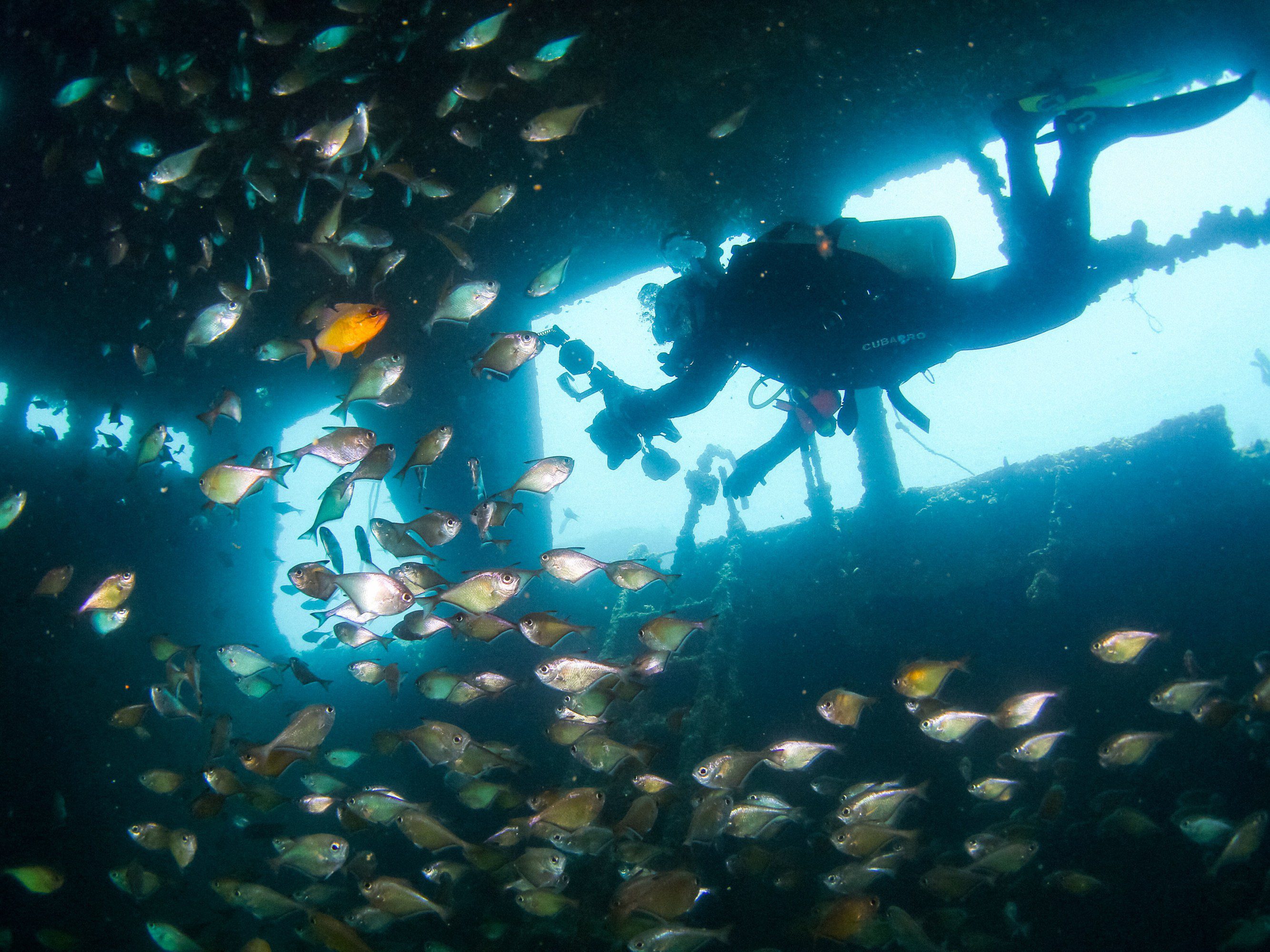
A diver swims off the shore of Wuzhizhou Island, where fish populations multiplied tenfold after artificial reefs were introduced.
YANG GUANYU/XINHUA/ALAMY

Chinese universities are world leaders in applied sciences, from agricultural research to materials science. But fundamental questions aren’t always easy to answer in China’s “quite unique” research and development environment, says Neil Loneragan, president of the Malaysia-based Asian Fisheries Society and a professor emeritus of marine science at Murdoch University in Australia. 

The central government’s controlling influence on the development of ranching, Loneragan says, means researchers must walk a tightrope between their two bosses: the academic supervisor and the party chief. Marine biologists want to understand the basics, “but researchers would have to spin that so that it’s demonstrating economic returns to industry and, hence, the benefits to the government from investment,” he says. 

Many efforts aim to address known problems in the life cycles of captive-bred fish, such as inadequate breeding rates or the tough survival odds for young fish when they reach the ocean. Studies have shown that fish in these early life stages are particularly vulnerable to environmental fluctuations like storms and recent ocean heat waves. 

One of the most radical solutions, which Zhongxin Wu is testing, would improve their fitness before they’re released from breeding tanks into the wild. Currently, Wu says, fish are simply scooped up in oxygenated plastic bags and turned loose in ocean nurseries, but there it becomes apparent that many are weak or lacking in survival skills. In response, his team is developing a set of “wild training” tools. “The main method is swimming training,” he says. In effect, the juvenile fish are forced to swim against a current, on a sort of aquatic treadmill, to help acclimate them to the demands of the wild. Another technique, he says, involves changing the water temperature and introducing some other species to prepare them for seagrass and kelp forests they’ll meet in the world outside.

Wu says better methods of habitat enhancement have the greatest potential to increase the effectiveness of marine ranching. Today, most ranches create undersea environments using precast-con­crete structures that are installed under 20 meters of water, often with a rough surface to support the growth of coral or algae. The typical Chinese ranch aims for 30,000 cubic meters of artificial reefs; in the conservation-­focused ranching area around Wuzhizhou Island, for instance, 1,000 cast-concrete reef structures were dropped around the tropical island’s shores. Fish populations have multiplied tenfold in the last decade. 

This is by far the most expensive part of China’s ranching program. According to a national evaluation coauthored by Cao Ling, 87% of China’s first $1 billion investment has gone to construct artificial reefs, with a further 5% spent on seagrass and seaweed restoration. These costs have brought both questions about the effectiveness of the efforts and a drive for innovation. Across China, some initial signs suggest that the enhancements are making a difference: Sites with artificial reefs were found to have a richer mix of commercially important species and higher biomass than adjacent sites. But Tian and Wu are investigating new approaches, including custom 3D-printed structures for endangered fish. On trial are bungalow-­size steel ziggurats with wide openings for yellowtail kingfish—a large, predatory fish that’s prized for sashimi—and arcs of barrel-­vaulted concrete, about waist height, for sea cucumbers. In recent years, structures have been specifically designed in the shape of pyramids, to divert ocean currents into oceanic “upwellings.” Nutrients that typically settle on the seafloor are instead ejected back up toward the surface. “That attracts prey for high-level predators,” says Loneragan, including giant tuna-like species that fetch high prices at restaurants.

Has China found a workable model?

So will China soon be relying on marine ranches to restock the seas? We still don’t have anywhere near enough data to say. The Qingdao Marine Conservation Society, an environmental NGO, is one of the few independent organizations systematically assessing ranches’ track records and has, says founder Songlin Wang, “failed to find sufficient independent and science-based research results that can measurably verify most marine ranches’ expected or claimed environmental and social benefits.”

One answer to the data shortfall might be the kind of new tech on display at Genghai No. 1, where robotic patrols and subsea sensors feed immediately into a massive dashboard measuring water quality, changes in the ocean environment, and fish behavior. After decades as a fairly low-tech enterprise, ranching in China has been adopting such new technologies since the beginning of the latest Five-Year Plan in 2021. The innovations promise to improve efficiency, reduce costs, and make ranches more resilient to climate fluctuations and natural disasters, according to the Chinese Academy of Sciences. 

But Yong Chen, whose lab at Stony Brook partners with Chinese researchers, is skeptical that researchers are gathering and sharing the right data. “The problem is, yes, there’s this visualization. So what?” he says. “[Marine ranching companies] are willing to invest money into this kind of infrastructure, create that kind of big screen, and people will walk in and say ‘Wow, look at that!’” he adds. “Yeah, it’s beautiful. It definitely will impress the leadership. Important people will give you money for that. But as a scientist, my question to you is: How can it help you inform your decision-making process next year?” 

Will China soon be relying on marine ranches to restock the seas? We still don’t have anywhere near enough data to say.

“Data sharing is really difficult in China,” says Cao Ling. Most data produced by private companies remains in their servers. But Cao and Chen say that governments—local or central—could facilitate more open data sharing in the interest of guiding ranch design and policy. 

But China’s central government is convinced by what it has seen and plans to scale up investment. Tian, who leads the government committee on marine ranching, says he has recently learned that the next Ten-Year Plan will aim to increase the number of pilot ranches from 200 to 350 by 2035. Each one is expected to be backed by ¥200 million ($28 million)—10 times the typical current investment. Specific policies are due to be announced next year, but he expects that ranches will no longer be funded as standalone facilities. Instead, grants will likely be given to cities like Dalian and Yantai, which can plan across land and sea and find ways to link commercial fishing with power generation and tourism while cutting pollution from industry. 

Tian has an illustration that aims to visualize the coming tech-driven ecological ranching system, a sort of “marine ranching 3.0”: a sea cove monitored by satellites and restored to such good health that orcas have returned to its fish-filled waters. It’s a near-utopian image seemingly ripped from a 1960s issue of Popular Science. There’s even stranger research that aims to see if red sea bream like the one Jack Klumpp caught can be conditioned like Pavlov’s dogs—in this case to flock to the sound of a horn, so the ocean’s harvest would literally swim into nets at the press of a button. 

So far China’s marine ranching program remains far from any of this, despite the isolated signs of success. But ultimately what matters most is to find a “balance point” between commerce and sustainability, says Cao. Take Genghai No. 1: “It’s very pretty!” she says with a laugh. “And it costs a lot for the initial investment.” If such ranches are going to contribute to China’s coming “ecological civilization,” they’ll have to prove they are delivering real gains and not just sinking more resources into a dying ocean. 

Matthew Ponsford is a freelance reporter based in London.

The world’s first industrial-scale plant for green steel promises a cleaner future

As of 2023, nearly 2 billion metric tons of it were being produced annually, enough to cover Manhattan in a layer more than 13 feet thick. 

Making this metal produces a huge amount of carbon dioxide. Overall, steelmaking accounts for around 8% of the world’s carbon emissions—one of the largest industrial emitters and far more than such sources as aviation. The most common manufacturing process yields about two tons of carbon dioxide for every ton of steel.  

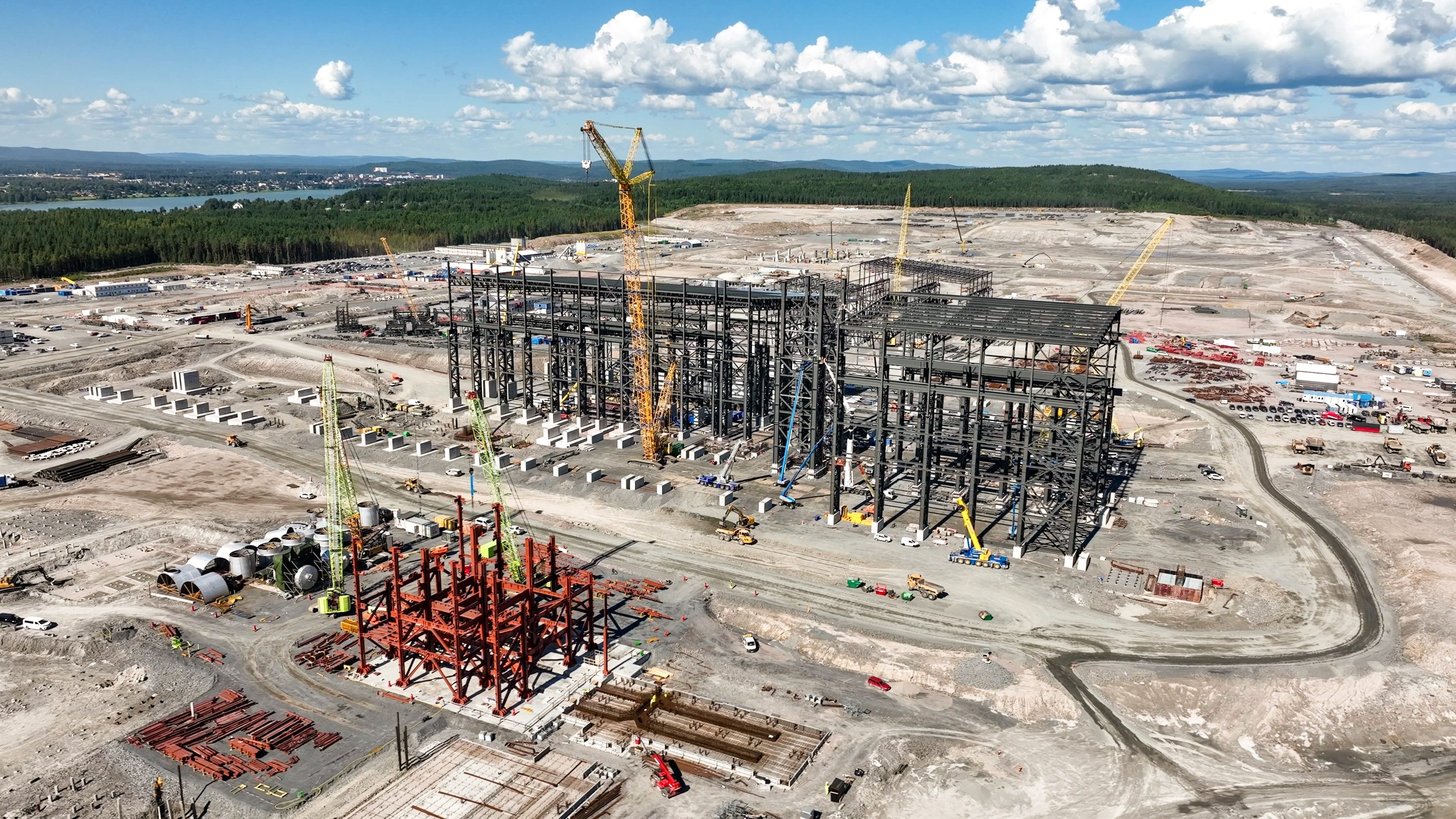
A handful of groups and companies are now making serious progress toward low- or zero-emission steel. Among them, the Swedish company Stegra stands out. (Originally named H2 Green Steel, the company renamed itself Stegra—which means “to elevate” in Swedish—in September.) The startup, formed in 2020, has raised close to $7 billion and is building a plant in Boden, a town in northern Sweden. It will be the first industrial-scale plant in the world to make green steel. Stegra says it is on track to begin production in 2026, initially producing 2.5 million metric tons per year and eventually making 4.5 million metric tons. 

The company uses so-called green hydrogen, which is produced using renewable energy, to process iron ore into steel. Located in a part of Sweden with abundant hydropower, Stegra’s plant will use hydro and wind power to drive a massive electrolyzer that splits water to make the hydrogen. The hydrogen gas will then be used to pull the oxygen out of iron ore to make metallic iron—a key step in steelmaking.  

This process of using hydrogen to make iron—and subsequently steel—has already been used at pilot plants by Midrex, an American company from which Stegra is purchasing the equipment. But Stegra will have to show that it will work in a far larger plant.

The world produces about 60,000 metric tons of steel every 15 minutes.

“We have multiple steps that haven’t really been proven at scale before,” says Maria Persson Gulda, Stegra’s chief technology officer. These steps include building one of the world’s largest electrolyzers. 

Beyond the unknowns of scaling up a new technology, Stegra also faces serious business challenges. The steel industry is a low-margin, intensely competitive sector in which companies win customers largely on price.

aerial view of construction site
The startup, formed in 2020, has raised close to $7 billion in financing and expects to begin operations in 2026 at its plant in Boden.
STEGRA

Once operations begin, Stegra calculates, it can come close to producing steel at the same cost as the conventional product, largely thanks to its access to cheap electricity. But it plans to charge 20% to 30% more to cover the €4.5 billion it will take to build the plant. Gulda says the company has already sold contracts for 1.2 million metric tons to be produced in the next five to seven years. And its most recent customers—such as car manufacturers seeking to reduce their carbon emissions and market their products as green—have agreed to pay the 30% premium. 

Now the question is: Can Stegra deliver? 

The secret of hydrogen

To make steel—an alloy of iron and carbon, with a few other elements thrown in as needed—you first need to get the oxygen out of the iron ore dug from the ground. That leaves you with the purified metal.

The most common steelmaking process starts in blast furnaces, where the ore is mixed with a carbon-­rich coal derivative called coke and heated. The carbon reacts with the oxygen in the ore to produce carbon dioxide; the metal left behind then enters another type of furnace, where more oxygen is forced into it under high heat and pressure. The gas reacts with remaining impurities to produce various oxides, which are then removed—leaving steel behind.  

The second conventional method, which is used to make a much smaller share of the world’s steel, is a process called direct reduction. This usually employs natural gas, which is separated into hydrogen and carbon monoxide. Both gases react with the oxygen to pull it out of the iron ore, creating carbon dioxide and water as by-products. 

The iron that remains is melted in an electric arc furnace and further processed to remove impurities and create steel. Overall, this method is about 40% lower in emissions than the blast furnace technique, but it still produces over a ton of carbon dioxide for every ton of steel.

But why not just use hydrogen instead of starting with natural gas? The only by-product would be water. And if, as Stegra plans to do, you use green hydrogen made using clean power, the result is a new and promising way of making steel that can theoretically produce close to zero emissions. 

Stegra’s process is very similar to the standard direct reduction technique, except that since it uses only hydrogen, it needs a higher temperature. It’s not the only possible way to make steel with a negligible carbon footprint, but it’s the only method on the verge of being used at an industrial scale. 

Premium marketing

Stegra has laid the foundations for its plant and is putting the roof and walls on its steel mill. The first equipment has been installed in the building where electric arc furnaces will melt the iron and churn out steel, and work is underway on the facility that will house a 700-megawatt electrolyzer, the largest in Europe.

To make hydrogen, purify iron, and produce 2.5 million metric tons of green steel annually, the plant will consume 10 terawatt-hours of electricity. This is a massive amount, on par with the annual usage of a small country such as Estonia. Though the costs of electricity in Stegra’s agreements are confidential, publicly available data suggest rates around €30 ($32) per megawatt-hour or more. (At that rate, 10 terawatt-hours would cost $320 million.) 

STEGRA

Many of the buyers of the premium green steel are in the automotive industry; they include Mercedes-Benz, Porsche, BMW, Volvo Group, and Scania, a Swedish company that makes trucks and buses. Six companies that make furniture, appliances, and construction material—including Ikea—have also signed up, as have five companies that buy steel and distribute it to many different manufacturers.

Some of these automakers—including Volvo, which will buy from Stegra and rival SSAB—are marketing cars made with the green steel as “fossil-free.” And since cars and trucks also have many parts that are much more expensive than the steel they use, steel that costs the automakers a bit more adds only a little to the cost of a vehicle—perhaps a couple of hundred dollars or less, according to some estimates. Many companies have also set internal targets to reduce emissions, and buying green steel can get them closer to those goals.

Stegra’s business model is made possible in part by the unique economic conditions within the European Union. In December 2022, the European Parliament approved a tariff on imported carbon-­intensive products such as steel, known as the Carbon Border Adjustment Mechanism (CBAM). As of 2024, this law requires those who import iron, steel, and other commodities to report the materials’ associated carbon emissions. 

Starting in 2026, companies will have to begin paying fees designed to be proportional to the materials’ carbon footprint. Some companies are already betting that it will be enough to make Stegra’s 30% premium worthwhile. 

crane hoisting an i-beam  next to a steel building frame

STEGRA

Though the law could incentivize decarbonization within the EU and for those importing steel into Europe, green steelmakers will probably also need subsidies to defray the costs of scaling up, says Charlotte Unger, a researcher at the Research Institute for Sustainability in Potsdam, Germany. In Stegra’s case, it will receive €265 million from the European Commission to help build its plant; it was also granted €250 million from the European Union’s Innovation Fund.  

Meanwhile, Stegra is working to reduce costs and beef up revenues. Olof Hernell, the chief digital officer, says the company has invested heavily in digital products to improve efficiency. For example, a semi-automated system will be used to increase or decrease usage of electricity according to its fluctuating price on the grid.

Stegra realized there was no sophisticated software for keeping track of the emissions that the company is producing at every step of the steelmaking process. So it is making its own carbon accounting software, which it will soon sell as part of a new spinoff company. This type of accounting is ultra-important to Stegra, Hernell says, since “we ask for a pretty significant premium, and that premium lives only within the promise of a low carbon footprint.” 

Not for everyone

As long as CBAM stays in place, Stegra believes, there will be more than enough demand for its green steel, especially if other carbon pricing initiatives come into force. The company’s optimism is boosted by the fact that it expects to be the first to market and anticipates costs coming down over time. But for green steel to affect the market more broadly, or stay viable once several companies begin making significant quantities of it, its manufacturing costs will eventually have to be competitive with those of conventional steel.

Stegra has sold contracts for 1.2 million metric tons of steel to be produced in the next five to seven years.

Even if Stegra has a promising outlook in Europe, its hydrogen-based steelmaking scheme is unlikely to make economic sense in many other places in the world—at least in the near future. There are very few regions with such a large amount of clean electricity and easy access to the grid. What’s more, northern Sweden is also rich in high-quality ore that is easy to process using the hydrogen direct reduction method, says Chris Pistorius, a metallurgical engineer and co-director of the Center for Iron and Steelmaking Research at Carnegie Mellon University.

Green steel can be made from lower-grade ore, says Pistorius, “but it does have the negative effects of higher electricity consumption, hence slower processing.”

Given the EU incentives, other hydrogen-based steel plants are in the works in Sweden and elsewhere in Europe. Hybrit, a green steel technology developed by SSAB, the mining company LKAB, and the energy producer Vattenfall, uses a process similar to Stegra’s. LKAB hopes to finish a demonstration plant by 2028 in Gällivare, also in northern Sweden. However, progress has been delayed by challenges in getting the necessary environmental permit.

Meanwhile, a company called Boston Metal is working to commercialize a different technique to break the bonds in iron oxide by running a current through a mixture of iron ore and an electrolyte, creating extremely high heat. This electrochemical process yields a purified iron metal that can be turned into steel. The technology hasn’t been proved at scale yet, but Boston Metal hopes to license its green steel process in 2026. 

Understandably, these new technologies will cost more at first, and consumers or governments will have to foot the bill, says Jessica Allen, an expert on green steel production at the University of Newcastle in Australia. 

In Stegra’s case, both seem willing to do so. But it will be more difficult outside the EU. What’s more, producing enough green steel to make a large dent in the sector’s emissions will likely require a portfolio of different techniques to succeed. 

Still, as the first to market, Stegra is playing a vital role, Allen says, and its performance will color perceptions of green steel for years to come. “Being willing to take a risk and actually build … that’s exactly what we need,” she adds. “We need more companies like this.”

For now, Stegra’s plant—rising from the boreal forests of northern Sweden—represents the industry’s leading effort. When it begins operations in 2026, that plant will be the first demonstration that steel can be made at an industrial scale without releasing large amounts of carbon dioxide—and, just as important, that customers are willing to pay for it. 

Douglas Main is a journalist and former senior editor and writer at National Geographic.

This international surveillance project aims to protect wheat from deadly diseases

When Dave Hodson walked through wheat fields in Ethiopia in 2010, it seemed as if everything had been painted yellow. A rust fungus was in the process of infecting about one-third of the country’s wheat, and winds had carried its spores far and wide, coating everything in their path. “The fields were completely yellow. You’d walk through them and your clothes were just bright yellow,” he says.

Hodson, who was then at the UN’s Food and Agriculture Organization in Rome, had flown down to Ethiopia with colleagues to investigate the epidemic. But there was little that could be done: Though the authorities had some fungicides, by the time they realized what was happening, it was too late. Ethiopia, the biggest wheat-producing nation in sub-Saharan Africa, lost between 15% and 20% of its harvest that year. “Talking with farmers—they were just losing everything,” Hodson told MIT Technology Review. “And it’s just like, ‘Well, we should have been able to do more to help you.’”

Hodson, now aprincipal scientist at the international nonprofit CIMMYT, has since been working with colleagues on a plan to stop such losses in the future. Together with Maricelis Acevedo at Cornell University’s College of Agriculture and Life Sciences, he co-leads the Wheat Disease Early Warning Advisory System, known as Wheat DEWAS, an international initiative that brings together scientists from 23 organizations around the world.

The idea is to scale up a system to track wheat diseases and forecast potential outbreaks to governments and farmers in close to real time. In doing so, they hope to protect a crop that supplies about one-fifth of the world’s calories.

The effort could not be more timely. For as long as there’s been domesticated wheat (about 8,000 years), there has been harvest-devastating rust. Breeding efforts in the mid-20th century led to rust-resistant wheat strains that boosted crop yields, and rust epidemics receded in much of the world. But now, after decades, rusts are considered a reemerging disease in Europe. That’s due partly to climate change, because warmer conditions are more conducive to infection. Vulnerable regions including South Asia and Africa are also under threat.

Wheat DEWAS officially launched in 2023 with $7.3 million from the Bill & Melinda Gates Foundation (now called the Gates Foundation) and the UK’s Foreign, Commonwealth & Development Office. But an earlier incarnation of the system averted disaster in 2021, when another epidemic threatened Ethiopia’s wheat fields. Early field surveys by a local agricultural research team had picked up a new strain of yellow rust. The weather conditions were “super optimal” for the development of rust in the field, Hodson says, but the team’s early warning system meant that action was taken in good time—the government deployed fungicides quickly, and the farmers had a bumper wheat harvest. 

Wheat DEWAS works by scaling up and coordinating efforts and technologies across continents. At the ground level is surveillance—teams of local pathologistswho survey wheat fields, inputting data on smartphones. They gather information on which wheat varieties are growing and take photos and samples. The project is now developing a couple of apps, one of which will use AI to help identify diseases by analyzing photos.

Another arm of the system, based at the John Innes Centre in the UK, focuses on diagnostics. The group there, working with researchers at CIMMYT and the Ethiopian Institute of Agricultural Research, developed MARPLE (a loose acronym for “mobile and real-time plant disease”), which Hodson describes as a mini gene sequencer about the size of a cell phone. It can test wheat samples for the rust fungus locally and provide a result within two to three days, whereas conventional diagnostics need months.

 “The beauty of it is you could pick up something new very quickly,” says Hodson. “And it’s often the new things that give the biggest problems.”

The data from the field is sent directly to a team at the Global Rust Reference Center at Aarhus University in Denmark, which combines everything into one huge database. Enabling nations and globally scattered groups to share an infrastructure is key, says Aarhus’s Jens Grønbech Hansen, who leads the data management package for Wheat DEWAS. Without collaborating and harmonizing data, he says, “technology won’t solve these problems all on its own.”

“We build up trust so that by combining the data, we can benefit from a bigger picture and see patterns we couldn’t see when it was all fragmented,” Hansen says.

Their automated system sends data to Chris Gilligan, who leads the modeling arm of Wheat DEWAS at the University of Cambridge. With his team, he works with the UK’s Met Office, using their supercomputer to model how the fungal spores at a given site might spread under specific weather conditions and what the risk is of their landing, germinating, and infecting other areas. The team drew on previous models, including work on the ash plume from the eruption of the Icelandic volcano Eyjafjallajökull, which caused havoc in Europe in 2010.

Each day, a downloadable bulletin is posted online with a seven-day forecast. Additional alerts or advisories are also sent out. Information is then disseminated from governments or national authorities to farmers. For example, in Ethiopia, immediate risks are conveyed to farmers by SMS text messaging. Crucially, if there’s likely to be a problem, the alerts offer time to respond. “You’ve got, in effect, three weeks’ grace,” says Gilligan. That is, growers may know of the risk up to a week ahead of time, enabling them to take action as the spores are landing and causing infections.

The project is currently focused on eight countries: Ethiopia, Kenya, Tanzania, and Zambia in Africa and Nepal, Pakistan, Bangladesh, and Bhutan in Asia. But the researchers hope they will get additional funding to carry the project on beyond 2026 and, ideally, to extend it in a variety of ways, including the addition of more countries. 

Gilligan says the technology may be potentially transferable to other wheat diseases, and other crops—like rice—that are also affected by weather-­dispersed pathogens.

Dagmar Hanold, a plant pathologist at the University of Adelaide who is not involved in the project, describes it as “vital work for global agriculture.”

“Cereals, including wheat, are vital staples for people and animals worldwide,” Hanold says. Although programs have been set up to breed more pathogen-­resistant crops, new pathogen strains emerge frequently. And if these combine and swap genes, she warns, they could become “even more ­aggressive.”

Shaoni Bhattacharya is a freelance writer and editor based in London.
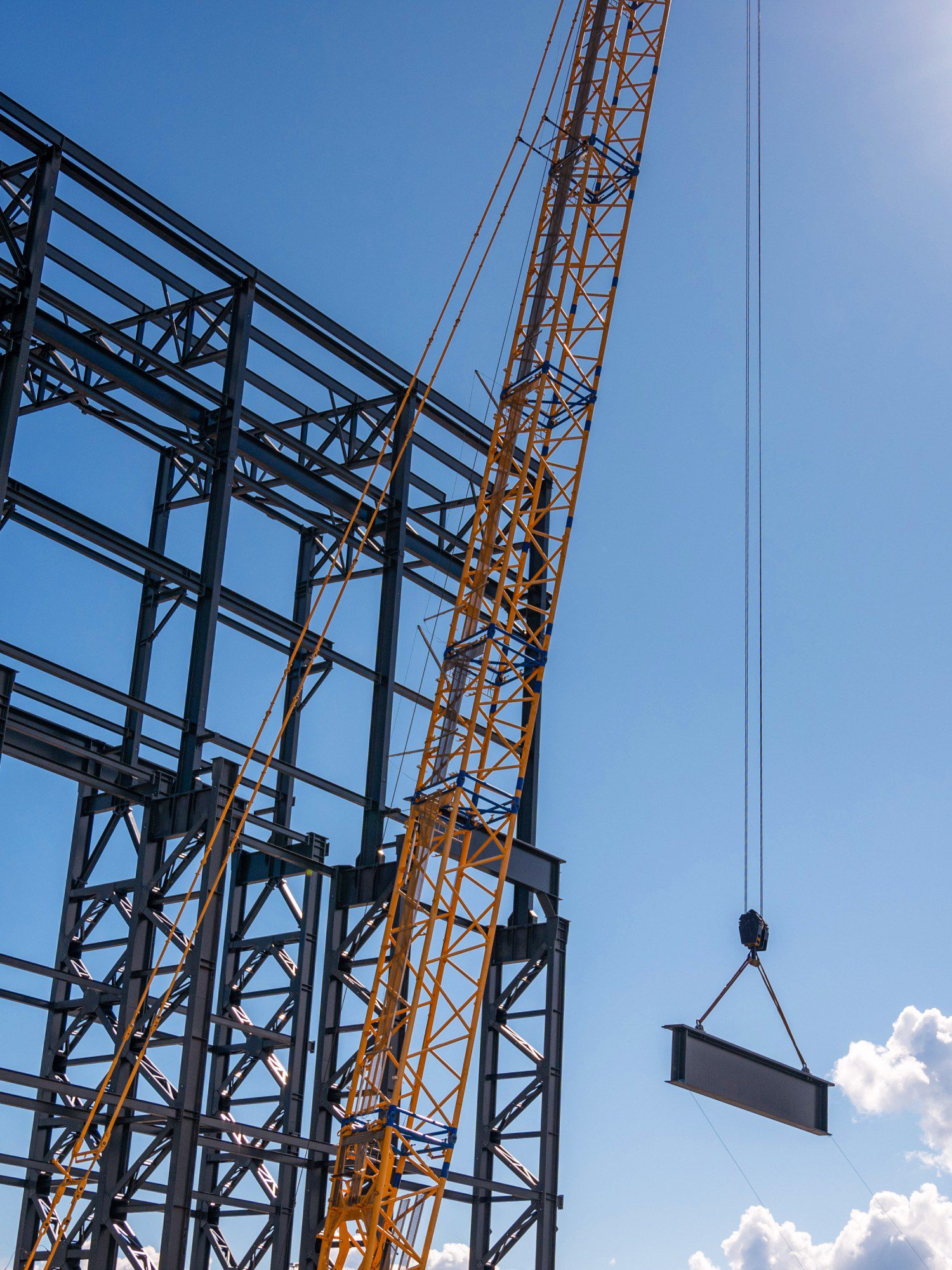
These stunning images trace ships’ routes as they move

As we run, drive, bike, and fly, we leave behind telltale marks of our movements on Earth—if you know where to look. Physical tracks, thermal signatures, and chemical traces can reveal where we’ve been. But another type of trail we leave comes from the radio signals emitted by the cars, planes, trains, and boats we use.

On airplanes, technology called ADS-B (Automatic Dependent Surveillance–Broadcast) provides real-time location, identification, speed, and orientation data. For ships at sea, that function is performed by the AIS (Automatic Identification System).

Operating at 161.975 and 162.025 megahertz, AIS transmitters broadcast a ship’s identification number, name, call sign, length and beam, type, and antenna location every six minutes. Ship location, position time stamp, and direction are transmitted more frequently. The primary purpose of AIS is maritime safety—it helps prevent collisions, assists in rescues, and provides insight into the impact of ship traffic on marine life. US Coast Guard regulations say that generally, private boats under 65 feet in length are not required to use AIS, but most commercial vessels are. Unlike ADS-B in planes, AIS can be turned off only in rare circumstances. 

A variety of sectors use AIS data for many different applications, including monitoring ship traffic to avoid disruption of undersea internet cables, identifying whale strikes, and studying the footprint of underwater noise.

Using the US National Oceanic and Atmospheric Association’s Marine Cadastre tool, you can download 16 years of detailed daily ship movements, as well as “transit count” maps generated from a year’s worth of data showing each ship’s accumulated paths. The data is collected entirely from ground-based stations along the US coasts.

I downloaded all of 2023’s transit count maps and loaded them up in geographic information system software called QGIS to visualize this year of marine traffic.

The maps are abstract and electric. With landmasses removed, the ship traces resemble long-exposure photos of sparklers, high-energy particle collisions, or strands of fiber-optic wire.

Victoria, British Columbia, and Seattle.
DATA: NOAA; MAP: JON KEEGAN / BEAUTIFUL PUBLIC DATA
Lake Huron
DATA: NOAA; MAP: JON KEEGAN / BEAUTIFUL PUBLIC DATA
Savannah, Georgia
DATA: NOAA; MAP: JON KEEGAN / BEAUTIFUL PUBLIC DATA
Louisiana
DATA: NOAA; MAP: JON KEEGAN / BEAUTIFUL PUBLIC DATA

Zooming in on these maps, you might see strange geometric patterns of perfect circles, or lines in a grid. Some of these are fishing grounds, others are scientific surveys mapping the seafloor, and others represent boats going to and from offshore oil rigs, especially off Louisiana’s gulf coast.

Hiding in plain sight

Having a global, near-real-time system for tracking the precise movements of all ships at sea sounds like a great innovation—unless you’re trying to keep your ships’ movements and cargoes secret.

In 2023, Bloomberg investigated how Russia evaded sanctions on its oil exports after the invasion of Ukraine by “spoofing”—transmitting fake AIS data—to mislead observers. Tracking a fleet of rusting ships of questionable seaworthiness, reporters compared AIS data with what they actually saw on the sea—and discovered that the ships weren’t where the data said they were. 

Monitoring the fishing industry

Clusters of fishing vessels gravitating toward known fishing grounds create some of the most interesting patterns on the maps. 

Global Fishing Watch is an international nonprofit that uses AIS to monitor the fishing industry, seeking to protect marine life from overfishing. But it says that only 2% of fishing vessels use AIS transmitters. 

The organization, which is backed by Google, the ocean conservation group Oceana, and the satellite imagery company SkyTruth, combines AIS data with satellite imagery and uses machine learning to classify the types of fishing technology being used. 

In a press release announcing the creation of Global Fishing Watch, John Amos, the president and founder of SkyTruth, said: “So much of what happens out on the high seas is invisible, and that has been a huge barrier to understanding and showing the world what’s at stake for the ocean.” 

A version of this story appeared in Beautiful Public Data (beautifulpublicdata.com), a newsletter that curates visually interesting datasets collected by government agencies.