The humans behind the robots

This story originally appeared in The Algorithm, our weekly newsletter on AI. To get stories like this in your inbox first, sign up here.

Here’s a question. Imagine that, for $15,000, you could purchase a robot to pitch in with all the mundane tasks in your household. The catch (aside from the price tag) is that for 80% of those tasks, the robot’s AI training isn’t good enough for it to act on its own. Instead, it’s aided by a remote assistant working from the Philippines to help it navigate your home and clear your table or put away groceries. Would you want one?

That’s the question at the center of my story for our magazine, published online today, on whether we will trust humanoid robots enough to welcome them into our most private spaces, particularly if they’re part of an asymmetric labor arrangement in which workers in low-wage countries perform physical tasks for us in our homes through robot interfaces. In the piece, I wrote about one robotics company called Prosper and its massive effort—bringing in former Pixar designers and professional butlers—to design a trustworthy household robot named Alfie. It’s quite a ride. Read the story here.

There’s one larger question that the story raises, though, about just how profound a shift in labor dynamics robotics could bring in the coming years. 

For decades, robots have found success on assembly lines and in other somewhat predictable environments. Then, in the last couple of years, robots started being able to learn tasks more quickly thanks to AI, and that has broadened their applications to tasks in more chaotic settings, like picking orders in warehouses. But a growing number of well-funded companies are pushing for an even more monumental shift. 

Prosper and others are betting that they don’t have to build a perfect robot that can do everything on its own. Instead, they can build one that’s pretty good, but receives help from remote operators anywhere in the world. If that works well enough, they’re hoping to bring robots into jobs that most of us would have guessed couldn’t be automated: the work of hotel housekeepers, care providers in hospitals, or domestic help. “Almost any indoor physical labor” is on the table, Prosper’s founder and CEO, Shariq Hashme, told me. 

Until now, we’ve mostly thought about automation and outsourcing as two separate forces that can affect the labor market. Jobs might be outsourced overseas or lost to automation, but not both. A job that couldn’t be sent offshore and could not yet be fully automated by machines, like cleaning a hotel room, wasn’t going anywhere. Now, advancements in robotics are promising that employers can outsource such a job to low-wage countries without needing the technology to fully automate it. 

It’s a tall order, to be clear. Robots, as advanced as they’ve gotten, may find it difficult to move around complex environments like hotels and hospitals, even with assistance. That will take years to change. However, robots will only get more nimble, as will the systems that enable them to be controlled from halfway around the world. Eventually, the bets made by these companies may pay off.

What would that mean? One, the labor movement’s battle with AI—which this year has focused its attention on automation at ports and generative AI’s theft of artists’ work—will have a whole new battle to fight. It won’t just be dock workers, delivery drivers, and actors seeking contracts to protect their jobs from automation—it will be hospitality and domestic workers too, along with many others. 

Second, our expectations of privacy would radically shift. People buying those hypothetical household robots would have to be comfortable with the idea that someone that they have never met is seeing their dirty laundry—literally and figuratively. 

Some of those changes might happen sooner rather than later. For robots to learn how to navigate places effectively, they need training data, and this year has already seen a race to collect new data sets to help them learn. To achieve their ambitions for teleoperated robots, companies will expand their search for training data to hospitals, workplaces, hotels, and more. 


Now read the rest of The Algorithm

Deeper Learning

This is where the data to build AI comes from

AI developers often don’t really know or share much about the sources of the data they are using, and the Data Provenance Initiative, a group of over 50 researchers from both academia and industry, wanted to fix that. They dug into 4,000 public data sets spanning over 600 languages, 67 countries, and three decades to understand what’s feeding today’s top AI models, and how that will affect the rest of us. 

Why it matters: AI is being incorporated into everything, and what goes into the AI models determines what comes out. However, the team found that AI’s data practices risk concentrating power overwhelmingly in the hands of a few dominant technology companies, a shift from how AI models were being trained just a decade ago. Over 90% of the data sets that the researchers analyzed came from Europe and North America, and over 70% of data for both speech and image data sets comes from YouTube. This concentration means that AI models are unlikely to “capture all the nuances of humanity and all the ways that we exist,” says Sara Hooker, a researcher involved in the project. Read more from Melissa Heikkilä.

Bits and Bytes

In the shadows of Arizona’s data center boom, thousands live without power

As new research shows that AI’s emissions have soared, Arizona is expanding plans for AI data centers while rejecting plans to finally provide electricity to parts of the Navajo Nation’s land. (Washington Post)

AI is changing how we study bird migration

After decades of frustration, machine-learning tools are unlocking a treasure trove of acoustic data for ecologists. (MIT Technology Review)

OpenAI unveils a more advanced reasoning model in race with Google

The new o3 model, unveiled during a livestreamed event on Friday, spends more time computing an answer before responding to user queries, with the goal of solving more complex multi-step problems. (Bloomberg)

How your car might be making roads safer

Researchers say data from long-haul trucks and General Motors cars is critical for addressing traffic congestion and road safety. Data privacy experts have concerns. (New York Times)

Why childhood vaccines are a public health success story

This article first appeared in The Checkup, MIT Technology Review’s weekly biotech newsletter. To receive it in your inbox every Thursday, and read articles like this first, sign up here.

Later today, around 10 minutes after this email lands in your inbox, I’ll be holding my four-year-old daughter tight as she receives her booster dose of the MMR vaccine. This shot should protect her from a trio of nasty infections—infections that can lead to meningitis, blindness, and hearing loss. I feel lucky to be offered it.

This year marks the 50-year anniversary of an ambitious global childhood vaccination program. The Expanded Programme on Immunization was launched by the World Health Organization in 1974 with the goal of getting lifesaving vaccines to all the children on the planet.

Vaccines are estimated to have averted 154 million deaths since the launch of the EPI. That number includes 146 million children under the age of five. Vaccination efforts are estimated to have reduced infant mortality by 40%, and to have contributed an extra 10 billion years of healthy life among the global population.

Childhood vaccination is a success story. But concerns around vaccines endure. Especially, it seems, among the individuals Donald Trump has picked as his choices to lead US health agencies from January. This week, let’s take a look at their claims, and where the evidence really stands on childhood vaccines.

WHO, along with health agencies around the world, recommends a suite of vaccinations for babies and young children. Some, such as the BCG vaccine, which offers some protection against tuberculosis, are recommended from birth. Others, like the vaccines for pertussis, diphtheria, tetanus, and whooping cough, which are often administered in a single shot, are introduced at eight weeks. Other vaccinations and booster doses follow.

The idea is to protect babies as soon as possible, says Kaja Abbas of the London School of Hygiene & Tropical Medicine in the UK and Nagasaki University in Japan.

The full vaccine schedule will depend on what infections pose the greatest risks and will vary by country. In the US, the recommended schedule is determined by the Centers for Disease Control and Prevention, and individual states can opt to set vaccine mandates or allow various exemptions.

Some scientists are concerned about how these rules might change in January, when Donald Trump makes his return to the White House. Trump has already listed his picks for top government officials, including those meant to lead the country’s health agencies. These individuals must be confirmed by the Senate before they can assume these roles, but it appears that Trump intends to surround himself with vaccine skeptics.

For starters, Trump has selected Robert F. Kennedy Jr. as his pick to lead the Department of Health and Human Services. Kennedy, who has long been a prominent anti-vaxxer, has a track record of spreading false information about vaccines.

In 2005, he published an error-laden article in Salon and Rolling Stone linking thimerosal—an antifungal preservative that was previously used in vaccines but phased out in the US by 2001—to neurological disorders in children. (That article was eventually deleted in 2011. “I regret we didn’t move on this more quickly, as evidence continued to emerge debunking the vaccines and autism link,” wrote Joan Walsh, Salon’s editor at large at the time.)

Kennedy hasn’t let up since. In 2015, he made outrageous comments about childhood vaccinations at a screening of a film that linked thimerosal to autism. “They get the shot, that night they have a fever of a hundred and three, they go to sleep, and three months later their brain is gone,” Kennedy said, as reported by the Sacramento Bee. “This is a holocaust, what this is doing to our country.”

Aaron Siri, the lawyer who has been helping Kennedy pick health officials for the upcoming Trump administration, has petitioned the government to pause the distribution of multiple vaccines and to revoke approval of the polio vaccine entirely. And Dave Weldon, Trump’s pick to direct the CDC, also has a history of vaccine skepticism. He has championed the disproven link between thimerosal and autism.

These arguments aren’t new. The MMR vaccine in particular has been subject to debate, controversy, and conspiracy theories for decades. All the way back in 1998, a British doctor, Andrew Wakefield, published a paper suggesting a link between the vaccine and autism in children.

The study has since been debunked—multiple times over—and Wakefield was found to have unethically subjected children to invasive and unnecessary procedures. The paper was retracted 12 years after it was published, and the UK’s General Medical Council found Wakefield guilty of serious professional misconduct. He was struck off the medical register and is no longer allowed to practice medicine in the UK. (He continues to peddle false information, though, and directed the 2016 film Vaxxed, which Weldon appeared in.)

So it’s remarkable that his “study” still seems to be affecting public opinion. A recent Pew Research Center survey suggests that four in 10 US adults worry that “not all vaccines are necessary,” and while most Americans think the benefits outweigh any risks, some are still concerned about side effects. Views among Republicans in particular seem to have shifted over the years. In 2019, 82% supported school-based vaccine requirements. That figure dropped to 70% in 2023.

The problem is that we need more than 70% of children to be vaccinated to reach “herd immunity”—the level needed to protect communities. For a super-contagious infection like measles, 95% of the population needs to be vaccinated, according to WHO. “If [coverage drops to] 80%, we should expect outbreaks,” says Abbas.

And that’s exactly what is happening. In 2023, only 83% of children got their first dose of a measles vaccine through routine health services. Nearly 35 million children are thought to have either partial protection from the disease or none at all. And over the last five years, there have been measles outbreaks in 103 countries.

Polio vaccines—the ones whose approval Siri sought to revoke—have also played a vital role in protecting children, in this case from a devastating infection that can cause paralysis. “People were so afraid of polio in the ‘30s, ‘40s, and ‘50s here in the United States,” says William Moss, an epidemiologist at Johns Hopkins Bloomberg School of Public Health in Baltimore, Maryland. “When the trial results of [the first] vaccine were announced in the United States, people were dancing in the streets.”

That vaccine was licensed in the US in 1955. By 1994, polio was considered eliminated in North and South America. Today, wild forms of the virus have been eradicated in all but two countries.

But the polio vaccine story is not straightforward. There are two types of polio vaccine: an injected type that includes a “dead” form of the virus, and an oral version that includes “live” virus. This virus can be shed in feces, and in places with poor sanitation, it can spread. It can also undergo genetic changes to create a form of the virus that can cause paralysis. Although this is rare, it does happen—and today there are more cases of vaccine-derived polio than wild-type polio.

It is worth noting that since 2000, more than 10 billion doses of the oral polio vaccine have been administered to almost 3 billion children. It is estimated that more than 13 million cases of polio have been prevented through these efforts. But there have been just under 760 cases of vaccine-derived polio.

We could prevent these cases by switching to the injected vaccine, which wealthy countries have already done. But that’s not easy in countries with fewer resources and those trying to reach children in remote rural areas or war zones.

Even the MMR vaccine is not entirely risk-free. Some people will experience minor side effects, and severe allergic reactions, while rare, can occur. And neither vaccine offers 100% protection against disease. No vaccine does. “Even if you vaccinate 100% [of the population], I don’t think we’ll be able to attain herd immunity for polio,” says Abbas. It’s important to acknowledge these limitations.

While there are some small risks, though, they are far outweighed by the millions of lives being saved. “[People] often underestimate the risk of the disease and overestimate the risk of the vaccine,” says Moss.

In some ways, vaccines have become a victim of their own success. “Most of today’s parents fortunately have never seen the tragedy caused by vaccine-preventable diseases such as measles encephalitis, congenital rubella syndrome, and individuals crippled by polio,” says Kimberly Thompson, president of Kid Risk, a nonprofit that conducts research on health risks to children. “With some individuals benefiting from the propagation of scary messages about vaccines and the proliferation of social media providing reinforcement, it’s no surprise that fears may endure.”

“But most Americans recognize the benefits of vaccines and choose to get their children immunized,” she adds. Now, that is a sentiment I can relate to.


Now read the rest of The Checkup

Read more from MIT Technology Review‘s archive

A couple of years ago, the polio virus was detected in wastewater in London, where I live. I immediately got my daughter (who was only one year old then!) vaccinated. 

Measles outbreaks continue to spring up in places where vaccination rates drop. Researchers hope that searching for traces of the virus in wastewater could help them develop early warning systems. 

Last year, the researchers whose work paved the way for the development of mRNA vaccines were awarded the Nobel Prize. Now, scientists are hoping to use the same technology to treat and vaccinate against a host of diseases.

Most vaccines work by priming the immune system to respond to a pathogen. Scientists are also working on “inverse vaccines” that teach the immune system to stand down. They might help treat autoimmune disorders.

From around the web

A person in the US is the first in the country to have become severely ill after being infected with the bird flu virus, the US Centers for Disease Control and Prevention shared on December 18. The case was confirmed on December 13. The person was exposed to sick and dead birds in backyard flocks in Louisiana. (CDC

Gavin Newsom, the governor of California, declared a state of emergency as the bird flu virus moved from the Central Valley to Southern California dairy herds. Since August, 645 herds have been reported to be infected with the virus. (LA Times)

Pharmacy benefit managers control access to prescription drugs for most Americans. These middlemen were paid billions of dollars by drug companies to allow the free flow of opioids during the US’s deadly addiction epidemic, an investigation has revealed. (New York Times)

Weight-loss drugs like Ozempic have emerged as blockbuster medicines over the past couple of years. We’re learning that they may have benefits beyond weight loss. Might they also protect organ function or treat kidney disease? (Nature Medicine)

Doctors and scientists have been attempting head transplants on animals for decades. Can they do it in people? Watch this delightful cartoon to learn more about the early head transplant attempts. (Aeon)

Drugs like Ozempic now make up 5% of prescriptions in the US

US doctors write billions of prescriptions each year. During 2024, though, one type of drug stood out—“wonder drugs” known as GLP-1 agonists.

As of September, one of every 20 prescriptions written for adults was for one of these drugs, according to the health data company Truveta.

The drugs, which include Wegovy, Mounjaro, and Victoza, are used to treat diabetes, since they help generate insulin. But their popularity exploded after scientists determined the drugs tell your brain you’re not hungry. Without those hunger cues, people find they can lose 10% of their body weight, or even more.

During 2024, the drugs’ popularity hit an all-time high, according to Tricia Rodriguez, a principal applied scientist at Truveta, which studies medical records of 120 million Americans, or about a third of the population.

“Among adults, 5.4% of all prescriptions in September 2024 were for GLP-1s,” Rodriguez says. That is up from 3.5% a year earlier, in 2023, and 1% at the start of 2021.

According to Truveta’s data, people who get prescriptions for these drugs are younger, whiter, and more likely to be female. In fact, women are twice as likely as men to get a prescription.

Yet not everyone who’s prescribed the drugs ends up taking them. In fact, Rodriguez says, half the new prescriptions for obesity are going unfilled.

That’s very unusual, she says, and could be due to shortages or sticker shock over the cost of the treatment. Many insurers don ’t cover weight-loss drugs, and the out-of-pocket price can be $1,300 a month, according to USA Today.

“For most medications, prescribing rates and dispensing rates are pretty much identical,” says Rodriguez. “But for GLP-1s, we see this gap, which is really unique. It’s suggestive that people are really interested in getting these medications, but for whatever reason, they are not always able to.”

It also means the number of people taking these drugs could go higher—maybe much higher—if insurers would pay. “I don’t think that we are at the saturation point, or necessarily nearing the saturation point,” says Rodriguez, noting that around 70% of Americans are overweight or obese.

Use of the drugs may also grow dramatically if new applications are found. Companies are already exploring whether they can treat addiction, or even Alzheimer’s.

Many of the clues about those potential uses are coming directly out of people’s medical records. Because so many people are on the drugs, it means researchers like Rodriguez have a gold mine to sift through for signs of how use of the drugs is affecting other health problems.

“Because we have so many patients that are on these medications, you’re certainly likely to have a good number that also have all of these other conditions,” she says. “One of the things we’re excited about is: How can real-world data help accelerate how quickly we can understand those?”

Here are some of the new uses of GLP-1 drugs that are being explored, based on hints from real-world patient records.

Alzheimer’s disease

This year, researchers poking through records of a million people found that taking semaglutide (sold as Wegovy and Ozempic) was associated with a 40% to 70% lower chance of an Alzheimer’s diagnosis.

It’s still a guess why the drugs might be helping (or whether they really do), but large international studies are underway to follow up on the lead. Doctors are recruiting people with early Alzheimer’s in more than 30 countries who will take either a placebo or semaglutide for two years. Then we’ll see how much their dementia has progressed.

Addiction

The anecdotes are everywhere: A person on a weight-loss drug finds hunger isn’t the only craving that seems to stop.

Those are the types of clues Eli Lilly’s CEO, David Ricks, says his company will pursue next year, testing whether its GLP-1 drug, tirzepatide (called Mounjaro for diabetes treatment, and Zepbound for weight loss), could help with addiction to alcohol, nicotine, and “other things we don’t think about [as being] connected to weight.”

In comments he made in December, Ricks said the drugs might be “anti-hedonics”—meaning they counteract our hedonistic pursuit of pleasure, be it from food, alcohol, or drugs. A study this year mining digital health records found that opioid addicts taking the drugs were about half as likely to have had an overdose.

Sleep apnea

This idea goes back a ways, including to a 2015 case study of a 260-pound man with diabetes and sleep apnea. When he went on the drug liraglutide, doctors noticed that his sleeping improved.

In sleep apnea, a person gasps for air at night—it’s annoying and, with time, causes health problems.  This year, Eli Lilly published a study in the New England Journal of Medicine on its drug tirzepatide , finding that it caused a 50% decrease in breathing interruption in overweight patients with sleep apnea.

Longevity

This year, the U.S. Food and Drug Administration approved Wegovy as a cardiovascular medicine, after researchers showed the drugs could reduce heart attack and stroke in overweight people.

But that wasn’t all. The study, involving 17,000 people, found that the drug reduced the overall chance someone would die for any reason (known as “all-cause mortality”) by 19%.

That now has aging researchers paying attention. This year they named Wegovy, and drugs like it, among their the top four candidates for a general life-extension drug.

AI is changing how we study bird migration

A small songbird soars above Ithaca, New York, on a September night. He is one of 4 billion birds, a great annual river of feathered migration across North America. Midair, he lets out what ornithologists call a nocturnal flight call to communicate with his flock. It’s the briefest of signals, barely 50 milliseconds long, emitted in the woods in the middle of the night. But humans have caught it nevertheless, with a microphone topped by a focusing funnel. Moments later, software called BirdVoxDetect, the result of a collaboration between New York University, the Cornell Lab of Ornithology, and École Centrale de Nantes, identifies the bird and classifies it to the species level.

Biologists like Cornell’s Andrew Farnsworth had long dreamed of snooping on birds this way. In a warming world increasingly full of human infrastructure that can be deadly to them, like glass skyscrapers and power lines, migratory birds are facing many existential threats. Scientists rely on a combination of methods to track the timing and location of their migrations, but each has shortcomings. Doppler radar, with the weather filtered out, can detect the total biomass of birds in the air, but it can’t break that total down by species. GPS tags on individual birds and careful observations by citizen-scientist birders help fill in that gap, but tagging birds at scale is an expensive and invasive proposition. And there’s another key problem: Most birds migrate at night, when it’s more difficult to identify them visually and while most birders are in bed. For over a century, acoustic monitoring has hovered tantalizingly out of reach as a method that would solve ornithologists’ woes.

In the late 1800s, scientists realized that migratory birds made species-specific nocturnal flight calls—“acoustic fingerprints.” When microphones became commercially available in the 1950s, scientists began recording birds at night. Farnsworth led some of this acoustic ecology research in the 1990s. But even then it was challenging to spot the short calls, some of which are at the edge of the frequency range humans can hear. Scientists ended up with thousands of tapes they had to scour in real time while looking at spectrograms that visualize audio. Though digital technology made recording easier, the “perpetual problem,” Farnsworth says, “was that it became increasingly easy to collect an enormous amount of audio data, but increasingly difficult to analyze even some of it.”

Then Farnsworth met Juan Pablo Bello, director of NYU’s Music and Audio Research Lab. Fresh off a project using machine learning to identify sources of urban noise pollution in New York City, Bello agreed to take on the problem of nocturnal flight calls. He put together a team including the French machine-listening expert Vincent Lostanlen, and in 2015, the BirdVox project was born to automate the process. “Everyone was like, ‘Eventually, when this nut is cracked, this is going to be a super-rich source of information,’” Farnsworth says. But in the beginning, Lostanlen recalls, “there was not even a hint that this was doable.” It seemed unimaginable that machine learning could approach the listening abilities of experts like Farnsworth.

“Andrew is our hero,” says Bello. “The whole thing that we want to imitate with computers is Andrew.”

They started by training BirdVoxDetect, a neural network, to ignore faults like low buzzes caused by rainwater damage to microphones. Then they trained the system to detect flight calls, which differ between (and even within) species and can easily be confused with the chirp of a car alarm or a spring peeper. The challenge, Lostanlen says, was similar to the one a smart speaker faces when listening for its unique “wake word,” except in this case the distance from the target noise to the microphone is far greater (which means much more background noise to compensate for). And, of course, the scientists couldn’t choose a unique sound like “Alexa” or “Hey Google” for their trigger. “For birds, we don’t really make that choice. Charles Darwin made that choice for us,” he jokes. Luckily, they had a lot of training data to work with—Farnsworth’s team had hand-annotated thousands of hours of recordings collected by the microphones in Ithaca.

With BirdVoxDetect trained to detect flight calls, another difficult task lay ahead: teaching it to classify the detected calls by species, which few expert birders can do by ear. To deal with uncertainty, and because there is not training data for every species, they decided on a hierarchical system. For example, for a given call, BirdVoxDetect might be able to identify the bird’s order and family, even if it’s not sure about the species—just as a birder might at least identify a call as that of a warbler, whether yellow-rumped or chestnut-sided. In training, the neural network was penalized less when it mixed up birds that were closer on the taxonomical tree.  

Last August, capping off eight years of research, the team published a paper detailing BirdVoxDetect’s machine-learning algorithms. They also released the software as a free, open-source product for ornithologists to use and adapt. In a test on a full season of migration recordings totaling 6,671 hours, the neural network detected 233,124 flight calls. In a 2022 study in the Journal of Applied Ecology, the team that tested BirdVoxDetect found acoustic data as effective as radar for estimating total biomass.

BirdVoxDetect works on a subset of North American migratory songbirds. But through “few-shot” learning, it can be trained to detect other, similar birds with just a few training examples. It’s like learning a language similar to one you already speak, Bello says. With cheap microphones, the system could be expanded to places around the world without birders or Doppler radar, even in vastly different recording conditions. “If you go to a bioacoustics conference and you talk to a number of people, they all have different use cases,” says Lostanlen. The next step for bioacoustics, he says, is to create a foundation model, like the ones scientists are working on for natural-language processing and image and video analysis, that would be reconfigurable for any species—even beyond birds. That way, scientists won’t have to build a new BirdVoxDetect for every animal they want to study.

The BirdVox project is now complete, but scientists are already building on its algorithms and approach. Benjamin Van Doren, a migration biologist at the University of Illinois Urbana-Champaign who worked on BirdVox, is using Nighthawk, a new user-friendly neural network based on both BirdVoxDetect and the popular birdsong ID app Merlin, to study birds migrating over Chicago and elsewhere in North and South America. And Dan Mennill, who runs a bioacoustics lab at the University of Windsor, says he’s excited to try Nighthawk on flight calls his team currently hand-­annotates after they’re recorded by microphones on the Canadian side of the Great Lakes. One weakness of acoustic monitoring is that unlike radar, a single microphone can’t detect the altitude of a bird overhead or the direction in which it is moving. Mennill’s lab is experimenting with an array of eight microphones that can triangulate to solve that problem. Sifting through recordings has been slow. But with Nighthawk, the analysis will speed dramatically.

With birds and other migratory animals under threat, Mennill says, BirdVoxDetect came at just the right time. Knowing exactly which birds are flying over in real time can help scientists keep tabs on how species are doing and where they’re going. That can inform practical conservation efforts like “Lights Out” initiatives that encourage skyscrapers to go dark at night to prevent bird collisions. “Bioacoustics is the future of migration research, and we’re really just getting to the stage where we have the right tools,” he says. “This ushers us into a new era.”

Christian Elliott is a science and environmental reporter based in Illinois.  

This is where the data to build AI comes from

AI is all about data. Reams and reams of data are needed to train algorithms to do what we want, and what goes into the AI models determines what comes out. But here’s the problem: AI developers and researchers don’t really know much about the sources of the data they are using. AI’s data collection practices are immature compared with the sophistication of AI model development. Massive data sets often lack clear information about what is in them and where it came from. 

The Data Provenance Initiative, a group of over 50 researchers from both academia and industry, wanted to fix that. They wanted to know, very simply: Where does the data to build AI come from? They audited nearly 4,000 public data sets spanning over 600 languages, 67 countries, and three decades. The data came from 800 unique sources and nearly 700 organizations. 

Their findings, shared exclusively with MIT Technology Review, show a worrying trend: AI’s data practices risk concentrating power overwhelmingly in the hands of a few dominant technology companies. 

In the early 2010s, data sets came from a variety of sources, says Shayne Longpre, a researcher at MIT who is part of the project. 

It came not just from encyclopedias and the web, but also from sources such as parliamentary transcripts, earning calls, and weather reports. Back then, AI data sets were specifically curated and collected from different sources to suit individual tasks, Longpre says.

Then transformers, the architecture underpinning language models, were invented in 2017, and the AI sector started seeing performance get better the bigger the models and data sets were. Today, most AI data sets are built by indiscriminately hoovering material from the internet. Since 2018, the web has been the dominant source for data sets used in all media, such as audio, images, and video, and a gap between scraped data and more curated data sets has emerged and widened.

“In foundation model development, nothing seems to matter more for the capabilities than the scale and heterogeneity of the data and the web,” says Longpre. The need for scale has also boosted the use of synthetic data massively.

The past few years have also seen the rise of multimodal generative AI models, which can generate videos and images. Like large language models, they need as much data as possible, and the best source for that has become YouTube. 

For video models, as you can see in this chart, over 70% of data for both speech and image data sets comes from one source.

This could be a boon for Alphabet, Google’s parent company, which owns YouTube. Whereas text is distributed across the web and controlled by many different websites and platforms, video data is extremely concentrated in one platform.

“It gives a huge concentration of power over a lot of the most important data on the web to one company,” says Longpre. 

And because Google is also developing its own AI models, its massive advantage also raises questions about how the company will make this data available for competitors, says Sarah Myers West, the co–executive director at the AI Now Institute.

“It’s important to think about data not as though it’s sort of this naturally occurring resource, but it’s something that is created through particular processes,” says Myers West.

“If the data sets on which most of the AI that we’re interacting with reflect the intentions and the design of big, profit-motivated corporations—that’s reshaping the infrastructures of our world in ways that reflect the interests of those big corporations,” she says.

This monoculture also raises questions about how accurately the human experience is portrayed in the data set and what kinds of models we are building, says Sara Hooker, the vice president of research at the technology company Cohere, who is also part of the Data Provenance Initiative.

People upload videos to YouTube with a particular audience in mind, and the way people act in those videos is often intended for very specific effect. “Does [the data] capture all the nuances of humanity and all the ways that we exist?” says Hooker. 

Hidden restrictions

AI companies don’t usually share what data they used to train their models. One reason is that they want to protect their competitive edge. The other is that because of the complicated and opaque way data sets are bundled, packaged, and distributed, they likely don’t even know where all the data came from.

They also probably don’t have complete information about any constraints on how that data is supposed to be used or shared. The researchers at the Data Provenance Initiative found that data sets often have restrictive licenses or terms attached to them, which should limit their use for commercial purposes, for example.

“This lack of consistency across the data lineage makes it very hard for developers to make the right choice about what data to use,” says Hooker.

It also makes it almost impossible to be completely certain you haven’t trained your model on copyrighted data, adds Longpre.

More recently, companies such as OpenAI and Google have struck exclusive data-sharing deals with publishers, major forums such as Reddit, and social media platforms on the web. But this becomes another way for them to concentrate their power.

“These exclusive contracts can partition the internet into various zones of who can get access to it and who can’t,” says Longpre.

The trend benefits the biggest AI players, who can afford such deals, at the expense of researchers, nonprofits, and smaller companies, who will struggle to get access. The largest companies also have the best resources for crawling data sets.

“This is a new wave of asymmetric access that we haven’t seen to this extent on the open web,” Longpre says.

The West vs. the rest

The data that is used to train AI models is also heavily skewed to the Western world. Over 90% of the data sets that the researchers analyzed came from Europe and North America, and fewer than 4% came from Africa. 

“These data sets are reflecting one part of our world and our culture, but completely omitting others,” says Hooker.

The dominance of the English language in training data is partly explained by the fact that the internet is still over 90% in English, and there are still a lot of places on Earth where there’s really poor internet connection or none at all, says Giada Pistilli, principal ethicist at Hugging Face, who was not part of the research team. But another reason is convenience, she adds: Putting together data sets in other languages and taking other cultures into account requires conscious intention and a lot of work. 

The Western focus of these data sets becomes particularly clear with multimodal models. When an AI model is prompted for the sights and sounds of a wedding, for example, it might only be able to represent Western weddings, because that’s all that it has been trained on, Hooker says. 

This reinforces biases and could lead to AI models that push a certain US-centric worldview, erasing other languages and cultures.

“We are using these models all over the world, and there’s a massive discrepancy between the world we’re seeing and what’s invisible to these models,” Hooker says. 

AI’s search for more energy is growing more urgent

This story originally appeared in The Algorithm, our weekly newsletter on AI. To get stories like this in your inbox first, sign up here.

If you drove by one of the 2,990 data centers in the United States, you’d probably think little more than “Huh, that’s a boring-looking building.” You might not even notice it at all. However, these facilities underpin our entire digital world, and they are responsible for tons of greenhouse-gas emissions. New research shows just how much those emissions have skyrocketed during the AI boom. 

Since 2018, carbon emissions from data centers in the US have tripled, according to new research led by a team at the Harvard T.H. Chan School of Public Health. That puts data centers slightly below domestic commercial airlines as a source of this pollution.

That leaves a big problem for the world’s leading AI companies, which are caught between pressure to meet their own sustainability goals and the relentless competition in AI that’s leading them to build bigger models requiring tons of energy. The trend toward ever more energy-intensive new AI models, including video generators like OpenAI’s Sora, will only send those numbers higher. 

A growing coalition of companies is looking toward nuclear energy as a way to power artificial intelligence. Meta announced on December 3 it was looking for nuclear partners, and Microsoft is working to restart the Three Mile Island nuclear plant by 2028. Amazon signed nuclear agreements in October. 

However, nuclear plants take ages to come online. And though public support has increased in recent years, and president-elect Donald Trump has signaled support, only a slight majority of Americans say they favor more nuclear plants to generate electricity. 

Though OpenAI CEO Sam Altman pitched the White House in September on an unprecedented effort to build more data centers, the AI industry is looking far beyond the United States. Countries in Southeast Asia, like Malaysia, Indonesia, Thailand, and Vietnam, are all courting AI companies, hoping to be their new data center hubs. 

In the meantime, AI companies will continue to use up power from their current sources, which are far from renewable. Since so many data centers are located in coal-producing regions, like Virginia, the “carbon intensity” of the energy they use is 48% higher than the national average. The researchers found that 95% of data centers in the US are built in places with sources of electricity that are dirtier than the national average. Read more about the new research here.


Deeper Learning

We saw a demo of the new AI system powering Anduril’s vision for war

We’re living through the first drone wars, but AI is poised to change the future of warfare even more drastically. I saw that firsthand during a visit to a test site in Southern California run by Anduril, the maker of AI-powered drones, autonomous submarines, and missiles. Anduril has built a way for the military to command much of its hardware—from drones to radars to unmanned fighter jets—from a single computer screen. 

Why it matters: Anduril, other companies in defense tech, and growing numbers of people within the Pentagon itself are increasingly adopting a new worldview: A future “great power” conflict—military jargon for a global war involving multiple countries—will not be won by the entity with the most advanced drones or firepower, or even the cheapest firepower. It will be won by whoever can sort through and share information the fastest. The Pentagon is betting lots of energy and money that AI—despite its flaws and risks—will be what puts the US and its allies ahead in that fight. Read more here.

Bits and Bytes

Bluesky has an impersonator problem 

The platform’s rise has brought with it a surge of crypto scammers, as my colleague Melissa Heikkilä experienced firsthand. (MIT Technology Review)

Tech’s elite make large donations to Trump ahead of his inauguration 

Leaders in Big Tech, who have been lambasted by Donald Trump, have made sizable donations to his ​​inauguration committee. (The Washington Post)

Inside the premiere of the first commercially streaming AI-generated movies

The films, according to writer Jason Koebler, showed the telltale flaws of AI-generated video: dead eyes, vacant expressions, unnatural movements, and a reliance on voice-overs, since dialogue doesn’t work well. The company behind the films is confident viewers will stomach them anyway. (404 Media)

Meta asked California’s attorney general to stop OpenAI from becoming for-profit

Meta now joins Elon Musk in alleging that OpenAI has improperly enjoyed the benefits of nonprofit status while developing its technology. (Wall Street Journal)

How Silicon Valley is disrupting democracy

Two books explore the price we’ve paid for handing over unprecedented power to Big Tech—and explain why it’s imperative we start taking it back. (MIT Technology Review)

The 8 worst technology failures of 2024

They say you learn more from failure than success. If so, this is the story for you: MIT Technology Review’s annual roll call of the biggest flops, flimflams, and fiascos in all domains of technology.

Some of the foul-ups were funny, like the “woke” AI which got Google in trouble after it drew Black Nazis. Some caused lawsuits, like a computer error by CrowdStrike that left thousands of Delta passengers stranded. We also reaped failures among startups that raced to expand from 2020 to 2022, a period of ultra-low interest rates. But then the economic winds shifted. Money wasn’t free anymore. The result? Bankruptcy and dissolution for companies whose ambitious technological projects, from vertical farms to carbon credits, hadn’t yet turned a profit and might never do so.

Read on.

Woke AI blunder

ai-generated image of a female pope

GOOGLE GEMINI VIA X.COM/END WOKENESS

People worry about bias creeping into AI. But what if you add bias on purpose? Thanks to Google, we know where that leads: Black Vikings and female popes.

Google’s Gemini AI image feature, launched last February, had been tuned to zealously showcase diversity, damn the history books. Ask Google for a picture of German soldiers from World War II, and it would create a Benetton ad in Wehrmacht uniforms. 

Critics pounced and Google beat an embarrassed retreat. It paused Gemini’s ability to draw people and agreed its well-intentioned effort to be inclusive had “missed the mark.” 

The free version of Gemini still won’t create images of people. But paid versions will. When we asked for an image of 12 CEOs of public biotech companies, the software produced a photographic-quality image of middle-aged white men. Less than ideal. But closer to the truth. 

More: Is Google’s Gemini chatbot woke by accident, or by design? (The Economist), Gemini image generation got it wrong. We’ll do better. (Google)


Boeing Starliner

Boeing CST-100 Starliner

THE BOEING COMPANY VIA NASA

Boeing, we have a problem. And it’s your long-delayed reusable spaceship, the Starliner, which stranded NASA astronauts Sunita “Suni” Williams and  Barry “Butch” Wilmore on the International Space Station.

The June mission was meant to be a quick eight-day round trip to test Starliner before it embarked on longer missions. But, plagued by helium leaks and thruster problems, it had to come back empty. 

Now Butch and Suni won’t return to Earth until 2025, when a craft from Boeing competitor SpaceX is scheduled to bring them home. 

Credit Boeing and NASA with putting safety first. But this wasn’t Boeing’s only malfunction during 2024. The company began the year with a door blowing off one of its planes midflight, faced a worker strike, agreed to a major fine for misleading the government about the safety of its 737 Max airplane (which made our 2019 list of worst technologies), and saw its CEO step down in March.

After the Starliner fiasco, Boeing fired the chief of its space and defense unit. “At this critical juncture, our priority is to restore the trust of our customers and meet the high standards they expect of us to enable their critical missions around the world,” Boeing’s new CEO, Kelly Ortberg, said in a memo.

More: Boeing’s beleaguered space capsule is heading back to Earth without two NASA astronauts (NY Post), Boeing’s space and defense chief exits in new CEO’s first executive move (Reuters), CST-100 Starliner (Boeing)


CrowdStrike outage

MITTR / ENVATO

The motto of the cybersecurity company CrowdStrike is “We stop breaches.” And it’s true: No one can breach your computer if you can’t turn it on.

That’s exactly what happened to many people on July 19, when thousands of Windows computers at airlines, TV stations, and hospitals started displaying the “blue screen of death.” 

The cause wasn’t hackers or ransomware. Instead, those computers were stuck in a boot loop because of a bad update shipped by CrowdStrike itself. CEO George Kurtz jumped on X to say the “issue” had been identified as a “defect” in a single computer file.

So who is liable? CrowdStrike customer Delta Airlines, which canceled 7,000 flights, is suing for $500 million. It alleges that the security firm caused a “global catastrophe” when it took “uncertified and untested shortcuts.” 

CrowdStrike countersued. It says Delta’s management is to blame for its troubles and that the airline is due little more than a refund. 

More: “Crowdstrike is working with customers(George Kurtz), How to fix a Windows PC affected by the global outage (MIT Technology Review), Delta Sues CrowdStrike Over July Operations Meltdown (WSJ)


Vertical farms

a blighted brown leaf of lettuce

MITTR / ENVATO

Grow lettuce in buildings using robots, hydroponics, and LED lights. That’s what Bowery, a “vertical farming” startup, raised over $700 million to do. But in November, Bowery went bust, making it the biggest startup failure of the year, according to the business analytics firm CB Insights. 

Bowery claimed that vertical farms were “100 times more productive” per square foot than traditional farms, since racks of plants could be stacked 40 feet high. In reality, the company’s lettuce was more expensive, and when a stubborn plant infection spread through its East Coast facilities, Bowery had trouble delivering the green stuff at any price.

More: How a leaf-eating pathogen, failed deals brought down Bowery Farming (Pitchbook), Vertical farming “unicorn” Bowery to shut down (Axios)


Exploding pagers

an explosion behind a pager

MITTR / ADOBE STOCK

They beeped, and then they blew up. Across Lebanon, fingers and faces were shredded in what was called Israel’s “surprise opening blow in an all-out war to try to cripple Hezbollah.” 

The deadly attack was diabolically clever. Israel set up shell companies that sold thousands of pagers packed with explosives to the Islamic faction, which was already worried that its phones were being spied on. 

A coup for Israel’s spies. But was it a war crime? A 1996 treaty prohibits intentionally manufacturing “apparently harmless objects” designed to explode. The New York Times says nine-year-old Fatima Abdullah died when her father’s booby-trapped beeper chimed and she raced to take it to him.

More: Israel conducted Lebanon pager attack… (Axios), A 9-Year-Old Girl Killed in Pager Attack Is Mourned in Lebanon (New York Times), Did Israel break international law? (Middle East Eye)


23andMe

The 23 and me logo protruding from a cardboard box of desk items held by an office worker.

MITTR / ADOBE STOCK

The company that pioneered direct-to-consumer gene testing is sinking fast. Its stock price is going toward zero, and a plan to create valuable drugs is kaput after that team got pink slips this November.

23andMe always had a celebrity aura, bathing in good press. Now, though, the press is all bad. It’s a troubled company in the grip of a controlling founder, Anne Wojcicki, after its independent directors resigned en masse this September. Customers are starting to worry about what’s going to happen to their DNA data if 23andMe goes under.

23andMe says it created “the world’s largest crowdsourced platform for genetic research.” That’s true. It just never figured out how to turn a profit. 

More:  23andMe’s fall from $6 billion to nearly $0 (Wall Street Journal), How to…delete your 23andMe data (MIT Technology Review), 23andMe Financial Report, November 2024 (23andMe)


AI slop

ai-generated image of a representation of Jesus with outspread arms and body composed of shrimp parts

AUTHOR UNKNOWN VIA WIKIMEDIA COMMONS

Slop is the scraps and leftovers that pigs eat. “AI slop” is what you and I are increasingly consuming online now that people are flooding the internet with computer-generated text and pictures.  

AI slop is “dubious,” says the New York Times, and “dadaist,” according to Wired. It’s frequently weird, like Shrimp Jesus (don’t ask if you don’t know), or deceptive, like the picture of a shivering girl in a rowboat, supposedly showing the US government’s poor response to Hurricane Helene.

AI slop is often entertaining. AI slop is usually a waste of your time. AI slop is not fact-checked. AI slop exists mostly to get clicks. AI slop is that blue-check account on X posting 10-part threads on how great AI is—threads that were written by AI. 

Most of all, AI slop is very, very common. This year, researchers claimed that about half the long posts on LinkedIn and Medium were partly AI-generated.

More: First came ‘Spam.’ Now, With A.I., We’ve got ‘Slop’ (New York Times), AI Slop Is Flooding Medium (Wired)


Voluntary carbon markets

a spindly tree with a cloud of emissions hovering around it

MITTR / ENVATO

Your business creates emissions that contribute to global warming. So why not pay to have some trees planted or buy a more efficient cookstove for someone in Central America? Then you could reach net-zero emissions and help save the planet.

Neat idea, but good intentions aren’t enough. This year the carbon marketplace Nori shut down, and so did Running Tide, a firm trying to sink carbon into the ocean. “The problem is the voluntary carbon market is voluntary,” Running Tide’s CEO wrote in a farewell post, citing a lack of demand.

While companies like to blame low demand, it’s not the only issue. Sketchy technology, questionable credits, and make-believe offsets have created a credibility problem in carbon markets. In October, US prosecutors charged two men in a $100 million scheme involving the sale of nonexistent emissions savings. 

More: The growing signs of trouble for global carbon markets (MIT Technology Review), Running Tide’s ill-fated adventure in ocean carbon removal (Canary Media), Ex-carbon offsetting boss charged in New York with multimillion-dollar fraud (The Guardian) 

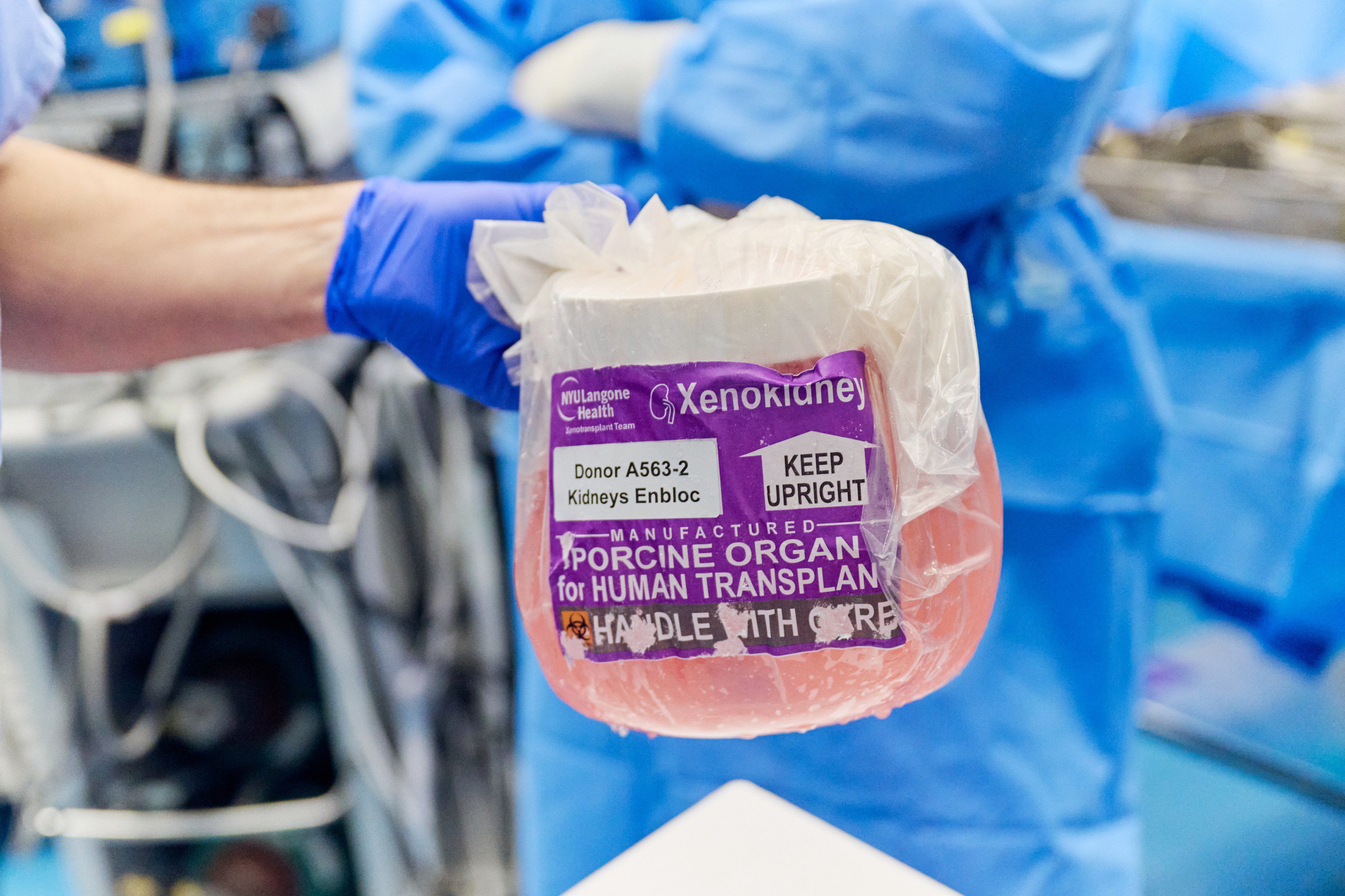
A woman in the US is the third person to receive a gene-edited pig kidney

Towana Looney, a 53-year-old woman from Alabama, has become the third living person to receive a kidney transplant from a gene-edited pig. 

Looney, who donated one of her kidneys to her mother back in 1999, developed kidney failure several years later following a pregnancy complication that caused high blood pressure. She started dialysis treatment in December of 2016 and was put on a waiting list for a kidney transplant soon after, in early 2017. 

But it was difficult to find a match. So Looney’s doctors recommended the experimental pig organ as an alternative. After eight years on the waiting list, Looney was authorized to receive the kidney under the US Food and Drug Administration’s expanded access program, which allows people with serious or life-threatening conditions to try experimental treatments.

The pig in question was developed by Revivicor, a United Therapeutics company. The company’s technique involves making 10 gene edits to a pig cell. The edits are made to prevent too much organ growth, curb inflammation, and, importantly, stop the recipient’s immune system from rejecting the organ. The edited pig cell is then placed into a pig egg cell that has had its nucleus removed, and the egg is transferred to the uterus of a sow, which eventually gives birth to a gene-edited piglet.

JOE CARROTTA FOR NYU LANGONE HEALTH

In theory, once the piglet has grown, its organs can be used for human transplantation. Pig organs are similar in size to human ones, after all. A few years ago, David Bennett Sr. became the first person to receive a heart transplant from such a pig. He died two months after the operation, and the heart was later found to have been infected with a pig virus.

Richard Slayman was the first person to get a gene-edited pig kidney, which he received in early 2024. He died two months after his surgery, although the hospital treating him said in a statement that it had “no indication that it was the result of his recent transplant.” In April, Lisa Pisano was reported to be the second person to receive such an organ. Pisano also received a heart pump alongside her kidney transplant. Her kidney failed because of an inadequate blood supply and was removed the following month. She died in July.

Looney received her pig kidney during a seven-hour operation that took place at NYU Langone Health in New York City on November 25. The surgery was led by Jayme Locke of the US Health Resources & Services Administration and Robert Montgomery of the NYU Langone Transplant Institute.

Looney was discharged from the hospital 11 days after her surgery, to an apartment in New York City. She’ll stay in New York for another three months so she can check in with doctors at the hospital for evaluations.

“It’s a blessing,” Looney said in a statement. “I feel like I’ve been given another chance at life. I cannot wait to be able to travel again and spend more quality time with my family and grandchildren.”

Looney’s doctors are hopeful that her kidney will last longer than those of her predecessors. For a start, Looney was in better health to begin with—she had chronic kidney disease and required dialysis, but unlike previous recipients, she was not close to death, Montgomery said in a briefing. He and his colleagues plan to start clinical trials within the next year.

There is a huge unmet need for organs. In the US alone, there more than 100,000 people are waiting for one, and 17 people on the waiting list die every day. Researchers hope that gene-edited animals might provide a new source of organs for such individuals.

Revivicor isn’t the only company working on this. Rival company eGenesis, which has a different approach to gene editing, has used CRISPR to create pigs with around 70 gene edits

“Transplant is one of the few therapies that can cure a complex disease overnight, yet there are too few organs to provide a cure for all in need,” Locke said in a statement. “The thought that we may now have a solution to the organ shortage crisis for others who have languished on our waiting lists invokes the most welcome of feelings: pure joy!”

Today, Looney is the only person living with a pig organ. “I am full of energy. I got an appetite I’ve never had in eight years,” she said at a briefing. “I can put my hand on this kidney and feel it buzzing.”

This story has been updated with additional information after a press briefing.

Google’s big week was a flex for the power of big tech

Last week, this space was all about OpenAI’s 12 days of shipmas. This week, the spotlight is on Google, which has been speeding toward the holiday by shipping or announcing its own flurry of products and updates. The combination of stuff here is pretty monumental, not just for a single company, but I think because it speaks to the power of the technology industry—even if it does trigger a personal desire that we could do more to harness that power and put it to more noble uses.

To start, last week Google Introduced Veo, a new video generation model, and Imagen 3, a new version of its image generation model. 

Then on Monday, Google announced a  breakthrough in quantum computing with its Willow chip. The company claims the new machine is capable of a “standard benchmark computation in under five minutes that would take one of today’s fastest supercomputers 10 septillion (that is, 1025) years.” you may recall that MIT Technology Review covered some of the Willow work after researchers posted a paper preprint in August.   But this week marked the big media splash. It was a stunning update that had Silicon Valley abuzz. (Seriously, I have never gotten so many quantum computing pitches as in the past few days.)

Google followed this on Wednesday with even more gifts: a Gemini 2 release, a Project Astra update, and even more news about forthcoming agents called Mariner, an agent that can browse the web, and Jules, a coding assistant.  

First: Gemini 2. It’s impressive, with a lot of performance updates. But I have frankly grown a little inured by language-model performance updates to the point of apathy. Or at least near-apathy. I want to see them do something.

So for me, the cooler update was second on the list: Project Astra, which comes across like an AI from a futuristic movie set. Google first showed a demo of Astra back in May at its developer conference, and it was the talk of the show. But, since demos offer companies chances to show off products at their most polished, it can be hard to tell what’s real and what’s just staged for the audience. Still, when my colleague Will Douglas Heaven recently got to try it out himself, live and unscripted, it largely lived up to the hype. Although he found it glitchy, he noted that those glitches can be easily corrected. He called the experience “stunning” and said it could be generative AI’s killer app.

On top of all this, Will notes that this week Google DeepMind CEO (the company’s AI division) Demis Hassabis was in Sweden to receive his Nobel Prize. And what did you do with your week?

Making all this even more impressive, the advances represented in Willow, Gemini, Astra, and Veo are ones that just a few years ago many, many people would have said were not possible—or at least not in this timeframe. 

A popular knock on the tech industry is that it has a tendency to over-promise and under-deliver. The phone in your pocket gives the lie to this. So too do the rides I took in Waymo’s self-driving cars this week. (Both of which arrived faster than Uber’s estimated wait time. And honestly it’s not been that long since the mere ability to summon an Uber was cool!) And while quantum has a long way to go, the Willow announcement seems like an exceptional advance; if not a tipping point exactly, then at least a real waypoint on a long road. (For what it’s worth, I’m still not totally sold on chatbots. They do offer novel ways of interacting with computers, and have revolutionized information retrieval. But whether they are beneficial for humanity—especially given energy debts, the use of copyrighted material in their training data, their perhaps insurmountable tendency to hallucinate, etc.—is debatable, and certainly is being debated. But I’m pretty floored by this week’s announcements from Google, as well as OpenAI—full stop.)

And for all the necessary and overdue talk about reining in the power of Big Tech, the ability to hit significant new milestones on so many different fronts all at once is something that only a company with the resources of a Google (or Apple or Microsoft or Amazon or Meta or Baidu or whichever other behemoth) can do. 

All this said, I don’t want us to buy more gadgets or spend more time looking at our screens. I don’t want us to become more isolated physically, socializing with others only via our electronic devices. I don’t want us to fill the air with carbon or our soil with e-waste. I do not think these things should be the price we pay to drive progress forward. It’s indisputable that humanity would be better served if more of the tech industry was focused on ending poverty and hunger and disease and war.

Yet every once in a while, in the ever-rising tide of hype and nonsense that pumps out of Silicon Valley, epitomized by the AI gold rush of the past couple of years, there are moments that make me sit back in awe and amazement at what people can achieve, and in which I become hopeful about our ability to actually solve our larger problems—if only because we can solve so many other dumber, but incredibly complicated ones. This week was one of those times for me. 


Now read the rest of The Debrief

The News

• Robotaxi adoption is hitting a tipping point

• But also, GM is shutting down its Cruise robotaxi division.

• Here’s how to use OpenAI’s new video editing tool Sora.

• Bluesky has an impersonator problem.

• The AI hype machine is coming under government scrutiny.


The Chat

Every week, I talk to one of MIT Technology Review’s journalists to go behind the scenes of a story they are working on. This week, I hit up James O’Donnell, who covers AI and hardware, about his story on how the startup defense contractor Anduril is bringing AI to the battlefield.

Mat: James, you got a pretty up close look at something most people probably haven’t even thought about yet, which is how the future of AI-assisted warfare might look. What did you learn on that trip that you think will surprise people?

James: Two things stand out. One, I think people would be surprised by the gulf between how technology has developed for the last 15 years for consumers versus the military. For consumers, we’ve gotten phones, computers, smart TVs and other technologies that generally do a pretty good job of talking to each other and sharing our data, even though they’re made by dozens of different manufacturers. It’s called the “internet of things.” In the military, technology has developed in exactly the opposite way, and it’s putting them in a crisis. They have stealth aircraft all over the world, but communicating about a drone threat might be done with Powerpoints and a chat service reminiscent of AOL Instant Messenger.

The second is just how much the Pentagon is now looking to AI to change all of this. New initiatives have surged in the current AI boom. They are spending on training new AI models to better detect threats, autonomous fighter jets, and intelligence platforms that use AI to find pertinent information. What I saw at Anduril’s test site in California is also a key piece of that. Using AI to connect to and control lots of different pieces of hardware, like drones and cameras and submarines, from a single platform. The amount being invested in AI is much smaller than for aircraft carriers and jets, but it’s growing.

Mat: I was talking with a different startup defense contractor recently, who was talking to me about the difficulty of getting all these increasingly autonomous devices on the battlefield talking to each other in a coordinated way. Like Anduril, he was making the case that this has to be done at the edge, and that there is too much happening for human decision making to process. Do you think that’s true?  Why is that?

James: So many in the defense space have pointed to the war in Ukraine as a sign that warfare is changing. Drones are cheaper and more capable than they ever were in the wars in the Middle East. It’s why the Pentagon is spending $1 billion on the Replicator initiative to field thousands of cheap drones by 2025. It’s also looking to field more underwater drones as it plans for scenarios in which China may invade Taiwan.

Once you get these systems, though, the problem is having all the devices communicate with one another securely. You need to play Air Traffic Control at the same time that you’re pulling in satellite imagery and intelligence information, all in environments where communication links are vulnerable to attacks.

Mat: I guess I still have a mental image of a control room somewhere, like you might see in Dr. Strangelove or War Games (or Star Wars for that matter) with a handful of humans directing things. Are those days over?

James: I think a couple things will change. One, a single person in that control room will be responsible for a lot more than they are now. Rather than running just one camera or drone system manually, they’ll command software that does it for them, for lots of different devices. The idea that the defense tech sector is pushing is to take them out of the mundane tasks—rotating a camera around to look for threats—and instead put them in the driver’s seat for decisions that only humans, not machines, can make.

Mat: I know that critics of the industry push back on the idea of AI being empowered to make battlefield decisions, particularly when it comes to life and death, but it seems to me that we are increasingly creeping toward that and it seems perhaps inevitable. What’s your sense?

James: This is painting with broad strokes, but I think the debates about military AI fall along similar lines to what we see for autonomous vehicles. You have proponents saying that driving is not a thing humans are particularly good at, and when they make mistakes, it takes lives. Others might agree conceptually, but debate at what point it’s appropriate to fully adopt fallible self-driving technology in the real world. How much better does it have to be than humans?

In the military, the stakes are higher. There’s no question that AI is increasingly being used to sort through and surface information to decision-makers. It’s finding patterns in data, translating information, and identifying possible threats. Proponents are outspoken that that will make warfare more precise and reduce casualties. What critics are concerned about is how far across that decision-making pipeline AI is going, and how much there is human oversight.

I think where it leaves me is wanting transparency. When AI systems make mistakes, just like when human military commanders make mistakes, I think we deserve to know, and that transparency does not have to compromise national security. It took years for reporter Azmat Khan to piece together the mistakes made during drone strikes in the Middle East, because agencies were not forthcoming. That obfuscation absolutely cannot be the norm as we enter the age of military AI.

Mat: Finally, did you have a chance to hit an In-N-Out burger while you were in California?

James: Normally In-N-Out is a requisite stop for me in California, but ahead of my trip I heard lots of good things about the burgers at The Apple Pan in West LA, so I went there. To be honest, the fries were better, but for the burger I have to hand it to In-N-Out.


The Recommendation

A few weeks ago I suggested Ca7riel and Paco  Amoroso’s appearance on NPR Tiny Desk. At the risk of this space becoming a Tiny Desk stan account, I’m back again with another. I was completely floored by Doechii’s Tiny Desk appearance last week. It’s so full of talent and joy and style and power. I came away completely inspired and have basically had her music on repeat in Spotify ever since. If you are already a fan of her recorded music, you will love her live. If she’s new to you, well, you’re welcome. Go check it out. Oh, and don’t worry: I’m not planning to recommend Billie Eilish’s new Tiny Desk concert in next week’s newsletter. Mostly because I’m doing so now.

How Silicon Valley is disrupting democracy

The internet loves a good neologism, especially if it can capture a purported vibe shift or explain a new trend. In 2013, the columnist Adrian Wooldridge coined a word that eventually did both. Writing for the Economist, he warned of the coming “techlash,” a revolt against Silicon Valley’s rich and powerful fueled by the public’s growing realization that these “sovereigns of cyberspace” weren’t the benevolent bright-future bringers they claimed to be. 

While Wooldridge didn’t say precisely when this techlash would arrive, it’s clear today that a dramatic shift in public opinion toward Big Tech and its leaders did in fact ­happen—and is arguably still happening. Say what you will about the legions of Elon Musk acolytes on X, but if an industry and its executives can bring together the likes of Elizabeth Warren and Lindsey Graham in shared condemnation, it’s definitely not winning many popularity contests.   

To be clear, there have always been critics of Silicon Valley’s very real excesses and abuses. But for the better part of the last two decades, many of those voices of dissent were either written off as hopeless Luddites and haters of progress or drowned out by a louder and far more numerous group of techno-optimists. Today, those same critics (along with many new ones) have entered the fray once more, rearmed with popular Substacks, media columns, and—increasingly—book deals.

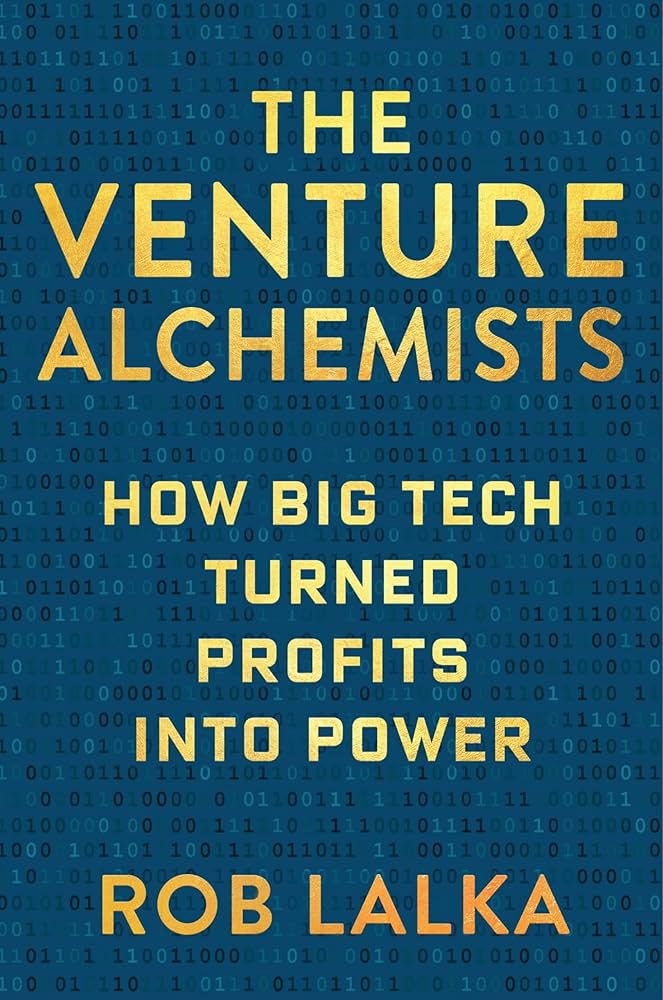
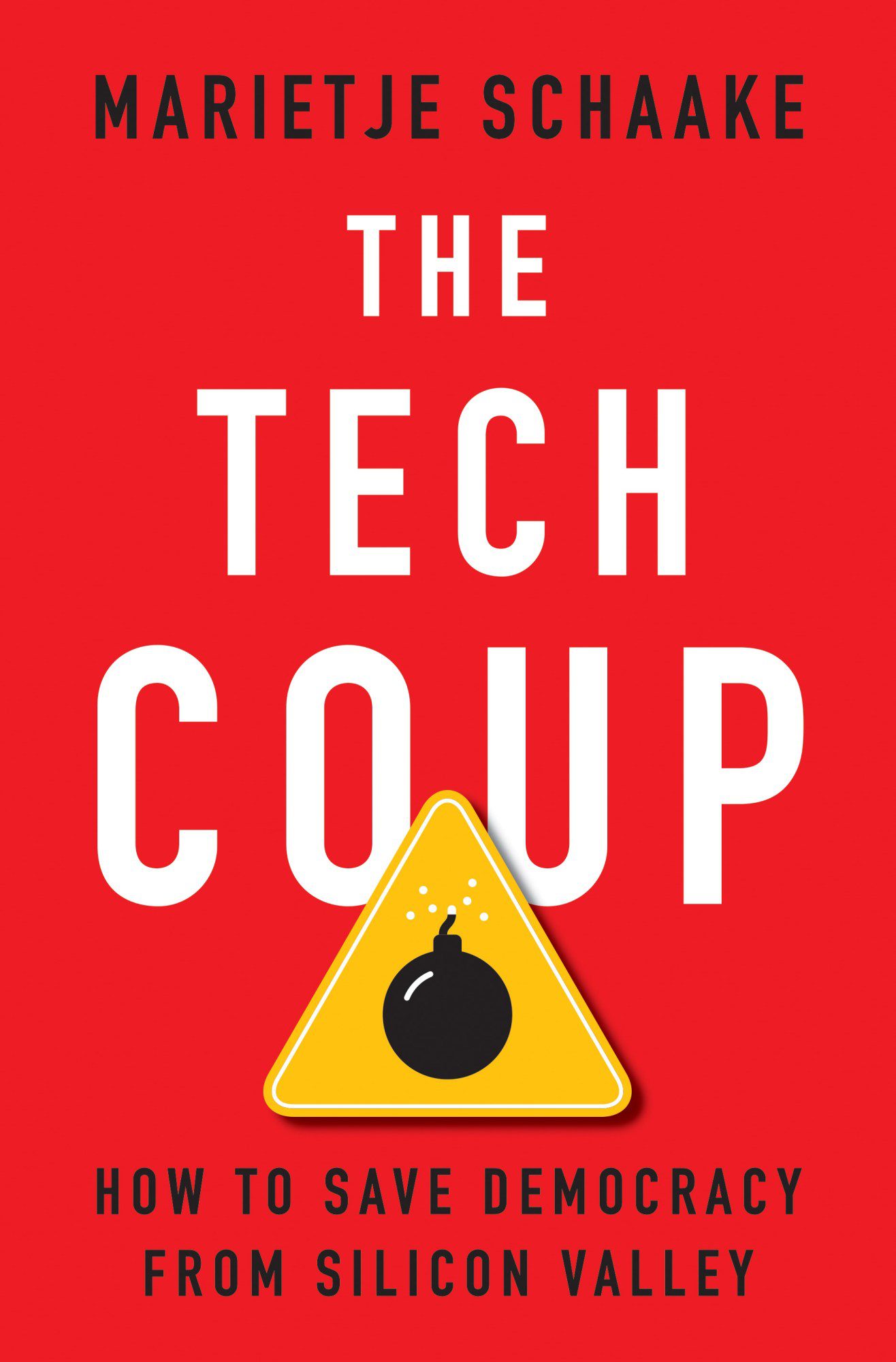
Two of the more recent additions to the flourishing techlash genre—Rob Lalka’s The Venture Alchemists: How Big Tech Turned Profits into Power and Marietje Schaake’s The Tech Coup: How to Save Democracy from Silicon Valley—serve as excellent reminders of why it started in the first place. Together, the books chronicle the rise of an industry that is increasingly using its unprecedented wealth and power to undermine democracy, and they outline what we can do to start taking some of that power back.

Lalka is a business professor at Tulane University, and The Venture Alchemists focuses on how a small group of entrepreneurs managed to transmute a handful of novel ideas and big bets into unprecedented wealth and influence. While the names of these demigods of disruption will likely be familiar to anyone with an internet connection and a passing interest in Silicon Valley, Lalka also begins his book with a page featuring their nine (mostly) young, (mostly) smiling faces. 

There are photos of the famous founders Mark Zuckerberg, Larry Page, and Sergey Brin; the VC funders Keith Rabois, Peter Thiel, and David Sacks; and a more motley trio made up of the disgraced former Uber CEO Travis Kalanick, the ardent eugenicist and reputed father of Silicon Valley Bill Shockley (who, it should be noted, died in 1989), and a former VC and the future vice president of the United States, JD Vance.

To his credit, Lalka takes this medley of tech titans and uses their origin stories and interrelationships to explain how the so-called Silicon Valley mindset (mind virus?) became not just a fixture in California’s Santa Clara County but also the preeminent way of thinking about success and innovation across America.

This approach to doing business, usually cloaked in a barrage of cringey innovation-speak—disrupt or be disrupted, move fast and break things, better to ask for forgiveness than permission—can often mask a darker, more authoritarian ethos, according to Lalka. 

One of the nine entrepreneurs in the book, Peter Thiel, has written that “I no longer believe that freedom and democracy are compatible” and that “competition [in business] is for losers.” Many of the others think that all technological progress is inherently good and should be pursued at any cost and for its own sake. A few also believe that privacy is an antiquated concept—even an illusion—and that their companies should be free to hoard and profit off our personal data. Most of all, though, Lalka argues, these men believe that their newfound power should be unconstrained by governments, ­regulators, or anyone else who might have the gall to impose some limitations.

Where exactly did these beliefs come from? Lalka points to people like the late free-market economist Milton Friedman, who famously asserted that a company’s only social responsibility is to increase profits, as well as to Ayn Rand, the author, philosopher, and hero to misunderstood teenage boys everywhere who tried to turn selfishness into a virtue. 

cover of Venture Alchemists
The Venture Alchemists: How Big Tech Turned Profits into Power
Rob Lalka
COLUMBIA BUSINESS SCHOOL PUBLISHING, 2024

It’s a somewhat reductive and not altogether original explanation of Silicon Valley’s libertarian inclinations. What ultimately matters, though, is that many of these “values” were subsequently encoded into the DNA of the companies these men founded and funded—companies that today shape how we communicate with one another, how we share and consume news, and even how we think about our place in the world. 

The Venture Alchemists is strongest when it’s describing the early-stage antics and on-campus controversies that shaped these young entrepreneurs or, in many cases, simply reveal who they’ve always been. Lalka is a thorough and tenacious researcher, as the book’s 135 pages of endnotes suggest. And while nearly all these stories have been told before in other books and articles, he still manages to provide new perspectives and insights from sources like college newspapers and leaked documents. 

One thing the book is particularly effective at is deflating the myth that these entrepreneurs were somehow gifted seers of (and investors in) a future the rest of us simply couldn’t comprehend or predict. 

Sure, someone like Thiel made what turned out to be a savvy investment in Facebook early on, but he also made some very costly mistakes with that stake. As Lalka points out, Thiel’s Founders Fund dumped tens of millions of shares shortly after Facebook went public, and Thiel himself went from owning 2.5% of the company in 2012 to 0.000004% less than a decade later (around the same time Facebook hit its trillion-dollar valuation). Throw in his objectively terrible wagers in 2008, 2009, and beyond, when he effectively shorted what turned out to be one of the longest bull markets in world history, and you get the impression he’s less oracle and more ideologue who happened to take some big risks that paid off. 

One of Lalka’s favorite mantras throughout The Venture Alchemists is that “words matter.” Indeed, he uses a lot of these entrepreneurs’ own words to expose their hypocrisy, bullying, juvenile contrarianism, casual racism, and—yes—outright greed and self-interest. It is not a flattering picture, to say the least. 

Unfortunately, instead of simply letting those words and deeds speak for themselves, Lalka often feels the need to interject with his own, frequently enjoining readers against ­finger-pointing or judging these men too harshly even after he’s chronicled their many transgressions. Whether this is done to try to convey some sense of objectivity or simply to remind readers that these entrepreneurs are complex and complicated men making difficult decisions, it doesn’t work. At all. 

For one thing, Lalka clearly has his own strong opinions about the behavior of these entrepreneurs—opinions he doesn’t try to disguise. At one point in the book he suggests that Kalanick’s alpha-male, dominance-at-any-cost approach to running Uber is “almost, but not quite” like rape, which is maybe not the comparison you’d make if you wanted to seem like an arbiter of impartiality. And if he truly wants readers to come to a different conclusion about these men, he certainly doesn’t provide many reasons for doing so. Simply telling us to “judge less, and discern more” seems worse than a cop-out. It comes across as “almost, but not quite” like victim-blaming—as if we’re somehow just as culpable as they are for using their platforms and buying into their self-mythologizing. 

“In many ways, Silicon Valley has become the antithesis of what its early pioneers set out to be.”

Marietje Schaake

Equally frustrating is the crescendo of empty platitudes that ends the book. “The technologies of the future must be pursued thoughtfully, ethically, and cautiously,” Lalka says after spending 313 pages showing readers how these entrepreneurs have willfully ignored all three adverbs. What they’ve built instead are massive wealth-creation machines that divide, distract, and spy on us. Maybe it’s just me, but that kind of behavior seems ripe not only for judgment, but also for action.

So what exactly do you do with a group of men seemingly incapable of serious self-reflection—men who believe unequivocally in their own greatness and who are comfortable making decisions on behalf of hundreds of millions of people who did not elect them, and who do not necessarily share their values?

You regulate them, of course. Or at least you regulate the companies they run and fund. In Marietje Schaake’s The Tech Coup, readers are presented with a road map for how such regulation might take shape, along with an eye-opening account of just how much power has already been ceded to these corporations over the past 20 years.

There are companies like NSO Group, whose powerful Pegasus spyware tool has been sold to autocrats, who have in turn used it to crack down on dissent and monitor their critics. Billionaires are now effectively making national security decisions on behalf of the United States and using their social media companies to push right-wing agitprop and conspiracy theories, as Musk does with his Starlink satellites and X. Ride-sharing companies use their own apps as propaganda tools and funnel hundreds of millions of dollars into ballot initiatives to undo laws they don’t like. The list goes on and on. According to Schaake, this outsize and largely unaccountable power is changing the fundamental ways that democracy works in the United States. 

“In many ways, Silicon Valley has become the antithesis of what its early pioneers set out to be: from dismissing government to literally taking on equivalent functions; from lauding freedom of speech to becoming curators and speech regulators; and from criticizing government overreach and abuse to accelerating it through spyware tools and opaque algorithms,” she writes.

Schaake, who’s a former member of the European Parliament and the current international policy director at Stanford University’s Cyber Policy Center, is in many ways the perfect chronicler of Big Tech’s power grab. Beyond her clear expertise in the realms of governance and technology, she’s also Dutch, which makes her immune to the distinctly American disease that seems to equate extreme wealth, and the power that comes with it, with virtue and intelligence. 

This resistance to the various reality-distortion fields emanating from Silicon Valley plays a pivotal role in her ability to see through the many justifications and self-serving solutions that come from tech leaders themselves. Schaake understands, for instance, that when someone like OpenAI’s Sam Altman gets in front of Congress and begs for AI regulation, what he’s really doing is asking Congress to create a kind of regulatory moat between his company and any other startups that might threaten it, not acting out of some genuine desire for accountability or governmental guardrails. 

cover of The Tech Coup
The Tech Coup:
How to Save Democracy
from Silicon Valley

Marietje Schaake
PRINCETON UNIVERSITY PRESS, 2024

Like Shoshana Zuboff, the author of The Age of Surveillance Capitalism, Schaake believes that “the digital” should “live within democracy’s house”—that is, technologies should be developed within the framework of democracy, not the other way around. To accomplish this realignment, she offers a range of solutions, from banning what she sees as clearly antidemocratic technologies (like face-recognition software and other spyware tools) to creating independent teams of expert advisors to members of Congress (who are often clearly out of their depth when attempting to understand technologies and business models). 

Predictably, all this renewed interest in regulation has inspired its own backlash in recent years—a kind of “tech revanchism,” to borrow a phrase from the journalist James Hennessy. In addition to familiar attacks, such as trying to paint supporters of the techlash as somehow being antitechnology (they’re not), companies are also spending massive amounts of money to bolster their lobbying efforts. 

Some venture capitalists, like LinkedIn cofounder Reid Hoffman, who made big donations to the Kamala Harris presidential campaign, wanted to evict Federal Trade Commission chair Lina Khan, claiming that regulation is killing innovation (it isn’t) and removing the incentives to start a company (it’s not). And then of course there’s Musk, who now seems to be in a league of his own when it comes to how much influence he may exert over Donald Trump and the government that his companies have valuable contracts with.

What all these claims of victimization and subsequent efforts to buy their way out of regulatory oversight miss is that there’s actually a vast and fertile middle ground between simple techno­-optimism and techno-skepticism. As the New Yorker contributor Cal Newport and others have noted, it’s entirely possible to support innovations that can significantly improve our lives without accepting that every popular invention is good or inevitable. 

Regulating Big Tech will be a crucial part of leveling the playing field and ensuring that the basic duties of a democracy can be fulfilled. But as both Lalka and Schaake suggest, another battle may prove even more difficult and contentious. This one involves undoing the flawed logic and cynical, self-serving philosophies that have led us to the point where we are now. 

What if we admitted that constant bacchanals of disruption are in fact not all that good for our planet or our brains? What if, instead of “creative destruction,” we started fetishizing stability, and in lieu of putting “dents in the universe,” we refocused our efforts on fixing what’s already broken? What if—and hear me out—we admitted that technology might not be the solution to every problem we face as a society, and that while innovation and technological change can undoubtedly yield societal benefits, they don’t have to be the only measures of economic success and quality of life? 

When ideas like these start to sound less like radical concepts and more like common sense, we’ll know the techlash has finally achieved something truly revolutionary. 

Bryan Gardiner is a writer based in Oakland, California.