Anthropic Research Shows How LLMs Perceive Text via @sejournal, @martinibuster

Researchers from Anthropic investigated Claude 3.5 Haiku’s ability to decide when to break a line of text within a fixed width, a task that requires the model to track its position as it writes. The study yielded the surprising result that language models form internal patterns resembling the spatial awareness that humans use to track location in physical space.

Andreas Volpini tweeted about this paper and made an analogy to chunking content for AI consumption. In a broader sense, his comment works as a metaphor for how both writers and models navigate structure, finding coherence at the boundaries where one segment ends and another begins.

This research paper, however, is not about reading content but about generating text and identifying where to insert a line break in order to fit the text into an arbitrary fixed width. The purpose of doing that was to better understand what’s going on inside an LLM as it keeps track of text position, word choice, and line break boundaries while writing.

The researchers created an experimental task of generating text with a line break at a specific width. The purpose was to understand how Claude 3.5 Haiku decides on words to fit within a specified width and when to insert a line break, which required the model to track the current position within the line of text it is generating.

The experiment demonstrates how language models learn structure from patterns in text without explicit programming or supervision.

The Linebreaking Challenge

The linebreaking task requires the model to decide whether the next word will fit on the current line or if it must start a new one. To succeed, the model must learn the line width constraint (the rule that limits how many characters can fit on a line, like in physical space on a sheet of paper). To do this the LLM must track the number of characters written, compute how many remain, and decide whether the next word fits. The task demands reasoning, memory, and planning. The researchers used attribution graphs to visualize how the model coordinates these calculations, showing distinct internal features for the character count, the next word, and the moment a line break is required.

Continuous Counting

The researchers observed that Claude 3.5 Haiku represents line character counts not as counting step by step, but as a smooth geometric structure that behaves like a continuously curved surface, allowing the model to track position fluidly (on the fly) rather than counting symbol by symbol.

Something else that’s interesting is that they discovered the LLM had developed a boundary head (an “attention head”) that is responsible for detecting the line boundary. An attention mechanism weighs the importance of what is being considered (tokens). An attention head is a specialized component of the attention mechanism of an LLM. The boundary head, which is an attention head, specializes in the narrow task of detecting the end of line boundary.

The research paper states:

“One essential feature of the representation of line character counts is that the “boundary head” twists the representation, enabling each count to pair with a count slightly larger, indicating that the boundary is close. That is, there is a linear map QK which slides the character count curve along itself. Such an action is not admitted by generic high-curvature embeddings of the circle or the interval like the ones in the physical model we constructed. But it is present in both the manifold we observe in Haiku and, as we now show, in the Fourier construction. “

How Boundary Sensing Works

The researchers found that Claude 3.5 Haiku knows when a line of text is almost reaching the end by comparing two internal signals:

  1. How many characters it has already generated, and
  2. How long the line is supposed to be.

The aforementioned boundary attention heads decide which parts of the text to focus on. Some of these heads specialize in spotting when the line is about to reach its limit. They do this by slightly rotating or lining up the two internal signals (the character count and the maximum line width) so that when they nearly match, the model’s attention shifts toward inserting a line break.

The researchers explain:

“To detect an approaching line boundary, the model must compare two quantities: the current character count and the line width. We find attention heads whose QK matrix rotates one counting manifold to align it with the other at a specific offset, creating a large inner product when the difference of the counts falls within a target range. Multiple heads with different offsets work together to precisely estimate the characters remaining. “

Final Stage

At this stage of the experiment, the model has already determined how close it is to the line’s boundary and how long the next word will be. The last step is use that information.

Here’s how it’s explained:

“The final step of the linebreak task is to combine the estimate of the line boundary with the prediction of the next word to determine whether the next word will fit on the line, or if the line should be broken.”

The researchers found that certain internal features in the model activate when the next word would cause the line to exceed its limit, effectively serving as boundary detectors. When that happens, the model raises the chance of predicting a newline symbol and lowers the chance of predicting another word. Other features do the opposite: they activate when the word still fits, lowering the chance of inserting a line break.

Together, these two forces, one pushing for a line break and one holding it back, balance out to make the decision.

Model’s Can Have Visual Illusions?

The next part of the research is kind of incredible because they endeavored to test whether the model could be susceptible to visual illusions that would cause trip it up. They started with the idea of how humans can be tricked by visual illusions that present a false perspective that make lines of the same length appear to be different lengths, one shorter than the other.

Screenshot Of A Visual Illusion
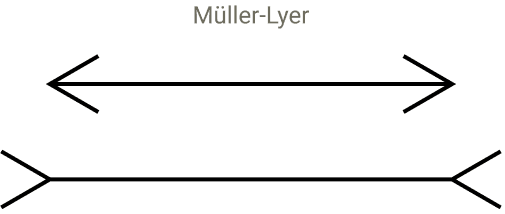
Screenshot of two lines with arrow lines on each end that are pointed in different directions for each line, one inward and the other outward. This gives the illusion that one line is longer than the other.

The researchers inserted artificial tokens, such as “@@,” to see how they disrupted the model’s sense of position. These tests caused misalignments in the model’s internal patterns it uses to keep track of position, similar to visual illusions that trick human perception. This caused the model’s sense of line boundaries to shift, showing that its perception of structure depends on context and learned patterns. Even though LLMs don’t see, they experience distortions in their internal organization similar to how humans misjudge what they see by disrupting the relevant attention heads.

They explained:

“We find that it does modulate the predicted next token, disrupting the newline prediction! As predicted, the relevant heads get distracted: whereas with the original prompt, the heads attend from newline to newline, in the altered prompt, the heads also attend to the @@.”

They wondered if there was something special about the @@ characters or would any other random characters disrupt the model’s ability to successfully complete the task. So they ran a test with 180 different sequences and found that most of them did not disrupt the models ability to predict the line break point. They discovered that only a small group of characters that were code related were able to distract the relevant attention heads and disrupt the counting process.

LLMs Have Visual-Like Perception For Text

The study shows how text-based features evolve into smooth geometric systems inside a language model. It also shows that models don’t only process symbols, they create perception-based maps from them. This part, about perception, is to me what’s really interesting about the research. They keep circling back to analogies related to human perception and how those analogies keep fitting into what they see going on inside the LLM.

They write:

“Although we sometimes describe the early layers of language models as responsible for “detokenizing” the input, it is perhaps more evocative to think of this as perception. The beginning of the model is really responsible for seeing the input, and much of the early circuitry is in service of sensing or perceiving the text similar to how early layers in vision models implement low level perception.”

Then a little later they write:

“The geometric and algorithmic patterns we observe have suggestive parallels to perception in biological neural systems. …These features exhibit dilation—representing increasingly large character counts activating over increasingly large ranges—mirroring the dilation of number representations in biological brains. Moreover, the organization of the features on a low dimensional manifold is an instance of a common motif in biological cognition. While the analogies are not perfect, we suspect that there is still fruitful conceptual overlap from increased collaboration between neuroscience and interpretability.”

Implications For SEO?

Arthur C. Clarke wrote that advanced technology is indistinguishable from magic. I think that once you understand a technology it becomes more relatable and less like magic. Not all knowledge has a utilitarian use and I think understanding how an LLM perceives content is useful to the extent that it’s no longer magical. Will this research make you a better SEO? It deepens our understanding of how language models organize and interpret content structure, makes it more understandable and less like magic.

Read about the research here:

When Models Manipulate Manifolds: The Geometry of a Counting Task

Featured Image by Shutterstock/Krot_Studio

Measuring Visibility When Rankings Disappear [Webinar] via @sejournal, @hethr_campbell

Learn How to Track What Really Matters in AI Search

Tools like ChatGPT, Perplexity, and Google’s AI Mode no longer deliver ranked results; they deliver answers. So what happens when traditional SEO metrics no longer apply?

Join AJ Ghergich, Global VP of AI and Consulting Services at Botify, and Frank Vitovitch, VP of Solutions Consulting at Botify, for a live webinar that reveals how to measure visibility in the new search era.

What You’ll Learn

Why Attend

This session will help you move beyond outdated ranking metrics and build smarter frameworks for measuring performance in AI search. You’ll walk away with a clear, data-driven approach to visibility that keeps your team ahead of change.

Register now to learn how to track success in AI search with confidence and clarity.

🛑 Can’t make it live? Register anyway and we’ll send you the on-demand recording.

Google Q3 Report: AI Mode, AI Overviews Lift Total Search Usage via @sejournal, @MattGSouthern

Google used its Q3 earnings call to argue that AI features are expanding search usage rather than cannibalizing it.

CEO Sundar Pichai described an “expansionary moment for Search,” adding that Google’s AI experiences “highlight the web” and send “billions of clicks to sites every day.”

Pichai said overall queries and commercial queries both grew year over year, and that the growth rate increased in Q3 versus Q2, largely driven by AI Overviews and AI Mode.

What Did Google Report In Its Q3 Earnings?

AI Mode & AI Overviews

Pichai reported “strong and consistent” week-over-week growth for AI Mode in the U.S., with queries doubling in the quarter.

He said Google rolled AI Mode out globally across 40 languages, reached over 75 million daily active users, and shipped more than 100 improvements in Q3.

He also said AI Mode is already driving “incremental total query growth for Search.”

Pichai reiterated that AI Overviews “drive meaningful query growth,” noting the effect was “even stronger” in Q3 and more pronounced among younger users.

Revenue: By The Numbers

Alphabet posted $102.3 billion in revenue, its first $100B quarter. “Google Search & other” revenue reached $56.6 billion, up from $49.4 billion a year earlier.

YouTube ads revenue reached $10.26 billion in Q3. Pichai said YouTube “has remained number one in streaming watch time in the U.S. for more than two years, according to Nielsen.”

Pichai added that in the U.S. “Shorts now earn more revenue per watch hour than traditional in-stream.”

The quarter also included a $3.5 billion European Commission fine that Alphabet notes when discussing margins. Excluding that charge, operating margin was 33.9%.

Why It Matters

Google is telling Wall Street that AI surfaces expand search rather than replace it. If that holds, the company has reason to put AI Mode and AI Overviews in front of more queries.

The near-term implication for marketers is a distribution shift inside Google, not a pullback from search.

What’s missing is as important as what was said. Google didn’t share outbound click share from AI experiences or new reporting to track them. Expect adoption to grow while measurement lags. Teams will be relying on their own analytics to judge impact.

The revenue backdrop supports continued investment. “Search & other” rose year over year and Google highlighted growth in commercial queries. Paid budgets are likely to remain with Google as AI-led sessions take up a larger share of usage.

Looking Ahead

Google plans to keep pushing AI-led search surfaces. Pichai said the company is “looking forward to the release of Gemini 3 later this year,” which would give AI Mode and AI Overviews a stronger model foundation if the timing holds.

Google described Chrome as “a browser powered by AI” with deeper integrations to Gemini and AI Mode and “more agentic capabilities coming soon.”

The company also raised 2025 capex guidance to $91–$93 billion to meet AI demand, which supports continued investment in search infrastructure and features.


Featured Image: Photo Agency/Shutterstock

How Google Discover REALLY Works

This is all based on the Google leak and tallies up with my experience of content that does well in Discover over time. I have pulled out what I think are the most prominent Discover proxies and grouped them into what seems like the appropriate workflow.

Like a disgraced BBC employee, thoughts are my own.

TL;DR

  1. Your site needs to be seen as a trusted source” with low SPAM, evaluated by proxies like publisher trust score, in order to be eligible.
  2. Discover is driven by a six-part pipeline, using good vs. bad clicks (long dwell time vs. pogo-sticking) and repeat visits to continuously score and re-score content quality.
  3. Fresh content gets an initial boost. Success hinges on a strong CTR and positive early-stage engagement (good clicks/shares from all channels count, not just Discover).
  4. Content that aligns with a user’s interests is prioritised. To optimize, focus on your areas of topical authority, use a compelling headline(s), be entity-driven, and use large (1200px+) images.
Image Credit: Harry Clarkson-Bennett

I count 15 different proxies that Google uses to guide satiate the doomscrollers’ desperate need for quality content in the Discover feed. It’s not that different to how traditional Google search works.

But traditional search (a high-quality pull channel) is worlds apart from Discover. Audiences killing time on trains. At their in-laws. The toilet. Given they’re part of the same ecosystem, they’re bundled together into one monolithic entity.

And here’s how it works.

Image Credit: Harry Clarkson-Bennett

Google’s Discover Guidelines

This section is boring, and Google’s guidelines around eligibility are exceptionally vague:

  • Content is automatically eligible to appear in Discover if it is indexed by Google and meets Discover’s content policies.
  • Any kind of dangerous, spammy, deceptive, or violent/vulgar content gets filtered out.

“…Discover makes use of many of the same signals and systems used by Search to determine what is… helpful, reliable, people-first content.”

Then they give some solid, albeit beige advice around quality titles – clicky, not baity as John Shehata would say. Ensuring your featured image is at least 1200px wide and creating timely, value-added content.

But we can do better.

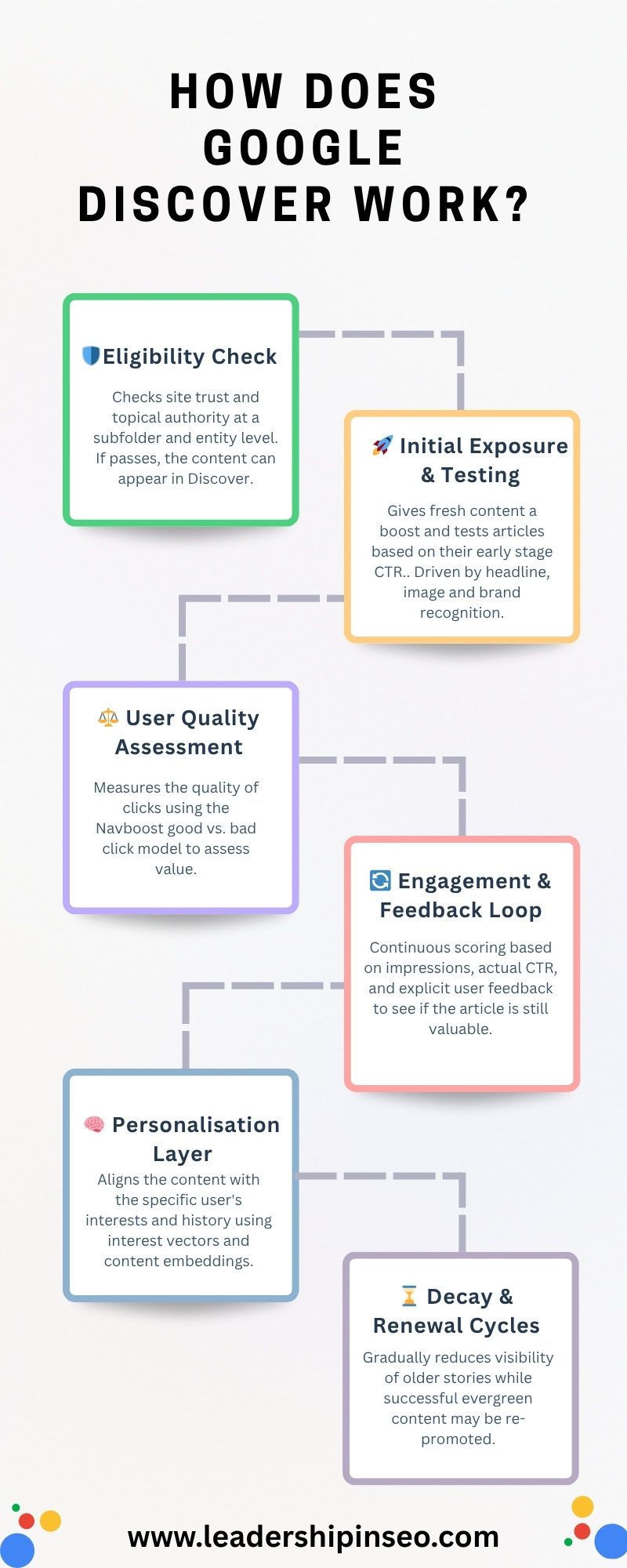
Discover’s Six-Part Content Pipeline

From cradle to grave, let’s review exactly how your content does or, in most cases, doesn’t appear in Discover. As always, remembering I have made these clusters up, albeit based on real Google proxies from the Google leak.

  1. Eligibility check and baseline filtering.
  2. Initial exposure and testing.
  3. User quality assessment.
  4. Engagement and feedback loop.
  5. Personalization layer.
  6. Decay and renewal cycles.

Eligibility And Baseline Filtering

For starters, your site has to be eligible for Google Discover. This means you are seen as a “trusted source” on the topic, and you have a low enough SPAM score that the threshold isn’t triggered.

There are three primary proxy scores to account for eligibility and baseline filtering:

  • is_discover_feed_eligible: a Boolean feature that filters non-eligible pages.
  • publisher_trustScore: a score that evaluates publisher reliability and reputation.
  • topicAuthority_discover: a score that helps Discover identify trusted sources at the topic level.

The site’s reputation and topical authority are ranked for the topic at hand. These three metrics help evaluate whether your site is eligible to appear in Discover.

Initial Exposure And Testing

This is very much the freshness stage, where fresh content is given a temporary boost (because contemporary content is more likely to satiate a dopamine addicted mind).

  • freshnessBoost_discover: provides a temporary boost for fresh content to keep the feed alive.
  • discover_clicks: where early-stage article clicks are used as a predictor of popularity.
  • headlineClickModel_discover: is a predictive CTR model based on the headline and image.

I would hypothesize that using a Bayesian style predictive model, Google applies learnings at a site and subfolder level to predict likely CTR. The more quality content you have published over time (presumably at a site, subfolder and author level), the more likely you are to feature.

Because there is less ambiguity. A key feature of SEO now.

User Quality Assessment

An article is ultimately judged by the quality of user engagement. Google uses the good and bad click style model from Navboost to establish what is and isn’t working for users. Low CTR and/or pogo-sticking style behavior downgrades an article’s chance of featuring.

Valuable content is decided by the good vs bad click ratio. Repeat visits are used to measure lasting satisfaction and re-rank top-performing content.

  • discover_blacklist_score: Penalty for spam, misinformation, or clickbait.
  • goodClicks_discover: Positive user interactions (long dwell time).
  • badClicks_discover: Negative interactions (bounces, short dwell).
  • nav_boosted_discover_clicks: Repeat or return engagement metric.

The quality of the article is then measured by its user engagement. As Discover is a personalized platform, this can be done accurately and at scale. Cohorts of users can be grouped together. People with the same general interests are served the content if, by the algorithm’s standard, they should be interested.

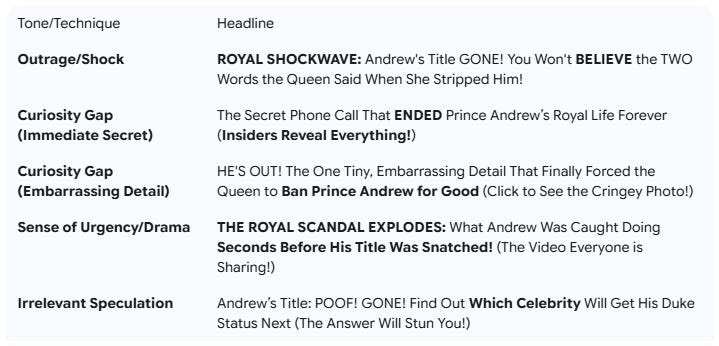
But if the overly clicky or misleading title delivers poor engagement (dwell time and on-page interactions), then the article may be downgraded. Over time, this kind of practice can compound and nerf your site completely.

Headlines like this are a one way ticket to devaluing your brand in the eyes of people and search engines (Image Credit: Harry Clarkson-Bennett)

Important to note that this click data doesn’t have to come from Discover. Once an article is out in the ether – it’s been published, shared on social, etc. – Chrome click data is stored and is applied to the algorithm.

So, the more quality click data and shares you can generate early in an article’s lifecycle (accounting for the importance of freshness), the better your chance of success on Discover. Treat it like a viral platform. Make noise. Do marketing.

Engagement And Feedback Loop

Once the article enters the proverbial fray, a scoring and rescoring loop begins. Continuous CTR, impressions, and explicit user feedback (like, hate, and “don’t show me this again, please” style buttons) feed models like Navboost to refine what gets shown.

  • discover_impressions: The number of times an article appears in a Discover feed.
  • discover_ctr: Clicks divided by impressions. Impressions and click data feed CTR modelling
  • discover_feedback_negative: Specific user feedback, i.e., not interested suppresses content for individuals, groups, and on the platform as a whole.

These behavioral signals define an article’s success. It lives or dies on relatively simple metrics. And the more you use it, the better it gets. Because it knows what you and your cohort are more likely to click and enjoy.

This is as true in Discover as it is in the main algorithm. Google admitted as such in the DoJ rulings. (Image Credit: Harry Clarkson-Bennett)

I imagine headline and image data are stored so that the algorithm can apply some rigorous standards to statistical modelling. Once it knows what types of headlines, images and articles perform best for specific cohorts, personalisation becomes effective faster.

Personalization Layer

Google knows a lot about us. It’s what its business is built on. It collects a lot of non-anonymized data (credit card details, passwords, contact details, etc.) alongside every conceivable interaction you have with webpages.

Discover takes personalization to the next level. I think it may offer an insight into how part of the SERP could look like in the future. A personalized cluster of articles, videos, and social posts designed to hook you in embedded somewhere alongside search results and AI Mode.

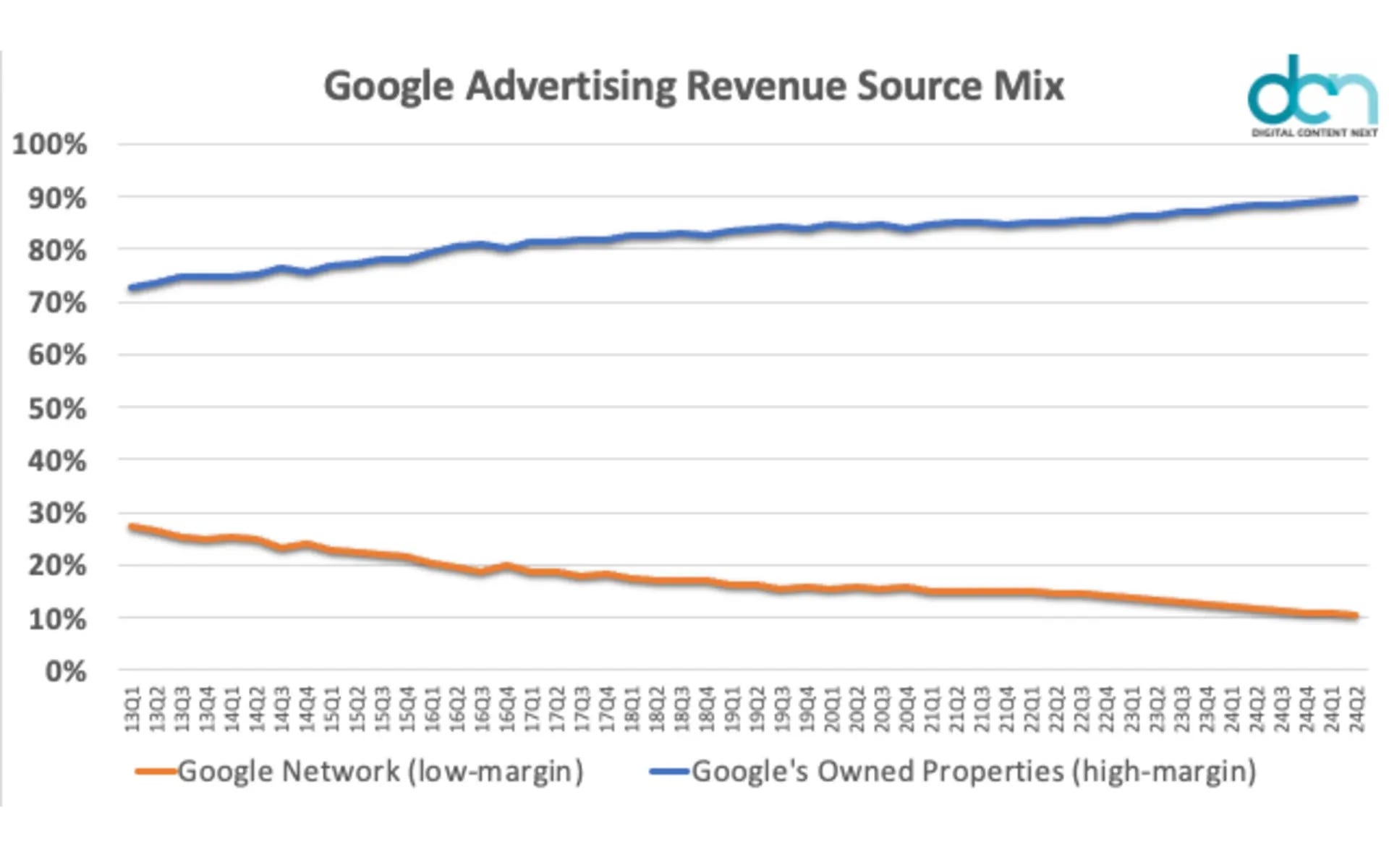
All of this is designed to keep you on Google’s owned properties for longer. Because they make more money that way.

Hint: They want to keep you around because they make more money (Image Credit: Harry Clarkson-Bennett)
  • contentEmbeddings_discover: Content embeddings determine how well the content aligns with the user’s interests. This powers Discover’s interest-matching engine.
  • personalization_vector_match: This module dynamically personalises the user’s feed in real-time. It identifies similarity between content and user interest vectors.

Content that matches well with your personal and cohort’s interest will be boosted into your feed.

You can see the site’s you engage with frequently using the site engagement page in Chrome (from your toolbar: chrome://site-engagement/) and every stored interaction with histograms. This histogram data indirectly shows key interaction points you have with web pages, by measuring the browser’s response and performance around those interactions.

It doesn’t explicitly say user A clicked X, but logs the technical impact, i.e., how long did the browser spending processing said click or scroll.

Decay And Renewal Cycles

Discover boosts freshness because people are thirsty for it. By boosting fresh content, older or saturated stories naturally decay as the news cycle moves on and article engagement declines.

For successful stories, this is through market saturation.

  • freshnessDecay_timer: This module measures recency decay after initial exposure, gradually reducing visibility to make way for fresher content.
  • content_staleness_penalty: Outdated content or topics are given a lower priority once engagement starts to decline to keep the feed current.

Discover is Google’s answer to a social network. None of us spend time in Google. It’s not fun. I use the word fun loosely. It isn’t designed to hook us in and ruin our attention spans with constant spiking of dopamine.

But Google Discover is clearly on the way to that. They want to make it a destination. Hence, all the recent changes where you can “catch up” with creators and publishers you care about across multiple platforms.

Videos, social posts, articles … the whole nine yards. I wish they’d stop summarizing literally everything with AI, however.

My 11-Step Workflow To Get The Most Out Of Google Discover

Follow basic principles and you will put yourself in good stead. Understand where your site is topically strong and focus your time on content that will drive value. Multiple ways you can do this.

If you don’t feature much in Discover, you can use your Search Console click and impressions data to identify areas where you generate the highest value. Where you are topically authoritative. I would do this at a subfolder and entity level (e.g., politics and Rachel Reeves or the Labor Party).

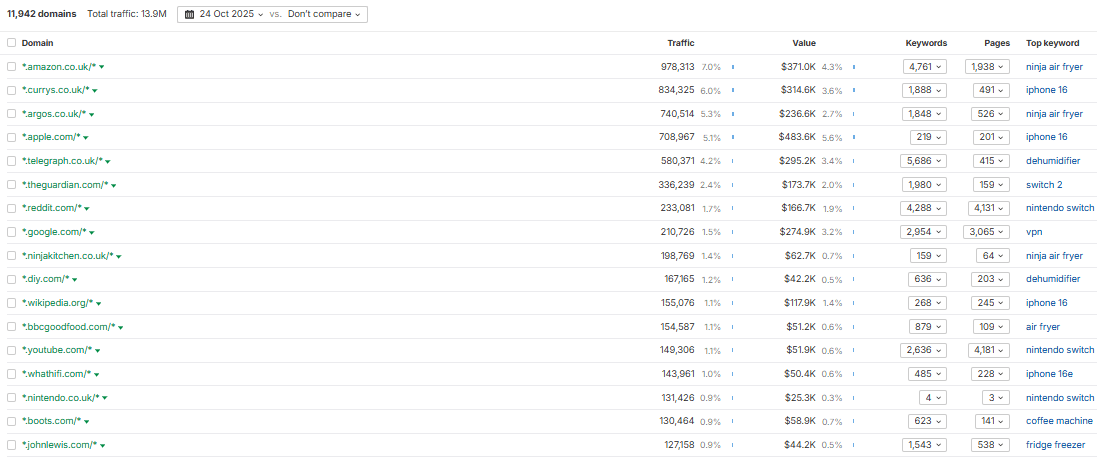
Also worth breaking this down in total and by article. Or you can use something like Ahrefs’ Traffic Share report to determine your share of voice via third-party data.

Essentially share of voice data (Image Credit: Harry Clarkson-Bennett)

Then really focus your time on a) areas where you’re already authoritative and b) areas that drive value for your audience.

Assuming you’re not focusing on NSFW content and you’re vaguely eligible, here’s what I would do:

  1. Make sure you’re meeting basic image requirements. 1200 pixels wide as a minimum.
  2. Identify your areas of topical authority. Where do you already rank effectively at a subfolder level? Is there a specific author who performs best? Try to build on your valuable content hubs with content that should drive extra value in this area.
  3. Invest in content that will drive real value (links and engagement) in these areas. Do not chase clicks via Discover. It’s a one-way ticket to clickbait city.
  4. Make sure you’re plugged into the news cycle. Being first has a huge impact on your news visibility in search. If you’re not first on the scene, make sure you’re adding something additional to the conversation. Be bold. Add value. Understand how news SEO really works.
  5. Be entity-driven. In your headlines, first paragraph, subheadings, structured data, and image alt text. Your page should remove ambiguity. You need to make it incredibly clear who this page is about. A lack of clarity is partly why Google rewrites headlines.
  6. Use the Open Graph title. The OG title is a headline that doesn’t show on your page. Primarily designed for social media use, it is one of the most commonly picked up headlines in Discover. It can be jazzy. Curiosity led. Rich. Interesting. But still entity-focused.
  7. Make sure you share content likely to do well on Discover across relevant push channels early in its lifecycle. It needs to outperform its predicted early-stage performance.*
  8. Create a good page experience. Your page (and site) should be fast, secure, ad-lite, and memorable for the right reasons.
  9. Try to drive quality onward journeys. If you can treat users from Discover differently to your main site, think about how you would link effectively for them. Maybe you use a pop-up “we think you’ll like this next” section based on a user’s scroll depth of dwell time.
  10. Get the traffic to convert. While Discover is a personalized feed, the standard scroller is not very engaged. So, focus on easier conversions like registrations (if you’re a subscriber first company) or advertising revenue et al.
  11. Keep a record of your best performers. Evergreen content can be refreshed and repubbed year after year. It can still drive value.

*What I mean here is if your content is predicted to drive three shares and two links, if you share it on social and in newsletters and it drives seven shares and nine links, it is more likely to go viral.

As such, the algorithm identifies it as ‘Discover-worthy.’

More Resources:


This was originally published on Leadership in SEO.


Featured Image: Roman Samborskyi/Shutterstock

How to Turn Every Campaign Into Lasting SEO Authority [Webinar] via @sejournal, @hethr_campbell

Capture Links, Mentions, and Citations That Make a Difference

Backlinks alone no longer move the authority needle. Brand mentions are just as critical for visibility, recognition, and long-term SEO success. Are your campaigns capturing both?

Join Michael Johnson, CEO of Resolve, for a webinar where he shares a replicable campaign framework that aligns media outreach, SEO impact, and brand visibility, helping your campaigns become long-term assets.

What You’ll Learn

  • The Resolve Campaign Framework: Step-by-step approach to ideating, creating, and pitching SEO-focused digital PR campaigns.
  • The Dual Outcome Strategy: How to design campaigns that earn both high-quality backlinks and brand mentions from top-tier media.
  • Real Campaign Case Studies: Examples of campaigns that created a compounding effect of links, mentions, and brand recognition.
  • Techniques for Measuring Success: How to evaluate the SEO and branding impact of your campaigns.

Why You Can’t Miss This Webinar

Successful SEO campaigns today capture authority on multiple fronts. This session provides actionable strategies for engineering campaigns that work hand in hand with SEO, GEO, and AEO to grow your brand.

📌 Register now to learn how to design campaigns that earn visibility, links, and citations.

🛑 Can’t attend live? Register anyway, and we’ll send you the recording so you don’t miss out.

The AI Search Visibility Audit: 15 Questions Every CMO Should Ask

This post was sponsored by IQRush. The opinions expressed in this article are the sponsor’s own.

Your traditional SEO is winning. Your AI visibility is failing. Here’s how to fix it.

Your brand dominates page one of Google. Domain authority crushes competitors. Organic traffic trends upward quarter after quarter. Yet when customers ask ChatGPT, Perplexity, or others about your industry, your brand is nowhere to be found.

This is the AI visibility gap, which causes missed opportunities in awareness and sales.

SEO ranking on page one doesn’t guarantee visibility in AI search.  The rules of ranking have shifted from optimization to verification.”

Raj Sapru, Netrush, Chief Strategy Officer

Recent analysis of AI-powered search patterns reveals a troubling reality: commercial brands with excellent traditional SEO performance often achieve minimal visibility in AI-generated responses. Meanwhile, educational institutions, industry publications, and comparison platforms consistently capture citations for product-related queries.

The problem isn’t your content quality. It’s that AI engines prioritize entirely different ranking factors than traditional search: semantic query matching over keyword density, verifiable authority markers over marketing claims, and machine-readable structure over persuasive copy.

This audit exposes 15 questions that separate AI-invisible brands from citation leaders.

We’re sharing the first 7 critical questions below, covering visibility assessment, authority verification, and measurement fundamentals. These questions will reveal your most urgent gaps and provide immediate action steps.

Question 1: Are We Visible in AI-Powered Search Results?

Why This Matters: Commercial brands with strong traditional SEO often achieve minimal AI citation visibility in their categories. A recent IQRush field audit found fewer than one in ten AI-generated answers included in the brand, showing how limited visibility remains, even for strong SEO performers. Educational institutions, industry publications, and comparison sites dominate AI responses for product queries—even when commercial sites have superior content depth. In regulated industries, this gap widens further as compliance constraints limit commercial messaging while educational content flows freely into AI training data.

How to Audit:

  • Test core product or service queries through multiple AI platforms (ChatGPT, Perplexity, Claude)
  • Document which sources AI engines cite: educational sites, industry publications, comparison platforms, or adjacent content providers
  • Calculate your visibility rate: queries where your brand appears vs. total queries tested

Action: If educational/institutional sources dominate, implement their citation-driving elements:

  • Add research references and authoritative citations to product content
  • Create FAQ-formatted content with an explicit question-answer structure
  • Deploy structured data markup (Product, FAQ, Organization schemas)
  • Make commercial content as machine-readable as educational sources

IQRush tracks citation frequency across AI platforms. Competitive analysis shows which schema implementations, content formats, and authority signals your competitors use to capture citations you’re losing.

Question 2: Are Our Expertise Claims Actually Verifiable?

Why This Matters: Machine-readable validation drives AI citation decisions: research references, technical standards, certifications, and regulatory documentation. Marketing claims like “industry-leading” or “trusted by thousands” carry zero weight. In one IQRush client analysis, more than four out of five brand mentions were supported by citations—evidence that structured, verifiable content is far more likely to earn visibility. Companies frequently score high on human appeal—compelling copy, strong brand messaging—but lack the structured authority signals AI engines require. This mismatch explains why brands with excellent traditional marketing achieve limited citation visibility.

How to Audit:

  • Review your priority pages and identify every factual claim made (performance stats, quality standards, methodology descriptions)
  • For each claim, check whether it links to or cites an authoritative source (research, standards body, certification authority)
  • Calculate verification ratio: claims with authoritative backing vs. total factual claims made

Action: For each unverified claim, either add authoritative backing or remove the statement:

  • Add specific citations to key claims (research databases, technical standards, industry reports)
  • Link technical specifications to recognized standards bodies
  • Include certification or compliance verification details where applicable
  • Remove marketing claims that can’t be substantiated with machine-verifiable sources

IQRush’s authority analysis identifies which claims need verification and recommends appropriate authoritative sources for your industry, eliminating research time while ensuring proper citation implementation.

Question 3: Does Our Content Match How People Query AI Engines?

Why This Matters: Semantic alignment matters more than keyword density. Pages optimized for traditional keyword targeting often fail in AI responses because they don’t match conversational query patterns. A page targeting “best project management software” may rank well in Google but miss AI citations if it doesn’t address how users actually ask: “What project management tool should I use for a remote team of 10?” In recent IQRush client audits, AI visibility clustered differently across verticals—consumer brands surfaced more frequently for transactional queries, while financial clients appeared mainly for informational intent. Intent mapping—informational, consideration, or transactional—determines whether AI engines surface your content or skip it.

How to Audit:

  • Test sample queries customers would use in AI engines for your product category
  • Evaluate whether your content is structured for the intent type (informational vs. transactional)
  • Assess if content uses conversational language patterns vs. traditional keyword optimization

Action: Align content with natural question patterns and semantic intent:

  • Restructure content to directly address how customers phrase questions
  • Create content for each intent stage: informational (education), consideration (comparison), transactional (specifications)
  • Use conversational language patterns that match AI engine interactions
  • Ensure semantic relevance beyond just keyword matching

IQRush maps your content against natural query patterns customers use in AI platforms, showing where keyword-optimized pages miss conversational intent.

Question 4: Is Our Product Information Structured for AI Recommendations?

Why This Matters: Product recommendations require structured data. AI engines extract and compare specifications, pricing, availability, and features from schema markup—not from marketing copy. Products with a comprehensive Product schema capture more AI citations in comparison queries than products buried in unstructured text. Bottom-funnel transactional queries (“best X for Y,” product comparisons) depend almost entirely on machine-readable product data.

How to Audit:

  • Check whether product pages include Product schema markup with complete specifications
  • Review if technical details (dimensions, materials, certifications, compatibility) are machine-readable
  • Test transactional queries (product comparisons, “best X for Y”) to see if your products appear
  • Assess whether pricing, availability, and purchase information is structured

Action: Implement comprehensive product data structure:

  • Deploy Product schema with complete technical specifications
  • Structure comparison information (tables, lists) that AI can easily parse
  • Include precise measurements, certifications, and compatibility details
  • Add FAQ schema addressing common product selection questions
  • Ensure pricing and availability data is machine-readable

IQRush’s ecommerce audit scans product pages for missing schema fields—price, availability, specifications, reviews—and prioritizes implementations based on query volume in your category.

Question 5: Is Our “Fresh” Content Actually Fresh to AI Engines?

Why This Matters: Recency signals matter, but timestamp manipulation doesn’t work. Pages with recent publication dates, but outdated information underperforms older pages with substantive updates: new research citations, current industry data, or refreshed technical specifications. Genuine content updates outweigh simple republishing with changed dates.

How to Audit:

  • Review when your priority pages were last substantively updated (not just timestamp changes)
  • Check whether content references recent research, current industry data, or updated standards
  • Assess if “evergreen” content has been refreshed with current examples and information
  • Compare your content recency to competitors appearing in AI responses

Action: Establish genuine content freshness practices:

  • Update high-priority pages with current research, data, and examples
  • Add recent case studies, industry developments, or regulatory changes
  • Refresh citations to include latest research or technical standards
  • Implement clear “last updated” dates that reflect substantive changes
  • Create update schedules for key content categories

IQRush compares your content recency against competitors capturing citations in your category, flagging pages that need substantive updates (new research, current data) versus pages where timestamp optimization alone would help.

Question 6: How Do We Measure What’s Actually Working?

Why This Matters: Traditional SEO metrics—rankings, traffic, CTR—miss the consideration impact of AI citations. Brand mentions in AI responses influence purchase decisions without generating click-through attribution, functioning more like brand awareness channels than direct response. CMOs operating without AI visibility measurement can’t quantify ROI, allocate budgets effectively, or report business impact to executives.

How to Audit:

  • Review your executive dashboards: Are AI visibility metrics present alongside SEO metrics?
  • Examine your analytics capabilities: Can you track how citation frequency changes month-over-month?
  • Assess competitive intelligence: Do you know your citation share relative to competitors?
  • Evaluate coverage: Which query categories are you blind to?

Action: Establish AI citation measurement:

  • Track citation frequency for core queries across AI platforms
  • Monitor competitive citation share and positioning changes
  • Measure sentiment and accuracy of brand mentions
  • Add AI visibility metrics to executive dashboards
  • Correlate AI visibility with consideration and conversion metrics

IQRush tracks citation frequency, competitive share, and month-over-month trends across across AI platforms. No manual testing or custom analytics development is required.

Question 7: Where Are Our Biggest Visibility Gaps?

Why This Matters: Brands typically achieve citation visibility for a small percentage of relevant queries, with dramatic variation by funnel stage and product category. IQRush analysis showed the same imbalance: consumer brands often surfaced in purchase-intent queries, while service firms appeared mostly in educational prompts. Most discovery moments generate zero brand visibility. Closing these gaps expands reach at stages where competitors currently dominate.

How to Audit:

  • List queries customers would ask about your products/services across different funnel stages
  • Group them by funnel stage (informational, consideration, transactional)
  • Test each query in AI platforms and document: Does your brand appear?
  • Calculate what percentage of queries produce brand mentions in each funnel stage
  • Identify patterns in the queries where you’re absent

Action: Target the funnel stages with lowest visibility first:

  • If weak at informational stage: Build educational content that answers “what is” and “how does” queries
  • If weak at consideration stage: Create comparison content structured as tables or side-by-side frameworks
  • If weak at transactional stage: Add comprehensive product specs with schema markup
  • Focus resources on stages where small improvements yield largest reach gains

IQRush’s funnel analysis quantifies gap size by stage and estimates impact, showing which content investments will close the most visibility gaps fastest.

The Compounding Advantage of Early Action

The first seven questions and actions highlight the differences between traditional SEO performance and AI search visibility. Together, they explain why brands with strong organic rankings often have zero citations in AI answers.

The remaining 8 questions in the comprehensive audit help you take your marketing further. They focus on technical aspects: the structure of your content, the backbone of your technical infrastructure, and the semantic strategies that signal true authority to AI. 

“Visibility in AI search compounds, making it harder for your competition to break through. The brands that make themselves machine-readable today will own the conversation tomorrow.”
Raj Sapru, Netrush, Chief Strategy Officer

IQRush data shows the same thing across industries: early brands that adopt a new AI answer engine optimization strategy quickly start to lock in positions of trust that competitors can’t easily replace. Once your brand becomes the reliable answer source, AI engines will start to default to you for related queries, and the advantage snowballs.

The window to be an early adopter and take AI visibility for your brand will not stay open forever.  As more brands invest in AI visibility, the visibility race is heating up.

Download the Complete AI Search Visibility Audit with detailed assessment frameworks, implementation checklists, and the 8 strategic questions covering content architecture, technical infrastructure, and linguistic optimization. Each question includes specific audit steps and immediate action items to close your visibility gaps and establish authoritative positioning before your market becomes saturated with AI-optimized competitors.

Image Credits

Featured Image: Image by IQRush. Used with permission.

In-Post Images: Image by IQRush. Used with permission.

Google’s Advice On Canonicals: They’re Case Sensitive via @sejournal, @martinibuster

Google’s John Mueller answered a question about canonicals, expressing his opinion that “hope” shouldn’t be a part of your SEO strategy with regard to canonicals. The implication is that hoping Google will figure it out on its own misses the point of what SEO is about.

Canonicals And Case Sensitivity

Rel=canonical is an HTML tag that enables a publisher or SEO to tell Google what their preferred URL is. For example, it’s useful for suggesting the best URL when there are multiple URLs with the same or similar content. Google isn’t obligated to obey the rel=canonical declaration, it’s treated as a strong hint.

Someone on Reddit was in the situation where a website has category names that they begin with a capitalized letter but the canonical tag contains a lowercase version. There is currently a redirect from the lowercase version to the uppercase.

They’re currently not seeing any negative impact from this state of the website and were asking if it’s okay to leave it as-is because it hasn’t affected search visibility.

The person asking the question wrote:

“…I’m running into something annoying on our blog and could use a sanity check before I push dev too hard to fix it. It’s been an issue for a month, after a redesign was launched.

All of our URLs resolve in this format: /site/Topic/topic-title/

…but the canonical tag uses a lowercase topic, like: /site/topic/topic-title/

So the canonical doesn’t exactly match the actual URL’s case. Lowercase topic 301 redirects to the correct, uppercase version.

I know that mismatched canonicals can send mixed signals to Google.

Dev is asking, “Are you seeing any real impact from this?” and technically, the answer is no — but I still think it’s worth fixing to follow best practices.”

If It Works Don’t Fix It?

This is an interesting case because in many things related to SEO if something’s working there’s little point trying to fix a small detail for fear of triggering a negative response. Relying on Google to figure things out is another fallback.

Google’s John Mueller has a different opinion. He responded:

“URL path, filename, and query parameters are case-sensitive, the hostname / domain name aren’t. Case-sensitivity matters for canonicalization, so it’s a good idea to be consistent there. If it serves the same content, it’ll probably be seen as a duplicate and folded together, but “hope” should not be a part of an SEO strategy.

Case-sensitivity in URLs also matters for robots.txt.”

Takeaway

I know that in highly competitive niches the SEO is on a generally flawless level. If there’s something to improve it gets improved. And there’s a good reason for that. Someone at one of the search engines once told me that anything you can do to make it easier for the crawlers is a win. They advised me to make sites easy to crawl and content easy to understand. That advice is still useful, it follows with Mueller’s advice to not “hope” that Google figures things out, implying that it’s best to make sure they do work out.

Featured Image by Shutterstock/MyronovDesign

Does Schema Markup Help AI Visibility?

Google and Bing publish guidelines for traditional search engine optimization and provide tools to measure performance.

We have no such instruction from generative engine providers, making optimization much more challenging. The result is a slew of misleading and uninformed speculation.

The importance of Schema.org markup is an example.

Schema for LLMs?

I’ve seen no statement or indication from a large language model regarding structured data markup, including Schema.org’s.

Google has long advised using such markup for traditional organic search, stating:

Google Search works hard to understand the content of a page. You can help us by providing explicit clues about the meaning of a page to Google by including structured data on the page.

The search giant generates rich snippets from select structured data and gathers info on a business from additional markup types, such as Schema.org’s Organization, FAQPage, and Author.

While answers from Google’s AI Mode tend to come from top organic rankings, we don’t know the impact of structured data on AI agents or crawlers.

Unlike Google, LLMs have no native indexes. They generate answers based on their training data (which doesn’t store URLs or code) and from external search engines such as Google, Bing, Reddit, and YouTube.

To access a page, LLMs can (i) query traditional search engines, indirectly relying on structured data markup such as Schema.org, and (ii) crawl a page directly to fetch answers.

AI Visibility

Many businesses don’t understand Schema.org markup, and thus retain the GEO services that claim implementing it will increase AI visibility.

Don’t be misled. I’ve seen no reputable case studies demonstrating that structured data improves AI mentions or citations. Implementation, moreover, is easy (and cheap) with apps and plugins.

Instead, focus on the proven long-term tactics:

  • Emphasize and invest in overall brand visibility, and track Google searches for your company and products.
  • Ensure your brand and its benefits appear alongside competitors in “best-of” listicles and recommendations.
  • Optimize your product feeds for conversational searches. Prompts are much more specific and diverse than search queries. Provide as much detail as possible to capture all kinds of conversations.

Low Priority

Structured data markup such as Schema.org likely drives organic search rankings and therefore helps AI visibility indirectly. Yet implementation is easy and almost certainly a low priority. What really matters for AI visibility is relevant content and long-term brand building.

Automattic’s Legal Claims About SEO… Is This Real? via @sejournal, @martinibuster

SEO plays a role in Automattic’s counterclaim against WP Engine. The legal document mentions search engine optimization six times and SEO once as part of counterclaims asserting that WP Engine excessively used words like “WordPress” to rank in search engines as part of an “infringement” campaign that uses WordPress trademarks in commerce. A close look at those claims shows that some of the evidence may be biased and that claims about SEO rely on outdated information.

Automattic’s Claims About SEO

Automattic’s counterclaim asserts that WP Engine used SEO to rank for WordPress-related keywords and that this is causing confusion.

The counterclaim explains:

“WP Engine also has sown confusion in recent years by dramatically increasing the number of times Counterclaimants’ Marks appear on its websites. Starting in or around 2021, WP Engine began to sharply increase its use of the WordPress Marks, and starting in or around 2022, began to sharply increase its use of the WooCommerce Marks.”

Automattic next argues that the repetition of keywords on a web page is WP Engine’s SEO strategy. Here’s where their claims become controversial to those who know how search engines rank websites.

The counterclaim asserts:

“The increased number of appearances of the WordPress Marks on WP Engine’s website is particularly likely to cause confusion in the internet context.

On information and belief, internet search engines factor in the number of times a term appears in a website’s text in assessing the “relevance” of a website to the terms a user enters into the search engine when looking for websites.

WP Engine’s decision to increase the number of times the WordPress Marks appear on WP Engine’s website appears to be a conscious “search engine optimization” strategy to ensure that when internet users look for companies that offer services related to WordPress, they will be exposed to confusingly written and formatted links that take them to WP Engine’s sites rather than WordPress.org or WordPress.com.”

They call WP Engine’s strategy aggressive:

“WP Engine’s strategy included aggressive utilization of search engine optimization to use the WordPress and WooCommerce Marks extremely frequently and confuse consumers searching for authorized providers of WordPress and WooCommerce software;”

Is The Number Of Keywords Used A Ranking Factor?

I have twenty-five years of experience in search engine optimization and have a concomitantly deep understanding of how search engines rank content. The fact is that Automattic’s claim that search engines “factor in the number of times” a keyword is used in a website’s content is incorrect. Modern search engines don’t factor in the number of times a keyword appears on a web page as a ranking factor. Google’s algorithms use models like BERT to gain a semantic understanding of the meaning and intent of the keyword phrases used in search queries and content, resulting in the ability to rank content that doesn’t even contain the user’s keywords.

Those aren’t just my opinions; Google’s web page about how search works explicitly says that content is ranked according to the user’s intent, regardless of keywords, which directly contradicts Automattic’s claim about WPE’s SEO:

“To return relevant results, we first need to establish what you’re looking for – the intent behind your query. To do this, we build language models to try to decipher how the relatively few words you enter into the search box match up to the most useful content available.

This involves steps as seemingly simple as recognizing and correcting spelling mistakes, and extends to our sophisticated synonym system that allows us to find relevant documents even if they don’t contain the exact words you used.”

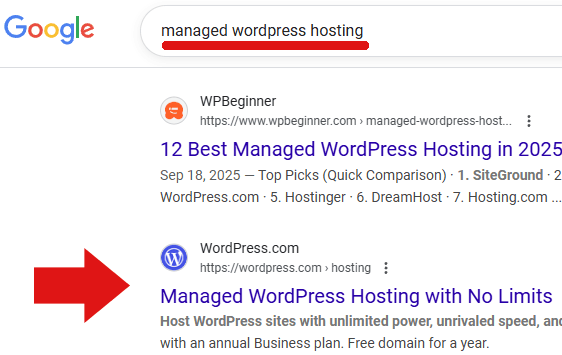
If Google’s documentation is not convincing enough, take a look at the search results for the phrase “Managed WordPress Hosting.” WordPress.com ranks #2, despite the phrase being completely absent from its web page.

Screenshot Of WordPress.com In Search Results

What Is The Proof?

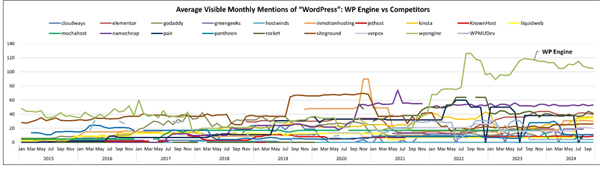
Automattic provides a graph comparing WP Engine’s average monthly mentions of the word “WordPress” with mentions published by 18 other web hosts. The comparison of 19 total web hosts dramatically illustrates that WP Engine mentions WordPress more often than any of the other hosting providers, by a large margin.

Screenshot Of Graph

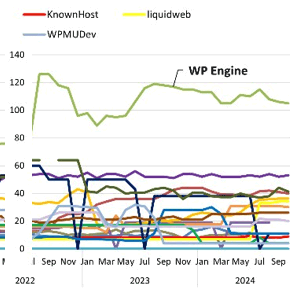
Here’s a close-up of the graph (with the values inserted) showing that WP Engine’s monthly mentions of “WordPress” far exceed the number of times words containing WordPress are used on the web pages of the other hosts.

Screenshot Of Graph Closeup

People say that numbers don’t lie, and the graph presents compelling evidence that WP Engine is deploying an aggressive use of keywords with the word WordPress in them. Leaving aside the debunked idea that keyword-term spamming actually works, a closer look at the graph comparison shows that the evidence is not so strong because it is biased.

Automattic’s Comparison Is Arguably Biased

Automattic’s counterclaim compares eighteen web hosts against WP Engine. Of those eighteen hosts, only five (including WPE) are managed WordPress hosting platforms. The remaining fourteen are generalist hosting platforms that offer cloud hosting, VPS (virtual private servers), dedicated hosting, and domain name registrations.

The significance of this fact is that the comparison can be considered biased against WP Engine because the average mention of WordPress will naturally be lower across the entire website of a company that offers multiple services (like VPS, dedicated hosting, and domain name registrations) versus a site like WP Engine that offers only one service, managed WordPress hosting.

Two of the hosts listed in the comparison, Namecheap and GoDaddy, are primarily known as domain name registrars. Namecheap is the second biggest domain name registrar in the world. There’s no need to belabor the point that these two companies in Automattic’s comparison may be biased choices to compare against WP Engine.

Of the five hosts that offer WordPress hosting, two are plugin platforms: Elementor and WPMU Dev. Both are platforms built around their respective plugins, which means that the average number of mentions of WordPress is going to be lower because the average may be diluted by documentation and blog posts about the plugins. Those two companies are also arguably biased choices for this kind of comparison.

Of the eighteen hosts that Automattic chose to compare with WP Engine, only two of them are comparable in service to WP Engine: Kinsta and Rocket.net.

Comparison Of Managed WordPress Hosts

Automattic compares the monthly mentions of phrases with “WordPress” in them, and it’s clear that the choice of hosts in the comparison biases the results against WP Engine. A fairer comparison is to compare the top-ranked web page for the phrase “managed WordPress hosting.”

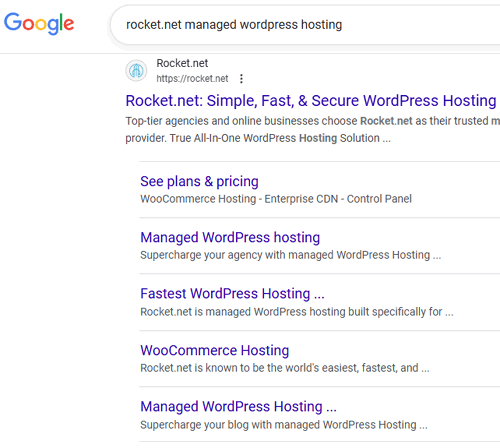
The following is a comparison of the top-ranked web page for each of the three managed WordPress hosts in Automattic’s comparison list, a straightforward one-to-one comparison. I used the phrase “managed WordPress hosting” plus the domain name appended to a search query in order to surface the top-ranked page from each website and then compared how many times the word “WordPress” is used on those pages.

Here are the results:

Rocket.net

The home page of Rocket.net ranks #1 for the phrase “rocket.net managed wordpress hosting.” The home page of Rocket.net contains the word “WordPress” 21 times.

Screenshot of Google’s Search Results

Kinsta

The top ranked Kinsta page is kinsta.com/wordpress-hosting/ and that page mentions the word “WordPress” 55 times.

WP Engine

The top ranked WP Engine web page is wpengine.com/managed-wordpress-hosting/ and that page mentions the word “WordPress” 27 times.

A fair one-to-one comparison of managed WordPress host providers, selected from Automattic’s own list, shows that WP Engine is not using the word “WordPress” more often than its competitors. Its use falls directly in the middle of a fair one-to-one comparison.

Number Of Times Page Mentions WordPress

  • Rocket.net: 21 times
  • WP Engine: 27 times
  • Kinsta: 55 times

What About Other Managed WordPress Hosts?

For the sake of comparison, I compared an additional five managed WordPress hosts that Automattic omitted from its comparison to see how often the word “WordPress” was mentioned on the top-ranked web pages of WP Engine’s direct competitors.

Here are the results:

  • WPX Hosting: 9
  • Flywheel: 16
  • InstaWP: 22
  • Pressable: 23
  • Pagely: 28

It’s apparent that WP Engine’s 27 mentions put it near the upper level in that comparison, but nowhere near the level at which Kinsta mentions “WordPress.” So far, we only see part of the story. As you’ll see, other web hosts use the word “WordPress” far more than Kinsta does, and it won’t look like such an outlier when compared to generalist web hosts.

A Comparison With Generalist Web Hosts

Next, we’ll compare the generalist web hosts listed in Automattic’s comparison.

I did the same kind of search for the generalist web hosts to surface their top-ranked pages for the query “managed WordPress hosting” plus the name of the website, which is a one-to-one comparison to WP Engine.

Other Web Hosts Compared To WP Engine:

  1. InMotion Hosting: 101 times
  2. Greengeeks: 97 times
  3. Jethost: 71 times
  4. Verpex: 52 times
  5. GoDaddy: 49 times
  6. Cloudways: 47 times
  7. Namecheap: 41 times
  8. Liquidweb: 40 times
  9. Pair: 40 times
  10. Hostwinds: 37 times
  11. KnownHost: 33 times
  12. Mochahost: 33 times
  13. Panthen: 31 times
  14. Siteground: 30 times
  15. WP Engine: 27 times

Crazy, right? WP Engine uses the word “WordPress” less often than any of the other generalist web hosts. This one-to-one comparison contradicts Automattic’s graph.

And just for the record, WordPress.com’s top-ranked page wordpress.com/hosting/ uses the word “WordPress” 62 times, over twice as often as WP Engine’s web page.

Will Automattic’s SEO Claims Be Debunked?

Automattic’s claims about WP Engine’s use of SEO may be based on shaky foundations. The claims about how keywords work for SEO contradict Google’s own documentation, and the fact that WordPress.com’s own website ranks for the phrase “Managed WordPress Hosting” despite not using that exact phrase appears to debunk their assertion that search engines factor the number of times a user’s keywords are used on a web page.

The graph that Automattic presents in their counterclaim does not represent a comparison of direct competitors, which may contribute to a biased impression that WP Engine is aggressively using the “WordPress” keywords more often than competitors. However, a one-to-one comparison of the actual web pages that compete against each other for the phrase “Managed WordPress Hosting” shows that many of the web hosts in Automattic’s own list use the word “WordPress” far more often than WP Engine, which directly contradicts Automattic’s narrative.

I ran WP Engine’s Managed WordPress Hosting URL in a Keyword Density Tool, and it shows that WP Engine’s web page uses the word “WordPress” a mere 1.92% of the time, which, from an SEO point of view, could be considered a modest amount and far from excessive. It will be interesting to see how the judge decides the merits of Automattic’s SEO-related claims.

Featured Image by Shutterstock/file404

The Same But Different: Evolving Your Strategy For AI-Driven Discovery via @sejournal, @alexmoss

The web – and the way in which humans interact with it – has definitely changed since the early days of SEO and the emergence of search engines in the early to mid-90s. In that time, we’ve witnessed the internet turn from something that nobody understood to something most of the world cannot operate without. This interview between Bill Gates and David Letterman puts this 30-year phenomenon into perspective:

The attitude 30 years ago was that the internet was not understood at all and nor was its potential influence. Today, the concept of AI entering into our daily lives is taken much more seriously to the point that it is something that many look upon with fear – perhaps now because we [think] we have an accurate outlook on how this may progress.

This transformation isn’t so much about the skills we’ve developed over time, but rather about the evolution of the technology and channels that surround them. Those technologies and channels are evolving at a fast pace and causing some to panic over whether their inherent technological skills will still apply within today’s Search ecosystem.

The Technological Rat Race

Right now, it may feel like there’s something new to learn or a new product to experiment with every day, and it can be difficult to decide where to focus your attention and priorities. This is, unfortunately, a phase that I believe will continue for a good couple of years as the dust settles over this wild west of change.

Because these changes are impacting nearly everything an SEO would be responsible for as part of organic visibility, it may feel overwhelming to digest all these things – all while we seemingly take on the challenge of communicating these changes to our clients or stakeholders/board members.

But change does not equal the end of days. This “change” relates to the technology around what we’ve been doing for over a generation, and not the foundation of the discipline itself.

Old Hat Is New Hat

The major search engines have been actively telling you, including Google and Bing, that core SEO principles should still be at the forefront of what we do moving forward. Danny Sullivan, former Search Liaison at Google, also made this clear during his recent keynote at WordCamp USA:

The consistent messages are clear:

  • Produce well-optimized sites that perform well.
  • Populate solid structured data and entity knowledge graphs.
  • Re-enforce brand sentiment and perspective.
  • Offer unique, valuable content for people.

The problem some may have is that the content we produce is moreso for agents than for people, and if this is true, what impact does this make?

The Web Is Splitting Into Two

The open web has been disrupted most of all, with some business models being uprooted by taking solved knowledge and serving it within their platform, appropriating the human visitor, which they rely on for income.

This has created a split from a complete open web into two – the “human” web and the “agentic” web – where these two audiences are both major considerations and will differ from site to site. SEOs will have to consider both sides of the web and how to serve both – which is where an SEO’s skill set becomes more valuable than it was before.

One example can be seen in the way that agents now take charge of ecommerce transactions, where OpenAI announced “Buy it in ChatGPT,” where the buying experience is even more seamless with instant checkouts. It also open-sourced the technology behind it, Agentic Commerce Protocol (ACP), and is already being adopted by content management system (CMS), including Shopify. This split between agentic and human engagement will still require optimization in order to ensure maximum discoverability.

When it comes to content, ensure everything is concise and avoid fluff, what I refer to as “tokenization spam.” Content isn’t just crawled; it’s processed, chunked, and tokenized. Agents will take preference to well-structured and formatted text.

“Short-Term Wins” Sounds Like Black Hat

Of course, during any technological shift, there will be some bad actors who may tell you about a brand-new tactic that is guaranteed to work to help you “rank in AI.” Remember that the dust has not yet settled when it comes to the maturity of these assistance engines, and you should compare this to the pre-Panda/Penguin era of SEO, where black hat SEO techniques were easier to achieve.

These algorithm updates closed those loopholes, and the same will happen again as these platforms improve – with increased speed as agents understand what is truly honest with increased precision.

Success Metrics Will Change, Not The Execution To Influence Them

In reality, core SEO principles and foundations are still the same and have been throughout most changes in the past – including “the end of desktop” when mobiles became more dominant; and “the end of typing” when voice search started to grow with products such as Alexa, Google Home, and even Google Glass.

Is the emergence of AI going to render what I do as an SEO obsolete? No.

Technical SEO remains the same, and the attributes that agents look at are not dissimilar to what we would be optimizing if large language models (LLMs) weren’t around. Brand marketing remains the same. While the term “brand sentiment” is a term used more widely nowadays, it is something that should have always been a part of our online marketing strategies when it comes to authority, relevance, and perspective.

That being said, our native metrics have been devalued within two years, and those metrics will continue to shift alongside the changes that are yet to come as these platforms deliver more stability. This has already skewed year-over-year data and will continue to skew for the year ahead as more LLMs evolve. This, however, could be compared to events such as replacing granular organic keyword data with one (not provided) metric within Google Analytics, the deprecation of Yahoo! Site Explorer, or devaluation of benchmark data such as Alexa Rank and Google PageRank.

Revise Your Success Metric Considerations

Success metrics now have to go beyond the SERP into visibility and discoverability as a whole, through multiple channels. There are now several tools and platforms available that can analyze and report on AI-focused visibility metrics, such as Yoast AI Brand Insights, that can provide better insight into how your brand is interpreted by LLMs.

If you’re more technical, make use of MCPs (Model Context Protocol) to understand data more via natural language dialogs. MCP is an open-source standard that lets AI applications connect to external systems like databases, tools, or workflows (you can visualize this as a USB-C port for AI) so they can access information and perform tasks using a simple, unified connection. There are several MCPs you can work with already, including:

You can take this a step further by coupling this with a vibe coding tool such as Claude Code, where you can use it to create a reporting app that uses a combination of the above MCP servers in order to extract the best data and create visuals and interactive charts for you and your clients/stakeholders.

The Same But Different … But Still The Same

While the divergence between human and agentic experiences is increasing, the methods by which we, as an SEO, would optimize for them are not too dissimilar. Leverage both within your strategy – just as you did when mobile gained traction in the same way.

More Resources:


Featured Image: Vallabh Soni/Shutterstock