Your Guide To Dominating Local Search Marketing via @sejournal, @meetsoci

This post was sponsored by SOCi. The opinions expressed in this article are the sponsor’s own.

As a marketer, you may feel like the ground is shifting under your feet with so many changes in the world of search. From Google’s recent announcement to release AI Overviews to all U.S. users to OpenAI revealing GPT-4o, there’s a lot to keep up with.

How will these changes impact your search efforts? Do you need to shift your search strategy?

We have the answers for you and more!

In this blog, we’ll explain how search marketing has changed, what this means for your brand, and share tactics to improve your online visibility. At the end, we’ll also introduce our new game-changer for local search management.

Let’s get into it!

The Evolution Of Search Marketing

As search evolves, many marketers are worried about their brand remaining visible online. While AI-generated search experiences are so new, we do know that now isn’t the time to make any drastic changes to your search marketing strategies.

You can test how your brand appears in generative AI (genAI) results (what we’ve dubbed GAIRs), but there’s no reason to sound an alarm — at least not yet.

Today, nearly three-quarters of consumers conduct local searches at least once a week. Similarly, in the U.S., over 800 million monthly searches contain some variation of “near me,” and more than 5 million keywords are related to “near me.”

Focusing on conventional local SEO efforts is the best way for your brand to ensure its visibility in traditional and GAIRs.

Local SEO for businesses with multiple locations involves incorporating a local SEO strategy for each business location. A multi-location SEO strategy, when done correctly, will boost your local search rankings, help you gain local customers, and improve brand awareness.

If your business doesn’t have multiple locations, you can still follow the tactics below to ensure your business is visible to your target audience in your specific area.

5 Ways To Improve Your Online Visibility

Now that you understand how search has evolved and the importance of local SEO, let’s dive into five local SEO tactics your brand can leverage to boost online visibility.

1. Claim & Optimize Local Listings

Local listings are online profiles of local businesses. They appear on search engines, local directories, and platforms like Google, Apple Maps, Yelp, Bing, and Facebook.

To increase your visibility on Google and beyond, your brand must claim local listings across all major local directories and remove duplicate listings.

Additionally, you need consistent and accurate information across all listings. At a minimum, your local listings should include the following information:

  • Name, address, and phone number (NAP) citations.
  • Business categories. (Example: Sushi restaurant)
  • Business hours, especially during holidays and major events
  • Products and services your business offers.
  • Links to your website and social media profiles.
  • Attributes. (Example: Curbside pickup or wheelchair-accessible seating)
  • High-quality photos and videos.

After optimizing your local listings, you can focus on your local pages.

2. Create Local Pages For Each Location

A local page, sometimes called a local landing page, is a web page you create for an individual store location or franchisee. It’s similar to local listings but lives on your site rather than an external directory like Yelp or Google.

Your multi-location business might have dozens or hundreds of local pages, each containing specific information about that store and the surrounding area.

Local pages should contain most of the business information found on your local listings. However, they’re also high-conversion pages. Therefore, they should also contain calls to action (CTAs) such as “order now” buttons or promotional sales and discounts.

Well-designed and optimized local pages can help your business appear high in local organic search results. As mentioned, these higher rankings often lead to more conversions and business for your stores!

3. Leverage A Store Locator

Store locators are similar to local pages. A store locator is a web page that lists all of your local stores or third-party dealers that sell your products.

Store locators help move website visitors through the customer journey by displaying valuable location information and unique details about each store. They make it easier for customers to purchase online and to contact or visit local stores.

Well-optimized and compatible store locators and local pages will help improve:

  • Local search rankings.
  • Website traffic and online conversions.
  • Analytics, such as where visitors are searching and coming from.

4. Implement An Online Reputation Management Strategy

While reputation management might not be something you’d consider when you think of improving your online visibility, you’d be surprised. According to local SEO experts, high numerical Google ratings are the sixth highest ranking factor in Google’s local pack and finder. At the same time, the quantity of native Google reviews (with text) is the eighth ranking factor.

A high quantity and quality of reviews don’t just affect local search rankings — they also impact conversion rates. According to our State of Google Reviews research report, an increase in one full star on a Google Business Profile (GBP) corresponds with a 44% increase in conversions.

To improve your reputation management strategy and gain more reviews:

  1. Respond to existing reviews in a personalized manner to show customers you value their feedback.
  2. Utilize social media to encourage customer feedback, ratings, and reviews.
  3. Make leaving a review accessible! Include links to your GBP on your website and in emails.
  4. Monitor the feedback that your business receives from reviews and make adjustments accordingly.

5. Create Unique Content

Generating localized content for your local pages, website, and listings is also essential. You want to ensure that your localized content optimizes and targets specific areas.

For instance, if you’re targeting the keyword “sporting goods store Seattle,” you want to update your URL, title tag, meta description, and headings with locally relevant keywords.

You should also leverage local images, including photos of your stores and products. Remember to include geo-targeted meta descriptions, alternative text, and descriptions within your images.

Types of local content your brand can create include but are not limited to:

  • Blogs.
  • Surveys.
  • Infographics.
  • Whitepapers.
  • Social media content.
  • Neighborhood guides.
  • User-generated content. (UGC)

For a more in-depth look at what it takes to improve your brand’s local SEO strategy, download our Top 10 Things You Should Be Doing in Local SEO Now guide!

How SOCi Can Help

Now that you understand what goes into creating a solid local search strategy, it’s time to boost your brand’s visibility. As marketers, you get how crucial search marketing is, but let’s be real, coming up with a plan to roll it out on a big scale is easier said than done.

That’s where SOCi comes in! We’ve built SOCi for more than a decade to ensure multi-location businesses rank well on local search and social media platforms, can create engaging content, and have the ability to manage each location’s online reputation.

We’ve enhanced our CoMarketing Cloud with SOCi Genius, an AI automation layer to help automate all of your daily localized marketing tasks. As part of SOCi Genius, we recently released Genius Search, a game-changer in search marketing!

As the newest innovation within the CoMarketing Cloud, Genius Search transcends traditional listings management by offering a dynamic, data-driven local search strategy that aligns with evolving consumer behaviors and market trends.

Genius Search uses the top data signals, such as reviews, search keywords and volume, weather, holidays, and others to deliver monthly AI-powered recommendations that can be accepted with the click of a button. Once accepted, these optimizations instantly improve your business listings’ rankings to directly relate to each location’s community.

It’s time to level up your local search strategy, and SOCi is here to help. Request a personalized demo today for more insight on Genius Search and our other Genius products!

Ready to start optimizing your website? Sign up for SOCi and get the data you need to deliver great user experiences.


Image Credits

Featured Image: Image by SOCi. Used with permission.
How To Increase Website Traffic After The Google Update: 5 Blogger-Tested Tips via @sejournal, @getStay22

This post was sponsored by Stay22. The opinions expressed in this article are the sponsor’s own.

The latest Google update hit our partners – travel bloggers – hard. Despite the challenges presented by this update, we are amazed by their resilience.

Although we cannot influence Google, we can definitely take charge of the things within our reach.

Here are five travel blogger-tested ways to increase website traffic after the latest Google update.

Get the most out of each visitor. Check out our guide, Ten Tips for Maximizing Revenue for Travel Bloggers.

1. Use Pinterest As An Additional Search Engine

Many people think of Pinterest as a social media platform, but it functions much more as a search engine.

Pinterest’s tools make it a fantastic way to get visitors to your website.

How To Get Started With Pinterest

  1. Create a new business account or link/convert a personal account to gain access to business tools like Pinterest Business Hub and Pinterest Analytics, which allow you to monitor searches and keywords.
  2. Write a catchy bio for your profile. If you have niche keywords you use on your website, include them here.
  3. Claim your website, allowing you to track whenever someone shares your website content on Pinterest. Additionally, it will automatically include your Pinterest profile and a follow button so you can attract more visitors.

How To Use Pinterest Like A Pro

Pinterest is built around pictures, so having great visuals is critical. You want to make yours stand out on the page.

  1. When you travel, snap many pictures and pick the best ones later.
  2. Use design tools like Canva to add text, create interesting layouts, and add branding elements.
  3. Create boards to organize your content into categories, such as by destination or blog post type.
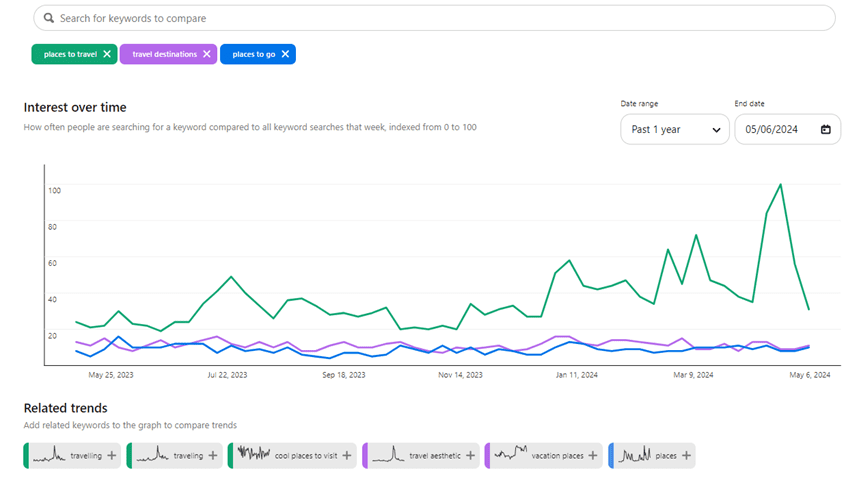
  4. Just like any other search engine, keyword research is necessary on Pinterest. Use business tools like Pinterest Trends, which lets you see keyword search volume and which pins are most popular for them.
  5. Use your selected keywords everywhere possible, including pin titles, pin descriptions, and board descriptions.
Screenshot from Pinterest Trends, June 2024

Before you start pinning, optimize your blog posts to maximize revenue to ensure every visitor counts. See how to do that in our guide Ten Tips for Maximizing Revenue for Travel Bloggers.

2. Keep Visitors Engaged With Email Marketing

Email marketing is important because you own it. Instagram could ban your account, Google can derank you, but your email list is always yours.

Use this strategy to build less volatile, consistent traffic instead of new traffic.

How To Get Started With Email Marketing

  1. Select an email marketing provider. Travel bloggers love MailerLite and MailChimp because they are low-cost and simple.
  2. Start collecting email addresses. Create a mailing list signup form with your website host and insert it at the end of posts to collect your readers’ information.

How To Use Email Marketing Like A Pro

  1. Create a lead magnet that entices readers to share their information in exchange for it. Popular lead magnets in the travel blogging community are travel guides, ebooks, and itineraries.
  2. The goal of email is to get your reader onto your site. Keep your emails short and include impressive pictures and a clear link to your website. Leave them wanting more so that they click through.
  3. Before sending an email directing traffic to one of your pages, ensure the page is set up to maximize revenue. See how in our guide, Ten Tips for Maximizing Revenue for Travel Bloggers.

“While SEO is often touted as the king of traffic, good email marketing is the absolute queen. We regularly see spikes in our web analytics when we email our audience, but those spikes aren’t just temporary. They help our users build habits. We simply wouldn’t have nearly the business we have today without activating our email list.”

Beth Stanos, Wanderful CEO & Founder

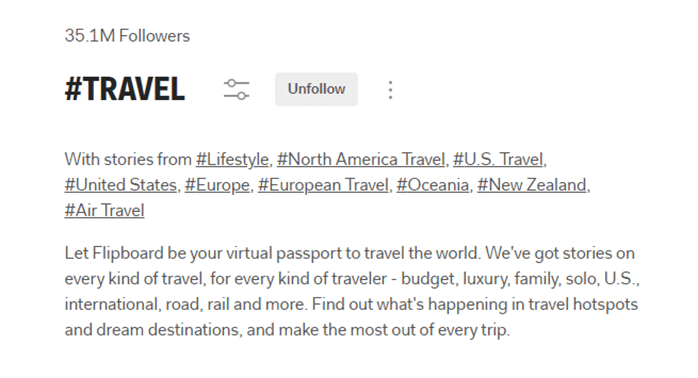
    3. Add Your Content To Flipboard To Grab More Website Visits

    Flipboard is an article curation website that lets users flip through articles from different publications, like magazines.

    How To Get Started With Flipboard

    1. Download the Flipboard app on mobile and create an account and profile.
    2. Create Flipboard magazines. These are topic categories that group your content (much like Pinterest boards).
    3. Add your blog posts to them from the magazine page on Flipboard or the Flipit Chrome bookmark.
    Screenshot taken from Flipboard, June 2024

    How To Use Flipboard Like A Pro

    1. Add your fresh blog posts to Flipboard right after publishing.
    2. Add relevant content to your magazines that isn’t your own. Engaging with other bloggers’ content and maintaining new content in your magazines helps your reach.
    3. Include your target keywords in your magazine descriptions, post captions, and profile.

    “Flipboard has become a major traffic source for all 3 of my websites. They have fantastic tools for creators, like storyboards, scheduling, and RSS feeds for magazines, making creating and sharing compelling content easy.”

    Amanda O’Brien, theboutiqueadventurer.com Founder

    4. Get Discovered With Short-Form Videos On Social Media

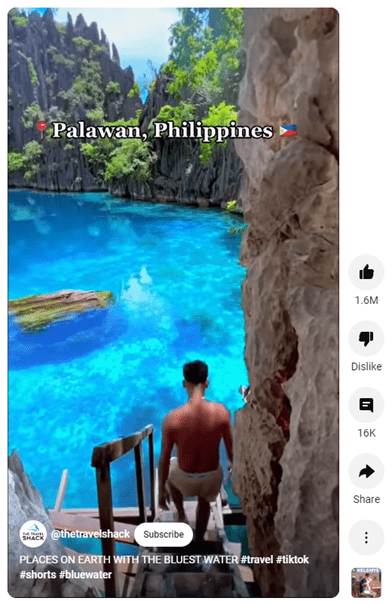
    Did you know 77% of travelers use social media when planning their trips? Get their eyes on your content with short-form videos on platforms like TikTok, Instagram, and YouTube shorts.

    These platforms have algorithms to serve your content to people who don’t follow you, making them ideal for readers to discover you.

    How To Get Started Making Videos

    1. Create your accounts on YouTube, Instagram, and TikTok.
    2. Download Capcut, a free mobile app for video editing. It’s better than the in-app editing functionality, with pre-installed templates and effects.
    3. Create a Linktree account or an alternative. All three platforms make it difficult for users to leave and visit your site, so a place where users can go for all your links is necessary.
    “PLACES ON EARTH WITH THE BLUEST WATER” by @thetravelshack, June 2024

    How To Make Short Video Content Like A Pro

    1. While traveling, keep video creation in the back of your mind. When you see eye-catching scenery or an interesting environment, be ready to capture it in video. Your video’s “wow” factor differentiates between a mediocre and a fantastic video.
    2. On Instagram, write detailed captions. On YouTube and TikTok, keep captions as brief as possible.
    3. Voice-over, on-screen text, and music are crucial to your engagement rate. You can add these with Capcut or in-app.
    4. Pick your video thumbnails carefully. Make sure they stand out in a grid of other videos.
    5. Finally, keep your short video short. The ideal length for a Reel is seven to eleven seconds, a TikTok 21 to 34 seconds, and a YouTube Short 25 to 35 seconds.

    “TikTok helped us to get our second blog on Mediavine. We shared detailed videos about “how to do something” and always included a call to action, directing viewers to our blog for more information. In recent years, we’ve had videos go viral while encouraging followers to visit the link in our bio. This has resulted in thousands of clicks to our websites.”

    Natasha Alden, theworldpursuit.com Co-Founder

    5. Expose Yourself To New Audiences With Guest Posting

    Having your writing published on another website gives you access to a whole new audience, making it an excellent strategy for attracting new readers.

    How To Start Guest Posting

    1. Find places that accept guest posts. Many publications have open submissions that you can submit to.
    2. If you see a site that has guest posts but no open submissions, find their contact information and send an inquiry email.
    3. Create a pitch by explaining your travel expertise and provide writing samples.

    How To Guest Post Like A Pro

    1. When creating your pitch, understand the site’s needs. What content gaps do they have? Focus your pitch there.
    2. Organic guest posting opportunities arise if you take the time to network. Meeting and developing friendships with travel bloggers is a great way to share audiences. You can network on social media, as well as in-person events like TBEX, TravelCon, and Traverse.
    3. Create a clear link back to your blog and include a catchy description so readers will be enticed to read more of your content.
    4. Strategize by monitoring the traffic of potential sites with tools like SEMRush and pick the best option.
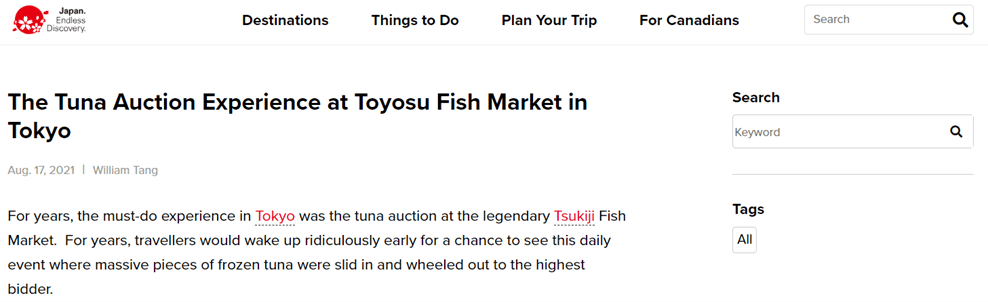
    Screenshot from japan.travel, June 2024

    “Creating content for another publication to share as a standalone article allows you to share new expertise about a certain area. Whether through the article itself or subsequent social shares, a new audience gets exposure to you as a writer.”

    William Tang, goingawesomeplaces.com Founder

    See how William Tang made travel blogging his full-time job with the help of Stay22’s revenue-boosting tools. Read the case study.

    Compensate For Traffic Dips By Maximizing Your Revenue.

    Maximize your conversions with strategic CTA placement and Stay22’s cutting-edge AI-powered affiliate tools! Skyrocket your affiliate sales with these proven tips:

    DOWNLOAD OUR GUIDE: Ten Tips for Maximizing Revenue for Travel Bloggers.


    Image Credits

    Featured Image: Image by Shutterstock. Used with permission.