YouTube Tests Crowdsourced Annotations For Videos via @sejournal, @MattGSouthern

YouTube is piloting a new experimental feature allowing users to add contextual notes to videos to provide supplemental information.

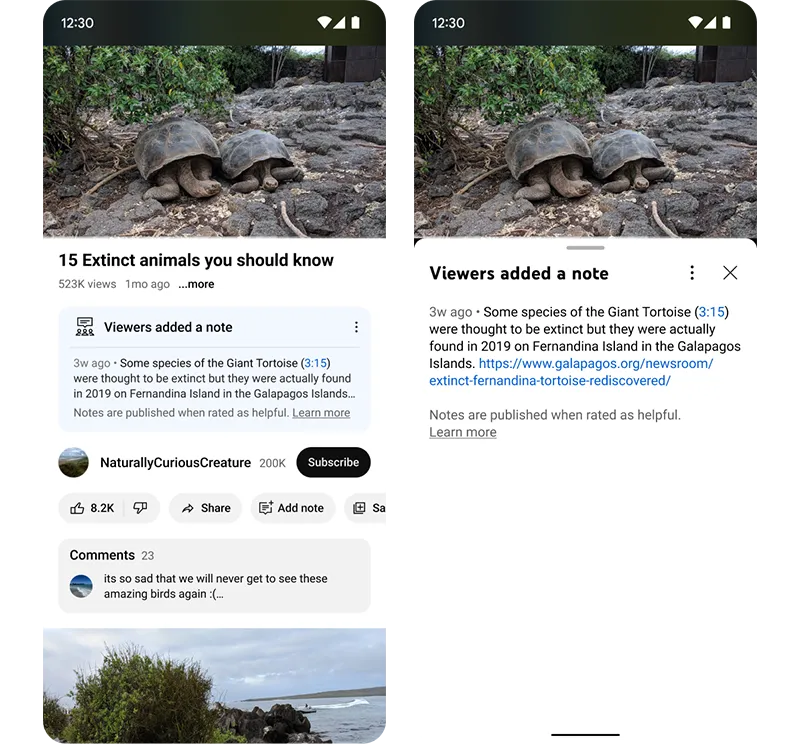
The “Video Context Notes” feature, currently being tested on mobile in the United States for English language videos, allows invited contributors to write short annotations.

Screenshot from: blog.youtube.com, June 2024.

In its announcement, YouTube describes how it intends for people to use context notes:

“These notes could clarify when footage contains parody material, point out if a product review is outdated due to a newer version release, or confirm whether viral clips actually depict current events.”

Notes build on other YouTube efforts to present context alongside videos, such as information panels and disclosure labels for altered or synthetic media.

However, YouTube recognizes there’s potential for inaccurate or unsuitable notes during the experimental phase, stating:

“We anticipate there will be mistakes – notes that aren’t a great match for the video or potentially incorrect information. That’s part of how we’ll learn from the experiment.”

Availability

A limited number of YouTube channels in good standing will be invited to write and attach context notes to videos.

Viewers in the U.S. will be able to see and rate the helpfulness of these notes.

Third-party evaluators, the same contracted personnel who provide feedback on YouTube’s search and recommendation systems, will also assess the quality and accuracy of posted notes.

Their ratings and viewer input will be processed through a “bridging-based algorithm” to determine which notes get published broadly.

YouTube explains in the announcement:

“If many people who have rated notes differently in the past now rate the same note as helpful, then our system is more likely to show that note under a video.”

As the pilot progresses, YouTube plans to explore having contributors rate each other’s notes to further train the note-publishing system.

Why SEJ Cares

Letting users add context could add another layer of credibility to videos, such as confirming or debunking the presenter’s claims.

While there are bound to be some growing pains, if YouTube can get this new notes system right, it could raise the bar for transparency when it comes to video content across the web.


Featured Image: Queenmoonlite Studio/Shutterstock

YouTube Rolls Out Thumbnail A/B Testing To All Channels via @sejournal, @MattGSouthern

YouTube will launch a new “Thumbnail Test & Compare” feature for all channels over the next few weeks.

This tool allows you to upload and test up to three different thumbnails for each video to see which performs best.

How Thumbnail Testing Works

The ‘Thumbnail Test & Compare‘ feature lets you upload multiple thumbnail options when publishing a new YouTube video.

During the testing period, YouTube will randomly display the different thumbnails to some of the video’s viewers.

After collecting enough data, which takes around two weeks, YouTube analyzes which thumbnail generated the highest “watch time share” from viewers.

It will then designate one of three potential outcomes:

  • Winner: A clear winner outperforming the other options based on watch time. The winning thumbnail is automatically applied.
  • Preferred: One thumbnail likely performed better than others, but the results are less certain statistically.
  • None: No thumbnail emerged as a clear winner. The original uploaded thumbnail is kept.

You can manually select your preferred video thumbnail even if it isn’t the winning option.

For a full demonstration, see the video below:

YouTube Thumbnail Best Practices

As part of the demonstration, YouTube outlined best practices for designing and testing thumbnails.

YouTube suggests creators start by testing thumbnails on a limited number of older videos to get initial guidance. Then, apply any learnings to testing thumbnails for more recent videos.

For thumbnail design itself, YouTube offers these tips:

Balance & Focal Point

“Ensure your images are balanced with a focal point to direct viewers’ attention towards.”

High Contrast

“Utilize high contrast allowing your subject to stand out against the background in both Light and Dark mode.”

Facial Expressions

“If there’s a face in your thumbnail, consider emotion. Be expressive and consider how you want viewers to feel when seeing your thumbnail.”

Concise Text

“With text, remember that fewer words can be impactful while too much text can be difficult to process while scrolling.”

Depth & Blank Space

“When it comes to depth of field keep your background in mind and play with blank space.”

Rollout To All Eligible Channels

All channels can access the ‘Thumbnail Test & Compare’ feature in the YouTube Studio desktop application. To do so, the “Advanced features” setting must be enabled.

YouTube is gradually rolling this out over the next few weeks to all channels that have opted in and meet those requirements.

The company says it will provide updates on expanding availability, such as potential mobile app support, in the future.

Optimizing For Watch Time

In an FAQ addressing common questions, YouTube explains that thumbnails are judged solely based on their ability to drive watch time, not other metrics like click-through rates.

YouTube states

“We want to make sure that your thumbnail and content gets you the highest amount of viewer engagement, so we are optimizing for overall watch time share over other metrics.

We believe that this metric is the best way to guide your content strategy decisions & support your chances of success on the platform.”

Why SEJ Cares

The Thumbnail Test & Compare tool addresses a pain point by allowing true A/B testing. Previously, creators had to rely on best guesses or small-sample polls when selecting thumbnails for new videos.

By optimizing for watch time as the key success metric, YouTube is putting an emphasis on long-term viewer engagement over short-term clicks.

However, it’s understandable that some channels may also want data on how thumbnails impact initial impressions and click-through rates.

How This Can Help You

Smarter, higher-performing thumbnails could boost your content in YouTube’s recommendations and keep viewers watching more videos.

Video openers and thumbnails are the first make-or-break moments on YouTube, so having data-backed tools to perfect those first impressions could be a difference-maker.


Featured Image: Chayjitti Hongmanee/Shutterstock

How To Increase Website Traffic After The Google Update: 5 Blogger-Tested Tips via @sejournal, @getStay22

This post was sponsored by Stay22. The opinions expressed in this article are the sponsor’s own.

The latest Google update hit our partners – travel bloggers – hard. Despite the challenges presented by this update, we are amazed by their resilience.

Although we cannot influence Google, we can definitely take charge of the things within our reach.

Here are five travel blogger-tested ways to increase website traffic after the latest Google update.

Get the most out of each visitor. Check out our guide, Ten Tips for Maximizing Revenue for Travel Bloggers.

1. Use Pinterest As An Additional Search Engine

Many people think of Pinterest as a social media platform, but it functions much more as a search engine.

Pinterest’s tools make it a fantastic way to get visitors to your website.

How To Get Started With Pinterest

  1. Create a new business account or link/convert a personal account to gain access to business tools like Pinterest Business Hub and Pinterest Analytics, which allow you to monitor searches and keywords.
  2. Write a catchy bio for your profile. If you have niche keywords you use on your website, include them here.
  3. Claim your website, allowing you to track whenever someone shares your website content on Pinterest. Additionally, it will automatically include your Pinterest profile and a follow button so you can attract more visitors.

How To Use Pinterest Like A Pro

Pinterest is built around pictures, so having great visuals is critical. You want to make yours stand out on the page.

  1. When you travel, snap many pictures and pick the best ones later.
  2. Use design tools like Canva to add text, create interesting layouts, and add branding elements.
  3. Create boards to organize your content into categories, such as by destination or blog post type.
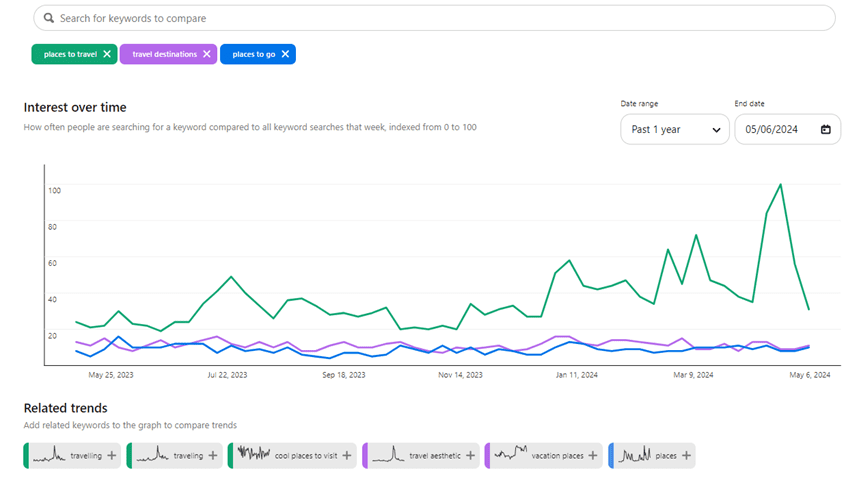
  4. Just like any other search engine, keyword research is necessary on Pinterest. Use business tools like Pinterest Trends, which lets you see keyword search volume and which pins are most popular for them.
  5. Use your selected keywords everywhere possible, including pin titles, pin descriptions, and board descriptions.
Screenshot from Pinterest Trends, June 2024

Before you start pinning, optimize your blog posts to maximize revenue to ensure every visitor counts. See how to do that in our guide Ten Tips for Maximizing Revenue for Travel Bloggers.

2. Keep Visitors Engaged With Email Marketing

Email marketing is important because you own it. Instagram could ban your account, Google can derank you, but your email list is always yours.

Use this strategy to build less volatile, consistent traffic instead of new traffic.

How To Get Started With Email Marketing

  1. Select an email marketing provider. Travel bloggers love MailerLite and MailChimp because they are low-cost and simple.
  2. Start collecting email addresses. Create a mailing list signup form with your website host and insert it at the end of posts to collect your readers’ information.

How To Use Email Marketing Like A Pro

  1. Create a lead magnet that entices readers to share their information in exchange for it. Popular lead magnets in the travel blogging community are travel guides, ebooks, and itineraries.
  2. The goal of email is to get your reader onto your site. Keep your emails short and include impressive pictures and a clear link to your website. Leave them wanting more so that they click through.
  3. Before sending an email directing traffic to one of your pages, ensure the page is set up to maximize revenue. See how in our guide, Ten Tips for Maximizing Revenue for Travel Bloggers.

“While SEO is often touted as the king of traffic, good email marketing is the absolute queen. We regularly see spikes in our web analytics when we email our audience, but those spikes aren’t just temporary. They help our users build habits. We simply wouldn’t have nearly the business we have today without activating our email list.”

Beth Stanos, Wanderful CEO & Founder

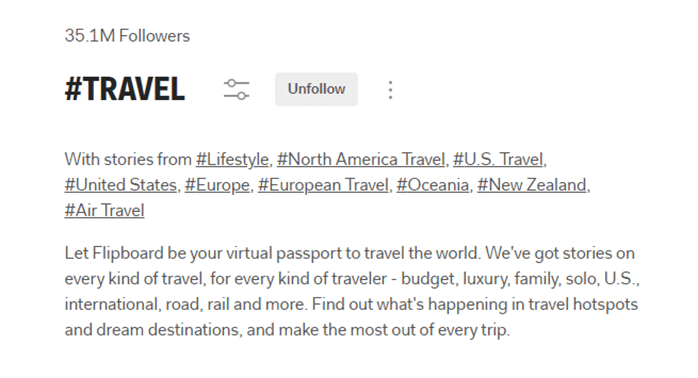
    3. Add Your Content To Flipboard To Grab More Website Visits

    Flipboard is an article curation website that lets users flip through articles from different publications, like magazines.

    How To Get Started With Flipboard

    1. Download the Flipboard app on mobile and create an account and profile.
    2. Create Flipboard magazines. These are topic categories that group your content (much like Pinterest boards).
    3. Add your blog posts to them from the magazine page on Flipboard or the Flipit Chrome bookmark.
    Screenshot taken from Flipboard, June 2024

    How To Use Flipboard Like A Pro

    1. Add your fresh blog posts to Flipboard right after publishing.
    2. Add relevant content to your magazines that isn’t your own. Engaging with other bloggers’ content and maintaining new content in your magazines helps your reach.
    3. Include your target keywords in your magazine descriptions, post captions, and profile.

    “Flipboard has become a major traffic source for all 3 of my websites. They have fantastic tools for creators, like storyboards, scheduling, and RSS feeds for magazines, making creating and sharing compelling content easy.”

    Amanda O’Brien, theboutiqueadventurer.com Founder

    4. Get Discovered With Short-Form Videos On Social Media

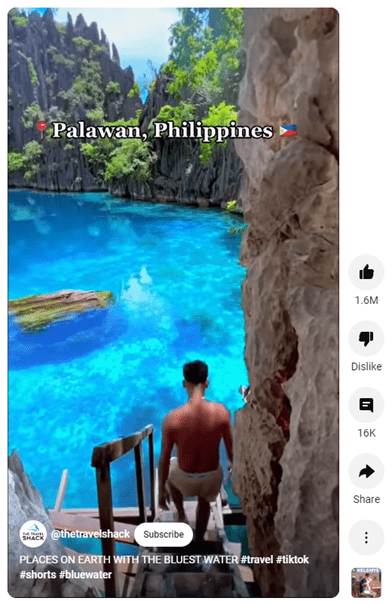
    Did you know 77% of travelers use social media when planning their trips? Get their eyes on your content with short-form videos on platforms like TikTok, Instagram, and YouTube shorts.

    These platforms have algorithms to serve your content to people who don’t follow you, making them ideal for readers to discover you.

    How To Get Started Making Videos

    1. Create your accounts on YouTube, Instagram, and TikTok.
    2. Download Capcut, a free mobile app for video editing. It’s better than the in-app editing functionality, with pre-installed templates and effects.
    3. Create a Linktree account or an alternative. All three platforms make it difficult for users to leave and visit your site, so a place where users can go for all your links is necessary.
    “PLACES ON EARTH WITH THE BLUEST WATER” by @thetravelshack, June 2024

    How To Make Short Video Content Like A Pro

    1. While traveling, keep video creation in the back of your mind. When you see eye-catching scenery or an interesting environment, be ready to capture it in video. Your video’s “wow” factor differentiates between a mediocre and a fantastic video.
    2. On Instagram, write detailed captions. On YouTube and TikTok, keep captions as brief as possible.
    3. Voice-over, on-screen text, and music are crucial to your engagement rate. You can add these with Capcut or in-app.
    4. Pick your video thumbnails carefully. Make sure they stand out in a grid of other videos.
    5. Finally, keep your short video short. The ideal length for a Reel is seven to eleven seconds, a TikTok 21 to 34 seconds, and a YouTube Short 25 to 35 seconds.

    “TikTok helped us to get our second blog on Mediavine. We shared detailed videos about “how to do something” and always included a call to action, directing viewers to our blog for more information. In recent years, we’ve had videos go viral while encouraging followers to visit the link in our bio. This has resulted in thousands of clicks to our websites.”

    Natasha Alden, theworldpursuit.com Co-Founder

    5. Expose Yourself To New Audiences With Guest Posting

    Having your writing published on another website gives you access to a whole new audience, making it an excellent strategy for attracting new readers.

    How To Start Guest Posting

    1. Find places that accept guest posts. Many publications have open submissions that you can submit to.
    2. If you see a site that has guest posts but no open submissions, find their contact information and send an inquiry email.
    3. Create a pitch by explaining your travel expertise and provide writing samples.

    How To Guest Post Like A Pro

    1. When creating your pitch, understand the site’s needs. What content gaps do they have? Focus your pitch there.
    2. Organic guest posting opportunities arise if you take the time to network. Meeting and developing friendships with travel bloggers is a great way to share audiences. You can network on social media, as well as in-person events like TBEX, TravelCon, and Traverse.
    3. Create a clear link back to your blog and include a catchy description so readers will be enticed to read more of your content.
    4. Strategize by monitoring the traffic of potential sites with tools like SEMRush and pick the best option.
    Screenshot from japan.travel, June 2024

    “Creating content for another publication to share as a standalone article allows you to share new expertise about a certain area. Whether through the article itself or subsequent social shares, a new audience gets exposure to you as a writer.”

    William Tang, goingawesomeplaces.com Founder

    See how William Tang made travel blogging his full-time job with the help of Stay22’s revenue-boosting tools. Read the case study.

    Compensate For Traffic Dips By Maximizing Your Revenue.

    Maximize your conversions with strategic CTA placement and Stay22’s cutting-edge AI-powered affiliate tools! Skyrocket your affiliate sales with these proven tips:

    DOWNLOAD OUR GUIDE: Ten Tips for Maximizing Revenue for Travel Bloggers.


    Image Credits

    Featured Image: Image by Shutterstock. Used with permission.

    YouTube Unveils New Content And Ad Offerings At Brandcast via @sejournal, @gregjarboe

    YouTube unveiled four new content and ad offerings at its 13th annual Brandcast at David Geffen Hall, Lincoln Center.

    Key announcements include:

    • WNBA Friday night games: Google and Scripps Sports announced an agreement for YouTube TV to show the locally televised WNBA Friday night games on ION in both the home and away markets of the teams playing. This season, YouTube TV will be the only digital multichannel video programming distributor (dMVPD) carrying local and national WNBA games. The games will be part of the YouTube TV Base Plan starting May 31 and continuing through the regular season.
    • Creator Takeovers via YouTube Select: YouTube announced the expansion of this takeover option to more creators, which was initially piloted at the end of 2023. With the formalization of this program, brands will be able to collaborate with top YouTube creators to own a 100% share of voice on their channel, leveraging creator-fan solid connections.
    • Non-Skips for Video Reach Campaigns: YouTube announced a new AI-powered format optimized for connected TV (CTV), using non-skippable assets across in-stream inventory.
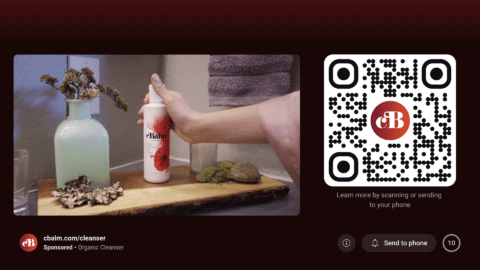
    • Branded QR Codes: YouTube launched branded QR codes, enabling advertisers to drive more interactivity by putting their brand front and center in a more modern QR code.

    In addition to these news announcements, YouTube’s executive bench also took the stage to talk about their vision, the importance of content, and innovation in advertising.

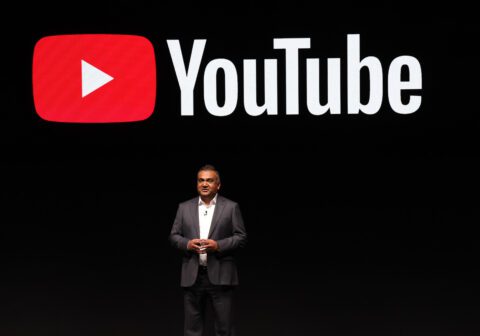
    Neal Mohan, the CEO of YouTube, said, “Creators are drawing audiences on the big screen because they’re the new Hollywood. They have business strategies, writers’ rooms, and production teams. They’re reimagining classic TV genres, from morning shows to sports commentary. And they’re inventing entirely new ones!”

    He added, “Along the way, creators are redefining what we think of as ‘TV.’ And they deserve the same acclaim as other creative professionals. I believe it’s time a creator won an Emmy.”

    YouTube CEO Neal Mohanan speaks onstage during YouTube Brandcast 2024 at David Geffen Hall on May 15, 2024, in New York City. (Photo by Kevin Mazur/Getty Images for YouTube)

    Mary Ellen Coe, the Chief Business Officer of YouTube, said:

    “No one is more engaged than loyal YouTube fans. They excitedly count down to new videos, rewatch old ones, and create their own in response. And they rush to their favorite creator’s channel in the 24 hours after new videos are released. Which presents an ideal moment for brands to engage with these fans.”

    Sean Downey, the President of Americas and Global Partners at Google, said:

    “Google AI has been at the core of our ads solutions for years. As we advance, our ability to help brands drive ROI keeps improving.”

    The night featured musical performances by Billie Eilish featuring FINNEAS, Benson Boone, and Stray Kids, as well as various YouTube creators, including Haley Kalil, Kinigra Deon, Ryan Trahan, Shannon Sharpe, and Zach King.

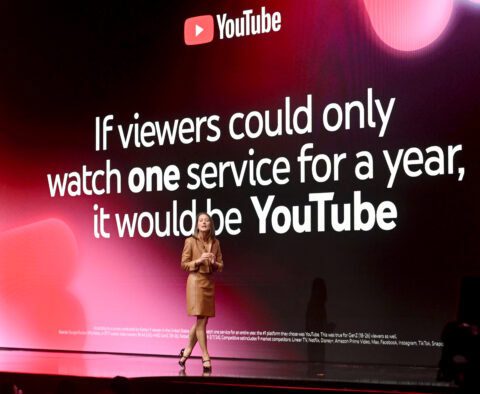
    This highlighted why a survey conducted by Kantar found that viewers in the United States say that if they could only watch one service for an entire year, YouTube would be the #1 platform they chose.

    Mary Ellen Coe, CBO, YouTube, speaks at YouTube Brandcast. (Photo by Noam Galai/Getty Images for YouTube)

    The audience gleaned other critical data throughout the evening event, which was part of the Upfronts.

    For example, according to Nielsen’s total TV and streaming report for the US, YouTube has remained the leader in streaming watch time every month since February 2023. And 9 out of 10 viewers say they use YouTube, according to a Pew Research Study.

    According to YouTube’s internal data, the key CTV metrics included:

    • Views in the living room have increased by more than 130% from 2020 to 2023.
    • On average, viewers watch over 1 Billion hours of YouTube content on the big screen (television) daily.
    • YouTube TV has more than 8 million paid subscribers.
    • Over 40 of YouTube’s top 100 channels by watch time have TV as their most-watYouTube’sen.
    • Last year, views of Shorts on connected TVs more than doubled.

    Advertisers in the audience also snacked on these news nuggets:

    • According to a custom MMM meta-analysis commissioned by Google with Nielsen, on average, YouTube drives higher long-term Return on Ad Spend (ROAS) than TV, other online video, and paid social.
    • Based on a meta-analysis across 13 NCS sales lift studies, AI-powered video reach campaign mixes earned an average ROAS 3.7x higher (271%) than manually optimized campaigns.
    • According to a Kantar survey, viewers in the United States agree that YouTube is the #1 video platform for gaming content, outperforming TV, social, and streaming platforms.
    • According to a Google/Ipsos YouTube Trends Survey, 54% of people would rather watch creators break down a significant event like the Oscars or Grammys than watch it themselves.

    Now, that’s a lot of news to digest. Still, as I mentioned in “Google Unveils Updates At IAB NewFronts 2024,” YouTube is also “expected to make more announcements at VidCon A” aheim 2024, which will take place from June 26–29, 2024, at the Anaheim Convention Center.

    So, as TV newscasters would say in the old days, “Don’t touch that dial.”


    Featured Image: Muhammad Alimaki/Shutterstock

    Google Unveils 4 Updates At IAB NewFronts 2024 (YouTube Fails To Share Any News) via @sejournal, @gregjarboe

    Google unveiled four Display & Video 360 updates during IAB NewFronts 2024 on Monday morning, while the YouTube evening reception failed to make any news during their Monday evening event.

    Why did Google hold one NewFront event on Monday morning and YouTube hold another one on Monday evening at the 2024 IAB NewFronts?

    There’s a classic strategy for maximizing your retail shelf space that involves product segmentation to get more space allocation (minimizing your competitors’ space on retail shelves).

    Procter & Gamble (P&G) has used this strategy for more than a hundred years, which is why it has multiple brands of laundry products (including Ariel, Cheer, Era, and Tide).

    The marketing executives at Google and YouTube may have segmented the audience that attends IAB NewFronts into two groups: one focused on connected TV (CTV) and another on social video.

    The Right Time To Unveil How Google Display & Video 360 Has Evolved

    As I reported last week in Video Ad Spend And Trends Revealed Ahead Of IAB NewFronts 2024, the IAB expects ad spending on CTV to grow by 12% to $22.7 billion in 2024.

    However, when people now say they “watch TV,” it means different things than it did in the past. Today’s viewers seamlessly jump from hit shows to creator content on their CTVs. Heck, they’re even watching YouTube Shorts on their smart TVs.

    Audiences are fluid, so reaching them now means showing up when and where they watch the video content they love instead of appearing on the large-screen television during prime time in the family room.

    This explains why the Google NewFront seemed to be the right time and place to unveil how Google’s Display & Video 360 has evolved to help marketers and media agencies adjust their strategies and video ad buys to reach their audiences across streaming content.

    A Nielsen Media Mix Modeling (MMM) meta-analysis of 15 U.S. consumer packaged goods (CPG) brands, commissioned by Google, found that marketers using unified media buying through Display & Video 360 achieved a significant advantage. They saw a 120% higher return on ad spend (ROAS) compared to third-party video bought directly and an 18% higher ROAS than linear TV.

    4 Updates For Google Display & Video 360 Updates At NewFront

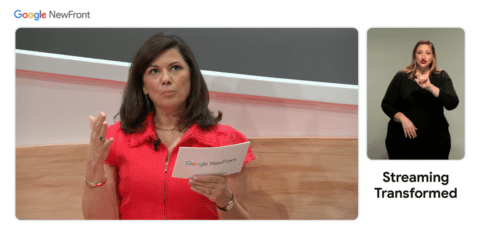
    At the Google NewFront event on Monday morning, Kristen O’Hara, the VP of Agency, Platforms & Client Solutions at Google, provided four updates that were amplified by a dozen other speakers.

    Kristen O'Hara, the VP of Agency, Platforms & Client Solutions at GoogleImage from Google NewFront, April 2024

    Strategic relationships with streaming partners

    First, O’Hara announced:

    “We’re strengthening strategic relationships with streaming partners like Disney, Paramount, NBCUniversal and Warner Bros. Discovery. For example, our integration with Disney’s Real-time Ad Exchange (DRAX) lets you tap into their vast inventory and reach at scale.”

    In response, Pete Chelala, the VP of Programmatic Advertising Sales at Paramount, said:

    “Paramount specializes in creating content fans love on the platforms they can’t live without. Partnering with Google ensures that our clients can access Paramount Advertising’s premium inventory seamlessly through Display & Video 360.”

    And Jill Steinhauser, the senior vice president of Ad Sales Revenue and Planning at Discovery Communications, added:

    “We’re thrilled to bring MAX’s diverse content to Display & Video 360. This allows advertisers to programmatically reach audiences at scale, unifying their media in one place.”

    Introducing Instant Deals Tool For Marketers

    To move as quickly as streaming audiences are these days, agencies also need more flexibility. So, the second announcement featured a couple of new products.

    O’Hara said:

    “We’re introducing instant deals – a new tool for marketers to configure customized deals with top publishers right from the Display & Video 360 interface, skipping the complex negotiation process.”

    She explained, “This buying method is already available today for high-impact reservation YouTube placements, like YouTube Select and Masthead. And soon, agencies will be able to access those same placements with non-guaranteed deals for even greater budget flexibility. Plus, instant deals are expanding beyond YouTube to major publishers like Disney.”

    O’Hara continued:

    “We also know managing yearly commitments across multiple publishers and deal types can be a tangled mess of spreadsheets. This is why we’ve built a tool called commitment optimizer in collaboration with our agency partners to streamline the process of managing commitments. Input your deal terms and goals, then Google AI intelligently optimizes the mix of guaranteed and non-guaranteed inventory for flexibility as well as reach.”

    Agencies that have been testing the commitment optimizer are already driving results, expanding access to premier deals to five times more clients.

    For example, Clare Ritchie, the senior vice president and global head of Programmatic & Inhousing at OMG, said,

    “Our co-development initiatives with Display & Video 360 enable OMG to deliver custom technology solutions that help our clients achieve better results.”

    Privacy-Forward Audience Solutions

    The third announcement at the Google NewFront event promises to help the advertising industry reach audiences accurately while respecting people’s privacy.

    Google has encouraged advertisers to invest in first-party data for years.

    Google’s Publisher Advertiser Identity Reconciliation (PAIR) solutions provide a way for advertisers and publishers to reconcile their first-party data securely. This enables marketers to show relevant ads to high-intent audiences, like past purchasers, while protecting privacy.

    To date, PAIR has delivered strong results for advertisers like Omni Hotels. According to LiveRamp, PAIR audiences provide 11% incremental reach compared to cookie-based lists.

    O’Hara said:

    “To further scale this privacy-forward solution, we’re collaborating to build open standards and contributing the PAIR protocol to the IAB Tech Lab. This will enable ad tech companies – and the industry as a whole – to adopt privacy-forward audience solutions that benefit everyone.

    Shailley Singh, the executive vice president of product and chief operating officer of IAB Tech Lab, observed:

    “It’s a big step towards making privacy-enhancing technologies mainstream in the programmatic supply chain.” He added, “We’re eagerly looking forward to ushering the PAIR protocol into an open industry standard.”

    Seamlessly Integrating Generative AI Into Display & Video 360

    The fourth announcement at the Google NewFront event focused on Google AI.

    O’Hara said:

    “The rise of programmatic advertising brought efficiency to media buying, but it’s time to evolve even further. We’ve heard from marketers and their media agencies that they expect a simpler, more intuitive DSP experience. So, we’re continuing to make Google AI an essential part of Display & Video 360, seamlessly integrating it into your workflows and bringing generative AI capabilities.”

    She added:

    “One of the first places you’ll see generative AI show up as a helpful collaborator in Display & Video 360 is in setting up your audience strategy with a feature called audience persona. Describe your ideal audience, and audience persona instantly generates a combination of audience segments that matches your goals.”

    This tool enables agencies to select the right audiences from thousands of options while helping them uncover new, high-potential audiences. It improves unduplicated reach and delivers better results for their clients.

    And even though Google AI offers suggestions, advertisers always have the final say. They can easily edit the generated selection, giving them full control over their campaigns.

    Audience persona is expected to launch this summer, starting with Google’s audience and demographic segments.

    “Of course, not all customers within an audience segment bring the same value to your business,” O’Hara acknowledged. “That’s where custom bidding comes in.”

    This capability lets advertisers indicate their highest priorities within Display & Video 360. Then, Google AI uses these custom signals to focus on the impressions that deliver the results that an advertiser wants.

    She said:

    “Custom bidding now includes brand awareness and engagement objectives, so you can optimize for behaviors like ‘time on screen.’ We soon plan to add CTV-specific signals like genre as well.”

    O’Hara concluded:

    “Transparency is a key responsibility for Display & Video 360 as marketers harness the helpfulness of AI. This is why we’ve launched experiment center, a tool that lets you take control, test strategies and optimize the way you use Google AI for maximum impact.”

    The tool’s dashboard offers top-line insights, enabling quick, data-driven decisions. The experiment center goes beyond tracking just conversions, providing a comprehensive view across the entire customer journey – from awareness to consideration and action.

    It provides a new way for advertisers to see how their latest AI-powered strategies compare to their previous approaches and understand the impact of consolidating their video streaming buys on a single platform.

    Youtube Evening Reception Failed To Share Any News

    As I reported last week in Video Ad Spend And Trends Revealed Ahead Of IAB NewFronts 2024, social video is on track toward its second year of 20% year-over-year (YoY) growth and is projected to rise to $23.4 billion.

    So, I was expecting YouTube to unveil umpteen updates to their digital video strategies during their evening reception. However, YouTube didn’t share any news or presentations during the closed event for customers.

    Why not?

    Well, it’s worth noting that this year’s YouTube Brandcast event, part of the broadcast upfront week, is scheduled for May 15, 2024 at Lincoln Center’s David Geffen Hall.

    This is probably where YouTube plans to share a plethora of strategic insights with television network executives, major advertisers, and the media at the beginning of an important advertising sales period.

    VidCon Anaheim 2024 will take place from June 26–29, 2024 at the Anaheim Convention Center. Over 55,000 attendees are expected to pack the Community, Creator, and Industry tracks. Stay tuned for more breaking news and important developments at this event.

    In the old days, TV newscasters would say, “Don’t touch that dial” or “Film at 11.” But neither of these statements makes any sense today. These days, CTVs don’t have dials, and digital cameras don’t use film.

    So, just as we’ve had to adjust to these changes in the way we watch TV, we’ll also need to adjust to the new way that Google and YouTube package and communicate their video strategies.

    In 2023, YouTube revealed its strategic direction over three key events, and in 2024, we may not get a clear picture of the changing landscape until the end of June.

    More resources:


    Featured Image: metamorworks/Shutterstock

    YouTube’s ‘Affiliate Hub’ Offers A New Way For Channels To Make Money via @sejournal, @MattGSouthern

    As YouTube continues its push into ecommerce, it’s launching an ‘Affiliate Hub’ to make it easier for channels to earn affiliate marketing income.

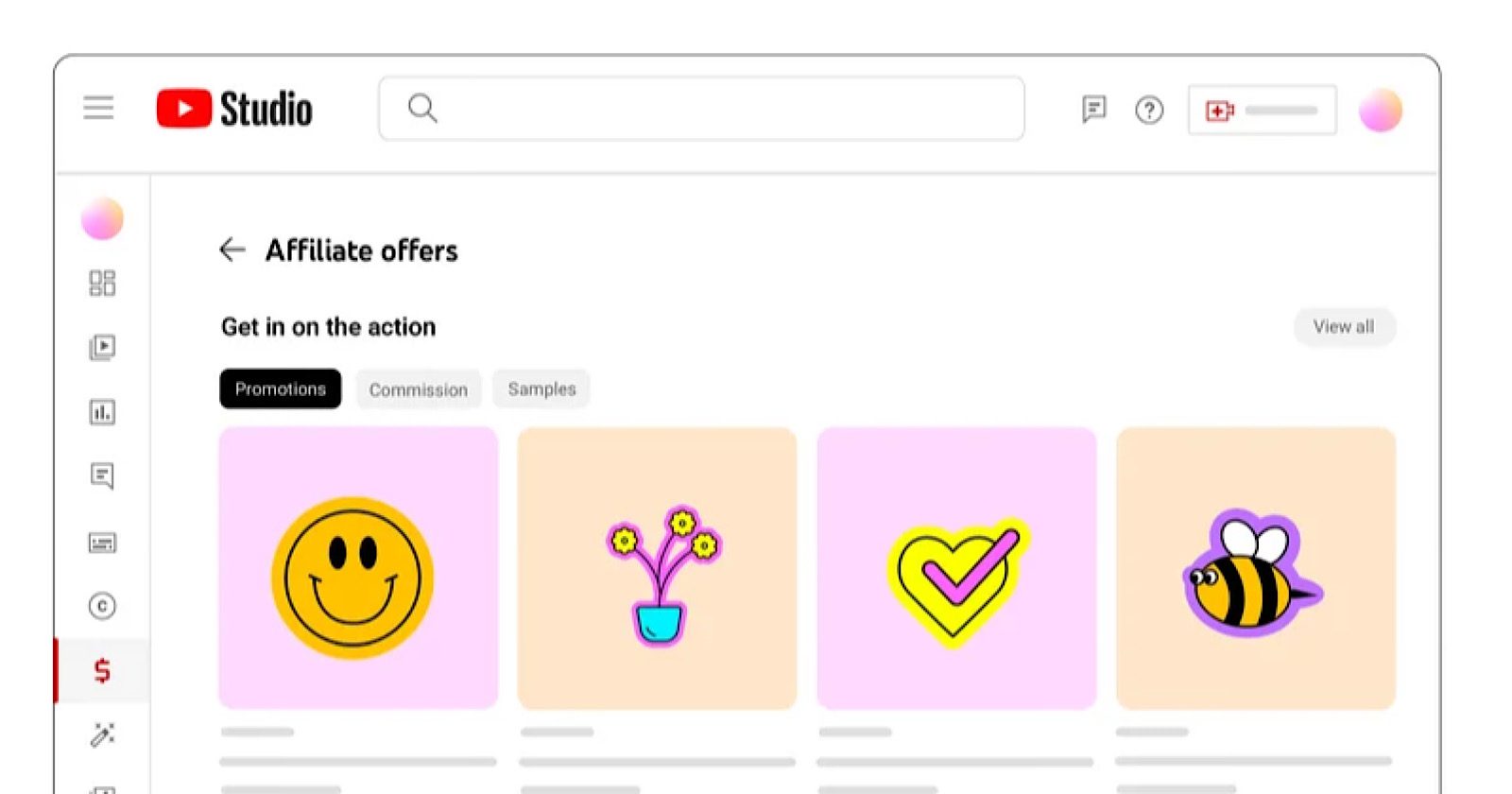
    The Affiliate Hub, integrated into the YouTube app, is a central place to browse top affiliate partners, commission rates, promotional offers, and even request product samples.

    It’s one of several new shopping features YouTube has launched, targeting the lucrative creator economy.

    Other updates include:

    • Shopping Collections that allow creators to curate their own product galleries.
    • The ability for all creators (not just affiliates) to bulk tag products across their video libraries.
    • Integration with e-commerce platform Fourthwall to manage storefronts within YouTube Studio.

    The updates come amid a growth period for YouTube Shopping.

    In 2023, viewers reportedly watched over 30 billion hours of shopping-related videos, representing a 25% increase in watch time year over year.

    Here’s more about YouTube’s new shopping updates.

    YouTube Affiliate Hub

    For affiliate marketers considering YouTube, today’s update makes it more appealing and creator-friendly.

    “Who doesn’t love a good deal?” said Aditya Dhanrajani, YouTube’s Director of Product Management for Shopping. “The Affiliate Hub is making it easier for Shopping creators to find the information to start planning their next shoppable video.”

    For YouTube creators building an affiliate marketing business, the Hub streamlines a fragmented process of dealing with different brands across separate platforms and sources.

    Now, creators can view all the latest affiliate brand opportunities, exclusive promo codes to share with their audience, and commission payouts in one place.

    “Our creators understand the incredible opportunity for affiliate earnings on YouTube,” said Dhanrajani. “With an integrated Affiliate Hub providing partnership opportunities, promo deals, and seamless product tagging, there’s never been a better time to build an affiliate business on our platform.”

    Other New Shopping Features

    Shopping Collections

    YouTube highlights another key feature in this update: Shopping Collections, which allows channels to curate products from their favorite brands or their own merchandise lines.

    Creators can now group products into themed collections, making it easier for viewers to discover and purchase related items.

    Collections will appear in a channel’s product list, Store tab, and video descriptions. The feature is initially launching on the Studio app for mobile, with plans to expand to desktop soon.

    Expanded Product Tagging

    Last year, YouTube introduced the ability for affiliate shopping creators to tag products across multiple videos simultaneously based on items listed in the video descriptions.

    This feature is now being expanded to all Shopping creators, allowing them to tag their products and merchandise across their entire video library. This update could help creators earn more revenue from older, high-traffic content.

    Integration With Fourthwall

    YouTube is integrating Fourthwall, an e-commerce platform, into its list of supported shopping platforms.

    This integration will enable creators to create and manage their storefronts directly within YouTube Studio, streamlining the process of setting up and maintaining an online store.

    “We know that people come to YouTube every day to connect with the things and creators they love,” Dhanrajani stated. “We hope these new YouTube Shopping features make that journey even easier for creators and viewers.”

    In Summary

    As the spring shopping season kicks off, these updates enhance YouTube’s ecommerce capabilities and provide creators with more opportunities to monetize their content.

    View YouTube’s announcement below:

    YouTube Analytics Update: Impressions From New & Returning Viewers via @sejournal, @MattGSouthern

    YouTube introduces new impression insights, enabling channels to see a breakdown of new and returning viewers.

    • YouTube has introduced a new feature in Studio analytics that shows the number of impressions from new and returning viewers.
    • The new feature aims to help channels better understand their audience composition and reach.
    • You can use these insights to tailor your content strategy to cater to both new and returning viewers.
    What Makes The Most Engaged YouTube Fans For NCAA Basketball (And Why Should You Care)? via @sejournal, @gregjarboe

    Imagine that you head up digital marketing at Turner Sports or CBS Sports, which have the exclusive rights to license NCAA marks, tickets, and taglines in commercial promotions.

    Or suppose that your social video agency was just invited to pitch AT&T, Capital One, or Coca-Cola, which are official NCAA corporate champions.

    And you have an assignment to identify the most engaged YouTube fans for the NCAA Division 1 Men’s and Women’s basketball teams.

    I realize that you probably don’t work at one of those sports media and entertainment companies and it’s highly unlikely that you’ll be asked to pitch one of those brands in the foreseeable future.

    So, why should you care about what makes engaged NCAA fans on YouTube?

    Keep reading, there is method in the madness.

    Cognitive, Emotional, And Behavioral Metrics

    As mentioned previously, the Interactive Advertising Bureau (IAB) has identified 30 metrics – 7 cognitive, 4 emotional, and 19 behavioral – that brands or agencies can use to measure the “engagement continuum.”

    IAB metrics for engagementImage from IAB, March 2024

    But fan engagement can fluctuate depending on whether a college basketball team is on the bubble, makes it to the Big Dance, or goes deep into the Sweet 16, Elite Eight, and Final Four.

    Fan engagement can also vary depending on the number of logo 3s, buzzer beaters, or overtime wins.

    That’s why this hypothetical assignment is so hard.

    Nevertheless, exploring various video engagement metrics from several video intelligence sources can help you better understand the most engaged YouTube fans for NCAA basketball teams and how to apply what you’ve learned to your brands or clients.

    Here are three cognitive metrics that you should explore when measuring engagement:

    • Change in Brand Awareness/Familiarity: You can use surveys to measure the extent your brand is recognized by potential customers before and after this year’s NCAA tournaments.
    • Change in Brand Consideration: You can also use pre- and post-March Madness surveys to measure your brand’s inclusion in a set customers would select from.
    • Change in Purchase Intent: You can also use Brand Lift surveys to measure the delta in customers’ plans or willingness to purchase your brand in the future.

    Here are three emotional metrics that you should look at using to measure engagement:

    • Change in Baseline Brand Perception: Surveys enable you to measure the pre-post delta in what potential customers think and feel about your brand.
    • Change in Baseline Brand Favorability: Surveys also enable you to measure what potential customers like and value about your brand before and after the Big Dance.
    • Change in Baseline Brand Loyalty: Surveys enable you to measure customer loyalty in terms of weight and frequency of usage – as well as likelihood to switch – from Selection Sunday, March 17, to the women’s NCAA championship game on Sunday, April 7, and the men’s NCAA championship game on Monday, April 8, 2024.

    Here are six behavioral metrics worth exploring to measure engagement:

    • Watch Time: The total amount of time viewers spend watching a video, including any replays or rewatches, should be a key metric. Since it’s only available if you have access to your brand or client’s YouTube Analytics, digital marketers and social video agencies use “views” as a metric to compare videos across other YouTube channels.
    • Applause Rate: The number of likes a YouTube video gets.
    • Amplification Rate: The number of shares a YouTube video gets.
    • Conversation Rate: The number of comments a YouTube video gets.
    • Engaged-View Conversions (EVCs): In Google Analytics 4 (GA4), an engaged-view conversion (EVC) indicates that someone watched a YouTube video for at least 10 seconds and then converted on your website or app within 3 days of viewing the video.
    • Economic Value: This is the monetary value of visitors from YouTube to your site who go on to complete micro conversions like subscribing to a newsletter or initiating a chat with your business, as well as macro conversions like purchasing a product or registering for a service.

    In addition, here are some of the video intelligence sources you should evaluate:

    • Official Team and Conference Channels: Many NCAA Division 1 teams and major conferences, like the ACC, Big 10, and SEC, have their own YouTube channels. These channels feature highlights, interviews, and behind-the-scenes content. Comparing their metrics can provide you with insights.
    • Media and NCAA Basketball Channels: YouTube channels like CBS Sports and March Madness upload video content about various college basketball teams, allowing you to compare fan engagement based on comments and viewership.
    • Third-Party Tools: Tubular Labs, a social video intelligence company that provides data on social video audiences, and Pixability, a company that helps brands monitor their YouTube and CTV campaigns, can provide deeper insights into engagement, but they require paid subscriptions.

    For this article, I contacted Matt Duffy, the company’s CMO, and Sean Alie, the head of its insights team, to see if they had any critical data or strategic insights worth sharing.

    They did – and it appears below.

    There are four sections: men’s team views, women’s team views, year-over-year (YoY) data for men’s and women’s teams + men’s vs. women’s teams, and lastly, views by popular players (such as Caitlin Clark, the NCAA Division I all-time leading scorer of the Iowa Hawkeyes in the Big Ten Conference).

    Here’s what the men’s NCAA basketball views look like.

    They are filtered to sports videos only, and each video includes the keywords “*team name*,” “basketball,” and “men” somewhere in the metadata.

    The timeline is February only.

    Men’s Basketball

    Houston, the #1 ranked team, earned 7.5% more views than the next leading team, Kansas (21M vs 19.6M). Kansas did rank first in engagements, though, earning 13% more engagements than Houston (442K vs 391K).

    Duke ranked 3rd in views (16M) and engagements (389K). One thing to note is Houston is the #1 ranked team and the most viewed team on YouTube.

    However, Kansas was ranked 14th and Duke 9th, yet they were able to rank 2nd and 3rd in views. This is a testament to the brand awareness these programs hold.

    Men's basketball engagement dataImage from Pixability, March 2024

    Women’s Basketball

    This data uses the same methodology as the men’s data except with “women” as a keyword instead of “men.”

    Iowa, home of star Caitlin Clark, earned 51% more views than the next leading program, LSU (12.4M vs 8.2M). This makes sense as Angel Reece plays for LSU and is widely considered the second most popular player in women’s college basketball, after Caitlin.

    The individual stars may influence views for women’s programs more than the team’s fan base. Iowa earned 9.5% more engagements than LSU (178.5K vs 162.9K). Indiana ranked 3rd in views, followed by UConn.

    Women's basketball engagement dataImage from Pixability, March 2024

    Men’s Vs. Women’s Teams And YoY Stats

    • The top 16 men’s teams earned a combined 130.8M views in February 2024, which is 157% more than the top 16 women’s teams have earned (50.8M). Men’s teams earned 247% more engagements (2.4M) than women’s teams (690K).
    • YoY, the top 16 ranked men’s teams earned 61% more views this year compared to the top 16 ranked teams last year in February (130.8M vs 81.2M).
    • YoY, the top 16 ranked women’s teams earned 147% more views this year compared to the top 16 ranked teams last year in February (50.8M vs 20.5M). This means that views for women’s college basketball are growing faster than the men’s. A large part of this was due to the rise of Caitlin Clark.

    Views By Popular Basketball Players

    The stats below are based on players participating in the tournament: Caitlin Clark earned 17.5M player mention views in February, which is more than any other player in the men’s and women’s tournaments.

    Caitlin earned 10.6x more views in February than the highest male player (Kyle Filipowski) views polled in February (17.5M vs 1.6M).

    The second most viewed player was also a woman, Angel Reese, who plays for the LSU Tigers in the Southeastern Conference. Angel earned 3.9x more views than Kyle Filipowski, who plays for the Duke Blue Devils in the Atlantic Coast Conference (6.4M vs 1.6M).

    The rivalry between these two women stars has fueled incredible engagement on YouTube.

    Again, men’s teams are more popular than women’s teams, but at the individual level, women players are outperforming men by a large margin.

    Although the USC Trojans of the Pac-12 Conference won’t make the tournament this year, LeBron Raymone “Bronny” James earned 32M views, which is 87% higher than Caitlin Clark’s views.

    This is still incredibly impressive for Caitlin as she is putting up numbers that compete with someone as well-known as Bronny James.

    Engagement Data for PlayersImage from Pixability, March 2024

    Of course, you could figure out who are the most engaged YouTube fans for NCAA basketball teams without using third-party tools.

    But that might take so much time that you’d miss some of the games that make March Madness worth watching and create highlights worth sharing on YouTube.

    Hey, you make the call.

    How Marketers Can Use Insights Into The Most Engaged Fans

    So, how can digital marketers use these insights about NCAA basketball’s most engaged fans?

    Well, I can think of three key ways to apply what we’ve just learned.

    First, as I mentioned in “39 Emotions Digital Marketers Can Use In Advertising,” people share videos that elicit “high-arousal” or intense emotions twice as much as ones that elicit “low-arousal” or moderate emotions. And March Madness elicits several intense emotions.

    For example, the Big Dance triggers nostalgia, a sentimental longing or wistful affection for some past period or irrecoverable condition. How do you make use of this insight?

    Watch Continental Tire’s “Grant Hill, Christian Laettner, and the Smart Choice!” Basketball legends Grant Hill and Christian Laettner of Duke not only tell us about the importance of making smart choices but also remind us of “The Shot” during the 1992 NCAA tournament.

    During a game between East Region #1 seed Duke and #2 seed Kentucky in the East Regional Final to determine a spot in the Final Four, defending national champion Duke trailed 103–102 with 2.1 seconds remaining in overtime.

    That’s when Hill threw a pass three-quarters of the length of the court to Laettner, who faked right, dribbled once, turned, and hit a jumper as time expired for the 104–103 win. In 2004, Sports Illustrated called it the greatest college basketball game of all time.

    Second, college athletes can now make money from their name, image, and likeness (NIL). So, brands like State Farm Insurance can now feature players like Caitlin Clark in YouTube videos like “Shoot! (feat. Caitlin Clark, Jimmy Butler, Reggie Miller) :30 | State Farm Commercial.”

    It’s worth noting that State Farm uploaded this video on Nov. 21, 2023, almost three months before Clark broke “Pistol” Pete Maravich’s NCAA Division I scoring record on Feb. 15, 2024. Kudos to the brand and their agency for being ahead of the curve.

    Third, the line between creators and their audiences is blurring.

    At last year’s Brandcast, YouTube CEO Neal Mohan told advertisers, “The universe of ‘creators’ is growing every day as more people make videos on their phones.

    This limitless access means the world of creation is changing. Fans used to engage with a like or subscribe. But now, you can see a trend and easily jump in with your own video.”

    For an example, check out “Meet the New Face of March Madness – Robbie Avila #collegebasketball #indianastate #sports #funny.” BenchwarmerBran, the online alias of Brandon Carney, a sports content creator who makes jokes about teams, players, and fantasy leagues, uploaded this video on March 7, 2024. And it currently has 405,000 views and 63,500 engagements.

    If you use Tubular Intelligence, then you will see that 1,536 accounts in the U.S. uploaded 3,208 videos about “March Madness” to YouTube in the last 90 days.

    And influencers uploaded 2,359 of these videos (73.5%), while media and entertainment companies uploaded 602 (18.8%), and brands uploaded only 224 (7.0%).

    Now, these 3,208 YouTube videos about March Madness got a total of 11.6 million views and 455,000 engagements.

    So, targeting affinity segments, people who already have a strong interest in relevant topics, may be a much smarter option than targeting placements, specific YouTube channels or websites and apps on the Google Display Network.

    How SEO Pros Can Use This Information, Too

    So, how could an SEO specialist use this information to make actionable decisions?

    Well, I’m sad to say that some won’t.

    Why? As Captain Spock (Leonard Nimoy) said in “Star Trek II: The Wrath of Kahn”,

    “He is intelligent, but not experienced. His pattern indicates two-dimensional thinking.”

    In other words, some intelligent SEO specialists think their job is to work with text, not videos. And they also think that the content that their optimizing is to help people make rational decisions, not emotional ones.

    But YouTube videos have been appearing in Google’s search results since May 2007. And as I mentioned in “Customer Personas Can Transform SEO, PPC and Content Marketing,” Google has talked about emotions driving search intent since May 2019.

    As Justin De Graaf, Head of Ads Research and Insights at Google, observed back then,

    “The truth is, decision-making is not a rational process, but one driven mainly by how people feel. The rational brain layers on reasons for our choices only after they’re made.”

    So, if SEO specialists continue to focus on optimizing text to help people make rational decisions, then their pattern indicates two-dimensional thinking.

    Now, they may continue to be somewhat successful, especially if they can answer “yes” when asked: “After reading your content, will someone leave feeling they’ve learned enough about a topic to help achieve their goal?”

    But, as Google has said,

    “The helpful content update aims to better reward content where visitors feel they’ve had a satisfying experience, while content that doesn’t meet a visitor’s expectations won’t perform as well.”

    So, SEO specialists who can’t create (and optimize) video content that tells a good story and makes a visitor feel something emotionally may struggle to provide a satisfying experience.

    In conclusion, this is why it’s worth dreaming about getting a starring role in a Cinderella story.

    I realize that you probably won’t get a job at one of those media and entertainment companies and it’s highly unlikely that you’ll be asked to pitch one of those brands in the foreseeable future.

    But, if and when your opportunity presents itself, then you will be ready to take your best shot at the buzzer.

    More resources:


    Featured Image: adriaticfoto/Shutterstock

    YouTube Warns Channels Against Deleting Videos via @sejournal, @MattGSouthern

    In a recent public service announcement on Twitter, YouTube’s Product Lead for homepage and recommendation, Todd Beaupre, cautioned content creators against the arbitrary deletion of videos from their channels.

    His statement points to the potential negative impact of video removal on a channel’s growth.

    YouTube Says Don’t Delete Videos

    Beaupre advised in his tweet:

    “YouTubers: Don’t delete videos unless you have a very, very good reason. When you delete a video, you delete your channel’s connection to the audience that watched that video. If you want to maximize your growth, keep your videos public or unlist them if you must.”

    YouTube’s Creator Liaison, Rene Ritchie, further amplified the message, retweeting Beaupre’s post to ensure wider visibility.

    The coordinated effort from two YouTube representatives highlights the significance of the advice for content creators.

    Video Deletion May Impact Channel Growth & Discoverability

    YouTube’s out-of-the-way PSA on Twitter suggests that video deletion could be a weighty factor in YouTube’s algorithm for homepage recommendations.

    The platform may be less likely to recommend videos from channels with a history of removing content, as it could negatively affect user experience and engagement.

    YouTube’s recommendation system is designed to connect viewers with content they will likely enjoy and engage with. If a channel frequently deletes videos, it disrupts the viewer’s experience and makes it harder for the algorithm to assess the channel’s value accurately.

    Unlist Rather Than Delete

    The advice to keep videos public or unlisted, rather than deleting them entirely, offers creators a middle ground for managing their content without compromising its growth potential.

    By maintaining a stable video catalog, creators can foster long-term connections and provide a consistent data stream for YouTube’s algorithm to evaluate their channel’s relevance and engagement.


    FAQ

    How does deleting videos from a YouTube channel affect its growth?

    Deleting videos from a YouTube channel can adversely affect the channel’s growth potential.

    When a video is removed, the connection that was built between the channel and its audience through that video is lost.

    This deletion can lead to reduced visibility and discoverability of the channel within YouTube’s recommendation algorithm, potentially hindering the channel’s ability to attract new viewers and negatively impacting user experience and engagement.

    What is the recommended alternative to deleting videos on YouTube?

    The recommended alternative to deleting YouTube videos is to keep them public or unlist them.

    By doing so, creators can manage their content library without compromising their channel’s growth potential and algorithmic evaluation.

    This strategy ensures the creator’s video catalog remains stable, which is beneficial for maintaining long-term connections with the audience and preserving the integrity of the channel’s data for YouTube’s recommendation system.


    Featured Image: Muhammad Alimaki/Shutterstock

    The 30 Most-Subscribed YouTube Individuals (Q1 2024) via @sejournal, @theshelleywalsh

    In Q1 2024, MrBeast has retained his top spot as the most-subscribed YouTube individual on the social media platform.

    After MrBeast overtook PewDiePie in late 2022 to shake up the top most-subscribed on YouTube leaderboard, there has been even more movement in the last 12 months.

    At the beginning of YouTube, it was a long journey for individuals to reach 100 million subscribers – but now MrBeast is the first individual YouTuber to crack 200 million subscribers.

    On YouTube, way back in 2006, Judson Laipply was the first recorded individual to have the most subscribers, with mere thousands.

    In the same year, Brookers was the first channel and individual to reach 10,000 subscribers – and that was a big deal.

    Although MrBeast is the most-subscribed individual, just above him is T-Series – an Indian record label and film studio that remains the number one most-subscribed channel on YouTube.

    T-Series was the first channel to reach 100 million subscribers in 2019 and the first to 200 million in 2021.

    While T-Series held twice as many subscribers as the top individual YouTuber last year, the distance is now closing between the most popular content creators.

    Being an influencer is big business.

    Who Is The No. 1 Most Subscribed YouTuber?

    As of February 2024, MrBeast is the most-subscribed YouTuber, with 240 million subscribers.

    Kid-friendly content channel Like Nastya is now the second most-subscribed YouTube individual with 113 million subscribers.

    PewDiePie has continued his decline to drop down again to third place with 110 million.

    When reaching the 200-million subscriber milestone in October 2023, MrBeast took to X (Twitter) to say how stunned his 13-year-old self would be and that he planned to continue making content for decades.

    In his usual philanthropic-style, he also gave away a private island for his 100-million subscriber milestone – which is probably part of the reason he originally took the top position from PewDiePie in December 2022.

    The Top 50 Most-Subscribed YouTubers, February 2024

    Channel Videos Language Subscribers
    1 MrBeast 778 English 241,000,000
    2 Like Nastya 868 English 113,000,000
    3 PewDiePie 4,753 English 111,000,000
    4 Justin Bieber 249 English 72,600,000
    5 EminemMusic 160 English 59,000,000
    6 Marshmello 470 English 56,800,000
    7 Taylor Swift 226 English 56,600,000
    8 Ed Sheeran 458 English 54,200,000
    9 Ariana Grande 176 English 53,500,000
    10 A4 874 Russian 51,700,000
    11 JuegaGerman 2,105 Spanish 49,400,000
    12 Billie Eilish 88 English 49,100,000
    13 Mikecrack 1,994 Spanish 47,900,000
    14 Bad Bunny 154 English 47,500,000
    15 Fernanfloo 544 Spanish 47,000,000
    16 Felipe Neto 4,690 Portuguese 46,200,000
    17 Jess No Limit 2,716 Indonesian 46,100,000
    18 Shakira 345 Portuguese 45,500,000
    19 Alan Walker 535 English 45,000,000
    20 Katy Perry 135 English 44,800,000
    21 whinderssonnunes 745 Portuguese 44,500,000
    22 Kimberly Loaiza 317 Spanish 44,400,000
    23 Ricis Official 3,869 Indonesian 43,200,000
    24 Rihanna 85 English 42,800,000
    25 SHFA2 1,713 Arabic 42,600,000
    26 LUCCAS NETO – LUCCAS TOON 2,581 Portuguese 42,300,000
    27 Luisito Comunica 1,337 Spanish 42,100,000
    28 Fede Vigevani 1,233 Spanish 42,000,000
    29 CarryMinati 193 Hindi 41,400,000
    30 elrubiusOMG 701 Spanish 40,300,000

    *Data Sources (SocialBlade, YouTube), February 2024

    Please note this is a list of the most subscribed individuals — not the most subscribed channels. It excludes “brand” channels that don’t focus on an individual personality, artist, or influencer.

    Who Are The Top 12 Most-Subscribed YouTubers?

    The list of the top 30 most-subscribed individuals features many successful music artists but has a majority of native YouTube influencers.

    With the channel becoming an integral part of marketing and distribution for music artists, it’s no surprise that top artists feature highly.

    Justin Bieber (the top individual artist) leveraged YouTube from an early age to gain mainstream attention on his terms.

    MrBeast has over 167 million more subscribers than Bieber, which highlights just how much attention the channel can achieve – and that, today, being a YouTube influencer is the same as being a traditional celebrity.

    To get a better understanding of who all the influencers are, we’ve included a summary of the top 12 most-subscribed YouTuber influencers below.

    1. MrBeast

    U.S.-based Jimmy Donaldson started MrBeast as MrBeast6000 in 2012 when he was only 13.

    He also holds five other channels, including Beast Reacts, MrBeast 2, Beast Philanthropy, and MrBeast 3 (inactive). MrBeast Gaming also sits in the top 100, with just under 42 million subscribers.

    MrBeast’s early videos include counting to 10,000 non-stop (a 44-hour stunt), which quickly went viral but is now best known for videos that involve elaborate stunts, charity donations, or cash giveaways.

    In one video, he gave away $1 million and has done several big philanthropic stunts, such as “I Built 100 Wells in Africa” and “I Rescued 100 Abandoned Dogs.”

    Jimmy Donaldson’s channel brings in between $600-700 million a year, but his mother is the person who looks after his bank accounts.

    He still lives in his hometown of Greenville, North Carolina, and employs many local people when producing his videos.

    2. Like Nastya

    Anastasia Sergeyevna Radzinskaya is the only individual child YouTuber on the list. She was born in January 2014 and is the youngest influencer with the most followers – now overtaking PewDiePie by 2 million to take the No. 2 spot.

    It’s worth noting that another channel, Vlad and Niki, is very popular with 112 million subscribers – but as a duo rather than an individual, they aren’t included in this list. Despite being featured in last year’s rankings, Ryan’s World has now fallen out of the rankings.

    Although Radzinskaya was born in Russia, she has since moved to the U.S., and her videos are produced in English. The channel is for children and covers educational entertainment and vlogging.

    Some of her success is down to the channel being dubbed in several languages, enabling her to reach a wide audience.

    Radzinskaya’s parents help her manage the Like Nastya channel, but she is the face and star of the show.

    3. PewDiePie

    PewDiePie, otherwise known as Felix Arvid Ulf Kjellberg, held the most-subscribed position on YouTube for nearly 10 years until 2022. He was the original YouTube influencer who crossed over from online to be famous offline.

    Swedish Kjellberg registered PewDiePie in 2010, and started out with play-by-plays of video games – a genre known as “Let’s Play.” It only took three years for him to be the most-subscribed channel on YouTube, and he was the highest-earning YouTuber in 2016.

    Alongside “Let’s Play” content, PewDiePie has also experimented with comedy, commentary, music, and shows.

    Following the rising success of his channel, Kjellberg also released his own game and published a book.

    In 2022, his content shifted more towards lifestyle content after moving to Japan, with another shift in 2023 as he became a father. These changes to the types of videos PewDiePie produces could be the reason for his slightly waning subscriber count.

    4. Justin Bieber

    Canadian Justin Bieber is the musical artist with the most followers on YouTube. He joined YouTube in 2007 and, after coming second in a local singing competition, began posting himself performing song covers.

    After his channel started to grow, he got the attention of his now manager and his record label. In 2008, he signed a recording contract.

    Bieber continued to focus on his YouTube channel and growing his followers – known as “Beliebers.”

    This most likely contributed to his early and continued success. He continues to post videos on YouTube alongside his music videos and promotional content, although his last upload was now over a year ago.

    5. EminemMusic

    Marshall Bruce Mathers III, known as Eminem, is an American rapper who first gained success in 1996.

    With a career spanning almost three decades and an impressive discography, he is one of the most successful music artists of all time.

    Mathers joined YouTube in 2007 to leverage the platform and mostly posts music and promotional content.

    His channel has continued to grow, and he has swapped places with Marshmello to become the fifth most-subscribed YouTube individual.

    Eminem demonstrates that despite no longer being in the mainstream media spotlight, it’s still possible to maintain popularity with a dedicated audience.

    6. Marshmello

    American music artist and DJ Christopher Comstock, also known as Marshmello, joined YouTube in 2015.

    For several years, he kept his identity hidden under a marshmallow-type helmet. In 2017, when his identity was revealed, he said on X (Twitter):

    “I don’t take my helmet off because I don’t want or need fame. I’m genuinely trying to create something positive for people to connect with.”

    The most popular videos on Comstock’s channel are music and lyric videos. He also posts cooking videos, how-tos, vlogs, and films.

    Although he’s dropped down a position compared to 12 months ago, he’s still gained followers and released his new album “Sugar Papi.”

    7. Taylor Swift

    Taylor Alison Swift is an American music artist. She pursued musical training from an early age, including acting and vocal training. She learned to play the guitar at age 12.

    After moving to Nashville at age 14, Swift signed a recording contract at age 15 and quickly went on to achieve international fame. She is currently on a huge worldwide tour, which is showcasing her popularity around the globe.

    She is now considered the reigning queen of pop, having recently won her fourth Grammy for Best Album, and even has her own academic conference called Swiftposium.

    Swift is known for having dedicated fans, which was demonstrated when online trolls targeted her using improper use of AI technology, and her followers rushed to her defense online.

    Swift uses her YouTube channel for music, but has also posted a series of videos showing her personal life backstage.

    Her growing worldwide following has meant she’s now passed both Ed Sheeran and Ariana Grande by millions of subscribers.

    8. Ed Sheeran

    Edward Christopher Sheeran MBE is a music artist from the UK. He first joined YouTube in 2006.

    Sheeran began singing at age four and playing the guitar at 11. In 2004, he independently recorded and released his music. When he moved to London in 2008, he would busk on the streets.

    In 2011, he began to gain traction until he became the successful and widely known artist he is today.

    On YouTube, his channel started to take off in 2017 when he reached 10 million subscribers. Since then, his channel has escalated in popularity.

    Sheeran’s channel is mostly music.

    9. Ariana Grande

    Ariana Grande-Butera is an American music artist and actress who began her dream of a music career at age 8.

    Grande joined YouTube in 2007 and uploaded her first YouTube video, “Ain’t No Other Man.”

    In 2008, Grande began performing professionally in a Broadway musical at the age of 15, and her fame grew as a TV actress.

    In 2011, her cover songs on YouTube gained the attention of her record label and resulted in her being signed as a music artist.

    Grande has become a highly successful music artist and mostly posts music on YouTube.

    10. A4

    Belarusian content creator Vladislav Andreyevich Bumaga, known online as Vlad A4 or simply A4, holds the position of one of the most popular Russian-speaking YouTubers.

    He created his channel back in 2014, with A4 being a play on his last name, Bumaga, meaning “paper.”

    In 2016, he released a video called “24 Hours in a Trampoline Centre,” which took his subscriber count from 200,000 to his first 1 million.

    Now, with just over 51 million subscribers, he continues to upload a wide variety of challenges and vlog content featuring his friends, as well as promoting his branded products.

    11. JuegaGerman

    Chilean Germán Alejandro Garmendia Aranis, also known as JuegaGerman, produces comedy videos about everyday life and Let’s Play videos in Spanish.

    Garmendia peaked in 2015-2017 when he had the second most-subscribed channel behind PewDiePie.

    Garmendia has three channels on YouTube:

    • HolaSoyGerman, which he started first in 2011 and focused on comedy videos about everyday life.
    • HolaSoyGerman2.
    • JuegaGerman, which he started in 2013 as a Let’s Play video gaming channel.

    12. Billie Eilish

    American singer-songwriter Billie Eilish Pirate Baird O’Connell started her music career at age 14.

    She wrote songs with her brother Finneas O’Connell for fun and uploaded them to SoundCloud.

    Finneas wrote the song “Ocean Eyes” for his band but thought it would suit Billie’s voice better.

    It drew the attention of music industry professionals, and within a year, she was signed to her record label.

    The “Ocean Eyes” music video was posted to her YouTube channel in 2016 and started to grow her subscribers.

    She has gone on to win a number of awards, including the Song of the Year at the 2024 Grammy Awards for “What Was I Made For?” which was written for the Barbie movie.

    Despite not featuring in the top 30 most-subscribed YouTube individuals list, her aesthetic and lyrics have resonated with Gen Z – potentially helping to fuel her meteoric rise in popularity both online and offline.

    Why YouTubers Are Significantly Influential For Online Marketers

    Achieving a most-subscribed status on YouTube cements you as an influencer and enables you to make serious income.

    Not only can YouTubers earn from ads on the videos, but they are also in demand as brand ambassadors for product placements, product reviews, and product collaborations.

    Mere mentions of products and brands by an influencer can drive traffic and sales for brands.

    Smart influencers use the exposure to diversify into many mainstream areas of collaboration and business to supplement their income and ensure longevity.

    Much like top-level sports stars have always been in demand as brand ambassadors, influencers can be used for brand alignment.

    This doesn’t just apply to YouTube, either. TikTok has risen in terms of popularity, with 65% of users relying on content creators to inform their purchasing decisions.

    Influencers who can dominate one or even both of the platforms will be the ones to watch in the coming years.

    Billie Eilish cracked the top 12 YouTube individuals in the last year, but her TikTok account is also featured in the top 30 most followed TikTok accounts, making her dominant across both platforms.

    Influencer marketing is useful for online marketers to spread a message and reach a target audience. Influencers can be leveraged as part of specific campaigns, or to create hype around a product or brand.

    Influencer marketing doesn’t have to be just for the big brands; influencers with only a few thousand engaged followers can help spread messages.

    And for smaller brands, elevated exposure on social media can be a major benefit.

    More resources:


    Featured Image: Arsenii Palivoda/Shutterstock