Google returns to court on Monday for the remedies phase of the Department of Justice’s ad-tech antitrust case, where the government is asking the judge to order a divestiture of Google Ad Manager.
The remedies trial follows a ruling that found Google illegally monopolized the publisher ad server and ad exchange markets, while rejecting claims about advertiser ad networks and Google’s past acquisitions.
In a statement published today, Google said it will appeal the earlier decision and argued the DOJ’s proposed remedies “go far beyond the Court’s liability decision and the law.”
What The DOJ Is Seeking
The Justice Department will seek structural remedies, which could include selling parts of Google’s ad-tech stack.
Based on reports and filings, the DOJ appears to be pushing for a divestiture of AdX, and possibly DFP, which are now combined within Google Ad Manager.
The remedies trial is scheduled to start Monday in Alexandria, Virginia, before U.S. District Judge Leonie M. Brinkema.
Google’s Counter
Google says a breakup would disrupt publishers and raise costs for advertisers.
The company proposes a behavioral fix focused on interoperability rather than divestiture.
In Google’s words:
“DOJ’s proposed changes go far beyond the Court’s liability decision and the law, and risk harming businesses across the country.”
“We propose building on Ad Manager’s interoperability, letting publishers use third-party tools to access our advertiser bids in real-time.”
These elements reflect Google’s May filing, which proposed making AdX’s real-time bids available to rival ad servers and phasing out Unified Pricing Rules for open-web display.
What The Court Already Decided
Judge Brinkema’s April opinion found Google violated the Sherman Act in the publisher ad server and ad exchange markets and unlawfully tied DFP and AdX.
The court didn’t find a monopoly in advertiser ad networks and rejected claims tied to Google’s acquisitions.
Why This Matters
Should the court decide on divestiture, you might see changes in how open-web display inventory is auctioned and served, along with costs for transitioning off integrated tools.
If the judge backs Google’s interoperability plan, you can expect required access to real-time bids and rule changes that could make multi-stack setups easier without a corporate split.
Looking Ahead
Google plans to appeal the liability decision, so any ordered remedies may be delayed until the appeal is reviewed.
For years, backlinks have been the gold standard for building authority, driving link juice, and climbing up the SERPs. But with the rise of Generative AI, the search landscape is shifting. Instead of chasing endless links, visibility now also depends on something more intelligent: AI citations. This evolution means your brand can show up in front of wider audiences, even without a massive backlink profile.
The question is, when it comes to AI citations versus backlinks, how do they differ, and does one outweigh the other? In this blog, we’ll break down both, explore their role in building authority, and uncover whether AI citations are the future of digital visibility or just another layer to your SEO strategy.
What are backlinks?
Backlinks are simply links from one website to another. Think of them as digital recommendations: when a reputable site links to your content, it signals to search engines that your page is trustworthy and valuable.
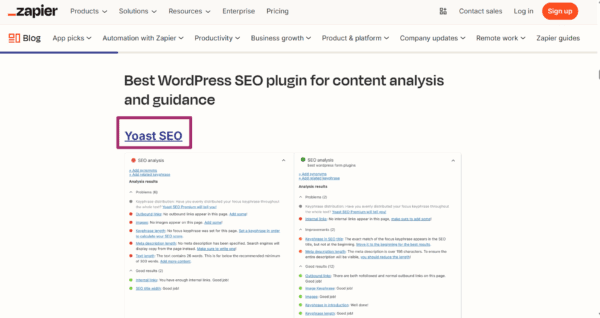
For example, below is a screenshot from a Zapier blog post that links to the Yoast SEO plugin landing page in the blog.
Zapier blog post has linked to the Yoast SEO plugin page
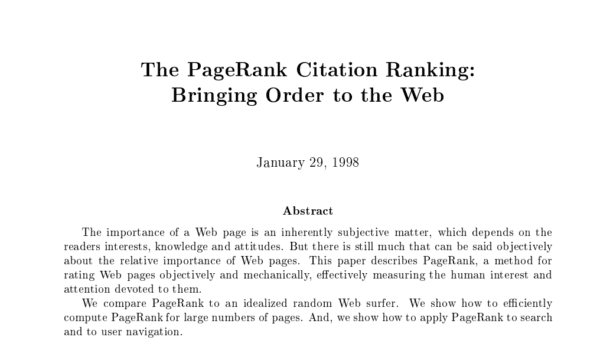
Backlinks aren’t new; they’ve been around for more than two decades. In fact, links were introduced back in 1998 as part of Google’s original PageRank algorithm, making them one of the oldest forms of online citations. Since then, they’ve remained a core ranking factor, shaping how websites compete for visibility.
The PageRank Citation Ranking research paper
Today, backlinks are still considered one of the strongest signals for building authority. Many brands invest in link-building strategies to secure high-quality backlinks, from being cited in well-written pieces to building relationships that earn natural mentions.
Why backlinks matter?
Backlinks are not just about search rankings, but they influence almost every aspect of your website’s visibility and growth. Here’s why they remain essential:
Improve rankings by acting as one of Google’s most important signals, especially when they come from authoritative domains
Drive referral traffic that is often highly targeted and more likely to engage with your content
Boost authority and credibility by showing search engines that trusted sites vouch for your content
Help with faster indexing by guiding search engine crawlers to discover and prioritize your pages
Provide semantic understanding by giving Google context through anchor text and linking page content
What types of backlinks work best?
Not all backlinks are equal, and the ones that matter most usually have these traits:
They come from trusted and authoritative websites
They include your target keyword or a variation of the target keywords in your anchor text
They are topically relevant to your niche
They are ‘dofollow’ links that pass link equity
Backlinks remain important for SEO, but as search evolves, they’re no longer the only way to build authority. This is where AI citations enter the picture.
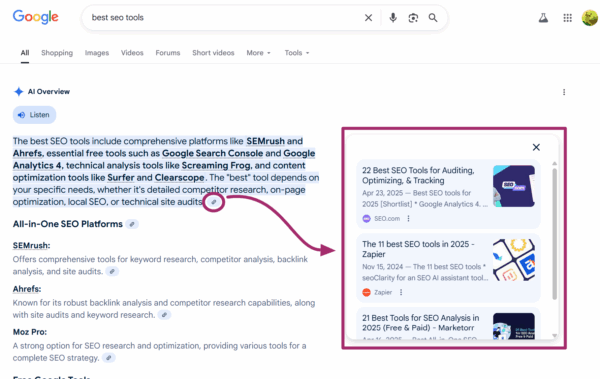
AI citations are references, attributions, or direct links to your content, brand, or product that appear within AI-generated answers. Unlike traditional backlinks that live inside web content, AI citations are shown within AI search results or summaries. They often appear as clickable source cards, numbered footnotes, or links listed below an AI overview.
For example, when Google AI Overviews quotes websites in the AI search box, it cites the original sources that provided the information.
Some other examples of AI citations are:
ChatGPT cites your brand or content as part of its generated answer
Bing Copilot highlights your product as a recommended solution to a user’s query, even if it doesn’t include a direct link
Perplexity.ai lists your research as a supporting source beneath its summarized response
Why AI citations matter for visibility?
AI citations are becoming critical for brand exposure because they align with how people now consume information online:
Search is becoming prompt-driven, which means users type questions or prompts instead of keywords. If AI picks your content to cite, you’re instantly visible to that audience
Discovery is moving from clicks to context. Users may not always visit your website, but being cited ensures your brand becomes part of the answer itself
AI is becoming your audience’s first impression. In many cases, people see the AI summary before they see the actual search results. Appearing as a cited source makes your brand part of that first interaction
Citations boost credibility and authority. When an AI tool references your content, it signals to users that your site is trustworthy enough to be part of the response
Types of AI citations that influence brand visibility
Not all AI citations look the same. Here are the key forms that shape how your brand is discovered:
Name-drop mentions drive brand visibility
When AI directly mentions your brand or product in its response, such as in a recommendation or ‘best of list, you gain instant visibility in front of users without them needing to click further.
Source references build credibility signals
These citations work like the ‘works cited’ section in AI outputs. Tools like Gemini, Perplexity, or Google AI Overviews may display your URL in the list of sources at the bottom of the response. Even if you’re not in the main summary, you benefit from the authority signal.
Quoted passages establish expert authority
When AI pulls exact wording from your content and attributes it to you, it elevates your position as an expert. This type of citation places you in prime digital real estate, signalling leadership in your niche.
Synthesized mentions shape brand narrative
Sometimes AI blends your insights into its summary without naming or linking back to you. While harder to measure, your content still influences the narrative and reinforces brand authority in indirect ways.
AI citations are already reshaping how visibility works in search. Just as backlinks defined SEO two decades ago, citations in AI search are now shaping brand perception by influencing what users see, trust, and remember about your business.
How are AI citations and backlinks different?
So, now that we have an overview of AI citations and backlinks, let’s see how backlinks and LLM citations differ from each other -`
Aspect
Backlinks
AI/LLM Citations
What they are
Hyperlinks from one website to another, long used as a ranking factor in SEO
Mentions, attributions, or references included in AI-generated answers, sometimes with clickable links
Visibility
Usually embedded within web content and not always visible to the average reader
Front-facing and displayed in AI overviews, chatbots, or search snapshots, making them highly visible to users
Trust impact
Boosts site authority indirectly through improved rankings and referral signals
Builds direct credibility by being presented as a trusted source in AI answers or summaries
Selection factors
Determined by domain authority, anchor text, and contextual relevance
A news site links to your product page in an article
Link building strategies, such as outreach, partnerships, and content marketing, to earn quality backlinks
SEO focus
Link building strategies, such as outreach, partnerships, and content marketing, to earn quality backlinks
Creating structured, high-quality, and easily digestible content that AI systems can cite
Effect
Improves rankings and drives referral traffic over time
Enhances brand visibility, authority, and recall directly in AI-powered search experiences
How to earn both?
Earning backlinks and AI citations doesn’t have to be two separate strategies. With the right approach, the same efforts that build traditional authority also make your content LLM crawler-friendly.
Here’s how to do it:
Create deep, original, and useful content
Go beyond rewriting what’s already ranking. Publish original research, case studies, interviews, or unique perspectives that others can’t find elsewhere. AI models pull from fresh, problem-solving content, and so do journalists and bloggers who link naturally.
Write for real questions, not just keywords
Search is shifting from keywords to prompts. Pay attention to what your audience is actually asking on forums, social media, and other platforms. Create conversational, direct answers to those questions. If your content aligns with user prompts, it’s far more likely to be both cited by AI and linked by humans.
Leverage structured data
Use schema markup (FAQ, HowTo, Article, Product) to help AI and search engines clearly understand your content. Proper attribution of authors and sources also increases your chance of being recognized as a credible reference. Structured, transparent content is ‘citation ready.’
Build relationships for natural backlinks
Backlinks remain relationship-driven. Connect with journalists, bloggers, and industry peers through guest posts, expert roundups, or collaborations. AI often mirrors human trust signals, so if authoritative voices link to you, AI is more likely to cite you too.
Focus on clarity and quotability
Make your content easy to lift and reuse. Use short, memorable statements, stats, or definitions that can be quoted word-for-word. Structured layouts like subheadings, lists, and bullet points make content easier to reference by both humans and AI.
Monitor, analyze, and adapt
Don’t just publish; instead, track performance. Use SEO tools for backlinks and platforms to monitor AI citations and understand AI brand perception. If competitors are cited for prompts you should own, study their structure and improve on it. Adjusting based on data helps you stay ahead.
The takeaway: With the right strategies, you don’t need separate plans for backlinks and AI citations. Clear, authoritative, and trustworthy content earns both and multiplies your visibility across search engines and AI-powered platforms.
Exploring Yoast’s AI features
Applying the right strategies for earning backlinks and AI citations is easier when you have the right tools. Yoast’s AI features combine SEO best practices with AI-powered enhancements to make your content clearer, more discoverable, and more effective.
Here’s how they can support your workflow:
Yoast AI Generate
Quickly create multiple, tailored titles and meta descriptions for your pages or blog posts. This ensures your content attracts clicks and stands out in search results. You can select from different options, tweak them to fit your brand voice, and preview how they’ll appear in SERPs.
Yoast AI Summarize
Turn long-form content into scannable, bullet-point takeaways in seconds. This may also help reduce bounce rates by giving readers immediate clarity on what your page delivers. It also makes your content easier for AI systems and Google’s AI Overviews to interpret correctly.
Yoast AI Optimize
Get AI-powered suggestions to improve SEO signals such as keyphrase distribution, sentence length, and readability. You can review, apply, or dismiss recommendations with one click, ensuring that optimization never comes at the cost of your unique editorial voice.
Together, these AI-powered features help you save time, improve clarity, and boost both human and AI-driven visibility, laying the foundation for stronger backlinks and more consistent AI citations.
Backlinks or citations: What truly matters for visibility?
Backlinks have been the backbone of SEO for more than two decades, helping websites climb rankings, build authority, and attract referral traffic. But the rise of AI citations is reshaping how visibility works. When AI systems like Google’s AI Overviews or ChatGPT cite your content, they place your brand directly in front of users at the moment of discovery.
The truth is, it’s not a choice between backlinks and AI citations. Both matter, but in different ways. Backlinks remain critical for SEO growth and authority, while AI citations are quickly becoming the new gatekeepers of brand perception and visibility. The winning strategy is to create content that earns both.
Ahad Qureshi
I’m a Computer Science grad who accidentally stumbled into writing—and stayed because I fell in love with it. Over the past six years, I’ve been deep in the world of SEO and tech content, turning jargon into stories that actually make sense. When I’m not writing, you’ll probably find me lifting weights to balance my love for food (because yes, gym and biryani can coexist) or catching up with friends over a good cup of chai.
SEO for Paws, is a live-streamed fundraiser founded by Anton Shulke, an expert at organizing events, to help a charity close to his heart.
Anton has tirelessly continued his support for his favorite charity, which aids the many pets that were left behind in Kyiv after war broke out in Ukraine. The previous event in March managed to generate approx $7,000 for the worthy cause, with all funds going straight to the shelters where it’s needed.
Anton is well-known for his love of cats. Dynia, who traveled across Europe with Anton’s family after escaping Kyiv, is a regular feature on his social media channels.
Image from Anton Shulke, September 2025
One Cat Turned Into A Shelter Of 50
Among the many pet shelters that SEO For Paws has helped is an apartment run by Alya, who cares for up to 50 animals.
Alya has always cared for animals, and meeting an old, sick cat she called Fox was the start of becoming an organized shelter.
In 2016, she started with five cats living in her apartment, and today has 50 alongside 15 of her grandmother’s cats.
There’s a lot involved in care for this many animals, including the feeding, cleaning, washing litter boxes, replacing litter, and performing hygiene or medical procedures when needed.
Running a home-based shelter is not easy. Sometimes it’s sad, sometimes it’s exhausting. But Alya says that looking around at all the little whiskered faces, the furry bodies sprawled across the furniture, makes it worth it. Giving them a life of warmth, food, and love is worth every challenge.
To keep supporting individuals like Alya, we need your help. You can donate via Anton’s Buy Me a Coffee.
SEO For Paws – Cat Lovers, Dog Lovers, And SEO
The upcoming “SEO for Paws” livestream aims to continue fundraising efforts. The event, which runs from 12:00 p.m. to 4:30 p.m. ET, will offer actionable SEO and digital marketing advice from experts while raising money for the animal shelters.
Headline speakers who have donated their time to support his cause include Andrey Lipattsev, David Carrasco, Olga Zarr, Judith Lewis, James Wirth, Zach Chahalis, Jamie Indigo, and Lee Elliott.
Attendance is free, but participants are encouraged to donate to help the charity.
Event Highlights
Date and Time: September 25, 2025, from 12:00 p.m. to 4:30 p.m. ET.
Access: Free registration with the option to join live, participate in Q&A sessions, and a recording will be made available on YouTube.
Speakers: The live stream will feature SEO and digital marketing experts, who will share actionable insights.
How To Make A Difference
The “SEO for Paws” live stream is an opportunity to make a meaningful difference while listening to excellent speakers.
All money raised is donated to help cats and dogs in Ukraine.
Digital marketers are providing more evidence that Google’s disabling of the num=100 search parameter correlates exactly with changes in Google Search Console impression rates. What looked like reliable data may, in fact, have been a distorted picture shaped by third-party SERP crawlers. It’s becoming clear that squeezing meaning from the top 100 search results is increasingly a thing of the past and that this development may be a good thing for SEO.
Num=100 Search Parameter
Google recently disabled the use of a search parameter that caused web searches to display 100 organic search results for a given query. Search results keyword trackers depended on this parameter for efficiently crawling Google’s search results. By eliminating the search parameter, Google is forcing data providers into an unsustainable position that requires them to scale their crawling by ten times in order to extract the top 100 search results.
Rank Tracking: Fighting To Keep It Alive
Mike Roberts, founder of SpyFu, wrote a defiant post saying that they will find a way to continue bringing top 100 data to users.
His post painted an image of an us versus them moment:
“We’re fighting to keep it alive. But this hits hard – delivering is very expensive.
We might even lose money trying to do this… but we’re going to try anyway.
If we do this alone, it’s not sustainable. We need your help.
This isn’t about SpyFu vs. them.
If we can do it – the way the ecosystem works – all your favorite tools will be able to do it. If nothing else, then by using our API (which has 100% of our keyword and ranking data).”
Rank Tracking: Where The Wind Is Blowing
Tim Soulo, CMO of Ahrefs, sounded more pragmatic about the situation, tweeting that the future of ranking data will inevitably be focused on the Top 20 search results.
“Ramping up the data pulls by 10x is just not feasible, given the scale at which all SEO tools operate.
So the question is:
‘Do you need keyword data below Top 20?’
Because most likely it’s going to come at a pretty steep premium going forward.
Personally, I see it this way:
▪️ Top 10 – is where all the traffic is at. Definitely a must-have.
▪️ Top 20 – this is where “opportunity” is at, both for your and your competitors. Also must-have.
▪️ Top 21-100 – IMO this is merely an indication that a page is “indexed” by Google. I can’t recall any truly actionable use cases for this data.”
Many of the responses to his tweet were in agreement, as am I. Anything below the top 20, as Tim suggested, only tells you that a site is indexed. The big picture, in my opinion, is that it doesn’t matter whether a site is ranked in position 21 or 91; they’re pretty much equivalently suffering from serious quality or relevance issues that need to be worked out. Any competitors in that position shouldn’t be something to worry about because they are not up and coming; they’re just limping their way in the darkness of page three and beyond.
Page two positions, however, provide actionable and useful information because they show that a page is relevant for a given keyword term but that the sites ranked above it are better in terms of quality, user experience, and/or relevance. They could even be as good as what’s on page one but, in my experience, it’s less about links and more often it’s about user preference for the sites in the top ten.
Distorted Search Console Data
It’s becoming clear that search results scraping distorted Google’s Search Console data. Users are reporting that Search Console keyword impression data is significantly lower since Google blocked the Num=100 search parameter. Impressions are the times when Google shows a web page in the search results, meaning that the site is ranking for a given keyword phrase.
SEO and web developer Tyler Gargula (LinkedIn profile) posted the results of an analysis of over three hundred Search Console properties, showing that 87.7% of the sites experienced drops in impressions. 77.6% of the sites in the analysis experienced losses in query counts, losing visibility for unique keyword phrases.
“Keyword Length: Short-tail and mid-tail keywords experienced the largest drops in impressions, with single word keywords being much lower than I anticipated. This could be because short and mid-tail keywords are popular across the SEO industry and easier to track/manage within popular SEO tracking tools.
Keyword Ranking Positions: There has been reductions in keywords ranking on page 3+, and in turn an increase in keywords ranking in the top 3 and page 1. This suggests keywords are now more representative of their actual ranking position, versus receiving skewed positions from num=100.”
Google Is Proactively Fighting SERP Scraping
Disabling the num=100 search parameter is just the prelude to a bigger battle. Google is hiring an engineer to assist in statistical analysis of SERP patterns and to work together with other teams to develop models for combating scrapers. It’s obvious that this activity negatively affects Search Console data, which in turn makes it harder for SEOs to get an accurate reading on search performance.
What It Means For The Future
The num=100 parameter was turned off in a direct attack on the scraping that underpinned the rank-tracking industry. Its removal is forcing the search industry to reconsider the value of data beyond the top 20 results. This may be a turning point toward better attribution and and clearer measures of relevance.
Hydrogen is sometimes held up as a master key for the energy transition. It can be made using several low-emissions methods and could play a role in cleaning up industries ranging from agriculture and chemicals to aviation and long-distance shipping.
This moment is a complicated one for the green fuel, though, as a new report from the International Energy Agency lays out. A number of major projects face cancellations and delays, especially in the US and Europe. The US in particular is seeing a slowdown after changes to key tax credits and cuts in support for renewable energy. Still, there are bright spots for the industry, including in China, and new markets could soon become crucial for growth.
Here are three things to know about the state of hydrogen in 2025.
1. Expectations for annual clean hydrogen production by 2030 are shrinking, for the first time.
While hydrogen has the potential to serve as a clean fuel, today most is made with processes that use fossil fuels. As of 2025, about a million metric tons of low-emissions hydrogen are produced annually. That’s less than 1% of total hydrogen production.
In last year’s Global Hydrogen Report, the IEA projected that global production of low-emissions hydrogen would grow to as high as 49 million metric tons annually by 2030. That prediction has been steadily climbing since 2021, as more places around the world sink money into developing and scaling up the technology.
In the 2025 edition, though, the IEA’s production prediction had shrunk to 37 million metric tons annually by 2030.
That’s still a major expansion from today’s numbers, but it’s the first time the agency has cut its predictions for the end of the decade. The report cited the cancellations of both electrolysis projects (those that use electricity to generate hydrogen) and carbon capture projects as reasons for the pullback. The cancelled and delayed projects included sites across Africa, the Americas, Europe, and Australia.
2. China is dominating production today and could produce competitively cheap green hydrogen by the end of the decade.
Speaking of electrolysis projects, China is the driving force in manufacturing and development of electrolyzers, the devices that use electricity to generate green hydrogen, according to the new IEA report. As of July 2025, the country accounted for 65% of the installed or almost installed electrolyzer capacity in the world. It also manufactures nearly 60% of the world’s electrolyzers.
A major barrier for clean hydrogen today is that dirty methods based on fossil fuels are just so much cheaper than cleaner ones.
But China is well on its way to narrowing that gap. Today, it’s roughly three times more expensive to make and install an electrolyzer anywhere else in the world than in China. The country could produce green hydrogen that’s cost-competitive with fossil hydrogen by the end of the decade, according to the IEA report. That could make the fuel an obvious choice for both new and existing uses of hydrogen.
3. Southeast Asia could be a major emerging market for low-emissions hydrogen.
One region that could become a major player in the green hydrogen market is Southeast Asia. The economy is growing fast, and so is energy demand.
There’s an existing market for hydrogen in Southeast Asia already. Today, the region uses about 4 million metric tons of hydrogen annually, largely in the oil refining industry and the chemical business, where it is used to make ammonia and methanol.
International shipping is also concentrated in the region—the port of Singapore supplied about one-sixth of all the fuel used in global shipping in 2024, more than any other single location. Today, that total consists almost exclusively of fossil fuels. But there’s been work to test cleaner fuels, including methanol and ammonia, and interest in shifting to hydrogen in the longer term.
Clean hydrogen could slot into these existing industries and help cut emissions. There are 25 projects under development right now in the region, though additional support for renewables will be crucial to getting significant capacity up and running.
Overall, hydrogen is getting a reality check, revealing problems cutting through the hype we’ve seen in recent years. The next five years will tell whether the fuel can live up to the still-lofty hopes.
This article is from The Spark, MIT Technology Review’s weekly climate newsletter. To receive it in your inbox every Wednesday, sign up here.
This is today’s edition of The Download, our weekday newsletter that provides a daily dose of what’s going on in the world of technology.
AI-designed viruses are here and already killing bacteria
Artificial intelligence can draw cat pictures and write emails. Now the same technology can compose a working genome.
A research team in California says it used AI to propose new genetic codes for viruses—and managed to get several of them to replicate and kill bacteria.
The work, described in a preprint paper, has the potential to create new treatments and accelerate research into artificially engineered cells. But experts believe it is also an “impressive first step” toward AI-designed life forms. Read the full story.
—Antonio Regalado
Clean hydrogen is facing a big reality check
Hydrogen is sometimes held up as a master key for the energy transition. It can be made using several low-emissions methods and could play a role in cleaning up industries ranging from agriculture to aviation to shipping.
This moment is a complicated one for the green fuel, though, as a new report from the International Energy Agency lays out. A number of major projects face cancellations and delays. The US in particular is seeing a slowdown after changes to key tax credits and cuts in support for renewable energy.
This article is from The Spark, MIT Technology Review’s weekly climate newsletter. To receive it in your inbox every Wednesday, sign up here.
The must-reads
I’ve combed the internet to find you today’s most fun/important/scary/fascinating stories about technology.
1 Meta’s new smart glasses have a tiny screen Welcome back, Google Glass. (NYT $) + Mark Zuckerberg says the devices are our best bet at unlocking “superintelligence.” (FT $) + He’s also refusing to let his metaverse dream die. (WP $) + What’s next for smart glasses. (MIT Technology Review)
2 DeepSeek writes flawed code for groups China disfavors Researchers found that it produced code with major security weaknesses when told it was for the banned spiritual movement Falun Gong. (WP $)
3 The CDC is a mess Its advice can no longer be trusted. Here’s where to turn instead. (The Atlantic $) + Its ousted director claims RFK Jr pressured her to approve vaccine changes. (Wired $) + Why childhood vaccines are a public health success story. (MIT Technology Review)
4 Google’s gen-AI image model Nano Banana is a global smash hit Particularly in India. (TechCrunch) + Nvidia’s Jensen Huang really loves it, too. (Wired $)
5 OpenAI has found a way to reduce its models’ scheming But they weren’t able to eradicate it completely. (ZDNET) + AI systems are getting better at tricking us. (MIT Technology Review)
6 Inside Texas’ efforts to keep vector-borne diseases at bay The Arbovirus-Entomology Laboratory analyzes mosquitos, but resources are drying up. (Vox) + Brazil is fighting dengue with bacteria-infected mosquitos. (MIT Technology Review)
7 Financial AI advisors are coming But companies are still cautious about rolling them out at scale. (WSJ $) + Warning: ChatGPT’s advice may not necessarily be financially sound. (NYT $) + Your most important customer may be AI. (MIT Technology Review)
8 China’s flying car market is raring to take off Hovering taxis above the city of Guangzhou could soon become commonplace. (FT $) + Eek—a pair of flying cars collided during an airshow earlier this week. (CNN) + These aircraft could change how we fly. (MIT Technology Review)
9 Samsung’s US fridges will soon display ads Wow, that’s not depressing at all. (The Verge)
10 Online dating is getting even worse And AI is to blame. (NY Mag $)
Quote of the day
“How do educators have any real choice here about intentional use of AI when it is just being injected into educational environments without warning, without testing and without consultation?”
—Eamon Costello, an associate professor at Dublin City University, tells the Washington Post why he’s against Google adding a ‘homework help’ button to its Chrome browser.
One more thing
Your boss is watching
Working today—whether in an office, a warehouse, or your car—can mean constant electronic surveillance with little transparency, and potentially with livelihood-ending consequences if your productivity flags.
But what matters even more than the effects of this ubiquitous monitoring on privacy may be how all that data is shifting the relationships between workers and managers, companies and their workforce. It’s a huge power shift that may require new policies and protections. Read the full story.
—Rebecca Ackermann
We can still have nice things
A place for comfort, fun and distraction to brighten up your day. (Got any ideas? Drop me a line or skeet ’em at me.)
+ Find yourself feeling sleepy every afternoon? Here’s how to fight the post-lunch slump. + Life lessons from a London graffiti artist. + If you’re in need of a laugh, a good comedy is a great place to start. + Yellowstone’s famous hot springs are under attack—from tourists’ hats.
This week has been an eventful one for America’s public health agency. Two former leaders of the US Centers for Disease Control and Prevention explained the reasons for their sudden departures from the agency in a Senate hearing. And they described how CDC employees are being instructed to turn their backs on scientific evidence.
The CDC’s former director Susan Monarez and former chief medical officer Debra Houry took questions from a Senate committee on Wednesday. They painted a picture of a health agency in turmoil—and at risk of harming the people it is meant to serve.
On Thursday, an advisory CDC panel that develops vaccine guidance met for a two-day discussion on multiple childhood vaccines. During the meeting, which was underway as The Checkup went to press, members of the panel were set to discuss those vaccines and propose recommendations on their use.
Monarez worries that access to childhood vaccines is under threat—and that the public health consequences could be dire. “If vaccine protections are weakened, preventable diseases will return,” she said.
As the current secretary of health and human services, Robert F. Kennedy Jr. oversees federal health and science agencies that include the CDC, which monitors and responds to threats to public health. Part of that role involves developing vaccine recommendations.
As we’venotedbefore, RFK Jr. has long been a prominent critic of vaccines. He has incorrectly linked commonly used ingredients to autism and made other incorrect statements about risks associated with various vaccines.
Still, he oversaw the recruitment of Monarez—who does not share those beliefs—to lead the agency. When she was sworn in on July 31, Monarez, who is a microbiologist and immunologist, had already been serving as acting director of the agency. She had held prominent positions at other federal agencies and departments too, including the Advanced Research Projects Agency for Health (ARPA-H) and the Biomedical Advanced Research and Development Authority (BARDA). Kennedy described her as “a public health expert with unimpeachable scientific credentials.”
His opinion seems to have changed somewhat since then. Just 29 days after Monarez took on her position, she was turfed out of the agency. And in yesterday’s hearing, she explained why.
On August 25, Kennedy asked Monarez to do two things, she said. First, he wanted her to commit to firing scientists at the agency. And second, he wanted her to “pre-commit” to approve vaccine recommendations made by the agency’s Advisory Committee on Immunization Practices (ACIP), regardless of whether there was any scientific evidence to support those recommendations, she said. “He just wanted blanket approval,” she said during her testimony.
She refused both requests.
Monarez testified that she didn’t want to get rid of hardworking scientists who played an important role in keeping Americans safe. And she said she could not commit to approving vaccine recommendations without reviewing the scientific evidence behind them and maintain her integrity. She was sacked.
Those vaccine recommendations are currently under discussion, and scientists like Monarez are worried about how they might change. Kennedy fired all 17 members of the previous committee in June. (Monarez said she was not consulted on the firings and found out about them through media reports.)
“A clean sweep is needed to reestablish public confidence in vaccine science,” Kennedy wrote in a piece for the Wall Street Journal at the time. He went on to replace those individuals with eight new members, some of whom have been prominent vaccine critics and have spread misinformation about vaccines. One later withdrew.
That new panel met two weeks later. The meeting included a presentation about thimerosal—a chemical that Kennedy has incorrectly linked to autism, and which is no longer included in vaccines in the US—and a proposal to recommend that the MMRV vaccine (for measles, mumps, rubella, and varicella) not be offered to children under the age of four.
All 12 members are convening for a meeting that runs today and tomorrow. At that meeting, members will propose recommendations for the MMRV vaccine and vaccines for covid-19 and hepatitis B, according to an agenda published on the CDC website.
Those are the recommendations for which Monarez says she was asked to provide “blanket approval.” “My worst fear is that I would then be in a position of approving something that reduces access [to] lifesaving vaccines to children and others who need them,” she said.
We don’t yet know what those recommendations will be. But if they are approved, they could reshape access to vaccines for children and vulnerable people in the US. As six former chairs of the committee wrote for STAT: “ACIP is directly linked to the Vaccines for Children program, which provides vaccines without cost to approximately 50% of children in the US, and the Affordable Care Act that requires insurance coverage for ACIP-recommended vaccines to approximately 150 million people in the US.”
Drops in vaccine uptake have already contributed to this year’s measles outbreak in the US, which is the biggest in decades. Two children have died. We are already seeing the impact of undermined trust in childhood vaccines. As Monarez put it: “The stakes are not theoretical.”
This article first appeared in The Checkup, MIT Technology Review’s weekly biotech newsletter. To receive it in your inbox every Thursday, and read articles like this first, sign up here.
Visa’s new fraud monitoring framework gets its teeth on October 1, 2025, when merchants’ acquiring banks are held to a new chargeback and fraud standard and a new fee structure.
The Visa Acquirer Monitoring Program replaced two Visa fraud and chargeback programs in April 2025, introducing a combined measure called the VAMP ratio.
Visa granted acquiring banks and, indirectly, merchants six months to prepare for VAMP ratio enforcement and its potential fees. The “advisory” period ends September 30, 2025, and some acquirers could incur a $10 fee (or more) per chargeback. VAMP enforcement, however, rolls out in phases through 2026.
Visa estimates the new VAMP framework could help acquirers detect four times more fraud than the old system, potentially saving more than $2.5 billion in annual losses.
Visa’s VAMP framework aims to reduce credit card fraud.
Indirect Impact
The VAMP targets acquirers — the banks, processors, and payment facilitators that provide merchants with access to the Visa network. Visa imposes penalties on these acquirers since it contracts with those companies, not merchants directly.
For enterprise-level ecommerce or omnichannel retail businesses, this acquirer distinction could matter less than one might think.
Acquirers are responsible for their merchant portfolios and are likely to hold them to VAMP standards. Thus, if a merchant’s dispute or fraud rates climb, the acquirer may respond with higher fees, stricter rules, or even account termination as a last resort. (As an aside, Shopify Payments is an acquirer and thus subject to VAMP.)
VAMP Ratio
The VAMP ratio is the program’s key metric. Visa calculates the ratio by adding reported fraud cases (known as TC40s) and chargeback cases (TC15s), then dividing by the number of settled Visa transactions.
Visa issues TC40 reports when a shopper reports an unauthorized charge, regardless of whether the claim evolves into a full-blown dispute.
Conversely, a TC15 or chargeback is a transaction dispute that may or may not be related to a fraud claim.
One wrinkle is that VAMP counts fraud-related chargebacks twice — once as fraud (TC40) and once as a dispute (TC15).
This double-counting makes VAMP ratios relatively more strict than the old system. Visa’s reported rationale is that fraud, which escalates into a chargeback, is doubly damaging and should carry more weight.
So-called friendly fraud, when a customer lies about not receiving goods, would also, unfortunately, be counted twice.
Thresholds
VAMP has three primary thresholds at the time of writing.
Acquirer Above Standard includes processors with a portfolio-wide VAMP ratio of 0.50% or higher. Acquiring banks in this category will be subject to a Visa penalty of $5 per fraudulent or disputed transaction, effective January 1, 2026.
Acquirer Excessive describes processors with a portfolio VAMP ratio of 0.70% or higher. These acquirers will pay $10 per dispute, effective on October 1, 2025.
Merchant Excessive is the VAMP threshold for individual merchants within the acquirer’s portfolio that have a ratio of 2.20% or higher, with at least 1,500 fraud and dispute transactions in a month. Acquirers must pay an additional $10 per disputed transaction for these sellers.
In short, Visa wants acquirers to take chargebacks and payment card fraud much more seriously.
Enumeration Attacks
VAMP also monitors and penalizes acquirers for merchants that fail to prevent large-scale “enumeration” or card number testing attacks, where fraudsters run thousands of authorization attempts to guess card details.
Acquirers are subject to fines or other actions when a merchant’s enumeration attempts exceed 300,000 per month or when 20% of total authorization requests come from fraudsters.
Relatively simple steps, such as CAPTCHA tests or limits on authorization attempts, should thwart most attacks.
Impact
VAMP applies only to sellers with 1,500 or more disputed charges (TC40 plus TC15) per month. Thus most ecommerce SMBs will continue to pay $15 to $30 for a chargeback but will not incur further Visa monitoring.
Large retailers, however, may want to monitor their VAMP ratios to avoid warnings, reserve requirements, or even offboarding from their acquirer.
In general, merchants with no significant issues under Visa’s fraud and chargeback programs are likely to experience minimal impact from VAMP.
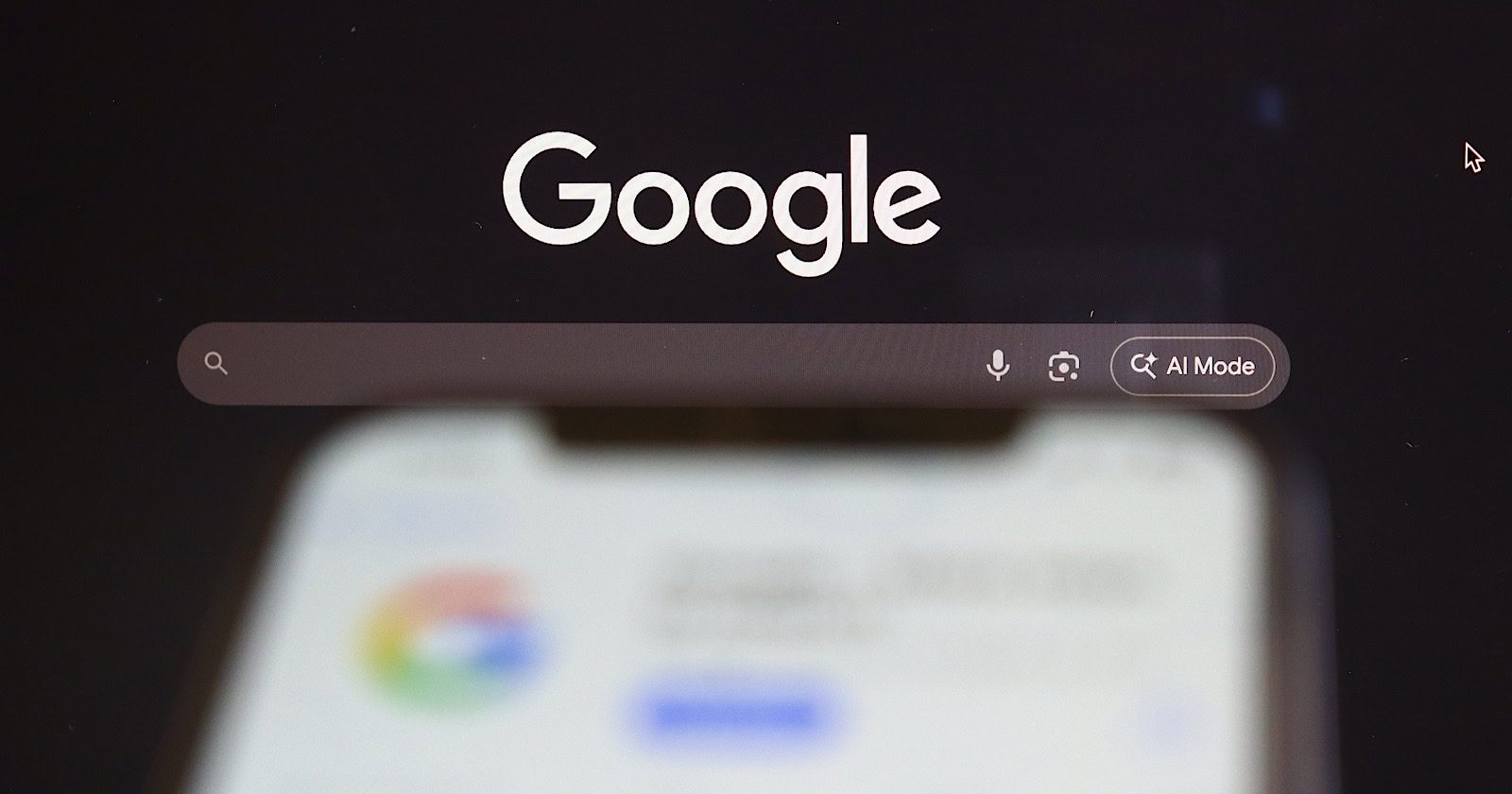
Google is rolling out AI Mode to the address bar in Chrome for U.S. users.
This move is part of a series of AI updates, including Gemini in Chrome, page-aware question prompts, improved scam protection, and instant password changes.
See Google’s launch video below:
What’s New
Google Chrome will enable you to access AI Mode directly from the search bar on desktop, ask follow-up questions, and explore the web more in-depth.
Additionally, Google is introducing contextual prompts that are connected to the page you’re currently viewing. When you use these prompts, an AI Overview will appear on the right side of the screen, allowing you to continue using AI Mode without leaving the page.
For now, this feature is available in English in the U.S., with plans to expand internationally.
Gemini In Chrome
Gemini in Chrome is rollout out to to Mac and Windows users in the U.S.
You can ask it to clarify complex information across multiple tabs, summarize open tabs, and consolidate details into a single view.
With integrations with Calendar, YouTube, and Maps, you can jump to a specific point in a video, get location details, or set meetings without switching tabs.
Google plans to add agentic capabilities in the coming months. Gemini will be able to perform tasks for you on the web, such as booking appointments or placing orders, with the option to stop it at any time.
Regarding availability, Google notes that business access will be available “in the coming weeks” through Workspace with enterprise-grade protections.
Security Enhancements
Enhanced protection in Safe Browsing now uses Gemini Nano to detect tech-support-style scams, making browsing safer. Google is also working on extending this protection to block fake virus alerts and fake giveaways.
Chrome is using AI to help reduce annoying spammy site notifications and to lower the prominence of intrusive permission prompts.
Additionally, Chrome will soon serve as a password helper, automatically changing compromised passwords with a single click on supported sites.
Why This Matters
Adding AI Mode to the omnibox makes it easier to ask conversational questions and follow-ups.
Content that answers related questions and compares options side by side may align better with these types of searches. Page-aware prompts also create new ways to explore related topics from article pages, which could change how people click through to other content.
Looking Ahead
Google frames this as “the biggest upgrade to Chrome in its history,” with staged rollouts and more countries and languages to come.
Google is expanding its store widget program into three eligibility-based tiers that you can embed on your site to display ratings, policies, and reviews, helping customers make informed decisions.
“When shoppers are online, knowing which store to buy from can be a tough decision. The new store widget powered by Google brings valuable information directly to a merchant’s website, which can turn shopper hesitation into sales. It addresses two fundamental challenges ecommerce retailers face: boosting visibility and establishing legitimacy.”
What’s New
Google now offers three versions of the widget, shown based on your current standing in Merchant Center: Top Quality store widget, Store rating widget, and a generic store widget for stores still building reputation.
This replaces the earlier single badge and expands access to more merchants.
Google’s announcement continues:
“It highlights your store’s quality to shoppers by providing visual indicators of excellence and quality. Besides your store rating on Google, the widget can also display other important details, like shipping and return policies, and customer reviews. The widget is displayed on your website and stays up to date with your current store quality ratings.
Google says sites using the widget saw up to 8% higher sales within 90 days compared to similar businesses without it.
Implementation
You add the widget by embedding Google’s snippet on any page template, similar to adding analytics or chat tools.
It’s responsive and updates automatically from your Merchant Center data, which means minimal maintenance after setup.
Check eligibility in Google Merchant Center, then place your badge wherever reassurance can influence conversion.
Context
Google first announced a store widget last year. Today’s update introduces the three-tier structure, which is why Google is framing it as a “new” development.
Why This Matters
Bringing trusted signals from Google onto your product and checkout pages can reduce hesitation and help close sales that would otherwise bounce.
You can surface store rating, shipping and returns, and recent reviews without manual updates, since the widget reflects your current store quality data from Google.