Industry Pioneer Reveals Why SEO Isn’t Working & What To Refocus On via @sejournal, @theshelleywalsh

Bill Hunt is a true pioneer in the industry, with more than 25 years of experience working on the websites of some of the largest multinationals. Having built two large digital/search agencies, one of which was acquired by Ogilvy, Bill has now moved into consulting focused on repositioning search to leverage marketing for shareholder growth.

His approach is not myopic surface-level SEO, but as an enterprise specialist who looks at what users actually want from their online experience. He connects the dots between search visibility, user experience, and business value for real results.

Bill is currently writing a series for Search Engine Journal about connecting search visibility to business value, and I spoke to him for IMHO to find out why he thinks SEO is currently not working.

“SEOs are creatures of habit. To succeed now, we need to unlearn and relearn how discovery actually works.”

The Real Problems Aren’t What You Think

I started out by asking Bill why SEO isn’t working, and his key message was not that SEO is broken, but there is paralysis, distraction from AI hype, and a neglect of fundamentals:

“I think there are three key problems right now. One is paralysis. We see that clients put search on pause, especially organic search, because they just don’t know what to do.

The second is the distraction with all the hype around the AI thing.

I mean, there’s a different acronym every day. So, which do we do? Are we chasing answers? Are we doing LLM index files or whatever craziness comes out?

And then the third is that there’s such a distraction from all this that a lot of the fundamentals aren’t being covered. And I think that’s where the problem is.”

Bill emphasized that the impact varies significantly by business type. Information-based businesses have been significantly affected because AI now directly answers queries that previously drove traffic to their sites. However, many other businesses might not be negatively impacted if they understand what’s actually changed.

Three Fundamental Shifts To Pay Attention To

Bill went on to talk about how three core changes have reshaped search, and understanding them is crucial for adaptation:

  • Intent understanding has evolved: Everything is about what did they search for? What are they hoping to see?
  • Friction must be removed: Platforms reward the path of least resistance.
  • Monetization is leading the way: It’s not just about helpful, but also about profitable.

Bill used an example from his work with Absolut Vodka.

“When I was working with Absolut Vodka, we had a drink site that was really just an awareness driver, and every month we sat down and we looked at Google’s search results and said, ‘If we were Google, what would we be changing around drinks or recipes or things like that?’

And so, by looking at the results, we could see, little by little, [that] somebody [was] looking for yellow cocktails. What should Google present?”

Rather than just optimizing for rankings, his team studied Google’s interface changes and adapted their visual content accordingly.

“We started focusing on the drink, bringing it front and center, amplifying the colors, the ingredients, and more and more people clicked.

We were generating millions and millions of visits because every step that Google was making to create a different user experience, we were trying to accommodate it.”

Bill believes that the idea of intent is still crucial. Considering how users just want to get to an answer, we must think about how they discover information and how we then present information to them.

“I think that’s really it in a nutshell. All of this change has paralyzed us and distracted us, and we need to recenter and refocus.

And that’s really a key part of what this series [at SEJ] is about: How do we refocus? How do we rethink this, both from a strategic point of view, from a shareholder value standpoint, and from a simple workflow standpoint?”

AI Tools Reward Consensus, Not Originality

In a recent LinkedIn post, Bill stated that AI tools don’t reward originality; they reward consensus.

As generative AI becomes embedded into how users explore and consume information, Bill warned against assuming that originality is enough to get discovered.

“AI systems synthesize consensus. If you’re saying something radically different, you won’t show up unless you connect it to what people already know.”

So, I asked Bill if you are creating this original content, how do you teach the systems to see you?

Bill’s advice is that to succeed in AI search environments, businesses need to:

  • Link new ideas to familiar terms.
  • Reflect user language and legacy concepts.
  • Be explicit in bridging the gap between old and new methods.

Otherwise, you risk being invisible to LLMs and answer engines that rely on summarizing well-established viewpoints.

“If you’re stating that you’re radically different, you’re not going to be shown because you’re radically different. So, you have to connect, and this is what I put in that article. You need to connect back to the consensus idea.

If you’re saying you’ve got a new way to cut bread, you have to talk about the old way to cut bread and connect it to a more efficient or easier way to do it.”

Is Your Product Even Discoverable?

The most practical insight from our conversation surrounded how people can discover your brand or your product.

Historically, keyword research has been focused on connecting to searches that have existing search volume. But, if somebody doesn’t know a product exists to solve a problem, how would they search for it?

“I used to tell companies, if somebody doesn’t know a product exists to solve a problem, how would they search for it?

They would use the problem or symptoms of the problem. If they know a product exists but don’t know you exist, how would they search for it?”

Bill recommended that you run searches for problems related to your product and see if you show up. Search as if you know the solution exists, but not your brand.

And if you don’t surface, ask yourself why not?

“Take the symptoms people have, go into any tool you want, Google, Perplexity, ChatGPT, Gemini, and search and see if you come up.

If you don’t come up, the very next question you should ask is, ‘Why isn’t this product or this company in your result set?’ That’s probably the single most illuminating thing a senior executive can do…

When it tells you that you don’t have the answer, your very next step is, ‘How do we then create the answer, and then how do we get it into these?’”

This kind of query-path analysis is more revealing than traditional keyword research because it aligns with how people actually search, especially in AI environments that interpret broader queries.

Moving Forward: Back To Basics

Despite all the AI disruption, Bill recommends a return to fundamental principles. Companies need to ensure they’re indexable, crawlable, and seen as authorities in their space. The same core elements that have always mattered for search visibility.

“Who got cited? Who was number one? And Larry and Sergey said, ‘Well, if they’re cited most frequently as a source for a question, shouldn’t they be?’”

The key difference is that these fundamentals now operate in an AI-enhanced environment where understanding user intent and creating relevant, engaging content matter more than ever.

And if you want to find answers, ask the tools; they can tell you everything you need to know.

“I would tell everybody to go do that query and do the follow-up saying why aren’t we there? And you’d be surprised how efficient these tools are at telling you what you need to do to close that gap.”

Rather than panicking about AI destroying SEO, organizations should focus on understanding what’s actually changed and adapting their strategies accordingly.

The fundamentals remain solid; they just need to be applied in new ways.

You can watch the full interview with Bill Hunt below:

Don’t miss the new series that Bill is currently writing for SEJ about how you can connect the dots between search visibility, user experience, and business value that will not only help CMOs but also help search marketers get buy-in from CMOs.

Thank you to Bill Hunt for offering his insights and being my guest on IMHO.

More Resources: 


Featured Image: Shelley Walsh/Search Engine Journal

Should I Still Invest In SEO? (Yes, But Not In The Old Way) via @sejournal, @TaylorDanRW

How users are starting to interact with the internet has changed and soon will be unrecognizable from the internet we’ve grown comfortable with.

With Google integrating AI-powered features into Search, and the rise of third-party large language models (LLMs), it’s a different search experience.

Over the past few months, many CMOs I’ve spoken with, as well as business founders, have been asking the same questions around continuing investment in different marketing channels, including continuing investment in SEO.

I was fortunate to attend and speak at Google’s Search Central Live in Bangkok last week, and during the opening keynote, there was one snippet that has stood out for me that goes a long way to answering this question:

Traffic patterns may fluctuate: Long-held traffic patterns are likely to fluctuate, creating new opportunities for all sites. Past success on Search may not guarantee future success.

Should I Still Invest In SEO?

SEO is one of the few marketing channels that compound over time and investment.

Paid campaigns stop the moment you pause spending, but a strong organic program can keep driving traffic, leads, and sales long after it’s been implemented.

Often, it performs better over time, depending on how your competitors react.

That compounding effect is what separates SEO from most other digital investments. Every decent piece of content, every technical fix, every solid backlink adds to a base that grows stronger the more you invest.

SEO isn’t dead. It’s evolving.

That means fast, mobile-first websites, content demonstrating expertise and experience, clean internal links, and a solid structure; content that plays well with AI summaries and result variations, and more than anything, seeing SEO as part of your brand presence, not just a traffic lever.

Why Some Brands Are Pulling Back

There’s a rising anxiety in the air, caused by a number of unknowns and changes in our data, such as the great decoupling we’re witnessing.

Some CMOs are questioning whether SEO and content are still worth the effort.

There are a few reasons for this, namely that the SERP has changed dramatically. AI Overviews and expanded result features push the traditional organic links further down the page.

Some brands see less return from the same level of effort, and the result is frustration and, in some cases, panic.

At the same time, reporting is harder and attribution is messier.

It’s not always easy to show exactly where SEO contributes, especially when its influence spans across discovery, consideration, and conversion, which can make it a target when budgets begin to tighten.

Some teams are also misreading the signals, but in reality (in my opinion), we’re using the wrong measurement techniques, and measuring the new Search ecosystem by the standards of the old.

They assume that if fewer people click, fewer people are engaging, but visibility itself is valuable. Just because someone doesn’t click today doesn’t mean they won’t take action tomorrow.

In my opinion, pulling back now is the wrong move. Organic search remains the biggest visibility lever on the web, and when you stop investing in content, you’re choosing to disappear.

In an AI-first search world, visibility starts before the click.

The brands that stay active will be the ones users see and remember. This is no longer just about blue links and last click, it’s about brand recognition and building visibility across the multiple faces of the modern Search ecosystem.

Content’s Evolving Role In SEO

Top-of-funnel traffic might not be what it once was, but it’s still powerful.

Being visible in an AI Overview or response to a generic query still influences perception. It can lead to brand searches, direct visits, or conversions later down the line.

I don’t think the metric is how many people see your result. It’s how many go on to take meaningful action. SEO now runs across the funnel, and across formats. It’s not just 10 links on a page anymore.

Content has to work harder. A single piece might need to satisfy different intents, answer multiple questions, or show up in several places, from featured snippets, videos, product results, or AI-generated outputs.

SEO And AI

AI-powered search is splitting discovery across more surfaces. It’s not just Google anymore. It’s ChatGPT, Perplexity, Gemini, and others.

To stay visible in that world, you still need content. In fact, content is the price of admission. If you’re not producing it, you’re not part of the conversation.

SEO now includes shaping how AI systems understand your brand. If you’re not contributing to the information ecosystem, someone else is deciding your narrative.

Strategic SEO Investment

Smart SEO means:

  • Durable content that keeps working.
  • Authority-building through links, mentions, and structure.
  • A balance between fast wins and long-term gains.
  • Understanding and answering layered queries that do more than just inform – they convert.

For bigger businesses with multiple brands or sites, there’s an extra edge. Google and AI models understand entity relationships.

Coordinated content can strengthen authority across brands, especially in a world where AI pulls from consensus.

So, Should You Still Invest In SEO?

If you’re asking whether SEO still works, the answer is yes, but not in the old way.

It’s not just a traffic source; it’s becoming your visibility layer for both traditional Search, Google’s AI features, and many LLMs.

It’s fast becoming a lever for reputation and brand visibility, and a strategic asset as well as a marketing channel.

The real question is whether you can afford not to invest.

Paid traffic dries up the second you stop paying. Organic builds on itself. It’s one of the few channels that gives you more tomorrow for what you do today.

As AI changes how search looks and works, SEO stays relevant because it supports every layer of digital presence. It creates a base you own, not rent.

The brands that win next are the ones that stay active. The ones that keep showing up, even when the rules shift.

Content isn’t just about clicks. It’s about influence. It’s about being there when people are asking the big questions, wherever they’re asking them.

In a shifting landscape, SEO gives you something stable. A long-term play that doesn’t vanish when your budget runs out. For businesses planning beyond the quarter, it’s still one of the smartest bets you can make.

More Resources:


Featured Image: G-Stock Studio/Shutterstock

Vulnerability Uncovered In Wix Vibe Coding Platform via @sejournal, @martinibuster

Cloud security company Wiz discovered a critical flaw in Wix’s Base44 vibe coding platform that enabled attackers to bypass authentication and gain access to private enterprise applications. The relative simplicity of finding what should have been a secret app ID number, and using it to gain access, made the vulnerability a serious concern.

Exposed Sensitive Identification Number

An apparently randomly generated identification number, called an app_id, was embedded in public-facing paths such as the application URL and the manifest.json file. Attackers could use that data to generate a verified account, even when user registration was disabled. This bypassed the platform’s access controls, including Single Sign-On (SSO), which many organizations use for enterprise security.

The Wiz security report notes how easy it was to find the sensitive app_id numbers:

“When we navigate to any application developed on top of Base44, the app_id is immediately visible in the URI and manifest.json file path, all applications have their app_ids value hardcoded in their manifest path: manifests/{app_id}/manifest.json.”

Creating A Rogue Account Was Relatively Trivial

The vulnerability did not require privileged access or deep technical expertise. Once an attacker identified a valid app_id, they could use tools like the open source Swagger-UI to register a new account, receive a one-time password (OTP) via email, and verify the account without restriction.

From there, logging in through the application’s SSO flow granted full access to internal systems, despite the original access being restricted to specific users or teams. This process exposed a serious flaw in the platform’s assumption that the app_id would not be tampered with or reused externally.

Authentication Flaw Risked Exposure of Sensitive Data

Many of the affected apps were built using the popular Base44 vibe coding platform for internal use, supporting operations such as HR, chatbots, and knowledge bases. These systems contained personally identifiable information (PII) and were used for HR operations. The exploit enabled attackers to bypass identity controls and access private enterprise applications, potentially exposing sensitive data.

Wix Fixes Flaw Within 24 Hours

The cloud security company discovered the flaw by using a methodical process of examining public information for potential weak points, eventually culminating in finding the exposed app_id numbers, and from there creating the workflow for generating access to accounts. They next contacted Wix, which immediately fixed the issue.

According to the report published by the security company, there is no evidence that the flaw was exploited, and the vulnerability has been fully addressed.

Threat To Entire Ecosystems

The Wiz security report noted that the practice of vibe coding is proceeding at a rapid pace and with not enough time to address potential security issues, expressing the opinion that it creates “systemic risks” not just to individual apps but to “entire ecosystems.”

Why Did This Security Incident Happen?

Wix States It Is Proactive On Security

The report published a statement from Wix that states that they are proactive about security:

“We continue to invest heavily in strengthening the security of all products and potential vulnerabilities are proactively managed. We remain committed to protecting our users and their data.”

Security Company Says Discovery Of Flaw Was Simple

The report by Wiz describes the discovery as a relatively simple matter, explaining that they used “straightforward reconnaissance techniques,” including “passive and active discovery of subdomains,” which are widely accessible methods.

The security report explained that exploiting the flaw was simple:

“What made this vulnerability particularly concerning was its simplicity – requiring only basic API knowledge to exploit. This low barrier to entry meant that attackers could systematically compromise multiple applications across the platform with minimal technical sophistication.”

The existence of that report, in itself, raises the concern that if discovering the issue was “straightforward” and exploiting it had a “low barrier to entry,” how is it that Wix was proactive and yet this was not discovered?

  • If they had used a third-party security testing company, why hadn’t they discovered the publicly available app_id numbers?
  • The manifest.json exposure is trivial to detect. Why hadn’t that been flagged by a security audit?

The contradiction between a simple discovery/exploit process and Wix’s claimed proactive security posture raises a reasonable doubt about the thoroughness or effectiveness of their proactive measures.

Takeaways:

  • Simple Discovery and Exploitation:
    The vulnerability could be found and exploited using basic tools and publicly available information, with no need for advanced skills or insider access.
  • Bypassing Enterprise Controls:
    Attackers could gain full access to internal apps despite controls like disabled registration and SSO-based identity restrictions.
  • Systemic Risk from Vibe Coding:
    Wiz warns that fast-paced vibe coding platforms may introduce widespread security risks across application ecosystems.
  • Discrepancy Between Claims and Reality:
    The ease of exploitation contrasts with Wix’s claims of proactive security, prompting questions about the thoroughness of their security audits.

Wiz discovered that Wix’s Base44 vibe coding platform exposed a critical vulnerability that could have enabled attackers to bypass authentication and access internal enterprise applications.  The security company that discovered the flaw expressed the opinion that this incident highlights potential risks of insufficient security considerations, which can put entire ecosystems at risk.

Read the original report:

Wiz Research Uncovers Critical Vulnerability in AI Vibe Coding platform Base44 Allowing Unauthorized Access to Private Applications

Featured Image by Shutterstock/mailcaroline

The Download: a 30-year old baby, and OpenAI’s push into colleges

This is today’s edition of The Download, our weekday newsletter that provides a daily dose of what’s going on in the world of technology.

Exclusive: A record-breaking baby has been born from an embryo that’s over 30 years old

A baby boy has just won the new record for the “oldest baby.” Thaddeus Daniel Pierce, who arrived on July 26, developed from an embryo that had been in storage for 30 and a half years.

Lindsey and her husband, Tim Pierce, who live in London, Ohio, “adopted” the embryo from Linda Archerd, who had it created in 1994. The couple, aged 35 and 34, respectively, had been trying for a baby for seven years. Read more about their remarkable story.

—Jessica Hamzelou

OpenAI is launching a version of ChatGPT for college students

OpenAI is launching Study Mode, a version of ChatGPT for college students that it promises will act less like a lookup tool and more like a friendly, always-available tutor. 

The chatbot begins by asking what the student wants to know and then attempts to build an exchange, where the pair work methodically toward the answer together. OpenAI says the tool was built after consulting with pedagogy experts from over 40 institutions.

But there’s an ambitious vision behind Study Mode: It’s part of a wider push by OpenAI to get AI more deeply embedded into classrooms when the new academic year starts in September. Read the full story.

—James O’Donnell

MIT Technology Review Narrated: Are we ready to hand AI agents the keys?

In recent months, a new class of agents has arrived on the scene: ones built using large language models. Any action that can be captured by text—from playing a video game using written commands to running a social media account—is potentially within the purview of this type of system.

LLM agents don’t have much of a track record yet, but to hear CEOs tell it, they will transform the economy—and soon. Despite that, like chatbot LLMs, agents can be chaotic and unpredictable.

This is our latest story to be turned into a MIT Technology Review Narrated podcast, which we publish each week on Spotify and Apple Podcasts. Just navigate to MIT Technology Review Narrated on either platform, and follow us to get all our new content as it’s released.

The must-reads

I’ve combed the internet to find you today’s most fun/important/scary/fascinating stories about technology.

1 The first tsunami waves have reached the US West Coast
But early damage from the powerful Russian earthquake has been thankfully limited. (WP $)
+ It’ll take some time before we can be confident there’s no danger, though. (WSJ $)
+ These underwater cables can improve tsunami detection. (MIT Technology Review)

2 Google has signed the EU code of practice
Despite criticisms from the US that it stands to stifle growth. (FT $)
+ Europe and America are taking very different paths. (The Register)

3 NASA is launching a new Earth-observing satellite today
It’ll keep a watch over precursors to earthquakes, landslides and volcanoes. (BBC)
+ Its data will be turned into maps to help scientists better respond. (NYT $)

4 US antibiotics research is likely to suffer without federal funding
It plays a critical role in antibiotic discovery. (Undark)
+ How bacteria-fighting viruses could go mainstream. (MIT Technology Review)

5 Russia is building its own new web
And at its heart is VK Co, a social network controlled by its government. (Bloomberg $)
+ How Russia killed its tech industry. (MIT Technology Review)

6 How Anthropic became so good at coding
Everyone else in Silicon Valley is dying to know. (Insider $)
+ The second wave of AI coding is here. (MIT Technology Review)

7 Demand for Vietnam’s chips is booming
It’s reaping the benefits of the world looking for alternatives to China’s products. (Rest of World)
+ Things aren’t looking great for AI chipmaker Groq. (The Information $)

8 Yelp has started making its own AI restaurant videos
And users can’t opt out of having their photos used in them. (The Verge)

9 Are memes the new comics?
If comics didn’t have a plot, that is. (Ars Technica)
+ Generative AI is reshaping South Korea’s webcomics industry. (MIT Technology Review)

10 Starbucks is abandoning launching stores that only accept mobile orders 📱☕
The vibes are off, apparently. (WSJ $)

Quote of the day

“Any lawyer unaware that using generative AI platforms to do legal research is playing with fire is living in a cloud.”

—Judge Michael Slade criticizes a lawyer who used AI-generated citations in a legal case, PC Gamer reports.

One more thing

The return of pneumatic tubes

Pneumatic tubes were once touted as something that would revolutionize the world. In science fiction, they were envisioned as a fundamental part of the future—even in dystopias like George Orwell’s 1984, where they help to deliver orders for the main character, Winston Smith, in his job rewriting history to fit the ruling party’s changing narrative.

In real life, the tubes were expected to transform several industries in the late 19th century through the mid-20th. For a while, the United States took up the systems with gusto.

But by the mid to late 20th century, use of the technology had largely fallen by the wayside, and pneumatic tube technology became virtually obsolete. Except in hospitals. Read the full story.

—Vanessa Armstrong

We can still have nice things

A place for comfort, fun and distraction to brighten up your day. (Got any ideas? Drop me a line or skeet ’em at me.)

+ This sweet baby pudu fawn is just too cute for words.
+ There’s some great picks in this list of the 100 best podcasts (and some shocking omissions).
+ The infamous gigantic Home Depot skeleton is getting a voice!
+ If you’re never not thinking about the Roman empire, here’s what happened after it all came crashing down.

Roundtables: Why It’s So Hard to Make Welfare AI Fair

Amsterdam tried using algorithms to fairly assess welfare applicants, but bias still crept in. Why did Amsterdam fail? And more important, can this ever be done right? Hear from MIT Technology Review editor Amanda Silverman, investigative reporter Eileen Guo, and Lighthouse Reports investigative reporter Gabriel Geiger as they explore if algorithms can ever be fair.

Speakers: Eileen Guo, features & investigations reporter, Amanda Silverman, features & investigations editor, and Gabriel Geiger investigative reporter at Lighthouse Reports

Recorded on July 30, 2025

Related Coverage:

An EPA rule change threatens to gut US climate regulations

This story is part of MIT Technology Review’s “America Undone” series, examining how the foundations of US success in science and innovation are currently under threat. You can read the rest here.

The mechanism that allows the US federal government to regulate climate change is on the chopping block.

On Tuesday, US Environmental Protection Agency administrator Lee Zeldin announced that the agency is taking aim at the endangerment finding, a 2009 rule that’s essentially the tentpole supporting federal greenhouse-gas regulations.

This might sound like an obscure legal situation, but it’s a really big deal for climate policy in the US. So buckle up, and let’s look at what this rule says now, what the proposed change looks like, and what it all means.

To set the stage, we have to go back to the Clean Air Act of 1970, the law that essentially gave the EPA the power to regulate air pollution. (Stick with me—I promise I’ll keep this short and not get too into the legal weeds.)

There were some pollutants explicitly called out in this law and its amendments, including lead and sulfur dioxide. But it also required the EPA to regulate new pollutants that were found to be harmful. In the late 1990s and early 2000s, environmental groups and states started asking for the agency to include greenhouse-gas pollution.

In 2007, the Supreme Court ruled that greenhouse gases qualify as air pollutants under the Clean Air Act, and that the EPA should study whether they’re a danger to public health. In 2009, the incoming Obama administration looked at the science and ruled that greenhouse gases pose a threat to public health because they cause climate change. That’s the endangerment finding, and it’s what allows the agency to pass rules to regulate greenhouse gases.  

The original case and argument were specifically about vehicles and the emissions from tailpipes, but this finding was eventually used to allow the agency to set rules around power plants and factories, too. It essentially underpins climate regulations in the US.

Fast-forward to today, and the Trump administration wants to reverse the endangerment finding. In a proposed rule released on Tuesday, the EPA argues that the Clean Air Act does not, in fact, authorize the agency to set emissions standards to address global climate change. Zeldin, in an appearance on the conservative politics and humor podcast Ruthless that preceded the official announcement, called the proposal the “largest deregulatory action in the history of America.”

The administration was already moving to undermine the climate regulations that rely on this rule. But this move directly targets a “fundamental building block of EPA’s climate policy,” says Deborah Sivas, an environmental-law professor at Stanford University.

The proposed rule will go up for public comment, and the agency will then take that feedback and come up with a final version. It’ll almost certainly get hit with legal challenges and will likely wind up in front of the Supreme Court.

One note here is that the EPA makes a mostly legal argument in the proposed rule reversal rather than focusing on going after the science of climate change, says Madison Condon, an associate law professor at Boston University. That could make it easier for the Supreme Court to eventually uphold it, she says, though this whole process is going to take a while. 

If the endangerment finding goes down, it would have wide-reaching ripple effects. “We could find ourselves in a couple years with no legal tools to try and address climate change,” Sivas says.

To take a step back for a moment, it’s wild that we’ve ended up in this place where a single rule is so central to regulating emissions. US climate policy is held up by duct tape and a dream. Congress could have, at some point, passed a law that more directly allows the EPA to regulate greenhouse-gas emissions (the last time we got close was a 2009 bill that passed the House but never made it to the Senate). But here we are.

This move isn’t a surprise, exactly. The Trump administration has made it very clear that it is going after climate policy in every way that it can. But what’s most striking to me is that we’re not operating in a shared reality anymore when it comes to this subject. 

While top officials tend to acknowledge that climate change is real, there’s often a “but” followed by talking points from climate denial’s list of greatest hits. (One of the more ridiculous examples is the statement that carbon dioxide is good, actually, because it helps plants.) 

Climate change is real, and it’s a threat. And the US has emitted more greenhouse gases into the atmosphere than any other country in the world. It shouldn’t be controversial to expect the government to be doing something about it. 

This article is from The Spark, MIT Technology Review’s weekly climate newsletter. To receive it in your inbox every Wednesday, sign up here.

The AI Hype Index: The White House’s war on “woke AI”

Separating AI reality from hyped-up fiction isn’t always easy. That’s why we’ve created the AI Hype Index—a simple, at-a-glance summary of everything you need to know about the state of the industry.

The Trump administration recently declared war on so-called “woke AI,” issuing an executive order aimed at preventing companies whose models exhibit a liberal bias from landing federal contracts. Simultaneously, the Pentagon inked a deal with Elon Musk’s xAI just days after its chatbot, Grok, spouted harmful antisemitic stereotypes on X, while the White House has partnered with an anti-DEI nonprofit to create AI slop videos of the Founding Fathers. What comes next is anyone’s guess.

New Ecommerce Tools: July 30, 2025

This week’s rundown of new products and services for merchants includes rollouts for cryptocurrencies, agent-based analytics, merchant financing, AI-powered shopping assistants, reviews, and fraud prevention.

Got an ecommerce product release? Email releases@practicalecommerce.com.

New Tools for Merchants

PayPal launches Pay With Crypto, expanding into digital currencies. PayPal has launched Pay with Crypto to simplify cross-border commerce by leveraging cryptocurrencies and digital wallets, while reducing transaction fees. Pay with Crypto offers the ability to pay with more than 100 cryptocurrencies, including BTC, ETH, USDT, XRP, BNB, Solana, and USDC, and digital wallets including Coinbase, OKX, Binance, Kraken, Phantom, MetaMask, and Exodus. The news follows the announcement of PayPal World, a partnership bringing together five of the world’s largest digital wallets.

Web page from PayPal announcing World

PayPal World

Square launches Cash Advance in the U.K. Square‘s new Cash Advance provides U.K. businesses with access to loans. Eligible Square businesses can apply in a few clicks. Once funded, Square automatically deducts a percentage of every card sale until the balance is zero. Funding is for business purposes only.

Triple Whale launches Moby, an agentic system for commerce. Triple Whale, an analytics platform, has launched Moby, an agentic system to optimize commerce. Moby includes Chat, with real-time business context, and autonomous agents that analyze complex data and deliver step-by-step recommendations to optimize spend, efficiency, and performance. Moby’s analysis derives from brands’ transaction data on Triple Whale.

Constructor’s AI Shopping Agent now available in AWS Marketplace. Constructor, an AI-powered search and product discovery platform for ecommerce, has announced the availability of its AI Shopping Agent in the new AI Agents and Tools category of AWS Marketplace. Merchants can access AWS Marketplace to discover and deploy AI agent solutions, including Constructor’s conversational commerce and product discovery tools. According to Constructor, AI Shopping Agent helps ecommerce companies improve search experiences, supporting full-sentence and natural language queries.

Home page of Constructor

Constructor

Chrome adds AI-powered store reviews. Google is introducing store reviews to Chrome in the U.S. to make online shopping safer and more efficient. The feature uses data from Google Shopping and popular review sites to provide consumers with insights when shopping online. Users click the icon to the left of the web address to access an AI-generated summary of reviews. The description will cover topics such as customer service, product quality, shipping, pricing, and returns.

PayPal integrates with Wix Payments to provide unified payments for merchants. Wix has expanded its partnership with PayPal to include it in the Wix Payments platform. Merchants can connect their PayPal Business account and manage transactions from a single dashboard alongside Wix Payments activity. The setup consolidates reporting, chargebacks, and payouts, helping merchants streamline day-to-day operations and deliver flexible payment options to customers. Merchants also gain access to PayPal’s broader suite of features, including Pay Later and Venmo.

PCI Pal launches Fraud Management Suite. PCI Pal, a provider of secure payment tools, has launched Fraud Management Suite, with AI-powered risk scoring for customer engagements. Designed to protect against card-not-present fraud, the capability delivers real-time risk insights to agents and AI bots before collecting a payment. The Fraud Management Suite helps organizations respond to evolving threats with real-time AI-powered risk scoring, adaptive authentication (including 3D Secure and biometric wallet support), and advanced analytics and chargeback defense tools.

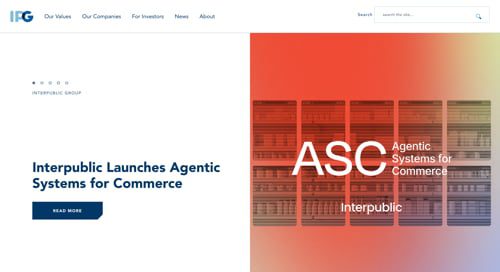
Interpublic launches Agentic Systems for Commerce to help brands. Interpublic Group, an advertising and marketing services agency, has launched Agentic Systems for Commerce to help brands manage complex ecosystems. ASC leverages Interpublic’s agentic system and is powered by data from Intelligence Node, its transaction data platform. ASC captures data signals for every product and its competitors, generating actionable intelligence into consumer searches, digital shelf position, product page content, pricing, and inventory levels.

Web page from Interpublic announcing its agentic systems for commerce

Interpublic

Elavon and WooCommerce expand payments partnership to North America. Elavon, a payments provider owned by U.S. Bank, and WooCommerce are expanding their payments partnership to North America. For the past year, the companies have delivered online payment services in Europe. Installing the Elavon extension from the WooCommerce Marketplace gives North America SMB merchants instant access to Elavon’s payment services. Elavon will support merchants using the extension.

Doss acquires Shopify-based inventory platform Genie. Doss, an AI-native operations platform, has acquired Genie, an inventory management tool for Shopify merchants. Genie empowers more than 300 ecommerce brands to streamline operations, processing orders across over 20,000 suppliers and enabling merchants to manage inventory and reorder stock in minutes. Per Doss, the move aims to deliver composable, real-time ERP solutions, building on its $18 million Series A funding round and Genie’s $5.8 million seed round.

USPS offers free, box-free returns. The U.S. Postal Service is providing polybags at participating locations for eligible return items, eliminating the need for a shipping box or label. According to the USPS, the polybagged items will enter the mailstream directly without additional packaging, fees, or consolidation. The bags are part of USPS’s Packageless Returns capabilities for companies that want to improve the return experience for their customers, and for residential customer convenience.

Google launches Virtual Try-On feature. Google has launched a Virtual Try-On feature in the U.S., letting shoppers simulate trying on styles from the billions of apparel items in its Shopping Graph across Search, Google Shopping, and Google Images. Google has also upgraded its price alerts. When U.S. shoppers click “track price” to set an alert for a product, they can now specify preferred size and color, as well as the payment method.

Screenshot of Google's virtual try-on feature showing a female in three dresses

Google’s Virtual Try-On

WooCommerce Customer Review Plugin Vulnerability Affects 80,000+ Sites via @sejournal, @martinibuster

An advisory was issued about a vulnerability in the Customer Reviews for WooCommerce plugin, which is installed on over 80,000 websites. The plugin enables unauthenticated attackers to launch a stored cross-site scripting attack.

Customer Reviews for WooCommerce Vulnerability

The Customer Reviews for WooCommerce plugin enables users to send customers an email reminder to leave a review and also offers other features designed to increase customer engagement with a brand.

Wordfence issued an advisory about a flaw in the plugin that makes it possible for attackers to inject scripts into web pages that execute whenever a user visits the affected page.

The exploit is due to a failure to “sanitize” inputs and “escape” outputs. Sanitizing inputs in this context is a basic WordPress security measure that checks if uploaded data conforms to expected types and removes dangerous content like scripts. Output escaping is another security measure that ensures any special characters produced by the plugin aren’t executable.

According to the official Wordfence advisory:

“The Customer Reviews for WooCommerce plugin for WordPress is vulnerable to Stored Cross-Site Scripting via the ‘author’ parameter in all versions up to, and including, 5.80.2 due to insufficient input sanitization and output escaping. This makes it possible for unauthenticated attackers to inject arbitrary web scripts in pages that will execute whenever a user accesses an injected page.”

Users of the plugin are advised to update to version 5.81.0 or newer version.

Featured Image by Shutterstock/Brilliant Eye

Query Fan-Out Technique in AI Mode: New Details From Google via @sejournal, @MattGSouthern

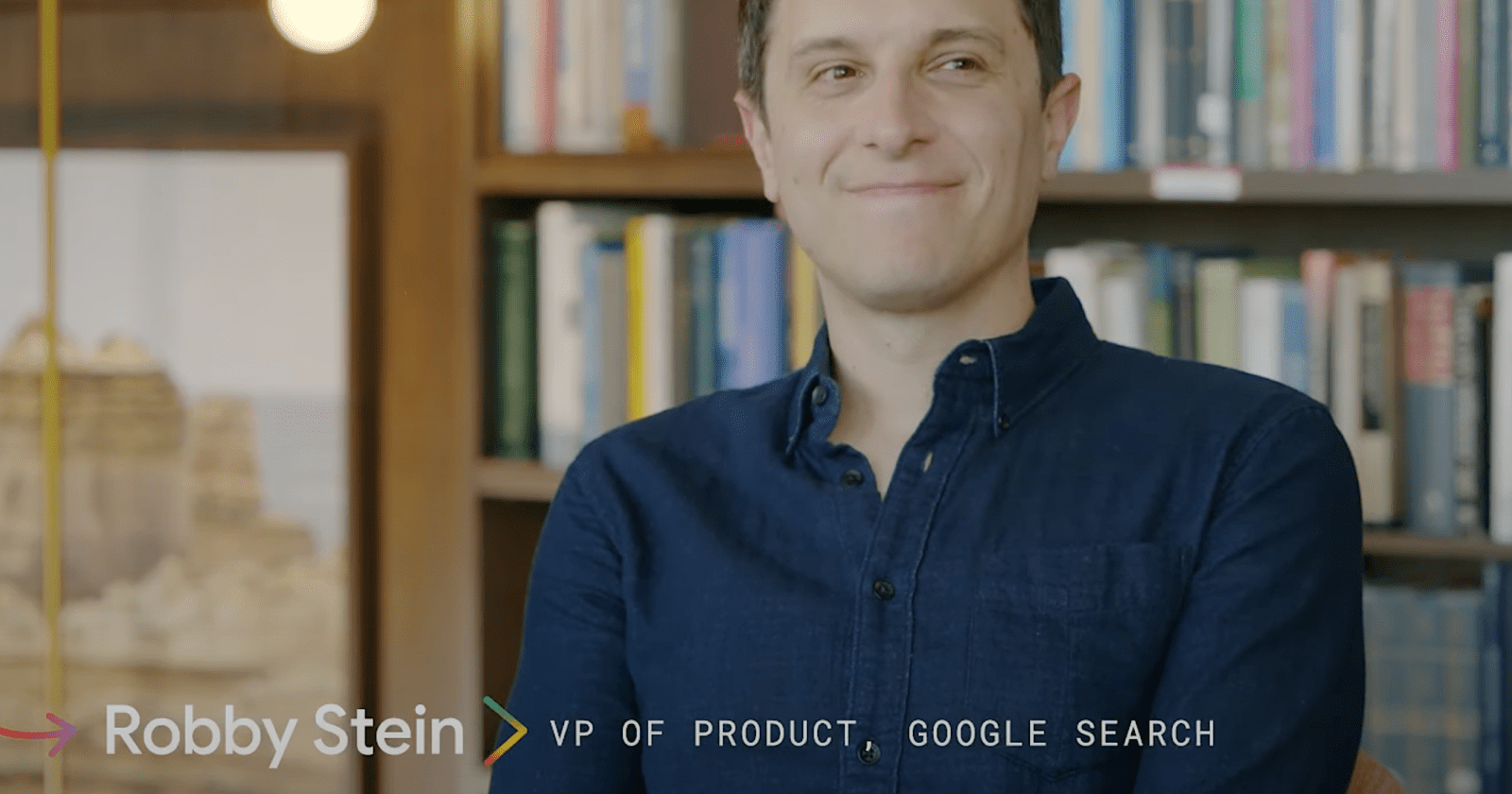
In a recent interview, Google’s VP of Product for Search, Robby Stein, shared new information about how query fan-out works in AI Mode.

Although the existence of query fan-out has been previously detailed in Google’s blog posts, Stein’s comments expand on its mechanics and offer examples that clarify how it works in practice.

Background On Query Fan-Out Technique

When a person types a question into Google’s AI Mode, the system uses a large language model to interpret the query and then “fan out” multiple related searches.

These searches are issued to Google’s infrastructure and may include topics the user never explicitly mentioned.

Stein said during the interview:

“If you’re asking a question like things to do in Nashville with a group, it may think of a bunch of questions like great restaurants, great bars, things to do if you have kids, and it’ll start Googling basically.”

He described the system as using Google Search as a backend tool, executing multiple queries and combining the results into a single response with links.

This functionality is active in AI Mode, Deep Search, and some AI Overview experiences.

Scale And Scope

Stein said AI-powered search experiences, including query fan-out, now serve approximately 1.5 billion users each month. This includes both text-based and multimodal input.

The underlying data sources include traditional web results as well as real-time systems like Google’s Shopping Graph, which updates 2 billion times per hour.

He referred to Google Search as “the largest AI product in the world.”

Deep Search Behavior

In cases where Google’s systems determine a query requires deeper reasoning, a feature called Deep Search may be triggered.

Deep Search can issue dozens or even hundreds of background queries and may take several minutes to complete.

Stein described using it to research home safes, a purchase he said involved unfamiliar factors like fire resistance ratings and insurance implications.

He explained:

“It spent, I don’t know, like a few minutes looking up information and it gave me this incredible response. Here are how the ratings would work and here are specific safes you can consider and here’s links and reviews to click on to dig deeper.”

AI Mode’s Use Of Internal Tools

Stein mentioned that AI Mode has access to internal Google tools, such as Google Finance and other structured data systems.

For example, a stock comparison query might involve identifying relevant companies, pulling current market data, and generating a chart.

Similar processes apply to shopping, restaurant recommendations, and other query types that rely on real-time information.

Stein stated:

“We’ve integrated most of the real-time information systems that are within Google… So it can make Google Finance calls, for instance, flight data… movie information… There’s 50 billion products in the shopping catalog… updated I think 2 billion times every hour or so. So all that information is able to be used by these models now.”

Technical Similarities To Google’s Patent

Stein described a process similar to a Google patent from December about “thematic search.”

The patent outlines a system that creates sub-queries based on inferred themes, groups results by topic, and generates summaries using a language model. Each theme can link to source pages, but summaries are compiled from multiple documents.

This approach differs from traditional search ranking by organizing content around inferred topics rather than specific keywords. While the patent doesn’t confirm implementation, it closely matches Stein’s description of how AI Mode functions.

Looking Ahead

With Google explaining how AI Mode generates its own searches, the boundaries of what counts as a “query” are starting to blur.

This creates challenges not just for optimization, but for attribution and measurement.

As search behavior becomes more fragmented and AI-driven, marketers may need to focus less on ranking for individual terms and more on being included in the broader context AI pulls from.

Listen to the full interview below:


Featured Image: Screenshot from youtube.com/@GoogleDevelopers, July 2025.