10 tips to streamline your blog content workflow

Content production seems quite simple, in principle. You develop an idea, write about it, do SEO checks, and click publish. Simple, right? It never turns out that way, especially when working with a team. Miscommunications, last-minute changes, and confusion about what needs to happen when. We’ve all been there! Try these ten tips to streamline your digital content workflow and eliminate much stress.

Table of contents

Before we start

Before we start, remember that the ‘perfect’ content workflow probably doesn’t exist. After all, every piece of content is unique, so a one-size-fits-all process is unlikely to produce the highest quality results. If your high-quality, unique content is taking forever to finish, you might struggle to meet deadlines or keep to a schedule. If that sounds like you or your organization, take a look at our tips and see how you can improve.

1. Start the process with clear goals

Whether you’re working alone or as part of a bigger team, it’s important to have a clear idea of all the steps involved and how long each step might take. Not every digital content process is the same. For instance, social media posts don’t need to be optimized for search engines, while blog posts targeting organic traffic do. Regardless of your end goal, the first step is always to start with clear goals.

Want to cover all your bases? Try to answer as many of these questions as you can, as clearly as you can:

  • What topic are you focusing on? How in-depth will you go?
  • Who are you writing for? Who is your audience?
  • What are you trying to achieve? More website visits, increased sales, and more social shares?
  • How will people be able to find your content? Where will you share it, and when?

If you specify your ideas and plans clearly at the beginning, it can help you and your team align your plans. It also helps you to stay on track, which can save you a lot of back-and-forth later on!

Read more: Audience research: how to analyze your audience »

2. Identify contributors and stakeholders

If you’re working in a team, our next tip is as important as the first. Why? Even if you’re clear about your goals, does everyone involved agree with your action plan? That’s why you need to identify your essential contributors and key stakeholders.

Depending on how big your organization is and how well-developed your process is already, making a list of contributors and stakeholders could be a lot of hard work, or a total no-brainer. If you sometimes find that your digital content workflow reaches a bottleneck (or descends to total chaos) because blockers arise from unexpected sources, it could be a sign that you need to do more work in this area.

Once you’ve come up with your plan, it’s a good idea to share it with any essential colleagues who need to give approval in the end before you start doing the real work. If you can get these people to agree with your initial plan, you can refer back to this later to explain creative choices and decisions you might need to make. When you let key parties know what to expect, you can avoid a lot of “What is this? What were you thinking?” kind of conversations.

3. Visualize your content workflow

It can be beneficial to visualize your content workflow, even if it seems daunting. At a minimum, you should write out the basic steps. If you add boxes and arrows to link the steps together, this can help to make the journey through the steps clearer (especially if there are moments when you need to loop back and repeat an earlier step). You can create this however feels comfortable to you — you could choose basic office software like Microsoft Word or Google Docs (Yoast SEO has a handy Google Docs add-on), you could try more advanced software like Visio or Lucidchart, or you could sketch it out on paper. It’s up to you!

For instance, your workflow could look like the first example written out in steps, or like the image below if you use a visualization tool. If, like us, you’re working in WordPress or Google Docs with the Yoast SEO plugin enabled, you can incorporate the features that you use into your workflow too.

Use Yoast SEO in Google Docs

Optimize as you draft for SEO, inclusivity, and readability. The Yoast SEO Google Docs add-on lets you export content ready for WordPress, no reformatting required.

Content workflow example 1

  1. Create a content brief with the agreement of any necessary colleagues
  2. Carry out keyword research using Google Trends and the Semrush keyword data tool in Yoast SEO Premium
  3. Create an article outline using a title and headings that relate to your keywords and the expected search intent
  4. Check if your stakeholders agree with the article outline: If yes, then continue; If no, go back to steps 1-3
  5. Write your draft in WordPress or Google Docs, taking the readability and SEO optimization suggestions from the Yoast SEO plugin into account
  6. Add a featured image in the Post Settings tab and a social image in the Social media appearance tab
  7. Make sure the SEO title, meta description and slug are all a suitable length and describe the content well
  8. Use the Public Preview option in WordPress to share a preview of the post with everyone who needs to give feedback or approval
  9. If feedback needs to be implemented, then implement it! If you’ve made any important changes, go back to get feedback and approval again!
  10. Once everyone who needs to has approved it, your post is ready to publish.

Content workflow example 2

An example of a Jira workflow for tracking blog projects

Read more: How to optimize a blog post for search engines: a checklist! »

4. Assign activities and responsibilities to team members

Even if you have a solid content workflow on paper, it’s important to ensure that each time you go through it, everyone is clear about who is doing what. Not only that, but how and when will different team members communicate with each other to hand over tasks or ask questions? Clearing these kinds of things up in advance can save a lot of hassle for everyone involved.

If these tasks aren’t a regular part of your team’s working day, they’ll also need to manage their own schedule to accommodate the tasks. If so, make sure that they have time to work on your planned content. It’s also worth checking what other priorities your contributors are juggling, as these could prevent progress if they become too demanding. Maybe you have the authority to make your planned content a top priority. If that’s your intention, make sure everyone involved knows that this should be #1 on their to-do list!

Naturally, you’ll want to set a deadline for when your content is going to be published. But if you think you can just send out an initial set of instructions, with one final deadline for all the tasks, and nothing concrete in between… Then things are quite likely to go wrong.

To achieve a much more reliable plan of action, you should include sub-deadlines and contact moments at key points in the content process. These help to keep everyone’s work aligned as the piece of content is developed, and can help you to avoid process bottlenecks by identifying issues early on. It’s also wise to schedule your own internal deadlines to have your content ready at least a week before you intend to publish it. That way, you can avoid last-minute changes (and all the mistakes that are likely to come with them). We’ll come back to this point later.

6. Agree on standards and priorities

So at this point, if you’ve followed all of our tips, you might be planning in sub-deadlines like ‘rough draft is ready’ or ‘final draft for approval’. Before you build all your hopes and dreams around these mini-deliverables, you’ll need to clarify how rough this rough draft can be! After all, you don’t want to end up disappointed because you only received a basic article outline and a few bullet point lists when you were expecting something almost finished.

If you’re using tools like Yoast SEO, you’ll also want to make it clear what results are acceptable to you: for instance, do you expect the readability analysis to always be green, but the SEO analysis doesn’t have to be when it’s not written for ranking purposes? Do you expect the internal linking suggestions to be added as a requirement, or are these just to be used as suggestions? Make sure everyone agrees about how you use your tools and what the end goal is.

7. Allow time for final checks and changes

If you have a regular content publishing schedule that you want to keep to, it’s a good idea to prepare your drafts with a decent amount of time to spare. That way, you can avoid stressing about deadlines and last-minute changes. Here are a few things that really ought to be on your pre-publication checklist, especially if they’re not already incorporated in your content development process:

  • Check the SEO of your post using the Yoast SEO analysis. Is it good enough?
  • Check the readability of your post using the readability analysis. Is it good enough?
  • Have you added a featured image?
  • Have you added an OG image and title for optimized social sharing?
  • Is the slug short and descriptive?
  • Have you added internal links to and from other relevant pages on your site?
  • If you use tags/categories, have you selected all the right options?
  • Are comments enabled/disabled according to your preferences for this post?
  • Is the correct date/time set for your post?
Yoast SEO for Google Docs add-on
Using Yoast SEO in Google Docs makes it much easier to work across teams

As you can see, there’s quite a lot to do even after a post is written, so don’t underestimate how long these checks will take.

Got a good basic content process, but still having issues? This is what to check:

8. Do you create unnecessary work?

Sometimes tasks become more complicated than they really need to be. Are there times when one small change causes a cascade of new issues to deal with? This can be a sign that you need to rethink the order of your steps and who is involved. Small changes should be easy, right?

Often, it’s obvious who should be doing what and how the process should continue. But it’s not always. For instance, if you have a graphic design team, do they need to make every change themselves? Can you make things easier by enabling your writing team to change text and background colors themselves, for instance?

Another type of problem can arise if you don’t have a clear decision-maker in place. Sure, there might be lots of people who should have a say about the content in the end. But who makes the final decisions? If it’s not clear who is responsible for which decisions, you might end up with all your best experts trying to reach an agreement about every little thing. That can be tricky, and it can waste loads of time! Make it easier by giving specific individuals ownership of specific aspects of the process.

9. Are things not going according to plan?

Sometimes things go wrong, in spite of your best efforts. But if things are often going wrong in your content production process, you should investigate the cause of your problems. It’s always a good idea to reach out to the people involved in the steps that are going wrong. What challenges are they facing? Does the existing process make things easier for them or more difficult? And very importantly, ask if they have any ideas to improve the process!

Don’t be afraid to try something new if what you’re doing isn’t working. Even if your new idea doesn’t work out any better, you can always learn from it and try something different next time! Or put it this way: trying anything is better than burying your head in the sand and continuing with a broken content development process.

Last but not least: are you making life harder by adding in ‘nice-to-have’ extras that weren’t part of the plan? It’s an easy mistake to make! After all, when you really care about the content you’re creating, your natural instinct is to keep improving and make it the best that it can be. Even though that means making a whole new infographic. Even though that infographic wasn’t a part of the original plan. Your team can make it happen, right? Or else you can just push the deadline back…

It’s great to aim high when it comes to making quality content. But if you’re ambitious, late-arriving ideas become a burden to the process, you might want to start categorizing them into “must-have” and “nice-to-have” content elements. That way, everyone knows which parts to prioritize and which parts can be left out if they’re too difficult to achieve within the original plan. And don’t forget that one of the biggest advantages of publishing digital content is that you can continue to improve it and share it again whenever you want!

Streamline your content workflow, but don’t let it rule you!

Those are our ten tips! It can be really worthwhile to streamline your content workflow, especially if you’re experiencing issues and bottlenecks in the process. Naturally, every situation is different, and each piece of content comes with its own opportunities and challenges, too. So you need to think about what works for you and what doesn’t in order to adapt your content process.

Try to keep a balance and avoid making a content process that’s too strict or inflexible. You don’t want to set up a rigid process that dictates your editorial decisions and rules your creative output. It’s a creative process, after all! So it’s always good to keep some room for flexibility, but just how much is up to you.

Remember: whatever your content workflow looks like, WordPress, Google Docs, and the Yoast SEO plugin can help you! From your main topic and focus keyphrase, through to the final touches you add just before publishing, the tools can form checkpoints to easily align your team and your goals.

Read more: Adapting your content SEO strategy »

It’s officially summer, and the grid is stressed

It’s crunch time for the grid this week. As I’m writing this newsletter, it’s 100 °F (nearly 38 °C) here in New Jersey, and I’m huddled in the smallest room in my apartment with the shades drawn and a single window air conditioner working overtime.  

Large swaths of the US have seen brutal heat this week, with multiple days in a row nearing or exceeding record-breaking temperatures. Spain recently went through a dramatic heat wave too, as did the UK, which is unfortunately bracing for another one soon. As I’ve been trying to stay cool, I’ve had my eyes on a website tracking electricity demand, which is also hitting record highs. 

We rely on electricity to keep ourselves comfortable, and more to the point, safe. These are the moments we design the grid for: when need is at its very highest. The key to keeping everything running smoothly during these times might be just a little bit of flexibility. 

While heat waves happen all over the world, let’s take my local grid as an example. I’m one of the roughly 65 million people covered by PJM Interconnection, the largest grid operator in the US. PJM covers Virginia, West Virginia, Ohio, Pennsylvania, and New Jersey, as well as bits of a couple of neighboring states.

Earlier this year, PJM forecast that electricity demand would peak at 154 gigawatts (GW) this summer. On Monday, just a few days past the official start of the season, the grid blew past that, averaging over 160 GW between 5 p.m. and 6 p.m. 

The fact that we’ve already passed both last year’s peak and this year’s forecasted one isn’t necessarily a disaster (PJM says the system’s total capacity is over 179 GW this year). But it is a good reason to be a little nervous. Usually, PJM sees its peak in July or August. As a reminder, it’s June. So we shouldn’t be surprised if we see electricity demand creep to even higher levels later in the summer.

It’s not just PJM, either. MISO, the grid that covers most of the Midwest and part of the US South, put out a notice that it expected to be close to its peak demand this week. And the US Department of Energy released an emergency order for parts of the Southeast, which allows the local utility to boost generation and skirt air pollution limits while demand is high.

This pattern of maxing out the grid is only going to continue. That’s because climate change is pushing temperatures higher, and electricity demand is simultaneously swelling (in part because of data centers like those that power AI). PJM’s forecasts show that the summer peak in 2035 could reach nearly 210 GW, well beyond the 179 GW it can provide today. 

Of course, we need more power plants to be built and connected to the grid in the coming years (at least if we don’t want to keep ancient, inefficient, expensive coal plants running, as we covered last week). But there’s a quiet strategy that could limit the new construction needed: flexibility.

The power grid has to be built for moments of the absolute highest demand we can predict, like this heat wave. But most of the time, a decent chunk of capacity that exists to get us through these peaks sits idle—it only has to come online when demand surges. Another way to look at that, however, is that by shaving off demand during the peak, we can reduce the total infrastructure required to run the grid. 

If you live somewhere that’s seen a demand crunch during a heat wave, you might have gotten an email from your utility asking you to hold off on running the dishwasher in the early evening or to set your air conditioner a few degrees higher. These are called demand response programs. Some utilities run more organized programs, where utilities pay customers to ramp down their usage during periods of peak demand.

PJM’s demand response programs add up to almost eight gigawatts of power—enough to power over 6 million homes. With these programs, PJM basically avoids having to fire up the equivalent of multiple massive nuclear power plants. (It did activate these programs on Monday afternoon during the hottest part of the day.)

As electricity demand goes up, building in and automating this sort of flexibility could go a long way to reducing the amount of new generation needed. One report published earlier this year found that if data centers agreed to have their power curtailed for just 0.5% of the time (around 40 hours out of a year of continuous operation), the grid could handle about 18 GW of new power demand in the PJM region without adding generation capacity. 

For the whole US, this level of flexibility would allow the grid to take on an additional 98 gigawatts of new demand without building any new power plants to meet it. To give you a sense of just how significant that would be, all the nuclear reactors in the US add up to 97 gigawatts of capacity.

Tweaking the thermostat and ramping down data centers during hot summer days won’t solve the demand crunch on their own, but it certainly won’t hurt to have more flexibility.

This article is from The Spark, MIT Technology Review’s weekly climate newsletter. To receive it in your inbox every Wednesday, sign up here.

The Download: Google DeepMind’s DNA AI, and heatwaves’ impact on the grid

This is today’s edition of The Download, our weekday newsletter that provides a daily dose of what’s going on in the world of technology.

Google’s new AI will help researchers understand how our genes work

When scientists first sequenced the human genome in 2003, they revealed the full set of DNA instructions that make a person. But we still didn’t know what all those 3 billion genetic letters actually do.

Now Google’s DeepMind division says it’s made a leap in trying to understand the code with AlphaGenome, an AI model that predicts what effects small changes in DNA will have on an array of molecular processes, such as whether a gene’s activity will go up or down.

It’s just the sort of question biologists regularly assess in lab experiments, and is an attempt to further smooth biologists’ work by answering basic questions about how changing DNA letters alters gene activity and, eventually, how genetic mutations affect our health. Read the full story.

—Antonio Regalado

It’s officially summer, and the grid is stressed

It’s crunch time for the grid this week. Large swaths of the US have reached or exceeded record-breaking temperatures. Spain recently went through a dramatic heat wave too, as did the UK, which is bracing for another one soon.

We rely on electricity to keep ourselves comfortable, and more to the point, safe. These are the moments we design the grid for: when need is at its very highest. The key to keeping everything running smoothly during these times might be just a little bit of flexibility. But demand for electricity from major grids is already peaking, and that’s a good reason to be a little nervous. Read the full story.

—Casey Crownhart

This article is from The Spark, MIT Technology Review’s weekly climate newsletter. To receive it in your inbox every Wednesday, sign up here.

MIT Technology Review Narrated: How did China come to dominate the world of electric cars?

From generous government subsidies to support for lithium batteries, here are the keys to understanding how China managed to build a world-leading industry in electric vehicles.

This is our latest story to be turned into a MIT Technology Review Narrated podcast, which we’re publishing each week on Spotify and Apple Podcasts. Just navigate to MIT Technology Review Narrated on either platform, and follow us to get all our new content as it’s released.

Inside OpenAI’s empire with Karen Hao

Journalist Karen Hao’s newly released book, Empire of AI: Dreams and Nightmares in Sam Altman’s OpenAI, tells the story of OpenAI’s rise to power and its far-reaching impact all over the world.

Hao, a former MIT Technology Review senior editor, will join our executive editor Niall Firth in an intimate subscriber-exclusive Roundtable conversation exploring the AI arms race, what it means for all of us, and where it’s headed. Register here to join us at 9am ET on Monday June 30th June.

Special giveaway: Attendees will have the chance to receive a free copy of Hao’s book. See registration form for details.

The must-reads

I’ve combed the internet to find you today’s most fun/important/scary/fascinating stories about technology.

1 Meta has won an AI copyright case against authors
The judge said the authors hadn’t presented enough evidence to back up their case. (TechCrunch)
+ It’s not an entirely decisive victory for Meta, though. (Wired $)
+ It’s the second lawsuit in favor of AI giants this week. (Insider $)

2 The US will stop contributing towards a global vaccine alliance
RFK Jr made unsubstantiated claims about Gavi’s safety record. (WP $)
+ Kennedy’s newly-assembled vaccine panel is reviewing its guidelines for children. (Vox)
+ Experts are worried the once-influential panel will cause irreparable harm. (Ars Technica)
+ How measuring vaccine hesitancy could help health professionals tackle it. (MIT Technology Review)

3 Jeff Bezos is cozying up to Donald Trump
If the Trump administration happens to need a new space company, he’s ready and willing to supply it. (WSJ $)
+ Meanwhile, a private astronaut mission is on its way to the ISS. (CNN)

4 Taiwan is working on suicide drones to defend itself from China
The country is taking a leaf out of Ukraine’s defense book. (FT $)
+ This giant microwave may change the future of war. (MIT Technology Review)

5 Biohackers are feeling emboldened by the Trump administration
They welcome lower barriers to entry for their unorthodox treatments. (Wired $)
+ The first US hub for experimental medical treatments is coming. (MIT Technology Review)

6 A UK cyberattack on a health firm contributed to a patient’s death
The ransomware attack disrupted blood services at London hospitals. (BBC)
+ A Russian hacking gang is to blame for the incident. (Bloomberg $)

7 Take a look inside Amazon’s colossal new data center
Four construction teams are working around the clock to finish it. (NYT $)
+ Generating video is the most energy-intensive AI prompt. (WSJ $)
+ We did the math on AI’s energy footprint. Here’s the story you haven’t heard. (MIT Technology Review)

8 The debate around dark energy is intensifying
New research suggests it evolves over time. But not everyone agrees. (Undark)

9 Trump Mobile is no longer claiming to be ‘made in the USA’
It’s now “designed with American values in mind” instead. (Ars Technica)

10 It’s official: The Social Network is getting a sequel
Zuck goes MAGA? (Deadline $)

Quote of the day

“By training generative AI models with copyrighted works, companies are creating something that often will dramatically undermine the market for those works, and thus dramatically undermine the incentive for human beings to create things the old-fashioned way.”

—US district judge Vince Chhabria, who presided over a copyright lawsuit brought against Meta by a group of authors, warns of the implications of the company’s actions, the Guardian reports.

One more thing

Beyond gene-edited babies: the possible paths for tinkering with human evolution

Editing human embryos is restricted in much of the world—and making an edited baby is fully illegal in most countries surveyed by legal scholars. But advancing technology could render the embryo issue moot.

New ways of adding CRISPR, the revolutionary gene editing tool, to the bodies of people already born could let them easily receive changes as well. It’s possible that in 125 years, many people will be the beneficiaries of multiple rare, but useful, gene mutations currently found in only small segments of the population. 

These could protect us against common diseases and infections, but eventually they could also yield improvements in other traits, such as height, metabolism, or even cognition. But humanity won’t necessarily do things the right way. Read the full story.

—Antonio Regalado

We can still have nice things

A place for comfort, fun and distraction to brighten up your day. (Got any ideas? Drop me a line or skeet ’em at me.)

+ Amazing things are happening in New York’s Central Park.
+ A newly-discovered species of dinosaur has gone on display in London, and it’s small but perfectly formed.
+ Cool—Bob Dylan is releasing a new art book, this time of his drawings.
+ Iron Maiden bassist Steve Harris has a secret second career—as a footballer ⚽

New Ecommerce Tools: June 26, 2025

This installment of our weekly rundown of new products and services for merchants includes rollouts for video, cross-border payments, agentic commerce, shipping management, point-of-sale systems, live video shopping, ecommerce platforms, reverse logistics, and post-purchase upselling.

Got an ecommerce product release? Email releases@practicalecommerce.com.

New Tools for Merchants

Payabl partners with PrestaShop to optimize ecommerce payments. Payabl, a fintech provider, has integrated with PrestaShop, an open-source ecommerce platform, to optimize customer payments for merchants. The plugin enables PrestaShop users to connect to Payabl’s infrastructure, providing sellers access to over 300 local payment methods, multi-currency support, fraud prevention, and real-time reporting. PrestaShop’s 250,000 merchants can connect to Payabl’s technology and offer customers an optimal, secure, and scalable checkout experience, according to Payabl.

Home page of PrestaShop

PrestaShop

Yep AI launches sales agent on Shopify app store. Yep AI, a chatbot provider, has launched its sales agent plugin on the Shopify app store. Yep AI’s chatbot delivers contextual, proactive engagement to help merchants convert visitors. Yep states that its AI sales agent acts like a trained in-store associate, analyzing browsing behavior, identifying intent signals, and providing personalized recommendations in real-time.

CorrelLink launches ecommerce shipping management platform. CorrelLink, an Australia-based software developer, has launched Shipperfy, a shipping management platform, to streamline order management across eBay, Amazon, Shopify, and other marketplaces, eliminating the need to switch between multiple systems to process shipments. The platform connects with merchants’ existing carrier accounts and displays shipping quotes from multiple providers on a single screen. Merchants can generate shipping labels, automatically notify sales channels when orders ship, generate order invoices, and create packing slips.

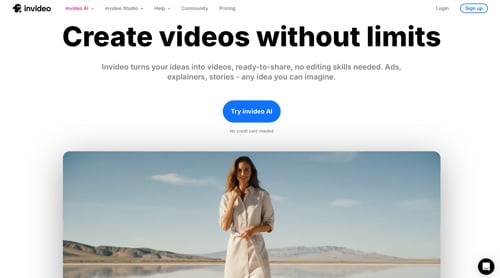
Invideo launches v4.0 update for product videos at scale. Invideo, an AI video creation platform, has launched its v4.0 update, enabling users to clone themselves or their products to generate videos. Users record a short video to create a lifelike digital version of themselves to unlock video creation in 50-plus languages, formats, and platforms. Users (i) paste a product link or upload photos, (ii) generate ad-ready visuals of that item in multiple real-world contexts, and (iii) choose from a library of actors to front the videos.

Home page of Invideo

Invideo

Shopware launches Agentic Commerce platform. Shopware, a Germany-based open-source ecommerce platform, has introduced Agentic Commerce and additional AI-driven tools for its expansion into B2B. Agentic Commerce enables intelligent agents to make decisions, shortening the sales cycle from quote to purchase. Shopware’s additional AI tools include a chat-based Copilot, an AI assistant for managing routine tasks, and an image editor for placing products into campaigns. With the new offerings, Shopware aims to help merchants increase revenue, lower integration costs, and create more differentiated shopping experiences.

Mollie launches Tap for in-person payments. Mollie, a financial technology company based in Amsterdam, has introduced Tap, a payment terminal to facilitate contactless payments. Tap operates on the Android platform and lets customers make payments by tapping their card or smartphone against it. The integration of Tap into Mollie’s platform allows businesses to manage both online and offline transactions from a unified dashboard. Tap is available in the Netherlands, with plans to enter Belgium, Germany, and Austria.

Bambuser partners with Alibaba Cloud to bring live video shopping to China. Bambuser, a video commerce provider, has partnered with Alibaba Cloud, a division of Alibaba Group, to bring its shoppable video tools to the China market. Alibaba Cloud’s customers can leverage its full suite of video commerce products, including Digital Clienteling, Live Video Shopping, Shoppable Videos, and Chat, providing more control and autonomy while addressing the needs in China.

Home page of Bambuser

Bambuser

DHL eCommerce UK expands partnership with ZigZag for international returns. DHL eCommerce UK is expanding its collaboration with ZigZag, a global returns management platform. According to ZigZag, the enhanced partnership will simplify international returns for consumers while helping retailers recoup costs from export duties paid on returned goods. ZigZag connects retailers to over 200 global warehouses and 1,500 carrier services in 170 countries.

Unbound Commerce and Znode partner for B2B app development. Unbound Commerce, a custom app development provider, has signed a partnership agreement with Znode, a B2B ecommerce platform. Znode’s B2B functionality enables management of customer-specific catalogs, multiple web storefronts, workflow approvals, complex pricing, product types, and quote management. According to Unbound Commerce, the partnership enables Znode B2B customers to extend their websites into apps.

Nosto launches Post-Purchase Upsell for Shopify’s checkout. Nosto, a commerce experience platform, has launched Post-Purchase Upsell for Shopify merchants. Nosto utilizes real-time shopper data, including affinities, browsing and purchase history, and current cart context, to deliver targeted product offers. The new module enables Shopify sellers to implement targeted product offers the moment a shopper completes a transaction, appearing on a new post-purchase page that sits between the checkout and thank you pages.

Barrett Distribution Centers and Two Boxes partner on reverse logistics. Barrett Distribution Centers, a third-party logistics provider, has partnered with Two Boxes, a reverse logistics technology platform, to deliver flexible returns for modern ecommerce brands. Barrett says the need for a more streamlined process to manage inspections has grown as return processes have become more complex. Barret selected Two Boxes for its user experience, seamless integration with platforms such as Shopify and Loop Returns, and intuitive design for warehouse operators.

Home page of Two Boxes

Two Boxes

Google Tests ‘Preferred Sources’ To Personalize Top Stories In Search via @sejournal, @MattGSouthern

Google is testing a new feature that allows you to customize the Top Stories section in search results by selecting preferred news sources.

Currently available through Search Labs in the U.S. and India, the experiment gives people more influence over which publishers appear in their news-related queries.

How It Works

Those who opt into the experiment will see a new starred icon in the Top Stories carousel. Tapping it opens a menu where you can choose preferred publications.

Articles from selected sources will be more likely to appear in Top Stories when relevant. These entries will be marked with a star icon next to the site name, but they won’t replace Google’s algorithmic selections entirely.

Google may also display a secondary “From your sources” carousel beneath the main Top Stories section.

A Broader Shift Toward Personalization

The Preferred Sources feature builds on Google’s existing personalization tools, including the ability to highlight content users have frequently visited or show updates since their last search.

A “Try without personalization” option remains available at the bottom of search results, maintaining transparency and user control.

What This Means

For publishers, this change could offer increased visibility, especially for those with loyal audiences who choose them as preferred sources.

However, smaller or newer outlets may struggle to compete with established brands if user selections skew toward familiar names.

The experiment highlights the growing importance of brand recognition, direct audience relationships, and consistent content freshness.

Looking Ahead

This initiative is part of Google’s effort to balance algorithmic discovery with user-driven customization.

While it’s still an experiment, the move suggests Google is exploring ways to give users more say in how information surfaces, without fully abandoning its ranking systems.

If rolled out more broadly, the Preferred Sources feature could reshape strategies for publishers and marketers seeking consistent visibility in Google Search.


Featured Image: Roman Samborskyi/Shutterstock

Google’s AI Search Journeys Are Reshaping SEO With Cindy Krum via @sejournal, @theshelleywalsh

Google’s transformation into an AI-driven search platform represents more than just a technological advancement. It’s a fundamental shift in how the search giant views itself as a company and the value it provides to users.

Cindy Krum has spoken at several events this year about her theory that Google might merge AI Overviews, Discover, and international results to build the next-gen search engine.

The overview of Cindy’s thoughts is that Google is not only internationalizing its platform, but is also converging AI Overview, Google Discover, and AI Mode into a unified, hyper-personalized search experience.

This evolution aligns with Google’s broader push toward understanding search as “journeys” rather than static queries, underlined by MUM.

My theory is that the move into heavily personalized search journeys builds on the past 20 years that Google has been striving to be a personal assistant. AI has made that possible.

Cindy is the founder of MobileMoxie and is described as being “years ahead of the pack.” I spoke to her about the implications for SEO and what part of this shift to AI-organized search and journeys SEO professionals are underestimating right now.

You can watch the full interview with Cindy on IMHO below, or continue reading the article summary.

Predictive, Conversational, And Personalized

Cindy believes that, currently, there is a bigger shift than what some SEO professionals have been talking about: A fundamental shift in the way Google sees itself as a company and the way that it sees the value that it provides.

The real shift was in 2018, just after Google launched mobile-first indexing, when Google began organizing search results around entities. It said it wanted to be more predictive, more conversational, and more personalized.

According to Cindy, Google’s current AI initiatives aren’t new developments but rather the culmination of a strategy.

“Everything they’ve been doing since 2018 has been feeding this goal of getting us into this AI search reality,” she explains.

The AI Overviews, Google Discover expansion, and AI Mode we see today are direct results of this seven-year journey.

The Hidden Strategy Behind Google’s International Push

One of the most overlooked aspects of Google’s current transformation is its renewed attempt to consolidate international domains.

Google previously tried to eliminate country-specific versions (CCTLDs) before mobile-first indexing but had to roll back the initiative. Now, it is trying again, and the timing is significant.

“If you separate everything by country and language, you’re limiting your learning pipeline. You have smaller, fragmented datasets.” Cindy explains.

When you consolidate and abstract at the entity level, you can disambiguate meaning and link keywords to entity ideas across all languages. That speeds up the learning process.

Google can then apply what it learns in one language to another; we’re already seeing this with AI Overviews.

When it can’t find the right answer in a local language, it translates English content because it knows the English answer is probably also correct in other languages. This saves time and money on crawling, indexing, and ranking.

AI Mode Isn’t The Product. You Are

I asked Cindy if she thought Google might try to monetize AI Mode, but she believes Google’s strategy is more sophisticated.

“We can’t forget how Google makes money, it’s ads,” Cindy emphasizes. The real value lies in building comprehensive user profiles that enable precision ad targeting.

Google’s goal is to present ads only to users likely to convert, making its advertising platform more attractive to businesses while creating a seamless experience for users.

“They’re not monetizing AI Mode directly. They’re using it to collect data that allows them to monetize ads more effectively.”

This strategy extends to Performance Max campaigns on the paid search side, where Google controls optimization based on metrics it doesn’t trust advertisers to manage effectively.

Discovery Is Moving To TikTok, Reddit & Social

Despite Google’s technological advances, some users are losing trust in the quality of search results.

However, the solution isn’t abandoning Google but rather understanding how different platforms serve different purposes in the modern search ecosystem.

Cindy’s opinion is that Google is no longer the place where discovery happens.

Users increasingly conduct research across multiple platforms. TikTok for discovery, Reddit for authentic opinions, and eventually Google for final purchase decisions.

This multi-platform journey reflects a more sophisticated approach to information gathering and decision-making.

Cindy stresses the need to understand real branding, not just SEO branding or digital PR.

“To be able to influence the narrative in any kind of AI search result, you have to be actively influencing all those things,” she notes. “SEOs for years have been so focused on their website to the detriment of every other branding opportunity out there.”

Understanding Search Journeys

For SEO professionals looking to optimize for journeys rather than just keywords, Cindy recommends studying Google’s own navigation suggestions.

When performing searches, Google often displays additional navigation layers that reveal its understanding of user intent and likely next steps.

“This is where Google is kind of showing their cards and saying these are the queries that we expect you’re going to narrow down this query,” she explains.

By mapping these suggested pathways, SEO professionals can identify where their content fits into the user journey and where Google needs education about additional aspects of that journey.

If She Were Starting Today? TikTok

I asked Cindy if she were starting from the beginning now, what she would do and where she would invest, her immediate answer was TikTok.

She explains, “It’s where young audiences are, the algorithm promotes discovery, and content is repurposed across all other platforms. Importantly, it’s not just a fad; businesses are being built and scaled directly on TikTok.”

And while influencer saturation is real, Cindy sees TikTok as a smart, scrappy way to build awareness with a small budget and scale fast.

Preparing For The Future

The shift toward AI-organized search results and journey-based optimization requires a fundamental rethinking of digital marketing approaches.

Success in this new era of AI search demands understanding the complete customer journey, from initial discovery through final purchase, and ensuring brand presence at every touchpoint.

This includes active participation in the broader digital conversation about your industry, products, and services.

The future of search isn’t just about ranking higher; it’s about being present wherever your audience might encounter your brand throughout their decision-making journey.

“The future of search is understanding the entire journey, not just the keyword or the query.”

Thank you to Cindy Krum for offering her insights and being my guest on IMHO.

More Resources:


Featured Image: Shelley Walsh/Search Engine Journal

Google Launches Offerwall To Expand Monetization Options via @sejournal, @MattGSouthern

Google has launched Offerwall, a new feature in Google Ad Manager designed to help publishers diversify their revenue beyond traditional ads.

The tool, now generally available after testing with over 1,000 publishers, allows audiences to choose how they access content, including watching short ads, completing surveys, or making micro payments.

According to Google, early adopters of Offerwall have seen an average revenue increase of 9%

A Response to Changing Publisher Needs

Peentoo Patel, Product Director at Google Ad Manager, says in an announcement:

“For years, our publishing partners have asked for more and different ways to monetize their content beyond traditional ads.”

Offerwall gives audiences more control over how they engage with content, while providing publishers with additional monetization paths.

Key Capabilities of Offerwall

Offerwall includes several features aimed at helping publishers implement flexible monetization strategies:

  • Multiple Access Options: Audiences can access content by choosing from short ads, micro payments, interest-based surveys, or other publisher-defined methods.
  • Custom Integrations: Publishers can add their own access models, such as newsletter sign-ups or subscription trials.
  • Rewarded Ads: A familiar model for users who prefer to watch an ad in exchange for content access.
  • Survey Access: Completing a survey grants access while providing publishers with valuable audience insights.
  • Supertab Payment Integration (Beta): Enables single-use payments or subscriptions.
  • Optimize (AI-Driven Timing): Uses AI to determine the ideal moment to present the Offerwall, aiming to maximize engagement and revenue.

Here’s an example of what you might see on a publisher’s site when they use Offerwall:

Screenshot from: blog.google/products/ads-commerce/offerwall-gives-publishers-more-options-audiences-more-control/, June 2025.

Focus On Small Publishers

Google highlighted Offerwall’s potential benefits for smaller publishers, who may lack the development resources to build custom paywalls or alternative monetization systems.

Offerwall provides these tools with minimal setup, integrated directly into Google Ad Manager.

This could help close the resource gap between large and small media businesses by making diversified monetization models more accessible.

Implementation & Strategy

For publishers already using Google Ad Manager, Offerwall can be integrated with existing workflows.

The tool’s flexibility allows for gradual experimentation. You can start with basic rewarded ads or surveys and expand into micro payments or subscriptions as user behavior data accumulates.

The Optimize feature may also reduce friction in testing by automating decision-making about when to present monetization options.

Looking Ahead

The introduction of Offerwall underscores a broader shift in digital publishing. As privacy regulations evolve and traditional ad models face pressure, publishers are exploring new ways to monetize their content without compromising the user experience.

Marketers working with publisher partners may need to adapt to new engagement patterns and evaluate how Offerwall could affect campaign performance and analytics.

Offerwall is now available to all publishers through Google Ad Manager.


Featured Image: Roman Samborskyi/Shutterstock

Ask An SEO: Balancing Content That Converts With Content That Builds Brand Authority via @sejournal, @MordyOberstein

This week’s Ask an SEO question comes from Rachel P., who wants to find the middle ground between conversion-focused pages and authority-building content:

“How do I balance content that converts with content that builds brand authority? It feels like my CRO pages don’t rank well, and my blog posts don’t convert.”

It’s hard not to think of your marketing in parts. There’s the part of the strategy that focuses on brand awareness, while another aspect focuses on conversions or whatever key performance indicator.

That might be how you’ve been taught to do marketing, but that’s not how marketing actually works, in my opinion. I know that’s a contentious statement. I’ll do my best to back it up.

Marketing Is One Song

All of your marketing should work together to present a unified process that supports itself at each step of the way. Everything should work together harmoniously.

The question here almost assumes they don’t. We have efforts, or in this case, content meant to build authority and content that’s meant to convert, etc. What if we just had content?

Instead of siloing all of our efforts, what if we looked at it all as being about “generating momentum”? Producing a certain level of brand inertia and energy that could be captured or bottled up.

What if we looked at it as a process across multiple touchpoints, pages, and platforms (many of which are offline) of deepening the connection between our brands and our audience or consumer?

In that framework, it’s more about ensuring you give your audience the opportunity to move further down the rabbit hole than it is about “ranking your conversion” pages.

To me, the notion of “getting our conversion pages to rank” is more aligned with how you work and far less aligned with how your audience works.

You want to give your audience “access” to convert or reinforcement to convert as they feel connected and engaged with you.

The connection and sense of engagement are what drive conversion. To paraphrase baseball legend Yogi Berra, conversions are 90% about connection; the other half is product or service awareness.

In simple terms, I would focus more on how to build yourself up and engage an audience than on worrying about how to balance conversion rate-optimized content and informational content.

If your audience is engaged with your informational content and no one cares about your landing pages, who cares if the latter ranks well?

Use the blog to reinforce your offering. If that’s where people want to engage you, then engage them there.

Throw a banner up on the side of the blog. Include a call to action here or there. Add screenshots and tie the content into your product (naturally), etc.

Meet your audience where they are engaged and connected to you, and guide them to details on your offering from there.

This means I wouldn’t worry about balancing content and ranking. I’d worry about, “How do I engage my audience and remind them at the right time of my offering? How do I ensure that if they are engaged and want to move things forward, they have the access they need to be able to do that?”

What Does This Mean Practically?

Instead of building out two separate sets of pages in this case, think of them as one thing.

Authority and trust create a connection. Connection is the straw that mixes the drink. It’s what takes what might be a sterile statement about your brand’s offering and makes it intriguing.

Often, I find marketers think of this in reverse order: “My landing pages will rank or whatever, and then the consumer will see my informational content and be reassured. This reassurance will enable them to convert.”

It’s the opposite. In whatever way, whether it be via social, informational content, or company advocates, people form a connection with you.

This connection emotionally enables them to even consider opening their wallets or recommending your offering, etc. (i.e., conversions).

In my opinion, what you want to do is simply remind and reinforce. In those moments of connection, you want to remind the consumer of your offering, reinforce its value, and ensure they have easy access to it.

YouTubers sometimes do a great job of this. They offer informational value that creates a connection with their audience. Then, they ask you to subscribe (which in and of itself is a conversion).

They will reinforce that connection with additional content, and then, at some point, will mention their product, service, or whatever it is they offer.

They’ll tell you to check out the link in the description (because as I mentioned, you need to offer easy entry points), and take it from there.

I feel it’s more important to engage your audience and ensure that the access to the material you want them to convert with is accessible than worrying about various sets of content with various intents and how they perform.

If your audience is really engaged with your social media content, make sure links are included in your profile and post about your offering. (I like the 80/20 rule here: 80% value-driven content, 20% promotional. I often go 90/10.)

My point is, it’s not about page types. It’s about engaging and connecting with your audience and properly utilizing that connection to make your audience aware of your offering and to make it as frictionless as possible thereafter.

New Ways For A New Web

This sort of dichotomy between areas of marketing and aspects of your marketing strategy works for what I call the “old web.” To be honest, it didn’t work as well as we all bragged about on the “old web” either.

Regardless, I see the “new web” as being about success by refinement. In this era of the web, having a consistent message and presence that creates a strong and demarcated identity matters most.

We’re in a web environment where there has to be a strong connection to the audience if you expect them to notice you and purchase from you.

That means taking better advantage of opportunities to create pathways to products within those moments of audience engagement – not separate and siloed conversion paths.

It also means pushing product pathways in a far less aggressive and inorganic way as well, but that’s a conversation for another day.

More Resources:


Featured Image: Paulo Bobita/Search Engine Journal

3 things Rhiannon Williams is into right now

The last good Instagram account

It’s a truth universally acknowledged that social media is a Bad Vibe. Thankfully, there is still one Instagram account worth following that’s just as incisive, funny, and scathing today as when it was founded back in 2016: Every Outfit (@everyoutfitonsatc). Originally conceived as an homage to Sex and the City’s iconic fashion, Every Outfit has since evolved into a wider cultural critique and spawned a podcast of the same name that I love listening to while running. Sex and the City may be over, but Every Outfit is forever.

Glorious Exploits, by Ferdia Lennon

Glorious Exploits is one of those rare books that manage to pull off being both laugh-out-loud funny and deeply moving, which is no mean feat. Set in ancient Sicily, it tells the story of unemployed potters Lampo and Gelon’s grand plan to stage the Greek tragedy Medea with a cast of defeated Athenian soldiers who’ve been imprisoned in quarries on the outskirts of Syracuse. The ancient backdrop combined with the characters’ contemporary Irish dialogue (the author was born in Dublin) makes it unlike anything I’ve ever read before; it’s so ambitious it’s hard to believe it’s Lennon’s debut novel. Completely engrossing.

Life drawing

The depressing wave of AI-generated art that’s flooded the internet in recent years has inspired me to explore the exact opposite and make art the old-fashioned way. My art teacher in college always said the best way to learn the correct proportions of the human body was to draw it in person, so I’ve started attending classes near where I live in London. Pencil and paper are generally my medium of choice. Spending a few hours interpreting what’s in front of you in your own artistic style is really rewarding—and has the added bonus of being completely screen-free. I can’t recommend it enough.

Job titles of the future: Pandemic oracle

Officially, Conor Browne is a biorisk consultant. Based in Belfast, Northern Ireland, he has advanced degrees in security studies and medical and business ethics, along with United Nations certifications in counterterrorism and conflict resolution. He’s worked on teams with NATO’s Science for Peace and Security Programme and with the UN High Commissioner for Refugees, analyzing how diseases affect migration and border security.

Early in the emergence of SARS-CoV-2, international energy conglomerates seeking expert guidance on navigating the potential turmoil in markets and transportation became his main clients. Having studied the 2002 SARS outbreak, he predicted the exponential spread of the new airborne virus. He forecast the epidemic’s broadscale impact and its implications for business so accurately that he has come to be seen as a pandemic oracle. 

Browne produces independent research reports and works directly with companies of all sizes. One of his niches is consulting on new diagnostic toolsfor example, in his work with RAIsonance, a startup using machine learning to analyze cough sounds correlated with tuberculosis and covid-19. For multinational corporations, he models threats such as the possibility of avian influenza spreading from human to human. He builds most- and least-likely scenarios for how the global business community might react to an H5N1 outbreak in China or the US. “I never want to be right,” he says of worst-case predictions. 

Navigating uncertainty

Biorisk consultants are often trained in fields related to epidemiology, security, and counterterrorism. Browne also studied psychology to understand how humans respond to disaster. In times of increasing geopolitical volatility, he says, biomedical risk assessment must include sociopolitical forecasting.

Demand for this type of crisis planning exploded in the corporate world in the aftermath of 9/11. Executives learned to create contingency plans for loss of personnel and infrastructure as a result of terrorism, pandemics, and natural disasters. And resilience planning proved crucial early in the covid-19 pandemic, as business leaders were forced to adjust to supply chain disruptions and the realities of remote work. 

Network effects

By adding nuanced qualitative analysis to hard data, Browne creates proprietary guidance that clients can act on. “I give businesses an idea of what is coming, and what they do with that information is up to them,” he says. “I basically tell the future.”

Britta Shoot is a freelance journalist focusing on pandemics, protests, and how people occupy space.