Google Says LLMs.Txt Comparable To Keywords Meta Tag via @sejournal, @martinibuster

Google’s John Mueller answered a question about LLMs.txt, a proposed standard for showing website content to AI agents and crawlers, downplaying its usefulness and comparing it to the useless keywords meta tag, confirming the experience of others who have used it.

LLMS.txt

LLMS.txt has been compared to as a Robots.txt for large language models but that’s 100% incorrect. The main purpose of a robots.txt is to control how bots crawl a website. The proposal for LLMs.txt is not about controlling bots. That would be superfluous because a standard for that already exists with robots.txt.

The proposal for LLMs.txt is generally about showing content to LLMs with a text file that uses the markdown format so that they can consume just the main content of a web page, completely devoid of advertising and site navigation. Markdown language is a human and machine readable format that indicates headings with the pound sign (#) and lists with the minus sign (-). LLMs.txt does a few other things similar to that functionality and that’s all it’s about.

What LLMs.txt is:

  • LLMs.txt is not a way to control AI bots.
  • LLMs.txt is a way to show the main content to AI bots.
  • LLMs.txt is just a proposal and not a widely used and accepted standard.

That last part is important because it relates to what Google’s John Mueller said:

LLMs.txt Is Comparable To Keywords Meta Tag

Someone started a discussion on Reddit about LLMs.txt to ask if anyone else shared their experience that the AI bots were not checking their LLMs.txt files.

They wrote:

“I’ve submitted to my blog’s root an LLM.txt file earlier this month, but I can’t see any impact yet on my crawl logs. Just curious to know if anyone had a tracking system in place,e or just if you picked up on anything going on following the implementation.

If you haven’t implemented it yet, I am curious to hear your thoughts on that.”

One person in that discussion shared that they host over 20,000 domains and that no AI agents or bots are downloading the LLMs.txt files, only niche bots like one from BuiltWith is grabbing those files.

The commenter wrote:

“Currently host about 20k domains. Can confirm that no bots are really grabbing these apart from some niche user agents…”

John Mueller answered:

“AFAIK none of the AI services have said they’re using LLMs.TXT (and you can tell when you look at your server logs that they don’t even check for it). To me, it’s comparable to the keywords meta tag – this is what a site-owner claims their site is about … (Is the site really like that? well, you can check it. At that point, why not just check the site directly?)”

He’s right, none of the major AI services, Anthropic, OpenAI, and Google, have announced support for the proposed LLMs.txt standard. So if none of them are actually using it then what’s the point?

Mueller also raises the point that an LLMs.txt file is redundant because why use that markdown file if the original content (and structured data) have already been downloaded? A bot that uses the LLMs.txt will have to check the other content to make sure it’s not spam so why bother?

Lastly, what’s to stop a publisher or SEO from showing one set of content in LLMs.txt to spam AI agents and another set of content for users and search engines? It’s too easy to generate spam this way, essentially cloaking for LLMs.

In that regard it is very similar to the keywords meta tag that no search engine uses because it would be too sketchy to trust a site that it’s really about those keywords and search engines are better and more sophisticated nowadays about parsing the content to understand what it’s about.

Read the LinkedIn discussion here:

LLM.txt – where are we at?

Featured Image by Shutterstock/Jemastock

Google Found Guilty of Illegal Ad Tech Monopoly in Court Ruling via @sejournal, @MattGSouthern

A federal judge has ruled that Google maintained illegal monopolies in the digital advertising technology market.

In a landmark case, the Department of Justice and 17 states found Google liable for antitrust violations.

Federal Court Finds Google Violated Sherman Act

U.S. District Judge Leonie Brinkema ruled that Google illegally monopolized two key markets in digital advertising:

  • The publisher ad server market
  • The ad exchange market

The 115-page ruling (PDF link) states Google violated Section 2 of the Sherman Antitrust Act by “willfully acquiring and maintaining monopoly power.”

It also found that Google unlawfully tied its publisher ad server (DFP) and ad exchange (AdX) together.

Judge Brinkema wrote in the ruling:

“Plaintiffs have proven that Google possesses monopoly power in the publisher ad server for open-web display advertising market. Google’s publisher ad server DFP has a durable and ‘predominant share of the market’ that is protected by high barriers both to entry and expansion.”

Google’s Dominant Market Position

The court found that Google controlled approximately 91% of the worldwide publisher ad server market for open-web display advertising from 2018 to 2022.

In the ad exchange market, Google’s AdX handled between 54% and 65% of total transactions, roughly nine times larger than its closest competitor.

The judge cited Google’s pricing power as evidence of its monopoly. Google maintained a 20% take rate for its ad exchange services for over a decade, despite competitors charging only 10%.

The ruling states:

“Google’s ability to maintain AdX’s 20% take rate under these market conditions is further direct evidence of the firm’s sustained and substantial power.”

Illegal Tying of Services Found

A key part of the ruling focused on Google’s practice of tying its publisher ad server (DFP) to its ad exchange (AdX).

The court determined that Google effectively forced publishers to use DFP if they wanted access to real-time bidding with AdWords advertisers, a crucial feature of AdX.

Judge Brinkema wrote, quoting internal Google communications:

“By tying DFP to AdX, Google took advantage of its ‘owning the platform, the exchange, and a huge network’ of advertising demand.”

This was compared to “Goldman or Citibank own[ing] the NYSE [i.e., the New York Stock Exchange].”

Case History & State Involvement

The Department of Justice initially filed this lawsuit in January 2023, with eight states. Nine more states later joined, bringing the total to 17 states challenging Google’s practices.

Michigan Attorney General Dana Nessel explained why states joined the case:

“The power that Google wields in the digital advertising space has had the effect of either pushing smaller companies out of the market or making them beholden to Google ads.”

Google has consistently denied wrongdoing. Dan Taylor, Vice President of Global Ads, stated that the DOJ’s lawsuit would “reverse years of innovation, harming the broader advertising sector.”

What This Means for Digital Marketers

This ruling has implications for the digital marketing world:

  1. For publishers: If Google must restructure its ad tech business, the decision could give publishers more control over ad inventory and potentially higher revenue shares.
  2. For advertisers: Changes to Google’s ad tech stack may lead to more transparent bidding and lower costs over time.
  3. For marketing agencies: Using a variety of ad tech providers may become more important as Google faces these challenges.

What’s Next?

Judge Brinkema has yet to decide on penalties for Google’s violations. Soon, the court will “set a briefing schedule and hearing date to determine the appropriate remedies.”

Possible penalties include forcing Google to sell parts of its ad tech business. This would dramatically change the digital advertising landscape.

This ruling signals that changes may be coming for marketers relying on Google’s integrated advertising system.

Google intends to appeal the decision, extending the legal battle for years.

From it’s newsroom on X:


Featured Image: sirtravelalot/Shutterstock

Ask A PPC: How Much Should PPC Management Cost? via @sejournal, @navahf

There have been lots of really good questions, but this one from Phil of Trumbull stood out:

“What is the average amount companies take for running a PPC campaign?”

Factors That Influence PPC Management Costs

Here are key factors that determine how much you should expect to pay:

  • Vendor Experience Level: Seasoned experts often charge more but bring efficiency and strategic insight that can offset higher fees.
  • Scope Of Services: Are you asking the vendor to handle creative (ad design, landing pages) or just campaign management?
  • Number Of Channels: Managing multiple platforms (Google, Microsoft, Meta, LinkedIn, TikTok, etc.) requires more effort and expertise.
  • Strategic Vs. Tactical Execution: Do you want a partner who proactively optimizes and strategizes, or someone who executes based on your direction?
  • Bundled Services: Some agencies offer PPC as part of a broader digital marketing package, such as SEO or social media management, which can provide cost efficiencies.

There’s no universal “cheap” or “expensive” option. What matters is that you align expectations with investment.

What also matters is that you set reasonable expectations for your vendor and the campaigns they will be creating/managing for you.

[PPC Trends 2025] Download the free ebook →

Common PPC Pricing Models

When engaging a PPC vendor, you pay for expertise and time – whether for technical execution or strategic oversight.

Below are the most common pricing models:

1. Percentage Of Spend + Flat Fee

Historically, the percentage-of-spend model was popular, but it has fallen out of favor because it doesn’t always align the management fee with the client’s well-being.

If an agency makes more money simply because you’re spending more on ads, there’s less incentive for them to optimize your budget efficiently.

Instead, many agencies now structure their fees around effort and results rather than ad spend alone.

  • Flat fee component typically ranges from $500 to $2,500 per month.
  • Percentage of spend varies between 5% and 15%, though agencies increasingly favor alternative pricing models.

2. Flat Rate Pricing

Some agencies prefer a predictable flat rate. This can either include ad spend or be separated into management fees and media costs.

  • Flat-rate management fees generally range from $2,500 to $10,000 per month.
  • Pricing increases based on additional services such as:
    • Ad creative and landing page design.
    • Advanced conversion tracking setup.
    • Frequent campaign pivots due to evolving business goals.

3. Performance-Based Pricing

In this model, agencies charge per lead or conversion rather than a fixed fee.

While appealing, it often means the agency retains account ownership, which can be problematic if you ever want to take control of your campaigns.

If you’re comfortable never owning your PPC account, this could work. However, if transparency and long-term flexibility matter, a traditional pricing model is a safer bet.

Choosing The Right PPC Vendor For Your Budget

Beyond cost, choosing the right PPC management partner depends on your budget, goals, and internal capabilities:

  • Budgets under $2,500/month: Consider managing PPC in-house or using automation tools, as agency fees may eat up too much of the ad budget.
  • Highly seasonal businesses: Flat-rate pricing may make sense to smooth out cost fluctuations.
  • Stable spend accounts: Percentage-of-spend pricing often results in lower overall fees, but ensure it aligns with your business goals.
  • Looking for strategy and execution? Higher-priced agencies provide strategic insight and proactive management.
  • Need a hands-on executor? Lower-cost vendors typically require you to direct the strategy.
  • Considering a full digital strategy? Some agencies bundle PPC with SEO and social media management, which can provide better synergy and cost savings.

[Free Download] Top PPC trends to shape your 2025 strategy

Final Takeaways

There’s no fixed rate for PPC management.

What you pay depends on the level of support and expertise you need. The key is balancing cost with expectations to ensure a strong return on investment.

Have a question about PPC? Submit via this form. See you next month!

More Resources:


Featured Image: Paulo Bobita/Search Engine Journal

How To Get A Job In Digital Marketing In 2025

It can be hard to get a job, especially right now it is difficult to land a job as the market has changed.

There are significantly fewer jobs available for both permanent and temporary positions.

But, this article will provide you with tips and advice to help you stay motivated.

Falling Job Vacancies

The current market, with fewer jobs available, is in stark contrast to what we saw during the Great Resignation (a term coined by Anthony Klotz), where there appeared to be a spike in the number of people quitting their jobs in 2021 that started before the pandemic.

According to a survey by KPMG and REC, vacancies for permanent jobs in the UK declined at their fastest pace for four years in January 2025.

The survey also shows that temporary vacancies fell in December 2024, and the labor market had been slowing down in 2024.

The U.S. has also seen the number of job openings fall.

In October 2024, this dropped to 7.4 million versus 7.9 million in September 2024.

Jobs in healthcare and government agencies also saw a lot of losses (the latter may be due to the election).

According to Newsweek, the number of Americans leaving their jobs dropped to its lowest since August 2020, but the number of layoffs increased.

There may be fewer Americans leaving their jobs voluntarily because they are more satisfied with their jobs.

According to Pew Research, half of U.S. workers are happy with their jobs, and 38% are somewhat satisfied.

There are 12% who are not satisfied with their job. Those who are self-employed (60%) are more likely to be highly satisfied than those who are not self-employed.

11 Tips To Get A Job In Marketing in 2025

Employers can now be more picky about who they hire. So, how can you make sure you land your job this year?

Here are my tips from my experience of looking for a job in this current climate.

1. Be Patient

Securing a job will take longer, unfortunately.

Data from recruiting software company iCIMS, a recruiting software company, said that the average time it takes to fill a role is seven weeks.

A friend of mine in Australia applied to 74 jobs over a 4-month period, but they only heard back from 27 – just 36% of companies responded.

Some job sites state they will not get back to you (such as the recruitment site called Seek in Australia). But, there were some jobs where after making a presentation it took two months to be told they were not successful.

Candidates are not happy about waiting so long.

Hays recruitment firm in the UK carried out a survey of 11,900 employers and employees in March 2024.

It found that only 18% of candidates believe three rounds of interviews are acceptable, and 6% are willing to wait more than a week to hear back from the company after the final interview. This means candidates want to hear back from potential employers quickly.

2. Build On What You Know. Don’t Try To Get Into A New Sector Without Experience

The market is already tough. Do not try to “pivot” as people may have done during the pandemic.

Focus on your skills. Do the job you want to get.

For example, if you want to do a podcast in your next job, create your own YouTube show.

I started Tea Time SEO during the pandemic, and I really enjoyed it. Then, in November 2023, Mike asked me to co-host SEO Office Hours.

The show did not give me a new job, but it did help me market myself and allowed me to learn a new skill, which I feel more confident in applying in my new job.

3. Make Yourself Stand Out: Building Your Brand Is Key

According to iCiMS, in March 2024, there were 43 job applications per opening in the UK and EMEA, which is 44% higher than in February 2023.

Competition is fierce, so focus this year on building your brand.

If you do not know how to start your personal brand or what is your brand, have a friend or former colleague help you.

Brainstorm first what you want to be known for and have a neutral person (not your family) write down what they think your brand is all about.

4. Network

Make the most of your contacts. Go to networking events in your sector.

According to Money.co.uk, among the 2,000 people surveyed, 40% secured a job through networking. This is particularly true for Millennials. 50% of those who took part in the survey landed their job through networking.

5. LinkedIn

Do not be afraid to ask others for help. There is no shame in posting on LinkedIn if you are looking for work.

Globally, more than 220 million people used the “open to work” banner on Linkedin in January 2025, which is 35% higher than it was in January 2024.

I posted on LinkedIn that I was looking for work, and I have seen far more people do this in 2025 and 2024 than in previous years.

Posting that I was looking for work led me to others sharing the type of job I was after and also meant my current employer reached out to me.

6. Refresh Your CV

A friend of mine in Australia applied for 74 jobs between November 2023 and March 2024. They managed to secure a job after having their CV reviewed and amended.

Ideally, a CV should be no more than two pages and highlight the key achievements in the role you are applying for.

Many CVs describe what you did at the job, for example, managed the content on the website, created a PR campaign.

Instead, try to show the results. For example “I doubled the content on the news section and increased downloads by 40% over the space of 12 months.”

“I created and launched a PR campaign that drove 3,000 unique visits in one day, which was 75% more than what was seen in previous campaigns.”

7. Try Not To Do Too Much Free Work

We have seen an increase in the amount of unpaid work during the interview process.

I know many who have done presentations, only to be then told they are not successful.

According to a LinkedIn poll, 85% of respondents said they had been asked to do unpaid work during the interview process, with 44% of them spending three to five hours and over 19% over six hours.

If a company is asking you to do free work, ask them to specify the time for the tasks and when they expect to come back to you with an answer.

8. Make A Realistic Plan

Research the types of companies you want to work for, whether they are a big brand, whether they share the same values as you, or if they are 100% remote-only companies. Make a list and plan when you will apply to them.

Try not to overload yourself by applying for 10 jobs one day and one the next. Instead, plan it out evenly over the month.

I kept a Google Sheet so I could see where and what roles I applied to and was able to follow up if I had not heard back. It helped me with my job application process.

Out of the jobs I applied to, I heard from just 40% of them.

Out of those initial replies, I then followed up but had no further contact, meaning that 30% of those who initially messaged me ghosted me. Having this Google Sheet helped me to track my progress.

If you have a plan for the number of jobs you apply to and when, it is easier to control your hours.

9. Try Not To Take Things Personally

You cannot control whether or not someone will return to you, but you can manage how you react.

Some companies will not be transparent, and some companies will not respect your time. They will not get back to you to tell you no, the position has changed, or it has been canceled.

It can help to talk to a neutral party about your experience or even colleagues or friends in the same recruitment drive position as you.

10. Join Communities

Applying for jobs can be soul-destroying. Join communities where people can also share job opportunities.

People within these communities want to help one another and support one another, and they are more than happy to pass on referrals.

However, be careful, as there are still people within the communities who are looking for help but then do not reply.

Out of the jobs I applied to within a community, where people were asking for candidates to fill a role, 56% ghosted me.

11. Get A Mentor

I started speaking with a mentor after being in my “career” for 10 years. It is probably best to do this sooner rather than later.

According to Forbes, 76% of people think having a mentor is important, but only 37% have one.

A mentee may not know where to look for a mentor, but 61% of mentor relationships have developed naturally. Therefore, there may be someone at work or an older friend who could help you.

Many mentors are happy to pass on their knowledge to others, and they found it enhanced the meaningfulness of their work.

Keep Applying, Keep Improving

My last piece of advice is not to give up. Applying for jobs is soul-destroying, and you can really feel you are not making any progress, yet you spend hours researching and applying.

However, if you give up, as we are moving so fast in digital marketing, you will be moving backward.

You are not alone and will get work, just don’t give up.


Methodology:

Please note that my research covers the U.S. and UK markets. I applied for 160 jobs from when I started making a record, which was from April 2024 until December 2024. I applied for remote jobs in the UK, the U.S., and hybrid jobs in Barcelona. I used LinkedIn to find jobs, and also through the communities I am part of.

I posted on Linkedin in October 2024 that I was looking for a full-time job and I was contacted by a few people and I now have my job because of that. It took me 8 months of looking for work to secure a full-time contract. I had started looking before April 2024 as I could see the market was slowing down, but as I was going to become a parent and take a couple of months out, I was not apply to secure a full-time role. Therefore I started the research again after my child was born.


More Resources:


Featured Image: ImageFlow/Shutterstock

Adapting for AI’s reasoning era

Anyone who crammed for exams in college knows that an impressive ability to regurgitate information is not synonymous with critical thinking.

The large language models (LLMs) first publicly released in 2022 were impressive but limited—like talented students who excel at multiple-choice exams but stumble when asked to defend their logic. Today’s advanced reasoning models are more akin to seasoned graduate students who can navigate ambiguity and backtrack when necessary, carefully working through problems with a methodical approach.

As AI systems that learn by mimicking the mechanisms of the human brain continue to advance, we’re witnessing an evolution in models from rote regurgitation to genuine reasoning. This capability marks a new chapter in the evolution of AI—and what enterprises can gain from it. But in order to tap into this enormous potential, organizations will need to ensure they have the right infrastructure and computational resources to support the advancing technology.

The reasoning revolution

“Reasoning models are qualitatively different than earlier LLMs,” says Prabhat Ram, partner AI/HPC architect at Microsoft, noting that these models can explore different hypotheses, assess if answers are consistently correct, and adjust their approach accordingly. “They essentially create an internal representation of a decision tree based on the training data they’ve been exposed to, and explore which solution might be the best.”

This adaptive approach to problem-solving isn’t without trade-offs. Earlier LLMs delivered outputs in milliseconds based on statistical pattern-matching and probabilistic analysis. This was—and still is—efficient for many applications, but it doesn’t allow the AI sufficient time to thoroughly evaluate multiple solution paths.

In newer models, extended computation time during inference—seconds, minutes, or even longer—allows the AI to employ more sophisticated internal reinforcement learning. This opens the door for multi-step problem-solving and more nuanced decision-making.

To illustrate future use cases for reasoning-capable AI, Ram offers the example of a NASA rover sent to explore the surface of Mars. “Decisions need to be made at every moment around which path to take, what to explore, and there has to be a risk-reward trade-off. The AI has to be able to assess, ‘Am I about to jump off a cliff? Or, if I study this rock and I have a limited amount of time and budget, is this really the one that’s scientifically more worthwhile?’” Making these assessments successfully could result in groundbreaking scientific discoveries at previously unthinkable speed and scale.

Reasoning capabilities are also a milestone in the proliferation of agentic AI systems: autonomous applications that perform tasks on behalf of users, such as scheduling appointments or booking travel itineraries. “Whether you’re asking AI to make a reservation, provide a literature summary, fold a towel, or pick up a piece of rock, it needs to first be able to understand the environment—what we call perception—comprehend the instructions and then move into a planning and decision-making phase,” Ram explains.

Enterprise applications of reasoning-capable AI systems

The enterprise applications for reasoning-capable AI are far-reaching. In health care, reasoning AI systems could analyze patient data, medical literature, and treatment protocols to support diagnostic or treatment decisions. In scientific research, reasoning models could formulate hypotheses, design experimental protocols, and interpret complex results—potentially accelerating discoveries across fields from materials science to pharmaceuticals. In financial analysis, reasoning AI could help evaluate investment opportunities or market expansion strategies, as well as develop risk profiles or economic forecasts.

Armed with these insights, their own experience, and emotional intelligence, human doctors, researchers, and financial analysts could make more informed decisions, faster. But before setting these systems loose in the wild, safeguards and governance frameworks will need to be ironclad, particularly in high-stakes contexts like health care or autonomous vehicles.

“For a self-driving car, there are real-time decisions that need to be made vis-a-vis whether it turns the steering wheel to the left or the right, whether it hits the gas pedal or the brake—you absolutely do not want to hit a pedestrian or get into an accident,” says Ram. “Being able to reason through situations and make an ‘optimal’ decision is something that reasoning models will have to do going forward.”

The infrastructure underpinning AI reasoning

To operate optimally, reasoning models require significantly more computational resources for inference. This creates distinct scaling challenges. Specifically, because the inference durations of reasoning models can vary widely—from just a few seconds to many minutes—load balancing across these diverse tasks can be challenging.

Overcoming these hurdles requires tight collaboration between infrastructure providers and hardware manufacturers, says Ram, speaking of Microsoft’s collaboration with NVIDIA, which brings its accelerated computing platform to Microsoft products, including Azure AI.

“When we think about Azure, and when we think about deploying systems for AI training and inference, we really have to think about the entire system as a whole,” Ram explains. “What are you going to do differently in the data center? What are you going to do about multiple data centers? How are you going to connect them?” These considerations extend into reliability challenges at all scales: from memory errors at the silicon level, to transmission errors within and across servers, thermal anomalies, and even data center-level issues like power fluctuations—all of which require sophisticated monitoring and rapid response systems.

By creating a holistic system architecture designed to handle fluctuating AI demands, Microsoft and NVIDIA’s collaboration allows companies to harness the power of reasoning models without needing to manage the underlying complexity. In addition to performance benefits, these types of collaborations allow companies to keep pace with a tech landscape evolving at breakneck speed. “Velocity is a unique challenge in this space,” says Ram. “Every three months, there is a new foundation model. The hardware is also evolving very fast—in the last four years, we’ve deployed each generation of NVIDIA GPUs and now NVIDIA GB200NVL72. Leading the field really does require a very close collaboration between Microsoft and NVIDIA to share roadmaps, timelines, and designs on the hardware engineering side, qualifications and validation suites, issues that arise in production, and so on.”

Advancements in AI infrastructure designed specifically for reasoning and agentic models are critical for bringing reasoning-capable AI to a broader range of organizations. Without robust, accessible infrastructure, the benefits of reasoning models will remain relegated to companies with massive computing resources.

Looking ahead, the evolution of reasoning-capable AI systems and the infrastructure that supports them promises even greater gains. For Ram, the frontier extends beyond enterprise applications to scientific discovery and breakthroughs that propel humanity forward: “The day when these agentic systems can power scientific research and propose new hypotheses that can lead to a Nobel Prize, I think that’s the day when we can say that this evolution is complete.”

To learn more, please read Microsoft and NVIDIA accelerate AI development and performance, watch the NVIDIA GTC AI Conference sessions on demand, and explore the topic areas of Azure AI solutions and Azure AI infrastructure.

This content was produced by Insights, the custom content arm of MIT Technology Review. It was not written by MIT Technology Review’s editorial staff.

This content was researched, designed, and written entirely by human writers, editors, analysts, and illustrators. This includes the writing of surveys and collection of data for surveys. AI tools that may have been used were limited to secondary production processes that passed thorough human review.

US office that counters foreign disinformation is being eliminated

The only office within the US State Department that monitors foreign disinformation is to be eliminated, according to US Secretary of State Marco Rubio, confirming reporting by MIT Technology Review.

The Counter Foreign Information Manipulation and Interference (R/FIMI) Hub is a small office in the State Department’s Office of Public Diplomacy that tracks and counters foreign disinformation campaigns. 

In shutting R/FIMI, the department’s controversial acting undersecretary, Darren Beattie, is delivering a major win to conservative critics who have alleged that it censors conservative voices. Created at the end of 2024, it was reorganized from the Global Engagement Center (GEC), a larger office with a similar mission that had long been criticized by conservatives who claimed that, despite its international mission, it was censoring American conservatives. In 2023, Elon Musk called the center the “worst offender in US government censorship [and] media manipulation” and a “threat to our democracy.” 

The culling of the office leaves the State Department without a way to actively counter the increasingly sophisticated disinformation campaigns from foreign governments like those of Russia, Iran, and China.

Shortly after publication, employees at R/FIMI received an email, inviting them to an 11:15AM meeting with Beattie, where employees were told that the office and their jobs have been eliminated. 

Have more information on this story or a tip for something else that we should report? Using a non-work device, reach the reporter on Signal at eileenguo.15 or tips@technologyreview.com.

Then, Secretary of State Marco Rubio confirmed our reporting in a blog post in The Federalist, which had sued GEC last year alleging that it had infringed on its freedom of speech. “It is my pleasure to announce the State Department is taking a crucial step toward keeping the president’s promise to liberate American speech by abolishing forever the body formerly known as the Global Engagement Center (GEC),” he wrote. And he told Mike Benz, a former first-term Trump official who also reportedly has alt right views, during a YouTube interview, “We ended government-sponsored censorship in the United States through the State Department.”  

Censorship claims

For years, conservative voices both in and out of government have accused Big Tech of censoring conservative views—and they often charged GEC with enabling such censorship. 

GEC had its roots as the Center for Strategic Counterterrorism Communications (CSCC), created by an Obama-era executive order, but shifted its mission to fight propaganda and disinformation from foreign governments and terrorist organizations in 2016, becoming the Global Engagement Center. It was always explicitly focused on the international information space, but some of the organizations that it funded also did work in the United States. It shut down last December after a measure to reauthorize its $61 million budget was blocked by Republicans in Congress, who accused it of helping Big Tech censor American conservative voices. 

R/FIMI had a similar goal to fight foreign disinformation, but it was smaller: the newly created office had a $51.9 million budget, and a small staff that, by mid-April, was down to just 40 employees, from 125 at GEC. In a Wednesday morning meeting, those employees were told that they would  be put on administrative leave and terminated within 30 days. 

With the change in administrations, R/FIMI had never really gotten off the ground. Beattie, a controversial pick for undersecretary—he was fired as a speechwriter during the first Trump administration for attending a white nationalism conference, has suggested that the FBI organized the January 6 attack on Congress, and has said that it’s not worth defending Taiwan from China—had instructed the few remaining staff to be “pencils down,” one State Department official told me, meaning to pause in their work. 

The administration’s executive order on “countering censorship and restoring freedom of speech” reads like a summary of conservative accusations against GEC:

“Under the guise of combatting “misinformation,” “disinformation,” and “malinformation,” the Federal Government infringed on the constitutionally protected speech rights of American citizens across the United States in a manner that advanced the Government’s preferred narrative about significant matters of public debate.  Government censorship of speech is intolerable in a free society.”

In 2023, The Daily Wire, founded by conservative media personality Ben Shapiro, joined The Federalist in suing GEC for allegedly infringing on the company’s first amendment rights by funding two non-profit organizations, the London-based Global Disinformation Index and New York-based NewsGuard, that had labeled The Daily Wire as “unreliable,” “risky,” and/or (per GDI), susceptible to foreign disinformation. Those projects were not funded by GEC. The lawsuit alleged that this amounted to censorship by “starving them of advertising revenue and reducing the circulation of their reporting and speech,” the lawsuit continued. 

In 2022, the Republican attorneys general of Missouri and Louisiana named GEC among the federal agencies that, they alleged, were pressuring social networks to censor conservative views. Though the case eventually made its way to the Supreme Court, which found no First Amendment violations, a lower court had already removed GEC’s name from the list of defendants, ruling there was “no evidence” that GEC’s communications with the social media platforms had gone beyond “educating the platforms on ‘tools and techniques used by foreign actors.’”

The stakes

The GEC—and now R/FIMI—was targeted as part of a wider campaign to shut down groups accused of being “weaponized” against conservatives. 

Conservative critics railing against what they have alternatively called a disinformation- or censorship- industrial complex have also taken aim at the Department of Homeland Security’s Cybersecurity and Infrastructure Security Agency (CISA) and the Stanford Internet Observatory, a prominent research group that conducted widely cited research on the flows of disinformation during elections. 

CISA’s former director, Chris Krebs, was personally targeted in an April 9 White House memo, while in response to the criticism and millions of dollars in legal fees, Stanford University shuttered the Stanford Internet Observatory ahead of the 2024 presidential elections.  

But this targeting comes at a time when foreign disinformation campaigns—especially by Russia, China, and Iran—have become increasingly sophisticated. 

According to one estimate, Russia spends $1.5 billion per year on foreign influence campaigns. In 2022, the Islamic Republic of Iran Broadcasting, that country’s primary foreign propaganda arm, had a $1.26 billion budget. And a 2015 estimate suggests that China spent up to $10 billion per year on media targeting non-Chinese foreigners—a figure that has almost certainly grown.

In September 2024, the Justice Department indicted two employees of RT, a Russian state-owned propaganda agency, in a $10 million scheme to create propaganda aimed at influencing US audiences through a media company that has since been identified as the conservative Tenet Media. 

The GEC was one effort to counter such campaigns. Some of its recent projects have included developing AI models to detect memes and deepfakes and exposing Russian propaganda efforts to influence Latin American public opinion against the war in Ukraine. 

By law, the Office of Public Diplomacy has to provide Congress with 15-day advance notice of any intent to reassign any funding allocated by Congress over $1 million. Congress then has time to respond, ask questions, and challenge the decisions—though to judge from its record with other unilateral executive-branch decisions to gut government agencies, it is unlikely to do so. 

We have reached out to the State Department for comment. 

This story was updated at 11:55am to note that R/FIMI employees have confirmed that the office closed.
This story was updated at 12:37am to include confirmation about R/FIMI’s shutdown from Marco Rubio.
This story was updated at 6:10pm to add an identifier for Mike Benz.

Rethink Your Email Sunset Policy

Experienced marketers know an unengaged email list tanks deliverability and clouds campaign data. But what’s often missing is nuance: how to design a sunset policy that works with the brand’s funnel.

This post isn’t a reminder to clean your list with abandon. It’s a framework for doing it smarter, especially when attribution is messy, inbox competition is fierce, and engagement signals are fuzzier than ever.

The alternative, keeping everyone, results in:

  • Declining inbox placement rates,
  • Falling open rates (despite Apple’s Mail Privacy Protection inflating them),
  • Spam traps and increased bounces from low-quality emails.

Yet experienced marketers still hesitate to sunset aggressively — and for good reason. No one wants to cut customers who intend to reorder, especially for long consideration cycles — big-ticket purchases such as furniture or luxury goods — or inconsistent seasonal spikes. That’s why a nuanced, tailored, data-informed sunset policy is essential.

Female looking at a laptop and a smartphone

A nuanced sunset policy recognizes messy attribution and fuzzy engagement signals.

Beyond Open Rates

Post iOS 15, opens are inflated and increasingly unreliable. Relying solely on opens — even on Klaviyo, Iterable, and Braze — means you’re likely retaining ghost contacts, especially if you’re not separating for Apple’s MPP.

Instead, look at subscriber intent across channels, not just inbox activity. Build a sunset policy around blended engagement signals:

  • Clicks,
  • Site visits (via UTMs or pixel-based tracking),
  • Purchase behavior,
  • Session time or scroll depth (via Google Analytics 4 or a customer data platform such as Segment or Klaviyo).

Subscribers Not Equal

Not everyone behaves similarly with a brand. A strategic sunsetting policy considers varied users across the marketing lifecycle. To preserve value, tier your list:

  • High-value, high-recent buyers. Suppress after longer windows (e.g., 180 days) but retarget through paid media or SMS.
  • Repeat but lapsed buyers. Shorter sunset window (90–120 days) with re-engagement flows before suppressing.
  • Non-purchasers with high email interaction. Consider retargeting with educational, customer-driven, or product-led content.
  • Low-value, low-engagement contacts. Flag for suppression or archival.

Tiered Sunset Flow

Step 1. Identify drop-off points by cohort. Map when different subscriber types stop engaging, not just how long they’ve been inactive.

Step 2. Create re-engagement flows by segment. Instead of one-size-fits-all messaging, design two or three touch sequences per tier. For example:

  • A buyer-focused winback campaign with product restock alerts or loyalty perks,
  • A lurker-focused re-engagement with social proof or an updated brand story,
  • A light-touch “Do you still want to hear from us?” campaign for low-engagement users.

Step 3. Offer a soft exit. Before removing, offer preference management, frequency options, or SMS sign-up. This preserves the relationship on subscribers’ terms.

Strategic Suppression

Most email service providers can suppress contacts from campaigns without fully removing them, retaining purchase history and behavioral insights. Add those contacts to exclusion audiences in Meta or Google Ads. Suppress them from flows but reactivate for seasonal sends, “last chance” campaigns, and high-impact sales.

Non-email touchpoints are valuable, too. Customers who no longer open emails might still follow the brand on Instagram or engage via SMS. A full-funnel approach means meeting them where they show up.

Automate with Context

Most marketers have automated sunset flows, but “setting and forgetting” could reduce revenue. A quarterly review is essential to ensure automations:

  • Align with the promo and product calendar,
  • Reflect seasonality spikes and new retention goals,
  • Use personalized content blocks or product feeds for relevancy.

A well-crafted sunset policy respects customers’ time and the brand’s long-term health. A mindset of curation rather than deletion leaves room for customers to re-engage when the time is right.

TikTok Launches Footnotes: Its Answer To X’s Community Notes via @sejournal, @MattGSouthern

TikTok is testing a new feature called “Footnotes” that adds extra information to videos on the platform.

The test will start today in the United States.

What Are TikTok Footnotes?

Footnotes let approved TikTok users add information to videos. This feature aims to make content more trustworthy.

TikTok calls this a “community-based approach” where many users help improve information quality.

Who Can Contribute Footnotes?

TikTok has rules for who can add footnotes. US users can apply now, and TikTok will also invite eligible users.

To qualify, you must:

  • Have used TikTok for more than six months
  • Be at least 18 years old
  • Have a clean record with no recent Community Guidelines violations

TikTok will slowly give more people access over the coming months. Approved users can both add footnotes and rate others’ contributions.

How The System Works

TikTok’s announcement explains that Footnotes uses a special ranking system to help people with different viewpoints find common ground.

The system lets contributors add footnotes and vote on how helpful others’ additions are. Only footnotes that enough people find helpful will be shown to everyone.

As more people write and rate footnotes on different topics, the system will get better at displaying the most valuable information.

Similar to X’s Community Notes

TikTok’s Footnotes is similar to Community Notes on X. TikTok mentions that Footnotes is “inspired by the open-sourced system that other platforms use,” which appears to reference Community Notes.

Both systems:

  • Let users add context to posts
  • Use a rating system where people with different viewpoints need to agree
  • Require contributors to meet specific standards
  • Only show notes that many users find helpful
  • Aim to improve content quality through community input rather than just relying on platform moderators

This approach to content checking is becoming popular across social media as platforms look for better ways to handle misinformation without being accused of bias.

Part of a Broader Industry Shift

TikTok’s Footnotes launch comes amid a trend in social media content moderation. Following X’s Community Notes system, Meta announced in March that it would replace its third-party fact-checking program with its own Community Notes feature.

This shift toward community-based moderation represents a major change in how platforms handle potentially misleading content. Rather than relying on centralized fact-checkers, these platforms now empower users to provide context.

The timing of these changes is notable, as they follow President Trump’s return to office and come amid ongoing regulatory scrutiny. For TikTok specifically, this move comes at a sensitive time. The company faces a June 19 deadline for its parent company, ByteDance, to divest its U.S. operations, following a 75-day extension granted by the Trump administration.

Looking Ahead

TikTok says Footnotes is still in testing. The company will gather feedback from users, contributors, and creators to improve the feature. Marketers should watch how this develops before making big strategy changes.


Featured Image: ShutterStockies/Shutterstock

Google’s New Domain Structure: What’s Next For Hreflang? via @sejournal, @MattGSouthern

Google is making a big change to its domain structure. Soon, all country-specific Google domains will redirect to Google.com.

This change ties into earlier hints that Google may rely less on hreflang markup, showing how Google is changing its approach to international search.

Google Consolidates Domain Structure

Google announced plans to phase out country-specific domains like google.fr (France), google.ca (Canada), and google.co.jp (Japan). All these will eventually redirect to Google.com.

Google says in its announcement:

“Over the years, our ability to provide a local experience has improved. In 2017, we began providing the same experience with local results for everyone using Search, whether they were using google.com or their country’s ccTLD.”

Google explained that country-level domains are no longer needed because they can now deliver locally relevant results no matter which domain you use.

Implementation Timeline

Google will roll out this change slowly over the coming months, giving users time to adjust to the new system.

While the URL in your browser will change, Google says search will still work the same way.

Google stressed that the update “won’t affect the way Search works, nor will it change how we handle obligations under national laws.”

Connection to Hreflang Evolution

This domain change seems to be part of a bigger shift in how Google handles international content.

In July, Google’s Gary Illyes hinted that they might rely less on manual hreflang tags and more on automatic language detection.

Illyes stated in a podcast:

“Ultimately, I would want less and less annotations, site annotations, and more automatically learned things.”

SEO professional Montse Cano pointed out this connection in a social media post, noting that “hreflang might actually change too due to improvements in AI.”

While no changes are confirmed, it’s something to watch for in the future.

Implications For SEO Professionals

This change affects search marketers in several ways, especially those working on international SEO:

  • Your analytics will show different referral patterns as traffic moves from country-specific domains to Google.com.
  • Along with less reliance on hreflang, website managers may have fewer technical tasks for international targeting.
  • Google seems more confident in automatically detecting the right content versions for users.
  • Users should get a more uniform experience across regions while still seeing localized results.

Next Steps

While Google is getting better at automatic detection, SEO pros should still:

  • Keep using hreflang tags until Google officially says otherwise
  • Make sure your site clearly signals language and regional targeting
  • Watch your analytics for traffic pattern changes during the transition
  • Think about how this affects SEO strategies that relied on country-specific domains

Key Takeaway

This change shows Google is more confident in understanding context, language, and user intent without needing explicit signals like separate domains.

Combined with discussions about automatic language detection, Google’s AI seems ready to handle work that once required manual setup.

SEO professionals should see this as part of search technology’s natural evolution. Stay alert to how these changes affect your international search visibility and traffic.


Featured Image: JHVEPhoto/Shutterstock

WordPress 6.8: The highlights you should know about

On April 15th, 2025, ​WordPress 6.8 was released. This release, named Cecil, is aimed at bringing more control when it comes to the design of your website. It also comes with features that improve performance and enhance security for users and developers. Let’s dive into a few of the highlights in this latest release.

The Style Book for Classic themes

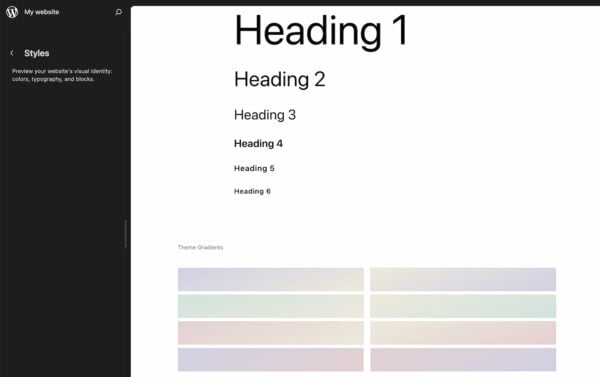
The Style Book, previously exclusive to block-based themes, is now accessible for Classic themes that have editor-styles or a theme.json file. It also comes with a new look and a few new settings to play around with. You can find this feature, or see if you have access to this feature, by going to Appearance > Design > Styles in your vertical navigation bar on the left side.

The Style Book shows the design elements of your site.

This tool gives you an overview of your site’s design elements, including colors, typography, and block styles. Just scroll down to have a look at all the design elements and whether you’re happy with everything design-wise.

Increasing performance with speculative loading

WordPress 6.8 introduces speculative loading, a feature that leverages the Speculation Rules API to prefetch or prerender pages based on user interactions. When someone clicks on a link, this page can now be preloaded. This anticipatory loading results in faster page transitions and a smoother browsing experience.

Of course, WordPress will not load everything as this would compromise performance if it becomes too much. This feature aims to keep a balance between speed and efficiency in choosing which pages to load. Developers can customize this behavior by using a plugin or writing code if they want it to act differently. It’s also good to know that this feature only works in newer browsers.

This feature is part of a longer list of enhancements focused on performance and speed, for both editing and browsing. Without going into too much detail, this update comes with improvements to the block editor, query caching and shorter interactions thanks to the Interactivity API.

WordPress 6.8 brings a few new enhancements to the design and editing experience. We’ll go into a few of them, such as the improved global styles panel, the option to turn image blocks into featured images and new density settings in table layouts.​

Global styles panel

The Global Styles Panel in the full site editor has had an update, making it easier than ever to give your website a cohesive and polished look. Now, users can tweak typography, colors, and layout settings for their entire site — all from one convenient place. Whether you’re adjusting heading sizes, setting your brand colors, or fine-tuning spacing, this central hub helps you manage your site’s design without having to dive into custom CSS or theme files.

One of the most welcome little updates in WordPress 6.8 is the ability to turn any image block directly into a featured image with a single click. No more uploading the same image twice — once in the content and once for the featured image. If you’ve already added a perfect image to your post, you can now designate it as the featured image straight from the block editor, which simplifies your workflow and saves time.

WordPress 6.8 feature: setting image block as featured image
Simply select any image in your post and click ‘Set as featured image’

Density options for your tables

WordPress 6.8 introduces new density settings for table-based layouts, particularly useful when you’re managing data-heavy content like tables in the admin or Data Views. With these new controls, you can choose how compact or spacious you want your table rows and cells to appear, depending on your personal preference or the type of content you’re handling. Whether you prefer a minimal, airy look or a dense, info-packed table, WordPress now gives you the flexibility to adjust it to suit your needs.

Under-the-hood improvements

Beyond the user-facing features, WordPress 6.8 includes a lot of enhancements under the hood. Let’s check out a few highlights.​

Higher security with bcrypt

Although less visible, this feature is one to get excited about as well. As it brings a significant boost to security. The system is moving away from the MD5-based system for password hashing and transitioning to bcrypt. This change improves overall password security and requires no action from you or your users. It’s automatically implemented and will make it a lot harder to crack passwords.

Efficient block type registration

The new release introduces a new function that makes registering multiple block types much easier for developers. Instead of writing separate code for each block, plugin and theme creators can now register a whole collection of blocks in one go. This not only reduces repetitive code but also helps keep projects organized and easier to maintain, making life simpler for developers and creating fewer opportunities for bugs.

Internationalization improvements

With WordPress powering sites across the globe, internationalization is always a priority. This release ensures that error messages generated by PHPMailer (WordPress’s email handling system) are properly localized, so users see helpful and understandable messages in their language. Additionally, any plugin update notifications sent via email will now respect the site administrator’s selected language, making routine updates more user-friendly for non-English speakers.

Accessibility enhancements

WordPress 6.8 continues the platform’s commitment to making websites more inclusive by improving accessibility across the board. One of the key changes in this release is the removal of redundant title attributes, which were often unnecessary and could cause confusion for users relying on screen readers.

This small but meaningful update helps streamline the browsing experience for people using assistive technology, ensuring that WordPress websites are more welcoming and accessible to all visitors. Other than that, there are over 100+ accessibility fixes and enhancements in this release.

Update your site to WordPress 6.8

Those are a few of the features that you’ll find in this latest release. There’s a lot of focus on enhancing the overall user experience and refining existing functionalities. Whether you’re a developer or website manager, this update is meant to make your life a bit easier and your website more secure and performant. Read the official WordPress release post for more information on this newest version of WordPress. Or, if you’re curious to see these features in action, update to the newest version and try them out yourself!

Read more: Learn how to use WordPress without touching any code »