The Download: the risks of addictive AI, and hydrogen bikes’ limitations

This is today’s edition of The Download, our weekday newsletter that provides a daily dose of what’s going on in the world of technology.

We need to prepare for ‘addictive intelligence’

—By Robert Mahari, a joint JD-PhD candidate at the MIT Media Lab and Harvard Law School whose work focuses on computational law, and Pat Pataranutaporn, a researcher at the MIT Media Lab who studies human-AI interaction.

Worries about AI often imagine doomsday scenarios where systems escape control or even understanding. But there are nearer-term harms we should take seriously: that AI could jeopardize public discourse; cement biases in loan decisions, judging or hiring; or disrupt creative industries. 

However, we foresee a different, but no less urgent, class of risks: those stemming from relationships with nonhuman agents. 

AI companionship is no longer theoretical—our analysis of a million ChatGPT interaction logs reveals that the second most popular use of AI is sexual role-playing. We are already starting to invite AIs into our lives as friends, lovers, mentors, therapists, and teachers. Even the CTO of OpenAI warns that AI has the potential to be “extremely addictive.”

Here’s what we need to do to prepare ourselves for these risks.

Hydrogen bikes are struggling to gain traction in China

If you are in China and looking to ride a shared bike in a city, you might find something on the bike that looks a little different: a water-bottle-size hydrogen tank.

At least a dozen cities in China now have some kind of hydrogen-powered shared bikes for their residents. They offer an easier ride than traditional bikes and a safer energy source than lithium batteries. One Chinese company is betting that this will be the next big thing in public transportation, while others are riding on a national trend toward government policies that encourage the development of the hydrogen industry.

However, the reception to these bikes has been mixed. Read our story to find out why

—Zeyi Yang

The must-reads

I’ve combed the internet to find you today’s most fun/important/scary/fascinating stories about technology.

1 Tech stocks in the US took a big plunge on Friday
Due to worries about the economy, and underwhelming returns on AI investments. (CNBC)
Optimism around AI is becoming more muted. (FT $)
Tech shares in Europe are down today too. (Reuters $)
What even is AI, anyway? No one seems to really agree. (MIT Technology Review)

2 How online falsehoods helped spark far-right rioting in the UK
Utter nonsense, some of it AI-generated, started circulating online just hours after a fatal stabbing attack in Southport. (The Guardian)
It doesn’t help that a prominent far-right agitator’s account was reinstated on X last year. (The Independent $)

3 OpenAI has a tool to catch AI-generated text, but won’t release it
It’s apparently 99.9% accurate, but the company worries it’d put people off using its products. (WSJ $)
Here’s how people really use AI chatbots. (WP $)

4 The US Justice Department is suing TikTok
It’s accusing the company of violating children’s privacy. (NPR)
+ The depressing truth about TikTok’s impending ban. (MIT Technology Review

5 What went wrong at Intel?
It’s struggling to capitalize on the chip industry boom, as Nvidia takes the technological lead. (Vox)
Nvidia is being probed by US antitrust officials, amid complaints it’s abusing its market dominance. (The Information $)
Here’s what to expect from the chip sector this year. (MIT Technology Review)

6 Elon Musk claims Neuralink implanted its device into a second person
And he says there’ll be plenty more to come this year, if all goes well. (Bloomberg $)
But Neuralink isn’t the only game in town. (WSJ $)
+ The first brain implant made of graphene is about to be tested in a clinical trial. (FT $)

7 How to protect yourself from wildfire smoke
Whatever you do, do not exercise outdoors if you’re in an affected area. (Wired $)
The Park Fire in California is now the state’s fourth-largest blaze on record. (Axios)

8 Companies are planning to fuel cargo ships with ammonia
It’s an unusual, but potentially effective, way to help cut greenhouse gas emissions. (IEEE Spectrum)
How ammonia could help clean up global shipping. (MIT Technology Review

9 Meet the influencers who’ve gone full carnivore 🥩
Some are convinced it’s repairing their gut. The evidence suggests otherwise. (The Cut $)

10 The limitations of Screen Time tools 
It’s how you’re using your phone, not just how much, that matters. (The Atlantic $)

Quote of the day

“If we can’t trust them to govern themselves, we certainly shouldn’t let them govern the world.”

—Gary Marcus, a professor emeritus at NYU, writes that we should apply more skepticism to AI companies in general, and OpenAI’s Sam Altman in particular, in The Guardian

The big story

The $100 billion bet that a postindustrial US city can reinvent itself as a high-tech hub

A grassy empty field in Clay, New York.

KATE WARREN

July 2023

On a day in late April, a small drilling rig sits at the edge of the scrubby overgrown fields of Syracuse, New York, taking soil samples. It’s the first sign of construction on what could become the largest semiconductor manufacturing facility in the United States.

The CHIPS and Science Act was widely viewed by industry leaders and politicians as a way to secure supply chains, and make the United States competitive again in semiconductor chip manufacturing. 

Now Syracuse is about to become an economic test of whether, over the next several decades, aggressive government policies—and the massive corporate investments they spur—can both boost the country’s manufacturing prowess and revitalize neglected parts of the country. Read the full story.

—David Rotman

We can still have nice things

A place for comfort, fun and distraction to brighten up your day. (Got any ideas? Drop me a line or tweet ’em at me.)

+ Did you know that there are clips of all the Olympic athletes explaining how their names are pronounced on the official website? LeBron James’ is particularly great.
+ There’s a lot more to search-and-find illustrations than Where’s Waldo.
+ How many of these director’s cuts have you seen?
+ From Medusa to the shape-shifting Lamia, many of mythology’s most compelling monsters are female.

A playbook for crafting AI strategy

Giddy predictions about AI, from its contributions to economic growth to the onset of mass automation, are now as frequent as the release of powerful new generative AI models. The consultancy PwC, for example, predicts that AI could boost global gross domestic product (GDP) 14% by 2030, generating US $15.7 trillion.

Forty percent of our mundane tasks could be automated by then, claim researchers at the University of Oxford, while Goldman Sachs forecasts US $200 billion in AI investment by 2025. “No job, no function will remain untouched by AI,” says SP Singh, senior vice president and global head, enterprise application integration and services, at technology company Infosys.

While these prognostications may prove true, today’s businesses are finding major hurdles when they seek to graduate from pilots and experiments to enterprise-wide AI deployment. Just 5.4% of US businesses, for example, were using AI to produce a product or service in 2024.

Moving from initial forays into AI use, such as code generation and customer service, to firm-wide integration depends on strategic and organizational transitions in infrastructure, data governance, and supplier ecosystems. As well, organizations must weigh uncertainties about developments in AI performance and how to measure return on investment.

If organizations seek to scale AI across the business in coming years, however, now is the time to act. This report explores the current state of enterprise AI adoption and offers a playbook for crafting an AI strategy, helping business leaders bridge the chasm between ambition and execution. Key findings include the following:

AI ambitions are substantial, but few have scaled beyond pilots. Fully 95% of companies surveyed are already using AI and 99% expect to in the future. But few organizations have graduated beyond pilot projects: 76% have deployed AI in just one to three use cases. But because half of companies expect to fully deploy AI across all business functions within two years, this year is key to establishing foundations for enterprise-wide AI.

AI readiness spending is slated to rise significantly. Overall, AI spending in 2022 and 2023 was modest or flat for most companies, with only one in four increasing their spending by more than a quarter. That is set to change in 2024, with nine in ten respondents expecting to increase AI spending on data readiness (including platform modernization, cloud migration, and data quality) and in adjacent areas like strategy, cultural change, and business models. Four in ten expect to increase spending by 10 to 24%, and one-third expect to increase spending by 25 to 49%.

Data liquidity is one of the most important attributes for AI deployment. The ability to seamlessly access, combine, and analyze data from various sources enables firms to extract relevant information and apply it effectively to specific business scenarios. It also eliminates the need to sift through vast data repositories, as the data is already curated and tailored to the task at hand.

Data quality is a major limitation for AI deployment. Half of respondents cite data quality as the most limiting data issue in deployment. This is especially true for larger firms with more data and substantial investments in legacy IT infrastructure. Companies with revenues of over US $10 billion are the most likely to cite both data quality and data infrastructure as limiters, suggesting that organizations presiding over larger data repositories find the problem substantially harder.

Companies are not rushing into AI. Nearly all organizations (98%) say they are willing to forgo being the first to use AI if that ensures they deliver it safely and securely. Governance, security, and privacy are the biggest brake on the speed of AI deployment, cited by 45% of respondents (and a full 65% of respondents from the largest companies).

Download the full report.

This content was produced by Insights, the custom content arm of MIT Technology Review. It was not written by MIT Technology Review’s editorial staff.

SEO Aspects of Content Syndication

Syndicating content to other platforms can generate more views and increase a brand’s visibility.

Popular syndication platforms include Medium, Substack, and LinkedIn. Many established media outlets allow the placement of quality and relevant content on their websites.

Publishers who syndicate content have two ways to point it to their sites as the source:

  • A link to their original article. This is a weak signal to Google (plus, the links are typically nofollow) but can direct some traffic from the syndicated content back to your site.
  • A rel= “canonical” link element pointing to the source is a stronger signal and may send external link equity back to your article. Not all sites offer this option, however. LinkedIn and Substack, for example, do not allow canonicals.

I prefer links and canonicals where possible, for search engines and referral traffic. However, even with both options in place, Google may choose to index and rank syndicated content versus the original article.

Google Decides

We’ve long known that rel= “canonical” is not a directive. Even to eliminate internal duplicate content, Google will decide which page to index and rank based on internal links and other signals (such as content depth and relevancy).

The same exists for cross-site canonical tags. Based on the domain authority and external links, Google may rank a non-original version of syndicated content. Google’s John Mueller confirmed this. When asked why Google often ranks syndicated content over the original, Mueller stated:

In general, when you syndicate or republish your content across platforms, you’re trading the extra visibility within that platform with the possibility that the other platform will appear in the search results above your website…

…the rel=canonical is not a directive, even within the same site. And if the pages are different, it doesn’t make sense for search engines to treat the pages as being equivalent. If you want to make sure that “your” version is the one shown in the search, you need to use `noindex` on the alternate versions.

Unfortunately, I’m unaware of syndication platforms that would noindex a page on their site.

In the same thread, Mueller cautioned website owners against noindexing their own content in fear of duplicate content penalty, stating that if you cannot noindex syndicated content, let Google decide, adding there’s no such thing as a duplicate content penalty.

SEO Implications

Content syndication is not a tactic for search engine optimization, but it could benefit content and brand exposure.

There’s no reliable way to ensure that Google will perceive your site as the original source and rank the content accordingly.

Yet there are a few ways to make content syndication SEO-friendlier:

  • Pick syndication partners that allow rel= “canonical” tags to point back to your site (which Google may or may not follow)
  • To keep your site’s content original, create different versions of an article when syndicating. This is time-consuming and only possible when you syndicate your content manually. It doesn’t ensure that your article will outrank syndicated versions. Nonetheless, many search engine optimizers (including me) still recommend it.

In short, syndicated content can reach a much wider audience and is thus a helpful marketing tactic. It does little, however, for search engine optimization.

OpenAI Scraps ChatGPT Watermarking Plans via @sejournal, @MattGSouthern

OpenAI has decided against implementing text watermarking for ChatGPT-generated content despite having the technology ready for nearly a year.

This decision, reported by The Wall Street Journal and confirmed in a recent OpenAI blog post update, stems from user concerns and technical challenges.

The Watermark That Wasn’t

OpenAI’s text watermarking system, designed to subtly alter word prediction patterns in AI-generated text, promised near-perfect accuracy.

Internal documents cited by the Wall Street Journal claim it was “99.9% effective” and resistant to simple paraphrasing.

However, OpenAI has revealed that more sophisticated tampering methods, like using another AI model for rewording, can easily circumvent this protection.

User Resistance: A Key Factor

Perhaps more pertinent to OpenAI’s decision was the potential user backlash.

A company survey found that while global support for AI detection tools was strong, almost 30% of ChatGPT users said they would use the service less if watermarking was implemented.

This presents a significant risk for a company rapidly expanding its user base and commercial offerings.

OpenAI also expressed concerns about unintended consequences, particularly the potential stigmatization of AI tools for non-native English speakers.

The Search For Alternatives

Rather than abandoning the concept entirely, OpenAI is now exploring potentially “less controversial” methods.

Its blog post mentions early-stage research into metadata embedding, which could offer cryptographic certainty without false positives. However, the effectiveness of this approach remains to be seen.

Implications For Marketers and Content Creators

This news may be a relief to the many marketers and content creators who have integrated ChatGPT into their workflows.

The absence of watermarking means greater flexibility in how AI-generated content can be used and modified.

However, it also means that ethical considerations around AI-assisted content creation remain largely in users’ hands.

Looking Ahead

OpenAI’s move shows how tough it is to balance transparency and user growth in AI.

The industry needs new ways to tackle authenticity issues as AI content booms. For now, ethical AI use is the responsibility of users and companies.

Expect more innovation here, from OpenAI or others. Finding a sweet spot between ethics and usability remains a key challenge in the AI content game.


Featured Image: Ascannio/Shutterstock

Improve Your Site With The Latest Organic Traffic Benchmarks & Search Trends via @sejournal, @hethr_campbell

How do you know if your website is doing as well as your competitors in search results?

Join us on August 14 for a webinar that will reveal the latest organic search traffic benchmarks, trends, and insights for 2024. 

This session, brought to you by Conductor, is designed to help you fine-tune your SEO and content strategies for maximum impact.

Why Attend This Webinar?

Knowing how well your website does in regular search results compared to others in your field is really important. It helps you:

  • Make sense of how many people have found your site through search so far this year.
  • Gain better visibility for your website in search results and hone what kind of content you create.
  • Set better goals for your website’s performance.

Shannon Vize, Senior Content Marketing Manager, and Ryan Maloney, who leads the Customer Success Team, will give you practical advice on improving your website’s search performance.

Key Takeaways

In this information-packed session, you’ll learn:

  • 2024 organic search traffic benchmarks across major industries and their subsectors.
  • Industry-specific comparisons of branded vs. non-branded organic search traffic.
  • The most common rich result types and top content sources.
  • Practical SEO tactics you can apply to your own strategy.
  • How to set more accurate KPIs to evaluate and improve organic search performance.

Who Should Attend?

This webinar is perfect for:

  • SEO pros who want to measure their performance against others.
  • Digital marketers looking to sharpen their organic search tactics.
  • Content creators aiming to boost their search visibility.

Take advantage of this chance to fine-tune your organic search and content strategies for success.

Live Q&A: Get Your Questions Answered

Bring your burning questions! After the presentation, Shannon and Ryan will be available for a live Q&A session to address your specific concerns.

Can’t Make It?

No worries! Register anyway, and we’ll send you a recording of the webinar after the event.

Join us on August 14th at 2 PM ET to gain valuable insights to help you outperform your competition in organic search. Register today and take the first step toward elevating your SEO strategy!

Google Found in Violation of Antitrust Law, Judge Rules via @sejournal, @MattGSouthern

A federal judge has ruled that Google violated U.S. antitrust law by illegally maintaining monopolies in the markets for general search services and general search text advertising.

Judge Amit P. Mehta of the U.S. District Court for the District of Columbia, ruling in a case brought against Google by the Justice Department, said that Google had abused its monopoly power over the search business in part by paying companies to present its search engine as the default choice on their devices and web browsers.

Judge Mehta wrote in his opinion filed Monday:

“After having carefully considered and weighed the witness testimony and evidence, the court reaches the following conclusion: Google is a monopolist, and it has acted as one to maintain its monopoly. It has violated Section 2 of the Sherman Act.”

The court found that Google abused its dominant position in several ways:

  • Paying hefty sums to ensure default status on devices and browsers
  • Leveraging user data to reinforce its search engine’s dominance
  • Illegally protecting its monopoly over search-related advertising

Key Findings Of Anticompetitive Behavior

The judge found that Google’s agreements with Apple, Mozilla, and Android partners foreclosed about 50% of the search market and 45% of the search advertising market from rivals.

These exclusive distribution agreements deprived competitors like Microsoft’s Bing of the scale needed to compete with Google in search and search advertising.

Judge Mehta concluded that Google’s conduct had anticompetitive effects:

  • Foreclosing a substantial share of the market
  • Depriving rivals of scale needed to compete
  • Reducing incentives for rivals to invest and innovate in search

The case began in 2020 and culminated in a 10-week trial last fall.

Financial Revelations

The trial disclosed financial details of Google’s default search agreements.

In 2022, Google paid Apple $20 billion for default search placement on iOS devices, an increase from $18 billion in 2021.

Additionally, Google shares 36% of Safari’s search ad revenue with Apple.

These figures highlight the value of default search positioning in the industry.

Google’s Defense & Market Share

Throughout the trial, Google maintained that its market dominance resulted from superior product quality rather than anticompetitive practices.

The company disputed the DOJ’s estimate that it held a 90% share of the search market, arguing for a broader definition of its competitive landscape.

However, Judge Mehta rejected this defense:

“Google has thwarted true competition by foreclosing its rivals from the most effective channels of search distribution.”

Ruling On Search Advertising

On search advertising, the judge found Google could charge supra-competitive prices for text ads without rivals’ constraints.

However, the judge ruled in Google’s favor on some claims, finding Google doesn’t have monopoly power in the broader search advertising market.

Potential Ramifications

While Judge Mehta has yet to determine specific remedies, the ruling opens the door to potentially far-reaching consequences for Google’s business model. Possible outcomes could include:

  • Forced changes to Google’s search operations
  • Divestiture of specific business segments
  • Restrictions on default search agreements

The decision is likely to face appeals, and the final resolution may evolve, as seen in the Microsoft antitrust case of the 1990s.

Broader Context

This ruling sets a precedent that could influence other ongoing antitrust cases against tech giants like Amazon, Apple, and Meta.

It signals a shift in how century-old antitrust laws are applied to modern digital markets.

What’s Next

Google is expected to appeal the decision, potentially leading to a protracted legal battle that could shape the future of online search and digital advertising.

The Department of Justice and a group of attorneys general from 38 states and territories, who filed similar antitrust suits against Google in 2020, will eagerly anticipate the next steps in this legal battle.


Featured Image: Sergei Elagin/Shutterstock

Why Search (And The User) Is Still Important To SEO via @sejournal, @RyanJones

Throughout every technological change, the one constant always seems to be people calling for the death of SEO and search engines.

While pundits have been quick to call for the death of SEO, SEO itself has been all too reluctant to die. This article will look at how SEO evolves and why that makes it even more important.

Sure we could just spout some random facts about how most online purchases begin with a search and how a majority of online sessions include search – but there is a much bigger case to be made.

To fully grasp the importance of SEO and search, we first need to go back and understand both user intent (why people search) and how search engines have changed.

SEO Isn’t Dead

The “SEO is dead” articles always seem to follow a change to search that makes information easier to access for consumers. We saw it with featured snippets, we saw it with instant answers, and we’re seeing it again with AI.

We’ve also seen the “death of SEO” articles pop up around new and emerging social media sites like Meta, TikTok, X, etc – but the fact remains that overall web searches on search engines have continued to increase every year for the last decade plus.

Search isn’t dying, and new social networks or technology like AI aren’t cutting into search – they’re just making people search more. Search is becoming ingrained in (if not defining) our everyday online behavior.

While often associated, SEO is more than just building links or tricking search engines with spammy tactics. That stuff can work – temporarily – but not long-term for a real business or a brand. Sustained SEO growth needs to focus on more than keywords and tricks.

From Keywords To Intent

There’s a great quote from Bill Gates back in 2009 where he said “the future of search is verbs.”

This quote really summarizes the heart of “why” people search. People are searching to accomplish a task or do something.

It’s important that we consider this search intent when evaluating SEO and search. Not all searchers want websites. In the early days of search, links to websites were the best thing we had.

Today, however, search engines and AI are getting better at answering common questions.

For a search like [how old is taylor swift] or [when is the NHL trade deadline?] users just want an answer – without having to click over to a website, accept the cookie consent notice, close the alert popup, decline to subscribe to the newsletter, stop the auto-play video ad, and scroll past three irrelevant paragraphs to get the answer.

If creating thin ad-rich pages to answer public domain questions was your idea of SEO, then yes SEO is dead – however, SEO is much more than that now.

SEO Is Marketing

When many say search and SEO are dying, those factoid searches are the SEO they’re talking about – but there’s an entire section of search that’s thriving: The verbs!

This shift makes SEO even more important because search is no longer about the word the user typed and is all about doing actual marketing.

SEOs can help understand user intents and personas.

A good SEO professional can help you understand not only what users are searching for but “why” they’re searching – and then help marketers build something that meets the users needs.

Just as search engines have evolved, so, too, has SEO.

The days of keyword density and meta tags are gone. Search engines don’t really work like that anymore.

They’ve moved on to a semantic model that uses vectors to try to understand meaning – and marketers would do well to make the same moves by understanding their user’s intent.

Evolution Of The Consumer Journey

We typically think of the consumer journey as a funnel – but that funnel in every business school textbook doesn’t really exist. Today’s consumer journey is more like one of those crazy straws you got in a cereal box as a kid with lots of bends and loops and turns it in.

Consumers are searching more than ever across multiple devices, platforms, networks, apps, and websites. This spread-out user behavior makes having an experienced SEO pro even more important.

It’s not just about getting the right words on the page anymore, and understanding user intent isn’t enough – we also have to understand where our users are acting on each of those intents.

Technical Still Matters, Too

Despite many platforms and frameworks claiming to be SEO-friendly, technical SEO issues and opportunities still remain abundant.

Most of today’s most popular website frameworks aren’t very SEO-friendly out of the box and still require customization and tweaking to really drive results.

There still isn’t a one size fits all solution and I’m not sure there ever will be.

A good SEO will help you ensure that there aren’t confusing duplicate versions of pages, that the pages you want to be seen are all easily understood by search engines, and that your re-design or re-platform won’t hurt your existing traffic.

So Why Is Search Still Important?

Search is important because users are important.

Sure, users are going to different platforms or using apps/AI – but those things are still technically a search and we still need to make sure that they’re surfacing our brands/products.

It doesn’t matter if the user is typing into a web form, talking to a device, asking an AI, using their camera, or even talking into a smart pin – they’re still trying to “do” something – and as long as users have tasks to accomplish, SEO pros will be there to influence them.

More resources:


Featured Image: Accogliente Design/Shutterstock

Step-By-Step Guide To Earning Your Google Ads Certification via @sejournal, @coreydmorris

Getting Google Ads Certified is a great way to demonstrate a baseline learning effort and level of exposure to PPC and managing Google Ads.

Whether you’re coming out of school, entering a career that involves Google Ads, or simply want to learn, it is a great place to get started.

Some employees may list it as a minimum requirement on applications. Others will include it in onboarding and training. It can be a great place to start your own self-guided journey in less corporate environments or if you’re doing your own work to learn and level up.

Additionally, many agencies and organizations are part of the Google Partners program. Google Partners often must meet certain standards, such as maintaining different levels of badges or credentials across their teams.

One requirement is to have a certain number of connected accounts (strategists) certified, with certain numbers or minimums that need to be met in specific specialty areas (more on these later).

This article is about the individual certification (for professionals), so just note that it is important to make sure things get linked up properly with your company if you were asked to become certified for your company’s Google Partner program.

What Is Google Ads Certification?

Google Ads certification is a process by which Google recognizes marketers as experts in online advertising.

After passing Ads certification exams, individuals get a personalized certificate and – if affiliated with a company – can contribute to the company’s Google Partner credentials.

There have been a tremendous number of changes in Google Ads.

Google has increased the number of certification exam topics over the past couple of years, but in some cases, the rapid pace of Google’s platform changes hasn’t been maintained in the learning and exam content.

If you’re interested in learning more or taking your own steps toward Google Ads Certification – regardless of the reason or motivation – check out the four steps to work through the process and be prepared to dedicate some time to working through them.

How To Earn Your Google Ads Certification

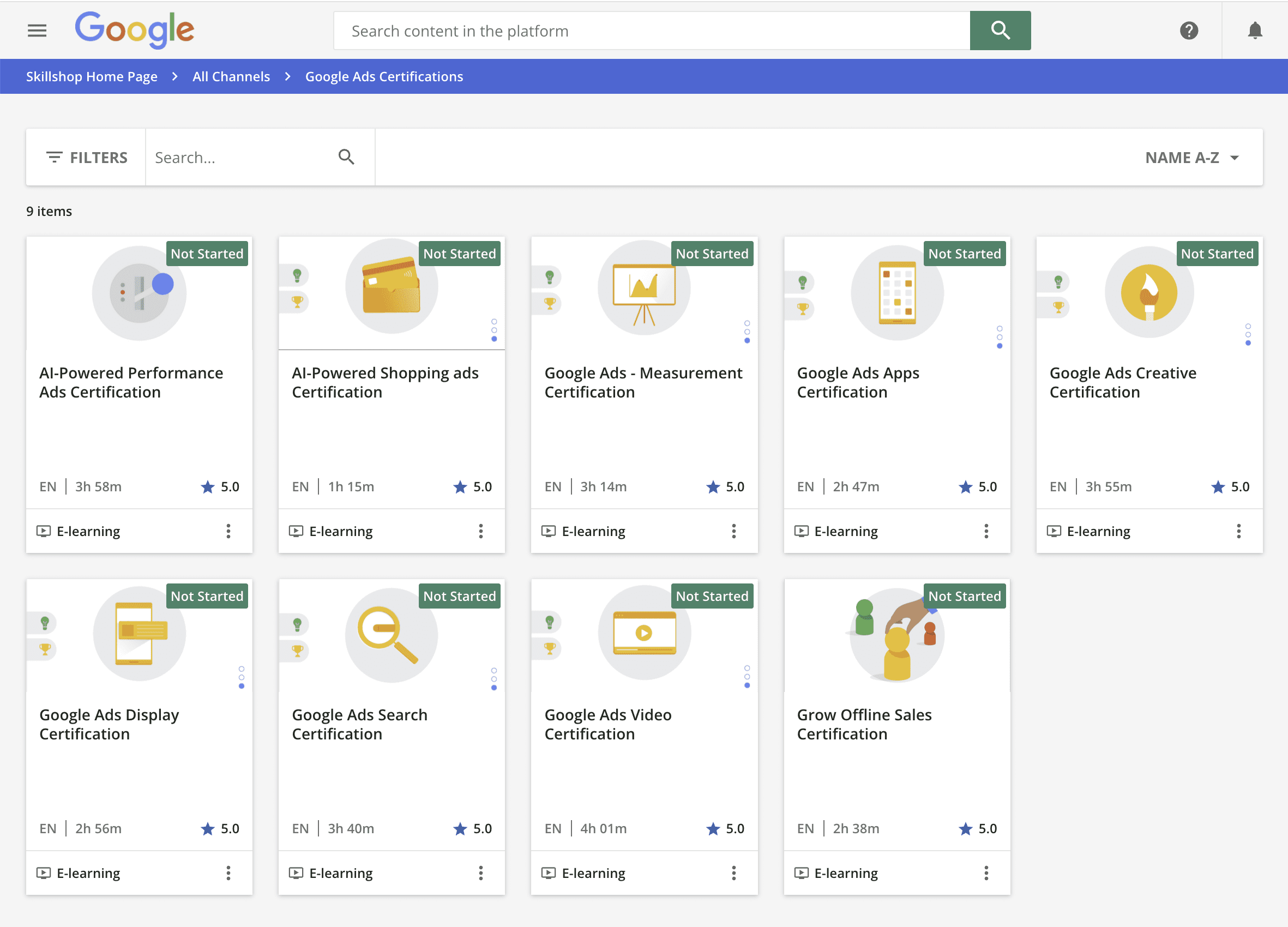
Step 1: Get Started In Skillshop

Navigate to the Google Ads Certification platform within Skillshop.

In the top right corner, click Log In.

Now, we’re at a critical step right away. We want to ensure that the account you get certified through is the specific one you want to be certified. If this is your first time using Google’s Skillshop, you must create a new account.

Please read to the end of the details for this step before you start filling out the forms and taking any account linking steps.

Please note that if you have an existing account, you may still be required to do some new account linking or migration based on Google’s migration from skillshop.exceedlms.com to skillshop.docebosaas.com.

If you work for an agency or a company, you will likely be required to use your work email address.

Regardless of agency, corporate, or whatever status, you likely want to link your certification to the address you manage Google Ads to keep things simple and clean.

If you haven’t managed Google Ads yet and don’t have an account, you can easily create one here to get started.

If you’re a returning user, be careful to find your Skillshop profile and ensure your Google account is still properly linked so you don’t accidentally take exams in a new account versus recertifying your current account.

Again, you may have to perform additional linking and verification steps based on the migration of systems on Google’s end. Be mindful of that.

The account management piece can be confusing and frustrating as there are separate profiles yet linked accounts between this system and Google’s accounts and Ad management systems.

If you’re interested in having your certification count toward a Google Partners badge, be sure to link things properly using the company email address you use for managing ads for your Google Partner company.

If you’re interested, I encourage you to learn more about the Google Partners program details, requirements, and logistics for getting set up.

Please note that the certifications you need to be counted for Google Partners are more narrow and specific than those you need to be a certified Google Ads Professional.

Step 2: Select Your Exam

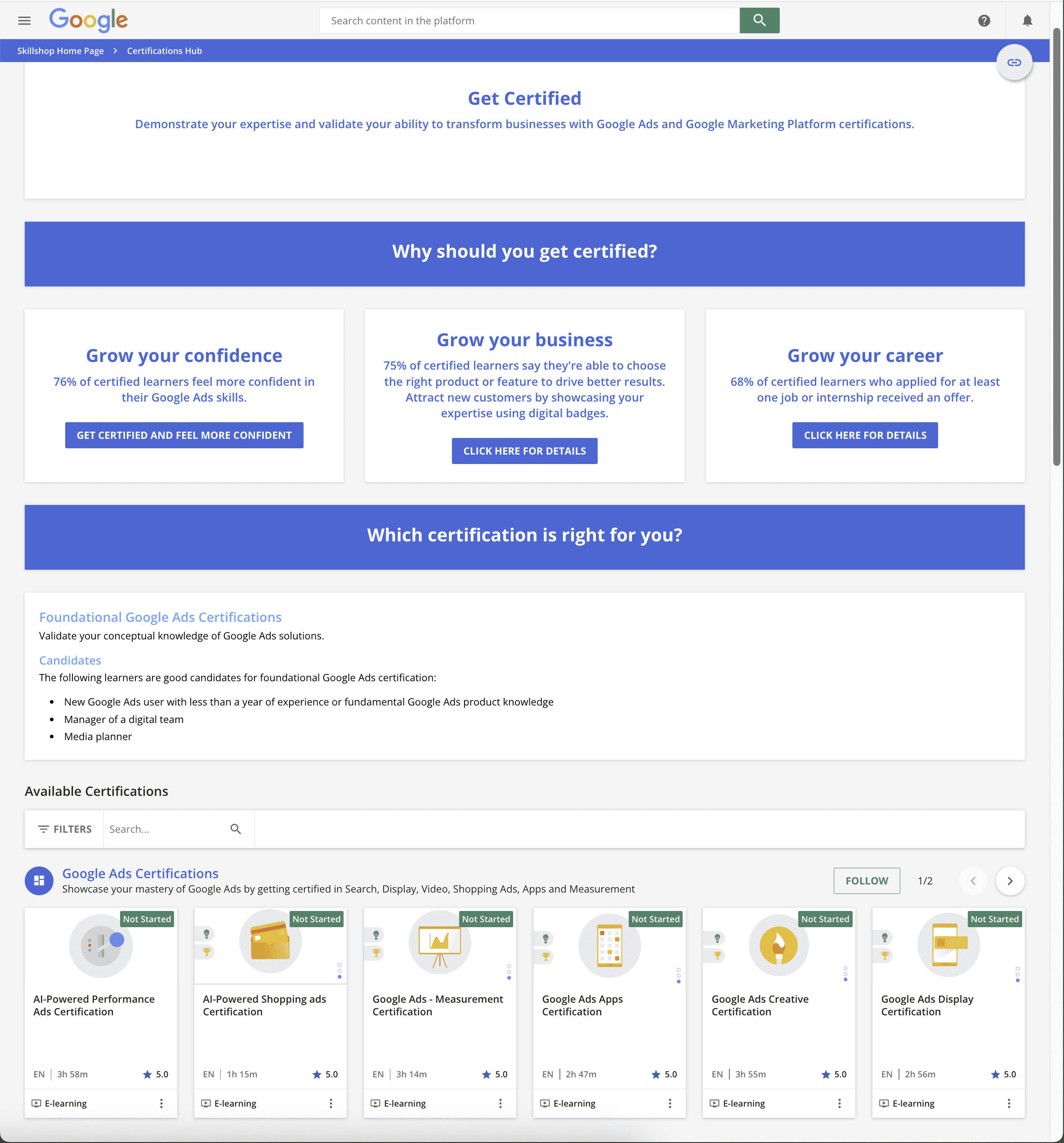
If needed, navigate back through Skillshop to the Google Ads Certifications again to arrive at the page with the list of exam topics.

You’ll find an intro page that provides background information to help you determine which certification is right for you and different categories or exam tiers as Google recommends.

Google <span class=

If your goal is simply to get certified, then you can follow the navigation to reach the page that is focused on the certification exams itself.

Google <span class=

Here, you can find the specific certification you want to start with and click on it.

Within the specific certification, read the overview info.

When you’re ready to dive in, click the Get Started button.

Step 3: Prepare For Exams

Google provides both basic educational info and more extensive training content.

The specific Google Ads certifications include:

  • AI-Powered Performance Ads Certification.
  • AI-Powered Shopping Ads Certification.
  • Google Ads – Measurement Certification.
  • Google Ads Apps Certification.
  • Google Ads Creative Certification.
  • Google Ads Display Certification.
  • Google Ads Search Certification.
  • Google Ads Video Certification.
  • Grow Offline Sales Certification.

If you’re brand new to Ads and the certification exams, I recommend starting with the Google Ads Search Certification.

Search ads are one of the fundamental and traditional types of ads from the Google Ads platform.

But if you are more focused on something like just shopping, then start there.

Or, if you’re brand new and are most interested in the newer AI-powered ads and functionality, skip right to that one, but know that you might need a little more training and ramp-up time to understand the AI aspects on top of some traditional concepts.

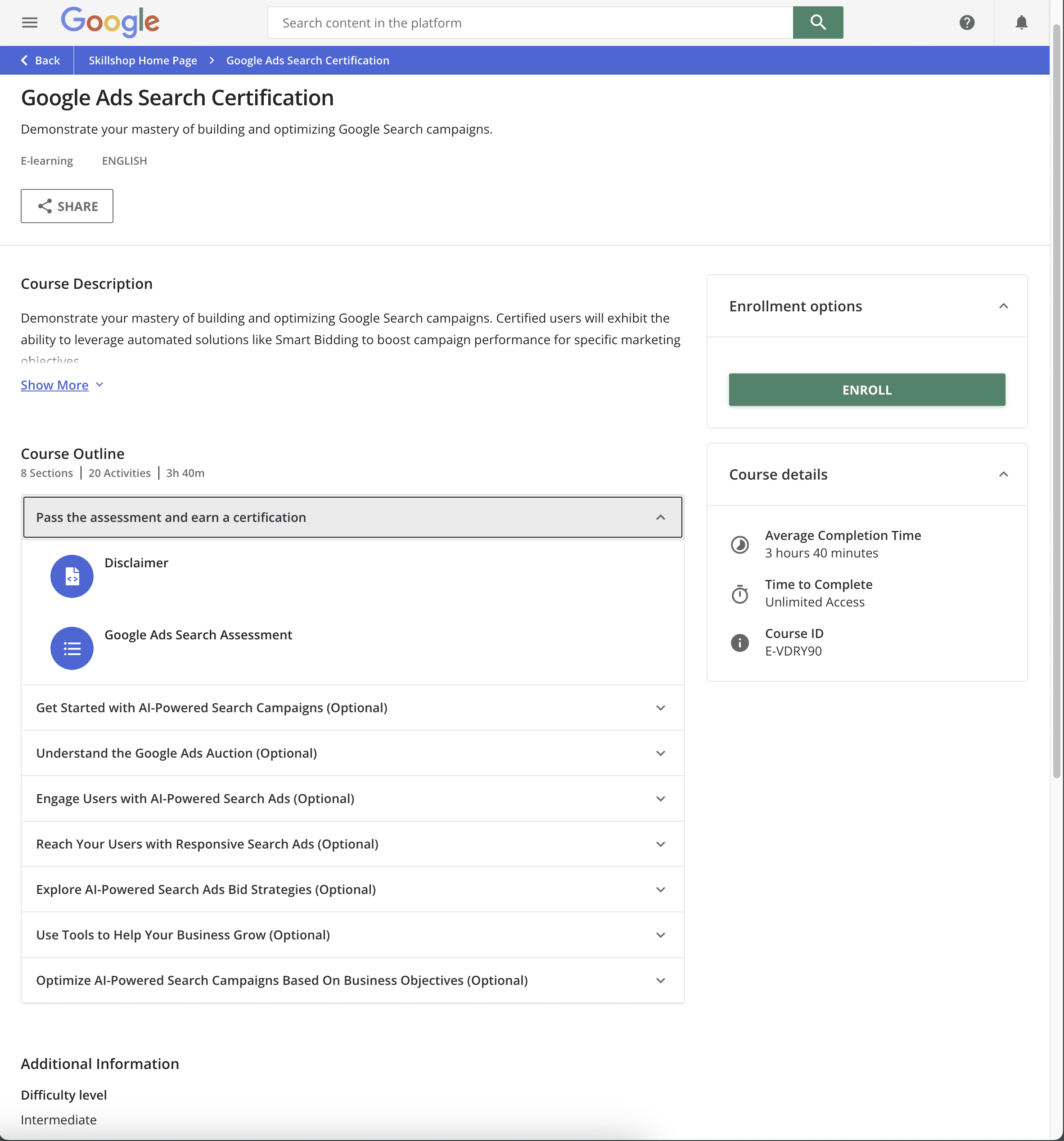
Training content is available and tied to each of the specific certifications.

When you click on any of them, you’ll have options to get started, including a quick knowledge assessment and other resources.

Google Ads Certification DetailsScreenshot from skillshop.docebosaas.com, June 2024

You’ll need to plan on investing at least a few hours to go through the training content specialization.

If you’ve been managing Ads campaigns or have deeper exposure, it’s still a good idea to go through the modules – even if you do it faster.

The sample questions are quite helpful; they are written in the same format as they appear on the actual exams.

This is especially important to note as with some of the recent rapid changes and features that have been rolled out into Google Ads, some of the exam content might be slightly (or more) dated than what you’re used to seeing in the platform on a daily basis.

Unless you have previously been certified and/or have moderate Ads experience, don’t skip the training content!

Step 4: Pass The Assessment

To become certified, you must pass the assessment in any of the respective certification specialties by achieving at least a minimum percentage of correct answers within the time allotted for the exam.

Note that you cannot pause the timer, so be sure that you’re able to dedicate the time required and can remove interruptions.

Your certification will then be awarded for that specific product focus area.

You can stop with one specialization or continue by going through additional specializations until you have mastered and achieved all of those relevant to your desired credentials.

If you’re an overachiever or love standardized tests, there’s nothing that says you can’t take them all.

Note that if you fail to pass an exam, you must wait one day before retaking that specific assessment again. That’s the only real penalty for not passing.

For all assessments you pass, which give you certifications, you will receive an email confirming your status at minimum. In the past, there have been badges and certificates to publicly display and download.

As things continue to change, though, I recommend keeping a digital record of your certifications. You can always go back into the dashboard to help show or prove that you passed and are certified if necessary.

The Google Ads Platform Is Ever-Changing

Whether you’re new to paid search ads through Google or have been managing ads for years and are just now exploring certification, I encourage you to spend some time with the steps I unpacked and see if you feel like it will be a worthwhile investment in your learning and personal credentialing.

As I mentioned earlier, be patient and know that there might be some disconnects between what you see in the exams versus in the platform itself as things are changing at a rapid pace with new features, interfaces, and ways that Google Ads works.

Regardless of your certification status, I want to encourage you on your journey with Google Ads and wish you happy and profitable days ahead for your business or organization!

More resources: 


Featured Image: Prostock-studio/Shutterstock

5 Content Marketing Ideas for September 2024

Content marketers need new ideas every month for articles, videos, and podcasts that will keep their websites and social media profiles busy and engaged.

Content marketing is the act of creating, publishing, and promoting content to attract, engage, and retain customers.

Content marketing drives many business objectives, from search engine optimization to social media marketing to brand building. But ideas fuel this kind of marketing, and they can be challenging to come up with.

What follows are five content marketing ideas for September 2024.

National Tailgating Day

National Tailgating Day is celebrated on the first Saturday in September, which in 2024 falls on the 7th.

Luke Lorick, the founder of the Tailgating Challenge, started National Tailgating Day in 2016 and has since focused the event around a love for sports, cooking, and camaraderie.

Photo of a man grilling at a tailgate event.

Tailgating is an American tradition and, therefore, a content marketing opportunity.

While there is conflicting data on the economics of football tailgating, some have estimated that 80% of Americans have participated at one time or another in a tailgating event and that collectively, revelers spend about $35 billion annually on tailgating gear, food, and beverages.

Content marketers have several angles for tailgating topics, many of which can be closely associated with the products a business sells.

For example, Venture Heat, which sells coats, jackets, and vests with built-in heaters, published “The Ultimate Guide: Tips for Tailgating Like a Pro,” a short tailgating checklist that included “stay warm” and linked to three of the brand’s heated puffy vests.

Potential articles or podcasts might include:

  • “21 Must-Have Tailgating Accessories,”
  • “Our Favorite Tailgating Barbeque Recipes of All Time,”
  • “The New Mom’s Guide to Tailgating,”
  • “A Short History of Tailgating and Eating.”

National Video Games Day

National Video Games Day, celebrated on September 12, 2024, has been observed since 1991. The day honors video games’ history and cultural impact, allowing gamers and enthusiasts to unite and celebrate their passion.

National Video Games Day could be an opportunity for content marketers to express a strong opinion.

Photo of a teenage male playing a video game.

Video games are among the most popular forms of entertainment worldwide.

Pop-culture brands could focus on video games in a positive way with game-related buying guides or game culture and how it influences everything from apparel to food.

Or some brands might challenge video game culture.

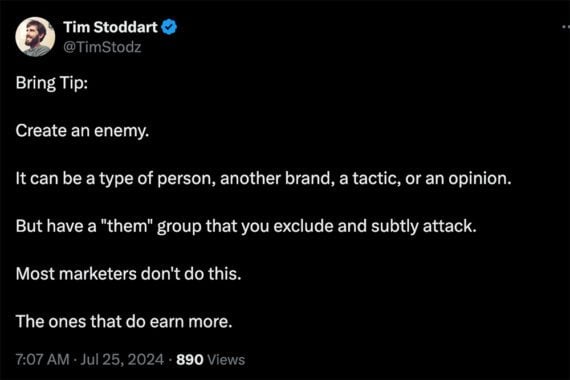
Tim Stoddart, the owner of Copyblogger, encouraged marketers to “create an enemy” in an X post, saying specifically, “Create an enemy. It can be a type of person, another brand, a tactic, or an opinion. But have a ‘them’ group that you exclude and subtly attack. Most marketers don’t do this. The ones that do earn more.”

Warning. Stoddart’s advice could be dangerous, but wouldn’t that be in keeping with the spirit of the day?

Screenshot of the post on X from Tim Stoddart

Tim Stoddart, a prominent marketer and owner of Copyblogger, has a dangerous tip.

National CleanUp Day

National CleanUp Day is celebrated on the third Saturday of September. Its purpose is to raise environmental awareness, combat littering, and encourage civil responsibility.

About 2 million people volunteer yearly to pick up litter at local parks, beaches, trails, and other public spaces.

Photo of a male picking up trash in a park

National CleanUp Day is an opportunity to volunteer and show civic pride. It can also inspire content.

For retail content marketers, National CleanUp Day is an opportunity to promote corporate responsibility, publish helpful cleaning tips, or promote products.

For example, in 2023, Electric Bike Co. published a short article announcing National CleanUp Day and encouraging folks to ride an electric bike to their clean-up event.

Similarly, the appliance brand Kenmore published a National CleanUp Day checklist focused on the event’s social aspects and commitment to sustainability.

National Dog Week

September 22 to 28, 2024, is National Dog Week in the United States. Author and dog enthusiast William Lewis Judy started the observance in 1928 to recognize the contributions dogs make to happiness and society.

Photo of a dog

More than 65 million American households keep one or more dogs.

Retailers and brands in the pet industry have the most obvious connection to National Dog Week. For example, Chewy has published hundreds of articles that could work for this occasion. Here are a few examples.

Pet supply shops are not the only ones that can use the week for content. Two out of three American households have at least one dog, making National Dog Week an opportunity for nearly every content marketer.

To remain faithful to the spirit of the week, develop content that focuses on the contributions dogs make to the industry your products serve.

Publish a Research Report

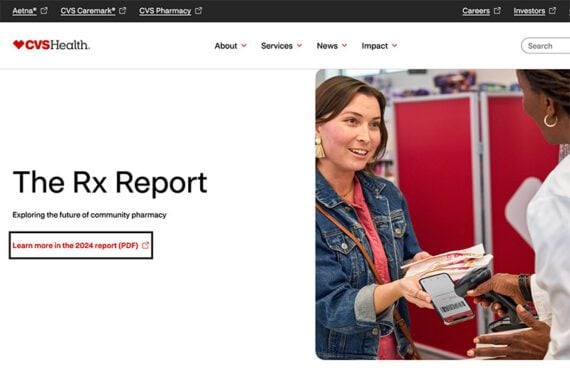
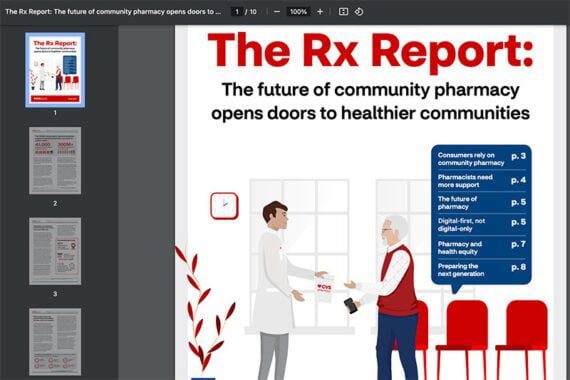
CVS Health is one example of a brand that uses surveys and research for content marketing.

In September 2024, content marketers can borrow an idea from CVS Health, a brand related to the CVS Pharmacy chain.

The company publishes annual research reports, including The RX Report, The Health Trends Report, and the National Health Project.

For the most part, these reports are based on survey data and published as PDFs.

The research becomes a digital download.

For merchants, a survey-based research project could be an effective way to drive website traffic and brand attention.

Imagine a women’s jeweler known for its classic rings, necklaces, and brooches. This brand’s marketers develop a survey asking ladies about the best Christmas presents they have received. The survey also collects demographic information and product category rankings and identifies the gifts women dislike.

At least five content-related marketing opportunities are associated with the jeweler’s Christmas gift survey.

  • When promoting the survey, ask respondents to sign up for email notifications.
  • Publish the survey results, again asking folks to sign up for email notifications when they download it.
  • Send a press release with the survey findings and a link to the survey for journalists to share. The hope is that it will be mentioned in Christmas buying guides.
  • Use individual data points for social media posts that link to the research report or the buying guide.