Prime Day 2024: What We Don’t Know

Here’s what we don’t know about Prime Day 2024. Amazon says the event was global but famously provides no revenue details. We’re left with estimates by Adobe and others of U.S. purchases.

Thus we don’t know the worldwide volume or the impact on Amazon’s income since most of the purchases are presumably with third-party marketplace sellers from which Amazon earns a commission — $1 billion of purchases at a 20% commission would be $200 million of earnings to Amazon.

Less clear, too, is the bottom-line effect of Prime Day discounts on third-party merchants who tell Practical Ecommerce that Amazon takes roughly 50% of every transaction with sales commissions, FBA fees, and advertising costs.

Certainly Prime Day is good for consumers and Amazon, which carries little inventory risk and earns fees and commissions no matter the selling price. Amazon is mostly a service provider, after all, and most of that is from its cloud computing division, not marketplace activity.

Nonetheless, here’s our recap of Prime Day 2024.

Prime Day 2024 Recap

Adobe Analytics is popular among large U.S. online retailers. It has long been a credible source for Prime Day data. For this year’s event, Adobe says it tracked 1 trillion U.S. web visits, 100 million SKUs, and 18 product categories. All told, per Adobe, U.S. consumers spent a record $14.2 billion during July 16 -17, up 11.8% from a year earlier. (Amazon stated only that the 2024 event was “the biggest ever.”)

Other Adobe findings:

  • 49.2% of purchases were on mobile devices, up 18.6% from 2023.
  • Sales of back-to-school goods (backpacks, lunchboxes, supplies) increased by 216% from last year, presumably owing to the event occurring a week later than in 2023.
  • Electronics sales increased 61% due to “product refresh cycles” wherein consumers upgrade their devices.
  • Housewares, furniture, and appliance sales were strong, with increases in kitchen appliances (up 76%) and cookware (up 26%) leading the category.
  • Categories with the top discounts from list prices were electronics (23% off), apparel (20% off), home goods/furniture (16% off), television (16% off), and toys (15% off).

Other Metrics

Numerator is a U.S.-based data and analysis firm. For its Prime Day 2024 report, Numerator tracked 93,513 U.S. orders, 35,588 households, 188,000 items purchased, and 7,311 verified buyer surveys. The report included:

  • Shoppers’ ages: Under 34 (14%), 35-44 (19%), 45-54 (18%), 55-64 ( 22%), 65+ (27%).
  • Household spending: Under $100 (34%), $100-$200 (43%), $200+ (23%)
  • The top-selling item was the Amazon TV Fire Stick, followed by Premier Protein Shakes, Liquid I.V. Packets, Glad Trash Bags, and COSRX Snail Mucin Serum.

Consumers want discounts, according to Pacvue, an ecommerce advertising platform.

“Shoppers are still feeling the effects of inflation and are hungry for deals,” Melissa Burdick, president of Pacvue, told Practical Ecommerce.

For once, Amazon didn’t dominate the site with its own products. “Interestingly, it’s one of the first years that we have not seen Amazon devices dominate the Prime Day home page, with Apple products owning the main landing page,” she said.

Advertisers allocated more money this year due to increased competition, according to Burdick. Compared to 2023, this year’s Prime Day saw a 30% higher total managed spend starting from the pre-event phase, with a 47.5% increase on the event’s first day. On the second day, average spend increased by 24% compared to the same day last year.

“In the lead-up period to Prime Day, brands increased their spend by 15% from last year,” Burdick said. “We’ve also seen brands reallocate ad budgets from August to support their Prime Day efforts.”

Why we need safeguards against genetic discrimination

This article first appeared in The Checkup, MIT Technology Review’s weekly biotech newsletter. To receive it in your inbox every Thursday, and read articles like this first, sign up here.

A couple of years ago, I spat into a little plastic tube, stuck it in the post, and waited for a company to analyze markers on my DNA to estimate how biologically old I am. It’s not the first time I’ve shared my genetic data for a story. Over a decade ago, I shared a DNA sample with a company that promised to tell me about my ancestry.

Of course, I’m not the only one. Tens of millions of people have shipped their DNA off to companies offering to reveal clues about their customers’ health or ancestry, or even to generate tailored diet or exercise advice. And then there are all the people who have had genetic tests as part of their clinical care, under a doctor’s supervision. Add it all together, and there’s a hell of a lot of genetic data out there.

It isn’t always clear how secure this data is, or who might end up getting their hands on it—and how that information might affect people’s lives. I don’t want my insurance provider or my employer to make decisions about my future on the basis of my genetic test results, for example. Scientists, ethicists and legal scholars aren’t clear on the matter either. They are still getting to grips with what genetic discrimination entails—and how we can defend against it.

If we’re going to protect ourselves from genetic discrimination, we first have to figure out what it is. Unfortunately, no one has a good handle on how widespread it is, says Yann Joly, director of the Centre of Genomics and Policy at McGill University in Quebec. And that’s partly because scientists keep defining it in different ways. In a paper published last month, Joly and his colleagues listed 12 different definitions that have been used in various studies since the 1990s. So what is it?

“I see genetic discrimination as a child of eugenics practices,” says Joly. Modern eugenics, which took off in the late 19th century, was all about limiting the ability of some people to pass on their genes to future generations. Those who were considered “feeble minded” or “mentally defective” could be flung into institutions, isolated from the rest of the population, and forced or coerced into having procedures that left them unable to have children. Disturbingly, some of these practices have endured. In the fiscal years 2005-2006 and 2012-2013, 144 women in California’s prisons were sterilized—many without informed consent.

These cases are thankfully rare. In recent years, ethicists and policymakers have been more worried about the potential misuse of genetic data by health-care and insurance providers. There have been instances in which people have been refused health insurance or life insurance on the basis of a genetic result, such as one that predicts the onset of Huntington’s disease. (In the UK, where I live, life insurance providers are not meant to ask for a genetic test or use the results of one—unless the person has tested positive for Huntington’s.)

Joly is collecting reports of suspected discrimination in his role at the Genetic Discrimination Observatory, a network of researchers working on the issue. He tells me that in one recent report, a woman wrote about her experience after she had been referred to a new doctor. This woman had previously taken a genetic test that revealed she would not respond well to certain medicines. Her new doctor told her he would only take her on as a patient if she first signed a waiver releasing him of any responsibility over her welfare if she didn’t follow the advice generated by her genetic test.

“It’s unacceptable,” says Joly. “Why would you sign a waiver because of a genetic predisposition? We’re not asking people with cancer to [do so]. As soon as you start treating people differently because of genetic factors … that’s genetic discrimination.”

Many countries have established laws to protect people from these kinds of discrimination. But these laws, too, can vary hugely both when it comes to defining what genetic discrimination is and to how they safeguard against it. The law in Canada focuses on DNA, RNA, and chromosome tests, for example. But you don’t always need such a test to know if you’re at risk for a genetic disease. A person might have a family history of a disease or already be showing symptoms of it.

And then there are the newer technologies. Take, for example, the kind of test that I took to measure my biological age. Many aging tests measure either chemical biomarkers in the body or epigenetic markers on the DNA—not necessarily the DNA itself. These tests are meant to indicate how close a person is to death. You might not want your life insurance provider to know or act on the results of those, either.

Joly and his colleagues have come up with a new definition. And they’ve kept it broad. “The narrower the definition, the easier it is to get around it,” he says. He wanted to avoid excluding the experiences of any people who feel they’ve experienced genetic discrimination. Here it is:

“Genetic discrimination involves an individual or a group being negatively treated, unfairly profiled or harmed, relative to the rest of the population, on the basis of actual or presumed genetic characteristics.

It will be up to policymakers to decide how to design laws around genetic discrimination. And it won’t be simple. The laws may need to look different in different countries, depending on what technologies are available and how they are being used. Perhaps some governments will want to ensure that residents have access to technologies, while other may choose to limit access. In some cases, a health-care provider may need to make decisions about a person’s care based on their genetic results.

In the meantime, Joly has advice for anyone worried about genetic discrimination. First, don’t let such concerns keep you from having a genetic test that you might need for your own health. As things stand, the risk of being discriminated against on the basis of these tests is still quite small.

And when it comes to consumer genetic testing, it’s worth looking closely at the company’s terms and conditions to find out how your data might be shared or used. It is also useful to look up the safeguarding laws in your own country or state, which can give you a good idea of when you’re within your rights to refuse to share your data.

Shortly after I received the results from my genetic tests, I asked the companies involved to delete my data. It’s not a foolproof approach—last year, hackers stole personal data on 6.9 million 23andMe customers—but at least it’s something. Just this week I was offered yet another genetic test. I’m still thinking on it.


Now read the rest of The Checkup

Read more from MIT Technology Review’s archive:

As of 2019, more than 26 million people had undertaken a consumer genetic test, as my colleague Antonio Regalado found. The number is likely to have grown significantly since then.
 
Some companies say they can build a picture of what a person looks like on the basis of DNA alone. The science is questionable, as Tate Ryan-Mosley found when she covered one such company.
 
The results of a genetic test can have profound consequences, as Golda Arthur found when a test revealed she had a genetic mutation that put her at risk of ovarian cancer. Arthur, whose mother developed the disease, decided to undergo the prophylactic removal of her ovaries and fallopian tubes. 
 
Tests that measure biological age were selected by readers as our 11th breakthrough technology of 2022. You can read more about them here.
 
The company that gave me an estimate of my biological age later reanalyzed my data (before I had deleted it). That analysis suggested that my brain and liver were older than they should be. Great.

From around the web:

Over the past few decades, doctors have implanted electrodes deep into the brains of a growing number of people, usually to treat disorders like epilepsy and Parkinson’s disease. We still don’t really know how they work, or how long they last. (Neuromodulation)

A ban on female genital mutilation will be upheld in the Gambia following a vote by the country’s National Assembly. The decision “reaffirm[s the country’s] commitments to human rights, gender equality, and protecting the health and well-being of girls and women,” directors of UNICEF, UNFPA, WHO, UN Women, and the UN High Commissioner for Human Rights said in a joint statement. (WHO)

Weight-loss drugs that work by targeting the GLP-1 receptor, like Wegovy and Saxena, are in high demand—and there’s not enough to go around. Other countries could follow Switzerland’s lead to make the drugs more affordable and accessible, but only for the people who really need them. (JAMA Internal Medicine)

J.D. Vance, Donald Trump’s running mate, has ties to the pharmaceutical industry and has an evolving health-care agenda. (STAT)

Psilocybin, the psychedelic compound in magic mushrooms, can disrupt the way regions of our brains communicate with each other. And the effect can last for weeks. (The Guardian)

Balloons will surf wind currents to track wildfires

This August, strange balloons will drift high above Colorado. These airy aircraft, launched from the back of a pickup truck, will be equipped with sensors that can measure heat on the ground, pinpointing new wildfire outbreaks from above. 

The company behind the balloons, called Urban Sky, also plans to use them to  understand conditions on the ground before fires start. Approximately 237,500 acres burn in Colorado annually, according to 2011–2020 data from the Rocky Mountain Area Coordination Center. The hope is that this new high-altitude tool might allow humans to manage—or at least understand—those blazes better.

“Wildfire is a natural part of ecosystems,” says Michael Falkowski, manager of the wildland fire programs at NASA. But climate change has proved to be an accelerant, rendering fires bigger, more intense, and more frequent. At the same time, more people are living closer to wild spaces, and the US’s history of fire suppression, which has crowded forests and left old and dead vegetation sitting around, is fanning the flames. 

To deal with modern fires, Falkowski says, researchers and fire agencies have to gather data before those fires start and after they’re done smoldering, not just as they’re burning. That makes it possible to understand the risks ahead of time and try to mitigate them, track ongoing blazes, and understand the threats fires pose to communities and the environment.

Before a fire takes hold, researchers can map vegetation and estimate how wet or dry it is. During a fire, they can map where and how hot the activity is. When it’s all over, they can assess the severity of the burn and track air quality.

Pass Fire (New Mexico) 3.5m Infrared Sample from Urban Sky Microballoon.
An infrared image of the 2023 Pass Fire in New Mexico, taken by an Urban Sky balloon.
COURTESY URBAN SKY

Still, the most acute phase is obviously the one when the fire is actually burning. In the heat of that moment, it can be hard to get a handle on when and where, exactly, the fire is taking hold. Satellites do some of that work, surveying large areas all at once. But the primary governmental satellites produce pictures with pixels around 300 meters across, and they can’t always get a super timely look at a given spot, since their view is limited by their orbit. 

Airplanes and helicopters can map a fire’s extent in more detail, but they’re expensive to operate and dangerous to fly. They have to coordinate with other aircraft and have smaller views, being closer to the ground. They’re also a limited resource. 

Urban Sky aims to combine the advantages of satellites and aircraft by using relatively inexpensive high-altitude balloons that can fly above the fray—out of the way of airspace restrictions, other aircraft, and the fire itself. The system doesn’t put a human pilot at risk and has an infrared sensor system called HotSpot that provides a sharp, real-time picture, with pixels 3.5 meters across. “We targeted that resolution with the goal of being able to see a single burning tree,” says Jared Leidich, chief technology officer at Urban Sky. “And so that would show up essentially as one pixel—one hot pixel.” The company has some competition: Others, like Aerostar and LUX Aerobot, also make balloons that can monitor wildfires.

The Urban Sky team has launched balloons in previous tests, but in August, the technology will monitor potential fires for an actual (unspecified) customer. Sending the balloon-lofted HotSpot up will be a surprisingly simple affair, thanks to the balloon’s relatively small size: While the company makes several sizes, the original is about as big as a van at launch, inflating to the size of a small garage once it’s aloft and surrounded by lower-pressure air. The Urban Sky team uses weather software to calculate where to launch a balloon so that it will drift over the fire at the right elevation. Then the team packs one up, along with compressed helium or hydrogen gas, and drives a truck out to that location. The balloon is hooked onto a mast jutting from the vehicle, filled up with the lighter-than-air molecules, and released. The whole process takes about 10 minutes. 

Once the balloon hits its cruising altitude, the HotSpot sensor turns on. Through satellite communication networks, an onboard processor sends real-time information about actual hot spots back to people on the ground. 

The balloons can hover over a fire for about 18 hours, using the whims of the atmosphere to stay in place. They fly near the top of the troposphere and the bottom of the next atmospheric layer: the stratosphere. “Those often have winds going in different directions,” explains Leidich. To move back and forth, the balloon simply has to go up or down. 

Urban Sky’s unnamed customer for its August deployment takes data on wind patterns and fuels (also known as trees, bushes, and grass) to try to understand the spots where fires are most likely to start and spread. It is interested in integrating Urban Sky’s on-the-ground (read: in-the-air) data on where fires actually do break out. “They want to add an extra step to the process where they actually scan the areas that are high risk,” says Leidich.

During the campaign, if officials identify or suspect a fire, Urban Sky can send out the truck. “We put a balloon up over the area to scan the area and say, ‘Yes, there is a fire. Here it is,’” says Leidich. 

An Urban Sky Microballoon pictured shortly after launch near Greeley, CO.

COURTESY URBAN SKY

If they get yeses where they should and nos where there is nothing to see, the proof of concept could lead to wider adoption of the HotSpot system, perhaps offering a simple and timely way for other regions to get a handle on their own fires.

This year, Urban Sky also has a grant through NASA’s FireSense program, which aims to find innovative ways to learn about all three fire phases (before, during, and after). At the moment, the August campaign and the NASA program are the primary customers for Hot Spot, although the company also sells regularly updated aerial images of 12 cities in the western US.

“It’s kind of an interesting technology to be able to do this active fire detection and tracking from a high-altitude platform,” Falkowski says of Urban Sky’s balloons. 

With NASA’s support, the team is hoping to redesign the system for longer flights, build in a more robust communication system, and incorporate a sensor that captures blue, green, and near-infrared light, which would make it possible to understand those plant-based “fuels” better and assign risk scores to forests accordingly. Next year the team is planning to again hover over real fires, this time for NASA.

And there will always be fires to hover over. As there always have been, Falkowski points out. “Fire is not a bad thing,” he says. “These ecosystems evolved with fire. The problem is humans are getting too close to places that just need to burn.”

Sarah Scoles is a Colorado-based science journalist and the author, most recently, of the book Countdown: The Blinding Future of Nuclear Weapons.

Google Warns Of Last Chance To Export Notes Search Data via @sejournal, @martinibuster

Google updated their documentation for the Google Labs Google Notes experiment to remind users that Notes will go away at the end of July 2024 and showed how to download notes content, with a final deadline beyond which it will be impossible to retrieve it.

Google Notes

Notes is an experimental feature in Google Labs that lets users annotate search results with their ideas and experiences. The idea behind it is to make search more helpful and improve the quality of the search results through the opinions and insights of real people. It’s almost like Wikipedia where members of the public curate topics.

Google eventually decided that the Notes feature had undergone enough testing and they decided that their are shutting down Google Notes, a decision announced in April 2024.

Update To Documentation

The official documentation was updated to make it clear that Notes is shutting down at the end of July and that users who wish to download their data can do us with their Google Takeout, a Google Accounts feature that allows users to export their content from their Google Account. Google Takeout allows Google Account holders to export data from Google Calendar, Google Drive, Google Photos, a total of up to 56 kinds of content can be exported.

Google’s Search Central document changelog explains:

“A note about Notes

What: Added a note about the status of Notes to the Notes documentation.

Why: Notes is winding down at the end of July 2024.”

This is the new announcement:

“Notes is winding down at the end of July 2024. If you created a note, your notes content is available to download using Google Takeout through the end of August 2024.”

Check out the updated Google Notes documentation here:

Notes on Google Search and your website (experimental)

Featured Image by Shutterstock/ra2 studio

How to fix a Windows PC affected by the global outage

MIT Technology Review Explains: Let our writers untangle the complex, messy world of technology to help you understand what’s coming next. You can read more here.

Windows PCs have crashed in a major IT outage around the world, bringing airlines, major banks, TV broadcasters, health-care providers, and other businesses to a standstill.

Airlines including United, Delta, and American have been forced to ground and delay flights, stranding passengers in airports, while the UK broadcaster Sky News was temporarily pulled off air. Meanwhile, banking customers in Europe, Australia, and India have been unable to access their online accounts. Doctor’s offices and hospitals in the UK have lost access to patient records and appointment scheduling systems. 

The problem stems from a defect in a single content update for Windows machines from the cybersecurity provider CrowdStrike. George Kurtz, CrowdStrike’s CEO, says that the company is actively working with customers affected.

“This is not a security incident or cyberattack,” he said in a statement on X. “The issue has been identified, isolated and a fix has been deployed. We refer customers to the support portal for the latest updates and will continue to provide complete and continuous updates on our website.” CrowdStrike pointed MIT Technology Review to its blog with additional updates for customers.

What caused the issue?

The issue originates from a faulty update from CrowdStrike, which has knocked affected servers and PCs offline and caused some Windows workstations to display the “blue screen of death” when users attempt to boot them. Mac and Linux hosts are not affected.

The update was intended for CrowdStrike’s Falcon software, which is “endpoint detection and response” software designed to protect companies’ computer systems from cyberattacks and malware. But instead of working as expected, the update caused computers running Windows software to crash and fail to reboot. Home PCs running Windows are less likely to have been affected, because CrowdStrike is predominantly used by large organizations. Microsoft did not immediately respond to a request for comment.

“The CrowdStrike software works at the low-level operating system layer. Issues at this level make the OS not bootable,” says Lukasz Olejnik, an independent cybersecurity researcher and consultant, and author of Philosophy of Cybersecurity.

Not all computers running Windows were affected in the same way, he says, pointing out that if a machine’s systems had been turned off at the time CrowdStrike pushed out the update (which has since been withdrawn), it wouldn’t have received it.

For the machines running systems that received the mangled update and were rebooted, an automated update from CloudStrike’s server management infrastructure should suffice, he says.

“But in thousands or millions of cases, this may require manual human intervention,” he adds. “That means a really bad weekend ahead for plenty of IT staff.”

How to manually fix your affected computer

There is a known workaround for Windows computers that requires administrative access to its systems. If you’re affected and have that high level of access, CrowdStrike has recommended the following steps:

1. Boot Windows into safe mode or the Windows Recovery Environment.

2. Navigate to the C:WindowsSystem32driversCrowdStrike directory.

3. Locate the file matching “C-00000291*.sys” and delete it.

4. Boot the machine normally.

Sounds simple, right? But while the above fix is fairly easy to administer, it requires someone to enter it physically, meaning IT teams will need to track down remote machines that have been affected, says Andrew Dwyer of the Department of Information Security at Royal Holloway, University of London.

“We’ve been quite lucky that this is an outage and not an exploitation by a criminal gang or another state,” he says. “It also shows how easy it is to inflict quite significant global damage if you get into the right part of the IT supply chain.”

While fixing the problem is going to cause headaches for IT teams for the next week or so, it’s highly unlikely to cause significant long-term damage to the affected systems—which would not have been the case if it had been ransomware rather than a bungled update, he says.

“If this was a piece of ransomware, there could have been significant outages for months,” he adds. “Without endpoint detection software, many organizations would be in a much more vulnerable place. But they’re critical nodes in the system that have a lot of access to the computer systems that we use.”

DTC Toy Company Looks to Better Days

The reality of post-pandemic ecommerce has been tough for many direct-to-consumer merchants. Take Molson Hart. His company, Viahart, makes innovative educational toys and sells them on Amazon, Walmart, and other marketplaces.

The last two years have been challenging for Viahart. What worked before and during Covid doesn’t apply now, Hart says. Certainly that’s the case with Beardbrand, my company.

Hart first appeared on the podcast in 2022. In this episode, we address the struggles of our businesses and how we persist for a better day.

Our entire audio conversation is embedded below. The transcript is edited for clarity and length.

Eric Bandholz: Tell us about your business.

Molson Hart: In 2010, I launched Viahart, a direct-to-consumer maker of educational toys. In 2017, I started with my brother Edison Litigation Financing, an intellectual property trademark enforcement firm. My brother is now Edison’s full-time CEO, and I’m no longer involved.

Viahart has struggled over the last couple of years. I tell my team monthly what our sales are compared to a year ago. Our June 2024 sales were down 14% across all platforms — our DTC website, Amazon, all channels. June 2023 sales were down 7% from 2022. So it’s two years of pain and suffering.

Bandholz: Beardbrand has also struggled. What is your strategy for getting back on track?

Hart: Our products are highly discretionary. When the cost of food goes up by 30%, consumers cut things.

We’ve tinkered with different channels and products, but our success there has not compensated for our losses on Amazon, Walmart, and eBay. We started selling on TikTok Shop, generating $7,000 in revenue in June. In May, we did zero. The $7,000 in June for educational toys will likely translate to $30,000 to $50,000 in each of November and December.

That helps, but the problem is Amazon, Walmart, and eBay sales are down. We’ve been doing a lot of wholesale, and that’s been growing, but not enough to compensate for the marketplace declines.

Bandholz: We’ve tried many things at Beardbrand, from changing our packaging and manufacturing to tweaking marketing channels. We doubled down on organic YouTube marketing, unsuccessfully. We tried ads again, but they’re not working at the scale we need.

Hart: It seems many discretionary brands are experiencing weakness. So don’t be down on yourself. Neither of us is purely an ecommerce company. To me, an ecommerce business is like Amazon or even TikTok Shop. Each of our companies is a brand.

I like Viahart’s products and their value to customers. In the short term, we may experience pain. But so long as we remain profitable, we will keep investing, innovating, and delivering value.

Bandholz: It’s a bloodbath on Amazon. Even if you have an excellent brand name and a utility patent, it doesn’t protect you from the margin compression that’s happening. It doesn’t matter if people search for your brand if Amazon won’t show the results without advertising. Nike and Apple are perhaps exceptions. However, all of us below Nike and Apple must pay increasing fees on Amazon, which are just eating into profitability. So it’s difficult.

Hart: There was a time when you could make money selling anything on Amazon. You just threw up a listing — cups, pillows, you name it — and made money. Viahart once sold 50 product types on Amazon. No more. Every time competition came in, we would cut the losers.

What worries me about the business is the declining U.S. consumer purchasing power. It’s just hard to internationalize any business. Plus, looking at birth statistics is troubling because we sell educational toys. It doesn’t matter how amazing our products are if fewer children are born.

Bandholz: Why are so many DTC ecommerce companies suffering?

Hart: I made a list of what I thought was causing DTC ecommerce companies to be in bad shape. For one, consumer debt is peaking. There was minimal consumer debt in 2020 and 2021 because of stimulus checks. Now consumer debt is near an all-time high. Food costs are up, but not wages.

TikTok is the only bright spot that applies to American DTC ecommerce in the past year.

I was young and stupid when I started this business. It wasn’t successful, even after several years. I eventually figured it out and generated profits. You and I have to try new things and adapt. No one cares about our feelings.

We need to keep hacking away with an open mind. That’s how we buy a yacht someday.

Bandholz: Where can people follow you and buy your products?

Hart: Our products are available on TikTok, eBay, Walmart, and Amazon. Follow me on X and LinkedIn.

WP Engine WordPress Hosting Acquires NitroPack via @sejournal, @martinibuster

Managed WordPress web host WP Engine announced that they are acquiring NitroPack, a leading SaaS website performance optimization solution. The acquisition of of NitroPack by WP Engine demonstrates their continued focus on improving site performance for clients.

NitroPack

NitroPack is a relatively pricey but well regarded site performance solution that has for years been known as a leader. WP Engine and NitroPack formed a partnership in 2023 that would power WP Engine’s PageSpeed Boost product that is offered internally to customers. The NitroPack team will now become integrated within WP Engine this month, July.

There are no immediate plans to change the pricing options for NitroPack so it’s safe to say that it will continue to be a standalone product. WP Engine commented to Search Engine Journal that there will be no immediate changes in services pricing or billing for current NitroPack customers.

“We have no immediate plans to change the pricing options for NitroPack products.

Today NitroPack works with page builders and other hosting providers and that will continue to be available. In the coming months, we will continue to leverage NitroPack to enhance additional functionality to Page Speed Boost for WP Engine’s customers.”

What the acquisition means for WP Engine customers is that WP Engine will continue to leverage NitroPack’s technology to add even more functionalities to their PageSpeed Boost product.

The WP Engine spokesperson said that these new integrations will be coming to WP Engine PageSpeed Boost in a matter of months.

They shared:

“In the coming months, we will continue to leverage NitroPack’s strength to enhance additional functionality to Page Speed Boost.”

Read the official announcement:

WP Engine Acquires NitroPack, Extending Leadership in Managed WordPress Site Performance

Featured Image by Shutterstock/Asier Romero

OpenAI GPT-4o Mini Costs Less & Wallops Competition via @sejournal, @martinibuster

OpenAI rolled out GPT-4o mini, a replacement for GPT 3.5 Turbo that is more powerful than other models in its class. Because it’s hyper efficient, GPT 4o mini will make AI available to more people at a cheaper price through better end-user applications.

GPT-4o mini

GPT-4o mini is a highly efficient version of GPT-4o that is cheaper to run and is fast. Despite it’s designation as “mini” this language model is outperforms GPT-4 and GPT-3.5 turbo, as well as solidly outperforming Google’s comparable model, Gemini Flash 1.5.

Preliminary scores by the open source Large Language Model Systems Organizations shows GPT-4o Mini outperforming Anthropic’s Claude 3 Opus and Google’s Gemini Flash 1.5 and reaching benchmark scores that are comparable to GPT 4.5 Turbo and Gemini 1.5 Pro.

Screenshot Of Language Model Scores

Cost Effective Language Model

An important feature of GPT-4o mini is that it’s cheaper to use, 60% cheaper than GPT 3.5 Turbo, which means that companies that make AI products based on OpenAI language models will be able to offer high performance AI applications that cost significantly less. This makes AI available to more people around the world.

According to OpenAI:

“Today, we’re announcing GPT-4o mini, our most cost-efficient small model. We expect GPT-4o mini will significantly expand the range of applications built with AI by making intelligence much more affordable. GPT-4o mini scores 82% on MMLU and currently outperforms GPT-41 on chat preferences in LMSYS leaderboard(opens in a new window). It is priced at 15 cents per million input tokens and 60 cents per million output tokens, an order of magnitude more affordable than previous frontier models and more than 60% cheaper than GPT-3.5 Turbo.

a text and vision model in the Assistants API, Chat Completions API, and Batch API. Developers pay 15 cents per 1M input tokens and 60 cents per 1M output tokens (roughly the equivalent of 2500 pages in a standard book). We plan to roll out fine-tuning for GPT-4o mini in the coming days.”

GPT-4o mini Availability

GPT 4o mini is available today to users of ChatGPT Free, Plus and Team, with GPT-3.5 no longer a selectable option. Enterprise users will have access next week.

Read the official announcement:

GPT-4o mini: advancing cost-efficient intelligence

Featured Image by Shutterstock/Dean Drobot

The 10 Best Website Builders To Consider 2024 via @sejournal, @MattGSouthern

Choosing the right website builder may depend on your goals. They have a variety of features, and some platforms excel in areas that others don’t.

Not all builders will fit if you need advanced SEO or ecommerce capabilities.

We compared 10 website builders based on price, data limits, core use cases, and whether they provide domains.

The 10 Best Website Builders Compared

Website Builder Starting Price Free Option Premium Content Gates Limits Free Domain Great For Extras We Like
WordPress.com $9/month Yes Yes 1-50 GB Yes (annual plans only) Blogging and text-based sites
  • Easily work between the .com and self-hosted sites.
  • Customizability.
Wix $17/month Yes Yes 2 GB-Unlimited Yes Small businesses & entrepreneurs
  • Educational programs and support.
  • Scheduling.
  • Ad management.
  • Email campaigns.
Duda $25/month 14 days Yes 1-4 sites No Getting started
  • Excellent help and support.
  • Zapier integration.
  • Multiple language sites.
  • Content library and free assets.
HubSpot $15/month Yes Yes Up to 30 pages on the free plan No Scaling
  • Conversational bots.
  • Wide range of free tools for sales, marketing, and services.
  • Extensive site and business owner education.
  • Mobile app.
Squarespace $25/month 14 days Yes Unlimited bandwidth, 30 minutes of video storage Yes (annual plans only) Quick, no-fuss sites
  • Custom product creation without worrying about fulfillment and shipping.
  • Integrated ecommerce on larger plans.
Webflow $18/month Yes Yes Starts with 1 GB bandwidth and 50 CMS items Yes Designers & Agencies
  • Schema markup and structured search support.
  • Pre-built interactions.
IONOS $6/month No No 50-75 GB Yes Small businesses on a budget
  • Affordable.
  • Competitor tracking.
  • Online booking included.
  • Built-in privacy and SSL.
Shopify $5/month 3 days No Unlimited products, bandwidth, and online storage No Ecommerce
  • Wide range of ecommerce features.
  • Large app store for extensions.
Weebly $12/month Yes No Unlimited storage Yes Beginners
  • Ease of use.
  • Built-in SEO tools.
Hostinger $2.99/month No No 25,000 visits,
100 GB SSD storage,
400,000 files
Yes Budget sites
  • Very affordable plans.
  • 24/7 customer support.

10 Best Website Builders For 2024

1. WordPress.com

WordPress webpageScreenshot from WordPress.com, June 2024

With 62.7% of the market share held between WordPress.com and .org, WordPress is the largest and most prominent website builder.

Key Features

  • Over 50,000 plugins and 8,000 themes for customization.
  • Ability to transition between hosted and self-hosted options.
  • With paid plans, custom domains, site security, and advanced features are available.

Benefits & SEO Highlights

  • User-friendly interface suitable for beginners.
  • Flexibility to create various types of websites.
  • Built-in SEO tools and options to optimize your site for search engines.

Cost

  • $0-$70/month ($0-$45/month, billed annually), plus custom options.

2. Wix

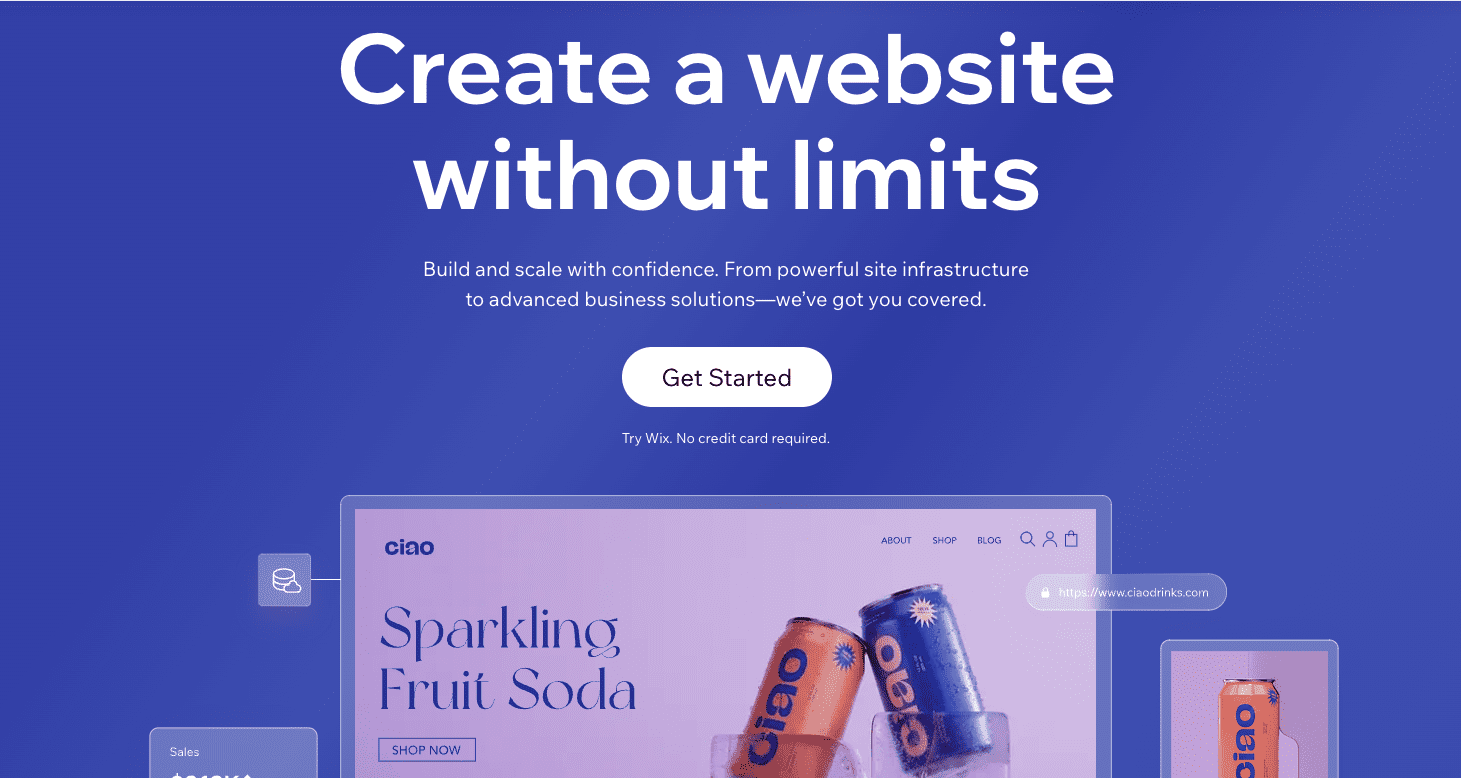
Wix webpageScreenshot from Wix.com, June 2024

Wix controls only 4% of the CMS market, but that small number translates into hundreds of millions of users and makes it one of the most popular website builders.

It offers ease of use and flexibility, making it suitable for creating professional websites with expanded functionality.

Key Features

  • Customizable templates with drag-and-drop editing.
  • Wide range of elements and third-party apps for added functionality.
  • Comprehensive business solutions, including ecommerce and marketing tools.

Benefits & SEO Highlights

  • Suitable for beginners and those needing advanced features.
  • SEO Wiz tool for optimizing your site’s SEO settings.
  • Extensive help, resources, and guides for website creation and promotion.

Cost

  • $0-$159/month, plus custom options.

3. Duda

Duda.coScreenshot from Duda.co, June 2024

Duda is a website builder that balances ease of use with advanced customization options, making it popular among designers and developers.

Key Features

  • Drag-and-drop interface and customizable templates.
  • Widgets and add-ons for expanded functionality, including ecommerce.
  • Mobile editor for creating mobile-friendly versions of your site

Benefits & SEO Highlights

  • Suitable for businesses and individuals seeking a professional website.
  • Built-in SEO optimization features, including meta descriptions and sitemaps.
  • Excellent customer support with live chat, email, and resources.

Cost:

  • $25-$199/month ($19-$149/month, billed annually), plus custom options.

4. HubSpot

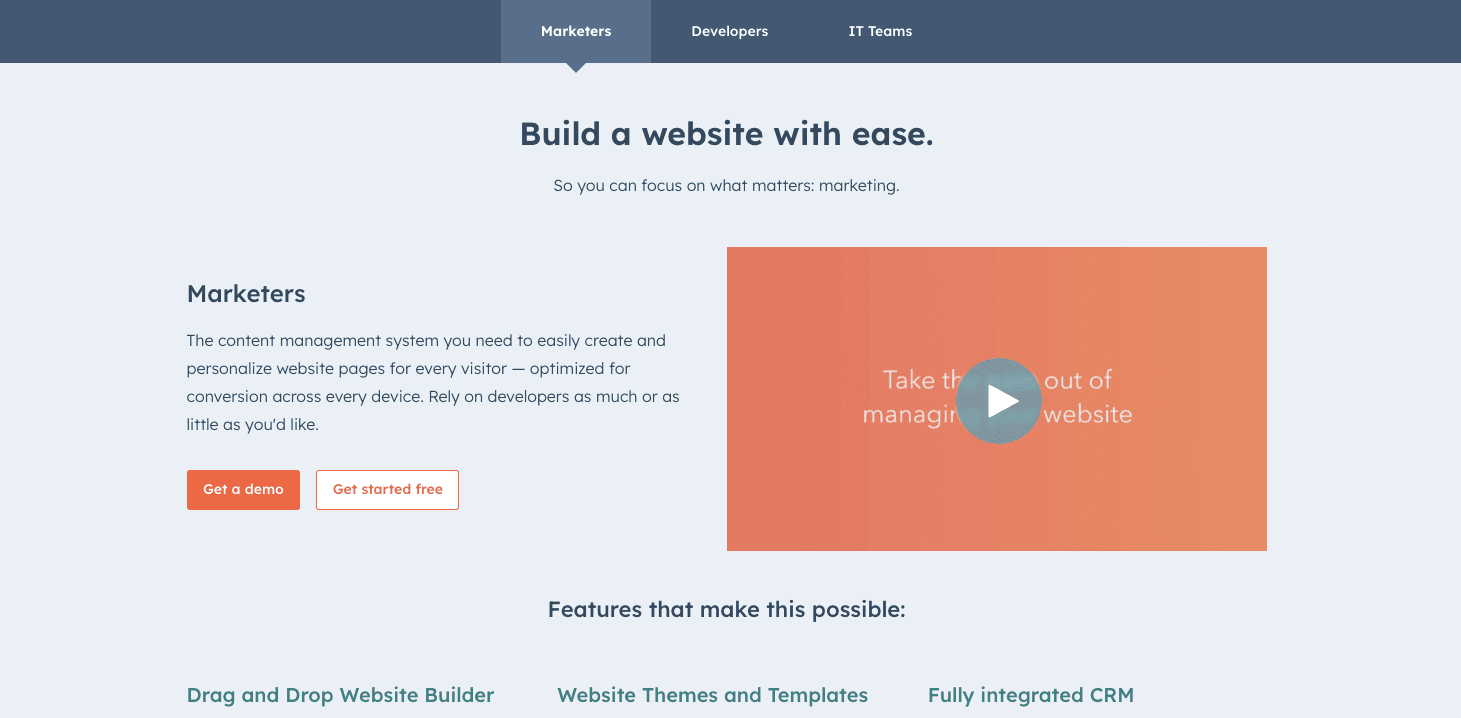
HubSpot webpageScreenshot from HubSpot.com, June 2024

HubSpot is an all-in-one marketing, sales, and customer service platform with a powerful website builder.

Key Features

  • Drag-and-drop interface and customizable templates.
  • Pre-built modules for forms, CTAs, and social media integration.
  • Integrated CMS, marketing automation, and sales tools.

Benefits & SEO Highlights

  • Ideal for businesses seeking a comprehensive solution.
  • Built-in SEO tools for keyword research, on-page optimization, and analytics.
  • Scalable platform that grows.

Cost

  • $0-$450/month, plus custom options.

5. Squarespace

SquarespaceScreenshot from Squarespace, June 2024

Squarespace is a website builder that offers beautifully designed templates and powerful ecommerce features.

Key Features

  • Customizable templates that work across devices.
  • Ecommerce tools for inventory management, order tracking, and payment processing.
  • Marketing tools for SEO, video, and audience management

Benefits & SEO Highlights

  • Ideal for businesses focusing on ecommerce and brand promotion.
  • Built-in SEO features and integration with Google Analytics.
  • Mobile app for managing your site on the go.

Cost

  • $25-$72/month ($16-$52/month, billed annually), and enterprise plans.

6. Webflow

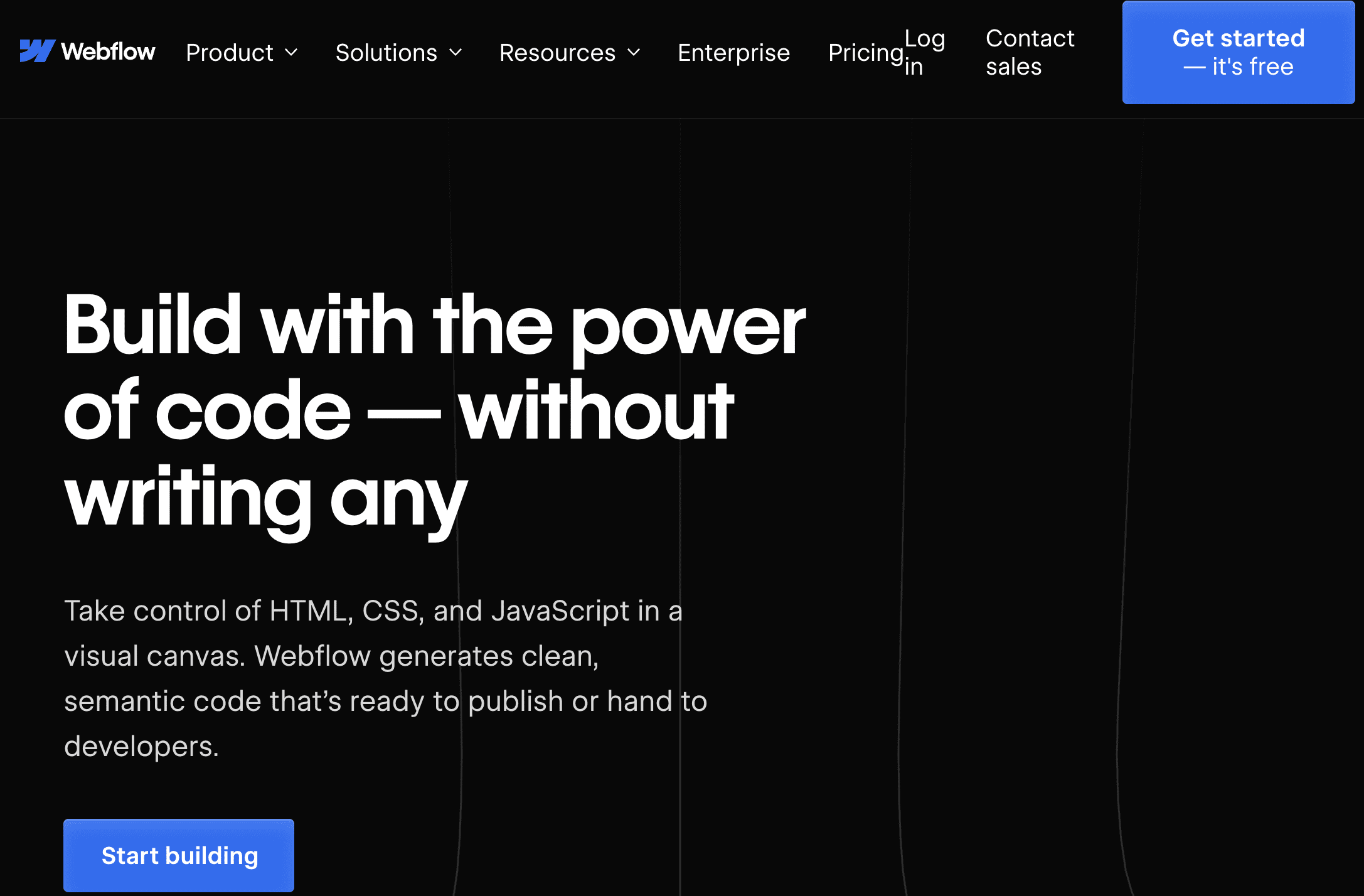
Homepage of webflow.comScreenshot from webflow.com, May 2024

Webflow is a website builder offering advanced design and development features suitable for users of all skill levels.

Key Features

  • Free plan for getting started with basic features.
  • Ecommerce plan with advanced tools for selling products and managing orders.
  • Team plan with collaboration features and client billing.

Benefits & SEO Highlights

  • Suitable for individuals and teams looking for advanced customization options.
  • Advanced SEO features, including schema and Open Graph.
  • Unique features like scheduled publishing, logic flows, and animations.

Cost

  • $0-$235/month ($0-$212/month, billed annually), including enterprise plans.

7. IONOS

Homepage of ionos.comScreenshot from: ionos.com, May 2024.

IONOS is an affordable and simple website builder that offers all the essential features for creating a functional and beautiful site.

Key Features

  • Three-step site design process: choosing a design, adding content, and promoting.
  • Search engine-optimized templates built for performance.
  • Presence Suite for managing and promoting your site

Benefits & SEO Highlights

  • Ideal for quick website setups, test projects, and DIYers.
  • Templates are pre-optimized for search engines.
  • Affordable pricing plans with essential features.

Cost

  • $6-$15/month ($4-$8/month billed three years in advance).

8. Shopify

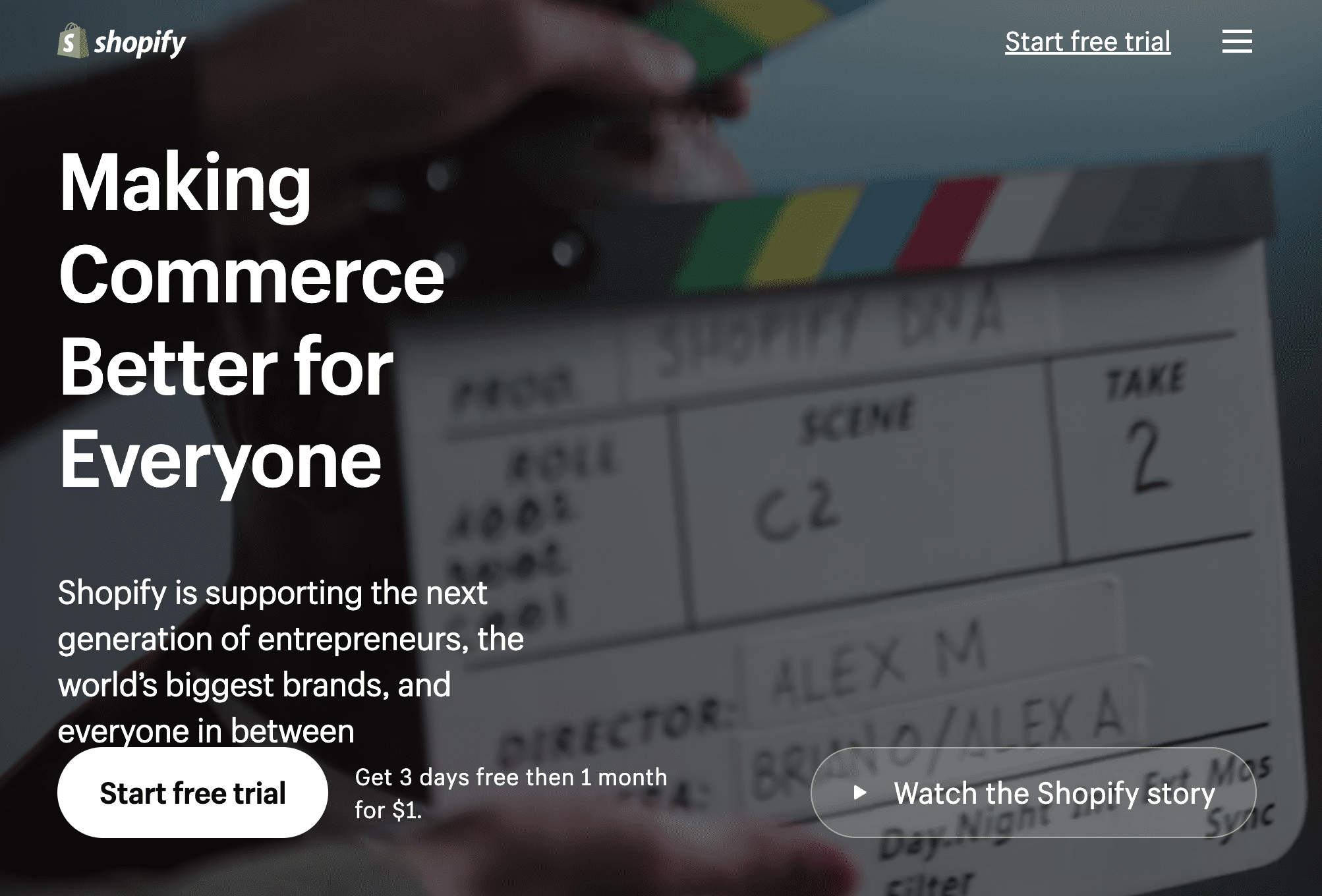
Screenshot from: Shopify.com, June 2024.

Shopify is a comprehensive ecommerce platform that enables businesses to create online stores and sell products easily.

Key Features

  • Customizable templates and drag-and-drop editing.
  • Powerful ecommerce tools for inventory management, payment processing, and shipping.
  • The app store has thousands of apps to extend functionality.

Benefits & SEO Highlights

  • Ideal for businesses of all sizes looking to create an online store.
  • Built-in SEO features and the ability to edit meta tags, URLs, and site structure.
  • 24/7 customer support and extensive documentation.

Cost

  • $19-$399/month ($29-$299/month billed annually).

9. Weebly

Screenshot from: weebly.com, June 2024.

Weebly is a user-friendly website builder that offers a wide range of features for creating professional websites and online stores.

Key Features

  • Drag-and-drop interface and customizable templates.
  • Ecommerce functionality with inventory management and payment processing.
  • Blogging platform and app center for additional features.

Benefits & SEO Highlights

  • Suitable for beginners and small businesses.
  • Built-in SEO tools, including meta descriptions, alt tags, and sitemaps.
  • Responsive customer support and community forum.

Cost

  • $$0-$29/month ($10-$26/month billed annually).

10. Hostinger

Screenshot from hostinger.com, June 2024.

Hostinger offers an easy-to-use website-building tool in its web hosting plans, designed to help users get sites up and running fast.

Key Features

  • Intuitive and user-friendly interface.
  • Suitable for beginners and those needing a website up and running quickly.
  • Free domain, website migration, email, and SSL are included in the hosting package.

Benefits & SEO Highlights

  • Optimized for speed using LiteSpeed Web Server technology, advanced cache solutions, and Object Cache for WordPress.
  • Advanced security features, including unlimited SSL certificates, DDoS protection, automatic backups, and a 99.9% uptime guarantee.

Cost

  • $2.99-$9.99 for the first month ($7.99-$19.99/month on renewal).

Find The Right Website Builder For Your Needs

When choosing a website builder, consider your needs, budget, and skill level.

  • WordPress.com offers flexibility and customization for bloggers and content-heavy sites.
  • Small businesses and entrepreneurs may prefer all-in-one solutions like Wix or HubSpot for marketing integration.
  • Ecommerce stores should evaluate dedicated platforms like Shopify for robust selling tools.
  • Beginners can start with user-friendly builders like Weebly, while designers and agencies may prefer more advanced options like Webflow.

With the variety of website builders available, there’s a solution for every need.

More resources:


Featured Image: Kaspars Grinvalds/Shutterstock

Google Confirms Ranking Boost For Country Code Domains via @sejournal, @martinibuster

Google’s Gary Illyes answered a question about a ranking preference given to sites that use country level domain names and explained how that compares to non-country domain names. The question occurred in the SEO Office Hours podcast.

ccTLD Aka Country Code Domain Names

Domain names that are specific to countries are called ccTLDs (Country Code Top Level Domains). These are domain names that target specific countries. Examples of these ccTLDs are .de (Germany), .in (India) and .kr (Korea). These kinds of domain names don’t target specific languages, they only target Internet users in a specific country.

Some ccTLDs are treated by Google for ranking purposes as if they are regular Generic Top Level Domains (gTLDs), which are domains that are not specific to a country. A popular example is .io, which technically is a ccTLD (pertaining to the British Indian Ocean Territory) but because of how it’s used, Google treats it like a regular gTLD (generic top level domain).

Ranking Boosts For ccTLDs

The question that Gary Illyes answered was about the ranking boost given to ccTLDs.

This is the question:

“When a Korean person searches Google in Korean, does a com.kr domain or a .com domain do better?”

Gary Illyes answered:

“Good question. Generally speaking the local domain names, in your case .kr, tend to do better because Google Search promotes content local to the user.”

A lot of people want to rank better in a specific country and one of the best practices for doing that is to register a domain name that is specific to the country. Google will give it a ranking boost over other sites that are not explicitly targeting a specific country.

Gary continued his answer by explaining the ranking boost of a ccTLD over a generic top level domain (gTLD), like .com, .net and so on.

This is Gary’s explanation:

“That’s not to say that a .com domain can’t do well, it can, but generally .kr has a little more benefit, albeit not too much. “

Targeting Country Versus Targeting Language

Lastly, Gary mentioned that targeting a user’s language has more impact than the domain name.

He continued his answer:

“If the language of a site matches the user’s query language, that probably has more impact than the domain name itself.”

A benefit of targeting a language is that a site is able regardless of the country that a user is searching from whereas the country code top level domain name targets a country.

Something that Gary didn’t mention is that using a ccTLD can inspire user trust from searchers whose country matches the country that the domain name is targeting and because of that searchers on Google may be more inclined to click on a search result that uses the geotargeted ccTLD.

If a user is in Korea they may feel that a .kr domain is meant specifically for them. If a searcher is in Australia they may feel more inclined to click on a .au domain name.

Listen to the podcast answer from the 3:35 minute mark:

Featured Image by Shutterstock/Dean Drobot