Meta has created a way to watermark AI-generated speech

Meta has created a system that can embed hidden signals, known as watermarks, in AI-generated audio clips, which could help in detecting AI-generated content online. 

The tool, called AudioSeal, is the first that can pinpoint which bits of audio in, for example, a full hourlong podcast might have been generated by AI. It could help to tackle the growing problem of misinformation and scams using voice cloning tools, says Hady Elsahar, a research scientist at Meta. Malicious actors have used generative AI to create audio deepfakes of President Joe Biden, and scammers have used deepfakes to blackmail their victims. Watermarks could in theory help social media companies detect and remove unwanted content. 

However, there are some big caveats. Meta says it has no plans yet to apply the watermarks to AI-generated audio created using its tools. Audio watermarks are not yet adopted widely, and there is no single agreed industry standard for them. And watermarks for AI-generated content tend to be easy to tamper with—for example, by removing or forging them. 

Fast detection, and the ability to pinpoint which elements of an audio file are AI-generated, will be critical to making the system useful, says Elsahar. He says the team achieved between 90% and 100% accuracy in detecting the watermarks, much better results than in previous attempts at watermarking audio. 

AudioSeal is available on GitHub for free. Anyone can download it and use it to add watermarks to AI-generated audio clips. It could eventually be overlaid on top of AI audio generation models, so that it is automatically applied to any speech generated using them. The researchers who created it will present their work at the International Conference on Machine Learning in Vienna, Austria, in July.  

AudioSeal is created using two neural networks. One generates watermarking signals that can be embedded into audio tracks. These signals are imperceptible to the human ear but can be detected quickly using the other neural network. Currently, if you want to try to spot AI-generated audio in a longer clip, you have to comb through the entire thing in second-long chunks to see if any of them contain a watermark. This is a slow and laborious process, and not practical on social media platforms with millions of minutes of speech.  

AudioSeal works differently: by embedding a watermark throughout each section of the entire audio track. This allows the watermark to be “localized,” which means it can still be detected even if the audio is cropped or edited. 

Ben Zhao, a computer science professor at the University of Chicago, says this ability, and the near-perfect detection accuracy, makes AudioSeal better than any previous audio watermarking system he’s come across. 

“It’s meaningful to explore research improving the state of the art in watermarking, especially across mediums like speech that are often harder to mark and detect than visual content,” says Claire Leibowicz, head of AI and media integrity at the nonprofit  Partnership on AI. 

But there are some major flaws that need to be overcome before these sorts of audio watermarks can be adopted en masse. Meta’s researchers tested different attacks to remove the watermarks and found that the more information is disclosed about the watermarking algorithm, the more vulnerable it is. The system also requires people to voluntarily add the watermark to their audio files.  

This places some fundamental limitations on the tool, says Zhao. “Where the attacker has some access to the [watermark] detector, it’s pretty fragile,” he says. And this means only Meta will be able to verify whether audio content is AI-generated or not. 

Leibowicz says she remains unconvinced that watermarks will actually further public trust in the information they’re seeing or hearing, despite their popularity as a solution in the tech sector. That’s partly because they are themselves so open to abuse. 

“I’m skeptical that any watermark will be robust to adversarial stripping and forgery,” she adds. 
Turn Shoppers into Brand Advocates

Turning shoppers into brand advocates transforms the customer lifecycle into a profit-generating flywheel.

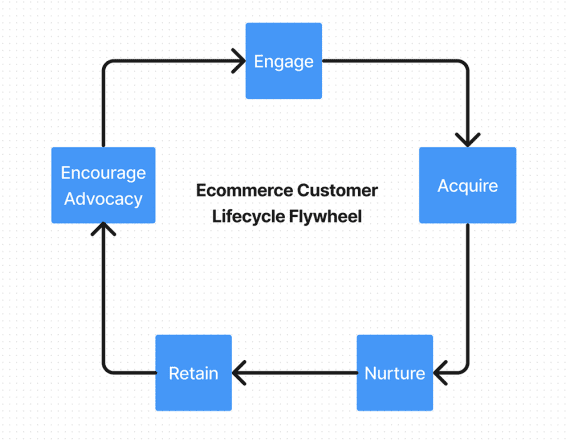
An ecommerce customer lifecycle is a process with steps. It’s different from a flywheel, a model of continuous improvement. Combined, they create a reinforcing loop that produces customers and revenue.

Diagram of a customer lifecycle flywheel with five stages: Engage, Acquire, Nurture, Retain, Encourage Advocacy.

A customer lifecycle flywheel drives sales in a loop that improves with every rotation.

Ecommerce Customer Lifecycle

A customer lifecycle generally has five broad steps — from discovering a brand or product to becoming an advocate for the business.

Ecommerce marketers often focus on one or two of these steps. For example, some marketers spend most of their time engaging and acquiring shoppers. This is essential work but unending.

Marketers relying on advertising to engage customers will never eliminate paid acquisition or reduce its cost. Growth will be proportional to investment.

In contrast, the same marketers could develop brand advocates and soon find steps one (Engage) and two (Acquire) filled with referred shoppers.

By no means should ecommerce stores stop advertising. But they should think of customer lifecycles as flywheels.

Connecting Stages

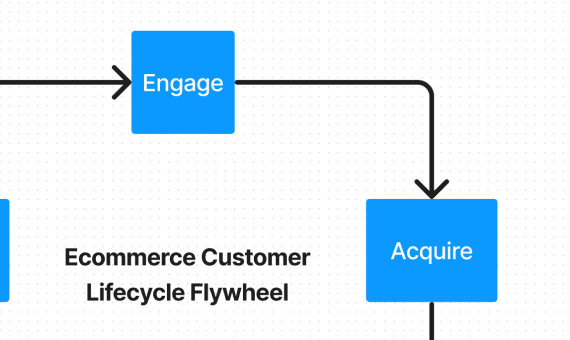
Business flywheels have rules. First, the virtuous cycle means each flywheel step moves smoothly to the next. For example, many marketing teams are good at moving shoppers from engagement (Engage) to purchase (Acquire).

Portion of the flywheel showing the Engage and Acquire steps.

Each step in a business flywheel should flow smoothly into the next.

A prospect moves from the Engage step to Acquire when she has enough context to make a purchase. Ecommerce marketing teams are usually very good at this part of the wheel. They run ads, monitor clicks and visitors, and measure conversions.

Moving a shopper from Acquire to Nurture should be just as smooth. Perhaps this requires a post-purchase email sequence encouraging the shopper to join a newsletter. Or it may be a thank-you note from the store.

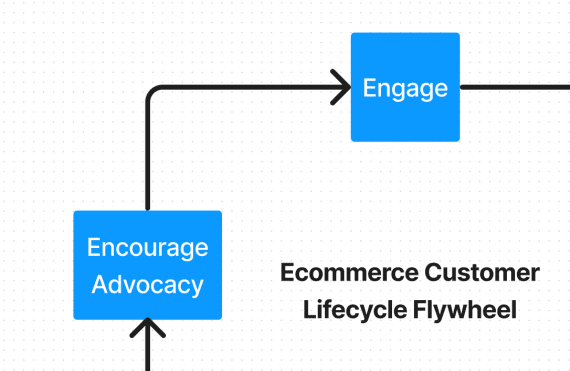
Each step should lead to the next. Encourage Advocacy becomes the final step, leading back to Engage. The store’s advocates have become marketers, exposing potential customers to the business. Thus Engage now includes both referred and purchased shoppers.

Portion of the flywheel showing the Encourage Advocacy and Acquire steps.

Encourage Advocacy, the last step in a business flywheel, restarts the cycle.

Ease

The second rule of a business flywheel is each rotation is easier. This becomes true when marketers focus on the entire cycle and encourage advocacy.

Here is a hypothetical example. What if every brand advocate produced one prospect for each rotation of the flywheel? Assuming the company ordinarily obtains 100 engaged shoppers each cycle, advocacy could lead to 47 more engaged shoppers by the fifth rotation.

With brand advocates, the top of the cycle (Engage) is growing because customers beget customers.

Effectiveness

The third rule for a business flywheel is each rotation is more effective.

This, too, is true when marketers consider the entire lifecycle.

In the example above, more prospects are entering the Engage step, and thus more into Acquire, Nurture, Retain, and Encourage Advocacy.

Flywheel

A linear conversion process implies an ending. Marketers often focus on the steps that conclude with immediate sales. But transform that process into a flywheel, and suddenly advocacy is not the end but the beginning of greater opportunity.

Develop promotional tactics for each step in the cycle. The increased flow boosts revenue and profit without more investment.

How To Reduce Wasted Ad Budget: The Hidden Cost of Close Variants

This post was sponsored by Adpulse. The opinions expressed in this article are the sponsor’s own.

As managers of paid media, one question drives us all: “How do I improve paid ad performance?”. 

Given that our study found close variant search terms perform poorly, yet more than half of the average budget on Google & Microsoft Ads is being spent on them, managing their impact effectively could well be one of your largest optimization levers toward driving significant improvements in ROI. 

“Close variants help you connect with people who are looking for your business, despite slight variations in the way they search.” support.google.com

Promising idea…but what about the execution?

We analyzed over 4.5 million clicks and 400,000 conversions to answer this question: With the rise in close variants (intent matching) search terms, what impact are they having on budgets and account performance? Spoiler alert, the impact is substantial. 


True Match Vs. Close Variants: How Do They Perform?

To understand close variant (CV) performance, we must first define the difference between a true match and a close variant. 

What Is a True Match? 

We still remember the good-old-days where keyword match types gave you control over the search terms they triggered, so for this study we used the literal match types to define ‘close variant’ vs ‘true match’. 

  • Exact match keyword => search term matches the keyword exactly. 
  • Phrase match keyword => search term must contain the keyword (same word order).
  • Broad match keyword => search term must contain every individual word in the keyword, but the word order does not matter (the way modified broad match keywords used to work).   

What Is a Close Variant? 

If you’re not familiar with close variants (intent matching) search terms, think of them as search terms that are ‘fuzzy matched’ to the keywords you are actually bidding on. 

Some of these close variants are highly relevant and represent a real opportunity to expand your keywords in a positive way. 

Some are close-ish, but the conversions are expensive. 

And (no shocks here) some are truly wasteful. 

….Both Google and Microsoft Ads do this, and you can’t opt-out.

To give an example: if you were a music therapist, you might bid on the phrase match keyword “music therapist”. An example of a true match search term would be ‘music therapist near me’ because it contains the keyword in its true form (phrase match in this case) and a CV might be ‘music and art therapy’.


How Do Close Variants Compare to True Match?

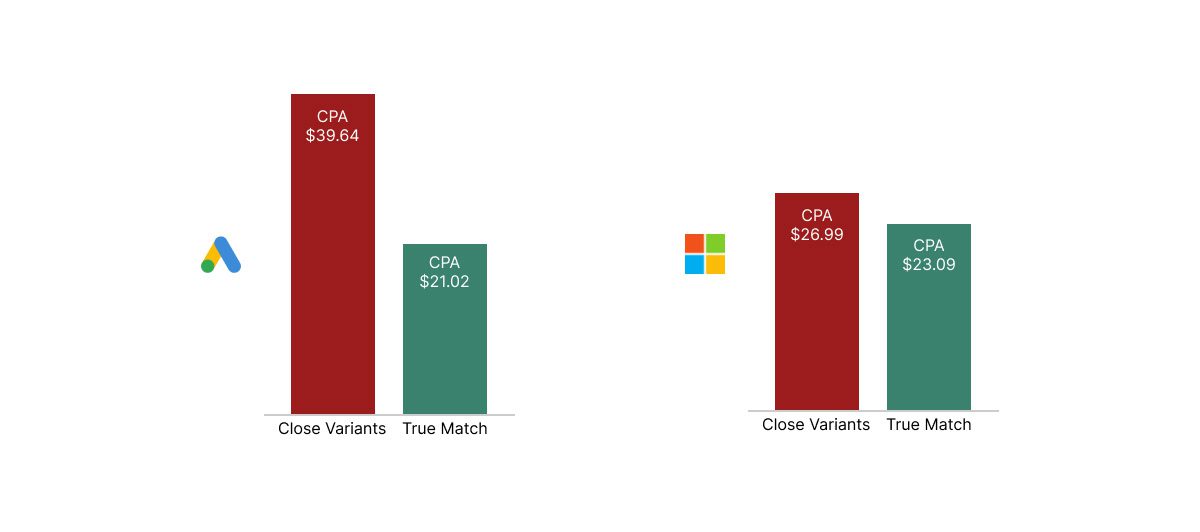
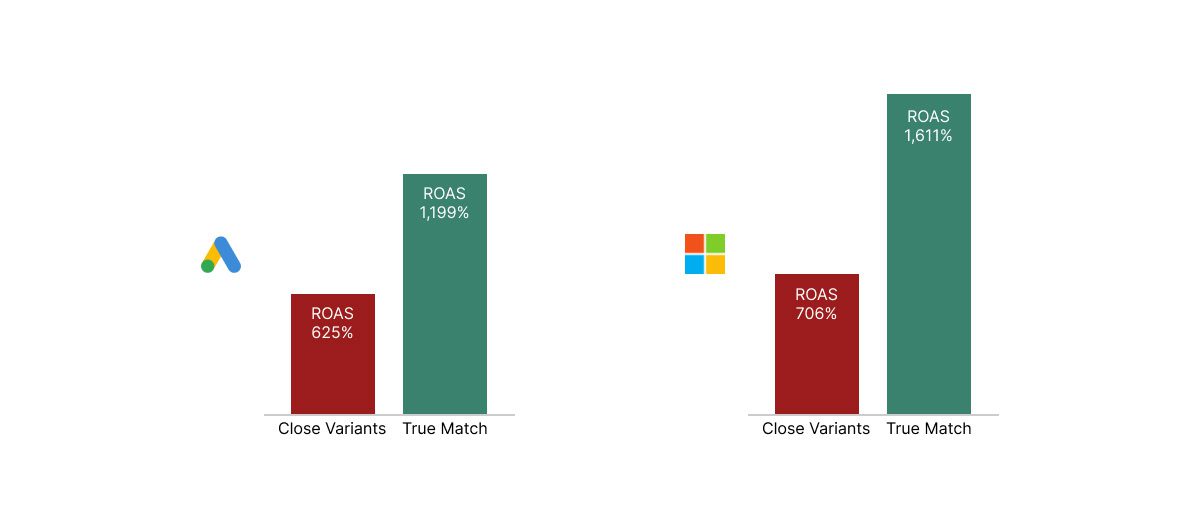
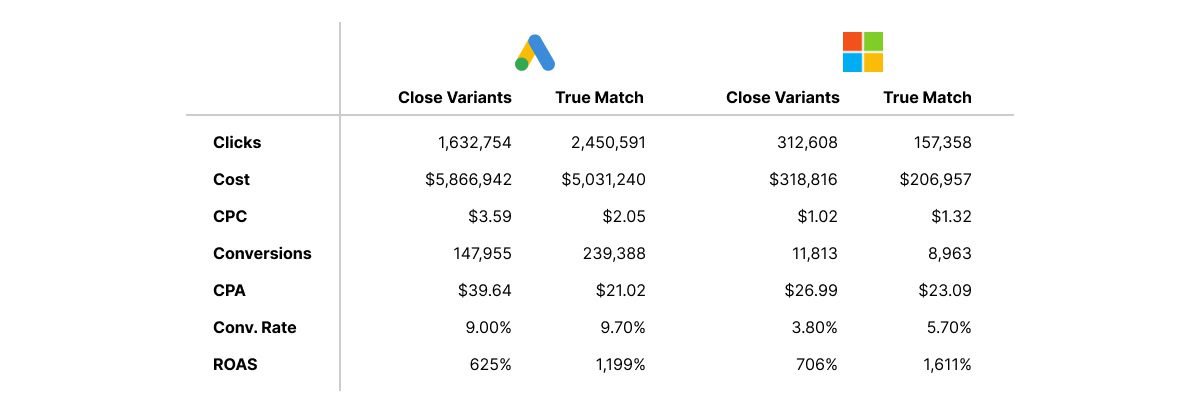
Short answer… poorly, on both Google and Microsoft Ads. Interestingly however, Google showed the worst performance on both metrics assessed, CPA and ROAS. 

Image created by Adpulse, May 2024

Image created by Adpulse, May 2024

Want to see the data – jump to it here…

CVs have been embraced by both platforms with (as earlier stated), on average more than half of your budget being spent on CV variant matches. That’s a lot of expansion to reach searches you’re not directly bidding for, so it’s clearly a major driver of performance in your account and, therefore, deserving of your attention. 

We anticipated a difference in metrics between CVs and true match search terms, since the true match search terms directly align with the keywords you’re bidding on, derived from your intimate knowledge of the business offering. 

True match conversions should therefore be the low-hanging fruit, leaving the rest for the platforms to find via CVs. Depending on the cost and ROI, this isn’t inherently bad, but logically we would assume CVs would perform worse than true matches, which is exactly what we observed. 


How Can You Limit Wastage on Close Variants?

You can’t opt out of them, however, if your goal is to manage their impact on performance, you can use these three steps to move the needle in the right direction. And of course, if you’re relying on CVs to boost volume, you’ll need to take more of a ‘quality-screening’ rather than a hard-line ‘everything-must-go’ approach to your CV clean out!

Step 1: Diagnose Your CV Problem 

We’re a helpful bunch at Adpulse so while we were scoping our in-app solution, we built a simple spreadsheet that you can use to diagnose how healthy your CVs are. Just make a copy, paste in your keyword and search term data then run the analysis for yourself. Then you can start to clean up any wayward CVs identified. Of course, by virtue of technology, it’s both faster and more advanced in the Adpulse Close Variant Manager 😉.

Step 2: Suggested Campaign Structures for Easier CV Management  

Brand Campaigns

If you don’t want competitors or general searches being matched to your brand keywords, this strategy will solve for that. 

Set up one ad group with your exact brand keyword/s, and another ad group with phrase brand keyword/s, then employ the negative keyword strategies in Step 3 below. You might be surprised at how many CVs have nothing to do with your brand, and identifying variants (and adding negative keywords) becomes easy with this structure.

Don’t forget to add your phrase match brand negatives to non-brand campaigns (we love negative lists for this).

Non-Brand Campaigns with Larger Budgets

We suggest a campaign structure with one ad group per match type:

Example Ad Groups:

    • General Plumbers – Exact
    • General Plumbers – Phrase
    • General Plumbers – Broad
    • Emergency Plumbers – Exact
    • Emergency Plumbers – Phrase
    • Emergency Plumbers – Broad

This allows you to more easily identify variants so you can eliminate them quickly. This also allows you to find new keyword themes based on good quality CVs, and add them easily to the campaign. 

Non-Brand Campaigns with Smaller Budgets

Smaller budgets mean the upside of having more data per ad group outweighs the upside of making it easier to trim unwanted CVs, so go for a simpler theme-based ad group structure:

Example Ad Groups:

    • General Plumbers
    • Emergency Plumbers

Step 3: Ongoing Actions to Tame Close Variants

Adding great CVs as keywords and poor CVs as negatives on a regular basis is the only way to control their impact.

For exact match ad groups we suggest adding mainly root negative keywords. For example, if you were bidding on [buy mens walking shoes] and a CV appeared for ‘mens joggers’, you could add the single word “joggers” as a phrase/broad match negative keyword, which would prevent all future searches that contain joggers. If you added mens joggers as a negative keyword, other searches that contain the word joggers would still be eligible to trigger. 

In ad groups that contain phrase or broad match keywords you shouldn’t use root negatives unless you’re REALLY sure that the root negative should never appear in any search term. You’ll probably find that you use the whole search term added as an exact match negative much more often than using root negs.


The Proof: What (and Why) We Analyzed

We know CVs are part of the conversations marketers frequently have, and by virtue of the number of conversations we have with agencies each week, we’ve witnessed the increase of CV driven frustration amongst marketers. 

Internally we reached a tipping point and decided to data dive to see if it just felt like a large problem, or if it actually IS a large enough problem that we should devote resources to solving it in-app. First stop…data. 

Our study of CV performance started with thousands of Google and Microsoft Ads accounts, using last 30-day data to May 2024, filtered to exclude:

  • Shopping or DSA campaigns/Ad Groups.
  • Accounts with less than 10 conversions.
  • Accounts with a conversion rate above 50%.
  • For ROAS comparisons, any accounts with a ROAS below 200% or above 2500%.

Search terms in the study are therefore from keyword-based search campaigns where those accounts appear to have a reliable conversion tracking setup and have enough conversion data to be individually meaningful.

The cleaned data set comprised over 4.5 million clicks and 400,000 conversions (over 30 days) across Google and Microsoft Ads; a large enough data set to answer questions about CV performance with confidence.

Interestingly, each platform appears to have a different driver for their lower CV performance. 

CPA Results:

Google Ads was able to maintain its conversion rate, but it chased more expensive clicks to achieve it…in fact, clicks at almost double the average CPC of true match! Result: their CPA of CVs worked out roughly double the CPA of true match.                 

Microsoft Ads only saw slightly poorer CPA performance within CVs; their conversion rate was much lower compared to true match, but their saving grace was that they had significantly lower CPCs, and you can afford to have a lower conversion rate if your click costs are also lower. End outcome? Microsoft Ads CPA on CVs was only slightly more expensive when compared to their CPA on true matches; a pleasant surprise 🙂.

Image created by Adpulse, May 2024

ROAS Results:

Both platforms showed a similar story; CVs delivered roughly half the ROAS of their true match cousins, with Microsoft Ads again being stronger overall. 


Image created by Adpulse, May 2024

Underlying Data:

For the data nerds amongst us (at Adpulse we self-identify here !) 

Image created by Adpulse, May 2024


TL;DR

Close variant search terms consume, on average, more than half an advertiser’s budget whilst in most cases, performing significantly worse than search terms that actually match the keywords. How much worse? Read above for details ^. Enough that managing their impact effectively could well be one of your largest optimization levers toward driving significant improvements in account ROI. 


Image Credits

Featured Image: Image by Adpulse. Used with permission.

seo enhancements
Google and Bing stress the importance of lastmod in XML sitemaps

XML sitemaps are essential for every site’s SEO strategy and are a big part of our core Yoast SEO product. Both Google and Bing have recently renewed emphasis on properly using the lastmod (last modified) tag in XML sitemaps. The leading search engines now advise site owners to use this feature properly for better crawling and indexing.

What is the lastmod tag in XML sitemaps?

The lastmod tag in an XML sitemap indicates the last time a particular page on your website was updated. This information helps search engines understand which pages have fresh content and prioritize them for crawling.

The situation before

Before the recent emphasis from Google and Bing, using the lastmod tag was optional and often misused. Many site owners either ignored it or didn’t understand its proper use.

This led to inconsistencies in how search engines crawled and indexed updated content. Some site owners would incorrectly update the lastmod date every time the sitemap was regenerated, regardless of actual content changes, causing inefficiencies in crawling.

Recent advice from Google and Bing

Both Google and Bing have updated their guidelines to stress the importance of accurately using the lastmod tag.

  • Google: Google’s latest guidelines emphasize that using the lastmod tag helps the search engine prioritize crawling and indexing pages with fresh content. In its XML sitemap documentation, Google says: “Google uses the  value if it’s consistently and verifiably (for example, by comparing to the last modification of the page) accurate.”
  • Bing: In February 2023, Bing also highlighted the critical nature of the lastmod tag in XML sitemaps, advising site owners to ensure this tag accurately reflects content updates.

A key reason behind this renewed focus is to improve crawl efficiency, contributing to a greener, more sustainable future. Efficient crawling reduces search engines’ computational resources, lowering their carbon footprint. By using the lastmod tag correctly, site owners can help search engines crawl their sites more efficiently, supporting environmental sustainability.

Why this matters for SEO

XML sitemaps are crucial for SEO because they help search engines efficiently discover and index your website’s content. Sitemaps list all your site’s pages, ensuring that crawlers don’t miss your important content.

The lastmod tag in sitemaps indicates when a page was last updated, helping search engines quickly re-crawl fresh content. This keeps your site’s information current in search results. Including new pages in your sitemap speeds up their indexing, improving your visibility.

Sitemaps are invaluable for large or complex websites. They help search engines navigate extensive content, and they can also include details about images, videos, and news articles, enhancing visibility in specialized search results.

XML sitemaps boost your SEO by ensuring search engines discover, crawl, and index your content efficiently. This leads to better visibility and higher rankings in search results.

With this latest news, lastmod becomes an ally for your SEO efforts:

  1. Improved crawling efficiency: Accurate lastmod dates help search engines allocate their crawling resources more effectively, focusing on new and updated content.
  2. Better indexing: Fresh content is more likely to be indexed quickly, improving your site’s visibility in search results.
  3. Enhanced user experience: Keeping search engines updated with the latest content ensures that users find the most current information when they visit your site.

How to implement the lastmod tag correctly

Most XML sitemaps will probably already have a lastmod built-in. At Yoast, we help over 13 million sites with proper XML sitemaps built in the best possible way. If you’re using Yoast SEO, you can’t misuse lastmod because we update the XML sitemap for you, and don’t allow you to use it incorrectly.

In short, there are some best practices to keep in mind:

  1. Update only when necessary: Ensure that the lastmod date reflects the actual last modification date of the page’s content.
  2. Automate with care: Use automated tools to update your sitemap, but ensure they are configured correctly to update the lastmod tag only when the content changes.
  3. Monitor and review: Regularly review your sitemap to ensure the lastmod dates are accurate and reflect genuine content updates.

Yoast SEO’s support for lastmod

Yoast SEO has always supported the lastmod tag in XML sitemaps. Our plugin automatically includes the lastmod tag for each page and post, ensuring that search engines are notified of the most recent updates.

  • Automatic updates: Yoast SEO updates the lastmod tag whenever you update a post or page, taking the guesswork out of maintaining accurate sitemaps.
  • User-friendly: By incorporating the lastmod tag seamlessly into its XML sitemaps, Yoast SEO makes it easy for site owners to follow best practices without needing technical expertise.

By using Yoast SEO, you can ensure your sitemaps are always up-to-date. This keeps you aligned with the latest recommendations from Google and Bing.

Conclusion to lastmod support by Bing and Google

Google and Bing’s renewed focus on the lastmod tag reminds site owners to adhere to best practices in sitemap creation and maintenance. Implement these recommendations and use tools like Yoast SEO to enhance your site’s SEO performance. This ensures search engines will discover and index your fresh content promptly.

Coming up next!

Razorfish R-Index Turns Consumer Data Silos Into Strategic Insights via @sejournal, @martinibuster

Razorfish launched a new technology called R-Index that measures disparate online and offline customer interactions (including for paid and owned interactions) and generates prescriptive insights on consumer sentiment, brand performance and business impact. R-Index turns otherwise disconnected data into strategic insights on consumer journeys and brand sentiment.

R-Index is based on a custom algorithm that leverages Google Cloud, Big Query, and a suite of machine learning and Vertex AI, working together to analyze what customers are doing at every step and providing actionable insights about customer insights and learning how to engage with customers better.

What Is R-Index About?

I interviewed Razorfish to get a better idea of what R-Index is and why it’s an important tool for brands.

I asked Razorfish about what’s being measured:

“R-Index helps measure brand performance, consumer sentiment, and business impact. It includes a brand’s experience touchpoints across the consumer journey, including paid and owned interactions.”

The press release notes how there’s an abundance of data about “moments that matter” but that its inherent disparate quality makes it challenging to get a holistic picture of what it all means and extract meaning from it. So I asked them to elaborate on that.

“The holistic journey looks different for different consumers and consumer journeys. R-Index aims to capture how consumers start their journeys through purchase and loyalty, and distill how resonant each of these touchpoints are along the journey into a single, easy-to-use metric.

A moment that matters is a specific engagement that a consumer has with any of our experience touchpoints, whether that’s marketing, going to a website, etc. These are the moments where we see
more engagement based on our observations. They can be different across consumers and segments.

As we analyze what the consumer is doing across the full journey, we’re identifying touchpoints that are resonating more and helping brands refine and optimize those experiences. This could be increasing the frequency, delivering a more personalized message, or focusing on a specific touchpoint. But with R-Index, we’re capitalizing on this behavioral data and using it to serve consumers better.”

What are the concrete real-world “touchpoints” you are referring to?

“Real-world touchpoints include call data, CRM information, web traffic, mobile app clicks, ad traffic or offline interactions like TV. As the number of avenues for consumers to interact with a brand continues to increase, data from those sources is continuing to fragment and shift further into silos.

Similarly, despite recent delays, third-party cookies will continue to deprecate and newer regulations will further the challenges in data collection, making it vital for brands to be able to access and process any and all data options into one source.

When you think about how traditional measurement tools have looked at performance (ex: acquisition and how that works across specific channels, paid media, or television) they aren’t really connected to measuring the actual sentiment or perception of consumers and how these translate into specific business value for brands.

And sentiment descriptions really differ from brand to brand, as some labels that are considered “negative” for one brand might not be the same for another.

R-index is meant to aggregate all the different touchpoints that a consumer could theoretically interact with and get to a perspective of what’s actually driving either positive sentiment and resonance for consumers or what areas need to be optimized for better experiences.”

Tell me more about the insights and how R-Index provides more a “nuanced view”?

“R-Index is a simpler tool to get the insights that are needed to help a brand optimize overall performance, dive into the specific drivers of that performance for a brand, and make those experiences more resonant and relevant for their core consumers. R-Index provides more insights into what’s truly driving positive and helpful consumer experiences, and driving resonance for brands across the entire marketing mix and marketing investment.

Even if you have specific segments of consumers, they can behave very differently based on how they’re interacting with the touchpoints. While the aim is not to drill down to any one
specific customer, it can provide improved segment understanding to make each touchpoint more appropriate and personalized.

There are many measurement solutions in the market that can look at channel performance or sentiment performance in a silo, but R-Index is putting everything together in one place. R-Index has the components of being more dynamic, being able to scale and being able to plug into a number of different tools and AI capabilities to provide predictive optimized recommendations at scale.

The combination and connectivity of the data being pulled, the AI capabilities, and rigorous testing of the tool is helping drive the more nuanced views of insights that provide prescriptive strategic recommendations and analyses of data with greater detail. The definition and understanding of a brand’s audience segments will be deeper than ever before.

R-Index is prescriptive, providing automated insights and recommendations, and allows for drill-down insights at granular levels for components that make up the index score.

R-Index’s capabilities go beyond simply understanding what ads work to understanding how nuances across media investment, macroeconomic data, etc., impact overall consumer perceptions and interactions with brands, and how to best refine experiences to be resonant to consumers with those insights in mind.”

A Powerful Tool For Actionable Insights

R-Index is a powerful marketing insight tool that measures brand performance, consumer sentiment, and business impact and provides prescriptive recommendations to help make marketers and marketing teams improve consumer experiences and business outcomes.

Read more about R-Index:

Razorfish Unveils R-Index, A Proprietary Data Solution for Creating Unified Experiences in Collaboration with Google Cloud

Featured Image by Shutterstock/PCH.Vector

New Ecommerce Tools: June 17, 2024

This week’s list of new products for ecommerce and omnichannel merchants includes generative AI, chatbots, digital payments, social commerce, subscriptions, media networks, and cryptocurrencies.

Got an ecommerce product release? Email releases@practicalecommerce.com.

New Tools for Merchants: June 17

Intuit Mailchimp previews AI-powered revenue intelligence system. Intuit has previewed its new revenue intelligence technology, a system of always-on predictive and generative AI models for marketers. The company’s Mailchimp platform will utilize revenue intelligence to deploy Intuit’s data through AI technology to benchmark customers’ marketing against industry-specific financial inputs from Intuit QuickBooks and marketing performance data points. It will recommend the right time to target customers and generate more personalized and revenue-driving content. Additionally, Mailchimp is announcing the continued expansion of SMS features in the U.K.

Home page of Intuit Mailchimp

Intuit Mailchimp

eBay includes Venmo as a payment option. eBay is expanding its checkout by adding Venmo, the popular payment platform among Gen Z and millennials, with more than 90 million users. Buyers can pay for purchases with their Venmo balance or bank account, debit card, or credit card linked to their Venmo account. Sellers need only to offer Venmo as a payment method. The addition of Venmo continues eBay’s push toward tapping into a younger demographic.

Fast Simon launches Personalization AI Embeddings. Fast Simon, a provider of AI-powered shopping optimization, has launched Personalization AI Embeddings, creating vectors that feed Fast Simon’s AI model. According to the company, Personalization AI Embeddings leverage complex logic and multiple AI inputs, including color, category, image matching, text descriptions, customer activity, and location. Personalization AI Embeddings can improve search results, optimize collection assortment, and suggest product categories for the shopper.

Sendbird provides AI chatbot for Shopify merchants. Sendbird, a communications API platform, has announced an AI chatbot for Shopify. Powered by OpenAI’s latest large language model GPT-4o, Sendbird’s no-code AI chatbot connects to merchant store data via Shopify’s APIs. The connection allows it to answer frequently asked questions, make product recommendations, and provide support contact information, boosting customer satisfaction and transactions. Merchants can customize and test their AI chatbot before deploying it on their Shopify store.

Home page of Sendbird

Sendbird

Pinterest partners with Vtex to help brands leverage social commerce. Pinterest has partnered with Vtex, a composable commerce platform. The collaboration is designed to help large brands expand their social commerce footprint and connect with regional customers. Vtex’s platform lets its 2,600 global brands reach and engage on Pinterest, where customers can integrate their product catalogs, create pins, and run performance shopping campaigns.

Costco launches beta version of its retail media network. Costco will launch its own retail media network, currently in beta testing. The network will leverage data from the retailer’s 74.5 million members, including their purchase history. Costco can map individual purchases to shoppers’ households in-store and online. Ads will be served both on- and off-network.

Contentsquare announces an AI-embedded Experience Intelligence platform. Contentsquare, a digital experience platform, has announced its new Experience Intelligence platform, connecting four analytics features: Digital Experience Analytics, Digital Experience Monitoring, Product Analytics, and Voice of Customer. Additionally, Contentsquare has integrated AI-powered insights across its platform to streamline analysis.

Home page of Contentsquare

Contentsquare

Trustly launches AI-powered recurring payments. Trustly, an open banking account-to-account payment platform, has unveiled an AI-powered recurring payments feature to help merchants handle repeat transactions through a single integration. The technology enables businesses to accept recurring transactions directly from customers’ bank accounts. It expands upon the capabilities of Trustly Azura, the company’s proprietary data engine. Trustly Recurring Payments is a pan-European solution available through a single API from one platform.

Google’s Search Console provides ecommerce data on product listings. Google has introduced a feature in Search Console that allows merchants to track their Image Search product listings. The new data is accessible through the Performance report under the Google Search Image tab, and includes impressions, clicks, and other key metrics related to product showcases. The new Search Console data provides businesses with a more comprehensive view of their product visibility.

FreedomPay launches independent payment processing referral advisory for merchants. FreedomPay, a payment solution provider for commerce, has launched Merchant Centric Acquiring, an independent advisory service available to merchants in the U.S. and Canada to deliver a more equitable payment system for their businesses. Merchant Centric Acquiring allows merchants to partner with FreedomPay to explore a range of pre-qualified processing providers.

Helio upgrades Solana Pay plugin for Shopify, enabling crypto payments. Helio, a crypto payments provider, has upgraded its Solana Pay plugin for Shopify. The plugin provides multi-token payments, allowing buyers to make purchases in Solana or other cryptocurrencies with automatic swaps to stablecoins, meaning merchants always receive USDC (a crypto) or another currency of their choice. Solana Pay enables Shopify merchants to tap active communities by allowing buyers to spend meme coins in their online stores.

Home page of Helio

Helio

How to Monitor Google’s Updates

Google releases updates to its search algorithm seemingly nonstop. Each release typically lowers organic rankings for many sites. Hence keeping an eye on those updates and their impact is essential for evolving optimization strategies.

Here are four tools to track the releases and their effect.

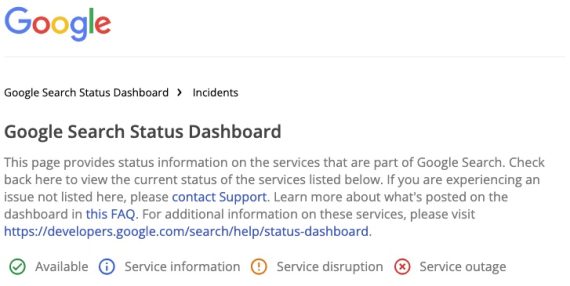
Google Search Status Dashboard

Home page of Google Search Status Dashboard

Google Search Status Dashboard

Google provides algorithm updates and error fixes through its Search Status Dashboard.

This is the only reliable way to confirm when an update has started and ended. It is also helpful for determining if search fluctuations are due to non-algorithm incidents such as crawling and indexing glitches.

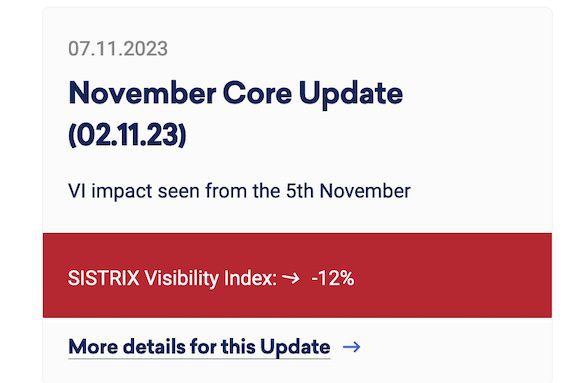
Sistrix

Sistrix's Google Updates page.

Sistrix’s Google Updates page.

Sistix is premium SEO software with a free tool to evaluate the impact of a Google update on your site. Choose your country and type your domain; the tool will check your ranking fluctuations for each update, allowing 25 daily queries for free.

Sistix also provides a summary of each update and its purpose.

Always confirm Sistrix’s findings with Search Console reports and Google Analytics data.

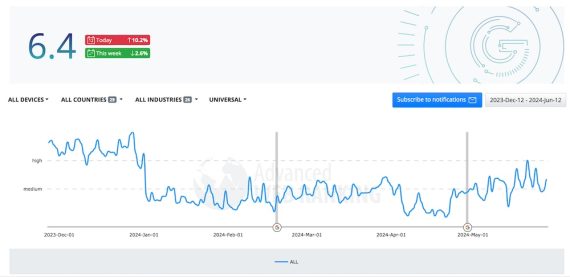
Advanced Web Ranking

Volatility example on Advanced Web Ranking

Volatility graph on Advanced Web Ranking.

Advanced Web Ranking publishes daily SERP volatility and fluctuations based on approximately 400,000 desktop keywords (and 200,000 mobile) across multiple countries.

Users can filter reports by industry, device, and country — with confirmed Google updates.

The tool offers free alerts on volatility and Google-announced releases.

GSC Guardian

Search Console overlay on GSC Guardian

Search Console overlay on GSC Guardian.

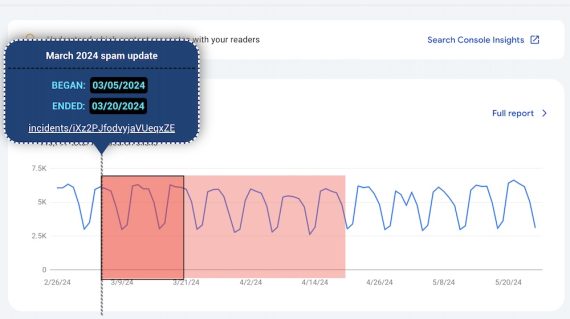
GSC Guardian is a free Chrome extension to track Google’s updates against overlays in Search Console reports. Users can create annotations of tasks or observations in their Search Console dashboards.

The extension simplifies evaluating the impact of a Google update on your organic search visibility.

Monitoring Google’s updates is essential, but remember, organic traffic fluctuations are normal, and core algorithm releases often address queries and their intent, not weaknesses in websites.

Thus traffic declines are not typically penalties. Assess search result pages and note the changes. Have your organic positions changed, or are they pushed down the page owing to AI Overviews or new SERP features? For example, recent updates replaced review sites with ecommerce results for many queries.

Not all ranking fluctuations are reversible. But knowing the status of target queries and SERPs is key for identifying new opportunities.

YouTube Tests Crowdsourced Annotations For Videos via @sejournal, @MattGSouthern

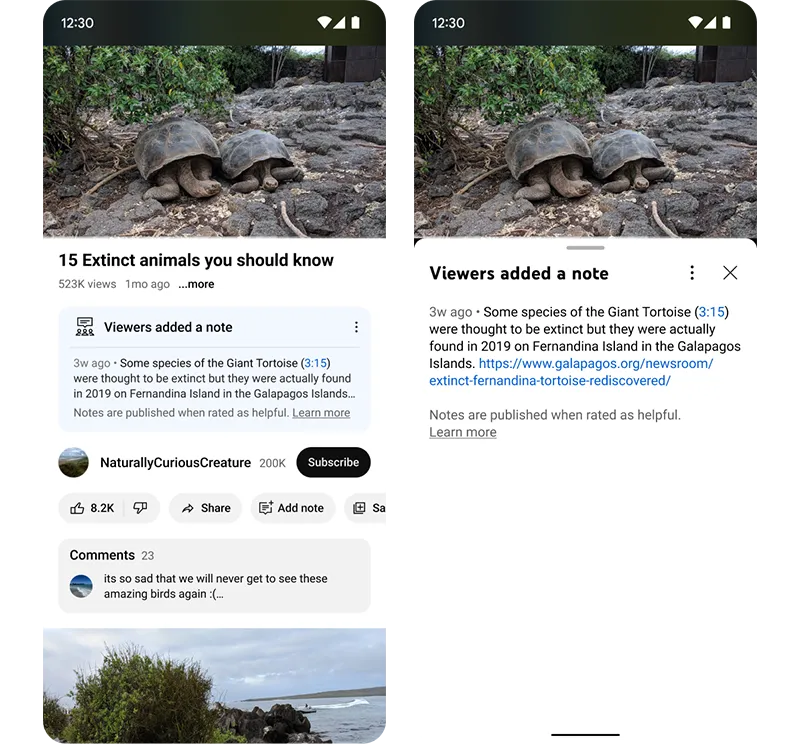
YouTube is piloting a new experimental feature allowing users to add contextual notes to videos to provide supplemental information.

The “Video Context Notes” feature, currently being tested on mobile in the United States for English language videos, allows invited contributors to write short annotations.

Screenshot from: blog.youtube.com, June 2024.

In its announcement, YouTube describes how it intends for people to use context notes:

“These notes could clarify when footage contains parody material, point out if a product review is outdated due to a newer version release, or confirm whether viral clips actually depict current events.”

Notes build on other YouTube efforts to present context alongside videos, such as information panels and disclosure labels for altered or synthetic media.

However, YouTube recognizes there’s potential for inaccurate or unsuitable notes during the experimental phase, stating:

“We anticipate there will be mistakes – notes that aren’t a great match for the video or potentially incorrect information. That’s part of how we’ll learn from the experiment.”

Availability

A limited number of YouTube channels in good standing will be invited to write and attach context notes to videos.

Viewers in the U.S. will be able to see and rate the helpfulness of these notes.

Third-party evaluators, the same contracted personnel who provide feedback on YouTube’s search and recommendation systems, will also assess the quality and accuracy of posted notes.

Their ratings and viewer input will be processed through a “bridging-based algorithm” to determine which notes get published broadly.

YouTube explains in the announcement:

“If many people who have rated notes differently in the past now rate the same note as helpful, then our system is more likely to show that note under a video.”

As the pilot progresses, YouTube plans to explore having contributors rate each other’s notes to further train the note-publishing system.

Why SEJ Cares

Letting users add context could add another layer of credibility to videos, such as confirming or debunking the presenter’s claims.

While there are bound to be some growing pains, if YouTube can get this new notes system right, it could raise the bar for transparency when it comes to video content across the web.


Featured Image: Queenmoonlite Studio/Shutterstock

Boost Your Visibility Now: A Local Search Guide For Multi-Location Businesses via @sejournal, @lorenbaker

If you’re a multi-location brand looking to boost your local visibility and gain a competitive edge in the market, look no further.

On June 26, we’re hosting a live webinar with SOCi where we’ll dive into the latest insights and best practices to help you enhance your local SEO strategy. 

Consumers increasingly rely on local search results to find products and services near them – whether it’s a nearby restaurant, a fitness center, or a retail store.

That’s why staying visible in local search results is crucial to the success of your business. 

But achieving and maintaining high local search visibility is no easy feat, especially with the rapid developments in search algorithms and digital marketing trends.

So if your goal is to stay ahead in this constantly evolving search landscape, join us and learn how to scale the visibility of your business. 

In this insightful session, you’ll discover: 

  • Expert insights from Local SEO experts and industry leaders: Gain valuable insights and future predictions for local search from leading experts in the field. Learn about the latest trends, challenges, and opportunities in local SEO.
  • Actionable recommendations on how to form a winning SEO strategy: Our SEO experts will provide practical tips and strategies that you can implement immediately to boost your local search visibility and drive growth.
  • An exclusive look at Genius Search: Learn how this groundbreaking new product can have a remarkable impact on your multi-location business. With Genius Search, you can revolutionize your strategy and achieve greater visibility and engagement across multiple locations.

Kaci McBride, Director of Local Marketing and Analytics at SOCi, and Mike Snow, Search Engine Optimization Analyst at SOCi, will walk you through ways to utilize the tools at your disposal to outperform your competition.

As a highlight, our presenters will also introduce their groundbreaking new product, Genius Search, and demonstrate how it can elevate your local SEO efforts.

And be sure to join us live so you can engage with Kaci and Mike, and ask them your most burning questions about local SEO. 

Can’t make the live event? Don’t worry – we’ve got you covered. Simply register here and we’ll send you a recording after the webinar.