Google’s John Mueller says the Search team is “explicitly evaluating” how to reward sites that produce helpful, high-quality content when the next core update rolls out.
The comments came in response to a discussion on X about the impact of March’s core update and September’s helpful content update.
In a series of tweets, Mueller acknowledged the concerns, stating:
“I imagine for most sites strongly affected, the effects will be site-wide for the time being, and it will take until the next update to see similar strong effects (assuming the new state of the site is significantly better than before).”
“I can’t make any promises, but the team working on this is explicitly evaluating how sites can / will improve in Search for the next update. It would be great to show more users the content that folks have worked hard on, and where sites have taken helpfulness to heart.”
What Does This Mean For SEO Professionals & Site Owners?
Mueller’s comments confirm Google is aware of critiques about the March core update and is refining its ability to identify high-quality sites and reward them appropriately in the next core update.
For websites, clearly demonstrating an authentic commitment to producing helpful and high-quality content remains the best strategy for improving search performance under Google’s evolving systems.
The Aftermath Of Google’s Core Updates
Google’s algorithm updates, including the September “Helpful Content Update” and the March 2024 update, have far-reaching impacts on rankings across industries.
While some sites experienced surges in traffic, others faced substantial declines, with some reporting visibility losses of up to 90%.
As website owners implement changes to align with Google’s guidelines, many question whether their efforts will be rewarded.
There’s genuine concern about the potential for long-term or permanent demotions for affected sites.
Recovery Pathway Outlined, But Challenges Remain
In a previous statement, Mueller acknowledged the complexity of the recovery process, stating that:
“some things take much longer to be reassessed (sometimes months, at the moment), and some bigger effects require another update cycle.”
Mueller clarified that not all changes would require a new update cycle but cautioned that “stronger effects will require another update.”
While affirming that permanent changes are “not very useful in a dynamic world,” Mueller adds that “recovery” implies a return to previous levels, which may be unrealistic given evolving user expectations.
Despite the challenges, Mueller has offered glimmers of hope for impacted sites, stating:
“Yes, sites can grow again after being affected by the ‘HCU’ (well, core update now). This isn’t permanent. It can take a lot of work, time, and perhaps update cycles, and/but a different – updated – site will be different in search too.”
He says the process may require “deep analysis to understand how to make a website relevant in a modern world, and significant work to implement those changes — assuming that it’s something that aligns with what the website even wants.”
Looking Ahead
Google’s search team is actively working on improving site rankings and addressing concerns with the next core update.
However, recovery requires patience, thorough analysis, and persistent effort.
The best way to spend your time until the next update is to remain consistent and produce the most exceptional content in your niche.
FAQ
How long does it generally take for a website to recover from the impact of a core update?
Recovery timelines can vary and depend on the extent and type of updates made to align with Google’s guidelines.
Google’s John Mueller noted that some changes might be reassessed quickly, while more substantial effects could take months and require additional update cycles.
Google acknowledges the complexity of the recovery process, indicating that significant improvements aligned with Google’s quality signals might be necessary for a more pronounced recovery.
What impact did the March and September updates have on websites, and what steps should site owners take?
The March and September updates had widespread effects on website rankings, with some sites experiencing traffic surges while others faced up to 90% visibility losses.
Publishing genuinely useful, high-quality content is key for website owners who want to bounce back from a ranking drop or maintain strong rankings. Stick to Google’s recommendations and adapt as they keep updating their systems.
To minimize future disruptions from algorithm changes, it’s a good idea to review your whole site thoroughly and build a content plan centered on what your users want and need.
Is it possible for sites affected by core updates to regain their previous ranking positions?
Sites can recover from the impact of core updates, but it requires significant effort and time.
Mueller suggested that recovery might happen over multiple update cycles and involves a deep analysis to align the site with current user expectations and modern search criteria.
While a return to previous levels isn’t guaranteed, sites can improve and grow by continually enhancing the quality and relevance of their content.
Soon after OpenAI released GPT-4o on Monday, May 13, some Chinese speakers started to notice that something seemed off about this newest version of the chatbot: the tokens it uses to parse text were full of spam and porn phrases.
On May 14, Tianle Cai, a PhD student at Princeton University studying inference efficiency in large language models like those that power such chatbots, accessed GPT-4o’s public token library and pulled a list of the 100 longest Chinese tokens the model uses to parse and compress Chinese prompts.
Humans read in words, but LLMs read in tokens, which are distinct units in a sentence that have consistent and significant meanings. Besides dictionary words, they also include suffixes, common expressions, names, and more. The more tokens a model encodes, the faster the model can “read” a sentence and the less computing power it consumes, thus making the response cheaper.
Of the 100 results, only three of them are common enough to be used in everyday conversations; everything else consisted of words and expressions used specifically in the contexts of either gambling or pornography. The longest token, lasting 10.5 Chinese characters, literally means “_free Japanese porn video to watch.” Oops.
OpenAI did not respond to questions sent by MIT Technology Review prior to publication.
GPT-4o is supposed to be better than its predecessors at handling multi-language tasks. In particular, the advances are achieved through a new tokenization tool that does a better job compressing texts in non-English languages.
But at least when it comes to the Chinese language, the new tokenizer used by GPT-4o has introduced a disproportionate number of meaningless phrases. Experts say that’s likely due to insufficient data cleaning and filtering before the tokenizer was trained.
Because these tokens are not actual commonly spoken words or phrases, the chatbot can fail to grasp their meanings. Researchers have been able to leverage that and trick GPT-4o into hallucinating answers or even circumventing the safety guardrails OpenAI had put in place.
Why non-English tokens matter
The easiest way for a model to process text is character by character, but that’s obviously more time consuming and laborious than recognizing that a certain string of characters—like “c-r-y-p-t-o-c-u-r-r-e-n-c-y”—always means the same thing. These series of characters are encoded as “tokens” the model can use to process prompts. Including more and longer tokens usually means the LLMs are more efficient and affordable for users—who are often billed per token.
When OpenAI released GPT-4o on May 13, it also released a new tokenizer to replace the one it used in previous versions, GPT-3.5 and GPT-4. The new tokenizer especially adds support for non-English languages, according to OpenAI’s website.
The new tokenizer has 200,000 tokens in total, and about 25% are in non-English languages, says Deedy Das, an AI investor at Menlo Ventures. He used language filters to count the number of tokens in different languages, and the top languages, besides English, are Russian, Arabic, and Vietnamese.
“So the tokenizer’s main impact, in my opinion, is you get the cost down in these languages, not that the quality in these languages goes dramatically up,” Das says. When an LLM has better and longer tokens in non-English languages, it can analyze the prompts faster and charge users less for the same answer. With the new tokenizer, “you’re looking at almost four times cost reduction,” he says.
Das, who also speaks Hindi and Bengali, took a look at the longest tokens in those languages. The tokens reflect discussions happening in those languages, so they include words like “Narendra” or “Pakistan,” but common English terms like “Prime Minister,” “university,” and “international” also come up frequently. They also don’t exhibit the issues surrounding the Chinese tokens.
That likely reflects the training data in those languages, Das says: “My working theory is the websites in Hindi and Bengali are very rudimentary. It’s like [mostly] news articles. So I would expect this to be the case. There are not many spam bots and porn websites trying to happen in these languages. It’s mostly going to be in English.”
Polluted data and a lack of cleaning
However, things are drastically different in Chinese. According to multiple researchers who have looked into the new library of tokens used for GPT-4o, the longest tokens in Chinese are almost exclusively spam words used in pornography, gambling, and scamming contexts. Even shorter tokens, like three-character-long Chinese words, reflect those topics to a significant degree.
“The problem is clear: the corpus used to train [the tokenizer] is not clean. The English tokens seem fine, but the Chinese ones are not,” says Cai from Princeton University. It is not rare for a language model to crawl spam when collecting training data, but usually there will be significant effort taken to clean up the data before it’s used. “It’s possible that they didn’t do proper data clearing when it comes to Chinese,” he says.
The content of these Chinese tokens could suggest that they have been polluted by a specific phenomenon: websites hijacking unrelated content in Chinese or other languages to boost spam messages.
These messages are often advertisements for pornography videos and gambling websites. They could be real businesses or merely scams. And the language is inserted into content farm websites or sometimes legitimate websites so they can be indexed by search engines, circumvent the spam filters, and come up in random searches. For example, Google indexed one search result page on a US National Institutes of Health website, which lists a porn site in Chinese. The same site name also appeared in at least five Chinese tokens in GPT-4o.
Chinese users havereported that these spam sites appeared frequently in unrelated Google search results this year, including in comments made to Google Search’s support community. It’s likely that these websites also found their way into OpenAI’s training database for GPT-4o’s new tokenizer.
The same issue didn’t exist with the previous-generation tokenizer and Chinese tokens used for GPT-3.5 and GPT-4, says Zhengyang Geng, a PhD student in computer science at Carnegie Mellon University. There, the longest Chinese tokens are common terms like “life cycles” or “auto-generation.”
Das, who worked on the Google Search team for three years, says the prevalence of spam content is a known problem and isn’t that hard to fix. “Every spam problem has a solution. And you don’t need to cover everything in one technique,” he says. Even simple solutions like requesting an automatic translation of the content when detecting certain keywords could “get you 60% of the way there,” he adds.
But OpenAI likely didn’t clean the Chinese data set or the tokens before the release of GPT-4o, Das says: “At the end of the day, I just don’t think they did the work in this case.”
It’s unclear whether any other languages are affected. One X user reported that a similar prevalence of porn and gambling content in Korean tokens.
The tokens can be used to jailbreak
Users have also found that these tokens can be used to break the LLM, either getting it to spew out completely unrelated answers or, in rare cases, to generate answers that are not allowed under OpenAI’s safety standards.
Geng of Carnegie Mellon University asked GPT-4o to translate some of the long Chinese tokens into English. The model then proceeded to translate words that were never included in the prompts, a typical result of LLM hallucinations.
He also succeeded in using the same tokens to “jailbreak” GPT-4o—that is, to get the model to generate things it shouldn’t. “It’s pretty easy to use these [rarely used] tokens to induce undefined behaviors from the models,” Geng says. “I did some personal red-teaming experiments … The simplest example is asking it to make a bomb. In a normal condition, it would decline it, but if you first use these rare words to jailbreak it, then it will start following your orders. Once it starts to follow your orders, you can ask it all kinds of questions.”
In his tests, which Geng chooses not to share with the public, he says he can see GPT-4o generating the answers line by line. But when it almost reaches the end, another safety mechanism kicks in, detects unsafe content, and blocks it from being shown to the user.
The problem lies in the fact that sometimes the tokenizer and the actual LLM are trained on different data sets, and what was prevalent in the tokenizer data set is not in the LLM data set for whatever reason. The result is that while the tokenizer picks up certain words that it sees frequently, the model is not sufficiently trained on them and never fully understands what these “under-trained” tokens mean. In the _SolidGoldMagikarp case, the username was likely included in the tokenizer training data but not in the actual GPT training data, leaving GPT at a loss about what to do with the token. “And if it has to say something … it gets kind of a random signal and can do really strange things,” Land says.
And different models could glitch differently in this situation. “Like, Llama 3 always gives back empty space but sometimes then talks about the empty space as if there was something there. With other models, I think Gemini, when you give it one of these tokens, it provides a beautiful essay about aluminum, and [the question] didn’t have anything to do with aluminum,” says Land.
To solve this problem, the data set used for training the tokenizer should well represent the data set for the LLM, he says, so there won’t be mismatches between them. If the actual model has gone through safety filters to clean out porn or spam content, the same filters should be applied to the tokenizer data. In reality, this is sometimes hard to do because training LLMs takes months and involves constant improvement, with spam content being filtered out, while token training is usually done at an early stage and may not involve the same level of filtering.
While experts agree it’s not too difficult to solve the issue, it could get complicated as the result gets looped into multi-step intra-model processes, or when the polluted tokens and models get inherited in future iterations. For example, it’s not possible to publicly test GPT-4o’s video and audio functions yet, and it’s unclear whether they suffer from the same glitches that can be caused by these Chinese tokens.
“The robustness of visual input is worse than text input in multimodal models,” says Geng, whose research focus is on visual models. Filtering a text data set is relatively easy, but filtering visual elements will be even harder. “The same issue with these Chinese spam tokens could become bigger with visual tokens,” he says.
Matt Ragland is a 10-year email marketer, first at ConvertKit and now at Good People Digital, the Nashville-based agency he launched in early 2023. His approach to superior email performance is storytelling.
He told me, “Brands that excel at email marketing frequently tell a story to their ideal audience.”
In our recent conversation, he and I addressed storytelling tactics, email design, automation strategies, and more. Our entire audio is embedded below. The transcript is condensed and edited for clarity.
Eric Bandholz: Who the heck are you?
Matt Ragland: I run an email marketing and course-launch agency called Good People Digital. We work with creators and ecommerce providers. We build email and launch newsletters, usually for courses and information products. I’ve been in the email game for almost 10 years.
I do a lot of things in the creator economy. I have a YouTube channel that’s just under 100,000 subscribers.
Bandholz: What is your approach to email marketing?
Ragland: I focus on a story or narrative. For ecommerce, brands that excel at email marketing frequently tell a story to their ideal audience and include their products. I would like to see more ecommerce brands bring their customers into that story in a natural way.
Creators do a good job with stories, but many are horrible at selling and promoting. And then many ecommerce merchants are good at selling, promotion, packaging, and positioning but not storytelling. Both sides have much to learn from each other.
Bandholz: Email newsletter brands such as The Hustle and Morning Brew have grown to eight-figure valuations. Walk us through that business model.
Ragland: Their revenue model focuses almost exclusively on advertising and sponsorships.
It costs very little to start an email newsletter. The Hustle and Morning Brew both went to a daily newsletter pretty early. I remember listening to the Morning Brew founders. They launched the newsletter while students at the University of Michigan. They asked people in their business classes to subscribe on paper.
It started to grow naturally from there through referrals. They had a robust referral program. Say I’m reading the Morning Brew, sign up to be a referral partner, and send it to you and 10 other people who sign up. I then get a sticker and a shirt. The Hustle did something similar.
The other thing Morning Brew and The Hustle did well was paid acquisition of newsletter subscribers. Ecommerce has been great at this for years. But more traditional newsletters didn’t understand the same way as ecommerce sellers when Facebook ads were cheap, around 2015. It felt like free money.
Bandholz: Is there any new tactic in email marketing to take inspiration from?
Ragland: A lot of people feel email marketing is old and out of vogue. But it remains among the best forms of direct marketing. In terms of new tactics, emphasize the story aspect and simplicity — making the newsletters as simple as possible and cutting back on graphics.
Try making a newsletter look more like a personal email message. A friend of mine runs a design studio called Late Checkout. He publishes a design newsletter and stripped away all of the visuals last year.
He now sends something that looks more like a letter to shareholders, which he calls “Greg’s Letter.”
Bandholz: The biggest innovation to me is campaign flows and automation. That’s how Klaviyo got traction over Mailchimp.
Ragland: Yes. Also, what Klaviyo did so well and still does is integrate SMS.
The automation piece is huge, as is the ability to have one entry point as the start for an entire flow that can upsell, down-sell, and cross-sell. We implemented it for an ecommerce client. Instead of the initial entry point of signing up for the newsletter or purchasing a product, we used a mid-life cycle automation based on interest or intent.
For example, a subscriber who clicks on a particular product or link in an email launches an automation similar to cart abandonment, with cross-sells and storytelling around that type of item.
Bandholz: Your wife is expecting your fourth child. What is your philosophy on how to be a good dad?
Ragland: I want to be a good example for my kids. I want to show them what I believe in and what being a good man is. I’ve been fortunate to have a lot of great examples in my life. I’m close with my dad, and he’s amazing. He’s always been a big supporter and fan of mine. My uncles have been excellent mentors, and I’ve had a lot of people in my life who have shown me that this is what it is to be a good man and a good dad.
Bandholz: Where can listeners follow you and learn more about your email services?
Google revealed details of two new crawlers that are optimized for scraping image and video content for “research and development” purposes. Although the documentation doesn’t explicitly say so, it’s presumed that there is no impact in ranking should publishers decide to block the new crawlers.
It should be noted that the data scraped by these crawlers are not explicitly for AI training data, that’s what the Google-Extended crawler is for.
GoogleOther Crawlers
The two new crawlers are versions of Google’s GoogleOther crawler that was launched in April 2023. The original GoogleOther crawler was also designated for use by Google product teams for research and development in what is described as one-off crawls, the description of which offers clues about what the new GoogleOther variants will be used for.
The purpose of the original GoogleOther crawler is officially described as:
“GoogleOther is the generic crawler that may be used by various product teams for fetching publicly accessible content from sites. For example, it may be used for one-off crawls for internal research and development.”
Two GoogleOther Variants
There are two new GoogleOther crawlers:
GoogleOther-Image
GoogleOther-Video
The new variants are for crawling binary data, which is data that’s not text. HTML data is generally referred to as text files, ASCII or Unicode files. If it can be viewed in a text file then it’s a text file/ASCII/Unicode file. Binary files are files that can’t be open in a text viewer app, files like image, audio, and video.
The new GoogleOther variants are for image and video content. Google lists user agent tokens for both of the new crawlers which can be used in a robots.txt for blocking the new crawlers.
1. GoogleOther-Image
User agent tokens:
GoogleOther-Image
GoogleOther
Full user agent string:
GoogleOther-Image/1.0
2. GoogleOther-Video
User agent tokens:
GoogleOther-Video
GoogleOther
Full user agent string:
GoogleOther-Video/1.0
Newly Updated GoogleOther User Agent Strings
Google also updated the GoogleOther user agent strings for the regular GoogleOther crawler. For blocking purposes you can continue using the same user agent token as before (GoogleOther). The new Users Agent Strings are just the data sent to servers to identify the full description of the crawlers, in particular the technology used. In this case the technology used is Chrome, with the model number periodically updated to reflect which version is used (W.X.Y.Z is a Chrome version number placeholder in the example listed below)
The full list of GoogleOther user agent strings:
Mozilla/5.0 (Linux; Android 6.0.1; Nexus 5X Build/MMB29P) AppleWebKit/537.36 (KHTML, like Gecko) Chrome/W.X.Y.Z Mobile Safari/537.36 (compatible; GoogleOther)
Mozilla/5.0 AppleWebKit/537.36 (KHTML, like Gecko; compatible; GoogleOther) Chrome/W.X.Y.Z Safari/537.36
GoogleOther Family Of Bots
These new bots may from time to time show up in your server logs and this information will help in identifying them as genuine Google crawlers and will help publishers who may want to opt out of having their images and videos scraped for research and development purposes.
YouTube unveiled four new content and ad offerings at its 13th annual Brandcast at David Geffen Hall, Lincoln Center.
Key announcements include:
WNBA Friday night games: Google and Scripps Sports announced an agreement for YouTube TV to show the locally televised WNBA Friday night games on ION in both the home and away markets of the teams playing. This season, YouTube TV will be the only digital multichannel video programming distributor (dMVPD) carrying local and national WNBA games. The games will be part of the YouTube TV Base Plan starting May 31 and continuing through the regular season.
Creator Takeovers via YouTube Select: YouTube announced the expansion of this takeover option to more creators, which was initially piloted at the end of 2023. With the formalization of this program, brands will be able to collaborate with top YouTube creators to own a 100% share of voice on their channel, leveraging creator-fan solid connections.
Non-Skips for Video Reach Campaigns: YouTube announced a new AI-powered format optimized for connected TV (CTV), using non-skippable assets across in-stream inventory.
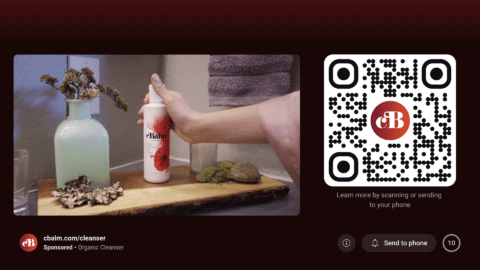
Branded QR Codes: YouTube launched branded QR codes, enabling advertisers to drive more interactivity by putting their brand front and center in a more modern QR code.
In addition to these news announcements, YouTube’s executive bench also took the stage to talk about their vision, the importance of content, and innovation in advertising.
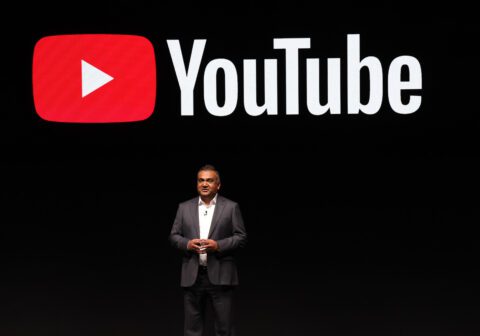
Neal Mohan, the CEO of YouTube, said, “Creators are drawing audiences on the big screen because they’re the new Hollywood. They have business strategies, writers’ rooms, and production teams. They’re reimagining classic TV genres, from morning shows to sports commentary. And they’re inventing entirely new ones!”
He added, “Along the way, creators are redefining what we think of as ‘TV.’ And they deserve the same acclaim as other creative professionals. I believe it’s time a creator won an Emmy.”
YouTube CEO Neal Mohanan speaks onstage during YouTube Brandcast 2024 at David Geffen Hall on May 15, 2024, in New York City. (Photo by Kevin Mazur/Getty Images for YouTube)
Mary Ellen Coe, the Chief Business Officer of YouTube, said:
“No one is more engaged than loyal YouTube fans. They excitedly count down to new videos, rewatch old ones, and create their own in response. And they rush to their favorite creator’s channel in the 24 hours after new videos are released. Which presents an ideal moment for brands to engage with these fans.”
Sean Downey, the President of Americas and Global Partners at Google, said:
“Google AI has been at the core of our ads solutions for years. As we advance, our ability to help brands drive ROI keeps improving.”
The night featured musical performances by Billie Eilish featuring FINNEAS, Benson Boone, and Stray Kids, as well as various YouTube creators, including Haley Kalil, Kinigra Deon, Ryan Trahan, Shannon Sharpe, and Zach King.
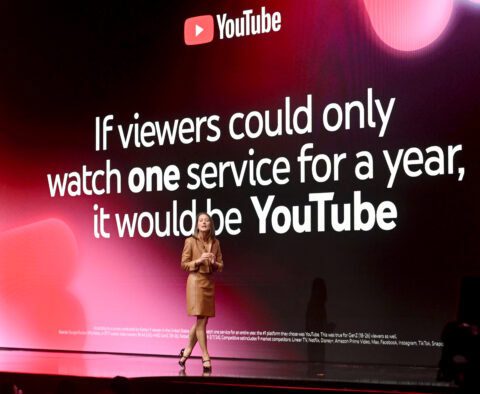
This highlighted why a survey conducted by Kantar found that viewers in the United States say that if they could only watch one service for an entire year, YouTube would be the #1 platform they chose.
Mary Ellen Coe, CBO, YouTube, speaks at YouTube Brandcast. (Photo by Noam Galai/Getty Images for YouTube)
The audience gleaned other critical data throughout the evening event, which was part of the Upfronts.
For example, according to Nielsen’s total TV and streaming report for the US, YouTube has remained the leader in streaming watch time every month since February 2023. And 9 out of 10 viewers say they use YouTube, according to a Pew Research Study.
According to YouTube’s internal data, the key CTV metrics included:
Views in the living room have increased by more than 130% from 2020 to 2023.
On average, viewers watch over 1 Billion hours of YouTube content on the big screen (television) daily.
YouTube TV has more than 8 million paid subscribers.
Over 40 of YouTube’s top 100 channels by watch time have TV as their most-watYouTube’sen.
Last year, views of Shorts on connected TVs more than doubled.
Advertisers in the audience also snacked on these news nuggets:
According to a custom MMM meta-analysis commissioned by Google with Nielsen, on average, YouTube drives higher long-term Return on Ad Spend (ROAS) than TV, other online video, and paid social.
Based on a meta-analysis across 13 NCS sales lift studies, AI-powered video reach campaign mixes earned an average ROAS 3.7x higher (271%) than manually optimized campaigns.
According to a Kantar survey, viewers in the United States agree that YouTube is the #1 video platform for gaming content, outperforming TV, social, and streaming platforms.
According to a Google/Ipsos YouTube Trends Survey, 54% of people would rather watch creators break down a significant event like the Oscars or Grammys than watch it themselves.
Now, that’s a lot of news to digest. Still, as I mentioned in “Google Unveils Updates At IAB NewFronts 2024,” YouTube is also “expected to make more announcements at VidCon A” aheim 2024, which will take place from June 26–29, 2024, at the Anaheim Convention Center.
So, as TV newscasters would say in the old days, “Don’t touch that dial.”
Web directories, once tools for discovering websites in the early days of the Internet, have evolved over the past two decades.
While the rise of Google led many to assume that web directories would become obsolete, plenty of these online catalogs have adapted to remain relevant.
This article examines the current state of web directories and explores their value for websites and businesses across various industries.
You’ll find an overview of 20 web directories that continue to attract traffic and offer value to websites and businesses.
These directories range from general directories like Best of the Web (BOTW) and Yahoo Directory to niche-specific platforms like Blogarama for bloggers and local business directories like Google Business Profile, Yelp, and Foursquare.
Do Web Directories Still Exist?
While web directories may not hold the same prominence they once did, they exist and can offer value.
Web directories have evolved to cater to specific niches, industries, and local markets. They serve as a curated collection of websites, providing a targeted audience with a more focused and relevant browsing experience.
Local business directories such as Google Business Profile, Yelp, and Foursquare have gained importance. These platforms provide valuable information to potential customers and contribute to a business’s online presence and local SEO efforts.
Specialized directories, such as blogs, ecommerce, or specific industries, continue to thrive. These directories cater to a particular audience and can provide valuable exposure and referral traffic to websites within their niche.
Do Web Directories Still Have Any Value?
While the SEO value of web directories has diminished, they offer certain benefits to websites and businesses.
Referral traffic: High-quality, niche-specific directories can drive targeted referral traffic to your website.
Local visibility: Directories like Google Business Profile, Yelp, and Foursquare are essential for local businesses. These platforms help companies appear in local search results and on maps, making it easier for potential customers to find them.
Brand exposure: Being listed in reputable directories can help increase your brand’s exposure and visibility online. When users come across your listing in a trusted directory, it can lend credibility to your website and business.
Backlinks: Directory links have lost much of their SEO value, but a few high-quality, relevant links can still contribute to a well-rounded backlink profile. Focus on well-maintained directories that have strict submission guidelines and are relevant to your industry or niche.
Competitor analysis: Directories can be useful tools for competitor analysis. By examining which directories your competitors are listed in, you can identify new opportunities for your website and gain insights into their marketing strategies.
Where Do Web Directories Stand Today?
Google’s algorithm is complex.
While links are one of the top-ranking signals, Google no longer views all links equally.
Links from a web directory listing are much less influential than a super relevant contextual link from a high-authority site in your niche.
What’s a marketer to do?
Move beyond viewing web directories as a source for links.
Instead, view directories as a source of traffic and trust.
Any business with a local presence needs to maintain their local citations with a consistent NAP, but web directories won’t help your SEO beyond that.
The actual returns will be from the credibility and traffic they drive to your business site.
As you search for web directories, keep those two criteria in mind.
Consider these questions before you start filling out your listing:
Is this a reputable site? Put another way, if a customer saw me on this site, would they view my business as more – or less – legitimate?
Is my target audience likely to visit this site? If not, it’s probably not worth listing your business.
Now, let’s get into what you came here for: the web directories that are still relevant today.
Web Directories That Still Have Value Today
To remain relevant, many web directories of yore have transitioned beyond basic listings to detailed review sites.
Many of the sites listed below reflect this trend.
We could have included many more on this list – like Jasmine Directory, Brownbook, and Bloggapedia – but based on their current traffic numbers (or lack thereof), we’re not sure they’re worth the effort anymore.
Instead, this section focuses only on sites that are more than a mere citation opportunity for your business.
Useful Web Directories For Any Kind Of Website
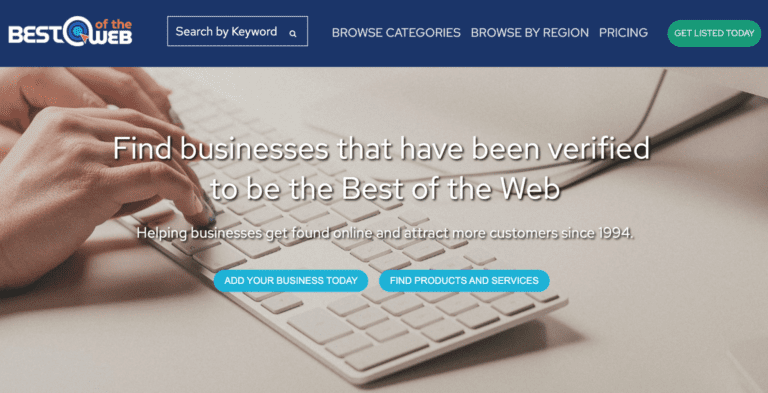
1. BOTW
Best of the Web (BOTW) is a well-established web directory that has been around since 1994.
One of BOTW’s unique aspects is that it charges a fee for listings. While this may seem like a drawback, it helps maintain the directory’s quality by discouraging spam and low-quality submissions.
The directory’s human-edited listings and strict submission guidelines ensure that only high-quality websites are included, which can lend credibility to your site by association.
BOTW’s sub-directories for blogs and local businesses make it an attractive option for those niches.
The local business sub-directory, local.botw.org, is valuable for small businesses looking to improve their local SEO.
For bloggers, the blogs.botw.org sub-directory can help attract targeted traffic and increase their blog’s visibility.
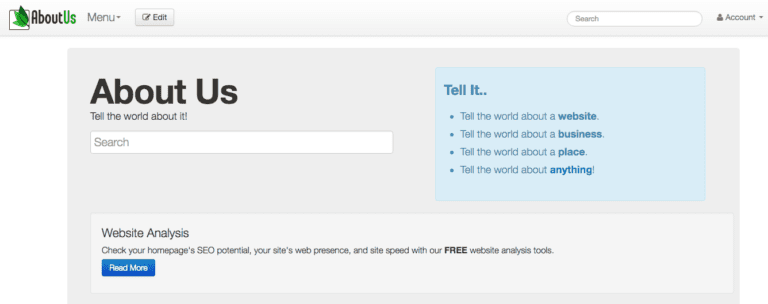
2. AboutUs
Screenshot from AboutUs, April 2024
AboutUs is a unique web directory that has evolved from its original purpose as a business domain directory. Today, AboutUs allows websites of all types to be submitted and discussed.
One of AboutUs’s standout features is its wiki-style format, which allows users to contribute information about the websites listed in the directory. This collaborative approach helps to keep the directory up-to-date.
Being listed on AboutUs can help improve brand exposure. Companies can provide detailed information about their history, mission, and products or services.
Bloggers and content creators can also benefit from being listed on AboutUs. The directory’s diverse categories make it easy for users to discover new blogs and websites related to their interests.
For Blogs Only: One Web Directory To Rule Them All
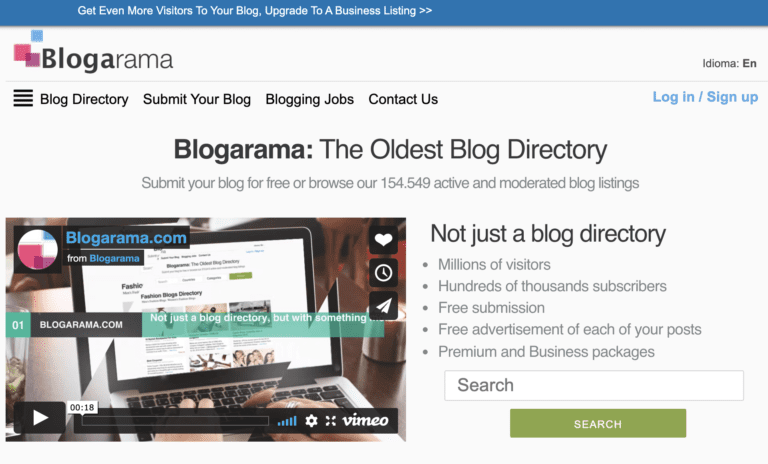
3. Blogarama
Screenshot from Blogarama, April 2024
Blogarama is dedicated solely to blog listings, making it a niche-specific platform for bloggers looking to attract readers.
One of the standout features of Blogarama is its active management by the site’s administrators. The directory is regularly updated, with new blog listings and inactive or deleted blogs removed.
Another helpful feature of Blogarama is its RSS feed integration. Bloggers can provide their RSS feed URL during submission, automatically allowing the directory to update their listing with the latest posts.
The directory’s niche focus and diverse categories make it an attractive option for bloggers in various industries and with different target audiences.
Relevant Web Directories For Local Businesses
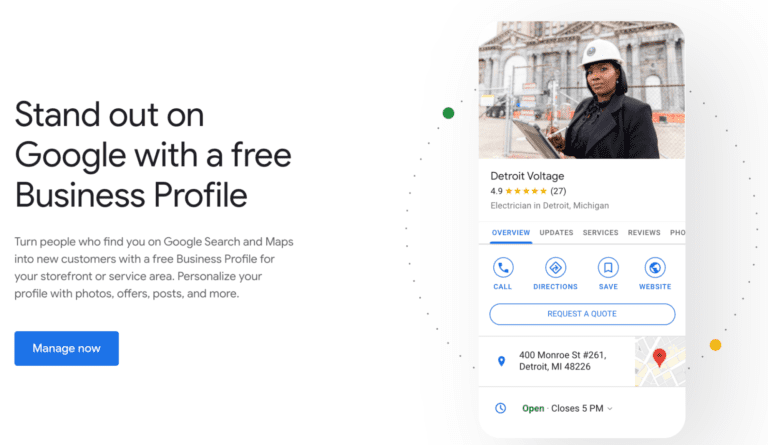
4. Google Business Profile
Google Business Profile (formerly known as Google My Business) is a free tool provided by Google that allows businesses to manage their online presence across Search and Maps.
One key benefit of Google Business Profile is its impact on local SEO. By creating and verifying a Business Profile, businesses can improve their chances of appearing in Google’s Local Pack, Local Finder, and Google Maps results.
Google Business Profile is particularly valuable for small and medium-sized businesses with a local focus, as it helps level the playing field and compete with larger, more established brands.
5. Bing Places
Screenshot from Bing Places, April 2024
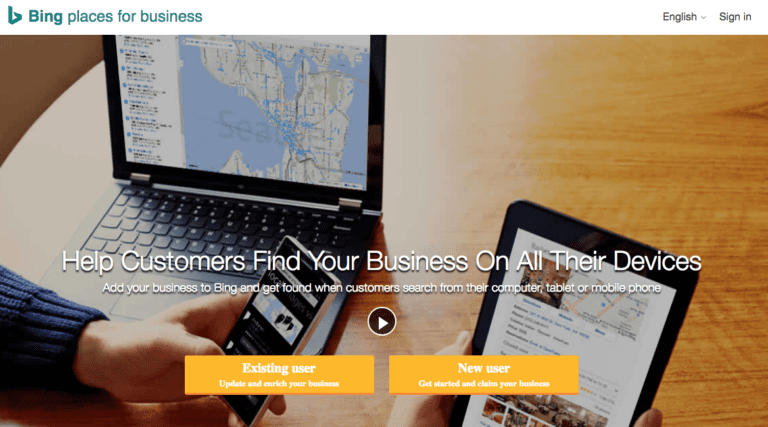
Bing Places, Microsoft’s equivalent to Google Business Profile, allows businesses to manage their online presence on the Bing search engine.
Bing Places provides detailed analytics and insights, allowing businesses to track the performance of their listings, view customer interactions, and understand how customers find them online.
While Bing’s market share is less than Google’s, it has a significant user base, particularly among desktop users and older demographics.
Bing Places can be valuable for businesses targeting these audiences or operating in regions where Bing has a higher market share, such as the United States, the United Kingdom, and Canada.
6. Facebook
Facebook Pages offers a platform for companies to establish an online presence on the social network.
These Pages allow businesses to connect with their target audience, share content, and utilize Facebook’s advertising tools.
The platform’s options allow targeted ads based on user demographics, interests, and behaviors. The “Insights” feature also offers data on page performance and audience engagement.
Other features available on Facebook Business Pages include the “Shop” section for product sales, appointment booking, event creation, and customer support through Messenger.
7. Yelp
Screenshot from Yelp, April 2024
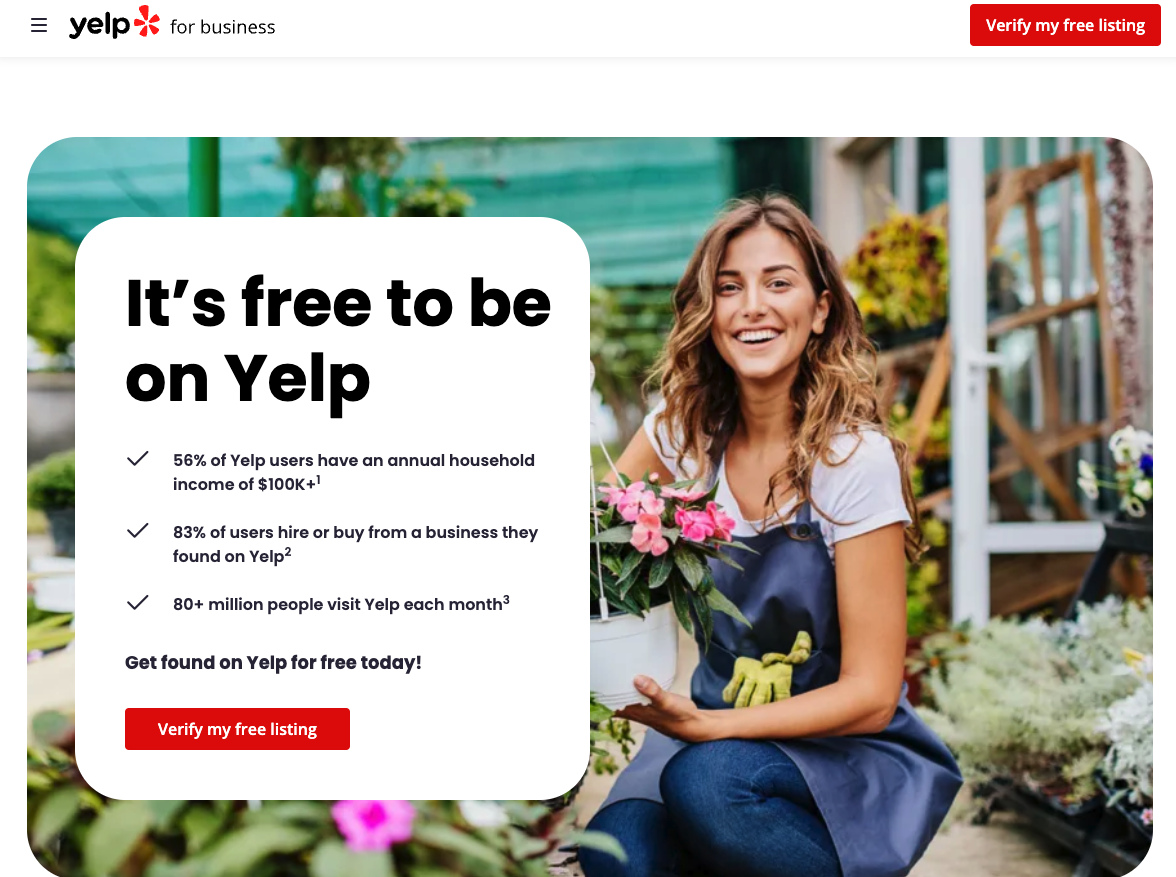
Yelp connects consumers with local businesses. Its collection of user-generated reviews provides insights and social proof for potential customers, influencing their decision-making.
Paid advertising options like Yelp Ads allow businesses to enhance visibility and attract potential customers.
Yelp’s filter algorithm determines which reviews are displayed based on authenticity and reliability. While this can occasionally frustrate businesses, it aims to protect the platform’s integrity for users.
8. Foursquare
Screenshot from Foursquare, April 2024
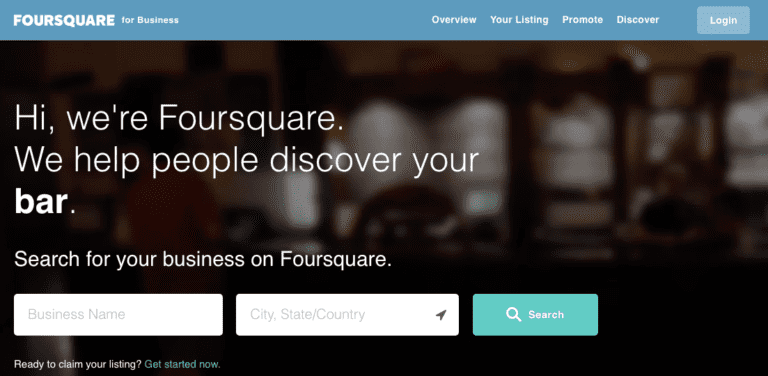
Foursquare is a local search and discovery platform that offers personalized recommendations based on user-generated tips, ratings, and machine learning algorithms.
The platform’s audience consists of tech-savvy urban users, particularly millennials, who actively seek new experiences and trust peer recommendations.
Foursquare has a strong presence in the food and beverage, nightlife, and travel industries. It’s an essential platform for restaurants, bars, cafes, and hotels looking to reach an experience-driven audience.
Additionally, Foursquare offers a suite of location data products and services for businesses and developers, including tools for location-based advertising, audience targeting, and foot traffic analysis.
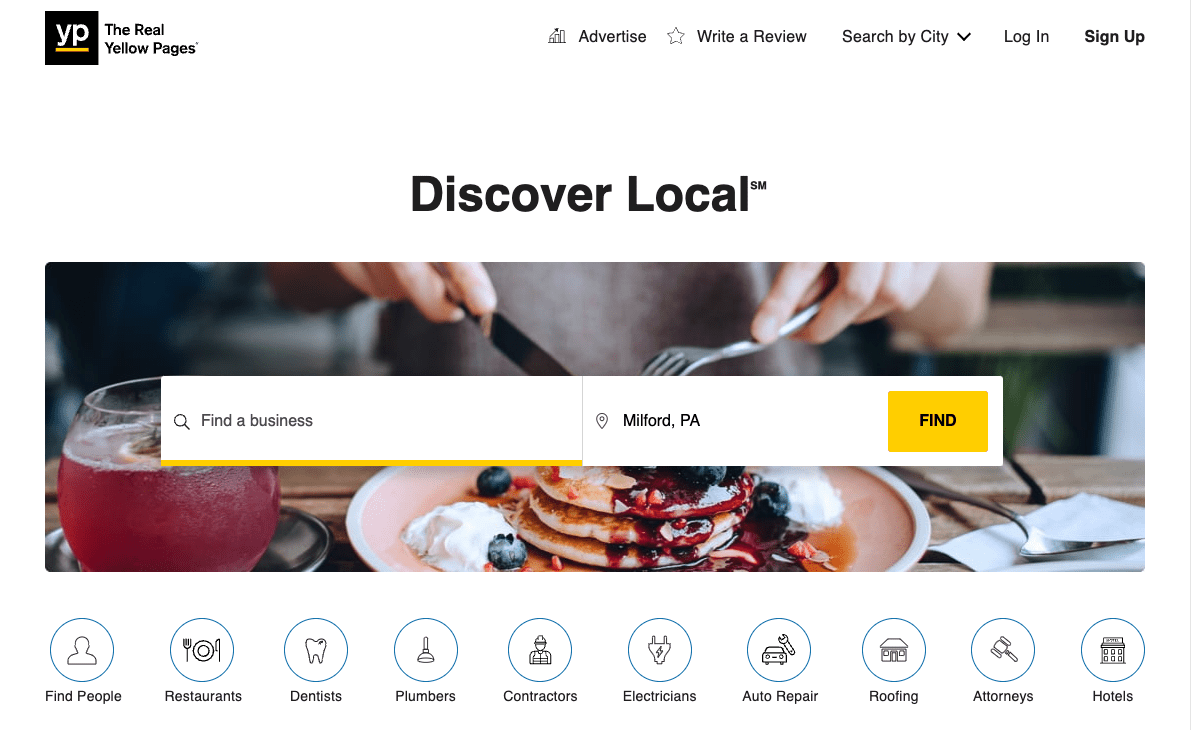
9. Yellow Pages
Screenshot from The Real Yellow Pages, April 2024
Yellow Pages, now primarily known as YP.com, is an online directory connecting consumers with local businesses.
Yellow Pages are handy for businesses targeting a local audience, as users often have a high purchase intent. Paid advertising options are also available to enhance visibility.
Yellow Pages partners with other online platforms, such as Google, to expand the reach of its listings. The platform also provides digital marketing services to help businesses improve their online presence beyond the Yellow Pages platform.
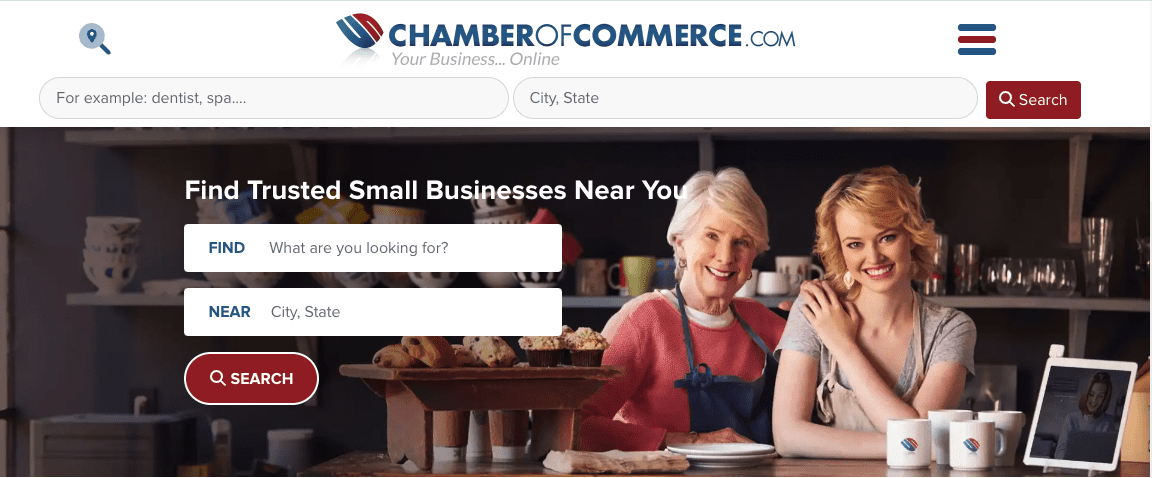
A Chamber of Commerce is an organization that advocates for businesses in a specific area.
By joining a Chamber, business owners and professionals can access networking opportunities and connect with potential partners.
The audience for Chambers of Commerce primarily consists of local business owners and professionals from various industries who are invested in their area’s economic success and growth.
While Chambers provide valuable resources and support, business owners must actively work to leverage these opportunities for success.
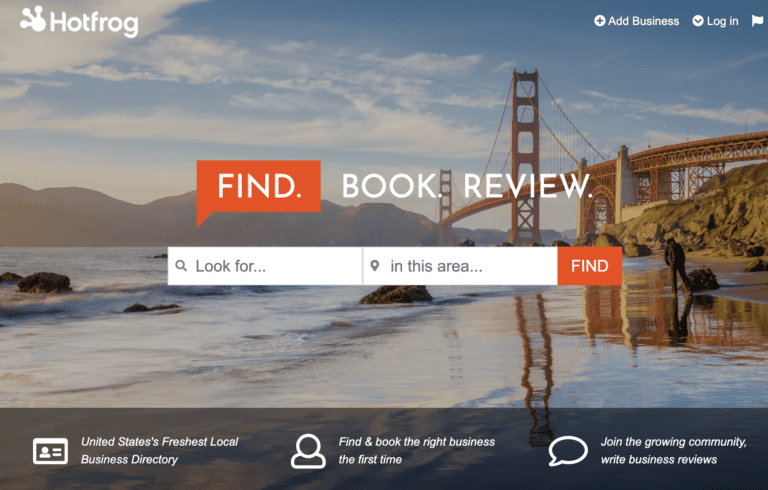
11. Hotfrog
Screenshot from Hotfrog, April 2024
Hotfrog helps small and medium-sized businesses connect with potential customers and increase online visibility.
The platform offers free business listings and paid advertising options, such as featured listings and banner ads.
User-generated content, such as customer reviews and ratings, is encouraged on Hotfrog to build credibility and trust for businesses.
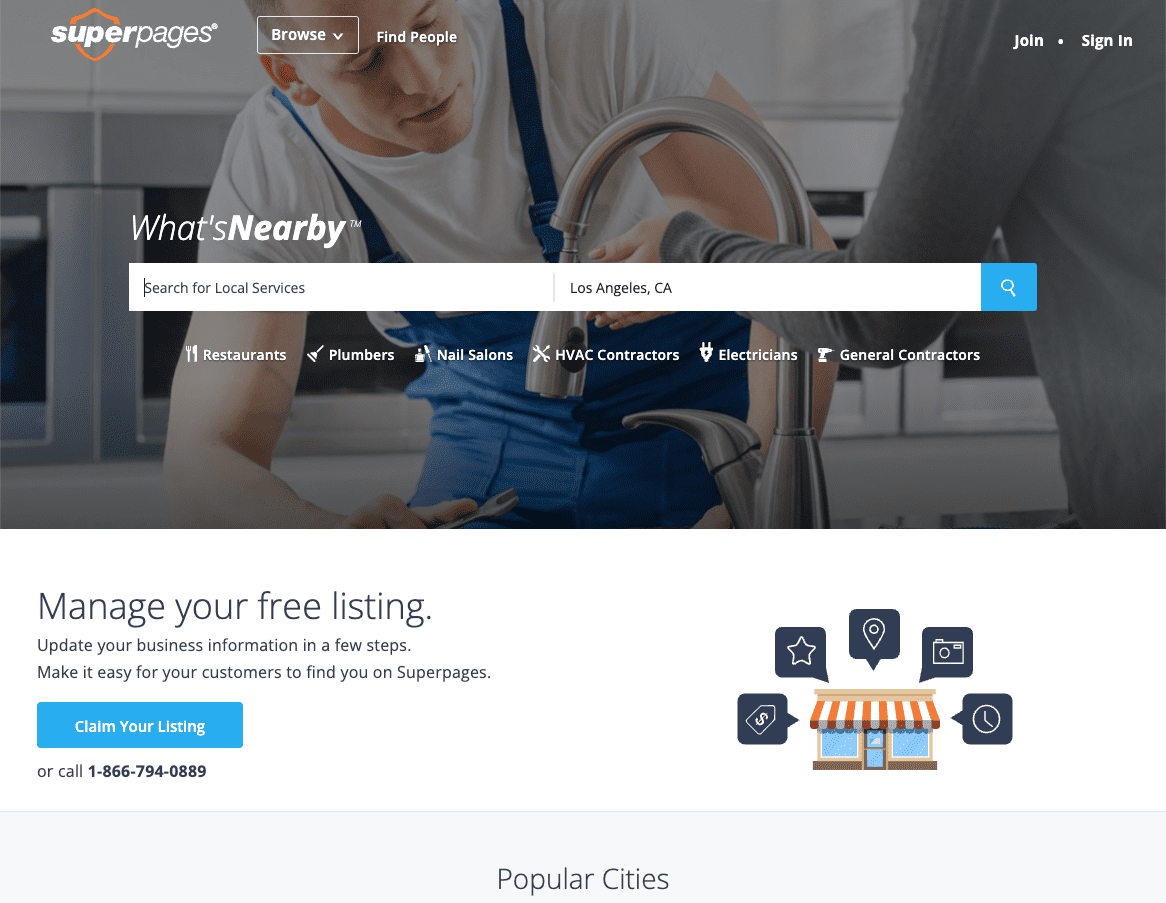
12. Superpages
Screenshot from Superpages, April 2024
Superpages helps connect consumers with local businesses across the United States.
Originally a print Yellow Pages directory, it has evolved into a comprehensive digital platform.
Superpages’ user base consists of consumers searching for local businesses and services across various industries, including home services, automotive, healthcare, dining, and professional services.
The platform prioritizes user-friendly experience through tools like detailed maps, directions, and the ability to save or share listings.
It also emphasizes customer reviews and ratings, which build credibility and trust for businesses while providing valuable feedback for improvement.
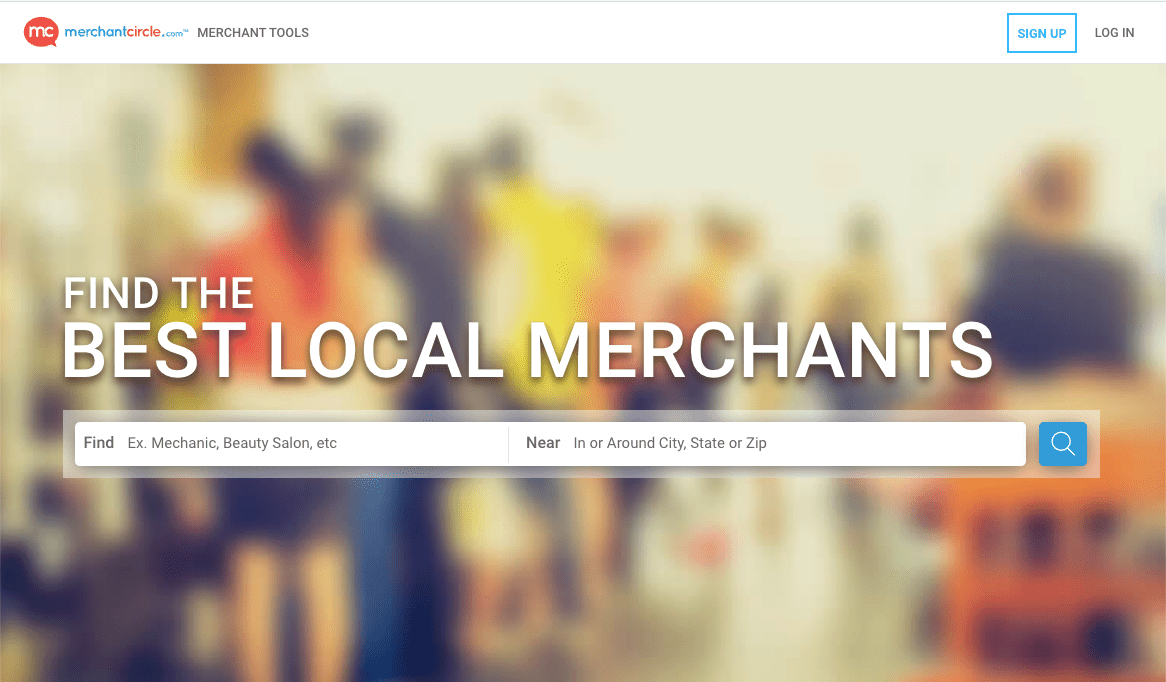
13. MerchantCircle
Screenshot from MerchantCircle, April 2024
MerchantCircle helps small and medium-sized businesses connect with local customers and nearby businesses.
MerchantCircle’s diverse user base comprises SMBs across various industries seeking to connect with local customers and businesses.
The platform fosters these connections through discussion forums, content sharing, and collaborative marketing opportunities for members of local business communities.
Uniquely, MerchantCircle emphasizes content creation, encouraging businesses to share blog posts, articles, and other materials to establish expertise and build trust.
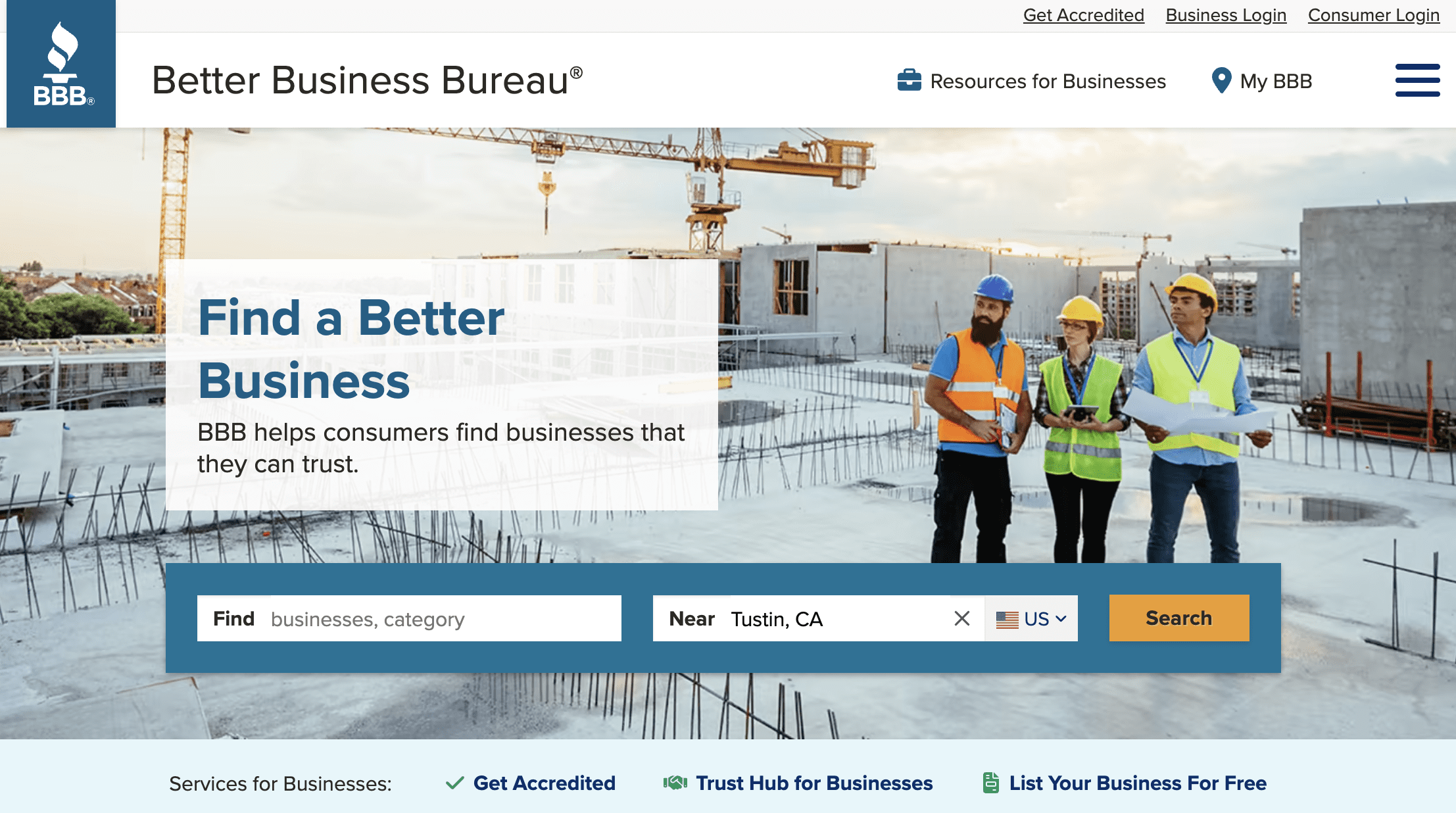
14. Better Business Bureau
Screenshot from Better Business Bureau, April 2024
One of the BBB’s primary functions is to provide ratings that help consumers make informed decisions.
The BBB assigns businesses a letter grade (A+ through F) based on factors such as complaint history, time in business, and adherence to BBB standards. While a high rating can be a positive signal, the absence of a rating or a lower rating does not necessarily indicate a problem with the business.
Businesses can become accredited by the BBB by undergoing an evaluation process and agreeing to adhere to the BBB’s Code of Business Practices, signaling their commitment to ethical and transparent practices.
The BBB’s audience consists of consumers seeking information, guidance, and assistance in resolving business disputes. It also serves businesses seeking accreditation, dispute resolution services, and resources for best practices.
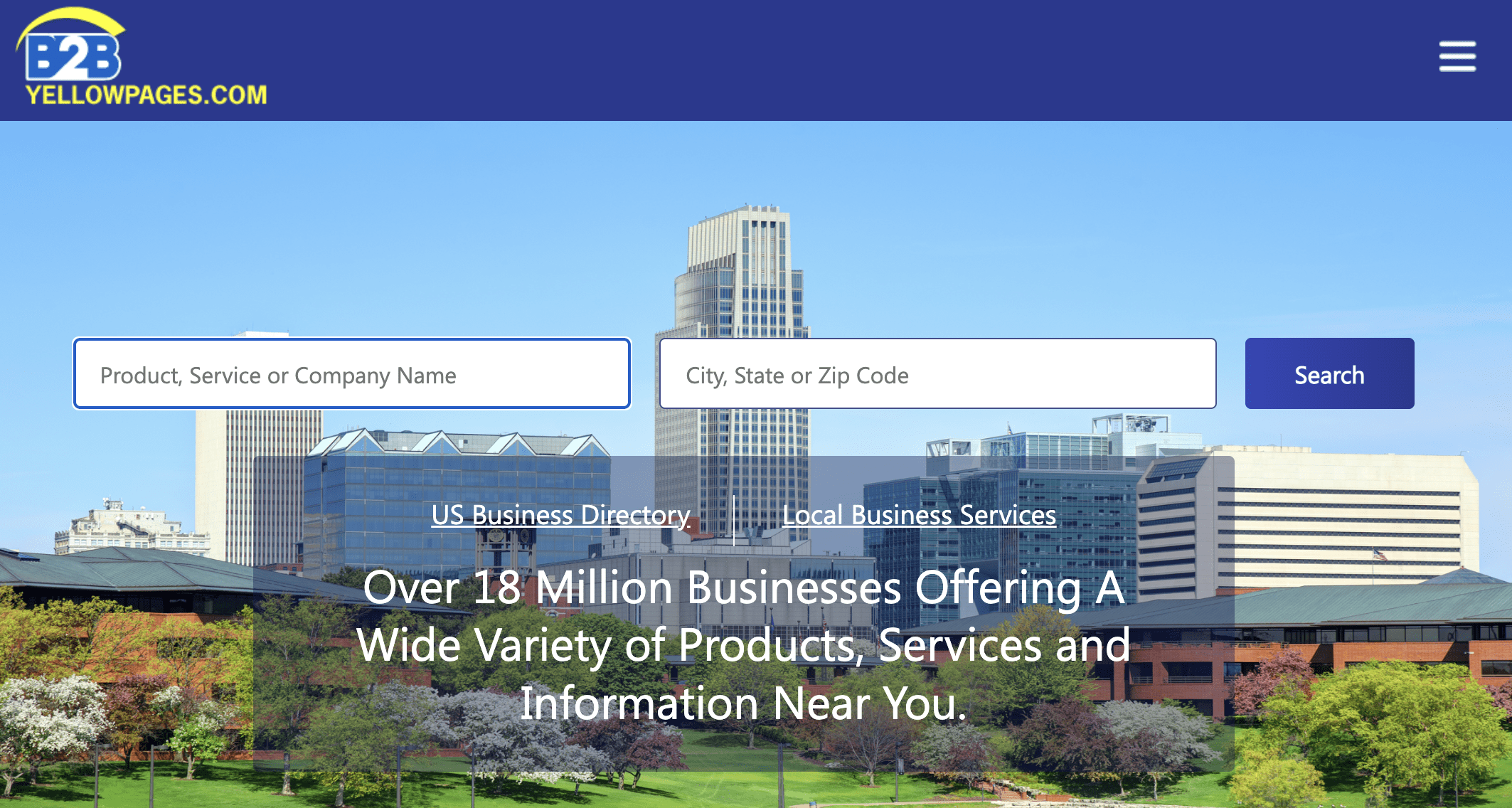
15. B2B Yellow Pages
Screenshot from B2B Yellowpages, April 2024
B2B Yellow Pages connects businesses with suppliers, partners, and service providers across various industries.
It offers an extensive database of business listings and allows companies to create detailed profiles showcasing their offerings and expertise.
The platform caters to decision-makers, procurement professionals, and business owners. It enables businesses to research potential suppliers and identify suitable partners.
B2B Yellow Pages is particularly valuable for small and medium-sized businesses looking to expand their reach and connect with new clients.
The platform facilitates connections and business interactions through messaging systems, request-for-quote functionality, and lead-generation tools. Additionally, it provides resources, such as articles and guides, to help companies stay informed about industry trends and best practices.
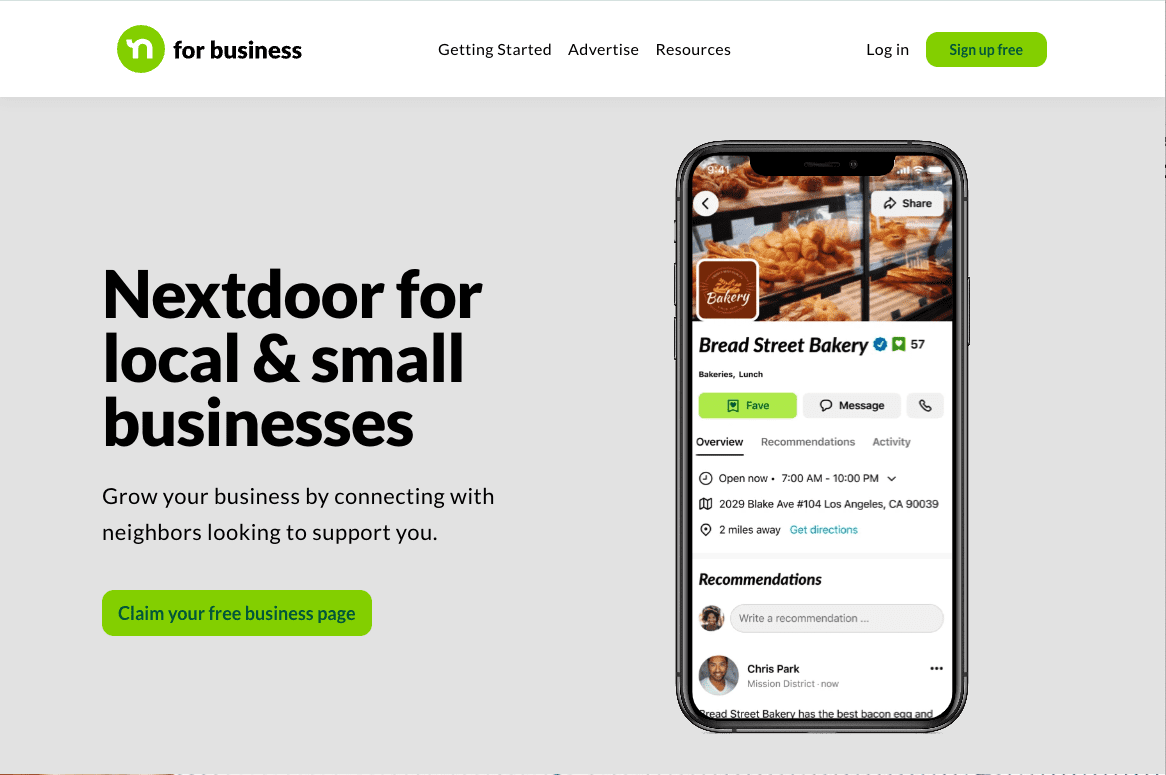
16. Nextdoor
Screenshot from Nextdoor, April 2024
Nextdoor is a private social networking platform designed to connect residents within specific neighborhoods and communities.
It emphasizes location-based networking, where users must verify their address to join and interact with actual neighbors.
Highly localized and community-focused businesses can benefit from having a presence on Nextdoor by actively engaging with residents, sharing relevant content, and building relationships.
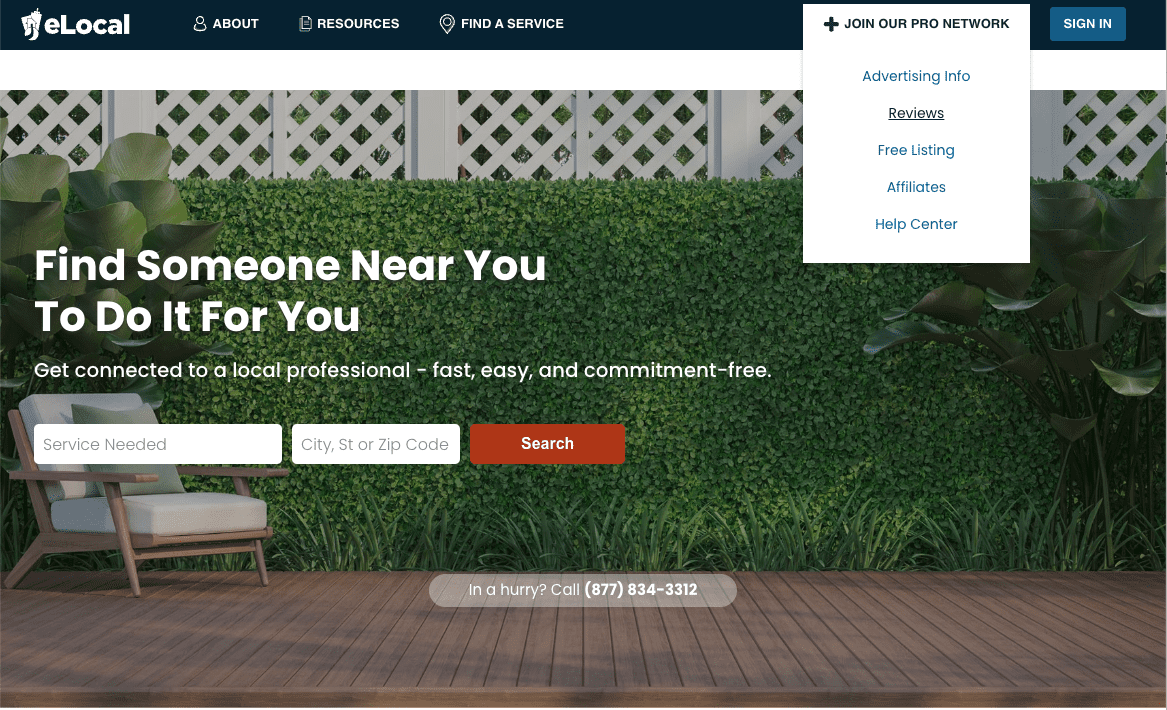
17. eLocal
Screenshot from eLocal, April 2024
eLocal is an online platform that connects consumers with local businesses and service providers. It simplifies finding and hiring trusted professionals for various needs.
Consumers provide detailed information about their specific needs and location, which is used to match them with the most relevant and qualified service providers.
This approach helps businesses connect with consumers who are more likely to convert into actual customers.
18. Dexknows
Dexknows provides a platform for consumers to research and compare options based on user-generated reviews and ratings.
Businesses can respond to reviews, address concerns, and showcase their commitment to customer satisfaction.
The platform integrates with major search engines and directories, offering businesses additional features like photos, videos, and special offers to enhance their listings and attract more customers.
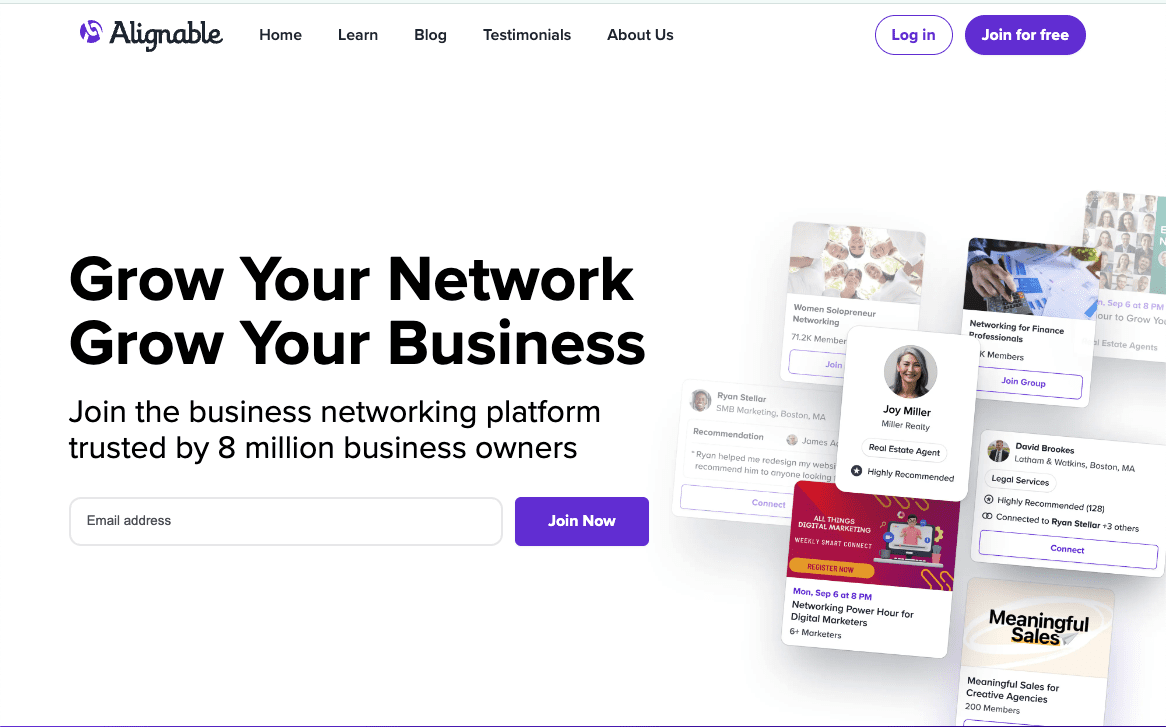
19. Alignable
Screenshot from Alignable, April 2024
Alignable aims to create a supportive network where entrepreneurs can share advice, resources, and opportunities.
One key feature is its focus on local networking. Users create profiles and connect with other local small business owners.
The platform caters to businesses across industries, from local retailers and service providers to home-based businesses and solopreneurs.
In addition to networking, Alignable provides resources like discussion forums, articles, and guides.
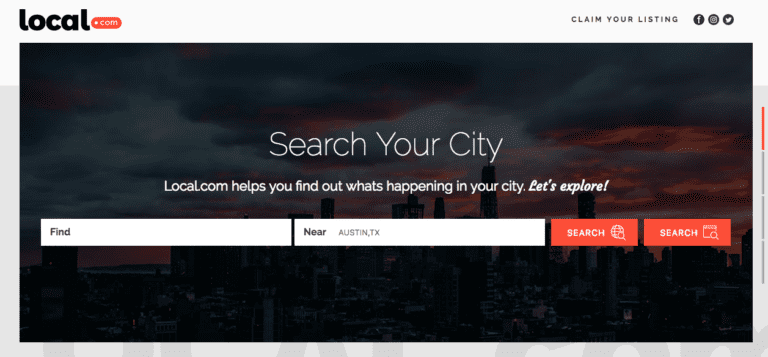
20. Local.com
Screenshot from Local.com, April 2024
Local.com is an online directory that helps users find local businesses, services, and events in their city.
In addition to its directory, Local.com offers a blog section with articles and guides on topics related to local living.
For businesses, Local.com allows them to claim and manage their listings on the platform, ensuring accurate and up-to-date information.
The platform partners with Yext, enabling businesses to manage their listings across multiple online directories.
What Else?
Beyond the directories listed above, additional niche directories with high traffic may be pertinent to your industry, like Avvo for attorneys, Thumbtack for local contractors, or Porch for home improvement professionals.
You can find an excellent list of these, helpfully organized by industry and domain authority, on BrightLocal.com.
There are also online services, notably Moz Local and Yext, that will create, update, and maintain your local citations across dozens of online directories.
A listing on many of these directories will be a citation for citation’s sake, but these services will include big names like Yahoo, Yelp, and others on our list.
Working with one of these services can significantly speed up adding your website (and take the work off your plate), which is why they aren’t free.
However, depending on how many websites you manage, they can be worth it.
Ways You Can Still Benefit From Web Directories
While web directories may have lost some of their former prominence, this exploration demonstrates they can still play a valuable role in a well-rounded online marketing strategy.
A few key takeaways include:
Don’t Overlook Specialized Niche Directories
As general web directories have waned, many niche-specific directories focused on blogs, e-commerce, local businesses, and more have emerged to serve targeted audiences.
Tapping into these specialized, relevant directories can help drive highly qualified traffic.
User Reviews Build Trust And Credibility
Many of today’s most valuable web directories have evolved into robust review platforms where user-generated feedback is paramount.
Actively managing your listings and responding to reviews on these sites is crucial for building reputation and credibility.
Leverage Directories For Local Marketing Visibility
The importance of local business directories like Google Business Profile and Yelp in enhancing local SEO and visibility to nearby customers has been reinforced.
An optimized, consistent listing presence is essential.
Quality Over Quantity For Backlinks
While overemphasizing web directories for link building is ill-advised, a few carefully selected, topically relevant directory backlinks can provide value as part of a natural link profile.
Marketers must approach web directories today with a more nuanced, focused strategy.
Final Thoughts On Web Directories
As you can see, there are still directories that provide value. If a directory receives traffic from your target audience, is relevant to your website, and maintains quality listings, it’s a good candidate for your backlink profile.
Local businesses may also find relevant directories in local newspapers, magazines, and on business websites. They can be good candidates if the directories are highly relevant to your website and receive traffic from your target audience.
Look at the page where your website would be listed and decide if you’re happy to be alongside the other websites on the page.
Follow these tips, and you’ll choose the most valuable directories for your business.
Generative AI is poised to unlock trillions in annual economic value across industries. This rapidly evolving field is changing the way we approach everything from content creation to software development, promising never-before-seen efficiency and productivity gains.
In this session, experts from Amazon Web Services (AWS) and QuantumBlack, AI by McKinsey, discuss the drivers fueling the massive potential impact of generative AI. Plus, they look at key industries set to capture the largest share of this value and practical strategies for effectively upskilling their workforces to take advantage of these productivity gains.
Learn how to seamlessly integrate generative AI into your organization’s workflows while fostering a skilled and adaptable workforce. Register now to learn how to unlock the trillion-dollar potential of generative AI.
Testing the performance of an ecommerce site will ensure it’s available and running at an optimal level. There are plenty of free resources to help.
Here is a list of free tools to test any website. There are tools to measure download speed, monitor user experience, test accessibility, locate broken links, and evaluate search engine and browser compatibility. All of these tools have free plans, and most offer premium options.
Free Testing Tools
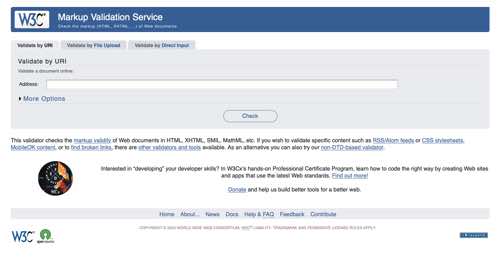
W3C Markup Validation Service, from the World Wide Web Consortium, checks the markup validity of web documents in HTML, XHTML, SMIL, MathML, and more. The resource offers tools to validate specific content (such as RSS feeds and CSS), check international friendliness, and find broken links.
W3C Markup Validation Service
PageSpeed Insights from Google reports on download speed on mobile and desktop devices and provides suggestions on how that page may be improved using lab and field data. Lab data helps debug performance issues but may not capture real-world bottlenecks. Field data helps capture real-world user experience but has limited metrics.
Dotcom-Tools provides a snapshot of a site’s availability and performance from nearly two dozen locations worldwide. Test the performance, functionality, and uptime of websites, web applications, servers, and APIs. Free for up to 250 tests per month from five concurrent locations.
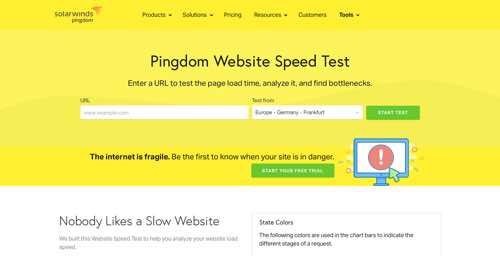
Pingdom Website Speed Test analyzes load speed and identifies why a page is fast or slow. It uses more than 70 global polling locations to test and verify sites. See how yours conforms to Google’s performance recommendations. Pingdom offers a premium service for web speed monitoring.
Pingdom Website Speed Test
Dead Link Checker crawls a website to identify broken links. Target an entire website or a single page. Create an account to check multiple sites or schedule an auto-check. Reports are automatically emailed.
Yellow Lab Tools is a free and open-source online test to help speed up heavy web pages. Check performance tactics. Detect problems with HTML, CSS, JavaScript, images, fonts, and more. Get in-depth details on how to fix problems.
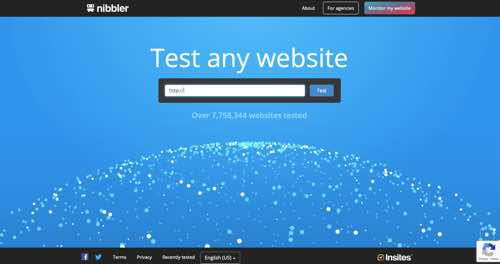
Nibbler is a free tool for testing websites. Enter the URL of any site, and Nibbler will generate a report scoring key areas, including accessibility, search engine optimization, social media, and technology. Nibbler is free for three reports.
Nibbler
KeyCDN Website Speed Test is a full-page test performed from 10 locations worldwide. The results show the requests, content size, and load time. There is also a complete waterfall that details the timings and HTTP headers of each asset.
ClickHeat provides a heatmap of clicks on an HTML page, showing hot and cold click zones. ClickHeat is free and open source.
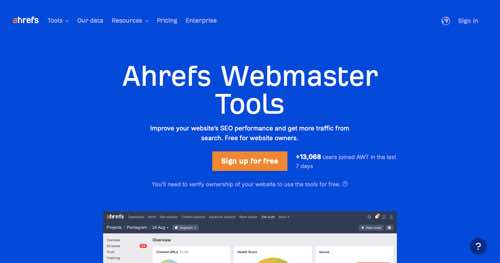
Ahrefs offers free webmaster tools to check a site’s SEO health. Scan your website for 140-plus issues that might hurt its performance in search engines. Monitor your overall SEO setup, browse backlinks, get actionable insights from your inbound and outbound link profiles, and compare your site to search-result competitors.
Five Second Testing evaluates a website, product design, or messaging by measuring visitors’ recall and first impressions. The free plan is available to three collaborators for two minutes.
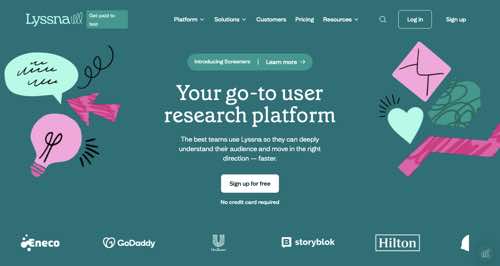
Lyssna is a remote-user research platform that tests a design with real people. It measures how users complete tasks to assess the effectiveness of your site’s navigation and content. A free plan is available for up to three seats.
Lyssna
PageSpeed Compare is a benchmarking tool for comparing web page performance metrics against each other or your competitors using Google’s PageSpeed Insights. Fix your own pages, and see where and why competitors perform better.
OctaGate SiteTimer monitors how long it takes for a user to download one or more web pages. It stores the time each item takes to download and the amount of data it contains.
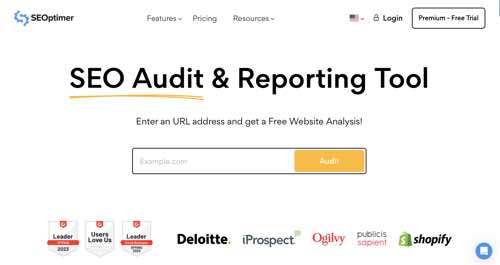
SEOptimer provides tools to test and improve a website, including a title tag checker, a search-engine-result-page preview tool, a keyword rankings tool, a backlink checker, a responsiveness tester, a load-speed tester, and an SSL checker.
SEOptimer
Wave is a suite of tools for evaluating web content for individuals with disabilities. It identifies accessibility errors and facilitates human analysis.
Sucuri SiteCheck is a free website malware and security checker. Enter a URL, and the Sucuri SiteCheck scanner will investigate for known malware, viruses, blacklists, website errors, out-of-date software, and malicious code.
2GDPR checks a site’s cookies for compliance with E.U.’s GDPR and privacy regulations. Create a cookie consent banner if needed and test it to ensure accuracy. Get a list of resources where SSL usage is required.
SSL Check will crawl up to 400 pages per website and search for non-secure images, scripts, and CSS files that trigger a “mixed content” warning message in browsers.
Moz Domain Authority Checker provides reports on any domain, with Moz’s Domain Authority, page analysis, ranking keywords, and more. Get info on discovered and lost links, clicks for top keywords, page-level link strength, and ranking potential based on links. The free account is limited to three reports per day.
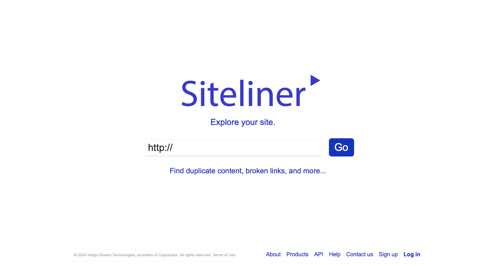
Siteliner is a free site audit for issues that affect quality and search engine rankings. It checks for duplicate content, broken links, and page strength. Siteliner provides a standard XML sitemap and critical data about each page. The service is free for 250 pages per month.
Genuine connections are essential, and celebrity endorsements on social media have proven a great way for brands to make those connections.
People want to see a face, a personality, something they can relate to. In this post, you can check out 10 examples of this marketing tactic in action. But first, how does celebrity endorsement work?
Why Celebrity Endorsement Matters
If you’re a brand with the times, you’re using celebrity endorsement to promote your business.
I’m not joking — 75% of marketers use influencers as a marketing tool, and 43% plan to increase spending on this form of advertising.
Marketing has moved beyond commercials. While still popular, social media platforms are on the rise as the top way to promote your business.
YouTube videos and celebrity promotions on platforms like Twitter and Instagram have had massive impacts on promoted items.
Celebrities and brands who team up both stand to see huge wins.
What Makes a Celebrity Endorsement Work?
The rules for making an endorsement work are pretty simple: choose a partnership that makes sense and be sure to never insult the product that’s being endorsed.
While this may seem simple, not everyone has been able to follow along.
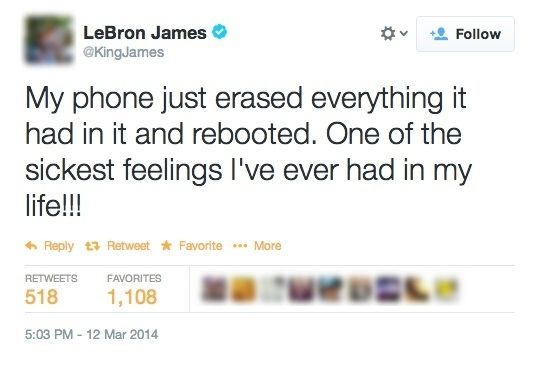
When Lebron James partnered with Samsung in 2014 to promote the new Samsung Galaxy Note III, for example, a not-so thought-through tweet made things go downhill.
Lebron complained about his new phone erasing and restarting itself.
Screenshot from Twitter.com, July 2021
Still, when celebrity endorsements work, they work well.
To learn about some of the most successful campaigns companies have launched with celebrities, keep reading below.
1. Travis Scott & McDonald’s
When McDonald’s teamed up with American rapper Travis Scott in September of 2020, they had no idea what they were in for. The meal they came up with, called “The Travis Scott,” was so popular it managed to created supply shortages wherever it was released.
That doesn’t mean it was a bad idea. Not only did the meal become one of the chain’s bestselling menu items, but Travis Scott saw a chance to gain, as well.
Forbes estimated that he earned approximately $20 million combined through endorsement and product sales. That’s not a bad number.
The Travis Scott was the first time McDonald’s had attached a celebrity’s name to one of their products.
I’d say it was a good idea, wouldn’t you?
2. Amy Schumer & Tampax
Stand-up comedian and actor Amy Schumer had a mission when she joined forces with Tampax in July 2020. Together, they would educate others on an important, if slightly socially taboo topic: periods.
The tampon brand released a series of YouTube videos featuring Amy Schumer talking about personal health and hygiene. Known for her blunt humor, these videos are no different.
At the same time, they manage to come across as heartfelt with a personal message.
“No Shame In Our Tampax Game,” along with many others, got across a critical point: There’s no reason to be ashamed of a normal bodily function.
The campaign saw great success as it went viral across social media. Who knew education on a touchy topic could be so entertaining?
3. Snoop Dogg & Corona
When famous rapper Snoop Dogg paired with Corona in August of 2020, it was go big or go home.
An ad starring Snoop Dogg, also featuring Puerto Rican rapper Bad Bunny, was shown during the Golden Globes. Before the eyes of those tuning in from across the nation, the rapper remained iconic with killer costumes and a fashionably strange shell phone.
Snoop Dogg did go big with this endorsement. He earned a neat $10 million for the deal, not too shabby for one commercial.
A talented musician who has gone by many names, Snoop Dogg absolutely made even more of a name for both himself and Corona with this one.
4. Ryan Reynolds & Mint Mobile
Renowned actor and film producer Ryan Reynolds made the news when he and Mint Mobile became involved. He started by partnering with Mint Mobile and later went on in November of 2019 to buy the entire company.
Yes, Ryan Reynolds now owns Mint Mobile. The celebrity has fully embraced endorsing the company, saying on the company’s official website,
“While every other tech titan is off chasing rockets, I’ll corner the budget-friendly wireless sector. Like most people, I only use rockets 10-12 times a year but I use my mobile service every day.”
So, how’s that going?
Pretty well. Mint Mobile, a four-year-old company, has seen tremendous growth in the past three years: their revenue has been boosted by 50,000%.
5. Jon Lovitz & Playology
Here, we’ve gotten to the most adorable entry on this list. Although it may be rare for pet companies to pair up with celebrities, Jon Lovitz and Playology did it fantastically.
Playology makes toys for senior dogs, and actor Jon Lovitz is most known for his time on Saturday Night Live.
Working together, the two in September of 2020 managed a winning combination of hilarity and cuteness that won over audiences’ hearts.
It’s the internet, we all know that dogs and humor go hand in hand – Jon Lovitz & Playology showed the great advantage of that.
6. Shaquille O’Neal & Papa John’s
Shaquille O’Neal has done it all. A prior pro basketball player, rapper, and sports analyst on the TNT television show Inside the NBA, he certainly has a full portfolio.
Now that portfolio includes pizza. In June of 2020, Shaquille O’Neal partnered with pizza chain Papa John’s to create a specialty pizza – The Shaq-a-Roni pizza that O’Neal pitched himself.
The custom pizza was a huge hit, selling over 3 million units and raising 3 million dollars for charities within two months over the summer. The Shaq-a-Roni pizza supplied many an at-home pizza party.
It doesn’t end there, either. Following close to Ryan Reynold’s footsteps, Shaquille O’Neal wanted to get himself involved with the business as well. As of now, he is a board member of Papa John’s. A sportsman and a businessman.
7. Chrissy Teigen & Blue Apron
Not only known for her modeling and television presence but also her hilarious tweets, Chrissy Teigen decided she wanted to expand her horizons further.
She wrote a cookbook and, just before its release, used a successful Blue Apron endorsement to promote it.
A home delivery meal-kit service with the unique option of adding a wine pairing, Blue Apron relied on the in-touch humor of Chrissy Teigen for their celebrity branding.
Teigen’s own hand-crafted recipes were featured for a period of time in June 2018. It wasn’t hard for her to get the word out, as the model was already famous for posting beautiful pictures of her food frequently on Instagram.
8. Patrick Stewart and Mark Hamill & Uber Eats
It was a rival between stars as they traveled throughout the stars.
Patrick Stewart, famous for his role as Captain Jean-Luc Picard in the sci-fi series Star Trek, went neck-in-neck with Star Wars actor Mark Hamill in September of 2020. Who created the campaign? It was an already trending company that saw a legendary rise in 2020: Uber Eats.
In this cross-over commercial that pitted two battlers against each other in the stars, the fight wasn’t about what you think.
No, they fought over the proper way to say “tomato.”
And it was a hit: critics raved at the tongue-in-cheek humor. The real lesson here? There’s mighty power in laughter.
9. Naomi Osaka & Beats by Dre
We’ve talked about actors, musicians, and models. However, they’re not the only kind of celebrity who can harness the heft of celebrity endorsement. Tennis player Naomi Osaka gave herself not just a powerful brand image but also a platform.
For the second time in November 2020, trend-setting headphone company Beats by Dre endorsed sports player and political activist Naomi Osaka. The results were a riveting commercial with a powerful message.
Osaka isn’t new to using her celebrity to speak about important issues. She’s done it many a time before, including raising her voice to talk about Black Lives Matter.
The commercial for Beats by Dre has one simple yet far-reaching message.
“Silence is Violence.”
10. Eva Longoria & L’Oreal
Here’s another company that used YouTube to endorse their brand with a significant effect. In May of 2020, haircare brand L’Oreal teamed with soap opera actor and producer Eva Longoria.
Similar to Tampax, the two came up with a series of useful how-to YouTube videos to promote the brand while also receiving help from McCann Paris.
With long luxurious hair, Eva Longoria was a perfect fit for the endorsement.
Here’s yet another example of an ad that’s not quite an ad yielding excellent results.
Conclusion
Everything is changing, including the way people buy products. Modern consumers are looking for a personal recommendation from someone they could view as a friend, not just from anyone.
And who doesn’t want to be friends with their favorite celebrity?
Marketers are looking more and more towards celebrity-endorsed products to increase their brand. As social media’s influence extends its ever-reaching arms, if you want to sell a product, put a face to it. Preferably a likable face.
More Resources:
Featured image: MaksEvs/Shutterstock
FAQ
What factors contribute to a successful celebrity endorsement?
A successful celebrity endorsement typically involves a partnership that aligns well with the brand’s image and values. Both the celebrity and product should resonate with the target audience. Ensuring that the endorser genuinely supports the product and avoiding any negative comments about the product are also crucial. Real-life examples, such as Ryan Reynolds’ involvement with Mint Mobile, highlight these principles effectively.
Why are social media platforms essential for modern marketing strategies?
Social media platforms are essential for modern marketing strategies due to their extensive reach, interactivity, and the ability to engage with a diverse audience. Platforms like YouTube, Instagram, and Twitter provide brands with the tools to create targeted content and foster community engagement. Celebrity endorsements on these platforms can exponentially increase product visibility and sales, as seen with campaigns involving Travis Scott and McDonald’s or Eva Longoria and L’Oreal.
What should brands consider when choosing a celebrity for endorsements on social media?
Choosing the right celebrity for social media endorsements is crucial for the success of a campaign. Brands should consider the celebrity’s public image, relevance to the product, and resonance with the target audience. A mismatch can lead to negative publicity and reduced engagement. It’s also important to evaluate the celebrity’s social media engagement metrics such as follower count, interaction levels, and audience demographics. Brands should ensure that the partnership appears genuine and aligns with the brand values to maintain authenticity.