Google published a research paper about a new AI model for detecting fraud in the Google Ads system that’s a strong improvement over what they were previously using. What’s interesting is that the research paper, dated December 31, 2025, says that the new AI is deployed, resulting in an improvement in the detection rate of over 40 percentage points and achieving 99.8% precision on specific policies.
ALF: Advertiser Large Foundation Model
The new AI is called ALF (Advertiser Large Foundation Model), the details of which were published on December 31, 2025. ALF is a multimodal large foundation model that analyzes text, images, and video, together with factors like account age, billing details, and historical performance metrics.
The researchers explain that many of these factors in isolation won’t flag an account as potentially problematic, but that comparing all of these factors together provides a better understanding of advertiser behavior and intent.
They write:
“A core challenge in this ecosystem is to accurately and efficiently understand advertiser intent and behavior. This understanding is critical for several key applications, including matching users with ads and identifying fraud and policy violations.
Addressing this challenge requires a holistic approach, processing diverse data types including structured account information (e.g., account age, billing details), multi-modal ad creative assets (text, images, videos), and landing page content.
For example, an advertiser might have a recently created account, have text and image ads for a well known large brand, and have had a credit card payment declined once. Although each element could exist innocently in isolation, the combination strongly suggests a fraudulent operation.”
The researchers address three challenges that previous systems were unable to overcome:
1. Heterogeneous and High-Dimensional Data Heterogeneous data refers to the fact that advertiser data comes in multiple formats, not just one type. This includes structured data like account age and billing type and unstructured data like creative assets such as images, text, and video. High-dimensional data refers to the hundreds or thousands of data points associated with each advertiser, causing the mathematical representation of each one to become high-dimensional, which presents challenges for conventional models.
2. Unbounded Sets of Creative Assets Advertisers could have thousands of creative assets, such as images, and hide one or two malicious ones among thousands of innocent assets. This scenario overwhelmed the previous system.
3. Real-World Reliability and Trustworthiness The system needs to be able to generate trustworthy confidence scores that a business has malicious intent because a false positive would otherwise affect an innocent advertiser. The system must be expected to work without having to constantly retune it to catch mistakes.
Privacy and Safety
Although ALF analyzes sensitive signals like billing history and account details, the researchers emphasize that the system is designed with strict privacy safeguards. Before the AI processes any data, all personally identifiable information (PII) is stripped away. This ensures that the model identifies risk based on behavioral patterns rather than sensitive personal data.
The Secret Sauce: How It Spots Outliers
The model also uses a technique called “Inter-Sample Attention” to improve its detection skills. Instead of analyzing a single advertiser in a vacuum, ALF looks at “large advertiser batches” to compare their interactions against one another. This allows the AI to learn what normal activity looks like across the entire ecosystem and make it more accurate in spotting suspicious outliers that don’t fit into normal behavior.
Alf Outperforms Production Benchmarks
The researchers explain that their tests show that ALF outperforms a heavily tuned production baseline:
“Our experiments show ALF significantly outperforms a heavily tuned production baseline while also performing strongly on public benchmarks. In production, ALF delivers substantial and simultaneous gains in precision and recall, boosting recall by over 40 percentage points on one critical policy while increasing precision to 99.8% on another.”
This result demonstrates that ALF can deliver measurable gains across multiple evaluation criteria under actual real-world production conditions, rather than just in offline or benchmarked environments.
Elsewhere they mention tradeoffs in speed:
“The effectiveness of this approach was validated against an exceptionally strong production baseline, itself the result of an extensive search across various architectures and hyperparameters, including DNNs, ensembles, GBDTs, and logistic regression with feature cross exploration.
While ALF’s latency is higher due to its larger model size, it remains well within the acceptable range for our production environment and can be further optimized using hardware accelerators. Experiments show ALF significantly outperforms the baseline on key risk detection tasks, a performance lift driven by its unique ability to holistically model content embeddings, which simpler architectures struggled to leverage. This trade-off is justified by its successful deployment, where ALF serves millions of requests daily.”
Latency refers to the amount of time the system takes to produce a response after receiving a request, and the researcher data shows that although ALF increases this response time relative to the baseline, the latency remains acceptable for production use and is already operating at scale while delivering substantially better fraud detection performance.
Improved Fraud Detection
The researchers say that ALF is now deployed to the Google Ads Safety system for identifying advertisers that are violating Google Ads policies. There is no indication that the system is being used elsewhere such as in Search or Google Business Profiles. But they did say that future work could focus on time-based factors (“temporal dynamics”) for catching evolving patterns. They also indicated that it could be useful for audience modeling and creative optimization.
Read the original PDF version of the research paper:
This first release of 2026 brings Site Kit by Google insights into your Yoast SEO Dashboard. After introducing the integration in phases throughout 2025, we are pleased to share that the rollout is now complete and available to all Yoast customers using WordPress.
What you can see in your Yoast SEO Dashboard
You can now view key performance data from Google Search Console and Google Analytics via Site Kit in your Yoast SEO Dashboard, without changing tools or tabs. These insights include search impressions, clicks, average click through rate, average position, and organic sessions, which are combined with your Yoast SEO and readability scores so you can better understand how content quality relates to real search performance.
Find opportunities faster
The integration also surfaces your top performing content and search queries, helping you quickly spot which pages and topics are driving results and where improvements may have the most impact. Connecting Site Kit by Google is straightforward. Once connected, insights become available immediately, giving you faster access to the data you need to guide your SEO work.
If you are interested in the technical background of this integration and our collaboration with Google, we share the full story on our developer blog.
Get started
Update to Yoast SEO 26.7 to start using Site Kit by Google insights in your Dashboard and streamline your workflow with key performance data in one place. For step by step guidance on enabling the integration, see our help center guide.
Beth is Product Marketing Manager at Yoast. Before joining the company, she honed her digital marketing and project management skills in various in-house and agency environments.
AI search is rapidly changing how brands are discovered and how visibility is earned.
As AI Overviews, ChatGPT, Perplexity, and other answer engines take center stage, traditional SERP rankings are no longer the only measure of success.
For enterprise SEO leaders, the focus has shifted to understanding where to invest, which strategies actually move the needle, and how to prepare for 2026.
Join Pat Reinhart, VP of Services and Thought Leadership at Conductor, and Lindsay Boyajian Hagan, VP of Marketing at Conductor, as they unpack key insights from The State of AEO and GEO in 2026 Report. This session provides a clear look at how enterprise teams are adapting to AI-driven discovery and where AEO and GEO strategies are headed next.
What You’ll Learn
Why Attend?
This webinar offers data-backed clarity on what is working in AI search today and what to prioritize moving forward. You will gain actionable insights to refine your strategy, focus resources effectively, and stay competitive as AI continues to reshape search in 2026.
Register now to access the latest guidance on growing AI visibility in 2026.
🛑 Can’t make it live? Register anyway, and we’ll send you the recording.
Water shortages in Southern California made an indelible impression on Evelyn Wang ’00 when she was growing up in Los Angeles. “I was quite young, perhaps in first grade,” she says. “But I remember we weren’t allowed to turn our sprinklers on. And everyone in the neighborhood was given disinfectant tablets for the toilet and encouraged to keep flushing to a minimum. I didn’t understand exactly what was happening. But I saw that everyone in the community was affected by the scarcity of this resource.”
Today, as extreme weather events increasingly affect communities around the world, Wang is leading MIT’s effort to tackle the interlinked challenges of a changing climate and a burgeoning global demand for energy. Last April, after wrapping up a two-year stint directing the US Department of Energy’s Advanced Research Projects Agency–Energy (ARPA-E), she returned to the campus where she’d been both an undergraduate and a faculty member to become the inaugural vice president for energy and climate.
“The accelerating problem of climate change and its countless impacts represent the greatest scientific, technical, and policy challenge of this or any age,” MIT President Sally Kornbluth wrote in a January 2025 letter to the MIT community announcing the appointment. “We are tremendously fortunate that Evelyn Wang has agreed to lead this crucial work.”
A time to lead
MIT has studied and worked on problems of climate and energy for decades. In recent years, with temperatures rising, storms strengthening, and energy demands surging, that work has expanded and intensified, spawning myriad research projects, policy proposals, papers, and startups. The challenges are so urgent that MIT launched several Institute-wide initiatives, including President Rafael Reif’s Climate Grand Challenges (2020) and President Kornbluth’s Climate Project (2024).
But Kornbluth has argued that MIT needs to do even more. Her creation of the new VP-level post that Wang now holds underscores that commitment.
Wang is well suited for the role. The Ford Professor of Engineering at MIT and former head of the Department of Mechanical Engineering, she joined the faculty in 2007, shortly after she completed her PhD at Stanford University. Her research centers on thermal management and energy conversion and storage, but she also works on nano-engineered surfaces and materials, as well as water harvesting and purification. Wang and her colleagues have produced a device based on nanophotonic crystals that could double the efficiency of solar cells—one of MIT Technology Review’s 10 breakthrough technologies of 2017. And the device she invented with Nobel laureate Omar Yaghi for extracting water from very dry air was named one of 2017’s top 10 emerging technologies by Scientific American and the World Economic Forum, and in 2018 earned her the Prince Sultan Bin Abdulaziz International Prize for Water. (See story on this water harvesting research in the January/February issue of MIT Technology Review.)
Wang has a deep knowledge of the Institute—and even deeper roots here. (See “Family Ties,” MIT Alumni News, March/April 2015.) Her parents met at MIT as PhD students from Taiwan in the 1960s; they were married in the MIT chapel. When Wang arrived at MIT in 1996 as a first-year student, her brother Alex ’96, MEng ’97, had just graduated and was working on a master’s degree in electrical engineering. Her other brother, Ben, would earn his PhD at MIT in 2007. She even met her husband, Russell Sammon ’98, at MIT. Apart from her time at ARPA-E, a very brief stint at Bell Labs, and sabbatical work at Google, she has spent her entire professional career at the Institute. So she has a rare perspective on the resources MIT can draw on to respond to the climate and energy challenge.
“The beating heart of MIT is innovation,” she says. “We are innovators. And innovation is something that will help us leapfrog some of the potential hurdles as we work toward climate and energy solutions. Our ability to innovate can enable us to move closer toward energy security, toward sustainable resource development and use.”
The prevailing innovative mindset at MIT is backed by a deep desire to tackle the problem.Many people on campus are passionate about climate and energy, says Wang. “That is why President Kornbluth made this her flagship initiative. We are fortunate to have so many talented students and faculty, and to be able to rely on our infrastructure. I know they will all step up to meet the challenges.” But she is quick to point out that the problems are too large for any one entity—including MIT—to address on its own. So she’s aiming to encourage more collaboration both among MIT researchers and with other institutions.
“If we want to solve this problem of climate change, if we want to change the trajectory in the next decade, we cannot continue to do business as usual,” she says. “That is what is most exciting about this problem and, frankly, is why I came back to campus to take this job.”
Hand in hand
The coupling of climate and energy in Wang’s portfolio is strategic. “Energy and climate are two sides of the same coin,” she explains. “A major reason we are seeing climate change is that we haven’t deployed solutions at a scale necessary to mitigate the CO2 emissions from the energy sector. The ways we generate energy and manage emissions are fundamental to any strategy addressing climate change. At the same time, the world demands more and more energy—a demand we can’t possibly meet through a single means.”
“Zero-emissions and low-carbon approaches will not be enough to supply the necessary energy or to reverse our impact on the climate … We need to do something truly transformational. That is the heart of the challenge.”
What’s more, she contends that switching from fossil fuels to cleaner energy, while fundamental, is only part of the solution. “Zero-emissions and low-carbon approaches will not be enough to supply the necessary energy or to reverse our impact on the climate,” she says. “We need to consider the environmental impacts of these new fuels we develop and deploy. We need to use data analysis to move goods and energy more efficiently and intelligently. We need to consider raising more of our food in water and using food by-products and waste to help sequester carbon. In short, we need to do something truly transformational. That is the heart of the challenge.”
That challenge seems destined to grow more daunting in the coming years. There are still, Wang observes, areas of “energy poverty”—places where people cannot access sufficient energy to sustain their well-being. But solving that problem will only drive up energy production and consumption worldwide. The explosive growth of AI will likely do the same, since the huge data centers that power the technology require enormous quantities of energy for both computation and cooling.
Wang believes that while AI will continue to drive electricity demand, it can also contribute to creating a more sustainable future.“We can use AI to develop climate and energy solutions,” she says. “AI can play a primary role in solution sets, can give us new and improved ways to manage intermittent loads in the energy grid. It can help us develop new catalysts and chemicals or help us stabilize the plasma we’ll use in nuclear fusion. It could augment climate and geospatial modeling that would allow us to predict the impact of potential climate solutions before we implement them. We could even use AI to reduce computational needs and thereby ease cooling demand.”
Change the narrative, change the culture
MIT was humming with climate and energy research long before Wang returned to campus in 2025 after wrapping up her work at ARPA-E. Almost 400 researchers across 90% of MIT’s departments responded to President Reif’s 2020 Climate Grand Challenges initiative. The Institute awarded $2.7 million to 27 finalist teams and identified five flagship projects, including one to create an early warning system to help mitigate the impact of climate disasters, another to predict and prepare for extreme weather events, and an ambitious project to slash nearly half of all industrial carbon emissions.
About 250 MIT faculty and senior researchers are now involved in the Climate Project at MIT, a campus-wide initiative launched in 2024 that works to generate and implement climate solutions, tools, and policy proposals. Conceived to bolster MIT’s already significant efforts as a leading source of technological, behavioral, and policy solutions to global climate issues, the Climate Project has identified six “missions”: decarbonizing energy and industry; preserving the atmosphere, land, and oceans; empowering frontline community action; designing resilient and prosperous cities; enabling new policy approaches; and wild cards, a catch-all category that supports development of unconventional solutions outside the scope of the other missions. Faculty members direct each mission.
With so much climate research already underway,a large part of Wang’s new role is to support and deepen existing projects. But to fully tap into MIT’s unique capabilities, she says, she’s aiming to foster some cultural shifts. And that begins with identifying ways to facilitate cooperation—both across the Institute and with external partners—on a scale that can make “something truly transformational” happen, she says. “At this stage, with the challenges we face in energy and climate, we need to do something ambitious.”
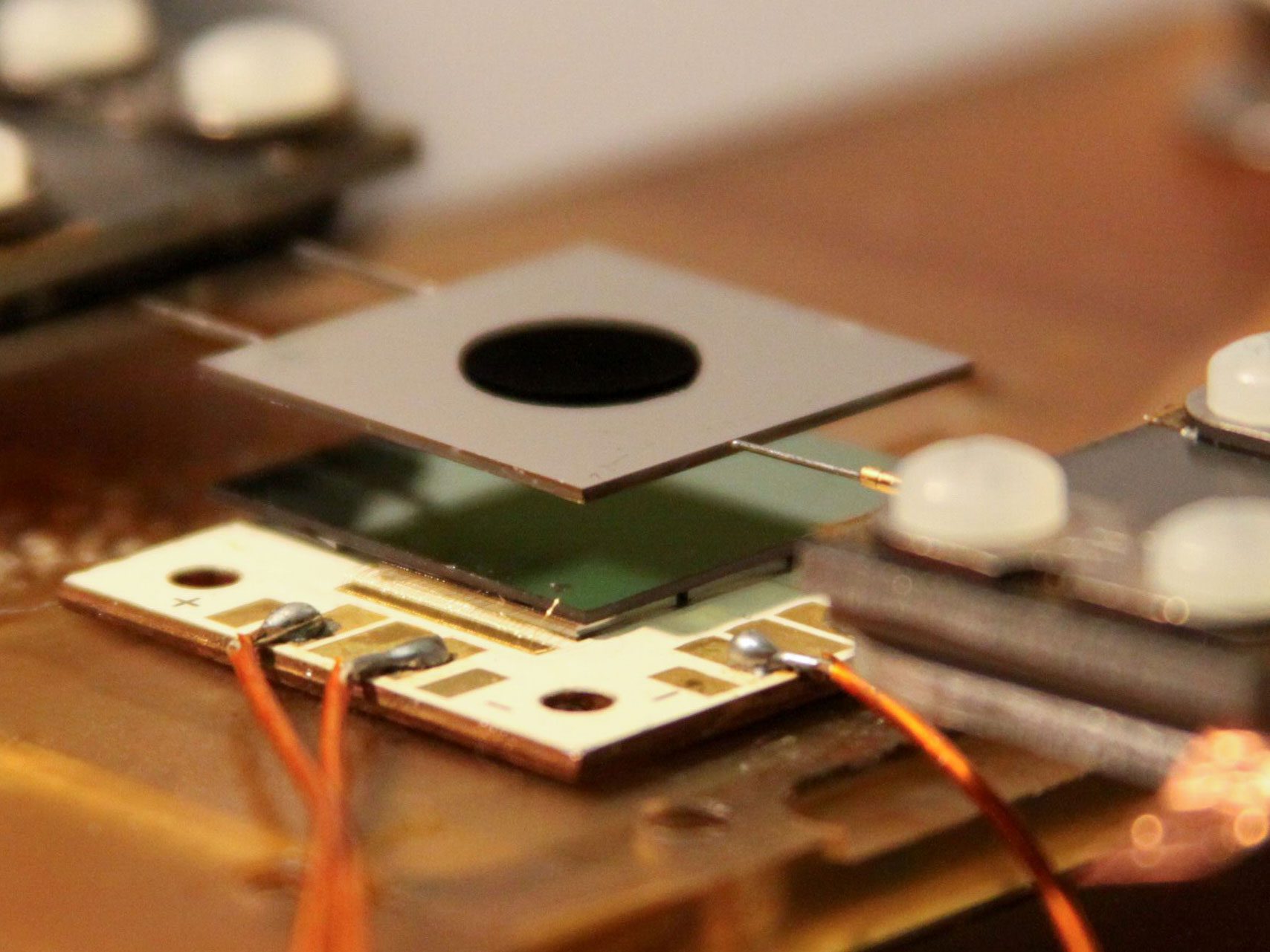
This solar thermophotovoltaic device Wang’s lab developed with Marin Soljačić converts solar heat that’s usually wasted into usable light, potentially doubling the efficiency of typical solar cells.
COURTESY OF THE RESEARCHERS
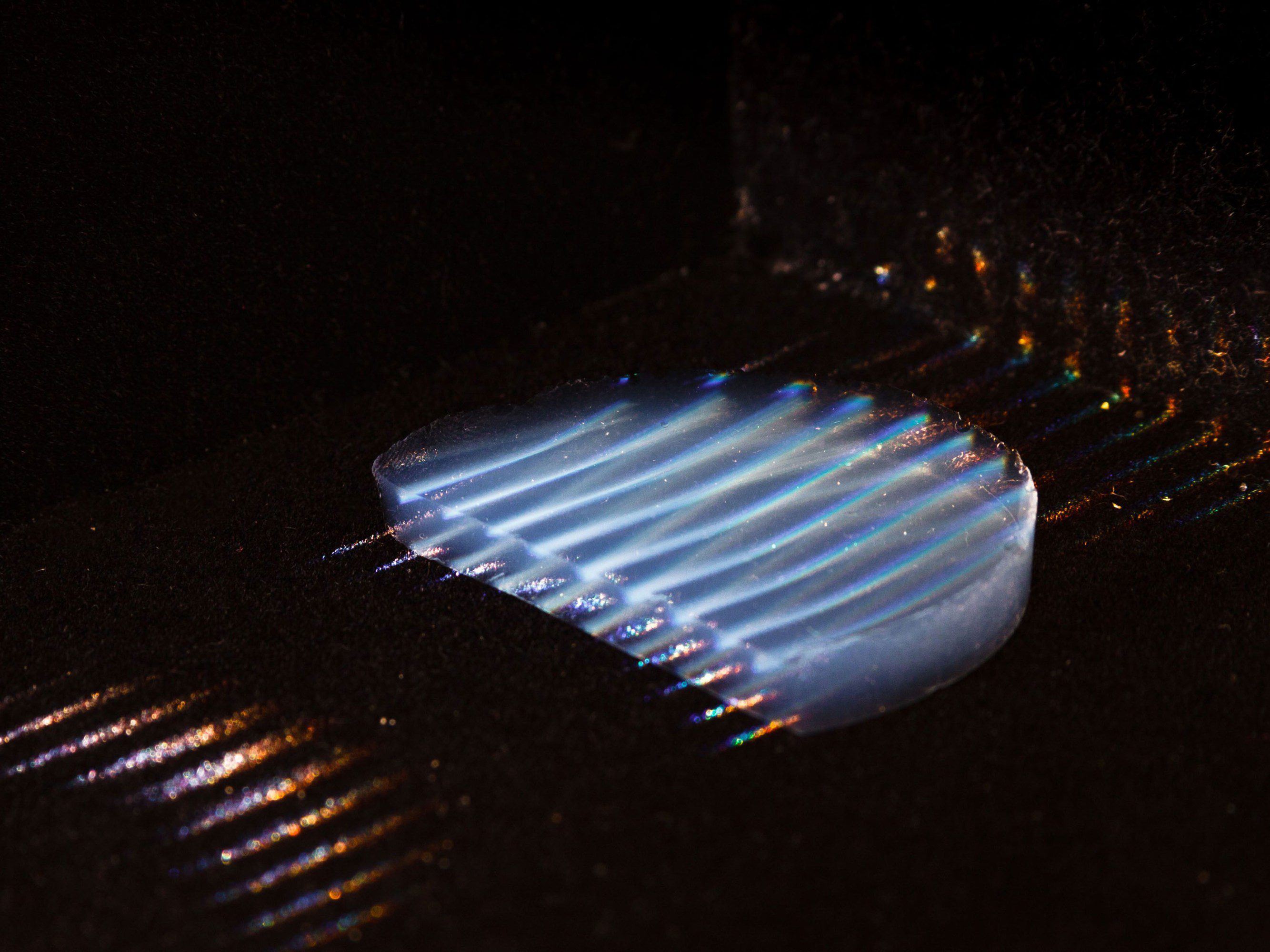
Wang’s group worked with Gang Chen’s lab to develop this highly transparent insulating silica aerogel. It transmits 95% of light, letting sunlight pass through easily as it retains solar heat.
COURTESY OF THE RESEARCHERS
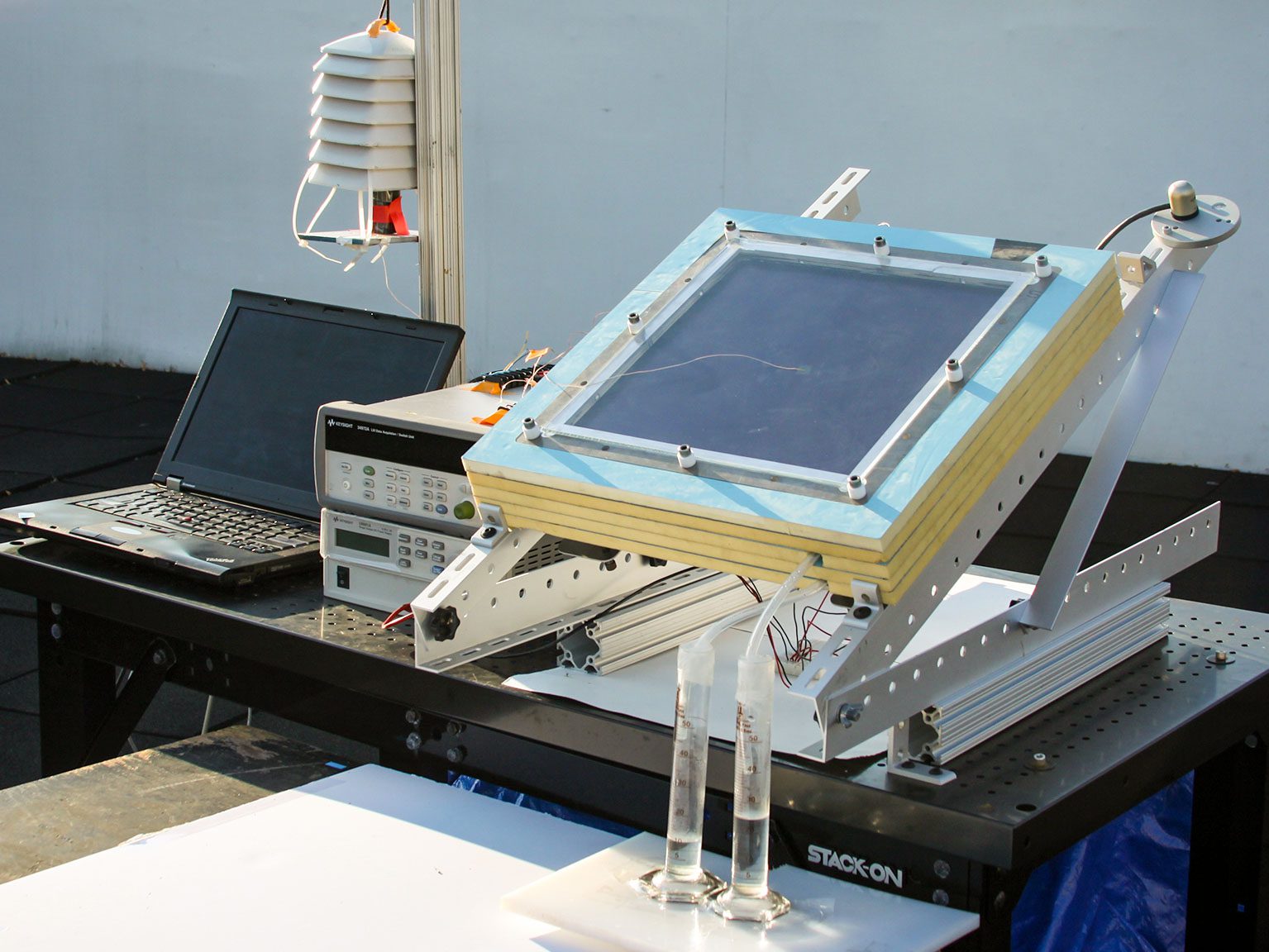
This prototype of a two-stage water harvesting system developed by the Wang lab and collaborators can draw water from the air at humidity levels as low as 20%, using only sunlight or another source of low-grade heat.
ALINA LAPOTIN
In Wang’s view, getting big results depends on taking a big-picture, holistic approach that will require unprecedented levels of collaboration. “MIT faculty have always treasured their independence and autonomy,” she says. “Traditionally, we’ve tried to let 1,000 flowers bloom. And traditionally we’ve done that well, often with outstanding results. But climate and energy are systems problems, which means we need to create a systems solution. How do we bring these diverse faculty together? How do we align their efforts, not just in technology, but also in policy, science, finance, and social sciences?”
To encourage MIT faculty to collaborate across departments, schools, and disciplines, Wang recently announced that the MIT Climate Project would award grants of $50,000 to $250,000 to collaborative faculty teams that work on six- to 24-month climate research projects. Student teams are invited to apply for research grants of up to $15,000.“We can’t afford to work in silos,” she says. “People from wildly diverse fields are working on the same problems and speaking different professional languages. We need to bring people together in an integrative way so we can attack the problem holistically.”
Wang also wants colleagues to reach beyond campus. MIT, she says, needs to form real, defined partnerships with other universities, as well as with industries, investors, and philanthropists. “This isn’t just an MIT problem,” she says. “Individual efforts and 1,000 flowers alone will not be enough to meet these challenges.”
Thinking holistically—and in terms of systems—will help focus efforts on the areas that will have the greatest impact. At a Climate Project presentation in October, Wang outlined an approach that would focus on building well-being within communities. This will begin with efforts to empower communities by developing coastal resilience, to decarbonize ports and shipping, and to design and build data centers that integrate smoothly and sustainably with nearby communities. She encouraged her colleagues to think in terms of big-picture solutions for the future and then to work on the components needed to build that future.
“As researchers, we sometimes jump to a solution before we have fully defined the problem,” she explains. “Let’s take the problem of decarbonization in transportation. The solution we’ve come up with is to electrify our vehicles. When we run up against the problem of the range of these vehicles, our first thought is to create higher-density batteries. But the real problem we’re facing isn’t about batteries. It’s about increasing the range of these vehicles. And the solution to that problem isn’t necessarily a more powerful battery.”
“Too often the narrative around climate is steeped in doom and gloom … The goal of any climate project is to build and protect well-being. How can we help communities thrive, empower people to live as they wish, even as the climate is changing?”
Wang is confident that her MIT colleagues have both the capacity and the desire to embrace the holistic approach she envisions. “When I was accepted to MIT as an undergraduate and visited the campus, the thing that made me certain I wanted to enroll here was the people,” she recalls. “They weren’t just talented. They had so many different interests. They were passionate about solving big problems. And they were eager to learn from one another. That spirit hasn’t changed. And that’s the spirit I and my team can tap into.”
Wang believes MIT and other institutions working on climate and energy solutions also need to change how we talk about the challenge. “Too often the narrative around climate is steeped in doom and gloom,” she says. “The underlying issue here is our well-being. That’s what we care about, not the climate. The goal of any climate project is to build and protect well-being. How can we help communities thrive, empower people to live as they wish, even as the climate is changing? How can we create conditions of resilience, sustainability, and prosperity? That is the framework I would like us to build on.” For example, in areas where extreme weather threatens homes or rising temperatures are harming human health, we should be developing affordable technologies that make dwellings more resilient and keep people cooler.
Wang’s colleagues at MIT concur with her assessment of the mission ahead. They also have a deep respect for her scholarship and leadership. “I couldn’t think of a better person to represent MIT’s diverse and powerful ability to attack climate,” says Susan Solomon, the Lee and Geraldine Martin Professor of Environmental Studies at MIT and recipient of the US National Medal of Science for her work on the Antarctic ozone hole. “Communicating MIT’s capabilities to provide what the nation needs—not only in engineering but also in … economics, the physical, chemical, and biological sciences, and much more—is an immense challenge.” But she’s confident that Wang will do it justice. “Evelyn is a consummate storyteller,” she says.
“She’s tremendously quick at learning new fields and driving toward what the real nuggets are that need to be addressed in solving hard problems,” says Elsa Olivetti, PhD ’07, the Jerry McAfee Professor in Engineering and director of the MIT Climate Project’s Decarbonizing Energy and Industry mission. “Her direct, meticulous thinking and leadership style mean that she can focus teams within her office to do the work that will be most impactful at scale.”
Wang’s experience at ARPA-E is expected to be especially useful. “The current geopolitical situation and the limited amount of research funding available relative to the scale of the climate problem pose formidable challenges to bringing MIT’s strengths to bear on the problem,” says Rohit Karnik, director of the Abdul Latif Jameel Water and Food Systems Lab (J-WAFS) and a collaborator with Wang on numerous projects and initiatives since both joined the mechanical engineering faculty in 2007. “Evelyn’s leadership experience at MIT and in government, her ability to take a complex situation and define a clear vision, and her passion to make a difference will serve her well in her new role.”
Wang’s new MIT appointment is seen as a good thing beyond the Institute as well. “A role like this requires a skill set that is difficult to find in one individual,” says Krista Walton, vice chancellor for research and innovation at North Carolina State University. Walton and Wang collaborated on multiple projects, including the DARPA work that produced the device for extracting water from very dry air based on the original prototype Wang co-developed. “You need scientific depth, an understanding of the federal and global landscape, a collaborative instinct and the ability to be a convener, and a strategic vision,” Walton says—and she can’t imagine a better pick for the job.
“Evelyn has an extraordinary ability to bridge fundamental science with real-world application,” she says. “She approaches collaboration as a true partnership and not as a transaction.”
A challenging funding climate
Climate scientists explore broad swaths of time, tracking trends in temperature, greenhouse gases, volcanic activity, vegetation, and more across hundreds, thousands, and even millions of years. Even average temperatures and precipitation levels are calculated over periods of three decades.
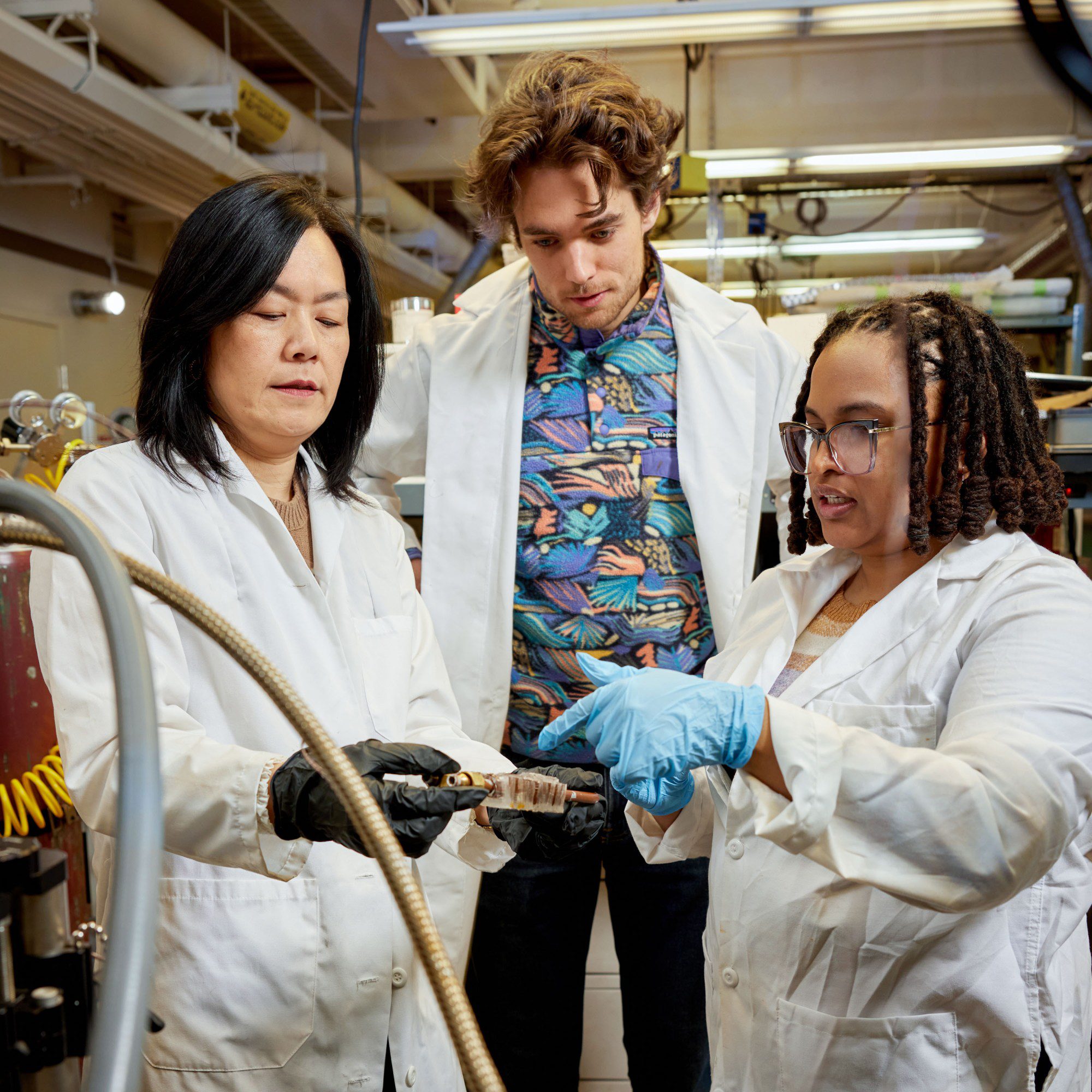
Wang and grad students Jan Luka Čas, SM ’25, and Briana Cuero examine a small test device for a hydrogel-based thermal battery they are developing with fellow PhD student Liliosa Cole.
KEN RICHARDSON
But in the realm of politics, change happens much faster, prompting sudden and sometimes startling shifts in culture and policy. The current US administration has proposed widespread budget cuts in climate and energy research. These have included slicing more than $1.5 billion from the National Oceanic and Atmospheric Administration (NOAA), canceling multiple climate-related missions at NASA, and shuttering the US Global Change Research Program (USGCRP), the agency responsible for publishing the National Climate Assessment. The Trump administration submitted a budget request that would cut the National Science Foundation budget from more than $9 billion to just over $4 billion for 2026. The New York Times reported that NSF grant funding for STEM education from January through mid-May 2025 was down 80% from its 10-year average, while NSF grant awards for math, physics, chemistry, astronomy, and materials science research were down 67%. In September, the US Department of Energy announced it had terminated 223 projects that “did not adequately advance the nation’s energy needs, were not economically viable, and would not provide a positive return on investment of taxpayer dollars.” Among the agencies affected is ARPA-E, the agency Wang directed before returning to MIT. Meanwhile, MIT research programs that rely on government sources of funding will also feel the impact of the cuts.
Acknowledging the difficulties she and MIT may face in the present moment, Wang still prefers to look forward. “Of course this is a challenging time,” she says. “There are near-term challenges and long-term challenges. We need to focus on those long-term challenges. As President Kornbluth has said, we need to continue to advocate for research and education. We need to pursue long-term solutions, to follow our convictions in addressing problems in energy and climate. And we need to be ready to seize the opportunities that reside in these long-term challenges.”
Wang also sees openings for short-term collaboration—areas where MIT and the current administration can find common ground and goals. “There is still a huge area of opportunity for us to align our interests with those of this administration,” she says. “We can move the needle forward together on energy, on national security, on minerals, on economic competitiveness. All these are interests we share, and there are pathways we can follow to meet these challenges to our nation together. MIT is a major force in the nuclear space, in both fission and fusion. These, along with geothermal, could provide the power base we need to meet our energy demands. There are significant opportunities for partnerships with this or any administration to unlock some of these innovations and implement them.”
A moonshot factory
While she views herself as a researcher and an academic, Wang’s relevant government experience should prove especially useful in her VP role at MIT. In her two years as director of ARPA-E, she coordinated a broad array of the US Department of Energy’s early-stage research and development in energy generation, storage, and use. “I think I had the best job in government,” she says. Designed to operate at arm’s length from the Department of Energy, ARPA-E searches for high-risk, high-reward energy innovation projects. “More than one observer has called ARPA-E a moonshot factory,” she says.
Seeking out and facilitating “moonshot”-worthy projects at a national and sometimes global scale gave Wang a broader lens through which to view issues of energy and climate. It also taught her that big ideas do not translate into big solutions automatically. “I learned what it takes to make an impact on energy technology at ARPA-E and I will be forever grateful,” she says. “I saw how game-changing ideas can take a decade to go from concept to deployment. I learned to appreciate the diversity of talent and innovation in the national ecosystem composed of laboratories, startups, and institutions. I saw how that ecosystem could zero in to identify real problems, envision diverse pathways, and create prototypes. And I also saw just how hard that journey is.”
Climate and energy research at MIT
MIT researchers are tackling climate and energy issues from multiple angles, working on everything from decarbonizing energy and industry to designing resilient and prosperous cities. Find out more atclimateproject.mit.edu.
While MIT is already an important element in that ecosystem, Wang and her colleagues want the Institute to play an even more prominent role. “We can be a convener and collaborator, first across all of MIT’s departments, and then with industry, the financial world, and governments,” she says. “We need to do aggressive outreach and find like-minded partners.”
“Although the problems of climate and climate change are global, the most effective way MIT can address them is locally,” said Wang at the October presentation of the MIT Climate Project. “Working across schools and disciplines, collaborating with external partners, we will develop targeted solutions for individual places and communities—solutions that can then serve as templates for other places and communities.” But she also cautions against one-size-fits-all solutions. “Solar panels, for example, work wonderfully, but only in areas that have sufficient space and sunlight,” she explains. “Institutions like MIT can showcase a diversity of approaches and determine the best approach for each individual context.”
Most of all, Wang wants her colleagues to be proactive. “Because MIT is a factory of ideas, perhaps even a moonshot factory, we need to think boldly and continue to think boldly so we can make an impact as soon as possible,” she says. She also wants her colleagues to stay hopeful and not feel daunted by a challenge that can at times feel overwhelming. “We will build pilots, one at a time, and demonstrate that these projects are not only possible but practical,” she says. “And that is how we will build a future everyone wants to live in.”
Few people, if any, contemplate stars—celestial or cinematic—the way Aomawa Shields does.
An astronomer and astrobiologist, Shields explores the potential habitability of planets beyond our solar system. But she is also a classically trained actor—and that’s helped shape her professional trajectory in unexpected ways.
Today, Shields is an associate professor in the Department of Physics and Astronomy at the University of California, Irvine, where she oversees a research team that uses computer models to explore conditions on exoplanets, or planets that revolve around stars other than the sun. But while searching for life many light-years away is her day job, creative endeavors round out her purpose on Earth.
In 2023 Shields published a memoir, Life on Other Planets: A Memoir of Finding My Place in the Universe. She has started an influential educational program that encourages young girls to explore space, given a hugely popular TED Talk about how we’ll find life on other planets, and won a string of prestigious academic awards, honors, and grants. She also plays the violin, cooks, practices yoga, and is a mom. And as what she calls a “rest leader”—a professional proponent of slowing down—Shields has somehow managed the seemingly impossible: She makes time.
Her unorthodox path began on the screen, in the realm of make-believe.
“I wanted to become an astronaut. That dream started very early in my life, at the age of 12, after seeing a movie that dramatized kids getting launched into space,” she says, referring to SpaceCamp, an ’80s kids’ comedy about an accidental space shuttle flight.
The next bit of cinematic inspiration cemented her interest.
“Charlotte Blackwood was an astrophysicist, and she was very glamorous, too,” Shields says, smiling at how she was captivated by the heroine in Top Gun. “There’s an iconic scene where she’s walking down the aisle between Tom Cruise and other pilot trainees, and she just kind of whips off her glasses and just looks like such a badass.”
A high-achieving student while growing up in California, Canada, and Massachusetts, Shields made her way to Phillips Exeter Academy, in large part drawn by its state-of-the-art astronomical observatory. Once there, she got pulled into acting in a serious way. “Enter a new dream,” she says.
Throughout high school her astronomy and acting aspirations “kind of danced beside each other,” Shields remembers. “But I held firm to the first one and went to MIT because I understood that it’s the best science school in the country. I learned that at the age of 12—that’s where I’m going to go.”
At MIT, Shields struggled academically at first and took refuge in the creative arts. She was chosen to participate in the Burchard Scholars Program, whose monthly dinner seminars bring faculty members together with students who excel in the arts, social sciences, and humanities. She sang in the a cappella group the Muses and performed in lots of plays. At the end of her senior year, she found herself wondering: “Do I go to grad school in acting or astronomy?”
“There were a lot of these things that seemed to be aligning—that were telling me: Go back and get that PhD.”
The latter won out, but not for long. Shields headed to a graduate program in astronomy at the University of Wisconsin–Madison. “During that year, I had a white male professor tell me to consider other career options, and that was hard to hear,” she says. She remembers thinking, “I’m going to the other dream because clearly someone’s telling me that I don’t belong here. Maybe they’re right.”
So she applied to UCLA, where she got an MFA in acting, leaving astronomy for more than a decade. But then, when Shields was working odd jobs to supplement her acting gigs, a mentor from her undergraduate years encouraged her to look on a Caltech-operated job website. She saw an opening for a help desk operator at the Spitzer Space Telescope, an infrared telescope that is particularly adept at viewing the formation of young stars—and it only required a bachelor’s degree. “I’d refer the harder questions to the PhDs,” she says. “But by taking that job, I got to go to astronomy talks again … This field of exoplanets had just exploded during the time I’d been away.”
Shields had some success in acting, including a part in a film called Nine Lives, which screened at the Sundance Film Festival. But a big break—and then heartbreak—came after she was cast as the host of the show Wired Science, only to lose the job when the producers decided to change presenters. It was a “devastating moment,” she says.
Soon after, she emailed the astrophysicist and science communications luminary Neil deGrasse Tyson, whom she’d been introduced to over email by an astronomer working with the Spitzer Space Telescope, and relayed what had happened. He replied that he’d seen her in the pilot and told her that “without a PhD you don’t have that street cred if you want to do science television,” she recalls. Meanwhile, she had applied to NASA’s astronaut candidate program but didn’t make it past the first level. (She did, however, get to play an astronaut in a recent Toyota ad.) “There were a lot of these things that seemed to be aligning—that were telling me: Go back and get that PhD,” she says. So she did, earning her doctorate in astronomy and astrobiology in 2014 from the University of Washington.
Astrobiology, Shields explains, is a relatively new field that studies the origin, evolution, and distribution of life in the universe: “It’s about how life got started on Earth.”
Astrobiologists might focus on the habitability of planets, or on methods for exploring life on other planets, or on liquids other than water that could support life. It’s a highly interdisciplinary field. “There are astronomers that are looking for these planets and are using their particular field of expertise to answer that question: Are we alone?” Shields explains. Some of them are “also chemists and biologists and oceanographers and geologists who tackle these questions from their own lens and specific area of expertise,” she says. “That’s why I love it. As an astrobiologist, we don’t have to get 15 PhDs. We get to collaborate with people in different departments who lend their own expertise … on those science questions.”
Shields is trying to answer a question sparked by the night sky—one that’s deeply personal yet universal in both the astronomical and the colloquial sense. “Ever since I was a little girl, I would look up at the sky and wonder what was out there,” she says. “It comes from a sense of wonder for me. I still have that feeling when I look up at the night sky and I see these little pinpoints of light. I wonder: Is there anyone looking back at me? … How far does space go?”
There are, she explains, 100 billion stars in our galaxy, most orbited by at least one planet, and over 100 billion galaxies beyond ours. That’s about 1022 stars in the universe. The likelihood that only Earth was able to produce life “I think is pretty low,” Shields says.
“I’m looking for planetary environments that could be conducive to life beyond Earth,” she says. “And my team does that largely using climate models. These are the same kinds of models that can predict climate and weather on Earth.”
Shields plugs information gathered by observational astronomers into such models, along with different potential combinations of other, unknown variables—like the type of light a planet receives from its host star, the composition of its atmosphere and surface, and certain orbital information. “There’s only so much that you can really tell about a planet from the telescope information that you get,” she explains. “We can explore that parameter space with climate models and say: Okay, if it has this surface composition, this is what the temperature would be like on this planet. If it has this atmospheric composition, this type of orbit, this is what the climate would be like, and this is how habitable it would be across its surface.”
Since the early 1990s, astronomers have discovered 6,000 exoplanets. Shields says those in Earth’s size range—in which she’s most interested—number in the hundreds. A smaller subset of those are orbiting in what’s called the “habitable zone” of their star, creating warm enough conditions to maintain water in liquid form—the key to life. So far, as many as 100 or so planets that fall into that category have been identified, but the James Webb Space Telescope, launched in 2021, could find even more potentially habitable planets by detecting “biosignatures” suggesting a biological presence, such as particular gases in their atmospheres or glints that might be reflections of water on the planetary surface.
Being able to detect more of these sorts of signals, Shields says, is the next “big mission” in astronomy.
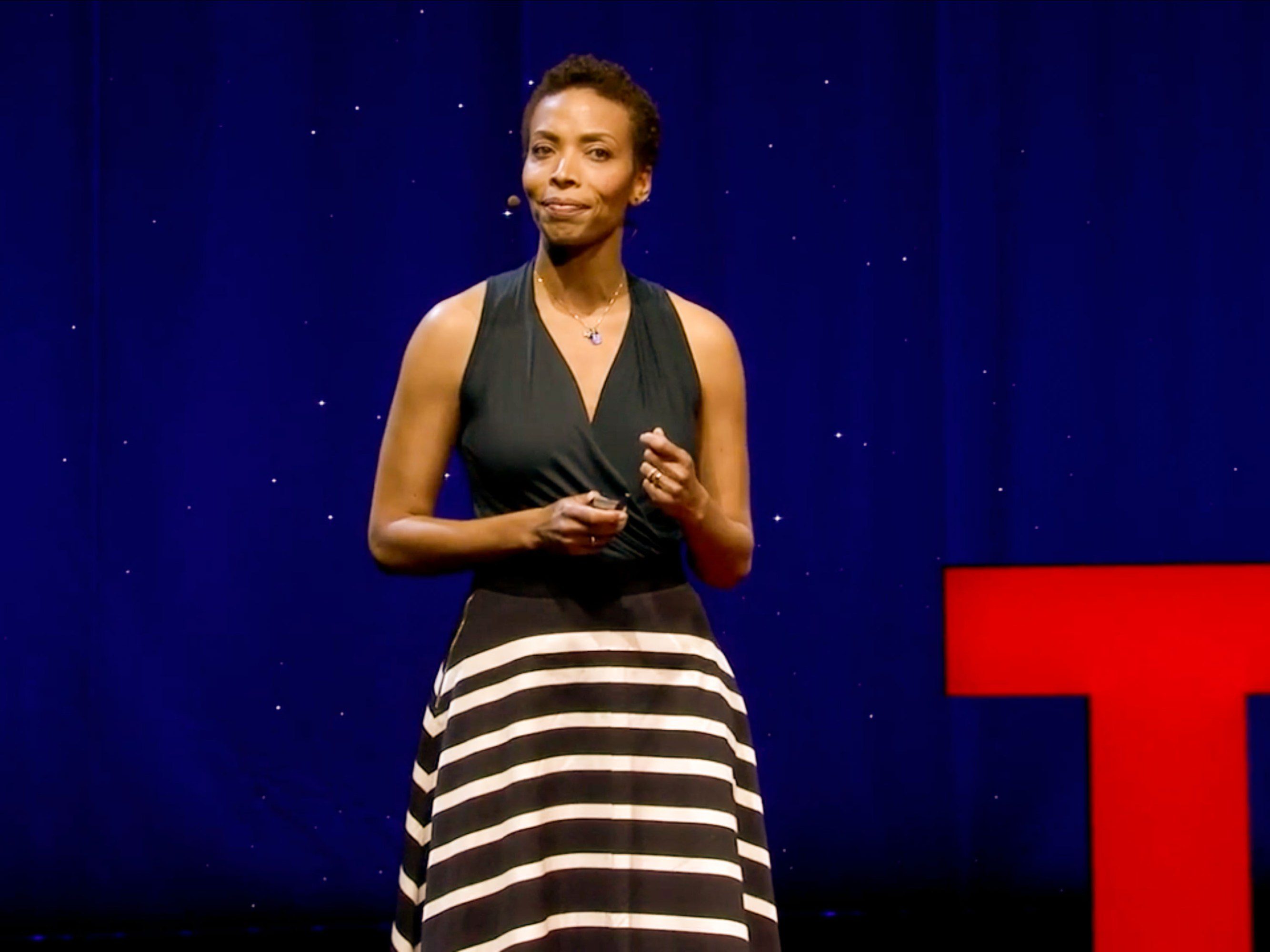
Shields’s hugely popular TED Talk, “How we’ll find life on other planets,” has nearly 2 million views.
TED CONFERENCES, VIA YOUTUBE
Today, in her academic work, her mind hurtles to the farthest reaches of the universe. But in her precious hours outside of academia, she has learned to be still. When her work schedule started to overwhelm her, Shields’s health began to suffer. Then she discovered the practice of yoga nidra—an ancient form of meditation in which practitioners are guided into a deeply restful “yogic sleep.” Shields read the book Do Less: A Revolutionary Approach to Time and Energy Management for Ambitious Women, which claims that 20 or 30 minutes of yoga nidra “feels like three hours of sleep in your body,” she says. “And as the mother of a young child, I was like: Okay, sign me up!”
Last year she trained with Karen Brody, author of Daring to Rest:Reclaim Your Power with Yoga Nidra Rest Meditation, and became a certified facilitator. “It’s been important to me to share it broadly and to really try to do my part to introduce the culture of academia, in particular, to this notion of resting as a daily practice,” she says. Now she’s at work on a book about her attempt to moderate—to resist the temptation to take on too much. She has learned to decline invitations and put firm boundaries between her work and personal life.
Shields has realized that her seemingly disparate interests in astronomy and acting don’t have to be mutually exclusive. Combining them makes her a more effective educator.
On a weekday in August, an ayurvedic soup simmers on her kitchen stove. A music stand occupies the corner of a room where she sometimes picks up her violin and plays fiddle tunes. (Her parents, both professional musicians, derived her name from a chant of vowel sounds they made up.) She mentions the poem “swim | women of color”by Nayyirah Waheed and recites it in a soft, rich voice. Part of it goes: “This structure counts on your inability to say no. mean no. they take no from our first breath. go back and return it to your mouth. your heart. your light.”
“I need to graciously let go or say no—make room for someone else to say yes,” Shields says. “That allows me to have more spaciousness in my schedule, because one thing I’ve discovered is that women of color, as we proceed up the academic ladder, the requests just exponentially increase, and so saying no is not simply an important skill—it’s a survival skill.”
Along the way, Shields has come to realize that her seemingly disparate interests in astronomy and acting don’t have to be mutually exclusive. In fact, combining them—and sharing her passion for both—makes her a more effective educator. Her training as an actor helps her craft lectures that keep students engaged and animates her presentations, including her TED Talk, in a way that resonates with nonscientists.
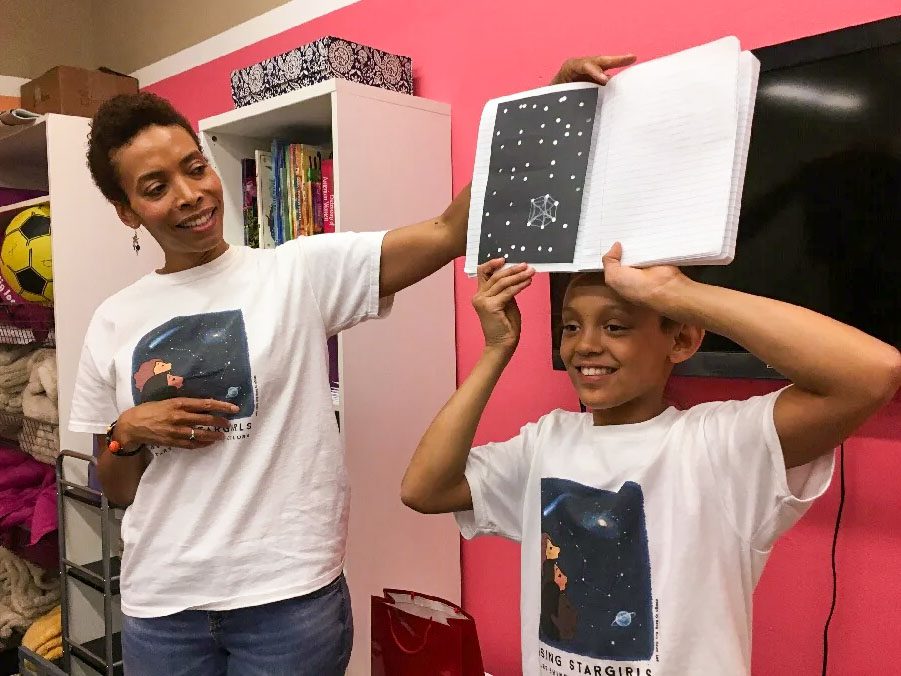
Shields launched Rising Stargirls, which integrates writing, visual art, and theater exercises into astronomy workshops, to encourage middle-school girls to bring their whole selves to learning about the universe.
COURTESY OF RISING STARGIRLS
Shields is also tapping into her love of acting to inspire the next generation of scientists who will help answer astronomy’s big questions. As part of a postdoctoral fellowship through the National Science Foundation, she was asked to design an educational outreach component. “I was like: Is there a scenario in which I could use acting to teach astronomy?” she says. “And I looked it up. There was precedent for that. Astronomy education journals had shown that when you involve girls in creative arts—theater, writing—and you incorporate that into astronomy education, you increase girls’ confidence in both asking and answering questions.”
The finding resonated with her own experience. After all, it was acting—which she turned to when her professor discouraged her from studying astronomy—that gave her the confidence to pursue astronomy again. “I looked at acting as this outlet, this safe space,” she says. “Nobody could tell me that I was wrong as an actor.”
With that in mind, Shields launched Rising Stargirls, which holds workshops using the creative arts to teach astronomy to middle-school-aged girls of all backgrounds. She and her colleagues have since published a study showing that girls who attended the program reported being more excited to take science classes and were more likely to believe they could do well in science.
“We want them to know that who they are is inherently pivotal and critical to their study and practice of astronomy,” Shields says. “The sciences are incredibly creative, and they get to bring that creative imagination and creative inspiration they find through the arts into learning about the universe.”
That same exchange has played out in Shields’s life, but it’s only recently that she’s come to see similarities between her roles as an astronomer and an actor. “They’re both about story,” she says.
Actors have to convey the arc or evolution of a story through the lives of their characters. “Stars, planets—they have lives, too,” Shields says. “They have births, they have evolution, and they die. It’s my job as a scientist to unveil the story—to discover the story of whether there’s life elsewhere.”
Ever since nuclear fusion was discovered in the 1930s, scientists have wondered if we could somehow replicate and harness the phenomenon behind starlight—the smashing together of hydrogen atoms to form helium and a stupendous amount of clean energy. Fusing hydrogen would yield 200 million times more energy than simply burning it. Unlike nuclear fission, which powers the world’s 440 atomic reactors, hydrogen fusion produces no harmful radiation, only neutrons that are captured and added back to the reaction. Instead of radioactive wastes with long, lethal half-lives, fusion’s by-product is helium, the most stable element—and a year’s worth from a fusion plant wouldn’t supply a party balloon business.
Dennis Whyte’s part in the fusion quest began in graduate school, in a lab belonging to the electric utility Hydro-Québec, just outside Montreal. There he was shown a device built to replicate stellar fusion on an earthly scale. It was a doughnut-shaped hollow chamber, big enough for a lanky physicist like him to stand inside, based on a design conceived in 1950 by the future Nobel Peace Prize laureate Andrei Sakharov, who also developed hydrogen bombs for the Soviet Union. It was called a tokamak, a word derived from a Russian phrase meaning “ring-shaped chamber with magnetic coils.”
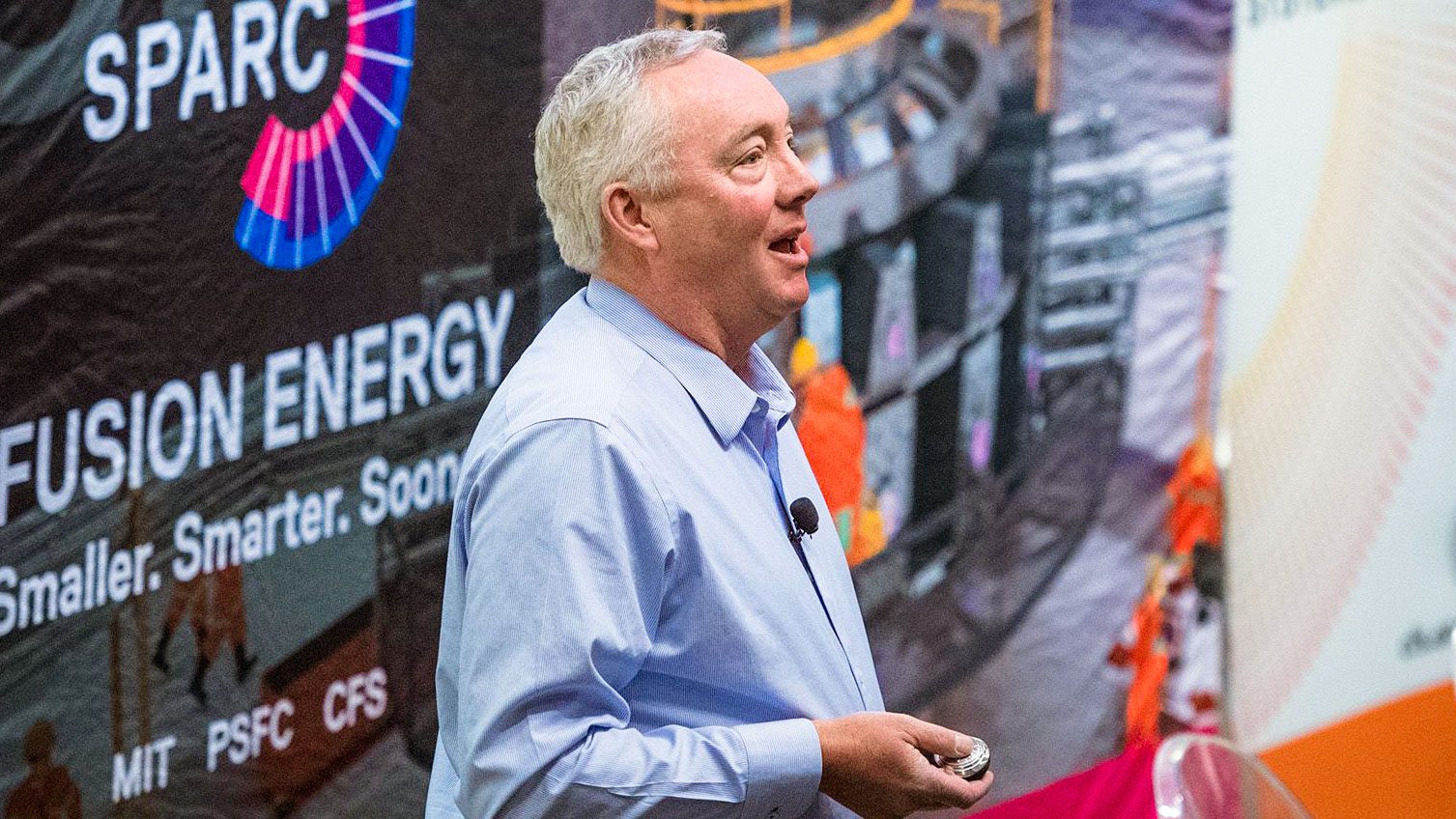
Dennis Whyte, then director of the Plasma Science and Fusion Center, describes efforts to address climate change through carbon-free power at a conference in 2019.
GRETCHEN ERTL
The idea is straightforward: Fill the doughnut with hydrogen gas, and then heat that gas until it turns to electrically charged plasma. In this ionic state, plasma would be held in place by magnets positioned around the tokamak. Achieving fusion on Earth without the immense pressure of a star’s interior, scientists calculated, would require temperatures nearly 10 times hotter than our sun’s center—around 100 million degrees Celsius. So the trick would be to suspend the hot plasma so perfectly in a surrounding magnetic field that it wouldn’t touch inner surfaces of the chamber. Such contact would instantly cool it, stopping the fusion reaction.
The good part about that was safety. In a failure, a fusion power plant wouldn’t melt down—just the opposite. The bad part was that gaseous plasma wasn’t very cooperative—any slight irregularity in the chamber walls could cause destabilizing turbulence. But the concept was so tantalizing that by the mid-1980s, 75 universities and governmental institutes around the world had tokamaks. If anyone could get fusion—the most energy-dense reaction in the universe—to work, the deuterium in a liter of seawater could meet one person’s electricity needs for a year. It would be, effectively, a limitless resource.
Besides turbulence, there were two other big obstacles. The magnets surrounding the plasma needed to be really powerful—meaning really big. In 1986, 35 nations representing half the world’s population—including the US, China, India, Japan, what is now the entire European Union, South Korea, and Russia—agreed to jointly build the International Thermonuclear Experimental Reactor, a $40 billion giant tokamak in southern France. Standing 100 feet tall on a 180-acre site, ITER (the acronym also formed the Latin word for “journey”) is equipped with 18 magnets weighing 360 tons apiece, made from the best superconductors then available. If it works, ITER will produce 500 megawatts of electricity—but not before 2035, if then. It’s still under construction. The second obstacle is the biggest: Many tokamaks have briefly achieved fusion, but doing so always took more energy than they produced.
After earning his doctorate in 1992, Whyte worked on an ITER prototype at San Diego’s National Fusion Facility, taught at the University of Wisconsin, and in 2006 was hired by MIT. By then, he understood how huge the stakes were, and how life-changing commercial-scale fusion energy could be—if it could be sustained, and if it could be produced affordably.
MIT had been trying since 1969. The red brick buildings of its Plasma Science and Fusion Center, where Whyte came to work, had originally housed the National Biscuit Company. PSFC’s sixth tokamak, Alcator C-Mod, built in 1991, was in Nabisco’s old Oreo cookie factory. C-Mod’s magnets were coiled with copper to serve as a conductor (think of how copper wire wrapped around a nail and connected to a battery turns it into an electromagnet). Before C-Mod was finally decommissioned, its magnetic fields, 160,000 times stronger than Earth’s, set the world record for the highest plasma pressure in a tokamak.
As Ohm’s law describes, however, metals like copper have internal resistance, so it could run for only four seconds before overheating—and needed more energy to ignite its fusion reactions than what came out of it. Like the now 160 similar tokamaks around the world, C-Mod was an interesting science experiment but mainly reinforced the joke that fusion energy was 20 years away and always would be.
Each year, Whyte had challenged PhD students in his fusion design classes to conjure something just as compact as C-Mod, one-800th the scale of ITER, that could achieve and sustain fusion—with an energy gain. But in 2013, as he neared 50, he increasingly had doubts. He’d devoted his career to the fusion dream, but unless something radically changed, he feared it wouldn’t happen in his lifetime.
The US Department of Energy decided to scale back on fusion. It informed MIT that funding for Alcator C-Mod would end in 2016. So Whyte decided he would either quit fusion and do something else or try something different to get there faster.
There was a new generation of ceramic “high-temperature” superconductors, not available when ITER’s huge magnets were being wrapped in metallic superconducting cable, which has to be chilled to 4 kelvin above absolute zero (–452.47 °F) for its resistance to current to fall to zero. Discovered accidentally in 1986 in a Swiss lab, the new ceramic superconductors still needed to be cooled to 20 K (–423.7 °F). But with far smaller power requirements, their output was so much greater that a year later the discoverers won a Nobel Prize.
The potential applications were limitless, but because ceramic is so brittle, coiling it around electromagnets wasn’t feasible. Then one day Whyte ran into research scientist Leslie Bromberg ’73, PhD ’77, in the hallway holding a fistful of what resembled unspooled tape from a VCR cassette. “What’s all that?” he asked.
“Superconducting tape, new stuff.” The filmy strips were coated with ceramic crystals of rare-earth barium copper oxide. “It’s called ReBCO,” Bromberg said.
ReBCO’s rare-earth component, yttrium, is 400 times more common than silver. Could superconducting tape, Whyte immediately wondered, be wound like copper wire to make much smaller but far more powerful magnets?
The class met in a windowless room in a former Nabisco cracker factory, surrounded by blackboards.
He assigned his 2013 fusion design class to see. If the students managed to double the strength of a magnetic field surrounding hot plasma, he knew, they might multiply fusion’s power density sixteenfold. They came up with an eye-opening design they called Vulcan. It yielded five peer-reviewed papers—but whether layers of wound ReBCO tape could stand the stress of the current needed to hold plasma suspended while being superheated to ignite a fusion reaction was unknown.
For two years, his classes refined Vulcan. By 2015, with ReBCO more consistent in quality and supply, he challenged his students—11 male and one female, including an Argentine, a Russian, and a Korean—to outdo what 35 nations had been attempting for nearly 30 years.
“Let’s see if ReBCO lets us build a 500-megawatt tokamak—the same as ITER, only way smaller.”
If superconducting tape could let them make a fusion reactor to fit the footprint of a decommissioned coal-fired plant, he told them, it could plug right into existing power lines. To then make enough carbon-free energy to stop pushing Earth’s climate past the edge, its components would have to be mass-producible, so any competent contractor could assemble and service them.
The class met in a windowless room in a former Nabisco cracker factory, surrounded by blackboards. Divided into teams, the students set about figuring out how thin-tape electromagnets could be made robust, and how to capture neutrons expelled from fusion reactions so their heat could be used for turning a turbine—and so they could be harnessed to breed more tritium for the plasma. That’s crucial, because natural tritium is exceedingly rare. Since ReBCO-wrapped magnets would be so much smaller, shrinking the dimensions of one component rippled through everything else. One team’s innovations fed another’s, and parts of the design started to link together. As excitement spread through PSFC, members of earlier classes, now postdocs or faculty members, pitched in. Whyte’s students, some with doctoral dissertations due, were putting in 50-hour weeks on this, reminding him of why he’d dreamed of fusion in first place.
Whyte looked it over for the thousandth time. He was pretty sure they hadn’t broken any laws of physics.
And then, at the semester’s end, out popped their design. Just over 10 feet in diameter, it actually looked like a prototype power plant. While ITER had massive shielding, their tokamak would be wrapped in a compact blanket containing a molten-salt mixture of lithium fluoride and beryllium fluoride to absorb the heat of the neutrons escaping from the fusion reaction. Those neutrons would also react with the lithium to breed more tritium.
The blanket’s heat would be tapped for electricity—except one-fifth of the heat energy would remain in the plasma, meaning the reaction was now heating itself and was self-sustaining, producing more energy than was needed to ignite it. Net fusion energy had been achieved.
The ReBCO magnets, although just a 40th the size of ITER’s, could deliver a magnetic field strength of 23 tesla (a hospital MRI machine typically operates at 1.5 tesla). That was more than enough to achieve a fusion reaction, yet it would require less electricity than its copper-clad C-Mod predecessor by a factor of 2,000. Everything was designed for easy maintenance, and parts could be replaced without having to dismantle the entire reactor.
Most important, the calculated energy output was more than 13 times the input.
Whyte looked it over for the thousandth time. He was pretty sure they hadn’t broken any laws of physics. He calculated the cost per watt and was astonished. Suddenly their goal wasn’t just building a much smaller ITER. It was being commercially competitive.
Stunned, he told his wife, “This can actually work.”
They called it ARC, for “affordable, robust, compact.” “Buildable in a decade,” Whyte predicted.The peer-reviewed article his 12 students published in FusionEngineering and Design estimated it would cost around $5 billion. In 2015, that wasn’t much more than the cost of a comparably sized coal-fired plant, and one-eighth ITER’s price tag.
That May, Whyte gave a keynote about ARC at a fusion engineering symposium in Austin, Texas. Four of his students attended. When he described their plan for a workable reactor by 2025, in just 10 years, conferees were astounded—everyone else was talking decades. Afterward, the MIT contingent went to lunch at Stubb’s Bar-B-Q. It was clear that with the climate eroding and the Intergovernmental Panel on Climate Change warning that yet-uninvented technologies were needed to keep temperatures from soaring into dreaded realms, they had to do this. But since the DOE had pulled its funding, how could they?
On a napkin, Whyte started listing what they’d need to do and what each step might cost. Over ribs, they crafted a proposal to spin off a startup to raise venture capital to finance a SPARC (for “soon-as-possible ARC”) demo fusion reactor to show that this could really happen. Then they’d build a commercial-scale ARC.
In 2021, teams from MIT’s Plasma Science Fusion Center and MIT spinout Commonwealth Fusion Systems used just 30 watts of energy to produce a magnetic field strong enough to sustain a fusion reaction.
GRETCHEN ERTL
Forming a company would free them from academic and government funding cycles, but they were plasma physicists, most still in their 20s, without business backgrounds. Nevertheless, Whyte and Martin Greenwald, deputy director of the PSFC, agreed to join them, and in 2018 Commonwealth Fusion Systems, CFS, was born. Three of his former students would run the company, and three would remain at MIT’s Plasma Science and Fusion Center, which—in a profit-sharing agreement—would be CFS’s research arm.
They opened shop up the street, in The Engine, MIT’s “tough tech” startup incubator, and gained the attention of climate-concerned backers like Bill Gates, George Soros, and Jeff Bezos. But they weren’t the only ones competing for fusion funds, and it became a race to see who could make commercial-scale fusion first.
The CFS team may have been young, but because of its partnership with MIT and its more than a hundred experienced fusion scientists, it had a running start.
By the end of 2021, Commonwealth Fusion Systems had raised more than $2 billion and was breaking ground on 47 acres outside Boston for a commercial fusion energy campus, to build SPARC by 2025—and commercial-scale, mass-producible ARC by 2030.
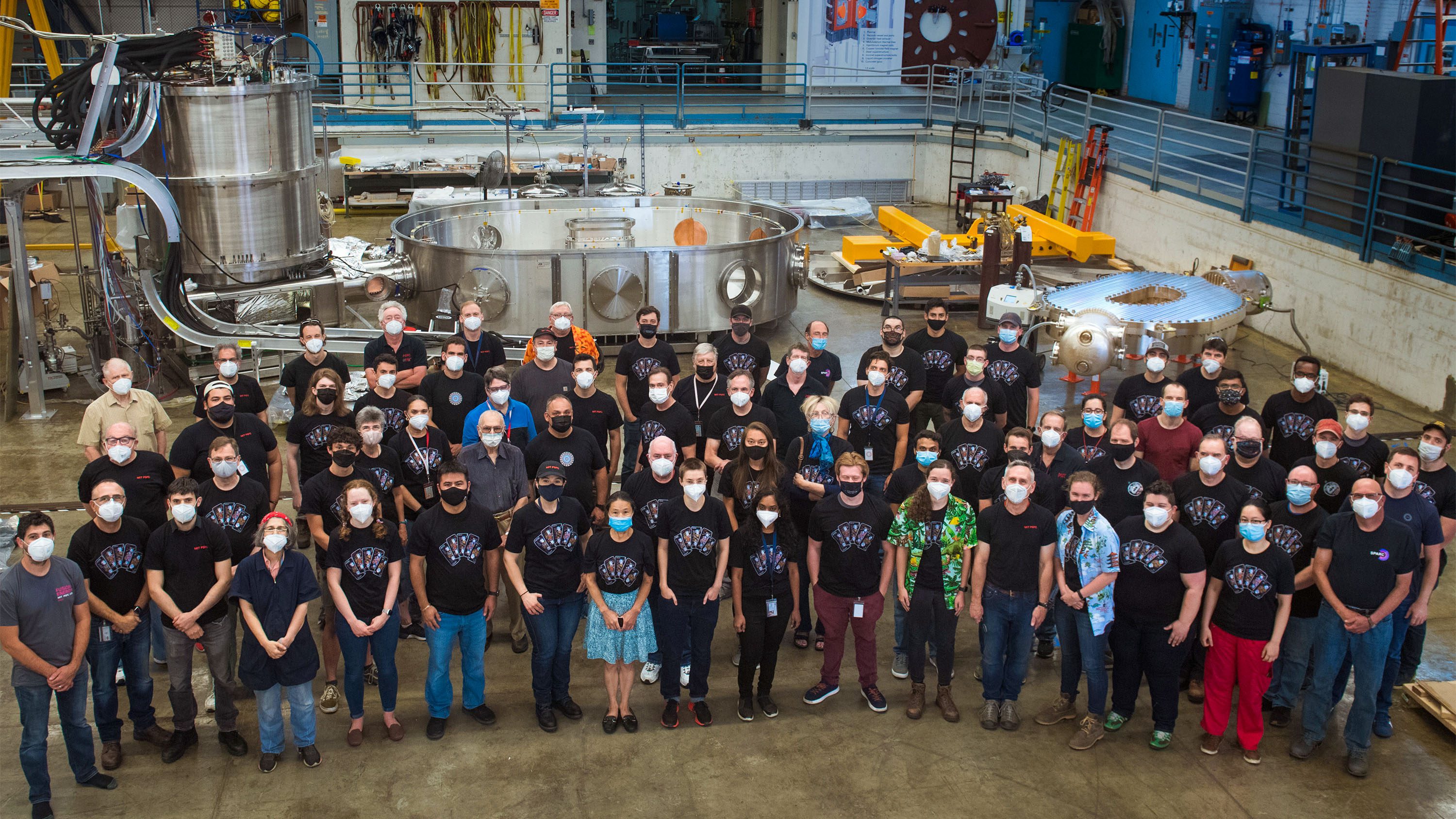
Gaining and actually sustaining net energy is perpetually called fusion’s yet-unreached “holy grail,” but by September 2021, the CFS team of CEO Bob Mumgaard, SM ’15, PhD ’15 (a coauthor of the Vulcan design), chief science officer Brandon Sorbom, PhD ’17 (lead author of the 2015 fusion design class’s breakthrough paper), Whyte, and their 200 CFS colleagues were confident they could do it—if their magnets held. For three years, straight through the pandemic, they’d worked in PSFC’s West Cell laboratory, the cavernous former Oreo factory that had housed Alcator C-Mod, furiously solving problems like how to solder thin-film ReBCO tape together into a structure strong enough to withstand 40,000 amps passing through it—enough to power a small town.
The completed SPARC would have 18 magnets encircling its plasma chamber, but for this test they’d built just one. It was composed of 16 layers, each a D-shaped, 10-foot-high steel disk grooved like an LP. On one side, the grooves held tight spirals of ReBCO film, 270 kilometers in all—the distance from Boston to Albany. “Yet all that ReBCO holds just a sprinkling of rare earth,” said Sorbom. “That’s the magic of superconductors: A tiny bit of material can carry so much current. By comparison, a wind turbine’s rare-earth neodymium magnets weigh tons.”
On each disk’s flip side, the grooves channeled liquid helium to cool the superconductor for zero resistance. (The design dates to history’s first high-field magnet, built at MIT in the 1930s, which used copper conductors and water for coolant.) Each layer was built on an automated assembly line. “The idea,” said Mumgaard, “is to make 100,000 magnets a year someday. This can’t be a scientific curiosity. This needs to be an energy source.”
Although covid-19 had waned, an outbreak could foil everything, so they maintained coronavirus protocols, moving computer terminals outside beneath a tent to avoid crowding within. Others worked virtually. For a month, dozens worked eight-hour, continuous shifts. Some operated the electromagnetic coil, encased in stainless steel in the middle of the room, which over a week had to be gradually supercooled from room temperature of 298 K down to 20 K before slowly ramping up to full magnetic strength. Others constantly compared real-time data with redundant models. As the temperature dropped, the internal connections, welds, and valves contracted at different rates, so they watched for leaks.
On September 2, 2021, the Thursday before Labor Day, they started ramping up by a few kiloamps, stopping frequently to check what the current was revealing, how the cooling characteristics had changed, and how the stresses on the ReBCO coil increased as the magnetic field strengthened to record heights.
Two nights later, they cranked the amperage toward their goal: a 20-tesla magnetic field, powerful enough to lift 421 Boeing 747s or contain a continuous fusion reaction. They’d been aiming for 7:00 a.m. on Sunday, the 5th. At 3:30, the large screen in the design center showed that they’d reached 40 kiloamps, and the magnetic field had reached 19.56 tesla.
At 4:30 a.m., they were at 19.98 tesla. Things got very quiet. At 5:20 a.m., every redundant on-screen meter read 20 tesla, and nothing had leaked or exploded—except under the tent, where champagne corks were popping.
Five years earlier, on its final four-second run, C-Mod’s copper-conducting magnet had consumed 200 million watts of energy to reach 5.7 tesla. This took 30 watts—less energy by a factor of around 10 million, Whyte told reporters—to produce a magnetic field strong enough to sustain a fusion reaction. The joints that transferred current from one layer to the next actually performed better than expected. That was the biggest unknown, because there was only one way to test them: in the magnet itself. They looked spectacular.
After five hours, the team ramped down the power. “It’s a Kitty Hawk moment,” Mumgaard said.
Jaden Chizuruoke May ’29 worked with teammates Rihanna Arouna ’29 and Marian Akinsoji ’29 to design the chemically powered model car whose framework he is building in this scene from the Huang-Hobbs BioMaker Space, where students have a chance to work safely and independently with biological systems.
The assignment to build the car—and the layered electrochemical battery that powers it—came in a class called “Hands-On Engineering: Squishy Style Making with Biology and Chemistry” taught by the lab’s director, Justin Buck, PhD ’12. “It is definitely one of my favorite classes,” says May, who appreciates that after being trained, students are given the freedom to figure out how to tackle each task in a project.
Located in the basement of Building 26, the BioMaker Space welcomes novices and expert mentors alike, offering workshops in such things as bacterial photography, biobots, lateral flow assay, CRISPR, and DNA origami.
For May, the makerspace has been a hub for collaboration. “I could never have done anything in that lab without my peers and counselors helping me, and the emphasis placed on teamwork is what makes the class feel both welcoming and exciting,” he says, adding that he made some of his first friends at MIT there: “It has been a great introduction to campus.”
May says he’s thinking of double majoring in Course 10-ENG (energy) and Course 21W (writing)—but the class has gotten him interested in biology, too.
As MIT navigates a difficult and constantly changing higher education landscape, I believe our best response is not easy but simple: Keep doing our very best work. The presidential initiatives we’ve launched since fall 2024 are a vital part of our strategy to advance excellence within and across high-impact fields, from health care, climate, and education to AI and manufacturing—and now quantum. On December 8, we launched Quantum at MIT, or QMIT—the name rhymes with qubit, the basic unit of quantum information—to elevate MIT’s long-standing strengths in quantum science and engineering across computing, communication, and sensing.
More than 40 years ago, MIT helped kick off what is widely considered the second quantum revolution as host of the first Physics of Computation Conference at Endicott House, bringing together physics and computing researchers to explore the promise of quantum computing. Now we’re investing further in that promise.
Like all MIT’s strategic priorities, QMIT will help ensure that new technologies are used for the benefit of society. Faculty director Danna Freedman, the Frederick George Keyes Professor of Chemistry, is leading the initiative with a focus that extends beyond research and discovery to the way quantum technologies are developed and deployed. QMIT will enable scientists and engineers to co-develop quantum tools, generating unprecedented capabilities in science, technology, industry, and national security.
Although QMIT is a new initiative, it grew naturally from the Center for Quantum Engineering (CQE), created in 2019 to help bridge the gap between PIs at MIT and Lincoln Laboratory. A key to QMIT’s success will be integration with Lincoln Lab, with its deep and broad expertise in scaling and deployment.
And CQE has already gotten us started with industry collaborations through its Quantum Science and Engineering Consortium (QSEC), which brings together companies—from startups to large multinationals—that can help us realize positive, practical impact. We’re even envisioning a physical home for quantum at the heart of campus, a space for academic, industry, and public engagement with quantum systems.
As we set out for this new frontier, QMIT will allow us to shape the future of quantum, with a focus on solving “MIT-hard” problems. We hope that as the initiative evolves, our alumni and friends will be inspired to join us in supporting this exciting new effort to build on MIT’s quantum legacy.
Nearly everyone has experienced it—after a night of poor sleep, your brain might seem foggy, and your mind drifts off when you should be paying attention. A new MIT study reveals what happens biologically as these momentary lapses occur: Your brain is performing essential maintenance that it usually takes care of while you sleep.
During a normal night of sleep, the cerebrospinal fluid (CSF) that cushions the brain helps flush away metabolic waste that has built up during the day. In a 2019 study, MIT electrical engineering and computer science professor Laura Lewis, PhD ’14, and colleagues showed that the CSF flows rhythmically in and out in a way that’s linked to changes in brain waves.
To explore what might happen to this CSF flow in a sleep-deprived brain, Lewis, who is also a member of MIT’s Institute for Medical Engineering and Science, and her colleagues tested 26 volunteers on several cognitive tasks after they’d been kept awake in the lab and when they were well-rested. Using both electroencephalograms and functional magnetic resonance imaging, the researchers measured heart rate, breathing rate, pupil diameter, blood oxygenation in the brain, and flow of CSF in and out of the brain as participants tried to press a button when they heard a beep or saw a visual change on a screen.
Unsurprisingly, sleep-deprived participants performed much worse than well-rested ones. Their response times were slower, and in some cases the participants never noticed the stimulus at all.
The researchers identified several physiological changes during these lapses of attention. Most significant was a flow of CSF out of the brain just as a lapse occurred—and back in as it ended. The researchers hypothesize that when the brain is sleep-deprived, it “attempts to catch up on this process by initiating pulses of CSF flow,” as Lewis says, even at the cost of one’s ability to pay attention.
“One way to think about those events is because your brain is so in need of sleep, it tries its best to enter into a sleep-like state to restore some cognitive functions,” says Zinong Yang, a postdoctoral associate and lead author of a paper on the work.
The researchers also found several other physiological events linked to attentional lapses, including decreases in breathing and heart rate, along with constriction of the pupils. They found that pupil constriction began about 12 seconds before CSF flowed out of the brain, and pupils dilated again after attention returned.
“When your attention fails, you might feel it perceptually and psychologically, but it’s also reflecting an event that’s happening throughout the brain and body,” Lewis says.
“These results suggest to us that there’s a unified circuit that’s governing both what we think of as very high-level functions of the brain—our attention, our ability to perceive and respond to the world—and then also really basic, fundamental physiological processes.”
The researchers did not explore what this circuit might be, but one good candidate, they say, is the noradrenergic system, which regulates many cognitive and bodily functions through the neurotransmitter norepinephrine—and has recently been shown to oscillate during normal sleep.
Lithium-ion batteries produce faint sounds as they charge, discharge, and degrade. But until now, nobody could interpret those sounds to detect when a battery might be about to lose power, fail, or burst into flames.
Now, MIT engineers have found a way to do that, even with noisy data. The findings could provide the basis for relatively simple, totally passive, and nondestructive devices that could continuously monitor the health of battery systems like those in electric vehicles or grid-scale storage facilities.
“Through some careful scientific work, our team has managed to decode the acoustic emissions,” says Martin Z. Bazant, a professor of chemical engineering and mathematics. They were able to classify them as coming from gas bubbles generated by side reactions or from fractures caused by expansion and contraction of the active material, two primary mechanisms of degradation and failure.
The team coupled electrochemical testing of working batteries with recordings of their acoustic emissions, using signal processing to correlate sound characteristics with voltage and current. Then they took the batteries apart and studied them under an electron microscope to detect fracturing.
With Oak Ridge National Laboratory researchers, the team has also shown that acoustic emissions can warn of gas generation before thermal runaway, which can lead to fires. As Bazant says, it’s “like seeing the first tiny bubbles in a pot of heated water, long before it boils.”