If you’re not using AI to maximize your ad budget, chances are your competitors are, which could leave you behind.
But don’t worry — there are plenty of AI tools to help you get more from your campaigns, boost productivity, and drive revenue growth without spending more on ads. One of the most impactful marketing tools is Google Ads Smart Bidding.
In this post, we’ll break down five essential Smart Bidding strategies that can help you drive more revenue.
Google Ads Smart Bidding offers multiple options tailored to different campaign objectives. Choosing the right strategy depends on your specific goals and budget. Here are a few:
Maximize Conversions: This Smart Bidding strategy sets bids to maximize the number of actions taken by users, such as sign-ups, purchases, or form submissions. It is ideal if you want to drive more actions like form fills, sign-ups, or purchases.
Target CPA (Cost Per Acquisition): With the target cost per acquisition (CPA) strategy, you specify the amount you’re willing to spend to acquire a customer. Google Ads then automatically sets bids to achieve that desired CPA. This strategy is best for maintaining cost efficiency by acquiring customers at a specific price.
Target ROAS: The target ROAS strategy allows you to set a specific ROAS goal, and Google Ads adjusts bids based on expected conversion values. If maximizing revenue while maintaining a specific ROAS is your priority, this is your go-to strategy.
Enhanced Conversions: You can use Enhanced Conversions to optimize for specific actions or events that hold significant value for your business. This strategy leverages machine learning to predict and adjust bids based on the likelihood of driving valuable conversions, improving the overall return on ad spend, and enhancing the efficiency of your marketing campaigns. According to Google, marketers who use this strategy see a 5% average conversion rate improvement on Search.
Google offers new AI tools to take your Smart Bidding strategy to the next level, helping you expand your reach. You can pair these tools with your desired bidding strategy.
Here’s what they are and how they work:
Broad Match: Use this tool to capture a wider audience by covering related searches and synonyms. Craft a comprehensive keyword list, incorporating broad-match keywords to increase visibility and attract potential customers who may use different search terms. According to Google, marketers who use Broad Match in Target CPA campaigns see 35% more conversions, on average.
Performance Max: This AI-powered tool optimizes your campaigns across all Google networks (YouTube, Google Maps, etc.) and ad formats to maximize results. With Performance Max, the AI technology automatically adjusts bids to achieve the best possible results, making it ideal for driving conversions and optimizing ad spend across Google’s expansive network. According to Google, marketers who use Performance Max achieve 18% more conversions at a similar cost per action. By pairing Broad Match with your chosen Smart Bidding model, you can maximize your query coverage on Google search.
By combining Broad Match with Performance Max, you’ll significantly increase your reach and boost conversions.
3. Use Revenue Execution Platforms To Supercharge Smart Bidding
AI is only as good as the data it’s fed, and many marketers miss a crucial piece of the puzzle: phone call conversions.
This can be a significant problem, as our research shows that 20-50% of conversions come in over the phone in many high-stakes purchase industries like healthcare, home services, automotive, and telecommunications.
If you’re not tracking all of those phone call conversions, your Google Smart Bidding instance is likely underperforming. That’s because automated bidding tools track the number of conversions each ad variation drives and then optimize bids based on what’s performing best. If you’re not tracking the phone call conversions your ads drive, you’re not giving the tool a complete picture of your performance.
Illustration, Invoca, October 2024
Illustration, Invoca, October 2024
A revenue execution platform like Invoca allows you to track these call conversions and feed them directly into Google Ads. This enables Google’s Smart Bidding AI to optimize more effectively, ensuring your ad dollars are spent on what truly drives revenue.
Check out this video series, to learn more about revenue execution platforms.
Illustration, Invoca, October 2024
4. Optimize Retargeting With Rich Data Insights
Retargeting is an incredibly cost-effective way to drive more conversions, especially when you’re targeting people who have already interacted with your brand. To enhance your retargeting efforts, first-party data is key — and phone conversations are a treasure trove of insights that can be unlocked with revenue execution platforms like Invoca.
Phone conversations contain more insights than an online form fill ever could — when your customers call you, they tell you about their needs, preferences, and how to make them happy. Invoca’s AI analyzes these conversations at scale and mines them for insights. The beauty of it is that you can easily train the AI to capture whichever data points are most relevant to your business — for example, you can track products callers expressed interest in, if they were price-sensitive, and if they made a purchase.
Check out the graphic below to see more of the data points you can collect with Invoca:
Illustration, Invoca, October 2024
With these deep conversation insights, you can build more complete customer profiles and retarget leads with more relevant ads. Below are a few common examples of retargeting and suppression strategies marketers use with Invoca’s first-party data:
Retarget callers who didn’t make a purchase with ads for the products they mentioned over the phone.
Retarget callers who bought over the phone with ads for relevant companion purchases.
Retarget callers who expressed price sensitivity with ads touting a special discount code.
Suppress callers who bought over the phone from seeing future ads for that product or service.
5. Detect & Solve Call Experience Issues
Many marketers lose potential revenue because they aren’t aware of call experience issues—missed calls, long hold times, or unoptimized call scripts that don’t convert leads. You could be flushing good leads down the drain without even knowing it. Using a revenue execution platform, you get detailed reports on call handling and identify areas where improvements are needed.
Invoca shows you the total number of calls your Google Ads campaigns send to each location or contact center, the number of calls answered, the name of the agent who handled the call, the number of leads, and the number of calls successfully converted to revenue.
If you notice specific locations or contact centers have high unanswered call rates, you can collaborate with them to improve call routing procedures and staffing. If you learn that some agents have low phone call conversion rates, you can review their call recordings and transcripts to learn the cause and notify their managers to help them improve.
You’ll increase conversion rates and revenue from your Google Ads campaigns when you work with your contact centers and locations to correct these issues.
Below is a sample Invoca report showing call handling by location:
Illustration, Invoca, October 2024
Addressing these issues, from ensuring calls are answered promptly to refining sales scripts, can lead to better conversion rates and higher revenue from your ad campaigns.
By following these five tips and integrating a revenue execution platform, B2C marketers can fully take advantage of Google’s AI capabilities, driving conversions and revenue from every marketing dollar spent.
Ready to learn more about how Invoca’s AI-powered revenue execution platform can help you level up your marketing? Check out this video series to see how it’s done.
A study by The College Investor finds significant inaccuracies in Google’s AI-generated summaries for finance queries.
Out of 100 personal finance searches, 43% had misleading or incorrect information.
Key Findings
The study evaluated AI overviews across various financial topics, including banking, credit, investing, taxes, and student loans.
The results showed:
57% of AI overviews were accurate
43% contained misleading or inaccurate information
12% were completely incorrect
31% were either misleading or missing crucial details
Areas of Concern
Researchers noted that the AI struggled most with nuanced financial topics, such as taxes, investing, and student loans.
Some of the most concerning issues included:
Outdated information on student loan repayment plans
Incorrect details about IRA contribution limits
Misleading statements regarding 529 college savings plans
Inaccurate tax information that could potentially lead to penalties if followed
The AI handled basic financial concepts well but overlooked important exceptions and recent policy changes.
There are notable patterns in the queries Google’s AI got right versus those it got wrong.
Here are common themes.
Queries Google AI Got Right
Basic definitions and explanations: For example, “What is a wire transfer?” and “How does a credit card work?”
Simple, straightforward questions: Such as “Do I have to pay back student loans?”
Recent trending topics: Like “What was the Chase Glitch?”
General insurance questions: For instance, “When should I get life insurance?”
Queries Google AI Got Wrong
Complex tax topics: For example, “Can you use a 529 plan for a Roth IRA?” and “Does owning your house in an LLC help with taxes?”
Nuanced financial products: Such as “Is an IUL better than a 401k?”
Time-sensitive information: Like outdated student loan repayment plans or savings account rates.
State-specific financial rules: For instance, misrepresenting California’s 529 plan rules.
Questions requiring context-dependent answers: Such as “Can I file as independent for FAFSA?”
Queries about financial limits or thresholds: For example, incorrect IRA contribution limits.
Complex student loan topics: Particularly around forgiveness programs and repayment plans.
Investment comparisons: Like “Are annuities better than CDs?”
What This Means
Google’s AI performs well at giving straightforward answers to factual queries.
On the other hand, it struggles with nuanced understanding, up-to-date information, and consideration of multiple factors.
This suggests that the AI can handle basic financial literacy topics, but it’s unreliable for complex financial decisions or advice.
Potential Impact
Robert Farrington, founder of The College Investor, expressed concern about the findings, stating:
“If Google continues to present bad or misinformation about money topics to searchers, not only could it hurt their personal finances, but it could weaken already poor financial literacy in the United States.”
The study noted that following AI guidance could result in tax penalties or financial harm to consumers.
The College Investor believes Google should disable these AI-generated overviews for finance-related queries, especially those concerning taxes and investments.
Looking Ahead
Searchers must exercise caution when relying on AI-generated summaries for financial decisions.
When questioned about instances of misinformation, Google has previously stated, “the vast majority of AI Overviews provide high-quality information.”
The complete study, including detailed examples and methodology, is available on The College Investor’s website.
This post was sponsored by DAC Group. The opinions expressed in this article are the sponsor’s own.
With its ability to rapidly produce content at scale, generative AI has quickly become a pivotal content creation tool for any brand trying to maximize its visibility, engagement, and performance online.
However, while AI significantly reduces the time from ideation to creation, the real challenge has become clear: How do you make sure the content it generates is relevant, resonates with your brand’s voice, and drives measurable SEO gains?
This is where the careful combination of AI’s capabilities and human expertise becomes critical. By leveraging AI for its strengths in processing and content generation while applying human insights to refine and guide these outputs, you can strike a balance that achieves both efficiency and quality.
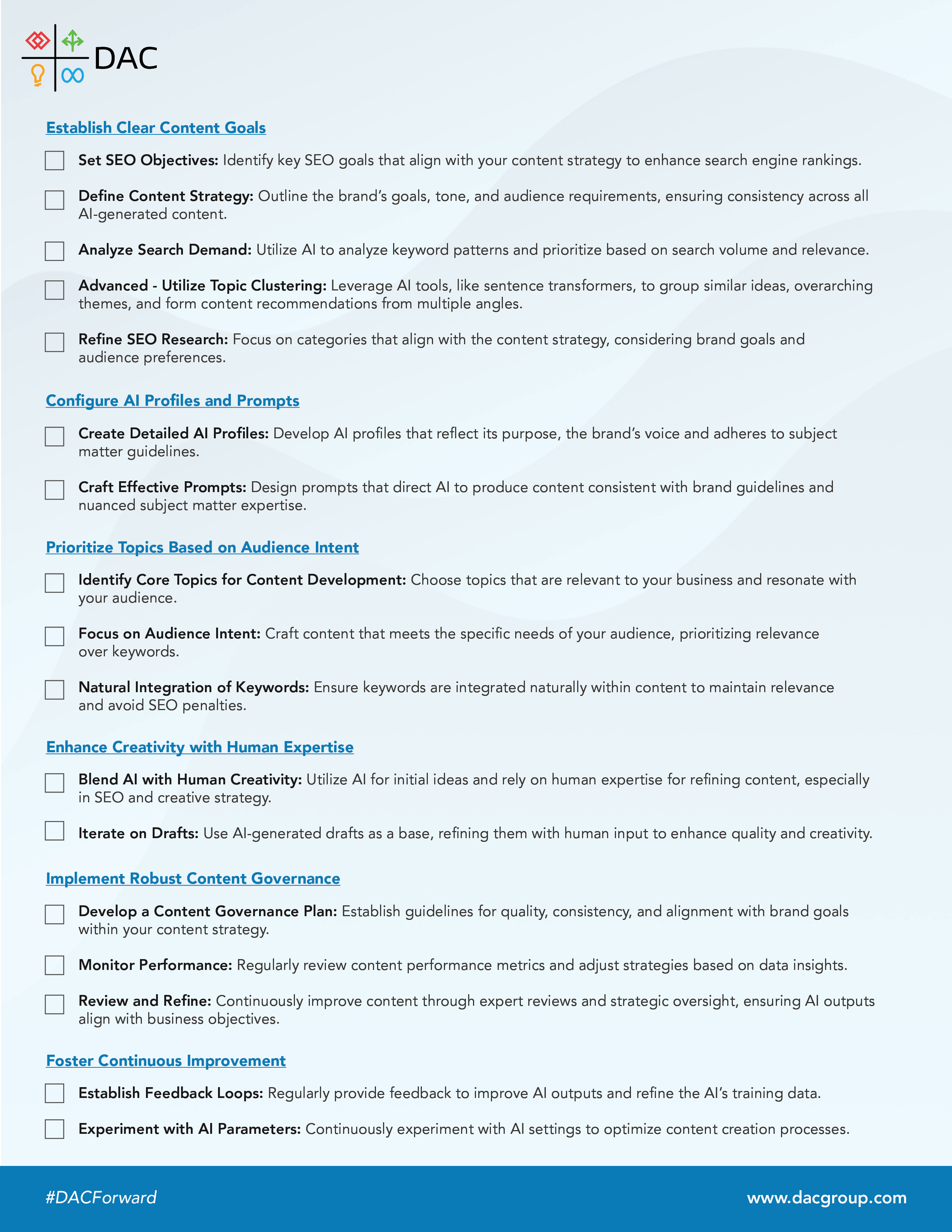
In this article, you’ll explore actionable strategies that combine AI’s rapid output with human creativity, enabling you to produce SEO-optimized content that truly connects with your target audiences. Then you can use the checklist below to create a process for AI in your SEO workflows.
Blending AI With Human Expertise In SEO
At its core, AI’s strength is its ability to process vast amounts of data quickly. When it comes to keyword and topic research, AI can analyze thousands of keywords in seconds, identifying patterns and uncovering trending themes. This capability empowers SEO experts to spot opportunities that might otherwise be missed and prioritize topics that are more likely to resonate with their audience.
For instance, AI can help in:
Analyzing large data sets to find keyword patterns.
Identifying popular topics and emerging trends through large-scale natural language processing (NLP).
Prioritizing topics based on search volume and relevance.
Yet human expertise remains indispensable in interpreting the data AI produces. AI might identify a keyword with high search volume, for instance, but only a human expert can determine if that keyword aligns with a brand’s message and audience’s intent.
With human analysts bringing critical thinking, contextual understanding, and the ability to interpret subtle nuances that AI might miss, this is a collaboration built to make data-driven decisions that strategically align with business goals.
For more sophisticated semantic analyses, you can leverage AI’s ability to perform advanced topic clustering. By utilizing models like sentence transformers, AI can understand and group similar ideas, helping SEO specialists identify overarching themes and subtopics—leading to the creation of comprehensive content recommendations that cover key topics from multiple angles, thus boosting SEO coverage and performance.
Leveraging AI For Strategic Content Ideation And Planning
AI’s ability to quickly generate content ideas makes it a powerful tool for content strategy. By feeding AI data on audience behavior, brand guidelines, and the aforementioned SEO trends and insights, you can produce a wealth of content ideas in a fraction of the time it would take manually. However, it’s important to view AI’s output as a starting point rather than a final product.
By layering AI into your content strategy processes, you can:
Rapidly generate a wide array of content ideas.
Use audience and SEO data to inform and enrich content ideation.
Brainstorm high volumes of original content angles.
Content strategists play a crucial role in fine-tuning these AI-generated ideas, directing content to make sure it aligns with a brand’s overall market strategy and audience expectations. This process may involve assessing AI suggestions—produced rapidly in an organized format—for their potential to meet business objectives, refining content briefs, and proposing content initiatives that integrate SEO opportunities identified earlier.
You can ensure a symbiotic, collaborative use of AI with the following approach to content ideation:
Strategy is also the bridge between SEO insights and creative execution to ensure that the resulting content recommendations are both data-informed and strategically sound. This step is essential to create content that resonates with your intended audiences while simultaneously fulfilling your business’s strategic goals.
Ensuring Quality And Consistency In AI-Generated Creative Content
Generative AI excels in speed, making it an invaluable tool for brainstorming ideas and generating serviceable first drafts. Even so, its outputs can be repetitive, unoriginal, inaccurate, and may lack the nuanced voice of a brand.
To mitigate these weaknesses, remember that generated content is only a starting point. Even when an AI model has been extensively trained and all the major kinks worked out, it’s not perfect. Human oversight and intervention are essential to refine the output for human audiences.
This is where copywriters and editors step in to finesse the content, applying edits to ensure it aligns with a brand’s tone and style. In addition to paraphrasing repetitive structures and adding the “human touch” throughout, refinements in this final step may include:
Reviewing for natural phrasing to ensure keywords are integrated smoothly.
Adjusting tone and vocabulary to capture the brand’s voice more accurately.
Correcting any factual errors, unsubstantiated claims, or AI hallucinations.
Enhancing engagement by making the content more audience-focused
This emerging process is beginning to transform copywriting as a discipline. Writers working with AI are likely to spend less time creating first drafts and more time editing, fine-tuning, and curating AI-generated content for human audiences. The result, in theory, is higher quality content produced far more rapidly than traditional methods.
To maximize the benefits of AI in content creation, it’s essential to establish a feedback loop that joins the dots between SEO, strategy, and creative. Content creators should regularly review AI outputs and provide feedback, helping the system improve over time by refining the AI’s training data, experimenting with its parameters, or even rethinking how AI is integrated into the content creation process. This culture of continuous refinement can enhance the quality of your AI-assisted content while minimizing its shortcomings.
The Future Of AI In Content Creation And SEO
Generative AI has already begun to revolutionize content creation, particularly for brands that have integrated it into well-structured content strategies supported by human expertise. By following the best practices outlined in this guide, you can leverage AI to produce SEO-optimized content that not only enhances your online presence but can help you carve out your position as a thought leader.
As you explore these strategies, consider how DAC can support your enterprise-level content needs with scalable AI-driven solutions. By blending the strengths of AI with the critical insights of human experts in SEO, content strategy, and creative copywriting, your business can create content that resonates with your audience, ranks well in search engines, and drives measurable results.
Study reveals Google’s cautious approach to AI-generated content in sensitive search results, varying across health, finance, legal, and political topics.
Google shows AI Overviews for 50% of YMYL topics, with legal queries triggering them most often.
Health and finance AI Overviews frequently include disclaimers urging users to consult professionals.
Google avoids generating AI Overviews for sensitive topics like mental health, elections, and specific medications.
How are common crawl data and AI Overviews related?
How does user intent change AI Overviews?
How do the top 20 positions break down for domains that rank in organic search and get cited in AIOs?
How Are Common Crawl Data And AI Overviews Related?
Common crawl inclusion doesn’t affect AIO visibility as much as sheer organic traffic.
Common Crawl, a non-profit that crawls the web and provides the data for free, is the largest data source of generative AI training.
Some sites, like Blogspot, contribute a lot more pages than others, raising the question of whether that gives them an edge in LLM answers.
Result: I wondered whether sites that provide more pages than others would also see more visibility in AI Overviews. That turned out not to be true.
I compared the top 500 domains by page contribution in Common Crawl to the top 30,000 domains in my dataset and found a weak correlation of 0.179.
The reason is that Google probably doesn’t rely on Common Crawl to train and inform AI Overviews but its own index.
Image Credit: Kevin Indig
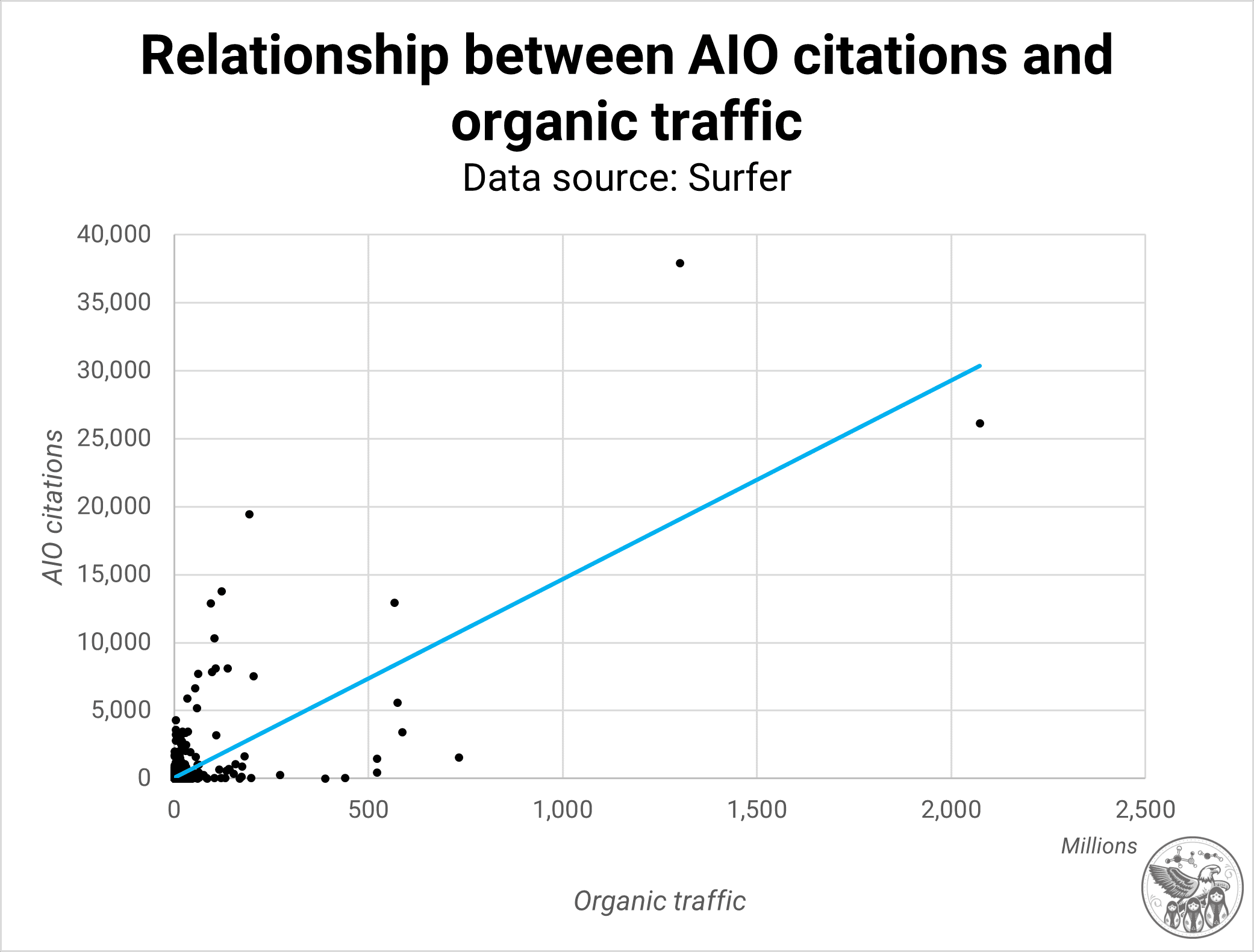
I then analyzed the relationship between the 3,000 top domains by organic traffic from Semrush and the top 30,000 domains in my dataset and found a strong relationship of 0.714.
In other words, domains that get a lot of organic traffic have a high likelihood of being very visible in AI Overviews.
AIO seems to increasingly reward what works in organic search, but some criteria are still very separate.
It’s important to call out that a few sites distort the relationship.
When filtering out Wikipedia and YouTube, the relationship goes down to a correlation of 0.485 – still strong but lower than with the two behemoths.
The correlation doesn’t change when taking out bigger sites, solidifying the point that doing things that work in organic search has a big impact on AI Overviews.
Ranking higher in the search results certainly increases the chances of being visible in AIOs, but it’s by far not the only factor.
As a result, companies can exclude Common Crawl’s bot in robots.txt if they don’t want to appear in public datasets (and gen AI like Chat GPT) and still be very visible in Google’s AI Overviews.
How Does User Intent Change AI Overviews?
User intent shapes the form and content of AIOs. In my previous analysis, I came to the conclusion that the exact query match barely matters:
The data shows that only 6% of AIOs contain the search query.
That number is slightly higher in SGE, at 7%, and lower in live AIOs, at 5.1%. As a result, meeting user intent in the content is much more important than we might have assumed. This should not come as a surprise since user intent has been a key ranking requirement in SEO for many years, but seeing the data is shocking.
Calculating exact (dominant) user intent for all 546,000 queries would be extremely compute-intense, so I looked at the common abstractions informational, local, and transactional.
Abstractions are less helpful when optimizing content, but they’re fine when looking at aggregate data.
I clustered:
Informational queries around question words like “what,” “why,” “when,” etc.
Transactional queries around terms like “buy,” “download,” “order,” etc.
Local queries around “nearby,” “close,” or “near me.”
Image Credit: Kevin Indig
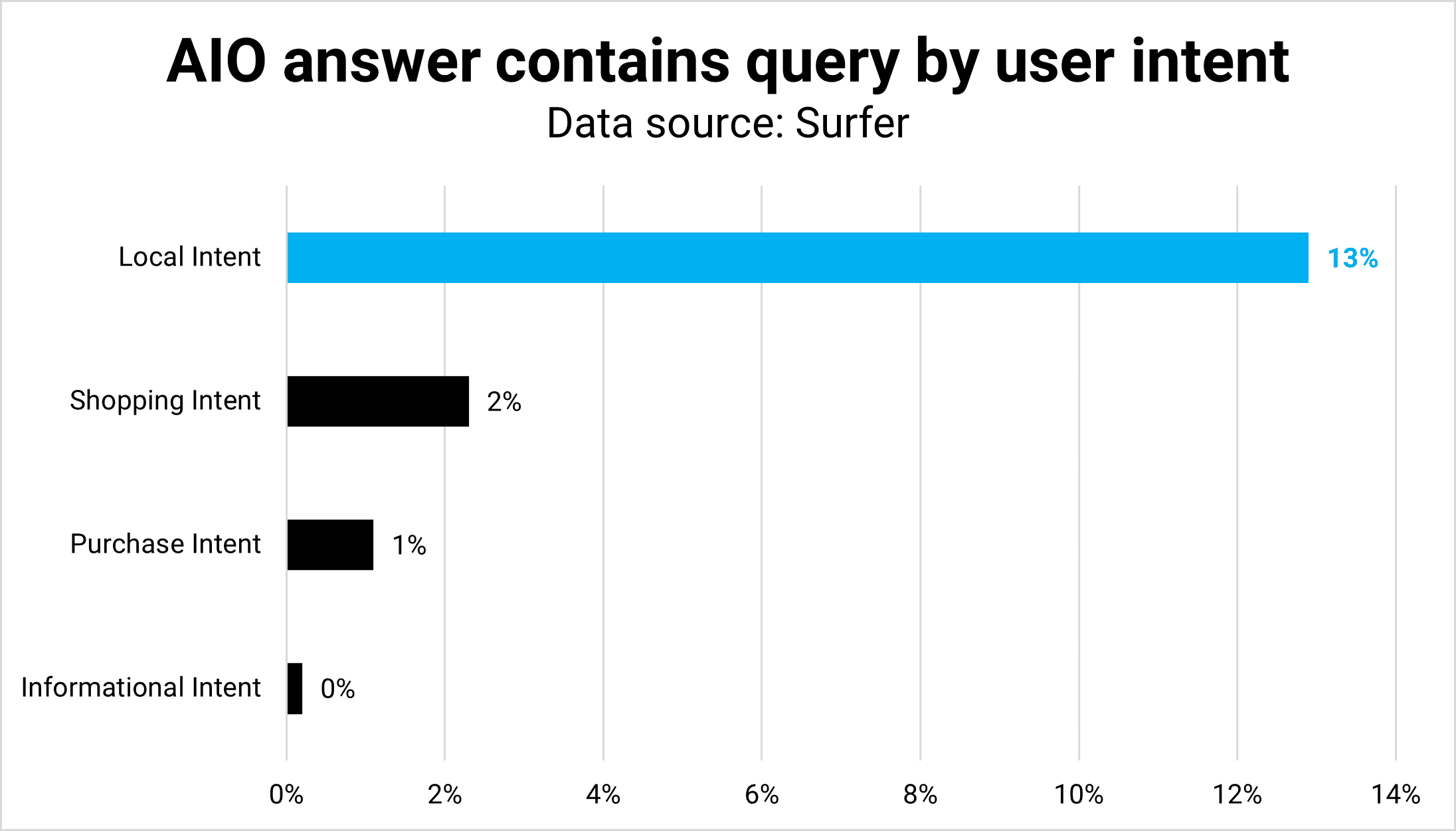
Result: User intent differences reflect in form and function. The average length (word count) is almost equal across all intents except for local, which makes sense because users want a list of locations instead of text.
Similarly, shopping AIOs are often lists of products with a bit of context unless they’re shopping-related questions.
Local queries have the highest amount of exact match overlap between query and answer; informational queries have the lowest.
Understanding and satisfying user intent for questions is harder but also more important to be visible in AIOs than, for example, Featured Snippets.
How Do The Top 20 Organic Positions Break Down?
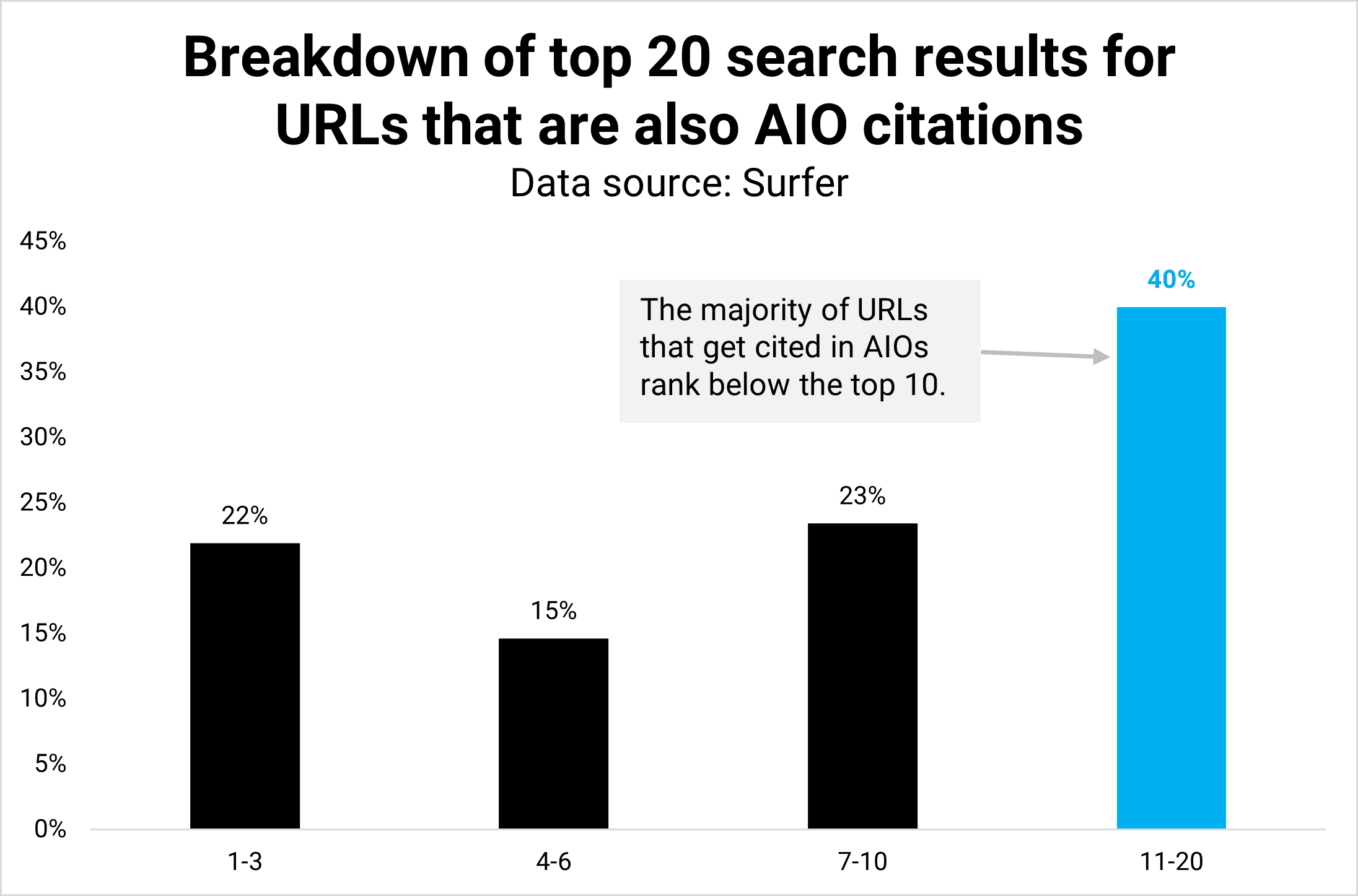
In my last analysis, I found that almost 60% of URLs that appear in AIOs and organic search results rank outside the top 20 positions.
For this Memo, I broke the top 20 further down to understand if AIOs are more likely to cite URLs in higher positions or not.
Image Credit: Kevin Indig
Result: It turns out 40% of URLs in AIOs rank in positions 11-20, and only half (21.9%) rank in the top 3.
The majority, 60% of URLs cited in AIOs, still rank on the first page of organic results, reinforcing the point that a higher organic rank tends to lead to a higher chance of being cited in AIOs.
However, the data also shows that it’s very much impossible to be present in AIOs with a lower organic rank.
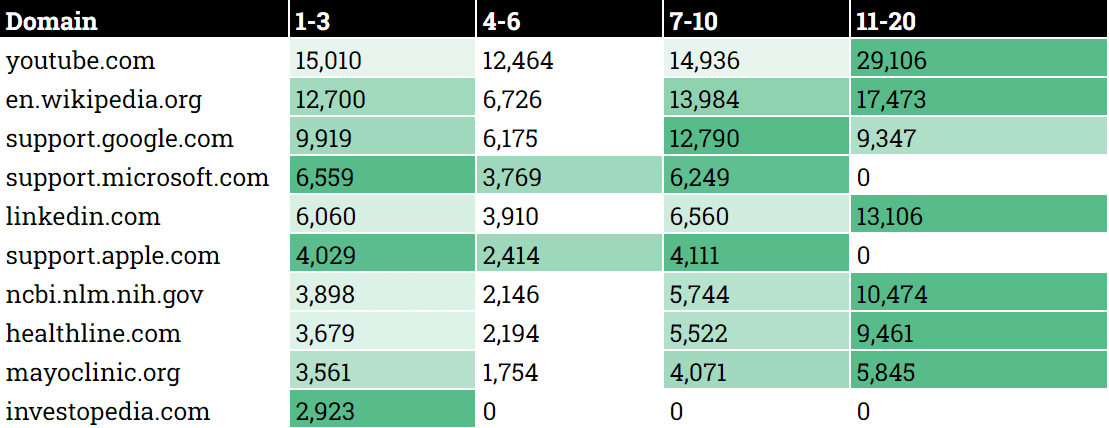
Where the top 20 domains that are visible in AIOs and search results rank (Image Credit: Kevin Indig)
Scenarios
I will work with my clients to match the AIO’s user intent, provide unique insights, and tailor the format. I see options for the progress of AI Overview that I will track and validate with data in the next months and years.
Option 1: AIOs rely more on top-ranking organic results and satisfy more informational intent before users need to click through to websites. The majority of clicks landing on sites would be from users considering or intending to buy.
Option 2: AIOs continue to provide answers from diversified results and leave a small chance that users still click through to top-ranking results, albeit in much smaller amounts.
Which scenario are you betting on?
Featured Image: Paulo Bobita/Search Engine Journal
OpenAI has unveiled its latest language model, “o1,” touting advancements in complex reasoning capabilities.
In an announcement, the company claimed its new o1 model can match human performance on math, programming, and scientific knowledge tests.
However, the true impact remains speculative.
Extraordinary Claims
According to OpenAI, o1 can score in the 89th percentile on competitive programming challenges hosted by Codeforces.
The company insists its model can perform at a level that would place it among the top 500 students nationally on the elite American Invitational Mathematics Examination (AIME).
Further, OpenAI states that o1 exceeds the average performance of human subject matter experts holding PhD credentials on a combined physics, chemistry, and biology benchmark exam.
These are extraordinary claims, and it’s important to remain skeptical until we see open scrutiny and real-world testing.
Reinforcement Learning
The purported breakthrough is o1’s reinforcement learning process, designed to teach the model to break down complex problems using an approach called the “chain of thought.”
By simulating human-like step-by-step logic, correcting mistakes, and adjusting strategies before outputting a final answer, OpenAI contends that o1 has developed superior reasoning skills compared to standard language models.
Implications
It’s unclear how o1’s claimed reasoning could enhance understanding of queries—or generation of responses—across math, coding, science, and other technical topics.
From an SEO perspective, anything that improves content interpretation and the ability to answer queries directly could be impactful. However, it’s wise to be cautious until we see objective third-party testing.
OpenAI must move beyond benchmark browbeating and provide objective, reproducible evidence to support its claims. Adding o1’s capabilities to ChatGPT in planned real-world pilots should help showcase realistic use cases.
For better or worse, AI has become a dominant force in SEO.
SEO professionals have been grappling with AI for years in Google’s algorithms, but the technology has moved to the forefront of digital marketing. The largest tech companies are developing the technology quickly and pushing products out to customers, trying to stay ahead of the curve.
This has resulted in several AI and generative AI releases, including LLM chatbots, chatbot integrations into search platforms, and AI-based search and research products.
AI threatens to be one of the most disruptive forces in SEO and digital marketing.
SEJ’s latest ebook explores the recent history of AI and developments in the search and marketing industries. It also provides guides and expert advice on building AI into your strategy and workflows.
To compete in search environments built on AI algorithms and with user-facing generative AI features, SEO professionals must learn how the technology works. You need to know how to interact with AI on several fronts:
Optimizing for AI-powered search algorithms.
Building keyword and search strategies that take generative AI search features into account.
Employing AI tools to help improve productivity.
Understanding where AI needs human guidance and what tasks should not be delegated to it.
Differentiating your brand and content from competitors where AI tools have lowered the cost and barriers to marketing at scale.
Creating best practices that define your stance on and relationship to AI and generative AI will position you to succeed as the technology continues to develop and as user trends continue to change.
Look Back On AI Development To Predict Future Trends
Google spent many months rolling out AI products gradually, testing as it went. To understand how AI development will continue impacting SEO, study recent developments and releases, such as how Google has been changing SERP features and algorithms.
See where AI fits into these developments to predict how search might change.
The ebook collects almost a year of SEJ’s coverage of events in the industry and updates from Google, from product testing and releases to public reactions and studies about impact.
One key point is Google’s development of on-SERP features that give users answers without clicking through to a website. These features, including generative AI answers, can make it much more difficult to acquire traffic from certain queries.
That doesn’t mean you can’t make use of these queries, but it’s imperative that you correctly identify user intent for your target queries and build strategies specifically for acquiring SERP features.
SEO Professionals Must Focus On Authority, Brand, And Trust
While disruptive, new user interactions with AI present opportunities. Becoming a cited source can be a great way to power brand awareness. However, trust is also at a premium if you want to keep users’ attention and earn conversions.
Building your content and information architecture with AI in mind can help you stand out in multiple touchpoints of a user’s journey.
Understanding where you must differentiate yourself from automated marketing and build humanity into your brand is now a powerful way to stand out in the minds of users. Building content with AI-friendly organization but human-focused insights helps you serve the right audiences at the right time.
The ebook collects insights from SEJ contributors focused on how building AI into your content strategy goes beyond using it to create for you.
Effectively incorporating generative AI into your workflows requires that you understand how it works and what it’s good at.
You can use generative AI tools to build connections between ideas and words quickly, to parse a lot of data to find commonalities, and to draft and expand ideas, among many other things.
Generative AI can make some tasks much faster, but accuracy will always be an issue, so it’s best when the tasks involve redundancy or human checks.
For example, you could use generative AI to assist with internal linking. It’s ideal for quickly evaluating the pages of a website and suggesting semantic connections between pages. Then, a human can review for accuracy and execute the links that make sense.
We collected some of the best examples of how generative AI tools can improve human workflows in the SEO In The Age Of AI Ebook.
To learn about all this and more, download your copy of SEO In The Age Of AI.
Since its U.S. launch in May, Google’s AI Overviews feature has created controversy among news publishers.
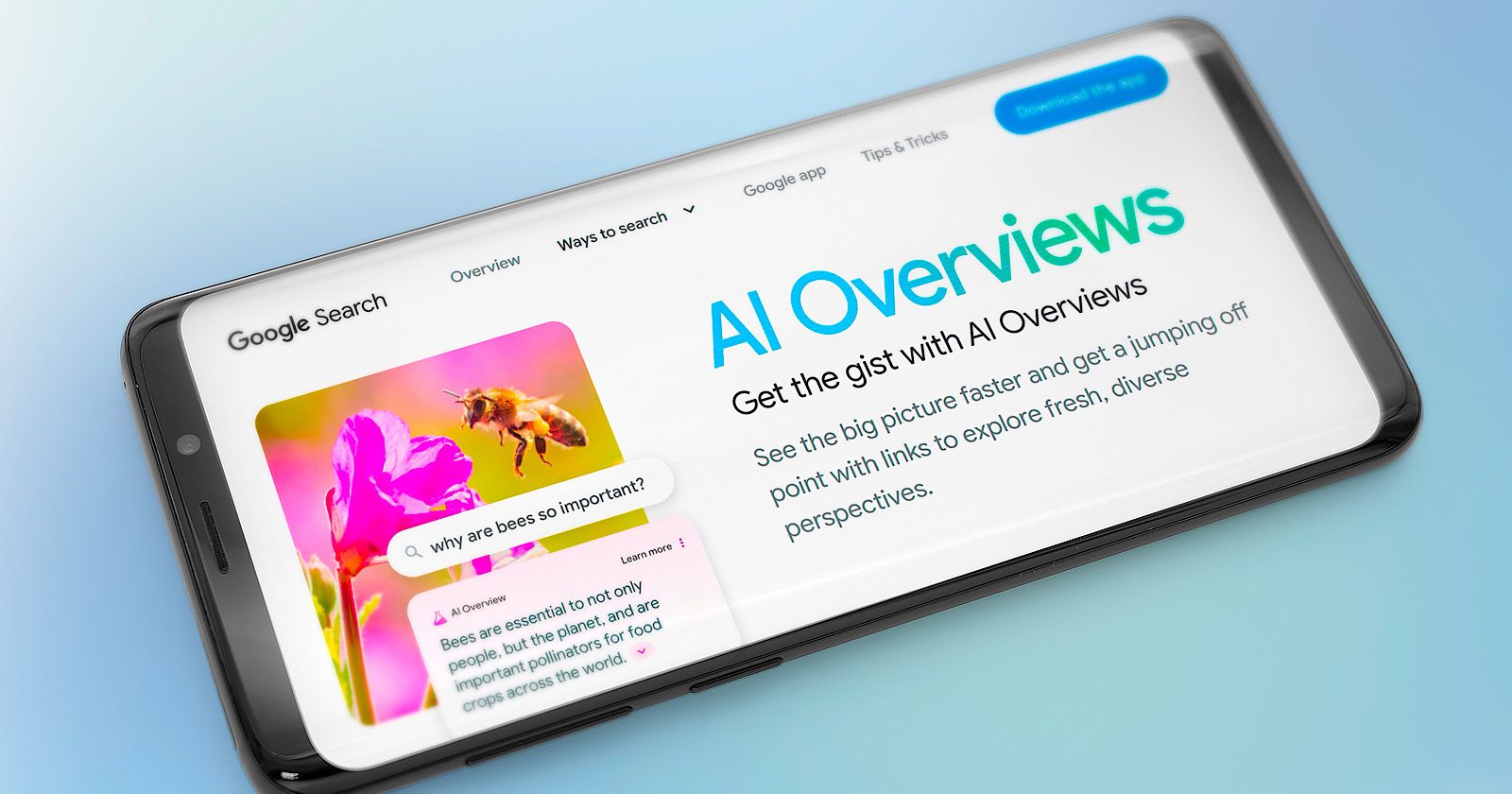
The generative search tool attempts to directly answer queries by synthesizing information from web sources into AI-generated overviews.
While offering users a new level of convenience, AI Overviews has been criticized for factual inaccuracies, lack of transparency in sourcing content, and disincentivizing clicks to original articles.
Despite an initial scale-back, Google has doubled down – releasing Overviews in six more countries and additional languages in August.
Background on AI Overviews
Google introduced AI Overviews as an experimental opt-in feature that has since been rolled out to general search results.
Instead of listing links to webpages, AI Overviews aim to provide a complete answer using natural language.
Many publishers are concerned that AI Overviews could cannibalize their organic search traffic by satisfying user queries without requiring a click-through.
There are also complaints that Google is repackaging and republishing content without attribution or revenue sharing.
Audience Directors Speak Out
In interviews with the Nieman Journalism Lab at Harvard, seven leading audience strategy experts shared their perspectives on adapting to the AI Overviews disruption.
Veronica de Souza of New York Public Radio emphasized reducing reliance on Google by building direct audience relationships through owned channels like apps and newsletters.
Souza states:
“We’ve doubled down on converting people to our O&O (owned-and-operated) platforms like our app and newsletters…More transparency about which categories of search queries surface AI Overviews would be a good start.”
Washington Post’s Bryan Flaherty raised concerns about misinformation risks and lack of performance data insights from Google.
Flaherty states:
“If Google loses users due to the quality issues in its results and AI Overviews, users could continue to turn to non-traditional search platforms that don’t have as direct a tie back to sites, like YouTube and TikTok, which will have an impact on traffic.”
Vermont Public’s Mike Dougherty pointed out the lack of clear citations to original sources in Overviews.
Dougherty states:
“This product could so easily put clickable citations into or above the text. It could even write, ‘According to [publisher],…’ the way one news outlet might credit another.”
Scott Brodbeck of Local News Now remained optimistic that quality journalism can outcompete brief AI summaries.
Brodbeck states:
“If you as a news publisher cannot out-compete a brief AI-written summary, I think you have a big problem that’s not just being caused by Google and AI.”
Marat Gaziev of IGN advocated for deeper symbiosis between Google and reputable information providers to uphold accuracy standards.
Gaziev states:
“RAG requires a deep and symbiotic relationship with content publishers and the media industry to ensure that only credible sources are utilized during retrieval and augmentation.”
YESEO founder Ryan Restivo warned about potential carbon impacts from the heavy computing power required at scale.
Restivo states:
“The biggest problem, in my opinion, is the competition entering this space…The amount of compute needed to produce these at scale is hurting our environment.”
LA Times’ Seth Liss speculated Google may eventually prioritize generating answers over linking to external sites.
Liss states:
“If Google decides its best way forward is to keep all of those readers on its own site, there will be a lot of sites that have to figure out other ways to find new audiences.”
Measured Optimism
While most publishers interviewed by Nieman Journalism Lab expressed reservations, some took a more optimistic view.
The consensus is that high-quality, in-depth journalism will draw readers to visit publisher websites for full context beyond a brief AI summary.
There’s also hope that Google will find mutually beneficial ways to incorporate publisher content without usurping it entirely.
The Path Forward
As the search evolves, publishers are exploring strategies to adapt – from re-investing in email newsletters and mobile apps to developing AI-focused SEO best practices.
The debate highlights a challenge all publishers share – how to remain discoverable and generate traffic/revenue when search engines can directly answer queries themselves.
The rise of generative AI has opened up a world of possibilities for agencies and small businesses, but with so many tools available, it can be challenging to determine which ones will truly drive results.
How do you choose the right AI products to elevate your business and ensure a strong return on investment?
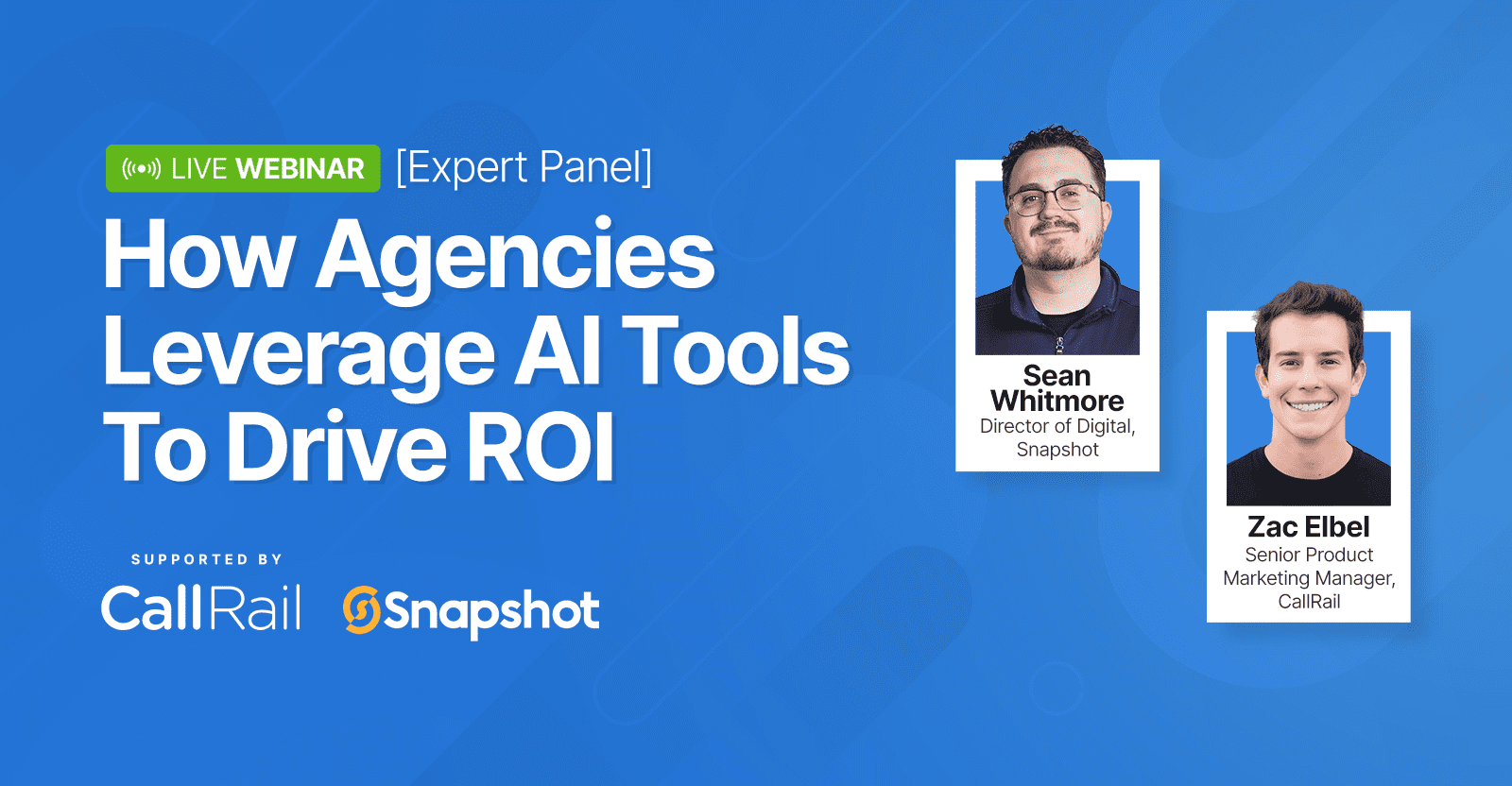
On September 11th, join us for an expert panel discussion where we’ll cut through the noise and highlight the AI tools that can genuinely make a difference in your performance.
Whether you’re looking to enhance your SEO, boost your paid channels, or streamline your overall marketing efforts, this session is designed to provide you with actionable insights and practical strategies.
Register for this webinar, where you’ll hear from Zac Elbel, Senior Product Marketing Manager at CallRail, and Sean Whitmore, Director of Digital at Snapshot Interactive. Together, they’ll break down the reasons that AI is essential for your business’s success.
They’ll share real-life examples from Snapshot Interactive, demonstrating how they’ve integrated AI into their daily operations to optimize both organic and paid channels, improve client outcomes, and ultimately increase ROI. By adopting similar approaches, you can reach new levels of efficiency and prove your agency’s value to clients.
One of the highlights of the session will be a detailed look at CallRail’s innovative AI products. You’ll learn how these tools can be utilized to simplify workflows, drive revenue, and position your business for long-term success.
From AI-driven insights to automation, we’ll explore how to implement these technologies to get real results.
What You’ll Learn:
Why AI is critical for your business and how to implement it effectively.
Real-world examples of AI in action including its impact on organic and paid channels.
How to utilize CallRail’s AI products to deliver superior results.
Following the presentation, there will be a LIVE Q&A session where you can ask all your AI-related questions. This is your opportunity to gain personalized advice from industry experts who have successfully integrated AI into their operations, so save your seat!
If you’re serious about staying ahead of the curve and driving meaningful results for your clients, this is one webinar you can’t afford to miss.