Most brands don’t know they’re wasting money on branded ads. Are you one of them?
What if your Google Ads strategy is quietly draining your budget? Many advertisers are paying high CPCs even when there’s no real competition. It’s often because they’re unknowingly bidding against themselves.
Join BrandPilot AI on July 17, 2025 for a live session with Jenn Paterson and John Beresford, as they explain The Uncontested Paid Search Problem and how to stop it before it eats into your performance.
In this data-backed session, you’ll learn:
Why CPCs rise even without competitor bidding
How to detect branded ad waste in your own account
What this hidden flaw is costing your brand
Tactical strategies to reclaim lost budget and improve your results
Why this matters:
Brands are overspending on Google Ads without knowing the real reason. If you’re running branded search campaigns, this session will show you how to identify and fix what’s costing you the most.
Register today to protect your spend and improve performance. If you can’t attend live, sign up anyway and we’ll send you the full recording after the event.
The good news: Google Ads isn’t broken in B2B; it’s just being used wrong.
The platform works brilliantly for consumer brands because their strategies align with consumer behavior, but B2B operates in an entirely different universe with complex buying journeys involving multiple stakeholders.
This guide will help you modify Google Ads to perform better for B2B paid marketing campaigns.
Issue 1: AI Automation Optimizes For The Wrong B2B Objectives
Google’s AI-powered automation creates the biggest challenge for you at this time.
Why? The actions that signal customer engagement for Google Ads do not align with how B2B shoppers behave, leading to incorrect AI analysis of and actions taken on B2B ad success.
For example:
Performance Max campaigns optimize for volume conversions rather than quality opportunities, resulting in a doubling of lead volume while halving lead quality.
Google Smart Bidding tends to attract users who are likely to take lightweight actions, such as downloads or sign-ups; these actions are unlikely to result in qualified B2B buyers, leading to low-value conversions and wasted spend.
How To Fix Google Ad AI’s Misalignment For B2B PPC
Phase 1: Implement Strategic AI Controls
Disable automatic audience expansion in Search campaigns to maintain targeting precision.
Use Target ROAS instead of Target CPA, setting values based on actual customer lifetime value.
Insights are available from day one, and campaigns can be optimized manually or with AI. Plus, with seamless Google Ads integration and automated multilingual message diversification at scale, Vehnta lets you go to market faster and more effectively.
What You Get
Faster launch cycles.
More qualified leads.
Better performance.
Scalable impact. without the usual manual overhead.
Campaigns are built on intelligent targeting and high-quality inputs, so optimization starts smart and improves from there.
The Result
Reduced wasted budget on low-value conversions like downloads or sign-ups.
Issue 2: Generic Targeting Wastes Budget On Wrong Audiences
Most B2B campaigns tend to target broad demographics rather than specific firmographics, resulting in wasted spend on prospects that are a poor fit.
Traditional metrics create a “metrics mirage” where campaigns focused on clicks draw unqualified leads instead of high-intent decision-makers.
Additionally, broad messaging often fails to resonate across diverse markets, whereas precise targeting is effective at scale.
One multinational retailer with 500+ locations across four countries cut costs by60% and tripled engagement by implementing hyper-local, multilingual campaigns tailored to specific regions.
How To Fix PPC Ad Targeting Waste
Phase 1: Implement Firmographic Precision
Phase 2: Configure Account-Level Monitoring
Set up cross-domain tracking to monitor multiple touchpoints from the same organization.
Use UTM parameters with company identifiers to track organizational buying patterns.
Create audiences based on account-level engagement patterns.
The Easy Way
Vehnta’s Similarity engine leverages a 500M+ company database to identify prospects that match your best customers with surgical precision.
Simply:
Insert one or more existing customers or your Ideal Customer Profile (ICP) into the Similarity Engine.
The Similarty Engine analyzes economic data, industry sectors, and semantic relevance to find similar companies.
This approach makes targeting 10x faster than manual audience research.
Additionally, it provides precision that extends far beyond basic lookalike audiences.
Then, the Search Terms feature provides full visibility into searches performed by your target audience, organized by company and location for actionable insights.
What You Get
A radically faster, more precise way to build high-value target lists.
Prospect lists that closely mirror your best customers, aligned to your ICP from day one.
Full visibility into the actual search behavior of those companies.
The Result
Smarter segmentation.
Faster activation.
Better-performing campaigns fueled by insight, not assumptions.
Issue 3: Marketing/Sales Alignment Problems
B2C metrics fail to capture the complexity of B2B interactions, resulting in a fundamental disconnect between marketing activities and sales outcomes.
Most B2B marketing teams operate under the myth that success requires high lead volumes, but this creates qualification bottlenecks since most B2B sales teams can effectively pursue only a few qualified opportunities simultaneously.
This quality-over-quantity approach delivers results: an enterprise SaaS provider targeting only $1B+ companies achieved 70% cost reduction and 3x engagement by focusing on ultra-precise targeting aligned with sales capacity.
Steps to Fix Marketing/Sales Misalignment
Align Campaigns with Sales Capacity
Calculate your sales team’s true capacity for working on qualified opportunities.
Set monthly lead generation goals that align with sales capacity, rather than arbitrary growth targets.
Develop lead scoring systems that qualify prospects before they reach the sales team.
Implement progressive profiling to gather firmographic information during conversion.
Optimize for Opportunity Quality
The Easy Way
Vehnta’s Insight Collection provides real-time business intelligence that automatically qualifies prospects, focusing on high-quality opportunities from pre-qualified target companies instead of generating hundreds of unqualified leads monthly.
The VisionSphere function provides a ranked list of companies most interested in your business, calculated by proprietary algorithms reflecting genuine buying interest.
What You Get
Consistently higher-quality pipeline, driven by real-time insight into which companies actually show buying intent.
Focused efforts on prospects that are already aligned with your offering.
A ranked view of interested accounts.
Clarity on where to prioritize and when to engage.
More efficient sales motions.
Stronger conversion rates.
Faster deal velocity.
All the intelligence you need, without the noise.
Issue 4: Scalability Of ABM Approaches
The challenge of scaling Account-Based Marketing through Google Ads lies in managing hundreds of target accounts while maintaining surgical precision.
Traditional ABM approaches require significant manual effort and dedicated specialists, making it difficult to achieve scale without compromising quality.
However, this complexity can be overcome: a global manufacturer targeting 4,000+ plant locations reduced spend from $160K to $40K while generating 2.5x more qualified leads through automated ABM systems.
How To Fix Account-Based Marketing (ABM) Scalability
Phase 1: Implement Automated Account Intelligence
Use advanced similarity algorithms to identify high-value prospects matching your best customers.
Automate audience research and list-building processes that typically consume weeks of specialist time.
Deploy AI-powered campaign creation that generates optimized targeting in minutes.
Set up automated monitoring across hundreds of target accounts without additional team members.
Phase 2 Create Scalable Precision Systems
Build campaigns that automatically diversify messaging across multiple languages.
Implement systems providing full visibility into search behavior across target companies.
Use proprietary algorithms to rank companies by genuine buying interest.
Deploy real-time optimization eliminating manual analysis while maintaining quality.
The Easy Way
Vehnta accelerates campaign execution through a truly scalable ABM approach, enabling accurate targeting and real-time performance tracking across your entire B2B account list.
Integrated AI Campaign Generation allows marketers to generate highly relevant, B2B-tailored campaigns in minutes, not days, while minimizing budget waste on low-intent traffic. From day one, teams gain access to actionable insights and can fine-tune performance manually or through automated optimization.
Thanks to seamless Google Ads integration and automated multilingual message diversification at scale, Vehnta eliminates the operational friction that often stalls ABM at the execution phase.
What you get: ABM that finally matches the speed and scale of your growth ambitions, without the typical overhead. Campaigns go live faster, reach the right accounts with precision, and continuously improve through data-driven optimization. Marketing teams save time, reduce costs, and drive more qualified pipeline, while maintaining control and strategic clarity. The complexity is gone; the impact remains.
The Strategic Transformation: From Volume to Value
The transformation from failing to succeeding with B2B Google Ads requires fundamentally rethinking how paid search fits into complex, multi-stakeholder B2B sales processes. Companies achieving breakthrough results abandon volume-based B2C tactics for precision-focused, account-based strategies that create budget efficiency and market dominance within targeted segments.
The competitive opportunity is significant: while competitors chase high-volume keywords and vanity metrics, strategic B2B marketers focus on qualified accounts and pipeline impact using advanced targeting intelligence and automated optimization systems.
Ready to transform your B2B Google Ads approach?
Discover how Vehnta works and achieve precision at scale—cut costs, improve targeting, and align every campaign with how your customers actually buy.
Paid media is often treated like a checklist item in a marketing plan: launch a few search ads, run a Meta campaign, maybe test YouTube if there’s budget left.
But not all paid media is created equal, and treating every channel the same is a fast way to burn through budget with little to show for it.
Whether you’re working in-house or managing campaigns for clients, understanding the different types of paid media (and what each one is actually good for) can help you prioritize the right tactics, set realistic expectations, and answer the dreaded question: “What are we getting out of this?”
This article breaks down the main types of paid media with real-world examples so you can make smarter decisions about where to spend your money.
What Is Paid Media?
Paid media is any type of marketing where you pay to get in front of your audience. That includes things like search ads, social ads, display banners, video pre-roll, and even influencer sponsorships.
While paid media is often used interchangeably with the term cost-per-click (CPC), it’s important to note the differentiation.
It’s the part of your marketing strategy that gives you scale and control. You’re not waiting for someone to discover your blog post or share your Instagram reel organically.
You’re putting money behind your message to drive attention right now.
Paid media works best when it’s tied to a clear goal, like driving leads, sales, or downloads. Without a strategy, it’s just noise with a price tag.
The Difference Between Earned, Owned, And Paid Media
Think of paid, owned, and earned media as different ways to get your message out. You need a mix of all three, but each serves a different purpose.
Paid media is when you pay for attention. Think of tactics like search ads, social ads, sponsored posts, affiliate placements, etc.
Owned media is what you control. Think of assets like your website, blog, email list, and social channels.
Earned media is what others say about you. This often comes in the form of reviews, PR coverage, social shares, and more.
Some examples of earned media include:
Social sharing from customers.
Customer reviews.
External media coverage (public relations).
Owned media examples include:
The overlap matters, too. A paid campaign might drive traffic to a landing page (owned media), which then gets shared by a happy customer (earned media). When these channels work together, your efforts go further.
Types Of Paid Media Channels
Now that we’ve identified the definition of paid media, let’s take a look at the different types of paid media channels and the purposes they serve.
Before we dive into the different paid media channels, it’s also important to note the difference between ad formats and ad channels.
Ad formats are the type of ads shown in a particular channel. An ad format example could be:
So, while ad formats are important and will depend on the channel, below we will focus on the channels themselves.
There are other types of paid media channels available that are not listed here, such as more traditional methods like direct mail or billboards. These paid media channels have a more physical presence.
Here, we will focus on digital channels.
Paid Search
Paid search puts your ads at the top of search results for specific keywords. It’s often the first paid channel marketers try because it targets people already looking for what you offer.
Platforms like Google Ads and Microsoft Ads let you bid on search terms so your ad shows when someone types in something relevant.
It’s high-intent, measurable, and scalable. But, it’s also competitive, especially in industries like legal, finance, or ecommerce.
Success here depends on more than just bidding. Your landing page, ad copy, keyword match types, and conversion tracking all matter. You’re not just paying for clicks – you’re paying for the opportunity to convert interest into action.
Paid Social
Paid social platforms let you reach people based on who they are, not just what they search.
Many of the platforms offer detailed targeting based on demographics, interests, behaviors, and even job titles.
Some of the most common paid social platforms include:
The most common ad format in social channels is placed within a user’s newsfeed as they scroll. These ads will either consist of one (or more) static images or a video as the main visual.
It’s not just about brand awareness. Many brands use social to drive signups, sales, or downloads. You can run video ads, carousels, static images, or Stories, depending on what fits your brand and goal.
Some paid social platforms are more beneficial for B2B companies than for B2C brands.
For example, LinkedIn advertising consists mainly of B2B brands marketing their product or service to other professionals.
Other platforms like TikTok and Snapchat may be better suited for B2C or ecommerce brands.
The tricky part? Creative fatigue is real.
If you’re not refreshing your assets often or testing different hooks, performance will drop fast. Social ads require constant iteration, but the upside is speed: you can test ideas and get feedback quickly.
Programmatic & Display
Display advertising is what most people think of as “banner ads.” These are the visual ads you see on news sites, blogs, or apps, usually managed through platforms like the Google Display Network or programmatic buying platforms.
The upside is scale. You can reach millions of people across the web without relying on social platforms. The downside? Banner blindness is real. If your creative isn’t compelling, people will scroll right past.
That’s why display works best for remarketing or supporting a broader campaign. Use it to stay top of mind, promote limited-time offers, or drive awareness ahead of a product launch. Just don’t expect cold traffic to convert on the first click.
Affiliate Marketing
Affiliate marketing is a way to scale your reach by letting others promote your product for you. You only pay when they drive a sale or lead, which makes it one of the lowest-risk paid media options available.
This model works especially well in industries like fashion, tech, travel, and finance, where bloggers, influencers, or content sites already have built-in audiences.
The key to making affiliate work? Vet your partners. A bunch of low-quality traffic from coupon sites won’t move the needle.
Look for affiliates who create content, have authority, or drive meaningful referral traffic.
And keep an eye on attribution. Affiliate-driven sales often overlap with other paid efforts, so tracking needs to be tight.
Examples Of Paid Media
This is where the ad formats are married to the paid media channels.
Below are examples of paid media ads from the popular channels listed above. These examples can help provide context when deciding what types of paid media to run.
Search Examples
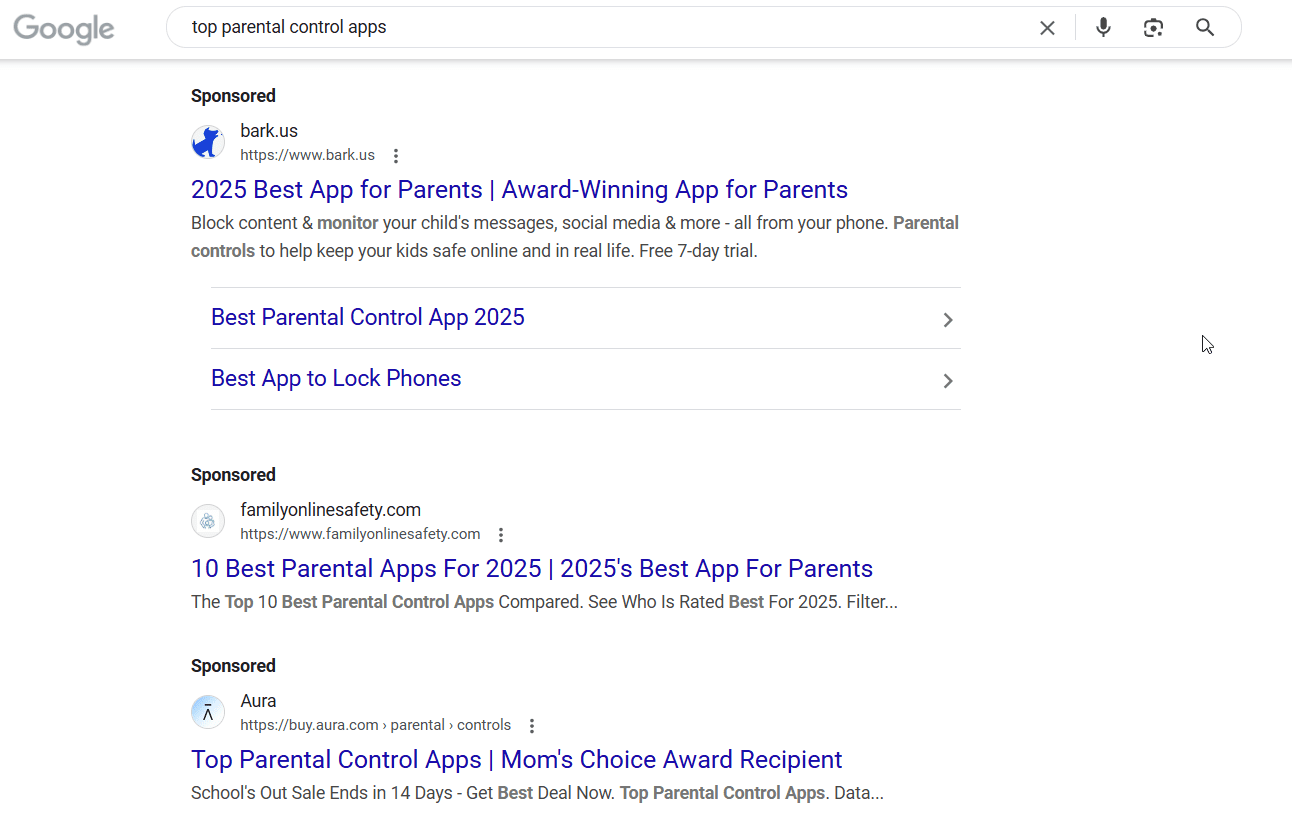
When searching for [top parental control apps] in Google, the first three positions are examples of search ads.
Screenshot from Google search for [top parental control apps], Google, May 2025
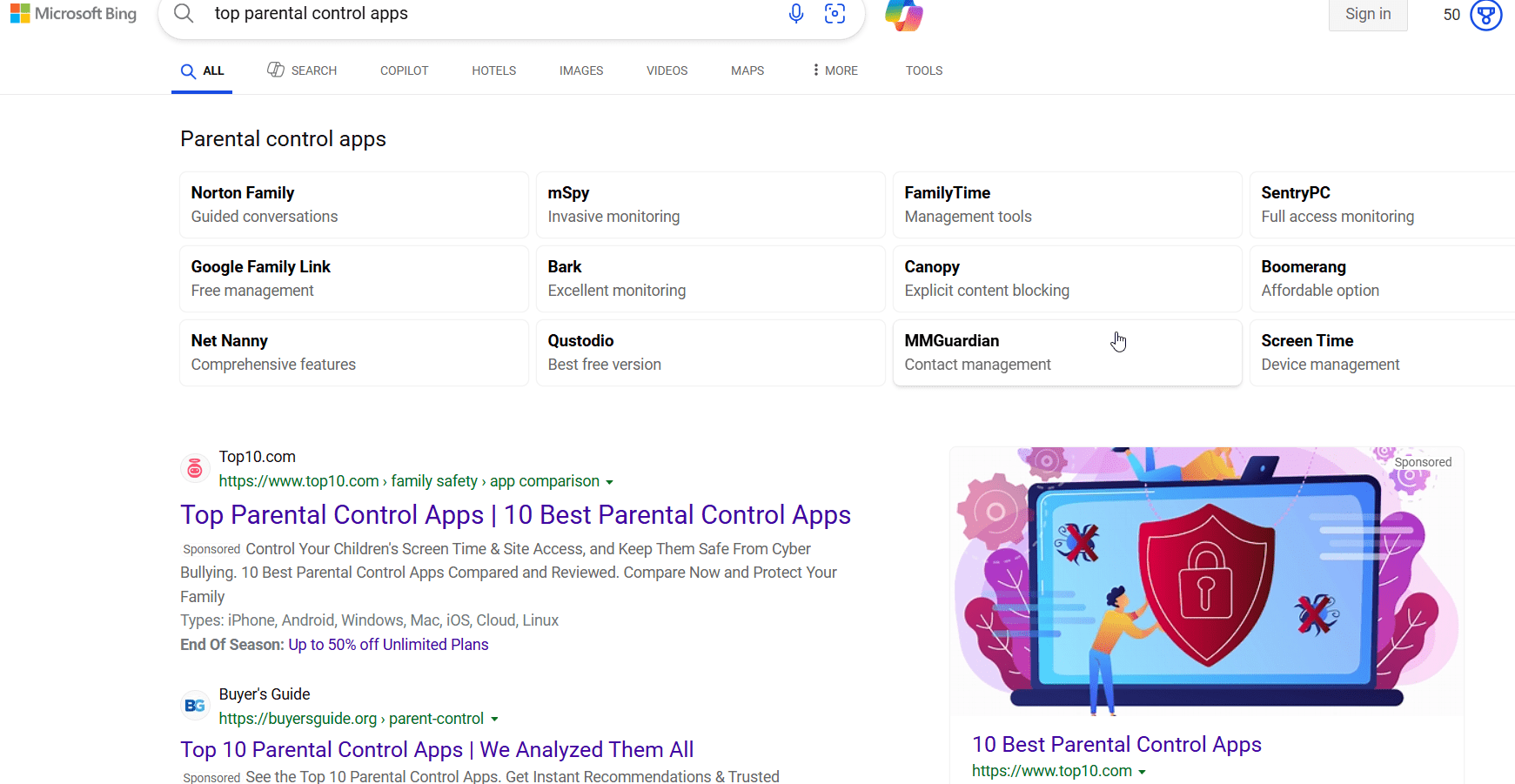
While conducting the same search on Microsoft Bing, the ads look slightly different.
There’s even a section above the sponsored ads showcasing different brands and a brief description about what they do.
Screenshot from Bing search for [top parental control apps], Microsoft Bing, May 2025
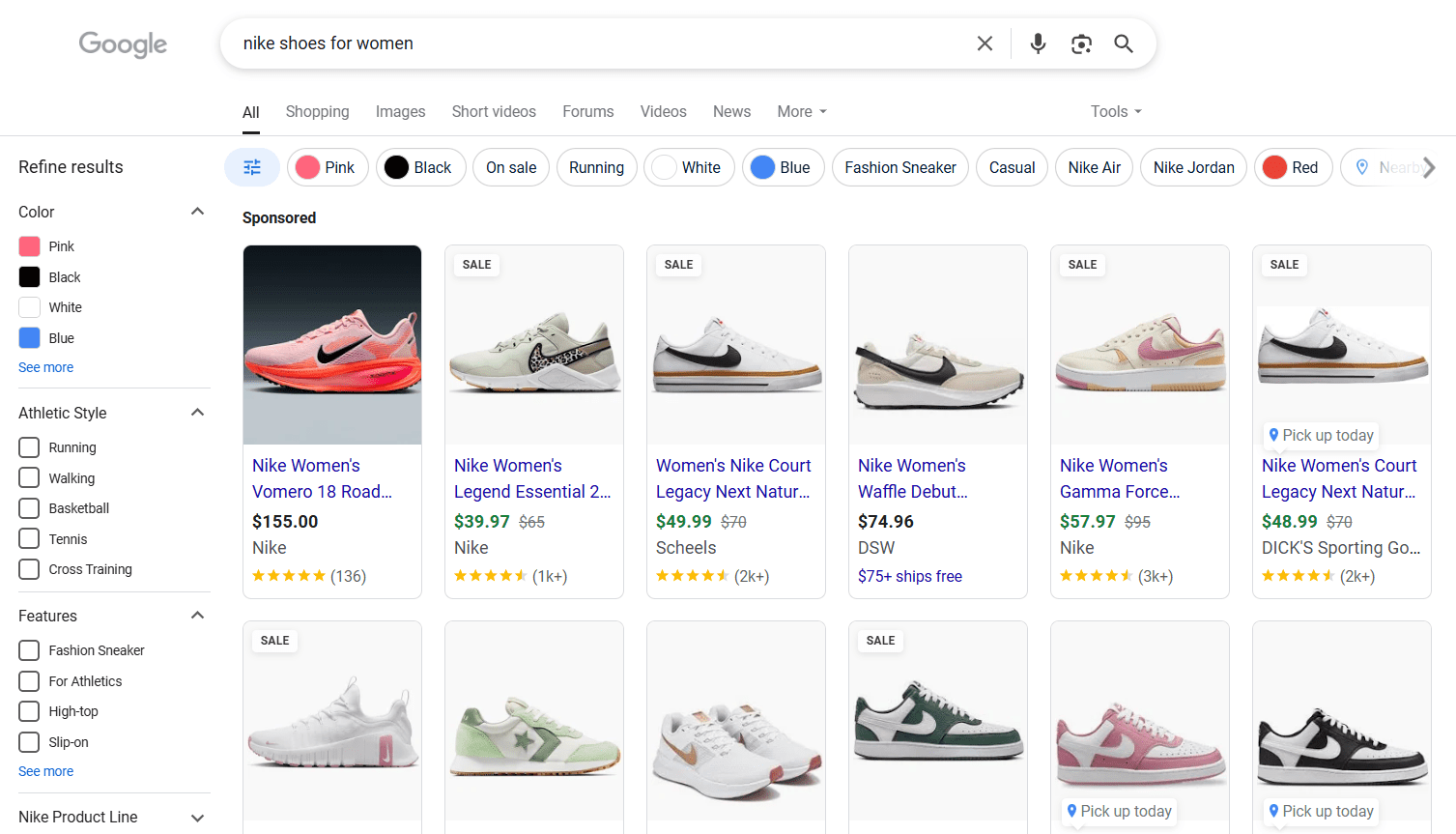
When searching for a product like [nike shoes for women], the ads below are a shopping ad format.
Screenshot from Google search for [nike shoes for women], Google, May 2025
Paid Social Examples
Each social platform’s ad formats look different within their respective newsfeeds.
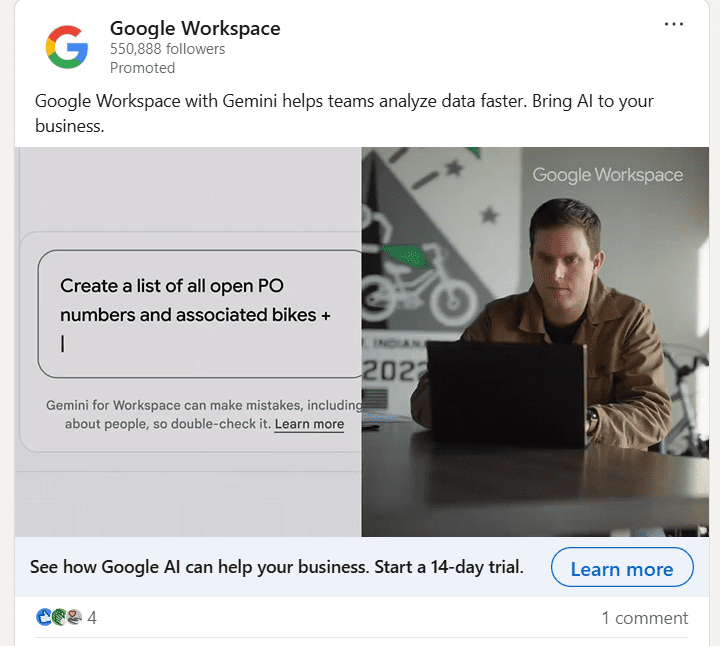
Here is a LinkedIn newsfeed example:
Screenshot from author’s LinkedIn newsfeed, desktop ad, May 2025
A Facebook ad newsfeed example:
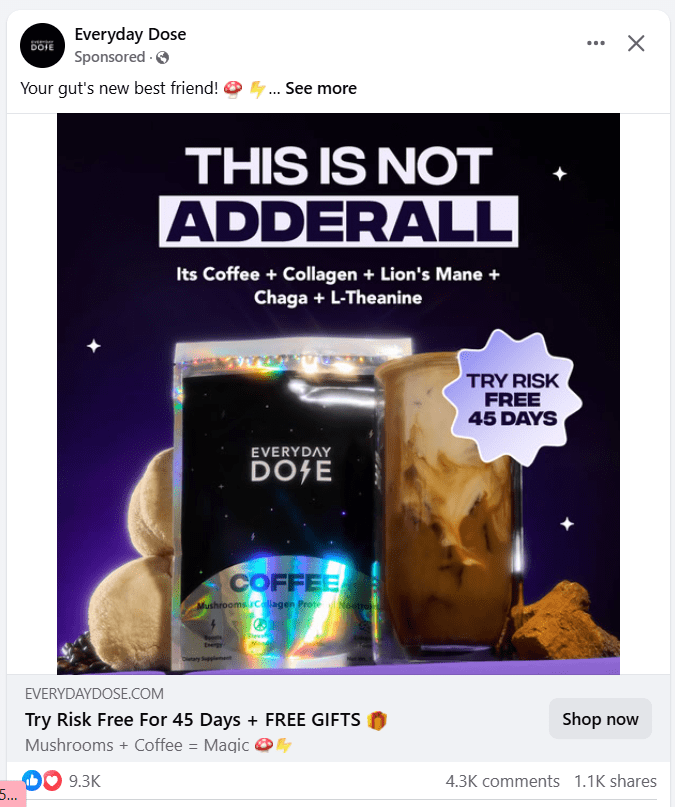
Screenshot from author’s Facebook newsfeed, desktop ad, May 2025
Instagram also offers ads in its “Stories” placement. An example from Fountainhead is below:
Screenshot from author’s Instagram Stories feed, Stories ad, May 2025
Display Examples
Display ads can be in all shapes and sizes, depending on the website or app.
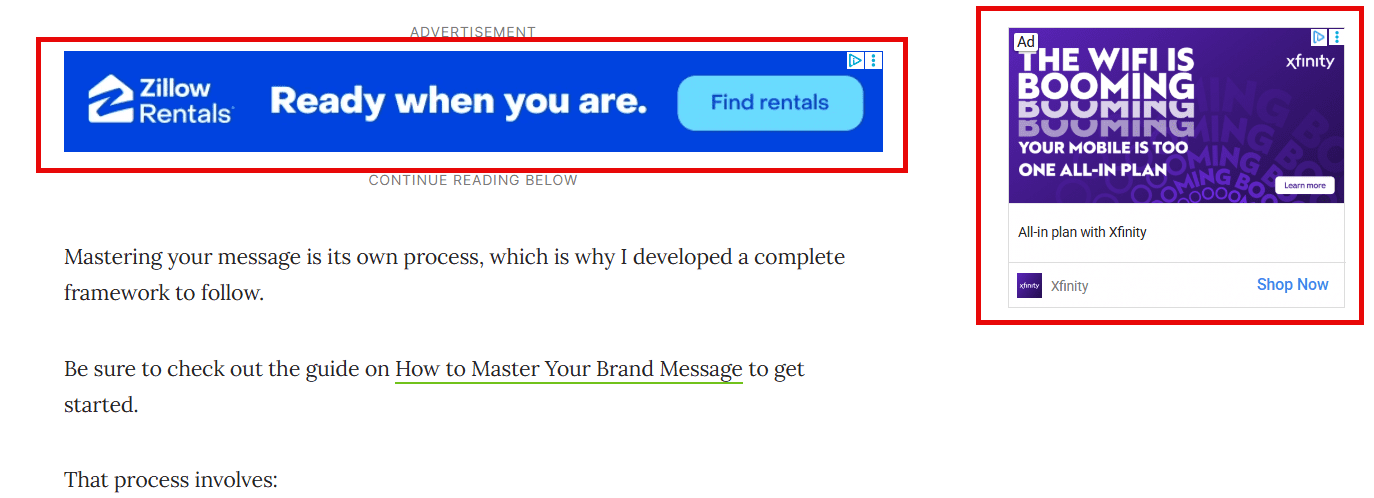
Below is an example of two different display ads shown on one webpage.
Screenshot from author, May 2025
Affiliate Examples
Sometimes, affiliate ads can be difficult to spot.
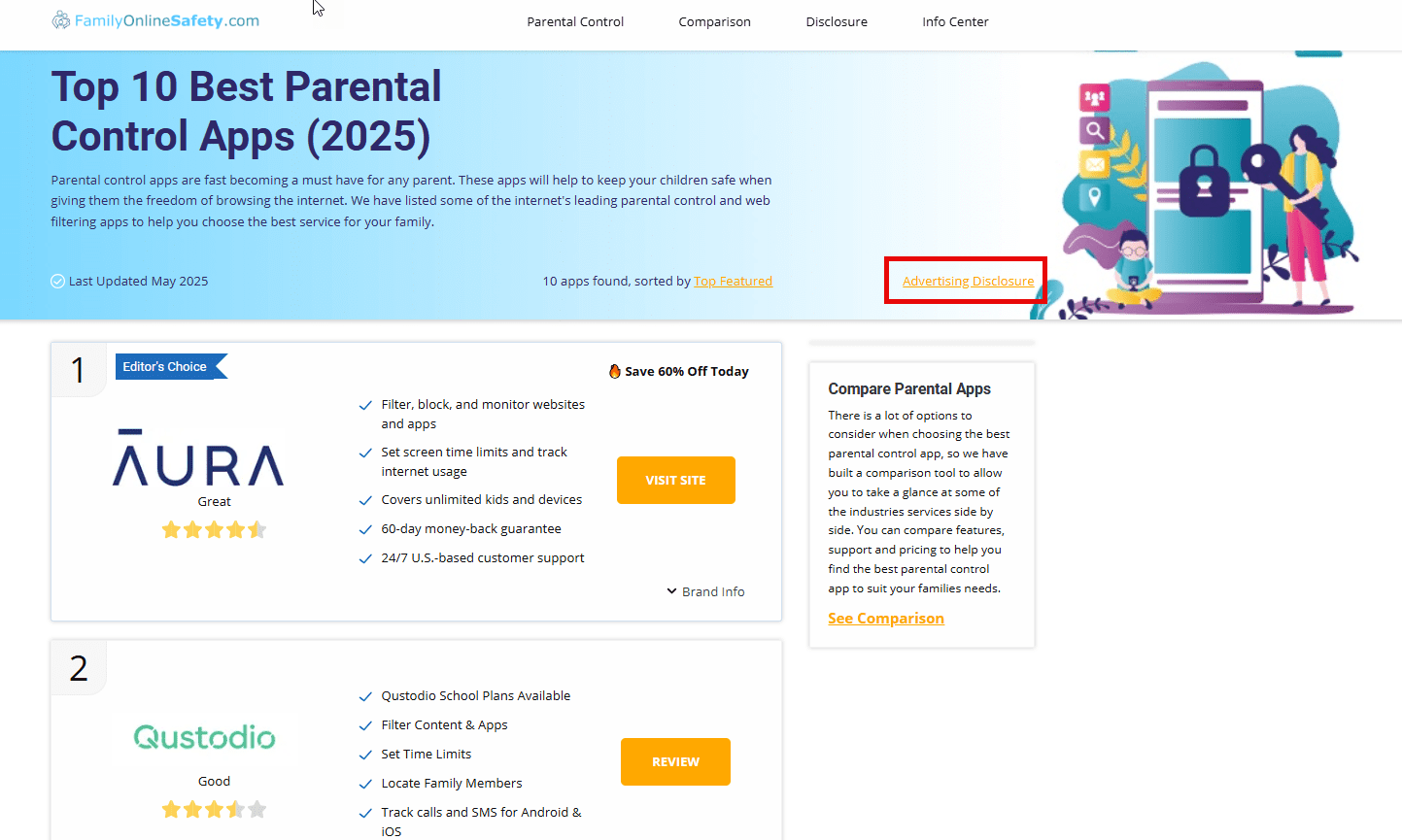
For example, “Listicle” articles, where a publisher is paid by other brands to be included in a “Top” product article.
Screenshot from FamilyOnlineSafety.com, May 2025
However, if you take a closer look at this example’s “Advertising Disclosure,” you’ll notice that this publisher is paid by the brands for exclusive placement:
Screenshot from FamilyOnlineSafety.com, May 2025
Summary
Paid media doesn’t have to be a guessing game. When you understand the role each channel plays, you’re in a much better spot to build campaigns that actually drive results, not just impressions.
From keyword-targeted search ads to affiliate partnerships and social retargeting, each paid media type has its own strengths. Use them deliberately.
Think about where your audience is, how they like to interact, and what action you want them to take.
Remember: success isn’t just about being present on every channel. It’s about showing up with the right message, in the right place, at the right time.
Video is dominating online across PPC ads and social media channels. Unfortunately, many advertisers still repurpose social videos for paid campaigns.
What works organically on TikTok or Instagram often falls flat in performance-driven environments like YouTube Ads or Performance Max.
This could lead to low engagement and poor conversions.
To compete in today’s attention economy, PPC video needs its own strategy that is built from the ground up with performance in mind.
This article explores why CMOs and senior marketers must treat video as a creative asset, that is, a conversion-driven engine and platform-specific.
The Disconnect Between Social Video And PPC Video
Some marketers start with social video and “cut it down” for paid. However, the two formats fundamentally differ in purpose, intent, and delivery.
Social video is built for engagement, likes, shares, and storytelling that captures attention in a feed.
PPC video, on the other hand, is engineered for a conversion action. It must capture attention, communicate value quickly, and drive a specific action with a call-to-action (CTA) statement.
Repurposing social content for PPC assumes that the creative context uses the same strategy for driving engagement.
Social videos often rely on trends, audio cues, or slow storytelling arcs. Those don’t translate to skippable, conversion-focused ad formats where you have just a few seconds to inform and impact.
The following table outlines the fundamental differences between social and PPC video.
Category
Social Video
PPC Video
Purpose
Brand building, storytelling, and community engagement
Lead generation, sales, and performance-driven metrics
Viewer Intent
Passive browsing, entertainment
High intent, research, or decision-making mindset
Format & Delivery
Organic feed content, often square or vertical
Paid ad placements; needs variation for 16:9, 4:5, vertical, etc.
Sound/Audio
Often relies on music, trends, or narration
Must perform without sound; strong visuals are needed
Calls-to-Action
Often implied or delayed
Immediate and repeated; click-through or conversion-focused
Performance Metrics
Likes, shares, video views, engagement rate
CTR, conversion rate, ROAS, CPA
Best Practices For PPC Video
PPC video ads should be intentionally created to drive conversions, not just views.
Below are key creative best practices that directly influence campaign outcomes, keeping in mind the details of different platforms:
1. Hook The Viewer Within The First 3 Seconds
Front-load your story arc by getting to the point of the video early, which often involves presenting the value proposition and the desired action.
You only have a moment to make viewers stop scrolling or delay the skip button. Use bold text, motion, or a strong question right away.
Example: “Spending too much on ads? Here’s a fix that saved our client $10,000.”
2. Format Video For The Platform
Each platform has different specs and user behaviors that require a custom approach for each. This is a perfect example where “one size does not fit all.”
YouTube standard videos typically requires horizontal (16:9), aligning with a sound-on viewing environment, while YouTube Shorts are vertical and platforms like Meta often favor square or vertical.
TikTok favors vertical, full-screen videos for sound-off autoplay. Develop your creative asset with this in mind.
3. Include A Clear Call-To-Action Early And Repeat
Don’t rely on a single CTA at the end. Video ads are built for direct response. Reinforce the action you want throughout the video.
Example: Start the video with “Click to get the offer,” and show it again midway and at the end.
4. Lead With The Benefit, Not The Backstory
People want to know what’s in it for them and how you solve their problem. Skip the warm-up and start with a direct benefit or result.
Example: Instead of “Our team spent weeks testing this,” say, “This ad strategy cuts CPC in half.”
5. Design With Platform Audio In Mind
For platforms with silent autoplay (TikTok, Instagram Reels, Facebook Feed): Prioritize visual communication. Many users watch without sound, so ensure your message still lands visually.
Use animated captions and highlight product features with motion text, so nothing is lost without audio.
For YouTube: Recognize that ads often play while users have the sound on.
While strong visuals are still important, leverage sound effectively through voiceovers, music, and sound effects to enhance your message and brand experience, as highlighted in YouTube’s Playbook for Creative Advertising [PDF] under the “Build for sound on” principle.
These elements influence how your video is served, watch time, and whether they take action.
Platform-Specific Video Strategies
Not all platforms serve video in the same way. Understanding how your content is delivered, measured, and optimized across each environment is critical to making PPC video work.
YouTube Ads
YouTube is a high-intent platform, with users actively choosing to watch content. Your ad will most often appear before or during another video.
The key here is overcoming the viewer’s “skip” behavior.
Maximize the impact of the skippable first five seconds. Use a bold visual or a clear problem-solution hook to immediately capture attention and provide value, making viewers want to watch more.
Build a narrative that fits intent. Educational formats, product demos, or expert commentary perform well here. Consider longer-form content that addresses pain points thoroughly or showcases product features in detail. Leverage storytelling to connect with viewers who are actively engaged.
End with a strong call to action. Take users to a landing page or offer page that extends the message.
Example: A productivity software brand opens with “Wasting time switching tabs?” then shows how its tool solves it with a single view, ending with “Try it for free today.”
Performance Max
Performance Max distributes video across placements like YouTube, Discovery, and Gmail. This requires a flexible, creative approach built to adapt to various ad spaces.
Upload multiple lengths: At minimum, include 6-second, 15-second, and 30-second versions. Varying lengths allow Google’s AI to test and serve the most effective creative for each placement and user.
Include strong product visuals:Use the dedicated headline and description fields within the PMax asset library to deliver your primary marketing messages and calls to action. This allows Google’s AI to optimize the pairing of text and video for different platforms and user behaviors. Ensure key messages and branding are visually prominent and understandable without audio.
Create for automation: Google optimizes based on performance. Give the algorithm assets that can stand alone, yet are also easy to mix and match. This includes various headlines, descriptions, and calls to action that can be paired with your video assets, allowing Google’s machine learning to find the most effective combinations.
Leverage vertical image ads for YouTube Shorts: Google Ads now supports full-screen vertical (9:16) image ads specifically for YouTube Shorts within Demand Gen campaigns. This allows you to repurpose existing vertical image assets from platforms like Meta to reach users in this rapidly growing short-form video environment. Recommended size: 1080×1920.
Example: A clothing brand uses 15-second vertical videos with close-up fabric shots and pricing overlays so the system can serve based on what performs.
Meta Video Ads (Facebook And Instagram)
These platforms autoplay silently in-feed, so your creative must speak visually before sound is ever involved.
Front-load motion or emotion. Start with an action or a relatable facial expression. Think about creating a visual hook that stops the scroll and intrigues users enough to tap for sound.
Use large text overlays and branded visuals. This keeps the message clear and recognizable at a glance. Keep text concise and easy to read on smaller mobile screens. Ensure your branding is integrated early and consistently.
Mobile-first approach. Vertical or 4:5 ratio works best for in-feed and Stories. Utilize the full vertical space to immerse viewers and avoid the cropped look of horizontal videos on these platforms.
Example: A skincare brand opens with a smiling woman applying cream, with large text: “Sensitive skin? See instant calm.”
Optimize your video creative for the unique consumption habits and delivery methods of each platform, and increase the likelihood of engagement and better performance from your PPC video campaigns.
Making The Business Case To CMOs
CMOs and senior leaders often see video as a single, limited asset: make once, use everywhere.
Now, with the increasing sophistication of digital advertising platforms and the different ways video is consumed, the same approach is not cost-effective or performance-driven.
The increase of short-form video, dominance of mobile, and the emphasis on ad quality across platforms are driving a more strategic approach to video creative.
Consider:
Repurposed social content is likely to underperform in PPC environments because it was not created with the same goals in mind.
Dedicated PPC video would be expected to increase return on ad spend by aligning creative with media placement.
A video designed for PPC would (in theory) have higher engagement. Therefore, should have a higher ad quality score and higher delivery.
Making the business case means shifting from “video as a campaign extra” to “video as a campaign must-have.”
CMOs are ultimately looking for measurable results and a strong return on investment from their advertising spend, and a platform-specific video strategy is the key.
Conclusion: PPC Video Is No Longer Optional
The days of treating all video the same are over, and it’s time to embrace this new approach. Video is now a powerful strategy for driving measurable ad results.
Advertisers should strategically build video with a clear understanding of each platform’s unique environment, their target audience’s intent, and the business goals.
Investing in creative that has a performance-first approach for each platform opens up opportunities for a stronger return on your advertising investment.
The future of successful PPC hinges on your team’s ability to master platform-specific video creation.
Google AI Mode, which officially launched in May 2025 and is now available to all U.S. users without a waitlist, represents a significant step forward in how we engage with search.
Powered by Gemini 2.5, this new interface moves beyond AI Overviews by introducing a persistent, conversational assistant that blends AI-generated insights with traditional search results.
Users can toggle between classic results and AI-driven summaries, follow up on queries, and explore longer, more exploratory conversations, all within a single interface.
Unlike AI Overviews or the earlier Search Generative Experience (SGE), which provided a single AI-generated answer for a traditional search query, AI Mode is more similar to ChatGPT in that it fosters a conversational approach to finding answers.This marks a change in how people interact with search, moving from short, isolated keywords to more natural prompts that sound like how we talk and think.
AI Mode supports rich interactions and longer queries, encouraging a deeper and more nuanced engagement with information. And when user behavior shifts, advertisers must adapt how they reach users with relevant solutions and offers.
We’re now at another junction where advertisers and Google must work together to evolve how we operate to remain successful. That means reconsidering everything from targeting and attribution to monetization and ad design.
AI Mode Interface (Screenshot from Google, June 2025)
In this post, I share my thoughts on what AI Mode signals for the future of search, how it challenges long-standing digital advertising models, and why marketers need to adapt fast or risk being left behind.
Strategic Motives: Innovation Vs. Defense
Is Google pushing AI Mode because it sees an opportunity or because it’s responding to pressure from OpenAI and others? The answer is likely both.
Google’s technical leadership is well-established.
DeepMind, a Google company, helped invent the transformer model that underpins GPT. Its Gemini family of models has matured rapidly.
At Google Marketing Live 2025, Sundar Pichai stated that Gemini had taken the lead as the top-performing model, a claim supported by LM Arena’s leaderboard.
Still, Google moves cautiously. As a market leader under regulatory scrutiny, it can’t afford missteps.
The innovation is real, but so is the strategy to protect its dominance by making AI part of its core products before others can take the lead.
I believe Google’s technology is among the best in the world. However, as the company is in the spotlight, they have to be more measured.
Regulatory scrutiny, scale, and legacy expectations mean it can’t move as fast as emerging players, but that doesn’t mean it will always be chasing the lead.
Prompt Complexity And Memory: The Challenge Of Targeting
How users like to find answers is changing from clicking around on a search results page to interacting with an AI assistant.
This evolution from search engine to answer engine introduces a new layer of complexity for advertisers. Prompts in AI Mode aren’t just text; they’re conversations rich with personal context and memory.
Take a user engaging in a long session with AI Mode. Their conversation might include several prompts in a row like this:
“I’m running my first marathon in LA and need good shoes. What do you recommend?”
“By the way, I have plantar fasciitis. I’m not trying to break records, I just need something that won’t wreck my knees.”
“I’m not a fan of bland colors. What brands have something more vibrant in their current line-up?”
The assistant understands the goal and tailors responses to match medical considerations, intent, and emotional tone.
It might include surface stability shoes, recommended inserts, and even factor in training timelines or the expected weather in the city where the marathon will take place.
Now contrast that with a short prompt: “running shoes.”
Simple on the surface, except the assistant remembers that just yesterday, I was at the Adidas store talking to a clerk about shoe fit via my bee.computer wearable, and I used my Ray-Ban Meta glasses to snap a few images of colors I liked.
While this use case is not quite there yet in the real world, I am personally using this technology now, and it’s just a matter of time until all the pieces are connected and the advertiser scenario I described will become real.
Then we’ll see the assistant pick up right where I left off, using multimodal memory to enrich the response with past conversations and visual preferences.
Neither of these interactions can be matched with traditional keyword-based targeting. The assistant’s memory and personalization turn every query into a unique moment.
For advertisers, it’s not just about what was typed; it’s about what the assistant knows.
This creates a richer opportunity for advertisers, but there is a challenge related to targeting because Google Ads was built for keyword advertising, not prompt advertising – and this creates a disconnect.
From Keywords To Prompts: Why The Old Model No Longer Fits
Advertisers bid on terms users might type into the search bar (like “running shoes” or “cheap flights”), and the system will serve relevant ads based on those inputs.
But AI Mode is changing the language of search. Instead of short, isolated keywords, users are starting to use full, conversational prompts that reflect how they naturally speak.
These prompts are often longer, more specific, and packed with nuance that the original ad system wasn’t designed to handle.
To keep things running, Google has introduced a behind-the-scenes workaround: “synthetic keywords.”
These are machine-generated representations that attempt to map modern prompts back into the keyword framework advertisers still rely on. It’s a clever patch, but ultimately a temporary one.
As prompts continue to evolve in complexity and variety, and as memory and personalization shape every query, the keyword as a stable targeting anchor is becoming harder to rely on.
That puts pressure on the entire ad ecosystem. The old model is still functioning, but it’s increasingly out of sync with how people search.
A new system, one built natively for prompts, context, and memory, will eventually need to take its place.
Rethinking Ads In AI Mode: What Comes After Clicks?
The shift toward AI-assisted browsing brings another major challenge: fewer clicks.
If users get what they need from the assistant itself, the need to visit websites diminishes, weakening the foundations of the cost-per-click (CPC) business model.
Slide by Microsoft at Accelerate Roadshow LA, June 2025
But clicks will be more relevant because, unlike in the past, where a click was a user’s initial exploration of your offer, they will now be better informed and further along in their research by the time they visit your site for the first time.
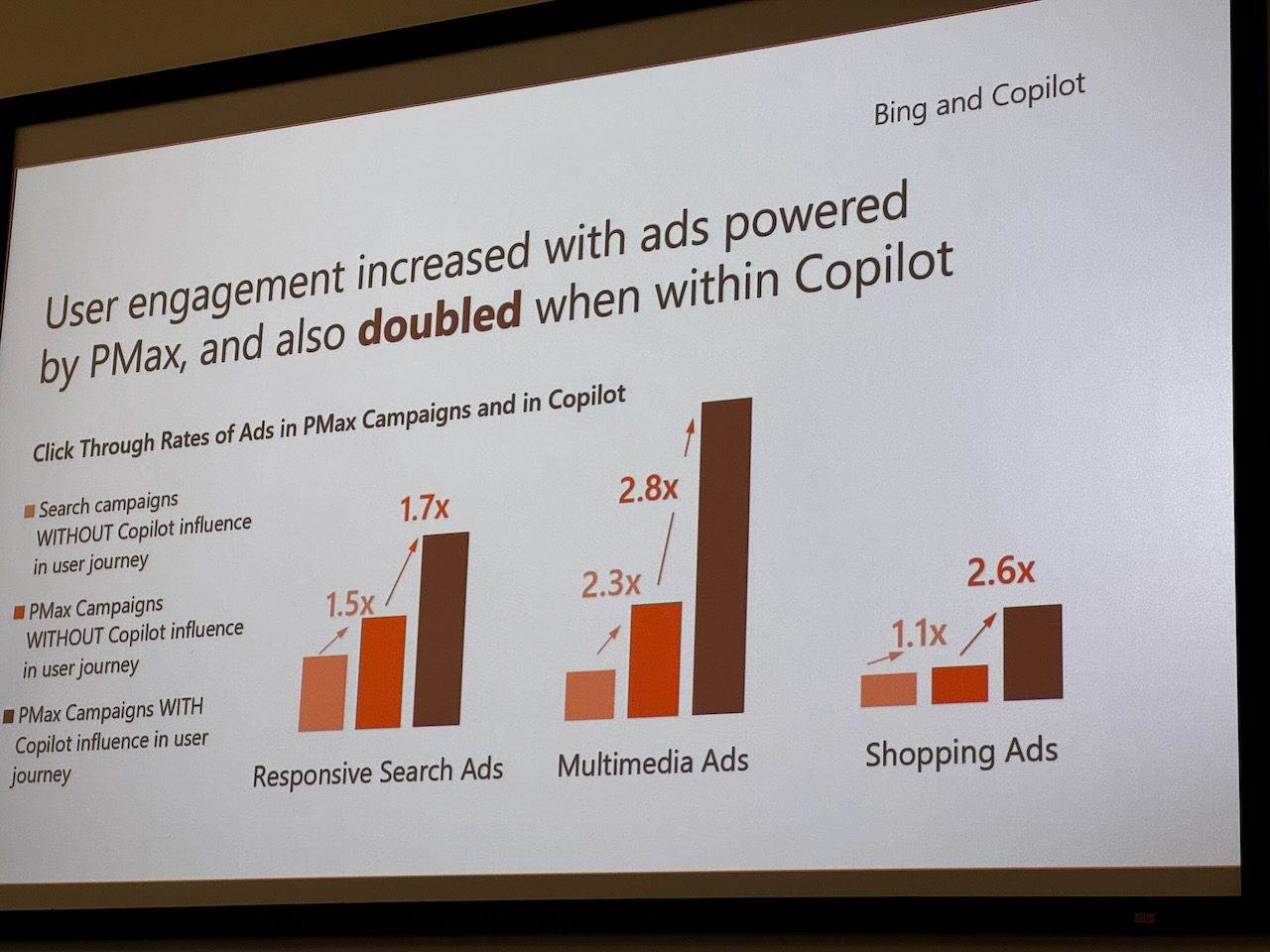
Microsoft research found that purchasing behaviors increased by 53% within 30 minutes of a Copilot interaction, underscoring just how powerful, timely, and AI-embedded suggestions can be.
To stay relevant, ads must feel like part of the conversation. They can’t be disruptive or detached. They need to be embedded, responsive, and helpful, appearing when and where they make the most sense.
Newer performance data shows that ad engagement doubled in some formats when served through Copilot, especially in PMax-powered Shopping and Multimedia Ads.
Crucially, Microsoft has dialed back the volume of ad impressions in Copilot, choosing instead to show ads only when they’re predicted to be highly relevant and useful.
The result? Fewer, better-placed ads that drive stronger outcomes, a model that hints at where Google AI Mode could be headed.
Google has done this before. Its introduction of AdWords transformed ads from flashy banners into useful information. AI Mode demands a similar evolution, one that turns helpfulness into performance.
So, if the traditional way Google makes money becomes broken, let’s look at some options for how they might bridge the gap.
Conversion Inside The Conversation: The Rise Of Affiliate Models And Agents
The most frustrating part for consumers using AI agents to find something to buy is the final step after determining what they want.
Now, they need to hunt for where to buy it, enter a credit card, and deal with the usual minutiae of buying something online.
A better user experience, especially for smaller purchases, would be to tell the agent, “I like it, buy it!” and have the item arrive at your doorstep the next day.
While this zero-click scenario is the best user experience, it is also the most problematic in a CPC world.
This opens the door for reconsidering affiliate and commission-based advertising models. Instead of paying for attention, advertisers pay for action.
Ads become decision-making partners, not just traffic generators. It’s a better fit for how assistants work: focused, efficient, and user-first.
While this wouldn’t be Google’s first attempt at commission-based monetization (previous efforts, such as Buy on Google, Shopping Actions, and Google Express, ultimately shut down due to limited merchant adoption and weak consumer uptake), those models lacked the personalized context that AI Mode now enables.
Even vertical-specific experiments like commission bidding for Hotel Price Ads (retired in 2024) followed the same pattern: strong in theory, but missing the behavioral depth to sustain engagement.
With memory-driven prompts, real-time user needs, and multimodal signals in play, the conditions may finally be right for performance-based pricing to scale in a meaningful, consumer-aligned way.
Monetization Models: Why Subscriptions Aren’t The Future
Monetizing AI-powered search is a hot topic. Startups like Neeva by Sridhar Ramaswamy (Former Google Ads Chief) attempted to replace ads with subscriptions, but user adoption fell short.
Even OpenAI, with its paid ChatGPT Pro tier, sees a vast majority of users opting for free access.
The pattern is clear: Most users won’t pay for general-purpose search tools. Even companies leading in AI anticipate that advertising will remain the dominant revenue stream.
Google’s ad model, tested and refined for decades, is still the best-positioned approach – if it can evolve to match the new user behavior.
Ads In AI Mode
Google has already said it will have ads in AI mode.
To maximize the likelihood of your ads appearing in this environment, it’s advisable to utilize Google’s AI-centric tools, including AI Max in search campaigns, Performance Max, and Demand Gen.
Employing broad match keywords is also crucial, as they facilitate connections with conversational prompts rather than traditional keywords.
However, with the potential decrease in click-through rates, a pertinent question arises: Can fewer clicks on ads sustain the revenue model?
Despite this challenge, I anticipate that advertising will remain the primary revenue stream, even within AI Mode.
It’s noteworthy that OpenAI’s CEO, Sam Altman, has expressed reservations about incorporating ads into AI experiences.
“Currently, I am more excited to figure out how we can charge people a lot of money for a really great automated software engineer or other kind of agent than I am making some number of dimes with an advertising-based model… I kinda just don’t like ads that much.”
Similarly, Google’s co-founders, Larry Page and Sergey Brin, initially opposed the idea of advertising on their search engine. In their 1998 research paper, “The Anatomy of a Large-Scale Hypertextual Web Search Engine,” they wrote:
“We expect that advertising-funded search engines will be inherently biased towards the advertisers and away from the needs of the consumers.”
Despite these initial reservations, both OpenAI and Google have recognized the practicalities of monetization. Google makes nearly 78% of its revenue from ads as of 2024, illustrating its evolution from the original stance of its founders.
So, while the methods and philosophies around advertising in AI experiences have evolved, the necessity for effective monetization strategies remains paramount.
Conclusion: Betting On AI-Powered Ad Innovation
Soon, helping consumers at the moment of relevance won’t be about search and keywords anymore; it’ll be about context, and AI-powered interactions driven by memory, intent, and dialogue.
The early signals are promising: Users respond better when ads are useful, not intrusive.
Microsoft’s experience with Copilot shows that when generative systems deliver fewer but more relevant ads, engagement and conversions rise.
Google’s opportunity is to take those lessons further, baking utility and timing into its AI-native monetization engine.
It’s not about building the flashiest assistant; it’s about earning trust at the moments that matter.
If the assistant can deliver value and drive outcomes without breaking the flow, that’s the model that wins.
I have no doubt that Google and other ad platforms will find ways to appropriately monetize these advertising opportunities, even if there will be fewer impressions for each consumer journey.
The fundamentals of advertising at the moment of relevance haven’t changed, but our tactics will need to evolve fast. Prompts, not keywords, are the new starting point – and that changes the game.
Paid media offers one of the fastest ways to promote a business event and get the right people to take action.
Event campaigns are not just regular ads with a date added. They need a dedicated strategy, setup, budget, and audience targeting to succeed.
From webinars and product launches to open houses and local promotions, you’ll get better results by treating your event like a stand-alone campaign.
Here’s how to approach it with paid search and social ads that drive participation.
What Types Of Events Can Be Promoted?
Here are common examples of business events that can benefit from paid ad promotion:
Conferences (virtual or in-person).
Webinars.
Product launches.
Open houses.
Grand openings.
Sales or seasonal promotions.
Trade show participation or speaking engagements.
Local festivals or community events.
Pet adoption events.
Sports or sponsorship tie-ins.
Class registrations or training signups.
For an “event,” we generally look for a special, notable activity outside of normal business, with a limited time for engagement.
Considerations Before Campaign Setup
Use A Stand-Alone Campaign
Each event should have its own dedicated campaign. This gives you more control over:
Budget.
Targeting.
Messaging.
Conversion tracking.
Don’t try to squeeze event ads into your evergreen campaigns. Keep it separate so you can measure impact clearly.
Budget Separately
A separate budget prevents your main campaigns from losing momentum. Even a small spend focused on urgency and high-intent audiences can produce a strong ROI.
Incorporate Into Your Ad Copy
Add event details directly into your ad copy, such as headlines or descriptions in responsive search ads (RSAs), and use the pinning feature to lock critical details into place.
For higher control, create an entirely new custom ad built specifically around the event message.
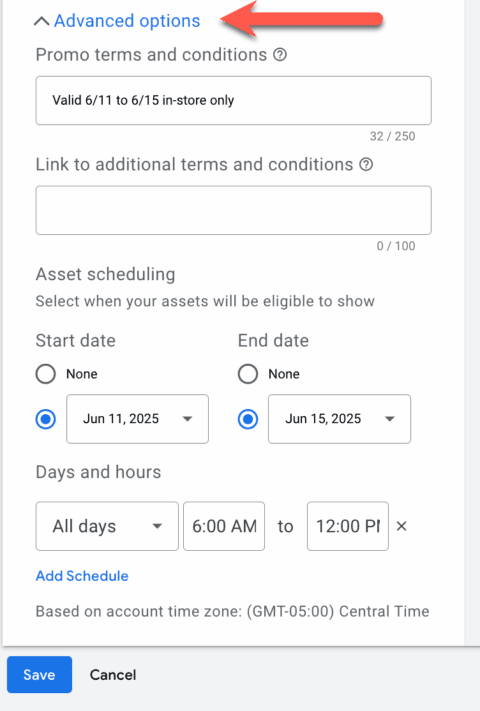
Use promotion assets in Google Ads for sales-driven events that include a discount or monetary offer.
Double-check each platform’s documentation to confirm which features are available and how they are currently labeled.
Screenshot by author, June 2025
4 Tips To Design High-Performing Event Campaigns
After creating a new campaign for your event and allocating its budget, there are several other factors to consider when promoting events.
Tip 1: Get Straight To The Point
Event ads need clear details upfront:
Event name.
Date and time.
Location (or virtual link).
A CTA like “Register”, “Sign Up”, or “Save Your Seat.”
Use direct headlines and don’t leave room for interpretation. Test countdown timers (Google) in your ad copy to build urgency.
Check out Microsoft Ads, which has a great explanation on how the countdown feature works.
Example: “Only 3 Days Left to Register for the Free AI Workshop”
If you’re offering discounts or early-bird pricing, clearly state it in both the headline and description.
Below is the Google Ads example of setting this up in a headline and steps to implement.
Screenshot by author, May 2025
Tip 2: Be Strategic About Timing
The timeline for event promotion is mission-critical. Some events only require a few days of promotion, while others may need weeks or months of preparation.
Plan around three phases:
Pre-event hype: Build interest and drive signups.
During the event: Push for last-minute attendance or livestream engagement.
Post-event: Retarget attendees for future events or promote replays.
Also, confirm your ad platform’s scheduling limits. Google ends ads at 11:59 p.m. of the advertiser’s time zone. Some let you choose a specific time (in 24-hour format).
Tip 3: Location Targeting
The location targeting will be largely determined by the event’s real, physical location, but there are a few things to consider.
Depending on the density of the customer base, location targeting will vary for each advertiser. Match the event’s scale to your location settings:
For example:
Local: Use radius or city-level targeting around the physical location.
Regional: Layer metro areas or ZIP codes with high interest.
National or online: Prioritize geos with the highest engagement or ROI historically.
With national targeting, you may want to prioritize budget allocation to major metro areas. Another approach is to review your customer purchase data for trends in revenue or return on investment (ROI) by location.
Tip 4. Use Targeting Unique To The Event
Your existing keyword list or audience segments may not apply to an event. Build targeting around:
Specific event names or branded keywords, such as “Tech Expo 2025.”
Related topics or products featured at the event, such as boat models for the boat show.
Competitor brands or category searches.
Audience interests like “small business tools” or “data analytics training.”
Use customer lists on your preferred platform to reach similar audiences.
Bonus Tip: How To Leverage Events (Local Or Otherwise) Even If You Are Not Participating In Them
You don’t need to be directly involved in the event to benefit from event-driven ad traffic. You can also capitalize on events related to your business to gain extra exposure.
For example, if a local wedding expo is happening in your area, a florist or event planner can run campaigns targeting attendees who are searching for event services during the show.
This strategy works for:
Industry conferences.
Seasonal community events.
Awareness days or promotional months.
Set up a parallel campaign with relevant offers or content that aligns with the audience’s mindset during the event.
Final Thoughts
Event campaigns deserve more than a last-minute or a generic ad slot.
With a strategic approach, they can build brand awareness, generate leads, and leave a lasting impression.
By setting up a dedicated campaign, writing clear and timely messaging, and using specific targeting, you’re setting the stage for better results.
Even if you’re not hosting the event, there are still ways to show up and be seen.
Put your event in the spotlight. When you run it like a pro with paid media, the results speak for themselves.
More resources:
Featured Image: PeopleImages.com – Yuri A/Shutterstock
Global advertising expenditure has surpassed the $1 trillion mark for the first time.
Digital advertising continues to dominate this growth, with digital channels encompassing search and social media forecast to account for 72.9% of total ad revenue by the end of the year.
From a platform perspective, Google, Meta, Amazon, and Alibaba are expected to capture more than half of global ad revenues this year.
In-house and agency-side paid media teams are working harder than ever to grow ecommerce businesses efficiently, and the amount of data being used day-to-day (even hour-to-hour) is enormous.
With this growth and investment, something is clearly working, and given that brands can map new/returning audiences to their advertising funnel and serve ads across billions of auctions, it’s a lever that millions of businesses pull.
However, with budgets being split across channels (search, social, out-of-home, etc) and brands using CRM data, analytics platforms, third-party attribution tools, and more to define their “source of truth,” fragmentation begins to appear with reporting. Only 32% of executives feel they fully capitalize on their performance marketing data for this reason.
With data being spread across several sources, ad platforms having different attribution models, and the C-suite likely asking, “Which source of truth is correct?”, reporting paid media performance for ecommerce isn’t the most straightforward task.
This post digs into key performance indicators, platform attribution & modeling, business goals, and how to bring it all together for a holistic view of your advertising efficacy.
Key Performance Indicators (KPIs)
To begin navigating paid media reporting, it starts with the KPIs that each account optimizes towards and how this feeds into channel performance.
Each of these has purpose, benefits, limitations, and practical use cases that should be viewed through a lens of attribution unique to each platform.
Short-Term Performance
Return On Ad Spend (ROAS)
Definition: revenue/cost.
This metric measures the revenue generated for every dollar spent on advertising.
If your total ad cost was $1,000 and you drove $18,500 revenue, your ROAS would be 18.5.
Benefits: Direct measure of advertising efficiency and helps provide a snapshot of campaign profitability.
Limitations: Does not account for customer acquisition costs (CACs), margin, LTV, returns, shipping, etc.
Cost Per Acquisition (CPA)
Definition: cost/sales or leads.
This metric shows the average cost to generate a sale (or lead, depending on the goal, e.g., an ecommerce brand could be measuring using CPA to sign up new customers for an event).
For example, if your total ad cost was $5,000 and you drove 180 sales, your CPA would be $ 27.77.
Benefits: Easy to monitor over time and helps assess efficiency.
Limitations: Neglects revenue, customer acquisition cost, margin, LTV, etc., and treats all sales equally regardless of value.
Cost Of Sale (CoS)
Definition: total ad spend/revenue.
This metric measures what % of revenue is spent on advertising.
Say a brand spends $20,000 on Meta Ads and generates £100,000 in revenue, their resulting CoS would be 20%.
Benefits: Useful for margin-sensitive businesses and marketplaces where prices and/or Average Order Value (AOV) are volatile.
Limitations: Can mask unprofitable sales (in some scenarios) if margin, returns, shipping, etc., are not considered.
Mid-Term Efficiency
Customer Acquisition Cost (CAC)
Definition: total marketing costs spent on acquiring new customers/total number of new customers.
Detailed definition: total marketing costs spent on acquiring new customers + wages + software costs + agency/consultancy fees + overheads/total number of new customers.
This metric may reflect either marketing costs associated with driving new customer acquisition or a holistic view of all costs associated with acquiring new customers.
Let’s say a business has a CAC of $175 and an AOV of $58, they will need each new customer to repeat purchase ~3x to make acquisition profitable.
Benefits: Holistic view of acquisition cost, ideal for longer-term profitability analysis for paid media investment.
Limitations: Not always the most suitable for channel-specific reporting (think account structuring, audiences, etc.), and can be a lagging metric as it doesn’t reflect short-term changes in performance like ROAS or CPA would.
Marketing Efficiency Ratio (MER)
Definition: Sometimes referred to as blended ROAS, MER is calculated by dividing total revenue/total ad spend across all channels.
This metric shows how efficiently your total ad spend is converting into revenue, regardless of the channel.
Where MER is especially useful is when brands are active on multiple ad networks, all of which contribute in some way to the final sale, and where siloed platform attribution is inconsistent.
Benefits: Captures topline performance from a transactional perspective and simplifies multi-channel reporting.
Limitations: Neglects exactly where the sales and revenue came from and obscures channel efficiency, especially important for search, social, etc.
Long-Term Strategic
Customer Lifetime Value (CLV Or CLTV)
Definition: This metric estimates the total net revenue a customer brings over their relationship with a brand.
Used alongside CAC, this metric is essential for understanding the true value of both acquisition and retention, which is important for almost all ecommerce models, and especially important for brands looking to capitalize on repeat purchases and subscription-based models.
Benefits: Builds a foundation for tying performance marketing to long-term outcomes while helping give room to CAC targets across valuable customer segments.
Limitations: Takes a fair amount of work to get set up and maintain, in addition to requiring a clean cohort and repeat purchase data. Additionally, when brands introduce new products/services, it can be hard to forecast accurate CLV numbers, and it will take time.
So, which one should you be reporting on for your ecommerce brand?
Speaking from experience, there isn’t a right or wrong answer, nor is there a blueprint for which KPIs you should be reporting on.
Having a multifaceted approach will enable more informed decision making, combining short-, medium-, and long-term KPIs to form a holistic model for measuring performance that feeds into your reports.
However, even after choosing your KPIs, different attribution models across advertising platforms add another layer of complexity, as does the ever-evolving customer journey involving multiple touchpoints across devices, channels, etc.
The Ad Platforms
Each ad platform handles attribution and tracking differently.
Take Google Ads, for example, the default model is Data-Driven Attribution (DDA), and when using the Google Ads pixel, only paid channels receive credit.
Then, with a GA4 integration to Google Ads, both paid and organic are eligible to receive credit for sales.
Click-through windows, value, count, etc, can all be customised to provide a view of performance that feeds into your Google Ads campaigns.
Using the Google Ads pixel, say a user clicks a shopping ad, then a search ad, and then returns via organic to make the purchase, 40% of the credit could go to shopping, and 60% to the search ad.
With the GA4 integrated conversion, shopping could receive 30%, search 40%, and organic visit 30%, resulting in 70% of the value being attributed back to the campaigns in-platform.
Now, comparing this to Meta Ads, which uses a seven-day click and one-day view attribution window by default, when a user converts within this time frame, 100% of the credit will be attributed to Meta.
This is why the narrative for conversion tracking on Meta is one of overrepresentation, with brands seeing inflated revenue numbers vs. other channels, even more so with loose audience targeting, where campaign types such as ASC can serve assets to audiences who have already interacted with your brand.
Then, when you dig into third-party analytics, the comparisons between Google Ads, Meta Ads, Pinterest Ads, etc., are almost the complete opposite.
So, what should this data be used for, and how does it factor into the bigger picture?
In-platform metrics are best viewed as directional.
They help optimize within the walls of that specific platform to identify high-performing audiences, auctions, creatives, and placements, but they rarely reflect the true incremental value of paid media to your business.
The data in Google, Meta, Pinterest, etc. is a platform-specific lens on performance, and the goal shouldn’t be to pick one or ignore these metrics.
It should be to interpret these for what they are and how they play into the overarching strategy.
The Bigger Picture
KPIs such as ROAS and CPA offer immediate insights but provide a fragmented view of paid media performance.
To gain a comprehensive understanding, brands must combine medium- to long-term KPIs with broader modeling and tests that account for the multifaceted nature of performance marketing, while considering how complex customer journeys are in this day and age.
Marketing Mix Modeling (MMM)
Introduced in the 1950s, MMM is a statistical analysis that evaluates the effectiveness of marketing channels over time.
By analyzing historical data, MMM helps advertisers understand how different marketing activities contribute to sales and can guide budget allocation.
A 2024 Nielsen study found that 30% of global marketers cite MMM as their preferred method of measuring holistic ROI.
The very short version of how to get started with MMM includes:
Collecting aggregated data (roughly speaking, at least two years of weekly data across all channels, mapped out with every possible variable (e.g., pricing, promotions, weather, social trends, etc.)
Defining the dependent variable, which for ecommerce will be sales or revenue.
Run regression modeling to isolate the contribution of each variable to sales (adjusting for overlaps, lags, etc.)
Analyze, optimize, and report on the coefficients to understand the relative impact and ROI of your paid media activity as whole.
Unlike platform attribution, this doesn’t rely on user-level tracking, which is especially useful with privacy restrictions now and in the future.
From a tactical standpoint, your chosen KPIs will still lead campaign optimizations for your day-to-day management, but at a macro level, MMM will determine where to invest your budget and why.
Incrementality Testing
Instead of relying on attribution models, this uses controlled experiments to isolate the impact of your paid media campaigns on actual business outcomes.
This kind of testing aims to answer the question, “Would these sales have happened without the paid media investment?”.
This involves:
Defining an objective or independent variable (e.g., sales, revenue, etc.)
Creating test and control groups. This could be by audience or geography – one will be exposed to the campaigns and the other will not.
Run the experiment while keeping all conditions equal across both groups.
Compare the outcomes, analyze performance, and calculate the impact.
This isn’t one that’s run every week, but from a strategic point of view, these tests help to validate the actual performance of paid media and direct where and what spend should be allocated across ad platforms.
Operational Factors
These are equally as important (if not more) for ecommerce reporting and absolutely need to be considered when setting KPIs and beginning to think about modeling, testing, etc.
Without considering these factors, brands will use inaccurate data from the get-go.
Think about the impact of buy now, pay later. Providers such as Klarna or Clearpay can lead to higher return rates, as bundle buying and impulsive purchases become more accessible.
Without considering operational factors, using this example and a basic in-platform ROAS, brands would be optimizing toward incorrect checkout data with higher AOV’s and no consideration of returns, restocking, etc.
Ultimately, building a true picture of paid media performance means stepping beyond the platform KPIs and metrics to consider all factors involved and how best to model the data to uncover not just “what” is happening, but “why” it is and how this impacts the wider business.
Bringing It All Together
No single tool or model tells the full story.
You’ll need to compare platform data, internal analytics, and external modeling to build a more reliable view of performance.
The first step is getting watertight KPIs nailed down that consider every possible operational factor so you know the platforms are being fed the correct data, and if you need to modify these based on platform nuances due to differing attribution models, do it.
Once these are nailed down, find a model that you trust and that will show you the holistic impact of your paid media spend on overall business performance.
You could explore the use of third-party attribution tools that aim to blend data together, but even with these, you’ll still require clear and accurate KPIs and reliable tracking.
Then, when it comes to the visual side of reporting, the world is your oyster.
Looker Studio, Tableau, and Datorama are among the long list of well-known platforms, and with most brands using three to four business intelligence tools and 67% of analysts relying on multiple dashboards, don’t stress if you can’t get everything under one lens.
When all of this is executed and made into a priority over the short-term ebbs and flows of paid media performance, this is the point where connecting media spend to profit begins.
Tip #1. Boost Relevance: Use Industry-Specific Conversion Signals To Customize Google Ads Messaging
Increasing clicks is as easy as increasing how relevant your ads are to your potential customers.
Sounds easy, but when you’re managing different brands, many industries, or multiple brick-and-mortar locations, it can quickly become difficult to understand exactly what each individual person needs.
Now, you can use this real language to supercharge your ad messaging.
Is This Change Worth It?
Yes.
When you align your ad messaging with what your customers actually say, you boost ad relevance, increase clickthrough rates, and lower your cost per lead by matching real search intent.
You’ll see:
Higher relevance: This is crucial in paid advertising is critical because it directly impacts three major outcomes: cost, performance, and customer experience.
Lower Costs: Ad platforms like Google Ads reward high relevance with better quality scores, which can lower your cost per click (CPC) and help you win better ad placements without paying a premium.
Higher Engagement: When your ads match exactly what users are searching for or thinking about, you naturally boost clickthrough rates (CTR) because the ad feels more useful and timely.
Better Conversion Rates: Relevant ads lead to more qualified traffic, meaning users are more likely to take action once they land on your site, whether that’s calling, booking, or buying.
Improved Brand Trust: Ads that clearly resonate with real customer language and needs feel authentic, which strengthens brand credibility over time.
Which Industries Benefit Most From This PPC Engagement Boosting Technique?
Legal Services: Top keywords we’ve identified for you are [free consult] & [local attorney]
Home Services: [emergency repair] & [same-day service] are great seed keywords for this industry.
Medical/Dental: [accepts insurance] & [licensed doctor] are good starting points for PPC keyword lists.
Analyze Campaign Data: Manually review metrics like click-through rates (CTR), conversion rates, and cost per conversion to evaluate performance.
Identify High-Performing Keywords: Manually analyze calls to find and optimize keywords driving the best results while excluding irrelevant terms.
Track User Behavior: Use tools like Google Analytics to observe user actions, such as pages visited or time on site, before converting.
Tie Conversions to Campaign Factors: Manually connect conversion data to specific ads, keywords, or timeframes for insights.
Challenges: Time-intensive, prone to human error, and limited in precision without advanced tools.
CallRail Method for Finding PPC Conversion Signals
Call Tracking: Easily and quickly track inbound calls back to specific ads, campaigns, or keywords to identify high-performing strategies.
Keyword-Level Attribution: Automatically pinpoint which keywords drive calls or form submissions without manual effort.
Automated Insights: Leverage AI-generated call transcripts, summaries, and data to detect patterns, trends, and high-performing campaigns effortlessly.
Integrations: Connect with platforms like Google Ads or HubSpot to centralize and streamline conversion tracking.
Key Benefits: Saves time, eliminates guesswork, provides precise and actionable insights to optimize PPC campaigns effectively.
The Manual Way:
Spend hours manually analyzing call transcripts for high-intent phrases.
Create tightly themed ad groups based on these phrases.
Constantly refine keyword match types to match real search behavior (favor phrase match for accuracy).
Use dynamic keyword insertion carefully to keep VOC language in ads.
Easy Way With CallRail:
Use CallRail’s free trial to extract VOC insights.
Insert VOC themes into responsive search ad headlines and structured snippets.
Tip #2. Save Time: Automate Campaign Creation With Pre-Built Google Ads Templates & CRM Signals
Launching campaigns faster without sacrificing quality can transform how efficiently your agency operates.
Is This Change Worth It?
Absolutely.
When you automate campaign creation, your team gets more time back to focus on strategy instead of setup.
It means:
Faster launches.
Fewer errors.
Campaigns that are tailored more precisely to your clients’ real needs.
What’s New That You Should Change & Try
Google Ads Customer Match and Microsoft Ads Customer Match now enable direct CRM syncing to personalize campaigns automatically.
You can dynamically create or adjust campaigns based on real customer behavior without manual uploads.
Why Do This
Automating your campaign setup drastically reduces your manual workload, speeds up your time-to-market, and helps your team personalize campaigns at scale across locations or services.
Which Industries Benefit Most From This Time-Saving PPC Technique?
Prioritizing your budget based on high-quality leads maximizes your ROI, eliminates wasted ad spend, and delivers more valuable outcomes for your business or agency.
Which Industries Benefit Most From This Budget Optimization Technique
Healthcare & Dental Clinics
Legal & Financial Services
Auto Services
How To Optimize Your Budget Based On Real-Time Call Quality
Manual Way:
Score calls manually within your CRM for quality.
Adjust campaign-level bid adjustments or device-level bidding based on quality trends.
Create automated rules to pause poor-performing keywords or boost strong ones.
Easy Way With CallRail:
Use call scoring to automatically sync quality signals.
Tip #4: Boost Engagement: Use Enhanced Click-to-Call Campaigns With Visual SERP Signals
Visual and call-first strategies make it easier for customers to connect and convert faster.
Is This Change Worth It?
Yes, especially if your audience is mobile-first.
Adding call-focused enhancements and visuals doesn’t just boost engagement—it shortens the path between search and conversion, making it easier for ready-to-buy users to reach you.
What’s New That You Should Change & Try
Google Ads Call Ads, Image Extensions, and Microsoft Ads Multimedia Ads now create visually compelling, mobile-first experiences optimized for immediate customer action.
Why Do This
Upgrading your ads with richer visuals and call-driven formats helps you drive higher engagement on mobile, improve click-to-call rates, and accelerate customer connections.
Which Industries Benefit Most From This Engagement-Boosting Technique
Restaurants & Local Retail
Urgent Services (locksmiths, HVAC repair)
Senior Services (assisted living, home care)
How To Enhance Your Click-to-Call Campaigns
Manual Way:
Add call extensions and image extensions to mobile ads.
Schedule call ads during business hours only.
Use structured snippets highlighting key services.
Analyze peak call times and optimize ad schedules accordingly.
Tip #5: Smarter Targeting: Layer First-Party Lead Journey Data Into Performance Max Campaigns
Bringing offline lead intelligence into your campaigns boosts targeting precision and conversion rates.
Is This Change Worth It?
Absolutely.
Using your first-party data to influence Performance Max campaigns gives you more control, better targeting, and higher returns, especially in a world where third-party cookies are disappearing.
What’s New That You Should Change & Try
Google Ads Performance Max campaigns now support Customer Value Mode (2024 smart bidding innovation) to better optimize for high-value leads.
Why Do This
Feeding your first-party lead journey data into campaigns improves your targeting precision, nurtures your prospects at the right moment, and increases your conversion rates while lowering acquisition costs.
Which Industries Benefit Most From This Smart Targeting Strategy
Real Estate
Home Improvement & Contractors
Higher Education & Vocational Schools
How To Layer Lead Journey Data Into Your Performance Max Campaigns
Manual Way:
Export CRM lead journey stages manually.
Create custom audience segments inside Google Ads.
Build distinct asset groups based on customer intent (“researching,” “ready to buy”).
Automate audience signal feeding to Performance Max.
Tip #6: Lower CPCs: Run Campaigns By Location With Local Keyword + Phone Call Clustering
Geo-targeted strategies help you win more conversions while keeping your ad costs low.
Is This Change Worth It?
Definitely.
Location-based clustering lets you dominate profitable micro-markets without blowing your budget. It’s one of the smartest ways to lower CPCs and outmaneuver bigger competitors.
What’s New That You Should Change & Try
Google Ads Location Extensions, Dynamic Location Insertion, and Microsoft Ads Location Extensions now provide better local customization tools, enhanced by AI call tracking.
Why Do This
Using hyperlocal targeting based on real-world call and keyword data helps you increase your relevance, lower your CPCs, and dramatically improve your local conversion rates.
Which Industries Benefit Most From This Geo-Targeting Upgrade
Multi-Location Healthcare
Legal Services in competitive markets
Home Services (regional licensing differences)
How To Run Localized Campaigns With Call Clustering
Manual Way:
Segment geo-targeted campaigns by ZIP code.
Analyze location performance reports weekly.
Use ad customizers to insert city/region names dynamically into ad copy.
Automatically adjust geographic targeting based on call conversion trends.
Scale Smart, Not Wide
Scaling PPC for your SMB clients across different sectors is no longer about throwing more campaigns against the wall and hoping something sticks. It’s about smarter personalization, automation, and quality-driven optimizations.
Tangible PPC elements like keywords, ad groups, budget rules, and conversion actions remain critical to long-term success, especially when fueled by clean first-party data.
By implementing even 1–2 of these new methods per client vertical, you can reduce your manual work, improve your lead quality, and drive better outcomes for your agency and your clients.
Success in PPC has historically been measured using performance indicators like click-through rates (CTR), cost per acquisition (CPA), and return on ad spend (ROAS).
However, with the rise of AI, new technologies are having an impact on how we approach and measure performance and success, causing a major change in customer behavior.
From Click-Based Metrics To Predictive Performance Modeling
PPC has relied heavily on click-based metrics, it’s even in the name “pay-per-click.” This has always provided immediate but narrow insights.
AI changes this by integrating predictive performance modeling: Machine learning algorithms analyze historical data to predict which campaigns will drive conversions.
Predictive modeling in AI-powered marketing is revolutionizing how advertisers allocate their precious resources by identifying high-converting audience segments before campaigns even launch.
Instead of reacting to past performance, AI-driven predictive analytics helps businesses forecast:
Future customer behaviors based on past interactions.
The likelihood of conversion for different audience segments.
The optimal bid adjustments for different times of day or geographies.
This allows a more in-depth and detailed budget allocation and performance optimizations beyond simple impressions or clicks.
Quality Score 2.0 – AI-Driven Relevance Metrics
Google’s long-standing Quality Score is based on expected CTR, ad relevance, and landing page experience.
With the current tech advancements, it no longer provides a complete picture of user intent or engagement. AI provides a more advanced approach that some in the industry refer to as “Quality Score 2.0.”
AI-powered relevance metrics now analyze:
Deeper contextual signals beyond keywords, including sentiment analysis and user intent.
Engagement and behavior patterns to determine the likelihood of conversions.
Automated creative testing and adaptive learning to refine ad messaging in real-time.
Automated “smart” bidding has changed the way advertisers manage campaign performance.
Manual bid strategies have always required constant monitoring, now AI dynamically adjusts bids based on real-time data signals such as:
User device, location, and browsing behavior.
Time-of-day performance variations.
Probability of conversion based on previous engagement.
Automated bidding strategies like Maximize Conversion Value and Target ROAS are outperforming manual CPC approaches, increasing account efficiencies.
AI-driven key performance indicators (KPIs) are helping advertisers shift to goal-based strategies tied directly to revenue.
Campaigns hitting the revenue goals can be easily scaled, which is a big step in maximizing PPC investments.
The Rise Of New AI-Generated PPC Metrics
Beyond improving existing measurement models, AI is introducing entirely new ways to assess digital ad performance.
These AI-driven PPC metrics offer more holistic insights into customer engagement and lifetime value.
AI Attribution Modeling
Attribution has always been a challenge in PPC.
Traditional models like last-click and linear attribution often miss the full picture by giving all the credit to a single touchpoint, making it hard to understand how different interactions actually contribute to conversions.
AI-powered attribution models solve this by using machine learning to distribute credit across multiple interactions, including clicks, video views, offline actions, and cross-device conversions.
This approach captures the complete customer journey rather than just focusing on the last click interaction.
AI attribution models typically include:
Data-Driven Attribution: Measures the true impact of each interaction, whether it’s a click, view, or engagement.
Dynamic Adaptation: Continuously adjusts as new data comes in to keep the model accurate and up-to-date.
Cross-Channel Integration: Combines online and offline data to reduce gaps and blind spots in tracking.
AI Attribution Modeling is a measurement tool and provides a comprehensive view of how interactions contribute to long-term value.
It is also a strategic approach that connects both Engagement Value Score (EVS) and Customer Lifetime Value (CLV).
EVS measures the depth and quality of interactions rather than just clicks, while CLV focuses on the long-term worth of a customer.
By combining AI attribution with EVS and CLV, marketers gain a deeper understanding of the customer journey and can optimize campaigns for both meaningful engagement and sustainable growth rather than just short-term conversions.
Let’s dive into these two more specific metrics.
Engagement Value Score (EVS)
A growing alternative to CTR, the EVS measures how meaningful an interaction is rather than just if a click occurred.
Unlike CTR, which assumes all clicks are valuable, EVS pinpoints users who genuinely engage with your content.
To measure EVS, combine different engagement signals into one score. Start with your key engagement actions, like:
Time Spent on Site: How long users stay on your pages.
Multi-Touch Interactions: Video views, chatbot conversations, or content consumption.
Behavioral Indicators of Intent: Scroll depth or repeat visits.
After assigning points to each action, create a custom metric in Google Analytics 4 that calculates the total EVS score from these individual actions and integrates into the Google Ads account.
Implementation Steps:
Create Events: Set up custom engagement events with conditions that match high EVS behaviors.
Mark as Key Events: After creating these custom events, mark them as ket events in GA4.
Import to Google Ads: Once the custom conversion is set up in GA4, import it into Google Ads.
Align Bidding Strategies: Use automated bidding strategies that optimize for conversions rather than just clicks.
By using this EVS methodology, Google Ads can optimize campaigns not just for clicks, but for meaningful interactions that drive high value.
Customer Lifetime Value (CLV)
Rather than optimizing for one-time conversions, Customer Lifetime Value (CLV) focuses on the long-term value of a customer.
AI-driven CLV measurement looks beyond quick wins and digs into the total worth of a customer over their entire relationship with your brand.
It’s similar to using EVS in that is focuses on meaningful interactions rather than quick clicks.
To measure CLV accurately, AI models analyze key data points like:
Past Purchase Behavior: Predicts future spend based on historical transactions.
Churn Risk and Retention Probability: Identifies how likely a customer is to leave or stay.
Cross-Channel Interactions: Tracks engagement across social media, email, and customer support.
Just like EVS, CLV requires combining multiple signals into one clear metric. After gathering these data points, create a custom metric in GA4 that calculates the total CLV from individual interactions.
Implementation Steps:
Create Events: Set up custom engagement events for key behaviors (like repeat purchases or social interactions).
Mark as Key Events: Once created, mark these events as key events in GA4.
Import to Google Ads: Bring the custom conversion data into Google Ads to guide bidding strategies.
Optimize with AI: Use automated bidding and predictive analytics to prioritize high-CLV customers.
AI-powered CLV analysis is gaining traction as businesses move toward sustainable, long-term growth strategies rather than chasing short-term conversions.
Take a scientific deep dive into this topic, including risk-adjusted CLV, here.
Challenges And Considerations
While AI-driven measurement is transforming PPC advertising, it is not without its challenges. Decision-makers need to consider the following:
Data Privacy & Compliance
AI’s ability to collect and analyze large amounts of user data raises concerns about privacy and compliance.
With these regulations, advertisers must balance data-driven insights with ethical and legal responsibilities. AI-powered models should prioritize anonymized data and ensure transparency in data usage.
AI Accuracy
Machine learning models rely on historical data, which can sometimes lead to inaccuracies.
If an AI model is trained on outdated or incomplete data, it can result in poor decision-making. Human oversight is needed to reduce these risks.
Algorithmic Bias
AI models can sometimes reflect biases present in the data they are trained on.
If left unchecked, this can lead to skewed campaign recommendations that favor certain demographics over others. Businesses must check that AI tools are built with fairness and inclusivity in mind.
Interpreting AI-Generated Insights
AI provides highly complex data outputs, which can be difficult for marketing teams to interpret.
Businesses should invest in AI literacy training for decision-makers and teams to ensure that insights are actionable and interpreted correctly.
Key Takeaways
AI is fundamentally changing how we measure success in PPC and digital advertising.
From predictive performance modeling to AI-driven attribution, CLV, and EVS, these advanced metrics are helping marketers move beyond basic clicks and short-term conversions.
Instead, they focus on deeper insights that drive sustainable growth and long-term value.
However, leveraging AI responsibly requires navigating challenges like data privacy, accuracy, algorithmic bias, and the complexity of interpreting insights.
Marketers must prioritize transparency, fairness, and continuous learning to make the most of these powerful tools.
The future of digital advertising lies in bringing together data insights and thoughtful strategy and sustaining that success over time.
The market for global resale apparel alone reached $227 billion in 2024 and is projected to hit $367 billion by 2029.
This once traditional way of shopping in thrift stores and auction houses has changed drastically. U.S. online resale is expected to nearly double by 2029, reaching $40 billion.
What’s referred to as the “second-hand economy” represents a shift in how people shop, their adaptability to economic changes, and a way of acting on growing sustainability concerns by buying pre-loved items.
As this market expands at pace, brands are ramping up their investment in paid search, with major players like eBay spending over $150 million per year on Google Ads alone.
With this growth in PPC spending, brands are looking to scale and scale fast.
However, running PPC for second-hand or resale ecommerce is a very different ballgame from a traditional ecommerce model, where brands are either manufacturing the items they sell or reselling new items.
In this post, I’ve shared five ecommerce PPC strategies for second-hand retailers that will help find success.
Before we jump into them, let’s dig into a few key challenges that are unique to managing paid search in this market.
Key Challenges Unique To PPC For Second-Hand Retailers
Inventory Turnover And One-Of-A-Kind Products
The flow of products will vary by retailer.
Take eBay, for example. It likely has hundreds (even thousands) of certain items, but for smaller retailers or specialised brands (such as antique or vintage resellers), it is most likely dealing with one-of-a-kind products.
In this scenario, once a product is gone, it’s gone.
Bidding algorithms get little time to learn which products convert the best, as many items may only be in the feed briefly, whereas others may remain in the product feed for a long time and be deprioritized by newer items.
Frequent Product Updates & Data Quality
For some second-hand retailers, inventory can change daily (or hourly) as new products are acquired and are listed on the site to sell through as soon as possible.
This movement, whether fast or slow, impacts both PPC campaigns that use product feeds (such as Google Shopping or Performance Max) as new data is fed into the campaigns on a frequent basis.
It can also impact search campaigns as products move in and out of stock.
Let’s say a brand has a search campaign bidding on keywords themed around “second-hand Herman Miller chairs.” It sells through 80% of the stock and is waiting for new SKUs to be added.
The efficiency of the campaign will decline, and spend could be wasted. This isn’t just for second-hand retailers; it also applies to all PPC ecommerce strategies.
In addition, data quality has to be bulletproof to ensure that products are entered into the most relevant auctions and searchers are provided with the best possible data prior to clicking through.
For example, say one product is uploaded with the title: Nike – Air Force 1 ’07 – White – Size 10. And another: Carhartt Hoodie.
In this scenario, retailers will be forever going back and forth across various teams to fix data issues with the feed (something I’ve seen firsthand).
Then, throw in brands such as Depop and Vinted, which have user-generated listings, and the task of creating a refined, rich data feed becomes even more complex.
Dynamic Budget Allocation
With an ever-changing flow of products and search queries, accurately forecasting and allocating budgets can be a difficult task.
A category may perform great one month, where SKUs that are in high demand are in stock, then drop off the following month as the conversion rate declines due to a less desirable product selection.
Dynamic budget allocation is essential, as there are so many moving parts.
Advertisers must monitor stock levels across many touchpoints (e.g., brand, category, material) and trends in search queries, and undertake systematic performance reviews to feed into how much budget to cut out for PPC and where to allocate this.
Complex Measurement And Reporting
With SKUs coming and going, traditional product reporting is limited.
Advertisers can’t rely on item-level metrics alone, as many items have zero sales (or a single sale) before being removed from the feed and out of product/listing groups.
This essentially takes away the traditional strategy of catering to your “best sellers” first – a strategy that relies on accrued product-level data to feed into various characteristics set by advertisers (e.g., X number of sales over X days at a ROAS of X = best seller).
Second-hand retailers must aggregate their product data to uncover trends in brands, styles, materials, product types, and more.
This comes with a level of expertise in creating these reports and the time to maintain, update, and actually use them to inform the PPC strategy.
So, How Can Second-Hand Retailers Succeed In Paid Search Given The Limitations?
Despite these challenges, second-hand retailers can thrive with PPC.
Here are five strategies that are tried and tested and will lay the groundwork for creating a second-hand PPC powerhouse.
1. Optimize And Enrich Your Shopping Feed
Product feeds are the heart of PPC for ecommerce.
Campaign types that use product listings, such as Google Shopping and Performance Max, allow advertisers to get their products in front of searchers prior to clicking through.
Screenshot from search for [second hand supreme jackets], Google, March 2025
As with a couple of points raised so far, this isn’t a strategy exclusive to second-hand retailers, but the importance of making sure data is rich and processes are in place is critical with many different SKUs flowing in and out of the inventory.
So that you can sleep at night knowing you’re matching the most relevant queries and ensure you have the best possible data in your feed, I’d recommend this approach:
The Basics: Create a structure and put a process in place that accounts for every stakeholder who will be involved in feeding data at any point. If you want to ensure you spot any anomalies immediately (definitely recommended), you could use a third-party tool, export your feed to a sheet, and build a script to check that all SKUs follow the same pattern.
The Next Step: Custom labels, keyword research, supplemental feeds, and more. This could be:
Adding detailed information on the condition of an item in the description, with a summary in the title (e.g., new with tags, used once, X number of owners, etc.).
Qualifying that the items are not brand new. This will help with both entering into ad auctions for pre-loved/second-hand queries. It will also help qualify traffic as your listing will clearly show up front that it is not new.
Categorizing groupings such as era, designer, or material for antique and vintage stores. This is useful for structuring both the feed and the way campaigns are grouped in the ad platform.
2. Think Categories (Or Bespoke Groupings), Not Individual Product Sales
This segment naturally demands the highest budget allocation as conversion rate, return on ad spend (ROAS), etc., is often the highest.
However, many second-hand retailers may only ever have one (or a handful) of every item, which almost breaks apart the traditional approach of managing paid search for ecommerce.
All is not lost, though. Brands can find success by segmenting (and reporting) by category and using this to steer budgeting, forecasting, day-to-day optimisation, and more.
Aggregating this data helps to:
Uncover meaningful trends to both share with the wider business and feed into bidding algorithms.
Set the foundations for adapting to change. For example, say a luxury handbag reseller receives a high intake of products from a new brand/designer. A category-level split will help facilitate driving visibility for these items through PPC, whereas if a “best-seller” structure were used, it would not contain the new items and wouldn’t prioritize them.
Assist with flexing media budgets, as depending on size, some retailers may be dealing with hundreds of thousands of items and being able to pull back and scale spend on what works is crucial.
3. Don’t Be Afraid To Broaden Your Reach, With Care
I have seen many brands in this space doubling down on Search and Shopping, with strict query funneling to only serve ads for queries that contain “second-hand”/”pre-loved”/”used.”
This is logical and may work well. However, for this theoretical example where we don’t have data, this strategy neglects multiple audiences who are not only in the market for the items, but may convert higher for the short term and help drive up Customer Lifetime Value (CLV) in the long run.
This strategy makes the assumption that if the query has been pre-qualified (second-hand/pre-loved/used, etc.), the audience searching will be the most profitable, which, in my experience, is not always the case.
Take a second-hand camera retailer, for example. If it only bids on pre-qualified queries such as “used Canon cameras” or “second-hand point-and-shoot cameras,” it would miss all users who are looking for the brands they sell, general camera queries, longer-tail searches, and more.
This is where campaign types such as Performance Max and especially Dynamic Search Ads (DSA) are certainly worth testing to expand your reach and serve ads for intent-driven searches across a wide range of audiences.
4. Align PPC Efforts With Inventory And Operations
This isn’t exclusive to second-hand retailers, but it is especially important.
Cross-team collaboration is a must when products are flowing in and out of stock, and retailers have an ever-changing number of products on site.
Data should flow both ways:
PPC → Wider Team (Merchandising, Buying, Operations, etc.)
Which categories/brands/designers have indexed up or down vs. average over a certain time period?
Are there any new queries that can help with product acquisition?
How has category X trended over time since stock volume increased considerably?
Wider Team → PPC
We’ve got X units of brand A and more to come over the next three months. How do we prioritize this?
The stock of category X has begun drying up. There’s not much on the market, so a restock is unlikely soon.
Returns for brand X are 50% above average. How much are we spending on these items each month?
Creating a virtuous cycle will only improve PPC performance and build relationships.
Finding the best way to pull this data may take time, as teams will need to share various datasets (stock reports, CRM, order books, etc.) to then feed into a centralized report, but the payoff is definitely worth it.
5. Think Outside Of The PPC Box
In the world of second-hand retail, the importance of PPC teams having a clear understanding of profitability outside of account-level KPIs such as ROAS or cost per acquisition (CPA) is crucial.
Unlike a traditional ecommerce model where brands manufacture the products themselves, the second-hand market, whatever the product may be, will likely make less margin comparatively due to lower prices, costs of acquiring the product, operational expenses, etc.
Here are a few metrics I would highly recommend keeping close to when making strategic PPC decisions:
Return Rate: The average return rate for ecommerce was 16.9% in 2024, with products that require specific fits (clothing, shoes, etc.) rising as high as 30%, and even further during peak. With margin front of mind, weaving these rates into PPC budgeting, forecasting, and setting KPI is essential.
New Customer Acquisition Cost (nCAC): This measures the average expense incurred to acquire a new customer and is calculated by total new customer marketing expenses/number of new customers acquired. While it may not be the primary goal, nor are all accounts built to accommodate clear, new, and returning budget splits, this is a metric that must be observed in line with CLV, ROAS, etc.
Customer Lifetime Value (CLV): PPC teams operating within this business model have to look past the first sale. CLV helps quantify the long-term value of a customer, which unlocks more informed decisions for budgeting, forecasting, and optimization, especially when acquiring new customers.
In second-hand retail, where margins are tighter, understanding the full customer journey and setting KPIs using a clear view of profitability will empower PPC teams to make smarter, more commercially aligned decisions.
Summary: A Different Approach, A World Of Potential
With changing inventory and tighter margins, advertisers need to adopt a different approach to PPC.
Whether a billion-dollar resale store with self-serving listings or a small clothing store, the same principles apply. As with most things PPC, it all comes back to having clear, accurate data.
Advertisers have a wealth of tactics to consider, from ensuring the feed is the best it can be to setting targets using bespoke groupings that change over time.
One-size-fits-all approaches may bring short-term stability, but for long-term growth and scalability, the teams that think and adapt quickly will lead the pack.