Your Guide To Dominating Local Search Marketing via @sejournal, @meetsoci

This post was sponsored by SOCi. The opinions expressed in this article are the sponsor’s own.

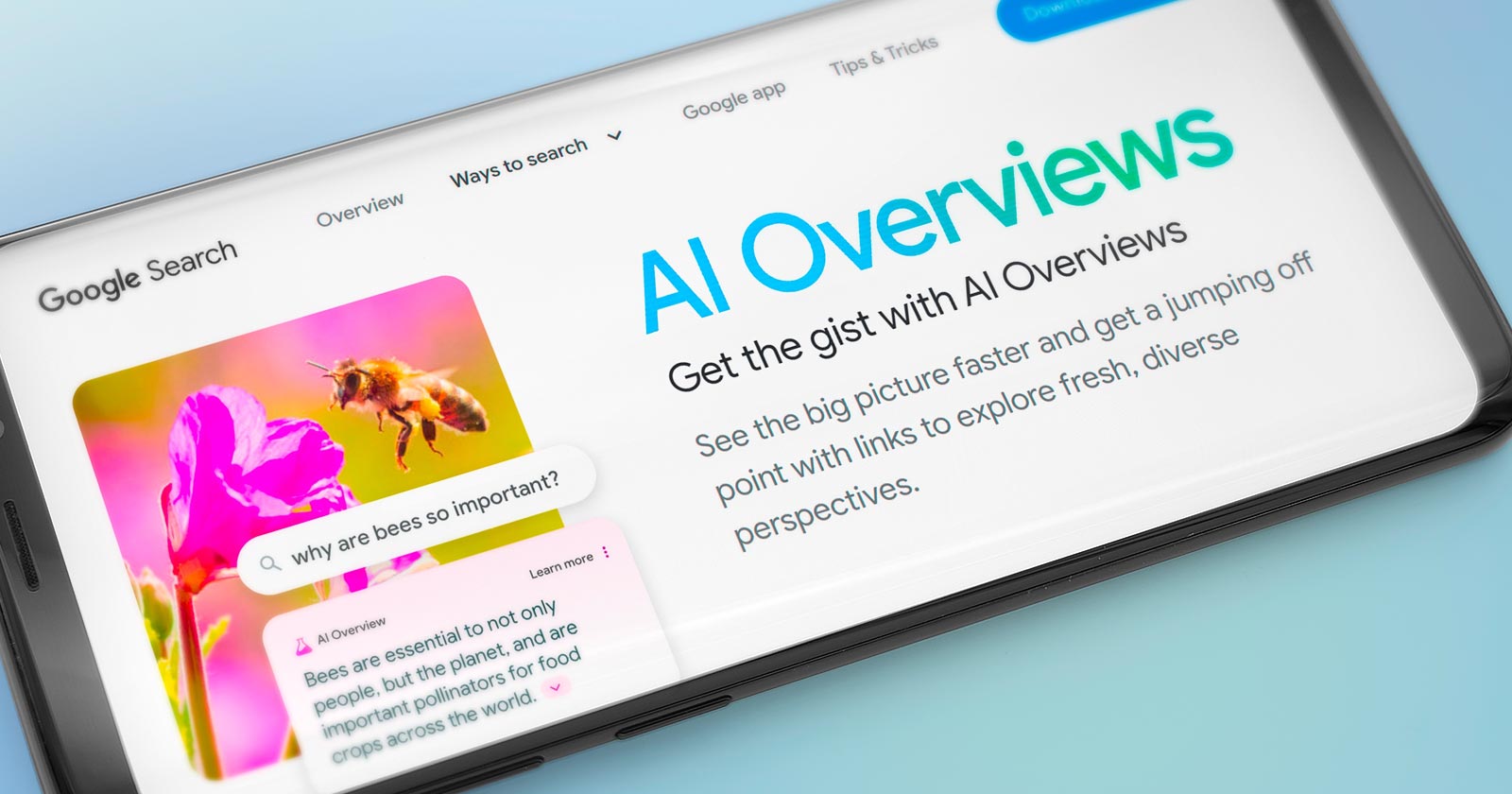
As a marketer, you may feel like the ground is shifting under your feet with so many changes in the world of search. From Google’s recent announcement to release AI Overviews to all U.S. users to OpenAI revealing GPT-4o, there’s a lot to keep up with.

How will these changes impact your search efforts? Do you need to shift your search strategy?

We have the answers for you and more!

In this blog, we’ll explain how search marketing has changed, what this means for your brand, and share tactics to improve your online visibility. At the end, we’ll also introduce our new game-changer for local search management.

Let’s get into it!

The Evolution Of Search Marketing

As search evolves, many marketers are worried about their brand remaining visible online. While AI-generated search experiences are so new, we do know that now isn’t the time to make any drastic changes to your search marketing strategies.

You can test how your brand appears in generative AI (genAI) results (what we’ve dubbed GAIRs), but there’s no reason to sound an alarm — at least not yet.

Today, nearly three-quarters of consumers conduct local searches at least once a week. Similarly, in the U.S., over 800 million monthly searches contain some variation of “near me,” and more than 5 million keywords are related to “near me.”

Focusing on conventional local SEO efforts is the best way for your brand to ensure its visibility in traditional and GAIRs.

Local SEO for businesses with multiple locations involves incorporating a local SEO strategy for each business location. A multi-location SEO strategy, when done correctly, will boost your local search rankings, help you gain local customers, and improve brand awareness.

If your business doesn’t have multiple locations, you can still follow the tactics below to ensure your business is visible to your target audience in your specific area.

5 Ways To Improve Your Online Visibility

Now that you understand how search has evolved and the importance of local SEO, let’s dive into five local SEO tactics your brand can leverage to boost online visibility.

1. Claim & Optimize Local Listings

Local listings are online profiles of local businesses. They appear on search engines, local directories, and platforms like Google, Apple Maps, Yelp, Bing, and Facebook.

To increase your visibility on Google and beyond, your brand must claim local listings across all major local directories and remove duplicate listings.

Additionally, you need consistent and accurate information across all listings. At a minimum, your local listings should include the following information:

  • Name, address, and phone number (NAP) citations.
  • Business categories. (Example: Sushi restaurant)
  • Business hours, especially during holidays and major events
  • Products and services your business offers.
  • Links to your website and social media profiles.
  • Attributes. (Example: Curbside pickup or wheelchair-accessible seating)
  • High-quality photos and videos.

After optimizing your local listings, you can focus on your local pages.

2. Create Local Pages For Each Location

A local page, sometimes called a local landing page, is a web page you create for an individual store location or franchisee. It’s similar to local listings but lives on your site rather than an external directory like Yelp or Google.

Your multi-location business might have dozens or hundreds of local pages, each containing specific information about that store and the surrounding area.

Local pages should contain most of the business information found on your local listings. However, they’re also high-conversion pages. Therefore, they should also contain calls to action (CTAs) such as “order now” buttons or promotional sales and discounts.

Well-designed and optimized local pages can help your business appear high in local organic search results. As mentioned, these higher rankings often lead to more conversions and business for your stores!

3. Leverage A Store Locator

Store locators are similar to local pages. A store locator is a web page that lists all of your local stores or third-party dealers that sell your products.

Store locators help move website visitors through the customer journey by displaying valuable location information and unique details about each store. They make it easier for customers to purchase online and to contact or visit local stores.

Well-optimized and compatible store locators and local pages will help improve:

  • Local search rankings.
  • Website traffic and online conversions.
  • Analytics, such as where visitors are searching and coming from.

4. Implement An Online Reputation Management Strategy

While reputation management might not be something you’d consider when you think of improving your online visibility, you’d be surprised. According to local SEO experts, high numerical Google ratings are the sixth highest ranking factor in Google’s local pack and finder. At the same time, the quantity of native Google reviews (with text) is the eighth ranking factor.

A high quantity and quality of reviews don’t just affect local search rankings — they also impact conversion rates. According to our State of Google Reviews research report, an increase in one full star on a Google Business Profile (GBP) corresponds with a 44% increase in conversions.

To improve your reputation management strategy and gain more reviews:

  1. Respond to existing reviews in a personalized manner to show customers you value their feedback.
  2. Utilize social media to encourage customer feedback, ratings, and reviews.
  3. Make leaving a review accessible! Include links to your GBP on your website and in emails.
  4. Monitor the feedback that your business receives from reviews and make adjustments accordingly.

5. Create Unique Content

Generating localized content for your local pages, website, and listings is also essential. You want to ensure that your localized content optimizes and targets specific areas.

For instance, if you’re targeting the keyword “sporting goods store Seattle,” you want to update your URL, title tag, meta description, and headings with locally relevant keywords.

You should also leverage local images, including photos of your stores and products. Remember to include geo-targeted meta descriptions, alternative text, and descriptions within your images.

Types of local content your brand can create include but are not limited to:

  • Blogs.
  • Surveys.
  • Infographics.
  • Whitepapers.
  • Social media content.
  • Neighborhood guides.
  • User-generated content. (UGC)

For a more in-depth look at what it takes to improve your brand’s local SEO strategy, download our Top 10 Things You Should Be Doing in Local SEO Now guide!

How SOCi Can Help

Now that you understand what goes into creating a solid local search strategy, it’s time to boost your brand’s visibility. As marketers, you get how crucial search marketing is, but let’s be real, coming up with a plan to roll it out on a big scale is easier said than done.

That’s where SOCi comes in! We’ve built SOCi for more than a decade to ensure multi-location businesses rank well on local search and social media platforms, can create engaging content, and have the ability to manage each location’s online reputation.

We’ve enhanced our CoMarketing Cloud with SOCi Genius, an AI automation layer to help automate all of your daily localized marketing tasks. As part of SOCi Genius, we recently released Genius Search, a game-changer in search marketing!

As the newest innovation within the CoMarketing Cloud, Genius Search transcends traditional listings management by offering a dynamic, data-driven local search strategy that aligns with evolving consumer behaviors and market trends.

Genius Search uses the top data signals, such as reviews, search keywords and volume, weather, holidays, and others to deliver monthly AI-powered recommendations that can be accepted with the click of a button. Once accepted, these optimizations instantly improve your business listings’ rankings to directly relate to each location’s community.

It’s time to level up your local search strategy, and SOCi is here to help. Request a personalized demo today for more insight on Genius Search and our other Genius products!

Ready to start optimizing your website? Sign up for SOCi and get the data you need to deliver great user experiences.


Image Credits

Featured Image: Image by SOCi. Used with permission.

SEO In Crisis? Moz Search Scientist Warns Of Challenges Ahead via @sejournal, @MattGSouthern

Are the days of organic SEO numbered? That’s the idea raised by a search scientist’s assessment of Google’s AI-powered disruptions.

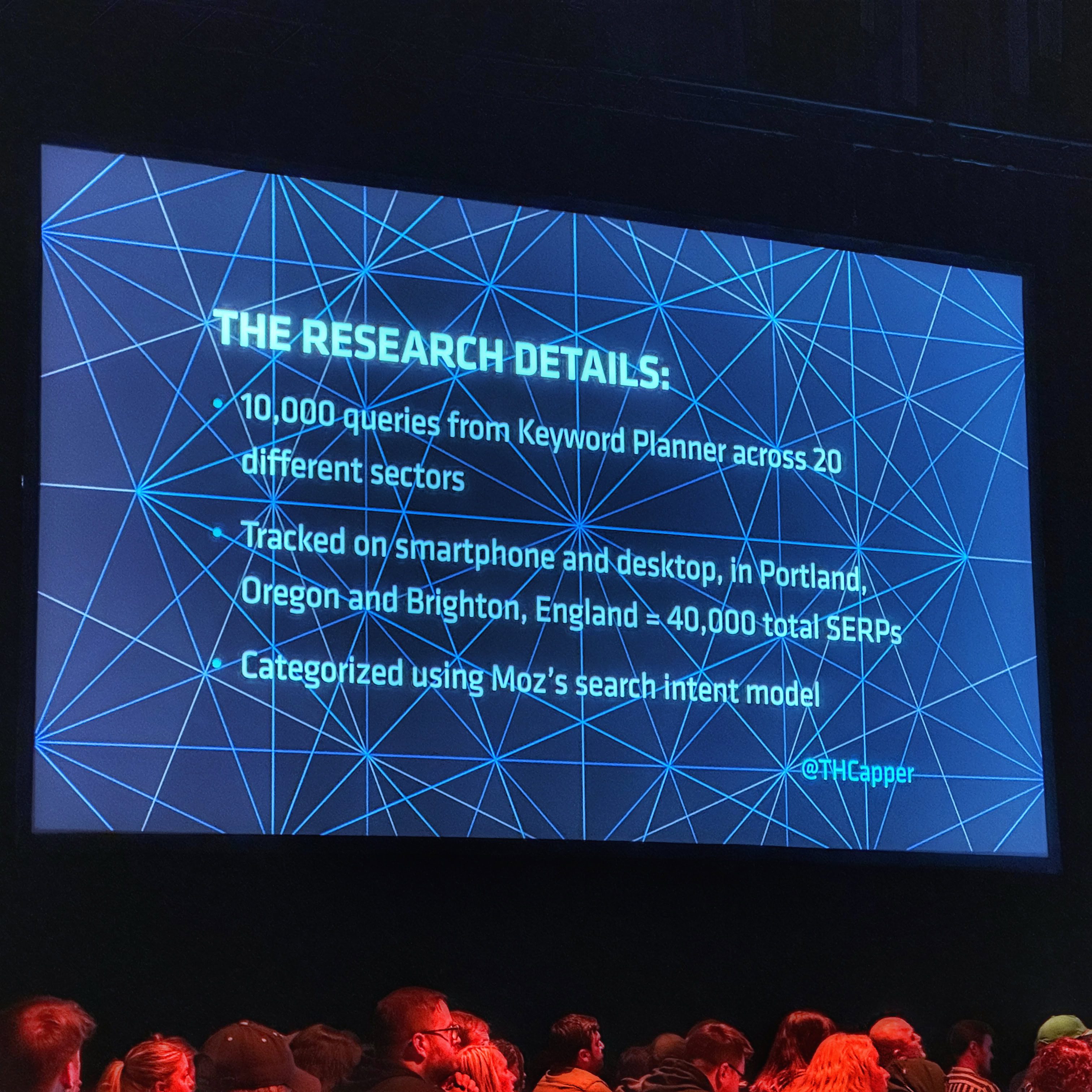
At MozCon’s 20th annual conference, Tom Capper, Moz’s Senior Search Scientist, provided a data-driven reality check.

Capper warned attendees

“At the end of this talk, I’m going to tell you that full-funnel organic marketing is borderline impossible in 2024 for most businesses.”

He examined how Google’s AI overview results, aggressive monetization, and evolving search intents pose challenges for companies relying on SEO.

Additionally, in an exclusive interview with Search Engine Journal, Capper highlighted potential paths forward for those willing to pivot.

Photo taken by author at MozCon, June 2024.

The Zero-Click Threat

Capper opened by chronicling the rise of search “intents” like informational, navigational, commercial, and transactional queries.

Google’s new AI Overview feature, which generates direct answers at the top of the page, has proven particularly disruptive for informational searches.

“Organic is a really tough game for informational intent,” said Capper, displaying data that informational searches have the lowest share of voice for traditional organic results due to AI Overviews and other SERP features.

Photo taken by author at MozCon, June 2024.

He also noted 21% of informational searches now surface a Featured Snippet result, which can satisfy users without a click.

“You basically can’t play at the top of the funnel,” he stated bluntly.

AI Overviews A “Mistake”

In the exclusive interview, Capper cautioned that Google’s rush to implement AI overviews could negatively impact the company’s brand image:

“I think Google has gone too soon and rushed this, and yeah, I do think it’s a mistake. That is a little bit dangerous for SEO in that if Google suffers, then that’s disruptive for our industry as well.”

The Commercial Battleground

While the data is dire for informational content, Capper says commercial searches represent a “sweet spot.”

However, these valuable mid-funnel queries have become a “turbulent” and “incredibly contested” battleground.

Weighing in on the Google product reviews update and other recent changes, Capper said:

“Commercial is where a lot of this [Google’s search quality issues] plays out…it’s become an incredibly volatile section.”

Major sites like Amazon, Reddit, and YouTube dominate commercial results alongside a glut of price listings and review rich results. This raises the bar for smaller sites trying to rank.

“There are arts, hobbies, real estate – much more realistic to try and compete in here,” Capper advised.

He warned publishers who rely solely on easily answered questions,

“If that’s what you’ve been doing, you’ve probably been suffering for a long time…If you’re not willing to pivot to any other kind of content, then yeah, sure, go. Find a different channel.”

The Paid & Local Future?

At the bottom funnel, Capper described transactional searches as “pay-to-play unless you’re a brick-and-mortar business.”

Google’s monetization of product listings and its experimental map embeds for transactional queries continue to squeeze out organic visibility.

However, Capper highlighted local SEO as a promising path forward, stating:

“If you can do well in local search, I think even in a worst-case scenario AI Overview rollout, you would still be doing well here.”

Adapting To The Changing Landscape

Despite the challenges posed by AI-powered search features, Capper believes there are still opportunities for organic marketing success.

He offers the following recommendations:

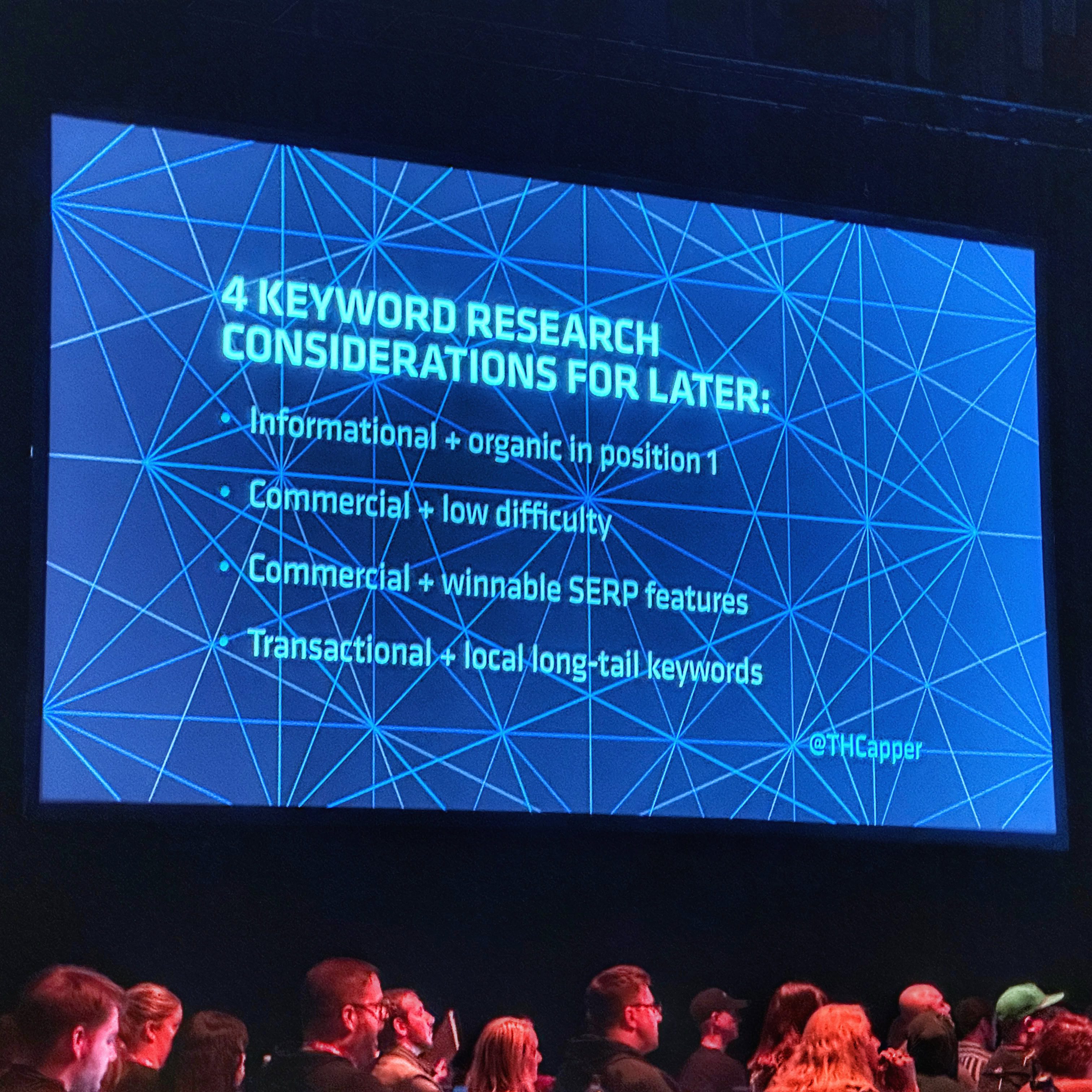
  • Target informational queries that don’t have a featured snippet, allowing for better organic visibility.
  • Focus on less competitive commercial queries in verticals like arts, hobbies, and real estate.
  • Leverage local search optimization for transactional queries, even for businesses without a brick-and-mortar presence.
  • Use keyword modifiers like “best,” “compare,” “top,” and “reviews” to identify commercial intent queries.
Photo taken by author at MozCon, June 2024.

Looking To The Future

When asked about his advice for SEO professionals who may be disheartened by the AI search revolution, Capper suggests adapting and focusing on creating high-quality, authoritative content.

Capper stated in the exclusive interview:

“If you’ve got any willingness at all to write something more interesting, then I think you can still play an organic.”

Ultimately, Capper remains optimistic about the future of organic search.

In the interview, he points Google’s business model depends on sending organic traffic to other sites:

“I don’t think Google will ever reach the point where Google doesn’t send traffic at all because, ultimately, that’s its business model.

People expect when they search Google that they will end up going to other websites; if people don’t have that expectation, they won’t click on ads; if people aren’t clicking on ads, Google doesn’t make any money.”

In Summary

While informational and transactional searches have become challenging to rank for organically, Capper’s research suggests there are opportunities in commercial and local spaces.

To adapt, he recommends focusing on less competitive commercial topics, leveraging local SEO for transactional queries, and creating content beyond simply answering basic questions.


Featured Image: KieferPix/Shutterstock

The Rise Of Reddit: How You Can Leverage The Platform That’s Revolutionizing Search via @sejournal, @hethr_campbell

It’s no secret that Reddit is making major waves in the digital marketing landscape.

But what does that mean for your strategy?

Join us live on June 12 as we dive into how Reddit is shaping the future of search and how you can leverage it to your advantage. 

With Google investing $60 million to access Reddit’s real-time content and OpenAI integrating it into ChatGPT, Reddit’s visibility on search engines and AI platforms has skyrocketed. 

So if your goal is to get your brand and content in front of evolving search audiences, knowing how to navigate Reddit is now essential. 

In this insightful webinar, our Managing Partner and Co-Owner, Brent Csutoras, will lead an engaging discussion about how to strategically position your brand on Reddit to capitalize on its growing influence.

As a Reddit expert with over 18 years of experience on the platform, Brent will guide you through how you can effectively navigate Subreddits and engage with communities without violating platform rules.

Here are some key talking points we’ll cover during the presentation: 

  • Reddit as an Influencer Over the Years: Explore Reddit’s major impact on SERPs, as well as its evolution.
  • Recent Changes and Partnerships: Discuss Google’s and OpenAI’s recent investments and how they enhance Reddit’s significance.
  • Understanding Reddit: Get a comprehensive look at the platform, how it works, how to approach it, and how to become an active member.
  • Engagement Opportunities: Identify and outline various opportunities on Reddit.

Reddit has always been a goldmine for real-time conversations and target audiences, but recent developments have catapulted its significance to new heights. 

Don’t miss this chance to discover Reddit best practices and unlock the power of authentic engagement in the AI-powered search era.

Sign up now and learn how taking advantage of this platform can help you captivate your target audience and boost brand visibility.

Be sure to stay for the live Q&A session, as Brent will be answering your most pressing Reddit questions after the presentation. 

Can’t make it on the 12th? We’ve got you covered! Simply register here and we’ll send you a recording of the webinar to view at your convenience.

Google AI Overviews: New Research Offers Insights via @sejournal, @martinibuster

New research by BrightEdge offers a snapshot of the kinds of queries that tend to show Google AI Overviews (AIO) and provides insights into the kinds of queries and verticals where AIO are more prevalent.

The findings show dramatic differences in the amount of AI Overviews shown across different verticals in a way that reflects the kinds of queries that are common. This effect works in reverse as well, where some verticals experience less AIO search features.

Is This A Paradigm Shift?

While BrightEdge calls it the greatest paradigm shift in decades, I think that’s understating shifts to Google search in the recent past, not just the ones in 2024. Something that’s not widely understood is that Google Search has been an AI Search engine since at least 2015 with the introduction of RankBrain and other subsequent changes to the backend side of search.

The big change in Search this year is that AI is more obvious on the front-end as a Feature in Search, largely replacing the role that Featured Snippets once played. Perhaps more importantly there may have been an infrastructure change at the beginning of 2024.

BrightEdge Generative Parser

BrightEdge has a technology, called the Generative Parser, which tracks and analyzes patterns in Google’s AI search features. BrightEdge used their Generative Parser to produce research findings about Google’s new AI Overviews (AIO) search feature.

Albert Gouyet, VP of Operations at BrightEdge said this about the BrightEdge Generative Parser:

“It’s fascinating to see the BrightEdge Generative Parser™ giving marketers a front-row seat into how AI in search is developing and giving the community a glimpse into the future. For marketers who rely on organic traffic, early indications suggest that AI will help reach new customers and present new opportunities to create content that serves multiple needs and elevates brand performance.”

What Triggers AIO

BrightEdge’s report indicates that Featured Snippets and questions were likely to trigger the AIO feature. Featured Snippets are answers to questions that are created with direct quotes from websites. BrightEdge found that AI Overviews were more likely to appear when there was also a Featured Snippet.

What Doesn’t Trigger AI Overviews

The research showed that local search queries were the least likeliest to trigger an AI Overview search result. That makes sense because a user is looking for a structured search result (business names, addresses, phone numbers), information that can’t be usefully summarized.

Similarly, search queries that generate sitelinks were also less likely to trigger AIO. Sitelinks are search results related to branded searches which feature multiple links to inner pages of a website. For example, searching for the name of a clothing store can generate a search result that features inner pages for women’s clothes, men’s clothes, etc. This also makes sense because it’s the kind of search query that is best answered with direct data and not a summary.

Verticals Most Likely To Contain AIO

Search results that tended to feature AI Overviews were wildly different when compared by verticals (verticals means specific industries or topics). This likely doesn’t mean that Google was targeting specific verticals for showing more AIO. Search features are always tied to the helpfulness of the features. The helpfulness of features are tested with the Search Quality Raters, workers who test out new kinds of search results and rate them for helpfulness and other criteria.

Search queries related to Healthcare tended to generate AI Overviews at a rate of 63% of the time. That makes sense for search queries that are information-seeking.

B2B technology queries tended to generate AIO results 32% of the time while Ecommerce search queries triggered AI Overviews 23% of the time.

Interestingly, restaurants and travel related queries did not tend to trigger AIO results.

AIO Shown Less Often Than SGE

Another interesting data point is that AIO is triggered 20% less times than Search Generative Experience (SGE) answers were.

BrightEdge offered three insights related to why AIO is shown less than the experimental SGE was.

  1. “This indicates that AI is getting more precise when generating helpful experiences.
  2. This is likely because AI now caters better to people’s needs, such as looking for summaries, recommendations, or conversational experiences.
  3. Ultimately, Google is getting better at selecting answers.”

BrightEdge research pointed out that Google is improving the ability to anticipate follow up questions by providing AI search summaries that more completely answer a question.

They write:

“Since Google l/O, the overlap between citations in AI and traditional results has diminished. Google is ensuring users do not get the same results in the two types of different results. It is also now delivering on its promise to do the second, third, and fourth search for you. AI is beginning to anticipate the following question and give options before a user even asks. This often happens with ‘what,’ ‘where,’ and ‘how’ intent-based queries.”

Early Days Of AIO

Google has received overwhelmingly negative reviews from users and the news media about the quality of Google’s AI Overviews, which in turn can lead to trust issues. BrightEdge’s report can be considered a snapshot of Google AIO today and I’m certain BrightEdge will be back with new data in the future when Google’s (AI) SERPs eventually change again.

Featured image by Shutterstock/Marco Lazzarini

2,596: How To Make The Most Out Of Google’s Leaked Ranking Factors via @sejournal, @Kevin_Indig

Over the last week, I observed many arguments against digging deep into the 2,596 pages.

But the only question we should ask ourselves is, “How can I test and learn as much as possible from these documents?”

SEO is an applied science where theory is not the end goal but the basis for experiments.

Image Credit: Lyna ™

Boost your skills with Growth Memo’s weekly expert insights. Subscribe for free!

14,000 Test Ideas

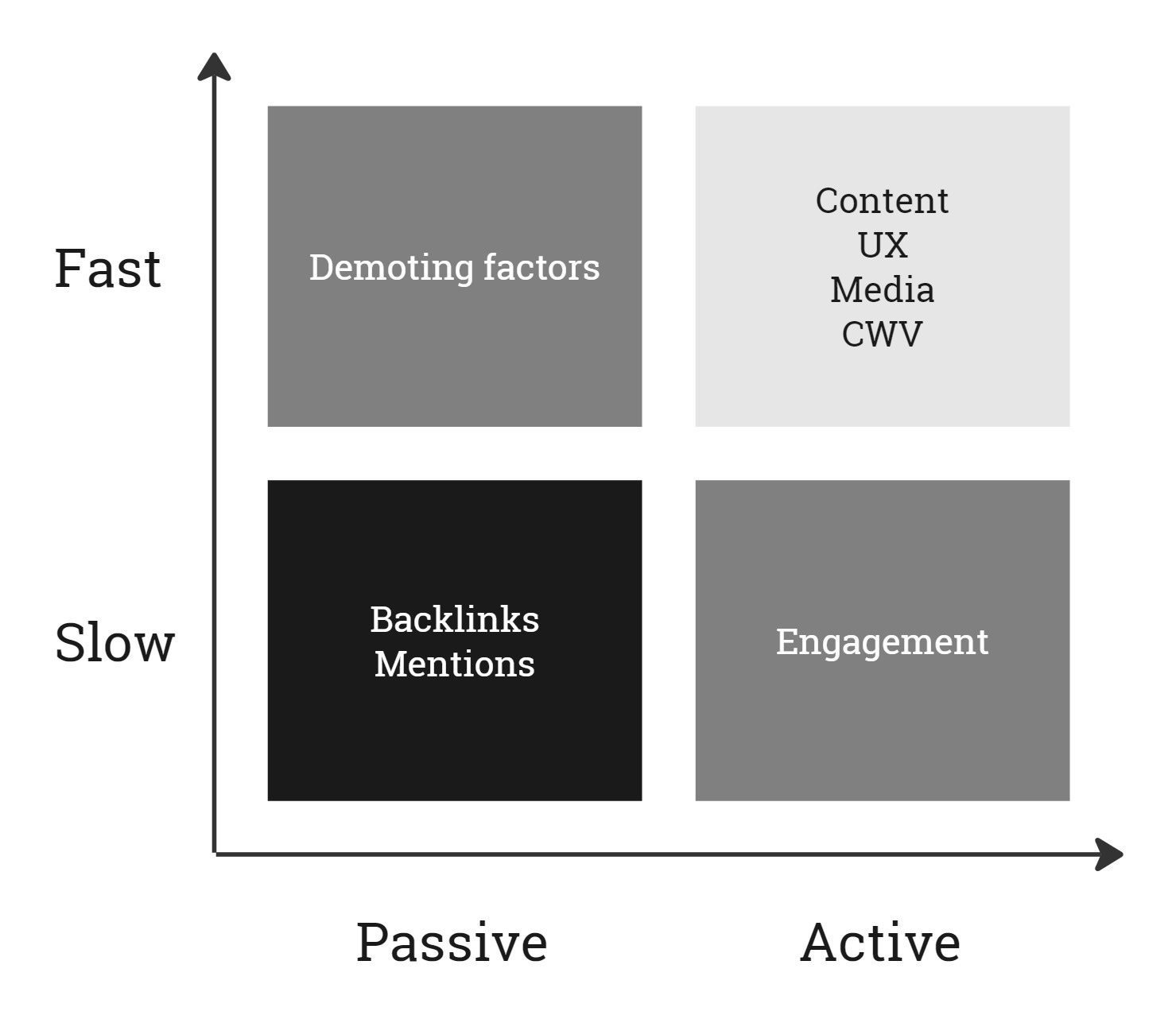
You couldn’t ask for a better breeding ground for test ideas. But we cannot test every factor the same way. They have different types (number/integer: range, Boolean: yes/no, string: word/list) and reaction times (meaning the speed at which they lead to a change in organic rank).

As a result, we can A/B test fast and active factors while we have to before/after test slow and passive ones.

A 2x2 grid with axes labeled Prioritize tests by speed. (Image Credit: Kevin Indig)

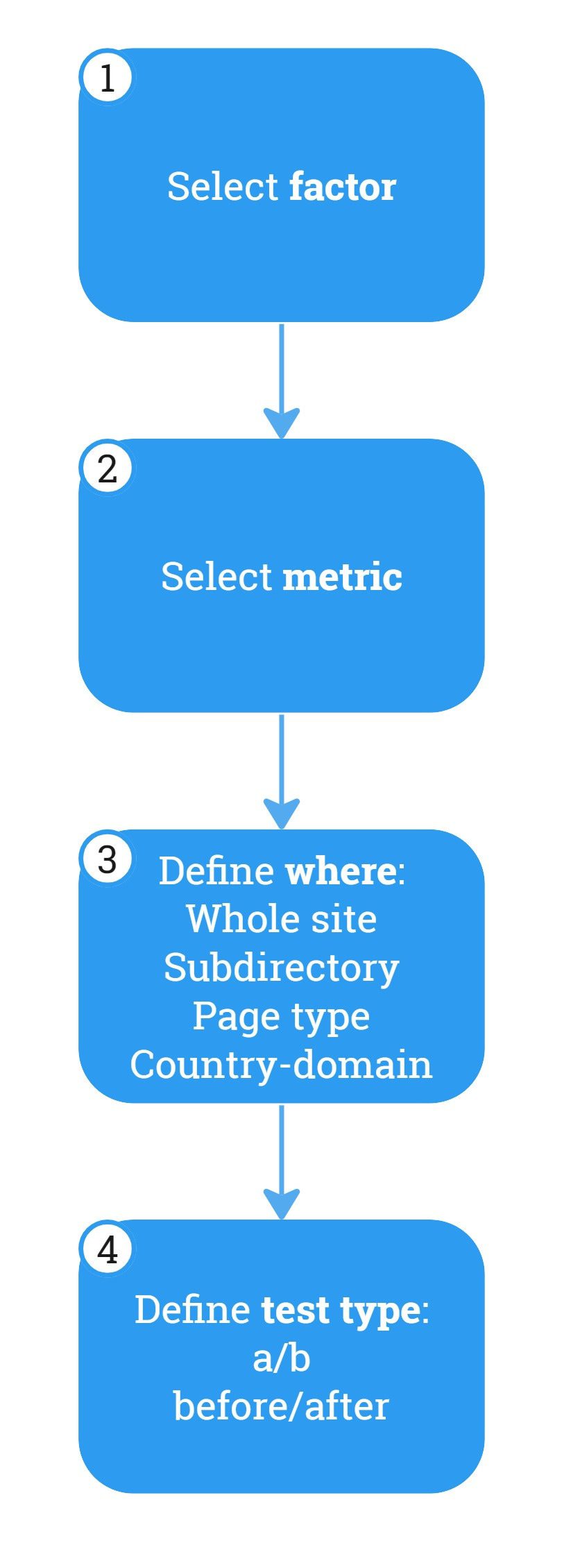
Test ranking factors systematically by:

  1. Selecting a ranking factor.
  2. Selecting the impacted (success) metric.
  3. Define where you test.
  4. Define the type of test.
Flowchart detailing four steps of testing ranking factors systematically.Image Credit: Kevin Indig

Ranking Factors

Most ranking factors in the leak are integers, meaning they work on a spectrum, but some Boolean factors are easy to test:

  • Image compression: Yes/No?
  • Intrusive interstitials: Yes/No?
  • Core Web Vitals: Yes/No?

Factors you can directly control:

  • UX (navigation, font size, line spacing, image quality).
  • Content (fresh, optimized titles, not duplicative, rich in relevant entities, focus on one user intent, high effort, crediting original sources, using canonical forms of a word instead of slang, high-quality UGC, expert author).
  • User engagement (high rate of task completion).

Demoting (negative) ranking factors:

  • Links from low-quality pages and domains.
  • Aggressive anchor text (unless you have an extremely strong link profile).
  • Poor navigation.
  • Poor user signals.

Factors you can only influence passively:

  • Title match and relevance between source and linked document.
  • Link clicks.
  • Links from new and trusted pages.
  • Domain authority.
  • Brand mentions.
  • Homepage PageRank.

Start with an assessment of your performance in the area you want to test in. A straightforward use case would be Core Web Vitals.

Metrics

Pick the right metric for the right factor based on the description in the leaked document or your understanding of how a factor might impact a metric:

  • Crawl rate.
  • Indexing (Yes/No).
  • Rank (for main keyword).
  • Click-through rate (CTR).
  • Engagement.
  • Keywords a page ranks for.
  • Organic clicks.
  • Impressions.
  • Rich snippets.

Where To Test

Find the right place to test:

  • If you’re skeptical, use a country-specific domain or a site where you can test with low risk. If you have a site in many languages, you can roll out changes based on the leaks in one country and compare relative performance against your core country.
  • You can limit tests to a one-page type or subdirectory to isolate the impact as well as you can.
  • Limit tests to pages addressing a specific type of keyword (e.g., “Best X”) or user intent (e.g., ”Read reviews”).

Some ranking factors are sitewide signals, like site authority, and others are page-specific, like click-through rates.

Considerations

Ranking factors can work with or against each other since they’re part of an equation.

Humans are notoriously bad at intuitively understanding functions with many variables, which means we most likely underestimate how much goes into achieving a high rank score, but also how a few variables can significantly impact the outcome.

The high complexity of the relationship between ranking factors shouldn’t keep us from experimenting.

Aggregators can test easier than Integrators because they have more comparable pages that lead to more significant outcomes. Integrators, which have to create content themselves, have differences between every page that dilute test results.

My favorite test: One of the best things you can do for your understanding of SEO is scoring ranking factors by your own perception and then systematically challenge and test your assumptions. Create a spreadsheet with each ranking factor, give it a number between zero and one based on your idea of its importance, and multiply all factors.

Monitoring Systems

Testing only gives us an initial answer to the importance of ranking factors. Monitoring allows us to measure relationships over time and come to more robust conclusions.

The idea is to track metrics that reflect ranking factors, like CTR could reflect title optimization, and chart them over time to see whether optimization bears fruit. The idea no different from regular (or what should be regular) monitoring, except for new metrics.

You can build monitoring systems in:

  • Looker.
  • Amplitude.
  • Mixpanel.
  • Tableau.
  • Domo.
  • Geckoboard.
  • GoodData.
  • Power BI.

The tool is not as important as the right metrics and URL path.

Example Metrics

Measure metrics by page type or a set of URLs over time to measure the impact of optimizations.

Note: I’m using thresholds based on my personal experience that you should challenge.

User Engagement:

  • Average number of clicks on navigation.
  • Average scroll depth.
  • CTR (SERP to site).

Backlink Quality:

  • % of links with high topic-fit/title-fit between source and target.
  • % of links of pages that are younger than 1 year.
  • % of links from pages that rank for at least one keyword in the top 10.

Page Quality:

  • Average dwell time (compared between pages of the same type).
  • % users who spend at least 30 seconds on the site.
  • % of pages that rank in the top 3 for their target keyword.

Site Quality:

  • % of pages that drive organic traffic.
  • % of zero-click URLs over the last 90 days.
  • Ratio between indexed and non-indexed pages.

It’s ironic that the leak happened shortly after Google started showing AI for results (AI Overviews) because we can use AI to find SEO gaps based on the leak.

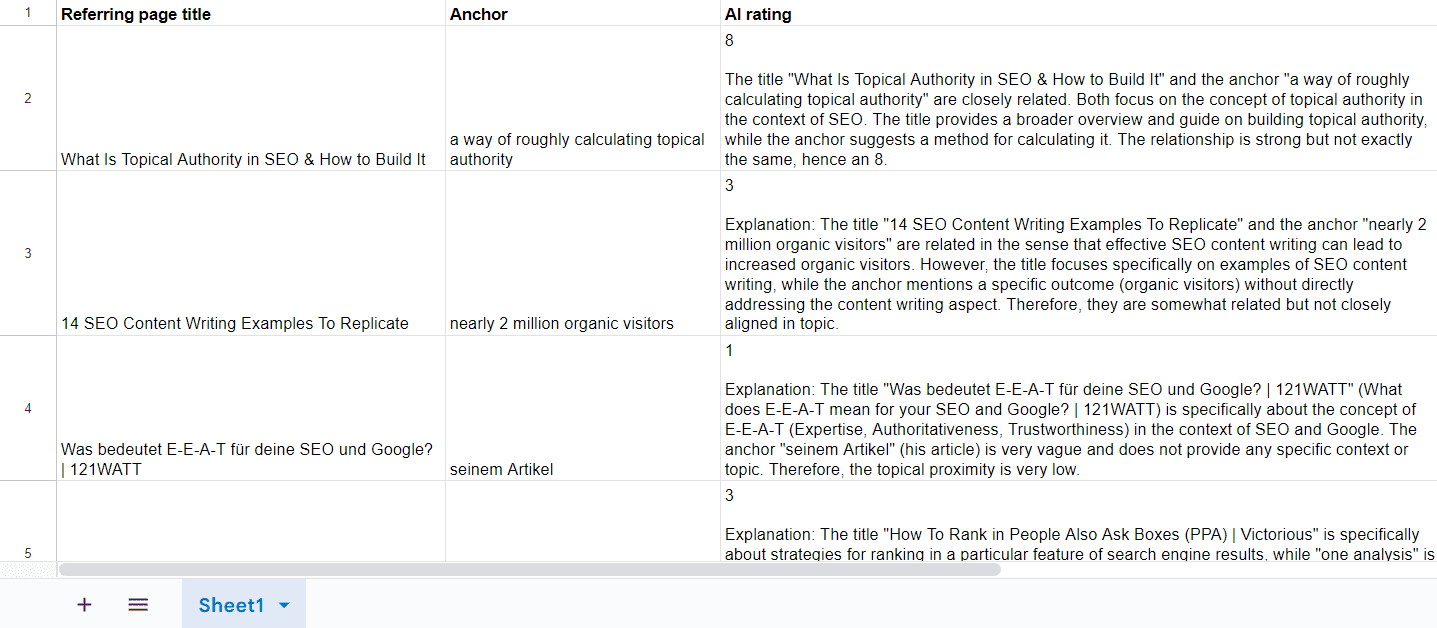
One example is title matching between source and target for backlinks. With common SEO tools, we can pull titles, anchor text, and surrounding content of the link for referring and target pages.

We can then rate the topical proximity or token overlap with common AI tools, Google Sheets/Excel integrations, or local LLMs and basic prompts like “Rate the topical proximity of the title (column B) compared to the anchor (column C) on a scale of 1 to 10 with 10 being exactly the same and 1 having no relationship at all.”

A spreadsheet displaying SEO page titles, anchors, AI ratings, and explanations. Using AI to rate title-match between link sources and targets. (Image Credit: Kevin Indig)

A Leak Of Their Own

Google’s ranking factor leak isn’t the first time the inner works of a big platform algorithm became available to the public:

1. In January 2023, a Yandex leak revealed many ranking factors that we also found in the latest Google leak. The underwhelming reaction surprised me just as much back then as today.

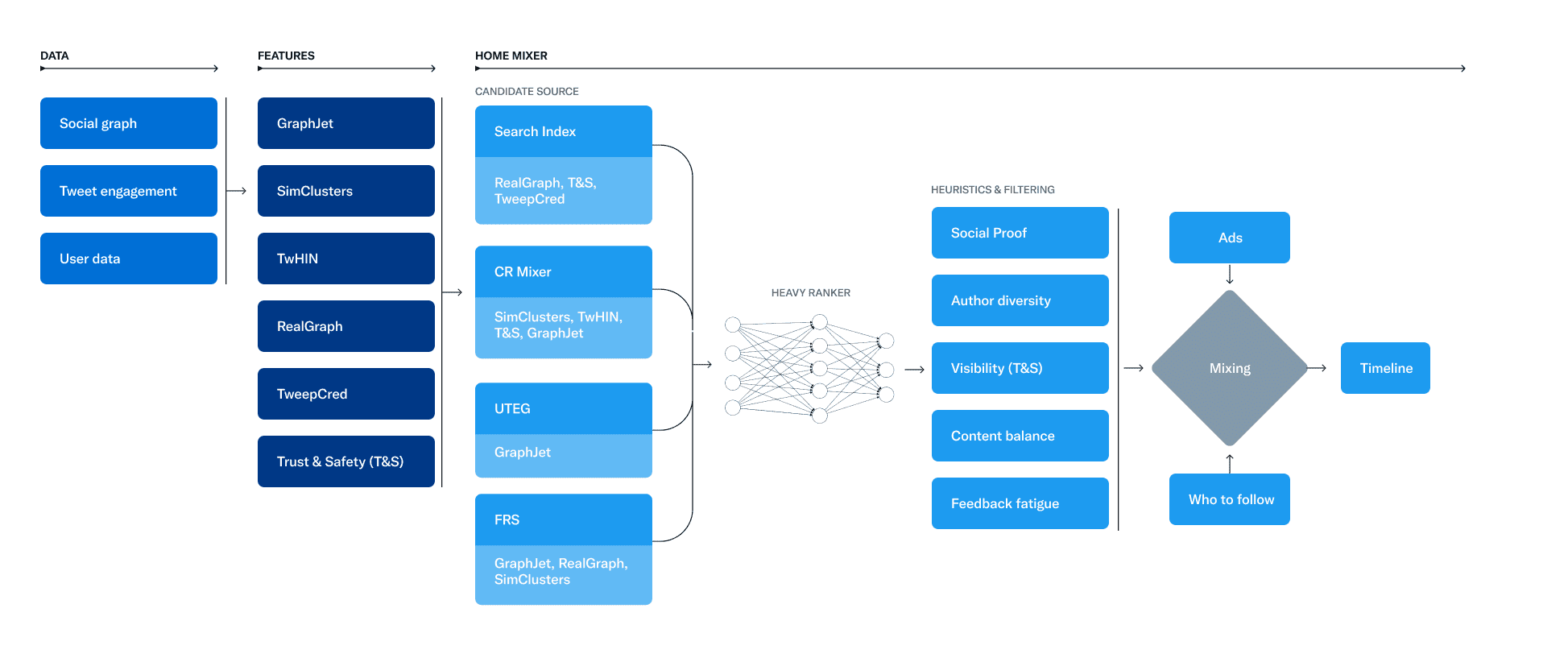
2. In March 2023, Twitter published most parts of its algorithm. Similar to the Google leak, it lacks “context” between the factors, but it was insightful nonetheless.

Twitter’s algorithm in a system chart.Twitter’s algorithm in a system chart. (Image Credit: Kevin Indig)

3. Also in March 2023, Instagram’s chief Adam Mosseri published an in-depth follow-up post on how the platform ranks content in different parts of its product.

Despite the leaks, there are no known cases of a user or brand hacking the platform in a clean, ethical way.

The more a platform rewards engagement in its algorithm, the harder it is to game. And yet, the Google algorithm leak is quite interesting because it’s an intent-driven platform where users indicate their interest through searches instead of behavior.

As a result, knowing the ingredients for the cake is a big step forward, even without knowing how much of each to use.

I cannot understand why Google has been so secret about ranking factors all along. I’m not saying it should have published them in the degree of the leak. It could have incentivized a better web with fast, easy-to-navigate, good-looking, informative sites.

Instead, it left people guessing too much, which led to a lot of poor content, which led to algorithm updates that cost many businesses a lot of money.


System Diagram from Github.com

Instagram Ranking Explained


Featured Image: Paulo Bobita/Search Engine Journal

How To Increase Website Traffic After The Google Update: 5 Blogger-Tested Tips via @sejournal, @getStay22

This post was sponsored by Stay22. The opinions expressed in this article are the sponsor’s own.

The latest Google update hit our partners – travel bloggers – hard. Despite the challenges presented by this update, we are amazed by their resilience.

Although we cannot influence Google, we can definitely take charge of the things within our reach.

Here are five travel blogger-tested ways to increase website traffic after the latest Google update.

Get the most out of each visitor. Check out our guide, Ten Tips for Maximizing Revenue for Travel Bloggers.

1. Use Pinterest As An Additional Search Engine

Many people think of Pinterest as a social media platform, but it functions much more as a search engine.

Pinterest’s tools make it a fantastic way to get visitors to your website.

How To Get Started With Pinterest

  1. Create a new business account or link/convert a personal account to gain access to business tools like Pinterest Business Hub and Pinterest Analytics, which allow you to monitor searches and keywords.
  2. Write a catchy bio for your profile. If you have niche keywords you use on your website, include them here.
  3. Claim your website, allowing you to track whenever someone shares your website content on Pinterest. Additionally, it will automatically include your Pinterest profile and a follow button so you can attract more visitors.

How To Use Pinterest Like A Pro

Pinterest is built around pictures, so having great visuals is critical. You want to make yours stand out on the page.

  1. When you travel, snap many pictures and pick the best ones later.
  2. Use design tools like Canva to add text, create interesting layouts, and add branding elements.
  3. Create boards to organize your content into categories, such as by destination or blog post type.
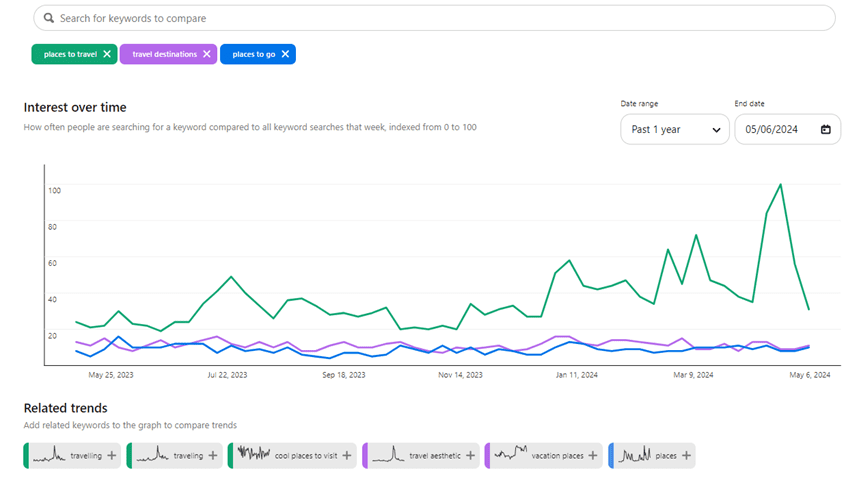
  4. Just like any other search engine, keyword research is necessary on Pinterest. Use business tools like Pinterest Trends, which lets you see keyword search volume and which pins are most popular for them.
  5. Use your selected keywords everywhere possible, including pin titles, pin descriptions, and board descriptions.
Screenshot from Pinterest Trends, June 2024

Before you start pinning, optimize your blog posts to maximize revenue to ensure every visitor counts. See how to do that in our guide Ten Tips for Maximizing Revenue for Travel Bloggers.

2. Keep Visitors Engaged With Email Marketing

Email marketing is important because you own it. Instagram could ban your account, Google can derank you, but your email list is always yours.

Use this strategy to build less volatile, consistent traffic instead of new traffic.

How To Get Started With Email Marketing

  1. Select an email marketing provider. Travel bloggers love MailerLite and MailChimp because they are low-cost and simple.
  2. Start collecting email addresses. Create a mailing list signup form with your website host and insert it at the end of posts to collect your readers’ information.

How To Use Email Marketing Like A Pro

  1. Create a lead magnet that entices readers to share their information in exchange for it. Popular lead magnets in the travel blogging community are travel guides, ebooks, and itineraries.
  2. The goal of email is to get your reader onto your site. Keep your emails short and include impressive pictures and a clear link to your website. Leave them wanting more so that they click through.
  3. Before sending an email directing traffic to one of your pages, ensure the page is set up to maximize revenue. See how in our guide, Ten Tips for Maximizing Revenue for Travel Bloggers.

“While SEO is often touted as the king of traffic, good email marketing is the absolute queen. We regularly see spikes in our web analytics when we email our audience, but those spikes aren’t just temporary. They help our users build habits. We simply wouldn’t have nearly the business we have today without activating our email list.”

Beth Stanos, Wanderful CEO & Founder

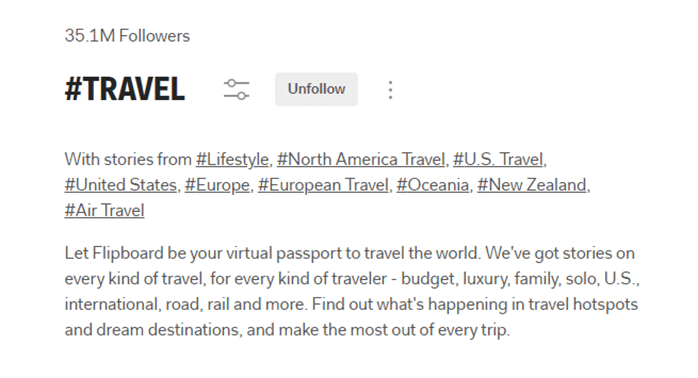
    3. Add Your Content To Flipboard To Grab More Website Visits

    Flipboard is an article curation website that lets users flip through articles from different publications, like magazines.

    How To Get Started With Flipboard

    1. Download the Flipboard app on mobile and create an account and profile.
    2. Create Flipboard magazines. These are topic categories that group your content (much like Pinterest boards).
    3. Add your blog posts to them from the magazine page on Flipboard or the Flipit Chrome bookmark.
    Screenshot taken from Flipboard, June 2024

    How To Use Flipboard Like A Pro

    1. Add your fresh blog posts to Flipboard right after publishing.
    2. Add relevant content to your magazines that isn’t your own. Engaging with other bloggers’ content and maintaining new content in your magazines helps your reach.
    3. Include your target keywords in your magazine descriptions, post captions, and profile.

    “Flipboard has become a major traffic source for all 3 of my websites. They have fantastic tools for creators, like storyboards, scheduling, and RSS feeds for magazines, making creating and sharing compelling content easy.”

    Amanda O’Brien, theboutiqueadventurer.com Founder

    4. Get Discovered With Short-Form Videos On Social Media

    Did you know 77% of travelers use social media when planning their trips? Get their eyes on your content with short-form videos on platforms like TikTok, Instagram, and YouTube shorts.

    These platforms have algorithms to serve your content to people who don’t follow you, making them ideal for readers to discover you.

    How To Get Started Making Videos

    1. Create your accounts on YouTube, Instagram, and TikTok.
    2. Download Capcut, a free mobile app for video editing. It’s better than the in-app editing functionality, with pre-installed templates and effects.
    3. Create a Linktree account or an alternative. All three platforms make it difficult for users to leave and visit your site, so a place where users can go for all your links is necessary.
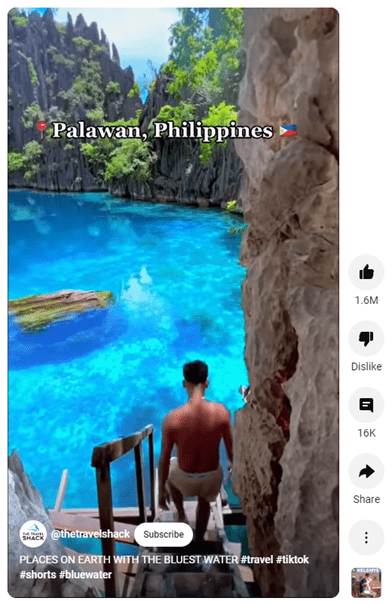
    “PLACES ON EARTH WITH THE BLUEST WATER” by @thetravelshack, June 2024

    How To Make Short Video Content Like A Pro

    1. While traveling, keep video creation in the back of your mind. When you see eye-catching scenery or an interesting environment, be ready to capture it in video. Your video’s “wow” factor differentiates between a mediocre and a fantastic video.
    2. On Instagram, write detailed captions. On YouTube and TikTok, keep captions as brief as possible.
    3. Voice-over, on-screen text, and music are crucial to your engagement rate. You can add these with Capcut or in-app.
    4. Pick your video thumbnails carefully. Make sure they stand out in a grid of other videos.
    5. Finally, keep your short video short. The ideal length for a Reel is seven to eleven seconds, a TikTok 21 to 34 seconds, and a YouTube Short 25 to 35 seconds.

    “TikTok helped us to get our second blog on Mediavine. We shared detailed videos about “how to do something” and always included a call to action, directing viewers to our blog for more information. In recent years, we’ve had videos go viral while encouraging followers to visit the link in our bio. This has resulted in thousands of clicks to our websites.”

    Natasha Alden, theworldpursuit.com Co-Founder

    5. Expose Yourself To New Audiences With Guest Posting

    Having your writing published on another website gives you access to a whole new audience, making it an excellent strategy for attracting new readers.

    How To Start Guest Posting

    1. Find places that accept guest posts. Many publications have open submissions that you can submit to.
    2. If you see a site that has guest posts but no open submissions, find their contact information and send an inquiry email.
    3. Create a pitch by explaining your travel expertise and provide writing samples.

    How To Guest Post Like A Pro

    1. When creating your pitch, understand the site’s needs. What content gaps do they have? Focus your pitch there.
    2. Organic guest posting opportunities arise if you take the time to network. Meeting and developing friendships with travel bloggers is a great way to share audiences. You can network on social media, as well as in-person events like TBEX, TravelCon, and Traverse.
    3. Create a clear link back to your blog and include a catchy description so readers will be enticed to read more of your content.
    4. Strategize by monitoring the traffic of potential sites with tools like SEMRush and pick the best option.
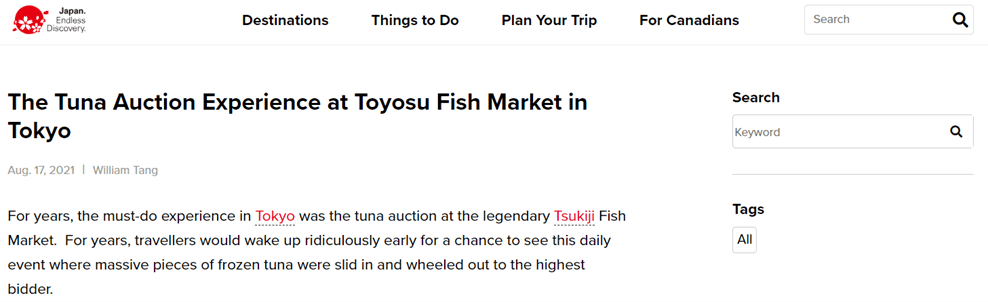
    Screenshot from japan.travel, June 2024

    “Creating content for another publication to share as a standalone article allows you to share new expertise about a certain area. Whether through the article itself or subsequent social shares, a new audience gets exposure to you as a writer.”

    William Tang, goingawesomeplaces.com Founder

    See how William Tang made travel blogging his full-time job with the help of Stay22’s revenue-boosting tools. Read the case study.

    Compensate For Traffic Dips By Maximizing Your Revenue.

    Maximize your conversions with strategic CTA placement and Stay22’s cutting-edge AI-powered affiliate tools! Skyrocket your affiliate sales with these proven tips:

    DOWNLOAD OUR GUIDE: Ten Tips for Maximizing Revenue for Travel Bloggers.


    Image Credits

    Featured Image: Image by Shutterstock. Used with permission.
    Yes, Clicks and Engagement Impact SEO

    For years Google denied using clicks on organic listings as a ranking signal. We now know otherwise. Recently revealed documents show Google indeed uses click-related signals in its algorithm.

    Here’s an overview of those documents with my takeaways on the search engine optimization impact.

    Organic Clicks

    At Google’s federal antitrust trial last year, Google Search V.P. Pandu Nayak testified the search engine uses a ranking system called “Navboost” (also called “Glue”) that analyzes user interactions on search results (such as clicks, hovers, scrolls, and swipes) and keeps the data for 13 months.

    Navboost delivers results based on users’ interactions with related search result pages. The system also determines whether search results should include other features, such as videos, featured snippets, “People also ask,” and local packs.

    The same trial produced an internal Google PDF from 2016 naming “user interactions” (i.e., clicks) as one of the top three ranking factors.

    Many in the search engine community have long suspected that Google uses clicks in its ranking algorithm. We’ve also shared that it’s highly limiting, existing only for higher-ranking pages (that generate many clicks). Thus other ranking signals, such as inbound links and on-page relevance and quality, remain fundamental for all but the very top listings.

    Chrome Browser Clicks

    Last month, documents leaked from Google Search’s internal engineering department. The contents revealed the importance of organic clicks on rankings. Moreover, the documents described Google’s monitoring of users’ Chrome browser interactions with websites. Google has denied that for years.

    So, no matter the traffic source, Google knows how visitors using Chrome interact with a website.

    ‘Long clicks’

    SEO pros have theorized for years that click data informs content quality. “Dwell time” and “pogo-sticking” are oft-discussed bounce-rate metrics.

    Thanks to the engineering leak, we know Google does have such a metric, calling it “long clicks.” The longer a ranking page holds users, the better.

    SEO Takeaways

    • Keep a close eye on your highest-traffic pages. Google has the most data about them. Make sure they are engaging and trigger meaningful interactions. Use heatmaps and other usability tools to understand visitors’ actions and optimize accordingly.
    • Focus on meaningful clicks, not just from search results. Try to improve click-throughs from email newsletters and even ads. Google accumulates this data from Chrome. Aim link-building campaigns on those that drive clicks.
    • Optimize page titles as they impact click-throughs on search result pages. Review top SERP listings and snippets regularly to improve clicks. Use structured data where possible to earn rich snippets.
    Top SEO & Content Marketing Trends To Future-Proof Your Strategy via @sejournal, @hethr_campbell

    What are the key SEO and content marketing trends you should prioritize in 2024 and beyond?

    Join us and find out! 

    With search taking on a more human-first and user-centric approach, powered by AI intelligence and collaboration, now’s the time to adapt your strategy.  

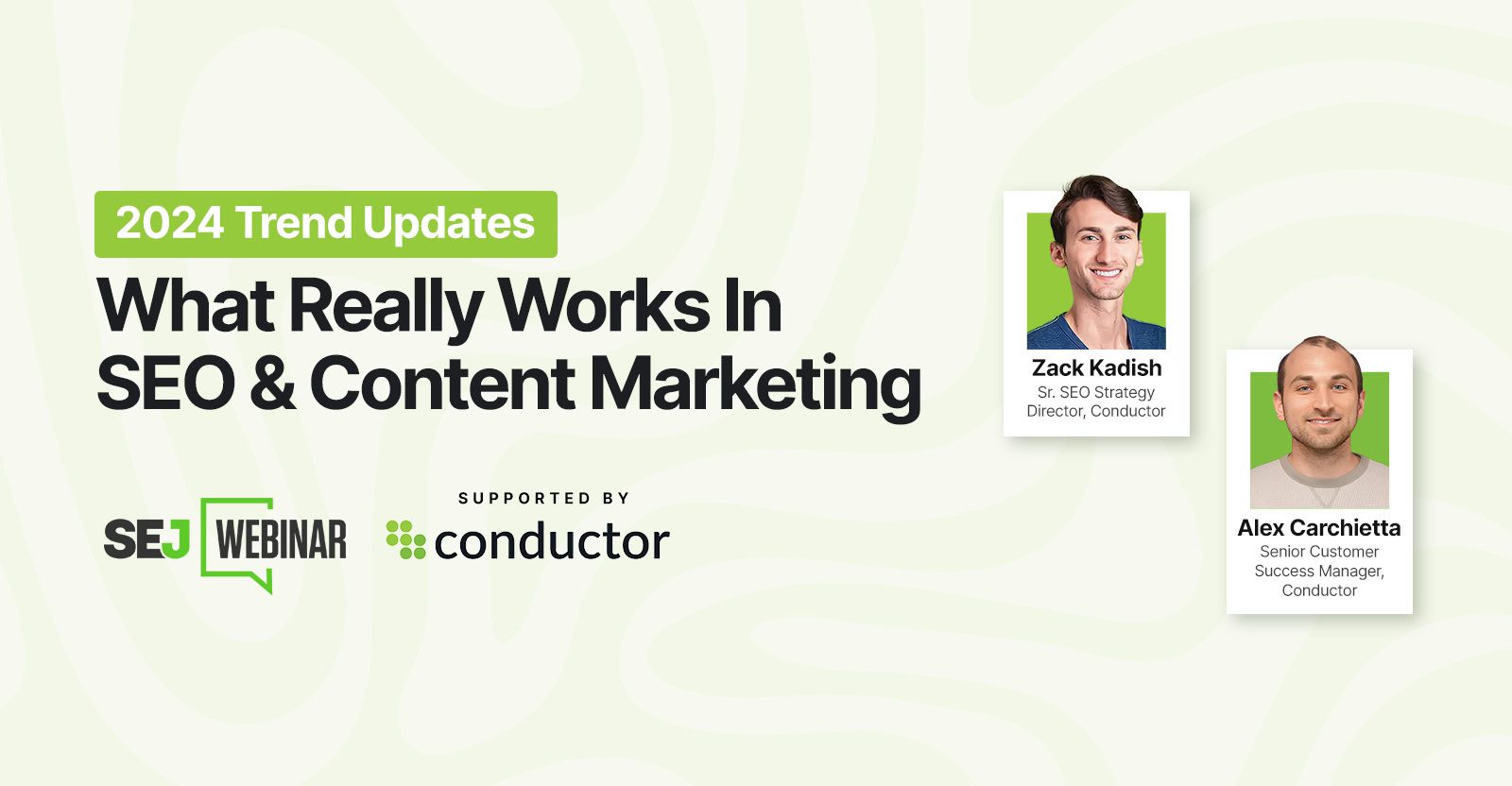
    That’s why on June 18, we’re hosting a live webinar with Conductor about which SEO trends to focus on this year (and which to ignore) in order to drive sustainable growth and success. 

    Here are some key takeaways from the presentation:

    • Predictions on SGE’s Potential Impact on SEO: Understand how Google’s Search Generative Experience (SGE) could transform the SEO landscape and what it means for your strategy.
    • How to Adapt to Industry-Wide Disruptions: Learn best practices for navigating significant changes in search, while maintaining a competitive edge.
    • Deep Dive into E-E-A-T: Discover everything you need to know about Experience, Expertise, Authority, and Trustworthiness (E-E-A-T) and how to integrate these principles into your content.
    • Agile Approach to Algorithm Updates: Find out why flexibility and agility are crucial in responding to rapid and significant changes in Google’s algorithms.  
    • Staying Indexed in 2024: Learn why staying indexed is becoming a new challenge and how to ensure your content remains visible.
    • Trends to Ignore: Save time and resources by identifying which SEO trends aren’t worth your focus.

    In this webinar, Zack Kadish, Sr. SEO Strategy Director at Conductor, and Alex Carchietta, Sr. Customer Success Manager at Conductor, will provide the expert insights you need to thrive in this ever-evolving industry.

    Don’t miss this opportunity to stay ahead of the curve and ensure your SEO and content marketing strategies are primed for the future.

    Plus, if you join us live, Zack and Alex will answer any questions you have at the end of the presentation. 

    Can’t make it to the live event? Sign up anyway, and we’ll send you a recording of the webinar to watch at your convenience.

    Google To Limit AI Overviews For “Nonsensical” Queries via @sejournal, @MattGSouthern

    Google has addressed concerns regarding the accuracy and quality of its AI overview feature in search results.

    The company acknowledges the criticism and odd results generated by the AI overviews but claims that the feature leads to higher user satisfaction and more complex queries being answered.

    As Liz Reid, Head of Google Search, continues to repeat the same talking points, here’s what’s being done about AI overviews.

    Background On AI Overviews

    Google launched AI overviews to provide users with comprehensive responses to complex questions that would have previously required multiple searches.

    The feature is powered by a customized language model integrated with Google’s core web ranking systems.

    Unlike chatbots and other large language model (LLM) products, Google claims that AI overviews are built only to show information backed up by top web results and include relevant links for further exploration.

    Google alleges that, in testing, the accuracy rate for AI overviews is on par with featured snippets, another popular AI-powered search feature.

    Addressing Odd Results & Criticism

    The widespread use of AI overviews by millions of users has surfaced some odd and inaccurate results.

    • Google attributes these issues to several factors, including:
    • Misinterpreting queries
    • Misinterpreting nuances in web content language
    • Limited high-quality information available for specific topics

    In its statement, Google addresses the viral example of “How many rocks should I eat?” which generated an AI overview based on satirical content republished on a geological software provider’s website.

    The company explains that this is an instance of a “data void” or “information gap,” where limited high-quality content is available on a topic.

    Improvements & Updates

    In response to the criticism, Google says it’s made over a dozen technical improvements to AI overviews.

    These updates include:

    • Better detection mechanisms for nonsensical queries
    • Limiting the inclusion of satire and humor content
    • Updating systems to limit the use of potentially misleading user-generated content
    • Adding triggering restrictions for queries where AI overviews were less helpful
    • Enhancing quality protections for sensitive topics like news and health

    Google’s company message is that less than one in every 7 million unique queries with AI overviews contained a content policy violation.

    Why SEJ Cares

    The lessons from Google’s AI overview launch will shape the future of search and have implications for the SEO industry.

    The concerns about accuracy highlight the need for search engines to be transparent about how these AI features work, their limitations, and how issues are being addressed.

    SEO professionals, content creators, and website owners should push for clearer communication. By actively engaging in these discussions, you can guide the responsible use of AI tools.

    Google’s challenges present an opportunity for competitors to prioritize transparency, user trust, and ethical AI deployment to differentiate themselves. It will be interesting to see if anyone steps up to the challenge.


    Featured Image: DIA TV/Shutterstock

    Google Validates Leak, Igniting Questions Around Search Transparency via @sejournal, @MattGSouthern

    Google has officially acknowledged that some internal documents recently leaked online are authentic.

    The files containing details about data Google collects and potentially uses in its search ranking algorithms ignited speculation and analysis within the SEO community.

    Now, there’s a question of whether the leak will cause Google to tighten its already restricted communication channels.

    Background Information

    The existence of the leaked documents was first reported earlier this week by Rand Fishkin and Mike King.

    They claim the materials offer a look under the hood of Google’s closely guarded search engine, suggesting the company tracks data like user clicks and Chrome browsing activity – signals that Google representatives have previously downplayed as ranking factors.

    However, Google has cautioned against jumping to conclusions based on the leaked files alone.

    Many in the SEO community have made potentially inaccurate assumptions about how the leaked data points fit into Google’s systems. Google cautions against this.

    A Google spokesperson said in a statement to The Verge:

    “We would caution against making inaccurate assumptions about Search based on out-of-context, outdated, or incomplete information.”

    Potential Impact On Google’s Public Communication

    The leak has put Google in an awkward position, forcing the typically tight-lipped company to respond publicly.

    With so much speculation and argumentation now swirling around the leaked files, Google may hesitate to reveal new details about its search engine and ranking processes.

    Historically, the company has walked a fine line between guiding SEO professionals and publishers while protecting its algorithms from manipulation and abuse.

    Looking Ahead

    While the documents provide clues about Google’s search algorithms, much remains unknown about how Google collects and weights the various data points.

    The consensus view emerging is to treat the leaked information as a jumping-off point for further research and testing, not as gospel truth about what drives search rankings.

    Open and collaborative discussion has always been a strength of the SEO world. Still, it’s important to pair that knowledge-sharing with rigorous testing, healthy skepticism, and respect for the limitations of any one data source – even from inside Google itself.

    FAQ

    How might the leak change Google’s communication strategy?

    Following the leak, Google might become more secretive in its communications to avoid further exposure of sensitive information.

    Historically, Google has balanced guiding SEO experts while protecting its algorithms from manipulation. This balance may shift, leading to restricted public disclosures about its search engine and ranking processes.

    Why is it important not to draw hasty conclusions from the leaked documents?

    It’s crucial not to make hasty conclusions from the leaked documents because they might contain incomplete, outdated, or out-of-context information.

    Google has cautioned against making inaccurate assumptions about its search algorithms based solely on these files. SEO professionals are advised to use the information as a starting point for further research and validation through practical testing.

    What should SEO experts focus on after the Google data leak?

    Post-leak, SEO experts should focus on fostering open and collaborative discussions while being skeptical of any one data source, even if it’s from Google.

    They should continue testing and research to confirm insights from the leaked documents. Aim to develop strategies based on verified and comprehensive data rather than solely relying on potentially misleading internal leaks.


    Featured Image: Veroniksha/Shutterstock