Since 2017 we’ve published five lists of new social networks — 2017, 2019, 2020, 2022, and 2023. Here is our all-new installment for 2024. There are microblogging platforms for text, video, audio, and images. There are decentralized social networks, live-streaming platforms, AI-assisted networks, ad-free apps, and location-based apps to track and meet up with contacts. Some of the platforms are in beta.
Instagram Threads is an app for sharing stories and conversations. Create posts up to 500 characters with the option to include links, photos, carousels, and videos up to five minutes long. Then share to Instagram Stories or direct messages — and control who can reply.
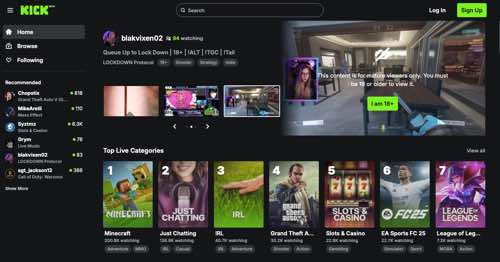
Kick is a live-streaming app similar to Twitch. Users broadcast content in real-time, interacting with followers through chat and other features. To stream on Kick, users create an account and set up streaming software such as OBS Studio or Streamlabs. Kick has an incentive program that compensates creators with revenue per individual stream. Since its launch in early 2024, Kick says it has paid over $17 million to more than 2,000 creators.
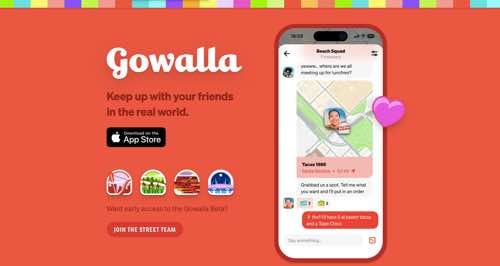
Gowalla is a location-based social networking app that tracks users’ actions in the real world. Post updates privately to your network on your location and activities. Send messages, make plans, and leave reactions in direct and group threads. Find interesting places to visit. Gowalla launched in 2007, closed in 2012, and relaunched in March 2023.
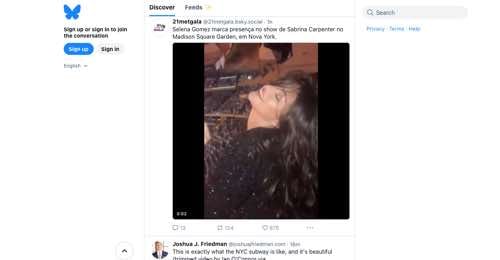
Bluesky is a decentralized microblogging platform on the AT Protocol, an open-source toolbox for building social apps that can talk to each other. Bluesky aims to function like the early days of the web when anyone could put up a blog or subscribe to others via an RSS feed.
Jagat is a social network for friends and family. Engage in real-time connections with location sharing and interactive features. Follow real-time locations and share with your network. See activities on a footprint map and from the past 30 days.
Noplace is a colorful social platform of ads and algorithms. Targeted at teens and Gen Zs, it seeks to bring back a fun and organic MySpace-like experience. Gain levels, earn badges, make friends, and use the customizable profile to share your mood and what you’re gaming, streaming, reading, and more.
Airchat is an audio-based social network featuring a push-to-talk, voice-first public messenger that uses AI to generate transcripts. Users have tools to moderate behavior on their content.
Lemon8, owned by TikTok parent ByteDance, is a video and photo-sharing app and blogging platform. The content centers on fashion, makeup, food, travel, gadgets, pets, and related. It provides a variety of templates, filters, stickers, and fonts to help creators. Lemon8 launched in Japan in 2020 and the U.K. and U.S. in 2023.
RTRO is a social networking app that connects brands, creators, and followers in a positive, nontoxic environment. RTRO focuses on connections and communities rather than ads or algorithm-driven content. Users can connect with friends and family or see content from creators and brands in their own space. Discover retro postcards, retro Polaroids, filters, and mixtapes.
Damus is a decentralized social media platform built on Nostr, the open and decentralized social networking protocol. Messages are distributed via decentralized, encrypted relays. Damus users can run their own microblogging platform for friends or a business.
Cara is a social media and portfolio platform that connects artists with clients, fans, and industry peers. Cara filters out generative AI images to find authentic creatives and artwork easily.
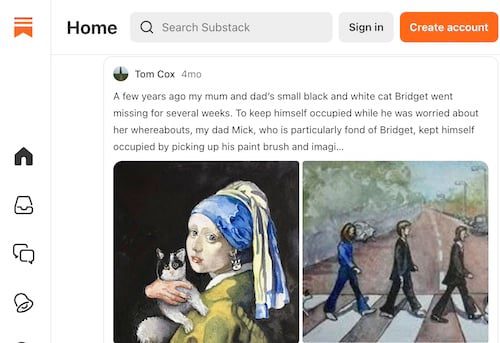
Substack Notes, launched in 2023, is a microblogging feature that enables writers and users to post short-form content and share ideas. Notes allows users to recommend anything via posts, quotes, comments, images, and links.
If your target audience is active on a platform, then you should be, too. And if you’re looking to speak to a younger demographic, Snapchat can be a powerful marketing tool for your business.
Snapchat is the fifth largest social media network in the world – but it’s one of the most misunderstood (and underestimated) by marketers.
So, if you’re concerned about missing the boat on this platform, you’re not alone. You’re also not out of touch – you just need a comprehensive guide to get started. And you’re in the right place.
In this updated guide to Snapchat marketing, we’ll provide you with a deep dive into the multimedia messaging platform, explain who’s using it, and give you the strategies you need to add it effectively to your marketing mix.
Why Use Snapchat For Marketing? (Is It Still Relevant?)
Successful marketers focus on grasping every opportunity to reach potential customers – and Snapchat continues to offer unique opportunities.
As of 2024, Snapchat boasts over 406 million active daily users, with more than 80% of them being 34 or younger. The platform reaches 90% of the 13-24-year-old population worldwide and 75% of 13-34-year-olds in over 25 countries.
This makes it an ideal platform for targeting Millennials, Gen Z, and, increasingly, Gen Alpha.
While it might not have the massive user base of Facebook or YouTube, it drives impressive engagement. According to recent data, the average Snapchat user opens the app over 40 times per day and spends about 30+ minutes daily on the platform – which means people interact with their social circles on Snapchat more than any other social network.
Yet, when it comes to marketing, Snapchat is a relatively untapped territory. While every brand seems to have a Facebook and Instagram presence these days, comparatively few have a foothold on Snapchat. And that just means more opportunity for your brand.
The boon of Snapchat is how it’s optimized for authenticity. Given the ephemeral nature of the app and the more unfiltered style of content approach, brands can use the platform to connect with their audience in ways that feel genuine and immediate – which is more valuable than ever.
And, as if all of this wasn’t enough, Snapchat has established itself as a competitive force in the social commerce market. With its augmented reality (AR) shopping experiences, you’re able to build immersive shopping experiences for users through the app – something most other platforms can’t compete with.
By now, it should be crystal clear why Snapchat could be a strong addition to your marketing strategy. So, how do you get started? Let’s break it down.
How Does Snapchat Work? A Brief Overview
If your social media experience is primarily with platforms like Facebook, Instagram, or X (Twitter), Snapchat’s interface may initially feel like a whole new world.
Snapchat’s design is unique – it’s built for spontaneity, exclusivity, and in-the-moment content creation. When you open the app, it goes directly to the camera, making it super easy for you to capture and share videos and photos (called “Snaps”) in just a few seconds.
You can then edit these Snaps using a variety of filters, stickers, and AR Lenses before sending them directly to your chosen friends or adding to your “Story,” which remains viewable for 24 hours. There’s also a newer Spotlight feature, similar to TikTok, for sharing short-form videos with wider audiences.
The app offers a host of other features, including a Snap Map, an AI-powered chatbot, and disappearing direct messages. Long story short: There are a bunch of innovative and creative ways for brands to engage with audiences on Snapchat.
What Brands Are Best Suited To Snapchat Marketing?
Let me be clear: Snapchat isn’t for every brand. There’s a reason why it’s less frequented than some other social media platforms. That said, if your target audience includes younger consumers, it’s absolutely worth considering.
Brands that are best suited to Snapchat are those that present a youthful image and tone and prioritize authenticity, “realness,” and creativity. If your brand image is highly professional or you have red tape around your marketing efforts, you should likely look elsewhere.
Lifestyle brands, fashion labels, beauty products, entertainment companies, and tech startups – these are the kinds of companies that typically see success on the app.
But really, the opportunity exists for any type of brand that is interested in using Snapchat’s tools to create immersive, engaging content that resonates with the platform’s users.
How To Get the Right “Tone Of Voice” For Snapchat
I mentioned tone above – and on Snapchat, tone of voice is a big deal. The platform itself is playful and casual, so you’re not likely to find success using an overly formal or professional tone.
Instead, your brand should focus on having a genuine conversation with users and infusing your content with humor.
Here are some tips for nailing the Snapchat tone of voice:
Keep it light: People go to Snapchat to be entertained. Leave your hard sales pitch at the door.
Prioritize authenticity: It’s a place to show the human side of your brand, whether it’s through user-generated content or behind-the-scenes Snaps.
Engage, engage, engage: Snapchat has a ton of interactive tools for engaging directly with users, like polls, Q&As, and more. Put them to use!
How To Create A Snapchat Strategy For Business
So, you want to create a successful Snapchat strategy. You can just start posting content sporadically, right? Wrong.
You need to start by understanding your brand’s goals and audience, and then determining the type of content that will best help you reach those people on Snapchat specifically. Here are some steps you can take to start building your Snapchat strategy:
Decide what you want to achieve on the platform. Maybe it’s brand awareness, community building, or increasing sales – once you know your goals, you can build your content approach around them.
Know your audience. As with any kind of marketing strategy, this is crucial.
Experiment and be creative. Try your hand with some of Snapchat’s different tools (like Bitmoji, AR Lenses, filters, etc.) to create content that resonates with your audience. Don’t just choose one type of content and settle – you can (and should) experiment with a variety of Snaps, Stories, and Spotlight videos.
Be consistent. All great marketers know that consistency is key – and it’s the same story on Snapchat.
Keep a good balance. Of course, you want to sell your brand to users, but don’t go all in on self-promotional content. Make sure you’re balancing organic, engaging storytelling with talking about yourself.
Learn (and follow) Snapchat best practices. This is a no-brainer. Spend time on the platform to find what works, and see how you can adopt it in your own strategy.
Types Of Content That Work Best On Snapchat
Snapchat is all about driving engagement. What does that look like in action? Here are some examples of content approaches that work particularly well on the platform.
1. Sneak Peeks & Teasers
Launching a new product or service? Snapchat is a great place to drive excitement by giving your audience teasers or sneak peeks at what’s to come.
You might think about dropping hints about the product, sharing a quick glimpse, or some other behind-the-scenes moments to encourage anticipation among your Snapchat followers.
Warner Bros., for example, has used teaser content to promote its upcoming movie releases.
Screenshot from Snapchat.com, August 2024
2. Behind-The-Scenes Content
Speaking of behind-the-scenes, this type of content is tailor-made for Snapchat.
Showing your audience what goes on behind the curtain at your brand is a clever way to create a sense of exclusivity and make people feel like insiders.
3. User-Generated Content (UGC)
You’ve heard about user-generated content – well, Snapchat is a place where UGC really thrives. Consider prompting your followers to create their own Snaps that feature your products or brand, and then share them along with a custom hashtag. Then, you can amplify the strongest ones in your own Stories.
UGC is proven to be a highly effective way to generate social proof, increase brand loyalty, and build a stronger social community.
Javy Coffee is one example of a brand that leveraged UGC by featuring real customer testimonials and stories about how they enjoy the coffee concentrate. This helped the company create relatable ads that resonated with its audience.
Screenshot from Snapchat.com, August 2024
4. Interactive Content
One thing that separates Snapchat from most other social media platforms is its interactivity. And brands have plenty of opportunities to get in on the action!
Try devising interactive moments for your followers, whether it’s a simple poll, a challenge, or a unique AR Lens. These allow users to really get involved and have a fun experience with your brand – and can lead to new UGC for you, as well.
For example, e.l.f. Cosmetics used AR Lenses combined with Bitmoji to allow users to virtually try on makeup, creating a highly interactive experience for its audience.
Screenshot from Snapchat.com, August 2024
5. Exclusive Offers
Want to really impress your Snapchat followers? Reward them. From promo codes to exclusive discounts or early bird access to new products, there is no shortage of ways to treat your audience.
It’s great for them but beneficial for you, too. It gives people a reason to keep engaging with your content and following your brand.
Advertising On Snapchat
While organic content is at the heart of Snapchat, the platform also offers some unique and powerful paid advertising options. The company also rolled out a new ad platform update in August 2024 that provides enhanced analytics, improved targeting, and more.
1. Snapchat Ads
Served to users in between user-generated content, these are full-screen, vertical video ads. They’re not dissimilar to Instagram Stories, and can include interactive elements such as having a user swipe up to visit a website.
The Salvation Army’s Snapchat Ads featured videos depicting real-life stories of individuals impacted by its services, emphasizing themes of hope and transformation. These ads connected emotionally with viewers and included a swipe-up option to learn more or donate, making the content both impactful and actionable.
Screenshot from Snapchat.com, August 2024
2. Sponsored AR Lenses
One of Snapchat’s unique offerings is its custom AR Lenses, which brands can create for users to experience.
You can create Lenses that allow users to virtually “try on” products, for example, put people in a humorous visual setting or even have them play games. At times, they can even respond to users’ movements or the environment around them.
These can be hyper-engaging and drive a lot of interactions – like Volkswagen did when it used an AR Lens to enable people to experience its ID.3 electric vehicle virtually. Using the Lens, people could place a virtual model of the car in their environment, explore its features, and even change the color.
Screenshot from Snapchat.com, August 2024
3. Filters
These are static overlays that you can apply to your Snaps once they’re created – and brands are able to design their own to delight Snapchat users. These are typically non-interactive but are fun visual enhancements that enable people to add some creative flair to their content.
Post Consumer Brands created its own custom Snapchat Filter to promote its Honeycomb cereal – and it was very sweet!
Screenshot from Snapchat.com, August 2024
4. Dynamic Ads
Snapchat’s Dynamic Ads enable brands to automatically create and deliver personalized ads to users based on their behavior and interactions with your company. For example, if a user visits your website and looks at a specific hat, Snapchat might serve them an ad for that product.
If you work for an ecommerce company, these might be particularly interesting to you, as you can automate ad creation based on your product catalog – so you don’t need to lift a finger.
Fashion brand Free People has used Dynamic Ads to automate personalized ads for users, ensuring that those who viewed specific items on its website were later served ads featuring those exact products on Snapchat. It resulted in a 396% increase in demand.
Screenshot from Snapchat.com, August 2024
5. Commercials
These are non-skippable Snapchat video ads that usually appear within the platform’s premium content, like Snap Originals.
They’re short – three to six seconds for a Standard Commercial and up to 180 seconds for an Extended Play Commercial (though users can skip after the first 6 seconds) – and are optimized for high visibility.
They typically focus more on storytelling than some of the other ads on the network.
Let’s Get Snapping!
Yes, Snapchat is still an effective marketing platform for reaching younger audiences – but you must be mindful about your strategy and approach.
With its unique blend of high engagement, unique creative tools, and loyal audience, Snapchat offers brands a variety of ways to connect with their target consumers.
Hopefully, this guide has given you the insights and inspiration you need to build a successful Snapchat marketing strategy in 2024.
Now, it’s time to put these ideas into action and start Snapping your way to success.
“Ask an Expert” is an occasional feature where we pose questions to seasoned ecommerce pros. For this installment, we’ve turned to Charles Nicholls, a serial SaaS ecommerce entrepreneur, most recently of SimplicityDX, a customer acquisition platform, and a Practical Ecommerce contributor.
He addresses the viability of selling on TikTok Shops.
Practical Ecommerce: Should merchants consider TikTok Shop despite the political uncertainties?
Charles Nicholls: When evaluating TikTok Shop, merchants should first decide whether to sell on social channels at all.
Charles Nicholls
Social platforms such as TikTok Shop, Instagram Shop, and others function similarly to marketplaces such as Amazon, but they come with trade-offs. They act as the merchant of record, controlling customer data, the sales process, and returns. The channels can generate significant sales volume, but often at the expense of margins and relationships. Unlike direct sales from an ecommerce site, selling on social platforms limits the ability to know and engage with customers for repeat sales.
Social commerce is becoming increasingly influential. For many brands, social media is now the starting point for over half of sales. Yet measuring its impact remains challenging. Traditional tools such as Google Analytics 4 often underestimate social media’s influence. Only customer surveys typically reveal the actual effect.
Merchants usually approach social commerce in one of two ways, both centered on the start of the buying journey. The key decision is where the sale occurs. If the business model relies on long-term customer relationships and repeat sales, directing traffic to the ecommerce site is essential. Conversely, if it’s gaining market share, brand visibility, and volume sales, then selling on social platforms could help.
TikTok Shop offers unique opportunities and challenges. The algorithm prioritizes viral, engaging content, favoring skilled creators who can rapidly drive product awareness and sales among their followers. Hence merchants contemplating TikTok should factor in working with those influencers.
TikTok shoppers are highly price-sensitive and respond to discounts and impulse buys. Thus sellers with low-cost entry-level products, such as beauty, can build a brand on that platform.
Yet a critical component is consumer preference. Upwards of 75% of online shoppers prefer purchasing directly from brands rather than through influencers or marketplaces. Consumers value brands’ authenticity and trust.
Should merchants sell on TikTok Shop? The decision boils down to priorities. The benefits are visibility and sales volume. The downsides are lower margins and diminished customer relationships.
Plus, they’re easy to create if you have a plan and the right tips. Lucky for you, we have all the tips you need right here in this article.
Let’s get started.
Start With A Story
When designing an Instagram carousel, starting with a clear theme or story is crucial in helping you select images or videos that create a cohesive post.
Like any social media content, think about the message you want to convey and the content you want to showcase.
What content would resonate with your followers and align with your brand message? This could be a theme based on your industry, your brand values, or a particular aspect of your products or services.
For instance, if you’re a food blogger, you could create an Instagram carousel featuring a step-by-step recipe, with the first image being a shot of the finished dish.
Then, follow it up with images of each ingredient and each step in the cooking process. This way, your carousel tells a story while providing followers with value.
You can also showcase your products or services in action.
For example, if you run a fitness brand, create a carousel of exercises or workout routines featuring your products – like this apartment and travel-friendly workout routine from fitness influencer Kayla Itsines.
A fashion brand, on the other hand, might create a carousel showcasing different ways to style a particular item of clothing.
Another effective carousel format is to share behind-the-scenes content or personal stories, such as photos of your team at work, personal stories about your brand journey, or the inspiration behind your products.
Whatever you choose, the key is to pick a theme or story that is both relevant to your brand and interesting to your audience.
Content Order
The order in which you display your content is crucial to creating an effective Instagram carousel.
The first image or video is typically the most important, as it will set the tone for your content, capture your audience’s attention, and encourage them to swipe through the rest of the carousel.
It’s typically the first frame that people see (though occasionally, they may see the second frame first – so bear that in mind when creating your content).
Use subsequent images or videos to tell a story or provide additional context.
How you do this will depend on your carousel’s goal. What is the one thing you want a follower to “leave” with?
No matter what type of content order you choose, it should create a logical flow between slides, making it natural for audiences to swipe through.
Here are some examples of common Instagram carousel structures:
Narrative Structure
What It Is: The images are arranged logically to tell a story or share a message.
When To Use It: This method can be particularly effective for product launches or brand campaigns where you want to build excitement and engagement around a specific theme. It’s great for explaining specific concepts or breaking down stories linearly. This is why list style carousels are so popular.
Why You Use It: Narratives and stories get followers emotionally engaged in the content.
What It Is: The images have no specific narrative or message.
When To Use It: This structure is ideal for showcasing various products or services or sharing behind-the-scenes content that doesn’t necessarily follow a specific sequence.
Why You Use It: Not only can a random structure be fun, but curiosity and spontaneity can be extremely helpful, particularly if you want to build up some buzz around an event.
Still trying to figure out how to present your images? Consider the visual appeal of the images and how they will look when viewed as a group.
You can alternate between different image types, such as close-ups and wide shots, or use consistent color schemes or filters to create a cohesive look and feel.
An engaging Instagram carousel starts with aesthetically appealing, eye-catching, high-quality images or videos. These will help grab your audience’s attention and encourage them to swipe through the entire carousel.
It’s important to choose visuals that have exceptional clarity and decent resolution, though you should also bear in mind that recent trends show audiences value authenticity over perfection.
Here’s an example of a carousel from Airbnb that leverages beautiful imagery to pique the attention of audiences.
You should also consider using consistent color schemes or filters. This will help create a cohesive sense of visual unity across the entire carousel and make sure your brand is present in the content.
In short, you want the carousel to feel like an experience, not just a collection of pictures.
Your Instagram carousel plan should also include the type of visuals you want to showcase in it.
Will you only have product images and videos? Would lifestyle shots, behind-the-scenes footage, or user-generated content (UGC) be more effective?
Another option is to mix up the type of content in each carousel to keep things interesting and varied.
You could alternate between videos and images and try out different approaches, but the key here is to choose visuals that align with your brand message and resonate with your audience.
Once you’ve selected your content, you can think more about the composition of the carousel itself and how you’ll order it. You might want to experiment with different layouts, such as grids or collages, to create a unique and striking post.
Finally, keep the context of your post in mind. Instagram users scroll quickly through their feeds, so you’ll need bold, bright colors or to incorporate text or graphics that interrupt this habit and stop them long enough to swipe and consume the content.
Text Overlays, Captions, And Music
Text, captions, and now even music are important aspects of creating engaging and effective Instagram carousel content.
These components work together to convey your message, build excitement around your products or services, and encourage your audience to take action.
Captions
First, keep your captions concise and engaging. You want to capture attention quickly and communicate your message efficiently, so use short, punchy sentences and clear language. If it makes sense, include some emojis to catch people’s eye.
Second, consider the tone of your captions and how they align with your brand identity.
If your brand is playful and lighthearted, your captions should be the same: fun, humorous language. Use an informative and educational tone if your brand is more serious or professional.
Third, use your captions to contextualize the story or experience you present in your images. This will help bring your audience along for the journey and encourage them to engage with your brand.
Finally, include a call to action (CTA) to increase engagement and drive more traffic to your website or other digital channels.
This could be as simple as encouraging your audience to swipe through the carousel, asking them a question, or prompting them to visit your website for more information.
Text Overlays
Your use of text goes beyond captions. Text overlays can be highly effective in adding context and additional information and can enhance the visual impact of your carousels.
Here are a few tips:
Choose a legible and visually pleasing font that matches your brand aesthetic. Remember that users will be viewing it on small mobile screens.
Keep your text concise and to the point. Instagram users scroll quickly through their feeds, so your text needs to be easy to digest and understand.
Only include essential information and ensure that each overlay only has one job. For example, to provide more information about a product or provide context to a narrative.
Ensure that overlay text doesn’t obscure important parts of your images and is visually balanced with the other elements in your carousel.
Don’t make the mistake of thinking of text overlays as extra ad space, however. Use them strategically to add value to your content.
For example, you may want to use text overlays to provide additional context or details about your products or services or a CTA that encourages your audience to engage with your brand.
Music
A newer feature to the platform, adding music to Instagram carousels has become a dynamic way to enhance engagement with your content.
We know that music can evoke emotions, set the tone, and add another layer of storytelling to your content. However, it bears mentioning that business accounts are typically more restricted in the songs that they can use.
Here are a few tips for effectively adding music to your carousels:
Choose music that aligns with the theme or message of the content within your carousel.
Leverage music that reflects your brand’s personality and tone.
Where possible, utilize music that can enhance the narrative of your carousel.
If you’re (legally) able to, engage your audience by including songs that are trending or popular.
By thoughtfully integrating elements like text, captions, and music, you can take your Instagram carousels to a whole new level and significantly enhance their performance and engagement.
Design Instagram Carousels With Mobile In Mind
Instagram is primarily a mobile app, so you must prep and design your content for mobile users.
If you’re designing an Instagram carousel featuring a long infographic, for example, break it down into several slides so that it’s easier for your audience to view on a mobile screen. You might also need to use larger text or adjust the font size.
But it’s more than that.
You should consider the quality of the images you’re using and how they will appear to a mobile viewer. Make sure that the resolution and specs fit with Instagram’s guidelines and that the details of the image will be viewable on mobile.
You may even want to consider arrows, buttons, ribbons, or other elements that run off the right side of the image to push users from one image to the next.
Conclusion
Once you’ve posted your Instagram carousel, engage with your followers by prompting them to like, comment, or share your post.
Encourage them to leave comments or questions about the product they see or the story you’ve presented.
Just remember to respond to these comments promptly and continue the conversation by answering questions or addressing concerns.
And if you follow the tips we’ve provided for you here, there will be many of them!
Even if you’re a new or experienced business owner, you can’t ignore the impact of social media on your business. It’s great for marketing, brand awareness, and SEO. But it’s quite a hassle to keep track of your social media accounts, website, blog, and your product(s). To save you time and money, we’ll be looking at what benefits your SEO the most: an organic social media strategy or using social media ads?
First, what is an organic social media strategy? Well, it’s the opposite of using social media ads—something you have to pay for. An organic strategy means you use free/unpaid methods of creating and sharing content on social media platforms to build an engaged audience.
In other words, you regularly post high-quality content on your social media accounts. Plus, another important part of an organic strategy is engaging with your audience through, for example, comments.
Long-term benefits
There are a lot of long-term benefits from having an organic strategy. If you post consistently for a long time, you’ll usually get sustained engagement and traffic from your posts. Which, in turn, can lead to higher search engine rankings.
Authenticity and engagement
Another benefit is the authenticity of your content—which is becoming increasingly more important nowadays. People want to know if they can trust your brand. By regularly posting authentic content and engaging with your audience, you’ll be able to boost your brand reputation and indirectly boost your SEO.
So how does engagement boost your SEO? Well, likes, shares, and comments can influence your SEO by signaling that your content is relevant and popular. Plus, now that Google shows social media content in their search results more often, it can only be a good thing to have great engagement metrics.
The disadvantages of organic social media
It takes some time
To see the benefits of an organic social media strategy, you have to post consistently over a long period of time. This can also be a disadvantage, however. Sometimes you want to launch a new brand or product, and you don’t want to post about it for months before you catch people’s attention.
Even though you do get results with an organic strategy, it can take months to see significant results. So you need to have patience!
Consistency is important
It’s a key component, in fact. For an effective organic strategy, you need to continuously and consistently put in the effort to maintain your brand’s visibility and engagement. This means you need to stay on top of your feed and regularly brainstorm what might be interesting content for your audience. Which does take time and effort.
What are social media ads?
Social media ads are pretty straightforward. They’re paid advertisements that you can run on social media platforms like Meta (which includes Facebook and Instagram), X and YouTube. It’s also good to know that there are various advertisement types, such as display ads, video ads, sponsored posts, etc. Depending on your goal and audience, you choose one of these.
Example of display ad
As we just mentioned, social media ads are paid advertisements. The costs, however, can vary, depending on your audience, the type of ad, and the duration of your campaign. That’s why some campaigns might be more expensive than others!
Example of sponsored post
The SEO advantages of paid social media
Quick results
As opposed to an organic strategy, ads can generate immediate traffic and engagement to your site. This could indirectly improve your SEO because your engagement metrics will increase.
Plus, if you’re promoting high-quality content, then people are more likely to share it, like it, and link to it. Which is all very valuable for your SEO.
Reach your target audience
Ads also make it relatively easy to reach your target audience. When you set up an ad, you can fill in precise information that will allow you to reach people from a certain demographic, with certain interests and behaviors.
If those people like the content you’ve boosted, they might even follow your account. That would be the ideal situation, since they will now also see your organic posts.
The disadvantages of paid social media
Costs
This is a no-brainer since it’s in the name, but it’s still worth mentioning. Paying for ads can get quite expensive. Especially if this is your social media strategy, and you don’t have an organic strategy.
If that’s the case, you’ll have to continuously invest in social media ads to maintain your brand’s visibility.
Short-term impact
Ads only run for a limited time. If your campaign is over and your ad isn’t promoted anymore, then your traffic and engagement from that ad will drop. In other words, there are no lasting SEO benefits from paid ads.
Ad fatigue
Yep, it’s a thing! Seeing an ad too often can desensitize people. In other words: people get bored from seeing the same ad and they stop paying attention. Which means your ad will become less effective. Have you ever seen a TV ad so many times that you get tired of it? It’s the same thing. Ad fatigue.
Overall impact on SEO: organic versus paid
We’ve talked about the SEO advantages to both strategies, but let’s briefly summarize.
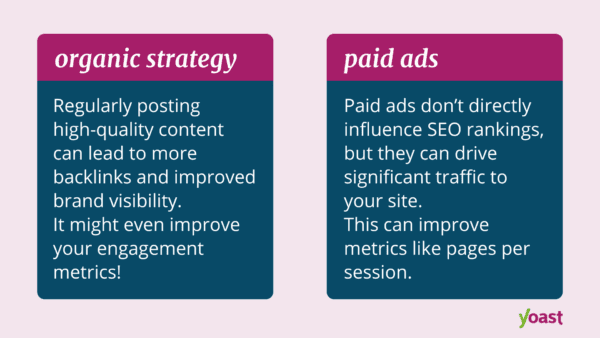
Having an organic social media strategy means you regularly post high-quality content, which can lead to more backlinks and improved brand visibility. It might even improve your engagement metrics!
Using paid ads will not directly influence your SEO ranking. However, ads can drive significant traffic to your site, which in turn can improve metrics like pages per session.
Which strategy is better?
As always, the answer fully depends on your goals and how much you’re willing to invest into your social media strategy, be it time or money or both. To maximize the impact of your social media on your SEO however, we would recommend using both strategies.
Why? Because you can use ads to boost new or high-value content to reach your target audience. Once the initial buzz of an ad has died down, you can keep people interested with your organic posts.
Tip: utilize analytics
Most social media platforms offer you insight into the performance of your organic and paid posts. Use this to check which posts are resonating with your audience and which aren’t. If you combine this data with your website’s analytics, you’ll be able to easily adjust your strategy, so you can focus on what works best.
Conclusion
Both organic and paid strategies have their advantages. An organic social media strategy will result in slow and steady growth with lasting benefits for your business. However, this will take a lot of time before you see any results. On the other hand, using paid ads will give you quick results and allows you to target the exact audience that you want to reach. But paid ads can get expensive, so they might be more useful for immediate traffic boosts or announcing a new product or service to your audience.
That’s why it might be in your best interest to combine both, so you’ll have the benefits of building a connection with your audience while also boosting your growth with paid ads.
Sabrina is the Social Media Specialist at Yoast. She’s responsible for creating and curating engaging content to enhance Yoasts’ brand presence across various social platforms.
Today’s social media is different from a decade ago.
Higher usage, increased prominence, and other signs of a platform’s success also mean brands take on higher risks when utilizing these channels; a social media policy is no longer an “extra.”
Everyone involved in the brand’s public image should clearly understand what is expected of them.
A policy helps them understand how to conduct themselves in a way that aligns with a brand’s values, missions, and goals, propelling the company forward.
And you’ll be better able to avoid security breaches, legal issues, reputational damage, and PR crises.
Getting Started With A Social Media Policy
Before creating a comprehensive social media policy, you must understand that it is impossible to prepare for every possibility.
However, talking to others in the organization can help you consider needs and issues you may not otherwise consider.
For example, your customer service team will understand how your audience sees your brand, uses social media, and what they need from your brand’s channels.
Your IT team will know what is available to manage channel security and how to manage security issues.
So, you’ll need to put together a social media policy team. Not everyone should have a say over every element of the policy, but representatives should be able to provide input and ideas.
Your social media policy team should include representatives from:
HR department.
Leadership.
Customer service.
Social media team.
Employees from other teams.
Design team.
IT or website management team.
Brand advocates or spokespersons.
Marketing team.
Loyal customers.
Once you have a team in place, you can start crafting your brand’s social media policy.
7 Steps For Creating An Effective Social Media Policy
The actual writing can be completed in seven steps, followed by four steps for implementation. But be warned: The last four steps are as important as the first seven.
Leave one out – fail to implement, update, or enforce your policy, for example – and your social media policy may be unable to guide your team and protect your brand.
To help craft your policy, we’ve included an explanation.
You’ll also find a downloadable pdf here with a list of questions to ask during each step to get you started.
1. Scope And Purpose
The first step to crafting an effective social media policy is to understand why you’re creating the document in the first place.
By clarifying the document’s purpose with everyone, you’ll increase the policy’s use and make it easy for team members to understand who should use it and when.
While a social media policy generally covers any social interaction or platform, including company blog comments and social platforms, listing these locations specifically will reduce confusion and act as a documented list of which platforms are approved and owned by your brand – as well as which platforms your employees or team members may use.
Decide what situations your policy should cover and who should be guided by it. Make it clear what circumstances fall under the policy and which do not.
2. Identify Risks
Social media use is full of risks, but many specific risks (and the ones that often catch a brand unaware) are unique to you.
For example, if you’re in the finance industry, you may have FCC and other rules and regulations to follow. Those in healthcare will have HIPAA and other laws and guidelines.
Aside from that, you will also face the standard risks of PR crises, security risks, intellectual property violations, and others.
List as many general risks as possible to help you determine what your social media policy should include.
3. Cover The Basics
With the list of risks in mind, it’s time to start outlining the various processes and guidelines team members will follow.
Outline the content that can and can’t be shared on the company’s accounts. Decide who will access these accounts and what security features must be in place.
Decide if you’ll allow comments on all your updates, what you will and won’t allow in those comments, and how you’ll handle any comments or posts you remove.
Develop a process for granting and revoking access to your accounts.
And decide the rules and guidelines that employees and others will need to follow when sharing brand-related content (or identifying themselves as connected with the company).
4. Define Who Is Responsible
Many times, errors are made, or issues are avoided not because employees don’t know how to handle them but because they are unsure of who is responsible and the process the company wants to follow.
So, for example, decide who is responsible for monitoring, listening, responding, and managing your social media profiles, promotions, and paid ads.
Decide and outline approval processes, reporting mechanisms or systems, posting limits, and other details.
And don’t forget to consider processes outside of the usual social media processes, such as what will happen when someone takes time off and who will be responsible for social media training.
5. Address Legal Considerations And Regulations
While you may or may not be regulated by industry regulators such as the FCC, you will undoubtedly need to follow data privacy laws, rules surrounding intellectual property, and advertising rules.
In your social media policy, you need to outline the general idea of these rules and what those utilizing social media need to know.
Note: While some of these rules may seem obvious to you, they won’t be obvious to everyone.
Don’t leave important ones out. Make more comprehensive documents (that are in plain language and easy to use in a hurry) available.
6. Voice And Style
Brands are delicate. To keep updates and content consistent, detail and explain the voice and style the company’s channels should have.
Provide users with a wealth of examples of updates that are and are not acceptable. You may also want to include links to official style guides.
Lastly, make sure the goal of your social media channels is clear. Will your brand respond to audience inquiries or offer customer service via social media?
7. Crisis Response
No matter how careful or prepared you are, the worst-case scenario is inevitable. Eventually, a crisis will arise, so you need to be ready.
What should happen if an advertising or intellectual property rule has been violated?
If a PR disaster occurs or runs afoul of some other rule, regulation, law, or guideline?
You should also have a clear process to follow if an account or user has been compromised. Include links and email addresses to support each network so they can be contacted immediately.
You also need to consider PR issues outside of social media.
If a tragedy occurs, for example, how will you communicate with vendors, customers, and the general public? Who is responsible for crafting that message, and who needs to approve it?
Putting Your Social Media Policy Into Action
This process doesn’t end when you have a final social media policy draft.
Even the best social media policy is useless if it isn’t implemented, used, maintained, and enforced.
8. Social Media Policy Implementation
If you want employees and team members to follow the social media policy, it must be easily available and distributed to everyone.
Email it and announce it through internal channels. Walk through the document in a video. Make sure everyone is aware that it has been completed and made available.
Store it somewhere that’s easy for others to access. Still, you also need to ensure that it is added to onboarding packages and provided to anyone who may communicate on behalf of or promote the brand.
(You may wish to craft an external version for customers, your target audience, and other external parties.)
9. Resources And Assets
One of the easiest and most efficient ways to encourage employees to share company news and information while avoiding issues is to make approved assets available.
Provide everyone with logos, approved images, discount codes, and other resources in a location that’s easily accessed.
To make it even easier for employees to share updates, consider having an internal communication channel that notifies everyone of news, newly published information, and fresh assets.
10. Maintaining Your Social Media Policy
Social media and your needs change quickly. And while your social media policy won’t need daily or weekly updates, it will still require regular updating.
Let it get outdated, and it could cause more harm than good.
Imagine, for example, that you have an outdated security protocol in place when one of your accounts is compromised.
Schedule the social media policy update to ensure it gets done. It’s also the perfect opportunity to remind everyone of the document and help refresh their awareness of its processes and guidelines.
11. Utilizing Your Social Media Policy
The successful utilization of a social media policy begins with proper training.
While not all employees will need to understand all the processes, everyone should have a basic understanding of the guidelines within the policy and how it applies to them.
Lastly, ensure that the policy you’ve invested time and effort into creating is enforced.
Schedule regular searches and audits to ensure compliance and be sure to deal with anything that fails to meet the guidelines appropriately.
Conclusion
While a social media policy does require an upfront investment and your time, they are vital in today’s world.
This simple policy document will help you avoid and prepare for a crisis while arming your brand with the resources and knowledge it needs to deal with issues as they arise.
Do this well, and you’ll find that understanding what is and isn’t allowed will help encourage employees to promote your brand on social media.
If you’ve been paying attention to the chatter in the SEO space recently, you might have noticed that “brand marketing” has become cool again.
Due to the Google “leaks,” many SEO pros have come to the conclusion that building a strong digital presence will yield SEO results.
Also, water … is wet.
Leaks, floods, and drips aside, there are better reasons why you should be focused on brand marketing right now.
Allow me to explain. [Warning: This post contains excessive amounts of snark.]
Building The Case For Brand Marketing
I’m not going to do the whole “5 reasons why you should focus on brand in 2024.” It would be off-brand for me.
What I would like to do, if you’ll indulge me, is first build up the case by looking at where the ecosystem we call the web is currently at.
I’m less focused on “the benefits” of the brand and more concerned about why the ecosystem itself demands a focus on this type of marketing.
It’s less a matter of “you’ll get X, Y, and Z” by focusing on the brand and more a matter of why you’ll be out of sync with your potential audience as a whole.
The Web Is Moving To Be More Conversational
The internet has become more conversational, and it’s only going to get more conversational.
One of my soapbox points is that content is one of the most quickly changing things on the planet. What we consume, how we consume it, and what we expect out of it are rapidly and constantly changing, and the consequences are often underappreciated.
My classic example of this was the first televised US presidential debate, which took place in 1960 and pitted John F. Kennedy against Richard Nixon.
If you listened to the debate on the radio, you tended to think Nixon won. Those who watched on TV tended to think JFK won.
Why? Well, Richard Nixon comes off as Richard Nixon, and JFK, well looks like JFK. I’m being a bit facetious, but it is true. Nixon famously looked pale, had a five o’clock shadow, and didn’t look directly at the camera.
The evolution of content has extremely understated consequences.
Like in 1960, we are at one of those pivotal moments in the history of content.
Think of the internet like TV commercials. Over time, what once resonated becomes campy and sem, if not downright, spammy.
Could you imagine Coca-Cola running and trying to sell its product using its 1980s Max Headroom “Catch the Wave” commercial?
Try selling my kids a sugar-infused breakfast cereal using a TV commercial from the 1950s. Good luck.
It’s not because those commercials are “bad.” It’s because the language and tone that resonates changes over time.
It’s a simple enough point … unless we’re talking about web content. For some reason, we feel web content and its consumption trends should eternally stay the same.
We write the same kind of content in pretty much the same way and balk at any changes.
But that doesn’t change the reality.
The content we create doesn’t speak to users. It’s not positioned correctly. The tone is off. The goals that support the creation of content, to begin with, are distorted. And more. There are a lot of problems – and to me, they all begin with content not being conversational.
In fact, I will go so far as to say Google should stop saying, “Write for your users,” and should start saying, “Have conversations with your users.”
We all think we’re “writing for our users” – I mean, who else are we trying to lure and convert?
It’s very easy to fool yourself into thinking you are “writing for your users.” It’s harder to convince yourself you are having some sort of dialogue with your users – which is what I think Google really means anyway.
All this said, what do I mean by content not being conversational and how do I know it’s even a problem?
What I Mean By Content Not Being Conversational
It’s not hard to see that we are not engaging our users in a conversation or dialogue.
All you need to do is head over to your nearest landing page and have a look at the language.
How much of it is just the company throwing out jargon or borderline nonsense?
Here’s what I came across in literally less than five minutes of digging around:
Screenshot from author, July 2024
Is it really without limits? Can I literally do whatever I want without any limitations whatsoever? I don’t get it – are we talking about God or graphic design software?
Is the below really a new way to run high-velocity sales? Does it literally refine the entire process like no one else is doing or has done before? Or is the company just saying this and spitting out whatever they think will drive conversions?
Screenshot from author, July 2024
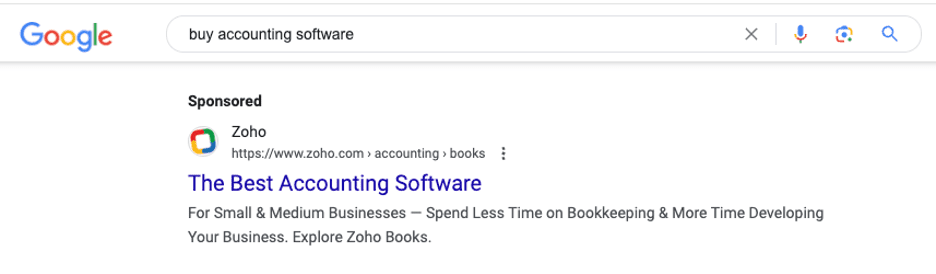
You see this all the time in PPC ads:
Screenshot from search for [buy accounting software], Google, July 2024
No nuance. It is the best accounting software, and I should trust that it is without any form of qualification.
This kind of copy, while it may have worked in the past, doesn’t (and if it does now, it won’t in the relatively near future).
This kind doesn’t actually talk to users in a real way. It actually treats the user like an idiot.
The average web user is far more savvy than they once were, far more mature, and far more skeptical.
Not taking a more genuine approach is starting to catch up with brands.
How Do I Know Not Being Conversational Is Even A Problem?
Greenwashing.
It’s when a company claims to be more environmentally conscious than it is. It’s spin and PR nonsense.
Companies thought they could pull a fast one on unsuspecting users. However, folks are now savvier and are catching on to brands positioning themselves as being “green” when, in reality, they might not be (or at least to the extent advertised).
You cannot get away with it anymore (and you never should have tried). The only thing that works is being genuine.
If your product is not actually “the best,” then don’t say it is – or, in fact, realize there is no “best” or “ultimate” or “fastest” or whatever. There is only what meets the needs of users in what way. That’s fancy talk for “pain points.”
Being genuine means talking to your audience and not at your audience. It’s having a dialogue with them.
Going the “traditional” route with your language is the equivalent of marketing language greenwashing … and it applies to your informational content, too.
Perhaps nothing epitomizes this more than the falling stock of influencer marketing. Study after study shows that younger users are far less likely to purchase something because an influencer is associated with it.
Influencer marketing, as we mostly know it, is a facade pretending it’s not a facade. Do you think Patrick Mahomes really eats Chicken McNuggets or has a strong preference to use State Farm for his insurance needs?
All influencer marketing is just a digital marketing version of a celebrity in a TV commercial.
Do you think whatever TikTok influencer really prefers Capital One or even knows that it’s not a geographical reference?
While the idea of “influencers” seemed like a viable idea at the onset it’s fundamentally not sustainable because it’s fundamentally fraudulent. (For the record, “community” marketing is something else entirely. While it might rely on “influencers” within a community, it is far more genuine.)
It seems that folks have caught on to the idea that maybe this influencer being paid to say or do whatever is not actually an accurate reflection of reality (much like social media influencers themselves, to be honest).
A 2023 Drum article quotes one study as saying upwards of 80% of users say a brand’s use of influencers does not impact them one way or the other.
For the record, there are other studies that indicate that influencer marketing is a viable option. I agree, but I think it needs to be qualified. Just paying an influencer to say good things about your brand is not authentic.
There are authentic ways to work with communities and influential folks within them. That tends to happen more with micro or nano influencers.
Again, it’s rocket science. Everyone knows the influencer is only saying the things they are saying because they’re being paid to. It’s relatively meaningless in a vast majority of cases.
It shows how much savvier the current web user is relative to the past, and it’s supported by where folks are heading and what they are trusting … themselves (DTA, am I right?).
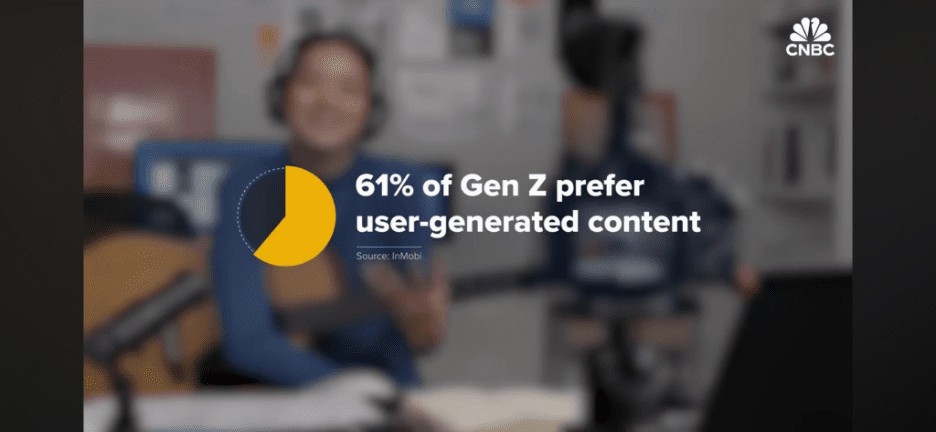
A seemingly endless number of studies show users looking toward user-generated content. CNBC was quoted as saying, “61% of Gen Z prefer user-generated content.”
Image from CNBC, July 2024
Which brings me to my next point.
Informational Content Is Just As Bad & Reddit On The SERP Proves It
Up until this point, I’ve been focused on the nature of commercial content and the demand for conversational content.
The same concept applies to informational content, just for a slightly different reason.
Informational content on the web might not be as opaque as commercial content, but it is entirely sterile and stoic.
By sterile and stoic I mean content that doesn’t actually speak to the user. It takes a topic, breaks the topic down into various subtopics, and simply presents the information, and does so without ever discussing the context of the readers themselves.
No one has more data on emerging content consumption trends than Google and its ability to analyze user behavior in a variety of ways. And what has Google done for informational and commercial queries alike? Plastered the search engine results page with user-generated content.
The proliferation of Reddit on the SERP should tell you everything you need to know about the state of informational content and beyond.
All you need to do is head to the Google SERP and take a look at all of the Reddit results strewn all over the place, from different SERP features to the organic results themselves.
And while SEO pros may be upset about the abundance of Reddit (and rightfully so in my opinion), we have no one to blame but ourselves.
Do you really think Google wants to rank Reddit here, there, and everywhere? I personally don’t. I think Google would much rather have a diverse set of experience-based content to rank.
Regardless of your feelings about Reddit on the SERP, users’ inclination to prefer content created by other users tells you one thing: People are looking to move past all the facades and want something transparent that speaks to them—not at them.
Think about content like dress codes in the office. In the 1950s (at least in the US), it would be unheard of to show up to the office with anything but a suit and tie or a dress.
Just like professional dress codes have become less formal, so has content become “less formal” too.
And it’s a relatively recent development on both fronts. In fact, I would actually argue that office dress codes are a good representation of “where we are at” in terms of how and what we consume in terms of content via-a-vis formality.
While more traditional marketing language might have been acceptable and effective just a few years ago – it’s not any longer (at least not to the extent). We are less formal as a people, which means speaking to each other is also less formal. That has to spill over to web content at some point, and it has.
The AI Of It All
The rise of AI-written content accentuates all of this. When everything starts to sound the same having an actual voice comes more into focus. As AI conversion evolves, users are going to want to know that what they are consuming is “real.”
Much like a paid influencer, AI-written content doesn’t offer an authentic experience. And if we can see one theme in what users are looking for, it is an authentic experience.
I know someone is reading and thinking, “But AI is conversational!”
I would not confuse the fact that AI can reply back to you in an informal way as being an actual conversation or dialogue with another actual lifeform.
I have many relatives who will chew my ear off for hours on end as I nod away – that is not (much to their surprise) a conversation. Inputting prompts in reply back to an LLM and then having that LLM respond is not a conversation. (I feel like it’s insane that I have to say that.)
A real dialogue has to be based on empathy and the coming together of two distinct entities. This is what I mean by conversational. The dialogue has to be based on understanding the user’s pain points and meeting them.
AI not only doesn’t do that – but it dilutes that very concept. AI is content creation inherently devoid of understanding the “other.”
AI-generated content is the exact opposite of empathetic content. It is no wonder that it will drive a greater demand for something that is more connective (i.e., conversational content).
The rise of AI-generated content will inevitably lead to a greater demand for more conversational content simply because it is human nature to yearn for connection and existentially disdain void.
When you couple together the growing impatience with stale and stoic content aligned with the facade of much of the web’s commercial content with the rise of AI, it’s the perfect storm for a shirt in user demand.
A More Conversational Internet Is More Autonomous Internet
What’s this got to do with brand marketing? We’re getting there. One more step.
Users looking for more authentic web experiences point to people not wanting to be sold to. Skepticism and distrust are triggered by being urged to make a purchase.
Rather than being induced to click by some clever headline or urged to make a purchase by some influencer, people want to make their own decisions.
They’re looking for real advice. They’re looking for real information to have real needs met. And then they’re looking to be left alone to use that information to their liking.
It’s not an accident that Google added an “E” to E-E-A-T for “experience.” It wants quality raters to evaluate a page from an experience perspective because it has determined this is what users are looking for.
When your entire modus operandi is to seek out authentic information and experiences, the last thing you’re looking for is to be coerced. The last thing you want is to feel pushed into something.
The quest for authenticity in experience-based information is entirely about being able to make a well-informed, autonomous decision.
Urging users to click and convert with all sorts of marketing language and over-emphasis is antithetical to this mindset. Using language that feels slightly manipulative is antithetical to this mindset.
Trying to create spin and putting up a marketing facade (such as with classic influencer marketing) is antithetical to this mindset.
You can’t have Michael Jordan jumping over Spike Lee in a commercial to sell shoes anymore. It’s not real, and it’s not authentic. It’s fantastical. It’s fake.
You also can’t “drive” conversions by telling users you’ve developed a “new,” “revolutionary,” or “ultimate” solution for them. It’s not real, and it’s not authentic. It’s fantastical. It’s fake.
You have to create an environment where the user feels empowered and uncoerced.
How do you then go about targeting growth and revenue, all while allowing the user to feel autonomous and unsolicited?
Brand marketing.
Brand Is Your Best Friend In An Autonomous Web Scenario
I know there is going to be a tremendous amount of resistance to what I am about to say.
In fact, most companies will balk at my conception of things. For SaaS, it’s probably borderline heretical (I think startup SaaS brands often lag behind consumer trends more than anyone).
If user autonomy is the fundamental brick on the house the ecosystem is built on, then being top of mind is the cement that holds your marketing efficacy together.
What’s the opposite of pushing for clicks and conversions? Allowing the user to come to you at their own time and at their own speed.
Being top of mind is more important than it ever was because it aligns with the underlying psychological profile driving web experiences.
There is a direct equation between the consumer demand for autonomy in the buying journey and brand marketing. Creating the right associations and developing the right positioning with genuine differentiation is of the utmost importance if you want to align with how users think – and, more importantly, feel about the web.
If I had to put in a more “performance-focused” mindset, direct traffic is the future of the web. Get them to come to you on their own terms.
It works for both parties. You’re less susceptible to relying on whatever platform’s funky algorithm (whether it be social or search, it all kind of feels like a mess right now). At the same time, your users don’t feel like you’re overselling, pushing clicks, and otherwise nudging them to convert.
They’re coming to you because they found out about you, liked what they saw or heard, and decided to pursue the possibility of buying from you at their own pace.
Moreover, the brand allows you to connect. Again, in an AI world, the drive for connection will only increase. Brand is the intersection of your identity and your audience’s.
It is an associative connection, and it allows your audience to understand that there is a “you” behind the product or service you are offering.
This is the power of branding in the modern web.
What Kind Of Brand Marketing?
What kind of branding creates autonomy? Education-focused brand marketing.
Brand marketing can mean a lot of things to a lot of different people. Often, on the digital stage, it means pushing the value of your product across the web.
I am not saying that this doesn’t have value or that it shouldn’t be done, etc. I am saying this is product marketing disguised as brand marketing.
90% of your brand marketing should hardly (if at all) push your product (beyond maybe a mention or something subtle of that ilk).
Brand marketing is about fostering an identity (either of a product, service, or the company as a whole) and using that identity to create messaging that positions the said product, service, or company in a certain way, thereby establishing a connection with your target audience.
The associations you build and the sentiment towards your brand that you establish should, hopefully, result in your audience seeing you as a relevant solution. But this is associative, and that’s important to remember.
The kind of branding I am talking about is focused on adding value to your audience’s life. Note that I didn’t say offering value via your product or service to their lives. First comes the value, and then comes the value from your product.
You can’t push the product in what might be called “branding” without first establishing a brand that showcases concern for the user and their life context independent of any “ask” (such as making a purchase).
You wouldn’t ask your neighbor for a cup of sugar before saying, “Hi, good morning. How are you?”
You shouldn’t ask your consumers to open their wallets and fork over money before establishing a real connection.
Yet, this is pretty much the internet as we know it.
A Note On Performance Marketing
I am not advocating you should not use performance-based marketing tactics to increase your reach and sales and whatnot. Performance-based marketing can be a powerful force for growth and revenue expansion.
What I am advocating for is performance sitting within a broader branding context. There has to be a balance between the two (and I don’t think it is an even balance).
With that cliffhanger, perhaps I’ll explore the balance between brand and performance at another time.
A selection of 100 retail brands with more than 130 million combined followers on the X platform collectively posted fewer than 850 times in the first three weeks of July 2024, perhaps confirming retail’s departure from the social network.
Elon Musk purchased Twitter in April 2022, transforming it into X and loosening restrictions around tweets, now called posts.
Not everyone was pleased with Musk’s changes, and by the end of 2022, many businesses had abandoned Twitter. Clothing brand H&M, for example, stopped using Twitter in August 2022, leaving 7.6 million followers. Macy’s left behind its 850,000 followers when it stopped posting in November 2022, and the list could go on.
Selection of Businesses
To learn more about how companies had responded to Musk and X, I prompted Google’s Gemini AI to generate a list of retailers and brands with X accounts. It came up with 180 companies, but in many cases, it had wrong information or repeated a business — it included Warby Parker three times.
After removing the errors, duplications, and businesses with fewer than 1,000 X followers, I had a pseudo-random list of 100 brands and retailers.
Last weekend I manually recorded each company’s X follower count (some on July 20 and others on July 22), the date it last posted, and the number of times it had posted so far in July.
The 100 companies had a combined total of 130,134,761 followers.
Fifty of the businesses had posted at least once in July 2024.
Those 50 had published a combined 845 posts, with PlayStation accounting for 103.
Just 24 companies had posted 10 or more times during the month — many social media marketers recommend six to 10 posts per day.
A few retail brands stood out.
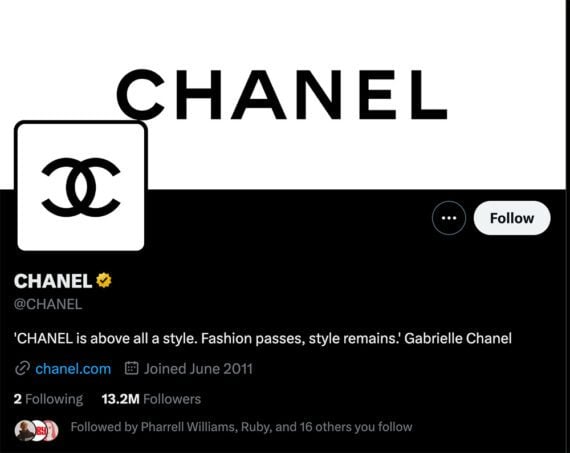
Chanel
Chanel had the third-largest X following of the 100 retail brands, with 13.2 million. The company was one of the many brands that left Twitter in 2022, seemingly to spite Musk.
Chanel left the X (then Twitter) platform in late 2022.
While that seemed like an awful lot of folks to ignore, it is not much compared to Chanel’s social media prowess.
Chanel’s U.S. website links to four social media platforms — Instagram, Facebook, YouTube, and LinkedIn — which collectively have more than 85 million followers.
The Home Depot
The Home Depot ran a “Halloween in July” campaign on X. Its 24 posts garnered more than 754,000 impressions, 4,800 likes, and 1,300 comments from its 438,000 followers.
If each of these X impressions is worth $.0.01 (one cent), The Home Depot’s impressions represented just $7,540 in value. Depending on how much the company spent developing and publishing the content, the organic campaign may have been worth it.
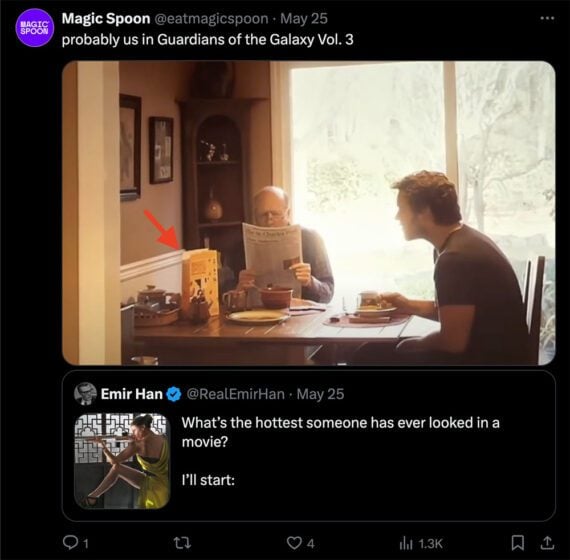
Magic Spoon
This high-protein cereal brand last posted on X in May 2024 and seemed to ignore the platform despite relatively good engagement.
Many of Magic Spoon’s posts experienced good engagement given the size of the company’s X following.
Magic Spoon only had 3,315 X followers but earned more than 8,200 impressions on its last five X posts — 1,640 impressions on average. So nearly half of the company’s follower count sees each post. If The Home Depot could get a similar result, it would have generated 1.1 million impressions instead of 754,000.
Magic Spoon’s X account was even more engaged — i.e., impressions per post — than its much larger Instagram profile.
As of July 22, 204, Magic Spoon had 407,000 Instagram followers. The company’s last five reels had generated 38,350 views, an average of 7,670 views per reel. So, something like 2% of its follower count sees each Instagram post.
PlayStation
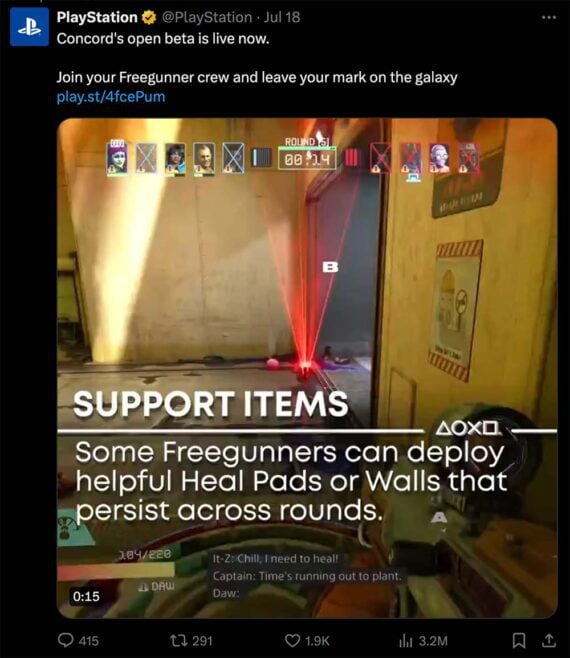
X is a high-frequency social media platform, meaning it works best with frequent posts. By that standard, PlayStation appeared to be the only brand on the list using X well.
PlayStation posts often on its X profile with frequent videos.
For example, Musk’s own X profile posted 275 times in the first 20 days of July 2024 — nearly 14 posts per day. Similarly, theUEFA Champions League — a European soccer association with almost 52 million X followers — posted an average of eight times per day in July. Even India’s Prime Minister Narendra Modi, gets it, posting an average of six times per day to his 100 million X followers.
PlayStation, by comparison, published an average of five X posts a day in the first three weeks of July 2024. With more than 38 million X followers, the brand’s five most recent posts generated almost 1.6 million impressions in less than 24 hours.
Nearly all PlayStation’s posts are videos, which may be the platform’s best-performing format.
X by the Numbers
The X platform had 556 million monthly active users in 2023, according to Exploding Topics.
Facebook had 2.9 billion active users. TikTok had slightly more than 1 billion, Pinterest had 445 million, and Meta’s X competitor, Threads, had 175 million monthly active users after a year of existence.
The X platform’s active users are highly engaged. Again, according to Exploding Topics, an active X user spends 34 minutes and 48 seconds per day on the platform. Only YouTube and TikTok have a more engaged user base.
Platform
Average Time Spent Per Day
TikTok
45 minutes, 48 seconds
YouTube
45 minutes, 36 seconds
X
34 minutes, 48 seconds
Snapchat
30 minutes, 36 seconds
Facebook
30 minutes, 6 seconds
Instagram
30 minutes, 6 seconds
Reddit
23 minutes, 8 seconds
In many ways, X has potential and could represent a social media marketing opportunity. But if these 100 retail brands are an indication, achieving a return on investment could take work.
Meta just released multiple updates to Meta AI which brings advanced image generation and editing capabilities directly to Facebook, Instagram and WhatsApp feeds, plus availability in more countries and languages.
New Meta AI Creative Tools
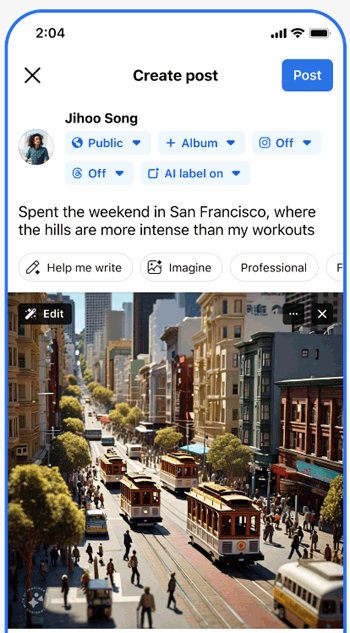
Meta AI is bringing AI generated and AI Edited photography that can be generated at the moment a user is making a post or sending a message with a new tool called Imagine Me.
Imagine Me is a prompt that can be used to transform an uploaded image that can be shared. This new feature is first rolling out as a beta in the United States.
Meta explains:
“Imagine yourself creates images based on a photo of you and a prompt like ‘Imagine me surfing’ or ‘Imagine me on a beach vacation’ using our new state-of-the-art personalization model. Simply type “Imagine me” in your Meta AI chat to get started, and then you can add a prompt like “Imagine me as royalty” or “Imagine me in a surrealist painting.” From there, you can share the images with friends and family, giving you the perfect response or funny sidebar to entertain your group chat.”
New Editing Features
Meta products like Facebook, Messenger, WhatsApp and Instagram now have advanced editing capabilities that allow users to add or remove objects from images, to change them in virtually any manner, such as their example of turning a cat in an image into a dog. A new Edit With AI button is forthcoming in a month that will unlock even more AI editing power.
Adding AI generated images to Facebook, Instagram, Messenger and WhatsApp within feed, posts, stories, comments and messages is rolling out this week in English and coming later to other languages.
Meta AI In More Countries And Languages
Meta AI is now available in seven additional countries, bringing the total countries to to 22. It is also available in seven more languages.
List of Seven Additional Countries:
Argentina
Cameroon
Chile
Colombia
Ecuador
Mexico
Peru
Meta AI is now also available in the following seven additional languages:
French
German
Hindi
Hindi-Romanized Script
Italian
Portuguese
Spanish
Advanced Math And Coding
Meta AI is making their most advanced model, Llama 405B, available for users to take advantage of its advanced reasoning abilities that can answer complex answers and excells at math and coding.
Meta AI writes:
“You can get help on your math homework with step-by-step explanations and feedback, write code faster with debugging support and optimization suggestions, and master complex technical and scientific concepts with expert instruction.”
Barry Hott is a longtime Facebook advertising consultant. He says first reactions to an ad largely determine its performance. He advises merchants to create ugly ads, those that people won’t skip over.
“I’m the Ugly Ads Guy,” he told me.
In our recent conversation, Hott addressed key Facebook ad metrics, budgeting, testing, and, yes, ugly creative. The entire audio of that discussion is embedded below. The transcript is edited for clarity and length.
Eric Brandholz: Who are you?
Barry Hott: I’m a part owner of a performance marketing agency called Adcrate, where we do high-performance ad creative. I also do a lot of consulting through Hott Growth, my own firm. I am a longtime Facebook ad nerd. You might know me as the “Make Ugly Ads” guy.
Brandholz: What can change the performance of an ad?
Hott: I don’t care about cost-per-impression or click-through-rate benchmarks. I’m looking at targeting. Are you allowing the system to target existing customers or recent visitors? Depending on the answer, I’ll look at your data differently.
From a systematic media buying standpoint, it’s about empathizing with the AI, with the machine learning algorithm — understanding how and why it operates in the way it does, how and why it’s incentivized, and how and why it can cheat. The system wants you to spend more money, and it wants to take more credit for more sales.
You can also use third-party attribution tools to help with that. Most people should use one for an extended period to understand how performance tracks outside the platforms.
Brandholz: What’s your take on bid caps on Facebook?
Hott: I have a problem with bid caps on everything and rigid cost caps. That’s not to say I don’t use them. They’re tools to be used in certain ways.
Say an ad is not getting a great cost per purchase, but the system knows it to be getting an overall sales lift. If you set your bid too low or set a cost cap too low, then I fear that the individual ad, if placed in an ad set that has too low of a bid, will never get the chance to spend in a way that it can support the entire ad ecosystem.
I like to have a controlled testing environment where every new concept gets an ad set for organizational purposes and just for letting things battle it out.
Brandholz: What metrics are you looking to hit?
Hott: The first thing to do is look at the best ads in the same environment — targeting, attribution, and settings. Everything stays the same. I need to know my best ads can spend this much and get this cost per purchase. And anything in that range is helpful to me. Anything above that, cost-wise, is useless to me significantly. Below that is killer.
I’ll typically have a testing environment excluding all existing customers and some visitors. That could be one-day visitors up to 30 days. It depends on the account and the business. I want to test ads for cold audiences. As an advertiser and media buyer, I aim to make ads that make sense and work for the broadest, coldest audiences. Many people would say that’s stupid, but if it can work well for those people, it will also work well for my warmer audiences.
Brandholz: How much money do you spend until you give up?
Hott: It’s about getting enough useful data. And that depends on what you’re selling — a $100 item or $1,000. Depending on budgets and your return on ad spend, you’re going to have different tolerances. It’s all going to vary. I’m usually looking for about 20 decent signals at the ad set level — hopefully that’s 20 actual purchases. By that point, I’ll know.
I’ll look at an ad that gets shut down quickly by bids for not spending and hypothesize about it. Why did the ad fail? Can I adjust it? I’d rather spend more time obtaining more data to see if there’s another pocket or placement elsewhere. It’s going to lose money, and I’m okay with that. But I will spend the time analyzing it and learning from it from a creative perspective.
However, if you don’t have time to do that sort of analysis, use rigid bids and cost caps.
Brandholz: What sort of creative produces good results?
Hott: Again, I am the Make Ugly Ads guy. I tell people to focus on making stuff uglier because our brains, as marketers, make prettier stuff. What matters are relatability, relevance, and authenticity. You can do that in a non-ugly way. I wouldn’t recommend it. But you can.
That first reaction is often what matters more than anything. Make something immediately relatable that people will care about. Make something people won’t skip. What will make someone feel uncomfortable?