How a 30-year-old techno-thriller predicted our digital isolation

In April, Mark Zuckerberg, as tech billionaires are so fond of doing these days, pontificated at punishing length on a podcast. In the interview, he addressed America’s loneliness epidemic: “The average American has—I think it’s fewer than three friends. And the average person has demand for meaningfully more. I think it’s like 15 friends or something, right?”

Before you’ve had a moment to register the ominous way in which he frames human connection in such bleak economic terms, he offers his solution to the loneliness epidemic: AI friends. Ideally AI friends his company generates.


“It’s like I’m not even me anymore.”
—Angela Bennett, The Net (1995)


Thirty years ago, Irwin Winkler’s proto–cyber thriller, The Net, was released. It was 1995, commonly regarded as the year Hollywood discovered the internet. Sandra Bullock played a social recluse and computer nerd for hire named Angela Bennett, who unwittingly uncovers a sinister computer security conspiracy. She soon finds her life turned upside down as the conspiracists begin systematically destroying her credibility and reputation. Her job, home, finances, and very identity are seemingly erased with some judicial tweaks to key computer records.

Bennett is uniquely—conveniently, perhaps—well positioned for this identity annihilation. Her mother, in the throes of dementia, no longer recognizes her; she works from home for clients who have never met her; her social circle is limited to an online chat room; she orders takeout from Pizza.net; her neighbors don’t even know what she looks like. Her most reliable companion is the screen in front of her. A wild, unimaginable scenario that I’m sure none of us can relate to.


“Just think about it. Our whole world is sitting there on a computer. It’s in the computer, everything: your DMV records, your Social Security, your credit cards, your medical records. It’s all right there. Everyone is stored in there. It’s like this little electronic shadow on each and every one of us, just begging for someone to screw with, and you know what? They’ve done it to me, and you know what? They’re gonna do it to you.”
—Angela Bennett, The Net


While the villain of The Net is ultimately a nefarious cybersecurity software company, the film’s preoccupying fear is much more fundamental: If all of our data is digitized, what happens if the people with access to that information tamper with it? Or weaponize it against us? 

This period of Hollywood’s flirtation with the internet is often referred to as the era of the technophobic thriller, but that’s a surface-level misreading. Techno-skeptic might be more accurate. These films were broadly positive and excited about new technology; it almost always played a role in how the hero saved the day. Their bigger concern was with the humans who had ultimate control of these tools, and what oversight and restrictions we should place on them.

In 2025, however, the most prescient part of The Net is Angela Bennett’s digital alienation. What was originally a series of plausible enough contrivances to make the theft of her identity more believable is now just part of our everyday lives. We all bank, shop, eat, work, and socialize without necessarily seeing another human being in person. And we’ve all been through covid lockdowns where that isolation was actively encouraged. For a whole generation of young people who lived through that, socializing face to face is not second nature. In 2023, the World Health Organization declared loneliness to be a pressing global health threat, estimating that one in four older adults experience social isolation and between 5% and 15% of adolescents experience loneliness. In the US, social isolation may threaten public health more seriously than obesity. 

The Net appeared at a time when the internet was only faintly understood as the new Wild West … In that sense, it remains a fascinating time capsule of a moment when the possibilities to come felt endless, the outlook cautiously optimistic.

We also spend increasing amounts of time looking at our phones, where finely tuned algorithms aggressively lobby for more and more of our ad-revenue-­generating attention. As Bennett warns: “Our whole lives are on the computer, and they knew that I could be vanished. They knew that nobody would care, that nobody would understand.” In this sense, in 2025 we are all Angela Bennett. As Bennett’s digital alienation makes her more vulnerable to pernicious actors, so too are we increasingly at risk from those who don’t have, and have never had, our best interests at heart. 

To blame technology entirely for a rise in loneliness—as many policymakers are doing—would be a mistake. While it is unquestionably playing a part in exacerbating the problem, its outsize role in our lives has always reflected larger underlying factors. In Multitudes: How Crowds Made the Modern World (2024), the journalist Dan Hancox examines the ways in which crowds have been demonized and othered by those in power and suggests that our alienation is much more structural: “Whether through government cuts or concessions to the expansive ambitions of private enterprise, a key reason we have all become a bit more crowd-shy in recent decades is the prolonged, top-down assault on public space and the wider public realm—what are sometimes called the urban commons. From properly funded libraries to pleasant, open parks and squares, free or affordable sports and leisure facilities, safe, accessible and cheap public transport, comfortable street furniture and free public toilets, and a vibrant, varied, uncommodified social and cultural life—all the best things about city life fall under the heading of the public realm, and all of them facilitate and support happy crowds rather than sad, alienated, stay-at-home loners.”

Nearly half a century ago Margaret Thatcher laid out the neoliberal consensus that would frame the next decades of individualism: “There’s no such thing as society. There are individual men and women and there are families. And no government can do anything except through people, and people must look after themselves first.” 
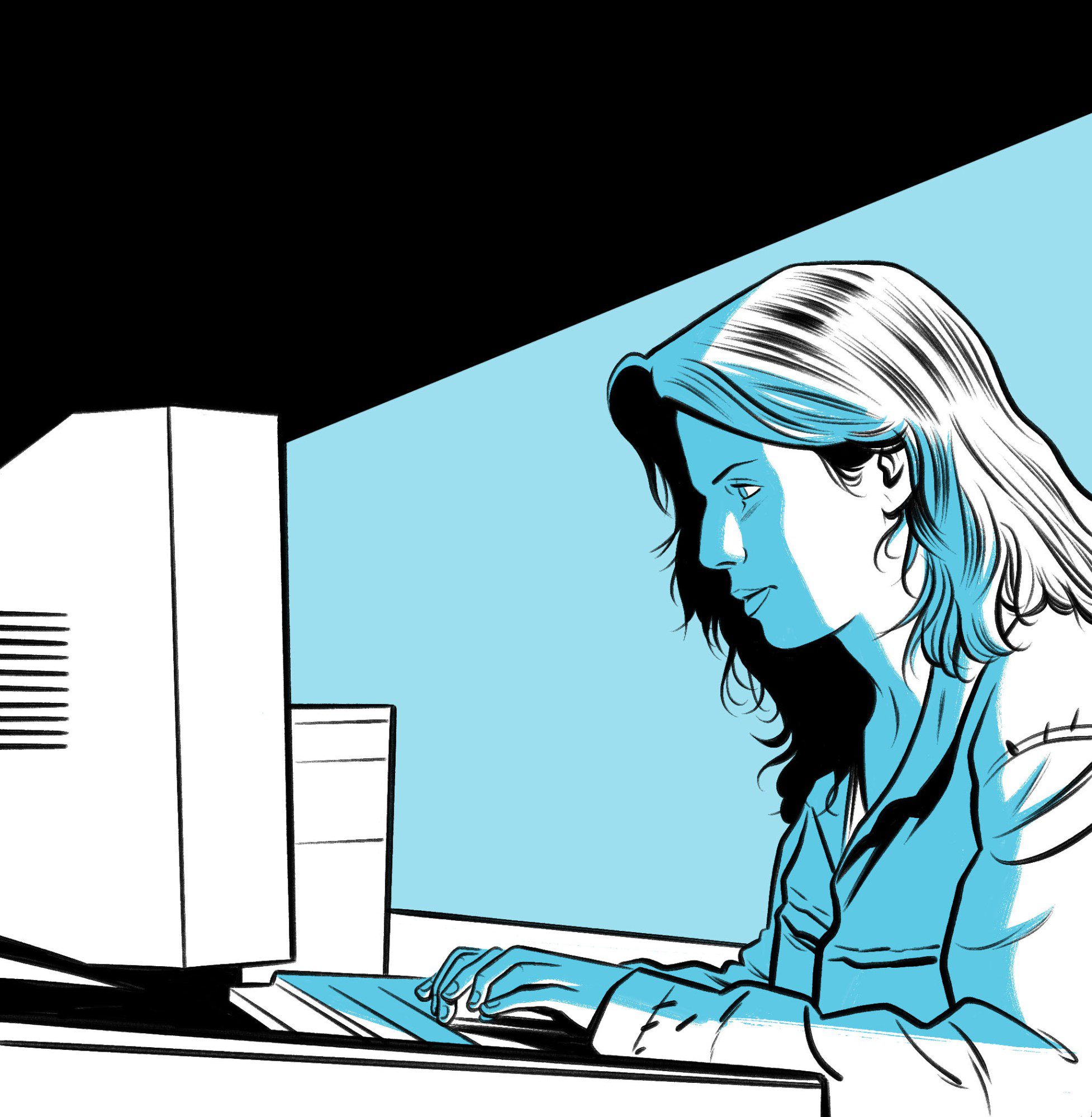
TOM HUMBERSTONE

In keeping with that philosophy, social connectivity has been outsourced to tech companies for which the attention economy is paramount. “The Algo” is our new, capricious god. If your livelihood depends on engagement, the temptation is to stop thinking about human connection when you post, and to think more about what will satisfy The Algo to ensure a good harvest. 

How much will you trust an AI chatbot powered by Meta to be your friend? Answers to this may vary. Even if you won’t, other people are already making close connections with “AI companions” or “falling in love” with ChatGPT. The rise of “cognitive offloading”—of people asking AI to do their critical thinking for them—is already well underway, with many high school and college students admitting to a deep reliance on the technology. 

Beyond the obvious concern that AI “friends” are hallucinating, unthinking, obsequious algorithms that will never challenge you in the way a real friend might, it’s also worth remembering who AI actually works for. Recently Elon Musk’s own AI chatbot, Grok, was given new edicts that caused it to cast doubt on the Holocaust and talk about “white genocide” in response to unrelated prompts—a reminder, if we needed it, that these systems are never neutral, never apolitical, and always at the command of those with their hands on the code. 

I’m fairly lucky. I live with my partner and have a decent community of friends. But I work from home and can spend the majority of the day not talking to anyone. I’m not immune to feeling isolated, anxious, and powerless as I stare unblinking at my news feed. I think we all feel it. We are all Angela Bennett. Weaponizing that alienation, as the antagonists of The Net do, can of course be used for identity theft. But it can also have much more deleterious applications: Our loneliness can be manipulated to make us consume more, work longer, turn against ourselves and each other. AI “friendships,” if engaged with uncritically, are only going to supercharge this disaffection and the ways in which it can be abused.

It doesn’t have to be this way. We can withhold our attention, practice healthier screen routines, limit our exposure to doomscrolling, refuse to engage with energy-guzzling AI, delete our accounts. But, crucially, we can also organize collectively IRL: join a union or a local club, ask our friends if they need to talk. Hopelessness is what those in power want us to feel, so resist it.

The Net appeared at a time when the internet was only faintly understood as the new Wild West. Before the dot-com boom and bust, before Web 2.0, before the walled gardens and the theory of a “dead internet.” In that sense, it remains a fascinating time capsule of a moment when the possibilities to come felt endless, the outlook cautiously optimistic.

We can also see The Net’s influence in modern screen-life films like Searching, Host, Unfriended, and The Den. But perhaps—hopefully—its most enduring legacy will be inviting us to go outside, touch grass, talk to another human being, and organize. 


“Find the others.”
—Douglas Rushkoff, Team Human (2019)


Tom Humberstone is a comic artist and illustrator based in Edinburgh.

The Download: talking dirty with DeepSeek, and the risks and rewards of calorie restriction

This is today’s edition of The Download, our weekday newsletter that provides a daily dose of what’s going on in the world of technology.

It’s pretty easy to get DeepSeek to talk dirty

AI companions like Replika are designed to engage in intimate exchanges, but people use general-purpose chatbots for sex talk too, despite their stricter content moderation policies. Now new research shows that not all chatbots are equally willing to talk dirty. DeepSeek is the easiest to convince. But other AI chatbots can be enticed too.

Huiqian Lai, a PhD student at Syracuse University, found vast differences in how mainstream models process sexual queries, from steadfast rejection to performative refusal followed by the requested sexually explicit content.

The findings highlight inconsistencies in LLMs’ safety boundaries that could, in certain situations, become harmful. Read the full story.

—Rhiannon Williams

Calorie restriction can help animals live longer. What about humans?

Living comes with a side effect: aging. Despite what you might hear on social media, there are no drugs that are known to slow or reverse human aging. But there’s some evidence to support another approach: cutting back on calories.

Reducing your intake of calories and fasting can help with weight loss. But they may also offer protection against some health conditions. And some believe such diets might even help you live longer—a finding supported by new research out this week.

However, the full picture is not so simple. Let’s take a closer look at the benefits—and risks—of caloric restriction.

—Jessica Hamzelou

This article first appeared in The Checkup, MIT Technology Review’s weekly biotech newsletter. To receive it in your inbox every Thursday, and read articles like this first, sign up here.


How a 30-year-old techno-thriller predicted our digital isolation

Thirty years ago, Irwin Winkler’s proto–cyber thriller, The Net, was released. It was 1995, commonly regarded as the year Hollywood discovered the internet. Sandra Bullock played a social recluse and computer nerd for hire named Angela Bennett, who unwittingly uncovers a sinister computer security conspiracy. She soon finds her life turned upside down as the conspiracists begin systematically destroying her credibility and reputation.

While the villain of The Net is ultimately a nefarious cybersecurity software company, the film’s preoccupying fear is much more fundamental: If all of our data is digitized, what happens if the people with access to that information tamper with it? Or weaponize it against us? Read the full story.

—Tom Humberstone

This story is from the next print edition of MIT Technology Review, which explores power—who has it, and who wants it. It’s set to go live on Wednesday June 25, so subscribe & save 25% to read it and get a copy of the issue when it lands!

The must-reads

I’ve combed the internet to find you today’s most fun/important/scary/fascinating stories about technology.

1 Donald Trump has extended TikTok’s deadline for a third time 
He’s granted it yet another 90-day reprieve. (WSJ $)
+ He says he needs more time to broker a deal. (AP News)
+ But it’s not clear if Trump’s orders are even legal. (Bloomberg $)

2 A SpaceX rocket exploded on the test stand
Sending a giant fireball into the Texas sky. (CNN)
+ It’s the fourth SpaceX explosion this year. (WP $)
+ The company has a lot of issues to resolve before it can ever reach Mars. (Ars Technica)

3 Checking a web user’s age is technologically possible
An Australian trial may usher in a ban on under-16s accessing social media. (Bloomberg $)
+ The findings are a blow to social media firms who have been fighting to avoid this. (Reuters)

4 Chinese companies are urgently searching for new markets
And Brazil is looking like an increasingly attractive prospect. (NYT $)
+ Chinese carmaker BYD is sending thousands of EVs there. (Rest of World)

5 How Mark Zuckerberg came to love MAGA
His recent alignment with the manosphere hasn’t come as a shock to insiders. (FT $)

6 We shouldn’t be using AI for everything
Using chatbots without good reason is putting unnecessary strain on the planet. (WP $)
+ AI companies are remaining tight-lipped over their energy use. (Wired $)
+ We did the math on AI’s energy footprint. Here’s the story you haven’t heard. (MIT Technology Review)

7 This Chinese courier company is out-delivering Amazon
J&T Express fulfills orders from giants like Temu and Shein. (Rest of World)

8 How Amazon plans to overhaul Alexa
With AI, AI, and some more AI. (Wired $)

9 How smart should today’s toys be?
The last AI-powered Barbie was not a resounding success. (Vox)

10 This French app allows you to rent household appliances
No raclette machine? No problem. (The Guardian)

Quote of the day

“So Mr “Art of the Deal” has not made a TikTok deal (again).”

—Adam Cochran, founder of venture capital firm Cinneamhain Ventures, questions Donald Trump’s credentials in a post on X.

One more thing

China wants to restore the sea with high-tech marine ranches

A short ferry ride from the port city of Yantai, on the northeast coast of China, sits Genghai No. 1, a 12,000-metric-ton ring of oil-rig-style steel platforms, advertised as a hotel and entertainment complex.

Genghai is in fact an unusual tourist destination, one that breeds 200,000 “high-quality marine fish” each year. The vast majority are released into the ocean as part of a process known as marine ranching.

The Chinese government sees this work as an urgent and necessary response to the bleak reality that fisheries are collapsing both in China and worldwide. But just how much of a difference can it make? Read the full story.

—Matthew Ponsford

We can still have nice things

A place for comfort, fun and distraction to brighten up your day. (Got any ideas? Drop me a line or skeet ’em at me.)

+ How many art terms are you familiar with? Time to brush up.
+ They can make a museum out of pretty much anything these days.
+ Beekeeping isn’t just beneficial for the bees—it could help your mental health, too 🐝
+ The Sculptor galaxy is looking ridiculously beautiful right now.

Faith, Family, and Ecommerce

Michael Simpson is a New Mexico-based father of seven and a National Guard veteran. Returning from a 2021 deployment, he sought a business to acquire, hoping to move on from his previous job. A listing from the Quiet Light brokerage caught his attention.

Discount Catholic Products had launched in 2003 and was for sale. The company’s mission appealed to Michael. Plus it was not reliant on Amazon or a single product or imports from China — all key requirements. He purchased the business.

Fast forward to 2025, and the retailer perseveres. Michael’s role has evolved to part-time oversight. A single employee, his sister-in-law, runs daily operations with help from his kids.

In our recent conversation, he and I discussed financing the acquisition, cash flow challenges, marketing tactics, and more. Our entire audio is embedded below. The transcript is condensed and edited for clarity.

Eric Bandholz: Who are you, and what do you do?

Michael Simpson: I own Discount Catholic Products, an online retailer of spiritual goods, such as prayer cards, decorative crosses, and church supplies. It launched in 2003, and my wife, Catie, and I bought it in 2021. We ran it together for a couple of years, but recently I accepted a job with the National Guard, where I’ve served for 22 years. We have seven kids who help with the business, as does my sister-in-law, our only employee.

I found the business through Quiet Light, a brokerage. I’d been on their email list for a year. I wanted something that wasn’t reliant on Amazon, with its own website, not tied to a single product or imported from China. I also wanted a product I could genuinely care about. This listing was the first that fit my criteria and budget.

I saved about $40,000 for a down payment from a deployment in Africa with the National Guard. After returning, during the pandemic, I didn’t want to go back to my old job.

To acquire the business, we injected our down payment and borrowed from the Small Business Administration, securing a 10-year loan at a 5.5% interest for the first five years. Plus the seller carried 5% of the purchase price on a 10-year loan. I also secured a line of credit early, which I highly recommend.

Four years in, we’ve paid about 25% of the debt.

Bandholz: Has the business met your expectations?

Simpson: There were definitely surprises. The business carried about $75,000 in inventory across thousands of SKUs. I negotiated that down to $65,000, but probably still overpaid by $15,000. A lot of it was stale items that sold maybe one unit a year or not at all.

I also underestimated working capital needs. I figured cash flow would be smooth with immediate revenue from customers and 30-day terms with U.S. suppliers. However, our cash quickly evaporated as we expanded and purchased more inventory.

I assumed only about 10% of products were drop-shipped, mostly larger or more expensive items. In reality, it was a lot more. That became a problem as the global supply chain fell apart during Covid. Products from Italy, China, and even the U.S. were delayed or unavailable, leading to backorders.

So early on we shifted to more in-house inventory. We now run our own warehouse from our base in Albuquerque, New Mexico. We sell and ship low-cost, low-margin, lightweight products. The pick-and-pack fees of a third-party fulfillment provider would wipe out profits.

Bandholz: Did the seller have employees?

Simpson: She ran it with a friend, who handled pick, pack, and ship, as well as customer service. She decided to sell when the friend couldn’t continue. I underestimated the amount of work involved. I assumed my wife and I could handle it easily.

But it turned out to be nearly full-time for both of us. My wife handled fulfillment, while I managed customer service, reordering, website updates, and finances. We hired an employee early on, but she moved away. The next hire didn’t work out. So for about two years, my wife was doing fulfillment a few times a week, and I was managing everything else.

Then we had our seventh baby about a year ago. With a newborn and several homeschooled kids, my wife couldn’t keep working in the business. So we hired her sister, and it has worked out well. She works part-time, from about 9:00 a.m. to 1:30 p.m. — enough time to handle fulfillment and customer service.

Bandholz: You’re now employed outside the business.

Simpson: Yes. I realized a few months ago I was borrowing from our line of credit to pay myself a modest salary, which made no sense. I’d been praying the business would improve, and soon, an unexpected opportunity came up — working with the National Guard on a local project. It pays double what I was paying myself and has regular hours, so I took it. Now I’m focused on reducing debt and stabilizing the business, which is being run day-to-day by our one employee.

We have a 30% contribution margin, but that wasn’t enough to cover fixed costs and my salary. Once I stepped back, the business became profitable again. Ironically, sales are now up even though I’m barely involved. A mastermind peer joked, “I think you found the problem!”

Now I’m focused on high-impact tasks such as ordering inventory and launching email campaigns. I’m training our employee to take on more responsibilities. My goal is to fully step out of daily operations and focus on long-term growth — working on the business, not in it.

Bandholz: How do sales break down between individuals and churches?

Simpson: About 80% of our sales come from individuals, with the rest from churches and schools. We have amazing customers.

One woman received a broken statue, so we shipped another. She ended up fixing the first one, sold it on eBay, and sent us the money. Another customer purchased a replacement necklace, then found the original and asked to pay for both. We’ve had dozens of stories like that — just honest, kind people.

Churches are great customers. They place large orders — $500 to $1,000 — but without the red tape of big organizations. Often, it’s parish secretaries or priests placing the order, and they tend to buy year after year.

Bandholz: What’s your marketing strategy?

Simpson: We’re primarily a demand capture business, not demand generation. Meta Ads haven’t been profitable — we’re lucky to break even. However, Google Shopping ads consistently deliver a return of 4.0 or higher. We also rely on organic search traffic. Social media has never been a big sales driver.

Email has been critical. The previous owner had a distinct tone, but we’ve since shifted to our own voice, which resonates well. Customers often respond warmly, and many older buyers even call to place their orders directly.

Bandholz: Where can folks buy your products and connect?

Simpson: Our site is DiscountCatholicProducts.com. I’m on X and LinkedIn.

How Much Code Should SEO Pros Know? Google Weighs In via @sejournal, @MattGSouthern

Google’s Martin Splitt and Gary Illyes recently addressed a common question in search marketing: how technical do SEO professionals need to be?

In a Search Off the Record podcast, they offered guidance on which technical skills are helpful in SEO and discussed the long-standing friction between developers and SEO professionals.

Splitt noted:

“I think in order to optimize a system or work with a system so deeply like SEOs do, you have to understand some of the characteristics of the system.”

However, he clarified that strong coding skills aren’t a requirement for doing effective SEO work.

The Developer-SEO Divide

Splitt, who regularly speaks at both developer and SEO events, acknowledged that the relationship between these groups can sometimes be difficult.

Splitt says:

“Even if you go to a developer event and talk about SEO, it is a strained relationship you’re entering.”

He added that developers often approach SEO conversations with skepticism, even when they come from someone with a developer background.

This disconnect can cause real-world problems.

Illyes shared an example of a large agency that added a calendar plugin across multiple websites, unintentionally generating “100 million URLs.” Google began crawling all of them, creating a major crawl budget issue.

What SEO Pros Need To Know

Rather than recommending that SEO professionals learn to code, Splitt advises understanding how web technologies function.

Splitt states:

“You should understand what is a header, how does HTTPS conceptually work, what’s the certificate, how does that influence how the connection works.”

He also advised being familiar with the differences between web protocols, such as HTTP/2 and HTTP/1.1.

While SEO pros don’t need to write in programming languages like C, C++, or JavaScript, having some awareness of how JavaScript affects page rendering can be helpful.

Context Matters: Not All SEOs Need The Same Skills

Google also pointed out that SEO is a broad discipline, and the amount of technical knowledge needed can vary depending on your focus.

Splitt gave the example of international SEO. He initially said these specialists might not need technical expertise, but later clarified that internationalization often includes technical components too.

“SEO is such a broad field. There are people who are amazing at taking content international… they specialize on a much higher layer as in like the content and the structure and language and localization in different markets.”

Still, he emphasized that people working in more technical roles, or in generalist positions, should aim to understand development concepts.

What This Means

Here’s what the discussion means for SEO professionals:

  • Technical understanding matters, but being able to code is not always necessary. Knowing HTTP protocols, HTML basics, and how JavaScript interacts with pages can go a long way.
  • Your role defines your needs. If you’re working on content strategy or localization, deep technical knowledge might not be essential. But if you’re handling site migrations or audits, that knowledge becomes more critical.
  • Context should guide your decisions. Applying advice without understanding the “why” can lead to problems. SEO isn’t one-size-fits-all.
  • Cross-team collaboration is vital. Google’s comments suggest there’s still a divide between developers and SEO teams. Improving communication between these groups could prevent technical missteps that affect rankings.

Looking Ahead

As websites become more complex and JavaScript frameworks continue to grow, technical literacy will likely become more important.

Google’s message is clear: SEOs don’t need to become developers, but having a working understanding of how websites function can make you far more effective.

For companies, closing the communication gap between development and marketing remains a key area of opportunity.

Listen to the full podcast episode below:


Featured Image: Roman Samborskyi/Shutterstock

Best WordPress SEO Tools & Plugins For Enterprise Sites

When it comes to enterprise SEO, you need more than just the basics. You need tools that scale, provide deep insights, and plug seamlessly into your WordPress ecosystem.

Enterprise businesses require a scalable, credible, and reliable website. While many organizations invest in expensive platforms that consume a significant portion of their budget and come with limited support, WordPress offers a powerful alternative without the hefty annual software fees.

The latest version of WordPress (6.8) has been downloaded over 28 million times. There are also over 59,000 plugins and 13,000 free themes.

This is a testament to the core WordPress development team’s ability to improve the platform and meet modern business needs.

Let me break down the best WordPress SEO tools as I see them that will help your enterprise site boost rankings, improve core web vitals, and gain visibility in even the most competitive markets.

Top 8 WordPress Plugins And Tools For Enterprise Sites

WordPress plugins and tools can assist in optimizing your site and improve site security, performance, and speed.

But, with so many different plugins and tools in the market today, how do you choose the right ones that will improve your site’s visibility?

To help you avoid an SEO disaster, let’s take a look at the top WordPress tools and plugins for search optimization of enterprise brands.

1. All In One SEO (AIOSEO)

Made popular by over 3 million users, AIOSEO offers a comprehensive toolkit and setup wizard for you to establish SEO settings for your website quickly.

The checklist includes features like meta tag generators, titles, descriptions, rich snippets, schema markup, and XML sitemaps.

For tech-savvy users, AIOSEO gives you complete control of robots.txt, local SEO, RSS videos, and video and photo optimizations. It also allows enterprises to assign user roles to employees or contractors.

2. BrightEdge

BrightEdge provides AI-powered data-driven solutions to help you manage your SEO and content performance to convert more users into customers.

You can leverage BrightEdge throughout every stage of content optimization: discovering your target audience’s search demand, creating impactful content, and measuring results to scale.

With powerful data insights like share of voice, opportunity forecasting, and ContentIQ, your content is more likely to capture your audience’s attention and boost SEO efforts.

This is especially effective for sites with complex structures or multiple departments contributing content.

3. Semrush

Semrush allows you to find all the organic keywords and search terms that your website can rank.

It also provides a competitive analysis of how your competitors rank, so you know how to gain an edge over their SEO strategy.

Our enterprise clients using Semrush reduced keyword blind spots by ~64% after refining their strategy using the Keyword Magic Tool.

With Semrush’s Writing Assistant Tool, you can also improve your existing WordPress content with targeted focus keywords to help you make the top 10 results.

I, however, like their backlink tracking capabilities the best.

4. Yoast SEO

In our work across dozens of enterprise WordPress deployments, Yoast SEO lets you easily update descriptions, titles, and social media images throughout your website.

With a user-friendly platform, Yoast SEO automatically creates an XML sitemap to make it easier for search engines to crawl your website and import data from other plugins.

You also have complete control of your site breadcrumbs and premium loading times. (While Yoast is the gold standard, I would also highly consider RankMath.)

5. Ahrefs

Ahrefs is an all-in-one SEO tool that helps optimize your website, analyze industry content, and study your customers’ top keywords to help you improve.

With Ahrefs, you can track your ranking progress and learn from your competitors’ content to deliver a high-ranking website that builds authority.

Additionally, Ahrefs offers enterprise-level support with unique features, including multiple user seats, personalized customer support, daily updates, and more, to help your business grow globally.

6. NitroPack

With over 240,000 websites using NitroPack, it’s a popular performance plugin.

NitroPack helps increase your speed score by 60% and improves your core web vitals, which can provide a better experience to users.

Enterprise teams we work with prioritize core web vitals for performance and SEO.

One client we worked with in the energy sector saw a 42% boost in mobile conversions after optimizing core web vitals with NitroPack.

It offers advanced features such as caching, a built-in CDN, and HTML optimization on a user-friendly platform.

7. MonsterInsights

Instead of relying on SEO assumptions, MonsterInsights provides you with all the insights you need to improve search rankings by connecting Google Analytics to your WordPress site.

MonsterInsights shows you top content, how users interact on your site, and connects ecommerce SEO.

Also, MonsterInsights provides over 100 data points to help you make better marketing decisions through real-time analytics.

Bonus Tool: DemandSphere

In my recent experience, DemandSphere has been a valuable tool for managing SEO at scale, especially when working with enterprise clients across multiple regions or business units.

Its AI-powered insights helped me surface priority keywords and content gaps, especially across large or multi-regional sites.

In one case, we used its predictive models to reorganize a content roadmap, which led to measurable improvements in mid-funnel visibility.

One of the features I find especially useful is the ability to segment data by market or product line, which helps clarify where to focus our efforts.

Is WordPress Good For Enterprises?

Here are a few reasons why WordPress is great for enterprises:

  • Ongoing support as opposed to proprietary systems that provide more flexibility and customization.
  • Robust content editing experience with WordPress Gutenberg and accessibility standards.
  • High-level security that keeps you protected against cyberattacks.
  • Scalable infrastructure with consistent themes and plugins to help reach your goals.
  • Huge cost savings by not having to pay hefty licensing costs compared to competitors like Adobe, Magento, and HubSpot.

Since WordPress is open-source software, your business has access to an endless pool of designers, developers, and specialized agencies, along with a massive community that is always ready to collaborate, innovate, and troubleshoot together.

With millions of WordPress websites live, the user community allows you to leverage best practices and implement them within your own system, instead of relying on inconsistent customer service or a limited FAQ page from closed-off systems.

WordPress includes several built-in features that help you better optimize your site, and has many plugins that can support SEO (some mentioned above).

These are a few reasons why WordPress can support the SEO for an enterprise site:

  • Permalinks: Customize your permalinks with targeted keywords to increase your click-through rate.
  • Metadata: Automatically add title and meta description to every post or page on your website to improve your position.
  • Images: Optimize your images by using keywords in the ALT text, description, and caption, and improve your page speed by editing the size.
  • User experience: Develop a well-designed site that enhances the user experience to increase page views, conversions, and session times.
  • Site speed: Select the right themes and plugins that help you maintain a fast-loading time.
  • Mobile-friendly: Use a mobile-responsive theme to ensure it’s the same quality as the desktop version for a better user experience.
  • Social media: Increase your brand visibility by including social media share and follow buttons on your website.
  • Integration: Seamlessly integrate your WordPress site with other software like G Suite, Google Analytics, ConvertKit, and more.

Scale Your WordPress Enterprise Website With SEO

Is WordPress enterprise-ready?

Combined with powerful plugins and themes, WordPress’s content management system is more than ready to handle the needs of a complex enterprise website.

With WordPress, you can scale your website with flexible infrastructure and reliable SEO features.

We’ve implemented this setup across various industries, including manufacturing, healthcare, and legal, each with its own unique technical and SEO requirements.

WordPress is one of the best platforms for SEO. Not only does the system provide SEO features, but the available plugins also make it easy for your website to start building authority and boost its overall rankings.

Continue optimizing and adapting to maintain long-term growth. The key is to keep your SEO strategy evolving to keep up with the changes in the industry.

More Resources:


Featured Image: hasan as’ari/Shutterstock

How to Build a Brand That Truly Connects

If your brand doesn’t resonate on a deep level with your target audience, then pouring time and energy into aesthetics and clever messaging is a waste of resources.

Real brand power is based on your brand’s identity: knowing who you are as a company, and how your ideal customer experiences life in relation to your offering.

Search Engine Journal’s Editor-in-Chief Katie Morton sits down with Mordy Oberstein, founder of Unify Brand Marketing, to go deeper on how to build a brand with a solid foundation.

Watch the video or read the full transcript below.

Start With Brand Identity

Katie Morton: Hello, everybody. It is I, Katie Morton, Editor-in-Chief of Search Engine Journal, and I’m here today with Mordy Oberstein, who is the founder of Unify Brand Marketing.

So, Mordy, what are we going to talk about today?

Mordy Oberstein: Hi there, everybody. Last time we spoke about what brand marketing is fundamentally and how to approach it. Today, I’m gonna talk about how to actually develop a brand and run through that process.

We’re gonna try to be jargon-free about what brand development actually looks like and what the stages are, and how they should all flow one into the other.

Katie: That sounds great. OK, so what’s the first concept?

Brand Therapy: Don’t Fear a Niche

Mordy: OK, this is where I think brands get really messed up. If you feel like you’ve lost traction, like you don’t have direction or you’re all over the place – whatever it is – most problems come down to this issue, which is… (I’m not going to say the jargon word) but it comes down to: Who are you?

And this is where you’re doing therapy for your brand. You’re trying to figure out who you are in a real, deep way. Kind of what we talked about last time – about building some meaning for yourself. You need to think about: Who are you? Where do you want to be? How do you want to be seen? How are you seen? How do you want to be seen going forward?

This is the part where it gets a little bit scary. I’m going to ask you: What scares you? Because this is where brands kind of feel like, “Maybe we’re going to pigeonhole ourselves.” But you’re not.

I’m not going to use the identity word – wait, I said identity – used jargon. Darn it!

This is where you kind of feel like maybe we’re going to pigeonhole ourselves if we have too much of a pigeonhole kind of audience. Don’t. It’s scary, but you have to do it.

This is where brands get off the rails. You have to understand who you are in a real way, because who you are rolls right into who you’re for.

Know Your Core Audience

Mordy: If I was dating my wife back in the day and my wife didn’t like sports at all, I’d be like, “Oh, my wife’s not for me. I’m a sports nut,” which is not true. That’s not how dating actually works.

Knowing who you are rolls right into: Who are you for?

Once you know who you are, the next step is: Who’s actually interested in you? Who’s your core audience? And this is a direct outcome of who you are, which is why it’s important.

The next stage in brand development – once you know who you are and who you’re for (that doesn’t mean you have to be only for them, but they’re your core) – is what problems does that audience have?

And by problems, I don’t mean USPs (which I know is a jargon word, but I’m going to use it so we know what we’re talking about). I’m not talking about pain points.

I’m talking about: What’s going on in their lives as it generally relates to your product or service?

Let me give you an example: Minivans. Why do I always use minivans? If I was making minivans, I would want to know: What’s the context? What’s the life situation of the parent or guardian driving and schlepping these kids around? What’s happening in their lives around the product?

It’s not a pain point. It’s not a USP. It’s what’s happening in the life of your audience, as it relates to generally speaking about the product/service, whatever you do.

Now that you know that, the next step in brand development is: How do you fit those needs?

This is where your “USP stuff” kind of comes in. And by the way, everything here should align from who you are to your audience, to what their problems are, to how do you fit those needs (because you know who you are now, obviously)?

Build From The Ground Up, Messaging Comes Last

Mordy: Because of who you are, how do you now solve those problems that your audience or people or consumers are dealing with in their lives? Now, once you know that, stage five would be, how do you actually communicate that? Or rather, what’s important about that to communicate?

We now know who we are. We now know who we’re for. We now know what the problems and the life situation is of the people we’re for. And we know how we solve and deal with those situations with who we are as a product, as a service, as an offering.

What’s important to tell the audience about who we are and how we solve their problems?

Don’t try to refine it here. Don’t try to have it snappy and snippy. Nothing catchy. No taglines. Just what’s important conceptually as a framework to communicate to your audience.

What’s conceptually important – what should the audience understand?

And the last step is to refine that. It’s not going to come in one shot. It’ll take multiple iterations to do it. It’s not going to be perfect, and you’ll never be 100% happy with it. It’s better that it’s honest and genuine than it is perfect.

If we want to zoom out and use the jargon, we just ran through:

  • Creating brand identity.
  • Using identity to define the target audience.
  • Understanding the audience’s life context.
  • Positioning the offering.
  • Developing key messaging.
  • And then refining the message.

Katie: I like it.

Mordy: No jargon, I almost got through it!

SaaS Doesn’t Have To Mean Utility

Katie: I think it speaks to our audience to use a little bit of jargon in there. And speaking of that, I’m sure a lot of people you talk to and a lot of people in the Search Engine Journal universe are SaaS, software as a service.

I like the minivan example because it’s easy to wrap your head around. It’s an obvious life circumstance. You just say that word ‘minivan’ and it’s giving you a picture of being married with a bunch of kids, driving them around. You say one word, and it paints this whole picture. With SaaS, it’s so different.

And what would it be like, as a thought exercise to go through this, if you invent a software that’s a rabbit food feeding timer?

Mordy: Okay. A set that feeds your rabbit on a timer.

Katie: Something that’s life-oriented, right? Like, think about our universe, which is really kind of abstract, right? In terms of people’s day-to-day. And they’re really using software, probably in a professional sense, and probably not in their home life for the most part, let’s say like a marketing software or, you know, ads like PPC.

Mordy: I consult for a marketing software, so I’m not going to use a marketing software because I’m biased. Let’s say I use like a video editor tool – does that work?

Katie: Yeah, that works.

Mordy: All right, cool.

Brand Identity is the Foundation

Mordy: First of all, the most important thing is where I think brands get everything wrong. It’s not like one stage, and you go from stage one, which is brand identity to messaging refinement, which is, what, stage six?

Don’t think of it as a line. I did one, and now I go to the next one, then I go to the next one. Think of it like you’re stacking a building. You’re building a building.

The foundation is a brand identity, and then you build the next floor, the next floor, the next – and the top floor, the roof is the refinement that everybody can see from the helicopter.

But they’re not—if you imagine they’re in a helicopter looking down on this roof – they can’t see all of the other layers, but you can. And you have to start with brand identity.

And this – particularly for a SaaS tool – because SaaS, it’s really easy to get stuck in being a utility. “We’re just a utility.”

The problem with being a utility is that there’s no actual connection. And as soon as somebody else finds another utility that’s better, cheaper, or whatever, they’ll move. There’s no loyalty, which is literally what I did… I used another tool. I found it a little bit cumbersome. The pricing wasn’t super clear, so I moved to this one.

Now, I don’t love this one, by the way. If something else came along, I would totally move to the other one.

There’s no identity. I don’t know what separates CapCut from the other one I was using.

I don’t use Camtasia anymore only because I have an old license. I don’t want to pay for a new one. So if I’m going to pay for a new one, I find it a little bit cumbersome.

I have no actual loyalty to any of these platforms because I don’t know who they are and what makes them different.

You know why I don’t know who they are and what makes them different? Because they don’t know who they are.

A Connection With Your Audience Gains Customer Loyalty

Katie: If they worked on connecting with you as a brand and developed that emotional bond, you’d be more likely to stick with them, even if something better came out, a better feature.

Mordy: Because it’d be more for me. Right. They have to ask themselves – and I can’t do this for them – I don’t even know anything about it other than the tool. Someone recommended it to me and I use it.

They have to figure out: Why are you doing this? Why do you want to do this outside of making money? Why do you find this meaningful?

“Oh, because…” Let’s just say, “Because we help. Because we are into the idea of being able to do X, Y, and Z.”

Oh, okay, CapCut. Let’s just say their big thing is (because I use this part of their tool, so I like it—they automatically remove my background and put a new one):

“We’re all about people who don’t have a professional setup feeling like they have a professional setup.”

That’s just really important because we see the value in that. “We want to democratize video content,” etc. That would be an actual brand identity.

So now I know who I’m for. I’m not for a professional. I’m a big brand, I have a whole studio, I’m Coca-Cola, I have a whole in-house studio on site. [I’m not for them.] I’m for this audience.

Now, what are their problems, and what’s going on with them, and what’s happening with them?

Now it’s kind of easier to see.

“I really want to create professional-level content, but I don’t have the skills to do it.” I’m also not an idiot, either. So I kind of know what it’s supposed to look like. I kind of know what it’s supposed to be. I don’t have the time. I don’t have the technical know-how. I don’t want to pay anybody to do it.

These are my problems. How do you come in and solve that?

Katie: So it’s like the entire market proposition is tied into that.

Mordy: But they only realize to talk to me about my problems, and how they solve my problems, once they figure out who they were first.

But everybody skips that step. Everyone goes right to the roof—because that’s the only thing you can see.

Katie: That’s fascinating, Mordy. Brick by brick – you’ve got to stack it up before you get to the helicopter view.

Mordy: Gotcha. It’ll all come crumbling down at a certain point. The messaging won’t work. It’ll all fall apart. That sounds really doomsday-ish.

Katie: It does. But I do think that I will be checking out CapCut’s branding – to see what are they doing over there?

All I know is their little logo that I see frequently at the end of some of my favorite creators.

Mordy: So that’s good branding. It’s not great branding, but better than nothing.

Katie: Exactly. Better than nothing.

Wrapping Up: Shout Brand From The Rooftops

Well, Mordy, this has been very enlightening, and I want to thank you for coming on and sharing with me today.

What’s next?

Mordy: I was going to shout “brand!” from the rooftops. That was so like a dad joke.

Next time, we’re going to dive deeper into Stage One, which is building brand identity, and what that actually looks like, and how you do it.

Katie: That’d be fantastic. All right, everybody, thanks for joining us. And check us out: searchenginejournal.com.

Mordy, what’s your website?…

Mordy: Oh, I should know this – good branding! unifybrandmarketing.com.

Katie: Awesome. All right. See you next time, everybody.

Katie & Mordy: Bye!

More Resources:


Featured Image: Paulo Bobita/Search Engine Journal

How To Efficiently Plan A WordPress Site

The most exciting moment of your new WordPress project is right at the beginning. You have an idea that one day, you hope will soon be shared with the world. But it can also be overwhelming.

WordPress has countless plugins that do pretty much everything under the sun. In fact, the WordPress ecosystem has doubled in terms of plugin submissions in 2025.

So, which ones should you use?

In this post, I will talk through how I plan to build a WordPress website.

Why You Should Plan A WordPress Site

To plan a WordPress site really is a must-do process that reduces the risk of the project spiralling in time and cost.

Spending an hour or two following a simple checklist, like the one I’ve detailed below, puts you and the client on the same page when building the website.

Time and again, I’ve seen projects that’ve undefined elements that need to be factored in, which eliminates potential scope creep.

It will also give you a list of tasks, so as well as avoiding scope creep, you can easily transfer the elements of your plan into your project management tool as tasks and milestones. That will speed up development time.

Define Your WordPress Website Goals

The first thing you should do is define the goals of the website. The easiest way to begin this process is to ask yourself the following two questions:

  1. Where are your visitors most likely to come from?
  2. What do you wish them to do when you’re on the website?

Assuming that the site is a brochure site, then more than likely, you’d want your visitors to come from search engines, and you want them to contact you.

That way, you’ll need a plugin like Yoast SEO or Gravity Forms.

You may have other goals, like growing a newsletter or an ecommerce store. Or you may get traffic from a social media platform that your blog needs to integrate with.

Each of these needs to be defined, as this will help define your tech stack.

Goals Defined? Great. Now, Plan The Layout

Once you’ve defined your goals, you need to think about the layout and what custom work you will need to do.

When building your site, I prefer to think of templates, rather than pages.

You don’t need a template for every blog post, for example. If you are building a website for a solicitor, for example, all services it offers (e.g., Conveyancing/Wills & Probate) could run off a similar template, cutting build time.

This is not necessarily true if you’re using a page builder, as sometimes page builders treat each individual page separately.

You could also look at custom post types and taxonomies for certain pages.

For example, if you have a “Meet the Team” page, then every person could be their own post. This makes maintenance a lot easier, as it allows a new team member to be easily integrated without too much trouble.

Testimonials work well as a custom post type as you can create a “bank” of them to use throughout the site.

Once you’ve got the structure of the site and what you are using to build it, that should be the templates.

Generally, for a brochure site with a blog and a “Meet the Team” section, you would have the following templates:

  1. Home Page Template.
  2. About Page Template.
  3. Contact Us Page Template.
  4. News Post Template (Single).
  5. News Post Template (Archive).
  6. Team Member Template (Single).
  7. Team Member Template (Archive).
  8. Catch All Template.

The “Catch All” template I find useful as it’s used for pages that are present but don’t need much design, something like a Terms & Conditions or your Privacy Policy pages.

I tend to start with these first, as you can build a header/footer easily enough here.

Finally, you may want to consider whether you have multiple languages or if you have different regional offices. A large site may be better suited for a multisite, rather than an individual WordPress installation.

Once done, you should have a WordPress theme and a WordPress plugin ready to build.

My general thought is that any WordPress functionality you wish to retain when redesigning should be in a plugin, rather than a theme.

Things like definitions of custom post types or SEO changes you make programmatically are ideal for a custom plugin.

Depending on the complexity of the project, it could mean that you split functionality into a number of plugins.

For example, I have an ecommerce site where their custom invoicing is in one plugin, and the voucher management is in another plugin. There is also the “helper” plugin that has minor performance improvements and a custom post type.

Don’t Forget The Ancillaries!

Of course, a well-built WordPress theme, with a range of custom and supporting plugins, is just the beginning. Your website needs content.

If you are a marketing agency, you may be responsible for the creation of the content, but what about imagery? It’s a good idea to define in the WordPress site planning things like who is responsible for the content.

If you are using the content of the old site, it’s a good idea to define who handles the migration, or at the very least be aware if it’s transferable – not all content systems are!

Other things to define in your WordPress site plan are training, who will have access to the site, and what level. Ideally, you want as few administrators as possible.

If you are pushing a new design to an existing site, there’s an approach of making everybody but yourself authors or editors, and see who complains about lacking access. That works remarkably well!

The First Step Comes With Experience

In reality, the more you create plans and pitches for WordPress websites, the more refined your toolset and your planning process become.

I already know the tools I’ll be using for the next 10, maybe 20 sites, with often very little variance among them. What works for a solicitor’s website will probably work for a cleaning firm.

I have a core group of about five to 10 plugins and two to three themes that I use, and then I add extra plugins as needed.

Those plugins are personal to me, but over time, you’ll build your own list of plugins. Doing so will make WordPress site planning far more efficient.

More Resources:


Featured Image: one photo/Shutterstock

Is this the electric grid of the future?

One morning in the middle of March, a slow-moving spring blizzard stalled above eastern Nebraska, pounding the state capital of Lincoln with 60-mile-per-hour winds, driving sleet, and up to eight inches of snow. Lincoln Electric System, the local electric utility, has approximately 150,000 customers. By lunchtime, nearly 10% of them were without power. Ice was accumulating on the lines, causing them to slap together and circuits to lock. Sustained high winds and strong gusts—including one recorded at the Lincoln airport at 74 mph—snapped an entire line of poles across an empty field on the northern edge of the city. 

Emeka Anyanwu kept the outage map open on his screen, refreshing it every 10 minutes or so while the 18 crews out in the field—some 75 to 80 line workers in totalstruggled to shrink the orange circles that stood for thousands of customers in the dark. This was already Anyanwu’s second major storm since he’d become CEO of Lincoln Electric, in January of 2024. Warm and dry in his corner office, he fretted over what his colleagues were facing. Anyanwu spent the first part of his career at Kansas City Power & Light (now called Evergy), designing distribution systems, supervising crews, and participating in storm response. “Part of my DNA as a utility person is storm response,” he says. In weather like this “there’s a physical toll of trying to resist the wind and maneuver your body,” he adds. “You’re working slower. There’s just stuff that can’t get done. You’re basically being sandblasted.” 

Lincoln Electric is headquartered in a gleaming new building named after Anyanwu’s predecessor, Kevin Wailes. Its cavernous garage, like an airplane hangar, is designed so that vehicles never need to reverse. As crews returned for a break and a dry change of clothes, their faces burned red and raw from the sleet and wind, their truck bumpers dripped ice onto the concrete floor. In a darkened control room, supervisors collected damage assessments, phoned or radioed in by the crews. The division heads above them huddled in a small conference room across the hall—their own outage map filling a large screen.

Emeka Anyanwu is CEO of Lincoln Electric System.
TERRY RATZLAFF

Anyanwu did his best to stay out of the way. “I sit on the storm calls, and I’ll have an idea or a thought, and I try not to be in the middle of things,” he says. “I’m not in their hair. I didn’t go downstairs until the very end of the day, as I was leaving the building—because I just don’t want to be looming. And I think, quite frankly, our folks do an excellent job. They don’t need me.” 

At a moment of disruption, Anyanwu chooses collaboration over control. His attitude is not that “he alone can fix it,” but that his team knows the assignment and is ready for the task. Yet a spring blizzard like this is the least of Anyanwu’s problems. It is a predictable disruption, albeit one of a type that seems to occur with greater frequency. What will happen soon—not only at Lincoln Electric but for all electric utilities—is a challenge of a different order. 

In the industry, they call it the “trilemma”: the seemingly intractable problem of balancing reliability, affordability, and sustainability. Utilities must keep the lights on in the face of more extreme and more frequent storms and fires, growing risks of cyberattacks and physical disruptions, and a wildly uncertain policy and regulatory landscape. They must keep prices low amid inflationary costs. And they must adapt to an epochal change in how the grid works, as the industry attempts to transition from power generated with fossil fuels to power generated from renewable sources like solar and wind, in all their vicissitudes.

Yet over the last year, the trilemma has turned out to be table stakes. Additional layers of pressure have been building—including powerful new technical and political considerations that would seem to guarantee disruption. The electric grid is bracing for a near future characterized by unstoppable forces and immovable objects—an interlocking series of factors so oppositional that Anyanwu’s clear-eyed approach to the trials ahead makes Lincoln Electric an effective lens through which to examine the grid of the near future. 

A worsening storm

The urgent technical challenge for utilities is the rise in electricity demand—the result, in part, of AI. In the living memory of the industry, every organic increase in load from population growth has been quietly matched by a decrease in load thanks to efficiency (primarily from LED lighting and improvements in appliances). No longer. Demand from new data centers, factories, and the electrification of cars, kitchens, and home heaters has broken that pattern. Annual load growth that had been less than 1% since 2000 is now projected to exceed 3%. In 2022, the grid was expected to add 23 gigawatts of new capacity over the next five years; now it is expected to add 128 gigawatts. 

The political challenge is one the world knows well: Donald Trump, and his appetite for upheaval. Significant Biden-era legislation drove the adoption of renewable energy across dozens of sectors. Broad tax incentives invigorated cleantech manufacturing and renewable development, government policies rolled out the red carpet for wind and solar on federal lands, and funding became available for next-generation energy tech including storage, nuclear, and geothermal. The Trump administration’s swerve would appear absolute, at least in climate terms. The government is slowing (if not stopping) the permitting of offshore and onshore wind, while encouraging development of coal and other fossil fuels with executive orders (though they will surely face legal challenges). Its declaration of an “energy emergency” could radically disrupt the electric grid’s complex regulatory regime—throwing a monkey wrench into the rules by which utilities play. Trump’s blustery rhetoric on its own emboldens some communities to fight harder against new wind and solar projects, raising costs and uncertainty for developers—perhaps past the point of viability. 

And yet the momentum of the energy transition remains substantial, if not unstoppable. The US Energy Information Administration’s published expectations for 2025, released in February, include 63 gigawatts of new utility-scale generation—93% of which will be solar, wind, or storage. In Texas, the interconnection queue (a leading indicator of what will be built) is about 92% solar, wind, and storage. What happens next is somehow both obvious and impossible to predict. The situation amounts to a deranged swirl of macro dynamics, a dilemma inside the trilemma, caught in a political hurricane. 

A microcosm

What is a CEO to do? Anyanwu got the LES job in part by squaring off against the technical issues while parrying the political ones. He grew up professionally in “T&D,” transmission and distribution, the bread and butter of the grid. Between his time in Kansas City and Lincoln, he led Seattle City Light’s innovation efforts, working on the problems of electrification, energy markets, resource planning strategy, cybersecurity, and grid modernization.  

LES’s indoor training facility accommodates a 50-foot utility pole and dirt-floor instruction area, for line workers to practice repairs.
TERRY RATZLAFF

His charisma takes a notably different form from the visionary salesmanship of the startup CEO. Anyanwu exudes responsibility and stewardship—key qualities in the utility industry. A “third culture kid,” he was born in Ames, Iowa, where his Nigerian parents had come to study agriculture and early childhood education. He returned with them to Nigeria for most of his childhood before returning himself to Iowa State University. He is 45 years old and six feet two inches tall, and he has three children under 10. At LES’s open board meetings, in podcast interviews, and even when receiving an industry award, Anyanwu has always insisted that credit and commendation are rightly shared by everyone on the team. He builds consensus with praise and acknowledgment. After the blizzard, he thanked the Lincoln community for “the grace and patience they always show.”  

Nebraska is the only 100% “public power state,” with utilities owned and managed entirely by the state’s own communities.

The trilemma won’t be easy for any utility, yet LES is both special and typical. It’s big enough to matter, but small enough to manage. (Pacific Gas & Electric, to take one example, has about 37 times as many customers.) It is a partial owner in three large coal plants—the most recent of which opened in 2007—and has contracts for 302 megawatts of wind power. It even has a gargantuan new data center in its service area; later this year, Google expects to open a campus on some 580 acres abutting Interstate 80, 10 minutes from downtown. From a technical standpoint, Anyanwu leads an organization whose situation is emblematic of the challenges and opportunities utilities face today.

Equally interesting is what Lincoln Electric is not: a for-profit utility. Two-thirds of Americans get their electricity from “investor-­owned utilities,” while the remaining third are served by either publicly owned nonprofits like LES or privately owned nonprofit cooperatives. But Nebraska is the only 100% “public power state,” with utilities owned and managed entirely by the state’s own communities. They are governed by local boards and focused fully on the needs—and aspirations—of their customers. “LES is public power and is explicitly serving the public interest,” says Lucas Sabalka, a local technology executive who serves as the unpaid chairman of the board. “LES tries very, very hard to communicate that public interest and to seek public input, and to make sure that the public feels like they’re included in that process.” Civic duty sits at the core.

“We don’t have a split incentive,” Anyanwu says. “We’re not going to do something just to gobble up as many rate-based assets as we can earn on. That’s not what we do—it’s not what we exist to do.” He adds, “Our role as a utility is stewardship. We are the diligent and vigilant agents of our community.” 

A political puzzle

In 2020, over a series of open meetings that sometimes drew 200 people, the public encouraged the LES board to adopt a noteworthy resolution: Lincoln Electric’s generation portfolio would reach net-zero carbon emissions by 2040. It wasn’t alone; Nebraska’s other two largest utilities, the Omaha Public Power District and the Nebraska Public Power District, adopted similar nonbinding decarbonization goals. 

These goals build on a long transition toward cleaner energy. Over the last decade, Nebraska’s energy sector has been transformed by wind power, which in 2023 provided 30% of its net generation. That’s been an economic boon for a state that is notably oil-poor compared with its neighbors. 

But at the same time, the tall turbines have become a cultural lightning rod—both for their appearance and for the way they displace farmland (much of which, ironically, was directed toward corn for production of ethanol fuel). That dynamic has intensified since Trump’s second election, with both solar and wind projects around the state facing heightened community opposition. 

Following the unanimous approval by Lancaster County commissioners of a 304-megawatt solar plant outside Lincoln, one of the largest in the state, local opponents appealed. The project’s developer, the Florida-based behemoth NextEra Energy Resources, made news in March when its CEO both praised the Trump administration’s policy and insisted that solar and storage remained the fastest path to increasing the energy supply.  

Lincoln Electric is headquartered in a gleaming new building named after Anyanwu’s predecessor, Kevin Wailes.
TERRY RATZLAFF

Nebraska is, after all, a red state, where only an estimated 66% of adults think global warming is happening, according to a survey from the Yale Program on Climate Change Communication. President Trump won almost 60% of the vote statewide, though only 47% of the vote in Lancaster County—a purple dot in a sea of red. 

“There are no simple answers,” Anyanwu says, with characteristic measure. “In our industry there’s a lot of people trying to win an ideological debate, and they insist on that debate being binary. And I think it should be pretty clear to most of us—if we’re being intellectually honest about this—that there isn’t a binary answer to anything.”

The new technical frontier

What there are, are questions. The most intractable of them—how to add capacity without raising costs or carbon emissions—came to a head for LES starting in April 2024. Like almost all utilities in the US, LES relies on an independent RTO, or regional transmission organization, to ensure reliability by balancing supply and demand and to run an electricity market (among other roles). The principle is that when the utilities on the grid pool both their load and their generation, everyone benefits—in terms of both reliability and economic efficiency. “Think of the market like a potluck,” Anyanwu says. “Everyone is supposed to bring enough food to feed their own family—but the compact is not that their family eats the food.” Each utility must come to the market with enough capacity to serve its peak loads, even as the electrons are all pooled together in a feast that can feed many. (The bigger the grid, the more easily it absorbs small fluctuations or failures.)

But today, everyone is hungrier. And the oven doesn’t always work. In an era when the only real variable was whether power plants were switched on or off, determining capacity was relatively straightforward: A 164-megawatt gas or coal plant could, with reasonable reliability, be expected to produce 164 megawatts of power. Wind and solar break that model, even though they run without fuel costs (or carbon emissions). “Resource adequacy,” as the industry calls it, is a wildly complex game of averages and expectations, which are calculated around the seasonal peaks when a utility has the highest load. On those record-breaking days, keeping the lights on requires every power plant to show up and turn on. But solar and wind don’t work that way. The summer peak could be a day when it’s cloudy and calm; the winter peak will definitely be a day when the sun sets early. Coal and gas plants are not without their own reliability challenges. They frequently go offline for maintenance. And—especially in winter—the system of underground pipelines that supply gas is at risk of freezing and cannot always keep up with the stacked demand from home heating customers and big power plants. 

Politics had suddenly become beside the point; the new goal was to keep the lights—and the AI data centers—on.

Faced with a rapidly changing mix of generation resources, the Southwest Power Pool (SPP), the RTO responsible for a big swath of the country including Nebraska, decided that prudence should reign. In August 2024, SPP changed its “accreditations”—the expectation for how much electricity each power plant, of every type, could be counted on to contribute on those peak days. Everything would be graded on a curve. If your gas plant had a tendency to break, it would be worth less. If you had a ton of wind, it would count more for the winter peak (when it’s windier) than for the summer. If you had solar, it would count more in summer (when the days are longer and brighter) than in winter.

The new rules meant LES needed to come to the potluck with more capacity—calculated with a particular formula of SPP’s devising. It was as if a pound of hamburgers was decreed to feed more people than a pound of tofu. Clean power and environmental advocacy groups jeered the changes, because they so obviously favored fossil-fuel generation while penalizing wind and solar. (Whether this was the result of industry lobbying, embedded ideology, or an immature technical understanding was not clear.) But resource adequacy is difficult to argue with. No one will risk a brownout. 

In the terms of the trilemma, this amounted to the stick of reliability beating the horse of affordability, while sustainability stood by and waited for its turn. Politics had suddenly become beside the point; the new goal was to keep the lights—and the AI data centers—on. 

Navigating a way forward 

But what to do? LES can lobby against SPP’s rules, but it must follow them. The community can want what it wants, but the lights must stay on. Hard choices are coming. “We’re not going to go out and spend money we shouldn’t or make financially imprudent decisions because we’re chasing a goal,” Anyanwu says of the resolution to reach net zero by 2040. “We’re not going to compromise reliability to do any of that. But within the bounds of those realities, the community does get to make a choice and say, ‘Hey, this is important to us. It matters to us that we do these things.’” As part of a strategic planning process, LES has begun a broad range of surveys and community meetings. Among other questions, respondents are asked to rank reliability, affordability, and sustainability “in order of importance.”

Lincoln Electric commissioned Nebraska’s first wind turbines in the late ’90s. They were decommissioned in July 2024.
TERRY RATZLAFF

What becomes visible is the role of utilities as stewards—of their infrastructure, but also of their communities. Amid the emphasis on innovative technologies, on development of renewables, on the race to power data centers, it is local utilities that carry the freight of the energy transition. While this is often obscured by the way they are beholden to their quarterly stock price, weighed down by wildfire risk, or operated as regional behemoths that seem to exist as supra-political entities, a place like Lincoln Electric reveals both the possibilities and the challenges ahead.

“The community gets to dream a little bit, right?” says Anyanwu. Yet “we as the technical Debbie Downers have to come and be like, ‘Well, okay, here’s what you want, and here’s what we can actually do.’ And we’re tempering that dream.”

“But you don’t necessarily want a community that just won’t dream at all, that doesn’t have any expectations and doesn’t have any aspirations,” he adds. For Anyanwu, that’s the way through: “I’m willing to help us as an organization dream a little bit—be aspirational, be ambitious, be bold. But at my core and in my heart, I’m a utility operations person.” 

Andrew Blum is the author of Tubes and The Weather Machine. He is currently at work on a book about the infrastructure of the energy transition.

Inside the US power struggle over coal

Coal power is on life support in the US. It used to carry the grid with cheap electricity, but now plants are closing left and right.

There are a lot of potential reasons to let coal continue its journey to the grave. Carbon emissions from coal plants are a major contributor to climate change. And those facilities are also often linked with health problems in nearby communities, as reporter Alex Kaufman explored in a new feature story on Puerto Rico’s only coal-fired power plant.

But the Trump administration wants to keep coal power alive, and the US Department of Energy recently ordered some plants to stay open past their scheduled closures. Here’s why there’s a power struggle over coal.

Coal used to be king in the US, but the country has dramatically reduced its dependence on the fuel over the past two decades. It accounted for about 20% of the electricity generated in 2024, down from roughly half in 2000.

While the demise of coal has been great for US emissions, the real driver is economics. Coal used to be the cheapest form of electricity generation around, but the fracking boom handed that crown to natural gas over a decade ago. And now, even cheaper wind and solar power is coming online in droves.

Economics was a major factor in the planned retirement of the J.H. Campbell coal plant in Michigan, which was set to close at the end of May, Dan Scripps, chair of the Michigan Public Service Commission, told the Washington Post.

Then, on May 23, US Energy Secretary Chris Wright released an emergency order that requires the plant to remain open. Wright’s order mandates 90 more days of operation, and the order can be extended past that, too. It states that the goal is to minimize the risk of blackouts and address grid security issues before the start of summer.

The DOE’s authority to require power plants to stay open is something that’s typically used in emergencies like hurricanes, rather than in response to something as routine as … seasons changing. 

It’s true that there’s growing concern in the US about meeting demand for electricity, which is rising for the first time after being basically flat for decades. (The recent rise is in large part due to massive data centers, like those needed to run AI. Have I mentioned we have a great package on AI and energy?)

And we are indeed heading toward summer, which is when the grid is stretched to its limits. In the New York area, the forecast high is nearly 100 °F (38 °C) for several days next week—I’ll certainly have my air conditioner on, and I’m sure I’ll soon be getting texts asking me to limit electricity use during times of peak demand.

But is keeping old coal plants open the answer to a stressed grid?

It might not be the most economical way forward. In fact, in almost every case today, it’s actually cheaper to build new renewables capacity than to keep existing coal plants running in the US, according to a 2023 report from Energy Innovation, an energy think tank. And coal is only getting more expensive—in an updated analysis, Energy Innovation found that three-quarters of coal plants saw costs rising faster than inflation between 2021 and 2024.

Granted, solar and wind aren’t always available, while coal plants can be fired up on demand. And getting new projects built and connected to the grid will take time (right now, there’s a huge backlog of renewable projects waiting in the interconnection queue). But some experts say we actually don’t need new generation that urgently anyway, if big electricity users can be flexible with their demand

And we’re already seeing batteries come to the rescue on the grid at times of stress. Between May 2024 and April 2025, US battery storage capacity increased by about 40%. When Texas faced high temperatures last month, batteries did a lot to help the state make it through without blackouts, as this Bloomberg story points out. Costs are falling, too; prices are about 19% lower in 2024 than they were in 2023. 

Even as the Trump administration is raising concerns about grid reliability, it’s moved to gut programs designed to get more electricity generation and storage online, like the tax credits that support wind, solar, and battery production and installation. 

This article is from The Spark, MIT Technology Review’s weekly climate newsletter. To receive it in your inbox every Wednesday, sign up here.

The Download: future grids, and bad boy bots

This is today’s edition of The Download, our weekday newsletter that provides a daily dose of what’s going on in the world of technology.

Before we embark on our usual programming we’re thrilled to share that The Download won Best Technology Newsletter at this year’s Publisher Newsletter Awards! Thank you to all of you for reading, subscribing, and supporting us—you’re the best.

Is this the electric grid of the future?

Lincoln Electric System, a publicly owned utility in Nebraska, is used to weathering severe blizzards. But what will happen soon—not only at Lincoln Electric but for all electric utilities—is a challenge of a different order.

Utilities must keep the lights on in the face of more extreme and more frequent storms and fires, growing risks of cyberattacks and physical disruptions, and a wildly uncertain policy and regulatory landscape. They must keep prices low amid inflationary costs. And they must adapt to an epochal change in how the grid works, as the industry attempts to transition from power generated with fossil fuels to power generated from renewable sources like solar and wind.

The electric grid is bracing for a near future characterized by disruption. And, in many ways, Lincoln Electric is an ideal lens through which to examine what’s coming. Read the full story.

—Andrew Blum

This story is from the next print edition of MIT Technology Review, which explores power—who has it, and who wants it. It’s set to go live on Wednesday June 25, so subscribe & save 25% to read it and get a copy of the issue when it lands!

OpenAI can rehabilitate AI models that develop a “bad boy persona”

A new paper from OpenAI shows a little bit of bad training can make AI models go rogue—but also demonstrates that this problem is generally pretty easy to fix.

Back in February, a group of researchers discovered that fine-tuning an AI model by training it on code that contains certain security vulnerabilities could cause the model to respond with harmful content, even when the user inputs completely benign prompts.

An OpenAI team claims that this behavior occurs when a model essentially shifts into an undesirable personality type—like the “bad boy persona,” a description their misaligned reasoning model gave itself—by training on untrue information.

However, the researchers found they could detect evidence of this misalignment, and they could even shift the model back to its regular state. Read the full story.

—Peter Hall

Inside the US power struggle over coal

Coal power is on life support in the US. It used to carry the grid with cheap electricity, but now plants are closing left and right.

There are many reasons to let coal continue its journey to the grave. Carbon emissions from coal plants are a major contributor to climate change. And those facilities are also often linked with health problems in nearby communities, as reporter Alex Kaufman explored in a feature story on Puerto Rico’s only coal-fired power plant.

But the Trump administration wants to keep coal power alive, and the US Department of Energy recently ordered some plants to stay open past their scheduled closures. Here’s why there’s a power struggle over coal.

—Casey Crownhart

This article is from The Spark, MIT Technology Review’s weekly climate newsletter. To receive it in your inbox every Wednesday, sign up here.

The must-reads

I’ve combed the internet to find you today’s most fun/important/scary/fascinating stories about technology.

1 The US State Department is restarting student visa interviews 
All students will be required to have their social media accounts set to public for scrutiny. (WP $)
+ Officials are searching for any “indications of hostility” towards America. (BBC)
+ It’s not just social media either: they’ll be vetting an applicant’s entire web presence. (Reuters)

2 DARPA is partnering math experts with AI “co-authors”
In a bid to speed up the pace of progress in pure math. (NYT $)
+ What’s next for AI and math. (MIT Technology Review)

3 Tech executives are joining the US Army
Open AI, Meta, and Palantir leaders will serve as mid-level officers to build a stronger relationship with the military. (Insider $)
+ Generative AI is learning to spy for the US military. (MIT Technology Review)

4 Tesla is in desperate need of a comeback
Sales are plummeting. Can Elon Musk reverse its fortunes? (The Atlantic $)
+ The company’s robotaxi service is poised to launch in Texas. (NYT $)

5 America’s biggest companies are becoming more “agile”
In other words, laying people off. (WSJ $)
+ Microsoft is planning to let thousands of people go, particularly in sales. (Bloomberg $)

6 JFK Jr wants to wage war on vaccines
Physicians, epidemiologists, and public health advocates are increasingly worried. (The Verge)

7 People are sick of AI being added to everything
Sadly that doesn’t mean it’s going to stop. (WP $)
+ AI is everywhere—but that doesn’t mean it works. (WSJ $)
+ Meta’s WhatsApp AI assistant gave out an ordinary person’s private number. (The Guardian)
+ Three ways AI chatbots are a security disaster. (MIT Technology Review)

8 Sam Altman is turning to ChatGPT for child-rearing advice
Watch out for those hallucinations, please! (TechCrunch)
+ What the future holds for those born today. (MIT Technology Review)

9 China doesn’t know what to do with all its drones
It’s searching for new use cases for them. (FT $)

10 A brief history of the jpeg
It rose to become the internet’s primary image format. But it wasn’t always that way. (IEEE Spectrum)

Quote of the day

“Welcome to the US, where public debate is “uninhibited, robust, and wide-open”! Remember not to say anything mean about any Americans and enjoy your stay!”

—Evelyn Douek, an assistant professor at Stanford Law School, takes aim at the US State Department’s stringent new rules for overseas students in a post on Bluesky.

One more thing


The Vera C. Rubin Observatory is ready to transform our understanding of the cosmos

High atop Chile’s 2,700-meter Cerro Pachón, the air is clear and dry, leaving few clouds to block the beautiful view of the stars. It’s here that the Vera C. Rubin Observatory will soon use a car-size 3,200-megapixel digital camera—the largest ever built—to produce a new map of the entire night sky every three days.

Findings from the observatory will help tease apart fundamental mysteries like the nature of dark matter and dark energy, two phenomena that have not been directly observed but affect how objects are bound together—and pushed apart.

A quarter-­century in the making, the observatory is poised to expand our understanding of just about every corner of the universe.  Read the full story.

—Adam Mann

We can still have nice things

A place for comfort, fun and distraction to brighten up your day. (Got any ideas? Drop me a line or skeet ’em at me.)

+ Here’s a good metric for assessing things: how ‘alive’ do you feel? 
+ Why walking can do wonders.
+ Kinda obsessed with this beautiful building in Indonesia made out of bamboo. 
+ These photos show life in Norway in all its glory.