What The Google Antitrust Verdict Could Mean For The Future Of SEO via @sejournal, @AlliBerry3

In August 2024, Google lost its first major antitrust case in the U.S. Department of Justice vs. Google.

While we all gained some interesting insights about how Google’s algorithm works (hello, NavBoost!), understanding the implications of this loss for Google as a business is not the easiest to unravel. Hence, this article.

There’s still plenty we don’t know about Google’s future as a result of this trial, but it’s clear there will be consequences ahead.

Even though Google representatives have said they will appeal the decision, both sides are already working on proposals for how to restore competition, which will be decided by August 2025.

My significant other is a corporate lawyer, and this trial has been a frequent topic at the dinner table over the course of the last year.

We come from different professional backgrounds, but we have been equally invested in the outcome – both for our respective careers and industries. His perspective has helped me better grasp the potential legal and business outcomes that could be ahead for Google.

I will break that down for you in this article, along with what that could mean for the SEO industry and Search at-large.

Background: The Case Against Google

In August 2024, Federal Judge Amit Mehta ruled that Google violated the U.S. antitrust law by maintaining an illegal monopoly through exclusive agreements it had with companies like Apple to be the world’s default search engine on smartphones and web browsers.

During the case, we learned that Google paid Apple $20 billion in 2022 to be the default search engine on its Safari browser, thus making it impossible for other search engines like DuckDuckGo or Bing to compete.

This case ruling also found Google guilty of monopolizing general search text advertising because Google was able to raise prices on ad products higher than what would have been possible in a free market.

Those ads are sold via Google Ads (formerly AdWords) and allow marketers to run ads against search keywords related to their business.

Note: There is a second antitrust case still underway about whether Google has created illegal monopolies with open web display ad technology as well. Closing arguments will be heard for that in November 2024 with a verdict to follow

Remedies Proposed By The DOJ

On Oct. 8, 2024, the DOJ filed proposed antitrust remedies for Google. Until this point, there has been plenty of speculation about potential solutions.

Now, we know that the DOJ will be seeking remedies in four “categories of harm”:

  1. Search Distribution and Revenue Sharing.
  2. Accumulation and Use of Data.
  3. Generation and Display of Search Results.
  4. Advertising Scale and Monetization.

The following sections highlight potential remedies the DOJ proposed in that filing.

Ban On Exclusive Contracts

In order to address Google’s search distribution and revenue sharing, it is likely that we will see a ban on exclusive contracts going forward for Google.

In the Oct. 8 filing, the DOJ outlined exploring limiting or prohibiting default agreements, pre-installation agreements, and other revenue-sharing agreements related to search and search-related products.

Given this is what the case was centered around, it seems most likely that we will see some flavor of this outcome, and that could provide new incentives for innovation around search at Apple.

Apple Search Engine?

Judge Mehta noted in his judgment that Apple had periodically considered building its own search technology, but decided against it when an analysis in 2018 concluded Apple would lose more than $12 billion in revenue during the first five years if they broke up with Google.

If Google were no longer able to have agreements of this nature, we may finally see Apple emerge with a search engine of its own.

According to a Bloomberg report in October 2023, Apple has been “tinkering” with search technology for years.

It has a large search team dedicated to a next-generation search engine for Apple’s apps called “Pegasus,” which has already rolled out in some apps.

And its development of Spotlight to help users find things across their devices has started adding web results to this tool pointing users to sites that answer search queries.

Apple already has a web crawler called Applebot that finds sites it can provide users in Siri and Spotlight. It has also built its own search engines for some of its services like the App Store, Maps, Apple TV, and News.

Apple purchased a company called Laserlike in 2019, which is an AI-based search engine founded by former Google employees. Apple’s machine learning team has been seeking new engineers to work on search technologies as well.

All of these could be important infrastructure for a new search engine.

Implications For SEO

If users are given more choices in their default search engine, some may stray away from Google, which could cut its market share.

However, as of now, Google is still thought of as the leader in search quality, so it’s hard to gauge how much would realistically change if exclusive contracts were banned.

A new search engine from Apple would obviously be an interesting development. It would be a new algorithm to test, understand, and optimize for.

Knowing that users are hungry for another quality option, people would likely embrace Apple in this space, and it could generate a significant amount of users, if the results are high enough quality. Quality is really key.

Search is the most used tool on smartphones, tablets, and computers. Apple has the users that Google needs.

Without Apple’s partnership with Google, Apple has the potential to disrupt this space. It can offer a more integrated search experience than any other company out there. And its commitment to privacy is appealing to many long-time Google users.

The DOJ would likely view this as a win as well because Apple is one of the few companies large enough to fully compete across the search space with Google.

Required Sharing Of Data To Competitors

Related to the accumulation and use of data harm Google has caused, the DOJ is considering a remedy that forces Google to license its data to competitors like Bing or DuckDuckGo.

The antitrust ruling found that Google’s contracts ensure that Google gets the most user data, and that data streams also keep its competitors from improving their search results to compete better.

In the Oct. 8 filing, the DOJ is considering forcing Google to make: 1) the indexes, data, fees, and models used for Google search, including those used in AI-assisted search features, and 2) Google search results, features, and ads, including the underlying ranking signals available via API.

Believe it or not, this solution has precedent, although certainly not at the same scale as what is being proposed for Google.

The DOJ required AT&T to provide royalty-free licenses to its patents in 1956, and required Microsoft to make some of its APIs available to third parties for free after they lost an antitrust case in 1999.

Google has argued that there are user privacy concerns related to data sharing. The DOJ’s response is that it is considering prohibiting Google from using or retaining data that cannot be shared with others because of privacy concerns.

Implications For SEO

Should Google be required to do any of this, it would be an unprecedented victory for the open web. It is overwhelming to think of the possibilities if any of these repercussions were to come to fruition.

We would finally be able to see behind the curtain of the algorithm and ranking signals at play. There would be a true open competition to build rival search engines.

If Google were no longer to use personalized data, we might see the end of personalized search results based on your search history, which has pros and cons.

I would also be curious what would happen to Google Discover since that product provides content based on your browsing history.

The flip side of this potential outcome is that it will be easier than ever to gamify search results again, at least in the short term.

If everyone knew what makes pages rank in Google, we would be back in the early days of SEO, when we could easily manipulate rank.

But if others take the search algorithm and build upon it in different ways, maybe that wouldn’t be as big of a concern in the long term.

Opting Out Of SERP Features

The DOJ filing briefly touched on one intriguing remedy for the harm Google has caused regarding the generation and display of search results.

The DOJ lawyers are proposing that website publishers receive the ability to opt out of Google features or products they wish to.

This would include Google’s AI Overviews, which they give as an example, but it could also include all other SERP features where Google relies on websites and other content created by third parties – in other words, all of them.

Because Google has held this monopoly, publishers have had virtually no bargaining power with Google in regards to being included in SERP features without risking complete exclusion from Google.

This solution would help publishers have more control over how they show up in the search results.

Implications For SEO

This could be potentially huge for SEO if the DOJ does indeed move forward with requiring Google to allow publishers to opt out of any and all features and products they wish without exclusion in Google’s results altogether.

There are plenty of website publishers who do not want Google to be able to use their content to train its AI products, and wish to opt out of AI Overviews.

When featured snippets first came about, there was a similar reaction to those.

Based on the query, featured snippets and AI Overviews have the ability to help or harm website traffic numbers, but it’s intriguing to think there could be a choice in the matter of inclusion.

Licensing Of Ad Feeds

To address advertising scale and monetization harm caused by Google, the DOJ filing provided a few half-baked solutions related to search text advertising.

Because Google holds a 91% market share of search in the U.S., other search engines have struggled to monetize through advertising.

One solution is to require Google to license or syndicate its ad feed independent of its search results. This way, other search engines could better monetize by utilizing Google’s advertising feed.

It is also looking at remedies to provide more transparent and detailed reporting to advertisers about search text ad auctions and monetization, and the ability to opt out of Google search features like keyword expansion and broad match that advertisers don’t want to partake in.

Implications For SEO

I don’t see obvious implications for SEO, but there are plenty for our friends in PPC.

While licensing the Google ad feed is intriguing in order to help other search engines monetize, it doesn’t get at the issue of Google overcharging advertisers in their auctions.

More thought and creativity might be needed here to find a solution that would make sense for both creating more competition in search and fairness for advertisers.

They are certainly on the right track with more transparency in reporting and allowing advertisers to opt out of programs they don’t want to be part of.

Breaking Up Of Google

The DOJ lawyers are also considering “structural remedies” like forcing Google to sell off parts of its business, like the Chrome browser or the Android operating system.

Divesting Android is the remedy that has been discussed the most. It would be another way to prevent Google from having a position of power over device makers and requiring them to enter into agreements for access to other Google product apps like Gmail or Google Play.

If the DOJ forced Google to sell Chrome, that would just be another way to force them to stop using the data from it to inform the search algorithm.

There are behavioral remedies already mentioned that could arguably accomplish the same thing, and without the stock market-shattering impact of a forced breakup.

That said, depending on the outcome of the U.S. election, we could see a DOJ that feels empowered to take bigger swings, so this may still be on the table.

The primary issue with this remedy is that Google’s revenue largely comes from search advertising. So, if the goal is to reduce its market share, would breaking up smaller areas of the business really accomplish that?

Implications For SEO

If Android became a stand-alone business, I don’t see implications for SEO because it isn’t directly related to search.

Also, Apple controls so much of the relevant mobile market that spinning Android off would have little to no effect in regards to addressing monopolistic practices.

If Chrome were sold, Google would lose the valuable user signals that inform Navboost in the algorithm.

That would have some larger implications for the quality of its results since we know, through trial testimony, that those Chrome user signals are heavily weighted in the algorithm.

How much of an impact that would have on the results may only be known inside Google, or maybe not even there, but it could be material.

Final Thoughts

There is so much to be decided in the year (potentially years) to come regarding Google’s fate.

While all of the recent headlines focus on the possibility of Google being broken up, I think this is a less likely outcome.

While divesting Chrome may be on the table, it seems like there are easier ways to accomplish the government’s goals.

And Android and Google Play are both free to customers and rely on open-source code, so mandating changes to them doesn’t seem the most logical way to solve monopolistic practices.

I suspect we’ll see some creative behavioral remedies instead. The banning of exclusive contracts feels like a no-brainer.

Of all the solutions out there, requiring Google to provide APIs of Google search results, ranking signals, etc. is by far the most intriguing idea.

I cannot even imagine a world where we have access to that information right now. And I can only hope that we do see the emergence of an Apple search engine. It feels long overdue for it to enter this space and start disrupting.

Even with Google appealing Mehta’s decision, the remedy proposals will continue ahead.

In November, the DOJ will file a more refined framework, and then Google will propose its own remedies in December.

More resources:


Featured Image: David Gyung/Shutterstock

How Marketers Can Reach Gen Z On Social Media via @sejournal, @rio_seo

Born between 1997 and 2012, Generation Z (Gen Z) is the first generation to have grown up with the internet, social media, and smartphones as part of their everyday lives.

More than just very demure and very mindful, they’re a complex demographic myriad businesses and industries are vying to target – with their own unique set of ideals, values, and interests that vary drastically from older generations.

For social media marketers, effectively reaching Gen Z requires more than injecting buzzwords and phrases into your messaging.

It requires a strategic approach that starts with obtaining a comprehensive understanding of this specific audience.

Unlike previous generations, Gen Z came into the world with the internet already having made a significant impact for both business and consumers alike.

Smartphones were well on their way to becoming a household necessity, with the first iPhone being introduced on June 29, 2007. Myspace was also about to become a phenomenon that would inspire and forever shape the social media technology movement.

Given the breadth of experience Gen Z has with smart devices, technology, and social media, it’s imperative for marketers to tailor their social media strategies to successfully capture and convert potential Gen Z customers.

As marketers, now is the time to uncover what motivates Gen Z and how to capture the largest market segment to improve return on investment, maximize your marketing efforts, and drive more qualified business.

Let’s unpack exactly who this generation is and proven strategies for increasing Gen Z engagement across numerous social media platforms.

Demystifying Gen Z: Who Are They Exactly?

Gen Z comprises a little over one-fifth (20.69%) of the U.S. population.

Gen Z is unique among current generations – not just for the social structure they have come up in, but also for their spending habits, which differ from other generations.

According to Statista, Gen Z isn’t as motivated to purchase a product after seeing an ad on TV, with only about a third of this demographic saying a TV ad has prompted them to make a purchase.

Social media’s influence, however, was proven to be much more profound.

Gen Z And Social Media

Two-thirds of Gen Zers say they’ve been influenced to make a purchase after seeing a social media advertisement.

Additionally, 33% of the Gen Z population is interested in buying from a brand founded by an influencer, a stark contrast from the minuscule 4% of Baby Boomers who expressed interest in doing the same.

Social media is woven into the fabric of their lives.

A 2024 report by Morning Consult found that 54% of Gen Zers favor YouTube over any other social media platform, with 80% spending their time on it. Instagram is another platform after YouTube, with 75% of Gen Zers gravitating towards spending time there. TikTok (69%) and Snapchat (63%) are also popular platforms for Gen Zers.

Furthermore, the same report indicates 35% of Gen Zers spend over 4 hours a day using social media, and only 4% spend less than 1 hour a day.

Knowing that Gen Z spends ample time on social media regularly highlights the need for marketers to focus their attention and efforts on this dominating channel.

This holds especially true for the social channels Gen Z frequents most, which are YouTube, Instagram, TikTok, and Snapchat.

Gen Z’s Dual World: Online Convenience Meets In-Person Experience

When it comes to online versus in-person shopping, it’s more of a toss-up.

Gen Z is accustomed to the convenience of online shopping, but they value real-life experiences, as well as the ease of same-day pickup.

A Deloitte study in 2023 also found a 50/50 split between Gen Zers and Millennials who see online interactions as meaningful replacements to in-person experiences, and those who prefer the real thing.

All of this suggests that an omnichannel approach to the customer experience is best for Gen Z, but still poses an interesting conundrum for marketers.

We know where Gen Zers are spending their time and how to reach them, but what does it take to connect with them authentically? And what drives them to log off and shop in person?

Here are six social media best practices to consider when targeting a Gen Z audience.

1. Embrace Partnership With Creators

The concept of the traditional “influencer” – who does sponsorship deals, goes on brand trips, and sells an aspirational lifestyle attainable to their followers through the purchasing of products – dominated the 2010s.

But for Gen Z, that heyday is proving to be behind us. As they become savvier about when and how they’re being sold to, the creator economy is king.

In this new paradigm, authenticity and originality are lauded over aspiration.

TikTok creator Alix Earle jumps to mind as a prime example. Earle has seen rapid fame in just a few short months, surpassing 5 million followers today.

She has all the marks of a traditional influencer – the travel, high-end products, and aspirational lifestyle – but her unpolished and relatable tone is arguably what garnered her a massive audience, and what keeps them around as her lifestyle appears to become less attainable.

When she recommends a product to an audience, it feels organic, like a recommendation from a friend.

As a brand, encouraging, engaging with, and platforming this type of user-generated content (UGC) – where your product might not be the star of a scripted video, but a detail in a larger story – can be very effective with Gen Z.

2. Give The Brand A Persona Online

In addition to outsourcing content to creators with their own audiences, we’re also seeing the emergence of brands becoming influencers in their own right.

Some do this by bringing on a well-known creator to represent their brand’s social presence. For example, Kyle Prue, a TikTok creator with over 1.4 million followers, has become jointly known for the personal finance brand, Fizz.

Stylistically, the content for Fizz is virtually indistinguishable from his personal content – except for the fact that it’s about personal finance.

Others employ a character or a staff member to become the face of the brand online.

The popular language learning app, Duolingo, has amassed over 6.5 million TikTok followers making videos featuring its mascot, the Duolingo owl (and most of these videos have nothing to do with learning a language).

Another example with a different twist is the bag brand, Baboon to the Moon, which leverages a few of its Gen Z team members to make content that often features products prominently but feels snarky and off the cuff – a tone that tends to resonate well with the Gen Z audience.

3. Focus On Engagement Over Follower Count

Gen Z is far less brand loyal than its predecessors.

They’re frequently served content from social media main pages like TikTok’s For You page, Instagram’s Discover tab, and YouTube’s Recommended page.

An eye toward individual post engagement and visibility can be a better indicator of success than follower count by profile.

From a local experience (LX) perspective, this also means that there can be value in creating profiles for local stores to build a more personal connection with those locations.

Showing the location, offers, or events specific to that store and the people who work there could encourage more engagement.

For example, the TikTok profile for a Barnes and Noble location in Canton, Connecticut, has 15,600 followers and nearly 686,000 likes on its posts.

Democratizing content creation in this way can be a great way to generate more overall engagement, especially at the community level, and foster a sense of ownership with your staff.

4. Use Video To Your Advantage

Video marketing is a primary purchase driver for the Gen Z demographic. Not only does this audience like to watch videos, but they can also compel them to take action and purchase a product or service.

The previously cited report from Morning Consult found that over half (53%) of GenZers have purchased an item shown in a review video, and 40% have done the same from haul videos.

“Get Ready With Me (GRWM)” videos also inspire purchasing, with 37% of respondents saying this has led to a purchase as well.

The video purchasing trend aligns closely with the fact that Gen Z prefers to engage with platforms that allow for easy video creation, such as TikTok and Instagram.

When creating videos, it’s important for your business and any influencers you partner with to remain authentic and genuine.

Gen Zers are quick to abandon ship and take their money elsewhere if they feel a brand is being deceitful or if an influencer’s testimonial appears forced.

This is why it’s crucial to partner with influencers within your niche and who already have an understanding of your industry.

It’s beneficial to also examine the influencer’s reach and average post engagement to ensure your dollars are being well spent.

Scripts should also be avoided as this can appear inauthentic. Give influencers or your employees talking points to cover during their video, but stray away from regurgitating a word-for-word speech.

Your videos should be conversational, fun, and valuable for the intended audience.

5. Optimize Your Google Business Profile

Let’s say that you successfully build the authentic connection and positive association necessary to attract a Gen Z buyer.

At the local level, their experience begins when they open a new tab on their computer or switch apps on their photo to search for your brand – and there’s a strong chance that they are turning to Google to do that.

In a 2022 study of local consumer search behavior (Disclosure: I work for Rio SEO), we found that:

  •  47% of Gen Zers said they very frequently use Google Search and Google Maps to find information about businesses in their area.
  • 65% of the most frequently searched information on local business listings is the business address/directions – followed by reviews (56%), hours of operation (54%), and website (54%).
  • 68% of Gen Zers conduct online searches a few times per day.
  • 65% of Gen Zers want to travel 10 miles or less for a business’s products or services.

To progress your Gen Z leads from social media marketing into conversion, managing your LX and optimizing with your Google Business Profile (GBP) is key.

Your GBP should be optimized for mobile and up-to-date, with correct store hours and addresses with GPS directions, as well as quick visibility into in-store inventory, payment options, and other store highlights.

6. Create Short-Form Content

Capturing the attention of a Gen Z audience can be daunting as they prefer quick and short snippets of information. Gen Z isn’t interested in consuming cumbersome videos.

They crave content that’s easy to digest and gets to the point right away.

Businesses should focus on incorporating short-form content into their social media strategy, such as 10-, 30-, and 60-second videos on TikTok, Instagram Reels, and YouTube Shorts.

Each of these formats is designed to entice the viewer in a short timeframe, ensuring they don’t tune out before your message is delivered.

Incorporating current trends can also help capture Gen Z’s attention.

A video from TikTok creator Jools Lebron gained lightning-speed traction when she modeled her “demure” workplace-friendly makeup. She quipped the look was “Very demure. Very mindful.”

The video’s popularity has since skyrocketed, prompting businesses and consumers alike to adopt and insert the phrase into their everyday jargon.

Businesses have since capitalized on the trend, adding the phrase into their own posts and videos to stay current with the Gen Z audience.

Popular, renowned brands such as Netflix, Zillow, and Lyft hired Lebron for marketing campaigns, where she uses her now iconic phrase “very demure, very mindful” in ads for the respective businesses.

While the demure trend may not last much longer before the next viral video steals the spotlight, it’s crucial for businesses to pay close attention to what’s trending to captivate Gen Z’s attention across their most visited social media platforms.

In Conclusion

The key takeaway is this: Gen Z social media marketing requires striking a balance between adaptability of medium and consistency of voice to bring in an engaged audience.

Optimizing online, social media, and local experience will equip brands to convert that audience into customers.

The brands that make both sides a priority will be the best poised to break through to this notoriously elusive generation.

More resources: 


Featured Image: DavideAngelini/Shutterstock

Legal SEO Conference: The World’s First SEO Event Tailored Exclusively For Lawyers

This post was sponsored by Legal SEO Conference. The opinions expressed in this article are the sponsor’s own.

Date: December 6, 2024
Location: InterContinental Miami, Florida
Capacity: Only 150 spots available

The Legal SEO Conference is the first and only SEO event dedicated entirely to law firms and legal professionals. It offers a unique opportunity for lawyers to learn SEO strategies specifically designed to enhance their visibility on search engines like Google. With more legal services being sought online, ranking on Google’s first page has become critical for law firms seeking to grow their client base. This conference provides industry-specific SEO techniques that focus on driving more organic traffic, more leads, and ultimately more signed cases.

Why Attend A Legal SEO Conference?

Lawyers are often left behind in the SEO world, relying on generic agencies that don’t understand the legal industry’s nuances. The Legal SEO Conference brings together top SEO experts who specialize in helping law firms dominate search engine results. This is your chance to learn proven strategies from experts who have helped law firms generate millions in revenue through targeted SEO efforts.

  • Exclusive to Lawyers: The only SEO conference designed specifically for legal professionals.
  • Actionable SEO Strategies: Learn how to rank your law firm’s website at the top of Google and keep it there.
  • Unlock Growth: Drive more organic traffic, which means more leads and more high-value cases—without spending a dime on ads.

Key Benefits

  • Proven SEO Strategies for Lawyers: Find out the SEO secrets your competitors wish they knew.
  • Maximize Organic Traffic: Transform your website into a client-generating machine by ranking higher in search results.
  • Practical, Actionable Tips: Learn how to leverage local SEO, build topical authority, and dominate SERPs (Search Engine Results Pages).
  • Networking: Mingle with the top legal SEO experts and build connections that can grow your referral network.

Featured Speakers

The Legal SEO Conference features a lineup of industry leaders who have proven success in helping law firms rank higher and attract more clients:

1. Jason Hennessey (Hennessey Digital)

Topic: Mastering SEO for Law Firms: How to Get Your Firm to the Top of Google

2. Ryan Stewart (Webris)

Topic: The Law Firm Lead Generation Funnel: Get More Clients in 90 Days

3. Maria Monroy (LawRank)

Topic: How to Measure Your Organic and Local SEO to Ensure Success

4. Patrick Stox (Ahrefs)

Topic: Evidence-Based SEO: How Law Firms Can Use Data to Grow

5. Seth Price (BluShark Digital)

Topic: Cracking The Three-Pack: Local Search Mastery for Law Firms

6. Victor Karpenko (SeoProfy)

Topic: Data Driven SEO for Law Firms: How to ensure you get rankings and grow year over year

7. Bill Hartzer (Hartzer Consulting)

Topic: Legal SEO and Domain Name Optimization

8. Rachel Hernandez (The HOTH)

Topic: How Law Firms Can Leverage Topical Authority to Dominate the SERPs

9. Kasra Dash (KasraDash.com)

Topic: From Backlinks to Big Wins: Authority Building for Legal SEO

10. Kristaps Brencans (On The Map)

Topic: Mapping Your Firm’s Next Strategic Location with SEO

Who Should Attend?

  • Lawyers: Solo practitioners or partners looking to dominate their local market.
  • Law Firm Marketing Directors: Those aiming to build a robust digital marketing strategy for their firm.
  • Agencies Specializing in Legal Marketing: Discover the latest SEO trends and strategies tailored to law firms.

Ticket Options

  • Standard Ticket ($999):
    Includes access to all sessions, networking events, roundtable Q&As, and the afterparty.
  • VIP Ticket ($1499):
    Includes everything in the standard package, plus front-row seating, private dinner with the speakers, and exclusive VIP networking.

Why This Event Is A Must For Lawyers

SEO is often an untapped goldmine for law firms. Many firms are still spending thousands on ads or SEO agencies without tangible results. Legal SEO Conference provides real-world strategies that lawyers can use to drive more traffic, attract more clients, and outperform competitors on Google.

  • No more guessing: Learn what top law firms are doing to generate millions in revenue through SEO.
  • Cut your ad spend: Achieve lasting visibility without the need for paid ads.
  • Stand out from competitors: 9 out of 10 law firms lose traffic to competitors—make sure you’re not one of them.

How This Conference Will Benefit You

Better SEO = More Traffic = More Signed Cases

This event is your ticket to growth. Imagine ranking #1 for “lawyer + [your city]” and watching your phone ring off the hook with potential clients. The Legal SEO Conference gives you the exact roadmap to make this a reality.

Conclusion: Secure Your Spot Today

The Legal SEO Conference is a game-changing event for any law firm looking to dominate Google search results and attract more clients. With only 150 spots available, this event will sell out quickly. Don’t miss the chance to learn from the world’s top legal SEO experts and transform your law firm’s online presence.

Visit the Legal SEO Conference website to register and take control of your law firm’s SEO strategy.

This event is designed specifically to help lawyers not only rank on Google but also stay ahead of future search engine changes—especially as Google moves toward AI-driven algorithms.


Image Credits

Featured Image: Image by Legal SEO Conference. Used with permission.

Observers warn the US must do more to boost demand for carbon removal 

In 2022, the US made a massive bet on the carbon removal industry, committing $3.5 billion to build four major regional hubs in an effort to scale up the nascent sector. But industry observers fear that market demand isn’t building fast enough to support it, even with these substantial federal grants and other subsidies. 

Some are now calling for the Department of Energy to redirect a portion of the money earmarked to build direct-air-capture (DAC) plants toward purchases of greenhouse-gas removal instead. At issue is the lack of natural demand for the product that these plants ultimately generate: carbon dioxide that, in most cases, is immediately buried underground. Businesses and organizations that purchase credits representing that CO2 do so only to meet climate neutrality goals, which are mostly self-imposed. Carbon removal proponents worry that without greater government efforts to prop up ongoing demand, some of the facilities funded through the program may not survive—or even be built.

Breakthrough Energy, the Bill Gates–backed climate and clean energy organization, released a commentary today calling for more government support for demand to ensure that the industry doesn’t stall out in its infancy, MIT Technology Review can report.

“You’re essentially totally dependent on a handful of companies willing to pay a very high dollar amount as you try to drive the technology down the cost curve,” says Jack Andreasen, head of carbon management within the policy advocacy arm of Breakthrough Energy. “My fear is we’ll build a bunch of facilities and they’ll just be mothballed because they can’t sell enough credits.” 

The Regional Direct Air Capture Hubs program was funded through the Bipartisan Infrastructure Law, which President Joe Biden signed in late 2021. To date, only a few of the awardees have been selected, none of the projects have been built, and few of the funds have been dispersed, so any stumbles would still be years in the future. But if any of the DOE-backed projects did ultimately fail, it would likely chill investor interest and spark a political backlash like the Solyndra scandal did in the early 2010s, creating fresh grounds for critics to assail federal support for climate, clean energy, and carbon removal projects. 

“It’s absolutely critical that the DAC Hubs program creates high-quality projects and that the DOE does everything they can to make sure they thrive,” says Giana Amador, executive director of the Carbon Removal Alliance, a nonprofit group that represents the industry. She says the organization has heard from numerous companies that “demand continues to be a challenge for them,” especially for larger-scale projects.

The DOE’s Office of Clean Energy Demonstrations, which oversees the DAC Hubs program, didn’t respond to an inquiry from MIT Technology Review before press time. 

One of the companies that already secured funds through the program, Heirloom, says it is seeing adequate demand for its projects. But in a prepared statement, the company did say that governments will need to step up support in the coming years, noting that according to the UN’s climate panel, the world may need to suck down billions of tons of carbon dioxide a year by 2050 to prevent temperatures from rising past 2 °C over preindustrial levels.

“Achieving that type of scale won’t happen through a voluntary market alone; it will require significant demand-side policy at home and abroad,” the company said.

The hubs

The DOE announced the first set of DAC Hubs grants last summer, revealing that it would provide more than $1 billion to two projects, each with the capacity to suck down a million tons of carbon dioxide per year: Occidental Petroleum’s proposed carbon removal factory in Kleberg County, Texas, and a collaboration between Battelle, Climeworks, and Heirloom to develop facilities in Louisiana. 

As Heatmap previously reported, Heirloom has pre-sold a “substantial” portion of the capacity for the two projects it is now planning in the state to customers including JPMorgan Chase, Klarna, Meta, Microsoft, and Stripe.

Occidental’s first industrial-scale DAC project, the Stratos plant in Ector County, Texas, is expected to come online next year. The company’s 1PointFive subsidiary is developing the project and has announced customers including AT&T, Amazon, Microsoft, and Trafigura.

The company didn’t respond to a question concerning whether it has lined up deals for the separate DAC Hubs–funded project. But Michael Avery, president of 1PointFive, said in a prepared statement: “We’re continuing to see increasing understanding and interest in the importance of highly-durable CDR solutions like direct air capture to address residual emissions across several industries.”

Last month, the DOE’s Office of Clean Energy Demonstrations said it would provide up to $1.6 billion to a variety of additional DAC facilities, as well as the infrastructure that would support them, which might include storage wells and pipelines. 

Notably, the agency significantly reduced the size of the facilities that might qualify for the second tranche of grant funding. Rather than million-ton facilities, the office said, it would likely look for “mid-scale projects” that could remove 2,000 to 25,000 tons of carbon dioxide per year and “large-scale” ones that capture at least 25,000 tons. It also stated that it plans to use some portion of the remaining funds “to support current and future awardees in addressing key barriers or major industry challenges that fall outside the original award scope and budget.” 

Industry observers interpreted that to mean the office was seriously considering the growing calls to provide more demand support for carbon dioxide removal (CDR). That could take the form of direct government procurement of tons of carbon removal that could be applied toward the nation’s goals under the Paris climate agreement or federal subsidies that help defray the cost of corporate purchases.

Andreasen and Amador both said the DOE should allocate up to $500 million from the original $3.5 billion toward such efforts. Repurposing that money may mean building fewer or smaller plants through the DAC Hubs program, but it could increase the odds of success for those that do get developed.

A public good? 

Breakthrough Energy isn’t a disinterested observer. The venture arm of the organization has made multiple investments in the carbon removal industry. For that matter, it’s not unusual for an industry organization, like the Carbon Removal Alliance, to call for governments to bestow tax breaks, subsidies, or other forms of federal assistance on its members.

The US already provides significant support for the industry on top of the DAC Hubs funding, including a subsidy of up to $180 for every ton of carbon dioxide removed by a direct-air-capture plant and then permanently stored underground. 

The DOE’s Office of Fossil Energy and Carbon Management has started a pilot effort to directly purchase carbon removal last year, with $35 million in available funding. In May, it revealed a list of 24 semifinalists for the purchase contracts, including Charm Industrial, Climeworks, Ebb Carbon, Heirloom, and others. The office intends to select up to 10 companies that could receive as much as $3 million for the sale of removed carbon dioxide when those tons are delivered.

Many critics will see industry figures asking for still more handouts as pleas for lavish levels of corporate welfare.

But others consider carbon removal principally a public good, and there’s wide agreement that the sector will need massive and sustained government support to reach anywhere near the scale that would meaningfully address climate change.

That’s because it’s an odd industry, fueled less by customer demand than by climate imperatives. An earlier National Academies report said the world may need to remove and store away around 10 billion tons per year by midcentury. But that doesn’t mean companies are especially eager to cover the high cost of doing it.

“Demand is a challenge for all climate technologies,” Amador says, given the often high premiums. “But it’s particularly acute for carbon removal and direct air capture, because it’s a public good. We’re producing a waste management service that no one currently has to pay for, and that makes commercializing this particularly difficult.” 

The hope and the challenge

The hope is that scaling up the sector will drive down costs, unlocking additional demand among corporations hoping to cancel out their pollution and making it cheaper for governments to make larger and larger purchases. 

The consulting firm BCG estimates that voluntary demand for carbon removal could increase to as much as 750 million tons by 2040, and that supportive government policies could drive an additional 500 million to 2.5 billion tons of “durable” demand by 2050. Among other possibilities, the European Union, Japan, and California may, for instance, incorporate carbon removal into their regulated carbon trading systems in the coming years. 

But there’s no guarantee that carbon removal costs will drop, voluntary market demand will build, or government support will rise as fast as needed to keep the industry growing before that occurs. Nor is it a given that nations or businesses will ever collectively suck up the cost of drawing billions of tons of carbon dioxide out of the air. 

Even if the industry gets costs down to $100 a ton, a standard target that could drive much more demand, removing 10 billion tons a year would add up to a $1 trillion annual expenditure. The obvious question that raises is who should pay for the bulk of that—average taxpayers who would receive the benefits in the form of lower climate risks, or the major polluters that did the most to cause the problem? 

There are bubbling concerns that too many startups are already chasing too little demand and that follow-on investments are tightening amid a broader slowdown in climate-tech-focused venture capital. Several companies in the space have already gone out of business, including Running Tide and Nori.

Total purchases of carbon removal, through direct air capture and other methods, have continued to rise. A handful of companies, like Microsoft, Stripe, Shopify, and Google, have committed to paying the steep current costs of removing tons of CO2, hoping to help to stand up the sector and earn credit for taking action to address climate change. In fact, the deal volume so far in 2024, at more than $1.4 billion, exceeds the total seen in all previous years combined, says Robert Höglund, cofounder of CDR.fyi, which tracks carbon removal purchases.

But in what he called “a concerning trend,” the number of buyers—and especially the number of new buyers—has ticked down in recent quarters. Microsoft’s carbon removal purchases alone made up more than 77% of this year’s total.

The problem is, “you need 10 Microsofts to finance one DAC hub,” says Julio Friedmann, chief scientist at Carbon Direct, which advises companies on carbon removal. 

There’s an added challenge for direct air capture within the voluntary carbon market: It’s one of the most expensive ways for corporations to cancel out emissions. Carbon removal purchases only make up about 3% percent of the voluntary carbon market today, according to a Carbon Direct report last year. And DAC purchases only represent about 18% of that fraction of the market, according to CDR.fyi. 

Traditional carbon offsets for projects that promise to reduce or avoid emissions are still the main competition for any form of carbon removal, making up about 90% of the voluntary market. The problem is that a variety of studies and investigative stories have found that these credits, which can be earned and sold for preserving forests, building renewable-energy facilities, and similar efforts, often overstate the climate benefits. But they’re a lot cheaper than reliable carbon removal options and remain appealing to many companies looking for a way to cancel out their emissions, at least on paper.

Höglund says that corporate climate goal-setting bodies like the Science Based Targets initiative should help push along the business of high-quality carbon removal by requiring participating companies to set interim objectives for purchases that start small and rise over time. 

But he, too, stresses that the major buyers will need to be governments.

“More, and larger, such government purchase initiatives are likely to be needed to keep the permanent CDR sector on the right track,” Höglund said in an email.

Earlier this year, the US Congress approved another $20 million for a second phase of the DOE’s carbon removal purchase program.

The agency is helping to drive demand by buying carbon removal in small, but likely growing amounts, says Noah Deich, a senior advisor in the DOE’s Office of Fossil Energy and Carbon Management, which oversees the pilot program. But he stresses that additional corporations will need to do their part as well, paying for the high costs of carbon removal today, to ensure that more and more parties can afford to buy large amounts of it in the future.

“Unless we start to make a bigger market for CDR purchasers, we won’t achieve the commercial liftoff in the 2030s,” he says.

New Ecommerce Tools: October 10, 2024

This installment of our weekly rundown of new products for ecommerce merchants includes tools for visual search, AI, payments, shipping, warehouse management, and automated marketing campaigns.

Got an ecommerce product release? Email releases@practicalecommerce.com.

New Tools for Merchants

Google Lens introduces new features, including shopping ads. Google has updated Lens, its visual search tool, to include shopping ads alongside the visual results. Users will also see a results page displaying key product information, such as reviews, price comparisons, and available purchasing options. Additionally, users can now use Lens to search by taking a video or asking a question by voice.

Illustration of an outdoor scene from Google Lens

Google Lens

eBay U.K. removes selling fees. eBay U.K. has removed fees for private sellers across all categories except motors. Private sellers will no longer pay final value fees or regulatory operating fees. Also, sellers can quickly list items with AI-generated descriptions and photo-enhancing tools and offer simple and local delivery options. Starting mid-October, eBay Balance will enable sellers to use earnings to shop on eBay, promote listings, purchase labels, or withdraw cash.

Vizit raises $25 million for a visual AI platform. Vizit, a provider of visual AI software for brands and retailers, has announced a $25 million funding round led by Industry Ventures. The proceeds will accelerate Vizit’s mission to transform how brands connect with audiences via visual content. By leveraging AI models that develop human preferences, Vizit’s technology helps to deliver personalized content.

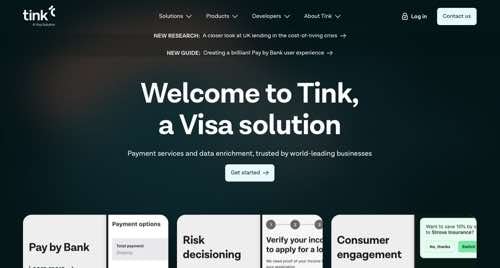
Tink launches Merchant Information for transaction visibility. Tink, an open-banking platform from Visa, has launched Merchant Information to give consumers a more detailed overview of their transactions. Merchant Information, a service within Tink’s Consumer Engagement offering, means banking app transactions are shown with a clear brand name, logo, location, and merchant contact details, helping consumers recognize transactions. Merchant Information will complement Tink’s existing data enrichment capabilities, including categorization, recurring transaction prediction, and CO2 emissions.

Home page of Tink

Tink

ShipEngine integrates with QuickBooks Online. ShipEngine, a shipping API from Auctane, has announced an integration with Intuit QuickBooks for customers in the U.S. The integration enables QuickBooks Online customers to access ShipEngine’s QuickBooks Online Shipping Manager to generate, purchase, and print discounted shipping labels. Businesses can sync customer addresses directly from invoices into their shipping details, print labels, and manage it within one unified platform.

Etsy to host Holiday Pop-Up in New York City. Etsy is starting the holiday season with Holiday Pop-Up, an immersive shopping experience in New York City’s West Village for one weekend only. Launching in late October, the Etsy Holiday Pop-Up will offer consumers the chance to shop original gifts, get a first look at holiday trends, and discover interactive gifting installations. It will also feature giveaways, holiday gift guides from celebrity partners, and the reveal of the 2024 Etsy Design Award winners.

Pallet raises $18 million to reinvent logistics software. Pallet, a transportation and warehouse management platform, has announced an $18 million funding round led by Bain Capital Ventures. Pallet’s platform is a unified, AI-powered transportation management, warehouse management, and accounting and billing system. Pallet will use the funds to grow its team, expand operations, and invest in new enterprise product capabilities.

Home page of Pallet

Pallet

OroCommerce introduces AI for B2B commerce. OroCommerce, a B2B-focused commerce platform, has introduced AI SmartAgent and AI SmartOrder. The tools are designed for B2B commerce, streamlining interactions and automating order processing. SmartAgent empowers buyers to navigate the catalog, review account details, request quotes, and place orders, all through a conversational interface. SmartOrder eliminates manual work and potential errors, automatically converting offline purchase orders into digital, seamlessly integrating them into a workflow.

DoorDash introduces a commerce platform for merchants. DoorDash, a food delivery and ordering platform, has launched a suite of products to help merchants manage and grow their businesses. The DoorDash Commerce Platform consists of five core products: Drive On-Demand, Online Ordering, Phone Ordering, Tableside Order & Pay, and Customer Support Solutions. In addition, the new platform allows merchants to create their own branded iOS or Android mobile apps. DoorDash has also updated its Business Manager app.

Pinterest releases AI and automation campaign features for advertisers. Pinterest has unveiled the Performance+ suite, a collection of AI and lower-funnel ad products. Advertisers now have the option to use Performance+ campaigns for consideration, conversions, or catalog sales objectives. Advertisers can create product images at scale through generative AI, converting flat color backgrounds into lifestyle imagery. Additionally, Pinterest has enhanced its search and home feeds with personalized promotions and deals ads modules.

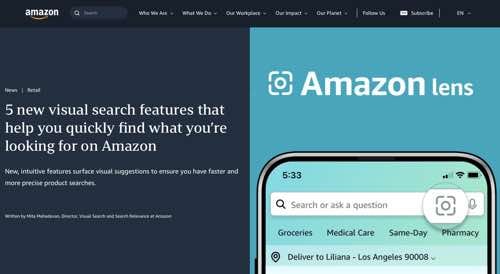
Amazon launches new visual search features. Amazon now shows descriptive image suggestions while shoppers are typing a search query. Shoppers can add text to any image they upload to Amazon Lens, tap “More Like This” on product image search results to find similar products, and watch product videos within the search results without clicking.

Home page of Amazon Lens

Amazon Lens

Wayback Machine Down Amid Cyberattack, 31 Million Accounts Exposed via @sejournal, @MattGSouthern

The Internet Archive has been hit by a cyberattack, compromising the personal data of over 31 million users.

The nonprofit organization, known for its Wayback Machine service, which archives web pages, is grappling with the aftermath of the sophisticated attack.

Breach Details

On October 9, visitors to the Internet Archive’s website were greeted with a pop-up message indicating a security breach.

A hacker group operating under the name SN_BlackMeta has claimed responsibility for the attack, stating on social media platform X (formerly Twitter) that they had launched “several highly successful attacks” against the Archive.

The breach exposed user records, including email addresses, screen names, and bcrypt-hashed passwords.

Troy Hunt, founder of the data breach notification service Have I Been Pwned, confirmed receiving a database containing information on 31 million unique email addresses associated with the Internet Archive.

Ongoing Disruption

The Internet Archive’s website and Wayback Machine service remain inaccessible as of this writing.

This outage is concerning given Google’s recent integration of Wayback Machine links into its search results, a feature announced just last month to enhance access to historical web content.

The timing of this attack could potentially disrupt Google’s new feature, which was designed to provide users with easy access to archived versions of web pages directly from search results.

Response From Internet Archive

Brewster Kahle, founder and digital librarian of the Internet Archive, acknowledged the breach in a post on X, stating:

“What we know: DDOS attack–fended off for now; defacement of our website via JS library; breach of usernames/email/salted-encrypted passwords. What we’ve done: Disabled the JS library, scrubbing systems, upgrading security.”

Kahle is saying that while they were attacked in several ways, they’re actively working to fix the problems and make their systems safer.

However, user data was compromised, so users should be cautious and change their passwords.

The organization is actively working to restore its services and secure its systems, but the full extent of the damage remains unclear.

Why This Matters

The attack on the Internet Archive is troubling, given its role in preserving digital content.

Founded in 1996, the organization aims to provide “universal access to all knowledge” and has become a resource for researchers and journalists.

While the exact motivations behind the attack remain unclear, cybersecurity experts speculate that the attackers may have been searching for specific information or attempting to alter historical records.

This serves as a reminder of the vulnerabilities in digital infrastructure, even for organizations dedicated to preserving it.

Looking Ahead

This attack compromises user data and temporarily denies access to an invaluable resource for internet users worldwide.

As the Internet Archive continues its recovery efforts, users are advised to change their passwords and remain vigilant for any potential misuse of their personal information.


Featured Image: Piotr Swat/Shutterstock

Snapchat Is Testing 2 New Advertising Placements via @sejournal, @brookeosmundson

The Snapchat ad ecosystem just expanded with two new placement options.

On Tuesday, Snap announced they started testing on two new placements:

  • Sponsored Snaps
  • Promoted Places

While not available to the general public yet, Snap provided information on the test, including their launch partners and more about the ad placements.

The goal of these placements are for brands to expand their reach across some of the most widely adopted parts of the platform.

Sponsored Snaps Ad Placement

Snapchat is testing a new Sponsored Snaps placement with Disney, in the announcement from October 8th.

The Sponsored Snaps placement shows a full-screen vertical video to users on Snapchat.

Users can then opt-in to opening the Snap, with options to engage with the advertiser in one of two ways:

  • Sending a direct message to the advertiser by replying
  • Use the call-to-action to open the link chosen by the advertiser.

Sponsored Snaps aren’t delivered via a push notification and will appear differently than other Snaps in a user’s inbox.

After a certain amount of time, any unopened Sponsored Snaps disappear from a user’s inbox.

Promoted Places Ad Placement

Snap partnered with two other brands for their Promoted Places ad placement test: McDonalds and Taco Bell.

This new ad placement shows on the Snap Map, which is meant to help users discover new places they may want to visit.

Promoted Places will highlight sponsored placements of interest within the Snap Map.

In early testing, Snap said they’ve found adding places as “Top Picks” drives a typical visitation lift of 17.6% for frequent Snapchat users.

They also mentioned the possibility of exploring ideas around customer loyalty on the Snap Map in future phases.

Summary

Snap hasn’t yet announced how long these ad placement tests will run, or when they’ll be available for broader advertisers.

Snap said the Sponsored Snaps and Promoted Places placements will evolve from feedback within the Snapchat community and the brands partnered with them at launch.

In the future, there’s possibility of integrating features like CRM systems and AI chatbot support to make communication more streamlined between brands and Snapchat users.

Ask A PPC: Should I Pause My Expanded Text Ads via @sejournal, @navahf

The latest question for Ask A PPC is based on Ad Strength and Creative. It comes from Isha in Delhi, who asks:

“Should extended text ads be paused or kept running as we can’t edit?”

The short answer is the age-old, “It depends.”

However, recent data indicates there may be more value in moving away from expanded text ads.

In this post, we’ll go over:

  • The state of expanded text ads (ETAs).
  • Reasons to keep them.
  • Reasons to pause.

This is a Google-specific perspective. However, the same logic could be applied to Microsoft.

The State Of ETAs

Expanded Text Ads (ETAs) allow users to include three 30-character headlines and two 90-character descriptions.

These ads serve creative in the order specified in the original ad, but they might be truncated based on the search engine result pages (SERP) they served on.

As a general rule, mobile SERPs would only show headlines one and two (with some truncation possible in headline two).

They also were “deprecated” in June of 2022. The quotes exist because – while advertisers can no longer create or edit ETAs – ETAs were allowed to continue running.

This is similar to standard ads (which received the same treatment in September 2017).

As such, there are still a significant number of advertisers using ETAs instead of or in partnership with Responsive Search Ads (RSAs) and Performance Max ads.

While I can’t share a concrete number of how many ETAs are still running, a recent Ad Strength study from Optmyzr found around 20% of advertisers still have some ETAs running in their accounts (~5,000 accounts).

There is no clear answer on ETAs. It truly depends on the state of your business and performance.

Reasons To Keep ETAs

The biggest reason to keep ETAs is they are performing well.

Most agree that 200% ROAS is the baseline for passable performance (i.e., put $1 in and get $2 back). Based on the data, ETAs seem to struggle to meet this:

Length Bucket No. Of Ads CPC CPA CTR Conversion Rate ROAS
0-20 69296 1.49 34.80 5.98% 4.27% 159.38%
21-30 165899 1.78 30.52 6.61% 5.83% 148.83%
31+ 8964 0.91 4.93 9.00% 18.42% 161.40%

(Data from the Optmyzr Study)

However, if you’re not using conversion values, you might need to use conversion rate and CPA to determine success.

To contrast ETA data, here’s the Optmyzr data for RSAs:

Heading Length Bucket No. Of Ads CPC CPA CTR Conversion Rate ROAS
0-20 92744 1.26 17.36 8.85% 7.26% 208.78%
21-30 716888 2.20 30.61 7.95% 7.19% 181.35%
31+ 31631 1.86 40.01 7.75% 4.65% 224.73%

While longer ads are close to ETA performance (which makes sense because longer ads are a tactic from the ETA era), it’s clear shorter ads outperform their predecessor.

However, big data doesn’t always translate to your individual performance.

That’s why, it’s critical to establish your own thresholds for performance. If you’re seeing your ad underperform (likely due to not being as eligible for enough SERPs), you may want to make the switch.

It’s important to remember that you can’t “undo” this choice.

Another reason to keep these ads is just so you can have them. Once they’re paused, you’re not getting them back.

Reasons To Pause

The main reason to move away from ETAs is you want the most access to all placements for your search terms.

Google has many different SERPs which can force truncation. Leaning into RSAs and PMax ensures you have the most opportunity to succeed.

Final Takeaway

There is no right or wrong answer on whether to move away from ETAs. However, it is important that you honestly audit your ETAs and confirm they’re still working for you.

Have a question about PPC? Submit via this form or tweet me @navahf with the #AskPPC hashtag. See you next month!

Read the full Ad Strength & Creative Study from Optmyzr.

More resources: 


Featured Image: Paulo Bobita/SearchEngineJournal

How To Get Quality SEO Content Out Of Generative AI [Checklist] via @sejournal, @DAC_group

This post was sponsored by DAC Group. The opinions expressed in this article are the sponsor’s own.

With its ability to rapidly produce content at scale, generative AI has quickly become a pivotal content creation tool for any brand trying to maximize its visibility, engagement, and performance online.

However, while AI significantly reduces the time from ideation to creation, the real challenge has become clear: How do you make sure the content it generates is relevant, resonates with your brand’s voice, and drives measurable SEO gains?

This is where the careful combination of AI’s capabilities and human expertise becomes critical. By leveraging AI for its strengths in processing and content generation while applying human insights to refine and guide these outputs, you can strike a balance that achieves both efficiency and quality.

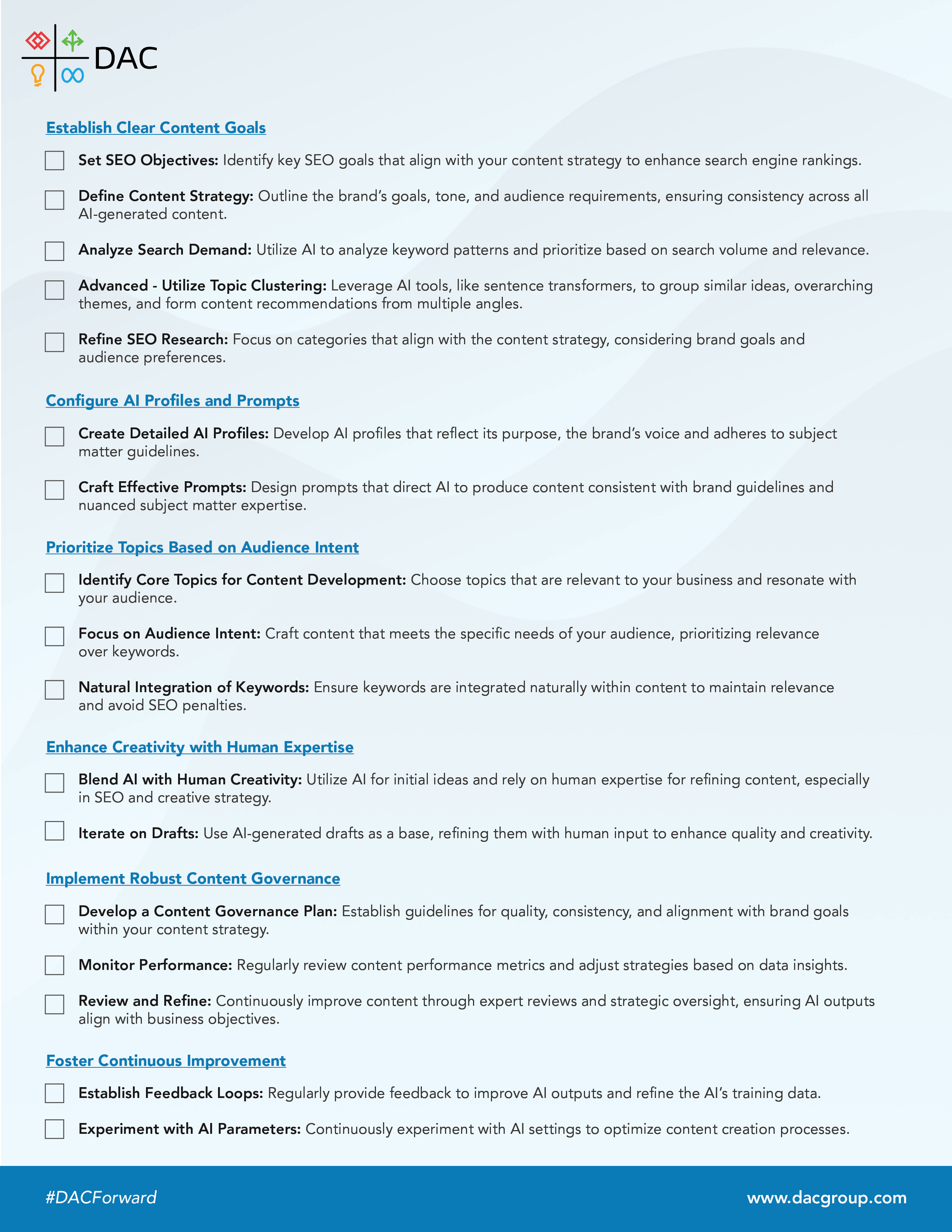
In this article, you’ll explore actionable strategies that combine AI’s rapid output with human creativity, enabling you to produce SEO-optimized content that truly connects with your target audiences. Then you can use the checklist below to create a process for AI in your SEO workflows.

A step by step checklist for incorporating AI into SEO content production processes.

Blending AI With Human Expertise In SEO

At its core, AI’s strength is its ability to process vast amounts of data quickly. When it comes to keyword and topic research, AI can analyze thousands of keywords in seconds, identifying patterns and uncovering trending themes. This capability empowers SEO experts to spot opportunities that might otherwise be missed and prioritize topics that are more likely to resonate with their audience.

For instance, AI can help in:

  • Analyzing large data sets to find keyword patterns.
  • Identifying popular topics and emerging trends through large-scale natural language processing (NLP).
  • Prioritizing topics based on search volume and relevance.

Yet human expertise remains indispensable in interpreting the data AI produces. AI might identify a keyword with high search volume, for instance, but only a human expert can determine if that keyword aligns with a brand’s message and audience’s intent.

With human analysts bringing critical thinking, contextual understanding, and the ability to interpret subtle nuances that AI might miss, this is a collaboration built to make data-driven decisions that strategically align with business goals.

For more sophisticated semantic analyses, you can leverage AI’s ability to perform advanced topic clustering. By utilizing models like sentence transformers, AI can understand and group similar ideas, helping SEO specialists identify overarching themes and subtopics—leading to the creation of comprehensive content recommendations that cover key topics from multiple angles, thus boosting SEO coverage and performance.

Leveraging AI For Strategic Content Ideation And Planning

AI’s ability to quickly generate content ideas makes it a powerful tool for content strategy. By feeding AI data on audience behavior, brand guidelines, and the aforementioned SEO trends and insights, you can produce a wealth of content ideas in a fraction of the time it would take manually. However, it’s important to view AI’s output as a starting point rather than a final product.

By layering AI into your content strategy processes, you can:

  • Rapidly generate a wide array of content ideas.
  • Use audience and SEO data to inform and enrich content ideation.
  • Brainstorm high volumes of original content angles.

Content strategists play a crucial role in fine-tuning these AI-generated ideas, directing content to make sure it aligns with a brand’s overall market strategy and audience expectations. This process may involve assessing AI suggestions—produced rapidly in an organized format—for their potential to meet business objectives, refining content briefs, and proposing content initiatives that integrate SEO opportunities identified earlier.

You can ensure a symbiotic, collaborative use of AI with the following approach to content ideation:

Strategy is also the bridge between SEO insights and creative execution to ensure that the resulting content recommendations are both data-informed and strategically sound. This step is essential to create content that resonates with your intended audiences while simultaneously fulfilling your business’s strategic goals.

Ensuring Quality And Consistency In AI-Generated Creative Content

Generative AI excels in speed, making it an invaluable tool for brainstorming ideas and generating serviceable first drafts. Even so, its outputs can be repetitive, unoriginal, inaccurate, and may lack the nuanced voice of a brand.

To mitigate these weaknesses, remember that generated content is only a starting point. Even when an AI model has been extensively trained and all the major kinks worked out, it’s not perfect. Human oversight and intervention are essential to refine the output for human audiences.

This is where copywriters and editors step in to finesse the content, applying edits to ensure it aligns with a brand’s tone and style. In addition to paraphrasing repetitive structures and adding the “human touch” throughout, refinements in this final step may include:

  • Reviewing for natural phrasing to ensure keywords are integrated smoothly.
  • Adjusting tone and vocabulary to capture the brand’s voice more accurately.
  • Correcting any factual errors, unsubstantiated claims, or AI hallucinations.
  • Enhancing engagement by making the content more audience-focused

This emerging process is beginning to transform copywriting as a discipline. Writers working with AI are likely to spend less time creating first drafts and more time editing, fine-tuning, and curating AI-generated content for human audiences. The result, in theory, is higher quality content produced far more rapidly than traditional methods.

To maximize the benefits of AI in content creation, it’s essential to establish a feedback loop that joins the dots between SEO, strategy, and creative. Content creators should regularly review AI outputs and provide feedback, helping the system improve over time by refining the AI’s training data, experimenting with its parameters, or even rethinking how AI is integrated into the content creation process. This culture of continuous refinement can enhance the quality of your AI-assisted content while minimizing its shortcomings.

The Future Of AI In Content Creation And SEO

Generative AI has already begun to revolutionize content creation, particularly for brands that have integrated it into well-structured content strategies supported by human expertise. By following the best practices outlined in this guide, you can leverage AI to produce SEO-optimized content that not only enhances your online presence but can help you carve out your position as a thought leader.

As you explore these strategies, consider how DAC can support your enterprise-level content needs with scalable AI-driven solutions. By blending the strengths of AI with the critical insights of human experts in SEO, content strategy, and creative copywriting, your business can create content that resonates with your audience, ranks well in search engines, and drives measurable results.


Image Credits

Featured Image: Image by LookerStudio/Shutterstock. Used with permission.