Can You Use AI To Write For YMYL Sites? (Read The Evidence Before You Do) via @sejournal, @MattGSouthern

Your Money or Your Life (YMYL) covers topics that affect people’s health, financial stability, safety, or general welfare, and rightly so Google applies measurably stricter algorithmic standards to these topics.

AI writing tools might promise to scale content production, but as writing for YMYL requires more consideration and author credibility than other content, can an LLM write content that is acceptable for this niche?

The bottom line is that AI systems fail at YMYL content, offering bland sameness where unique expertise and authority matter the most. AI produces unsupported medical claims 50% of the time, and hallucinates court holdings 75% of the time.

This article examines how Google enforces YMYL standards, shows evidence where AI fails, and why publishers relying on genuine expertise are positioning themselves for long-term success.

Google Treats YMYL Content With Algorithmic Scrutiny

Google’s Search Quality Rater Guidelines state that “for pages about clear YMYL topics, we have very high Page Quality rating standards” and these pages “require the most scrutiny.” The guidelines define YMYL as topics that “could significantly impact the health, financial stability, or safety of people.”

The algorithmic weight difference is documented. Google’s guidance states that for YMYL queries, the search engine gives “more weight in our ranking systems to factors like our understanding of the authoritativeness, expertise, or trustworthiness of the pages.”

The March 2024 core update demonstrated this differential treatment. Google announced expectations for a 40% reduction in low-quality content. YMYL websites in finance and healthcare were among the hardest hit.

The Quality Rater Guidelines create a two-tier system. Regular content can achieve “medium quality” with everyday expertise. YMYL content requires “extremely high” E-E-A-T levels. Content with inadequate E-E-A-T receives the “Lowest” designation, Google’s most severe quality judgment.

Given these heightened standards, AI-generated content faces a challenge in meeting them.

It might be an industry joke that the early hallucinations from ChatGPT advised people to eat stones, but it does highlight a very serious issue. Users depend on the quality of the results they read online, and not everyone is capable of deciphering fact from fiction.

AI Error Rates Make It Unsuitable For YMYL Topics

A Stanford HAI study from February 2024 tested GPT-4 with Retrieval-Augmented Generation (RAG).

Results: 30% of individual statements were unsupported. Nearly 50% of responses contained at least one unsupported statement. Google’s Gemini Pro achieved 10% fully supported responses.

These aren’t minor discrepancies. GPT-4 RAG gave treatment instructions for the wrong type of medical equipment. That kind of error could harm patients during emergencies.

Money.com tested ChatGPT Search on 100 financial questions in November 2024. Only 65% correct, 29% incomplete or misleading, and 6% wrong.

The system sourced answers from less-reliable personal blogs, failed to mention rule changes, and didn’t discourage “timing the market.”

Stanford’s RegLab study testing over 200,000 legal queries found hallucination rates ranging from 69% to 88% for state-of-the-art models.

Models hallucinate at least 75% of the time on court holdings. The AI Hallucination Cases Database tracks 439 legal decisions where AI produced hallucinated content in court filings.

Men’s Journal published its first AI-generated health article in February 2023. Dr. Bradley Anawalt of University of Washington Medical Center identified 18 specific errors.

He described “persistent factual mistakes and mischaracterizations of medical science,” including equating different medical terms, claiming unsupported links between diet and symptoms, and providing unfounded health warnings.

The article was “flagrantly wrong about basic medical topics” while having “enough proximity to scientific evidence to have the ring of truth.” That combination is dangerous. People can’t spot the errors because they sound plausible.

But even when AI gets the facts right, it fails in a different way.

Google Prioritizes What AI Can’t Provide

In December 2022, Google added “Experience” as the first pillar of its evaluation framework, expanding E-A-T to E-E-A-T.

Google’s guidance now asks whether content “clearly demonstrate first-hand expertise and a depth of knowledge (for example, expertise that comes from having used a product or service, or visiting a place).”

This question directly targets AI’s limitations. AI can produce technically accurate content that reads like a medical textbook or legal reference. What it can’t produce is practitioner insight. The kind that comes from treating patients daily or representing defendants in court.

The difference shows in the content. AI might be able to give you a definition of temporomandibular joint disorder (TMJ). A specialist who treats TMJ patients can demonstrate expertise by answering real questions people ask.

What does recovery look like? What mistakes do patients commonly make? When should you see a specialist versus your general dentist? That’s the “Experience” in E-E-A-T, a demonstrated understanding of real-world scenarios and patient needs.

Google’s content quality questions explicitly reward this. The company encourages you to ask “Does the content provide original information, reporting, research, or analysis?” and “Does the content provide insightful analysis or interesting information that is beyond the obvious?”

The search company warns against “mainly summarizing what others have to say without adding much value.” That’s precisely how large language models function.

This lack of originality creates another problem. When everyone uses the same tools, content becomes indistinguishable.

AI’s Design Guarantees Content Homogenization

UCLA research documents what researchers term a “death spiral of homogenization.” AI systems default toward population-scale mean preferences because LLMs predict the most statistically probable next word.

Oxford and Cambridge researchers demonstrated this in nature. When they trained an AI model on different dog breeds, the system increasingly produced only common breeds, eventually resulting in “Model Collapse.”

A Science Advances study found that “generative AI enhances individual creativity but reduces the collective diversity of novel content.” Writers are individually better off, but collectively produce a narrower scope of content.

For YMYL topics where differentiation and unique expertise provide competitive advantage, this convergence is damaging. If three financial advisors use ChatGPT to generate investment guidance on the same topic, their content will be remarkably similar. That offers no reason for Google or users to prefer one over another.

Google’s March 2024 update focused on “scaled content abuse” and “generic/undifferentiated content” that repeats widely available information without new insights.

So, how does Google determine whether content truly comes from the expert whose name appears on it?

How Google Verifies Author Expertise

Google doesn’t just look at content in isolation. The search engine builds connections in its knowledge graph to verify that authors have the expertise they claim.

For established experts, this verification is robust. Medical professionals with publications on Google Scholar, attorneys with bar registrations, financial advisors with FINRA records all have verifiable digital footprints. Google can connect an author’s name to their credentials, publications, speaking engagements, and professional affiliations.

This creates patterns Google can recognize. Your writing style, terminology choices, sentence structure, and topic focus form a signature. When content published under your name deviates from that pattern, it raises questions about authenticity.

Building genuine authority requires consistency, so it helps to reference past work and demonstrate ongoing engagement with your field. Link author bylines to detailed bio pages. Include credentials, jurisdictions, areas of specialization, and links to verifiable professional profiles (state medical boards, bar associations, academic institutions).

Most importantly, have experts write or thoroughly review content published under their names. Not just fact-checking, but ensuring the voice, perspective, and insights reflect their expertise.

The reason these verification systems matter goes beyond rankings.

The Real-World Stakes Of YMYL Misinformation

A 2019 University of Baltimore study calculated that misinformation costs the global economy $78 billion annually. Deepfake financial fraud affected 50% of businesses in 2024, with an average loss of $450,000 per incident.

The stakes differ from other content types. Non-YMYL errors cause user inconvenience. YMYL errors cause injury, financial mistakes, and erosion of institutional trust.

U.S. federal law prescribes up to 5 years in prison for spreading false information that causes harm, 20 years if someone suffers severe bodily injury, and life imprisonment if someone dies as a result. Between 2011 and 2022, 78 countries passed misinformation laws.

Validation matters more for YMYL because consequences cascade and compound.

Medical decisions delayed by misinformation can worsen conditions beyond recovery. Poor investment choices create lasting economic hardship. Wrong legal advice can result in loss of rights. These outcomes are irreversible.

Understanding these stakes helps explain what readers are looking for when they search YMYL topics.

What Readers Want From YMYL Content

People don’t open YMYL content to read textbook definitions they could find on Wikipedia. They want to connect with practitioners who understand their situation.

They want to know what questions other patients ask. What typically works. What to expect during treatment. What red flags to watch for. These insights come from years of practice, not from training data.

Readers can tell when content comes from genuine experience versus when it’s been assembled from other articles. When a doctor says “the most common mistake I see patients make is…” that carries weight AI-generated advice can’t match.

The authenticity matters for trust. In YMYL topics where people make decisions affecting their health, finances, or legal standing, they need confidence that guidance comes from someone who has navigated these situations before.

This understanding of what readers want should inform your strategy.

The Strategic Choice

Organizations producing YMYL content face a decision. Invest in genuine expertise and unique perspectives, or risk algorithmic penalties and reputational damage.

The addition of “Experience” to E-A-T in 2022 targeted AI’s inability to have first-hand experience. The Helpful Content Update penalized “summarizing what others have to say without adding much value,” an exact description of LLM functionality.

When Google enforces stricter YMYL standards and AI error rates are 18-88%, the risks outweigh the benefits.

Experts don’t need AI to write their content. They need help organizing their knowledge, structuring their insights, and making their expertise accessible. That’s a different role than generating content itself.

Looking Ahead

The value in YMYL content comes from knowledge that can’t be scraped from existing sources.

It comes from the surgeon who knows what questions patients ask before every procedure. The financial advisor who has guided clients through recessions. The attorney who has seen which arguments work in front of which judges.

The publishers who treat YMYL content as a volume game, whether through AI or human content farms, are facing a difficult path. The ones who treat it as a credibility signal have a sustainable model.

You can use AI as a tool in your process. You can’t use it as a replacement for human expertise.

More Resources:


Featured Image: Roman Samborskyi/Shutterstock

Don’t Let Your Founder Burn Out: 4 Systems To Operationalize Thought Leadership via @sejournal, @purnavirji

In my last article, we covered strategies that turn a founder’s voice into a pipeline driver. The most common follow-up question I get then is about how to do it consistently without burning out.

Every minute a founder spends on LinkedIn is a minute they aren’t building, hiring, or selling. This is the number one reason most founder-led content strategies fail: They start strong, then disappear. Many fail to make it past 90 days.

The data from our LinkedIn (my employer) playbook confirms the stakes: startup director+ who post at least 9x a year see 3x more engagement and 4x more new followers than those who post only once. But trust isn’t built on viral moments. It’s built over time.

That means you’ll need more than inspiration or willpower to go the distance. The solution is to build systems to operationalize your founder’s creativity.

Now, it might sound counterintuitive. Creativity is a nebulous, free-flowing concept. And operationalizing it can sound … restrictive. I promise you it’s not. Think of it as building the foundation and scaffolding to strengthen and support creativity, allowing your founders (or you!) to stay consistent without burning out. And actually enjoy the process along the way.

Here are four systems you can build to maintain consistency.

1. Build A Central Content Bank

Stop hunting for ideas every week and start building a repository.

This shared document – a simple Google Doc or Notion page works fine – becomes your single source of truth that you and your founder can both contribute to.

Your content bank should include:

  • ICP Profiles: Quick reference of customer pain points, objections, and goals.
  • Post Ingredients: Running list of “scar stories,” customer insights, contrarian takes, and company stats.
  • Hook Library: Collection of proven opening lines ready to deploy.
  • “What’s Worked” File: Log of top-performing posts to repurpose formats.

Most importantly, include a “Creative Block” list. When your founder gets stuck, whip out one of these prompts for instant inspiration:

  • “What’s something I wish I knew six months ago?”
  • “What’s a mistake I made this week?”
  • “What’s a customer question I keep hearing?”
  • “What’s a belief I’ve changed my mind about?”
  • “What’s an intelligent risk I took that paid off?”
  • “What most energized me this week?”

This bank is a sanity saver. Rather than stare at blank screens waiting for inspiration to strike, your founder now has a library of proven material ready to deploy.

2. Establish A Repeatable Content Rhythm

Inspiration is fickle. A schedule is reliable.

Help your founder build a repeatable rhythm for content creation by batch creating their content during set content creation time blocks. Gal Aga, CEO of Aligned, blocks off time on Sundays to create his three posts for the upcoming week.

He follows a simple formula:

  • 1 Scar Story (e.g., “We lost $500,000 because…”)
  • 1 Contrarian Take (e.g., “Why [industry belief] is wrong”)
  • 1 Customer Insight (e.g., “What 17 buyers told me about…”)

Another approach comes from Peep Laja, CEO of Wynter, who runs original survey-based research one to two times per month. This system gives him a week’s worth of unique, proprietary content that no competitor has.

The specific rhythm matters less than having one. Pick a day, pick a format, and stick with it long enough to build momentum.

3. Create A “Capture” System

Your founder is already creating content. It’s just trapped in their daily conversations. Your job is to build a system to capture it.

The simplest method? Voice memos.

As humans, we talk faster than we can type. Encourage your founder to record a one- to two-minute voice memo on their phone right after a customer call or whenever an idea strikes. You can then transcribe these notes and turn them into the first draft of a post ready for them to edit. This can save as much as 80% of the writing time and gives you loads more raw material for posts.

A more hands-on approach is to “interview” your founder. As Kacie Jenkins, former SVP of Marketing at Sendoso, explains: “It’s important to work with your exec team to identify how they best think and reflect, and then build on that.”

Book 30 minutes on their calendar, hit record, and ask them questions from your “creative block” list. This gives you authentic, first-person soundbites that can be turned into a week’s worth of text posts and video clips.

The key is reducing friction between having an idea and capturing it. Make it as easy as talking into their phone.

4. Use AI As A System Multiplier

When things get busy, AI can help you maintain consistency. Instead of using it to write posts, use it to operationalize your founder’s insights.

  • Turn voice notes into drafts: Feed an AI tool the transcript from a voice memo and ask: “Summarize this into two to three post ideas” or “What’s the most compelling insight here?”
  • Build your content bank faster: Feed the AI a batch of past posts and ask: “What themes do I keep coming back to?” or “Which ideas could become a series?”
  • Capture their authentic voice: Arvind Jain, founder of Glean, shared how his team took this approach further. They built an AI agent trained on transcripts from his past speaking engagements. Now, every draft runs through the agent for tone and polish before it’s shared, ensuring it sounds authentically like him.

AI doesn’t replace your founder’s thinking or creativity. It removes the friction between their ideas and published content.

Systems Create Stamina

A high-impact founder brand takes months to grow. The initial discomfort of building these systems is the barrier to entry that keeps most competitors out.

Your competitors are waiting for inspiration. By building systems, you create stamina. You reduce friction, align content creation with your founder’s existing work, and build the consistency required to turn their expertise into trust, pipeline, and authority.

The founders who win at this aren’t the most creative or the best writers. They’re the ones who built systems that let them show up consistently, even when inspiration doesn’t.

All data, quotes, and examples cited above without a source link are taken from the “Founder-Led Sales and Marketing Never Ends” playbook.

More Resources: 


Featured Image: Master1305/Shutterstock

Google Discusses Digital PR Impact On AI Recommendations via @sejournal, @martinibuster

Google’s VP of Product for Google Search confirmed that PR activities may be helpful for ranking better in certain contexts and offered an explanation of how AI search works and what content creators should focus on to stay relevant to users.

PR Helps Sites Get Recommended By AI

Something interesting that was said in the podcast was that it could be beneficial to be mentioned by other sites if you want your site to be recommended by AI. Robby Stein didn’t say that this is a ranking factor. He said this in the context of showing how AI search works, saying that the behavior of AI is similar to how a human might research a question.

The context of Robby Stein’s answer was about what businesses should focus on to rank better in AI chat.

Stein’s answer implies the context of the query fan-out technique, where, to answer a question, it performs Google searches (“questions it issues“).

Here’s his answer:

“Yeah, interestingly, the AI thinks a lot like a person would in terms of the kinds of questions it issues. And so if you’re a business and you’re mentioned in top business lists or from a public article that lots of people end up finding, those kinds of things become useful for the AI to find.”

The podcast host, Marina Mogilko, interrupted his answer to remark that this is about investing in PR. And Robby Stein agreed.

He continued:

“So it’s not really different from what you would do in that regard. I think ultimately, how else are you going to decide what business to go to? Well, you’d want to understand that.”

So the point he’s making is that in order to understand if a business should be recommended, the AI, like a human, would search on Google to see what businesses are recommended by other sites. The podcast host connected that statement to PR and Stein agreed. This aligns with anecdotal experiences where not just Google’s AI but also ChatGPT will provide answers to recommendation type queries with links to sites that recommend businesses. As the podcast host suggested and Stein seems to agree, this raises the importance of PR work, getting sites to mention your business.

Mogilko then noted that her friends might not have seen the articles that were published as a result of PR activities but that she notices that the AI does see those mentions and that the AI uses them in answers.

Robby agreed with her, affirming her observation, saying:

“That’s actually a good way of thinking about it because the way I mentioned before how our AI models work, they’re issuing these Google searches as a tool.”

Content Best Practices Are Key To Ranking In AI

Stein continued his answer, shifting the topic over to what kind of content ranks well in an AI model. He said that the same best practices for making helpful and clear content also applies for ranking in AI.

Stein continued his answer:

“And so in the same way that you would optimize your website and think about how I make helpful, clear information for people? People search for a certain topic, my website’s really helpful for that. Think of an AI doing that search now. And then knowing for that query, here are the best websites given that question.

That’s now… will come into the context window of the model. And so when it renders a response and provides all of these links for you to go deeper, that website’s more likely to show up.

And so it’s a lot of that standard best practices around building great content really do apply in the AI age for sure.”

The takeaway here is that helpful and clear content is important for standard search, AI answers, and people.

The podcast host next asked Robby about reviews, candidly remarking that some people pay for reviews and asking how that would “affect the system.” Stein didn’t address the question about how paid reviews would affect AI answers, but he did circle back to affirming that AI behaves like a human might, implying that if you’re going to think about how the AI system approaches answering a question, think of it in terms of how a human could go about it.

Stein answered:

“It’s hard. I mean, the reviews, I think, again, it’s kind of like a person where like imagine something is scanning for information and trying to find things that are helpful. So it’s possible that if you have reviews that are helpful, it could come up.

But I think it’s tricky to say to pinpoint any one thing like that. I think ultimately it’s about these general best practices where you want is reliable. Kind of like if you were to Google something, what pages would show up at the top of that query? It’s still a good way of thinking about it.”

AI Visibility Overlaps With SEO

At this point, the host responded to Stein’s answer by asking if optimizing for AI is “basically the same as SEO?”

Stein answered that there’s an overlap with SEO, but that the questions are different between regular organic search and AI. The implication is that organic search tends to have keyword-based queries, and AI is conversational.

Here’s Stein’s answer:

“I think there’s a lot of overlap. I think maybe one added nuance is that the kinds of questions that people ask AI are increasingly complicated and they tend to be in different spaces.

…And so if you think about what people use AI for, a lot of it is how to for complicated things or for purchase decisions or for advice about life things.

So people who are creating content in those areas, like if I were them, I would be a student of understanding the use cases of AI and what are growing in those use cases.

And there’s been some studies that have done around how people use these products in AI.

Those are really interesting to understand.”

Stein advised content creators to study how people are using AI to find answers to specific questions. He seemed to put some emphasis on this, so it appears to be something important to pay attention to.

Understand How People Use AI

This next part changes direction to emphasize that search is transforming beyond just simple text search, saying that it is going multimodal. A modality is a computer science word that refers to a type of information such as text, images, speech, or video. This circles back to studying how users are interacting with AI, in this case expanding to include the modality of information.

The podcast host asked the natural follow-up question to what Stein previously said about the overlap with SEO, asking how business owners can understand what people are looking for and whether Google Trends is useful for this.

Stein affirmed that Google Trends is useful for this purpose.

He responded:

“Google Trends is a really useful thing. I actually think people really underutilize that. Like we have real-time information around exactly what’s trending. You can see keyword values.

I think also, you know, the ads has a really fantastic estimation too. Like as you’re booking ads, you can see kind of traffic estimates for various things. So there’s Google has a lot of tools across ads, across the search console and search trends to get information about what people are searching for.

And I think that’s going to increasingly be more interesting as, a lot more of people’s time and attention goes towards not just the way people use search too, but in these areas that are growing quickly, particularly these long specific questions people ask and multimodal, where they’re asking with images or they’re using voice to have live conversation.”

Stein’s response reflects that SEOs and businesses may want to go beyond keyword-based research toward also understanding intent across multiple ways in which users interact with AI. We’re in a moment of volatility where it’s becoming important to recognize the context and purpose in how people search.

The two takeaways that I think are important are:

  1. Long and specific questions
  2. Multimodal contexts

What makes that important is that Stein confirmed that these kinds of searches are growing quickly. Businesses and SEOs should, therefore, be thinking, will my business or client show up if a person searches with voice using a lot of specific details? Will they show up if people use images to search? Image SEO may be becoming increasingly important as more people transition to finding things using AI.

Google Wants To Provide More Information

The host followed up by asking if Google would be providing more information about how users are searching, and Stein confirmed that in the future that’s something they want to do, not just for advertisers but for everyone who is impacted by AI search.

He answered:

“I think down the road we want to get, provide a glimpse into what people are searching for broadly. Yeah. Not just advertisers too. Yeah, it could be forever for anyone.

But ultimately, I think more and more people are searching in these new ways and so the systems need to better reflect those over time.”

Watch the interview at about the 13:30 minute mark:

Featured Image by Shutterstock/Krot_Studio

5 Content Marketing Ideas for December 2025

December can be a month of non-stop ecommerce activity with flash sales, rapid ad optimization, and fulfillment mayhem. It is also an opportunity for content marketing.

Helpful, informative, and entertaining content can still cut through the noise. Articles, videos, and podcasts that inform and inspire shoppers will attract attention long after the last order ships.

After all, content marketing is the act of attracting, engaging, and retaining customers not for one month, but long term. What follows are five content marketing ideas your ecommerce shop can use in December 2025.

AI Gift Planning

Screenshot of Perplexity's search page

Agentic commerce and AI-driven search, such as from Perplexity, are changing how folks shop.

The way shoppers discover products and gifts is changing.

Millions of consumers will ask Google Gemini, ChatGPT, or Perplexity for gift ideas during the 2025 Christmas shopping season. Some will finish their purchases inside those chats or on AI web browsers.

This shift rewards marketers who structure their shop’s content clearly and correctly. Thus, December 2025, is a good time to publish buying guides, FAQs, and product comparisons — all properly structured — to ensure generative systems understand what a store sells.

This could mean creating articles based on the principles of generative engine optimization or updating existing buying guides to perform better with large language models.

A merchant could also produce educational content, such as “How to Use ChatGPT for Gift Ideas” or “How AI Shopping Impacts Small Businesses.” Those guides can run in a store’s newsletter, perhaps positioning the business as the place to start every consumer’s Christmas shopping.

Year in Review

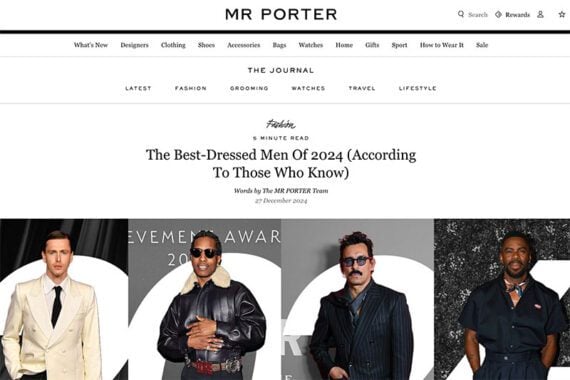
Retailer Mr Porter typically publishes at least one year-in-review retrospective.

Reflection works in December. It gives readers closure on the year and a sense of continuity into the next.

Ecommerce content marketers can write list-style articles such as “Top 10 Products That Defined 2025” or “Our Customers’ Favorite Finds of the Year.”

Retrospective articles can pair with forward-looking posts, such as “How to Get More from Your Gear in 2026” or similar.

Large retailers already use this format effectively. Mr Porter’s annual “Best Dressed Men of the Year” article honors the retailer’s customers’ style sensibility while reinforcing its editorial authority.

Williams-Sonoma often publishes year-end or season-end recipe roundups that connect kitchen trends to products. REI’s annual adventure retrospectives combine storytelling and imagery that carry well into January.

Done well, a year-in-review article shows customers that your store observes, learns, and evolves alongside them.

Small Business Saturday

Image of a worker in a small factory

Small businesses come in many forms. Many an ecommerce shop, even ones with their own fulfillment operations, fall into this category.

American Express and the U.S. Small Business Administration established Small Business Saturday in 2010 as a response to Black Friday and Cyber Monday for independent retailers. In the ensuing 15  years, it has become a fixture in the holiday calendar and a day when shoppers consciously seek out small retailers.

For ecommerce and brick-and-click merchants, the occasion — on November 29, 2025 — is both an event and a storytelling opportunity.

In the weeks leading up to Small Business Saturday, marketers can publish content showing what makes their stores distinct.

Articles, videos, or newsletters might introduce the folks behind the products or describe the experience customers get, which should be something that big retailers can’t match.

Quirky Observances

Image of a female wearing an ugly sweater

Ugly sweaters and offbeat observances provide opportunities.

Oddities, curiosity, and humor can make for entertaining content.

Quirky observances give content marketers reasons to publish something fun, personable, and memorable. December 2025 is full of these sorts of calendar hooks.

  • National Sock Day: December 4
  • National Cookie Day: December 4
  • Pretend to Be a Time Traveler Day: December 8
  • National Lager Day: December 10
  • National Tie Day: December 18
  • Ugly Sweater Day: December 19
  • Crossword Puzzle Day: December 21
  • Make Cut-Out Snowflakes Day: December 27

A footwear retailer might run “Why Socks Make the Best Stocking Stuffers” for National Sock Day. A cookware shop could publish “5 Holiday Cookies to Bake on National Cookie Day.” A menswear retailer might highlight vintage patterns for National Tie Day, while a craft store posts a simple tutorial for Make Cut-Out Snowflakes Day.

These topics attract casual readers seeking light, shareable content, and give ecommerce content marketers a way to connect their products with calendar dates.

Texas Statehood

Image of the Texas state flag

Try ecommerce marketing with a Texas accent.

On December 29, 1845, Texas became the 28th state in the Union. The anniversary has historical importance beyond state lines, although the content might work best for shoppers in the Lone Star State.

Merchants might emphasize products sourced, designed, or manufactured in Texas. A fashion retailer could showcase boots or leather goods made in El Paso. A specialty food shop might highlight Texas barbecue sauces, spices, or pecans.

Even national retailers can connect with the date by featuring Texas-based suppliers, innovators, and artisans.

Article topics could include:

  • 5 Inventions from Texas That Changed Everyday Life
  • 15 Little-Known Products Made in Texas
  • 25 Items Every Texan Must Own
Here’s why we don’t have a cold vaccine. Yet.

For those of us in the Northern Hemisphere, it’s the season of the sniffles. As the weather turns, we’re all spending more time indoors. The kids have been back at school for a couple of months. And cold germs are everywhere.

My youngest started school this year, and along with artwork and seedlings, she has also been bringing home lots of lovely bugs to share with the rest of her family. As she coughed directly into my face for what felt like the hundredth time, I started to wonder if there was anything I could do to stop this endless cycle of winter illnesses. We all got our flu jabs a month ago. Why couldn’t we get a vaccine to protect us against the common cold, too?

Scientists have been working on this for decades. It turns out that creating a cold vaccine is hard. Really hard.

But not impossible. There’s still hope. Let me explain.

Technically, colds are infections that affect your nose and throat, causing symptoms like sneezing, coughing, and generally feeling like garbage. Unlike some other infections,—covid-19, for example—they aren’t defined by the specific virus that causes them.

That’s because there are a lot of viruses that cause colds, including rhinoviruses, adenoviruses, and even seasonal coronaviruses (they don’t all cause covid!). Within those virus families, there are many different variants.

Take rhinoviruses, for example. These viruses are thought to be behind most colds. They’re human viruses—over the course of evolution, they have become perfectly adapted to infecting us, rapidly multiplying in our noses and airways to make us sick. There are around 180 rhinovirus variants, says Gary McLean, a molecular immunologist at Imperial College London in the UK.

Once you factor in the other cold-causing viruses, there are around 280 variants all told. That’s 280 suspects behind the cough that my daughter sprayed into my face. It’s going to be really hard to make a vaccine that will offer protection against all of them.

The second challenge lies in the prevalence of those variants.

Scientists tailor flu and covid vaccines to whatever strain happens to be circulating. Months before flu season starts, the World Health Organization advises countries on which strains their vaccines should protect against. Early recommendations for the Northern Hemisphere can be based on which strains seem to be dominant in the Southern Hemisphere, and vice versa.

That approach wouldn’t work for the common cold, because all those hundreds of variants are circulating all the time, says McLean.

That’s not to say that people haven’t tried to make a cold vaccine. There was a flurry of interest in the 1960s and ’70s, when scientists made valiant efforts to develop vaccines for the common cold. Sadly, they all failed. And we haven’t made much progress since then.

In 2022, a team of researchers reviewed all the research that had been published up to that year. They only identified one clinical trial—and it was conducted back in 1965.

Interest has certainly died down since then, too. Some question whether a cold vaccine is even worth the effort. After all, most colds don’t require much in the way of treatment and don’t last more than a week or two. There are many, many more dangerous viruses out there we could be focusing on.

And while cold viruses do mutate and evolve, no one really expects them to cause the next pandemic, says McLean. They’ve evolved to cause mild disease in humans—something they’ve been doing successfully for a long, long time. Flu viruses—which can cause serious illness, disability, or even death—pose a much bigger risk, so they probably deserve more attention.

But colds are still irritating, disruptive, and potentially harmful. Rhinoviruses are considered to be the leading cause of human infectious disease. They can cause pneumonia in children and older adults. And once you add up doctor visits, medication, and missed work, the economic cost of colds is pretty hefty: a 2003 study put it at $40 billion per year for the US alone.

So it’s reassuring that we needn’t abandon all hope: Some scientists are making progress! McLean and his colleagues are working on ways to prepare the immune systems of people with asthma and lung diseases to potentially protect them from cold viruses. And a team at Emory University has developed a vaccine that appears to protect monkeys from around a third of rhinoviruses.

There’s still a long way to go. Don’t expect a cold vaccine to materialize in the next five years, at least. “We’re not quite there yet,” says Michael Boeckh, an infectious-disease researcher at Fred Hutch Cancer Center in Seattle, Washington. “But will it at some point happen? Possibly.”

At the end of our Zoom call, perhaps after reading the disappointed expression on my sniffling, cold-riddled face (yes, I did end up catching my daughter’s cold), McLean told me he hoped he was “positive enough.” He admitted that he used to be more optimistic about a cold vaccine. But he hasn’t given up hope. He’s even running a trial of a potential new vaccine in people, although he wouldn’t reveal the details.

“It could be done,” he said.

This article first appeared in The Checkup, MIT Technology Review’s weekly biotech newsletter. To receive it in your inbox every Thursday, and read articles like this first, sign up here.

The Download: down the Mandela effect rabbit hole, and the promise of a vaccine for colds

This is today’s edition of The Download, our weekday newsletter that provides a daily dose of what’s going on in the world of technology.

Why do so many people think the Fruit of the Loom logo had a cornucopia?

Quick question: Does the Fruit of the Loom logo feature a cornucopia?

Many of us have been wearing the company’s T-shirts for decades, and yet the question of whether there is a woven brown horn of plenty on the logo is surprisingly contentious.

According to a 2022 poll, 55% of Americans believe the logo does include a cornucopia, 25% are unsure, and only 21% are confident that it doesn’t, even though this last group is correct.

There’s a name for what’s happening here: the “Mandela effect,” or collective false memory, so called because a number of people misremember that Nelson Mandela died in prison. Yet while many find it easy to let their unconfirmable beliefs go, some spend years seeking answers—and vindication. Read the full story.

—Amelia Tait

This story is part of MIT Technology Review’s series “The New Conspiracy Age,” on how the present boom in conspiracy theories is reshaping science and technology.

Here’s why we don’t have a cold vaccine. Yet.

For those of us in the Northern Hemisphere, it’s the season of the sniffles. As the weather turns, we’re all spending more time indoors. The kids have been back at school for a couple of months. And cold germs are everywhere.

So why can’t we get a vaccine to protect us against the common cold? Scientists have been working on this for decades, but it turns out that creating a cold vaccine is hard. Really hard. But not impossible. There’s still hope. Read the full story.

—Jessica Hamzelou

This article first appeared in The Checkup, MIT Technology Review’s weekly biotech newsletter. To receive it in your inbox every Thursday, and read articles like this first, sign up here.

Inside the archives of the NASA Ames Research Center

At the southern tip of San Francisco Bay, surrounded by the tech giants Google, Apple, and Microsoft, sits the historic NASA Ames Research Center. Its rich history includes a grab bag of fascinating scientific research involving massive wind tunnels, experimental aircraft, supercomputing, astrobiology, and more.

A collection of 5,000 images from NASA Ames’s archives paints a vivid picture of bleeding-edge work at the heart of America’s technology hub. Read the full story.

—Jon Keegan

This story is from the latest print issue of MIT Technology Review magazine, which is full of stories about the body. If you haven’t already, subscribe now to receive future issues once they land.

The must-reads

I’ve combed the internet to find you today’s most fun/important/scary/fascinating stories about technology.

1 The US government is considering banning TP-Link routers
An investigation has raised concerns over the company’s links to China. (WP $)
+ Lawmakers are worried its equipment is vulnerable to hacking. (Bloomberg $)

2 ICE has proposed building a deportation network in Texas
The 24/7 operation would transfer detained immigrants into holding facilities. (Wired $)
+ But US citizens keep being detained, too. (NY Mag $)
+ Inside the operation giving ICE a run for its money. (Slate $)
+ Another effort to track ICE raids was just taken offline. (MIT Technology Review)

3 Ukrainian drone teams are gamifying their war efforts
Officials say rewarding soldiers for successful attacks keeps them motivated. (NYT $)
+ A Peter Thiel-backed drone startup crashed and burned during military trials. (FT $)
+ Meet the radio-obsessed civilian shaping Ukraine’s drone defense. (MIT Technology Review)

4 Meta has denied torrenting porn to train its AI models
Instead, it claims, the downloads were for someone’s “private personal use.” (Ars Technica)

5 Bird flu is getting harder to keep tabs on
The virus has wreaked havoc on the US poultry industry for close to four years. (Vox)
+ A new biosensor can detect bird flu in five minutes. (MIT Technology Review)

6 AI browsers are a cybersecurity nightmare
They’re a hotbed of known—and unknown—risks. (The Verge)
+ I tried OpenAI’s new Atlas browser but I still don’t know what it’s for. (MIT Technology Review)

7 Robots are starting to do more jobs across America
But they’re still proving buggy and expensive to run. (WSJ $)
+ When you might start speaking to robots. (MIT Technology Review)

8 These are the jobs that AI built
From conversation designer to adoption strategist. (WP $)
+ if you fancy landing a job in quantum computing, here’s how to do it. (IEEE Spectrum)

9 Computer vision is getting much, much better 👀
Their blind spots are rapidly being eliminated. (Knowable Magazine)

10 A lock-cracking YouTuber is being sued by a lockmaking company 🔓 
It’s arguing he defamed the company, even though he didn’t say a word during the clip. (Ars Technica)

Quote of the day

“Yes, we’ve been to the Moon before… six times!”

—NASA’s acting administrator Sean Duffy reacts to Kim Kardashian’s belief that man has never set foot on the moon, the Guardian reports.

One more thing

What happens when you donate your body to science

Rebecca George doesn’t mind the vultures that complain from the trees that surround the Western Carolina University body farm. Her arrival has interrupted their breakfast. George studies human decomposition, and part of decomposing is becoming food. Scavengers are welcome.

In the US, about 20,000 people or their families donate their bodies to scientific research and education each year. Whatever the reason, the decision becomes a gift. Western Carolina’s FOREST is among the places where watchful caretakers know that the dead and the living are deeply connected, and the way you treat the first reflects how you treat the second. Read the full story.

—Abby Ohlheiser

We can still have nice things

A place for comfort, fun and distraction to brighten up your day. (Got any ideas? Drop me a line or skeet ’em at me.)

+ Zoo animals across the world are getting into the Halloween spirit with some tasty pumpkins.
+ If you’re stuck for something suitably spooky to watch tonight, this list is a great place to start.
+ New York’s historic Morris-Jumel Mansion is seriously beautiful—and seriously haunted.
+ Salem’s Lucipurr is on the prowl!

Here’s the latest company planning for gene-edited babies

A West Coast biotech entrepreneur says he’s secured $30 million to form a public-benefit company to study how to safely create genetically edited babies, marking the largest known investment into the taboo technology.  

The new company, called Preventive, is being formed to research so-called “heritable genome editing,” in which the DNA of embryos would be modified by correcting harmful mutations or installing beneficial genes. The goal would be to prevent disease.

Preventive was founded by the gene-editing scientist Lucas Harrington, who described his plans yesterday in a blog post announcing the venture. Preventive, he said, will not rush to try out the technique but instead will dedicate itself “to rigorously researching whether heritable genome editing can be done safely and responsibly.”

Creating genetically edited humans remains controversial, and the first scientist to do it, in China, was imprisoned for three years. The procedure remains illegal in many countries, including the US, and doubts surround its usefulness as a form of medicine.

Still, as gene-editing technology races forward, the temptation to shape the future of the species may prove irresistible, particularly to entrepreneurs keen to put their stamp on the human condition. In theory, even small genetic tweaks could create people who never get heart disease or Alzheimer’s, and who would pass those traits on to their own offspring.

According to Harrington, if the technique proves safe, it “could become one of the most important health technologies of our time.” He has estimated that editing an embryo would cost only about $5,000 and believes regulations could change in the future. 

Preventive is the third US startup this year to say it is pursuing technology to produce gene-edited babies. The first, Bootstrap Bio, based in California, is reportedly seeking seed funding and has an interest in enhancing intelligence. Another, Manhattan Genomics, is also in the formation stage but has not announced funding yet.

As of now, none of these companies have significant staff or facilities, and they largely lack any credibility among mainstream gene-editing scientists. Reached by email, Fyodor Urnov, an expert in gene editing at the University of California, Berkeley, where Harrington studied, said he believes such ventures should not move forward.

Urnov has been a pointed critic of the concept of heritable genome editing, calling it dangerous, misguided, and a distraction from the real benefits of gene editing to treat adults and children. 

In his email, Urnov said the launch of still another venture into the area made him want to “howl with pain.”  

Harrinton’s venture was incorporated in Delaware in May 2025,under the name Preventive Medicine PBC. As a public-benefit corporation, it is organized to put its public mission above profits. “If our research shows [heritable genome editing] cannot be done safely, that conclusion is equally valuable to the scientific community and society,” Harrington wrote in his post.

Harrington is a cofounder of Mammoth Biosciences, a gene-editing company pursuing drugs for adults, and remains a board member there.

In recent months, Preventive has sought endorsements from leading figures in genome editing, but according to its post, it had secured only one—from Paula Amato, a fertility doctor at Oregon Health Sciences University, who said she had agreed to act as an advisor to the company.

Amato is a member of a US team that has researched embryo editing in the country since 2017, and she has promoted the technology as a way to increase IVF success. That could be the case if editing could correct abnormal embryos, making more available for use in trying to create a pregnancy.

It remains unclear where Preventive’s funding is coming from. Harrington said the $30 million was gathered from “private funders who share our commitment to pursuing this research responsibly.” But he declined to identify those investors other than SciFounders, a venture firm he runs with his personal and business partner Matt Krisiloff, the CEO of the biotech company Conception, which aims to create human eggs from stem cells.

That’s yet another technology that could change reproduction, if it works. Krisiloff is listed as a member of Preventive’s founding team.

The idea of edited babies has received growing attention from figures in the cryptocurrency business. These include Brian Armstrong, the billionaire founder of Coinbase, who has held a series of off-the-record dinners to discuss the technology (which Harrington attended). Armstrong previously argued that the “time is right” for a startup venture in the area.

Will Harborne, a crypto entrepreneur and partner at LongGame Ventures, says he’s “thrilled” to see Preventive launch. If the technology proves safe, he argues, “widespread adoption is inevitable,” calling its use a “societal obligation.”

Harborne’s fund has invested in Herasight, a company that uses genetic tests to rank IVF embryos for future IQ and other traits. That’s another hotly debated technology, but one that has already reached the market, since such testing isn’t strictly regulated. Some have begun to use the term “human enhancement companies” to refer to such ventures.

What’s still lacking is evidence that leading gene-editing specialists support these ventures. Preventive was unsuccessful in establishing a collaboration with at least one key research group, and Urnov says he had harsh words for Manhattan Genomics when that company reached out to him about working together. “I encourage you to stop,” he wrote back. “You will cause zero good and formidable harm.”

Harrington thinks Preventive could change such attitudes, if it shows that it is serious about doing responsible research. “Most scientists I speak with either accept embryo editing as inevitable or are enthusiastic about the potential but hesitate to voice these opinions publicly,” he told MIT Technology Review earlier this year. “Part of being more public about this is to encourage others in the field to discuss this instead of ignoring it.”

Batch Cannabis Scales to $50 Million

Andy Gould co-founded Batch, a Wisconsin-based D2C cannabis brand, in 2018. He says the company struggled for years until it perfected content creation and advertising. “Once we dialed in our Meta ads and built a strong creative flywheel, everything took off,” he told me.

I first interviewed Andy and his two co-founders in 2023. In this our latest conversation, he addresses video production, regulatory scrutiny, and “hockey stick” growth — from annual revenue of $5 million to $50 million in two years.

Our entire audio is embedded below. The transcript is edited for clarity and length.

Eric Bandholz: Give us the rundown.

Andy Gould: I sell weed online. My two best friends from college and I started Batch, a cannabis-based gummy brand that’s now one of the biggest in the U.S.

In 2023, we had $5 million in annual revenue. In 2024, $15 million. And this year, we’re on track for $50 million. It’s been true hockey-stick growth. For years, we plateaued at roughly $15,000 in daily Shopify sales. Once we dialed in our Meta ads and built a strong creative flywheel, everything took off.

Customer acquisition costs have stayed relatively stable. We used to spend about $5,000 a day on Meta, with customer acquisition costs running around $65. Now we’re spending close to $50,000 daily, and CPAs are roughly $75.

Sales of THC — tetrahydrocannabinol, the cannabis compound — are booming. Many customers are replacing alcohol or trying THC for the first time. We position Batch as a trusted dispensary alternative — THC for the everyday person who prefers delivery from a transparent, reliable brand.

Bandholz: How did the Meta flywheel scale you from $5,000 to $50,000 per day?

Gould: We were inspired by Paul from BK Beauty at EcommerceFuel Live. He talked about using a creative flywheel to generate quality content efficiently.

We had two big challenges on Meta. First, we’re in a restricted category. We studied how to advertise without losing our accounts. We connected with others in similar spaces, learned the language and visuals Meta allows, and used those insights to stay compliant.

Then we focused on volume — creative is the new targeting. We can tell an authentic story because we handle much of our manufacturing and even help harvest crops.

Once a year, we hire a crew for around $15,000 to film everything on-site, generating hundreds of content assets.

We spend about 7% of revenue on creative. Our internal team and an agency turn that raw footage into 40 new videos each week, testing about 10 different concepts with multiple hooks or calls to action.

Bandholz: So you’re actually on camera, talking about the product?

Gould: Exactly. You see me walking through the field with our farmer, Rollin, explaining how he’s up at 4:30 a.m. every day, living the American dream. Then we’ll switch to a science angle — me on a tractor showing a certificate of analysis and explaining everything. We create about 20 ideas like that in two days of filming.

Across the two days, we capture roughly 48 hours of footage since we have two videographers filming different people simultaneously.

The key is building a system to recycle and repurpose everything. We have a team dedicated to organizing and tagging footage. They label each file by angle, environment, or who’s in it — like a Dewey Decimal System for videos. That organization makes editing and repurposing much faster.

We recycle footage for years. Main narratives can become B-roll; farm content combines with warehouse clips from past years. It’s the snowball effect: the more you film, the more combinations you can create. Success is about grabbing attention. Meta rewards consistent, engaging content.

Bandholz: How much revenue is from new versus repeat customers?

Gould: When we started selling THC and CBD gummies, we didn’t realize how powerful it was to have a consumable product that people naturally reorder. Right now, about 55% of our revenue comes from repeat customers and 45% from new ones. That balance shows our strong retention and steady growth.

Subscriptions have been huge for retention. I’d recommend any ecommerce brand with a consumable product to set up subscriptions. It builds momentum over time like a snowball.

Between subscriptions and consistent email outreach, we’ve built reliable recurring revenue and strengthened customer loyalty.

Bandholz: Have you experienced supply chain or fulfillment glitches?

Gould: Yes, but thankfully nothing catastrophic. Growing this fast naturally means there are fires to put out every week. It’s part of the process. We handle some of our own manufacturing and fulfillment, which is both a blessing and a curse. The benefit is complete control; the downside is that every problem is ours to fix. There’s no 3PL to call when something goes wrong.

We’ve had to expand our fulfillment and warehouse teams quickly, which brings its own challenges. Finding and keeping reliable workers for manufacturing and fulfillment is one of the toughest parts of running this kind of business. We put a lot of focus on retaining good people once we find them, because strong operations depend on a stable, motivated team.

But our revenue has grown faster than our headcount. We’re fortunate to have an amazing team overall.

Right now, we have about eight high-level or managerial team members, plus around 10 people in fulfillment and another 10 in our warehouse and production operations.

We’ve stayed lean out of necessity. For the first five years, it was pure survival mode — long nights, lots of stress, and moments of frustration when nothing seemed to work.

Everything has happened so fast. It’s been life-changing. After struggling for years, it feels incredible to build something stable. My two co-founders and I are starting families, so having a financial cushion means a lot.

A big untapped area for us is beverages — THC-based drinks. We haven’t entered that market, but we’re starting to think about it.

Right now, though, most of our focus is on politics and lobbying. We’re selling in about 42 of the 50 states. Earlier this year, it was 48. But the regulations are tightening state by state. That’s been the biggest challenge lately.

Bandholz: How does lobbying work?

Gould: There are a few lobbying groups in the hemp space. The most influential is the U.S. Hemp Roundtable, which we’re a part of. We pay our dues, and that money goes toward lobbying — getting policymakers to understand and support our side.

My co-founder Dennis flies to D.C. every couple of weeks, meets with legislators, and drives to Madison, our state’s capital, about once a week. We’re getting involved at the state level where legislation threatens to ban our products.

We’re pro-regulation. The issue is that the 2018 U.S. farm bill made it legal to sell hemp-derived products with less than 0.3% THC. But if you push that rule to the limit, you can create products that are way too strong.

So politicians see that abuse and overreact by trying to ban everything, rather than simply limiting serving sizes.

Bandholz: Where can people buy your products or reach out?

Gould: Our site is HelloBatch.com. I’m on LinkedIn.

Discounted ChatGPT Go Is Now Available In 98 Countries via @sejournal, @martinibuster

ChatGPT Go, OpenAI’s heavily discounted version of ChatGPT, is now available in 98 countries, including eight European countries and five Latin American countries.

ChatGPT Go offers everything that’s included in the Free plan but more. So there’s more access to GPT-5, image generation, extended file upload capabilities, a larger context window, and collaboration features. ChatGPT Go is available on both Android and Apple mobile apps and on the macOS and Windows desktop environments.

The eight new European countries where ChatGPT Go is now available are:

  1. Austria
  2. Czech Republic
  3. Denmark
  4. Norway
  5. Poland
  6. Portugal
  7. Spain
  8. Sweden

The five Latin American countries are:

  1. Bolivia
  2. Brazil
  3. El Salvador
  4. Honduras
  5. Nicaragua

The full ChatGPT availability list is here. Note: The official list doesn’t list Sweden, but Sweden appears in the official changelog.

Featured Image by Shutterstock/Nithid

It’s never been easier to be a conspiracy theorist

The timing was eerie.

On November 21, 1963, Richard Hofstadter delivered the annual Herbert Spencer Lecture at Oxford University. Hofstadter was a professor of American history at Columbia University who liked to use social psychology to explain political history, the better to defend liberalism from extremism on both sides. His new lecture was titled “The Paranoid Style in American Politics.” 

“I call it the paranoid style,” he began, “simply because no other word adequately evokes the qualities of heated exaggeration, suspiciousness, and conspiratorial fantasy that I have in mind.”

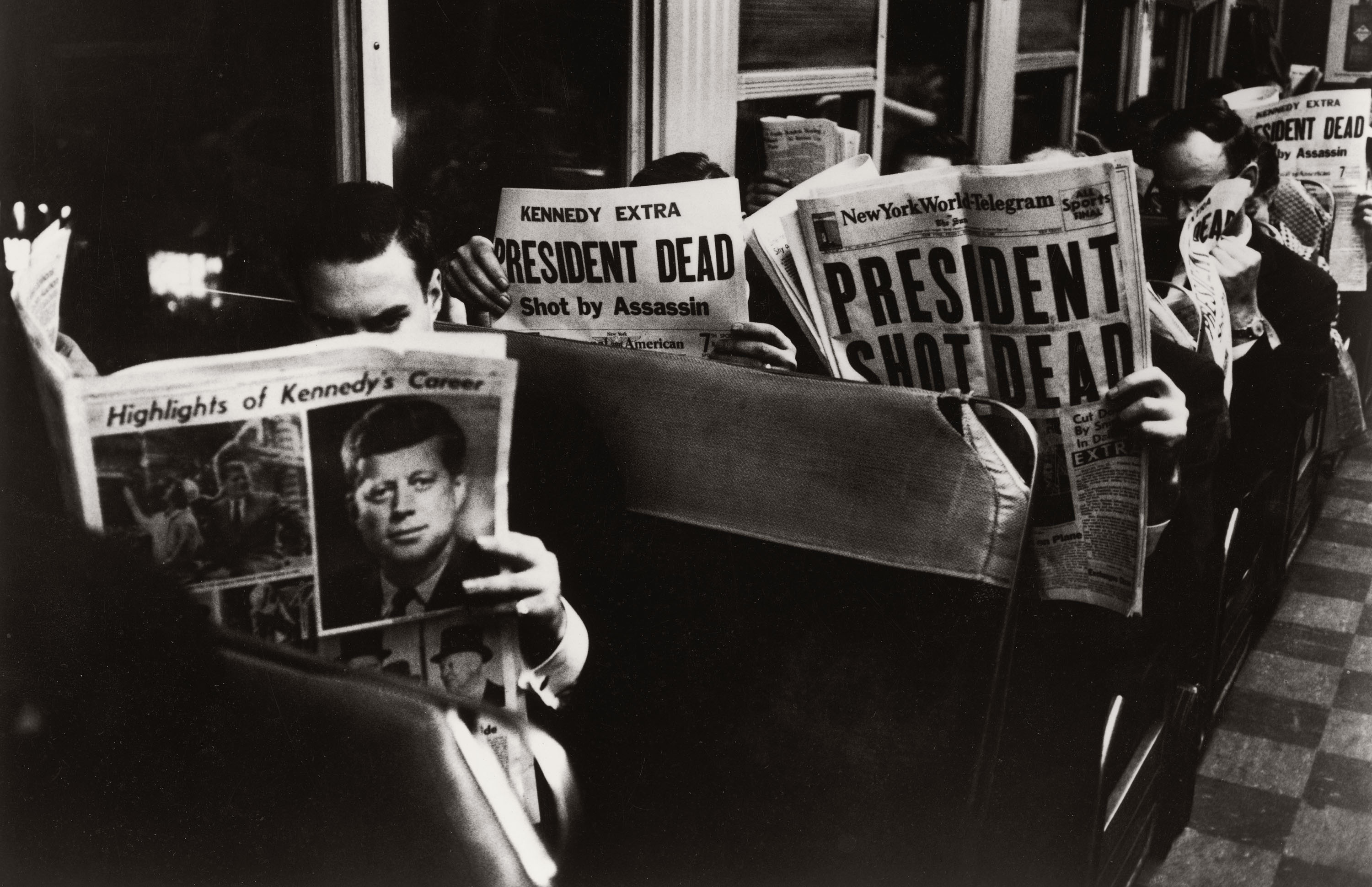
Then, barely 24 hours later, President John F. Kennedy was assassinated in Dallas. This single, shattering event, and subsequent efforts to explain it, popularized a term for something that is clearly the subject of Hofstadter’s talk though it never actually figures in the text: “conspiracy theory.”


This story is part of MIT Technology Review’s series “The New Conspiracy Age,” on how the present boom in conspiracy theories is reshaping science and technology.


Hofstadter’s lecture was later revised into what remains an essential essay, even after decades of scholarship on conspiracy theories, because it lays out, with both rigor and concision, a historical continuity of conspiracist politics. “The paranoid style is an old and recurrent phenomenon in our public life which has been frequently linked with movements of suspicious discontent,” he writes, tracing the phenomenon back to the early years of the republic. Though each upsurge in conspiracy theories feels alarmingly novel—new narratives disseminated through new technologies on a new scale—they all conform to a similar pattern. As Hofstadter demonstrated, the names may change, but the fundamental template remains the same.

His psychological reading of politics has been controversial, but it is psychology, rather than economics or other external circumstances, that best explains the flourishing of conspiracy theories. Subsequent research has indeed shown that we are prone to perceive intentionality and patterns where none exist—and that this helps us feel like a person of consequence. To identify and expose a secret plot is to feel heroic and gain the illusion of control over the bewildering mess of life. 

Like many pioneering theories exposed to the cold light of hindsight, Hofstadter’s has flaws and blind spots. His key oversight was to downplay  the paranoid style’s role in mainstream politics up to that point and underrate its potential to spread in the future.

In 1963, conspiracy theories were still a fringe phenomenon, not because they were inherently unusual but because they had limited reach and were stigmatized by people in power. Now that neither factor holds true, it is obvious how infectious they are. Hofstadter could not, of course, have imagined the information technologies that have become stitched into our lives, nor the fractured media ecosystem of the 21st century, both of which have allowed conspiracist thinking to reach more and more people—to morph, and to bloom like mold. And he could not have predicted that a serial conspiracy theorist would be elected president, twice, and that he would staff his second administration with fellow proponents of the paranoid style. 

But Hofstadter’s concept of the paranoid style remains useful—and ever relevant—because it also describes a way of reading the world. As he put it, “The distinguishing thing about the paranoid style is not that its exponents see conspiracies or plots here or there in history, but they regard a ‘vast’ or ‘gigantic’ conspiracy as the motive force in historical events. History is a conspiracy, set in motion by demonic forces of almost transcendent power, and what is felt to be needed to defeat it is not the usual methods of political give-and-take, but an all-out crusade.”

Needless to say, this mystically unified version of history is not just untrue but impossible. It doesn’t make sense on any level. So why has it proved so alluring for so long—and why does it seem to be getting more popular every day?

What is a conspiracy theory, anyway? 

The first person to define the “conspiracy theory” as a widespread phenomenon was the Austrian-British philosopher Karl Popper, in his 1948 lecture “Towards a Rational Theory of Tradition.” He was not referring to a theory about an individual conspiracy. He was interested in “the conspiracy theory of society”: a particular way of interpreting the course of events. 

He later defined it as “the view that an explanation of a social phenomenon consists in the discovery of the men or groups who are interested in the occurrence of this phenomenon (sometimes it is a hidden interest which has first to be revealed), and who have planned and conspired to bring it about.”

Take an unforeseen catastrophe that inspires fear, anger, and pain—a financial crash, a devastating fire, a terrorist attack, a war. The conventional historian will try to unpick a tangle of different factors, of which malice is only one, and one that may be less significant than dumb luck.

The conspiracist, however, will perceive only sinister calculation behind these terrible events—a fiendishly intricate plot conceived and executed to perfection. Intent is everything. Popper’s observation chimes with Hofstadter’s: “The paranoid’s interpretation of history is … distinctly personal: decisive events are not taken as part of the stream of history, but as the consequences of someone’s will.”

A Culture of Conspiracy
Michael Barkun
UNIVERSITY OF CALIFORNIA PRESS, 2013

According to Michael Barkun in the 2003 book A Culture of Conspiracy, the conspiracist interpretation of events rests on three assumptions: Everything is connected, everything is premeditated, and nothing is as it seems. Following that third law means that widely accepted and documented history is, by definition, suspect and alternative explanations, however outré, are more likely to be true. As Hannah Arendt wrote in The Origins of Totalitarianism, the purpose of conspiracy theories in 20th-century dictatorships “was always to reveal official history as a joke, to demonstrate a sphere of secret influences in which the visible, traceable, and known historical reality was only the outward façade erected explicitly to fool the people.” (Those dictators, of course, were conspirators themselves, projecting their own love of secret plots onto others.)

Still, it’s important to remember that “conspiracy theory” can mean different things. Barkun describes three varieties, nesting like Russian dolls. 

The “event conspiracy theory” concerns a specific, contained catastrophe, such as the Reichstag fire of 1933 or the origins of covid-19. These theories are relatively plausible, even if they can not be proved. 

The “systemic conspiracy theory” is much more ambitious, purporting to explain numerous events as the poisonous fruit of a clandestine international plot. Far-fetched though they are, they do at least fixate on named groups, whether the Illuminati or the World Economic Forum. 

It is increasingly clear that “conspiracy theory” is a misnomer and what we are really dealing with is conspiracy belief.

Finally, the “superconspiracy theory” is that impossible fantasy in which history itself is a conspiracy, orchestrated by unseen forces of almost supernatural power and malevolence. The most extreme variants of QAnon posit such a universal conspiracy. It seeks to encompass and explain nothing less than the entire world.

These are very different genres of storytelling. If the first resembles a detective story, then the other two are more akin to fables. Yet one can morph into the other. Take the theories surrounding the Kennedy assassination. The first wave of amateur investigators created event conspiracy theories—relatively self-contained plots with credible assassins such as Cubans or the Mafia. 

But over time, event conspiracy theories have come to seem parochial. By the time of Oliver Stone’s 1991 movie JFK, once-popular plots had been eclipsed by elaborate fictions of gigantic long-running conspiracies in which the murder of the president was just one component. One of Stone’s primary sources was the journalist Jim Marrs, who went on to write books about the Freemasons and UFOs. 

Why limit yourself to a laboriously researched hypothesis about a single event when one giant, dramatic plot can explain them all? 

The theory of everything 

In every systemic or superconspiracy theory, the world is corrupt and unjust and getting worse. An elite cabal of improbably powerful individuals, motivated by pure malignancy, is responsible for most of humanity’s misfortunes. Only through the revelation of hidden knowledge and the cracking of codes by a righteous minority can the malefactors be unmasked and defeated. The morality is as simplistic as the narrative is complex: It is a battle between good and evil.

Notice anything? This is not the language of democratic politics but that of myth and of religion. In fact, it is the fundamental message of the Book of Revelation. Conspiracist thinking can be seen as an offshoot, often but not always secularized, of apocalyptic Christianity, with its alluring web of prophecies, signs, and secrets and its promise of violent resolution. After studying several millenarian sects for his 1957 book The Pursuit of the Millennium, the historian Norman Cohn itemized some common traits, among them “the megalomaniac view of oneself as the Elect, wholly good, abominably persecuted yet assured of ultimate triumph; the attribution of gigantic and demonic powers to the adversary; the refusal to accept the ineluctable limitations and imperfections of human experience.”

Popper similarly considered the conspiracy theory of society “a typical result of the secularization of religious superstition,” adding: “The gods are abandoned. But their place is filled by powerful men or groups … whose wickedness is responsible for all the evils we suffer from.” 

QAnon’s mutation from a conspiracy theory on an internet message board into a movement with the characteristics of a cult makes explicit the kinship between conspiracy theories and apocalyptic religion.

This way of thinking facilitates the creation of dehumanized scapegoats—one of the oldest and most consistent features of a conspiracy theory. During the Middle Ages and beyond, political and religious leaders routinely flung the name “Antichrist” at their opponents. During the Crusades, Christians falsely accused Europe’s Jewish communities of collaborating with Islam or poisoning wells and put them to the sword. Witch-hunters implicated tens of thousands of innocent women in a supposed satanic conspiracy that was said to explain everything from illness to crop failure. “Conspiracy theories are, in the end, not so much an explanation of events as they are an effort to assign blame,” writes Anna Merlan in the 2019 book Republic of Lies.

cover of Republic of Lies
Republic of Lies: American Conspiracy Theorists and Their Surprising Rise to Power
Anna Merlan
METROPOLITAN PUBLISHERS, 2019

But the systemic conspiracy theory as we know it—that is, the ostensibly secular variety—was established three centuries later, with remarkable speed. Some horrified opponents of the French Revolution could not accept that such an upheaval could be simply a popular revolt and needed to attribute it to sinister, unseen forces. They settled on the Illuminati, a Bavarian secret society of Enlightenment intellectuals influenced in part by the rituals and hierarchy of Freemasonry. 

The group was founded by a young law professor named Adam Weishaupt, who used the alias Brother Spartacus. In reality, the Illuminati were few in number, fractious, powerless, and, by the time of the revolution in 1789, defunct. But in the imaginations of two influential writers who published “exposés” of the Illuminati in 1797—Scotland’s John Robison and France’s Augustin Barruel—they were everywhere. Each man erected a wobbling tower of wild supposition and feverish nonsense on a platform of plausible claims and verifiable facts. Robison alleged that the revolution was merely part of “one great and wicked project” whose ultimate aim was to “abolish all religion, overturn every government, and make the world a general plunder and a wreck.”  

The Illuminati’s bogeyman status faded during the 19th century, but the core narrative persisted and proceeded to underpin the notorious hoax The Protocols of the Elders of Zion, first published in a Russian newspaper in 1903. The document’s anonymous author reinvented antisemitism by grafting it onto the story of the one big plot and positing Jews as the secret rulers of the world. In this account, the Elders orchestrate every war, recession, and so on in order to destabilize the world to the point where they can impose tyranny. 

You might ask why, if they have such world-bending power already, they would require a dictatorship. You might also wonder how one group could be responsible for both communism and monopoly capitalism, anarchism and democracy, the theory of evolution, and much more besides. But the vast, self-contradicting incoherence of the plot is what made it impossible to disprove. Nothing was ruled out, so every development could potentially be taken as evidence of the Elders at work.

In 1921, the Protocols were exposed as what the London Times called a “clumsy forgery,” plagiarized from two obscure 19th-century novels, yet they remained the key text of European antisemitism—essentially “true” despite being demonstrably false. “I believe in the inner, but not the factual, truth of the Protocols,” said Joseph Goebbels, who would become Hitler’s minister of propaganda. In Mein Kampf, Hitler claimed that efforts to debunk the Protocols were actually “evidence in favor of their authenticity.” He alleged that Jews, if not stopped, would “one day devour the other nations and become lords of the earth.” Popper and Hofstadter both used the Holocaust as an example of what happens when a conspiracy theorist gains power and makes the paranoid style a governing principle.

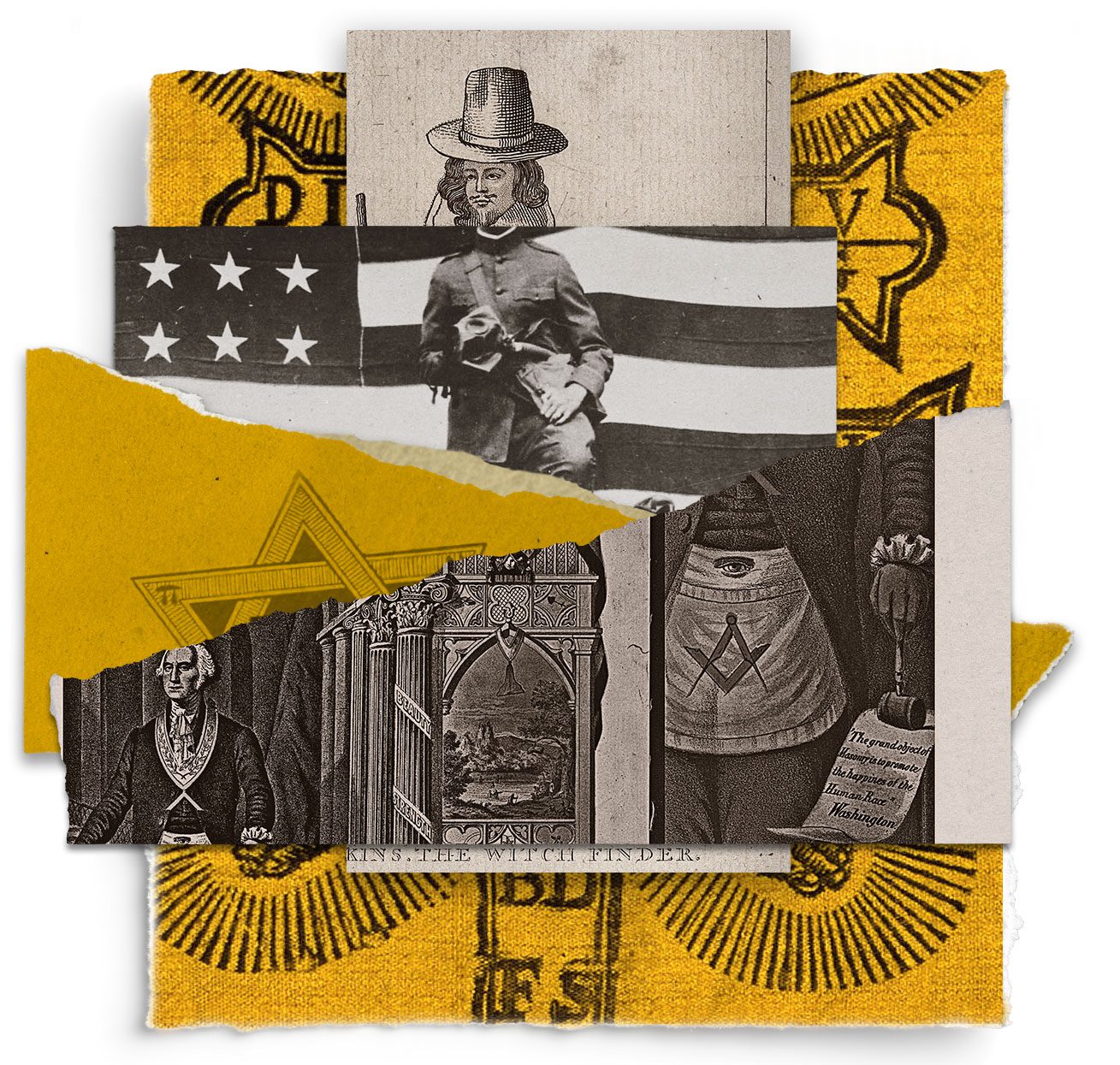
esoteric symbols and figures on torn paper including a witchfinder, George Washington and a Civil war era solder

STEPHANIE ARNETT/MIT TECHNOLOGY REVIEW | PUBLIC DOMAIN

The prominent role of Jewish Bolsheviks like Leon Trotsky and Grigory Zinoviev in the Russian Revolution of 1917 enabled a merger of antisemitism and anticommunism that survived the fascist era. Cold War red-baiters such as Senator Joseph McCarthy and the John Birch Society assigned to communists uncanny degrees of malice and ubiquity, far beyond the real threat of Soviet espionage. In fact, they presented this view as the only logical one. McCarthy claimed that a string of national security setbacks could be explained only if George C. Marshall, the secretary of defense and former secretary of state, was literally a Soviet agent. “How can we account for our present situation unless we believe that men high in this government are concerting to deliver us to disaster?” he asked in 1951. “This must be the product of a great conspiracy so immense as to dwarf any previous such venture in the history of man.”

This continuity between antisemitism, anticommunism, and 18th-century paranoia about secret societies isn’t hard to see. General Francisco Franco, Spain’s right-wing dictator, claimed to be fighting a “Judeo-Masonic-Bolshevik” conspiracy. The Nazis persecuted Freemasons alongside Jews and communists. Nesta Webster, the British fascist sympathizer who laundered the Protocols through the British press, revived interest in Robison and Barruel’s books about the Illuminati, which the pro-Nazi Baptist preacher Gerald Winrod then promoted in the US. Even Winston Churchill was briefly persuaded by Webster’s work, citing it in his claims of a “world-wide conspiracy for the overthrow of civilization … from the days of Spartacus-Weishaupt to the days of Karl Marx.”

To follow the chain further, Webster and Winrod’s stew of anticommunism, antisemitism, and anti-Illuminati conspiracy theories influenced the John Birch Society, whose publications would light a fire decades later under the Infowars founder Alex Jones, perhaps the most consequential conspiracy theorist of the early 21st century. 

The villains behind the one big plot might be the Illuminati, the Elders of Zion, the communists, or the New World Order, but they are always essentially the same people, aspiring to officially dominate a world that they already secretly control. The names can be swapped around without much difficulty. While Winrod maintained that “the real conspirators behind the Illuminati were Jews,” the anticommunist William Guy Carr conversely argued that antisemitic paranoia “plays right into the hands of the Illuminati.” These days, it might be the World Economic Forum or George Soros; liberal internationalists with aspirations to change the world are easily cast as the new Illuminati, working toward establishing one world government.

Finding connection

The main reason that conspiracy theorists have lost interest in the relatively hard work of micro-conspiracies in favor of grander schemes is that it has become much easier to draw lines between objectively unrelated people and events. Information technology is, after all, also misinformation technology. That’s nothing new. 

The witch craze could not have traveled as far or lasted as long without the printing press. Malleus Maleficarum (Hammer of the Witches), a 1486 screed by the German witch-hunter Heinrich Kramer, became the best-selling witch-hunter’s handbook, going through 28 editions by 1600. Similarly, it was the books and pamphlets “exposing” the Illuminati that allowed those ideas to spread everywhere following the French Revolution. And in the early 20th century, the introduction of the radio facilitated fascist propaganda. During the 1930s, the Nazi-sympathizing Catholic priest and radio host Charles Coughlin broadcast his antisemitic conspiracy theories to tens of millions of Americans on dozens of stations. 

The internet has, of course, vastly accelerated and magnified the spread of conspiracy theories. It is hard to recall now, but in the early days it was sweetly assumed that the internet would improve the world by democratizing access to information. While this initial idealism survives in doughty enclaves such as Wikipedia, most of us vastly underestimated the human appetite for false information that confirms the consumer’s biases.

Politicians, too, were slow to recognize the corrosive power of free-flowing conspiracy theories. For a long time, the more fantastical assertions of McCarthy and the Birchers were kept at arm’s length from the political mainstream, but that distance began to diminish rapidly during the 1990s, as right-wing activists built a cottage industry of outrageous claims about Bill and Hillary Clinton to advance the idea that they were not just corrupt or dishonest but actively evil and even satanic. This became an article of faith in the information ecosystem of internet message boards and talk radio, which expanded over time to include Fox News, blogs, and social media. So when Democrats nominated Hillary Clinton in 2016, a significant portion of the American public saw a monster at the heart of an organized crime ring whose activities included human trafficking and murder.

Nobody could make the same mistake about misinformation today. One could hardly design a more fertile breeding ground for conspiracy theories than social media. The algorithms of YouTube, Facebook, TikTok, and X, which operate on the principle that rage is engaging, have turned into radicalization machines. When these platforms took off during the second half of the 2010s, they offered a seamless system in which people were able to come across exciting new information, share it, connect it to other strands of misinformation, and weave them into self-contained, self-affirming communities, all without leaving the house.

It’s not hard to see how the problem will continue to grow as AI burrows ever deeper into our everyday lives. Elon Musk has tinkered with the AI chatbot Grok to produce information that conforms to his personal beliefs rather than to actual facts. This outcome does not even have to be intentional. Chatbots have been shown to validate and intensify some users’ beliefs, even if they’re rooted in paranoia or hubris. If you believe that you’re the hero in an epic battle between good and evil, then your chatbot is inclined to agree with you.

It’s all this digital noise that has brought about the virtual collapse of the event conspiracy theory. The industry produced by the JFK assassination may have been pseudo-scholarship, but at least researchers went through the motions of scrutinizing documents, gathering evidence, and putting forward a somewhat consistent hypothesis. However misguided the conclusions, that kind of conspiracy theory required hard work and commitment. 

Commuters reading of John F. Kennedy's assassination in the newspaper

CARL MYDANS/THE LIFE PICTURE COLLECTION/SHUTTERSTOCK

Today’s online conspiracy theorists, by contrast, are shamelessly sloppy. Events such as the attack on Paul Pelosi, husband of former US House Speaker Nancy Pelosi, in October 2022, or the murders of Minnesota House speaker Melissa Hortman and her husband Mark in June 2025, or even more recently the killing of Charlie Kirk, have inspired theories overnight, which then evaporate just as quickly. The point of such theories, if they even merit that label, is not to seek the truth but to defame political opponents and turn victims into villains.

Before he even ran for office, Trump was notorious for promoting false stories about Barack Obama’s birthplace or vaccine safety. Heir to Joseph McCarthy, Barry Goldwater, and the John Birch Society, he is the lurid incarnation of the paranoid style. He routinely damns his opponents as “evil” or “very bad people” and speaks of America’s future in apocalyptic terms. It is no surprise, then, that every member of the administration must subscribe to Trump’s false claim that the 2020 election was stolen from him, or that celebrity conspiracy theorists are now in charge of national intelligence, public health, and the FBI. Former Democrats who hold such roles, like Tulsi Gabbard and Robert F. Kennedy Jr., have entered Trump’s orbit through the gateway of conspiracy theories. They illustrate how this mindset can create counterintuitive alliances that collapse conventional political distinctions and scramble traditional notions of right and left. 

The antidemocratic implications of what’s happening today are obvious. “Since what is at stake is always a conflict between absolute good and absolute evil, the quality needed is not a willingness to compromise but the will to fight things out to the finish,” Hofstadter wrote. “Nothing but complete victory will do.” 

Meeting the moment

It’s easy to feel helpless in the face of this epistemic chaos. Because one other foundational feature of religious prophecy is that it can be disproved without being discredited: Perhaps the world does not come to an end on the predicted day, but that great day will still come. The prophet is never wrong—he is just not proven right yet

The same flexibility is enjoyed by systemic conspiracy theories. The plotters never actually succeed, nor are they ever decisively exposed, yet the theory remains intact. Recently, claims that covid-19 was either exaggerated or wholly fabricated in order to crush civil liberties did not wither away once lockdown restrictions were lifted. Surely the so-called “plandemic” was a complete disaster? No matter. This type of conspiracy theory does not have to make sense.

Scholars who have attempted to methodically repudiate conspiracy theories about the 9/11 attacks or the JFK assassination have found that even once all the supporting pillars have been knocked away, the edifice still stands. It is increasingly clear that “conspiracy theory” is a misnomer and what we are really dealing with is conspiracy belief—as Hofstadter suggested, a worldview buttressed with numerous cognitive biases and impregnable to refutation. As Goebbels implied, the “factual truth” pales in comparison to the “inner truth,” which is whatever somebody believes it be.

But at the very least, what we can do is identify the entirely different realities constructed by believers and recognize and internalize their common roots, tropes, and motives. 

Those different realities, after all, have proved remarkably consistent in shape if not in their details. What we saw then, we see now. The Illuminati were Enlightenment idealists whose liberal agenda to “dispel the clouds of superstition and of prejudice,” in Weishaupt’s words, was demonized as wicked and destructive. If they could be shown to have fomented the French Revolution, then the whole revolution was a sham. Similarly, today’s radical right recasts every plank of progressive politics as an anti-American conspiracy. The far-right Great Replacement Theory, for instance, posits that immigration policy is a calculated effort by elites to supplant the native population with outsiders. This all flows directly from what thinkers such as Hofstadter, Popper, and Arendt diagnosed more than 60 years ago. 

What is dangerously novel, at least in democracies, is conspiracy theories’ ubiquity, reach, and power to affect the lives of ordinary citizens. So understanding the paranoid style better equips us to counteract it in our daily existence. At minimum, this knowledge empowers us to spot the flaws and biases in our own thinking and stop ourselves from tumbling down dangerous rabbit holes. 

cover of book
The Paranoid Style in American Politics and Other Essays
Richard Hofstadter
VINTAGE BOOKS, 1967

On November 18, 1961, President Kennedy—almost exactly two years before Hofstadter’s lecture and his own assassination—offered his own definition of the paranoid style in a speech to the Democratic Party of California. “There have always been those on the fringes of our society who have sought to escape their own responsibility by finding a simple solution, an appealing slogan, or a convenient scapegoat,” he said. “At times these fanatics have achieved a temporary success among those who lack the will or the wisdom to face unpleasant facts or unsolved problems. But in time the basic good sense and stability of the great American consensus has always prevailed.” 

We can only hope that the consensus begins to see the rolling chaos and naked aggression of Trump’s two administrations as weighty evidence against the conspiracy theory of society. The notion that any group could successfully direct the larger mess of this moment in the world, let alone the course of history for decades, undetected, is palpably absurd. The important thing is not that the details of this or that conspiracy theory are wrong; it is that the entire premise behind this worldview is false. 

Not everything is connected, not everything is premeditated, and many things are in fact just as they seem. 

Dorian Lynskey is the author of several books, including The Ministry of Truth: The Biography of George Orwell’s 1984 and Everything Must Go: The Stories We Tell About the End of the World. He cohosts the podcast Origin Story and co-writes the Origin Story books with Ian Dunt.