The AI Hype Index: AI-powered toys are coming

Separating AI reality from hyped-up fiction isn’t always easy. That’s why we’ve created the AI Hype Index—a simple, at-a-glance summary of everything you need to know about the state of the industry.

AI agents might be the toast of the AI industry, but they’re still not that reliable. That’s why Yoshua Bengio, one of the world’s leading AI experts, is creating his own nonprofit dedicated to guarding against deceptive agents. Not only can they mislead you, but new research suggests that the weaker an AI model powering an agent is, the less likely it is to be able to negotiate you a good deal online. Elsewhere, OpenAI has inked a deal with toymaker Mattel to develop “age-appropriate” AI-infused products. What could possibly go wrong?

The Bank Secrecy Act is failing everyone. It’s time to rethink financial surveillance.

The US is on the brink of enacting rules for digital assets, with growing bipartisan momentum to modernize our financial system. But amid all the talk about innovation and global competitiveness, one issue has been glaringly absent: financial privacy. As we build the digital infrastructure of the 21st century, we need to talk about not just what’s possible but what’s acceptable. That means confronting the expanding surveillance powers quietly embedded in our financial system, which today can track nearly every transaction without a warrant.

Many Americans may associate financial surveillance with authoritarian regimes. Yet because of a Nixon-era law called the Bank Secrecy Act (BSA) and the digitization of finance over the past half-century, financial privacy is under increasingly serious threat here at home. Most Americans don’t realize they live under an expansive surveillance regime that likely violates their constitutional rights. Every purchase, deposit, and transaction, from the smallest Venmo payment for a coffee to a large hospital bill, creates a data point in a system that watches you—even if you’ve done nothing wrong.

As a former federal prosecutor, I care deeply about giving law enforcement the tools it needs to keep us safe. But the status quo doesn’t make us safer. It creates a false sense of security while quietly and permanently eroding the constitutional rights of millions of Americans.

When Congress enacted the BSA in 1970, cash was king and organized crime was the target. The law created a scheme whereby, ever since, banks have been required to keep certain records on their customers and turn them over to law enforcement upon request. Unlike a search warrant, which must be issued by a judge or magistrate upon a showing of probable cause that a crime was committed and that specific evidence of that crime exists in the place to be searched, this power is exercised with no checks or balances. A prosecutor can “cut a subpoena”—demanding all your bank records for the past 10 years—with no judicial oversight or limitation on scope, and at no cost to the government. The burden falls entirely on the bank. In contrast, a proper search warrant must be narrowly tailored, with probable cause and judicial authorization.

In United States v. Miller (1976), the Supreme Court upheld the BSA, reasoning that citizens have no “legitimate expectation of privacy” about information shared with third parties, like banks. Thus began the third-party doctrine, enabling law enforcement to access financial records without a warrant. The BSA has been amended several times over the years (most notoriously in 2001 as a part of the Patriot Act), imposing an ever-growing list of recordkeeping obligations on an ever-growing list of financial institutions. Today, it is virtually inescapable for everyday Americans.

In the 1970s, when the BSA was enacted, banking and noncash payments were conducted predominantly through physical means: writing checks, visiting bank branches, and using passbooks. For cash transactions, the BSA required reporting of transactions over the kingly sum of $10,000, a figure that was not pegged to inflation and remains the same today. And given the nature of banking services and the technology available at the time, individuals conducted just a handful of noncash payments per month. Today, consumers make at least one payment or banking transaction a day, and just an estimated 16% of those are in cash

Meanwhile, emerging technologies further expand the footprint of financial data. Add to this the massive pools of personal information already collected by technology platforms—location history, search activity, communications metadata—and you create a world where financial surveillance can be linked to virtually every aspect of your identity, movement, and behavior.

Nor does the BSA actually appear to be effective at achieving its aims. In fiscal year 2024, financial institutions filed about 4.7 million Suspicious Activity Reports (SARs) and over 20 million currency transaction reports. Instead of stopping major crime, the system floods law enforcement with low-value information, overwhelming agents and obscuring real threats. Mass surveillance often reduces effectiveness by drowning law enforcement in noise. But while it doesn’t stop hackers, the BSA creates a trove of permanent info on everyone.

Worse still, the incentives are misaligned and asymmetrical. To avoid liability, financial institutions are required to report anything remotely suspicious. If they fail to file a SAR, they risk serious penalties—even indictment. But they face no consequences for overreporting. The vast overcollection of data is the unsurprising result. These practices, developed under regulations, require clearer guardrails so that executive branch actors can more safely outsource surveillance duties to private institutions.

But courts have recognized that constitutional privacy must evolve alongside technology. In 2012, the Supreme Court ruled in United States v. Jones that attaching a GPS tracker to a vehicle for prolonged surveillance constituted a search restricted by the Fourth Amendment. Justice Sonia Sotomayor, in a notable concurrence, argued that the third-party doctrine was ill suited to an era when individuals “reveal a great deal of information about themselves to third parties” merely by participating in daily life.

This legal evolution continued in 2018, when the Supreme Court held in Carpenter v. United States that accessing historical cell-phone location records held by a third party required a warrant, recognizing that “seismic shifts in digital technology” necessitate stronger protections and warning that “the fact that such information is gathered by a third party does not make it any less deserving of Fourth Amendment protection.”

The logic of Carpenter applies directly to the mass of financial records being collected today. Just as tracking a person’s phone over time reveals the “whole of their physical movements,” tracking a person’s financial life exposes travel, daily patterns, medical treatments, political affiliations, and personal associations. In many ways, because of the velocity and digital nature of today’s digital payments, financial data is among the most personal and revealing data there is—and therefore deserves the highest level of constitutional protection.

Though Miller remains formally intact, the writing is on the wall: Indiscriminate financial surveillance such as what we have today is fundamentally at odds with the Fourth Amendment in the digital age.

Technological innovations over the past several decades have brought incredible convenience to economic life. Now our privacy standards must catch up. With Congress considering landmark legislation on digital assets, it’s an important moment to consider what kind of financial system we want—not just in terms of efficiency and access, but in terms of freedom. Rather than striking down the BSA in its entirety, policymakers should narrow its reach, particularly around the bulk collection and warrantless sharing of Americans’ financial data.

Financial surveillance shouldn’t be the price of participation in modern life. The systems we build now will shape what freedom looks like for the next century. It’s time to treat financial privacy like what it is: a cornerstone of democracy, and a right worth fighting for.

Katie Haun is the CEO and founder of Haun Ventures, a venture capital firm focused on frontier technologies. She is a former federal prosecutor who created the US Justice Department’s first cryptocurrency task force. She led investigations into the Mt. Gox hack and the corrupt agents on the Silk Road task force. She clerked for US Supreme Court Justice Anthony Kennedy and is an honors graduate of Stanford Law School.

Google’s new AI will help researchers understand how our genes work

When scientists first sequenced the human genome in 2003, they revealed the full set of DNA instructions that make a person. But we still didn’t know what all those 3 billion genetic letters actually do. 

Now Google’s DeepMind division says it’s made a leap in trying to understand the code with AlphaGenome, an AI model that predicts what effects small changes in DNA will have on an array of molecular processes, such as whether a gene’s activity will go up or down. It’s just the sort of question biologists regularly assess in lab experiments.

“We have, for the first time, created a single model that unifies many different challenges that come with understanding the genome,” says Pushmeet Kohli, a vice president for research at DeepMind.

Five years ago, the Google AI division released AlphaFold, a technology for predicting the 3D shape of proteins. That work was honored with a Nobel Prize last year and spawned a drug-discovery spinout, Isomorphic Labs, and a boom of companies that hope AI will be able to propose new drugs.

AlphaGenome is an attempt to further smooth biologists’ work by answering basic questions about how changing DNA letters alters gene activity and, eventually, how genetic mutations affect our health. 

“We have these 3 billion letters of DNA that make up a human genome, but every person is slightly different, and we don’t fully understand what those differences do,” says Caleb Lareau, a computational biologist at Memorial Sloan Kettering Cancer Center who has had early access to AlphaGenome. “This is the most powerful tool to date to model that.”

Google says AlphaGenome will be free for noncommercial users and plans to release full details of the model in the future. According to Kohli, the company is exploring ways to “enable use of this model by commercial entities” such as biotech companies. 

Lareau says AlphaGenome will allow certain types of experiments now done in the lab to be carried out virtually, on a computer. For instance, studies of people who’ve donated their DNA for research often turn up thousands of genetic differences, each slightly raising or lowering the chance a person gets a disease such as Alzheimer’s.

Lareau says DeepMind’s software could be used to quickly make predictions about how each of those variants works at a molecular level, something that would otherwise require time-consuming lab experiments. “You’ll get this list of gene variants, but then I want to understand which of those are actually doing something, and where can I intervene,” he says. “This system pushes us closer to a good first guess about what any variant will be doing when we observe it in a human.”

Don’t expect AlphaGenome to predict very much about individual people, however. It offers clues to nitty-gritty molecular details of gene activity, not 23andMe-type revelations of a person’s traits or ancestry. 

“We haven’t designed or validated AlphaGenome for personal genome prediction, a known challenge for AI models,” Google said in a statement.

Underlying the AI system is the so-called transformer architecture invented at Google that also powers large language models like GPT-4. This one was trained on troves of experimental data produced by public scientific projects.

Lareau says the system will not broadly change how his lab works day to day but could permit new types of research. For instance, sometimes doctors encounter patients with ultra-rare cancers, bristling with unfamiliar mutations. AlphaGenome could suggest which of those mutations are really causing the root problem, possibly pointing to a treatment.

“A hallmark of cancer is that specific mutations in DNA make the wrong genes express in the wrong context,” says Julien Gagneur, a professor of computational medicine at the Technical University of Munich. “This type of tool is instrumental in narrowing down which ones mess up proper gene expression.” 

The same approach could apply to patients with rare genetic disease, many of whom never learn the source of their condition, even if their DNA has been decoded. “We can obtain their genomes, but we are clueless as to which genetic alterations cause the disease,” says Gagneur. He thinks AlphaGenome could give medical scientists a new way to diagnose such cases. 

Eventually, some researchers aspire to use AI to design entire genomes from the ground up and create new life forms. Others think the models will be used to create a fully virtual laboratory for drug studies. “My dream would be to simulate a virtual cell,” Demis Hassabis, CEO of Google DeepMind, said this year. 

Kohli calls AlphaGenome a “milestone” on the road to that kind of system. “AlphaGenome may not model the whole cell in its entirety … but it’s starting to sort of shed light on the broader semantics of DNA,” he says.

See the stunning first images from the Vera C. Rubin Observatory

The first spectacular images taken by the Vera C. Rubin Observatory have been released for the world to peruse: a panoply of iridescent galaxies and shimmering nebulas. “This is the dawn of the Rubin Observatory,” says Meg Schwamb, a planetary scientist and astronomer at Queen’s University Belfast in Northern Ireland.

Much has been written about the observatory’s grand promise: to revolutionize our understanding of the cosmos by revealing a once-hidden population of far-flung galaxies, erupting stars, interstellar objects, and elusive planets. And thanks to its unparalleled technical prowess, few doubted its ability to make good on that. But over the past decade, during its lengthy construction period, “everything’s been in the abstract,” says Schwamb.

Today, that promise has become a staggeringly beautiful reality. 

Rubin’s view of the universe is unlike any that preceded it—an expansive vision of the night sky replete with detail, including hazy envelopes of matter coursing around galaxies and star-paved bridges arching between them. “These images are truly stunning,” says Pedro Bernardinelli, an astronomer at the University of Washington.

During its brief perusal of the night sky, Rubin even managed to spy more than 2,000 never-before-seen asteroids, demonstrating that it should be able to spotlight even the sneakiest denizens, and darkest corners, of our own solar system.

A small section of the Vera C. Rubin Observatory’s view of the Virgo Cluster. Three merging galaxies can be seen on the upper right. The view also includes two striking spiral galaxies (lower right), distant galaxies, and many Milky Way stars.
NSF-DOE VERA C. RUBIN OBSERVATORY

Today’s reveal is a mere amuse-bouche compared with what’s to come: Rubin, funded by the US National Science Foundation and the Department of Energy, is set for at least 10 years of planned observations. But this moment, and these glorious inaugural images, are worth celebrating for what they represent: the culmination of over a decade of painstaking work. 

“This is a direct demonstration that Rubin is no longer in the future,” says Bernardinelli. “It’s the present.”

The observatory is named after the late Vera Rubin, an astronomer who uncovered strong evidence for dark matter, a mysterious and as-yet-undetected something that’s binding galaxies together more strongly than the gravity of ordinary, visible matter alone can explain. Trying to make sense of dark matter—and its equally mysterious, universe-stretching cousin, dubbed dark energy—is a monumental task, one that cannot be addressed by just one line of study or scrutiny of one type of cosmic object.

That’s why Rubin was designed to document anything and everything that shifts or sparkles in the night sky. Sitting atop Chile’s Cerro Pachón mountain range, it boasts a 7,000-pound, 3,200-megapixel digital camera that can take detailed snapshots of a large patch of the night sky; a house-size cradle of mirrors that can drink up extremely distant and faint starlight; and a maze of joints and pistons that allow it to swivel about with incredible speed and precision. A multinational computer network permits its sky surveys to be largely automated, its images speedily processed, any new objects easily detected, and the relevant groups of astronomers quickly alerted.

All that technical wizardry allows Rubin to take a picture of the entire visible night sky once every few days, filling in the shadowed gaps and unseen activity between galaxies. “The sky [isn’t] static. There are asteroids zipping by, and supernovas exploding,” says Yusra AlSayyad, Rubin’s overseer of image processing. By conducting a continuous survey over the next decade, the facility will create a three-dimensional movie of the universe’s ever-changing chaos that could help address all sorts of astronomic queries. What were the very first galaxies like? How did the Milky Way form? Are there planets hidden in our own solar system’s backyard?

Rubin’s first glimpse of the firmament is predictably bursting with galaxies and stars. But the resolution, breadth, and depth of the images have taken astronomers aback. “I’m very impressed with these images. They’re really incredible,” says Christopher Conselice, an extragalactic astronomer at the University of Manchester in England.

One shot, created from 678 individual exposures, showcases the Trifid and Lagoon nebulas—two oceans of luminescent gas and dust where stars are born. Others depict a tiny portion of Rubin’s view of the Virgo Cluster, a zoo of galaxies. Hues of blue are coming from relatively nearby whirlpools of stars, while red tints emanate from remarkably distant and primeval galaxies. 

The rich detail in these images is already proving to be illuminating. “As galaxies merge and interact, the galaxies are pulling stars away from each other,” says Conselice. This behavior can be seen in plumes of diffuse light erupting from several galaxies, creating halos around them or illuminated bridges between them—records of these ancient galaxies’ pasts.

Images like these are also likely to contain several supernovas, the explosive final moments of sizable stars. Not only do supernovas seed the cosmos with all the heavy elements that planets—and life—rely on, but they can also hint at how the universe has expanded over time. 

Anais Möller, an astrophysicist at the Swinburne University of Technology in Melbourne, Australia, is a supernova hunter. “I search for exploding stars in very far away galaxies,” she says. Older sky surveys have found plenty, but they can lack context: You can see the explosion, but not what galaxy it’s from. Thanks to Rubin’s resolution—amply demonstrated by the Virgo Cluster set of images—astronomers can now “find where those exploding stars live,” says Möller.

Another small section of the observatory’s view of the Virgo Cluster. The image includes many distant galaxies along with stars from our own Milky Way galaxy.
NSF-DOE VERA C. RUBIN OBSERVATORY

While taking these images of the distant universe, Rubin also discovered 2,104 asteroids flitting about in our own solar system—including seven whose orbits hew close to Earth’s own. This number may sound impressive, but it’s just par for the course for Rubin. In just a few months, it will find over a million new asteroids—doubling the current known tally. And over the course of its decadal survey, Rubin is projected to identify 89,000 near-Earth asteroids, 3.7 million asteroids in the belt between Mars and Jupiter, and 32,000 icy objects beyond Neptune. 

Finding more than 2,000 previously hidden asteroids in just a few hours of observations, then, “wasn’t even hard” for Rubin, says Mario Jurić, an astronomer at the University of Washington. “The asteroids really popped out.”

Rubin’s comprehensive inventorying of the solar system has two benefits. The first is scientific: All those lumps of rocks and ice are the remnants of the solar system’s formative days, which means astronomers can use them to understand how everything around us was pieced together. 

The second benefit is security. Somewhere out there, there could be an asteroid on an Earthbound trajectory—one whose impact could devastate an entire city or even several countries. Engineers are working on defensive tech designed to either deflect or obliterate such asteroids, but if astronomers don’t know where they are, those defenses are useless. In quickly finding so many asteroids, Rubin has clearly shown that it will bolster Earth’s planetary defense capabilities like no other ground-based telescope.

Altogether, Rubin’s debut has validated the hopes of countless astronomers: The observatory won’t just be an incremental improvement on what’s come before. “I think it’s a generational leap,” says Möller. It is a ruthlessly efficient, discovery-making behemoth—and a firehose of astronomic delights is about to inundate the scientific community. “It’s very scary,” says Möller. “But very exciting at the same time.”

It’s going to be a very hectic decade. As Schwamb puts it, “The roller-coaster starts now.”

Book review: Surveillance & privacy

Privacy only matters to those with something to hide. So goes one of the more inane and disingenuous justifications for mass government and corporate surveillance. There are others, of course, but the “nothing to hide” argument remains a popular way to rationalize or excuse what’s become standard practice in our digital age: the widespread and invasive collection of vast amounts of personal data.

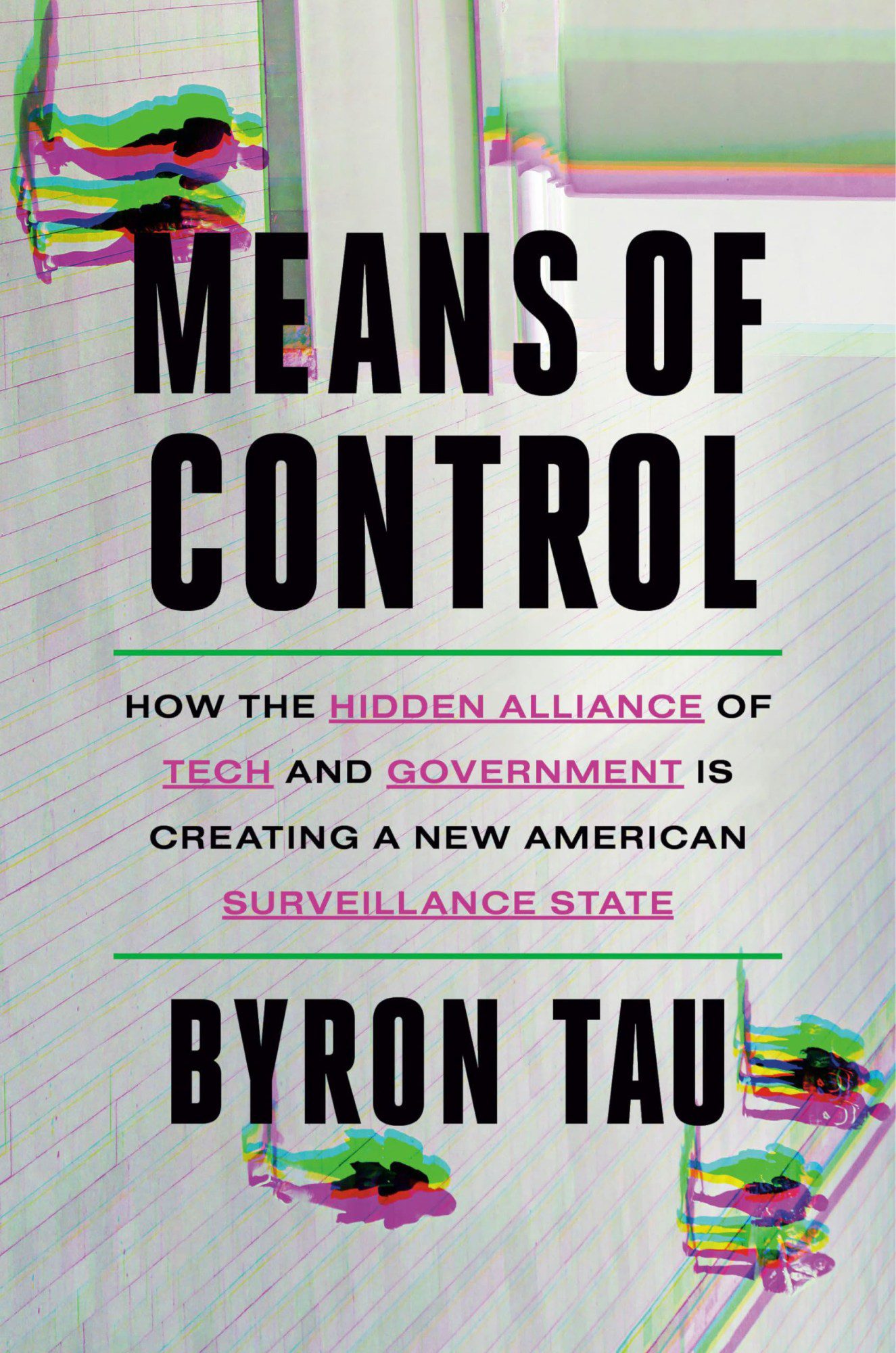
One common response to this line of reasoning is that everyone, in fact, has something to hide, whether they realize it or not. If you’re unsure of whether this holds true for you, I encourage you to read Means of Control by Byron Tau. 

cover of Means of Control
Means of Control: How the Hidden Alliance of Tech and Government Is Creating a New American Surveillance State
Byron Tau
CROWN, 2024

Midway through his book, Tau, an investigative journalist, recalls meeting with a disgruntled former employee of a data broker—a shady company that collects, bundles, and sells your personal data to other (often shadier) third parties, including the government. This ex-employee had managed to make off with several gigabytes of location data representing the precise movements of tens of thousands of people over the course of a few weeks. “What could I learn with this [data]—­theoretically?” Tau asks the former employee. The answer includes a laundry list of possibilities that I suspect would make even the most enthusiastic oversharer uncomfortable.

“If information is power, and America is a society that’s still interested in the guarantee of liberty, personal dignity, and the individual freedom of its citizens, a serious conversation is needed.”

Bryon Tau, author of Means of Control

Did someone in this group recently visit an abortion clinic? That would be easy to figure out, says the ex-employee. Anyone attend an AA meeting or check into inpatient drug rehab? Again, pretty simple to discern. Is someone being treated for erectile dysfunction at a sexual health clinic? If so, that would probably be gleanable from the data too. Tau never opts to go down that road, but as Means of Control makes very clear, others certainly have done so and will.

While most of us are at least vaguely aware that our phones and apps are a vector for data collection and tracking, both the way in which this is accomplished and the extent to which it happens often remain murky. Purposely so, argues Tau. In fact, one of the great myths Means of Control takes aim at is the very idea that what we do with our devices can ever truly be anonymized. Each of us has habits and routines that are completely unique, he says, and if an advertiser knows you only as an alphanumeric string provided by your phone as you move about the world, and not by your real name, that still offers you virtually no real privacy protection. (You’ll perhaps not be surprised to learn that such “anonymized ad IDs” are relatively easy to crack.)

“I’m here to tell you if you’ve ever been on a dating app that wanted your location, or if you ever granted a weather app permission to know where you are 24/7, there’s a good chance a detailed log of your precise movement patterns has been vacuumed up and saved in some data bank somewhere that tens of thousands of total strangers have access to,” writes Tau.

Unraveling the story of how these strangers—everyone from government intelligence agents and local law enforcement officers to private investigators and employees of ad tech companies—gained access to our personal information is the ambitious task Tau sets for himself, and he begins where you might expect: the immediate aftermath of 9/11.

At no other point in US history was the government’s appetite for data more voracious than in the days after the attacks, says Tau. It was a hunger that just so happened to coincide with the advent of new technologies, devices, and platforms that excelled at harvesting and serving up personal information that had zero legal privacy protections. 

Over the course of 22 chapters, Tau gives readers a rare glimpse inside the shadowy industry, “built by corporate America and blessed by government lawyers,” that emerged in the years and decades following the 9/11 attacks. In the hands of a less skilled reporter, this labyrinthine world of shell companies, data vendors, and intelligence agencies could easily become overwhelming or incomprehensible. But Tau goes to great lengths to connect dots and plots, explaining how a perfect storm of business motivations, technological breakthroughs, government paranoia, and lax or nonexistent privacy laws combined to produce the “digital panopticon” we are all now living in.

Means of Control doesn’t offer much comfort or reassurance for privacy­-minded readers, but that’s arguably the point. As Tau notes repeatedly throughout his book, this now massive system of persistent and ubiquitous surveillance works only because the public is largely unaware of it. “If information is power, and America is a society that’s still interested in the guarantee of liberty, personal dignity, and the individual freedom of its citizens, a serious conversation is needed,” he writes. 

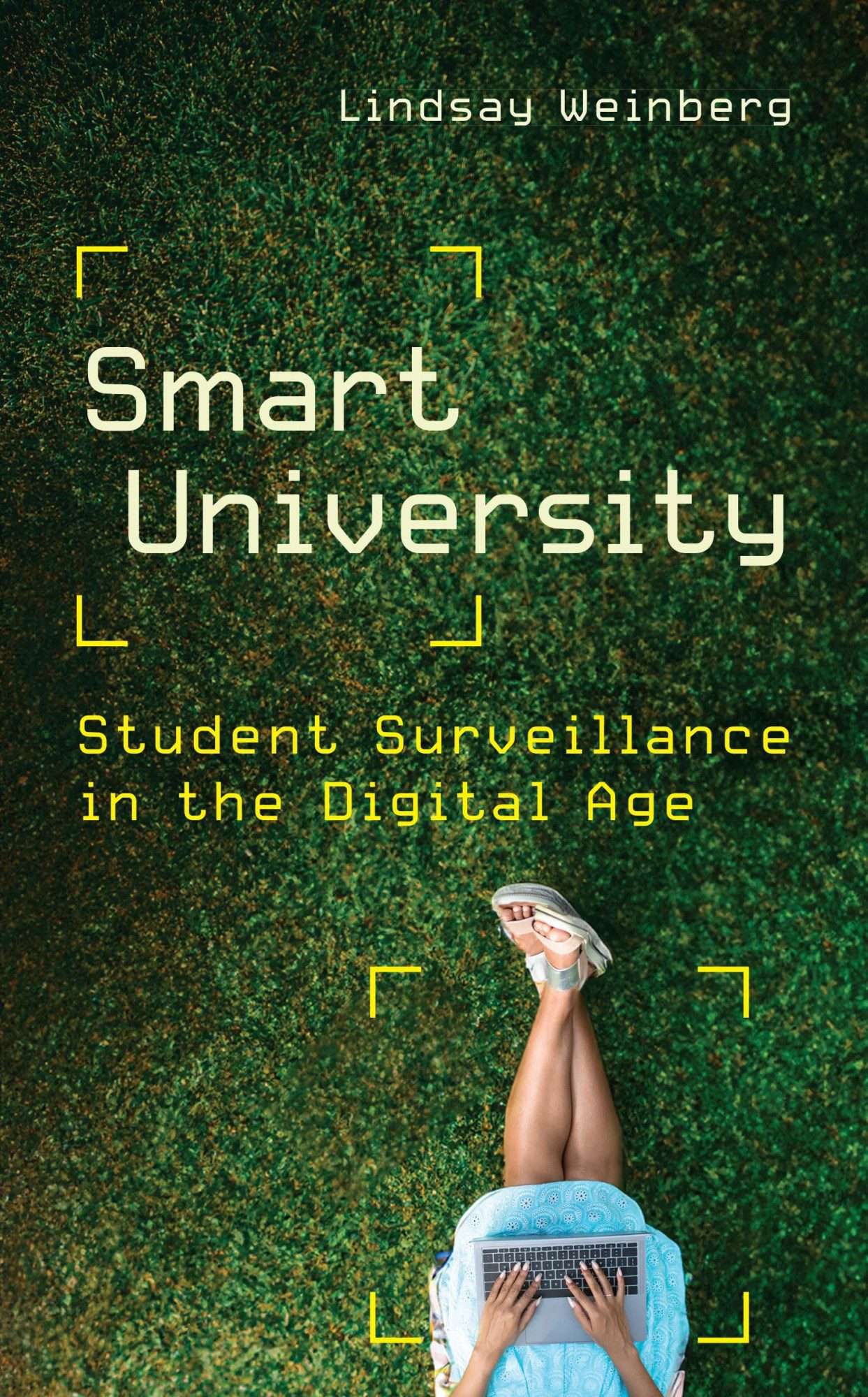
As another new book makes clear, this conversation also needs to include student data. Lindsay Weinberg’s Smart University: Student Surveillance in the Digital Age reveals how the motivations and interests of Big Tech are transforming higher education in ways that are increasingly detrimental to student privacy and, arguably, education as a whole.

cover of Smart University
Smart University: Student Surveillance in the Digital Age
Lindsay Weinberg
JOHNS HOPKINS UNIVERSITY PRESS, 2024

By “smart university,” Weinberg means the growing number of public universities across the country that are being restructured around “the production and capture of digital data.” Similar in vision and application to so-called “smart cities,” these big-data-pilled institutions are increasingly turning to technologies that can track students’ movements around campus, monitor how much time they spend on learning management systems, flag those who seem to need special “advising,” and “nudge” others toward specific courses and majors. “What makes these digital technologies so seductive to higher education administrators, in addition to promises of cost cutting, individualized student services, and improved school rankings, is the notion that the integration of digital technology on their campuses will position universities to keep pace with technological innovation,” Weinberg writes. 

Readers of Smart University will likely recognize a familiar logic at play here. Driving many of these academic tracking and data-gathering initiatives is a growing obsession with efficiency, productivity, and convenience. The result is a kind of Silicon Valley optimization mindset, but applied to higher education at scale. Get students in and out of university as fast as possible, minimize attrition, relentlessly track performance, and do it all under the guise of campus modernization and increased personalization. 

Under this emerging system, students are viewed less as self-empowered individuals and more as “consumers to be courted, future workers to be made employable for increasingly smart workplaces, sources of user-generated content for marketing and outreach, and resources to be mined for making campuses even smarter,” writes Weinberg. 

At the heart of Smart University seems to be a relatively straightforward question: What is an education for? Although Weinberg doesn’t provide a direct answer, she shows that how a university (or society) decides to answer that question can have profound impacts on how it treats its students and teachers. Indeed, as the goal of education becomes less to produce well-rounded humans capable of thinking critically and more to produce “data subjects capable of being managed and who can fill roles in the digital economy,” it’s no wonder we’re increasingly turning to the dumb idea of smart universities to get the job done.  

If books like Means of Control and Smart University do an excellent job exposing the extent to which our privacy has been compromised, commodified, and weaponized (which they undoubtedly do), they can also start to feel a bit predictable in their final chapters. Familiar codas include calls for collective action, buttressed by a hopeful anecdote or two detailing previously successful pro-privacy wins; nods toward a bipartisan privacy bill in the works or other pieces of legislation that could potentially close some glaring surveillance loophole; and, most often, technical guides that explain how each of us, individually, might better secure or otherwise take control and “ownership” of our personal data.

The motivations behind these exhortations and privacy-centric how-to guides are understandable. After all, it’s natural for readers to want answers, advice, or at least some suggestion that things could be different—especially after reading about the growing list of degradations suffered under surveillance capitalism. But it doesn’t take a skeptic to start to wonder if they’re actually advancing the fight for privacy in the way that its advocates truly want.

For one thing, technology tends to move much faster than any one smartphone privacy guide or individual law could ever hope to keep up with. Similarly, framing rampant privacy abuses as a problem we each have to be responsible for addressing individually seems a lot like framing the plastic pollution crisis as something Americans could have somehow solved by recycling. It’s both a misdirection and a misunderstanding of the problem.     

It’s to his credit, then, that Lowry Pressly doesn’t include a “What is to be done” section at the end of The Right to Oblivion: Privacy and the Good Life. In lieu of offering up any concrete technical or political solutions, he simply reiterates an argument he has carefully and convincingly built over the course of his book: that privacy is important “not because it empowers us to exercise control over our information, but because it protects against the creation of such information in the first place.” 

cover of The Right to Oblivion
The Right to Oblivion: Privacy and the Good Life
Lowry Pressly
HARVARD UNIVERSITY PRESS, 2024

For Pressly, a Stanford instructor, the way we currently understand and value privacy has been tainted by what he calls “the ideology of information.” “This is the idea that information has a natural existence in human affairs,” he writes, “and that there are no aspects of human life which cannot be translated somehow into data.” This way of thinking not only leads to an impoverished sense of our own humanity—it also forces us into the conceptual trap of debating privacy’s value using a framework (control, consent, access) established by the companies whose business model is to exploit it.

The way out of this trap is to embrace what Pressly calls “oblivion,” a kind of state of unknowing, ambiguity, and potential—or, as he puts it, a realm “where there is no information or knowledge one way or the other.” While he understands that it’s impossible to fully escape a modern world intent on turning us into data subjects, Pressly’s book suggests we can and should support the idea that certain aspects of our (and others’) subjective interior lives can never be captured by information. Privacy is important because it helps to both protect and produce these ineffable parts of our lives, which in turn gives them a sense of dignity, depth, and the possibility for change and surprise. 

Reserving or cultivating a space for oblivion in our own lives means resisting the logic that drives much of the modern world. Our inclination to “join the conversation,” share our thoughts, and do whatever it is we do when we create and curate a personal brand has become so normalized that it’s practically invisible to us. According to Pressly, all that effort has only made our lives and relationships shallower, less meaningful, and less trusting.

Calls for putting our screens down and stepping away from the internet are certainly nothing new. And while The Right to Oblivion isn’t necessarily prescriptive about such things, Pressly does offer a beautiful and compelling vision of what can be gained when we retreat not just from the digital world but from the idea that we are somehow knowable to that world in any authentic or meaningful way. 

If all this sounds a bit philosophical, well, it is. But it would be a mistake to think of The Right to Oblivion as a mere thought exercise on privacy. Part of what makes the book so engaging and persuasive is the way in which Pressly combines a philosopher’s knack for uncovering hidden assumptions with a historian’s interest in and sensitivity to older (often abandoned) ways of thinking, and how they can often enlighten and inform modern problems.

Pressly isn’t against efforts to pass more robust privacy legislation, or even to learn how to better protect our devices against surveillance. His argument is that in order to guide such efforts, you have to both ask the right questions and frame the problem in a way that gives you and others the moral clarity and urgency to act. Your phone’s privacy settings are important, but so is understanding what you’re protecting when you change them. 

Bryan Gardiner is a writer based in Oakland, California. 

A Chinese firm has just launched a constantly changing set of AI benchmarks

When testing an AI model, it’s hard to tell if it is reasoning or just regurgitating answers from its training data. Xbench, a new benchmark developed by the Chinese venture capital firm HSG, or HongShan Capital Group, might help to sidestep that issue. That’s thanks to the way it evaluates models not only on the ability to pass arbitrary tests, like most other benchmarks, but also on the ability to execute real-world tasks, which is more unusual. It will be updated on a regular basis to try to keep it evergreen. 

This week the company is making part of its question set open-source and letting anyone use for free. The team has also released a leaderboard comparing how mainstream AI models stack up when tested on Xbench. (ChatGPT o3 ranked first across all categories, though ByteDance’s Doubao, Gemini 2.5 Pro, and Grok all still did pretty well, as did Claude Sonnet.) 

Development of the benchmark at HongShan began in 2022, following ChatGPT’s breakout success, as an internal tool for assessing which models are worth investing in. Since then, led by partner Gong Yuan, the team has steadily expanded the system, bringing in outside researchers and professionals to help refine it. As the project grew more sophisticated, they decided to release it to the public.

Xbench approached the problem with two different systems. One is similar to traditional benchmarking: an academic test that gauges a model’s aptitude on various subjects. The other is more like a technical interview round for a job, assessing how much real-world economic value a model might deliver.

Xbench’s methods for assessing raw intelligence currently include two components: Xbench-ScienceQA and Xbench-DeepResearch. ScienceQA isn’t a radical departure from existing postgraduate-level STEM benchmarks like GPQA and SuperGPQA. It includes questions spanning fields from biochemistry to orbital mechanics, drafted by graduate students and double-checked by professors. Scoring rewards not only the right answer but also the reasoning chain that leads to it.

DeepResearch, by contrast, focuses on a model’s ability to navigate the Chinese-language web. Ten subject-matter experts created 100 questions in music, history, finance, and literature—questions that can’t just be googled but require significant research to answer. Scoring favors breadth of sources, factual consistency, and a model’s willingness to admit when there isn’t enough data. A question in the publicized collection is “How many Chinese cities in the three northwestern provinces border a foreign country?” (It’s 12, and only 33% of models tested got it right, if you are wondering.)

On the company’s website, the researchers said they want to add more dimensions to the test—for example, aspects like how creative a model is in its problem solving, how collaborative it is when working with other models, and how reliable it is.

The team has committed to updating the test questions once a quarter and to maintain a half-public, half-private data set.

To assess models’ real-world readiness, the team worked with experts to develop tasks modeled on actual workflows, initially in recruitment and marketing. For example, one task asks a model to source five qualified battery engineer candidates and justify each pick. Another asks it to match advertisers with appropriate short-video creators from a pool of over 800 influencers.

The website also teases upcoming categories, including finance, legal, accounting, and design. The question sets for these categories have not yet been open-sourced.

ChatGPT-o3 again ranks first in both of the current professional categories. For recruiting, Perplexity Search and Claude 3.5 Sonnet take second and third place, respectively. For marketing, Claude, Grok, and Gemini all perform well.

“It is really difficult for benchmarks to include things that are so hard to quantify,” says Zihan Zheng, the lead researcher on a new benchmark called LiveCodeBench Pro and a student at NYU. “But Xbench represents a promising start.”

Calorie restriction can help animals live longer. What about humans?

Living comes with a side effect: aging. Despite what you might hear on social media or in advertisements, there are no drugs that are known to slow or reverse human aging. But there’s some evidence to support another approach: cutting back on calories.

Caloric restriction (reducing your intake of calories) and intermittent fasting (switching between fasting and eating normally on a fixed schedule) can help with weight loss. But they may also offer protection against some health conditions. And some believe such diets might even help you live longer—a finding supported by new research out this week. (Longevity enthusiast Bryan Johnson famously claims to eat his last meal of the day at 12pm.)

But the full picture is not so simple. Weight loss isn’t always healthy and neither is restricting your calorie intake, especially if your BMI is low to begin with. Some scientists warn that, based on evidence in animals, it could negatively impact wound healing, metabolism and bone density. This week let’s take a closer look at the benefits—and risks—of caloric restriction.

Eating less can make animals live longer. This remarkable finding has been published in scientific journals for the last 100 years. It seems to work in almost every animal studied—everything from tiny nematode worms and fruit flies to mice, rats, and even monkeys. It can extend the lifespan of rodents by between 15% and 60%, depending on which study you look at.

The effect of caloric restriction is more reliable than the leading contenders for an “anti-aging” drug. Both rapamycin (an immunosuppressive drug used in organ transplants) and metformin (a diabetes drug) have been touted as potential longevity therapeutics. And both have been found to increase the lifespans of animals in some studies.

But when scientists looked at 167 published studies of those three interventions in research animals, they found that caloric restriction was the most “robust.” According to their research, published in the journal Aging Cell on Wednesday, the effect of rapamycin was somewhat comparable, but metformin was nowhere near as effective.

“That is a pity for the many people now taking off-label metformin for lifespan extension,” David Clancy, lecturer in biogerontology at Lancaster University, said in a statement. “Let’s hope it doesn’t have any or many adverse effects.” Still, for caloric restriction, so far so good.

At least it’s good news for lab animals. What about people? Also on Wednesday, another team of scientists published a separate review of research investigating the effects of caloric restriction and fasting on humans. That review assessed 99 clinical trials, involving over 6,500 adults. (As I said, caloric restriction has been an active area of research for a long time.)

Those researchers found that, across all those trials, fasting and caloric restriction did seem to aid weight loss. There were other benefits, too—but they depended on the specific approach to dieting. Fasting every other day seemed to help lower cholesterol, for example. Time-restricted eating, where you only eat within a specific period each day (à la Bryan Johnson), by comparison, seemed to increase cholesterol, the researchers write in the BMJ. Given that elevated cholesterol in the blood can lead to heart disease, it’s not great news for the time-restricted eaters.

Cutting calories could also carry broader risks. Dietary restriction seems to impair wound healing in mice and rats, for example. Caloric restriction also seems to affect bone density. In some studies, the biggest effects on lifespan extension are seen when rats are put on calorie-restricted diets early in life. But this approach can affect bone development and reduce bone density by 9% to 30%.

It’s also really hard for most people to cut their caloric intake. When researchers ran a two-year trial to measure the impact of a 25% reduction in caloric intake, they found that the most their volunteers could cut was 12%. (That study found that caloric restriction reduces markers of inflammation, which can be harmful when it’s chronic, and had only a small impact on bone density.)

Unfortunately, there’s a lot we still don’t really understand about caloric restriction. It doesn’t seem to help all animals live longer—it seems to shorten the lifespan of animals with certain genetic backgrounds. And we don’t know whether it extends the lifespan of people. It isn’t possible to conduct a randomized clinical trial in which you deprive people of food from childhood and then wait their entire lives to see when they die.

It is notoriously difficult to track or change your diet. And given the unknowns surrounding caloric restriction, it’s too soon to make sweeping recommendations, particularly given that your own personal biology will play a role in any benefits or risks you’ll experience. Roll on the next round of research.

This article first appeared in The Checkup, MIT Technology Review’s weekly biotech newsletter. To receive it in your inbox every Thursday, and read articles like this first, sign up here.

How a 30-year-old techno-thriller predicted our digital isolation

In April, Mark Zuckerberg, as tech billionaires are so fond of doing these days, pontificated at punishing length on a podcast. In the interview, he addressed America’s loneliness epidemic: “The average American has—I think it’s fewer than three friends. And the average person has demand for meaningfully more. I think it’s like 15 friends or something, right?”

Before you’ve had a moment to register the ominous way in which he frames human connection in such bleak economic terms, he offers his solution to the loneliness epidemic: AI friends. Ideally AI friends his company generates.


“It’s like I’m not even me anymore.”
—Angela Bennett, The Net (1995)


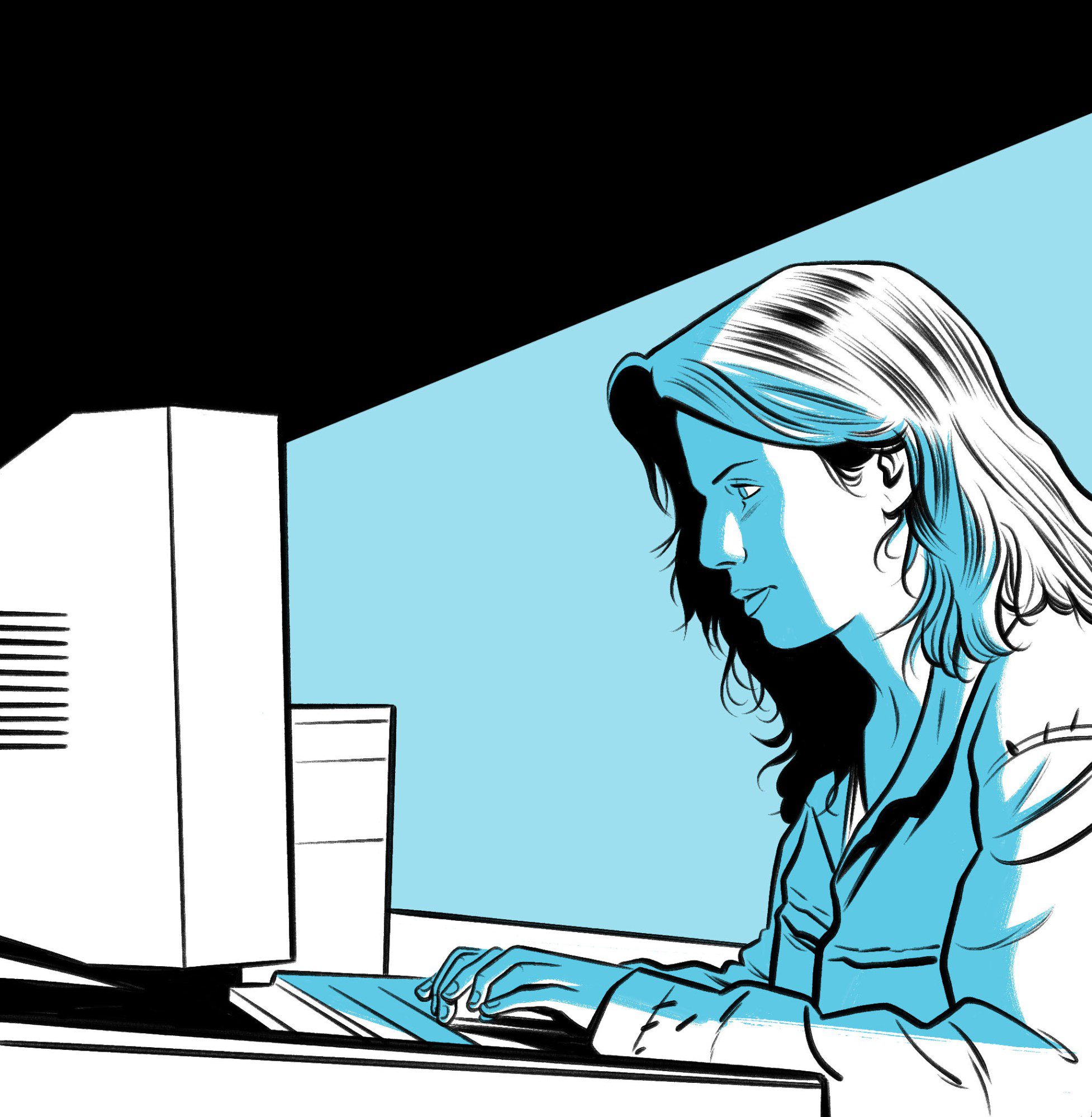
Thirty years ago, Irwin Winkler’s proto–cyber thriller, The Net, was released. It was 1995, commonly regarded as the year Hollywood discovered the internet. Sandra Bullock played a social recluse and computer nerd for hire named Angela Bennett, who unwittingly uncovers a sinister computer security conspiracy. She soon finds her life turned upside down as the conspiracists begin systematically destroying her credibility and reputation. Her job, home, finances, and very identity are seemingly erased with some judicial tweaks to key computer records.

Bennett is uniquely—conveniently, perhaps—well positioned for this identity annihilation. Her mother, in the throes of dementia, no longer recognizes her; she works from home for clients who have never met her; her social circle is limited to an online chat room; she orders takeout from Pizza.net; her neighbors don’t even know what she looks like. Her most reliable companion is the screen in front of her. A wild, unimaginable scenario that I’m sure none of us can relate to.


“Just think about it. Our whole world is sitting there on a computer. It’s in the computer, everything: your DMV records, your Social Security, your credit cards, your medical records. It’s all right there. Everyone is stored in there. It’s like this little electronic shadow on each and every one of us, just begging for someone to screw with, and you know what? They’ve done it to me, and you know what? They’re gonna do it to you.”
—Angela Bennett, The Net


While the villain of The Net is ultimately a nefarious cybersecurity software company, the film’s preoccupying fear is much more fundamental: If all of our data is digitized, what happens if the people with access to that information tamper with it? Or weaponize it against us? 

This period of Hollywood’s flirtation with the internet is often referred to as the era of the technophobic thriller, but that’s a surface-level misreading. Techno-skeptic might be more accurate. These films were broadly positive and excited about new technology; it almost always played a role in how the hero saved the day. Their bigger concern was with the humans who had ultimate control of these tools, and what oversight and restrictions we should place on them.

In 2025, however, the most prescient part of The Net is Angela Bennett’s digital alienation. What was originally a series of plausible enough contrivances to make the theft of her identity more believable is now just part of our everyday lives. We all bank, shop, eat, work, and socialize without necessarily seeing another human being in person. And we’ve all been through covid lockdowns where that isolation was actively encouraged. For a whole generation of young people who lived through that, socializing face to face is not second nature. In 2023, the World Health Organization declared loneliness to be a pressing global health threat, estimating that one in four older adults experience social isolation and between 5% and 15% of adolescents experience loneliness. In the US, social isolation may threaten public health more seriously than obesity. 

The Net appeared at a time when the internet was only faintly understood as the new Wild West … In that sense, it remains a fascinating time capsule of a moment when the possibilities to come felt endless, the outlook cautiously optimistic.

We also spend increasing amounts of time looking at our phones, where finely tuned algorithms aggressively lobby for more and more of our ad-revenue-­generating attention. As Bennett warns: “Our whole lives are on the computer, and they knew that I could be vanished. They knew that nobody would care, that nobody would understand.” In this sense, in 2025 we are all Angela Bennett. As Bennett’s digital alienation makes her more vulnerable to pernicious actors, so too are we increasingly at risk from those who don’t have, and have never had, our best interests at heart. 

To blame technology entirely for a rise in loneliness—as many policymakers are doing—would be a mistake. While it is unquestionably playing a part in exacerbating the problem, its outsize role in our lives has always reflected larger underlying factors. In Multitudes: How Crowds Made the Modern World (2024), the journalist Dan Hancox examines the ways in which crowds have been demonized and othered by those in power and suggests that our alienation is much more structural: “Whether through government cuts or concessions to the expansive ambitions of private enterprise, a key reason we have all become a bit more crowd-shy in recent decades is the prolonged, top-down assault on public space and the wider public realm—what are sometimes called the urban commons. From properly funded libraries to pleasant, open parks and squares, free or affordable sports and leisure facilities, safe, accessible and cheap public transport, comfortable street furniture and free public toilets, and a vibrant, varied, uncommodified social and cultural life—all the best things about city life fall under the heading of the public realm, and all of them facilitate and support happy crowds rather than sad, alienated, stay-at-home loners.”

Nearly half a century ago Margaret Thatcher laid out the neoliberal consensus that would frame the next decades of individualism: “There’s no such thing as society. There are individual men and women and there are families. And no government can do anything except through people, and people must look after themselves first.” 

TOM HUMBERSTONE

In keeping with that philosophy, social connectivity has been outsourced to tech companies for which the attention economy is paramount. “The Algo” is our new, capricious god. If your livelihood depends on engagement, the temptation is to stop thinking about human connection when you post, and to think more about what will satisfy The Algo to ensure a good harvest. 

How much will you trust an AI chatbot powered by Meta to be your friend? Answers to this may vary. Even if you won’t, other people are already making close connections with “AI companions” or “falling in love” with ChatGPT. The rise of “cognitive offloading”—of people asking AI to do their critical thinking for them—is already well underway, with many high school and college students admitting to a deep reliance on the technology. 

Beyond the obvious concern that AI “friends” are hallucinating, unthinking, obsequious algorithms that will never challenge you in the way a real friend might, it’s also worth remembering who AI actually works for. Recently Elon Musk’s own AI chatbot, Grok, was given new edicts that caused it to cast doubt on the Holocaust and talk about “white genocide” in response to unrelated prompts—a reminder, if we needed it, that these systems are never neutral, never apolitical, and always at the command of those with their hands on the code. 

I’m fairly lucky. I live with my partner and have a decent community of friends. But I work from home and can spend the majority of the day not talking to anyone. I’m not immune to feeling isolated, anxious, and powerless as I stare unblinking at my news feed. I think we all feel it. We are all Angela Bennett. Weaponizing that alienation, as the antagonists of The Net do, can of course be used for identity theft. But it can also have much more deleterious applications: Our loneliness can be manipulated to make us consume more, work longer, turn against ourselves and each other. AI “friendships,” if engaged with uncritically, are only going to supercharge this disaffection and the ways in which it can be abused.

It doesn’t have to be this way. We can withhold our attention, practice healthier screen routines, limit our exposure to doomscrolling, refuse to engage with energy-guzzling AI, delete our accounts. But, crucially, we can also organize collectively IRL: join a union or a local club, ask our friends if they need to talk. Hopelessness is what those in power want us to feel, so resist it.

The Net appeared at a time when the internet was only faintly understood as the new Wild West. Before the dot-com boom and bust, before Web 2.0, before the walled gardens and the theory of a “dead internet.” In that sense, it remains a fascinating time capsule of a moment when the possibilities to come felt endless, the outlook cautiously optimistic.

We can also see The Net’s influence in modern screen-life films like Searching, Host, Unfriended, and The Den. But perhaps—hopefully—its most enduring legacy will be inviting us to go outside, touch grass, talk to another human being, and organize. 


“Find the others.”
—Douglas Rushkoff, Team Human (2019)


Tom Humberstone is a comic artist and illustrator based in Edinburgh.

Is this the electric grid of the future?

One morning in the middle of March, a slow-moving spring blizzard stalled above eastern Nebraska, pounding the state capital of Lincoln with 60-mile-per-hour winds, driving sleet, and up to eight inches of snow. Lincoln Electric System, the local electric utility, has approximately 150,000 customers. By lunchtime, nearly 10% of them were without power. Ice was accumulating on the lines, causing them to slap together and circuits to lock. Sustained high winds and strong gusts—including one recorded at the Lincoln airport at 74 mph—snapped an entire line of poles across an empty field on the northern edge of the city. 

Emeka Anyanwu kept the outage map open on his screen, refreshing it every 10 minutes or so while the 18 crews out in the field—some 75 to 80 line workers in totalstruggled to shrink the orange circles that stood for thousands of customers in the dark. This was already Anyanwu’s second major storm since he’d become CEO of Lincoln Electric, in January of 2024. Warm and dry in his corner office, he fretted over what his colleagues were facing. Anyanwu spent the first part of his career at Kansas City Power & Light (now called Evergy), designing distribution systems, supervising crews, and participating in storm response. “Part of my DNA as a utility person is storm response,” he says. In weather like this “there’s a physical toll of trying to resist the wind and maneuver your body,” he adds. “You’re working slower. There’s just stuff that can’t get done. You’re basically being sandblasted.” 

Lincoln Electric is headquartered in a gleaming new building named after Anyanwu’s predecessor, Kevin Wailes. Its cavernous garage, like an airplane hangar, is designed so that vehicles never need to reverse. As crews returned for a break and a dry change of clothes, their faces burned red and raw from the sleet and wind, their truck bumpers dripped ice onto the concrete floor. In a darkened control room, supervisors collected damage assessments, phoned or radioed in by the crews. The division heads above them huddled in a small conference room across the hall—their own outage map filling a large screen.

Emeka Anyanwu is CEO of Lincoln Electric System.
TERRY RATZLAFF

Anyanwu did his best to stay out of the way. “I sit on the storm calls, and I’ll have an idea or a thought, and I try not to be in the middle of things,” he says. “I’m not in their hair. I didn’t go downstairs until the very end of the day, as I was leaving the building—because I just don’t want to be looming. And I think, quite frankly, our folks do an excellent job. They don’t need me.” 

At a moment of disruption, Anyanwu chooses collaboration over control. His attitude is not that “he alone can fix it,” but that his team knows the assignment and is ready for the task. Yet a spring blizzard like this is the least of Anyanwu’s problems. It is a predictable disruption, albeit one of a type that seems to occur with greater frequency. What will happen soon—not only at Lincoln Electric but for all electric utilities—is a challenge of a different order. 

In the industry, they call it the “trilemma”: the seemingly intractable problem of balancing reliability, affordability, and sustainability. Utilities must keep the lights on in the face of more extreme and more frequent storms and fires, growing risks of cyberattacks and physical disruptions, and a wildly uncertain policy and regulatory landscape. They must keep prices low amid inflationary costs. And they must adapt to an epochal change in how the grid works, as the industry attempts to transition from power generated with fossil fuels to power generated from renewable sources like solar and wind, in all their vicissitudes.

Yet over the last year, the trilemma has turned out to be table stakes. Additional layers of pressure have been building—including powerful new technical and political considerations that would seem to guarantee disruption. The electric grid is bracing for a near future characterized by unstoppable forces and immovable objects—an interlocking series of factors so oppositional that Anyanwu’s clear-eyed approach to the trials ahead makes Lincoln Electric an effective lens through which to examine the grid of the near future. 

A worsening storm

The urgent technical challenge for utilities is the rise in electricity demand—the result, in part, of AI. In the living memory of the industry, every organic increase in load from population growth has been quietly matched by a decrease in load thanks to efficiency (primarily from LED lighting and improvements in appliances). No longer. Demand from new data centers, factories, and the electrification of cars, kitchens, and home heaters has broken that pattern. Annual load growth that had been less than 1% since 2000 is now projected to exceed 3%. In 2022, the grid was expected to add 23 gigawatts of new capacity over the next five years; now it is expected to add 128 gigawatts. 

The political challenge is one the world knows well: Donald Trump, and his appetite for upheaval. Significant Biden-era legislation drove the adoption of renewable energy across dozens of sectors. Broad tax incentives invigorated cleantech manufacturing and renewable development, government policies rolled out the red carpet for wind and solar on federal lands, and funding became available for next-generation energy tech including storage, nuclear, and geothermal. The Trump administration’s swerve would appear absolute, at least in climate terms. The government is slowing (if not stopping) the permitting of offshore and onshore wind, while encouraging development of coal and other fossil fuels with executive orders (though they will surely face legal challenges). Its declaration of an “energy emergency” could radically disrupt the electric grid’s complex regulatory regime—throwing a monkey wrench into the rules by which utilities play. Trump’s blustery rhetoric on its own emboldens some communities to fight harder against new wind and solar projects, raising costs and uncertainty for developers—perhaps past the point of viability. 

And yet the momentum of the energy transition remains substantial, if not unstoppable. The US Energy Information Administration’s published expectations for 2025, released in February, include 63 gigawatts of new utility-scale generation—93% of which will be solar, wind, or storage. In Texas, the interconnection queue (a leading indicator of what will be built) is about 92% solar, wind, and storage. What happens next is somehow both obvious and impossible to predict. The situation amounts to a deranged swirl of macro dynamics, a dilemma inside the trilemma, caught in a political hurricane. 

A microcosm

What is a CEO to do? Anyanwu got the LES job in part by squaring off against the technical issues while parrying the political ones. He grew up professionally in “T&D,” transmission and distribution, the bread and butter of the grid. Between his time in Kansas City and Lincoln, he led Seattle City Light’s innovation efforts, working on the problems of electrification, energy markets, resource planning strategy, cybersecurity, and grid modernization.  

LES’s indoor training facility accommodates a 50-foot utility pole and dirt-floor instruction area, for line workers to practice repairs.
TERRY RATZLAFF

His charisma takes a notably different form from the visionary salesmanship of the startup CEO. Anyanwu exudes responsibility and stewardship—key qualities in the utility industry. A “third culture kid,” he was born in Ames, Iowa, where his Nigerian parents had come to study agriculture and early childhood education. He returned with them to Nigeria for most of his childhood before returning himself to Iowa State University. He is 45 years old and six feet two inches tall, and he has three children under 10. At LES’s open board meetings, in podcast interviews, and even when receiving an industry award, Anyanwu has always insisted that credit and commendation are rightly shared by everyone on the team. He builds consensus with praise and acknowledgment. After the blizzard, he thanked the Lincoln community for “the grace and patience they always show.”  

Nebraska is the only 100% “public power state,” with utilities owned and managed entirely by the state’s own communities.

The trilemma won’t be easy for any utility, yet LES is both special and typical. It’s big enough to matter, but small enough to manage. (Pacific Gas & Electric, to take one example, has about 37 times as many customers.) It is a partial owner in three large coal plants—the most recent of which opened in 2007—and has contracts for 302 megawatts of wind power. It even has a gargantuan new data center in its service area; later this year, Google expects to open a campus on some 580 acres abutting Interstate 80, 10 minutes from downtown. From a technical standpoint, Anyanwu leads an organization whose situation is emblematic of the challenges and opportunities utilities face today.

Equally interesting is what Lincoln Electric is not: a for-profit utility. Two-thirds of Americans get their electricity from “investor-­owned utilities,” while the remaining third are served by either publicly owned nonprofits like LES or privately owned nonprofit cooperatives. But Nebraska is the only 100% “public power state,” with utilities owned and managed entirely by the state’s own communities. They are governed by local boards and focused fully on the needs—and aspirations—of their customers. “LES is public power and is explicitly serving the public interest,” says Lucas Sabalka, a local technology executive who serves as the unpaid chairman of the board. “LES tries very, very hard to communicate that public interest and to seek public input, and to make sure that the public feels like they’re included in that process.” Civic duty sits at the core.

“We don’t have a split incentive,” Anyanwu says. “We’re not going to do something just to gobble up as many rate-based assets as we can earn on. That’s not what we do—it’s not what we exist to do.” He adds, “Our role as a utility is stewardship. We are the diligent and vigilant agents of our community.” 

A political puzzle

In 2020, over a series of open meetings that sometimes drew 200 people, the public encouraged the LES board to adopt a noteworthy resolution: Lincoln Electric’s generation portfolio would reach net-zero carbon emissions by 2040. It wasn’t alone; Nebraska’s other two largest utilities, the Omaha Public Power District and the Nebraska Public Power District, adopted similar nonbinding decarbonization goals. 

These goals build on a long transition toward cleaner energy. Over the last decade, Nebraska’s energy sector has been transformed by wind power, which in 2023 provided 30% of its net generation. That’s been an economic boon for a state that is notably oil-poor compared with its neighbors. 

But at the same time, the tall turbines have become a cultural lightning rod—both for their appearance and for the way they displace farmland (much of which, ironically, was directed toward corn for production of ethanol fuel). That dynamic has intensified since Trump’s second election, with both solar and wind projects around the state facing heightened community opposition. 

Following the unanimous approval by Lancaster County commissioners of a 304-megawatt solar plant outside Lincoln, one of the largest in the state, local opponents appealed. The project’s developer, the Florida-based behemoth NextEra Energy Resources, made news in March when its CEO both praised the Trump administration’s policy and insisted that solar and storage remained the fastest path to increasing the energy supply.  

Lincoln Electric is headquartered in a gleaming new building named after Anyanwu’s predecessor, Kevin Wailes.
TERRY RATZLAFF

Nebraska is, after all, a red state, where only an estimated 66% of adults think global warming is happening, according to a survey from the Yale Program on Climate Change Communication. President Trump won almost 60% of the vote statewide, though only 47% of the vote in Lancaster County—a purple dot in a sea of red. 

“There are no simple answers,” Anyanwu says, with characteristic measure. “In our industry there’s a lot of people trying to win an ideological debate, and they insist on that debate being binary. And I think it should be pretty clear to most of us—if we’re being intellectually honest about this—that there isn’t a binary answer to anything.”

The new technical frontier

What there are, are questions. The most intractable of them—how to add capacity without raising costs or carbon emissions—came to a head for LES starting in April 2024. Like almost all utilities in the US, LES relies on an independent RTO, or regional transmission organization, to ensure reliability by balancing supply and demand and to run an electricity market (among other roles). The principle is that when the utilities on the grid pool both their load and their generation, everyone benefits—in terms of both reliability and economic efficiency. “Think of the market like a potluck,” Anyanwu says. “Everyone is supposed to bring enough food to feed their own family—but the compact is not that their family eats the food.” Each utility must come to the market with enough capacity to serve its peak loads, even as the electrons are all pooled together in a feast that can feed many. (The bigger the grid, the more easily it absorbs small fluctuations or failures.)

But today, everyone is hungrier. And the oven doesn’t always work. In an era when the only real variable was whether power plants were switched on or off, determining capacity was relatively straightforward: A 164-megawatt gas or coal plant could, with reasonable reliability, be expected to produce 164 megawatts of power. Wind and solar break that model, even though they run without fuel costs (or carbon emissions). “Resource adequacy,” as the industry calls it, is a wildly complex game of averages and expectations, which are calculated around the seasonal peaks when a utility has the highest load. On those record-breaking days, keeping the lights on requires every power plant to show up and turn on. But solar and wind don’t work that way. The summer peak could be a day when it’s cloudy and calm; the winter peak will definitely be a day when the sun sets early. Coal and gas plants are not without their own reliability challenges. They frequently go offline for maintenance. And—especially in winter—the system of underground pipelines that supply gas is at risk of freezing and cannot always keep up with the stacked demand from home heating customers and big power plants. 

Politics had suddenly become beside the point; the new goal was to keep the lights—and the AI data centers—on.

Faced with a rapidly changing mix of generation resources, the Southwest Power Pool (SPP), the RTO responsible for a big swath of the country including Nebraska, decided that prudence should reign. In August 2024, SPP changed its “accreditations”—the expectation for how much electricity each power plant, of every type, could be counted on to contribute on those peak days. Everything would be graded on a curve. If your gas plant had a tendency to break, it would be worth less. If you had a ton of wind, it would count more for the winter peak (when it’s windier) than for the summer. If you had solar, it would count more in summer (when the days are longer and brighter) than in winter.

The new rules meant LES needed to come to the potluck with more capacity—calculated with a particular formula of SPP’s devising. It was as if a pound of hamburgers was decreed to feed more people than a pound of tofu. Clean power and environmental advocacy groups jeered the changes, because they so obviously favored fossil-fuel generation while penalizing wind and solar. (Whether this was the result of industry lobbying, embedded ideology, or an immature technical understanding was not clear.) But resource adequacy is difficult to argue with. No one will risk a brownout. 

In the terms of the trilemma, this amounted to the stick of reliability beating the horse of affordability, while sustainability stood by and waited for its turn. Politics had suddenly become beside the point; the new goal was to keep the lights—and the AI data centers—on. 

Navigating a way forward 

But what to do? LES can lobby against SPP’s rules, but it must follow them. The community can want what it wants, but the lights must stay on. Hard choices are coming. “We’re not going to go out and spend money we shouldn’t or make financially imprudent decisions because we’re chasing a goal,” Anyanwu says of the resolution to reach net zero by 2040. “We’re not going to compromise reliability to do any of that. But within the bounds of those realities, the community does get to make a choice and say, ‘Hey, this is important to us. It matters to us that we do these things.’” As part of a strategic planning process, LES has begun a broad range of surveys and community meetings. Among other questions, respondents are asked to rank reliability, affordability, and sustainability “in order of importance.”

Lincoln Electric commissioned Nebraska’s first wind turbines in the late ’90s. They were decommissioned in July 2024.
TERRY RATZLAFF

What becomes visible is the role of utilities as stewards—of their infrastructure, but also of their communities. Amid the emphasis on innovative technologies, on development of renewables, on the race to power data centers, it is local utilities that carry the freight of the energy transition. While this is often obscured by the way they are beholden to their quarterly stock price, weighed down by wildfire risk, or operated as regional behemoths that seem to exist as supra-political entities, a place like Lincoln Electric reveals both the possibilities and the challenges ahead.

“The community gets to dream a little bit, right?” says Anyanwu. Yet “we as the technical Debbie Downers have to come and be like, ‘Well, okay, here’s what you want, and here’s what we can actually do.’ And we’re tempering that dream.”

“But you don’t necessarily want a community that just won’t dream at all, that doesn’t have any expectations and doesn’t have any aspirations,” he adds. For Anyanwu, that’s the way through: “I’m willing to help us as an organization dream a little bit—be aspirational, be ambitious, be bold. But at my core and in my heart, I’m a utility operations person.” 

Andrew Blum is the author of Tubes and The Weather Machine. He is currently at work on a book about the infrastructure of the energy transition.

Inside the US power struggle over coal

Coal power is on life support in the US. It used to carry the grid with cheap electricity, but now plants are closing left and right.

There are a lot of potential reasons to let coal continue its journey to the grave. Carbon emissions from coal plants are a major contributor to climate change. And those facilities are also often linked with health problems in nearby communities, as reporter Alex Kaufman explored in a new feature story on Puerto Rico’s only coal-fired power plant.

But the Trump administration wants to keep coal power alive, and the US Department of Energy recently ordered some plants to stay open past their scheduled closures. Here’s why there’s a power struggle over coal.

Coal used to be king in the US, but the country has dramatically reduced its dependence on the fuel over the past two decades. It accounted for about 20% of the electricity generated in 2024, down from roughly half in 2000.

While the demise of coal has been great for US emissions, the real driver is economics. Coal used to be the cheapest form of electricity generation around, but the fracking boom handed that crown to natural gas over a decade ago. And now, even cheaper wind and solar power is coming online in droves.

Economics was a major factor in the planned retirement of the J.H. Campbell coal plant in Michigan, which was set to close at the end of May, Dan Scripps, chair of the Michigan Public Service Commission, told the Washington Post.

Then, on May 23, US Energy Secretary Chris Wright released an emergency order that requires the plant to remain open. Wright’s order mandates 90 more days of operation, and the order can be extended past that, too. It states that the goal is to minimize the risk of blackouts and address grid security issues before the start of summer.

The DOE’s authority to require power plants to stay open is something that’s typically used in emergencies like hurricanes, rather than in response to something as routine as … seasons changing. 

It’s true that there’s growing concern in the US about meeting demand for electricity, which is rising for the first time after being basically flat for decades. (The recent rise is in large part due to massive data centers, like those needed to run AI. Have I mentioned we have a great package on AI and energy?)

And we are indeed heading toward summer, which is when the grid is stretched to its limits. In the New York area, the forecast high is nearly 100 °F (38 °C) for several days next week—I’ll certainly have my air conditioner on, and I’m sure I’ll soon be getting texts asking me to limit electricity use during times of peak demand.

But is keeping old coal plants open the answer to a stressed grid?

It might not be the most economical way forward. In fact, in almost every case today, it’s actually cheaper to build new renewables capacity than to keep existing coal plants running in the US, according to a 2023 report from Energy Innovation, an energy think tank. And coal is only getting more expensive—in an updated analysis, Energy Innovation found that three-quarters of coal plants saw costs rising faster than inflation between 2021 and 2024.

Granted, solar and wind aren’t always available, while coal plants can be fired up on demand. And getting new projects built and connected to the grid will take time (right now, there’s a huge backlog of renewable projects waiting in the interconnection queue). But some experts say we actually don’t need new generation that urgently anyway, if big electricity users can be flexible with their demand

And we’re already seeing batteries come to the rescue on the grid at times of stress. Between May 2024 and April 2025, US battery storage capacity increased by about 40%. When Texas faced high temperatures last month, batteries did a lot to help the state make it through without blackouts, as this Bloomberg story points out. Costs are falling, too; prices are about 19% lower in 2024 than they were in 2023. 

Even as the Trump administration is raising concerns about grid reliability, it’s moved to gut programs designed to get more electricity generation and storage online, like the tax credits that support wind, solar, and battery production and installation. 

This article is from The Spark, MIT Technology Review’s weekly climate newsletter. To receive it in your inbox every Wednesday, sign up here.