OpenAI: The power and the pride

In April, Paul Graham, the founder of the tech startup accelerator Y Combinator, sent a tweet in response to former YC president and current OpenAI CEO Sam Altman. Altman had just bid a public goodbye to GPT-4 on X, and Graham had a follow-up question. 

“If you had [GPT-4’s model weights] etched on a piece of metal in the most compressed form,” Graham wrote, referring to the values that determine the model’s behavior, “how big would the piece of metal have to be? This is a mostly serious question. These models are history, and by default digital data evaporates.” 

There is no question that OpenAI pulled off something historic with its release of ChatGPT 3.5 in 2022. It set in motion an AI arms race that has already changed the world in a number of ways and seems poised to have an even greater long-term effect than the short-term disruptions to things like education and employment that we are already beginning to see. How that turns out for humanity is something we are still reckoning with and may be for quite some time. But a pair of recent books both attempt to get their arms around it with accounts of what two leading technology journalists saw at the OpenAI revolution. 

In Empire of AI: Dreams and Nightmares in Sam Altman’s OpenAI, Karen Hao tells the story of the company’s rise to power and its far-reaching impact all over the world. Meanwhile, The Optimist: Sam Altman, OpenAI, and the Race to Invent the Future, by the Wall Street Journal’s Keach Hagey, homes in more on Altman’s personal life, from his childhood through the present day, in order to tell the story of OpenAI. Both paint complex pictures and show Altman in particular as a brilliantly effective yet deeply flawed creature of Silicon Valley—someone capable of always getting what he wants, but often by manipulating others. 

Hao, who was formerly a reporter with MIT Technology Review, began reporting on OpenAI while at this publication and remains an occasional contributor. One chapter of her book grew directly out of that reporting. And in fact, as Hao says in the acknowledgments of Empire of AI, some of her reporting for MIT Technology Review, a series on AI colonialism, “laid the groundwork for the thesis and, ultimately, the title of this book.” So you can take this as a kind of disclaimer that we are predisposed to look favorably on Hao’s work. 

With that said, Empire of AI is a powerful work, bristling not only with great reporting but also with big ideas. This comes across in service to two main themes. 

The first is simple: It is the story of ambition overriding ethics. The history of OpenAI as Hao tells it (and as Hagey does too) is very much a tale of a company that was founded on the idealistic desire to create a safety-focused artificial general intelligence but instead became more interested in winning. This is a story we’ve seen many times before in Big Tech. See Theranos, which was going to make diagnostics easier, or Uber, which was founded to break the cartel of “Big Taxi.” But the closest analogue might be Google, which went from “Don’t be evil” to (at least in the eyes of the courts) illegal monopolist. For that matter, consider how Google went from holding off on releasing its language model as a consumer product out of an abundance of caution to rushing a chatbot out the door to catch up with and beat OpenAI. In Silicon Valley, no matter what one’s original intent, it always comes back to winning.  

The second theme is more complex and forms the book’s thesis about what Hao calls AI colonialism. The idea is that the large AI companies act like traditional empires, siphoning wealth from the bottom rungs of society in the forms of labor, creative works, raw materials, and the like to fuel their ambition and enrich those at the top of the ladder. “I’ve found only one metaphor that encapsulates the nature of what these AI power players are: empires,” she writes.

“During the long era of European colonialism, empires seized and extracted resources that were not their own and exploited the labor of the people they subjugated to mine, cultivate, and refine those resources for the empires’ enrichment.” She goes on to chronicle her own growing disillusionment with the industry. “With increasing clarity,” she writes, “I realized that the very revolution promising to bring a better future was instead, for people on the margins of society, reviving the darkest remnants of the past.” 

To document this, Hao steps away from her desk and goes out into the world to see the effects of this empire as it sprawls across the planet. She travels to Colombia to meet with data labelers tasked with teaching AI what various images show, one of whom she describes sprinting back to her apartment for the chance to make a few dollars. She documents how workers in Kenya who performed data-labeling content moderation for OpenAI came away traumatized by seeing so much disturbing material. In Chile she documents how the industry extracts precious resources—water, power, copper, lithium—to build out data centers. 

She lands on the ways people are pushing back against the empire of AI across the world. Hao draws lessons from New Zealand, where Maori people are attempting to save their language using a small language model of their own making. Trained on volunteers’ voice recordings and running on just two graphics processing units, or GPUs, rather than the thousands employed by the likes of OpenAI, it’s meant to benefit the community, not exploit it. 

Hao writes that she is not against AI. Rather: “What I reject is the dangerous notion that broad benefit from AI can only be derived from—indeed will ever emerge from—a vision of the technology that requires the complete capitulation of our privacy, our agency, and our worth, including the value of our labor and art, toward an ultimately imperial centralization project … [The New Zealand model] shows us another way. It imagines how AI could be exactly the opposite. Models can be small and task-specific, their training data contained and knowable, ridding the incentives for widespread exploitative and psychologically harmful labor practices and the all-consuming extractivism of producing and running massive supercomputers.” 

Hagey’s book is more squarely focused on Altman’s ambition, which she traces back to his childhood. Yet interestingly, she also  zeroes in on the OpenAI CEO’s attempt to create an empire. Indeed, “Altman’s departure from YC had not slowed his civilization-building ambitions,” Hagey writes. She goes on to chronicle how Altman, who had previously mulled a run for governor of California, set up experiments with income distribution via Tools for Humanity, the parent company of Worldcoin. She quotes Altman saying of it, “I thought it would be interesting to see … just how far technology could accomplish some of the goals that used to be done by nation-states.” 

Overall, The Optimist is the more straightforward business biography of the two. Hagey has packed it full with scoops and insights and behind-the-scenes intrigue. It is immensely readable as a result, especially in the second half, when OpenAI really takes over the story. Hagey also seems to have been given far more access to Altman and his inner circles, personal and professional, than Hao did, and that allows for a fuller telling of the CEO’s story in places. For example, both writers cover the tragic story of Altman’s sister Annie, her estrangement from the family, and her accusations in particular about suffering sexual abuse at the hands of Sam (something he and the rest of the Altman family vehemently deny). Hagey’s telling provides a more nuanced picture of the situation, with more insight into family dynamics. 

Hagey concludes by describing Altman’s reckoning with his role in the long arc of human history and what it will mean to create a “superintelligence.” His place in that sweep is something that clearly has consumed the CEO’s thoughts. When Paul Graham asked about preserving GPT-4, for example, Altman had a response at the ready. He replied that the company had already considered this, and that the sheet of metal would need to be 100 meters square.

The Download: the story of OpenAI, and making magnesium

This is today’s edition of The Download, our weekday newsletter that provides a daily dose of what’s going on in the world of technology.

OpenAI: The power and the pride

OpenAI’s release of ChatGPT 3.5 set in motion an AI arms race that has changed the world.

How that turns out for humanity is something we are still reckoning with and may be for quite some time. But a pair of recent books both attempt to get their arms around it.

In Empire of AI: Dreams and Nightmares in Sam Altman’s OpenAI, Karen Hao tells the story of the company’s rise to power and its far-reaching impact all over the world. Meanwhile, The Optimist: Sam Altman, OpenAI, and the Race to Invent the Future, by the Wall Street Journal’s Keach Hagey, homes in more on Altman’s personal life, from his childhood through the present day, in order to tell the story of OpenAI. 

Both paint complex pictures and show Altman in particular as a brilliantly effective yet deeply flawed creature of Silicon Valley—someone capable of always getting what he wants, but often by manipulating others. Read the full review.

—Mat Honan

This startup wants to make more climate-friendly metal in the US

The news: A California-based company called Magrathea just turned on a new electrolyzer that can make magnesium metal from seawater. The technology has the potential to produce the material, which is used in vehicles and defense applications, with net-zero greenhouse-gas emissions.

Why it matters: Today, China dominates production of magnesium, and the most common method generates a lot of the emissions that cause climate change. If Magrathea can scale up its process, it could help provide an alternative source of the metal and clean up industries that rely on it, including automotive manufacturing. Read the full story.

—Casey Crownhart

A new sodium metal fuel cell could help clean up transportation

A new type of fuel cell that runs on sodium metal could one day help clean up sectors where it’s difficult to replace fossil fuels, like rail, regional aviation, and short-distance shipping. The device represents a departure from technologies like lithium-based batteries and is more similar conceptually to hydrogen fuel cell systems.
 
The sodium-air fuel cell has a higher energy density than lithium-ion batteries and doesn’t require the super-cold temperatures or high pressures that hydrogen does, making it potentially more practical for transport. Read the full story.

—Casey Crownhart

The must-reads

I’ve combed the internet to find you today’s most fun/important/scary/fascinating stories about technology.

1 The US state department is considering vetting foreign students’ social media
After ordering US embassies to suspend international students’ visa appointments. (Politico)
+ Applicants’ posts, shares and comments could be assessed. (The Guardian)
+ The Trump administration also wants to cut off Harvard’s funding. (NYT $)

2 SpaceX’s rocket exploded during its test flight 
It’s the third consecutive explosion the company has suffered this year. (CNBC)
+ It was the first significant attempt to reuse Starship hardware. (Space)
+ Elon Musk is fairly confident the problem with the engine bay has been resolved. (Ars Technica)

3 The age of AI layoffs is here
And it’s taking place in conference rooms, not on factory floors. (Quartz)
+ People are worried that AI will take everyone’s jobs. We’ve been here before. (MIT Technology Review)

4 Thousands of IVF embryos in Gaza were destroyed by Israeli strikes

An attack destroyed the fertility clinic where they were housed. (BBC)
+ Inside the strange limbo facing millions of IVF embryos. (MIT Technology Review)

5 China’s overall greenhouse gas emissions have fallen for the first time
Even as energy demand has risen. (Vox)
+ China’s complicated role in climate change. (MIT Technology Review)

6 The sun is damaging Starlink’s satellites
Its eruptions are reducing the satellite’s lifespans. (New Scientist $)
+ Apple’s satellite connectivity dreams are being thwarted by Musk. (The Information $)

7 European companies are struggling to do business in China
Even the ones that have operated there for decades. (NYT $)
+ The country’s economic slowdown is making things tough. (Bloomberg $)

8 US hospitals are embracing helpful robots
They’re delivering medications and supplies so nurses don’t have to. (FT $)
+ Will we ever trust robots? (MIT Technology Review)

9 Meet the people who write the text messages on your favorite show 💬
They try to make messages as realistic, and intriguing, as possible. (The Guardian)

10 Robot dogs are delivering parcels in Austin
Well, over 100 yard distances at least. (TechCrunch)

Quote of the day

“I wouldn’t say there’s hope. I wouldn’t bet on that.”

—Michael Roll, a partner at law firm Roll & Harris, explains to Wired why businesses shouldn’t get their hopes up over obtaining refunds for Donald Trump’s tariff price hikes.

One more thing

Is the digital dollar dead?

In 2020, digital currencies were one of the hottest topics in town. China was well on its way to launching its own central bank digital currency, or CBDC, and many other countries launched CBDC research projects, including the US.

How things change. The digital dollar—even though it doesn’t exist—has now become political red meat, as some politicians label it a dystopian tool for surveillance. So is the dream of the digital dollar dead? Read the full story.

—Mike Orcutt

We can still have nice things

A place for comfort, fun and distraction to brighten up your day. (Got any ideas? Drop me a line or skeet ’em at me.)

+ Recently returned from vacation? Here’s how to cope with coming back to reality.
+ Reconnecting with friends is one of life’s great joys.
+ A new Parisian cocktail bar has done away with ice entirely in a bid to be more sustainable.
+ Why being bored is good for you—no, really.

The AI Hype Index: College students are hooked on ChatGPT

Separating AI reality from hyped-up fiction isn’t always easy. That’s why we’ve created the AI Hype Index—a simple, at-a-glance summary of everything you need to know about the state of the industry.

Large language models confidently present their responses as accurate and reliable, even when they’re neither of those things. That’s why we’ve recently seen chatbots supercharge vulnerable people’s delusions, make citation mistakes in an important legal battle between music publishers and Anthropic, and (in the case of xAI’s Grok) rant irrationally about “white genocide.”

But it’s not all bad news—AI could also finally lead to a better battery life for your iPhone and solve tricky real-world problems that humans have been struggling to crack, if Google DeepMind’s new model is any indication. And perhaps most exciting of all, it could combine with brain implants to help people communicate when they have lost the ability to speak.

Charts: U.S. Retail Ecommerce Sales Q1 2025

Retail ecommerce growth in the U.S. lagged brick-and-mortar in the first quarter of this year, according to new data from the Department of Commerce (PDF).  In Q1 2025, total U.S. retail sales — online and in-store — reached $1.86 trillion, a 0.4% increase from Q4 2024, while online sales declined by 0.04% to $300.2 billion.

Ecommerce sales, per the DoC, are for “goods and services where the buyer places an order (or the price and terms of the sale are negotiated) over an Internet, mobile device, extranet, electronic data interchange network, electronic mail, or other comparable online system. Payment may or may not be made online.”

Ecommerce accounted for 16.2% of total U.S. retail sales in Q1 2025, unchanged from the prior quarter.

The DoC reports U.S. retail ecommerce sales in Q1 2025 grew by 6.1% compared to the same quarter in 2024, while total retail sales experienced a 4.5% annual rise over the same period.

Google Fixes AI Mode Traffic Attribution Bug via @sejournal, @MattGSouthern

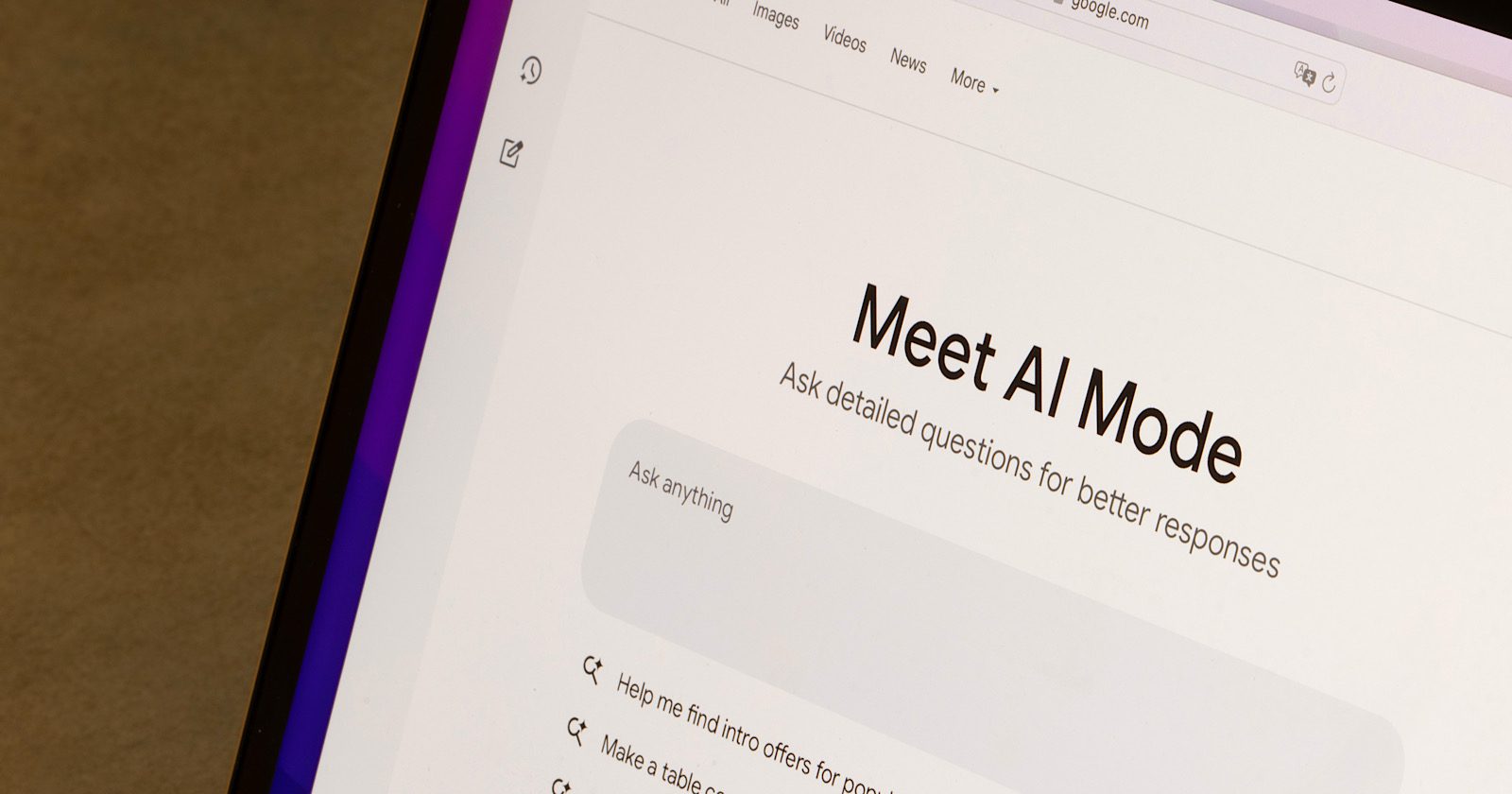
Google has fixed a bug that caused AI Mode search traffic to be reported as “direct traffic” instead of “organic traffic” in Google Analytics.

The problem started last week. Google was adding a special code (rel=”noopener noreferrer”) to links in its AI Mode search results. This code caused Google Analytics to incorrectly attribute traffic to websites, rather than from Google search.

Reports from Aleyda Solis, Founder at Orainti, and others in the SEO community confirm the issue is resolved.

Discovery of the Attribution Problem

Maga Sikora, an SEO director specializing in AI search, first identified the issue. She warned other marketers:

“Traffic from Google’s AI Mode is being tagged as direct in GA — not organic, as Google adds a rel=’noopener noreferrer’ to those links. Keep this in mind when reviewing your reports.”

The noreferrer code is typically used for security purposes. However, in this case, it was blocking Google Analytics from tracking the actual source of the traffic.

Google Acknowledges the Bug

John Mueller, Search Advocate at Google, quickly responded. He suggested it was a mistake on Google’s end, stating:

“My assumption is that this will be fixed; it looks like a bug on our side.”

Mueller also explained that Search Console doesn’t currently display AI Mode data, but it will be available soon.

He added:

“We’re updating the documentation to reflect this will be showing soon as part of the AI Mode rollout.”

Rapid Resolution & Current Status

Google fixed the problem within days.

Solis confirmed the fix:

“I don’t see the ‘noreferrer’ in Google’s AI Mode links anymore.”

She’s now seeing AI Mode data in her analytics and is verifying that traffic is correctly labeled as “organic” instead of “direct.”

Impact on SEO Reporting

The bug may have affected your traffic data for several days. If your site received AI Mode traffic during this period, some of your “direct” traffic may have been organic search traffic.

This misclassification could have:

  • Skewed conversion tracking
  • Affected budget decisions
  • Made SEO performance look worse than it was
  • Hidden the true impact of AI Mode on your site

What To Do Now

Here’s your action plan:

  1. Audit recent traffic data – Check for unusual spikes in direct traffic from the past week
  2. Document the issue – Note the affected dates for future reference
  3. Adjust reporting – Consider adding notes to client reports about the temporary bug
  4. Prepare for AI Mode tracking – Start planning how to measure this new traffic source

Google’s prompt response shows it understands the importance of accurate data for marketers.


Featured Image: Tada Images/Shutterstock

Is SEO Still Relevant In The AI Era? New Research Says Yes via @sejournal, @MattGSouthern

New research analyzing 25,000 user searches found that websites ranked #1 on Google appear in AI search answers 25% of the time.

This data demonstrates that traditional SEO remains relevant, despite claims that AI has rendered it obsolete.

Tomasz Rudzki, co-founder of ZipTie, studied real searches across ChatGPT, Perplexity, and Google’s AI Overviews. His findings challenge the widespread belief that AI makes traditional SEO pointless.

Top Rankings Translate To AI Visibility

The data shows a clear pattern: if you rank #1 on Google, you have a 1-in-4 chance of appearing in AI search results. Lower rankings result in lower chances.

Rudzki stated:

“The higher you rank in Google’s top 10, the more likely you are to appear in AI search results across platforms. This isn’t speculation – it’s based on real queries from real users.”

The pattern holds across all major AI search platforms, suggesting that they all rely on traditional rankings when selecting sources.

How AI Search Engines Select Sources

The study detailed how AI search operates, using information from Google’s antitrust trial. The process involves three main steps:

Step 1: Pre-selection
AI systems identify the best documents for each query, favoring pages with higher Google rankings.

Step 2: Content Extraction
The AI extracts relevant information from these top-ranking pages, prioritizing content that directly answers the user’s question.

Step 3: AI Synthesis
The AI synthesizes this information into one clear answer, utilizing Google’s Gemini model for this step.

Google’s internal documents from the trial confirmed a critical fact: using top-ranking content enhances the accuracy of AI responses, which explains why traditional rankings continue to be so significant.

The Query Fan-Out Effect Explained

Sometimes, you’ll come across sources that don’t make it into the top 10. Research identified two reasons why:

Reason 1: Personalization

Search results differ by user. A page might rank high for one user but not for another.

Reason 2: Query Fan-Out

This is the more significant factor. According to Google’s documentation:

“Both AI Overviews and AI Mode may use a ‘query fan-out’ technique — issuing multiple related searches across subtopics and data sources — to develop a response.”

Here’s what that means in simple terms:

When you search for “SEO vs SEM,” the AI discreetly runs multiple searches:

  • “What is SEO?”
  • “SEO explained”
  • “What is PP?C”
  • Plus several other related searches

Pages that perform well for these additional searches can appear in results even if they don’t rank for your primary search.

The research shows we need to think differently about content.

Traditional SEO focused on creating the “best page.” This meant comprehensive guides covering everything about a topic.

AI search wants the “best answer.” This means specific, focused responses to exact questions.

The analysis notes:

“When someone asks specifically about iPhone 15 battery life, you may rank top 1 in Google, but AI doesn’t care about it if you don’t provide a precise, relevant answer to that exact question.”

Marketers need to shift from keyword optimization to answering real questions.

Practical Implications For Digital Marketers

Here’s what marketers should do based on these findings:

  • Continue your SEO efforts: Top 10 rankings directly impact AI visibility. Do not abandon your SEO strategies.
  • Restructure your content: Divide lengthy guides into sections that address specific questions.
  • Target related searches: Optimize for various versions of your main keywords.
  • Write clearly: AI systems favor straightforward answers over content loaded with keywords.
  • Track everything: Monitor your visibility in both traditional and AI search results.

Industry Impact and Future Considerations

This research comes at the perfect time. AI search is growing rapidly. Understanding how it connects to traditional rankings gives you an edge.

Consider this: Only 25% of #1-ranked content appears in AI results. That means 75% is missing out. This suggests an opportunity for marketers who adapt.

Rudzki concludes:

“Instead of asking ‘How do I rank higher?’ start asking ‘How do I better serve users who have specific questions?’ That mindset shift is the key to thriving in the AI search era.”

For an industry experiencing rapid adoption of AI, these findings provide a strong foundation for informed strategic decisions. Instead of abandoning SEO practices, the evidence suggests building on what already works.


Featured Image: Tada Images/Shutterstock

The beginner’s guide to SEO reporting

When you work on your site’s SEO, reflecting on those efforts should be part of your ongoing strategy. Whether it’s for a client, your manager, or your team, creating an SEO report is the best way to do so. This helps you justify your efforts, keep track of performance and figure out what needs to be tackled next. And it’s not as hard as you would think. In this blog post, we’ll explain what SEO reporting is and take you through the process step by step.

Table of contents

Search engine optimization (SEO) helps drive more traffic to your site and improve your brand image. It should be part of anyone’s marketing strategy whose goal is to grow their (online) audience. Originally focused on performance in organic search, SEO now entails much more than that. It helps you build a strong brand name, become an authority in your field, and be visible on the platforms where your audience can be found. All this is to increase customer loyalty and grow your business.

What is SEO reporting exactly?

SEO reporting is best described as evaluating your online marketing efforts and presenting the outcomes in a report. This can be a report you create for yourself, your team, management, or a client. Often, a company has a specific template they use to do SEO reporting regularly (for example, every month). This can be in the form of a slide deck, online document, Excel sheet, or online dashboard. But it can also be any other reporting tool you feel comfortable with or your company uses for presentations.

In an SEO report, you will find metrics related to a website’s performance and other marketing activities related to SEO. This helps you track how your SEO strategy is performing and where tweaks are needed. That’s why an important part of any SEO report is the interpretation of metrics and conclusions that come out of that.

What to include in your SEO report

Whether you’re creating an SEO report for internal use, or for your client(s), it’s good to have a template. This allows you to compare recent findings with earlier ones, regardless of the frequency with which you’ll be reporting. Of course, you can make changes to this template along the way. But having a template saves you time and helps you recognize bigger issues and opportunities over time.

Naturally, it depends on your business goals what should be in your SEO report. The most important thing is that your SEO report reflects your (or your client’s) goals. This is to understand how your marketing efforts are contributing to reaching these goals and what actions need to be taken. But there are a few basics that most of us will want to include.

A general data overview

Start with an overview of the most important data for your business or website. This gives you an idea of how you’re doing right away. Especially when you’re reporting regularly, this overview will tell you or your client how the website (and online business) is performing. You can also choose to include data from the previous period (or the previous year) for comparison.

Website data to include:

  • The number of site visitors
  • Number of purchases (or other actions you want people to take)
  • A visualization of your traffic over the selected period 
  • Keyword rankings for a few important pages
  • A traffic overview by source or medium 
  • The type of visitors (new or returning)
Example of a general overview in an SEO report

Data on (content) performance

The general overview gives a quick insight into the current state of play, but to figure out how you got there, you must go into more detail. That’s why your report should include a closer look at content performance. Make sure to include data on your most important pages, such as product pages, popular blog posts, or other landing pages that attract a lot of people. 

Collect data such as page views, visitors, engagement, event count, revenue, and traffic sources. You don’t have to include everything, as this will be overwhelming and will probably cause people to lose interest. Look at the data of your most important pages, pick out the numbers that stand out (growth or decline) and add those to your report. It can be tempting to focus solely on the positive numbers but also include the negative ones to paint a realistic picture. This speaks to your credibility, makes it easier to spot issues before they get out of hand and helps the company in the long run.

Other elements to include here are an overview of new backlinks to the website, stats related to site health and the Core Web Vitals, and an overview of keyword rankings. But do remember that keyword rankings can change on a daily basis, and obsessing over individual drops in rankings isn’t going to help your overall SEO. Use these averages to get an idea of whether your overall rankings are dropping and what you can do to get your organic traffic back up again.

Activities previous period

When you have had a look at the data, it’s time to summarize what has gone out that month (or period of your choice). Use this section to highlight how many posts have gone out on social media, how the audience has interacted with those, what blog posts have been written or updated, and how your running ads are performing. But you can also include other online or offline marketing activities to show what has been done. 

Where possible, you can tie this in with any peaks in traffic or engagement. Or it can help you explain why some areas have gotten less attention than others. Either way, use this to make sense of the data and to highlight the hard work that has been put in by the team.

A summary with recommendations

Always end your SEO report with specific action points that come out of that month’s evaluation. It helps to start with a summary of the ‘highs and lows’ that were brought up in the report so far. For example, if you have noticed a noticeable drop in rankings, and therefore organic traffic, to one of your most important pages, it will make sense to focus on getting to the bottom of that in the coming weeks. And making improvements based on your findings. Or if a new type of social media post did very well, another action point could be to create a series of those and see if you can keep this success going. 

But this last part is also a moment of reflection on a bigger level. Are you still on track with the business goals, or any specific SEO goals you’ve set for yourself? And don’t forget to go through the action points you thought up in the previous SEO report. Were you able to get those done? Are a few of them still in progress? Or are there any blockers that you need help with? Make sure to end with an action plan for the upcoming month and a team (or client) that’s on board with everything discussed.

Creating an SEO report: step by step

Now that you know what to include, let’s talk about how to get started with your SEO reporting. Before you start pulling together the data, it’s important to set clear KPIs and create a setup that works for your company.

1. Set up your KPIs

The first step is to define KPIs, which stands for key performance indicators. These should be measurable goals, based on the marketing goals and/or business objectives within the company. To give a simple example, if one of the marketing goals is to grow traffic to your website, a corresponding KPI can be to increase your organic traffic by 10% that year. Other popular KPIs are conversion rate, overall rankings, click-through rates, bounce rate, page load time, and branded/non-branded traffic.

Make these KPIs realistic, especially when you’re setting expectations with a client, and reflect on the progress in your SEO reports to stay on track. I would suggest not focusing too much on maintaining certain rankings or data on specific pages. Rankings are heavily subjected to external factors and can change daily, and zooming in on one page too much can make you lose perspective. Of course, a drop in traffic for an important page is something to keep an eye on and can be a reason to make some adjustments. But keep the overall KPIs in mind and be aware of the bigger picture, while tweaking what’s needed without obsessing.

2. Set up the structure for your report

Choose a tool for your SEO reporting. This can be a presentation tool that your team often uses, an information-gathering tool such as Excel or an Analytics dashboard, or one that your client is familiar with. Just make sure that you can set it up yourself and make tweaks when needed. 

Add the sections that we’ve discussed above: a general overview, data on performance, marketing activities, and a summary with recommendations. I would suggest looking at your KPIs to figure out exactly what you want to show in the general overview and data on performance section. So, if your main KPI is growing your conversion rate, make sure that you add the data on this KPI to the general overview.

Test drive your new report by filling in this month’s data (or whatever period of time you choose). See the next step on how to tackle this. But this will help you figure out if the setup works for you in its current form. Always tweak when needed, whether that’s right now or a few months along the line. This report should work for you, you shouldn’t be jumping through hoops to get it to make sense. 

3. Gather and fill in the data

It’s time to start retrieving the data you need. There are a few tools you can use. For the general overview and data on performance, you can mainly rely on Google Analytics and Google Search Console. To get an easy overview of your marketing activities for that month, your own marketing calendar and the platforms that you posted on will give you the insights that are needed.

Data on website performance

For the general overview and data on performance, we are going to use Google Analytics and Search Console. Here you’ll find data such as visitor numbers, engagement, number of purchases (you will have to set this as an event), visualizations of your traffic, keyword rankings, traffic overview by source/medium, and type of visitors. Stats related to site health and your Core Web Vitals can also be found in Google Search Console. Lastly, if you want to get an overview of your backlinks, Semrush can provide you with that. 

A screenshot of the ‘performance on search results’ section in Google Search Console

While you’re putting those numbers into your report, remember to be mindful of how you present them. Don’t just throw everything in there and overwhelm (yourself and) others with raw data. Highlight important data and make visualizations of certain data to break up the wall of text. You can also just copy and paste a few graphs and add those in. Using a graph to show overall traffic or pie chart to show traffic by source/medium can already make a big difference.

Write down what speaks to you while filling in the data. What has been a success this month and what are areas that need more attention? And if you see something that you can’t explain right away (f.e. a drop in traffic, or a post that has an enormous amount of views), try to figure out what happened there so you can answer questions that people will inevitably ask about them.  

Data on marketing activities

If you keep a marketing calendar, this is a great way to reflect on what you’ve published in the last month. Use this to summarize how many blog posts, social media posts, videos, newsletters and other marketing-related activities you’ve worked on. This includes other activities such as attending events, workshops, appearances you’ve made, or perhaps even print media.

When it comes to blog posts you’ve published, you could highlight one that stands out and use data from Analytics and Search Console to explain how it’s performing so far. Or you could just add the numbers up and give an idea of the overall effect of this content. Keep in mind that content needs some time to get noticed by people, so don’t fret if it hasn’t done that much yet. 

Also, use this section to evaluate your social media posts and videos that you’ve uploaded to channels such as YouTube. I would recommend going to the platforms where you’ve posted content and using their analytics tools to see how well they’ve performed. This shows you what content works best and helps you draw conclusions from data from the source itself. 

For other marketing activities that have happened that month, it really depends on the activity how to mention it in your report. If it’s an offline event or workshop, try to get some feedback from (potential) customers on their experience. When it comes to print media, you could try and get some idea of the effect by how many people have contacted you after seeing it. Just make sure to think about these things beforehand, to get an idea of the effect of these activities.

4. Evaluate and take action

When you’ve added the relevant data and summarized your marketing efforts, it’s time to properly evaluate. Go through your report and write down any patterns, issues, successes and opportunities. Add these to your overall summary and compare these findings to the ones you found last month (or the months before that) to recognize bigger issues and successes. This will allow you to properly evaluate your findings and turn them into actionable recommendations and action points.

When you’ve completed your SEO report and know what actions come out of it, it’s a good idea to present it internally. Or to your client. This helps them understand what you (and the team) have been working on and will probably spark a discussion that helps you figure out what to pick up first. Finally, after sharing this report with the relevant people and agreeing on next steps, make sure to plan these so they don’t get lost. Make a realistic plan for yourself or the team and pick up the action points to set everything in motion. And plan in the next SEO report to keep this cycle going!

Conclusion

Any good SEO report, whether this is for yourself or a client, starts with clear KPIs. Make sure to get those done before you start evaluating your SEO efforts. This will allow you to set up a proper template for the report and figure out what data you need to look at. Use the right tools to get the data you need, but don’t get lost in trying to report on everything. Show the relevant data and present this to the relevant parties to get everyone on board. Use all of this to figure out what your next steps are and follow up on the action points to make sure you keep focusing on the right things. Happy SEO reporting!

Read more: How to track website traffic: how many people are visiting your site? »

Future-Proofing WordPress SEO: How To Optimize For AI-Driven Search Features via @sejournal, @cshel

Search is changing. I hate saying that (again) because it feels cliche at this point. But, cliche or not, it is true and it is seismic.

With the rollout of AI Overviews, Bing Copilot, and conversational search interfaces like ChatGPT and Perplexity, SEO is no longer just about traditional rankings; it’s about representation and visibility.

Instead of obsessing over page 1 and traffic numbers, WordPress site owners need to start focusing on whether they’re represented in the answers users actually see and if that visibility is resulting in revenue.

The old rankings system itself is mattering less and less because AI-driven search features aren’t just scraping a list of URLs. They’re synthesizing content, extracting key insights, and delivering summary answers.

If your content isn’t built for that kind of visibility, it may as well not exist.

Google doesn’t even look like Google anymore. Since the March core update, AI Overviews have more than doubled in appearance, and this trend shows no signs of slowing. This is our new reality, and it’s only going to accelerate.

WordPress is already a flexible, powerful platform, but out of the box, it’s not optimized for how AI-driven search works today.

In this guide, I’ll show you how to future-proof your WordPress site by aligning your structure, content, and technical setup with what large language models actually understand and cite.

Don’t Build Trash Content

Before we talk about how to do it right, let’s talk about the strategy that’s finally running out of road.

For literal decades, site owners have spun up content sites that were never designed for people, only for ad revenue. These sites weren’t meant to inform or help – just rank well enough to earn the click and display the ad.

Unfortunately, WordPress made this model wildly scalable. It almost instantly became the go-to tool for anyone who wanted to launch dozens (or hundreds) of sites fast, slap on some AdSense, and rake in passive income – money for nothing and your clicks for free.

That model worked very well for a very long time. But (thankfully), that time has come to an end.

AI Overviews and answer engines aren’t surfacing this kind of content anymore. Traffic is drying up. Cost per mille (CPM) is down. And trust – not volume – is the currency that search engines now prioritize.

Even if you’re trying to brute-force the model with paid placements or “citation strategies,” you’re competing with brands that have earned their authority over the years.

To be clear, WordPress is not and was never the problem. The problem is that people use it to scale the wrong kind of content.

If your content is created for algorithms instead of actual people, AI is going to pass you by. This new era of search doesn’t reward valueless content factories. It rewards clarity, “usefulness,” and trust.

Nothing in the rest of this article is going to fix that dying business model. If that’s what you’re here for, you’re already too late.

If, however, you’re focused on publishing something valuable – something worth reading, referencing, or citing – then please, keep reading.

Use WordPress Like You Mean It

WordPress is the most widely used content management system (CMS) for a reason. It’s flexible, extensible, and powerful when you use it right.

However, default settings and bloated themes won’t cut it in an AI-first environment. You have to optimize with clarity in mind.

Let’s start with your theme. Choose one that uses semantic HTML properly:

,

,
, and a clear heading hierarchy.

Avoid themes and builders that generate “div soup.” Large language models rely on clean HTML to interpret relationships between elements. If your layout is a maze of

s and JavaScript, the model may miss the point entirely.

If the theme you love isn’t perfect, that’s fine. You can usually fix the markup with a child theme, custom template, or a little dev help. It’s worth the investment.

A Checklist For Optimizing WordPress Fundamentals

  • Use lightweight themes: e.g., GeneratePress, Astra, or Blocksy are all well-regarded by developers for their performance and clean markup.
  • Optimize image delivery: Large, uncompressed images are one of the biggest culprits behind slow load times. Reducing file sizes improves speed, performance scores, and user experience, especially on mobile.
  • Use caching and CDNs: These reduce server load and speed up delivery by storing content closer to your users. Better performance means faster indexing, higher satisfaction, and improved Core Web Vitals.
  • Delete unused plugins: Seriously. If it’s deactivated and collecting dust, it’s a liability. Every inactive plugin is an unpatched attack vector just waiting to be exploited.
  • Delete unused themes: Same issue as above. They can still pose security risks and bloat your site’s file structure. Keep only your active theme and a fallback default, like Twenty Twenty-Four.

Declutter Hidden Or Fragmented Content

Pop-ups, tabs, and accordions might be fine for user experience, but they can obscure content from LLMs and crawlers.

If the content isn’t easily accessible in the rendered HTML – without requiring clicks, hovers, or JavaScript triggers to reveal – it may not be indexed or understood properly.

This can mean key product specs, FAQs, or long-form content go unnoticed by AI-driven search systems.

Compounding the problem is clutter in the Document Object Model (DOM).

Even if something is visually hidden from users, it might still pollute your document structure with unnecessary markup.

Minimize noisy widgets, auto-playing carousels, script-heavy embeds, or bloated third-party integrations that distract from your core content.

These can dilute the signal-to-noise ratio for both search engines and users.

If your theme or page builder leans too heavily on these elements, consider simplifying the layout or reworking how key content is presented.

Replacing JavaScript-heavy tabs with inline content or anchor-linked jump sections is one simple, crawler-friendly improvement that preserves UX while supporting AI discoverability.

Use WordPress SEO Plugins That Help Structure For LLMs

WordPress SEO plugins are most often associated with schema, and schema markup is helpful, but its value has shifted in the era of AI-driven search.

Today’s large language models don’t need schema to understand your content. But that doesn’t mean schema is obsolete.

In fact, it can act as a helpful guidepost – especially on sites with less-than-perfect HTML structure (which, let’s be honest, describes most websites).

It helps surface key facts and relationships more reliably, and in some cases, makes the difference between getting cited and getting skipped.

Modern SEO tools do more than just generate structured data. They help you manage metadata, highlight cornerstone content, and surface author information – all of which play a role in how AI systems assess trust and authority.

Just don’t make the mistake of thinking you can “add E-E-A-T” with a plugin toggle. John Mueller has said as much at Search Central Live NYC in March of this year.

What author schema can do, however, is help search engines and LLMs connect your content to your wider body of work. That continuity is where E-E-A-T becomes real.

Finally, consider adding a WordPress SEO plugin that can generate a Table of Contents.

While it’s useful for readers, it also gives LLMs a clearer understanding of your page’s hierarchy, helping them extract, summarize, and cite your content more accurately.

Structure Your Content So AI Uses It

Whether you’re creating posts in the Block Editor, Classic Editor, or using a visual page builder like Elementor or Beaver Builder, the way you structure your content matters more than ever.

AI doesn’t crawl content like a bot. It digests it like a reader. To get cited in an AI Overview or answer box, your content needs to be easy to parse and ready to lift.

Start by using clear section headings (your H2s and H3s) and keeping each paragraph focused on a single idea.

If you’re explaining steps, use numbered lists. If you’re comparing options, try a table. The more predictable your structure, the easier it is for a language model to extract and summarize it.

And don’t bury your best insight in paragraph seven – put your core point near the top. LLMs are just like people: They get distracted. Leading with a clear summary or TL;DR increases your odds of inclusion.

Finally, don’t forget language cues. Words like “Step 1,” “Key takeaway,” or “In summary” help AI interpret your structure and purpose. These phrases aren’t just good writing; they’re machine-readable signals that highlight what matters.

Show AI You’re A Trusted Source

WordPress gives you powerful tools to communicate credibility – if you’re taking advantage of them.

E-E-A-T (which stands for experience, expertise, authoritativeness, and trustworthiness) isn’t just an acronym; it’s the bar AI systems use to decide whether your content is worth citing.

WordPress gives you plenty of opportunities to show you’re the real deal.

Start by making your authors visible. Include a bio, credentials, and a link to an author archive.

If your theme doesn’t support it, add a plugin or customize the layout.

Schema markup for authors helps, too, but remember, it doesn’t magically give you E-E-A-T. What it does is help LLMs connect your byline to your broader body of work across the web.

From there, build out internal signals of authority. Link your content together in meaningful ways.

Surface cornerstone pieces that demonstrate depth on a topic. These internal relationships show both users and machines that your site knows what it’s talking about.

Finally, keep it fresh. Outdated content is less likely to be included in AI answers.

Regular content audits, scheduled refreshes, and clear update timestamps all help signal to LLMs (and humans) that you’re active and credible.

Final Thoughts: Build For Understanding, Not Just Ranking

At this point, it should be clear that WordPress can absolutely thrive in an AI-first search environment – but only if you treat it like a platform, not a shortcut.

Success with AI Overviews, answer engines, and conversational search doesn’t come from tricking algorithms. It comes from helping language models truly understand what your content is about – and why you’re the one worth citing.

That means focusing on structure. On clarity. On authorship. On consistency. That means building not just for Google’s crawler, but for the models that generate answers people actually read.

So, yes, SEO has changed. If you’re using WordPress, you’re already holding the right tool. Now, it’s just a matter of wielding it well.

More Resources:


Featured Image: Roman Samborskyi/Shutterstock

Google’s CEO Says AI Overviews Website Referrals Are Increasing via @sejournal, @martinibuster

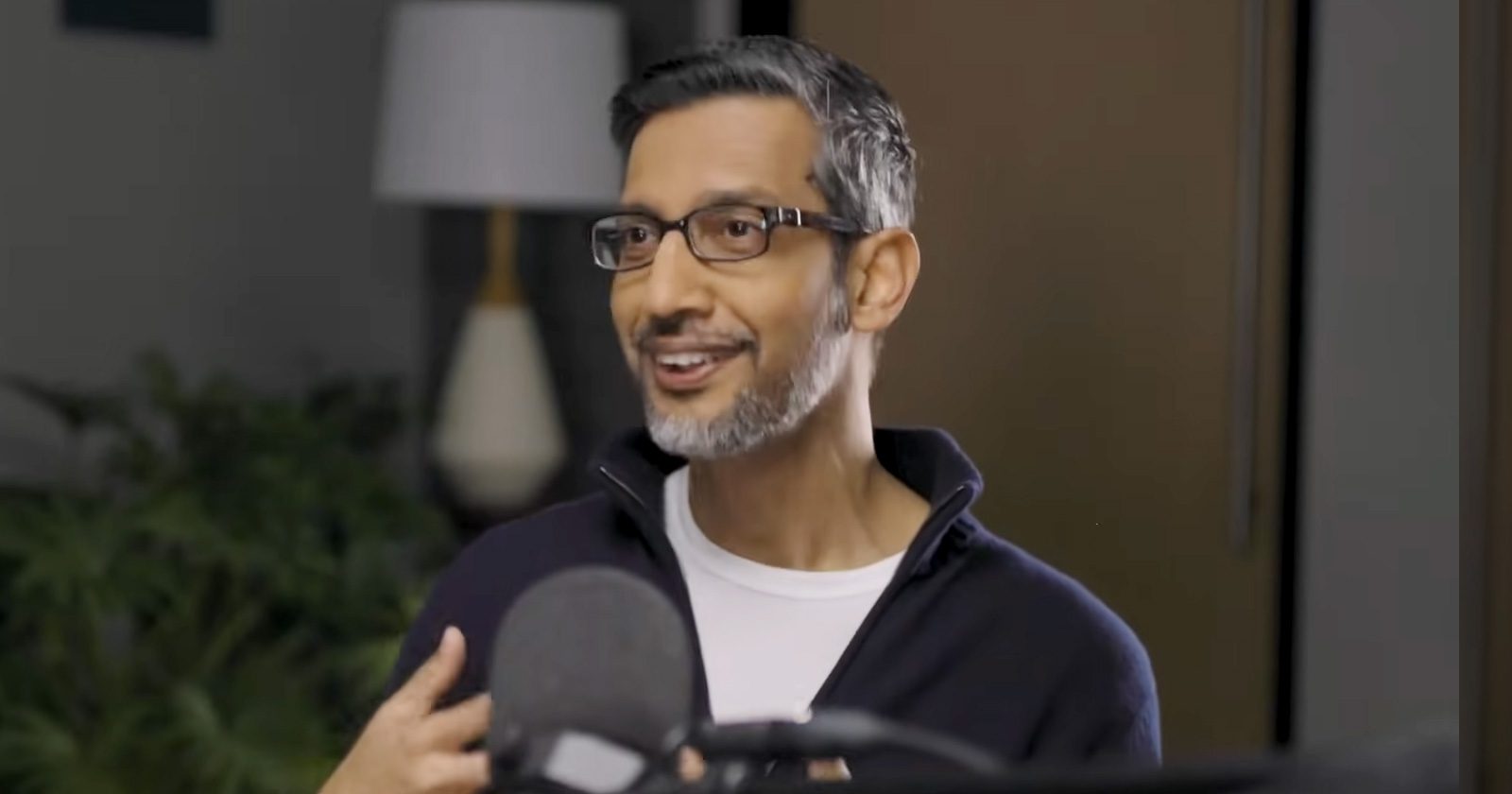
Google’s Sundar Pichai said in an interview that AI Overviews sends more traffic to a wider set of websites, insisting that Google cares about the web ecosystem and that he expects AI Mode to continue to send more traffic to websites, a claim that the interviewer challenged.

AI Agents Remove Customer Relationship Opportunities

There is a revolutionary change in how ecommerce that’s coming soon, where AI agents research and make purchase decisions on behalf of consumers. The interviewer brought up that some merchants have expressed concern that this will erode their ability to upsell or develop a customer relationship.

A customer relationship can be things like getting them to subscribe to an email or to receive text messages about sales, offer a coupon for a future purchase or to get them to come back and leave product reviews, all the ways that a human consumer interacts with a brand that an AI agent does not.

Sundar Pichai responded that AI agents present a good user experience and compared the AI agent in the middle between a customer and a merchant to a credit card company that sits in between the merchant and a customer, it’s a price that a merchant is willing to pay to increase business.

Pichai explained:

“I can literally see, envision 20 different ways this could work. Consumers could pay a subscription for agents, and their agents could rev share back. So you know, so that that is the CIO use case you’re talking about. That’s possible. We can’t rule that out. I don’t think we should underestimate, people may actually see more value participating in it.

I think this is, you know, it’s tough to predict, but I do think over time like you know like if you’re removing friction and improving user experience, it’s tough to bet against those in the long run, right? And so I think, in general if you’re lowering friction for it, you know, and and people are enjoying using it, somebody’s going to want to participate in it and grow their business.

And like would brands want to be in retailers? Why don’t they sell directly today? Why don’t they sell directly today? Why won’t they do that? Because retailers provide value in the middle.

Why do merchants take credit cards? There are many parts like and you find equilibrium because merchants take credit cards because they see more business as part of taking credit cards than not, right. And which justifies the increased cost of taking credit cards and may not be the perfect analogy. But I think there are all these kinds of effects going around.”

Pichai Claims That Web Ecosystem Is Growing

The interviewer began talking about the web ecosystem, calling attention to the the “downstream” effect of AI Search and AI search agents on information providers and other sites on the web.

Pichai started his answer by doing something he did in another interview about this same question where he deflected the question about web content by talking about video content.

He also made the claim that Google isn’t killing the web ecosystem and cited that the number of web pages in Google’s index has grown by 45% over the past two years, claiming it’s not AI generated content.

He said:

“I do think people are consuming a lot more information and the web is one specific format. So we should talk about the web, but zooming back out, …there are new platforms like YouTube and others too. So I think people are just consuming a lot more information, right? So it feels like like an expansionary moment. I think there are more creators. People are putting out more content, you know, and so people are generally doing a lot more. Maybe people have a little extra time in their hands. And so it’s a combination of all that.

On the web, look things have been interesting and you know we’ve had these conversations for a while, you know, obviously in 2015 there was this famous, the web is dead. You know, I always have it somewhere around, you know, which I look at it once in a while. Predictions, it’s existed for a while.

I think web is evolving pretty profoundly. When we crawl, when we look at the number of pages available to us, that number has gone up by 45% in the last two years alone. So that’s a staggering thing to think about.”

The interviewer challenged Pichai’s claim by asking if Google is detecting whether that increase in web pages is because they’re AI generated.

Pichai was caught by surprise by that question and struggled to find the answer and then finally responded that Google has many techniques for understanding the quality of web pages, including whether it was machine generated.

He doubled down on his statement that the web ecosystem is growing and then he started drifting off-topic, then he returned to the topic.

He continued:

“That doesn’t explain the trend we are seeing. So, generally there are more web pages. At an underlying level, so I think that’s an interesting phenomenom. I think everybody as a creator, like you do at The Verge, I think today if you’re doing stuff you have to do it in a cross-platform, cross-format way. So I think things are becoming more dynamic cross-format.

I think another thing people are underestimating with AI is AI will make it zero-friction to move from one format to another, because our models are multi-modal.

So I think this notion, the static moment of, you produce content by format, whereas I think machines can help translate it from, almost like different languages and they can go seamlessly between. I think it’s one of the incredible opportunities to be unlocked.

I think people are producing a lot of content, and I see consumers consuming a lot of content. We see it in our products. Others are seeing it too. So that’s probably how I would answer at the highest level.”

Related: The Data Behind Google’s AI Overviews: What Sundar Pichai Won’t Tell You

Search Traffic and Referral Patterns

The interviewer asked Pichai what his response is to people who say that AI Overviews is crushing their business.

Pichai answered:

“AI mode is going to have sources and you know, we’re very committed as a direction, as a product direction, part of why people come to Google is to experience that breadth of the web and and go in the direction they want to, right?

So I view us as giving more context. Yes, there are certain questions which may get answers, but overall that’s the pattern we see today. And if anything over the last year, it’s clear to us the breadth of where we are sending people to is increasing. And, so I expect that to be true with AI Mode as well.”

The interviewer immediately responded by noting that if everything Pichai said was true, people would be less angry with him.

Pichai dismissed the question, saying:

“You’re always going to have areas where people are robustly debating value exchanges, etc. … No one sends traffic to the web the way we do.”

See also: Google’s AI Overviews Slammed By News Publishers

Oh, Really?

What do you think? Are Google’s AI features prioritizing sending traffic to web sites?

Watch the Sundar Pichai interview here:

Featured image is screenshot from video

The Overlooked Traffic Drop Caused by AI Overviews [Webinar] via @sejournal, @lorenbaker

If your rankings are stable but your clicks are fading, AI Overviews could be the reason. 

These AI-powered summaries now show up on nearly half of Google searches. While they aim to help users, they may be shifting attention away from your site.

The problem is not just visibility. It is visibility without engagement. And the only way to fix it is to know exactly where the drop is happening.

That is what this session is designed to do.

AIO Hurting Traffic? How To Identify True Loss With GA4, GSC and Rank Tracking
Live on June 11, 2025 | Sponsored by STAT SA

Join us for a tactical webinar that breaks down how to track, measure, and respond to traffic loss caused by AI Overviews. You will explore how to use GA4, GSC and rank tracking to separate what has changed and what still works.

What you will take away from this session

✅ A method for separating AIO traffic from traditional organic clicks.
✅ A clear process for identifying traffic loss that is often hidden.
✅ Steps to update your SEO strategy based on your actual data.
✅ A framework to turn assumptions into insights you can act on.

Tom Capper, Senior Search Scientist at STAT SA, will guide you through the same tools and techniques used by leading SEO teams to evaluate AIO impact and protect long-term search performance.

This is not about guesswork. This is about clarity. If your site is losing visibility in subtle ways, now is the time to find out why and what to do next.

Can’t make it live

Register anyway, and we will send you the full recording to watch on your own schedule.