Charts: U.S. Retail Ecommerce Sales Q1 2025

Retail ecommerce growth in the U.S. lagged brick-and-mortar in the first quarter of this year, according to new data from the Department of Commerce (PDF).  In Q1 2025, total U.S. retail sales — online and in-store — reached $1.86 trillion, a 0.4% increase from Q4 2024, while online sales declined by 0.04% to $300.2 billion.

Ecommerce sales, per the DoC, are for “goods and services where the buyer places an order (or the price and terms of the sale are negotiated) over an Internet, mobile device, extranet, electronic data interchange network, electronic mail, or other comparable online system. Payment may or may not be made online.”

Ecommerce accounted for 16.2% of total U.S. retail sales in Q1 2025, unchanged from the prior quarter.

The DoC reports U.S. retail ecommerce sales in Q1 2025 grew by 6.1% compared to the same quarter in 2024, while total retail sales experienced a 4.5% annual rise over the same period.

Google Fixes AI Mode Traffic Attribution Bug via @sejournal, @MattGSouthern

Google has fixed a bug that caused AI Mode search traffic to be reported as “direct traffic” instead of “organic traffic” in Google Analytics.

The problem started last week. Google was adding a special code (rel=”noopener noreferrer”) to links in its AI Mode search results. This code caused Google Analytics to incorrectly attribute traffic to websites, rather than from Google search.

Reports from Aleyda Solis, Founder at Orainti, and others in the SEO community confirm the issue is resolved.

Discovery of the Attribution Problem

Maga Sikora, an SEO director specializing in AI search, first identified the issue. She warned other marketers:

“Traffic from Google’s AI Mode is being tagged as direct in GA — not organic, as Google adds a rel=’noopener noreferrer’ to those links. Keep this in mind when reviewing your reports.”

The noreferrer code is typically used for security purposes. However, in this case, it was blocking Google Analytics from tracking the actual source of the traffic.

Google Acknowledges the Bug

John Mueller, Search Advocate at Google, quickly responded. He suggested it was a mistake on Google’s end, stating:

“My assumption is that this will be fixed; it looks like a bug on our side.”

Mueller also explained that Search Console doesn’t currently display AI Mode data, but it will be available soon.

He added:

“We’re updating the documentation to reflect this will be showing soon as part of the AI Mode rollout.”

Rapid Resolution & Current Status

Google fixed the problem within days.

Solis confirmed the fix:

“I don’t see the ‘noreferrer’ in Google’s AI Mode links anymore.”

She’s now seeing AI Mode data in her analytics and is verifying that traffic is correctly labeled as “organic” instead of “direct.”

Impact on SEO Reporting

The bug may have affected your traffic data for several days. If your site received AI Mode traffic during this period, some of your “direct” traffic may have been organic search traffic.

This misclassification could have:

  • Skewed conversion tracking
  • Affected budget decisions
  • Made SEO performance look worse than it was
  • Hidden the true impact of AI Mode on your site

What To Do Now

Here’s your action plan:

  1. Audit recent traffic data – Check for unusual spikes in direct traffic from the past week
  2. Document the issue – Note the affected dates for future reference
  3. Adjust reporting – Consider adding notes to client reports about the temporary bug
  4. Prepare for AI Mode tracking – Start planning how to measure this new traffic source

Google’s prompt response shows it understands the importance of accurate data for marketers.


Featured Image: Tada Images/Shutterstock

Is SEO Still Relevant In The AI Era? New Research Says Yes via @sejournal, @MattGSouthern

New research analyzing 25,000 user searches found that websites ranked #1 on Google appear in AI search answers 25% of the time.

This data demonstrates that traditional SEO remains relevant, despite claims that AI has rendered it obsolete.

Tomasz Rudzki, co-founder of ZipTie, studied real searches across ChatGPT, Perplexity, and Google’s AI Overviews. His findings challenge the widespread belief that AI makes traditional SEO pointless.

Top Rankings Translate To AI Visibility

The data shows a clear pattern: if you rank #1 on Google, you have a 1-in-4 chance of appearing in AI search results. Lower rankings result in lower chances.

Rudzki stated:

“The higher you rank in Google’s top 10, the more likely you are to appear in AI search results across platforms. This isn’t speculation – it’s based on real queries from real users.”

The pattern holds across all major AI search platforms, suggesting that they all rely on traditional rankings when selecting sources.

How AI Search Engines Select Sources

The study detailed how AI search operates, using information from Google’s antitrust trial. The process involves three main steps:

Step 1: Pre-selection
AI systems identify the best documents for each query, favoring pages with higher Google rankings.

Step 2: Content Extraction
The AI extracts relevant information from these top-ranking pages, prioritizing content that directly answers the user’s question.

Step 3: AI Synthesis
The AI synthesizes this information into one clear answer, utilizing Google’s Gemini model for this step.

Google’s internal documents from the trial confirmed a critical fact: using top-ranking content enhances the accuracy of AI responses, which explains why traditional rankings continue to be so significant.

The Query Fan-Out Effect Explained

Sometimes, you’ll come across sources that don’t make it into the top 10. Research identified two reasons why:

Reason 1: Personalization

Search results differ by user. A page might rank high for one user but not for another.

Reason 2: Query Fan-Out

This is the more significant factor. According to Google’s documentation:

“Both AI Overviews and AI Mode may use a ‘query fan-out’ technique — issuing multiple related searches across subtopics and data sources — to develop a response.”

Here’s what that means in simple terms:

When you search for “SEO vs SEM,” the AI discreetly runs multiple searches:

  • “What is SEO?”
  • “SEO explained”
  • “What is PP?C”
  • Plus several other related searches

Pages that perform well for these additional searches can appear in results even if they don’t rank for your primary search.

The research shows we need to think differently about content.

Traditional SEO focused on creating the “best page.” This meant comprehensive guides covering everything about a topic.

AI search wants the “best answer.” This means specific, focused responses to exact questions.

The analysis notes:

“When someone asks specifically about iPhone 15 battery life, you may rank top 1 in Google, but AI doesn’t care about it if you don’t provide a precise, relevant answer to that exact question.”

Marketers need to shift from keyword optimization to answering real questions.

Practical Implications For Digital Marketers

Here’s what marketers should do based on these findings:

  • Continue your SEO efforts: Top 10 rankings directly impact AI visibility. Do not abandon your SEO strategies.
  • Restructure your content: Divide lengthy guides into sections that address specific questions.
  • Target related searches: Optimize for various versions of your main keywords.
  • Write clearly: AI systems favor straightforward answers over content loaded with keywords.
  • Track everything: Monitor your visibility in both traditional and AI search results.

Industry Impact and Future Considerations

This research comes at the perfect time. AI search is growing rapidly. Understanding how it connects to traditional rankings gives you an edge.

Consider this: Only 25% of #1-ranked content appears in AI results. That means 75% is missing out. This suggests an opportunity for marketers who adapt.

Rudzki concludes:

“Instead of asking ‘How do I rank higher?’ start asking ‘How do I better serve users who have specific questions?’ That mindset shift is the key to thriving in the AI search era.”

For an industry experiencing rapid adoption of AI, these findings provide a strong foundation for informed strategic decisions. Instead of abandoning SEO practices, the evidence suggests building on what already works.


Featured Image: Tada Images/Shutterstock

The beginner’s guide to SEO reporting

When you work on your site’s SEO, reflecting on those efforts should be part of your ongoing strategy. Whether it’s for a client, your manager, or your team, creating an SEO report is the best way to do so. This helps you justify your efforts, keep track of performance and figure out what needs to be tackled next. And it’s not as hard as you would think. In this blog post, we’ll explain what SEO reporting is and take you through the process step by step.

Table of contents

Search engine optimization (SEO) helps drive more traffic to your site and improve your brand image. It should be part of anyone’s marketing strategy whose goal is to grow their (online) audience. Originally focused on performance in organic search, SEO now entails much more than that. It helps you build a strong brand name, become an authority in your field, and be visible on the platforms where your audience can be found. All this is to increase customer loyalty and grow your business.

What is SEO reporting exactly?

SEO reporting is best described as evaluating your online marketing efforts and presenting the outcomes in a report. This can be a report you create for yourself, your team, management, or a client. Often, a company has a specific template they use to do SEO reporting regularly (for example, every month). This can be in the form of a slide deck, online document, Excel sheet, or online dashboard. But it can also be any other reporting tool you feel comfortable with or your company uses for presentations.

In an SEO report, you will find metrics related to a website’s performance and other marketing activities related to SEO. This helps you track how your SEO strategy is performing and where tweaks are needed. That’s why an important part of any SEO report is the interpretation of metrics and conclusions that come out of that.

What to include in your SEO report

Whether you’re creating an SEO report for internal use, or for your client(s), it’s good to have a template. This allows you to compare recent findings with earlier ones, regardless of the frequency with which you’ll be reporting. Of course, you can make changes to this template along the way. But having a template saves you time and helps you recognize bigger issues and opportunities over time.

Naturally, it depends on your business goals what should be in your SEO report. The most important thing is that your SEO report reflects your (or your client’s) goals. This is to understand how your marketing efforts are contributing to reaching these goals and what actions need to be taken. But there are a few basics that most of us will want to include.

A general data overview

Start with an overview of the most important data for your business or website. This gives you an idea of how you’re doing right away. Especially when you’re reporting regularly, this overview will tell you or your client how the website (and online business) is performing. You can also choose to include data from the previous period (or the previous year) for comparison.

Website data to include:

  • The number of site visitors
  • Number of purchases (or other actions you want people to take)
  • A visualization of your traffic over the selected period 
  • Keyword rankings for a few important pages
  • A traffic overview by source or medium 
  • The type of visitors (new or returning)
Example of a general overview in an SEO report

Data on (content) performance

The general overview gives a quick insight into the current state of play, but to figure out how you got there, you must go into more detail. That’s why your report should include a closer look at content performance. Make sure to include data on your most important pages, such as product pages, popular blog posts, or other landing pages that attract a lot of people. 

Collect data such as page views, visitors, engagement, event count, revenue, and traffic sources. You don’t have to include everything, as this will be overwhelming and will probably cause people to lose interest. Look at the data of your most important pages, pick out the numbers that stand out (growth or decline) and add those to your report. It can be tempting to focus solely on the positive numbers but also include the negative ones to paint a realistic picture. This speaks to your credibility, makes it easier to spot issues before they get out of hand and helps the company in the long run.

Other elements to include here are an overview of new backlinks to the website, stats related to site health and the Core Web Vitals, and an overview of keyword rankings. But do remember that keyword rankings can change on a daily basis, and obsessing over individual drops in rankings isn’t going to help your overall SEO. Use these averages to get an idea of whether your overall rankings are dropping and what you can do to get your organic traffic back up again.

Activities previous period

When you have had a look at the data, it’s time to summarize what has gone out that month (or period of your choice). Use this section to highlight how many posts have gone out on social media, how the audience has interacted with those, what blog posts have been written or updated, and how your running ads are performing. But you can also include other online or offline marketing activities to show what has been done. 

Where possible, you can tie this in with any peaks in traffic or engagement. Or it can help you explain why some areas have gotten less attention than others. Either way, use this to make sense of the data and to highlight the hard work that has been put in by the team.

A summary with recommendations

Always end your SEO report with specific action points that come out of that month’s evaluation. It helps to start with a summary of the ‘highs and lows’ that were brought up in the report so far. For example, if you have noticed a noticeable drop in rankings, and therefore organic traffic, to one of your most important pages, it will make sense to focus on getting to the bottom of that in the coming weeks. And making improvements based on your findings. Or if a new type of social media post did very well, another action point could be to create a series of those and see if you can keep this success going. 

But this last part is also a moment of reflection on a bigger level. Are you still on track with the business goals, or any specific SEO goals you’ve set for yourself? And don’t forget to go through the action points you thought up in the previous SEO report. Were you able to get those done? Are a few of them still in progress? Or are there any blockers that you need help with? Make sure to end with an action plan for the upcoming month and a team (or client) that’s on board with everything discussed.

Creating an SEO report: step by step

Now that you know what to include, let’s talk about how to get started with your SEO reporting. Before you start pulling together the data, it’s important to set clear KPIs and create a setup that works for your company.

1. Set up your KPIs

The first step is to define KPIs, which stands for key performance indicators. These should be measurable goals, based on the marketing goals and/or business objectives within the company. To give a simple example, if one of the marketing goals is to grow traffic to your website, a corresponding KPI can be to increase your organic traffic by 10% that year. Other popular KPIs are conversion rate, overall rankings, click-through rates, bounce rate, page load time, and branded/non-branded traffic.

Make these KPIs realistic, especially when you’re setting expectations with a client, and reflect on the progress in your SEO reports to stay on track. I would suggest not focusing too much on maintaining certain rankings or data on specific pages. Rankings are heavily subjected to external factors and can change daily, and zooming in on one page too much can make you lose perspective. Of course, a drop in traffic for an important page is something to keep an eye on and can be a reason to make some adjustments. But keep the overall KPIs in mind and be aware of the bigger picture, while tweaking what’s needed without obsessing.

2. Set up the structure for your report

Choose a tool for your SEO reporting. This can be a presentation tool that your team often uses, an information-gathering tool such as Excel or an Analytics dashboard, or one that your client is familiar with. Just make sure that you can set it up yourself and make tweaks when needed. 

Add the sections that we’ve discussed above: a general overview, data on performance, marketing activities, and a summary with recommendations. I would suggest looking at your KPIs to figure out exactly what you want to show in the general overview and data on performance section. So, if your main KPI is growing your conversion rate, make sure that you add the data on this KPI to the general overview.

Test drive your new report by filling in this month’s data (or whatever period of time you choose). See the next step on how to tackle this. But this will help you figure out if the setup works for you in its current form. Always tweak when needed, whether that’s right now or a few months along the line. This report should work for you, you shouldn’t be jumping through hoops to get it to make sense. 

3. Gather and fill in the data

It’s time to start retrieving the data you need. There are a few tools you can use. For the general overview and data on performance, you can mainly rely on Google Analytics and Google Search Console. To get an easy overview of your marketing activities for that month, your own marketing calendar and the platforms that you posted on will give you the insights that are needed.

Data on website performance

For the general overview and data on performance, we are going to use Google Analytics and Search Console. Here you’ll find data such as visitor numbers, engagement, number of purchases (you will have to set this as an event), visualizations of your traffic, keyword rankings, traffic overview by source/medium, and type of visitors. Stats related to site health and your Core Web Vitals can also be found in Google Search Console. Lastly, if you want to get an overview of your backlinks, Semrush can provide you with that. 

A screenshot of the ‘performance on search results’ section in Google Search Console

While you’re putting those numbers into your report, remember to be mindful of how you present them. Don’t just throw everything in there and overwhelm (yourself and) others with raw data. Highlight important data and make visualizations of certain data to break up the wall of text. You can also just copy and paste a few graphs and add those in. Using a graph to show overall traffic or pie chart to show traffic by source/medium can already make a big difference.

Write down what speaks to you while filling in the data. What has been a success this month and what are areas that need more attention? And if you see something that you can’t explain right away (f.e. a drop in traffic, or a post that has an enormous amount of views), try to figure out what happened there so you can answer questions that people will inevitably ask about them.  

Data on marketing activities

If you keep a marketing calendar, this is a great way to reflect on what you’ve published in the last month. Use this to summarize how many blog posts, social media posts, videos, newsletters and other marketing-related activities you’ve worked on. This includes other activities such as attending events, workshops, appearances you’ve made, or perhaps even print media.

When it comes to blog posts you’ve published, you could highlight one that stands out and use data from Analytics and Search Console to explain how it’s performing so far. Or you could just add the numbers up and give an idea of the overall effect of this content. Keep in mind that content needs some time to get noticed by people, so don’t fret if it hasn’t done that much yet. 

Also, use this section to evaluate your social media posts and videos that you’ve uploaded to channels such as YouTube. I would recommend going to the platforms where you’ve posted content and using their analytics tools to see how well they’ve performed. This shows you what content works best and helps you draw conclusions from data from the source itself. 

For other marketing activities that have happened that month, it really depends on the activity how to mention it in your report. If it’s an offline event or workshop, try to get some feedback from (potential) customers on their experience. When it comes to print media, you could try and get some idea of the effect by how many people have contacted you after seeing it. Just make sure to think about these things beforehand, to get an idea of the effect of these activities.

4. Evaluate and take action

When you’ve added the relevant data and summarized your marketing efforts, it’s time to properly evaluate. Go through your report and write down any patterns, issues, successes and opportunities. Add these to your overall summary and compare these findings to the ones you found last month (or the months before that) to recognize bigger issues and successes. This will allow you to properly evaluate your findings and turn them into actionable recommendations and action points.

When you’ve completed your SEO report and know what actions come out of it, it’s a good idea to present it internally. Or to your client. This helps them understand what you (and the team) have been working on and will probably spark a discussion that helps you figure out what to pick up first. Finally, after sharing this report with the relevant people and agreeing on next steps, make sure to plan these so they don’t get lost. Make a realistic plan for yourself or the team and pick up the action points to set everything in motion. And plan in the next SEO report to keep this cycle going!

Conclusion

Any good SEO report, whether this is for yourself or a client, starts with clear KPIs. Make sure to get those done before you start evaluating your SEO efforts. This will allow you to set up a proper template for the report and figure out what data you need to look at. Use the right tools to get the data you need, but don’t get lost in trying to report on everything. Show the relevant data and present this to the relevant parties to get everyone on board. Use all of this to figure out what your next steps are and follow up on the action points to make sure you keep focusing on the right things. Happy SEO reporting!

Read more: How to track website traffic: how many people are visiting your site? »

Future-Proofing WordPress SEO: How To Optimize For AI-Driven Search Features via @sejournal, @cshel

Search is changing. I hate saying that (again) because it feels cliche at this point. But, cliche or not, it is true and it is seismic.

With the rollout of AI Overviews, Bing Copilot, and conversational search interfaces like ChatGPT and Perplexity, SEO is no longer just about traditional rankings; it’s about representation and visibility.

Instead of obsessing over page 1 and traffic numbers, WordPress site owners need to start focusing on whether they’re represented in the answers users actually see and if that visibility is resulting in revenue.

The old rankings system itself is mattering less and less because AI-driven search features aren’t just scraping a list of URLs. They’re synthesizing content, extracting key insights, and delivering summary answers.

If your content isn’t built for that kind of visibility, it may as well not exist.

Google doesn’t even look like Google anymore. Since the March core update, AI Overviews have more than doubled in appearance, and this trend shows no signs of slowing. This is our new reality, and it’s only going to accelerate.

WordPress is already a flexible, powerful platform, but out of the box, it’s not optimized for how AI-driven search works today.

In this guide, I’ll show you how to future-proof your WordPress site by aligning your structure, content, and technical setup with what large language models actually understand and cite.

Don’t Build Trash Content

Before we talk about how to do it right, let’s talk about the strategy that’s finally running out of road.

For literal decades, site owners have spun up content sites that were never designed for people, only for ad revenue. These sites weren’t meant to inform or help – just rank well enough to earn the click and display the ad.

Unfortunately, WordPress made this model wildly scalable. It almost instantly became the go-to tool for anyone who wanted to launch dozens (or hundreds) of sites fast, slap on some AdSense, and rake in passive income – money for nothing and your clicks for free.

That model worked very well for a very long time. But (thankfully), that time has come to an end.

AI Overviews and answer engines aren’t surfacing this kind of content anymore. Traffic is drying up. Cost per mille (CPM) is down. And trust – not volume – is the currency that search engines now prioritize.

Even if you’re trying to brute-force the model with paid placements or “citation strategies,” you’re competing with brands that have earned their authority over the years.

To be clear, WordPress is not and was never the problem. The problem is that people use it to scale the wrong kind of content.

If your content is created for algorithms instead of actual people, AI is going to pass you by. This new era of search doesn’t reward valueless content factories. It rewards clarity, “usefulness,” and trust.

Nothing in the rest of this article is going to fix that dying business model. If that’s what you’re here for, you’re already too late.

If, however, you’re focused on publishing something valuable – something worth reading, referencing, or citing – then please, keep reading.

Use WordPress Like You Mean It

WordPress is the most widely used content management system (CMS) for a reason. It’s flexible, extensible, and powerful when you use it right.

However, default settings and bloated themes won’t cut it in an AI-first environment. You have to optimize with clarity in mind.

Let’s start with your theme. Choose one that uses semantic HTML properly:

,

,
, and a clear heading hierarchy.

Avoid themes and builders that generate “div soup.” Large language models rely on clean HTML to interpret relationships between elements. If your layout is a maze of

s and JavaScript, the model may miss the point entirely.

If the theme you love isn’t perfect, that’s fine. You can usually fix the markup with a child theme, custom template, or a little dev help. It’s worth the investment.

A Checklist For Optimizing WordPress Fundamentals

  • Use lightweight themes: e.g., GeneratePress, Astra, or Blocksy are all well-regarded by developers for their performance and clean markup.
  • Optimize image delivery: Large, uncompressed images are one of the biggest culprits behind slow load times. Reducing file sizes improves speed, performance scores, and user experience, especially on mobile.
  • Use caching and CDNs: These reduce server load and speed up delivery by storing content closer to your users. Better performance means faster indexing, higher satisfaction, and improved Core Web Vitals.
  • Delete unused plugins: Seriously. If it’s deactivated and collecting dust, it’s a liability. Every inactive plugin is an unpatched attack vector just waiting to be exploited.
  • Delete unused themes: Same issue as above. They can still pose security risks and bloat your site’s file structure. Keep only your active theme and a fallback default, like Twenty Twenty-Four.

Declutter Hidden Or Fragmented Content

Pop-ups, tabs, and accordions might be fine for user experience, but they can obscure content from LLMs and crawlers.

If the content isn’t easily accessible in the rendered HTML – without requiring clicks, hovers, or JavaScript triggers to reveal – it may not be indexed or understood properly.

This can mean key product specs, FAQs, or long-form content go unnoticed by AI-driven search systems.

Compounding the problem is clutter in the Document Object Model (DOM).

Even if something is visually hidden from users, it might still pollute your document structure with unnecessary markup.

Minimize noisy widgets, auto-playing carousels, script-heavy embeds, or bloated third-party integrations that distract from your core content.

These can dilute the signal-to-noise ratio for both search engines and users.

If your theme or page builder leans too heavily on these elements, consider simplifying the layout or reworking how key content is presented.

Replacing JavaScript-heavy tabs with inline content or anchor-linked jump sections is one simple, crawler-friendly improvement that preserves UX while supporting AI discoverability.

Use WordPress SEO Plugins That Help Structure For LLMs

WordPress SEO plugins are most often associated with schema, and schema markup is helpful, but its value has shifted in the era of AI-driven search.

Today’s large language models don’t need schema to understand your content. But that doesn’t mean schema is obsolete.

In fact, it can act as a helpful guidepost – especially on sites with less-than-perfect HTML structure (which, let’s be honest, describes most websites).

It helps surface key facts and relationships more reliably, and in some cases, makes the difference between getting cited and getting skipped.

Modern SEO tools do more than just generate structured data. They help you manage metadata, highlight cornerstone content, and surface author information – all of which play a role in how AI systems assess trust and authority.

Just don’t make the mistake of thinking you can “add E-E-A-T” with a plugin toggle. John Mueller has said as much at Search Central Live NYC in March of this year.

What author schema can do, however, is help search engines and LLMs connect your content to your wider body of work. That continuity is where E-E-A-T becomes real.

Finally, consider adding a WordPress SEO plugin that can generate a Table of Contents.

While it’s useful for readers, it also gives LLMs a clearer understanding of your page’s hierarchy, helping them extract, summarize, and cite your content more accurately.

Structure Your Content So AI Uses It

Whether you’re creating posts in the Block Editor, Classic Editor, or using a visual page builder like Elementor or Beaver Builder, the way you structure your content matters more than ever.

AI doesn’t crawl content like a bot. It digests it like a reader. To get cited in an AI Overview or answer box, your content needs to be easy to parse and ready to lift.

Start by using clear section headings (your H2s and H3s) and keeping each paragraph focused on a single idea.

If you’re explaining steps, use numbered lists. If you’re comparing options, try a table. The more predictable your structure, the easier it is for a language model to extract and summarize it.

And don’t bury your best insight in paragraph seven – put your core point near the top. LLMs are just like people: They get distracted. Leading with a clear summary or TL;DR increases your odds of inclusion.

Finally, don’t forget language cues. Words like “Step 1,” “Key takeaway,” or “In summary” help AI interpret your structure and purpose. These phrases aren’t just good writing; they’re machine-readable signals that highlight what matters.

Show AI You’re A Trusted Source

WordPress gives you powerful tools to communicate credibility – if you’re taking advantage of them.

E-E-A-T (which stands for experience, expertise, authoritativeness, and trustworthiness) isn’t just an acronym; it’s the bar AI systems use to decide whether your content is worth citing.

WordPress gives you plenty of opportunities to show you’re the real deal.

Start by making your authors visible. Include a bio, credentials, and a link to an author archive.

If your theme doesn’t support it, add a plugin or customize the layout.

Schema markup for authors helps, too, but remember, it doesn’t magically give you E-E-A-T. What it does is help LLMs connect your byline to your broader body of work across the web.

From there, build out internal signals of authority. Link your content together in meaningful ways.

Surface cornerstone pieces that demonstrate depth on a topic. These internal relationships show both users and machines that your site knows what it’s talking about.

Finally, keep it fresh. Outdated content is less likely to be included in AI answers.

Regular content audits, scheduled refreshes, and clear update timestamps all help signal to LLMs (and humans) that you’re active and credible.

Final Thoughts: Build For Understanding, Not Just Ranking

At this point, it should be clear that WordPress can absolutely thrive in an AI-first search environment – but only if you treat it like a platform, not a shortcut.

Success with AI Overviews, answer engines, and conversational search doesn’t come from tricking algorithms. It comes from helping language models truly understand what your content is about – and why you’re the one worth citing.

That means focusing on structure. On clarity. On authorship. On consistency. That means building not just for Google’s crawler, but for the models that generate answers people actually read.

So, yes, SEO has changed. If you’re using WordPress, you’re already holding the right tool. Now, it’s just a matter of wielding it well.

More Resources:


Featured Image: Roman Samborskyi/Shutterstock

Google’s CEO Says AI Overviews Website Referrals Are Increasing via @sejournal, @martinibuster

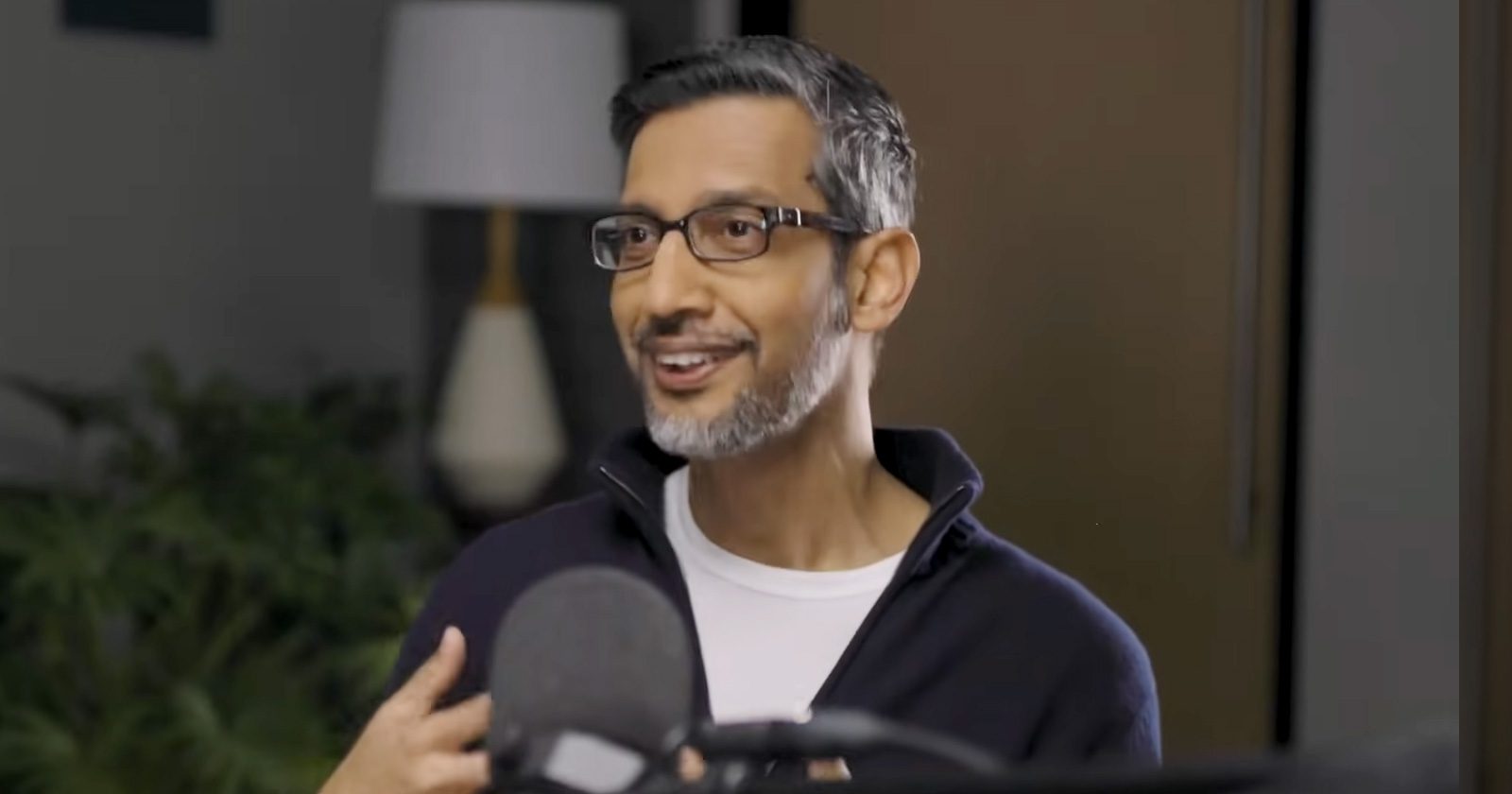
Google’s Sundar Pichai said in an interview that AI Overviews sends more traffic to a wider set of websites, insisting that Google cares about the web ecosystem and that he expects AI Mode to continue to send more traffic to websites, a claim that the interviewer challenged.

AI Agents Remove Customer Relationship Opportunities

There is a revolutionary change in how ecommerce that’s coming soon, where AI agents research and make purchase decisions on behalf of consumers. The interviewer brought up that some merchants have expressed concern that this will erode their ability to upsell or develop a customer relationship.

A customer relationship can be things like getting them to subscribe to an email or to receive text messages about sales, offer a coupon for a future purchase or to get them to come back and leave product reviews, all the ways that a human consumer interacts with a brand that an AI agent does not.

Sundar Pichai responded that AI agents present a good user experience and compared the AI agent in the middle between a customer and a merchant to a credit card company that sits in between the merchant and a customer, it’s a price that a merchant is willing to pay to increase business.

Pichai explained:

“I can literally see, envision 20 different ways this could work. Consumers could pay a subscription for agents, and their agents could rev share back. So you know, so that that is the CIO use case you’re talking about. That’s possible. We can’t rule that out. I don’t think we should underestimate, people may actually see more value participating in it.

I think this is, you know, it’s tough to predict, but I do think over time like you know like if you’re removing friction and improving user experience, it’s tough to bet against those in the long run, right? And so I think, in general if you’re lowering friction for it, you know, and and people are enjoying using it, somebody’s going to want to participate in it and grow their business.

And like would brands want to be in retailers? Why don’t they sell directly today? Why don’t they sell directly today? Why won’t they do that? Because retailers provide value in the middle.

Why do merchants take credit cards? There are many parts like and you find equilibrium because merchants take credit cards because they see more business as part of taking credit cards than not, right. And which justifies the increased cost of taking credit cards and may not be the perfect analogy. But I think there are all these kinds of effects going around.”

Pichai Claims That Web Ecosystem Is Growing

The interviewer began talking about the web ecosystem, calling attention to the the “downstream” effect of AI Search and AI search agents on information providers and other sites on the web.

Pichai started his answer by doing something he did in another interview about this same question where he deflected the question about web content by talking about video content.

He also made the claim that Google isn’t killing the web ecosystem and cited that the number of web pages in Google’s index has grown by 45% over the past two years, claiming it’s not AI generated content.

He said:

“I do think people are consuming a lot more information and the web is one specific format. So we should talk about the web, but zooming back out, …there are new platforms like YouTube and others too. So I think people are just consuming a lot more information, right? So it feels like like an expansionary moment. I think there are more creators. People are putting out more content, you know, and so people are generally doing a lot more. Maybe people have a little extra time in their hands. And so it’s a combination of all that.

On the web, look things have been interesting and you know we’ve had these conversations for a while, you know, obviously in 2015 there was this famous, the web is dead. You know, I always have it somewhere around, you know, which I look at it once in a while. Predictions, it’s existed for a while.

I think web is evolving pretty profoundly. When we crawl, when we look at the number of pages available to us, that number has gone up by 45% in the last two years alone. So that’s a staggering thing to think about.”

The interviewer challenged Pichai’s claim by asking if Google is detecting whether that increase in web pages is because they’re AI generated.

Pichai was caught by surprise by that question and struggled to find the answer and then finally responded that Google has many techniques for understanding the quality of web pages, including whether it was machine generated.

He doubled down on his statement that the web ecosystem is growing and then he started drifting off-topic, then he returned to the topic.

He continued:

“That doesn’t explain the trend we are seeing. So, generally there are more web pages. At an underlying level, so I think that’s an interesting phenomenom. I think everybody as a creator, like you do at The Verge, I think today if you’re doing stuff you have to do it in a cross-platform, cross-format way. So I think things are becoming more dynamic cross-format.

I think another thing people are underestimating with AI is AI will make it zero-friction to move from one format to another, because our models are multi-modal.

So I think this notion, the static moment of, you produce content by format, whereas I think machines can help translate it from, almost like different languages and they can go seamlessly between. I think it’s one of the incredible opportunities to be unlocked.

I think people are producing a lot of content, and I see consumers consuming a lot of content. We see it in our products. Others are seeing it too. So that’s probably how I would answer at the highest level.”

Related: The Data Behind Google’s AI Overviews: What Sundar Pichai Won’t Tell You

Search Traffic and Referral Patterns

The interviewer asked Pichai what his response is to people who say that AI Overviews is crushing their business.

Pichai answered:

“AI mode is going to have sources and you know, we’re very committed as a direction, as a product direction, part of why people come to Google is to experience that breadth of the web and and go in the direction they want to, right?

So I view us as giving more context. Yes, there are certain questions which may get answers, but overall that’s the pattern we see today. And if anything over the last year, it’s clear to us the breadth of where we are sending people to is increasing. And, so I expect that to be true with AI Mode as well.”

The interviewer immediately responded by noting that if everything Pichai said was true, people would be less angry with him.

Pichai dismissed the question, saying:

“You’re always going to have areas where people are robustly debating value exchanges, etc. … No one sends traffic to the web the way we do.”

See also: Google’s AI Overviews Slammed By News Publishers

Oh, Really?

What do you think? Are Google’s AI features prioritizing sending traffic to web sites?

Watch the Sundar Pichai interview here:

Featured image is screenshot from video

The Overlooked Traffic Drop Caused by AI Overviews [Webinar] via @sejournal, @lorenbaker

If your rankings are stable but your clicks are fading, AI Overviews could be the reason. 

These AI-powered summaries now show up on nearly half of Google searches. While they aim to help users, they may be shifting attention away from your site.

The problem is not just visibility. It is visibility without engagement. And the only way to fix it is to know exactly where the drop is happening.

That is what this session is designed to do.

AIO Hurting Traffic? How To Identify True Loss With GA4, GSC and Rank Tracking
Live on June 11, 2025 | Sponsored by STAT SA

Join us for a tactical webinar that breaks down how to track, measure, and respond to traffic loss caused by AI Overviews. You will explore how to use GA4, GSC and rank tracking to separate what has changed and what still works.

What you will take away from this session

✅ A method for separating AIO traffic from traditional organic clicks.
✅ A clear process for identifying traffic loss that is often hidden.
✅ Steps to update your SEO strategy based on your actual data.
✅ A framework to turn assumptions into insights you can act on.

Tom Capper, Senior Search Scientist at STAT SA, will guide you through the same tools and techniques used by leading SEO teams to evaluate AIO impact and protect long-term search performance.

This is not about guesswork. This is about clarity. If your site is losing visibility in subtle ways, now is the time to find out why and what to do next.

Can’t make it live

Register anyway, and we will send you the full recording to watch on your own schedule.

Building customer-centric convenience

In the U.S., two-thirds of the country’s 150,000 convenience stores are run by independent operators. Mom-and-pop shops, powered by personal relationships and local knowledge, are the backbone of the convenience sector. These neighborhood operators have long lacked the resources needed to compete with larger chains when it comes to technology, operations, and customer loyalty programs. 

As consumer expectations evolve, many small business owners find themselves grappling with outdated systems, rising costs, and limited digital tools to keep up.

“What would happen if these small operations could combine their knowledge of their market, of their neighborhood, with the state-of-the-art technology?” asks GM of digital products, mobility, and convenience for the Americas at bp, Tarang Sethia. That question is shaping a years-long, multi-pronged initiative to bring modern retail tools, like cloud-connected point-of-sale systems and personalized AI, into the hands of local convenience store operators, without stripping their independence. 

Sethia’s mission is to close the digital gap. bp’s newly launched Earnify app centralizes loyalty rewards for convenience stores across the country, helping independent stores build repeat business with data-informed promotions. Behind the scenes, a cloud-based operating system can proactively monitor store operations and infrastructure to automate fixes to routine issues and reduce costly downtime. This is especially critical for businesses that double as their own IT departments. 

“We’ve aggregated all of that into one offering for our customers. We proactively monitor it. We fix it. We take ownership of making sure that these systems are up. We make sure that the systems are personalizing offers for the customers,” says Sethia. 

But the goal isn’t to corporatize corner stores. “We want them to stay local,” says Sethia. “We want them to stay the mom-and-pop store operator that their customers trust, but we are providing them the tools to run their stores more efficiently and to delight their guests.”

From personalizing promotions to proactively resolving technical issues to optimizing in-store inventory, the success of AI should be measured, says Sethia, by its ability to make frontline workers more effective and customers more loyal.

The future, Sethia believes, lies in thoughtful integration of technology that centers humans rather than replacing them. 

“AI and other technologies should help us create an ecosystem that does not replace humans, but actually augments their ability to serve consumers and to serve the consumers so well that the consumers don’t go back to their old ways.”

This episode of Business Lab is produced in association with Infosys Cobalt.

Full Transcript 

Megan Tatum: From MIT Technology Review, I’m Megan Tatum, and this is Business Lab, the show that helps business leaders make sense of new technologies coming out of the lab and into the marketplace. 

This episode is produced in partnership with Infosys Cobalt. 

Our topic today is innovating with AI. As companies move along in their journey to digitalization and AI adoption, we’re starting to see real-world business models that demonstrate the innovation these emerging technologies enable. 

Two words for you: ecosystem innovation. 

My guest today is Tarang Sethia, the GM of digital products, mobility and convenience for the Americas at BP. 

Welcome, Tarang.

Tarang Sethia: Thank you.

Megan: Lovely to have you. Now, for a bit of context just to start with, could you give us some background about the current convenience store and gas station landscape in the United States and what the challenges are for owners and customers right now?

Tarang: Absolutely. What is important to understand is, what is the state of the market? If you look at the convenience and mobility market, it is a very fragmented market. The growth and profitability are driven by consumer loyalty, store experience, and also buying power of the products that they sell to the customers that come into their stores.

And from an operations perspective, there is a vast difference. If you put the bucket of these single-store smaller operators, these guys are very well run, they are in the community, they know their customers. Sometimes they even know the frequent buyers that are coming in, and they address them by name and keep the product ready. They know their communities and customers, and they have a personal affinity with them. They also know their likes and dislikes. But they also need to rapidly change to the changing needs of the customers. These mom-and-pop stores represent the core of the convenience market. And these constitute about 60% of the entire market.

Now, where the fragmentation lies is, there are also larger operations that are equally motivated to develop strong relationships with customers and they have the scale. They may not match the personal affinity of these mom-and-pop store operators, but they do have the capital to actually leverage data, technology, AI, to personalize and customize their stores for the consumers or the customers that come to their stores. 

And this is like the 25% or 30% of the market. Just to put that number in perspective, out of the 150,000 convenience stores in the US market, 60% constitute almost 100,000 stores, which are mom-and-pop operated. The rest are through organized retail. Okay.

Now let me talk about the problems that they face. In today’s day and age, these mom-and-pop stores don’t have the capital to create a loyalty program and to create those offers that make customers choose to come to the store instead of going to somebody else. They also don’t have a simpler operations technology and the operations ecosystem. What I mean is that they don’t have the systems that stay up, these are still legacy POS systems that run their stores. So they spend a lot of time making the transaction happen.

Finally, what they pay for, say, a bottle of soda, compared to the larger operation, because of the lack of buying power, also eats into their margin. So overall, the problems are that they’re not able to delight their guests with loyalty. Their operations are not simple, and so they do a lot of work to keep their operations up to date and pay a lot more for their operations, both technology and convenience operations. That’s kind of the summary.

Megan: Right, and I suppose there’s a way to help them address these challenges. I know bp has created this new way to reach convenience store owners to offer various new opportunities and products. Could you tell us a bit about what you’ve been working on? For example, I know there’s an app, point of sale and payment systems, and a snack brand, and also how these sort of benefit convenience store owners and their customers in this climate that we’re talking about.

Tarang: So bp is in pursuit of these digital first customer experiences that don’t replace the one-on-one human interactions of mom-and-pop store operators, but they amplify that by providing them with an ecosystem that helps them delight their guests, run their stores simply and more efficiently, and also reduce their cost while doing so. And what we have done as bp is, we’ve launched a suite of customer solutions and an innovative retail operating system experience. We’ve branded it Crosscode so that it works from the forecourt to the backcourt, it works for the consumers, it works for the stores to run their stores more efficiently, and we can leverage all kinds of technologies like AI to personalize and customize for the customers and the stores.

The reason why we did this is, we asked ourselves, what would happen if these small operations could combine their knowledge of their market, of their neighborhood, with the state-of-the-art technology? That’s how we came up with a consumer app called Earnify. It is kind of the Uber of loyalty programs. We did not name it BPme. We did not name it BP Rewards or ampm or Thorntons. We created one standardized loyalty program that would work in the entire country to get more loyal consumers and drive their frequency, and we’ve scaled it to about 8,000 stores in the last year, and the results are amazing. There are 68% more active, loyal consumers that are coming through Earnify nationally. 

And the second piece, which is even more important is, which a lot of companies haven’t taken care of, is a simple to operate, cloud-based retail operating system, which is kind of the POS, point of sale, and the ecosystem of the products that they sell to customers and payment systems. We have applied AI to make a lot of tasks automated in this retail operating system.

What that has led to is 20% reduction in the operating costs for these mom-and-pop store operators. That 20% reduction in operating costs, goes directly to the bottom line of these stores. So now, the mom-and-pop store operators are going to be able to delight their guests, keeping their customers loyal. Number two, they’re able to spend less money on running their store operations. And number three, very, very, very important, they are able to spend more time serving the guests instead of running the store.

Megan: Yeah, absolutely. Really fantastic results that you’ve achieved there already. And you touched on a couple of the sort of technologies you’ve made use of there, but I wondered if you could share a bit more detail on what additional technologies, like cloud and AI, did you adopt and implement, and perhaps what were some of the barriers to adoption as well?

Tarang: Absolutely. I will first start with how did we enable these mom-and-pop store operators to delight their guests? The number one thing that we did was we first started with a basic points-based loyalty program where their guests earn points and value for both fueling at the fuel pump and buying convenience store items inside the store. And when they have enough points to redeem, they can redeem them either way. So they have value for going from the forecourt to the backcourt and backcourt to the forecourt. Number one thing, right? Then we leveraged data, machine learning, and artificial intelligence to personalize the offer for customers.

If you’re on Earnify and I am in New York, and if I were a bagel enthusiast, then it would send me offers of a bagel plus coffee. And say my wife likes to go to a convenience store to quickly pick up a salad and a diet soda. She would get offers for that, right? So personalization. 

What we also applied is, now these mom-and-pop store operators, depending on the changing seasons or the changing landscape, could create their own offers and they could be instantly available to their customers. That’s how they are able to delight their guests. Number two is, these mom-and-pop store operators, their biggest problem with technology is that it goes down, and when it goes down, they lose sales. They are on calls, they become the IT support help desk, right? They’re trying to call five different numbers.

So we first provided a proactively monitored help desk. So when we leveraged AI technology to monitor what is working in their store, what is not working, and actually look at patterns to find out what may be going down, like a PIN pad. We would know hours before, looking at the patterns that the PIN pad may have issues. We proactively call the customer or the store to say, “Hey, you may have some problems with the PIN pad. You need to replace it, you need to restart it.”

What that does is, it takes away the six to eight hours of downtime and lost sales for these stores. That’s a proactively monitored solution. And also, if ever they have an issue, they need to call one number, and we take ownership of solving the problems of the store for them. Now, it’s almost like they have an outsourced help desk, which is leveraging AI technology to both proactively monitor, resolve, and also fix the issues faster because we now know that store X also had this issue and this is what it took to resolve, instead of constantly trying to resolve it and take hours.

The third thing that we’ve done is we have put in a cloud-based POS system so we can constantly monitor their POS. We’ve connected it to their back office pricing systems so they can change the prices of products faster, and [monitor] how they are performing. This actually helps the store to say, “Okay, what is working, what is not working? What do I need to change?” in almost near real-time, instead of waiting hours or days or weeks to react to the changing customer needs. And now they don’t need to make a decision. Do I have the capital to invest in this technology? The scale of bp allows them to get in, to leverage technology that is 20% cheaper and is working so much better for them.

Megan: Fantastic. Some really impactful examples of how you’ve used technology there. Thank you for that. And how has bp also been agile or quick to respond to the data it has received during this campaign?

Tarang: Agility is a mindset. What we’ve done is to bring in a customer-obsessed mindset. Like our leader Greg Franks talks about, we have put the customer at the heart of everything that we do. For us, customers are people who come to our stores and the people on the frontline who serve them. Their needs are of the utmost importance. What we did was, we changed how we went to business about them. Instead of going to vendors and putting vendors in charge of the store technology and consumer technology, we took ownership. We built out a technology team that was trained in the latest tools and technologies like AI, like POS, like APIs.

Then we changed the processes of how quickly we go to market. Instead of waiting two years on an enterprise project and then delivering it three years later, what we said was, “Let’s look at an MVP experience, most valuable experience delivered through a product for the customers.” And we started putting it in the stores so that the store owners could start delighting their guests and learning. Some things worked, some didn’t, but we learned much faster and were able to react almost on a weekly basis. Our store owners now get these updates on a biweekly basis instead of waiting two years or three years.

Third, we’ve applied an ecosystem mindset. Companies like Airbnb and Uber are known for their aggregator business models. They don’t do everything themselves, and we don’t do everything ourselves. But what we have done is, we’ve become an aggregator of all the capabilities, like consumer app, like POS, like back office or convenience value chain, like pricing, like customer support. We’ve aggregated all of that into one offering for our customers. We proactively monitor it. We fix it. We take ownership of making sure that these systems are up. We make sure that the systems are personalizing offers for the customers. So the store owner can just focus on delighting their guests.

We have branded this as Crosscode Retail Operating System, and we are providing it as a SaaS service. You can see in the name, there’s no bp in the name because, unlike the very big convenience players, we are not trying to make them into a particular brand that we want them. We want them to stay local. We want them to stay the mom-and-pop store operator that their customers trust, but we are providing them the tools to run their stores more efficiently and to delight their guests.

Megan: Really fantastic. And you mentioned that this was a very customer-centric approach that you took. So, how important was it to focus on that customer experience, in addition to the 

technology and all that it can provide?

Tarang: The customer experience was the most important thing. We could have started with a project and determined, “Hey, this is how it makes money for bp first.” But we said, “Okay, let’s look at solving the core problems of the customer.” Our customer told us, “Hey, I want to pay frictionlessly at the pump, when I come to the pump.” So what did we do? We launched pay for fuel feature, where they can come to the pump, they don’t need to take their wallet out. They just take their app out and choose what pump and what payment method. 

Then they said, “Hey, I don’t get any value from buying fuel every week and going inside. These are two different stores for me.” So what did we do? We launched a unified loyalty program. Then the store owner said, “Hey, my customers don’t like the same offers that you do nationally.” So what did we do? We created both personalized offers and build-your-own offers for the store owner. 

Finally, to be even more customer-obsessed, we said that being customer-obsessed doesn’t just happen. We have to measure it. We are constantly measuring how the consumers are rating the offers in our app and how the consumers are rating that experience. And we made a dramatic shift. The consumers, if you go to the Earnify app in the app store, they’re rating it as 4.9. 

We have 68% more loyal consumers. We are also measuring these loyal consumers, how often they are coming and what they are buying. Then we said, “Okay, from a store owner perspective, their satisfaction is important.” We are constantly measuring the satisfaction of these store operators and the frontline employees who are operating the systems. Customer satisfaction used to be three out of 10 when we first started, and now, it has reached an 8.7 out of 10, and we are constantly monitoring. Some stores go down because we haven’t paid enough attention. We learn from it and we apply.

Finally, what we’ve also done is with this Earnify app, instead of a local store operator having their own loyalty program with a few hundred customers, how many people are going to download that app? We’ve given them a network of millions of consumers nationwide that can be part of the ecosystem. The technologies that we are using are helping the stores delight the consumers, helping the stores providing the value to the consumers that they see, helping the stores provide the experience to the consumers that they see, and also helping bp to provide the seamless experience to the frontline employees.

Megan: Fantastic. There are some incredible results there in terms of customer satisfaction. Are there any other metrics of success that you’re tracking along the way? Any other kind of wins that you can share so far in the implementation of all of this?

Tarang: We are tracking a very important deeper metric so that we can hold ourselves accountable, the uptime of the store. The meantime to resolve the issues, the sales uplift of the stores, the transaction uplift of the stores. Are the consumers buying more? Are the consumers rating their consumer experience higher? Are they engaging in different offers? Because we may do hundreds of offers. If consumers don’t like it, then they are just offers.

On this journey, we are measuring every metric, and we are making it transparent. That entire team is on the same scorecard of metrics that the customers or the store owners have for the performance of their business. Their performance and the consumer delight are embedded into the metrics on how all of us digital employees are measured.

Megan: Yes, absolutely. It sounds like you’re measuring success through several different lenses, so it’s really interesting to hear about that approach. Given where you are in your journey, as many companies struggle to adopt and implement AI and other emerging technologies, is there any advice that you’d offer, given the lessons you’ve learned so far?

Tarang: On AI, we have to keep it very, very simple. Instead of saying that, “Hey, we are going to create, we are going to use AI technology for the sake of it,” we have to tie the usage of AI technology to the impact it has on the customers. I’ll use four examples on how we are doing that. 

When we say we are leveraging AI to personalize the offers, leveraging data for consumers, what are we measuring, and what are we applying? We are looking at the data of consumer behavior and applying AI models to see, based on the current transactions, how would they react, what would they buy? People living in Frisco, Texas, age, whatever, what do they buy, when do they come, and what are they buying other places?

So let’s personalize offers so that they make that left turn. And we are measuring, whether personalization is driving the delight enough that the consumers come back to the store and don’t go back to their old ways, number one. Number two, what we are also doing is, like I mentioned earlier, we are leveraging data and AI technologies to constantly monitor the trends right in the marketplace, and we’ve created some automation to leverage those trends and act quickly, which also leads to some level of personalization. It’s more regionalization. 

Now, as we do that, we also look at the patterns of what equipment or what transactions are slowing down and we proactively monitor and resolve them. So if the store has issues and if payment has issue, loyalty has issue, or POS has issue, back office has issue, we proactively work on it to resolve that.

Number three that we are doing is, we are looking at the convenience market and we are looking at what is selling and what is in stock, so we are optimizing our supply chain inventory, pricing, and inventory, so that we could enable the store owners to cater to their consumers who come to the stores. This is actually really helping us have the product in the store that the customer actually came for.

Megan: Absolutely. Looking ahead, when you think about the path to generative AI and other emerging technologies? Is there something that excites you the most, kind of looking ahead in the years to come as well?

Tarang: That’s a great question, Megan. I’m going to answer that question a little bit philosophically because as technologists, our tendency is, whenever there is a new technology like generative AI, to create a lot of toys with it, right? But I’ve learned through this experience that whatever technology we use, like generative AI, we need to tie it to the objectives and key results for the consumer and the store. 

As an example, if we are going to leverage generative AI to do personalized offers, to do personalized creative, then we need to be able to create frameworks to measure the impact on the store, to measure the impact on the consumer, and tie that directly to the use of the technology. Are we making the consumers more loyal? Are they coming more often? Are they buying more? Because only then, we will have adopters of that technology, both the store and stores driving the consumers to adopt.

Number two, AI and other technologies should help us create an ecosystem that does not replace humans, but actually augments their ability to serve consumers and to serve the consumers so well that the consumers don’t go back to their old ways. That’s where we have to stay very, very customer-obsessed instead of just business-obsessed.

When I say ecosystem, what excites me the most is, think about it. These small mom-and-pop store operators, these generational businesses, which are the core of the American dream or entrepreneurialism, we are going to enable them with an ecosystem like an Airbnb of mobility and convenience, where they get a loyalty program with personalization, where they can delight their guests. They get technology to run their stores very, very efficiently and reduce their cost by 20%.

Number three, and very important, their frontline employees look like heroes to the guests that are walking into the store. If we achieve these three things and create an ecosystem, then that will drive prosperity leveraging technology. And bp, as a company, we would love to be part of that.

Megan: I think that’s fantastic advice. Thank you so much, Tarang, for that.

Tarang: Thank you.

Megan: That was Tarang Sethia, the GM of digital products, mobility and convenience for the Americas at bp, whom I spoke with from Brighton, England. 

That’s it for this episode of Business Lab. I’m your host, Megan Tatum. I’m a contributing editor and host for Insights, the custom publishing division of MIT Technology Review. We were founded in 1899 at the Massachusetts Institute of Technology, and you can find us in print on the web and at events each year around the world. For more information about us and the show, please check out our website at technologyreview.com.

This show is available wherever you get your podcasts, and if you enjoy this episode, we hope you’ll take a moment to rate and review us. Business Lab is a production of MIT Technology Review. This episode was produced by Giro Studios. Thanks ever so much for listening.

This content was produced by Insights, the custom content arm of MIT Technology Review. It was not written by MIT Technology Review’s editorial staff.

This content was researched, designed, and written entirely by human writers, editors, analysts, and illustrators. This includes the writing of surveys and collection of data for surveys. AI tools that may have been used were limited to secondary production processes that passed thorough human review.

A new sodium metal fuel cell could help clean up transportation

A new type of fuel cell that runs on sodium metal could one day help clean up sectors where it’s difficult to replace fossil fuels, like rail, regional aviation, and short-distance shipping. The device represents a departure from technologies like lithium-based batteries and is more similar conceptually to hydrogen fuel cell systems. 

The sodium-air fuel cell was designed by a team led by Yet-Ming Chiang, a professor of materials science and engineering at MIT. It has a higher energy density than lithium-ion batteries and doesn’t require the super-cold temperatures or high pressures that hydrogen does, making it potentially more practical for transport. “I’m interested in sodium metal as an energy carrier of the future,” Chiang says.  

The device’s design, published today in Joule, is related to the technology behind one of Chiang’s companies, Form Energy, which is building iron-air batteries for large energy storage installations like those that could help store wind and solar power on the grid. Form’s batteries rely on water, iron, and air.

One technical challenge for metal-air batteries has historically been reversibility. A battery’s chemical reactions must be easily reversed so that in one direction they generate electricity, discharging the battery, and in the other electricity goes into the cell and the reverse reactions happen, charging it up.

When a battery’s reactions produce a very stable product, it can be difficult to recharge the battery without losing capacity. To get around this problem, the team at Form had discussions about whether their batteries could be refuelable rather than rechargeable, Chiang says. The idea was that rather than reversing the reactions, they could simply run the system in one direction, add more starting material, and repeat. 

Ultimately, Form chose a more traditional battery concept, but the idea stuck with Chiang, who decided to explore it with other metals and landed on the idea of a sodium-based fuel cell. 

In this fuel cell format, the device takes in chemicals and runs reactions that generate electricity, after which the products get removed. Then fresh fuel is put in to run the whole thing again—no electrical charging required. (You might recognize this concept from hydrogen fuel cell vehicles, like the Toyota Mirai.)

Chiang and his colleagues set out to build a fuel cell that runs on liquid sodium, which could have a much higher energy density than existing commercial technologies, so it would be small and light enough to be used for things like regional airplanes or short-distance shipping.

Gloved hands holding a small vial of sodium metal.
Sodium metal could be used to power regional planes or short distance shipping.
GRETCHEN ERTL/MITTR

The research team built small test cells to try out the concept and ran them to show that they could use the sodium-metal-based system to generate electricity. Since sodium becomes liquid at about 98 °C (208 °F), the cells operated at moderate temperatures of between 110 °C and 130 °C (or 230 °F and 266°F), which could be practical for use on planes or ships, Chiang says. 

From their work with these experimental devices, the researchers estimated that the energy density was about 1,200 watt-hours per kilogram (Wh/kg). That’s much higher than what commercial lithium-ion batteries can reach today (around 300 Wh/kg). Hydrogen fuel cells can achieve high energy density, but that requires the hydrogen to be stored at high pressures and often ultra-low temperatures.

“It’s an interesting cell concept,” says Jürgen Janek, a professor at the Institute of Physical Chemistry at the University of Giessen in Germany, who was not involved in the research. There’s been previous research on sodium-air batteries in the past, Janek says, but using this sort of chemistry in a fuel cell instead is new.

“One of the critical issues with this type of cell concept is the safety issue,” Janek says. Sodium metal reacts very strongly with water. (You may have seen videos where blocks of sodium metal get thrown into a lake, to dramatic effect). Asked about this issue, Chiang says the design of the cell ensures that water produced during reactions is continuously removed, so there’s not enough around to fuel harmful reactions. The solid electrolyte, a ceramic material, also helps prevent reactions between water and sodium, Chiang adds. 

Another question is what happens to one of the cell’s products, sodium hydroxide. Commonly known as lye, it’s an industrial chemical, used in products like liquid drain-cleaning solution. One of the researchers’ suggestions is to dilute the product and release it into the atmosphere or ocean, where it would react with carbon dioxide, capturing it in a stable form and preventing it from contributing to global warming. There are groups pursuing field trials using this exact chemical for ocean-based carbon removal, though some have been met with controversy. The researchers also laid out the potential for a closed system, where the chemical could be collected and sold as a by-product.

There are economic factors working in favor of sodium-based systems, though it would take some work to build up the necessary supply chains. Today, sodium metal isn’t produced at very high volumes. However, it can be made from sodium chloride (table salt), which is incredibly cheap. And it was produced more abundantly in the past, since it was used in the process of making leaded gasoline. So there’s a precedent for a larger supply chain, and it’s possible that scaling up production of sodium metal would make it cheap enough to use in fuel cell systems, Chiang says.

Chiang has cofounded a company called Propel Aero to commercialize the research. The project received funding from ARPA-E’s Propel-1K program, which aims to develop new forms of high-power energy storage for aircraft, trains, and ships.

The next step is to continue research to improve the cells’ performance and energy density, and to start designing small-scale systems. One potential early application is drones. “We’d like to make something fly within the next year,” Chiang says.

“If people don’t find it crazy, I’ll be rather disappointed,” Chiang says. “Because if an idea doesn’t sound crazy at the beginning, it probably isn’t as revolutionary as you think. Fortunately, most people think I’m crazy on this one.”

Shopify’s New AI Tools Empower Merchants

Last week Shopify released “Editions,” its semi-annual platform update, with a slew of AI-fueled tools to ease launching, operating, and scaling a store.

For more than a decade, ecommerce platforms have competed on extensibility. The best solutions were often the most customizable and adaptable, with open APIs, app marketplaces, and flexible themes.

Extensibility

Shopify has thrived because of extensibility, the ability to tailor seemingly endless storefronts — from local boutiques to billion-dollar direct-to-consumer brands.

This flexibility has paid off for merchants, too. The combined sales of all U.S.-based Shopify merchants trail only Amazon among all nationwide retailers, ahead of eBay and Walmart.

But extensibility is now a lesser competitive edge.

The advent of generative AI has changed how people work. Shopify now inserts AI at its platform’s core, empowering merchants with speed, simplicity, and autonomy.

Horizon Theme

Consider Shopify’s new Horizon theme. It’s not merely an aesthetically trendy refresh of the Dawn theme, but the apparent foundation for a new generation of merchant experiences built around modularity, speed, and AI-assisted design.

Screenshot of the Pitch theme.

Horizon represents a new foundation for theme-building, such as Pitch for beauty, fashion, and skincare.

At the core of Horizon is Theme Blocks, a new concept introduced to developers last fall. With drag-and-drop controls, merchants can rearrange these modular, self-contained components, such as product sliders, image galleries, promotional banners, and custom content sections.

Shopify includes a robust set of ready-made Theme Blocks but also allows for AI-generated versions.

Screenshot of a Theme Block with four images.

AI can generate Shopify Theme Blocks with custom layouts.

Merchants can describe design elements such as “a banner with text overlay and fade-in animation,” and the system will generate a functioning Theme Block to match.

Adding Theme Blocks and generative AI implies that some small and mid-sized storekeepers who might have purchased a custom theme or hired a developer to tweak one can now do it themselves. It’s a significant usability gain built atop Shopify’s extensible base.

AI-Powered Store Builder

Shopify’s new AI-powered store builder turns a week-long process into something closer to a guided conversation. Rather than starting from scratch, a store owner can enter a couple of descriptive keywords. Shopify will return three layout options, each populated with images, text, and structure — ready for editing.

The builder lowers the barrier to launching a quality storefront without sacrificing aesthetics.

Sidekick

Shopify’s AI-powered assistant, Sidekick, also received usability upgrades.

Sidekick now connects multiple data sources, performs multi-step analysis, and delivers relatively more insights.

For example, Sidekick can help a merchant diagnose why sales dipped on a product line, suggest ways to re-engage a lapsed customer segment, or walk users through admin tasks via voice chat and screen sharing.

These enhancements make Sidekick less like a chatbot and more like a co-pilot, or at least the foundation for one. It is another sign that Shopify prioritizes tools that reduce complexity and give everyday merchants more control without requiring technical expertise or development resources.

Usability and Extensibility

Shopify’s “usability” updates have not reduced its extensibility. Developers can still access Liquid, APIs, and the platform’s vast app ecosystem.

Sellers can extend, customize, and integrate Horizon themes, like previous versions.

But now, non-technical merchants have a customization path via natural language, drag-and-drop editing, and AI assistance. Shopify is layering usability on top of extensibility, expanding who can build, launch, and manage a storefront.

The Trend

Shopify’s usability push likely reflects a general software and digital commerce trend.

As generative AI becomes more capable, platform value shifts away from raw flexibility and toward outcomes such as how quickly a merchant can grow without adding complexity.

It’s especially relevant as entrepreneurs bootstrap solo ventures or side hustles. These merchants need tools that lower friction and overhead.

AI tools on Shopify and elsewhere now:

The new usability mindset isn’t just for new sellers. Experienced operators can do more with fewer resources.