Mullenweg Disgusted & Sickened As WP Engine Regains Access via @sejournal, @martinibuster

WP Engine regained control of their Advanced Custom Forms plugin and login access to WordPress.org. Matt Mullenweg responded by expressing that he is “disgusted and sickened.”

Mullenweg tweeted about how he felt about how things turned out:

“I’m disgusted and sickened by being legally forced to provide free labor and services to @wpengine, a dangerous precedent that should chill every open source maintainer. While I disagree with the court’s decision, I’ve fully complied with its order. You can see most changes on the site. They have access to ACF slug but haven’t changed it… must not have been the emergency they claimed.”

The response to Matt’s tweet was predictable.

One person reflected Matt’s words back at him:

I’m disgusted and sickened that you released software as GPL, made it intimately dependent on a private website+APIs you personally own and then you’re shocked when you learn you can’t discriminate against users

Another accused Mullenweg of tricking the WordPress community:

“And what about all of the free labor that you, @photomatt , tricked the WordPress community into providing to your personal .org website that the community believed was owned by the Foundation?”

Despite the compliance, Mullenweg pointed out that WP Engine had yet to change the plugin slug, questioning their claim of urgency. The ACF team subsequently reclaimed the plugin slug and tweeted an announcement about it.

On December 13, 2024, WP Engine’s official Advanced Custom Fields account confirmed on X (formerly Twitter) that they had regained access. The WordPress.org plugin directory now displays the original ACF plugin instead of Mullenweg’s forked version, Secure Custom Fields.

The ACF team tweeted:

“We’re pleased to share that our team has had account access restored on WordPress dot org along with control of the ACF plugin repo. This means all ACF users can rest assured that the ACF team you trust is once again maintaining the plugin. There’s no action required if you have installed ACF directly from the ACF website or you are an ACF PRO user.”

Members of the WordPress community congratulated WP Engine.

Some offered congratulations:

“Excellent news. Congratulations!”

Others expressed their happiness that ACF’s access was restored:

Happy for @wpengine. You have done a great job.

👏🏼 YES!!!!
https://x.com/CaroManelR/status/1867934316992610459

Another person tweeted:

NEVER trusting wordpess dot org again.

Origin Of Mullenweg – WP Engine Dispute

Matt Mullenweg claims that WP Engine does not contribute enough to the WordPress ecosystem. He has also raised concerns about WP Engine’s use of the word “WordPress” and has written about his years long attempt to get WP Engine to pay a “fair share” back into the WordPress open source project. On the September 20, 2024 Matt Mullenweg publicy denounced WP Engine at the United States WordCamp conference, after WP Engine declined to agree to his demands for $30 million dollars.

WP Engine sued Automattic and Matt Mullenweg in federal court, obtaining a preliminary injunction that required Automattic and Mullenweg to restore WP Engine’s access to WordPress.org, the plugin repository, logins and to remove a WP Engine customer list from a website Mullenweg created to encourage customers to leave WP Engine.

Mullenweg’s History Of Disputes

There is some history of Mullenweg engaging in disputes related to GPL licensing of code and trademarks. In 2010 Mullenweg rightfully challenged Chris Pearson and his theme company Thesis over software licensing. Chris Pearson himself has acknowledged that he was ignorant at the time about software licensing.

Mullenweg escalated his dispute with Pearson by offering Thesis customers any premium theme of their choice in exchange for abandoning their use of the Thesis them. These disputes caused Pearson to lose a significant amount of business and gain a negative perception in the WordPress community, which he described in a blog post:

“…I was woefully ignorant about software licensing, and I felt as though I was being backed into a corner and asked to accept something I didn’t fully understand. Instead of handling it in a measured, polite manner, I was a jerk.

I made a mistake, and I paid dearly for it.The WordPress community’s reaction towards me was incredibly negative, but on top of that, Matt did whatever he could to further damage what was left of my business. His most blatant effort in this regard was making a public offer to buy Thesis customers the premium, GPL-licensed Theme of their choice if they quit using Thesis.”

Three years later Mullenweg purchased the Thesis.com domain name which began another dispute with Pearson that Mullenweg also won. His motivation for going after the Thesis.com domain name was never fully acknowledged but the WordPress community largely understood it as “retribution” against Pearson.

The comments in a WP Tavern report about Automattic were largely negative, with one person’s comment representative of the negative sentiment:

“I don’t think anyone is saying what Automattic did was illegal, they’re saying it was unethical.

It’s possible to be a jerk without breaking the law, but that doesn’t make it acceptable behavior.”

In 2016 Matt Mullenweg initiated a dispute with Wix in relation to GPL licensing. Wix’s CEO responded with his own blog post showing how Wix had contributed over 224 open source projects, writing:

“Yes, we did use the WordPress open source library for a minor part of the application (that is the concept of open source right?), and everything we improved there or modified, we submitted back as open source, see here in this link – you should check it out, pretty cool way of using it on mobile native. I really think you guys can use it with your app (and it is open source, so you are welcome to use it for free). And, by the way, the part that we used was in fact developed by another and modified by you.”

Wix eventually removed the disputed code from their mobile app.

Mullenweg Complies To Court Order… With Humor

The court’s ruling emphasizes the importance of adherence to legal agreements within the WordPress ecosystem. WP Engine’s victory may bolster its chances of prevailing in the ongoing federal lawsuit. Automattic’s to their loss signals their intention to challenge the outcome during a full trial, stating:

“We look forward to prevailing at trial as we continue to protect the open-source ecosystem during full-fact discovery and a full review of the merits.”

Matt Mullenweg continues to provoke WP Engine, only this time using humor. Automattic removed a checkmark from the WordPress.org login page that previously required users to affirm that they are not associated with WP Engine. Today there’s a checkbox asking users to affirm that pineapple on pizza is delicious.

Screenshot of updated WordPress.org login page

How to Monitor Competitors’ Email Marketing

Ecommerce marketers eager for a competitive advantage can monitor competitors’ email campaigns for insights and opportunities.

Most new businesses focus initially on advertising and search engine optimization. Eventually competitive monitoring often emerges, becoming part of a standard marketing toolbox.

Email-tracking providers include Hoppy Copy, SendView, Owletter, and MailCharts. These and others parse, analyze, and store competitive email data.

But thanks to artificial intelligence, businesses can track competitors’ email marketing with little more than the Zapier email parser and ChatGPT, in five steps:

  1. Use a Gmail address to sign up for competitors’ emails.
  2. Automatically forward the ensuing Gmail messages to the Zapier email parser.
  3. Use ChatGPT to pull relevant data from the parsed email message.
  4. Load the data into a Google Doc, Airtable, or similar.
  5. View the data in a business intelligence dashboard such as Looker.

Sign up several times for each competitor’s mailing list to receive segmented messages.

Illustration of a person studying an email message.

AI makes tracking competitors’ email marketing relatively inexpensive.

What to Track

Competitive tracking is often two-pronged: current activity (insights) and omissions (opportunities). For insights, look for marketing and operational behavior, such as:

  • Audience segments and personalization. This is why you subscribed several times. Does the competitor send different messages to segments?
  • Email timing and frequency. Discover the time or day a competitor broadcasts a message. Do content emails have a cadence? What about promotional offers?
  • Email sequences and behavioral triggers. Analyze email sequences, such as a welcome series, cart abandonment, or post-purchase. What are the triggers? How long is the series? What is the content?
  • Subject lines and preview text. Review email subject lines and preview text. Do competitors A/B test subject lines (another reason to sign up more than once)? Is there a pattern to subject lines?
  • Content marketing. Do competitors use email to promote content? Is there an editorial newsletter? Or do promotional messages have a content section?
  • Deliverability. Do competitors’ messages arrive in the inbox or the promotional tab? What content impacts deliverability?
  • Email technology. What email service providers do competitors use? Are they employing other third-party tools? Can you detect AI-generated content?
  • Promotional structure and reuse. Do competitors have standard email offers, such as buy-one-get-one or percentage off? Are discounts product-specific or storewide? Are offers repeated?

In each case, monitor aspects of messages that could improve your own email program. Look also for opportunities, such as:

  • Promotional propositions and placement. Analyze strengths and weaknesses of competitors’ promotional messages. Could you deploy better versions or similar?
  • Customer experience. Do competitors engage shoppers? What tactics can you replicate or initiate?
  • Content strategy and gaps. Identify competitors’ content gaps that could help your business.
  • Product gaps. Look for missing upsells or resales in transactional messages or post-purchase sequences.

Successful Strategies

Ecommerce can be fiercely competitive. AI has made email monitoring easy and relatively inexpensive — even small businesses can benefit.

How Silicon Valley is disrupting democracy

The internet loves a good neologism, especially if it can capture a purported vibe shift or explain a new trend. In 2013, the columnist Adrian Wooldridge coined a word that eventually did both. Writing for the Economist, he warned of the coming “techlash,” a revolt against Silicon Valley’s rich and powerful fueled by the public’s growing realization that these “sovereigns of cyberspace” weren’t the benevolent bright-future bringers they claimed to be. 

While Wooldridge didn’t say precisely when this techlash would arrive, it’s clear today that a dramatic shift in public opinion toward Big Tech and its leaders did in fact ­happen—and is arguably still happening. Say what you will about the legions of Elon Musk acolytes on X, but if an industry and its executives can bring together the likes of Elizabeth Warren and Lindsey Graham in shared condemnation, it’s definitely not winning many popularity contests.   

To be clear, there have always been critics of Silicon Valley’s very real excesses and abuses. But for the better part of the last two decades, many of those voices of dissent were either written off as hopeless Luddites and haters of progress or drowned out by a louder and far more numerous group of techno-optimists. Today, those same critics (along with many new ones) have entered the fray once more, rearmed with popular Substacks, media columns, and—increasingly—book deals.

Two of the more recent additions to the flourishing techlash genre—Rob Lalka’s The Venture Alchemists: How Big Tech Turned Profits into Power and Marietje Schaake’s The Tech Coup: How to Save Democracy from Silicon Valley—serve as excellent reminders of why it started in the first place. Together, the books chronicle the rise of an industry that is increasingly using its unprecedented wealth and power to undermine democracy, and they outline what we can do to start taking some of that power back.

Lalka is a business professor at Tulane University, and The Venture Alchemists focuses on how a small group of entrepreneurs managed to transmute a handful of novel ideas and big bets into unprecedented wealth and influence. While the names of these demigods of disruption will likely be familiar to anyone with an internet connection and a passing interest in Silicon Valley, Lalka also begins his book with a page featuring their nine (mostly) young, (mostly) smiling faces. 

There are photos of the famous founders Mark Zuckerberg, Larry Page, and Sergey Brin; the VC funders Keith Rabois, Peter Thiel, and David Sacks; and a more motley trio made up of the disgraced former Uber CEO Travis Kalanick, the ardent eugenicist and reputed father of Silicon Valley Bill Shockley (who, it should be noted, died in 1989), and a former VC and the future vice president of the United States, JD Vance.

To his credit, Lalka takes this medley of tech titans and uses their origin stories and interrelationships to explain how the so-called Silicon Valley mindset (mind virus?) became not just a fixture in California’s Santa Clara County but also the preeminent way of thinking about success and innovation across America.

This approach to doing business, usually cloaked in a barrage of cringey innovation-speak—disrupt or be disrupted, move fast and break things, better to ask for forgiveness than permission—can often mask a darker, more authoritarian ethos, according to Lalka. 

One of the nine entrepreneurs in the book, Peter Thiel, has written that “I no longer believe that freedom and democracy are compatible” and that “competition [in business] is for losers.” Many of the others think that all technological progress is inherently good and should be pursued at any cost and for its own sake. A few also believe that privacy is an antiquated concept—even an illusion—and that their companies should be free to hoard and profit off our personal data. Most of all, though, Lalka argues, these men believe that their newfound power should be unconstrained by governments, ­regulators, or anyone else who might have the gall to impose some limitations.

Where exactly did these beliefs come from? Lalka points to people like the late free-market economist Milton Friedman, who famously asserted that a company’s only social responsibility is to increase profits, as well as to Ayn Rand, the author, philosopher, and hero to misunderstood teenage boys everywhere who tried to turn selfishness into a virtue. 

cover of Venture Alchemists
The Venture Alchemists: How Big Tech Turned Profits into Power
Rob Lalka
COLUMBIA BUSINESS SCHOOL PUBLISHING, 2024

It’s a somewhat reductive and not altogether original explanation of Silicon Valley’s libertarian inclinations. What ultimately matters, though, is that many of these “values” were subsequently encoded into the DNA of the companies these men founded and funded—companies that today shape how we communicate with one another, how we share and consume news, and even how we think about our place in the world. 

The Venture Alchemists is strongest when it’s describing the early-stage antics and on-campus controversies that shaped these young entrepreneurs or, in many cases, simply reveal who they’ve always been. Lalka is a thorough and tenacious researcher, as the book’s 135 pages of endnotes suggest. And while nearly all these stories have been told before in other books and articles, he still manages to provide new perspectives and insights from sources like college newspapers and leaked documents. 

One thing the book is particularly effective at is deflating the myth that these entrepreneurs were somehow gifted seers of (and investors in) a future the rest of us simply couldn’t comprehend or predict. 

Sure, someone like Thiel made what turned out to be a savvy investment in Facebook early on, but he also made some very costly mistakes with that stake. As Lalka points out, Thiel’s Founders Fund dumped tens of millions of shares shortly after Facebook went public, and Thiel himself went from owning 2.5% of the company in 2012 to 0.000004% less than a decade later (around the same time Facebook hit its trillion-dollar valuation). Throw in his objectively terrible wagers in 2008, 2009, and beyond, when he effectively shorted what turned out to be one of the longest bull markets in world history, and you get the impression he’s less oracle and more ideologue who happened to take some big risks that paid off. 

One of Lalka’s favorite mantras throughout The Venture Alchemists is that “words matter.” Indeed, he uses a lot of these entrepreneurs’ own words to expose their hypocrisy, bullying, juvenile contrarianism, casual racism, and—yes—outright greed and self-interest. It is not a flattering picture, to say the least. 

Unfortunately, instead of simply letting those words and deeds speak for themselves, Lalka often feels the need to interject with his own, frequently enjoining readers against ­finger-pointing or judging these men too harshly even after he’s chronicled their many transgressions. Whether this is done to try to convey some sense of objectivity or simply to remind readers that these entrepreneurs are complex and complicated men making difficult decisions, it doesn’t work. At all. 

For one thing, Lalka clearly has his own strong opinions about the behavior of these entrepreneurs—opinions he doesn’t try to disguise. At one point in the book he suggests that Kalanick’s alpha-male, dominance-at-any-cost approach to running Uber is “almost, but not quite” like rape, which is maybe not the comparison you’d make if you wanted to seem like an arbiter of impartiality. And if he truly wants readers to come to a different conclusion about these men, he certainly doesn’t provide many reasons for doing so. Simply telling us to “judge less, and discern more” seems worse than a cop-out. It comes across as “almost, but not quite” like victim-blaming—as if we’re somehow just as culpable as they are for using their platforms and buying into their self-mythologizing. 

“In many ways, Silicon Valley has become the antithesis of what its early pioneers set out to be.”

Marietje Schaake

Equally frustrating is the crescendo of empty platitudes that ends the book. “The technologies of the future must be pursued thoughtfully, ethically, and cautiously,” Lalka says after spending 313 pages showing readers how these entrepreneurs have willfully ignored all three adverbs. What they’ve built instead are massive wealth-creation machines that divide, distract, and spy on us. Maybe it’s just me, but that kind of behavior seems ripe not only for judgment, but also for action.

So what exactly do you do with a group of men seemingly incapable of serious self-reflection—men who believe unequivocally in their own greatness and who are comfortable making decisions on behalf of hundreds of millions of people who did not elect them, and who do not necessarily share their values?

You regulate them, of course. Or at least you regulate the companies they run and fund. In Marietje Schaake’s The Tech Coup, readers are presented with a road map for how such regulation might take shape, along with an eye-opening account of just how much power has already been ceded to these corporations over the past 20 years.

There are companies like NSO Group, whose powerful Pegasus spyware tool has been sold to autocrats, who have in turn used it to crack down on dissent and monitor their critics. Billionaires are now effectively making national security decisions on behalf of the United States and using their social media companies to push right-wing agitprop and conspiracy theories, as Musk does with his Starlink satellites and X. Ride-sharing companies use their own apps as propaganda tools and funnel hundreds of millions of dollars into ballot initiatives to undo laws they don’t like. The list goes on and on. According to Schaake, this outsize and largely unaccountable power is changing the fundamental ways that democracy works in the United States. 

“In many ways, Silicon Valley has become the antithesis of what its early pioneers set out to be: from dismissing government to literally taking on equivalent functions; from lauding freedom of speech to becoming curators and speech regulators; and from criticizing government overreach and abuse to accelerating it through spyware tools and opaque algorithms,” she writes.

Schaake, who’s a former member of the European Parliament and the current international policy director at Stanford University’s Cyber Policy Center, is in many ways the perfect chronicler of Big Tech’s power grab. Beyond her clear expertise in the realms of governance and technology, she’s also Dutch, which makes her immune to the distinctly American disease that seems to equate extreme wealth, and the power that comes with it, with virtue and intelligence. 

This resistance to the various reality-distortion fields emanating from Silicon Valley plays a pivotal role in her ability to see through the many justifications and self-serving solutions that come from tech leaders themselves. Schaake understands, for instance, that when someone like OpenAI’s Sam Altman gets in front of Congress and begs for AI regulation, what he’s really doing is asking Congress to create a kind of regulatory moat between his company and any other startups that might threaten it, not acting out of some genuine desire for accountability or governmental guardrails. 

cover of The Tech Coup
The Tech Coup:
How to Save Democracy
from Silicon Valley

Marietje Schaake
PRINCETON UNIVERSITY PRESS, 2024

Like Shoshana Zuboff, the author of The Age of Surveillance Capitalism, Schaake believes that “the digital” should “live within democracy’s house”—that is, technologies should be developed within the framework of democracy, not the other way around. To accomplish this realignment, she offers a range of solutions, from banning what she sees as clearly antidemocratic technologies (like face-recognition software and other spyware tools) to creating independent teams of expert advisors to members of Congress (who are often clearly out of their depth when attempting to understand technologies and business models). 

Predictably, all this renewed interest in regulation has inspired its own backlash in recent years—a kind of “tech revanchism,” to borrow a phrase from the journalist James Hennessy. In addition to familiar attacks, such as trying to paint supporters of the techlash as somehow being antitechnology (they’re not), companies are also spending massive amounts of money to bolster their lobbying efforts. 

Some venture capitalists, like LinkedIn cofounder Reid Hoffman, who made big donations to the Kamala Harris presidential campaign, wanted to evict Federal Trade Commission chair Lina Khan, claiming that regulation is killing innovation (it isn’t) and removing the incentives to start a company (it’s not). And then of course there’s Musk, who now seems to be in a league of his own when it comes to how much influence he may exert over Donald Trump and the government that his companies have valuable contracts with.

What all these claims of victimization and subsequent efforts to buy their way out of regulatory oversight miss is that there’s actually a vast and fertile middle ground between simple techno­-optimism and techno-skepticism. As the New Yorker contributor Cal Newport and others have noted, it’s entirely possible to support innovations that can significantly improve our lives without accepting that every popular invention is good or inevitable. 

Regulating Big Tech will be a crucial part of leveling the playing field and ensuring that the basic duties of a democracy can be fulfilled. But as both Lalka and Schaake suggest, another battle may prove even more difficult and contentious. This one involves undoing the flawed logic and cynical, self-serving philosophies that have led us to the point where we are now. 

What if we admitted that constant bacchanals of disruption are in fact not all that good for our planet or our brains? What if, instead of “creative destruction,” we started fetishizing stability, and in lieu of putting “dents in the universe,” we refocused our efforts on fixing what’s already broken? What if—and hear me out—we admitted that technology might not be the solution to every problem we face as a society, and that while innovation and technological change can undoubtedly yield societal benefits, they don’t have to be the only measures of economic success and quality of life? 

When ideas like these start to sound less like radical concepts and more like common sense, we’ll know the techlash has finally achieved something truly revolutionary. 

Bryan Gardiner is a writer based in Oakland, California.

The Download: society’s techlash, and Android XR

This is today’s edition of The Download, our weekday newsletter that provides a daily dose of what’s going on in the world of technology.

How Silicon Valley is disrupting democracy

The internet loves a good neologism, especially if it can capture a purported vibe shift or explain a new trend. In 2013, the columnist Adrian Wooldridge coined a word that eventually did both. Writing for the Economist, he warned of the coming “techlash,” a revolt against Silicon Valley’s rich and powerful fueled by the public’s growing realization that these “sovereigns of cyberspace” weren’t the benevolent bright-future bringers they claimed to be.

While Wooldridge didn’t say precisely when this techlash would arrive, it’s clear today that a dramatic shift in public opinion toward Big Tech and its leaders did in fact ­happen—and is arguably still happening.

Two new books serve as excellent reminders of why it started in the first place. Together, they chronicle the rise of an industry that is increasingly using its unprecedented wealth and power to undermine democracy, and they outline what we can do to start taking some of that power back. Read the full story.

—Bryan Gardiner

This story is from the forthcoming magazine edition of MIT Technology Review, set to go live on January 6—it’s all about the exciting breakthroughs happening in the world right now. If you don’t already, subscribe to receive a copy.

The must-reads

I’ve combed the internet to find you today’s most fun/important/scary/fascinating stories about technology.

1 Google has unveiled a new headset and smart glasses OS
Android XR gives wearers hands-free control thanks to the firm’s Gemini chatbot. (The Verge)
+ It also revealed a new Samsung-build headset called Project Moohan. (WP $)
+ Google’s hoping to learn from mistakes it made with Google Glass a decade ago. (Wired $)
+ Its new Project Astra could be generative AI’s killer app. (MIT Technology Review)

2 The US and UK are on a AI regulation collision course
Donald Trump’s approach to policing AI is in stark contrast to what the UK is planning. (FT $)
+ The new US FTC chair favors a light regulatory touch. (Reuters)
+ How’s AI self-regulation going? (MIT Technology Review)

3 We don’t quite know what’s causing a global temperature spike
But scientists agree that we should be worried. (New Yorker $)
+ The average global temperature could drop slightly next year, though. (New Scientist $)
+ Who’s to blame for climate change? It’s surprisingly complicated. (MIT Technology Review)

4 Trump’s administration is filling up with tech insiders
More venture capitalists and officials are likely to join their ranks. (The Information $)
+ These crypto kingpins will be keeping a close eye on proceedings. (FT $)

5 What happened after West Virginia revoked access to obesity drugs
Teachers and state workers struggled after a pilot drugs program was deemed too expensive. (The Atlantic $)
+ Weight-loss injections have taken over the internet. But what does this mean for people IRL? (MIT Technology Review)

6 Would you buy a car from Amazon?
The e-retail giant wants you to sidestep the dealership and purchase from it directly. (Wired $)
+ While it’s limited to Hyundai models, other manufacturers will follow. (Forbes $)

7 Silicon Valley’s perks culture is largely dead
No more free massages or artisanal chocolate, sob. (NYT $)

8 AI is teaching us more about the Berlin Wall’s murals
From the kinds of paint used, to application techniques. (Ars Technica)

9 For $69, you can invest in a rare stegosaurus skeleton
The rare fossil is a pretty extreme example of an alternative investment. (Fast Company $)
+ New Yorkers can swing by the American Museum of Natural History to see it. (AP News)

10 This New Jersey politician faked his Spotify Wrapped
To hide his children’s results and make him appear a bigger Bruce Springsteen fan. (Billboard $)
+ What would The Boss himself make of the controversy? (WP $)

Quote of the day

“It could be far worse than any challenge we’ve previously encountered — and far beyond our capacity to mitigate.”

—Jack Szostak, a professor in the University of Chicago’s chemistry department, tells the Financial Times about the unprecedented danger posed by synthetic bacteria.

The big story

A brief, weird history of brainwashing

April 2024

On a spring day in 1959, war correspondent Edward Hunter testified before a US Senate subcommittee investigating “the effect of Red China Communes on the United States.”

Hunter introduced them to a supposedly scientific system for changing people’s minds, even making them love things they once hated.

Much of it was baseless, but Hunter’s sensational tales still became an important part of the disinformation that fueled a “mind-control race”, with the US government pumping millions of dollars into research on brain manipulation during the Cold War.

But while the science never exactly panned out, residual beliefs fostered by this bizarre conflict continue to play a role in ideological and scientific debates to this day. Read the full story.

—Annalee Newitz

We can still have nice things

A place for comfort, fun and distraction to brighten up your day. (Got any ideas? Drop me a line or tweet ’em at me.)

+ Deep down in the depths of the Atacama Trench, a new crustacean has been discovered.
+ Living in this picturesque Antarctic settlement comes with a catch—you have to have your appendix removed before you can move in.
+ Just when you thought sweet potato couldn’t get any better, it turns out it makes pretty tasty macaroons.
+ If you’re looking to introduce kids to the joy of sci-fi, these movies are a great place to start.

AI’s emissions are about to skyrocket even further

It’s no secret that the current AI boom is using up immense amounts of energy. Now we have a better idea of how much. 

A new paper, from a team at the Harvard T.H. Chan School of Public Health, examined 2,132 data centers operating in the United States (78% of all facilities in the country). These facilities—essentially buildings filled to the brim with rows of servers—are where AI models get trained, and they also get “pinged” every time we send a request through models like ChatGPT. They require huge amounts of energy both to power the servers and to keep them cool. 

Since 2018, carbon emissions from data centers in the US have tripled. For the 12 months ending August 2024, data centers were responsible for 105 million metric tons of CO2, accounting for 2.18% of national emissions (for comparison, domestic commercial airlines are responsible for about 131 million metric tons). About 4.59% of all the energy used in the US goes toward data centers, a figure that’s doubled since 2018.

It’s difficult to put a number on how much AI in particular, which has been booming since ChatGPT launched in November 2022, is responsible for this surge. That’s because data centers process lots of different types of data—in addition to training or pinging AI models, they do everything from hosting websites to storing your photos in the cloud. However, the researchers say, AI’s share is certainly growing rapidly as nearly every segment of the economy attempts to adopt the technology.

“It’s a pretty big surge,” says Eric Gimon, a senior fellow at the think tank Energy Innovation, who was not involved in the research. “There’s a lot of breathless analysis about how quickly this exponential growth could go. But it’s still early days for the business in terms of figuring out efficiencies, or different kinds of chips.”

Notably, the sources for all this power are particularly “dirty.” Since so many data centers are located in coal-producing regions, like Virginia, the “carbon intensity” of the energy they use is 48% higher than the national average. The paper, which was published on arXiv and has not yet been peer-reviewed, found that 95% of data centers in the US are built in places with sources of electricity that are dirtier than the national average. 

There are causes other than simply being located in coal country, says Falco Bargagli-Stoffi, an author of the paper. “Dirtier energy is available throughout the entire day,” he says, and plenty of data centers require that to maintain peak operation 24-7. “Renewable energy, like wind or solar, might not be as available.” Political or tax incentives, and local pushback, can also affect where data centers get built.  

One key shift in AI right now means that the field’s emissions are soon likely to skyrocket. AI models are rapidly moving from fairly simple text generators like ChatGPT toward highly complex image, video, and music generators. Until now, many of these “multimodal” models have been stuck in the research phase, but that’s changing. 

OpenAI released its video generation model Sora to the public on December 9, and its website has been so flooded with traffic from people eager to test it out that it is still not functioning properly. Competing models, like Veo from Google and Movie Gen from Meta, have still not been released publicly, but if those companies follow OpenAI’s lead as they have in the past, they might be soon. Music generation models from Suno and Udio are growing (despite lawsuits), and Nvidia released its own audio generator last month. Google is working on its Astra project, which will be a video-AI companion that can converse with you about your surroundings in real time. 

“As we scale up to images and video, the data sizes increase exponentially,” says Gianluca Guidi, a PhD student in artificial intelligence at University of Pisa and IMT Lucca, who is the paper’s lead author. Combine that with wider adoption, he says, and emissions will soon jump. 

One of the goals of the researchers was to build a more reliable way to get snapshots of just how much energy data centers are using. That’s been a more complicated task than you might expect, given that the data is dispersed across a number of sources and agencies. They’ve now built a portal that shows data center emissions across the country. The long-term goal of the data pipeline is to inform future regulatory efforts to curb emissions from data centers, which are predicted to grow enormously in the coming years. 

“There’s going to be increased pressure, between the environmental and sustainability-conscious community and Big Tech,” says Francesca Dominici, director of the Harvard Data Science Initiative and another coauthor. “But my prediction is that there is not going to be regulation. Not in the next four years.”

Eons Founder on Mushrooms and Mental Health

Lawmakers worldwide are recognizing the medicinal benefits of natural compounds, such as those in cannabis and mushrooms. Once considered dangerous “drugs,” both are now widely legal, and both are the focus of entrepreneur Alex Wolfe.

He co-founded a cannabis business in 2017, built a 650,000 sq. ft. growing facility, and took the company public. He now runs a mushroom-based nutritional supplement company called Eons, which he launched in 2021.

In our recent conversation, he shared the mission of Eons, the challenges of regulated industries, and more. Our entire audio is embedded below. The transcript has been edited for clarity and length.

Eric Bandholz: Give us your rundown.

Alex Wolfe: I’ve launched and sold several companies. The latest is Eons. It’s a nutritional supplement business combining mushrooms and biotechnology. Our goal is to make a massive impact on mental health.

In 2017, I co-founded what became one of the largest cannabis companies in Canada. We built a 650,000-square-foot facility in Quebec, got it licensed, and took it public. That experience taught me valuable lessons in entrepreneurship. It was a wild two-year ride.

Mushrooms have the potential to impact both physical health and mental health, even on a spiritual level. My current focus is how mushrooms, especially in microdoses, can heal and improve mental well-being.

Trailblazing so-called “high-risk” industries like cannabis and mushrooms has challenges, especially with banking, payment processors, and marketing. But we eventually found solutions. Some people were willing to take a chance and work with us. If you’re determined, there’s always a way to make things work. Even now, as we bring a legal psychedelic microdose product to market, we face regulatory hurdles. But we always manage to find solutions.

Bandholz: What are the hurdles?

Wolfe: Psychedelics encompass a broad category. The word itself means “soul-revealing,” helping people access parts of their consciousness. Many psychedelics have mind-altering effects, ranging from mild to intense. Microdosing is on the tame end, yet it can be incredibly healing when done with intention.

At Eons, we focus on responsibly stewarding psychedelic mushrooms to show people that microdosing, when done correctly, can have amazing benefits without downside side effects. Our flagship product, Dialed, is a true microdose with 14 patents on its delivery technology, allowing precise dosing and quick onset. It helps people move from stress and anxiety to calm and observe their thoughts.

Bandholz: How do you market Eons?

Wolfe: We’re careful about making claims. Dialed falls under the dietary supplement category, so we can’t say certain things. But we’re heavily focused on science and data to support the product’s effects.

My business partner leads our research efforts. We’re exploring natural psychedelic compounds that can benefit mental health without causing hallucinogenic effects. Over time, Dialed repairs the GABA receptors in the brain, which regulate fear and anxiety. After using it for three to four weeks, people often notice that triggers no longer cause stress.

We’re working on brain mapping and neuroscience to show how it creates new neural pathways, helping people respond to situations in healthier ways.

Our marketing strategy, again, is rooted in science and data. We’re conducting a study with 100 veterans to show how Dialed helps with anxiety, post-traumatic stress syndrome, and addiction issues. Many veterans struggle with mental health, and if we can demonstrate the product’s impact on their well-being, it’s a win-win.

The data we collect will boost credibility and legitimacy. We also want to help young men and women struggling with social media comparison and identity issues. Our goal is to impact mental health and societal challenges positively.

Bandholz: Where can people support you?

Wolfe: Find us at Eons.com and follow us on Instagram. I’m on LinkedIn and Instagram.

Voice Search SEO: How Does It Work? via @sejournal, @BennyJamminS

When Google Voice was released in 2012, and then Amazon Alexa was released in 2014 voice search was expected to be highly influential.

Voice search didn’t quite take off in an industry-shaking way. But, as the technology has improved, it’s become integrated into so many devices and daily user journeys that it’s important to understand for SEO.

What Is Voice Search And Voice Commerce?

Voice search describes when people use their voice devices to access information available from search engines.

Voice commerce describes people using voice devices to make purchases. It’s part of voice search, and users often interact with search engines to complete purchases.

For SEO professionals, there are two core functions you should pay attention to:

  1. Local intent searches: People often use voice searches when they’re traveling to search for things they need and places they need to go. In these cases, your local SEO is critical. You need to ensure your Google Business Profile is up to date and that you can be discovered in map applications.
  2. Using voice assistants to access Search: There are all sorts of reasons someone might prefer or need to use their voice to access search engines. When this happens, the questions tend to be highly specific and in “natural language.” This means you should prioritize not only organic rankings but also SERP features, because SERP features tend to better represent natural language picked up in voice search and where you want visibility.

Alongside core functions, there are three different core voice search intents to consider for SEO:

Transactional Intent

Someone is looking to purchase a product or go to a location for a product or service.

  • Using an Amazon Alexa to order products. Voice assistants can connect to accounts with saved payment options and perform the process automatically. “Alexa, order cat food.”
  • Using a smart assistant, likely on a phone or a car’s own voice recognition feature, to direct them to a local business for a specific need. “Hey Google, take me to Home Depot.” “Hey Siri, find me a gas station.”

High-Intent Consideration

Someone doesn’t know exactly what they want, but they need something.

  • While driving, looking for something to eat or a coffee shop. “Hey Google, show me coffee shops nearby.”
  • Using an Amazon Echo device to create a shopping list. “Alexa, add eggs to my shopping list.”
  • Asking a voice assistant where to find a specific item. “Hey Siri, where can I get cast iron pans?”

How-To/Active Learning Query

Users interact with voice assistants to answer questions or find information.

  • Using a voice assistant to refer to a recipe while cooking.
  • Accessing search functions using a voice assistant. “Hey Google, how do I find a wall stud?”

Informational Query

Someone uses a voice assistant to come up with a quick answer.

  • “Hey Google, who is the current King of England?”

Accessibility

  • Voice devices and screen readers are used by people with vision issues and other disabilities to access the internet.

Voice Is Part Of Everyday Search & Purchase Journeys

Voice search and mobile SEO are highly interconnected.

Basically, every mobile device is also a voice device, so I find it helpful to think about the place in the journey a user is when they use their voice.

If you take a look at what people say they use their voice assistants for, there isn’t much room for traditional SEO discovery – in the sense of Googling things, in the real-world functions. But they are making shopping lists and making purchases.

What Devices Use Voice Search?

Voice recognition technology has a long history, but the first true voice assistant was Siri, released on the Apple app store in 2010 and integrated into the iPhone in 2011.

Many voice assistants have connectivity to either the internet at large or certain aspects of search functionality, such as Google Maps. The main voice assistants are:

  • Google Assistant.
  • Apple Siri.
  • Microsoft Cortana.
  • Amazon Alexa.

Voice search is embedded into many devices. Some have limited functionality, like a Roku remote that searches for TV shows and movies. Others can access almost anything online, like an Amazon Echo or the Google voice assistant.

There’s voice tech in your phone and your car if you’ve bought a vehicle made in the last 10 years. There’s voice tech in your TV or streaming device.

Devices that can connect to voice search functions include:

  • Phones.
  • Tablets and laptops.
  • PC computers and gaming consoles.
  • Cars.
  • TVs.
  • Appliances such as refrigerators.
  • Voice assistant devices (such as the Echo).

Not all of these devices have implications for SEO. It doesn’t make a whole lot of sense for you to do SEO for someone giving voice commands to appliances around their house.

Why Is Voice Search Good For SEO?

There are multiple reasons that voice search is critical for SEO strategy, and the specific reason depends on the intent and use case.

These intents also inform your approach and the tactics you use to target users engaging with voice search.

Accessibility

People with visual impairments likely use devices like screen readers and may use voice interactions to engage with content online.

Ensuring your content is easy for devices like screen readers to navigate improves the user experience for all users, not just those needing accessibility functions.

User Experience

Some people prefer voice interactions or activate search functions using their voice when they’re not able to use their hands. Common examples include driving and cooking.

Immediacy & Intent

Voice searches are often conducted for convenience when a user doesn’t need to spend time searching or when they need something quickly.

Examples of this intent include:

  • Using a voice-activated device to place an Amazon order.
  • Using the voice function in your car or on your phone to look for a local business while you’re out.

How Do You Optimize For Voice Search?

In many cases, if you’re properly targeting intent and keeping updated with the SEO fundamentals of your website and content, you’re already optimizing for voice search. This technology is advanced and mature and can read the web.

There really is no disadvantage to targeting voice search if you think about it in terms of intent and use case.

If you perform well in voice search, you likely also perform well in overall SEO because voice assistants can connect to external sources to provide you with information.

So, if you’re the top result in that source (Google Maps, Google Search, Amazon marketplace, Etsy, etc.), you’re more likely to be the result the user hears or sees.

However, certain elements of voice search need specific attention, such as conversational queries, Amazon shopping, and local search.

Local SEO: Voice Search & Near Me Queries

Voice search and local queries are closely aligned due to the use case. People on the road, looking for somewhere to stop, will likely use voice search. Or they might look for somewhere to go right before leaving the house.

The good news is that if you’re investing in local SEO, you’re already well-positioned to appear in these kinds of voice searches.

It’s critical to optimize for the Map Pack, build your Google Business Profile, and develop local-SEO friendly websites to serve these voice search intents.

You want to make a local-focused experience as smooth as possible. When people are out traveling or running errands, being the first to serve their immediate and specific needs can mean walk-in traffic.

Screenshot from Google search, November 2024
  • Make sure your Google Business Profile is complete, including contact information, address, service area, payment types, etc.
    • Navigate to your business profile by searching for your business.
    • Click on “Edit Profile.”
    • Ensure that you complete all relevant fields.
Screenshot from Google Business Profile, November 2024
  • Make sure that you add products and services to your Google Business Profile. This helps people discover you when they’re looking for something specific.
    • Click on “Edit Products” or “Edit Services” depending on your business type.
    • Add details about all of the things you offer. Pair this with keyword research to understand what people are looking for and align your offerings with their intent and wording.
Screenshot from Google Business Profile, November 2024

Follow these resources from SEJ to achieve higher local rankings and show up in local voice searches:

Optimize For Ecommerce Queries On Amazon And Google

The Alexa ecosystem connects with users’ Amazon accounts and allows them to make purchases quickly and easily using their voice.

If you’re in ecommerce, this makes your optimization on platforms like Amazon critical. While the Alexa ecosystem often means that users skip platforms like Google, that doesn’t mean SEO is irrelevant.

Amazon is a search engine, too, and properly optimizing your business and products on the platform could help you increase sales via direct voice purchases.

Other voice assistants might access search engines like Google for product searches.

Optimize your product landing pages with structured data (expanded on in the next section) for an easy user experience, both in Google Search and if a user decides to explore your page using voice.

Optimize Structured Data And Target Featured Snippets

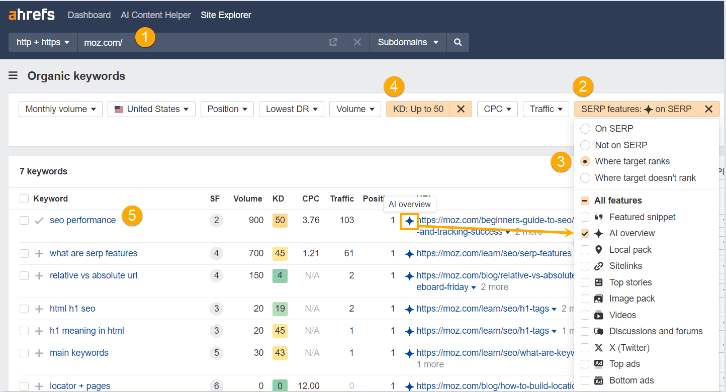
SERP features and AI Overviews focus on providing short, quick summaries and answers to specific queries.

If you can appear in these additional features, then you’re right at the top of the page where those queries are answered, whether they’re typed or spoken.

Structured data is particularly important for voice queries, especially those spoken back to the user without a screen.

Properly structuring the data about your pages and content helps the algorithms choose what to display and helps voice assistants speak coherent results.

On the smaller screens of mobile devices, featured snippets become important because there’s less screen space for users to see organic results.

Schema should be part of your overall SEO strategy and you can learn more here:

Target High-Intent Long-Tail Keywords

Voice search involves answering queries that people speak. While SEO often involves targeting short phrases that people type, people speak very differently.

There are three key considerations for keyword targeting when it comes to voice:

  1. People tend to speak in long phrases.
  2. Many people use voice search for purchase-related queries, such as making online purchases and creating shopping lists.
  3. Voice queries tend to express immediate or short-term needs. People often ask their voice assistants to find something or perform an action. (Play a podcast, find a recipe, find or direct to a place.)

All these facts make long-tail queries and high-intent task or product-focused queries important.

By creating content on your website that serves these types of queries, you can get yourself in front of audiences during decisions or consideration points in their process.

SEJ has many resources on long-tail queries and targeting query intent:

Answer Questions Conveniently

Developments in AI have improved how search engines respond to queries in longer form, “natural” or “conversational” language. These types of queries are more likely from voice searchers. They’re also key to successful SEO strategies overall.

As AI algorithms get better at understanding and responding to complex queries, voice search is becoming less of a separate thing to optimize for and more of a benefit of a robust SEO strategy.

Your content strategy should involve developing easily accessible answers to questions and common queries you expect from your audience.

You can use Google’s features, such as People Also Ask, and your keyword research tools to identify questions your audience will likely ask and then build them into your content strategy.

Read these resources from SEJ to find out more about questions and answers:

Understand Intent To Serve Voice Queries

Advanced natural language processing means search algorithms can easily interpret queries, even in complex language, and return results that match them.

Your focus should be on search intents for users who are either in a hurry, have a high intent to action, or need additional accessibility.

For all these users, you should make your website easy to navigate and focus on acquiring the top spots in featured snippets and local SEO results.

While voice search wasn’t as disruptive as expected, it was a step in the development of natural language processing towards AI technology. Understanding these concepts can help you succeed in modern SEO.

More resources:


Featured Image: New Africa/Shutterstock

CMS Market Share Trends: Top Content Management Systems (Nov. 2024) via @sejournal, @theshelleywalsh

WordPress has held the dominant share of the content management systems (CMS) market since it was launched in 2003.

Currently, the popular platform stands at 62.2% market share, according to W3Techs, which offers the most reputable and trustworthy data source. But in the last two years, WordPress has seen it’s market share start to reduce for the first time.

In this report, you’ll learn about the size of the CMS market, how it has evolved over the past decade, how different content management systems stack up against one another, and why this matters for someone working in SEO.

How Large Is The CMS Market?

According to W3Techs, 70.2% of websites have a CMS, and Netcraft reports 1.13 billion live websites.

From this, we can assume that the current market size for content management systems is approximately 793 million websites.

Top 10 CMS By Market Share (Globally)

CMS (as of November 2024) Launched Type Market Share Usage
No CMS 29.8%
1 WordPress 2003 Open source 62.2% 43.7%
2 Shopify 2006 SaaS 6.6% 4.6%
3 Wix 2006 SaaS 4.5% 3.2%
4 Squarespace 2004 SaaS 3.1% 2.2%
5 Joomla 2005 Open source 2.3% 1.6%
6 Drupal 2001 Open source 1.3% 0.9%
7 Adobe Systems (Adobe Experience Manager) 2013 Open source 1.2% 0.9%
8 Webflow 2013 SaaS 1.1% 0.8%
9 PrestaShop 2008 Open source 1.0% 0.7%
10 Google Systems (Google Sites) 2008 Online application 0.9% 0.6%

Data from W3Techs, November 2024

What Is The Most Widely Used CMS?

*Graphs are separated due to the dominance of the WordPress market share.

  • WordPress’s market share has reduced by nearly 5% in the last two years. This could possibly continue with the issues it has experienced this year.
  • Shopify’s market share took a dip of almost 14% in 2023, but it bounced back and gained some ground this year.
  • Wix’s market share is on the upswing, with just over 3% of all websites using its platform. This could be attributed to the work they do on branding.
  • Joomla and Drupal are seeing a downward trend lately, while Duda is gaining some momentum, which could be attributed to the efforts of leveraging influencers for their webinars.

WordPress has held the dominant market share almost since its launch in 2003.

From 2013 to 2022, it experienced strong growth of 148%. WordPress then peaked at 65.2% market share back in January 2022, but, in the last two years has started to contract by nearly 5%.

Between 2023 and 2024:

  • Websites with no CMS system have declined by nearly 8%.
  • Websites with WordPress have increased by just over 1%.

WordPress Vs. Joomla Vs. Drupal Market Share

WordPress vs. Joomla Vs. DrupalScreenshot from W3 Techs.com, November 2024
  • Since 2023, Joomla has decreased its market share by nearly 15%.
  • Since 2023, Drupal has decreased its market share by nearly 28%.

In 2013, Joomla and Drupal used to hold 15.9% of the CMS market share, but they have slumped to 3.6%.

This decline has seen them drop from positions 2 and 3 to 5 and 6, as Wix and Squarespace have risen and finally superseded them in 2022.

That’s quite a decline for Joomla, which might not have had the same market share as WordPress, but up to 2008, it had more search interest, according to Google Trends.

Screenshot from Google Trends, November 2024

Why did these popular content management systems decline so much?

It’s most likely due to the strength of third-party support for WordPress with plug-ins and themes, making it much more accessible.

The growth of website builders, such as Wix and Squarespace, indicates that small businesses want a more straightforward managed solution. And they have started to nibble on market share from the bottom.

Website Builders Market Share: Wix Vs. Squarespace

Screenshot from W3 Techs.com, November 2024
  • Wix has increased by 18.4% this year, from January to November.
  • Squarespace has increased by 3.3% this year from January to November.

If we look at the website builders, their growth is a strong indication of where the market might go in the future.

From 2023 to 2024:

  • Shopify grew by 15.8%.
  • Wix grew by 25%.
  • Squarespace grew by 3.3%.

When we compare the 5% contraction of WordPress over the last year to the other players, we have to ask, why is that happening?

SaaS web builders such as Wix and Squarespace don’t require coding knowledge and offer a hosted website that makes it more accessible for a small business to get a web presence quickly.

No need to arrange a hosting solution, install a website, and set up your own email. A web builder neatly does all this for you.

WordPress is not known as a complicated platform to use, but it does require some coding knowledge and an understanding of how websites are built.

On the other hand, a website builder is a much easier route to market, without the need to understand what is happening in the back end.

Consider that, during the pandemic, much of the population worked from home, leading to more interest and attention placed on how being online could be a source of income.

Elementor

Elementor is a WordPress-based website builder that has a market share of 16.5% and is used by 11.6% of all websites.

elementorScreenshot from W3 Techs.com, November 2024

It also has significantly more market share than Wix and Squarespace combined.

However, because it’s a third-party plug-in and not a CMS, it isn’t listed in the Top 10 CMS above.

If we compare the volume of traffic to the number of CMS, we can see that WordPress is in the golden section, up and to the right, clearly favored by sites with more traffic.

Joomla fits into a niche of fewer installs but more high-traffic sites, indicating that more professional sites are using it.

Squarespace and Wix are to the left and down, highlighting that they are installed on fewer sites with less traffic.

This is a strong indication that they are used more by small websites and small businesses.

Elementor bridges the gap between the two and has the weight of the WordPress market share, but is used by sites with less traffic.

The appetite is growing for drag-and-drop, plug-and-play solutions that make having a web presence accessible for anyone. This is the space to watch.

Ecommerce CMS Market Share: WooCommerce Vs. Shopify

Screenshot from W3Techs, November 2024
  • WooCommerce has a market share of 13.1%.
  • Shopify has a market share of 6.6%.

The ecommerce CMS space echoes a pattern similar to that of website builders.

Technically, WooCommerce is not a standalone CMS, but a WordPress plug-in – which is why it doesn’t appear in the Top 10 CMS data table.

However, it’s essential to the ecommerce space, so it’s worth considering and mentioning.

9.2% of all existing websites use WooCommerce.

Looking at the distribution, we can see a clear pattern emerge. In comparison to other ecommerce CMS platforms, WooCommere is dominant.

It has more market share than its competitors combined: Magento + OpenCart + PrestaShop + Shopify = 8.8% market share.

Screenshot from W3Techs, November 2024

Smaller sites might favor WooCommerce, but it has the WordPress platform’s weight for market access and, therefore, more installs – much like Elementor.

Shopify has more market share, but the traffic levels are similar to WordPress.

Shopify saw growth during the pandemic, by 52.9% from 2020 to 2021 and then 26.9% from 2021 to 2022 – far more than any other platform. After that, it retracted in 2023, but in 2024 has come back to the same market share as 2022.

Why Does CMS Market Share Matter To Someone Working In SEO?

WordPress retains its dominance in the CMS market share, but website builders such as Wix, Squarespace, and Shopify are on the rise, indicating where market growth lies, especially for small businesses.

If more small businesses are switching to website builders, understanding the limitations and intricacies of these platforms for SEO could be a competitive advantage.

Shopify is installed on 4.6% of all websites (not just sites with a CMS) – a total potential market of 51.98 million websites.

With their increasing market share, specializing in Shopify SEO could be a strategic move for an SEO professional.

Similarly, specializing in Wix and Squarespace is a way to differentiate yourself from the competition.

WordPress might be dominant now, but that also means that many other people are servicing that specific CMS.

Aligning with a more niche CMS can be a strategic move for new client opportunities.

More resources:


All data collected from W3Techs, November 2024, unless otherwise indicated.

W3Tech samples its data from the Alexa top 10 million and Tranco top 1 million. Websites with no content or duplicate sites are excluded. Limitations of the data source mean that hosted Tumblr and WordPress.com sites are not included, as the data collection doesn’t count subdomains as more than one site.


Featured Image: Genko Mono/Shutterstock

China banned exports of a few rare minerals to the US. Things could get messier.

This article is from The Spark, MIT Technology Review’s weekly climate newsletter. To receive it in your inbox every Wednesday, sign up here.

I’ve thought more about gallium and germanium over the last week than I ever have before (and probably more than anyone ever should).

As you may already know, China banned the export of those materials to the US last week and placed restrictions on others. The move is just the latest drama in escalating trade tensions between the two countries.

While the new export bans could have significant economic consequences, this might be only the beginning. China is a powerhouse, and not just in those niche materials—it’s also a juggernaut in clean energy, and particularly in battery supply chains. So what comes next could have significant consequences for EVs and climate action more broadly.

A super-quick catch-up on the news here: The Biden administration recently restricted exports of chips and other technology that could help China develop advanced semiconductors. Also, president-elect Donald Trump has floated all sorts of tariffs on Chinese goods.

Apparently in response to some or all of this, China banned the export of gallium, germanium, antimony, and superhard materials used in manufacturing, and said it may further restrict graphite sales. The materials are all used for both military and civilian technologies, and significantly, gallium and germanium are used in semiconductors.

It’s a ramp-up from last July, when China placed restrictions on gallium and germanium exports after enduring years of restrictions by the US and its Western allies on cutting-edge technology. (For more on the details of China’s most recent move, including potential economic impacts, check out the full coverage from my colleague James Temple.)

What struck me about this news is that this could be only the beginning, because China is central to many of the supply chains snaking around the globe.

This is no accident—take gallium as an example. The metal is a by-product of aluminum production from bauxite ore. China, as the world’s largest aluminum producer, certainly has a leg up to be a major player in the niche material. But other countries could produce gallium, and I’m sure more will. China has a head start because it invested in gallium separation and refining technologies.

A similar situation exists in the battery world. China is a dominant player all over the supply chain for lithium-ion batteries—not because it happens to have the right metals on its shores (it doesn’t), but because it’s invested in extraction and processing technologies.

Take lithium, a crucial component in those batteries. China has around 8% of the world’s lithium reserves but processes about 58% percent of the world’s lithium supply. The situation is similar for other key battery metals. Nickel that’s mined in Indonesia goes to China for processing, and the same goes for cobalt from the Democratic Republic of Congo.

Over the past two decades, China has thrown money, resources, and policy behind electric vehicles. Now China leads the world in EV registrations, many of the largest EV makers are Chinese companies, and the country is home to a huge chunk of the supply chain for the vehicles and their batteries.

As the world begins a shift toward technologies like EVs, it’s becoming clear just how dominant China’s position is in many of the materials crucial to building that tech.

Lithium prices have dropped by 80% over the past year, and while part of the reason is a slowdown in EV demand, another part is that China is oversupplying lithium, according to US officials. By flooding the market and causing prices to drop, China could make it tougher for other lithium processors to justify sticking around in the business.

The new graphite controls from China could wind up affecting battery markets, too. Graphite is crucial for lithium-ion batteries, which use the material in their anodes. It’s still not clear whether the new bans will affect battery materials or just higher-purity material that’s used in military applications, according to reporting from Carbon Brief.

To this point, China hasn’t specifically banned exports of key battery materials, and it’s not clear exactly how far the country would go. Global trade politics are delicate and complicated, and any move that China makes in battery supply chains could wind up coming back to hurt the country’s economy. 

But we could be entering into a new era of material politics. Further restrictions on graphite, or moves that affect lithium, nickel, or copper, could have major ripple effects around the world for climate technology, because batteries are key not only for electric vehicles, but increasingly for our power grids. 

While it’s clear that tensions are escalating, it’s still unclear what’s going to happen next. The vibes, at best, are uncertain, and this sort of uncertainty is exactly why so many folks in technology are so focused on how to diversify global supply chains. Otherwise, we may find out just how tangled those supply chains really are, and what happens when you yank on threads that run through the center of them. 


Now read the rest of The Spark

Related reading

Check out James Temple’s breakdown of what China’s ban on some rare minerals could mean for the US.

Last July, China placed restrictions on some of these materials—read this story from Zeyi Yang, who explains what the moves and future ones might mean for semiconductor technology.

As technology shifts, so too do the materials we need to build it. The result: a never-ending effort to build out mining, processing, and recycling infrastructure, as I covered in a feature story earlier this year.

STEPHANIE ARNETT/MIT TECHNOLOGY REVIEW | GETTY, ENVATO

Another thing 

Each year we release a list of 10 Breakthrough Technologies, and it’s nearly time for the 2025 edition. But before we announce the picks, here are a few things that didn’t make the cut

A couple of interesting ones on the cutting-room floor here, including eVTOLs, electric aircraft that can take off and land like helicopters. For more on why the runway is looking pretty long for electric planes (especially ones with funky ways to move through the skies), check out this story from last year

Keeping up with climate  

Denmark received no bids in its latest offshore wind auction. It’s a disappointing result for the birthplace of offshore wind power. (Reuters)

Surging methane emissions could be the sign of a concerning shift for the climate. A feedback loop of emissions from the Arctic and a slowdown in how the powerful greenhouse gas breaks down could spell trouble. (Inside Climate News)

Battery prices are dropping faster than expected. Costs for  lithium-ion packs just saw their steepest drop since 2017. (Electrek)

This fusion startup is rethinking how to configure its reactors by floating powerful magnets in the middle of the chamber. This sounds even more like science fiction than most other approaches to fusion. (IEEE Spectrum)

The US plans to put monarch butterflies on a list of threatened species. Temperature shifts brought on by climate change could wreak havoc with the insects’ migration. (Associated Press)

Sources close to Elon Musk say he’s undergone quite a shift on climate change, morphing from “environmental crusader to critic of dire climate predictions.” (Washington Post)

Google has a $20 billion plan to build data centers and clean power together. “Bring your own power” is an interesting idea, but not a tested prospect just yet. (Canary Media)

The Franklin Fire in Los Angeles County sparked Monday evening and quickly grew into a major blaze. At the heart of the fire’s rapid spread: dry weather and Santa Ana winds. (Scientific American)

Places in the US that are most at risk for climate disasters are also most at risk for insurance hikes. Check out these great data visualizations on insurance and climate change. (The Guardian)

The Download: Google’s Project Astra, and China’s export bans

This is today’s edition of The Download, our weekday newsletter that provides a daily dose of what’s going on in the world of technology.

Google’s new Project Astra could be generative AI’s killer app

Google DeepMind has announced an impressive grab bag of new products and prototypes that may just let it seize back its lead in the race to turn generative artificial intelligence into a mass-market concern.

Top billing goes to Gemini 2.0—the latest iteration of Google DeepMind’s family of multimodal large language models, now redesigned around the ability to control agents—and a new version of Project Astra, the experimental everything app that the company teased at Google I/O in May.

The margins between top-end models like Gemini 2.0 and those from rival labs like OpenAI and Anthropic are now slim. These days, advances in large language models are less about how good they are and more about what you can do with them. And that’s where agents come in. 

MIT Technology Review got to try out Astra in a closed-door live demo last week. It gave us a hint at what’s to come. Find out more in the full story.

—Will Douglas Heaven

China banned exports of a few rare minerals to the US. Things could get messier.

—Casey Crownhart

I’ve thought more about gallium and germanium over the last week than I ever have before (and probably more than anyone ever should).

China banned the export of those materials to the US last week and placed restrictions on others. The move is just the latest drama in escalating trade tensions between the two countries.

While the new export bans could have significant economic consequences, this might be only the beginning. China is a powerhouse, and not just in those niche materials—it’s also a juggernaut in clean energy, and particularly in battery supply chains. So what comes next could have significant consequences for EVs and climate action more broadly. Read the full story.

This story is from The Spark, our weekly climate and energy newsletter. Sign up to receive it in your inbox every Wednesday.

The must-reads

I’ve combed the internet to find you today’s most fun/important/scary/fascinating stories about technology.

1 It’s looking pretty likely 2024 will be the hottest year on record
But average temperatures are just one way of assessing our warming world. (New Scientist $)
+ The first few months of 2025 are likely to be hotter than average, too. (Reuters)
+ The US is about to make a sharp turn on climate policy. (MIT Technology Review)

2 Meta has donated $1 million to Trump’s inaugural fund
In an effort to strengthen their previously fractious relationship. (WSJ $)
+ Mark Zuckerberg isn’t the only tech figure seeking the President-elect’s ear. (Insider $)

3 How China secretly repatriates Uyghurs
Even the United Nations is seemingly powerless to stop it. (WP $)
+ Uyghurs outside China are traumatized. Now they’re starting to talk about it. (MIT Technology Review)

4 How Big Tech decides when to scrub a user’s digital footprint
Murder suspect Luigi Mangione’s Instagram has been taken down—but his Goodreads hasn’t. (NYT $)
+ Why it’s dangerous to treat public online accounts as the full story. (NY Mag $)

5 Russia-backed hackers targeted Ukraine’s military using criminal tools
Which makes it even harder to work out who did it. (TechCrunch)

6 What Cruise’s exit means for the rest of the robotaxi industry
Automakers are becoming frustrated waiting for the technology to mature. (The Verge)
+ Cruise will focus on developing fully autonomous personal vehicles instead. (NYT $)

7 Researching risky pathogens is extremely high stakes
The potential for abuse has some researchers worried we shouldn’t undertake it at all. (Undark Magazine)
+ Meet the scientist at the center of the covid lab leak controversy. (MIT Technology Review)

8 Altermagnetism could be computing’s next big thing
It would lead to faster, more reliable electronic devices. (FT $)

9 Why some people need so little sleep
Gene mutations appear to hold at least some of the answers. (Knowable Magazine)
+ Babies spend most of their time asleep. New technologies are beginning to reveal why. (MIT Technology Review)

10 Inside the creeping normalization of AI movies
The world’s largest TV manufacturer wants to make films for people too lazy to change the channel. (404 Media)
+ Unsurprisingly, it’ll push targeted ads, too. (Ars Technica)
+ How AI-generated video is changing film. (MIT Technology Review)

Quote of the day

“They’ve made him a martyr for all the troubles people have had with their own insurance companies.”

—Felipe Rodriguez, an adjunct professor at the John Jay College of Criminal Justice in New York, explains why murder suspect Luigi Mangione is being lionized online to Reuters.

The big story

Why AI could eat quantum computing’s lunch

November 2024

Tech companies have been funneling billions of dollars into quantum computers for years. The hope is that they’ll be a game changer for fields as diverse as finance, drug discovery, and logistics.

But while the field struggles with the realities of tricky quantum hardware, another challenger is making headway in some of these most promising use cases. AI is now being applied to fundamental physics, chemistry, and materials science in a way that suggests quantum computing’s purported home turf might not be so safe after all. Read the full story.

—Edd Gent

We can still have nice things

A place for comfort, fun and distraction to brighten up your day. (Got any ideas? Drop me a line or tweet ’em at me.)

+ Working life getting you down? These pictures of bygone office malaise will make you feel a whole lot better (or worse—thanks Will!)
+ Gen Z are getting really into documenting their lives via digital cameras, apparently. 📸
+ If you believe that Alan MacMasters invented the first electric bread toaster, I’m sorry to inform you that you’ve fallen for an elaborate online hoax.
+ The case for a better Turing test for AI-generated art.