Tech that measures our brainwaves is 100 years old. How will we be using it 100 years from now?

This article first appeared in The Checkup, MIT Technology Review’s weekly biotech newsletter. To receive it in your inbox every Thursday, and read articles like this first, sign up here.

This week, we’re acknowledging a special birthday. It’s 100 years since EEG (electroencephalography) was first used to measure electrical activity in a person’s brain. The finding was revolutionary. It helped people understand that epilepsy was a neurological disorder as opposed to a personality trait, for one thing (yes, really).

The fundamentals of EEG have not changed much over the last century—scientists and doctors still put electrodes on people’s heads to try to work out what’s going on inside their brains. But we’ve been able to do a lot more with the information that’s collected.

We’ve been able to use EEG to learn more about how we think, remember, and solve problems. EEG has been used to diagnose brain and hearing disorders, explore how conscious a person might be, and even allow people to control devices like computers, wheelchairs, and drones.

But an anniversary is a good time to think about the future. You might have noticed that my colleagues and I are currently celebrating 125 years of MIT Technology Review by pondering the technologies the next 125 years might bring. What will EEG allow us to do 100 years from now?

First, a quick overview of what EEG is and how it works. EEG involves placing electrodes on the top of someone’s head, collecting electrical signals from brainwaves, and feeding these to a computer for analysis. Today’s devices often resemble swimming caps. They’re very cheap compared with other types of brain imaging technologies, such as fMRI scanners, and they’re pretty small and portable.

The first person to use EEG in people was Hans Berger, a German psychiatrist who was fascinated by the idea of telepathy. Berger developed EEG as a tool to measure “psychic energy,” and he carried out his early research—much of it on his teenage son—in secret, says Faisal Mushtaq, a cognitive neuroscientist at the University of Leeds in the UK. Berger was, and remains, a controversial figure owing to his unclear links with Nazi regime, Mushtaq tells me.

But EEG went on to take the neuroscience world by storm. It has become a staple of neuroscience labs, where it can be used on people of all ages, even newborns. Neuroscientists use EEG to explore how babies learn and think, and even what makes them laugh. In my own reporting, I’ve covered the use of EEG to understand the phenomenon of lucid dreaming, to reveal how our memories are filed away during sleep, and to allow people to turn on the TV by thought alone.   

EEG can also serve as a portal into the minds of people who are otherwise unable to communicate. It has been used to find signs of consciousness in people with unresponsive wakefulness syndrome (previously called a “vegetative state”). The technology has also allowed people paralyzed with amyotrophic lateral sclerosis (ALS) to communicate by thought and tell their family members they are happy.

So where do we go from here? Mushtaq, along with Pedro Valdes-Sosa at the University of Electronic Science and Technology of China in Chengdu and their colleagues, put the question to 500 people who work with EEG, including neuroscientists, clinical neurophysiologists, and brain surgeons. Specifically, with the help of ChatGPT, the team generated a list of predictions, which ranged from the very likely to the somewhat fanciful. Each of the 500 survey responders was asked to estimate when, if at all, each prediction might be likely to pan out.  

Some of the soonest breakthroughs will be in sleep analysis, according to the responders. EEG is already used to diagnose and monitor sleep disorders—but this is set to become routine practice in the next decade. Consumer EEG is also likely to take off in the near future, potentially giving many of us the opportunity to learn more about our own brain activity, and how it corresponds with our wellbeing. “Perhaps it’s integrated into a sort of baseball cap that you wear as you walk around, and it’s connected to your smartphone,” says Mushtaq. EEG caps like these have already been trialed on employees in China and used to monitor fatigue in truck drivers and mining workers, for example.

For the time being, EEG communication is limited to the lab or hospital, where studies focus on the technology’s potential to help people who are paralyzed, or who have disorders of consciousness. But that is likely to change in the coming years, once more clinical trials have been completed. Survey respondents think that EEG could become a primary tool of communication for individuals like these in the next 20 years or so.

At the other end of the scale is what Mushtaq calls the “more fanciful” application—the idea of using EEG to read people’s thoughts, memories, and even dreams.

Mushtaq thinks this is a “relatively crazy” prediction—one that’s a long, long way from coming to pass considering we don’t yet have a clear picture of how and where our memories are formed. But it’s not completely science fiction, and some respondents predict the technology could be with us in around 60 years.

Artificial intelligence will probably help neuroscientists squeeze more information from EEG recordings by identifying hidden patterns in brain activity. And it is already being used to turn a person’s thoughts into written words, albeit with limited accuracy. “We’re on the precipice of this AI revolution,” says Mushtaq.

These kinds of advances will raise questions over our right to mental privacy and how we can protect our thoughts. I talked this over with Nita Farahany, a futurist and legal ethicist at Duke University in Durham, North Carolina, last year. She told me that while brain data itself is not thought, it can be used to make inferences about what a person is thinking or feeling. “The only person who has access to your brain data right now is you, and it is only analyzed in the internal software of your mind,” she said. “But once you put a device on your head … you’re immediately sharing that data with whoever the device manufacturer is, and whoever is offering the platform.”

Valdes-Sosa is optimistic about the future of EEG. Its low cost, portability, and ease of use make the technology a prime candidate for use in poor countries with limited resources, he says; he has been using it in his research since 1969. (You can see what his set up looked like in 1970 in the image below!) EEG should be used to monitor and improve brain health around the world, he says: “It’s difficult … but I think it could happen in the future.” 
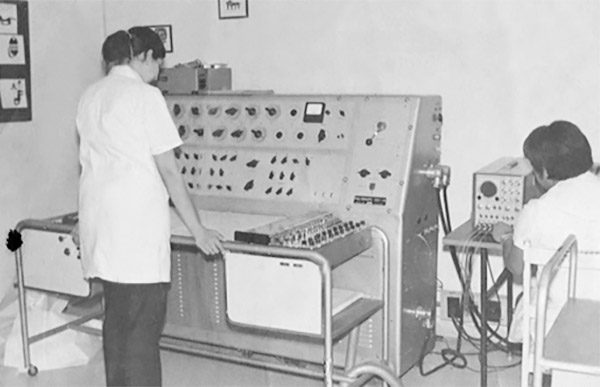
photo from the 1970s of two medical professionals facing an eeg machine

PEDRO VALDES-SOSA

Now read the rest of The Checkup

Read more from MIT Technology Review’s archive

You can read the full interview with Nita Farahany, in which she describes some decidedly creepy uses of brain data, here.

Ross Compton’s heart data was used against him when he was accused of burning down his home in Ohio in 2016. Brain data could be used in a similar way. One person has already had to hand over recordings from a brain implant to law enforcement officials after being accused of assaulting a police officer. (It turned out that person was actually having a seizure at the time.) I looked at some of the other ways your brain data could be used against you in a previous edition of The Checkup.

Teeny-tiny versions of EEG caps have been used to measure electrical activity in brain organoids (clumps of neurons that are meant to represent a full brain), as my colleague Rhiannon Williams reported a couple of years ago.

EEG has also been used to create a “brain-to-brain network that allows three people to collaborate on a game of Tetris by thought alone.

Some neuroscientists are using EEG to search for signs of consciousness in people who seem completely unresponsive. One team found such signs in a 21-year-old woman who had experienced a traumatic brain injury. “Every clinical diagnostic test, experimental and established, showed no signs of consciousness,” her neurophysiologist told MIT Technology Review. After a test that involved EEG found signs of consciousness, the neurophysiologist told rehabilitation staff to “search everywhere and find her!” They did, about a month later. With physical and drug therapy, she learned to move her fingers to answer simple questions.

From around the web

Food waste is a problem. This Japanese company is fermenting it to create sustainable animal feed. In case you were wondering, the food processing plant smells like a smoothie, and the feed itself tastes like sour yogurt. (BBC Future)

The pharmaceutical company Gilead Sciences is accused of “patent hopping”—having dragged its feet to bring a safer HIV treatment to market while thousands of people took a harmful one. The company should be held accountable, argues a cofounder of PrEP4All, an advocacy organization promoting a national HIV prevention plan. (STAT)

Anti-suicide nets under San Francisco’s Golden Gate Bridge are already saving lives, perhaps by acting as a deterrent. (The San Francisco Standard)

Genetic screening of newborn babies could help identify treatable diseases early in life. Should every baby be screened as part of a national program? (Nature Medicine)

Is “race science”—which, it’s worth pointing out, is nothing but pseudoscience—on the rise, again? The far right’s references to race and IQ make it seem that way. (The Atlantic)

As part of our upcoming magazine issue celebrating 125 years of MIT Technology Review and looking ahead to the next 125, my colleague Antonio Regalado explores how the gene-editing tool CRISPR might influence the future of human evolution. (MIT Technology Review)
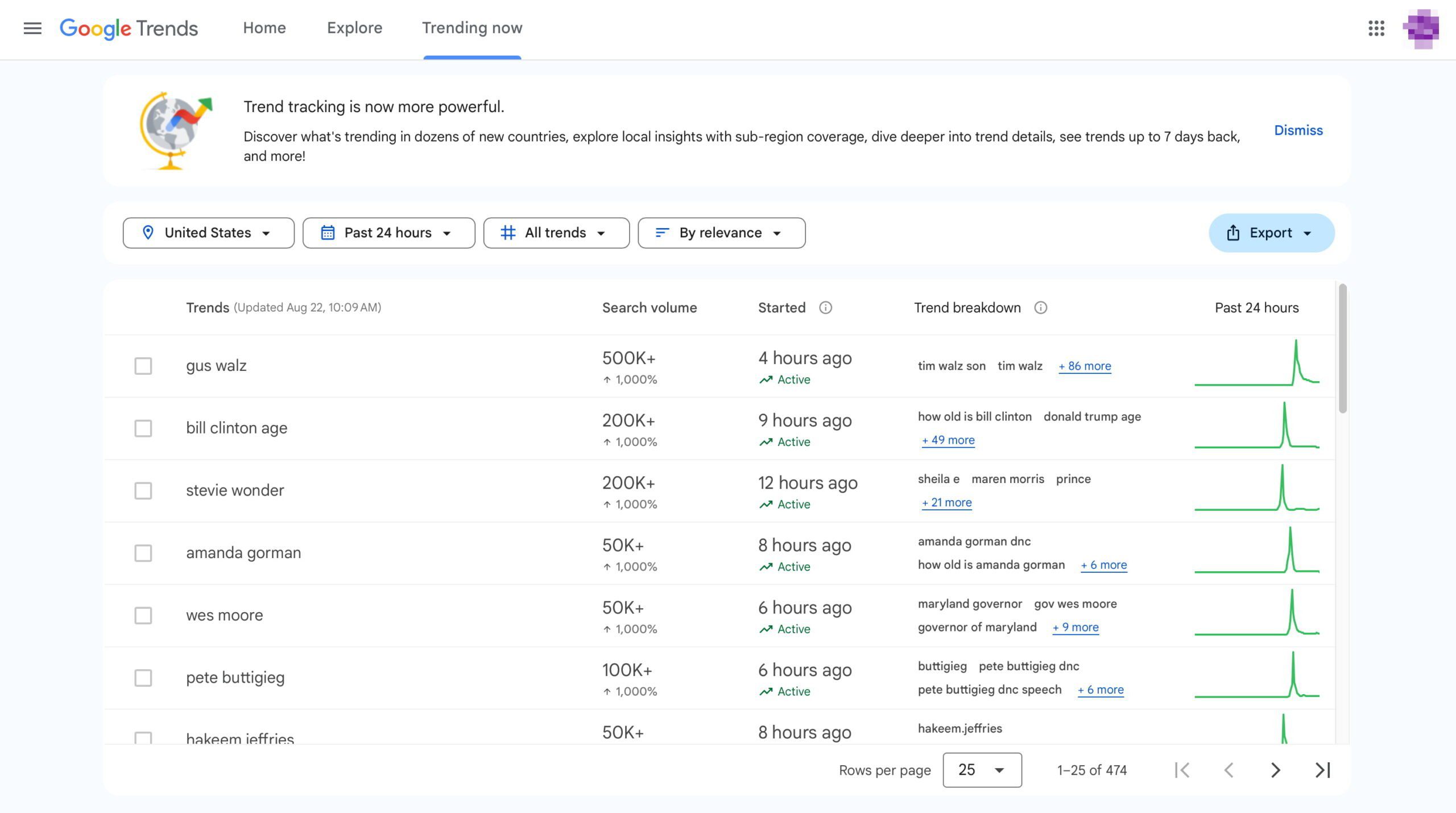
Mastering Google Trends to improve your SEO

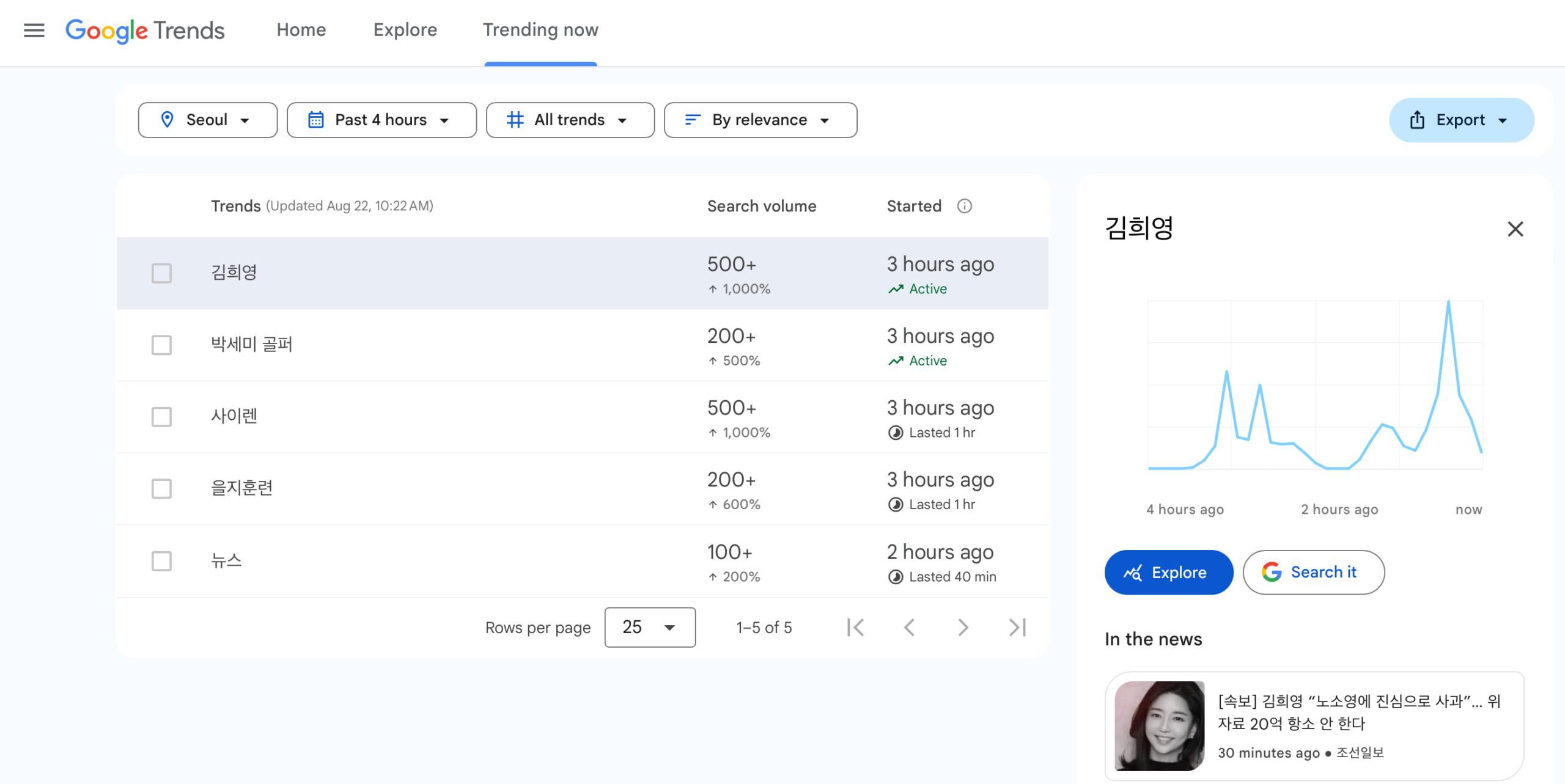
Staying on top of things and beating your competitors means staying on top of trends and consumer behavior. Over the years, Google quietly developed a tool that has become a staple in many SEO toolkits: Google Trends. This tool provides invaluable insights into what people are searching for. The latest update of Google Trends brings an updated Trending Now section that promises even more data on what is happening right now.

Google Trends is a tool that analyzes the popularity of search queries over time while showing data on trending topics globally and locally. It helps marketers, researchers, and content creators understand the interest in certain topics. Many use it to make strategic decisions based on searcher interest.

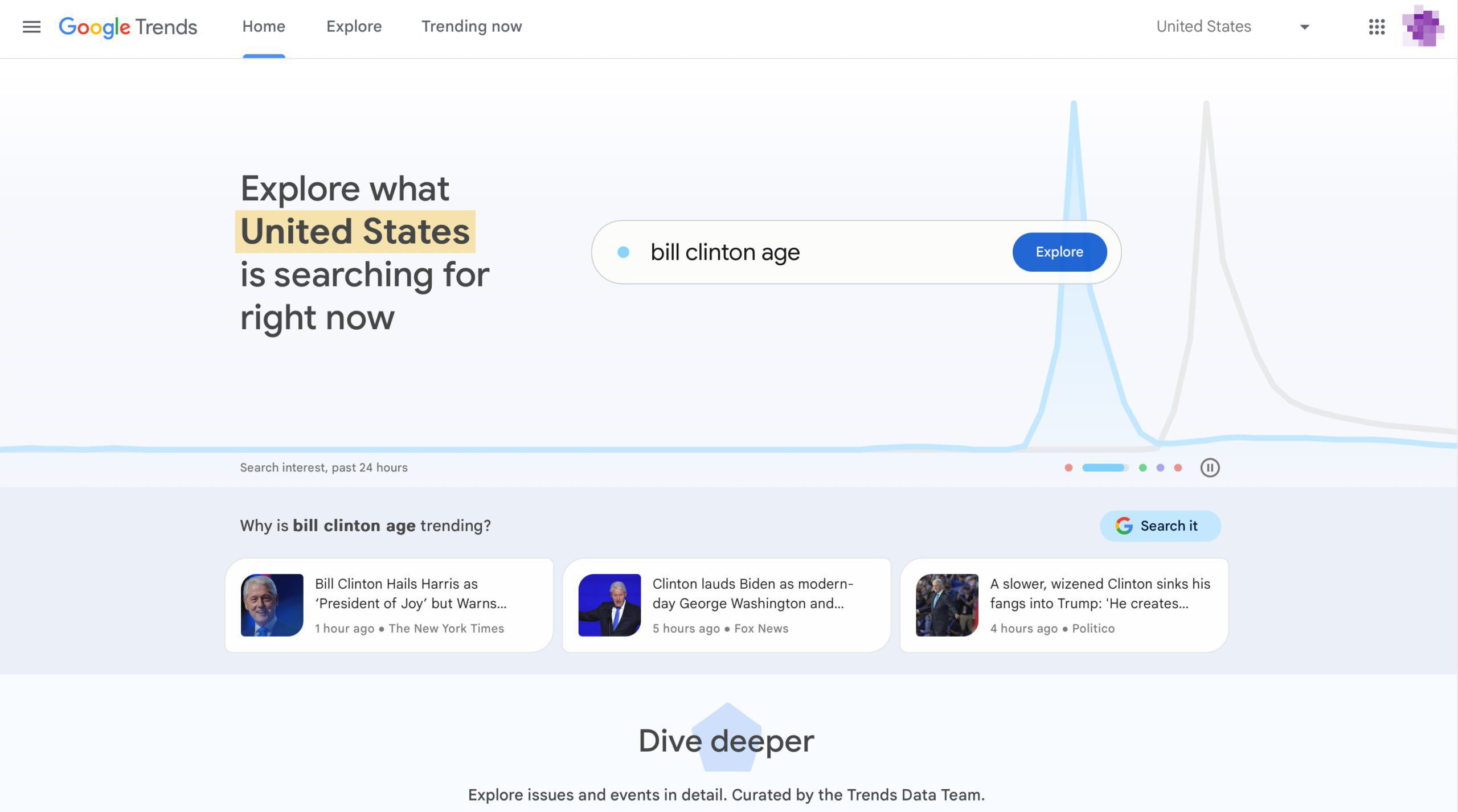
The Trending Now section in Google Trends shows real-time trends. Here, you’ll find topics that are gaining significance at this moment in time. Google updates this section constantly, so you’ll always see the latest search trends come in as they happen. Creators and researchers use this data to create timely content or to gauge interest in current events.

Google Trends is an essential tool for SEO

Launched in August 2024, the latest update to Google Trends brings many enhancements that make it faster, smarter, and customizable. The updated Trending Now section promises deeper insights into current search behavior. Thanks to these new insights, you get even more options to fine-tune and expand your SEO strategy.

Enhanced real-time data processing

First, the update improves real-time data processing in the Trending Now section of Google Trends. Now, the tool gives you even quicker access to search trends. These insights allow you to better inform your content strategy with the latest trends and topics. This gives you the tools to ensure your content is timely and engaging.

According to Google, “It detects ten times as many emerging trends as before and refreshes every ten minutes on average, so you see the latest upward Search swings right as they take off.”

What does that mean in practice? For example, if you operate in the VR gaming space and there is a sudden increase in searches for a new term related to “virtual reality gaming,” you can use that to write timely content that tackles the latest games, technologies, and industry news. As a result, you might become top-of-mind with that audience.

The updated Trending Now section in Google Trends

Smarter trend analysis tools

Google Trends gives you a ton of data for free, but you need to put in the effort to make it work for you. The new update introduces smarter analytical tools that make it easier to interpret data. With these tools, you can get more detailed breakdowns of trends, which, in turn, helps you understand search behavior across different regions and demographics.

Let’s say you work in the automotive industry. With these enhanced tools, you can dissect electric vehicle trends by various options. This way, you can tailor your strategies to specific market segments. Then, you can collaborate with local dealerships and keep monitoring trends to optimize engagement and sales in key markets.

Increased customization options

There are more buttons to push and options to select. The latest Google Trends update is focused on customization, which gives you more flexibility in viewing and analyzing the data. You can tailor the data and trends to fit your needs, whatever they might be. You can focus on timeframes, geographical areas, particular industries, or more.

Improved user interface

Google Trends has improved dramatically over the years, and this time, it’s the Trending Now section to get a much more usable interface. The section is now far more intuitive to navigate and, not unimportant, easier on the eyes. This new interface makes it easier to access and interpret the trending data. As a result, it should reduce the time needed to get those insights.

The clean layout includes an improved trend graphic, which makes it much more helpful overall. Now, you can quickly spot trends and patterns that inform your content and marketing efforts, ensuring you remain agile and informed.

The updated Google Trends tool makes it easier to make data-driven decisions about your SEO strategies. You can tailor the tool to your needs using faster data processing, real-time insights, smarter analysis options, and various other options. You can use the resulting findings to steer your SEO and content strategies.

Using real-time insights for content creation

Google Trends has always been the go-to tool for finding out what people are searching for right now, but the update makes this even more so. The tool has even better access to real-time data and makes this available to anyone in an easy-to-understand interface.

Combined, these are things that can give you an edge over your competitors. Google Trends gives you everything you need to quickly respond to emerging trends. This helps you stay relevant with your content. It also helps you stay at the forefront of developments in your industry.

These real-time insights can also help you improve existing content. You can regularly check your content to see if there are new, timely trends, keywords, and terms that you can incorporate into your articles.

Better geographical targeting for local SEO optimization

Google Trends has always had great insights into how people worldwide search, but the latest update greatly improves that. It now gives deep insights into regional search behavior, which you can use to tailor your local SEO strategies. Google says, “This tool is now available in 125 countries, and in 40 of those, you can not only see what’s trending in the country as a whole but also dive deeper in specific regions.”

For local SEO, it’s crucial to understand how people search in those specific regional markets. You’ll also need to see the differences between various locations. If you want to succeed in your local content strategy, you need data about that.

The enhanced local features give you more options to dive deeper into local SEO data

Building a long-term content strategy

Google Trends is for more than just timely content. Of course, you can use the insights to build a robust long-term strategy. Find persisting search patterns in the data, including all relevant topics and search queries. Use these to create high-quality, helpful, evergreen content. Make sure that this stands the test of time and outperforms the competition.

This kind of long-term data helps you position your brand. It helps you establish a market position and develop a message that people will align with. This is essential if you want to beat your competitors and build a brand for the future.

Diagnosing and responding to traffic anomalies

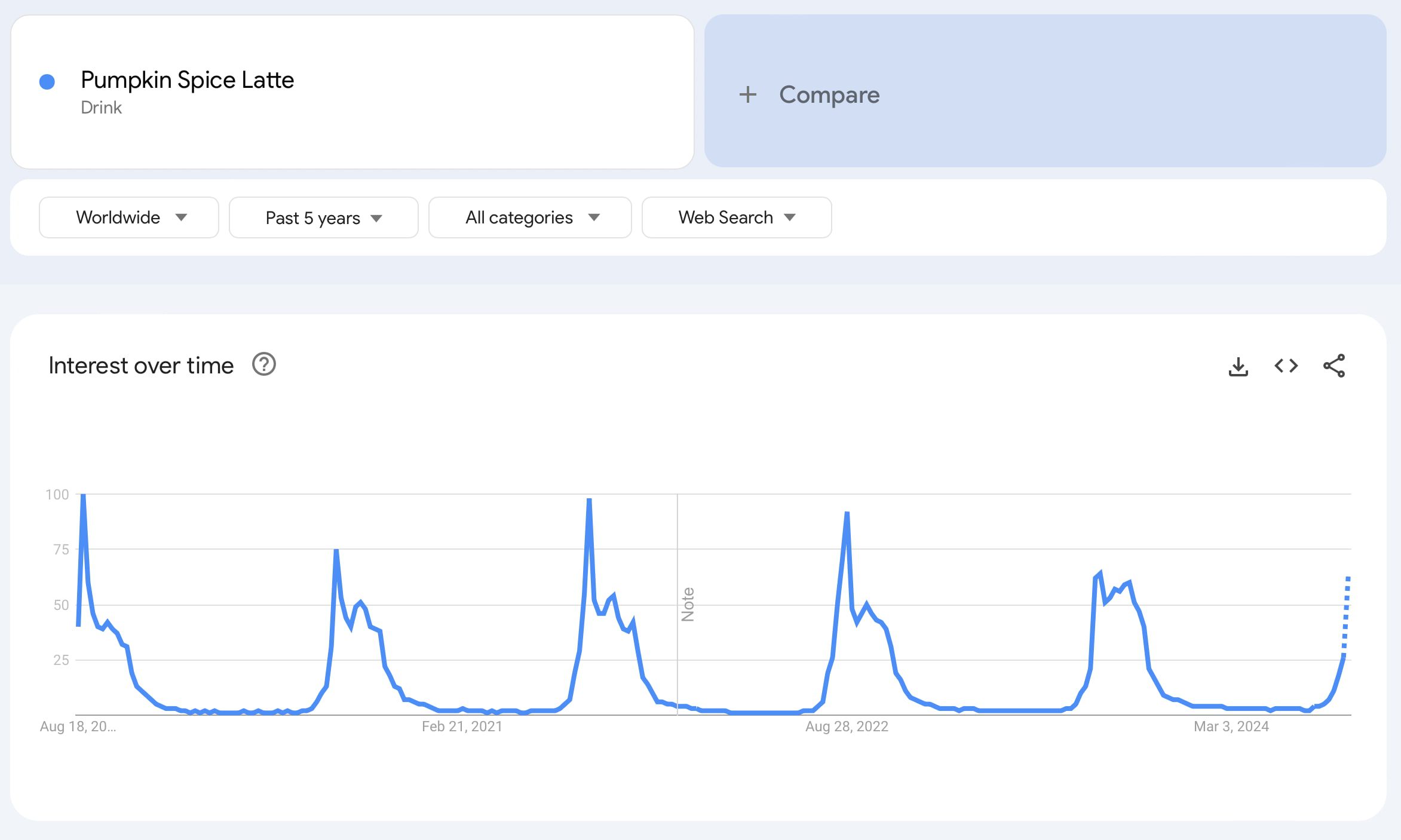
It’s hard to analyze unexpected changes in site traffic. Google Trends can give you a little bit of insight, though. Compare your traffic data with the broader search trends to see if the fluctuations happen more broadly. The changes might happen because of external factors, like global events, seasonal shifts, or other issues.

A great example of the seasonality of a topic

Google Trends has been around for a long time and is now better than ever. It’s a very helpful tool that gives you tons of data on how people search on Google — even showing trending stuff that happens when it happens.

Use Google Trends to inform your SEO strategies, as it provides a data-driven foundation for making decisions. Also, remember to tap into the regional search data, which can give you ideas of what your target audience searches in specific locales.

Coming up next!

Data Confirms Disruptive Potential Of SearchGPT via @sejournal, @martinibuster

Researchers analyzed SearchGPT’s responses to queries and identified how it may impact publishers, B2B websites, and e-commerce, discovering key differences between SearchGPT, AI Overviews, and Perplexity.

What is SearchGPT?

SearchGPT is a prototype natural language search engine created by OpenAI that combines a generative AI model with the most current web data to provide contextually relevant answers in a natural language interface that includes citations to relevant online sources.

OpenAI has not offered detailed information about how SearchGPT accesses web information. But the fact that it uses generative AI models means that it likely uses Retrieval Augmented Generation (RAG), a technology that connects an AI language model to indexed web data to give it access to information that it wasn’t trained on. This enables AI search to provide contextually relevant answers that are up to date and grounded with authoritative and trustworthy web sources.

How BrightEdge Analyzed SearchGPT

BrightEdge used a pair of search marketing research tools developed for enterprise users to help identify search and content opportunities, emerging trends and conduct deep competitor analysis.

They used their proprietary DataCube X and the BrightEdge Generative Parser™ to extract data points from SearchGPT, AI Overviews and Perplexity.

Here’s how it was done:

“BrightEdge compared SearchGPT, Google’s AI Overviews, and Perplexity.

To evaluate SearchGPT against Google’s AI Overviews and Perplexity, BrightEdge utilized DataCube X alongside BrightEdge Generative Parser ™ to identify a high-volume term and question based on exact match volumes. These queries were then input into all three engines to evaluate their approach, intent interpretation, and answer-sourcing methods.

This comparative study employs real, popular searches within each sector to accurately reflect the performance of these engines for typical users.”

DataCube X was used for identifying high-volume keywords and questions, all volumes were based on exact matches.

Each search engine was analyzed for:

  1. Approach to the query
  2. Ability to interpret intent
  3. Method of sourcing answers

SearchGPT Versus Google AI Overviews

Research conducted by BrightEdge indicates that SearchGPT offers comprehensive answers while Google AI Overviews (AIO) provides answers that are more concise but also has an edge with surfacing current trends.

The difference found is that SearchGPT in its current state is better for deep research and Google AIO excels at giving quick answers that are also aware of current trends.

Strength: BrightEdge’s report indicates that SearchGPT answers rely on a diverse set of authoritative web resources that reflect academic, industry-specific, and government sources.

Weakness: The results of the report imply that SearchGPT’s weakness in a comparison with AIO is in the area of trends, where Google AIO was found to be more articulate.

SearchGPT Versus Perplexity

The researchers concluded that Perplexity offers concise answers that are tightly focused on topicality. This suggests that Perplexity, which styles itself as an “answer engine” shares the strengths with Google’s AIO in terms of providing concise answers. If I were to speculate I would say that this might reflect a focus on satisfaction metrics that are biased toward more immediate answers.

Strength: Because SearchGPT seems to be tuned more for research and on high quality information sources, it could be said to have an edge over Perplexity as a more comprehensive and potentially more trustworthy tool for research than Perplexity.

Weakness: Perplexity was found to be a more concise source of answers, excelling at summarizing online sources of information for answers to questions.

SearchGPT’s focus on facilitating research makes sense because the eventual context of SearchGPT is as a complement to ChatGPT.

Is SearchGPT A Competitor To Google?

SearchGPT is not a competitor to Google because OpenAI’s stated plans are to incorporate it into ChatGPT and not as a standalone search engine. SearchGPT’s official purpose is not as a standalone search engine but to be integrated into ChatGPT.

This is how OpenAI explains it:

“We also plan to get feedback on the prototype and bring the best of the experience into ChatGPT.

…Please note that we plan to integrate the SearchGPT experience into ChatGPT in the future. SearchGPT combines the strength of our AI models with information from the web to give you fast and timely answers with clear, relevant sources.”

Is SearchGPT then a competitor to Google? The more appropriate question is if ChatGPT is building toward disrupting the entire concept of organic search.

Google has done a fair job of exhausting and disenchanting users with ads, tracking and data mining their personal lives.  So it’s not implausible that a more capable version of ChatGPT could redefine how people get answers.

BrightEdge’s research discovered that SearchGPT’s strength was in facilitating trustworthy research. That makes even more sense with the understanding that SearchGPT is currently planned to be integrated into ChatGPT, not as a competitor to Google but as a competitor to the concept of organic search.

Takeaways: What SEOs And Marketers Need To Know

The major takeaways from the research can be broken down into five ways SearchGPT is better than Google AIO and Perplexity.

1. Diverse Authoritative Sources.
The research shows that SearchGPT consistently surfaces answers from authoritative and trustworthy sources.

“Its knowledge base spans academic resources, specialized industry platforms, official government pages, and reputable commercial websites.”

2. Comprehensive Answers
BrightEdge’s analysis showed that SearchGPT delivers comprehensive answers on any topic, simplifying them into clear, understandable responses.

3. Proactive Query Interpretation
This is really interesting because the researchers discovered that SearchGPT was not only able to understand the user’s immediate information need, it answered questions with an expanded breadth of coverage.

BrightEdge explained it like this:

“Its initial response often incorporates additional relevant information, illustrative examples, and real-world applications.”

4. Pragmatic And Practical
SearchGPT tended to provide practical answers that were good for ecommerce search queries. BrightEdge noted:

“It frequently offers specific product suggestions and recommendations.”

5. Wide-Ranging Topic Expertise
The research paper noted that SearchGPT correctly used industry jargon, even for esoteric B2B search queries. The researchers explained:

“This approach caters to both general users and industry professionals alike.”

Read the research results on SearchGPT here.

Featured Image by Shutterstock/Khosro

How CTV Fits Into Digital Marketing During Holiday Season [Interview With Matt Voda] via @sejournal, @gregjarboe

Trends for holiday season planning have shifted over the years, and different brands define “the holidays” in different ways.

Retailers are keen to get as much out of holidays as possible. But the holidays come with challenges, with consumers becoming more selective with their spending and spending less in some categories.

Back in in 2008, I worked on a campaign called “100 days of Holidays” for “Better Homes & Gardens.” It started the month before Halloween and ran until New Year’s Day.

These days, you can already see Halloween costumes, candy, and decorations in stores weeks before Labor Day. So, the ship has sailed when it comes to planning for that upcoming holiday.

The extension of holidays, blurring them together, and inventing new opportunities for sales have shaped consumer behavior and how brands approach a long, hectic holiday season. The season is shorter this year, building pressure for brands to perform.

Digital marketers must now navigate new shifts in consumer behavior in preparation for the holidays this year. These seven trends will have a significant impact:

  1. Compared to last year, Thanksgiving is particularly late this November, resulting in five fewer shopping days between Cyber 5, the five-day shopping period that takes place from Thanksgiving to Cyber Monday, and the end of the year, which includes Christmas, Hanukkah, Kwanzaa, and New Year’s Eve.
  2. Despite some retailers anticipating that consumers will continue to limit their spending in the latter half of the year, EMARKETER predicts that total holiday retail sales will increase by 4.8% this year, up from the 3.9% growth rate seen in 2023.
  3. Digital shoppers will allocate the most money to fashion (including clothing, footwear, and accessories) this holiday season, but computer and consumer electronics will continue to lag for another year, as consumers feel less urgency to replace these items following the surge during the pandemic, according to EMARKETER.
  4. In 2024, US consumers are expected to spend an average of two hours and 15 minutes daily watching connected TV (CTV), according to EMARKETER research. And shoppable CTV ads are simplifying the process for holiday shoppers to make purchases directly from the media they watch.
  5. This holiday season, CTV advertisers could also reach 206.3 million second-screen users who discover brands and products on TV and then use their phones to learn more or make purchases, according to EMARKETER.
  6. Consumers are being more selective with their holiday spending this year. Over 60% of Americans say they can’t afford to make the wrong purchase, which may explain why a third of consumers have already begun shopping for the holidays, a significant increase compared to last year, according to a Google/Ipsos study.
  7. 60% of U.S. consumers have completely walked away from a purchase when overwhelmed by too many choices or excessive information, according to another Google/Ipsos study.

How CTV Fits Into Digital Marketing During Holiday Season Interview With Matt Voda

To get a good read on how CTV fits into the digital marketing mix during the upcoming holiday season, I asked Matt Voda, CEO of OptiMine, for his thoughts.

He is a marketing expert who advises some of the world’s largest brands like Amazon, Ring, Best Buy, Domino’s, JCPenney, TheRealReal, and other brands on cross-channel marketing impact, measuring both digital and traditional marketing channels down to individual ads and campaigns.

Here are my questions and Voda’s answers:

Greg Jarboe: How do you plan to navigate the shorter holiday shopping season?

Matt Voda: OptiMine’s clients use our scenario planning capabilities to run simulations using the shorter holiday season and look for the best ways to maximize sales. That can mean getting campaigns started earlier, or shifting to higher intensity levels faster, or even to run more last-minute campaigns for shoppers who wait until the last minute.

Jarboe: Do you expect holiday retain sales to go up, down, or sideways this year?

Voda: Retail sales have shown some strength recently despite predictions showing the opposite, so this is especially difficult to predict this year. That said, retailers with more agile marketing measurement can get faster reads on performance and adjust investments and mix more quickly in a more dynamic consumer environment, and these retailers will perform better as a result.

Jarboe: What do you expect to be retail’s most resilient categories in 2024?

Voda: There will be winning and losing categories, but the best retailers will be combining advanced customer intelligence with marketing measurement that informs which marketing approaches work best with key consumer segments to ensure they can overcome these challenges.

Jarboe: How does CTV fit into your digital marketing mix this holiday season?

Voda: Brands use CTV when they need better targeting options than what linear TV can offer, and CTV ends up functioning like digital video in this regard. The lines between TV and digital video are blurring quickly.

Jarboe: Will any of your holiday campaigns tap into second-screen users?

Voda: Successful retailers understand the interplay of media across their funnel and have the right measurement in place to guide to the most optimal investment mix across all channels. This is now table stakes.

Jarboe: Can social video change the hearts, minds, and actions of more selective shoppers?

Voda: Yes, absolutely. OptiMine’s Index, which is a performance benchmark across many of the top brands in the world, shows that video over social can be an extremely effective investment area, especially for new customer acquisition.

Jarboe: How to you provide consumers with the information they need without overwhelming them?

Voda: Creative is one of the most important aspects for successful campaigns and even with advances in AI, human creative talent is absolutely worth the investment and can make the difference.

Adjust To Consumer Trends Creatively

Digital marketers need to be creative and nimble to navigate the significant shifts in seven trends during the upcoming holiday season.

Connected TV can play a critical role in reaching consumers. By offering a streamlined user experience, CTV can facilitate better interactions between brands and consumers and help increase sales.

Paying attention to your media mix will be important. Track how your different channels interact with one another as well as how they individually perform.

Invest in human creative talent to create the right messages for the right channels to reach new and already engaged consumers. Optimizing for new experiences, such as allowing users to make purchases directly in ads placed on CTV or social media, could be key to boosting ecommerce sales this holiday season.

Yes, this is hard. But as Jimmy Dugan (Tom Hanks) tells Dottie Hinson (Geena Davis) in A League of Their Own (1992),

“It’s supposed to be hard. If it wasn’t hard, everyone would do it. The hard … is what makes it great.”

All stats above are taken from an EMARKETER report unless otherwise noted.

More resources: 


Featured Image: Stock-Asso/Shutterstock

Part 3: How To Launch, Manage, & Grow An Affiliate Program Step-By-Step via @sejournal, @rollerblader

You’re now ready to get your affiliate program in motion! Before you do, there are pitfalls to avoid and situations you’re going to run into.

In this final section of our series, you will learn the myths, truths, and common pitfalls to avoid when managing and growing an affiliate program.

Professional Tips, Myth Busting, & Common Pitfalls To Avoid

This section is probably the most important and controversial.

Remember that the affiliate industry is based on performance, not whether your company is gaining customers or adding value.

If something doesn’t feel right, or you do not get a clear and direct answer with concise data points and from unbiased tests, chances are you’re being taken advantage of. That’s what this section is about.

There Is No Army Or Group Ready Or Wanting To Promote You

There is no army or group of affiliates that wants to promote your brand or products.

Affiliate programs can take a minimum of a year to start seeing results unless your affiliates are “no-value” and “low-value,” because they intercept your own traffic.

You have to put the work in to recruit top funnel and value-adding partners.

They will be working on their own dime since you’re not paying media fees, and that also means you take a backseat to companies that will pay them upfront.

It is heavy labor to onboard and activate partners; nobody is going to start working for free just because you have a program.

Be Careful Of “Questionable” Advice From Networks And Agencies

Networks make their money based on how many orders are processed, not whether you are profitable or if they’re meeting your company’s goals.

Many agencies do, too. One of the most common recommendations is to work with websites that show up for your “brand + coupons” in Google searches.

If you don’t have an affiliate program, look at your analytics, and you’ll see the coupon site touch points under referrals.

Many networks, agencies, and affiliate managers will tell you that by allowing these sites into your program, you will see more sales, an increase in conversions, and average order value (AOV).

What you may experience is a decrease in total revenue by the amount you are now paying to the affiliate and the network. These touchpoints move from direct referral to affiliate. But don’t count coupon sites out.

Yes, the same touch point moving to a new channel could potentially cause a revenue loss, but there could be revenue gains, too.

Have the coupon site exchange the interception for guaranteed monthly email blasts, monthly social media features, and top placements in lists for shopping holidays like Mother’s Day, Christmas, and Valentine’s Day.

Coupon sites can add value and be worth working with.

That is where you and your affiliate manager need to come in so that your company still grows – and you get to choose who is and is not allowed in your program.

Affiliates Are Not Your Employees Or Your Sales Team

Affiliates are contractors of your company, not employees. They are not held to the same standards as sales professionals, such as hitting sales goals.

Affiliates in your program are working on their own dime vs. getting a guaranteed payment for ad space, promotions on a set schedule, or a media and advertising fee.

If the affiliate has their own traffic and is not intercepting your own, they control where it goes, and you will lose out on customers if you cross this line with them.

Work with your affiliates to get promotions at important times, and ask what they need. If they have a niche audience, create banners and videos that meet their audience’s needs.

If they know a specific word or phrase resonates with their audience, they will use it to get their audience to your website.

If they’re not breaking the law or making misleading claims, let them share their brand equity to build trust for your company. That is where a big value-add happens.

Affiliates Have To Link To My Website Or App

Affiliates do not have to link to your website or app – or exclusively to you. This is because they own their own web properties.

If the affiliate introduces new customers and doesn’t rely on your brand to have its own traffic, it decides who gets the traffic and sales, not you.

One important thing to remember is that Google’s reviews update rewards multiple shopping options. If the affiliate is not creating branded content like coupons, reviews, etc., linking to multiple vendors for the same product will likely benefit them.

This includes shopping content and gift guides, listicles, and even where to pick up supplies for creating a recipe or fixing something around the house.

Affiliate programs take a lot of work and are a high-risk but high-return channel when done in a value-adding way.

If your SEO tanks or social media channels are shut down, your affiliate partners, who have their own traffic, can help keep you in business while you recover.

That’s why it is important to invest in it, but you want to invest in it so that it attracts people to you and does not intercept and counteract your own efforts.

More resources: 


Featured Image: Overearth/Shutterstock

Simplifying Google Updates And Communications For C-Level Stakeholders via @sejournal, @TaylorDanRW

Google updates can cause uncertainty, confusion, and fear amongst non-SEO and non-marketing business stakeholders.

As an industry, we like to fixate on the winners and losers of any given update, and typically, websites (and categories) that take the larger hits gain more traction and shares.

As a result, the algorithm update horror stories also tend to end up in C-level inbox circulation more frequently.

Simplifying Google updates for C-level stakeholders involves focusing on key takeaways, business impact, and actionable insights (where possible).

Creating Frames Of Reference

When communicating to wider business stakeholders, creating frames of reference is essential for ensuring that your message is clear, relevant, and resonates with the audience.

From experience, there are five key elements to creating effective frames of reference for client C-level and non-marketing stakeholders.

 Component Notes
 Contextualize  Start with the big picture and relate ideas to familiar concepts. Make this “real” for who you’re communicating with.
 Use Relevant Data  Present data in terms of ROI, benchmarks, or impact that matters to the audience.
 Simplify Complex Ideas  Break down information, avoid jargon, and use visuals where possible. Keep it simple, as going too complex or complicated with visuals can cause other complications.
 Highlight Impact  Emphasize tangible business outcomes and use scenarios to illustrate effects. (E.g., a reduction in Search visibility in Segment A could lead to an X% decrease in MQLs over Y months based on the current website CVR.)
 Be Consistent  Align with business strategy and reinforce key messages.

You may also choose to use external, neutral sources that support or validate your communications.

For example, I tend to use a lot of Search Engine Journal’s coverage of Webmaster Hangouts and point to direct quotes from Googlers.

Communicating Updates, Even If They Don’t Matter

Let’s revisit a point I made at the beginning of this article: We can’t assume that we are the client’s sole source of SEO or Google-related news.

When speaking with the CMOs who helped shape these initial articles, one key issue they highlighted was the lack of clarity around Google updates in their past engagements.

They specifically mentioned challenges in understanding updates like RankBrain and initiatives like Hidden Gems.

It’s our responsibility to ensure that our C-level stakeholders are not only informed about changes in the search landscape but also understand how these changes impact them directly.

This proactive approach helps prevent any confusion or the impression that we’re not adequately addressing and mitigating risks for their organization.

The impact of these updates can vary greatly across different sectors – some may experience significant ranking shifts, while others might see only minor adjustments.

Additionally, Google employs systems that, while not typically labeled as “updates,” still play a vital role in shaping search results.

For instance, RankBrain, an AI system, aids Google in interpreting the intent behind queries, especially those it hasn’t encountered before.

Meanwhile, initiatives like Hidden Gems are designed to bring lesser-known but high-quality content to the forefront.

If we don’t make these distinctions for the client stakeholders, we leave them open to interpretation and potential incorrect/contradictory information online or from other vendors.

The 30,000ft View

The 30,000ft view in marketing communications refers to a high-level, strategic perspective on how Google updates or changes in the search landscape can potentially affect – or have started to affect – the organization.

The focus is on the big picture, considering the overarching goals and how

Key Updates

Highlight the most important developments and how they affect the overarching business strategy. This could be changes in the market, internal progress, or shifts in priorities.

Recommended Actions

Outline the next steps, focusing on what needs to be done, who’s responsible, and how these actions align with activities already in-flight (and planned), and the activities of other marketing channels.

Implementation Timeline

Provide a clear timeline with key milestones and deadlines. This also includes a follow-up plan to ensure everything stays on track and any adjustments are made as needed.

The above can be communicated effectively through DARCI and RAG visuals.

DARCI and RACI are both frameworks used in project management, but they serve slightly different purposes and offer varying levels of detail.

DARCI builds on the RACI framework and adds a layer by including a Decision-Maker role.

  • Decision-Maker.
  • Accountable.
  • Responsible.
  • Consulted.
  • Informed.

This is particularly useful in more complex projects where decision-making is crucial and needs to be clearly defined.

DARCI is often used in more complex or higher-stakes projects where the clarity of decision-making is critical, while RACI is sufficient for more straightforward tasks.

In a client/agency environment, the Decision Maker could well be your main point of contact or the client SEO lead, supported by the agency.

Visual Communications

Torino Scales

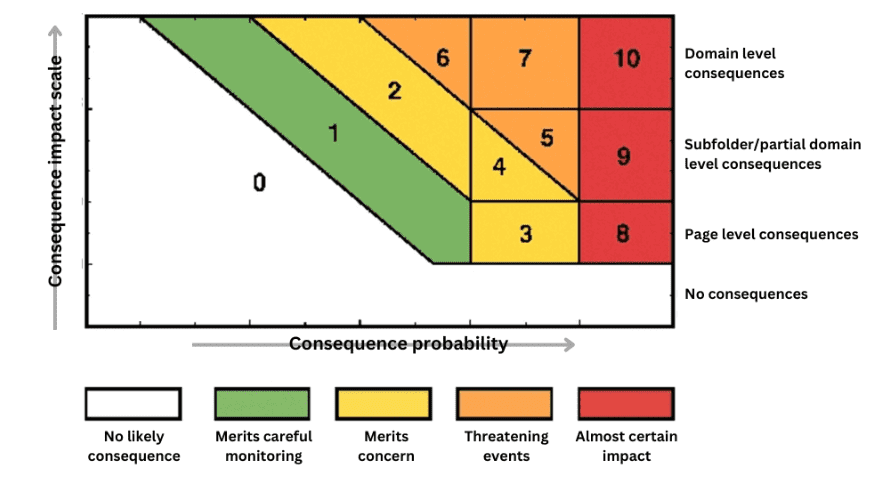
Organizations like NASA traditionally use the Torino Scale to assess the potential threat of near-Earth objects (NEOs), like asteroids and comets.

At the April 2024 edition of BrightonSEO, I introduced them as a tool for communicating and assessing the “potential impact hazard” of Google updates, emerging technologies, and changes to legislation…you could visually map anything that you would identify through a PESTLE analysis on a Torino Scale.

Torino Scales can be a useful, visual tool in communicating potential risk.

For example, a high rating on this scale would indicate significant potential changes to organic search performance, warranting close attention and possible strategic adjustment.

As this is a visual aid, you can update it between meetings and provide context in your scheduled stakeholder meetings as to why certain things have been upgraded or downgraded in terms of risk to the business and organic search performance.

Google Updates Vs. Seasonality

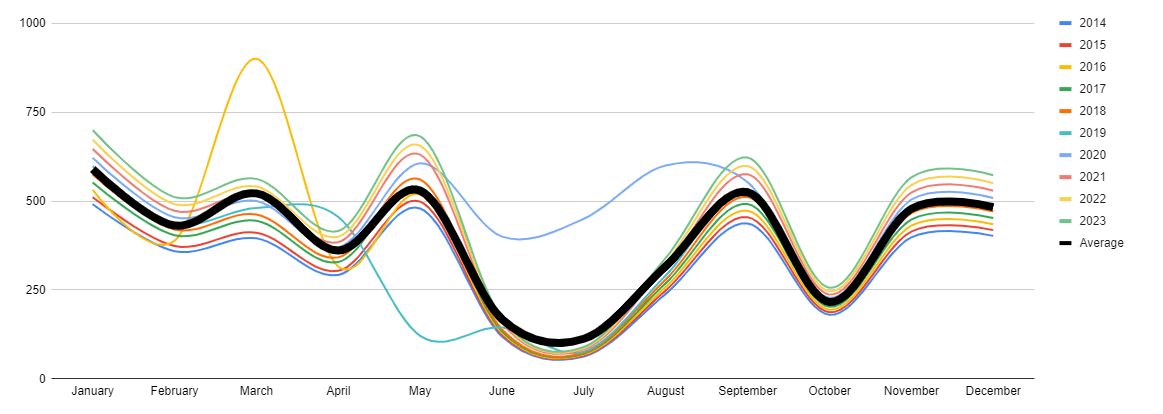
Seasonality affects most businesses, and sometimes, non-marketing stakeholders can confuse seasonal trends with a decline in organic performance or the adverse effects of a Google update between the periods being compared.

The only way to resolve this is through education, and by using year-on-year traffic and sales data, you can show consumer and market trends.

Overlaying data in this way helps educate stakeholdersScreenshot from author, August 2024

Overlaying data in this way helps educate stakeholders who may not be familiar with the consumer acquisition side of the business or are external consultants with specialisms outside of marketing.

Showing the average demonstrates anomalies in the data outside of the general seasonality and helps set performance expectations.

This data also helps educate stakeholders on why certain SEO (and other) marketing activities are being prioritized to reach the highest volume of audience members showing intent.

Visualizing traffic or revenue data over time, even at a high level, can be invaluable in educating non-marketing stakeholders within the business. In the example I provided earlier, aside from anomalies, there are consistent month-on-month declines in June, July, and October.

Many industries operate with a certain rhythm, and this visualization helps illustrate that pattern.

By understanding these natural fluctuations, businesses can avoid misallocating resources to identify root causes when, in reality, the issue may simply be that a smaller percentage of your Total Addressable Market (TAM) is actively buying or converting during those periods.

Communications Delivery

Timely, concise, and relevant updates build trust and empower C-level leaders to make well-informed decisions that can drive long-term success for both the client and the agency.

There are several ways, outside of the standard reporting and account management cadences, that allow you to communicate algorithm updates and other market factors effectively.

Centralized Wikis

By consolidating the latest updates, best practices, algorithm changes, and case studies in one easily accessible location, agencies can provide clients with real-time insights into factors that may impact their digital presence.

These Wikis also then serve a dual purpose, as anyone new to the business (or client) has a repository they can refer to for back history and information that otherwise may have been lost or buried in the BAU comms of the relationship.

Instant Messengers (IMs)

I’m not a big fan of normalizing IMs for client communications, as they tend to create single points of failure/stress points on an account.

To me, they can serve the purpose of delivering a message quickly and effectively, with further information to follow – much like Paul Revere’s Midnight Ride.

By creating dedicated channels or groups for each client or specific topics, agencies can ensure that relevant information is delivered directly and promptly.

These updates can then be expanded on through calls, or more comprehensive updates.

Clear Is Kind, And So Is Brief

Clear communication is challenging in SEO. You have a lot to cut through — not only the complexities of your work internally but also the messaging that people consume externally.

Frames of reference play a critical role in ensuring your communication is clear and delivers your intended message. C-level executives and non-marketing stakeholders are a specific audience with unique challenges and intents. You must communicate with them in a way that serves their needs.

Approach communication as a service that helps key stakeholders make informed decisions. This approach builds trust and helps you advocate for impactful resource allocation.

More resources: 


Featured Image: fizkes/Shutterstock

Duda Announces ActiveCampaign Marketing Automation Integration via @sejournal, @martinibuster

Duda announced a partnership with ActiveCampaign, a marketing automation and CRM company. The partnership allows agencies to bring marketing automation to their client sites to help boost sales and customer engagement.

ActiveCampaign

ActiveCampaign is a marketing automation platform that makes it easy to cultivate post-sales engagement and repeat sales. It’s also functions as a CRM and enables sales automation, specifically for SMBs.

The integration within the Duda editor makes it easy for agencies that build sites on the Duda platform to bring advanced marketing automation to their client sites.

This is a major feature upgrade for Duda’s users because it allows agencies to add advanced capabilities like post-sale emails, and personalized follow up for cultivating repeat sales and increased engagement.

Integration With Duda

The partnership enables integration with Duda’s native contact form, eCommerce, and membership features with the advanced marketing automation of ActiveCampaign.

According to Shay Howe, chief marketing officer at ActiveCampaign:

“Partnering with Duda amplifies the value we bring to agencies and their clients by seamlessly integrating marketing automation into the web development process.

This collaboration empowers agencies and SaaS companies to deliver personalized, data-driven customer experiences without the need for complex technical setups, allowing them to focus on what truly matters — growing their customers’ businesses.”

Read more at:

Duda Partners With ActiveCampaign, Expanding Email Marketing and Automation Capabilities for Agencies Building Websites

Featured Image by Shutterstock/ViDI Studio

How we could turn plastic waste into food

In 2019, an agency within the U.S. Department of Defense released a call for research projects to help the military deal with the copious amount of plastic waste generated when troops are sent to work in remote locations or disaster zones. The agency wanted a system that could convert food wrappers and water bottles, among other things, into usable products, such as fuel and rations. The system needed to be small enough to fit in a Humvee and capable of running on little energy. It also needed to harness the power of plastic-eating microbes.

“When we started this project four years ago, the ideas were there. And in theory, it made sense,” said Stephen Techtmann, a microbiologist at Michigan Technological University, who leads one of the three research groups receiving funding. Nevertheless, he said, in the beginning, the effort “felt a lot more science-fiction than really something that would work.”

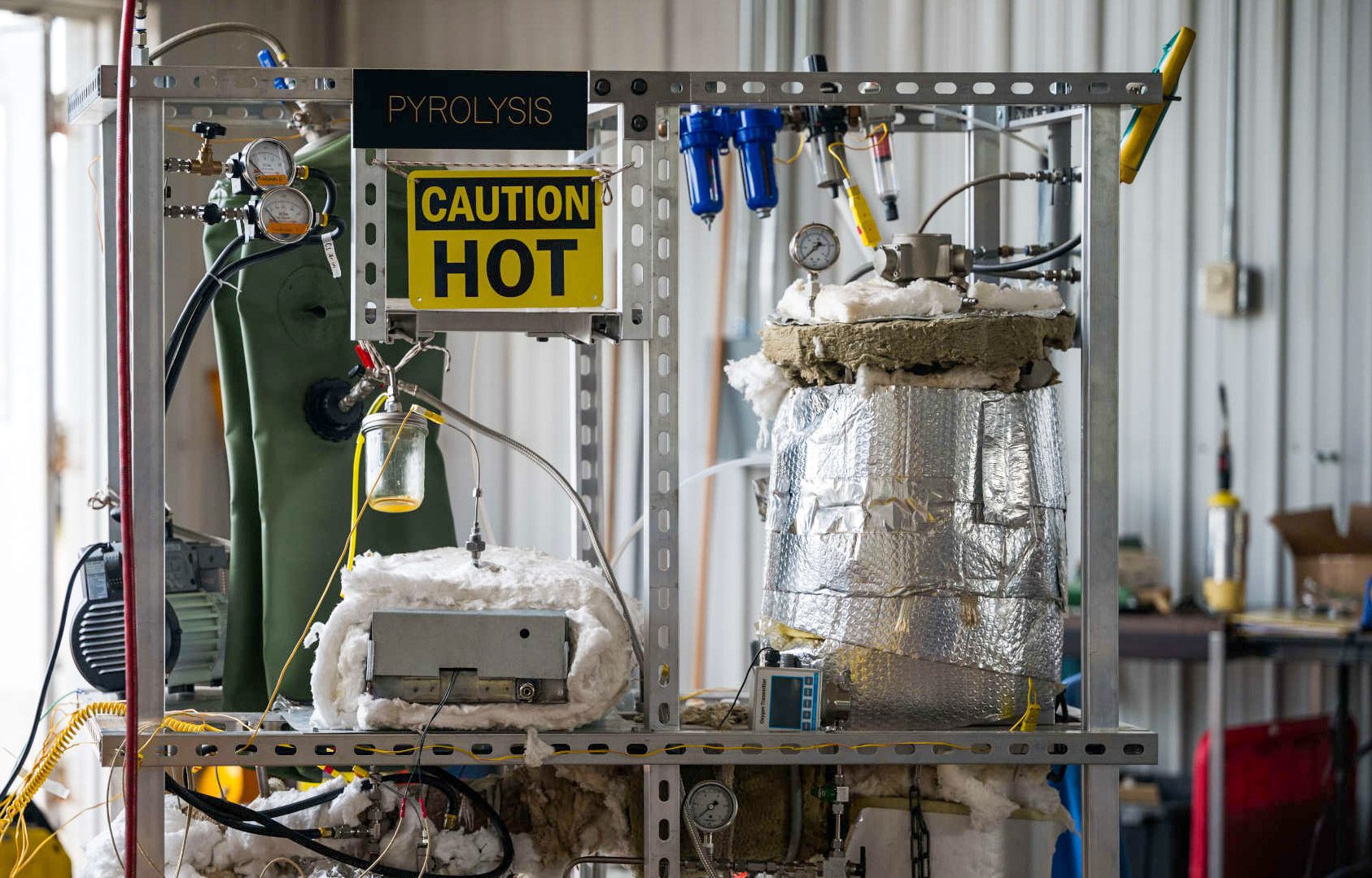
In one reactor, shown here at a recent MTU demonstration, some deconstructed plastics are subject to high heat and the absence of oxygen — a process called pyrolysis.
KADEN STALEY/MICHIGAN TECHNOLOGICAL UNIVERSITY

That uncertainty was key. The Defense Advanced Research Projects Agency, or DARPA, supports high-risk, high-reward projects. This means there’s a good chance that any individual effort will end in failure. But when a project does succeed, it has the potential to be a true scientific breakthrough. “Our goal is to go from disbelief, like, ‘You’re kidding me. You want to do what?’ to ‘You know, that might be actually feasible,’” said Leonard Tender, a program manager at DARPA who is overseeing the plastic waste projects.

The problems with plastic production and disposal are well known. According to the United Nations Environment Program, the world creates about 440 million tons of plastic waste per year. Much of it ends up in landfills or in the ocean, where microplastics, plastic pellets, and plastic bags pose a threat to wildlife. Many governments and experts agree that solving the problem will require reducing production, and some countries and U.S. states have additionally introduced policies to encourage recycling.

For years, scientists have also been experimenting with various species of plastic-eating bacteria. But DARPA is taking a slightly different approach in seeking a compact and mobile solution that uses plastic to create something else entirely: food for humans.

In the beginning, the effort “felt a lot more science-fiction than really something that would work.”

The goal, Techtmann hastens to add, is not to feed people plastic. Rather, the hope is that the plastic-devouring microbes in his system will themselves prove fit for human consumption. While Techtmann believes most of the project will be ready in a year or two, it’s this food step that could take longer. His team is currently doing toxicity testing, and then they will submit their results to the Food and Drug Administration for review. Even if all that goes smoothly, an additional challenge awaits. There’s an ick factor, said Techtmann, “that I think would have to be overcome.”

The military isn’t the only entity working to turn microbes into nutrition. From Korea to Finland, a small number of researchers, as well as some companies, are exploring whether microorganisms might one day help feed the world’s growing population.


According to Tender, DARPA’s call for proposals was aimed at solving two problems at once. First, the agency hoped to reduce what he called supply-chain vulnerability: During war, the military needs to transport supplies to troops in remote locations, which creates a safety risk for people in the vehicle. Additionally, the agency wanted to stop using hazardous burn pits as a means of dealing with plastic waste. “Getting those waste products off of those sites responsibly is a huge lift,” Tender said.

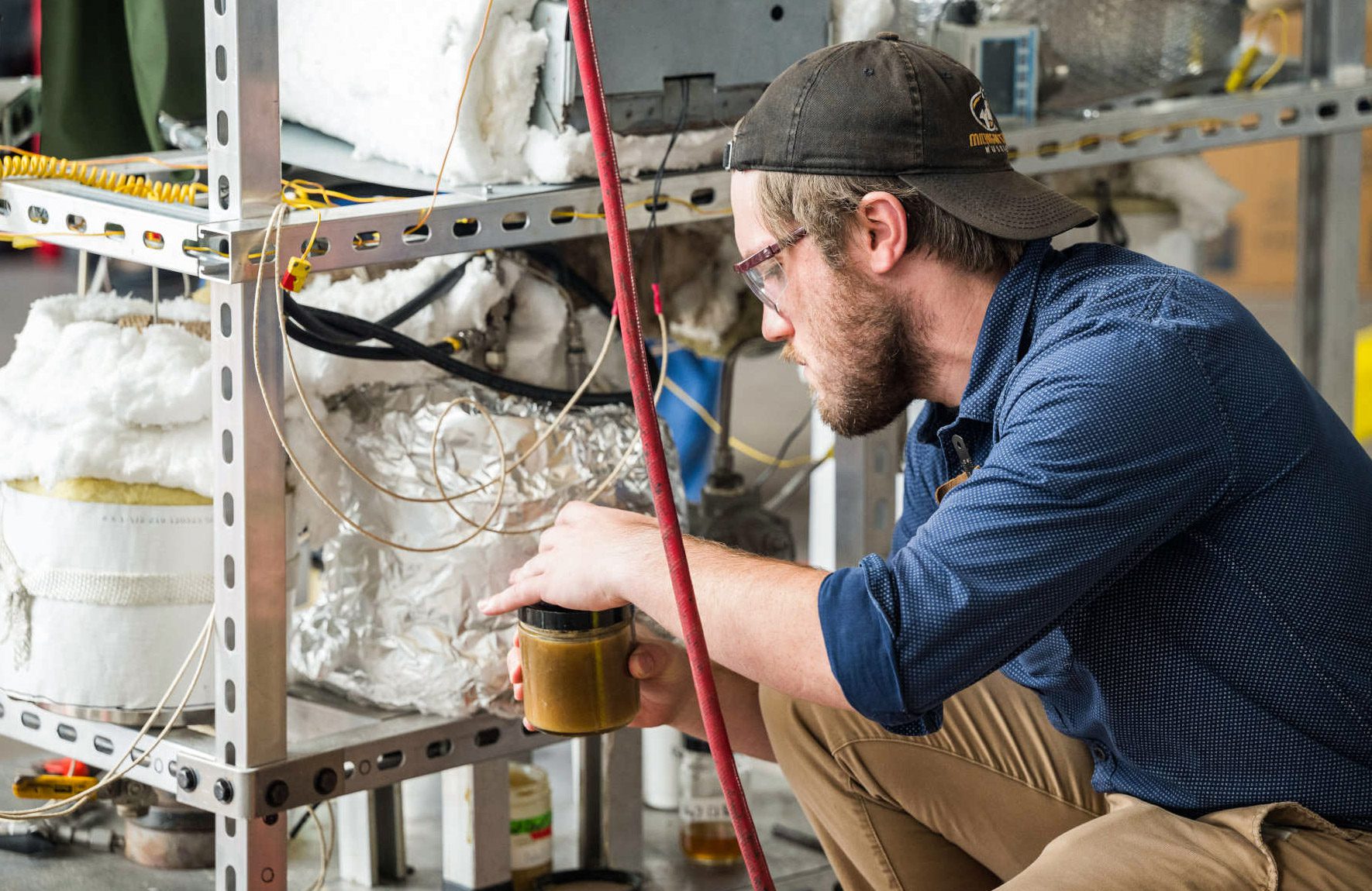
A research engineer working on the MTU project takes a raw sample from the pyrolysis reactor, which can be upcycled into fuels and lubricants.
KADEN STALEY/MICHIGAN TECHNOLOGICAL UNIVERSITY

The Michigan Tech system begins with a mechanical shredder, which reduces the plastic to small shards that then move into a reactor, where they soak in ammonium hydroxide under high heat. Some plastics, such as PET, which is commonly used to make disposable water bottles, break down at this point. Other plastics used in military food packaging — namely polyethylene and polypropylene — are passed along to another reactor, where they are subject to much higher heat and an absence of oxygen.

Under these conditions, the polyethylene and polypropylene are converted into compounds that can be upcycled into fuels and lubricants. David Shonnard, a chemical engineer at Michigan Tech who oversaw this component of the project, has developed a startup company called Resurgent Innovation to commercialize some of the technology. (Other members of the research team, said Shonnard, are pursuing additional patents related to other parts of the system.)

After the PET has broken down in the ammonium hydroxide, the liquid is moved to another reactor, where it is consumed by a colony of microbes. Techtmann initially thought he would need to go to a highly contaminated environment to find bacteria capable of breaking down the deconstructed plastic. But as it turned out, bacteria from compost piles worked really well. This may be because the deconstructed plastic that enters the reactor has a similar molecular structure to some plant material compounds, he said. So the bacteria that would otherwise eat plants can perhaps instead draw their energy from the plastic.

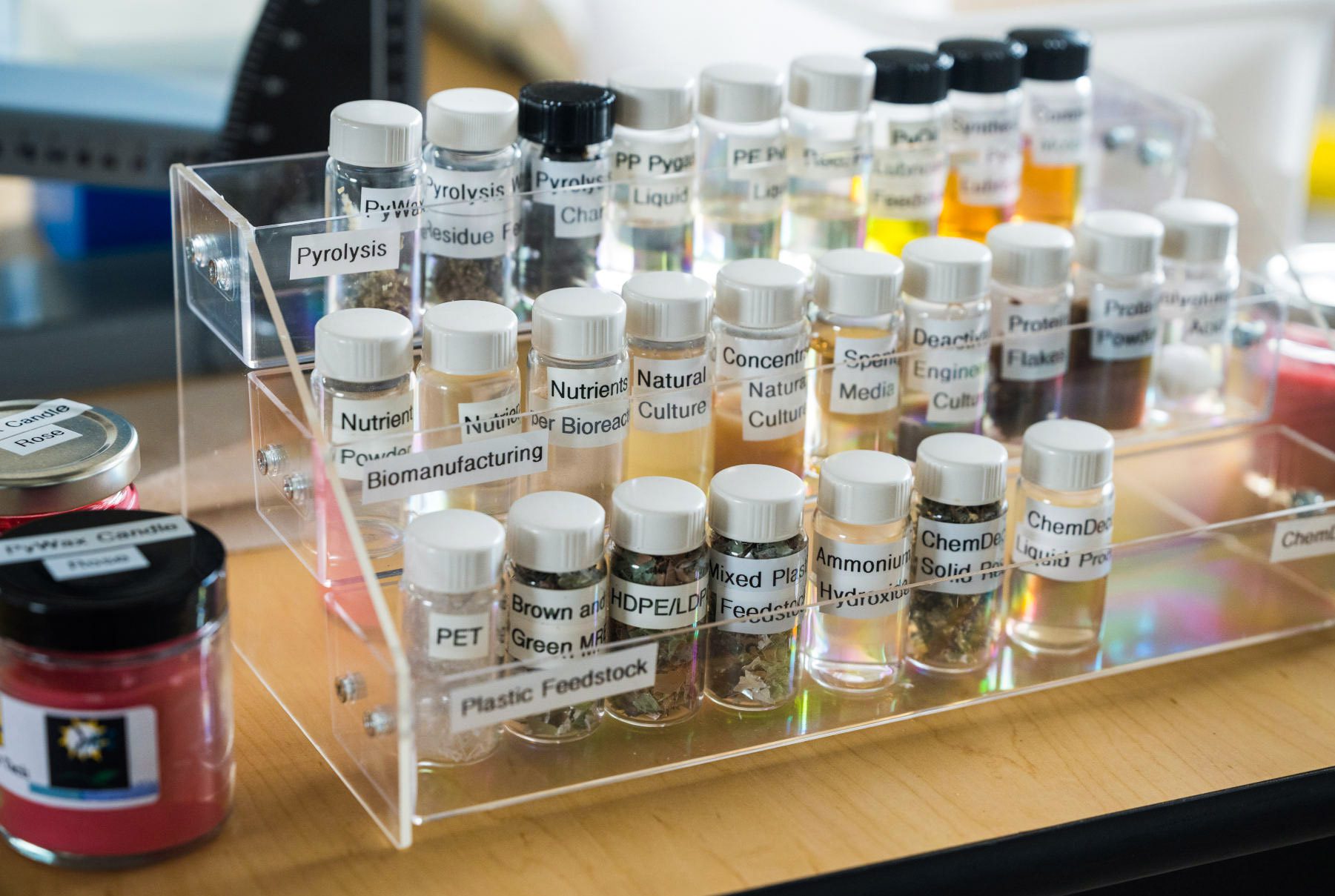
Materials for the MTU project are shown at a recent demonstration. Before being placed in a reactor, plastic feedstocks (bottom row) are mechanically shredded into small pieces.
KADEN STALEY/MICHIGAN TECHNOLOGICAL UNIVERSITY

After the bacteria consume the plastic, the microbes are then dried into a powder that smells a bit like nutritional yeast and has a balance of fats, carbohydrates, and proteins, said Techtmann.

Research into edible microorganisms dates back at least 60 years, but the body of evidence is decidedly small. (One review estimated that since 1961, an average of seven papers have been published per year.) Still, researchers in the field say there are good reasons for countries to consider microbes as a food source. Among other things, they are rich in protein, wrote Sang Yup Lee, a bioengineer and senior vice president for research at Korea Advanced Institute of Science and Technology, in an email to Undark. Lee and others have noted that growing microbes requires less land and water than conventional agriculture. Therefore, they might prove to be a more sustainable source of nutrition, particularly as the human population grows.

The product from the microbe reactor is collected in a glass jar. The microbes can be dried into a powder for human consumption — once they are deemed safe by regulators.
After PET is broken down in the ammonium hydroxide, the liquid is moved to a reactor where it is consumed by a colony of microbes.

Lee reviewed a paper describing the microbial portion of the Michigan Tech project, and said that the group’s plans are feasible. But he pointed out a significant challenge: At the moment, only certain microorganisms are considered safe to eat, namely “those we have been eating thorough fermented food and beverages, such as lactic acid bacteria, bacillus, some yeasts.” But these don’t degrade plastics.


Before using the plastic-eating microbes as food for humans, the research team will submit evidence to regulators indicating that the substance is safe. Joshua Pearce, an electrical engineer at Western University in Ontario, Canada, performed the initial toxicology screening, breaking the microbes down into smaller pieces, which they compared against known toxins.

“We’re pretty sure there’s nothing bad in there,” said Pearce. He added that the microbes have also been fed to C. elegans roundworms without apparent ill-effects, and the team is currently looking at how rats do when they consume the microbes over the longer term. If the rats do well, then the next step would be to submit data to the Food and Drug Administration for review.

Before using the plastic-eating microbes as food for humans, the research team will submit evidence to regulators indicating that the substance is safe.

At least a handful of companies are in various stages of commercializing new varieties of edible microbes. A Finnish startup, Solar Foods, for example, has taken a bacterium found in nature and created a powdery product with a mustard brown hue that has been approved for use in Singapore. In an email to Undark, chief experience officer Laura Sinisalo said that the company has applied for approval in the E.U. and the U.K., as well as in the U.S., where it hopes to enter the market by the end of this year.

Even if the plastic-eating microbes turn out to be safe for human consumption, Techtmann said, the public might still balk at the prospect of eating something nourished on plastic waste. For this reason, he said, this particular group of microbes might prove most useful on remote military bases or during disaster relief, where it could be consumed short-term, to help people survive.

“I think there’s a bit less of a concern about the ick factor,” said Techtmann, “if it’s really just, ‘This is going to keep me alive for another day or two.’”

This article was originally published on Undark. Read the original article.

A new system lets robots sense human touch without artificial skin

Even the most capable robots aren’t great at sensing human touch; you typically need a computer science degree or at least a tablet to interact with them effectively. That may change, thanks to robots that can now sense and interpret touch without being covered in high-tech artificial skin. It’s a significant step toward robots that can interact more intuitively with humans. 

To understand the new approach, led by the German Aerospace Center and published today in Science Robotics, consider the two distinct ways our own bodies sense touch. If you hold your left palm facing up and press lightly on your left pinky finger, you may first recognize that touch through the skin of your fingertip. That makes sense–you have thousands of receptors on your hands and fingers alone. Roboticists often try to replicate that blanket of sensors for robots through artificial skins, but these can be expensive and ineffective at withstanding impacts or harsh environments.

But if you press harder, you may notice a second way of sensing the touch: through your knuckles and other joints. That sensation–a feeling of torque, to use the robotics jargon–is exactly what the researchers have re-created in their new system.

Their robotic arm contains six sensors, each of which can register even incredibly small amounts of pressure against any section of the device. After precisely measuring the amount and angle of that force, a series of algorithms can then map where a person is touching the robot and analyze what exactly they’re trying to communicate. For example, a person could draw letters or numbers anywhere on the robotic arm’s surface with a finger, and the robot could interpret directions from those movements. Any part of the robot could also be used as a virtual button.

It means that every square inch of the robot essentially becomes a touch screen, except without the cost, fragility, and wiring of one, says Maged Iskandar, researcher at the German Aerospace Center and lead author of the study. 

“Human-robot interaction, where a human can closely interact with and command a robot, is still not optimal, because the human needs an input device,” Iskandar says. “If you can use the robot itself as a device, the interactions will be more fluid.”

A system like this could provide a cheaper and simpler way of providing not only a sense of touch, but also a new way to communicate with robots. That could be particularly significant for larger robots, like humanoids, which continue to receive billions in venture capital investment. 

Calogero Maria Oddo, a roboticist who leads the Neuro-Robotic Touch Laboratory at the BioRobotics Institute but was not involved in the work, says the development is significant, thanks to the way the research combines sensors, elegant use of mathematics to map out touch, and new AI methods to put it all together. Oddo says commercial adoption could be fairly quick, since the investment required is more in software than hardware, which is far more expensive.

There are caveats, though. For one, the new model cannot handle more than two points of contact at once. In a fairly controlled setting like a factory floor that might not be an issue, but in environments where human-robot interactions are less predictable, it could present limitations. And the sorts of sensors needed to communicate touch to a robot, though commercially available, can also cost tens of thousands of dollars.

Overall, though, Oddo envisions a future where skin-based sensors and joint-based ones are merged to give robots a more comprehensive sense of touch.

“We humans and other animals have integrated both solutions,” he says. “I expect robots working in the real world will use both, too, to interact safely and smoothly with the world and learn.”

Charts: Productivity through Automation

Increasing productivity is critical for businesses to stay competitive. Automation can streamline processes, lower human error, and free up staff for strategic projects.

Already, generative AI is a differentiator. Bain & Company’s June 2024 “Automation Scorecard” reported the findings from the firm’s survey of 893 global executives on using gen AI to save costs and drive productivity.

The report segregated responses into two categories: “leaders” plan to invest nearly four times more in generative AI than “laggards.”

Artificial intelligence and machine learning can spot patterns and trends humans might overlook, enabling quicker and more informed decision-making. According to PwC’s January 2024 “Global CEO Survey,” CEOs expect generative AI to substantially improve productivity, revenue, and bottom-line profits.

The Bain & Company report addressed company-wide automation in areas such as human resources, finance, marketing, and sales — citing potential time savings in marketing initiatives, sales follow-ups, and payroll processing. Accordingly, over 60% of “Leaders” and “Laggards” plan to “significantly” or “somewhat” increase automation investments in the next 12 months.

Automation helps companies of all sizes, not just global enterprise brands. A May 2024 survey from Brightpearl by Sage, an ecommerce software provider, addressed potential gains in automation when it queried roughly 1,000 employees of U.S. retailers — online and brick-and-mortar with annual revenue of $1 million to $100 million. On average, respondents spent approximately six hours per week on manual, repetitive tasks, impacting their overall productivity.