Roughly one-third of U.S. chief information officers believe technology is the primary force behind their companies’ success and growth, according to EY’s “2024 CIO Sentiment Survey,” conducted in March 2024, which provides insights on how CIOs of leading organizations are addressing challenges in pursuing a growth agenda in the age of generative AI.
The respondents were 500 U.S.-based CIOs from various industries, including consumer products and retail, healthcare, life sciences, advanced manufacturing and mobility, tech media, and telecom.
According to the survey, when CIOs adopt a more ownership role in digital initiatives, they can lead to notable gains.
–
In addition, CIOs anticipate that data analytics (43%) and IT and cyber due diligence (41%) will improve the transaction process owing to the use of AI.
–
The data also shows that many CIOs still view generative AI as in the pilot or proof-of-concept phases.
–
Moreover, revenue generation is the primary motivation for over 37% of CIOs for using generative AI, while 27% point to the technology to reinvent their business model. Roughly 19% claim that cost reduction is the primary AI driver.
Google has announced plans to transition all retailers to its updated Merchant Center platform by September.
This move will affect e-commerce businesses globally and comes ahead of the holiday shopping season.
The Merchant Center is a tool for online retailers to manage how their products appear across Google’s shopping services.
Key Changes & Features
The new Merchant Center includes several significant updates.
Product Studio
An AI-powered tool for content creation. Google reports that 80% of current users view it as improving efficiency.
This feature allows retailers to generate tailored product assets, animate still images, and modify existing product images to match brand aesthetics.
It also simplifies tasks like background removal and image resolution enhancement.
Centralized Analytics
A new tab consolidating various business insights, including pricing data and competitive analysis tools.
Retailers can access pricing recommendations, competitive visibility reports, and retail-specific search trends, enabling them to make data-driven decisions and capitalize on popular product categories.
Redesigned Navigation
Google claims the new interface is more intuitive and cites increased setup success rates for new merchants.
The platform now offers simplified website verification processes and can pre-populate product information during setup.
Initial User Response
According to Google, early adopters have shown increased engagement with the platform.
The company reports a 25% increase in omnichannel merchants adding product offers in the new system. However, these figures have yet to be independently verified.
Jeff Harrell, Google’s Senior Director of Merchant Shopping, states in an announcement:
“We’ve seen a significant increase in retention and engagement among existing online merchants who have moved to the new Merchant Center.”
Potential Challenges and Support
While Google emphasizes the upgrade’s benefits, some retailers, particularly those comfortable with the current version, may face challenges adapting to the new system.
The upgrade’s mandatory nature could raise concerns among users who prefer the existing interface or have integrated workflows based on the current system.
To address these concerns, Google has stated that it will provide resources and support to help with the transition. This includes tutorial videos, detailed documentation, and access to customer support teams for troubleshooting.
Industry Context
This update comes as e-commerce platforms evolve, with major players like Amazon and Shopify enhancing their seller tools. Google’s move is part of broader efforts to maintain competitiveness in the e-commerce services sector.
The upgrade could impact consumers by improving product listings and providing more accurate information across Google’s shopping services.
For the e-commerce industry as a whole, it signals a continued push towards AI-driven tools and data-centric decision-making.
Transition Timeline
Google states that retailers will be automatically upgraded by September if they still need to transition.
The company advises users to familiarize themselves with the new features before the busy holiday shopping period.
WooCommerce announced their roadmap for the future of WooCommerce, emphasizing two-way communication with the developer ecosystem in order to be responsive to their needs which further the goals of improving the experience for developers, merchants and customers.
WooCommerce highlighted seven important areas for innovation and six specific areas that are targeted for enhancements that will improve developer and merchant experience.
1. Stronger WooCommerce And Developer Communication
WooCommerce recently launched a newsletter that seeks to keep developers in the look with the latest WooCommerce news, offering early previews of new features, plus tutorials and other information that will keep the community in the loop.
The announcement explains three benefits of the newsletter:
“Exclusive Insights: Gain access to behind-the-scenes knowledge and tips that can elevate your development game.
Latest Content: Engage with newly published blog posts and documentation, showcasing our latest releases, resources, advisories, and more.
Feature Updates and Announcements: Keep your projects current by receiving the latest updates on new features and essential changes in WooCommerce.”
2. Upgrading The WooCommerce Blog and Documentation
Another area of improvement that relates to communication is to emphasizing the official WooCommerce blog as a reliable source of information that’s important to developers.
WooCommerce is also committing to improving their documentation with more guides, step-by-step tutorials, best practices and also making it easier to navigate and find needed information.
The roadmap explains:
“Our goal is to fill crucial knowledge gaps in areas such as extensibility, block development, and theme customization, empowering developers to start and thrive on our platform.
This is a welcome news for developers. One person commented on X (formerly Twitter):
“Coincidentally, I saw this immediately after reading my developers’ frustrations about the documentation for the new product editor in our internal discussions – so it’s good to see that improving this is on the roadmap.
Specifically, we have several plugins which add functionality to the ‘Edit Product’ screen, so we need to integrate them with the new product editor. My developers are finding this unnecessarily difficult because:
– The developer information about each feature is scattered throughout multiple news articles when it should be collated in one location.
– The links to the GitHub discussions about the new Product Editor in the “Roadmap Insights” articles point to the WooCommerce Product Block Editor discussion category (which doesn’t exist anymore) instead of the new WooCommerce New Product Editor one.
– We’re reluctant to update our plugins that integrate with the variations editor because the hooks and filters required for this extension are currently marked as experimental, so we might have to redo work if they change in future.
– We were expecting to see a timeline for the new product editor in January/February but this still isn’t clear, so we don’t know how heavily to prioritize the changes in our plugins.”
3. Improvements To REST API V3
Improvements to the REST API v3 are a top priority, with a focus on backward compatibility. They are also committing to reducing the backlog of issues and new feature requests plus improving API performance.
They also said they would focus on:
“…upgrading API documentation, error handling, and debugging capabilities.”
4. Improve Feedback Loop on Extensibility
A feedback loop is the communication between WooCommerce and the developers who use it, with the goal of improvement being a collaboration that results in a superior product that better serves developer and merchant needs.
Extensibility refers to the flexibility of WooCommerce to be extended and adapted, which is an important benefit of WooCommerce. Thus, one of the “destinations” in the WooCommerce roadmap is to make sure that it is adaptable and easily molded by developers.
Communication between developers and WooCommerce is a key part of maintaining and improving the extensibility of WooCommerce.
WooCommerce commented:
“As we make new features the default experience, we are working to create space for collaboration with our developer community in order to refine these features, incorporate feedback, and gradually move towards full adoption.
In the past year, we have begun using GitHub Discussions, Developer Office Hours, and other sources of feedback to shape and prioritize extensibility points in particular. This iterative process not only enhances the platform but also strengthens the ecosystem, making WooCommerce a more robust solution for everyone.”
5. WooCommerce Is Committed To A Block-Based Future
WooCommerce committed to a 100% block-based feature development in late 2023 as part of a vision of making WooCommerce easier to use for non-coders. A second motivation is to create a more adaptable shopping platform to build upon. As part of this commitment WooCommerce is signaling that now is the time to stop relying with older solutions like shortcodes and legacy APIs.
The statement read:
“If your solutions are still relying on shortcodes or other legacy APIs, it’s time to embrace blocks and modernize your approach.”
WooCommerce announced steps they are taking to bridge the transition to a fully block-based development platform:
Adding more resources to the WooCommerce Developer Documentation
Increased frequency of communication on the WooCommerce blog
More posts to introduce new features tutorials for how to use them
A renewed focus on creating video tutorials
6. Streamlined onboarding:
WooCommerce is focusing on further simplifying the process of setting up a store and getting online faster. They are also improving the workflow for developers who set up stores for merchants. They said that their experience from simplifying the setup process was an approximately 60% increase in completion rates.
7. Modern Store Customization
Another focus is on being able to integrate the customization options available to WordPress in general but WooCommerce is also looking into creating fully optimized commerce-based themes that are specific to WooCommerce.
They write:
“While we’re ensuring compatibility with all block-based themes in the WordPress ecosystem, we’re also exploring what it would look like to provide our own fully block-based, commerce-optimized theme out of the box.”
Six Specific Areas For Future Improvements
Flexible product management
Optimized order management and fulfillment
Revamping merchant analytics
Accessible stores
Evolving checkout experience
Better integration of order confirmation with summary and shipping information
WooCommerce Roadmap Leans In On Community
The Roadmap outlined by WooCommerce recognizes that the user community is its strength, thus it’s focused on building a stronger product based on what developers need to provide merchants with the ecommerce experience merchants expect. Focusing on creating more documentation and videos shows that WooCommerce is engaging to support the WordPress developer community and intends to remain the leading ecommerce platform.
Alphabet Inc., Google’s parent company, released its second quarter 2024 financial results, revealing a 14% year-over-year increase in revenue for its core Google Search business.
Key Financial Data:
Google Search revenue: $48.5 billion (up from $42.6 billion in Q2 2023)
Total Alphabet revenue: $84.7 billion (14% increase year-over-year)
Operating income: $27.4 billion
Net income: $23.6 billion
Earnings per share: $1.89
Strong performances in Search and Cloud services primarily drove the company’s overall revenue growth.
Google Cloud surpassed $10 billion in quarterly revenue for the first time, reaching $10.3 billion with $1.2 billion in operating profit.
YouTube ad revenue increased from $7.7 billion in Q2 2023 to $8.7 billion in Q2 2024.
Alphabet CEO Sundar Pichai commented on the results, emphasizing the company’s focus on AI innovation. The report also noted a recent reorganization of AI teams, combining elements of Google Research with Google DeepMind.
Pichai stated:
“Our strong performance this quarter highlights ongoing strength in Search and momentum in Cloud. We are innovating at every layer of the AI stack.”
The report also noted a recent reorganization of AI teams, combining elements of Google Research with Google DeepMind.
While the results indicate strong performance, Alphabet faces challenges, including regulatory scrutiny and evolving competition in the tech sector.
The company’s CFO, Ruth Porat, mentioned ongoing efforts to optimize cost structures.
Regarding the company’s financial strategy, Porat stated:
“As we invest to support our highest growth opportunities, we remain committed to creating investment capacity with our ongoing work to durably re-engineer our cost base.”
Why This Matters
The performance of Google Search and Alphabet has implications for the digital marketing industry.
As the dominant search engine, Google’s revenue growth indicates continued strength in search advertising, which remains an essential channel for many businesses.
Additionally, the growth in Cloud services and YouTube advertising suggests evolving digital trends and potential opportunities for marketers.
What Does This Mean For You?
For digital marketers and SEO professionals, these are the key takeaways from Alphabet’s earnings call:
Search remains vital: The growth in Google Search revenue shows that SEO and search advertising remain key components of marketing strategies.
Cloud and AI focus: Alphabet’s emphasis on Cloud services and AI development may lead to new tools and platforms for marketers to leverage.
Video advertising potential: The growth in YouTube ad revenue indicates the ongoing importance of video content in digital marketing strategies.
Competitive landscape: While Google maintains its market position, the focus on AI development across the tech industry may lead to new challenges and opportunities in search and digital advertising.
Potential changes ahead: As Alphabet continues to invest in AI and reorganize its teams, marketers should stay alert for potential changes in search algorithms or new AI-driven features that could impact SEO and PPC strategies
In a happy yet surprising move, Google has announced it will not be phasing out third-party cookies as previously planned. This decision has significant implications for website owners, digital marketers, and SEO practitioners, particularly those using tools like Yoast SEO to optimize their WordPress sites. Here’s a closer look at what this means for Yoast users.
Background on Google’s Cookie Plans
Google initially proposed to eliminate third-party cookies in its Chrome browser by 2022, later extending the deadline to 2024. The goal was to enhance user privacy and address concerns about online tracking. Google’s Privacy Sandbox was introduced as a replacement, promising to provide a more privacy-conscious way to target ads and measure their effectiveness without using third-party cookies.
However, after facing technical challenges and pushback from various stakeholders, Google has ultimately decided to keep third-party cookies, at least for the foreseeable future. Many SEOs find themselves torn between feelings of joy because they no longer need to accommodate life without cookies, or feelings of grief for the years (since 2020) spent trying to find cookie-less solutions to track user behavior and measure advertising.
Implications for Yoast Users
Continued Use of Cookies for Tracking and Personalization
SEO Analytics: Many Yoast users rely on cookies for tracking user behavior and gathering analytics data. Tools like Google Analytics use cookies to provide insights into how visitors interact with your site. With cookies remaining in place, you can continue to gather detailed data to inform your SEO strategies.
Personalized User Experience: Cookies enable personalized content and recommendations based on user behavior. This can enhance the user experience on your WordPress site, potentially leading to higher engagement and better SEO performance.
Impact on Privacy and Compliance
GDPR and CCPA Compliance: While cookies remain, it’s crucial to ensure your site complies with privacy regulations like GDPR and CCPA. Yoast SEO provides tools to help manage and disclose your use of cookies, ensuring that you stay compliant with these regulations.
User Trust: Transparency about data usage is vital. Use Yoast’s features to create clear, informative privacy policies and cookie consent banners. This helps build trust with your users, which can indirectly benefit your site’s SEO.
SEO Strategy Adjustments
Content Targeting and Advertising: For those using cookies to target ads and personalize content, the continuation of cookies means you can maintain your current strategies without needing to overhaul your approach. This stability allows you to focus on optimizing content and improving site performance with Yoast’s tools.
Future-Proofing Your SEO: While Google’s decision provides a reprieve, it’s important to stay updated on privacy trends and potential changes in the future. If there is a development in technology that makes getting rid of third-party cookies painless (or nearly painless), it is very possible Google will reverse this reversal. No matter what happens, Yoast SEO will continue to regularly update features to align with best practices, ensuring your site remains optimized and compliant.
Leveraging Yoast SEO for a Cookie-Present Future
Yoast SEO offers several features that can help you navigate the ongoing presence of cookies effectively:
Advanced Analytics Integration: Yoast SEO seamlessly integrates with Google Analytics and other tracking tools, allowing you to leverage cookies for detailed insights into your SEO performance.
Content Optimization: Use Yoast’s content analysis tools to ensure your content remains relevant and engaging. Personalized content, supported by cookies, can lead to higher user retention and better SEO results.
Compliance Tools: Yoast SEO provides features to help you stay compliant with privacy laws, including options to manage cookie consent and create comprehensive privacy policies.
Conclusion
Google’s decision to retain third-party cookies means that users can continue to benefit from the tracking and personalization capabilities that cookies offer. However, it remains essential for website owners to stay vigilant about privacy compliance and to maintain transparency and build user trust. By doing so, you’ll ensure your SEO efforts remain effective and your site continues to thrive in a cookie-present future.
Carolyn Shelby is a seasoned SEO expert with a knack for making complex digital strategies accessible to everyone. She specializes in technical SEO, she excels at optimizing web architectures and crafting strategies that enhance visibility and drive growth. Carolyn views SEO as a powerful tool to narrate a brand’s journey, aligning content with core values to engage and convert audiences. Her approach is data-driven yet distinctly human. She uses straightforward, innovative methods to engage audiences and see real results.
If you’ve been paying attention to the chatter in the SEO space recently, you might have noticed that “brand marketing” has become cool again.
Due to the Google “leaks,” many SEO pros have come to the conclusion that building a strong digital presence will yield SEO results.
Also, water … is wet.
Leaks, floods, and drips aside, there are better reasons why you should be focused on brand marketing right now.
Allow me to explain. [Warning: This post contains excessive amounts of snark.]
Building The Case For Brand Marketing
I’m not going to do the whole “5 reasons why you should focus on brand in 2024.” It would be off-brand for me.
What I would like to do, if you’ll indulge me, is first build up the case by looking at where the ecosystem we call the web is currently at.
I’m less focused on “the benefits” of the brand and more concerned about why the ecosystem itself demands a focus on this type of marketing.
It’s less a matter of “you’ll get X, Y, and Z” by focusing on the brand and more a matter of why you’ll be out of sync with your potential audience as a whole.
The Web Is Moving To Be More Conversational
The internet has become more conversational, and it’s only going to get more conversational.
One of my soapbox points is that content is one of the most quickly changing things on the planet. What we consume, how we consume it, and what we expect out of it are rapidly and constantly changing, and the consequences are often underappreciated.
My classic example of this was the first televised US presidential debate, which took place in 1960 and pitted John F. Kennedy against Richard Nixon.
If you listened to the debate on the radio, you tended to think Nixon won. Those who watched on TV tended to think JFK won.
Why? Well, Richard Nixon comes off as Richard Nixon, and JFK, well looks like JFK. I’m being a bit facetious, but it is true. Nixon famously looked pale, had a five o’clock shadow, and didn’t look directly at the camera.
The evolution of content has extremely understated consequences.
Like in 1960, we are at one of those pivotal moments in the history of content.
Think of the internet like TV commercials. Over time, what once resonated becomes campy and sem, if not downright, spammy.
Could you imagine Coca-Cola running and trying to sell its product using its 1980s Max Headroom “Catch the Wave” commercial?
Try selling my kids a sugar-infused breakfast cereal using a TV commercial from the 1950s. Good luck.
It’s not because those commercials are “bad.” It’s because the language and tone that resonates changes over time.
It’s a simple enough point … unless we’re talking about web content. For some reason, we feel web content and its consumption trends should eternally stay the same.
We write the same kind of content in pretty much the same way and balk at any changes.
But that doesn’t change the reality.
The content we create doesn’t speak to users. It’s not positioned correctly. The tone is off. The goals that support the creation of content, to begin with, are distorted. And more. There are a lot of problems – and to me, they all begin with content not being conversational.
In fact, I will go so far as to say Google should stop saying, “Write for your users,” and should start saying, “Have conversations with your users.”
We all think we’re “writing for our users” – I mean, who else are we trying to lure and convert?
It’s very easy to fool yourself into thinking you are “writing for your users.” It’s harder to convince yourself you are having some sort of dialogue with your users – which is what I think Google really means anyway.
All this said, what do I mean by content not being conversational and how do I know it’s even a problem?
What I Mean By Content Not Being Conversational
It’s not hard to see that we are not engaging our users in a conversation or dialogue.
All you need to do is head over to your nearest landing page and have a look at the language.
How much of it is just the company throwing out jargon or borderline nonsense?
Here’s what I came across in literally less than five minutes of digging around:
Screenshot from author, July 2024
Is it really without limits? Can I literally do whatever I want without any limitations whatsoever? I don’t get it – are we talking about God or graphic design software?
Is the below really a new way to run high-velocity sales? Does it literally refine the entire process like no one else is doing or has done before? Or is the company just saying this and spitting out whatever they think will drive conversions?
Screenshot from author, July 2024
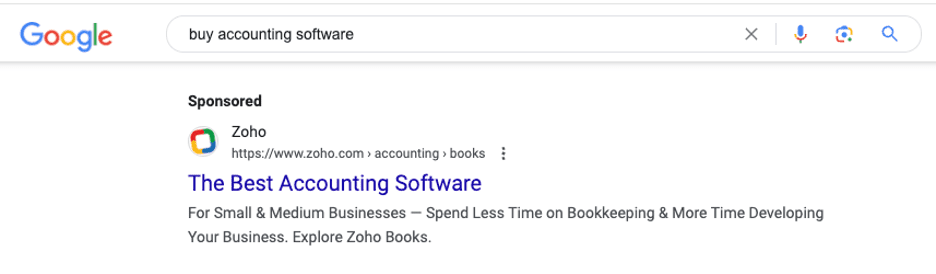
You see this all the time in PPC ads:
Screenshot from search for [buy accounting software], Google, July 2024
No nuance. It is the best accounting software, and I should trust that it is without any form of qualification.
This kind of copy, while it may have worked in the past, doesn’t (and if it does now, it won’t in the relatively near future).
This kind doesn’t actually talk to users in a real way. It actually treats the user like an idiot.
The average web user is far more savvy than they once were, far more mature, and far more skeptical.
Not taking a more genuine approach is starting to catch up with brands.
How Do I Know Not Being Conversational Is Even A Problem?
Greenwashing.
It’s when a company claims to be more environmentally conscious than it is. It’s spin and PR nonsense.
Companies thought they could pull a fast one on unsuspecting users. However, folks are now savvier and are catching on to brands positioning themselves as being “green” when, in reality, they might not be (or at least to the extent advertised).
You cannot get away with it anymore (and you never should have tried). The only thing that works is being genuine.
If your product is not actually “the best,” then don’t say it is – or, in fact, realize there is no “best” or “ultimate” or “fastest” or whatever. There is only what meets the needs of users in what way. That’s fancy talk for “pain points.”
Being genuine means talking to your audience and not at your audience. It’s having a dialogue with them.
Going the “traditional” route with your language is the equivalent of marketing language greenwashing … and it applies to your informational content, too.
Perhaps nothing epitomizes this more than the falling stock of influencer marketing. Study after study shows that younger users are far less likely to purchase something because an influencer is associated with it.
Influencer marketing, as we mostly know it, is a facade pretending it’s not a facade. Do you think Patrick Mahomes really eats Chicken McNuggets or has a strong preference to use State Farm for his insurance needs?
All influencer marketing is just a digital marketing version of a celebrity in a TV commercial.
Do you think whatever TikTok influencer really prefers Capital One or even knows that it’s not a geographical reference?
While the idea of “influencers” seemed like a viable idea at the onset it’s fundamentally not sustainable because it’s fundamentally fraudulent. (For the record, “community” marketing is something else entirely. While it might rely on “influencers” within a community, it is far more genuine.)
It seems that folks have caught on to the idea that maybe this influencer being paid to say or do whatever is not actually an accurate reflection of reality (much like social media influencers themselves, to be honest).
A 2023 Drum article quotes one study as saying upwards of 80% of users say a brand’s use of influencers does not impact them one way or the other.
For the record, there are other studies that indicate that influencer marketing is a viable option. I agree, but I think it needs to be qualified. Just paying an influencer to say good things about your brand is not authentic.
There are authentic ways to work with communities and influential folks within them. That tends to happen more with micro or nano influencers.
Again, it’s rocket science. Everyone knows the influencer is only saying the things they are saying because they’re being paid to. It’s relatively meaningless in a vast majority of cases.
It shows how much savvier the current web user is relative to the past, and it’s supported by where folks are heading and what they are trusting … themselves (DTA, am I right?).
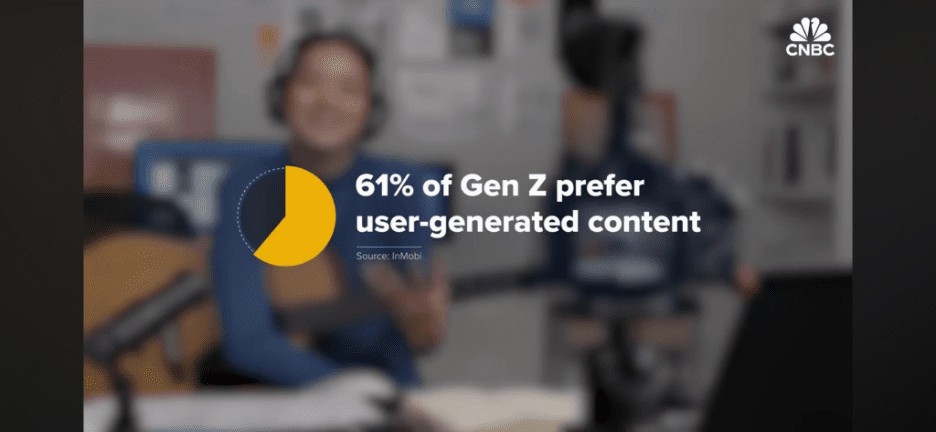
A seemingly endless number of studies show users looking toward user-generated content. CNBC was quoted as saying, “61% of Gen Z prefer user-generated content.”
Image from CNBC, July 2024
Which brings me to my next point.
Informational Content Is Just As Bad & Reddit On The SERP Proves It
Up until this point, I’ve been focused on the nature of commercial content and the demand for conversational content.
The same concept applies to informational content, just for a slightly different reason.
Informational content on the web might not be as opaque as commercial content, but it is entirely sterile and stoic.
By sterile and stoic I mean content that doesn’t actually speak to the user. It takes a topic, breaks the topic down into various subtopics, and simply presents the information, and does so without ever discussing the context of the readers themselves.
No one has more data on emerging content consumption trends than Google and its ability to analyze user behavior in a variety of ways. And what has Google done for informational and commercial queries alike? Plastered the search engine results page with user-generated content.
The proliferation of Reddit on the SERP should tell you everything you need to know about the state of informational content and beyond.
All you need to do is head to the Google SERP and take a look at all of the Reddit results strewn all over the place, from different SERP features to the organic results themselves.
And while SEO pros may be upset about the abundance of Reddit (and rightfully so in my opinion), we have no one to blame but ourselves.
Do you really think Google wants to rank Reddit here, there, and everywhere? I personally don’t. I think Google would much rather have a diverse set of experience-based content to rank.
Regardless of your feelings about Reddit on the SERP, users’ inclination to prefer content created by other users tells you one thing: People are looking to move past all the facades and want something transparent that speaks to them—not at them.
Think about content like dress codes in the office. In the 1950s (at least in the US), it would be unheard of to show up to the office with anything but a suit and tie or a dress.
Just like professional dress codes have become less formal, so has content become “less formal” too.
And it’s a relatively recent development on both fronts. In fact, I would actually argue that office dress codes are a good representation of “where we are at” in terms of how and what we consume in terms of content via-a-vis formality.
While more traditional marketing language might have been acceptable and effective just a few years ago – it’s not any longer (at least not to the extent). We are less formal as a people, which means speaking to each other is also less formal. That has to spill over to web content at some point, and it has.
The AI Of It All
The rise of AI-written content accentuates all of this. When everything starts to sound the same having an actual voice comes more into focus. As AI conversion evolves, users are going to want to know that what they are consuming is “real.”
Much like a paid influencer, AI-written content doesn’t offer an authentic experience. And if we can see one theme in what users are looking for, it is an authentic experience.
I know someone is reading and thinking, “But AI is conversational!”
I would not confuse the fact that AI can reply back to you in an informal way as being an actual conversation or dialogue with another actual lifeform.
I have many relatives who will chew my ear off for hours on end as I nod away – that is not (much to their surprise) a conversation. Inputting prompts in reply back to an LLM and then having that LLM respond is not a conversation. (I feel like it’s insane that I have to say that.)
A real dialogue has to be based on empathy and the coming together of two distinct entities. This is what I mean by conversational. The dialogue has to be based on understanding the user’s pain points and meeting them.
AI not only doesn’t do that – but it dilutes that very concept. AI is content creation inherently devoid of understanding the “other.”
AI-generated content is the exact opposite of empathetic content. It is no wonder that it will drive a greater demand for something that is more connective (i.e., conversational content).
The rise of AI-generated content will inevitably lead to a greater demand for more conversational content simply because it is human nature to yearn for connection and existentially disdain void.
When you couple together the growing impatience with stale and stoic content aligned with the facade of much of the web’s commercial content with the rise of AI, it’s the perfect storm for a shirt in user demand.
A More Conversational Internet Is More Autonomous Internet
What’s this got to do with brand marketing? We’re getting there. One more step.
Users looking for more authentic web experiences point to people not wanting to be sold to. Skepticism and distrust are triggered by being urged to make a purchase.
Rather than being induced to click by some clever headline or urged to make a purchase by some influencer, people want to make their own decisions.
They’re looking for real advice. They’re looking for real information to have real needs met. And then they’re looking to be left alone to use that information to their liking.
It’s not an accident that Google added an “E” to E-E-A-T for “experience.” It wants quality raters to evaluate a page from an experience perspective because it has determined this is what users are looking for.
When your entire modus operandi is to seek out authentic information and experiences, the last thing you’re looking for is to be coerced. The last thing you want is to feel pushed into something.
The quest for authenticity in experience-based information is entirely about being able to make a well-informed, autonomous decision.
Urging users to click and convert with all sorts of marketing language and over-emphasis is antithetical to this mindset. Using language that feels slightly manipulative is antithetical to this mindset.
Trying to create spin and putting up a marketing facade (such as with classic influencer marketing) is antithetical to this mindset.
You can’t have Michael Jordan jumping over Spike Lee in a commercial to sell shoes anymore. It’s not real, and it’s not authentic. It’s fantastical. It’s fake.
You also can’t “drive” conversions by telling users you’ve developed a “new,” “revolutionary,” or “ultimate” solution for them. It’s not real, and it’s not authentic. It’s fantastical. It’s fake.
You have to create an environment where the user feels empowered and uncoerced.
How do you then go about targeting growth and revenue, all while allowing the user to feel autonomous and unsolicited?
Brand marketing.
Brand Is Your Best Friend In An Autonomous Web Scenario
I know there is going to be a tremendous amount of resistance to what I am about to say.
In fact, most companies will balk at my conception of things. For SaaS, it’s probably borderline heretical (I think startup SaaS brands often lag behind consumer trends more than anyone).
If user autonomy is the fundamental brick on the house the ecosystem is built on, then being top of mind is the cement that holds your marketing efficacy together.
What’s the opposite of pushing for clicks and conversions? Allowing the user to come to you at their own time and at their own speed.
Being top of mind is more important than it ever was because it aligns with the underlying psychological profile driving web experiences.
There is a direct equation between the consumer demand for autonomy in the buying journey and brand marketing. Creating the right associations and developing the right positioning with genuine differentiation is of the utmost importance if you want to align with how users think – and, more importantly, feel about the web.
If I had to put in a more “performance-focused” mindset, direct traffic is the future of the web. Get them to come to you on their own terms.
It works for both parties. You’re less susceptible to relying on whatever platform’s funky algorithm (whether it be social or search, it all kind of feels like a mess right now). At the same time, your users don’t feel like you’re overselling, pushing clicks, and otherwise nudging them to convert.
They’re coming to you because they found out about you, liked what they saw or heard, and decided to pursue the possibility of buying from you at their own pace.
Moreover, the brand allows you to connect. Again, in an AI world, the drive for connection will only increase. Brand is the intersection of your identity and your audience’s.
It is an associative connection, and it allows your audience to understand that there is a “you” behind the product or service you are offering.
This is the power of branding in the modern web.
What Kind Of Brand Marketing?
What kind of branding creates autonomy? Education-focused brand marketing.
Brand marketing can mean a lot of things to a lot of different people. Often, on the digital stage, it means pushing the value of your product across the web.
I am not saying that this doesn’t have value or that it shouldn’t be done, etc. I am saying this is product marketing disguised as brand marketing.
90% of your brand marketing should hardly (if at all) push your product (beyond maybe a mention or something subtle of that ilk).
Brand marketing is about fostering an identity (either of a product, service, or the company as a whole) and using that identity to create messaging that positions the said product, service, or company in a certain way, thereby establishing a connection with your target audience.
The associations you build and the sentiment towards your brand that you establish should, hopefully, result in your audience seeing you as a relevant solution. But this is associative, and that’s important to remember.
The kind of branding I am talking about is focused on adding value to your audience’s life. Note that I didn’t say offering value via your product or service to their lives. First comes the value, and then comes the value from your product.
You can’t push the product in what might be called “branding” without first establishing a brand that showcases concern for the user and their life context independent of any “ask” (such as making a purchase).
You wouldn’t ask your neighbor for a cup of sugar before saying, “Hi, good morning. How are you?”
You shouldn’t ask your consumers to open their wallets and fork over money before establishing a real connection.
Yet, this is pretty much the internet as we know it.
A Note On Performance Marketing
I am not advocating you should not use performance-based marketing tactics to increase your reach and sales and whatnot. Performance-based marketing can be a powerful force for growth and revenue expansion.
What I am advocating for is performance sitting within a broader branding context. There has to be a balance between the two (and I don’t think it is an even balance).
With that cliffhanger, perhaps I’ll explore the balance between brand and performance at another time.
There are often times when more than one keyword (and/or search theme) in your account will be eligible to match for a search term. Yet only one will be selected to compete in each auction.
So, how does Google choose which of your keywords to put forward?
There’s a prioritization framework for that!
We’ve also recently launched several updates to query matching controls, including the new brand inclusions and brand exclusions, to help you steer traffic where you want it.
While the keyword and search theme prioritization framework for query matching isn’t entirely new, it’s evolved in meaningful ways with recent AI advancements.
Now is a good time to dive into the mechanics of keyword prioritization and query matching controls. This will give you a better foundation for organizing your campaigns and ad groups, building keyword lists (positive and negative), selecting keyword match types, and using search themes to drive performance.
We’ll cover various scenarios and what to keep in mind for each prioritization rule – as well as what you need to know about the latest in query matching controls.
Why Keyword Prioritization Matters
Keyword prioritization rules help ensure keyword-to-query relevance to deliver better user experiences and advertiser outcomes.
But another big benefit of keyword prioritization rules is that they help address the reasons why advertisers resorted to using “keyword sculpting” techniques that entailed complex account and bid structures in order to route traffic where they wanted.
How Keyword Prioritization Works In Google Ads
I think of the four priority levels, or rules, shown above in two batches:
Priority rules 1 & 2 apply to scenarios when you have a keyword or search theme that’s identical to the search term or spell-corrected search term.
Priority rules 3 & 4 apply to scenarios when you don’t have an identical keyword or search theme and have multiple matches that could enter the auction.
Top Priority: Identical Exact Match Keywords
If you have an eligible exact match keyword that is identical to the search term or spell-corrected search term, that keyword will be prioritized to enter the auction over all other keywords in the account.
This prioritization rule means:
The exact match keyword [skydiving license] will match to the identical query “skydiving license”.
The identical exact match keyword [skydiving license] will also be prioritized over the same keyword duplicated in phrase or broad match – whether in the same or a different ad group.
It will be prioritized over Performance Max for Search text ads.
And it will be prioritized over any other relevant phrase or broad match keyword that could otherwise match to the query, such as “skydiving certification” or “skydiving licensing.”
Also important to note, if you have the broad match campaign setting enabled, those keywords will be treated as if both a broad match and an exact match version of the keyword were enabled.
If this:
Then that:
Identical or spell-corrected exact match keyword to the query.
The identical exact match keyword will be prioritized.
Identical or spell-corrected exact match keyword to the query is duplicated in phrase and/or broad match in the account.
The identical exact match keyword will be prioritized over the duplicated phrase and/or broad match keywords.
Identical or spell-corrected exact match keyword to the query is duplicated in a Performance Max search theme.
The identical exact match keyword will be prioritized over Performance Max, even if there is a duplicate search theme.
The broad match campaign setting is enabled, and an identical keyword to the query.
The identical broad match keyword will be treated as an exact match version and will be prioritized.
The broad match campaign setting is enabled and an identical exact match keyword to the query in another campaign.
The keyword with the highest Ad Rank will be prioritized.
Keep in mind:
Misspelled/spell-corrected search terms are considered “identical,” but plurals or synonyms are not.
So [skydoiving license] would be considered identical to [skydiving license], but [skydiving licenses] or [freefall license] would not.
The keyword has to be eligible to serve in order to match – this is true across all prioritization rules.
For example, if the campaign is limited by budget the keyword won’t always be able to trigger an ad.
Or if the targeting doesn’t align, the creatives or landing pages in the ad group are all disapproved, or the keyword has low search volume status, you may see traffic go to other keywords or Performance Max.
2nd Priority: Phrase, Broad Match, Or Search Themes That Are Identical To The Query
Next up, if you don’t have the identical exact match keyword, the system will look to see if there’s a phrase or broad match keyword, or Performance Max search theme that’s identical to the query or spell-corrected query.
This prioritization rule means:
A Search keyword that’s identical to the query will be prioritized over Performance Max, regardless of match type – exact (as covered by the first priority), phrase or broad.
This is worth reiterating because I often see it misunderstood: If you have an identical Search keyword to the query of any match type, Performance Max will not be considered for selection. With one exception . . .
If you have duplicate search themes and phrase or broad match keywords that are identical to the query, priority will be based on Ad Rank.
For example, if you have both the search theme and phrase match keyword “skydiving license” and that’s the query, the ad with the highest Ad Rank will be selected for the auction.
That’s because Performance Max search themes have the same prioritization as phrase and broad match keywords.
If you have the identical search theme to the query in Performance Max but not an identical keyword in Search, the search theme will be prioritized.
If this:
Then that:
Identical or spell-corrected Search keyword and not an identical Performance Max search theme.
The identical Search keyword will be prioritized over Performance Max, regardless of match type.
Identical or spell-corrected Search keyword + an identical Performance Max search theme.
Prioritization will be based on Ad Rank.
Identical or spell-corrected phrase match + broad match Search keywords.
Identical search theme in Performance Max and not an identical Search keyword.
The identical Performance Max search theme will be prioritized.
Keep in mind:
Misspelled/spell-corrected search terms are considered “identical,” but plurals or synonyms are not. So [skydoiving license] would be considered identical to [skydiving license], but [skydiving licenses] or [freefall license] would not.
There is no performance benefit from repeating the same keyword in multiple match types in a campaign.
Because the system prioritizes eligible keywords that are identical to the search term, you will have the identical keyword covered with any single match type.
Further, there’s a misconception that exact match keywords are “cheaper” than their phrase or broad match types.
If the factors are equal (ad, landing page, bid strategy), the cost for the same broad or phrase match keyword to pick up the identical exact match traffic will be equivalent. More on keyword matching options here.
If you are using phrase and/or broad match keywords and have duplicate keywords across match types within your ad groups, you can dedupe and remove the redundant keywords in the most restricted match types.
We recommend using search themes to fill gaps, rather than duplicate your keywords, in order to help steer the AI in Performance Max. More on search themes here.
Alright, now for the scenarios when you don’t have the identical match to the query in your account, we’re moving on to the next two rules of prioritization . . .
This is the new(ish) kid on the prioritization block – and the biggest recent advancement in keyword selection for Search campaigns.
AI-based keyword prioritization introduces relevance signals to identify the best keywords from the most relevant ad groups when multiple ad groups are eligible to match to a query.
This prioritization rule means:
Relevance is determined by looking at:
The meaning of the search term.
The meaning of all the keywords in the ad group.
The landing pages within the ad group.
Keywords with a lower Ad Rank but higher relevance can be selected over keywords with lower relevance.
AI-based prioritization currently works on keyword-based Search campaigns only (e.g. it does not work on Dynamic Search Ads).
It is used when your keywords aren’t identical to the search term.
If this
Then that
Phrase and/or broad match keywords in multiple ad groups are eligible to match to a query.
AI prioritization first looks at each ad group as a whole to better understand the creative and intent and selects the most relevant ad group(s) and keyword(s) for the auction.
If more than one keyword/ad group is found to be highly relevant, the one with the highest Ad Rank will be selected.
Multiple phrase and/or broad match keywords in the same ad group are eligible to match to a query.
Keep in mind:
A big benefit of AI-based keyword prioritization is that it reduces the need to create granular campaign structures to route traffic manually while still giving you control over which keyword matches to a query using thoughtful ad group theming.
To that end, AI-based prioritization only works as well, as it can infer relevance. This is why ad group theming is so important, particularly when using broad match.
Grouping your keywords into similar themes with relevant assets and landing pages makes it easier for Google to understand the intent of your keywords and landing pages and select the best match for the intent of the user’s search.
For example: Looking closer at the example outlined in the Help Center, a search for “skydiving certifications near me” could match to the ad groups “Skydiving License” and “Advanced Skydiving Courses.”
Both ad groups have related intent to the query, but the “Skydiving License” ad group has keywords and a landing page specific to licensing. Whereas the “Advanced Skydiving Courses” ad group has keywords and a landing page focused on advanced courses.
Because ‘license’ (included in both the keywords and landing page) + ‘certifications’ (included in the search term) are seen as significantly more related than ‘courses’ + ‘certifications’ to a search for “skydiving certifications,” the “Skydiving License” ad group is selected.
(Having worked on many education and certification campaigns over the years, I particularly appreciate this example!)
4th And Final: Ad Rank
Ad Rank is the final prioritization rule used to determine which keyword (or search theme) in your account will be selected to enter the auction. We’ve already covered some of the scenarios in which Ad Rank is used when the other rule criteria aren’t met.
Ad Rank considers a number of factors, including ad quality components, in real-time with every auction to determine which, if, and where your ads are shown relative to other advertisers. More on Ad Rank here.
This prioritization rule means:
If you have the identical keyword to the query repeated in both phrase and broad match, priority will be based on Ad Rank. The ad with the highest Ad Rank will be prioritized.
If you have the identical search theme in Performance Max and phrase or broad match keyword in Search, priority will be based on Ad Rank.
If there are multiple highly relevant phrase and/or broad match keywords eligible after being considered by AI-based keyword prioritization, Ad Rank is then used to make the final selection to enter the auction.
If this
Then that
Duplicated phrase and broad match keywords that are identical to the query or spell-corrected query.
Prioritization will be based on Ad Rank.
Identical or spell-corrected keyword + an identical Performance Max search theme to the query or spell-corrected query.
Duplicated phrase and broad match keywords that are identical to the query or spell-corrected query.
AI prioritization finds multiple highly relevant phrase and/or broad match keywords.
The broad match campaign setting is enabled and an identical exact match keyword to the query in another campaign.
Keep in mind:
Ad Rank also considers other factors, such as your bid, the expected impact of assets and ad formats (e.g., sitelinks, location assets, etc.), and the context of the person’s search.
When you run Performance Max and Search campaigns and don’t have an identical keyword to the search query, the campaign or ad with the highest Ad Rank will be selected.
And a quick note on Quality Score: Quality Score is based on historical impressions for identical searches of your keyword, which means the match type you use doesn’t impact Quality Score – nor does changing match types.
For example, if all else is equal (bid, ad, etc.), the broad match keyword running shoes and exact match keyword [running shoes] will have the same Quality Score.
If your broad match keyword running shoes matches to the search “shoes for running”, that doesn’t factor into Quality Score.
This feature (initially called brand restrictions) ensures your ads match only to queries related to your brand name in broad match campaigns.
To use brand inclusions, you’ll need to turn the broad match keywords setting on in your campaign. This will automatically set or change your keywords in the campaign to broad match.
After you create a brand list at the account level, you can apply it to the campaign.
It’s first important to note that there are ongoing, continuous improvements in broad match, and AI advancements are helping to accelerate progress.
For example, in the recent six months, broad match performance improved by 10% for advertisers using Smart Bidding due to AI-powered improvements to quality, relevance, and language understanding1.
And, in addition to using Smart Bidding, there are key controls for steering broad match. We have already touched on the importance of ad group theming, for example.
Brand inclusions is a new control that enables advertisers to use broad match effectively in their branded campaigns.
This means:
You can focus traffic only on queries that include your brand while also using the additional signals available to broad match, including landing pages, keywords in your ad group, previous searches, and more.
You may also now see recommendations to switch your brand-focused campaigns to broad match and apply brand inclusions.
If this
Then that
A search query contains a brand that is applied to your branded campaign with brand inclusions.
The query will match to the most relevant broad match brand keyword(s) in your brand campaign.
A search query does not contain a brand that is applied to your branded campaign with brand inclusions.
The query will not match to any of the broad match keywords in your branded campaign.
A search query contains a competitor brand that is not applied to your branded campaign with brand inclusions.
Keep in mind:
Brands are not the same as keywords. Unlike keywords, brands are treated like individual entities.
We use logos, websites, and trademarks to determine the right brand and related products.
There’s no need to include misspellings, variants, or versions in other languages in your brand lists.
If there is a strong correlation between the query and brand entity, your brand products will be associated with the brand.
Brand Exclusions For Search
Already available for Performance Max, brand exclusions will be rolling out for Search in the coming months.
Brand exclusions offer a streamlined solution to prevent traffic from queries associated with certain brand names and misspellings.
As with brand inclusions, you create brand lists at the account level. Then apply them for exclusion to your Search and/or Performance Max campaigns.
This means:
You can exclude matches to searches for competitor brands, for example.
Brand exclusions for Search apply to all match types and Dynamic Search Ads.
You can also use brand exclusions to prevent matches to other brands mentioned alongside the brand you’ve specified.
For example, if you want traffic for “google” but want to avoid comparisons like “google vs samsung phone.”
Or you can prevent traffic on sub-brand queries. For example, you may want traffic for “google” but not “google maps.”
You will be able to apply brand lists for exclusion to multiple Search and/or Performance Max campaigns.
If this
Then that
A search query contains a brand that is applied to your campaign(s) with brand exclusions.
The query will not match to any of the keywords in those campaign(s).
A search query does not contain a brand name.
The query may match to eligible, relevant keywords in your campaigns.
A search query contains a competitor brand that is not applied to your campaign(s) with brand exclusions.
The query may match to eligible, relevant keywords in your campaign(s).
Keep in mind:
Brands are not the same as keywords. Unlike keywords, brands are treated like individual entities.
We use logos, websites, and trademarks to determine the right brand and related products.
There’s no need to include misspellings, variants, or versions in other languages in your brand lists.
If there is a strong correlation between the query and brand entity, the brand’s products will be associated with the brand.
The simplest variant will typically capture all variants when multiple variants of a brand have at least one common word, such as “Google” and “Google LLC.”
For example, “Google” will capture all variants of search queries that include “Google.” You don’t need to add the other variants to your list.
However, when multiple variants of a brand don’t have common words, such as “Google”, “YouTube”, and “Alphabet”, you’ll need to create a list that includes all of the variants.
Otherwise, the more general brand will often, but not always, capture all traffic related to all brands. (More here.)
Brands vs. keywords: You can still add brands as negative keywords, but since negative keywords are limited in that they don’t exclude brand variants, we recommend only using negative keywords for blocking traffic that’s undesired, regardless of performance.
Negative Keywords Block Misspellings
Negative keywords are a valuable control to prevent traffic from unwanted search terms.
And this is a very welcomed update. Negative keywords now prevent matching to misspelled queries. Below are examples of scenarios I’ve been asked about.
This means:
Now, instead of having to monitor your search terms or think of possible ways people might misspell your keywords, you just have to enter the correct spelling.
Misspellings as negatives won’t block correctly spelled queries, but correct spellings as negatives will block their misspelled queries. See examples below.
It will block misspellings but not synonyms, singular or plural versions, and other close variations.
You’ll still need to add those if you want to exclude them. (e.g., YT would be a variant of YouTube, and the misspelling would be yiotube.) See examples below.
You can likely do some negative keyword list culling to remove misspellings and streamline things in your account.
If this
Then that
You add the correctly spelled “loan” as a negative keyword.
It will block searches with “lian,” “laon,” etc. because they will be recognized as misspellings of “loan.”
You have the correctly spelled keyword “car loan” and add the misspelling “lian” as a negative.
It will not block correctly spelled “loan” queries.
It will block queries such as “car lian.”
You have the keyword “bedding” and add the correctly spelled negative keyword “beds.”
You’d still be able to match for “bedding” searches because “beds” is a variant, not a misspelling of “bedding.”
You have the keyword “YouTube” and the search query is “YT”.
You’d still be able to match for “YT” searches because beds
Keep in mind:
This update applies to campaign-level and account-level keywords. More on negative keywords here.
Misspellings will apply to all negative keywords, regardless of match type.
Wondering if a word will be considered a misspelling of your keyword? A good way to check is to search on Google to see if it returns “These are results for” the spell-corrected query.
Will Pausing Low Volume Keywords And/or Ad Groups Impact Query Matching And Performance?
Lastly, another recent change raised some questions that I want to touch on.
Earlier this year, we notified advertisers that we would be automatically pausing Search ad groups and keywords that haven’t received an impression within the previous 13 months.
Clutter happens and idle ad groups and keywords that hadn’t been contributing to performance for some time can add up.
We don’t expect pausing ad groups or keywords that haven’t had an impression for more than a year to have a noticeable impact on your Search campaign traffic or to change the traffic mix between your Search and Performance Max campaigns.
You can continue to review and unpause any keywords or ad groups you think are still needed…however, this brings us back to account structure and ad group theming for relevance.
If you think these paused ad groups or keywords should have been matching to queries and generating impressions, consider before simply re-enabling them:
Look at whether these ad groups/keywords will be additive or if other keywords or ad groups are already covering this traffic.
Consider expanding the match type of these keywords to capture more queries.
Then, take a broader look at your ad groups’ creative theming, keeping the relevance signals that AI-based prioritization looks at in mind, including the other keywords and landing pages in the ad group.
Key Takeaway
Now that you have a deeper understanding of how these keyword prioritization rules and query matching controls work, take a fresh look at your account.
You may find opportunities to reorganize and consolidate your campaigns and focus on making your ad groups more tightly themed.
These efforts will help you streamline your account (e.g., simplify management) while also ensuring you are matching relevant queries with your most relevant ads to drive results.
Notes
1Google Internal Data, Oct 2023 – Mar 2024. Performance refers to conversions/conversion value at constant ROI.
Custom GPTs are specialized ChatGPT versions created by OpenAI and users for specific tasks or topics. Custom GPTs offer innovative AI-powered productivity tools for businesses.
Here is a list of custom GPTs from the GPT Store to get things done. There are custom GPTs as virtual assistants and tools to help produce research and reports, write essays, create designs, translate documents, and more.
Custom GPTs for Productivity
AskYourPDF Research Assistant performs a wide range of tasks related to research, document handling, and citation management. Generate essays or articles from sources, extract information from PDFs, get summaries, and find research papers.
AskYourPDF Research Assistant
WebPilot gets answers from any web page. Extract and summarize information from web pages or PDF files and generate content based on the gathered information. Ensure the accuracy and relevance of content in real-time.
Gantt Chart GPT is a free project management assistant that can auto-generate an editable Gantt chart from your project files (e.g., Word, Excel, PowerPoint, PDF, CSV, more). Upload project files or enter project info to get started.
Code Copilot is an AI programming assistant that helps with coding tasks in Python, JavaScript, Java, C++, C#, PHP, Ruby, and more. It can write code snippets based on your requirements or review and fix your code for bugs, readability, and efficiency.
Canva helps create design elements such as presentations, logos, and social media posts. Quickly generate a promotional poster for a sale or an inspirational social media story. To get started, prompt the GPT with the essence of the design you wish to create, such as the message to convey or the occasion for the design.
Canva
Translate GPT provides accurate and context-aware translations across multiple languages. This comprehensive translator can handle a wide range of content, including technical documents, legal contracts, and everyday speech.
Image Generator specializes in generating images based on your descriptions using a mix of professional and friendly tones. Generate visual scenes for your product, design a logo from a new startup, and more. To get started, provide a detailed description.
PDF AI PDF is a tool for handling and processing PDF documents. Automatically convert scanned documents. Search documents, get summaries, and extract information. Use the AI Drive Chrome extension to manage and access your files.
Write For Me is a tool to generate tailored, relevant content with a word count. Just specify the word length and subject to generate copy. Produce SEO-friendly content, meta descriptions, and keyword research. Summarize and proofread content and gather relevant information. Generate whitepapers, user manuals, essays, and more.
Scholar AI can assist with scientific research and patent exploration. Find pertinent patents and relevant scientific paper abstracts using keywords and citations. Analyze the full text of research papers for detailed insights. Add papers to a personal knowledge base.
Scholar AI
Excel GPT is an assistant to create and utilize Excel worksheets. Perform calculations, filter data, and create summaries. Generate charts and reports.
Consensus is a research assistant to utilize scientific literature and academic papers. Get evidence-based insights, summarizing key findings in simple language from the original research. Ask any scientific question or request specific research tasks.
Diagrams can create a variety of visuals to help understand information, processes, and concepts. Generate sequence diagrams, mind maps, timelines, and flowcharts.
Resume Builder is a tool for job seekers. Create a professional resume from scratch. Analyze an existing resume to identify strengths and areas for improvement. Tailor your resume to match specific job descriptions.
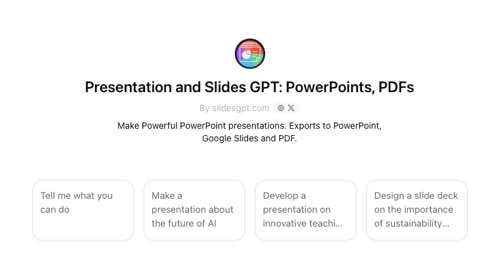
Presentation and Slides GPT is a tool to generate a presentation or a slide deck to convey an idea or introduce a product. Search for relevant images and browse the web to gather up-to-date information. Create entire presentations, including an introduction, content sections, and a conclusion.
A selection of 100 retail brands with more than 130 million combined followers on the X platform collectively posted fewer than 850 times in the first three weeks of July 2024, perhaps confirming retail’s departure from the social network.
Elon Musk purchased Twitter in April 2022, transforming it into X and loosening restrictions around tweets, now called posts.
Not everyone was pleased with Musk’s changes, and by the end of 2022, many businesses had abandoned Twitter. Clothing brand H&M, for example, stopped using Twitter in August 2022, leaving 7.6 million followers. Macy’s left behind its 850,000 followers when it stopped posting in November 2022, and the list could go on.
Selection of Businesses
To learn more about how companies had responded to Musk and X, I prompted Google’s Gemini AI to generate a list of retailers and brands with X accounts. It came up with 180 companies, but in many cases, it had wrong information or repeated a business — it included Warby Parker three times.
After removing the errors, duplications, and businesses with fewer than 1,000 X followers, I had a pseudo-random list of 100 brands and retailers.
Last weekend I manually recorded each company’s X follower count (some on July 20 and others on July 22), the date it last posted, and the number of times it had posted so far in July.
The 100 companies had a combined total of 130,134,761 followers.
Fifty of the businesses had posted at least once in July 2024.
Those 50 had published a combined 845 posts, with PlayStation accounting for 103.
Just 24 companies had posted 10 or more times during the month — many social media marketers recommend six to 10 posts per day.
A few retail brands stood out.
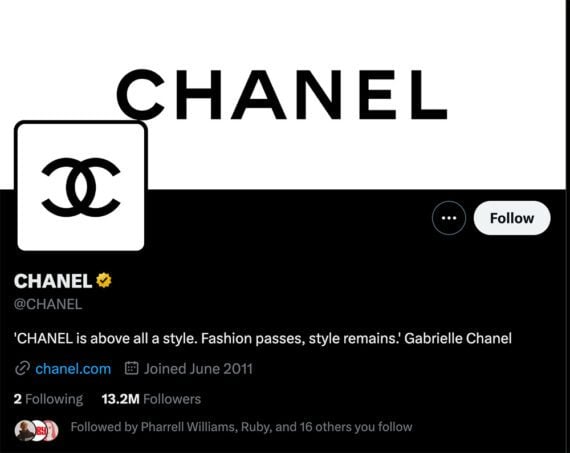
Chanel
Chanel had the third-largest X following of the 100 retail brands, with 13.2 million. The company was one of the many brands that left Twitter in 2022, seemingly to spite Musk.
Chanel left the X (then Twitter) platform in late 2022.
While that seemed like an awful lot of folks to ignore, it is not much compared to Chanel’s social media prowess.
Chanel’s U.S. website links to four social media platforms — Instagram, Facebook, YouTube, and LinkedIn — which collectively have more than 85 million followers.
The Home Depot
The Home Depot ran a “Halloween in July” campaign on X. Its 24 posts garnered more than 754,000 impressions, 4,800 likes, and 1,300 comments from its 438,000 followers.
If each of these X impressions is worth $.0.01 (one cent), The Home Depot’s impressions represented just $7,540 in value. Depending on how much the company spent developing and publishing the content, the organic campaign may have been worth it.
Magic Spoon
This high-protein cereal brand last posted on X in May 2024 and seemed to ignore the platform despite relatively good engagement.
Many of Magic Spoon’s posts experienced good engagement given the size of the company’s X following.
Magic Spoon only had 3,315 X followers but earned more than 8,200 impressions on its last five X posts — 1,640 impressions on average. So nearly half of the company’s follower count sees each post. If The Home Depot could get a similar result, it would have generated 1.1 million impressions instead of 754,000.
Magic Spoon’s X account was even more engaged — i.e., impressions per post — than its much larger Instagram profile.
As of July 22, 204, Magic Spoon had 407,000 Instagram followers. The company’s last five reels had generated 38,350 views, an average of 7,670 views per reel. So, something like 2% of its follower count sees each Instagram post.
PlayStation
X is a high-frequency social media platform, meaning it works best with frequent posts. By that standard, PlayStation appeared to be the only brand on the list using X well.
PlayStation posts often on its X profile with frequent videos.
For example, Musk’s own X profile posted 275 times in the first 20 days of July 2024 — nearly 14 posts per day. Similarly, theUEFA Champions League — a European soccer association with almost 52 million X followers — posted an average of eight times per day in July. Even India’s Prime Minister Narendra Modi, gets it, posting an average of six times per day to his 100 million X followers.
PlayStation, by comparison, published an average of five X posts a day in the first three weeks of July 2024. With more than 38 million X followers, the brand’s five most recent posts generated almost 1.6 million impressions in less than 24 hours.
Nearly all PlayStation’s posts are videos, which may be the platform’s best-performing format.
X by the Numbers
The X platform had 556 million monthly active users in 2023, according to Exploding Topics.
Facebook had 2.9 billion active users. TikTok had slightly more than 1 billion, Pinterest had 445 million, and Meta’s X competitor, Threads, had 175 million monthly active users after a year of existence.
The X platform’s active users are highly engaged. Again, according to Exploding Topics, an active X user spends 34 minutes and 48 seconds per day on the platform. Only YouTube and TikTok have a more engaged user base.
Platform
Average Time Spent Per Day
TikTok
45 minutes, 48 seconds
YouTube
45 minutes, 36 seconds
X
34 minutes, 48 seconds
Snapchat
30 minutes, 36 seconds
Facebook
30 minutes, 6 seconds
Instagram
30 minutes, 6 seconds
Reddit
23 minutes, 8 seconds
In many ways, X has potential and could represent a social media marketing opportunity. But if these 100 retail brands are an indication, achieving a return on investment could take work.
Meta just released multiple updates to Meta AI which brings advanced image generation and editing capabilities directly to Facebook, Instagram and WhatsApp feeds, plus availability in more countries and languages.
New Meta AI Creative Tools
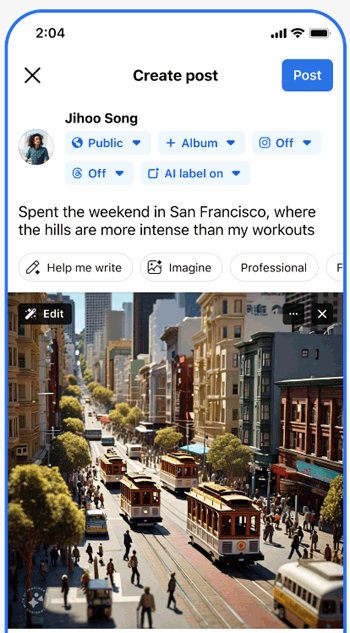
Meta AI is bringing AI generated and AI Edited photography that can be generated at the moment a user is making a post or sending a message with a new tool called Imagine Me.
Imagine Me is a prompt that can be used to transform an uploaded image that can be shared. This new feature is first rolling out as a beta in the United States.
Meta explains:
“Imagine yourself creates images based on a photo of you and a prompt like ‘Imagine me surfing’ or ‘Imagine me on a beach vacation’ using our new state-of-the-art personalization model. Simply type “Imagine me” in your Meta AI chat to get started, and then you can add a prompt like “Imagine me as royalty” or “Imagine me in a surrealist painting.” From there, you can share the images with friends and family, giving you the perfect response or funny sidebar to entertain your group chat.”
New Editing Features
Meta products like Facebook, Messenger, WhatsApp and Instagram now have advanced editing capabilities that allow users to add or remove objects from images, to change them in virtually any manner, such as their example of turning a cat in an image into a dog. A new Edit With AI button is forthcoming in a month that will unlock even more AI editing power.
Adding AI generated images to Facebook, Instagram, Messenger and WhatsApp within feed, posts, stories, comments and messages is rolling out this week in English and coming later to other languages.
Meta AI In More Countries And Languages
Meta AI is now available in seven additional countries, bringing the total countries to to 22. It is also available in seven more languages.
List of Seven Additional Countries:
Argentina
Cameroon
Chile
Colombia
Ecuador
Mexico
Peru
Meta AI is now also available in the following seven additional languages:
French
German
Hindi
Hindi-Romanized Script
Italian
Portuguese
Spanish
Advanced Math And Coding
Meta AI is making their most advanced model, Llama 405B, available for users to take advantage of its advanced reasoning abilities that can answer complex answers and excells at math and coding.
Meta AI writes:
“You can get help on your math homework with step-by-step explanations and feedback, write code faster with debugging support and optimization suggestions, and master complex technical and scientific concepts with expert instruction.”