How To Host Or Migrate A Website In 2025: Factors That May Break Rankings [+ Checklist] via @sejournal, @inmotionhosting

This post was sponsored by InMotion Hosting. The opinions expressed in this article are the sponsor’s own.

Is your website struggling to maintain visibility in search results despite your SEO efforts?

Are your Core Web Vitals scores inconsistent, no matter how many optimizations you implement?

Have you noticed competitors outranking you even when your content seems superior?

In 2025, hosting isn’t just a backend choice. It’s a ranking signal.

In this guide, you’ll learn how hosting decisions impact your ability to rank, and how to choose (or migrate to) hosting that helps your visibility.

Learn to work with your rankings, not against them, with insights from InMotion Hosting’s enterprise SEO specialists.

Jump Straight To Your Needs

Best For Hosting Type How Easy is Migration?
Growing SMBs VPS Easy: Launch Assist (free)
Enterprise / SaaS Dedicated Very Easy: White-Glove + Managed Service

Don’t know which one you need? Read on.

Hosting Directly Impacts SEO Performance

Your hosting environment is the foundation of your SEO efforts. Poor hosting can undermine even the best content and keyword strategies.

Key Areas That Hosting Impacts

Core Web Vitals

Server response time directly affects Largest Contentful Paint (LCP) and First Input Delay (FID), two critical ranking factors.

Solution: Hosting with NVMe storage and sufficient RAM improves these metrics.

Crawl Budget

Your website’s visibility to search engines can be affected by limited server resources, wrong settings, and firewalls that restrict access.

When search engines encounter these issues, they index fewer pages and visit your site less often.

Solution: Upgrade to a hosting provider that’s built for SEO performance and consistent uptime.

Indexation Success

Proper .htaccess rules for redirects, error handling, and DNS configurations are essential for search engines to index your content effectively.

Many hosting providers limit your ability to change this important file, restricting you from:

– Editing your .htaccess file.

– Installing certain SEO or security plugins.

– Adjusting server settings.

These restrictions can hurt your site’s ability to be indexed and affect your overall SEO performance.

Solution: VPS and dedicated hosting solutions give you full access to these settings.

SERP Stability During Traffic Spikes

If your content goes viral or experiences a temporary surge in traffic, poor hosting can cause your site to crash or slow down significantly. This can lead to drops in your rankings if not addressed right away.

Solution: Using advanced caching mechanisms can help prevent these problems.

Server Security

Google warns users about sites with security issues in Search Console. Warnings like “Social Engineering Detected” can erode user trust and hurt your rankings.

Solution: Web Application Firewalls offer important protection against security threats.

Server Location

The location of your server affects how fast your site loads for different users, which can influence your rankings.

Solution: Find a web host that operates data centers in multiple server locations, such as two in the United States, one in Amsterdam, and, soon, one in Singapore. This helps reduce loading times for users worldwide.

Load Times

Faster-loading pages lead to lower bounce rates, which can improve your SEO. [Server-side optimizations], such as caching and compression, are vital for achieving fast load times.

These factors have always been important, but they are even more critical now that AI plays a role in search engine results.

40 Times Faster Page Speeds with Top Scoring Core Web Vitals with InMotion Hosting UltraStack One. (Source: InMotion Hosting UltraStack One for WordPress )Image created by InMotion Hosting, 2025.

2025 Update: Search Engines Are Prioritizing Hosting & Technical Performance More Than Ever

In 2025, search engines have fully embraced AI-driven results, and with this shift has come an increased emphasis on technical performance signals that only proper hosting can deliver.

How 2025 AI Overview SERPs Affect Your Website’s Technical SEO

Google is doubling down on performance signals. Its systems now place even greater weight on:

  • Uptime: Sites with frequent server errors due to outages experience more ranking fluctuations than in previous years. 99.99% uptime guarantees are now essential.
  • Server-Side Rendering: As JavaScript frameworks become more prevalent, servers that efficiently handle rendering deliver a better user experience and improved Core Web Vitals scores. Server-optimized JS rendering can make a difference.
  • Trust Scores: Servers free of malware with healthy dedicated IP addresses isolated to just your site (rather than shared with potentially malicious sites) receive better crawling and indexing treatment. InMotion Hosting’s security-first approach helps maintain these crucial trust signals.
  • Content Freshness: Server E-Tags and caching policies affect how quickly Google recognizes and indexes new or updated content.
  • TTFB (Time To First Byte): Server location, network stability, and input/output speeds all impact TTFB. Servers equipped with NVMe storage technology excel at I/O speeds, delivering faster data retrieval and improved SERP performance.
Infographic Illustrating How Browser Caching Works (Source: Ultimate Guide to Optimize WordPress Performance )Created by InMotion Hosting. May, 2025

Modern search engines utilize AI models that prioritize sites that deliver consistent, reliable, and fast data. This shift means hosting that can render pages quickly is no longer optional for competitive rankings.

What You Can Do About It (Even If You’re Not Into Technical SEO)

You don’t need to be a server administrator to improve your website’s performance. Here’s what you can do.

1. Choose Faster Hosting

Upgrade from shared hosting to VPS or dedicated hosting with NVMe storage. InMotion Hosting’s plans are specifically designed to boost SEO performance.

2. Use Monitoring Tools

Free tools like UptimeRobot.com, WordPress plugins, or cPanel’s resource monitoring can alert you to performance issues before they affect your rankings.

3. Implement Server-Side Caching

Set up caching with Redis or Memcached using WordPress plugins like W3 Total Cache, or through cPanel.

4. Add a CDN

Content Delivery Networks (CDNs) can enhance global performance without needing server changes. InMotion Hosting makes CDN integration easy.

5. Utilize WordPress Plugins

Use LLMS.txt files to help AI tools crawl your site more effectively.

6. Work with Hosting Providers Who Understand SEO

InMotion Hosting offers managed service packages for thorough server optimization, tailored for optimal SEO performance.

Small Business: VPS Hosting Is Ideal for Reliable Performance on a Budget

VPS hosting is every growing business’s secret SEO weapon.

Imagine two competing local service businesses, both with similar content and backlink profiles, but one uses shared hosting while the other uses a VPS.

When customers search for services, the VPS-hosted site consistently appears higher in results because it loads faster and delivers a smoother user experience.

What Counts as an SMB

Small to medium-sized businesses typically have fewer than 500 employees, annual revenue under $100 million, and websites that receive up to 50,000 monthly visitors.

If your business falls into this category, VPS hosting offers the ideal balance of performance and cost.

What You Get With VPS Hosting

1. Fast Speeds with Less Competition

VPS hosting gives your website dedicated resources, unlike shared hosting where many sites compete for the same resources. InMotion Hosting’s VPS solutions ensure your site runs smoothly with optimal resource allocation.

2. More Control Over SEO

With VPS hosting, you can easily set up caching, SSL, and security features that affect SEO. Full root access enables you to have complete control over your server environment.

3. Affordable for Small Businesses Focused on SEO

VPS hosting provides high-quality performance at a lower cost than dedicated servers, making it a great option for growing businesses.

4. Reliable Uptime

InMotion Hosting’s VPS platform guarantees 99.99% uptime through triple replication across multiple nodes. If one node fails, two copies of your site will keep it running.

5. Better Performance for Core Web Vitals

Dedicated CPU cores and RAM lead to faster loading times and improved Core Web Vitals scores. You can monitor server resources to keep track of performance.

6. Faster Connections

Direct links to major internet networks improve TTFB (Time To First Byte), an important SEO measure.

7. Strong Security Tools

InMotion Hosting provides security measures to protect your site against potential threats that could harm it and negatively impact your search rankings. Their malware prevention systems keep your site safe.

How To Set Up VPS Hosting For Your SEO-Friendly Website

  1. Assess your website’s current performance using tools like Google PageSpeed Insights and Search Console
  2. Choose a VPS plan that matches your traffic volume and resource needs
  3. Work with your provider’s migration team to transfer your site (InMotion Hosting offers Launch Assist for seamless transitions)
  4. Implement server-level caching for optimal performance
  5. Configure your SSL certificate to ensure secure connections
  6. Set up performance monitoring to track improvements
  7. Update DNS settings to point to your new server

Large & Enterprise Businesses: Dedicated Hosting Is Perfect For Scaling SEO

What Counts As An Enterprise Business?

Enterprise businesses typically have complex websites with over 1,000 pages, receive more than 100,000 monthly visitors, operate multiple domains or subdomains, or run resource-intensive applications that serve many concurrent users.

Benefits of Dedicated Hosting

Control Over Server Settings

Dedicated hosting provides you with full control over how your server is configured. This is important for enterprise SEO, which often needs specific settings to work well.

Better Crawlability for Large Websites

More server resources allow search engines to crawl more pages quickly. This helps ensure your content gets indexed on time. Advanced server logs provide insights to help you improve crawl patterns.

Reliable Uptime for Global Users

Enterprise websites need to stay online. Dedicated hosting offers reliable service that meets the expectations of users around the world.

Strong Processing Power for Crawlers

Dedicated CPU resources provide the power needed to handle spikes from search engine crawlers when they index your site. InMotion Hosting uses the latest Intel Xeon processors for better performance.

Multiple Dedicated IP Addresses

Having multiple dedicated IP addresses is important for businesses and SaaS platforms that offer API microservices. IP management tools make it easier to manage these addresses.

Custom Security Controls

You can create specific firewall rules and access lists to manage traffic and protect against bots. DDoS protection systems enhance your security.

Real-Time Server Logs

You can watch for crawl surges and performance issues as they happen with detailed server logs. Log analysis tools help you find opportunities to improve.

Load Balancing for Traffic Management

Load balancing helps spread traffic evenly across resources. This way, you can handle increases in traffic without slowing down performance. InMotion Hosting provides strong load balancing solutions.

Future Scalability

You can use multiple servers and networks to manage traffic and resources as your business grows. Scalable infrastructure planning keeps your performance ready for the future.

Fixed Pricing Plans

You can manage costs effectively as you grow with predictable pricing plans.

How To Migrate To Dedicated Hosting

  1. Conduct a thorough site audit to identify all content and technical requirements.
  2. Document your current configuration, including plugins, settings, and custom code.
  3. Work with InMotion Hosting’s migration specialists to plan the transition
  4. Set up a staging environment to test the new configuration before going live
  5. Configure server settings for optimal SEO performance
  6. Implement monitoring tools to track key metrics during and after migration
  7. Create a detailed redirect map for any URL changes
  8. Roll out the migration during low-traffic periods to minimize impact
  9. Verify indexing status in Google Search Console post-migration

[DOWNLOAD] Website Migration Checklist

Free Website Migration Checklist download from InMotion Hosting – step-by-step guide to smoothly transfer your websiteImage created by InMotion Hosting, May 2025

    Why Shared Hosting Can Kill Your SERP Rankings & Core Web Vitals

    If you’re serious about SEO in 2025, shared hosting is a risk that doesn’t come with rewards.

    Shared Hosting Issues & Risks

    Capped Resource Environments

    Shared hosting plans typically impose strict limits on CPU usage, memory, and connections. These limitations directly impact Core Web Vitals scores and can lead to temporary site suspensions during traffic spikes.

    Resource Competition

    Every website on a shared server competes for the same limited resources.

    This becomes even more problematic with AI bots accessing hundreds of sites simultaneously on a single server.

    Neighbor Problems

    A resource-intensive website on your shared server can degrade performance for all sites, including yours. Isolated hosting environments eliminate this risk.

    Collateral Damage During Outages

    When a shared server becomes overwhelmed, not only does your website go down, but so do connected services like domains and email accounts. InMotion Hosting’s VPS and dedicated solutions provide isolation from these cascading failures.

    Limited Access to Server Logs

    Without detailed server logs, diagnosing and resolving technical SEO issues becomes nearly impossible. Advanced log analysis is essential for optimization.

    Restricted Configuration Access

    Shared hosting typically prevents modifications to server-level configurations that are essential for optimizing technical SEO.

    Inability to Adapt Quickly

    Shared environments limit your ability to implement emerging SEO techniques, particularly those designed to effectively handle AI crawlers. Server-level customization is increasingly important for SEO success.

    In 2025, Reliable Hosting Is a Competitive Advantage

    As search engines place greater emphasis on technical performance, your hosting choice is no longer just an IT decision; it’s a strategic marketing investment.

    InMotion Hosting’s VPS and Dedicated Server solutions are engineered specifically to address the technical SEO challenges of 2025 and beyond. With NVMe-powered storage, optimized server configurations, and 24/7 expert human support, we provide the foundation your site needs to achieve and maintain top rankings.

    Ready to turn your hosting into an SEO advantage? Learn more about our SEO-first hosting solutions designed for performance and scale.


    Image Credits

    Featured Image: Image by Shutterstock. Used with permission.

    In-Post Image: Images by InMotion Hosting. Used with permission.

    Inside the effort to tally AI’s energy appetite

    After working on it for months, my colleague Casey Crownhart and I finally saw our story on AI’s energy and emissions burden go live last week. 

    The initial goal sounded simple: Calculate how much energy is used each time we interact with a chatbot, and then tally that up to understand why everyone from leaders of AI companies to officials at the White House wants to harness unprecedented levels of electricity to power AI and reshape our energy grids in the process. 

    It was, of course, not so simple. After speaking with dozens of researchers, we realized that the common understanding of AI’s energy appetite is full of holes. I encourage you to read the full story, which has some incredible graphics to help you understand everything from the energy used in a single query right up to what AI will require just three years from now (enough electricity to power 22% of US households, it turns out). But here are three takeaways I have after the project. 

    AI is in its infancy

    We focused on measuring the energy requirements that go into using a chatbot, generating an image, and creating a video with AI. But these three uses are relatively small-scale compared with where AI is headed next. 

    Lots of AI companies are building reasoning models, which “think” for longer and use more energy. They’re building hardware devices, perhaps like the one Jony Ive has been working on (which OpenAI just acquired for $6.5 billion), that have AI constantly humming along in the background of our conversations. They’re designing agents and digital clones of us to act on our behalf. All these trends point to a more energy-intensive future (which, again, helps explain why OpenAI and others are spending such inconceivable amounts of money on energy). 

    But the fact that AI is in its infancy raises another point. The models, chips, and cooling methods behind this AI revolution could all grow more efficient over time, as my colleague Will Douglas Heaven explains. This future isn’t predetermined.

    AI video is on another level

    When we tested the energy demands of various models, we found the energy required to produce even a low-quality, five-second video to be pretty shocking: It was 42,000 times more than the amount needed for a chatbot answer a question about a recipe, and enough to power a microwave for over an hour. If there’s one type of AI whose energy appetite should worry you, it’s this one. 

    Soon after we published, Google debuted the latest iteration of its Veo model. People quickly created compilations of the most impressive clips (this one being the most shocking to me). Something we point out in the story is that Google (as well as OpenAI, which has its own video generator, Sora) denied our request for specific numbers on the energy their AI models use. Nonetheless, our reporting suggests it’s very likely that high-definition video models like Veo and Sora are much larger, and much more energy-demanding, than the models we tested. 

    I think the key to whether the use of AI video will produce indefensible clouds of emissions in the near future will be how it’s used, and how it’s priced. The example I linked shows a bunch of TikTok-style content, and I predict that if creating AI video is cheap enough, social video sites will be inundated with this type of content. 

    There are more important questions than your own individual footprint

    We expected that a lot of readers would understandably think about this story in terms of their own individual footprint, wondering whether their AI usage is contributing to the climate crisis. Don’t panic: It’s likely that asking a chatbot for help with a travel plan does not meaningfully increase your carbon footprint. Video generation might. But after reporting on this for months, I think there are more important questions.

    Consider, for example, the water being drained from aquifers in Nevada, the country’s driest state, to power data centers that are drawn to the area by tax incentives and easy permitting processes, as detailed in an incredible story by James Temple. Or look at how Meta’s largest data center project, in Louisiana, is relying on natural gas despite industry promises to use clean energy, per a story by David Rotman. Or the fact that nuclear energy is not the silver bullet that AI companies often make it out to be. 

    There are global forces shaping how much energy AI companies are able to access and what types of sources will provide it. There is also very little transparency from leading AI companies on their current and future energy demands, even while they’re asking for public support for these plans. Pondering your individual footprint can be a good thing to do, provided you remember that it’s not so much your footprint as these other factors that are keeping climate researchers and energy experts we spoke to up at night.

    This story originally appeared in The Algorithm, our weekly newsletter on AI. To get stories like this in your inbox first, sign up here.

    The Download: reasons to be optimistic about AI’s energy use, and Caiwei Chen’s three things

    This is today’s edition of The Download, our weekday newsletter that provides a daily dose of what’s going on in the world of technology.

    Four reasons to be optimistic about AI’s energy usage

    Two weeks ago, we launched Power Hungry, a new series shining a light on the energy demands and carbon costs of the artificial intelligence revolution.

    It raised some worrying issues, not least the incredible energy demands of AI video generation. But there are also reasons to be hopeful: innovations that could improve the efficiency of the software behind AI models, the computer chips those models run on, and the data centers where those chips hum around the clock.

    Here’s what you need to know about how energy use, and therefore carbon emissions, could be cut across all three of those domains, plus an added argument for cautious optimism: the underlying business realities may ultimately bend toward more energy-efficient AI. Read the full story and check out the rest of the package here.

    —Will Douglas Heaven

    3 Things Caiwei Chen is into right now

    In each issue of our print magazine, we ask a member of staff to tell us about three things they’re loving at the moment. For our latest edition, which was all about creativity, we asked our China reporter Caiwei Chen to give us an insight into her life. Check out her recommendations here, and subscribe to catch future editions here.

    The must-reads

    I’ve combed the internet to find you today’s most fun/important/scary/fascinating stories about technology.

    1 DOGE’s efforts are slowing down federal agencies
    Even though the taskforce was assembled under the guise of doing the exact opposite. (WP $)
    + The Trump administration wants to slash the federal workforce even further. (AP News)
    + Right wing politicians in the UK are trying to ape DOGE. (The Guardian)
    + DOGE’s tech takeover threatens the safety and stability of our critical data. (MIT Technology Review)

    2 AI pioneer Yoshua Bengio wants to build ‘honest’ AI
    His new non-profit will develop a system to catch deceptive agents. (The Guardian)
    + Cyberattacks by AI agents are coming. (MIT Technology Review)

    3 The FDA is launching an agency-wide AI tool
    It’s designed to help scientific reviewers and others to streamline their work. (Axios)
    + Restoring “gold standard science” is easier said than done. (Ars Technica)

    4 A Neuralink rival has successfully inserted a brain implant into a patient
    It’s a first step towards longer trials for startup Paradromics. (Wired $)
    + What to expect from Neuralink in 2025. (MIT Technology Review)

    5 The FTC is investigating US advertising and advocacy groups 
    It’s probing whether they violated antitrust law by coordinating boycotts. (NYT $)

    6 How Alibaba AI models leapfrogged Meta’s
    After initial struggles, Alibaba is now the world’s open-source leader. (The Information $)

    7 AI is shaking up how your home maintenance services operate
    From plumbers and electricians to roofers and heating specialists. (WSJ $)

    8 Why it’s so difficult to track down critical minerals
    They’re vital for clean energy, and demand for them is surging.(Vox)
    + The race to produce rare earth elements. (MIT Technology Review)

    9 Tinder is testing out a height filter
    Which doesn’t seem very fair on the world’s short kings. (Mashable)

    10 Animal cloning is big business
    Some people will go to great lengths to keep their pets alive. (The Atlantic $)
    + Game of clones: Colossal’s new wolves are cute, but are they dire? (MIT Technology Review)

    Quote of the day

    “If we build AIs that are smarter than us and are not aligned with us and compete with us, then we’re basically cooked.”

    —Yoshua Bengio, an academic regarded as one of the godfathers of AI, warns about the dangers of putting AI progress before safety, the Financial Times reports.

    One more thing

    A Roomba recorded a woman on the toilet. How did screenshots end up on Facebook?

    In the fall of 2020, gig workers in Venezuela posted a series of images to online forums where they talk shop. The photos were mundane, if sometimes intimate, household scenes—including a particularly revealing shot of a young woman in a lavender T-shirt sitting on the toilet, her shorts pulled down to mid-thigh.

    The images were not taken by a person, but by development versions of iRobot’s Roomba robot vacuum, a company now owned by Amazon. They were then sent to Scale AI, a startup that contracts workers around the world to label data used to train artificial intelligence.

    In 2022, MIT Technology Review obtained 15 screenshots of these private photos, which had been posted to closed social media groups. The images speak to the growing practice of sharing potentially sensitive data to train algorithms. They also reveal a whole data supply chain—and new points where personal information could leak out—that few consumers are even aware of. Read the full story.

    —Eileen Guo

    We can still have nice things

    A place for comfort, fun and distraction to brighten up your day. (Got any ideas? Drop me a line or skeet ’em at me.)

    + How cool are Latvia’s passports?
    + Not only are seals incredibly smart, they’re a dab hand (flipper?) at video games 🦭
    + A slice of New Jersey crumb cake and a cup of tea, please.
    + Happy world bicycle day to all who celebrate!

    Books on Startups, Founders, Investors

    Entrepreneurs know the tradeoffs of external capital. The money enables faster growth and infrastructure, but the price is control and occasional chaos. In these 12 books, founders, investors, and academics share the good and the bad.

    World Eaters: How Venture Capital Is Cannibalizing the Economy

    Cover of World Eaters

    World Eaters

    by Catherine Bracy

    Bracy, founder of the nonprofit organization TechEquity, contends that the venture capital model of “hyper maximalist growth” has far-reaching negative impact and isn’t a good fit for most startups. Congressman Ro Khanna calls the book “important and insightful,” while Publishers Weekly says it’s a “convincing call for change.”

    Raising Capital with Confidence

    Cover of Raising Capital with Confidence

    Raising Capital with Confidence

    by Darin H Mangum, Esq.

    The author leads a law firm specializing in securities, with clients including private investment firms and funds. He explains deal structures, how to find the right investors, legal compliance, and more, offering a practical guide to help readers avoid common financing pitfalls and meet their unique business needs for sustainable growth.

    The Startup Lifecycle: The Definitive Guide to Building a Startup from Idea to Exit

    Cover of The Startup Lifecycle

    The Startup Lifecycle

    by Gregory Shepard

    According to Shepard, nine out of 10 startups fail within five years, often due to common and avoidable mistakes. He has built and sold a dozen businesses and provides a roadmap to every phase of the startup lifecycle, from initial vision through growth and successful exit.

    Start. Scale. Exit. Repeat. Serial Entrepreneurs’ Secrets Revealed!

    Cover of Start. Scale. Exit. Repeat.

    Start. Scale. Exit. Repeat.

    by Colin C. Campbell

    Campbell combines his decades of experience as a serial entrepreneur with insights distilled from interviewing more than 30 entrepreneurs and experts to create a multi-award-winning guide to building, growing, and selling a business.

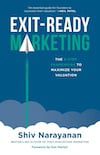
    Exit-Ready Marketing: The 9-Step Framework to Maximize Your Valuation

    Cover of Exit-Ready Marketing

    Exit-Ready Marketing

    by Shiv Narayanan

    Unpredictable revenue can be an obstacle to attracting investment. Narayanan focuses on simple but sophisticated data-driven marketing strategies that create predictable revenue necessary for planning and investing in your business’s growth and increasing its value to private equity investors.

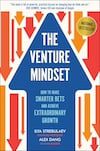
    The Venture Mindset: How to Make Smarter Bets and Achieve Extraordinary Growth

    Cover of The Venture Mindset

    The Venture Mindset

    by Ilya Strebulaev, Alex Dang

    Strebulaev is the leading academic on venture capital; Dang is a senior tech executive, having worked at firms such as McKinsey and Amazon. In this national bestseller, they share key venture capital principles to improve decision-making, identify emerging trends and opportunities, and spark innovation.

    Behind the Startup: How Venture Capital Shapes Work, Innovation, Inequality

    Cover of Behind the Startup

    Behind the Startup

    by Benjamin Shestakofsky

    The author, a sociologist, spent a year and a half conducting experiential research inside a successful Silicon Valley startup. He explores how the intense pressure from funders to scale rapidly creates problems for the organization and, ultimately, society at large.

    Founder vs Investor: The Honest Truth about Venture Capital

    Cover of Founder vs Investor

    Founder vs Investor

    by Elizabeth Joy Zalman and Jerry Neumann

    A two-time founder and a veteran venture capital investor reveal an insider’s view of how the differing motives and incentives of founders and investors — “those with the vision and those with the money” — often result in chaos in the early stages of fast-growing startups.

    Two and Twenty: How the Masters of Private Equity Always Win

    Cover of Two and Twenty

    Two and Twenty

    by Sachin Khajuria

    Once an investing niche, private equity now has a vast global influence. The author, a former partner at a leading private equity firm and longtime investor, offers what Fortune calls “a true insider’s account of the industry” through stories of real-life dealmaking.

    The Power Law: Venture Capital and the Making of the New Future

    Cover of The Power Law

    The Power Law

    by Sebastian Mallaby

    Mallaby, a bestselling author and two-time Pulitzer finalist, examines how the nature of venture capital shapes innovation in Silicon Valley and beyond. He delves into the lesser-known aspects of the success and failure of firms such as Apple, Uber, and WeWork, blending storytelling and analysis.

    Super Founders: What Data Reveals About Billion-Dollar Startups

    Cover of Super Founders

    Super Founders

    by Ali Tamaseb

    Tamaseb interviews top founders and investors, and shares inside stories from PayPal, Instacart, Sequoia Capital, Lyft, Founders Fund, ByteDance, and SpaceX, among others. The result is surprising revelations — for example, being first to market with an idea isn’t necessary for success.

    Venture Deals: Be Smarter Than Your Lawyer and Venture Capitalist 4th Edition

    Cover of Venture Deals

    Venture Deals

    by Brad Feld, Jason Mendelson

    The authors have decades of experience as entrepreneurs, investors, and mentors to founders. Drawing on their involvement in scores of venture financings, they explain term sheets, negotiating strategies, legal considerations, types of debt, and how to build supportive and collaborative relationships between entrepreneurs and investors.

    Google Patent On Using Contextual Signals Beyond Query Semantics via @sejournal, @martinibuster

    A patent recently filed by Google outlines how an AI assistant may use at least five real-world contextual signals, including identifying related intents, to influence answers and generate natural dialog. It’s an example of how AI-assisted search modifies responses to engage users with contextually relevant questions and dialog, expanding beyond keyword-based systems.

    The patent describes a system that generates relevant dialog and answers using signals such as environmental context, dialog intent, user data, and conversation history. These factors go beyond using the semantic data in the user’s query and show how AI-assisted search is moving toward more natural, human-like interactions.

    In general, the purpose of filing a patent is to obtain legal protection and exclusivity for an invention and the act of filing doesn’t indicate that Google is actually using it.

    The patent uses examples of spoken dialog but it also states the invention is not limited to audio input:

    “Notably, during a given dialog session, a user can interact with the automated assistant using various input modalities, including, but not limited to, spoken input, typed input, and/or touch input.”

    The name of the patent is, Using Large Language Model(s) In Generating Automated Assistant response(s). The patent applies to a wide range of AI assistants that receive inputs via the context of typed, touch, and speech.

    There are five factors that influence the LLM modified responses:

    1. Time, Location, And Environmental Context
    2. User-Specific Context
    3. Dialog Intent & Prior Interactions
    4.  Inputs (text, touch, and speech)
    5. System & Device Context

    The first four factors influence the answers that the automated assistant provides and the fifth one determines whether to turn off the LLM-assisted part and revert to standard AI answers.

    Time, Location, And Environmental

    There are three contextual factors: time, location and environmental that provide contexts that are not existent in keywords and influence how the AI assistant responds. While these contextual factors, as described in the patent, aren’t strictly related to AI Overviews or AI Mode, they do show how AI-assisted interactions with data can change.

    The patent uses the example of a person who tells their assistant they’re going surfing. A standard AI response would be a boilerplate comment to have fun or to enjoy the day. The LLM-assisted response described in the patent would generate a response based on the geographic location and time to generate a comment about the weather like the potential for rain. These are called modified assistant outputs.

    The patent describes it like this:

    “…the assistant outputs included in the set of modified assistant outputs include assistant outputs that do drive the dialog session in manner that further engages the user of the client device in the dialog session by asking contextually relevant questions (e.g., “how long have you been surfing?”), that provide contextually relevant information (e.g., “but if you’re going to Example Beach again, be prepared for some light showers”), and/or that otherwise resonate with the user of the client device within the context of the dialog session.”

    User-Specific Context

    The patent describes multiple user-specific contexts that the LLM may use to generate a modified output:

    • User profile data, such as preferences (like food or types of activity).
    • Software application data (such as apps currently or recently in use).
    • Dialog history of the ongoing and/or previous assistant sessions.

    Here’s a snippet that talks about various user profile related contextual signals:

    “Moreover, the context of the dialog session can be determined based on one or more contextual signals that include, for example, ambient noise detected in an environment of the client device, user profile data, software application data, ….dialog history of the dialog session between the user and the automated assistant, and/or other contextual signals.”

    Related Intents

    An interesting part of the patent describes how a user’s food preference can be used to determine a related intent to a query.

    “For example, …one or more of the LLMs can determine an intent associated with the given assistant query… Further, the one or more of the LLMs can identify, based on the intent associated with the given assistant query, at least one related intent that is related to the intent associated with the given assistant query… Moreover, the one or more of the LLMs can generate the additional assistant query based on the at least one related intent. “

    The patent illustrates this with the example of a user saying that they’re hungry. The LLM will then identify related contexts such as what type of cuisine the user enjoys and the itent of eating at a restaurant.

    The patent explains:

    “In this example, the additional assistant query can correspond to, for example, “what types of cuisine has the user indicated he/she prefers?” (e.g., reflecting a related cuisine type intent associated with the intent of the user indicating he/she would like to eat), “what restaurants nearby are open?” (e.g., reflecting a related restaurant lookup intent associated with the intent of the user indicating he/she would like to eat)… In these implementations, additional assistant output can be determined based on processing the additional assistant query.”

    System & Device Context

    The system and device context part of the patent is interesting because it enables the AI to detect if the context of the device is that it’s low on batteries, and if so, it will turn off the LLM-modified responses. There are other factors such as whether the user is walking away from the device, computational costs, etc.

    Takeaways

    • AI Query Responses Use Contextual Signals
      Google’s patent describes how automated assistants can use real-world context to generate more relevant and human-like answers and dialog.
    • Contextual Factors Influence Responses
      These include time/location/environment, user-specific data, dialog history and intent, system/device conditions, and input type (text, speech, or touch).
    • LLM-Modified Responses Enhance Engagement
      Large language models (LLMs) use these contexts to create personalized responses or follow-up questions, like referencing weather or past interactions.
    • Examples Show Practical Impact
      Scenarios like recommending food based on user preferences or commenting on local weather during outdoor plans demonstrates how real-world contexts can influence how AI responds to user queries.

    This patent is important because millions of people are increasingly engaging with AI assistants, thus it’s relevant to publishers, ecommerce stores, local businesses and SEOs.

    It outlines how Google’s AI-assisted systems can generate personalized, context-aware responses by using real-world signals. This enables assistants to go beyond keyword-based answers and respond with relevant information or follow-up questions, such as suggesting restaurants a user might like or commenting on weather conditions before a planned activity.

    Read the patent here:

    Using Large Language Model(s) In Generating Automated Assistant response(s).

    Featured Image by Shutterstock/Visual Unit

    seo enhancements
    Site Kit by Google insights in your Yoast SEO Dashboard

    Ever feel frustrated having to jump between different apps just to check your site’s SEO performance? We’ve simplified things for you. Yoast now seamlessly integrates insights from Site Kit by Google (Google Analytics and Search Console) right into your Yoast Dashboard, giving you one clear view to manage your website’s SEO effectively.

    Here’s why you’ll love this:

    Connect once, get instant clarity: Easily link your Yoast Dashboard and Site Kit by Google just once, avoiding multiple logins and complex workflows.

    Instantly see where to focus your efforts: Efficiently recognize your best opportunities to boost visibility and rankings, allowing you to prioritize SEO tasks effectively.

    Stay effortlessly informed: The Yoast Dashboard integration with Site Kit by Google connects your analytics and search data seamlessly in one place, so you can quickly see important metrics like organic traffic, impressions, clicks, and bounce rates without switching tabs.

    How to connect your Site Kit by Google to the Yoast SEO Dashboard

    1. Update your Yoast plugin to the latest version.
    2. Go to your Yoast Dashboard in WordPress.
    3. Follow the steps in the Site Kit installation widget.
    4. Start reviewing insights directly in your Yoast Dashboard.

    Connect Site Kit by Google to your Yoast Dashboard today and simplify your SEO workflow!

    Disclaimer!

    Please note that we’re rolling out this new feature in phases. This means that you might not see the Site Kit integration in your Yoast Dashboard yet. Eventually, this integration will be available to everyone, so stay tuned!

    Ask An SEO: How Can I Improve The Visibility Of My Category Pages? via @sejournal, @kevgibbo

    This week’s Ask an SEO question comes from a medium-sized ecommerce site manager who’s run up against a common problem:

    “Our product pages rank well, but our category pages rarely appear in search results. What specific optimization strategies would you recommend for category pages to improve their visibility?”

    Thanks for the question!

    It’s a common issue for ecommerce site managers. You have lots of category pages that would present a good opportunity for driving traffic, but they just don’t seem to be getting visibility in the search engine results pages.

    First Thoughts

    If your product pages are ranking well but your category pages are struggling more in search results, it’s likely due to the greater competition for broader, middle-of-the-funnel keywords.

    While product pages can capture long-tail, bottom-of-the-funnel queries, category pages often struggle with more competitive, high-traffic terms.

    Here are a few key reasons your product pages might be outshining your category pages, along with some tips to give those category pages a boost:

    1. Technical Accessibility

    There might be incorrect indexing directives. Category pages won’t rank well if basic technical elements aren’t working correctly.

    To ensure your category pages are fully crawlable and indexable by search engines, check these aspects:

    • On-page directives: Ensure noindex tags aren’t blocking your category pages from appearing in search results.
    • Robots.txt file: Double-check that your robots.txt file isn’t unintentionally blocking important category pages.
    • Canonical tags: Confirm that canonical tags are correctly set to point to the preferred version of each page.

    2. Site Architecture And Internal Linking

    It’s possible that your site architecture is designed to give more link equity to product pages rather than category pages.

    To improve category page visibility, focus on linking more frequently to those category pages, especially the ones that have the ability to drive the highest amount of revenue.

    This can be done through linking from other categories, blog posts, guides, and more. By ensuring category pages are linked to more often, you help search engines understand their importance and authority.

    This is why conducting an opportunity analysis early in your SEO strategy is crucial. It helps identify the category pages that should receive the most internal linking support.

    A final point on linking: Make sure your breadcrumbs are optimized and visible. Not only does that help visitors understand where they are on your site, but it might also encourage them to explore more of what you have to offer.

    3. Issues With Faceted Navigation

    Faceted navigation is an essential feature for large ecommerce websites, allowing users to filter product searches. However, if not properly managed, it can pose significant SEO challenges.

    One of the primary concerns is “index bloat” – the creation of multiple, often duplicate URLs for each possible filter combination.

    It can exhaust your crawl budget, and then search engines can potentially overlook critical pages.

    Also, improper implementation can result in duplicate content, cannibalize rankings for category pages, and dilute internal link equity.

    To avoid this, I recommend limiting the number of indexed filter combinations at any given time – ideally no more than two.

    The specific number will depend on the range of filters available, but it’s crucial to prioritize filters that align with search demand.

    For example, avoid indexing a combination like “size 7, green, wide fit, running shoe” if there’s minimal search volume for it.

    However, “green size 7 running shoe” could be a valuable combination to index, as it has higher search intent.

    4. Insufficient Or Low-Quality Content On Category Pages

    Over the years in this industry, I’ve seen firsthand how impactful on-page copy can be for category pages. It helps to provide extra context that helps search engines better understand the focus of your pages.

    After all, search engines prioritize pages with valuable content that provides context for users.

    Many category pages are nothing more than long lists of products and icons. That’s a real missed opportunity – and also makes them less likely to surface in the SERPs.

    Here are a few ways to boost their chances:

    Short Introductions At The Top

    On many ecommerce sites, you’ll notice there’s often a short block of intro copy at the top of the page.

    This doesn’t need to be more than 100 words or so and is an effective way of helping search engines understand the page’s context. Avoid fluff or boilerplate copy; it needs to be unique and meaningful.

    Tip: Explain what the category is, and the broad range of products or brands you sell.

    Say the category page was “running shoes.” The intro could talk about all the materials the running shoes are made from, colors available, types of runs they can be used for, and so on.

    Guidance Lower Down

    Further down the page, you can include additional content modules to help the customer make an informed decision.

    Ecommerce stores often use things like:

    • FAQs.
    • Feature comparisons.
    • More information about your brand.
    • Information on how to choose between products.
    • Videos.
    • Delivery information.

    5. Lack Of On-Page Optimization

    Your on-page optimization for category pages might not be fully aligned with search intent, so it’s worth reviewing and refining it to better match what users are searching for.

    Page Titles

    If category pages have generic or poorly optimized page titles, search engines may struggle to understand the page’s relevance, and users won’t feel enticed to click on the result in SERPs.

    When creating them:

    • Review current SERPS to see what’s working for competitors.
    • Keep titles unique for each category to avoid duplication, and aim for 50-60 characters to prevent truncation in search results.
    • Ensure your titles reflect what users are looking for – like specific product attributes (e.g., color, size) when relevant.

    Meta Descriptions

    A compelling meta description for a product listing page (PLP) should give users a reason to click, showcasing its offering and value.

    Keep the meta description within 150-160 characters to avoid truncation, and craft it to answer potential user queries, like “best [category] for [specific need].”

    Header Tags

    When you’re reviewing header tags for categories, the key is to capture the essence of the entire category while speaking to the intent of shoppers browsing or filtering options.

    Start with a clear, keyword-rich H1 that tells users exactly what the page is about, like “Men’s Running Shoes.”

    Then use H2 tags to break things down further with subcategories or popular filters, such as “Top Rated” or “Shop by Brand.”

    For product detail pages (PDPs), header tags become more specific to the individual product.

    6. Low-Quality Or Missing Schema Markup

    Now, we’re getting into some of the more technical tasks to improve your category pages’ rankings.

    It might be that your schema markup is better for PDPs than your PLPs, or your PLPs just need some more tweaks or additions.

    Here are some simple actions that can make a difference:

    • Consider adding the BreadcrumbList schema to your category pages. (It helps search engines understand the page’s position within your site’s hierarchy, improving internal linking.)
    • Consider collection-level structured data if applicable.
    • Review if category pages have any missing structured data.

    7. Content Freshness Signals

    All too often, people create category pages, then basically forget about them.

    However, regularly updating them will show that the page is actively maintained, increasing your chances of appearing in SERPs.

    Keep Category Pages Dynamic

    Highlight trending products, top-rated items, or seasonal goods, surfacing them at the top of your category pages.

    Include Recent Reviews

    Getting positive reviews for products? Insert them as content blocks within your category pages. The more recent the reviews, the better.

    Refresh Copy

    Trends come and go, stock gets replaced, and new products get made. Refresh your category page copy to reflect these changes.

    Final Word

    I hope these tips can help you get more visibility for your category pages – and complement your already successful product pages.

    More Resources:


    Featured Image: Paulo Bobita/Search Engine Journal

    New AI-Assisted Managed WordPress Hosting For Ecommerce via @sejournal, @martinibuster

    Bluehost announced two competitively priced managed WordPress ecommerce hosting solutions that make it easy for content creators and ecommerce stores to get online with WordPress and start accepting orders.

    Both plans feature AI site migration tools that help users switch web hosting providers, free content delivery networks to speed up web page downloads, AI-assisted site creation tools and NVMe (Non-Volatile Memory Express) solid state storage which provides faster speeds than traditional web hosting storage.

    The new plans enable users to sell products with WooCommerce and even offer paid courses online, all within a managed WordPress hosting environment that’s optimized for WordPress websites.

    According to Bluehost:

    “Bluehost’s eCommerce Essentials equips content creators with an intuitive, all‑in‑one toolkit—complete with AI‑powered site building, seamless payment integrations, paid courses and memberships, social logins, email templates and SEO tools—to effortlessly engage audiences and turn their passion into profit.”

    There are two plans, eCommerce Essentials and eCommerce Premium, with the premium version offering more ecommerce features built-in. Both plans are surprisingly affordable considering the many features offered.

    Satish Hemachandran, Chief Product Officer at Bluehost commented:

    “At Bluehost, we understand the unique needs of today’s content creators and entrepreneurs who are building personal brands or online stores and turning their passion into profit.

    With Bluehost WordPress eCommerce hosting plans, creators get a streamlined platform to easily develop personalized commerce experiences. From launching a store to engaging an audience and monetizing content, our purpose-built tools are designed to simplify the process and support long-term growth. Our mission is to empower creators with the right resources to strengthen their brand, increase their income, and succeed in the digital economy.”

    Read more about the new ecommerce WordPress hosting here:

    WooCommerce Online Stores – The future of online selling is here.

    The Trump administration has shut down more than 100 climate studies

    The Trump administration has terminated National Science Foundation grants for more than 100 research projects related to climate change amid a widening campaign to slash federal funding for scientists and institutions studying the rising risks of a warming world.

    The move will cut off what’s likely to amount to tens of millions of dollars for studies that were previously approved and, in most cases, already in the works. 

    Affected projects include efforts to develop cleaner fuels, measure methane emissions, improve understanding of how heat waves and sea-level rise disproportionately harm marginalized groups, and help communities transition to sustainable energy, according to an MIT Technology Review review of a GrantWatch database—a volunteer-led effort to track federal cuts to research—and a list of terminated grants from the National Science Foundation (NSF) itself. 

    The NSF is one of the largest sources of US funding for university research, so the cancellations will deliver a big blow to climate science and clean-energy development.

    They come on top of the White House’s broader efforts to cut research funding and revenue for universities and significantly raise their taxes. The administration has also strived to slash staff and budgets at federal research agencies, halt efforts to assess the physical and financial risks of climate change, and shut down labs that have monitored and analyzed the levels of greenhouse gases in the air for decades.

    “I don’t think it takes a lot of imagination to understand where this is going,” says Daniel Schrag, co-director of the science, technology, and public policy program at Harvard University, which has seen greater funding cuts than any other university amid an escalating legal conflict with the administration. “I believe the Trump administration intends to zero out funding for climate science altogether.”

    The NSF says it’s terminating grants that aren’t aligned with the agency’s program goals, “including but not limited to those on diversity, equity, and inclusion (DEI), environmental justice, and misinformation/disinformation.”

    Trump administration officials have argued that DEI considerations have contaminated US science, favoring certain groups over others and undermining the public’s trust in researchers.

    “Political biases have displaced the vital search for truth,” Michael Kratsios, head of the White House Office of Science and Technology Policy, said to a group of NSF administrations and others last month, according to reporting in Science.

    Science v. politics

    But research projects that got caught in the administration’s anti-DEI filter aren’t the only casualties of the cuts. The NSF has also canceled funding for work that has little obvious connections to DEI ambitions, such as research on catalysts. 

    Many believe the administration’s broader motivation is to  undermine the power of the university system and prevent research findings that cut against its politics. 

    Trump and his officials have repeatedly argued, in public statements and executive orders, that climate fears are overblown and that burdensome environmental regulations have undermined the nation’s energy security and economic growth.

    “It certainly seems like a deliberate attempt to undo any science that contradicts the administration,” says Alexa Fredston, an assistant professor of ocean sciences at the University of California, Santa Cruz. 

    On May 28, a group of states including California, New York, and Illinois sued the NSF, arguing that the cuts illegally violated diversity goals and funding priorities clearly established by Congress, which controls federal spending.

    A group of universities also filed a lawsuit against the NSF over its earlier decision to reduce the indirect cost rate for research, which reimburses universities for overhead expenses associated with work carried out on campuses. The plaintiffs included the California Institute of Technology, Carnegie Mellon University, and the Massachusetts Institute of Technology, which has also lost a number of research grants.

    (MIT Technology Review is owned by, but editorially independent from, MIT.)

    The NSF declined to comment.

    ‘Theft from the American people’

    GrantWatch is an effort among researchers at rOpenSci, Harvard, and other organizations to track terminations of grants issued by the National Institutes of Health (NIH) and NSF. It draws on voluntary submissions from scientists involved as well as public government information. 

    A search of its database for the terms “climate change,” “clean energy,” “climate adaptation,” “environmental justice,” and “climate justice” showed that the NSF has canceled funds for 118 projects, which were supposed to receive more than $100 million in total. Searching for the word “climate” produces more than 300 research projects that were set to receive more than $230 million. (That word often indicates climate-change-related research, but in some abstracts it refers to the cultural climate.) 

    Some share of those funds has already been issued to research groups. The NSF section of the database doesn’t include that “outlaid” figure, but it’s generally about half the amount of the original grants, according to Noam Ross, a computational researcher and executive director of rOpenSci, a nonprofit initiative that promotes open and reproducible science.

    A search for “climate change” among the NIH projects produces another 22 studies that were terminated and were still owed nearly $50 million in grants. Many of those projects explored the mental or physical health effects of climate change and extreme weather events.

    The NSF more recently released its own list of terminated projects, which mostly mirrored GrantWatch’s findings and confirms the specific terminations mentioned in this story.

    “These grant terminations are theft from the American people,” Ross said in an email response. “By illegally ending this research the Trump administration is wasting taxpayer dollars, gutting US leadership in science, and telling the world that the US government breaks its promises.”

    Harvard, the country’s oldest university, has been particularly hard hit.

    In April, the university sued the Trump administration over cuts to its research funding and efforts to exert control over its admissions and governance policies. The White House, in turn, has moved to eliminate all federal funds for the university, including hundreds of NSF and NIH grants. 

    Daniel Nocera, a professor at Harvard who has done pioneering work on so-called artificial photosynthesis, a pathway for producing clean fuels from sunlight, said in an email that all of his grants were terminated. 

    “I have no research funds,” he added.

    Another terminated grant involved a collaboration between Harvard and the NSF National Center for Atmospheric Research (NCAR), designed to update the atmospheric chemistry component of the Community Earth System Model, an open-source climate model widely used by scientists around the world.

    The research was expected to “contribute to a better understanding of atmospheric chemistry in the climate system and to improve air quality predictions within the context of climate change,” according to the NSF abstract. 

    “We completed most of the work and were able to bring it to a stopping point,” Daniel Jacob, a professor at Harvard listed as the principal investigator on the project, said in an email. “But it will affect the ability to study chemistry-climate interactions. And it is clearly not right to pull funding from an existing project.”

    Plenty of the affected research projects do, in one way or another, grapple with issues of diversity, equity, and inclusion. But that’s because there is ample evidence that disadvantaged communities experience higher rates of illness from energy-sector pollution, will be harder hit by the escalating effects of extreme weather and are underrepresented in scientific fields.

    One of the largest terminations cut off about $4 million dollars of remaining funds for the CLIMATE Justice Initiative, a fellowship program at the University of California, Irvine designed to recruit, train and mentor a more diverse array of researchers in Earth sciences.  

    The NSF decision occurred halfway into the 5-year program, halting funds for a number of fellows who were in the midst of environmental justice research efforts with community partners in Southern California. Kathleen Johnson, a professor at UC Irvine and director of the initiative, says the university is striving to find ways to fund as many participants as possible for the remainder of their fellowships.

    “We need people from all parts of society who are trained in geoscience and climate science to address all these global challenges that we are facing,” she says. “The people who will be best positioned to do this work …  are the people who understand the community’s needs and are able to therefore work to implement equitable solutions.”

    “Diverse teams have been shown to do better science,” Johnson adds.

    Numerous researchers whose grants were terminated didn’t respond to inquiries from MIT Technology Review or declined to comment, amid growing concerns that the Trump administration will punish scientists or institutions that criticize their policies.

    Coming cuts

    The termination of existing NSF and NIH grants is just the start of the administration’s plans to cut federal funding for climate and clean-energy research. 

    The White House’s budget proposal for the coming fiscal year seeks to eliminate tens of billions of dollars in funding across federal agencies, specifically calling out “Green New Scam funds” at the Department of Energy; “low-priority climate monitoring satellites” at NASA; “climate-dominated research, data, and grant programs” at the National Oceanic and Atmospheric Administration; and “climate; clean energy; woke social, behavioral, and economic sciences” at the NSF.

    The administration released a more detailed NSF budget proposal on May 30th, which called for a 60% reduction in research spending and nearly zeroed out the clean energy technology program. It also proposed cutting funds by 97% for the US Global Change Research Program, which produces regular assessments of climate risks; 80% for the Ocean Observatories Initiative, a global network of ocean sensors that monitor shifting marine conditions; and 40% for NCAR, the atmospheric research center.

    If Congress approves budget reductions anywhere near the levels the administration has put forward, scientists fear, it could eliminate the resources necessary to carry on long-running climate observation of oceans, forests, and the atmosphere. 

    The administration also reportedly plans to end the leases on dozens of NOAA facilities, including the Global Monitoring Laboratory in Hilo, Hawaii. The lab supports the work of the nearby Mauna Loa Observatory, which has tracked atmospheric carbon dioxide levels for decades.

    Even short gaps in these time-series studies, which scientists around the world rely upon, would have an enduring impact on researchers’ ability to analyze and understand weather and climate trends.

    “We won’t know where we’re going if we stop measuring what’s happening,” says Jane Long, formerly the associate director of energy and environment at Lawrence Livermore National Lab. “It’s devastating—there’s no two ways around it.” 

    Stunting science 

    Growing fears that public research funding will take an even larger hit in the coming fiscal year are forcing scientists to rethink their research plans—or to reconsider whether they want to stay in the field at all, numerous observers said.

    “The amount of funding we’re talking about isn’t something a university can fill indefinitely, and it’s not something that private philanthropy can fill for very long,” says Michael Oppenheimer, a professor of geosciences and international affairs at Princeton University. “So what we’re talking about is potentially cataclysmic for climate science.”

    “Basically it’s a shit show,” he adds, “and how bad a shit show it is will depend a lot on what happens in the courts and Congress over the next few months.”

    One climate scientist, who declined to speak on the record out of concern that the administration might punish his institution, said the declining funding is forcing researchers to shrink their scientific ambitions down to a question of “What can I do with my laptop and existing data sets?”

    “If your goal was to make the United States a second-class or third-class country when it comes to science and education, you would be doing exactly what the administration is doing,” the scientist said. “People are pretty depressed, upset, and afraid.”

    Given the rising challenges, Harvard’s Schrag fears that the best young climate scientists will decide to shift their careers outside of the US, or move into high tech or other fields where they can make significantly more money.

    “We might lose a generation of talent—and that’s not going to get fixed four years from now,” he says. “The irony is that Trump is attacking the institutions and foundation of US science that literally made America great.”

    The Download: US climate studies are being shut down, and building cities from lava

    This is today’s edition of The Download, our weekday newsletter that provides a daily dose of what’s going on in the world of technology.

    The Trump administration has shut down more than 100 climate studies

    The Trump administration has terminated National Science Foundation grants for more than 100 research projects related to climate change, according to an MIT Technology Review analysis of a database that tracks such cuts.

    The move will cut off what’s likely to amount to tens of millions of dollars for studies that were previously approved and, in most cases, already in the works. Many believe the administration’s broader motivation is to undermine the power of the university system and prevent research findings that cut against its politics. Read the full story.

    —James Temple

    This architect wants to build cities out of lava

    Arnhildur Pálmadóttir is an architect with an extraordinary mission: to harness molten lava and build cities out of it.

    Pálmadóttir believes the lava that flows from a single eruption could yield enough building material to lay the foundations of an entire city. She has been researching this possibility for more than five years as part of a project she calls Lavaforming. Together with her son and colleague Arnar Skarphéðinsson, she has identified three potential techniques that could change how future homes are designed and built from repurposed lava. Read the full story.

    —Elissaveta M. Brandon

    This story is from the most recent edition of our print magazine, which is all about how technology is changing creativity. Subscribe now to read it and to receive future print copies once they land.

    The must-reads

    I’ve combed the internet to find you today’s most fun/important/scary/fascinating stories about technology.

    1 America is failing to win the tech race against China
    In fields as diverse as drones and energy. (WSJ $)
    + Humanoid robots is an area of particular interest. (Bloomberg $)
    + China has accused the US of violating the pair’s trade truce. (FT $)

    2 Who is really in charge of DOGE?
    According to a fired staffer, it wasn’t Elon Musk. (Wired $)
    + DOGE’s tech takeover threatens the safety and stability of our critical data. (MIT Technology Review)

    3 Brazilians will soon be able to sell their digital data
    It’s the first time citizens will be able to monetize their digital footprint. (Rest of World)

    4 The Trump administration’s anti-vaccine stance is stoking fear among scientists
    It’s slashing funding for mRNA trials, and experts are afraid to speak out. (The Atlantic $)
    + This annual shot might protect against HIV infections. (MIT Technology Review)

    5 Tech companies want us to spend longer talking to chatbots
    Those conversations can easily veer into dangerous territory. (WP $)
    + How we use AI in the future is up to us. (New Yorker $)
    + This benchmark used Reddit’s AITA to test how much AI models suck up to us. (MIT Technology Review)

    6 Tiktok’s mental health videos are rife with misinformation
    A lot of the advice is useless at best, and harmful at worst. (The Guardian)

    7 Lawyers are hooked on ChatGPT
    Even though it’s inherently unreliable. (The Verge)
    + Yet another lawyer has been found referencing nonexistent citations. (The Guardian)
    + How AI is introducing errors into courtrooms. (MIT Technology Review)

    8 How chefs are using generative AI 👩‍🍳
    They’re starting to experiment with using it to create innovative new dishes. (NYT $)
    + Watch this robot cook shrimp and clean autonomously. (MIT Technology Review)

    9 The influencer suing her rival has dropped her lawsuit
    The legal fight over ownership of a basic aesthetic has come to an end. (NBC News)

    10 Roblox’s new game has sparked a digital fruit underground market
    And players are already spending millions of dollars every week. (Bloomberg $)

    Quote of the day

    “We can’t substitute complex thinking with machines. AI can’t replace our curiosity, creativity or emotional intelligence.”

    —Mateusz Demski, a journalist in Poland, tells the Guardian about how his radio station employer laid him off, only to later launch shows fronted by AI-generated presenters.

    One more thing

    ​​Adventures in the genetic time machine

    An ancient-DNA revolution is turning the high-speed equipment used to study the DNA of living things on to specimens from the past.

    The technology is being used to create genetic maps of saber-toothed cats, cave bears, and thousands of ancient humans, including Vikings, Polynesian navigators, and numerous Neanderthals. The total number of ancient humans studied is more than 10,000 and rising fast.

    The old genes have already revealed remarkable stories of human migrations around the globe.

    But researchers are hoping ancient DNA will be more than a telescope on the past—they hope it will have concrete practical use in the present. Read the full story

    —Antonio Regalado

    We can still have nice things

    A place for comfort, fun and distraction to brighten up your day. (Got any ideas? Drop me a line or skeet ’em at me.)

    + The ancient Persians managed to keep cool using an innovative breeze-catching technique that could still be useful today.
    + Knowledge is power—here’s a helpful list of hoaxes to be aware of.
    + How said it: Homer Simpson or Pete Hegseth?
    + I had no idea London has so many cat statues.