Utilizing Local Influencers For Digital Marketing Success via @sejournal, @JRiddall
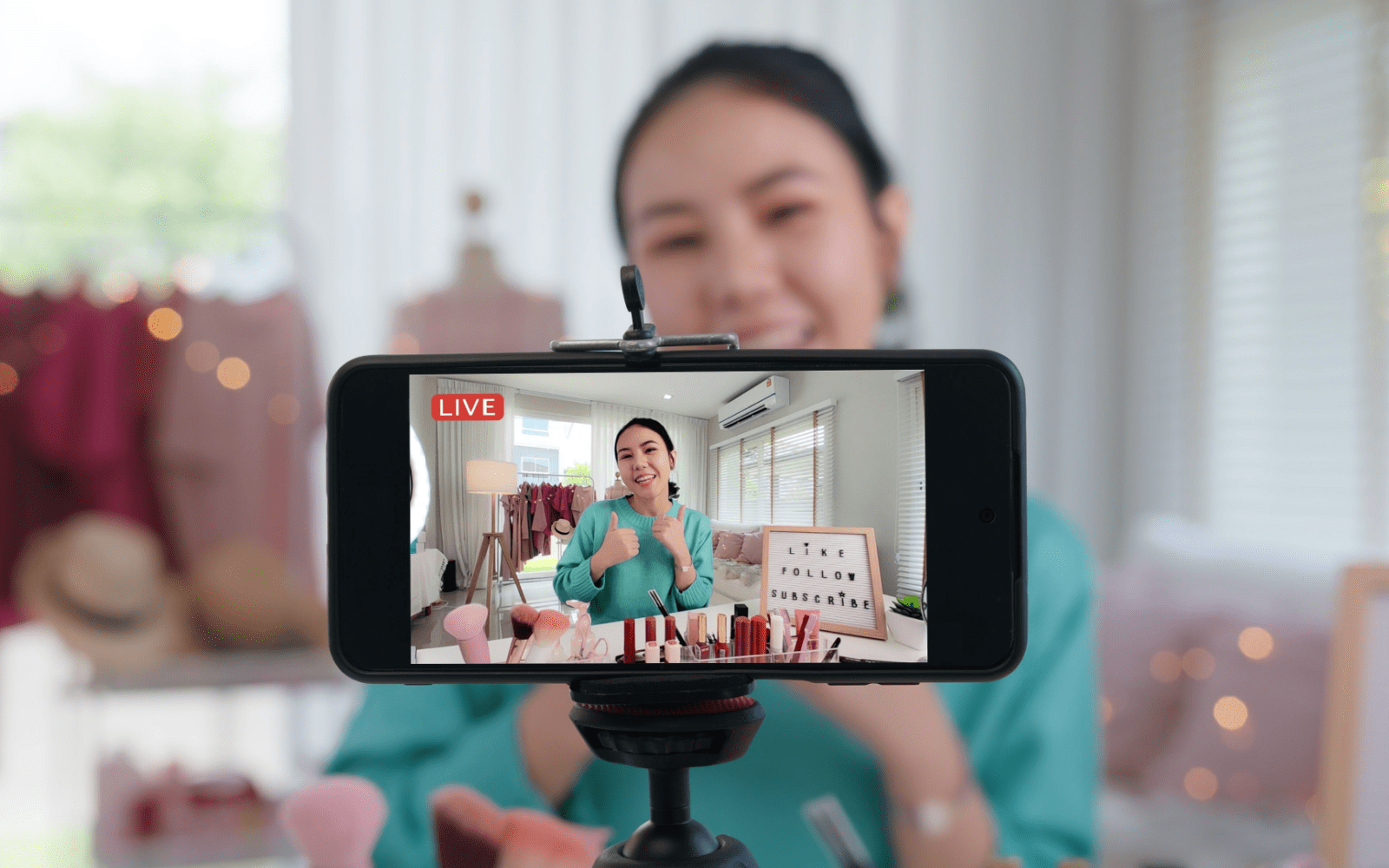
Small businesses face the ongoing challenge of standing out in crowded marketplaces, both online and off.

One strategy that has gained significant traction in recent years is leveraging prominent, trusted local influencers to help boost online authority and visibility and grow the business.

This approach enables businesses to tap into established community voices, build trust, and reach specific local audiences through value-added partnerships.

Understanding Local Influencer Marketing

Local influencer marketing involves partnering with people who have significant followings and/or influence within a specific geographic area or community.

These influencers may not have millions of followers like national or global influencers, but their impact on local consumers’ searching and buying decisions can be substantial.

According to a 2023 study by Influencer Marketing Hub, 82% of marketers plan to dedicate a budget to influencer marketing. While this statistic covers influencer marketing in general, the trend is increasingly relevant for local businesses as well.

Why Local Influencers Matter For Your Local Businesses

Targeted Local Reach

Local influencers have an audience that is likely to be in the same area as your business.

This means your marketing efforts are focused on potential customers who can actually visit your physical location or use your local services.

It reduces wasted exposure to audiences outside your service area, making your marketing much more efficient and cost-effective.

Authenticity

Local influencers are often seen as more relatable and trustworthy by their followers. They’re part of the community and understand local challenges, needs, preferences, and culture.

This authenticity can lead to higher engagement rates and more genuine interest in your business.

Their recommendations often come across as personal endorsements rather than paid advertisements, though their support should be clearly indicated as paid/sponsored if this is the case.

Cost-Effectiveness

Partnering with local influencers is generally more affordable than working with larger, national-level influencers, who are used to charging a premium.

Most small businesses have limited marketing budgets, putting those larger influencers out of reach. You can often negotiate deals with locals involving product exchanges or experiences rather than large cash payments.

As noted, the ROI of these types of “paid” relationships can be higher due to the targeted nature of the audience and the influencer’s local credibility.

Increased Local Visibility

Local influencer partnerships can boost a business’s presence in local search results and social media.

When influencers provide backlinks to your content, tag your business on social media, or use location-based hashtags, it can improve your local SEO by transferring some of their established authority and “localness” to you.

This increased visibility can lead to more foot traffic, website or social media visits, and, ultimately, sales.

Timely Communications

Local influencers are often the first to know about and share local trends because part of their job includes being engaged and aware.

Partnering with them can help small businesses quickly adapt their offerings or marketing to new trends and customer needs.

Community Engagement

Local influencers can help businesses connect more deeply with the local community.

They can facilitate meaningful interactions, promote local events, and help your business become a more integral part of the community fabric.

This can lead to increased customer loyalty and word-of-mouth marketing, both online and off, beyond just the influencer’s followers.

Cross-Promotion Opportunities

A local influencer may already have existing relationships with like-minded businesses and be able to make valuable, trust-backed introductions for cross-promotion.

These types of relationships can be positioned as a win-win for all local parties and the community in general.

Further, local community engagement is another signal to Google of your business’s localness and can influence your online authority relative to your competitors, who may not be as engaged.

This trust factor is pronounced at the local level, where influencers are naturally viewed as neighbors and contributing members of the community.

Identifying The Right Local Influencers

Finding the right local influencers is crucial for the success of your campaign. Here are some best practices:

  • Define your target audience: Understand who your ideal customers are (demographics and psychographics), what types of local influencers they’re likely to follow, and in which channels. Many influencers appeal to specific niches, so be sure to determine whether or not they will reach your target.
  • Use social listening tools: Utilize social media listening tools or hire someone to identify local hashtags and active influencer voices in your community.
  • Check engagement rates: Look beyond follower counts and pay attention to how active an influencer’s accounts are. An influencer with 500-1000 engaged local followers is likely more valuable than one with 50,000 passive followers. A Rock Content study quoted by TechJury.net found micro-influencers account for 91% of engagement posts. Much higher than their larger counterparts.
  • Assess content quality: Ensure the influencer’s content style and values align with your business and brand. Be sure to research the influencer’s past activity and other local relationships they may have maintained.
  • Verify local presence: Confirm the influencer is genuinely active and influential in your specific locale. Review the influencer’s follower list, looking for friends you may have in common. Ask a few of your customers if they are familiar with the influencer.

Approaching Local Influencers

Once you’ve identified potential local influencers, the next step is to approach them to propose a partnership:

  • Engage authentically: You can start by following them on social media, liking/sharing their content, leaving thoughtful comments, and tagging them in your relevant posts. In other words, try to build a relationship before pitching a collaboration.
  • Personalize your outreach: When you do reach out, make it clear why you chose them specifically. Reference specific content you feel would resonate with your audience, and be sure to highlight the importance of local involvement.
  • Offer value: Clearly articulate what’s in the proposed relationship for them. This could be monetary compensation, free products/services, or exclusive experiences your business can offer.
  • Be clear about expectations: Outline what you’re looking for in the collaboration, but also be open to their ideas; this should be a mutually beneficial relationship, after all.
  • Start small: Consider starting with a small project to test the waters before committing to a larger campaign.
  • Ask for references and/or results: Professional influencers should be able to provide references to other local businesses they’ve worked with. You can also ask them to provide details on results they’ve delivered to other businesses in terms of new followers, website traffic, or actual sales.
  • Respect their audience: Remember, local influencers have likely taken significant time to build trust with their followers, which is why you should want to work with them. Be sure to respect this relationship and avoid pushing for them to endorse overly promotional content. They will likely let you know in any case, but it’s better not to start off a relationship on the wrong foot.

Case Studies: Local Influencer Success Stories

A Gardening Supply Company Partners With A Local Gardener

A local family-owned gardening store collaborates with a prominent local gardener with 5,000 followers across Instagram, Facebook, and YouTube for a series of DIY gardening tutorial videos featuring their products and services.

Results:

  • Increase in website traffic from social media and organic search to key product and service pages.
  • Growth in email newsletter sign-ups.
  • Boost in sales of products featured in tutorials.

Key Takeaway: Educational content from a trusted local source drives both engagement and sales.

A Butcher Partners With A Local Foodie On A Charity BBQ

A new local butcher with three well-established competitors partners with a local food influencer with 15,000+ highly engaged followers on Instagram, Facebook, and TikTok to promote and host a charity BBQ at his location.

The event is very well attended and the butcher receives positive feedback from several attendees, as well as charity organizers.

Results:

  • Increase in website traffic and online purchases originating from social media and organic search.
  • Significant growth of the butcher’s social media following.
  • Single-day in-store sales record.
  • A new partnership formed with the local charity, and a link to the butcher’s website from the charity’s site.

Key Takeaway: Community engagement via a known and trusted influencer boosts visibility, traffic, and sales.

Best Practices For Local Influencer Campaigns

Having identified influencers, here are some recommendations for running a successful campaign.

Set Clear Goals

Define what success looks like for your campaign. Is it increased foot traffic, online sales, or brand awareness? Setting specific, measurable goals is critical for evaluating the success of your campaign.

For example, a local bookstore might set a goal to increase website traffic by 20% and online sales by 5% during a three-month-long campaign with a local book reviewer. This can easily be tracked via Google Analytics.

Allow Creative Freedom

While it’s important to have guidelines, you should enable influencers to have some creative control. Their authentic, trusted voice and approach are what resonates with their audience. Overly scripted content can come across as contrived and may not perform as well.

Example: A local yoga studio partnering with a fitness influencer might provide key points about their classes and facilities but allow the influencer to create content in their own style, whether that’s a day-in-the-life TikTok video or a series of yoga and personal wellness stories on Instagram.

Tip: Consider providing a creative brief with your key messages and any mandatory elements, but encourage the influencer to present these in a way that feels natural to them.

Leverage Multiple Platforms

Don’t limit yourself or your influencer to just one social media platform. A multi-channel and content-type approach can maximize reach and cater to different audience preferences.

Tip: Consider each platform’s strengths and how they align with the goals you’ve defined. Instagram or TikTok might be great for entertaining/visual impact, while YouTube could be better for more detailed product demos and information.

Foster Long-Term Relationships

Instead of one-off posts, consider ongoing partnerships with influencers who truly align with your brand messaging. This can lead to more authentic content and stronger audience trust over time.

Example: A local pet store might partner with a popular dog trainer for a monthly “Ask the Trainer” Instagram series, creating an ongoing valuable resource for local pet owners.

Tip: Start with a smaller project and, if it’s successful, propose a longer-term and more involved campaign. This approach will enable both sides to ensure there’s a good fit before committing to a lengthy partnership.

Measure And Adjust

Use unique tracking links, promo codes, and analytics tools to measure the impact of your campaigns and adjust your strategy accordingly. Unique links and codes are particularly important if you start working with more than one influencer, as you’ll want to understand which is delivering the best results.

This data-driven approach will enable you to refine your campaigns over time. Set up regular check-ins to review campaign performance with your partner.

Be prepared to pivot your strategy if certain approaches aren’t yielding the desired results. Taking a data-driven approach will no doubt impress your partner and solidify your relationship.

Comply With Regulations

Ensure all sponsored content is clearly disclosed according to FTC or other regulatory guidelines. This maintains trust with the audience and avoids potential legal issues. Provide your influencer partners with clear guidelines on how to disclose partnerships within the context of campaigns.

The FTC recommends disclosures are clear, conspicuous, and not buried in a string of hashtags. Example: An influencer posting about a local fitness apparel store should include clear language like “#ad” or “Sponsored by [Store Name]” in a prominent place in their post.

Remember, the key is to balance authenticity while also achieving your desired marketing goals. Regular evaluation and adjustment of your strategy will help ensure long-term success in your local influencer marketing efforts.

Challenges And How To Overcome Them

All digital marketing campaigns come with some challenges and there are some which will be specific to local businesses.

These should not, however, deter business owners from testing this potentially powerful approach.

  • Limited pool of influencers: In smaller locales, you might find a limited number of available or suitable influencers. If this is the case, expand your definition of influence to include local community leaders, business owners, or even enthusiastic customers. This may mean results will take a little longer to achieve.
  • Measuring ROI: It can be challenging to directly attribute sales and revenue to influencer campaigns. As noted, use unique promo codes and tracked links, custom landing pages, or in-store surveys to track your partner’s impact. You may also ask them to share the stats they obtain from social media or their website.
  • Maintaining authenticity: There’s a risk of the partnership feeling forced or inauthentic. Always focus on building genuine relationships with influencers and enable them, wherever possible, to speak in their own voice.
  • Budget constraints: Small businesses often have limited marketing budgets. Many small influencers are well aware and will consider non-monetary compensation like product exchanges or exclusive experiences. For others, this is actually their preference and perhaps why they became an influencer in the first place; to get cool stuff for free.

The Future Of Local Influencer Marketing

Local influencer marketing is likely to grow as a potentially lucrative option for local business owners.

EMARKETER’s July 2023 forecast predicts influencer marketing spending will reach $5.89 billion in the US by 2024, with a significant portion of this growth happening at the local level.

As consumers increasingly seek authentic, trusted, community-based reviews and recommendations, local influencers are positioned to play an even more crucial role in small business marketing strategies.

Conclusion

Utilizing local influencers for digital marketing success offers small businesses a powerful way to connect with their community, build trust, and drive growth.

By carefully identifying the right influencers, approaching them thoughtfully, and creating authentic partnerships, businesses can tap into the power of local influence to achieve key marketing goals.

Remember, success lies in authenticity, mutually realized value, and a solid understanding of your local market/audience.

Start small, measure your results, and be prepared to adapt your strategy as you learn what works best for your unique business and community.

More resources: 


Featured Image: Chay_Tee/Shutterstock

Impactful Local SEO At Scale: Delivering Better Results To Clients via @sejournal, @realserps

This post was sponsored by SERPs. The opinions expressed in this article are the sponsor’s own.

Providing SEO services to businesses with numerous locations can be challenging without a refined process. Multi-location SEO can be a drain on efficiency, impacting your ability to take on bigger projects or more clients.

However, delivering high-quality, Google-compliant SEO at scale doesn’t have to be difficult.

The secret is applying just enough automation where it counts to complement the real human work and knowledge of your agency. One highly effective strategy is leveraging AI for geo-targeted landing page creation – streamlining repetitive tasks and allowing you to do more with fewer resources.

With the right approach, you can achieve impactful local SEO at scale, ensuring better outcomes for your clients and sustainable growth for your business.

Not sure how to start? SERPs offers geo page automation tools and customized support to help you integrate white-hat landing page automation into your local SEO workflows.

This article covers four ways to enhance your multi-location service packages using AI and automation with tools like SERPs.

Build Standard Operating Procedures For Each Local SEO Client

Automation needs guardrails to ensure effective results and compliance with Google’s best practices. White-hat programmatic SEO requires planning, but this upfront work ensures a successful campaign that delivers the ROI your clients are looking for.

The first step is to develop a deep understanding of your client’s brand, ideal customer profiles (ICP), and current content strategy. This research gives you the keywords, emotional hooks, benefits, and features to guide the automation process.

This ensures that the landing pages your automated system creates are effective and also compliant with each brand’s style guide, voice, and marketing messaging.

When you use SERPs’ premium local SEO software, their team of experts will assist you by performing a full review of a domain of your choice. They will help you identify gaps in your clients’ strategy and website, as well as in your current SEO process.

Using this knowledge, you can build an SOP for all your current clients and future onboarding operations. A swift and insightful onboarding process will distinguish your agency from its competitors and set your campaigns up for success.

Use Human Assets To Seed AI Landing Page Creation

Before the algorithms generate new pages, develop high-quality seed content that they can draw from.

This is key to keeping the process white-hat and the outputs high-quality. Your team’s expertise shines during this stage because the better the seed content, the better the results of the campaign.

Think about how automated assets work in Google Ads. The AI tools take existing assets from a website and use them to generate new content to optimize ads. Your process will work similarly. The more you give the algorithms to work with, the better they’ll be able to optimize new pages.

The services SERPs provides are dedicated to helping agencies grow their local SEO programs and MRR.

They provide tools and strategies to streamline the production of geographically targeted landing pages. Your team provides the exceptional creative assets your clients already love you for.

This partnership of creativity and process leverages your expertise and knowledge of your clients to develop effective white-hat automation.

Apply Automated Landing Page Creation Using Consistent SOPs

Once you’ve established guidelines and developed seed content, apply AI tools to create landing pages for each geolocation your client wants to target.

To ensure that the new landing pages follow the necessary guidelines, place specific variables on your seed pages. This directs the AI where to apply variable content and ensures that critical messaging remains consistent across all of the new geo pages.

You maintain control of the quality standards because the AI isn’t creating the bulk of the original content. The purpose of the software is to allow your team to execute necessary optimization tasks automatically.

This is the ideal combination of expert human touch and automated workflow. It improves your capacity to deliver results at scale while also improving outcomes for your clients.

The results speak for themselves. SERPs has a number of testimonials and case studies you can review attesting to the effectiveness of this approach. Combining expertise and automation in this way is safe and efficient. Your customers will love the results, and so will ranking algorithms.

Apply Local Knowledge & Expertise To SEO Content

Different communities have different needs. Ask your clients about particular communities and locations they want to focus on.

High-priority pages will benefit from any insights you can gather about the needs of local customers. In addition to any information your client has, you can use reviews, questions, and local demographics to refine the messaging of individual pages once they’ve been created.

Local knowledge takes landing pages a step further in meeting Google’s quality standards. Identify any priority locations early in the client’s campaign so you can note which landing pages may require an additional touch after creation.

The best use of local SEO automation is in combination with your skills and knowledge as a marketer. Premium service and efficiency with automation don’t have to be mutually exclusive. Providing exceptional local SEO pages at scale while reducing the impact on your team improves both your service offerings and your ROI on those services.

Your Human Insight + AI Automation = Better Services & Bigger Profit Margins

Effective local SEO at scale can be achieved through best practices that prioritize human insight, efficient SOPs, and judicious use of automation.

The best way to think about AI is as a force multiplier to your efficiency. You must start with research, insights, and content created by humans to ensure high-quality outputs and white hat processes.

Then, apply AI to quickly execute landing page creation tasks according to specific variables.

The power of creating exceptional geo-targeted landing pages at scale is in freeing your team to do more of their best work and fewer monotonous tasks.

Deliver optimized local SEO landing pages with high-quality assets and content with SERPs.com. Increase traffic and revenue for your clients with fewer resources and a higher ROI on your services.


Image Credits

Featured Image: Image by SERP’s. Used with permission.

The rise of the data platform for hybrid cloud

Whether pursuing digital transformation, exploring the potential of AI, or simply looking to simplify and optimize existing IT infrastructure, today’s organizations must do this in the context of increasingly complex multi-cloud environments. These complicated architectures are here to stay—2023 research by Enterprise Strategy Group, for example, found that 87% of organizations expect their applications to be distributed across still more locations in the next two years.

Scott Sinclair, practice director at Enterprise Strategy Group, outlines the problem: “Data is becoming more distributed. Apps are becoming more distributed. The typical organization has multiple data centers, multiple cloud providers, and umpteen edge locations. Data is all over the place and continues to be created at a very rapid rate.”

Finding a way to unify this disparate data is essential. In doing so, organizations must balance the explosive growth of enterprise data; the need for an on-premises, cloud-like consumption model to mitigate cyberattack risks; and continual pressure to cut costs and improve performance.

Sinclair summarizes: “What you want is something that can sit on top of this distributed data ecosystem and present something that is intuitive and consistent that I can use to leverage the data in the most impactful way, the most beneficial way to my business.”

For many, the solution is an overarching software-defined, virtualized data platform that delivers a common data plane and control plane across hybrid cloud environments. Ian Clatworthy, head of data platform product marketing at Hitachi Vantara, describes a data platform as “an integrated set of technologies that meets an organization’s data needs, enabling storage and delivery of data, the governance of data, and the security of data for a business.”

Gartner projects that these consolidated data storage platforms will constitute 70% of file and object storage by 2028, doubling from 35% in 2023. The research firm underscores that “Infrastructure and operations leaders must prioritize storage platforms to stay ahead of business demands.”

A transitional moment for enterprise data

Historically, organizations have stored their various types of data—file, block, object—in separate silos. Why change now? Because two main drivers are rendering traditional data storage schemes inadequate for today’s business needs: digital transformation and AI.

As digital transformation initiatives accelerate, organizations are discovering that having distinct storage solutions for each workload is inadequate for their escalating data volumes and changing business landscapes. The complexity of the modern data estate hinders many efforts toward change.

Clatworthy says that when organizations move to hybrid cloud environments, they may find, for example, that they have mainframe or data center data stored in one silo, block storage running on an appliance, apps running file storage, another silo for public cloud, and a separate VMware stack. The result is increased complexity and
cost in their IT infrastructure, as well as reduced flexibility and efficiency.

Then, Clatworthy adds, “When we get to the world of generative AI that’s bubbling around the edges, and we’re going to have this mass explosion of data, we need to simplify how that data is managed so that applications can consume it. That’s where a platform comes in.”

Download the full report.

This content was produced by Insights, the custom content arm of MIT Technology Review. It was not written by MIT Technology Review’s editorial staff.

14 Custom GPTs for Design

Custom GPTs are specialized ChatGPT prompts created by OpenAI and users for specific tasks or topics. For businesses, custom GPTs include AI-powered design assistants to craft the look and identity of a product, website, or brand.

Customized versions of ChatGPT prompts can arrange content, design a logo, build a website, enhance images, optimize the user experience, and create inspirational looks.

Here is a list of custom GPTs from the GPT Store that can assist with your design work. There are custom GPTs to arrange content, produce a logo, build a website, enhance images, optimize the user experience, and create inspirational looks.

Custom GPTs for Design

DALL-E ​​is OpenAI’s text-to-image generative AI model. Generate images from text prompts or get help visualizing concepts through prompts that can be turned into images.

DALL-E

Canva helps create visual design elements such as presentations, logos, and social media posts. To start, prompt the GPT with a description of the design you wish to create, such as the message to convey or the occasion.

Image Generator creates images based on descriptions using a mix of professional and friendly tones. Generate visual scenes for your product, design a logo, illustrate a setting, and more.

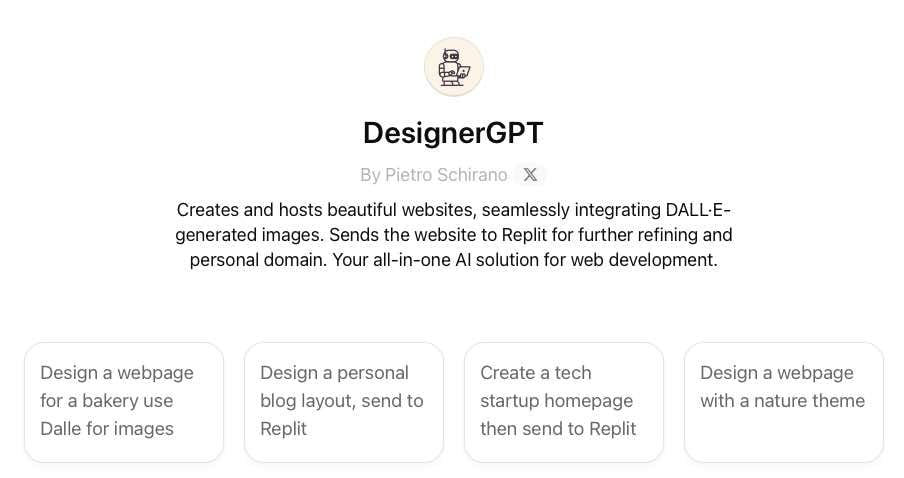
DesignerGPT produces quick and simple websites and web pages. Designs include navigation, content sections, and forms. DesignerGPT integrates DALL-E generated images or Unsplash links. Elements are sent to Replit for customization.

DesignerGPT

Logo Creator generates professional logos or icons after asking a few key questions to ensure the design fits your needs. Define the style, simplicity, and type of logo. Then refine.

Hot Mods helps visualize modifications for images. It can suggest creative enhancements while keeping the core aspects of the image intact. Add flair to an image or transform it with a new design.

Glibatree Art Designer will help create visual art prompts and then generate images for a design, illustration, or other project. It will also fill in details about your idea and present multiple variations.

Glibatree Art Designer

LogoGPT is an assistant for creating logos. Upload a sketch, and LogoGPT will guide you through choosing a style, incorporating text, and finalizing the design to your specifications.

Graphic Designer can create visual designs and suggest layouts, color schemes, and typography. Get help on design-related projects. Design a logo for a business, draft a layout, get a color palette for a website, and more.

UX GPT is a mentor and expert in navigating user experience design, offering guidance, answering questions, and providing challenges to improve skills. Get assistance with UX, whether you’re a beginner or an advanced practitioner.

UX GPT

Diagrams is an assistant to visualize concepts, data, and processes. Use it to understand your idea or to generate designs for others.

Visual Design GPT helps users improve design projects by providing guidance on principles and identifying potential pitfalls based on established standards. It can also create and critique designs. It’s intended to help designers refine their skills, solve problems, and produce pleasing and functional designs.

Website Generator is an assistant for designing and creating a website. Use it to brainstorm site ideas and produce the right design.

The Designer’s Mood Board generates mood boards — a collection of visual elements — and provides practical solutions for graphic design projects. Use it to produce visual compositions that include images, color palettes, textures, patterns, and shapes based on your specific requests.

The Designer’s Mood Board

Use AI Overviews Like The Experts: Techniques For SEO Success via @sejournal, @hethr_campbell

Finding it tough to stay on top of AI’s impact on SEO? 

You’re not the only one. 

Google’s new AI overviews are changing how search works, and keeping up is more important than ever.

Check out our webinar on August 28, 2024: “AI Overviews Explained: Expert Embedding Techniques for SEO Success” 

Market Brew is hosting this session to help you understand AI content and give you the tools to succeed in this new search environment.

Why This Webinar Is A Must-Attend Event

AI overviews are changing how search engines show and organize content. To succeed in SEO, you need to understand how they work.

Save your seat on this webinar, as we cover:

  1. How AI Understands Text: We’ll look at methods like Sentence-BERT that help AI grasp the meaning of words and how web pages are structured. This lets AI quickly find and compare information.
  2. How AI Picks Content: We’ll explore the rules and systems Google’s AI uses to choose and rank the most important bits of information for its summaries.
  3. How AI Builds Summaries: We’ll walk through how AI creates these overviews, clearly showing how AI decides what to include in its generated content.

Expert Insights From Scott Stouffer

Scott Stouffer, Co-Founder and CTO of Market Brew will also be showcasing Market Brew’s AI Overviews Visualizer, a tool that deconstructs AI overviews and offers an unprecedented look at how they’re curated.

Who Should Attend?

This webinar is perfect for:

  • SEO professionals looking to stay ahead of AI-driven changes.
  • Publishers wanting to optimize their work for AI overviews.
  • Digital marketers trying to understand the impact of AI on search strategies.
  • Anyone interested in the intersection of AI and SEO.

Live Q&A: Get Your Questions Answered

Following the presentation, Scott will host a live Q&A session

This is your chance to clarify misconceptions and get expert advice on optimizing your content for AI overviews.

Don’t Miss Out!

AI Overviews are reshaping SEO, and this shift is only accelerating. Join our August 28 webinar to futureproof your strategy.

Can’t attend live? Sign up anyway for the recording.

Get ready to supercharge your SEO with AI. Register today!

Google’s John Mueller On Removing Unwanted Content From Search via @sejournal, @MattGSouthern

Google’s John Mueller explained on Reddit how to remove unwanted content from search results.

This came up when someone asked about getting rid of an old article about their arrest that kept showing up in Google searches.

The person was arrested for a minor offense in 2018, but a news article appears in Google searches years later.

Even though the case was settled, the article is still on the first page of results, and the person wants it removed.

What can they do? Here’s what Mueller advised.

Mueller’s Guidance On Getting Content Removed

Mueller explained that even though the news outlet said they “de-indexed” the article, this process isn’t always quick or simple.

He suggested a few ways to tackle the issue:

  1. Complete Takedown: The news outlet said no to removing the article, but this is the most effective way, showing the page as a 404 error.
  2. Noindex Tag: This is probably what the news outlet did. It keeps the article on its site but tells search engines to ignore it. Mueller advised checking the page’s code for this tag.
  3. Name Swap: Mueller suggested asking the news outlet to replace the person’s name with something generic like “John Doe” as a workaround. This could make the article harder to find in name searches.
  4. Right to be Forgotten: For folks in some areas, especially Europe, this legal option might help.

About the article still showing up in searches, Mueller said that even after de-indexing, it can take up to six months for a page to disappear from results:

“Regarding how long it takes to “see” a noindex, there’s no specific time, but it’s usually less than a few months. I think I’ve seen it take up to 6 months. They’re not kept in the index forever without being refreshed. If you use the public removal tool (for non-site-owners), Google will check the page fairly quickly (within a few days) and use that to confirm that the page has a noindex.”

He assured that pages don’t stay indexed forever without being rechecked.

Mueller mentioned that while some “hidden” de-indexing methods exist, they’re not common.

He recommended using Google’s public removal tool, which allows Google to recheck the page within days. This might speed things up if the news outlet has properly de-indexed the article.

Mueller stated:

“It’s really rare (I can’t think of any case in the last year or so) that someone would use a kind of “hidden” noindex; it’s complicated to set up & maintain. Most sites just use the visible robots meta tag for switching things to noindex, which you would be able to see yourself fairly quickly. If you use the removal tool, Google will also see any “more hidden” noindex settings.”

This advice gave the person a better grasp of their situation and possible next moves to deal with their lingering online content problem.

Tools for Content Removal

Mueller listed two main ways to get rid of content from search results:

  • For website owners: The Removals and SafeSearch reports tool
  • For everyone else: The Refresh Outdated Content tool

If you own the site, Google removes the content on request.

For non-owners, Google does a few checks before taking anything down.

Mueller said using these tools won’t accidentally make your page show up more in searches.

He stated:

“The removal tool for site-owners has a help page titled “Removals and SafeSearch reports Tool”, subtitle “Temporarily block search results from your site, or manage SafeSearch filtering”. (Site-owner = the person running the website, in their Search Console account)

The public removal tool for non-site-owners is titled “Refresh Outdated Content tool” / subtitle: “Request an update to outdated content in Google Search results” (non-site-owner would be someone who doesn’t work on the website themselves, like you).

The site-owner tool will process a removal very quickly, without checking if the page is actually noindex or not. The assumption is that as the site-owner, you can block whatever you want. If they’re willing to do this for you, that’s the fastest way.

For non-site-owners, the tool will check multiple times to confirm that the page is removed, noindex, or appropriately changed. It won’t do anything until it has confirmed that, so there’s no harm in trying it. Neither of these tools will make a page more visible (SEOs would love that). The tools are also labeled as “temporary” removals – because if the page becomes indexable again, it can show up again in search.”

Why This Matters

This shows how difficult it can be to manage what people see about you online.

While Google offers ways to remove old or unwanted articles, it can take a while, and sometimes, the publisher must cooperate.

Featured Image: tomeqs/Shutterstock

13 Essential On-Page SEO Factors You Need To Know via @sejournal, @lorenbaker

On-page SEO is fine-tuning various website components to help search engines crawl, understand, and rank pages for relevant queries.

While off-page factors like backlinks and brand signals are critical, optimizing on-page elements lays the groundwork for maximizing search visibility.

Beyond the content itself, on-page factors signal a page’s relevance and quality. The website architecture, including site speed, mobile-friendliness, and URL structures, impacts on-page SEO.

On-page SEO matters because:

  • It helps search engines find and show your pages to users.
  • Higher-ranked pages get more clicks and visitors.
  • Good rankings boost your brand’s trustworthiness.
  • It enables you to create content that meets your audience’s needs.
  • It’s the foundation for other SEO efforts like building links.

This guide explores 13 essential on-page SEO elements, from E-E-A-T and keyword semantics to HTML tags and site architecture.

13 Essential On-Page SEO Factors

On-page SEO can be divided into content, HTML, and website architecture. We’ll look at each individually.

Content

You’ve heard it before: Content is king.

SEO without it is like a beautiful new sports car without an engine; it might look nice, but it’s going nowhere. But not all content is created equal.

Here are the content factors you need to consider to maximize your on-site SEO:

1. E-E-A-T

One way Google weights your site is based on E-E-A-T, or experience, expertise, authoritativeness, and trustworthiness.

As highlighted in Google’s Search Quality Rater Guidelines, E-E-A-T evaluates the first-hand experience, subject matter expertise, authority, and trustworthiness demonstrated by a website and its content creators.

Google added experience as a new component, signaling the increasing value placed on content created by those with relevant credentials and direct, real-world experience with the topic. This is especially critical for YMYL (Your Money or Your Life) topics like health, finance, safety, etc.

While Google has only confirmed a few E-E-A-T elements like PageRank and links, it’s generally accepted that factors like author expertise, topical authority, transparency, and hands-on experience play a significant role in E-E-A-T evaluations.

2. Keywords

Creating content that includes the words and phrases your target customers are searching for is essential.

However, with advancements in AI and natural language processing, you’ll need to think beyond individual keywords.

Optimize for:

  • Semantically related phrases and topics (entities): For example, if you offer cloud data storage services, related entities could include backup solutions, disaster recovery, data management, etc.
  • Contextual meaning and intent: A search for “cloud migration” could have different intents, such as technical how-to guides, pricing/cost info, migration strategies, etc.
  • Providing comprehensive answers: Cover related subtopics to address customer journeys fully.

Use keyword research tools to identify relevant entities and related queries around your main topics.

Get started by downloading our ebook on keyword research.

3. SEO Writing

Creating content that prioritizes search engines and converts human visitors to your site is an art.

Writing copy that reads well and adheres to SEO best practices can be challenging unless you’ve done it before.

We have an entire piece dedicated to helping you master the art, but some of the key takeaways include:

  • Emphasize readability: Your content should be easily scannable so users can quickly find the information they want.
  • Don’t overuse keywords: Keyword stuffing is a technique used by unscrupulous SEO professionals to game the system. Google looks down on sites that overuse keywords. If caught, your page could be demoted in SERPs or removed altogether.
  • Keep sentences and paragraphs brief: If you’ve ever clicked on a webpage only to be assaulted by an unbroken wall of text, you know how hard it is to read lengthy pieces of copy. Avoid driving users away by keeping your sentences and paragraphs short.
  • Use subheadings: Subheads stand out because of their size, attracting attention from people scanning your page. Use an ample amount of content to guide readers down the page.
  • Use bulleted lists: This may feel very meta, but bulleted lists are an excellent way to break information into easily digestible chunks. Use them whenever they make sense.
  • Add personal experience: Where relevant, discuss the author’s experience, background, and hands-on knowledge related to the topic to demonstrate experience credentials.

4. Freshness

For rapidly evolving topics, keeping your content fresh and providing new value as you learn more about your audience’s needs is critical.

Google rewards sites that maintain their content rather than letting it become stale or outdated.

Some tips:

  • Update content regularly with new information, insights, or angles.
  • Fix inaccuracies or outdated information promptly.
  • Expand content to cover newly discovered areas of audience interest.
  • Consider content exports or opt-in offers for frequently updated content.

5. Visual Assets

Adding pictures, videos, charts, and other eye-catching visuals makes it more attractive for visitors and improves its appearance in search results.

Optimizing images can also help you to gain more visibility through image search and in the SERP image carousel.

To make your content easy to find in text searches and image-based searches, here are some tips:

  • Provide contextual information and relevant details in image captions.
  • Implement schema markup for images, videos, products, etc., to enhance search visibility.
  • Ensure visual assets are high-quality, original, and relevant to the page content.
  • For ecommerce sites, provide multiple clear product images from various angles.

As computer vision models advance, search engines will better understand and surface relevant images and videos.

Optimizing for visual search now can help future-proof your content.

Read More:

HTML

HyperText Markup Language or HTML is the standard markup language used to structure your webpage and content. It tells the user’s browser where to display what on the page and it also tells search engines what your page is about.

Here are the on-page SEO HTML factors you need to consider:

6. Title Tags

This is one of those areas where it’s essential to focus on the details.

On its own, this snippet of code probably isn’t going to have you shooting up SERP rankings.

However, when combined with other on-page elements (like the ones discussed here), title tags can help you provide context and demonstrate your site’s relevancy.

For a more thorough look at how to optimize your title tags, read this.

7. Meta Description

A veteran SEO professional is throwing up their hands at the screen. “Oh, come on,” they’re saying, “Everyone knows meta descriptions aren’t an SEO ranking factor.”

They’re only partly correct. While it’s true there’s a lot of evidence against meta descriptions as a ranking factor, they’re wrong about everyone knowing that.

But, don’t let them dissuade you from adding meta descriptions to your site.

Despite their relative lack of SEO use, descriptions offer two key benefits:

  • They can help Google understand what your webpage is all about.
  • They have an outsized influence on your CTRs.

Better meta descriptions give searchers a better understanding of your page, leading to more click-throughs. So, don’t neglect them.

8. Image Optimization

We discussed the importance of visual on-page assets on your page, now it’s time to examine their technical aspects more closely.

Here are some tips to help optimize yours:

  • Include SEO-friendly alt tags.
  • Choose the proper format and file size for fast loading.
  • Customize file names instead of using something like IMG_08759.
  • Ensure your images are mobile-friendly.

Once again, we have an excellent resource for more in-depth information on HTML image optimization. Read it here.

9. Geotagging (For Local Search)

It may be a global economy, but most business is still done at a local level. Connect with the people in your neighborhood by optimizing your on-page local SEO.

There are three main SEO tactics to consider when focusing on local traffic:

  • Optimizing listings and citations, including name, address, phone number (NAP), website URL, business descriptions, and getting reviews.
  • Optimizing local content, including accommodating “near me” searches, providing location-based content, or buying a local website or blog.
  •  Building links with other local businesses and organizations.

Some additional local SEO tactics to incorporate:

  • Implement localized schema markup for local business listings, events, special offers, etc.
  • Optimize Google Business Profile with up-to-date info, photos, posts, Q&A, and locally relevant content.
  • Leverage proximity and geolocation data for mobile search.
  • Create location-specific pages, content hubs, or microsites.

Examples of effective local SEO could look like:

  • A restaurant featuring locally sourced food specialties on dedicated pages.
  • A service provider’s site with geo-pages for all service areas.
  • An ecommerce store highlighting inventory available for local pickup.

For more information on building your geotagging SEO strategy, read this.

Read More:

Website Architecture

Having a well-structured website is essential for two reasons: First, a website laid out logically will be crawled more effectively by search engines, and second, it will create richer user experiences.

Here are the factors to consider when optimizing your site’s architecture:

10. Site Speed

A clunky, slow-loading site does more than frustrate and drive away visitors – it hurts your search ranking, too.

Search Engine Journal investigated the effect of a page’s loading time on SEO and confirmed that page speed is a ranking factor in search results.

However, the minimum speed your site needs to meet is constantly changing.

This can be achieved by meeting Google’s Core Web Vitals minimum threshold. If your site isn’t currently meeting these standards, there are several steps you can take, including:

  • Enabling compression.
  • Reducing redirects.
  • Optimizing images.
  • Leveraging browser caches.

11. Responsive Design

Mobile search volume surpassed desktop in 2016 and has only grown since then.

Because more users are on mobile devices, Google followed the logical path and began prioritizing sites with designs that adapt to mobile screens.

While ranking in search results without a responsive design is still possible, Google strongly recommends having one.

You can read more about the effect site responsiveness has on search results here.

12. URL Structure

There was a time when URLs played a prominent role in SEO. Businesses would include keywords in domain names to help them rank higher.

But Google, doing what Google does, changed the algorithm. What was once so important to rankings now plays a much smaller role.

That’s not to say it doesn’t matter. Search engines still include your URLs in your overall score – they just don’t hold the same prominence they once did.

However, there is evidence they play a role in a site’s initial ranking, and some professionals believe they’re used to group pages. While they shouldn’t be your top SEO priority, you don’t want to ignore them.

Read more about how URLs factor into Google rankings here.

13. Links

Remember E-E-A-T from way back at the beginning of this article?

One of the best ways your website can establish it is through links from other reputable websites.

Think of it this way: Who would you rather trust your 401(k) to – a financial advisor who manages Warren Buffet’s portfolio or your cousin Jimmy, who lives in your aunt’s basement? Jimmy might do a fine job, potentially even outperforming Buffet’s guy. But he doesn’t have the credibility that comes with a strong co-sign.

Links work in the same way.

There are three main types you need to know about for SEO:

Of the three, inbound links are the most important for boosting E-E-A-T signals. High-quality, relevant inbound links, especially from authoritative and experienced sources, can help demonstrate your site’s expertise, authoritativeness, and trustworthiness.

SEO professionals use various methods to generate quality incoming links, including social media, creating sharable infographics, and even asking for backlinks.

But beware: Not all inbound links are helpful. Some, especially those from link farms, forum posts, and guestbooks, can be fake links that cheat the rankings system. If you don’t disavow these, it can hurt your ranking.

Here’s information on how and when to disavow links.

Read More:

On-Page SEO Vs. Off-Page SEO

We’ve talked a lot about on-page SEO, but there’s also something known as off-page SEO. The difference, as you could probably tell by the names, is where it happens.

On-page SEO is everything you can do internally to boost your rankings, including keyword optimization, meta descriptions, title tags, alt text, and website structure.

Off-page SEO refers to all external factors that impact your site’s rankings. This includes backlinks, E-E-A-T, local SEO, social media mentions, and pay-per-click.

You have much more control over your on-page SEO, but it’s also important to consider off-page SEO – you need both to achieve your goals.

However, it would be best to first focus on building a good, relevant webpage that’s fully optimized for search engines before you begin investing a lot of resources into building links and promoting your site.

Conclusion

As search algorithms evolve, the need to create high-quality, relevant content and optimize technical elements persists.

Key takeaways to remember:

  1. Focus on creating valuable, user-centric content that demonstrates E-E-A-T.
  2. Optimize technical elements like HTML tags, site speed, and mobile responsiveness.
  3. Maintain a logical site structure and use internal linking effectively.
  4. Regularly update and refresh content to maintain relevance.
  5. Remember that on-page SEO works with off-page factors for overall SEO success.

Approach this as an ongoing process rather than a one-time fix.

Consistently implementing these tactics will considerably improve your chances of ranking well in search results.

More resources: 


Featured Image: BestForBest/Shutterstock

Enterprise PPC Success Checklist: Setting Your Campaigns Up For Success via @sejournal, @navahf

There’s a lot of well-meaning PPC advice out there. This advice often finds its way to bosses/clients who ask, “Why aren’t we doing ___?”

The problem is most of these studies and data sets are focused around ecommerce. Enterprise accounts (even enterprise ecommerce) will behave differently than their non-enterprise counterparts.

There are a few reasons why there’s a shortage of enterprise advice:

  • Ad networks (particularly Google) tend to focus on ecommerce.
  • It’s easier to build statistically relevant data sets for ecommerce because there’s more data than lead gen.
  • Enterprise brands tend to have a lot of red tape to get through, so it’s harder to share what works.

We’re going to invest a bit of time digging into enterprise PPC, and how to set yourself up for success in your account as well as how to communicate that success to stakeholders.

Like anything in PPC, it’s important to balance this advice with what you know is actually important for your account.

The Checklist

We’ll be diving into each of these in-depth, but if you only have time for a quick skim, here are the main questions to ask yourself:

  • Have I built in enough time to launch the campaign?
  • Do I trust my CRM set-up and my internal processes?
  • How much flexibility do I have with technical implementation?
  • Which channels will meet with creative approval?
  • Did I opt out of all auto-generated content (and should I fight to let some stay)?
  • Are my budget pacing rules in line with my finance team’s expectations?
  • Have I set myself up for all markets I need to serve (national/domestic)?
  • Will I be able to pull reports on metrics my stakeholders are expecting?

Have I Built Enough Time To Launch The Campaign?

Whether you’re building for an enterprise or an SMB (small/medium business), ad platforms take time to stand up. This is due to ad platform verification and learning periods.

As a general rule, you will need to build in at least one to two weeks for account verification. This is required for everyone and is a safety measure to ensure the ad account represents the business it’s going to be promoting.

Ad networks (particularly Google) are fairly strict about double serving (i.e. you can’t have more than one ad account targeting potential traffic). The verification process (done through postcard) is a way to ensure your account is assigned to you and protects you from bad actors setting up another ad account targeting your business.

Beyond verification, you’ll need at least five to seven days minimum for your accounts to clear learning periods. These are for ad networks to understand your account/campaign and make meaningful budget allocation choices. During this time, you may need to use volume or impression share bidding due to the lack of conversions.

We’ll go into conversions in depth later in the post, but there are some pitfalls for brand-new enterprise accounts to avoid:

  • Using any smart (conversion) based bidding until you have at least 60 conversions in a 30 day period.
  • Setting up your account as a “Smart” campaign account (you need to create your account without a campaign).

If you’re adding a campaign to an existing account, you’ll be able to bypass most of these items, however, you still want to make sure you build in time for:

  • Confirming conversion actions are correct.
  • Learning period for new campaigns (still takes five days).
  • Ad approval process (two to three days).

Do I Trust My CRM/Internal Processes?

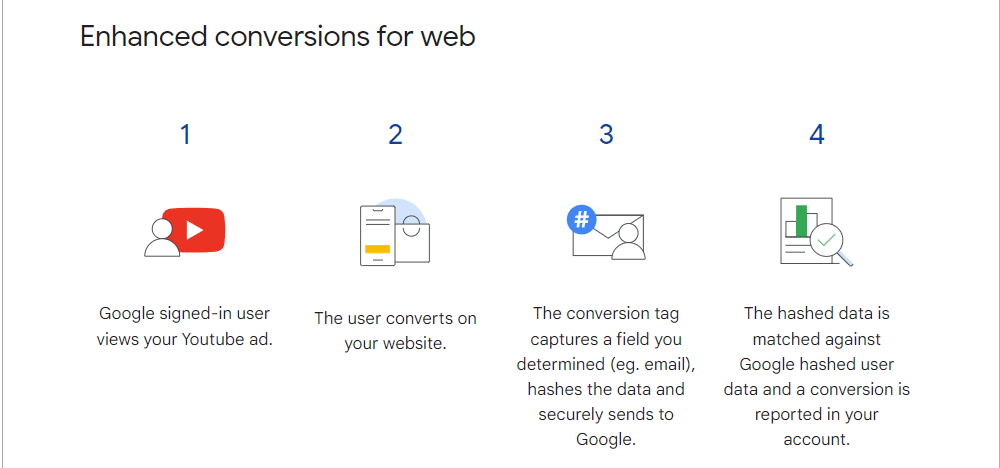
Ad networks are moving away from offline conversions, which means it’s even more important than ever that your CRMs are able to connect with your ad networks.

enhanced conversionsScreenshot from author, August 2024

Using Enhanced Conversions With CRMs

There’s a lot that can go wrong with CRM set-up and management, and those mistakes can skew lead scoring and reporting. Make sure that you trust how leads are received and tagged before beginning any serious spend.

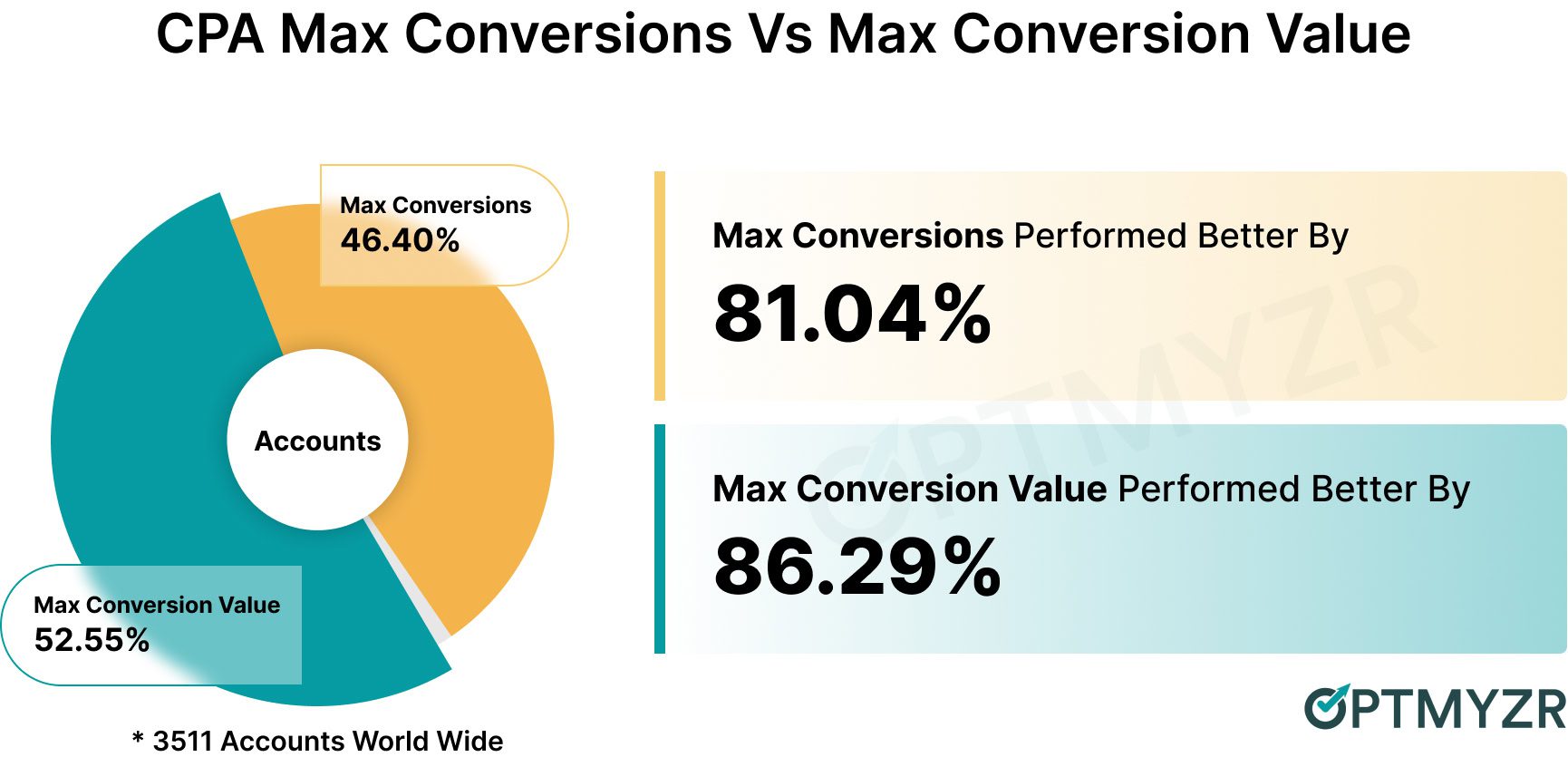
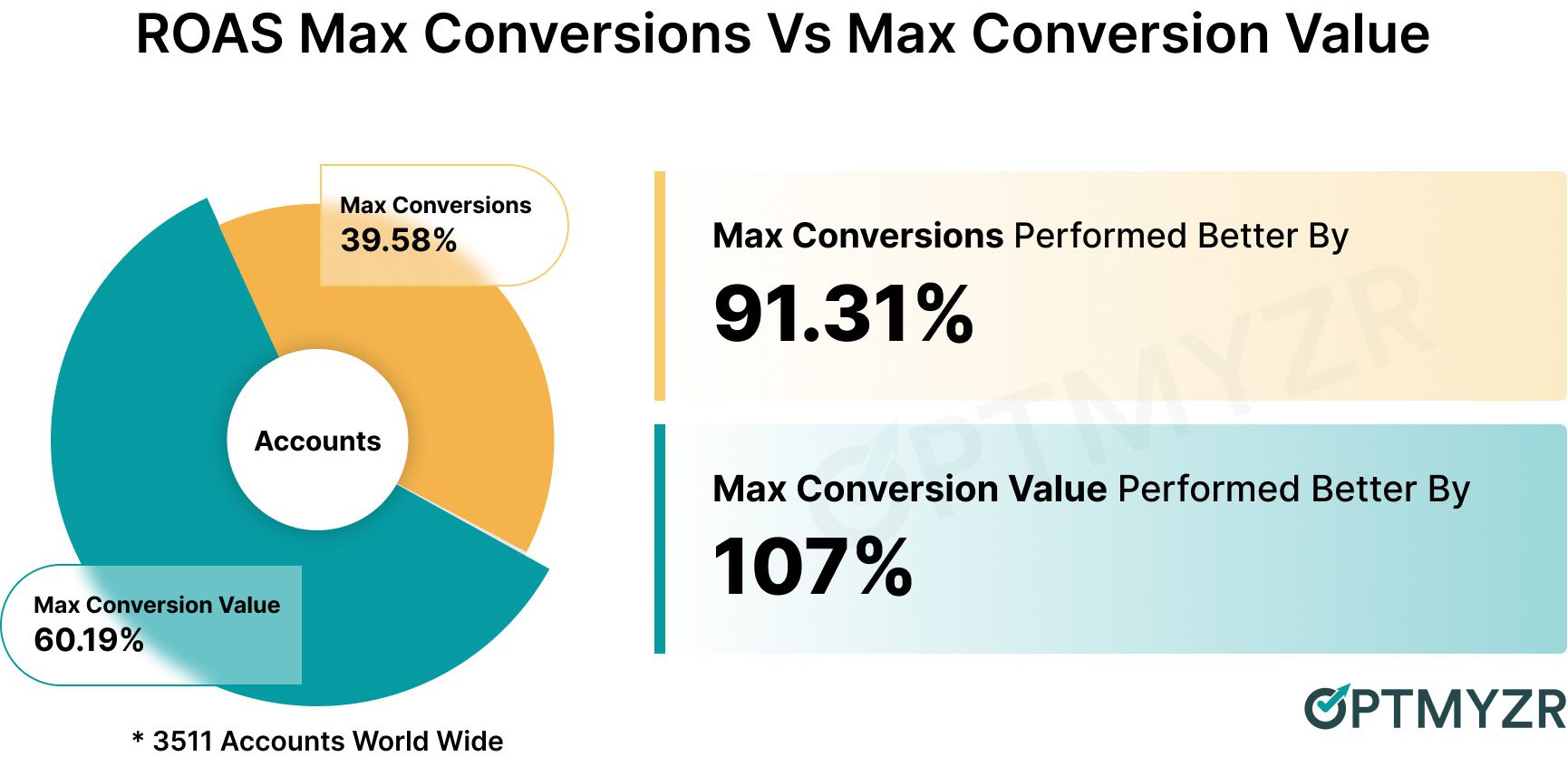
It’s worth noting that Google (and other ad platforms) can take in the customer value (and lifetime value) of a client. So you’ll want to consider passing that info through as revenue and profit-based bidding tends to lead to better results than just conversions.

CPA for bidding strategies Image from Optmyzr, August 2024
ROAS for different bidding strategyImage from Optmyzr, August 2024

However, the CRM is just one piece of the puzzle. You also need to make sure your internal teams are prepared to handle the new leads and tag them correctly.

Depending on how your team is incented, they may put in dummy data or inaccurate data to stop their co-workers from “taking” their deals

How Much Flexibility Do I Have With Technical Implementation?

One of the most insidious parts of enterprise setup is clearing IT permissions.

Google Tag Manager (GTM) is the easiest/safest way to go through tracking pixels because once you get that installed, you can add any new pixels without needing to touch the site.

However, if you’re not allowed to touch the main site at all, you may need to look at landing page solutions or lead gen/call ads.

Here are the main considerations to be prepared to answer when helping your IT team get on board with implementing entities for you.

  • Privacy compliance requires that users be asked for consent to track. Even if there’s no conversion tracking, there are still cookies to remember preferences. This is needed for everyone, and if they’re going to help you get that set up, it will cause no performance issues to include conversion tracking pixels.
  • Plan to test conversion actions and build in rules around spam leads (excluding “1234567890” as a phone number, “test” in any field, etc.). Additionally, you may need to ask for help configuring revenue tracking in analytics/CRMs. Make sure you ask for exactly what you need and include documentation on why.

In an ideal world, you’d have your IT team set you up with consent mode. However, if you can’t, pushing for GTM is an acceptable compromise.

If your IT teams will budge at all, you may need to opt for auto or smart bidding. This means opting for max clicks or target impression share with a bid cap or manual bidding with bid adjustments.

Which Channels Will Get Creative Approval?

Different channels are going to have different tools for approval.  Google is really useful at allowing for both control and leaning into AI.

And when you lean into AI, you’re able to use brand safety standards. Additionally, there are placement controls so that you can ensure brand alignment. These include:

  • Brand standards for AI.
  • Placement reports for exclusions.
  • Ad previews.

Microsoft also allows full control and allows you to use Copilot to generate images and videos. LinkedIn, by and large, is in full control.

Meta is the one with the most risk for control because it tends to require more automation for performance gains. That said, all brands can avail themselves of more rigid controls.

Finally, there are several visual platforms that allow you to use either influencer, user-generated, or other content for ad placements. When you’re working with humans for videos, it’s on you to ensure that they meet your own brand standards.

So it’s less a question about brand standards in terms of fonts, colors, and design, and more a question of, will you be able to secure the talent for the video you want to produce?

Did I Opt Out Of All Things Auto (& Should I Fight To Keep Some)?

Most ad platforms will, by default, opt you into expansion of placements, expansion of traffic, as well as new creatives. You, as the practitioner, will need to decide which ones to keep, if any.

In most cases, on the enterprise side, none of them will fall under compliance, so you will want to opt out of all of them.

Here Is A List Of The Most Common Pitfalls In Terms Of Automated Settings

  • Automated created assets: Text, image, and video creative that gets created and added to your ads based on ad rank and placement type. Opt out of this in the account settings, as well as in the asset section of your campaign menu.
  • Automatically applied recommendations: These can be useful and should be reviewed. but not applied. Make sure you turn them off in account settings and review them in recommendations.
  • URL expansion in performance max: While this is a reasonable stand-in for Dynamic Search Ads (DSA), it’s important to remember that you won’t have the same level of control. This means your SEO-exclusive pages (blog, sitemap, etc) might get pulled in. Just be sure to leave that unchecked.
  • Setting your bidding to a bidding strategy you don’t intend: Because ad platforms want you to use conversion-based bidding, manual and automatic bidding are hidden in the drop-down menu.

Are My Budget Pacing Rules In Line With Finance’s Expectations?

It’s critical to remember that stated budgets aren’t guarantees of actual spend. Ad platforms will do their best to average out across 30.4 days of your stated daily budget.

All budgets should be able to fit enough interactions in their advertising schedule to get at least one lead/sale on paper. In practice, this translates to my bids not exceeding 10% of the daily budget rule because 10% is a really good conversion rate for non-branded.

However, starting a new campaign and account to lead to even more fluctuation. As a campaign is ramping up, you may have low- or high-spending days. This is normal but might cause finance to worry.

As a general rule, using portfolio bidding strategies is a great way to ensure bid caps and floors for all campaign types. However, if you’re using SA360, you’ll also have access to these for Performance Max campaigns (not available in “regular” Google Ads).

Whether you use portfolio bidding strategies to ensure auction price stability or not, remember that any major change to bidding strategies (including budget, goal, and type) will initiate a learning period. If a campaign is on the newer side, it might not have the conversions to quickly clear this learning period.

As a general rule, it’s a good idea to ask for about 20% more budget than you anticipate needing in the first 90 days of a campaign, which can be utilized for testing or to shore up any fluctuation in new campaigns.

Have I Set Myself Up For All Markets I Intend To Service (International/Domestic)?

Managing multiple markets is always tricky, and if you’re targeting more than just one country, it gets even more complex. Different people search and think in different ways, and if you take the same campaign that worked in one market, it may struggle in another.

Add to this the different costs of living and internet connectivity in different markets, and there’s a lot to think about before getting to translations.

As a general rule, you should not include more than one country per ad account so you can run the schedule based on that country. Additionally, if a market is a growing market, you don’t want that bad data averaging into your thriving markets.

On translating your campaigns: make sure you can service any language you’re translating into. Even though there are great deals to be had on non-English ad buys, the inability to service those customers will turn it into waste.

Make sure you know the different privacy compliance regulations for each market. Any campaigns targeting outside the US will likely need consent mode enabled.

Will I Be Able To Report On The Metrics My Stakeholders Are Expecting?

On a similar note, many are used to thinking of PPC as fast-paced and perfect reporting. This is no longer the case. It’s really important that you set out a framework from the beginning for which metrics your stakeholders will hold you accountable.

If they care about return on ad spend, conversion tracking must be set up correctly. For brands that refuse to allow third-party integrations on their sites, this may cause tracking and reporting issues.

As a general rule, getting buy-in for conversion tracking isn’t as hard as getting CRM/sales data to sync up.

However, if you can clear that hurdle, you’ll be able to report on lead quality as well as average customer value. Without that information, reports will be limited to objective CPA, conversion rate, and ad-specific metrics.

I like getting stakeholders invested in impression share and understanding how much impression share is lost due to rank or budget so they have a clear understanding of what their choices mean for the account.

Finally, try to work with the organic team to link up Search Console so you can share organic reports between teams.

Final Takeaways

Whether you’re setting up campaigns for enterprises or SMBs, there are some core focal areas for every PPC practitioner.

Hopefully, you found this a helpful start on your own enterprise PPC checklist.

More resources: 


Featured Image: PeopleImages.com – Yuri A/Shutterstock

Happy birthday, baby! What the future holds for those born today

Happy birthday, baby.

You have been born into an era of intelligent machines. They have watched over you almost since your conception. They let your parents listen in on your tiny heartbeat, track your gestation on an app, and post your sonogram on social media. Well before you were born, you were known to the algorithm. 

Your arrival coincided with the 125th anniversary of this magazine. With a bit of luck and the right genes, you might see the next 125 years. How will you and the next generation of machines grow up together? We asked more than a dozen experts to imagine your joint future. We explained that this would be a thought experiment. What I mean is: We asked them to get weird. 

Just about all of them agreed on how to frame the past: Computing shrank from giant shared industrial mainframes to personal desktop devices to electronic shrapnel so small it’s ambient in the environment. Previously controlled at arm’s length through punch card, keyboard, or mouse, computing became wearable, moving onto—and very recently into—the body. In our time, eye or brain implants are only for medical aid; in your time, who knows? 

In the future, everyone thinks, computers will get smaller and more plentiful still. But the biggest change in your lifetime will be the rise of intelligent agents. Computing will be more responsive, more intimate, less confined to any one platform. It will be less like a tool, and more like a companion. It will learn from you and also be your guide.

What they mean, baby, is that it’s going to be your friend.

Present day to 2034 
Age 0 to 10

When you were born, your family surrounded you with “smart” things: rockers, monitors, lamps that play lullabies.  

DAVID BISKUP

But not a single expert name-checked those as your first exposure to technology. Instead, they mentioned your parents’ phone or smart watch. And why not? As your loved ones cradle you, that deliciously blinky thing is right there. Babies learn by trial and error, by touching objects to see what happens. You tap it; it lights up or makes noise. Fascinating!

Cognitively, you won’t get much out of that interaction between birth and age two, says Jason Yip, an associate professor of digital youth at the University of Washington. But it helps introduce you to a world of animate objects, says Sean Follmer, director of the SHAPE Lab in Stanford’s mechanical engineering department, which explores haptics in robotics and computing. If you touch something, how does it respond?

You are the child of millennials and Gen Z—digital natives, the first influencers. So as you grow, cameras are ubiquitous. You see yourself onscreen and learn to smile or wave to the people on the other side. Your grandparents read to you on FaceTime; you photobomb Zoom meetings. As you get older, you’ll realize that images of yourself are a kind of social currency. 

Your primary school will certainly have computers, though we’re not sure how educators will balance real-world and onscreen instruction, a pedagogical debate today. But baby, school is where our experts think you will meet your first intelligent agent, in the form of a tutor or coach. Your AI tutor might guide you through activities that combine physical tasks with augmented-­reality instruction—a sort of middle ground. 

Some school libraries are becoming more like makerspaces, teaching critical thinking along with building skills, says Nesra Yannier, a faculty member in the Human-Computer Interaction Institute at Carnegie Mellon University. She is developing NoRILLA, an educational system that uses mixed reality—a combination of physical and virtual reality—to teach science and engineering concepts. For example, kids build wood-block structures and predict, with feedback from a cartoon AI gorilla, how they will fall. 

Learning will be increasingly self-­directed, says Liz Gerber, co-director of the Center for Human-Computer Interaction and Design at Northwestern University. The future classroom is “going to be hyper-­personalized.” AI tutors could help with one-on-one instruction or repetitive sports drills. 

All of this is pretty novel, so our experts had to guess at future form factors. Maybe while you’re learning, an unobtrusive bracelet or smart watch tracks your performance and then syncs data with a tablet, so your tutor can help you practice. 

What will that agent be like? Follmer, who has worked with blind and low-vision students, thinks it might just be a voice. Yannier is partial to an animated character. Gerber thinks a digital avatar could be paired with a physical version, like a stuffed animal—in whatever guise you like. “It’s an imaginary friend,” says Gerber. “You get to decide who it is.” 

Not everybody is sold on the AI tutor. In Yip’s research, kids often tell him AI-enabled technologies are … creepy. They feel unpredictable or scary or like they seem to be watching

Kids learn through social interactions, so he’s also worried about technologies that isolate. And while he thinks AI can handle the cognitive aspects of tutoring, he’s not sure about its social side. Good teachers know how to motivate, how to deal with human moods and biology. Can a machine tell when a child is being sarcastic, or redirect a kid who is goofing off in the bathroom? When confronted with a meltdown, he asks, “is the AI going to know this kid is hungry and needs a snack?”

2040
Age 16

By the time you turn 16, you’ll likely still live in a world shaped by cars: highways, suburbs, climate change. But some parts of car culture may be changing. Electric chargers might be supplanting gas stations. And just as an intelligent agent assisted in your schooling, now one will drive with you—and probably for you.  

Paola Meraz, a creative director of interaction design at BMW’s Designworks, describes that agent as “your friend on the road.” William Chergosky, chief designer at Calty Design Research, Toyota’s North American design studio, calls it “exactly like a friend in the car.”

While you are young, Chergosky says, it’s your chaperone, restricting your speed or routing you home at curfew. It tells you when you’re near In-N-Out, knowing your penchant for their animal fries. And because you want to keep up with your friends online and in the real world, the agent can comb your social media feeds to see where they are and suggest a meetup. 

Just as an intelligent agent assisted in your schooling, now one will drive with you—and probably for you.

Cars have long been spots for teen hangouts, but as driving becomes more autonomous, their interiors can become more like living rooms. (You’ll no longer need to face the road and an instrument panel full of knobs.) Meraz anticipates seats that reposition so passengers can talk face to face, or game. “Imagine playing a game that interacts with the world that you are driving through,” she says, or “a movie that was designed where speed, time of day, and geographical elements could influence the storyline.” 

people riding on top of a smart car

DAVID BISKUP

Without an instrument panel, how do you control the car? Today’s minimalist interiors feature a dash-mounted tablet, but digging through endless onscreen menus is not terribly intuitive. The next step is probably gestural or voice control—ideally, through natural language. The tipping point, says Chergosky, will come when instead of giving detailed commands, you can just say: “Man, it is hot in here. Can you make it cooler?”

An agent that listens in and tracks your every move raises some strange questions. Will it change personalities for each driver? (Sure.) Can it keep a secret? (“Dad said he went to Taco Bell, but did he?” jokes Chergosky.) Does it even have to stay in the car? 

Our experts say nope. Meraz imagines it being integrated with other kinds of agents—the future versions of Alexa or Google Home. “It’s all connected,” she says. And when your car dies, Chergosky says, the agent does not. “You can actually take the soul of it from vehicle to vehicle. So as you upgrade, it’s not like you cut off that relationship,” he says. “It moves with you. Because it’s grown with you.”

2049
Age 25

By your mid-20s, the agents in your life know an awful lot about you. Maybe they are, indeed, a single entity that follows you across devices and offers help where you need it. At this point, the place where you need the most help is your social life. 

Kathryn Coduto, an assistant professor of media science at Boston University who studies online dating, says everyone’s big worry is the opening line. To her, AI could be a disembodied Cyrano that whips up 10 options or workshops your own attempts. Or maybe it’s a dating coach. You agree to meet up with a (real) person online, and “you have the AI in a corner saying ‘Hey, maybe you should say this,’ or ‘Don’t forget this.’ Almost like a little nudge.”

“There is some concern that we are going to see some people who are just like, ‘Nope, this is all I want. Why go out and do that when I can stay home with my partner, my virtual buddy?’”

T. Makana Chock, director, the Extended Reality Lab, Syracuse University

Virtual first dates might solve one of our present-day conundrums: Apps make searching for matches easier, but you get sparse—and perhaps inaccurate—info about those people. How do you know who’s worth meeting in real life? Building virtual dating into the app, Coduto says, could be “an appealing feature for a lot of daters who want to meet people but aren’t sure about a large initial time investment.”

T. Makana Chock, who directs the Extended Reality Lab at Syracuse University, thinks things could go a step further: first dates where both parties send an AI version of themselves in their place. “That would tell both of you that this is working—or this is definitely not going to work,” Chock says. If the date is a dud—well, at least you weren’t on it.

Or maybe you will just date an entirely virtual being, says Sun Joo (Grace) Ahn, who directs the Center for Advanced Computer-Human Ecosystems at the University of Georgia. Or you’ll go to a virtual party, have an amazing time, “and then later on you realize that you were the only real human in that entire room. Everybody else was AI.”

This might sound odd, says Ahn, but “humans are really good at building relationships with nonhuman entities.” It’s why you pour your heart out to your dog—or treat ChatGPT like a therapist. 

There is a problem, though, when virtual relationships become too accommodating, says Chock: If you get used to agents that are tailored to please you, you get less skilled at dealing with real people and risking awkwardness or rejection. “You still need to have human interaction,” she says. “And there is some concern that we are going to see some people who are just like, ‘Nope, this is all I want. Why go out and do that when I can stay home with my partner, my virtual buddy?’”

By now, social media, online dating, and livestreaming have likely intertwined and become more immersive. Engineers have shrunk the obstacles to true telepresence: internet lag time, the uncanny valley, and clunky headsets, which may now be replaced by something more like glasses or smart contact lenses. 

Online experiences may be less like observing someone else’s life and more like living it. Imagine, says Follmer: A basketball star wears clothing and skin sensors that track body position, motion, and forces, plus super-thin gloves that sense the texture of the ball. You, watching from your couch, wear a jersey and gloves made of smart textiles, woven with actuators that transmit whatever the player feels. When the athlete gets shoved, Follmer says, your fan gear can really shove you right back.”

Gaming is another obvious application. But it’s not the likely first mover in this space. Nobody else wants to say this on the record, so I will: It’s porn. (Baby, ask your parents and/or AI tutor when you’re older.)

DAVID BISKUP

By your 20s, you are probably wrestling with the dilemmas of a life spent online and on camera. Coduto thinks you might rebel, opting out of social media because your parents documented your first 18 years without permission. As an adult, you’ll want tighter rules for privacy and consent, better ways to verify authenticity, and more control over sensitive materials, like a button that could nuke your old sexts.

But maybe it’s the opposite: Now you are an influencer yourself. If so, your body can be your display space. Today, wearables are basically boxes of electronics strapped onto limbs. Tomorrow, hopes Cindy Hsin-Liu Kao, who runs the Hybrid Body Lab at Cornell University, they will be more like your own skin. Kao develops wearables like color-changing eyeshadow stickers and mini nail trackpads that can control a phone or open a car door. In the not-too-distant future, she imagines, “you might be able to rent out each of your fingernails as an ad for social media.” Or maybe your hair: Weaving in super-thin programmable LED strands could make it a kind of screen. 

What if those smart lenses could be display spaces too? “That would be really creepy,” she muses. “Just looking into someone’s eyes and it’s, like, CNN.”

2059
Age 35

By now, you’ve probably settled into domestic life—but it might not look much like the home you grew up in. Keith Evan Green, a professor of human-centered design at Cornell, doesn’t think we should imagine a home of the future. “I would call it a room of the future,” he says, because it will be the place for everything—work, school, play. This trend was hastened by the covid pandemic.

Your place will probably be small if you live in a big city. The uncertainties of climate change and transportation costs mean we can’t build cities infinitely outward. So he imagines a reconfigurable architectural robotic space: Walls move, objects inflate or unfold, furniture appears or dissolves into surfaces or recombines. Any necessary computing power is embedded. The home will finally be what Le Corbusier imagined: a machine for living in.

Green pictures this space as spartan but beautiful, like a temple—a place, he says, to think and be. “I would characterize it as this capacious monastic cell that is empty of most things but us,” he says.

Our experts think your home, like your car, will respond to voice or gestural control. But it will make some decisions autonomously, learning by observing you: your motion, location, temperature. 

Ivan Poupyrev, CEO and cofounder of Archetype AI, says we’ll no longer control each smart appliance through its own app. Instead, he says, think of the home as a stage and you as the director. “You don’t interact with the air conditioner. You don’t interact with a TV,” he says. “You interact with the home as a total.” Instead of telling the TV to play a specific program, you make high-level demands of the entire space: “Turn on something interesting for me; I’m tired.” Or: “What is the plan for tomorrow?”

Stanford’s Follmer says that just as computing went from industrial to personal to ubiquitous, so will robotics. Your great-grandparents envisioned futuristic homes cared for by a single humanoid robot—like Rosie from The Jetsons. He envisions swarms of maybe 100 bots the size of quarters that materialize to clean, take out the trash, or bring you a cold drink. (“They know ahead of time, even before you do, that you’re thirsty,” he says.)

DAVID BISKUP

Baby, perhaps now you have your own baby. The technologies of reproduction have changed since you were born. For one thing, says Gerber, fertility tracking will be way more accurate: “It is going to be like weather prediction.” Maybe, Kao says, flexible fabric-like sensors could be embedded in panty liners to track menstrual health. Or, once the baby arrives, in nipple stickers that nursing parents could apply to track biofluid exchange. If the baby has trouble latching, maybe the sticker’s capacitive touch sensors could help the parent find a better position.

Also, goodbye to sleep deprivation. Gerber envisions a device that, for lack of an existing term, she’s calling a“baby handler”—picture an exoskeleton crossed with a car seat. It’s a late-night soothing machine that rocks, supplies pre-pumped breast milk, and maybe offers a bidet-like “cleaning and drying situation.”For your children, perhaps, this is their first experience of being close to a machine. 

2074
Age 50

Now you are at the peak of your career. For professions heading toward AI automation, you may be the “human in the loop” who oversees a machine doing its tasks. The 9-to-5 workday, which is crumbling in our time, might be totally atomized into work-from-home fluidity or earn-as-you-go gig work.

Ahn thinks you might start the workday by lying in bed and checking your messages—on an implanted contact lens. Everyone loves a big screen, and putting it in your eye effectively gives you “the largest monitor in the world,” she says. 

You’ve already dabbled with AI selves for dating. But now virtual agents are more photorealistic, and they can mimic your voice and mannerisms. Why not make one go to meetings for you?

DAVID BISKUP

Kori Inkpen, who studies human-­computer interaction at Microsoft Research, calls this your “ditto”—more formally, an embodied mimetic agent, meaning it represents a specific person. “My ditto looks like me, acts like me, sounds like me, knows sort of what I know,” she says. You can instruct it to raise certain points and recap the conversation for you later. Your colleagues feel as if you were there, and you get the benefit of an exchange that’s not quite real time, but not as asynchronous as email. “A ditto starts to blend this reality,” Inkpen says.

In our time, augmented reality is slowly catching on as a tool for workers whose jobs require physical presence and tangible objects. But experts worry that once the last baby boomers retire, their technical expertise will go with them. Perhaps they can leave behind a legacy of training simulations.

Inkpen sees DIY opportunities. Say your fridge breaks. Instead of calling a repair person, you boot up an AR tutorial on glasses, a tablet, or a projection that overlays digital instructions atop the appliance. Follmer wonders if haptic sensors woven into gloves or clothing would let people training for highly specialized jobs—like surgery—literally feel the hand motions of experienced professionals.

For Poupyrev, the implications are much bigger. One way to think about AI is “as a storage medium,” he says. “It’s a preservation of human knowledge.” A large language model like ChatGPT is basically a compendium of all the text information people have put online. Next, if we feed models not only text but real-world sensor data that describes motion and behavior, “it becomes a very compressed presentation not of just knowledge, but also of how people do things.” AI can capture how to dance, or fix a car, or play ice hockey—all the skills you cannot learn from words alone—and preserve this knowledge for the future.

2099
Age 75

By the time you retire, families may be smaller, with more older people living solo. 

Well, sort of. Chaiwoo Lee, a research scientist at the MIT AgeLab, thinks that in 75 years, your home will be a kind of roommate—“someone who cohabitates that space with you,” she says. “It reacts to your feelings, maybe understands you.” 

By now, a home’s AI could be so good at deciphering body language that if you’re spending a lot of time on the couch, or seem rushed or irritated, it could try to lighten your mood. “If it’s a conversational agent, it can talk to you,” says Lee. Or it might suggest calling a loved one. “Maybe it changes the ambiance of the home to be more pleasant.”

The home is also collecting your health data, because it’s where you eat, shower, and use the bathroom. Passive data collection has advantages over wearable sensors: You don’t have to remember to put anything on. It doesn’t carry the stigma of sickness or frailty. And in general, Lee says, people don’t start wearing health trackers until they are ill, so they don’t have a comparative baseline. Perhaps it’s better to let the toilet or the mirror do the tracking continuously. 

Green says interactive homes could help people with mobility and cognitive challenges live independently for longer. Robotic furnishings could help with lifting, fetching, or cleaning. By this time, they might be sophisticated enough to offer support when you need it and back off when you don’t.  

Kao, of course, imagines the robotics embedded in fabric: garments that stiffen around the waist to help you stand, a glove that reinforces your grip.

DAVID BISKUP

If getting from point A to point B is becoming difficult, maybe you can travel without going anywhere. Green, who favors a blank-slate room, wonders if you’ll have a brain-machine interface that lets you change your surroundings at will. You think about, say, a jungle, and the wallpaper display morphs. The robotic furniture adjusts its topography. “We want to be able to sit on the boulder or lie down on the hammock,” he says.

Anne Marie Piper, an associate professor of informatics at UC Irvine who studies older adults, imagines something similar—minus the brain chip—in the context of a care home, where spaces could change to evoke special memories, like your honeymoon in Paris. “What if the space transforms into a café for you that has the smells and the music and the ambience, and that is just a really calming place for you to go?” she asks. 

Gerber is all for virtual travel: It’s cheaper, faster, and better for the environment than the real thing. But she thinks that for a truly immersive Parisian experience, we’ll need engineers to invent … well, remote bread. Something that lets you chew on a boring-yet-nutritious source of calories while stimulating your senses so you get the crunch, scent, and taste of the perfect baguette.

2149
Age 125

We hope that your final years will not be lonely or painful. 

Faraway loved ones can visit by digital double, or send love through smart textiles: Piper imagines a scarf that glows or warms when someone is thinking of you, Kao an on-skin device that simulates the touch of their hand. If you are very ill, you can escape into a soothing virtual world. Judith Amores, a senior researcher at Microsoft Research, is working on VR that responds to physiological signals. Today, she immerses hospital patients in an underwater world of jellyfish that pulse at half of an average person’s heart rate for a calming effect. In the future, she imagines, VR will detect anxiety without requiring a user to wear sensors—maybe by smell.

“It is a little cool to think of cemeteries in the future that are literally haunted by motion-activated holograms.”

Tim Recuber, sociologist, Smith College

You might be pondering virtual immortality. Tim Recuber, a sociologist at Smith College and author of The Digital Departed, notes that today people create memorial websites and chatbots, or sign up for post-mortem messaging services. These offer some end-of-life comfort, but they can’t preserve your memory indefinitely. Companies go bust. Websites break. People move on; that’s how mourning works.

What about uploading your consciousness to the cloud? The idea has a fervent fan base, says Recuber. People hope to resurrect themselves into human or robotic bodies, or spend eternity as part of a hive mind or “a beam of laser light that can travel the cosmos.” But he’s skeptical that it’ll work, especially within 125 years. Plus, what if being a ghost in the machine is dreadful? “Embodiment is, as far as we know, a pretty key component to existence. And it might be pretty upsetting to actually be a full version of yourself in a computer,” he says. 

DAVID BISKUP

There is perhaps one last thing to try. It’s another AI. You curate this one yourself, using a lifetime of digital ephemera: your videos, texts, social media posts. It’s a hologram, and it hangs out with your loved ones to comfort them when you’re gone. Perhaps it even serves as your burial marker. “It is a little cool to think of cemeteries in the future that are literally haunted by motion-activated holograms,” Recuber says.

It won’t exist forever. Nothing does. But by now, maybe the agent is no longer your friend.

Maybe, at last, it is you.

Baby, we have caveats.

We imagine a world that has overcome the worst threats of our time: a creeping climate disaster; a deepening digital divide; our persistent flirtation with nuclear war; the possibility that a pandemic will kill us quickly, that overly convenient lifestyles will kill us slowly, or that intelligent machines will turn out to be too smart

We hope that democracy survives and these technologies will be the opt-in gadgetry of a thriving society, not the surveillance tools of dystopia. If you have a digital twin, we hope it’s not a deepfake. 

You might see these sketches from 2024 as a blithe promise, a warning, or a fever dream. The important thing is: Our present is just the starting point for infinite futures. 

What happens next, kid, depends on you. 


Kara Platoni is a science reporter and editor in Oakland, California.

The US government is still spending big on climate

This article is from The Spark, MIT Technology Review’s weekly climate newsletter. To receive it in your inbox every Wednesday, sign up here.

Friday marks two years since the US signed the landmark Inflation Reduction Act (IRA) into law. Now, I’m not usually one to track legislation birthdays. But this particular law is the exception, because it was a game changer for climate technology in the country, and beyond. 

Over the past two years we’ve seen an influx of investment from the federal government, private businesses hoping to get in on the action, and other countries trying to keep up. And now we’re seeing all this money starting to make a difference in the climate tech sector.  

Before we get to the present day, let’s do a quick refresher. In late July 2022, the US Congress reached a massive deal on a tax reform and spending package. The law changed some tax rules, implemented prescription drug pricing reform, and provided some funding for health care and the agency that collects taxes. 

And then there are the climate sections, to the tune of hundreds of billions of dollars of spending. There are tax credits for businesses that build and operate new factories to produce technologies like wind and solar. There are individual tax credits to help people buy electric vehicles, heat pumps, and solar panels. There’s funding to give loans to businesses working to bring their newer technologies into the world. 

Now to the fun part: Where is all that money going?

Some of the funding comes in the form of grants, designed to kick-start domestic manufacturing in areas like batteries for EVs and energy technologies. I wrote about several billion dollars going to companies making battery components and producing their ingredients in October 2022, for example

Tax credits are another huge chunk of the bill, and it’s starting to become clear just how significant they can be for businesses. First Solar, a company making thin-film solar panels in the US, revealed earlier this year that it was in the middle of a deal to receive about $700 million from tax credits

Then there are the provisions for individuals. As of late May, about three million households had claimed IRA tax credits for their homes in 2023. Together, they received about $8 billion for solar panels, batteries, heat pumps, and home efficiency technologies such as insulation. The credits are popular—that spending was roughly three times higher than projections had suggested. 

One area I’ve been following especially closely is funding from the Loan Programs Office of the US Department of Energy, which lends money to businesses to help them get their innovative projects built. There was a $2 billion commitment to Redwood Materials, a battery recycling company I dug into just before the announcement. You might also remember a $1.52 billion loan to reopen a nuclear power plant in Michigan and a $400 million loan to give zinc batteries a boost

It’s not just the federal government that’s pouring in money—businesses are following suit, announcing new factories or expanding old ones. Between the passage of the IRA in August 2022 and May 2024, companies have committed $110 billion for 159 projects from EVs and solar and wind to transmission projects, according to a tracker from Jack Conness, a policy analyst at Energy Innovation, an energy and climate policy firm. 

The effects have rippled out beyond the US. Europe finalized the Net-Zero Industry Act in early 2024, partly as an answer to the IRA. It’s not quite the same spending spree, but the bill does include a goal for Europe to supply 40% of its own climate tech by 2030 and it implements some rule changes regarding how new projects get approved to help that happen. 

The Inflation Reduction Act still has a lot of time left, and some programs have a 10-year window. One of the biggest, though often overlooked, changes over the last year is that we’ve gotten clarity on how some of the major programs are actually going to work. While the large contours were laid out in the law, some of the details about implementing them were left up to agencies to nail down. And while these specifics often seem small, they can affect which sorts of projects are eligible, changing how these credits might shape the industry. 

For example, in December 2023 we learned how restrictions in the EV tax credits will affect vehicles with components made in China. As a result, starting in 2024 some vehicle models became ineligible for the credits, including the Ford Mustang Mach-E. (The company hasn’t said exactly why the model lost eligibility, but some reporting has suggested it’s likely because the lithium iron phosphate batteries used in the vehicles come from the Chinese company CATL.) 

Some of those specifics get really complicated. The hydrogen tax credits could get tangled up in legal battles. The full rules on credits for sustainable aviation fuel raised concerns that fuels that don’t help much with emissions will still get funding. The credits for critical minerals apply only to processing, not to mining efforts, as my colleague James Temple detailed in his story about a Minnesota mine earlier this year

Looking ahead, the fate of the IRA’s programs may depend on the outcome of the presidential election in November. Vice President Kamala Harris, the Democratic nominee, cast the tie-breaking vote to pass the law, and she would likely keep the programs going. Meanwhile, Donald Trump, the Republican nominee, has been openly targeting many of its provisions, and he could do some damage to many of the tax credits included, even though it would require an act of Congress to actually repeal the law. (For more on what a second Trump presidency might mean for the climate law, check out this great deep dive from James Temple.) 

The action certainly isn’t slowing down in the world of climate technology. Looking ahead, one major piece of the puzzle we’ll be watching is a potential change to how new projects get approved. There’s a permitting reform package winding its way through the government now, so stay tuned for more on that, and on everything climate tech. 


Now read the rest of The Spark

Related reading

At our ClimateTech event last year, Leah Stokes, an environmental policy professor at UC Santa Barbara who was closely involved with developing the IRA, spoke with us about the law. For more on how it came to be and what changes we’ve seen so far, check out her segment here

Here’s what’s most at risk in the IRA as the US faces an election in November. 

One mine in Minnesota could unlock tens of billions of dollars in tax credits, as James Temple detailed in this story from January.

wide view of auto production at Mercedes-Benz factory

MERCEDES-BENZ AG

Another thing

Steel production is responsible for about 7% of global emissions. A growing array of technologies can produce the metal with less climate pollution, but there’s a big catch: They’re expensive. 

But in the grand scheme of things, even steel that costs 30% more than the standard stuff would only increase the cost of the average new car by about $100, or less than 1%. That gives the auto industry a unique opportunity to help drive the world toward greener steel. Get all the details in my latest story

Keeping up with climate  

The world’s biggest pumped hydropower project just came online in China. The $2.6 billion facility can store energy by pumping water uphill. (Bloomberg)

Scientists want to make a common chemical from wastewater. Researchers demonstrated a reactor that can produce ammonia from nitrates, a common pollutant found in municipal wastewater and agricultural runoff. (New Scientist)

→ Ammonia could be used as fuel for long-distance shipping. (MIT Technology Review)

The new movie Twisters shows a tornado ripping apart a wind turbine. Experts say we probably don’t need to worry too much about wind farms collapsing—those incidents tend to be rare, because turbines are built to withstand high wind speeds and are usually shut down and locked into a safe position in the case of extreme weather. (E&E News)

SunPower, once a dominant force in residential solar, is bankrupt. The company will sell off assets and gradually close up shop in the latest hit to a turbulent market. (Latitude Media)

More than 47,000 people in Europe died last year from heat-related causes. If it hadn’t been for adaptation measures like early warning systems and cooling technology, the toll could have been much higher. (New York Times)

Europe could be a bright spot for Beyond Meat and other companies selling plant-based products. The industry has seen sales and profits stagnate or drop recently, especially in the US, but Europe has lower levels of meat consumption, and supermarkets there have shown some support for animal-free alternatives. (Wired)

South Korea turns about 98% of its food waste into compost, animal feed, or energy. It’s one of the few countries with a comprehensive system for food waste, and it’s not an easy one to replicate. (Washington Post)

→ Here’s how companies want to use microbes to turn food scraps and agricultural waste into energy. (MIT Technology Review)

Just 12% of new low-emissions hydrogen projects have customers lined up. As a result, many proposed projects will probably never get built. (Bloomberg)