Data-Driven Content Strategy: Boost Google Rankings With Real Audience Insights via @sejournal, @CallRail

Now, what about the content of the actual calls? Well, you can use that, too.

Let dive into how you can use call analysis to further inform your strategy.

How To Analyze Your Call Data

The insights you collect from customer phone interactions can have a game-changing impact on your business.

But you want to make sure the effort required to dig into those calls is worth it for your team.

This is where AI and machine learning technology can be utilized effectively to streamline your process and save time.

For example, Conversation Intelligence is an AI-powered tool by CallRail that constantly records, transcribes, and analyzes each inbound and outbound call.

With transcriptions that have near-human level accuracy, Conversation Intelligence goes a step further by spotting keywords, tagging calls automatically, and qualifying leads with powerful automation rules.

Plus, with multi-conversation insights, you can easily transform countless conversations into actionable insights at scale.

Not only does this analysis unlock deeper insights to help you catch customer trends and spot long-term shifts, but it also tells you what you should focus on in your content.

2. Website Form Submissions

Another effective way to gather essential audience insights is through website form tracking.

Online forms allow you to collect valuable data directly from users, such as their contact information, preferences, and interests.

When this data is paired with deeper analytics, you can gain a clear understanding of what drives the most qualified leads for your business.

With Form Tracking, you can find out exactly which ad or keyword made someone click “submit” on your form.

Launched last year by CallRail, this tool allows you to build custom forms or integrate existing ones, pairing the data with inbound call conversions for a holistic view of your marketing efforts.

Combining Call Tracking And Form Tracking

Leads often connect with businesses through multiple channels, so focusing on just one source isn’t really enough.

By using Call Tracking and Form Tracking together, you get a comprehensive overview of your leads’ entire customer journey.

Both of these tools essentially work by installing a single line of JavaScript code on your site, which captures and relays information about each of your leads back to CallRail.

You can easily evaluate the various campaigns that you’re running, like paid ads, social media posts, email nurture campaigns, etc. – all of which could be opportunities to incorporate tracking numbers and links to your forms.

Using both a tracking number and a form tracking link gives your leads the option to choose how they prefer to contact your business.

And as they reach out, you’ll be able to measure which campaigns and which conversion type – calls or forms – is getting the best results.

3. Customer Feedback & Surveys

If you really want a deep dive into the minds of your customers, surveys are an incredibly effective way to get feedback directly from the source.

Surveys allow you to ask your users targeted questions and receive precise answers about their preferences, pain points, and expectations.

You can then leverage this comprehensive data to guide your marketing strategy and fill any content gaps you may have.

Discover the type of content your customers prefer, the topics they are most interested in, and how they like to consume information.

Once they point out areas where they feel your content is lacking or what they would like to see more of, you can then fill the gaps in your strategy to give them what they want.

Integrating Customer Feedback Into Your Content

Understanding your audience can help you tailor your content to better meet their needs and preferences.

Here are some tips for how you can effectively integrate customer feedback into your content creation process:

  • Create a Feedback Loop: Ask your audience to rate the usefulness, quality, and relevance of your content to gain a clear picture of where you can improve. Then establish a system where their feedback continuously informs your content. Regularly conduct surveys and update your strategy based on the latest insights.
  • Prioritize High-Impact Content: Identify the topics and formats that resonate most with your audience and prioritize them in your content calendar. For example, if customers indicate a preference for video tutorials over written guides, focus more on creating video content. This ensures that you’re always aligned with what your audience finds most valuable.
  • Test and Iterate: After publishing content based on customer feedback, monitor its performance to see if it meets the intended goals. Use analytics to track engagement, shares, and other metrics. Be prepared to refine your content based on ongoing feedback and performance data.
  • Communicate Changes: Let your audience know that their feedback has been heard and implemented. This not only builds trust but also encourages more customers to participate in future surveys.

Unlock Higher Search Rankings With CallRail’s Data Solutions

Google is constantly changing its algorithms to produce higher quality search results for users, which presents numerous challenges for marketers and website owners.

Between the upcoming phase-out of third-party cookies and the recent core update, the search engine is cracking down heavily on content it deems as unhelpful.

That’s why it’s time to take a user-first approach to your content strategy.

By leveraging first- and zero-party data through methods like call tracking, form submissions, and customer surveys, you can create high-quality, relevant content that meets your audience’s needs and boosts your Google rankings.

CallRail’s suite of tools makes it easier to gather and analyze this data, helping you refine your marketing strategy and drive sustainable growth.

Ready to see the impact for yourself?

Try CallRail free for 14 days and start transforming your data into actionable strategies for higher ranking content.

seo enhancements
Getting your hosting into shape and why you need to update unsupported versions of PHP

In this post, we’ll explain why Yoast SEO and our add-ons warn people whose website runs on an older, unsupported, version of PHP to upgrade their PHP version. We’re doing this mainly to improve the security and speed of those websites. To continue doing so, we will no longer support PHP versions 7.2 and 7.3 from November 1st, 2024. Read on to find out why.

PHP? Hosting? What does it all mean?

WordPress, (like Yoast SEO), is built in large part in a programming language called PHP. This language, as WordPress itself, has gradually improved over time. Web developers worldwide are enjoying the features that newer versions of PHP have brought. Also, more importantly, everyone worldwide enjoys the increased security these new versions bring. Unfortunately, WordPress developers do not get to join in.

Right now, the minimum PHP required for WordPress is PHP version 7.0. But they recommend using PHP version 7.4 or higher. Compared to WordPress, PHP has a rather aggressive update path. PHP 8.1 will receive security support for another year and a half, but anything older than that will not. As they mention on their website, any release older than that should be upgraded as soon as possible as they may be exposed to unpatched security vulnerabilities.

Why do we care about this?

At Yoast we care about a lot of things, but two things in particular are important in this regard: user happiness and developer happiness. A user is happy when they have a fast, easy-to-install, secure content management system like WordPress to build a site in. A developer is happy when they can use a modern language and tooling to build software.

Security

The most important reason for us to want to increase the minimum requirement is security: older PHP versions, while still actively in use on millions of sites, no longer get security updates.

This security concern is not a theoretical concern. We have seen time and time again that the number one reason sites get hacked is because of outdated software. WordPress has automatic updates for security updates built-in for exactly this reason. Why would we push people to update WordPress and its plugins regularly, but let the PHP version fall behind?

Speed

Another big issue is speed. WordPress is sometimes said to be slow, but it doesn’t have to be slow at all. If it’s running on old versions of PHP however it is, most certainly, slow. This will lose you site visitors and it’s also an important factor in your SEO, so make sure to take this seriously.

Modern programming language

PHP 7.3, which was released in 2018, is no longer a modern language. This makes developers unhappy because they’re missing many great features that a lot of the more recent programming languages have.

This can cause more developers to turn their back on WordPress because it’s moving too slowly. Developing themes or plugins for WordPress, where an old PHP version is required, is a hassle and thus not as much fun. Over time, losing developers can mean missing out on great contributions and other products moving faster, and WordPress will lose market share.

Enhancing performance and security

By supporting only PHP 7.4 and higher, Yoast SEO can implement more modern coding practices, which significantly improve your website’s performance. Faster, more efficient code not only boosts SEO but also contributes to a better user experience and reduces server load, thereby conserving energy.

The update also sets the stage for future developments, including our readiness for the upcoming PHP versions. Staying ahead of technology curves ensures that we can always offer the most up-to-date features without compromising on stability.

What is Yoast going to do?

As we said, the minimum PHP required for WordPress is PHP version 7.0 and they recommend using 7.4 or higher. Yoast will drop support for PHP versions 7.2 and 7.3 from November 2024. Our commitment to providing you with the best possible service means ensuring our software utilizes the most advanced and secure technology available. The phasing out of older PHP versions, much like our earlier updates, will allow us to leverage newer features that enhance plugin performance and site security.

As per WordPress’s official statistics, about 8% of WordPress installations still operate on PHP 7.2 and 7.3. Our data shows an even smaller percentage among our user base. We believe this transition will affect only a minimal number of users but is vital for maintaining high standards of quality and security.

Updating your PHP version

If you’re uncertain about how to upgrade your PHP version, don’t worry—we’ve got you covered. Visit our comprehensive guide on how to update your PHP, complete with resources for numerous hosting services. If your host is not listed, we’ll provide you with a template email to send to your hosting provider, requesting the update.

A huge thank you to all who have already upgraded their PHP versions in anticipation of this change. We are thrilled to journey with you towards a more secure, efficient, and robust web environment. Stay tuned for more updates as we will continue to enhance Yoast SEO to serve you better.

Coming up next!

GA4 Update Brings Alignment With Google Ads Targeting via @sejournal, @MattGSouthern

Google announced an update to the advertising section within Google Analytics 4 (GA4).

The enhancement aims to clarify and align user counts eligible for remarketing and ad personalization.

Under the change, advertisers can now quickly view the size of their “Advertising Segments” within GA4’s interface.

These segments represent the pool of users whose data can be leveraged for remarketing campaigns and personalized ad targeting through products like Google Ads.

Improved Synchronization For Unified Insights

Previously, there could be discrepancies between the user counts shown as eligible for advertising use cases in GA4 and the Google Ads Audience Manager.

With this update, Google says the numbers will be fully aligned, allowing marketers to confidently make data-driven advertising decisions.

Expanding Advertising Segment Visibility

Along with the alignment fix, the update expands visibility into advertising segment sizes within the GA4 interface.

A new “Advertising segments” panel under the “Advertising” section reports the number of users GA4 collects and sends to ad products for personalization.

An “advertising segment” is a list of GA4 users synchronized with Google advertising products for remarketing and personalized ad targeting purposes.

Segment sizes can vary based on targeting requirements for different ad networks.

Why SEJ Cares

This update from Google addresses a key pain point for advertisers utilizing GA4 and Google Ads.

Full alignment between advertising audience sizes across products eliminates confusion and enables more data-driven strategies.

The added transparency into advertising segment sizes directly in GA4 is also a welcomed upgrade.

How This Can Help You

With aligned user counts, advertisers can plan and forecast remarketing campaigns with greater precision using GA4 data.

This unified view means you can make media investment decisions based on accurate reach projections.

Additionally, the new advertising segments panel provides extra context about the scope of your audiences for ad personalization.

This visibility allows for more informed strategies tailored to your specific segment sizes.


Featured Image: Lightspring/Shutterstock

New Features Improve Anthropic’s Claude Collaborative Workflow via @sejournal, @martinibuster

Anthropic announced new features that will significantly enhance Claude’s functionality to make it more collaborative, easier to use and speed up workflows. The new functionalities enable teams to ground Claude with the documentation needed to complete tasks, brainstorm, and be able to get things done faster with AI.

Three Major Steps Forward

The improvements that Anthropic is introducing cover three areas:

1. Projects:
A place to organize chats and knowledge.

2. Sharing:
Better collaboration with teams

3. Artifacts:
This has already rolled out, it’s a collaborative workspace for creating and editing content, coding, and designing with Claude in real-time.

1. Projects

Anthropic’s Projects is a collaborative space where team members can share curated chats and knowledge together in order to enable better decisions and brainstorming. All Claude.AI Pro and Team subscribers will have access to Projects.

Each project has a 200K context window for documents, code and other data that can be used to improve output.

According to Anthropic:

“Projects allow you to ground Claude’s outputs in your internal knowledge—be it style guides, codebases, interview transcripts, or past work. This added context enables Claude to provide expert assistance across tasks, from writing emails like your marketing team to writing SQL queries like a data analyst. With Projects, you can get started much faster and extend your skills further for any task.”

With Projects, a team can upload documents that provide the knowledge necessary for completing tasks, such as legal documentation, course material, historical financial reports and economic indicators, virtually any documentation that Claude can use for analysis or content creation.

2. Sharing

This is a way for team members to share relevant and important chats with each other through a shared activity feed. Anthropic envisions Sharing as especially useful for creative projects, research, and product development. For example, it’s a way to share brain-storming sessions and for web designers and other stakeholders to share ideas and work together with Claude to complete projects.

3. Artifacts

Artifacts is a way to create together with Claude, with a user interface that shows the chat on one side and the output on the other.

Anthropic shares five examples of how Artifacts can be used:

“1. Software Development: Programmers can use Artifacts to collaboratively write and debug code. Claude can help generate code snippets and provide real-time explanations.

2. Graphic Design: Designers can work with Claude to create and refine SVG graphics for logos or illustrations, iterating on designs in real-time.

3. Marketing: Content creators can use Artifacts to draft and edit marketing copy. Claude can suggest improvements and generate alternative versions side-by-side.

4. Data Analysis: Data scientists can collaborate with Claude to write and optimize SQL queries, visualizing data in charts and trendlines, and refining analyses together.

5. UX/UI Design: Designers can work with Claude to prototype website layouts using HTML and CSS, previewing changes instantly in the Artifacts window.”

This is Just The Beginning

Anthropic shared that they will be rolling out additional features such as integrations with popular third-party apps, further extending Claude for AI-assisted collaboration.

Read more from Anthropic’s announcement.

Featured Image by Shutterstock/Photo For Everything

User-Directed AI Content: On Perplexity, Users Can Direct AI To Create Content via @sejournal, @Kevin_Indig

Boost your skills with Growth Memo’s weekly expert insights. Subscribe for free!

Perplexity’s strategy behind its new Pages feature created a deep rift with publishers, but the reaction seems blown out of proportion. It’s much more interesting as a case study for user-directed AI content (UDC instead of UGC).

Perplexity Pages allows users to “create beautifully designed, comprehensive articles on any topic.” You can turn a thread, a prompt sequence, into a page about a topic.

As a regular Growth Memo reader, you quickly grasp that this is a growth strategy where, ideally, users create AI content that ranks in organic search and brings visitors to perplexity.ai that converts into paying subscribers.

The growth strategy fits into what CEO Srinivas explains as “an aggregator of information.” It holds power by providing a superior user experience, which allows it to channel demand and commoditize supply.

Drop In The Bucket

When we look at actual data, we can see that the media reaction is overblown. Not in the critique but in impact. It’s fair to ask Perplexity to adjust attribution, follow web standards like robots.txt, and use official IPs like search engines do as well.

According to developer Ryan Knight, Perplexity crawls the web with a headless browser that masks its IP string.

CEO Srinivas said Perplexity obeys robots.txt, and the masked IP came from a third-party service. But he also mentioned that “the emergence of AI requires a new kind of working relationship between content creators, or publishers, and sites like his.”

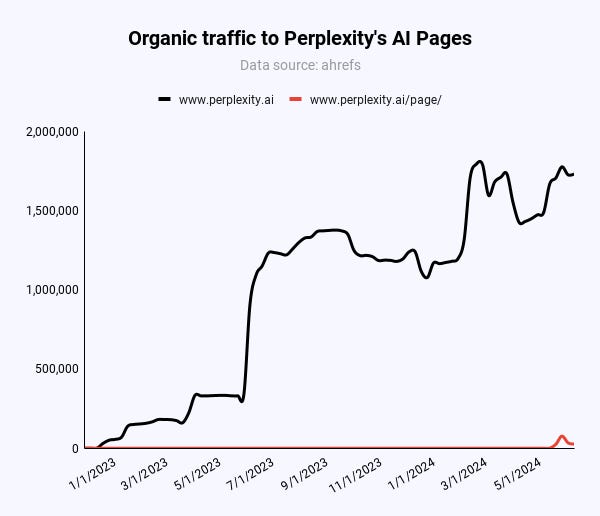
But in terms of benefit for Perplexity, Pages is a drop in the bucket.

Image Credit: Kevin Indig

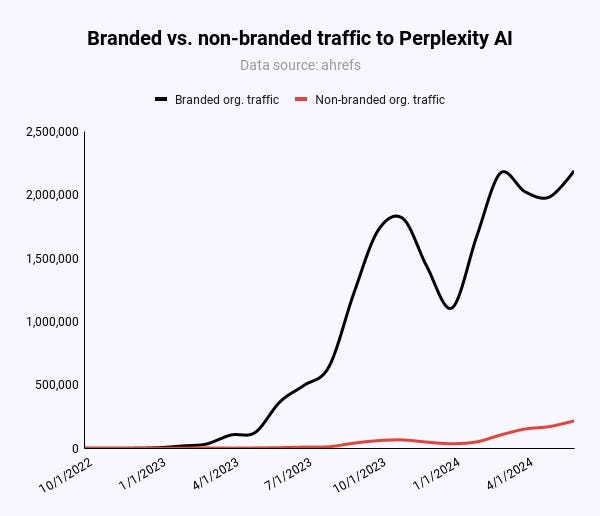
91% of organic traffic to perplexity.ai comes from branded terms like “perplexity.”

Only 47,000 out of 217,000 (21.6%) monthly visitors to Pages come from organic, non-branded keywords globally.

In the US, it’s 55% (20,000/36,000). However, compared to x monthly visits from branded terms, Pages doesn’t make a dent in Perplexity’s organic traffic.

Image Credit: Kevin Indig

In reality, most traffic to Perplexity comes through its brand and word of mouth. The recent media coverage might have helped Perplexity more than it harmed. The site has hit new all-time traffic highs every day since January 2024, according to Similarweb.

Perplexity’s whole domain has only 950 pages, of which Pages make up almost 600. Compared to other sites – like Wikipedia’s 6.8 million articles on the English version alone – that’s just not a lot. Stronger scale effects will emerge as Pages get more traction. Right now, Pages is a nascent beta feature.

Taking a closer look at its performance, the most searched-for keyword Pages rank in the top 3 for is “was candy montgomery guilty” (600 MSV). The most difficult keyword it ranks in position one for is “when was the first bitcoin purchase” (KD: 76, MSV: 30). In other words, Pages still has a long way to go.

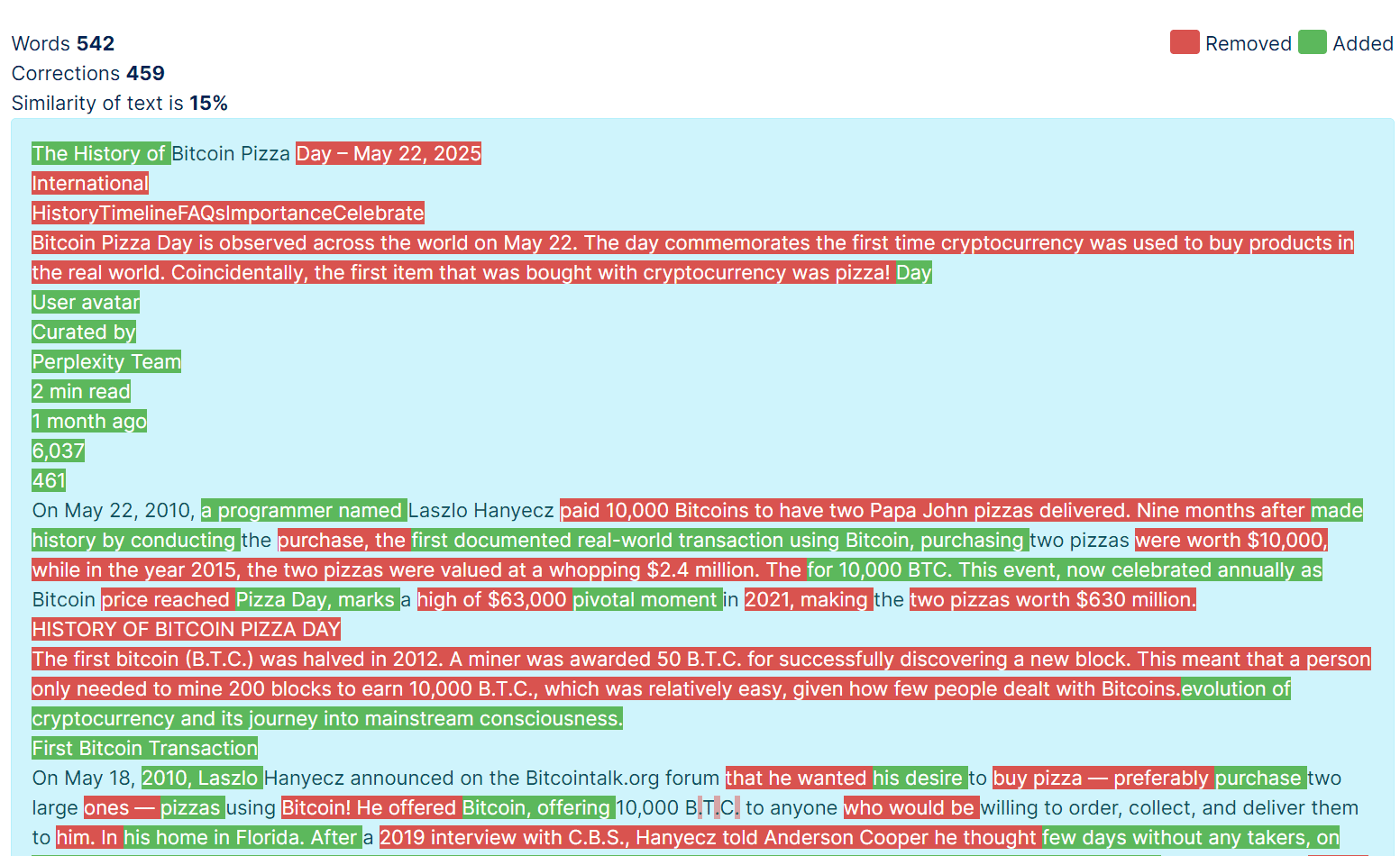
An n=1 (!) text similarity comparison with GoTranscript between Perplexity’s page for “bitcoin pizza day” and its four linked sources shows little evidence of plagiarism:

  1. nationaltoday.com/bitcoin-pizza-day/ (15% similarity).
  2. www.uledger.io/post/bitcoin-pizza-day-history (27% similarity).
  3. coinedition.com/bitcoin-pizza-day-a-700-million-reminder-of-cryptocurrencys-rise/ (15%).
  4. www.investopedia.com/news/bitcoin-pizza-day-celebrating-20-million-pizza-order/ (9%).
Text comparison between Perplexity’s and NationalToday’s article about Bitcoin Pizza Day (Image Credit: Kevin Indig)

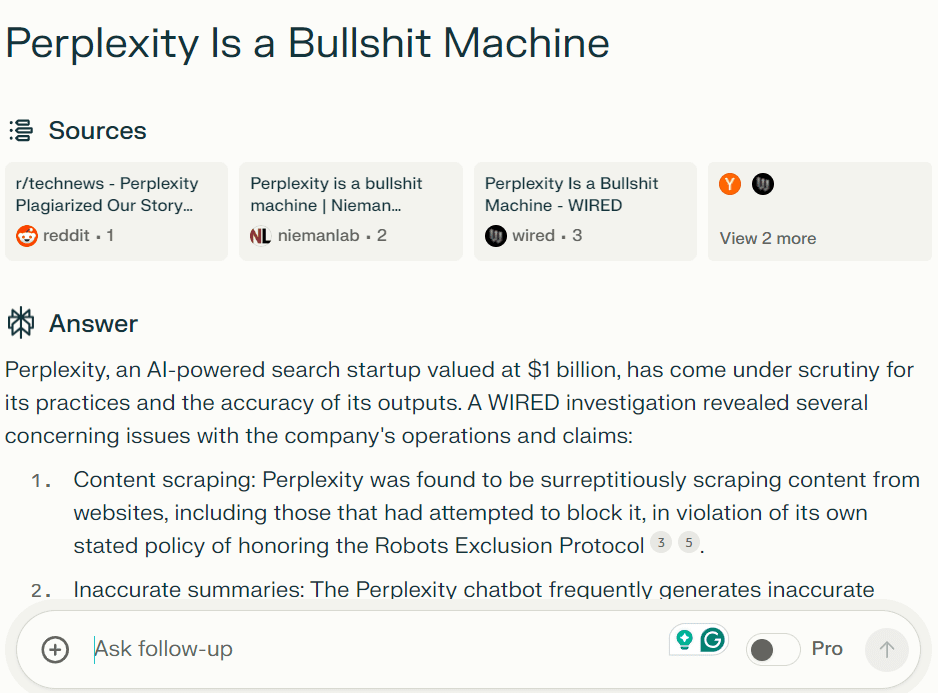
The “missing” attribution issue seems to have been fixed, as the example below shows.

Perplexity highlights sources for answers at the top (Image Credit: Kevin Indig)

The results showed the chatbot at times closely paraphrasing WIRED stories, and at times summarizing stories inaccurately and with minimal attribution.

I wasn’t able to confirm or deny cases of hallucination, but I expect better models to get to a point at which they can summarize existing content flawlessly. The reality is, we’re not there yet. Google’s AI Overviews have also been shown to include wrong facts or make things up.

Google seems to have been able to improve the problem quickly, which is why I expect the degree of hallucination to drop.

One underlying issue of the plagiarism critique is that a search for the exact title of an article returns that article.

Of course, Perplexity should return a summary of an article when users prompt it. What else should Perplexity show? The same argument came up in the lawsuit between OpenAI and the NY Times.

Triggered

Besides the crawling issues Perplexity needs to fix, the media’s reaction seems to be triggered by Perplexity’s positioning.

One sentence in Perplexity’s announcement of Pages gets to the heart of the underlying issue:

“With Pages, you don’t have to be an expert writer to create high quality content.”

The page also mentions:

”Crafting content that resonates can be difficult. Pages is built for clarity, breaking down complex subjects into digestible pieces and serving everyone from educators to executives.”

All examples of Pages listed in the announcement are about “how to” or “what is” topics:

  • “Beginner’s guide to drumming”
  • “How to use an AeroPress”
  • “Writing Kubernetes CronJobs”
  • “Steve Jobs: Visionary CEO”
  • Etc.

That’s exactly the challenge AI poses to writers: AI can increasingly cover clearly defined content formats like guides or tutorials. I can see how this is triggering to journalists.

User-Directed Content

Note how Perplexity doesn’t create all the content for Pages but takes direction from humans through prompts (UDC).

Instead of writing a whole article, humans put the puzzle pieces together and their author bio stamp on a Page.

I expect the same to happen with other content types like reviews and platforms like Google, Tripadvisor, Yelp, G2 & Co. to provide corresponding tools to make content creation easier. The biggest challenge will be to keep quality high and reduce useless information to a minimum.

The big question is whether a build like Pages can compete with a purely human-written site like Wikipedia, which currently has 116,000 active contributors.

The bigger “Growth play” behind pages (IMHO) is how Perplexity creates AI (video) podcasts out of summarized articles that outrank original results.

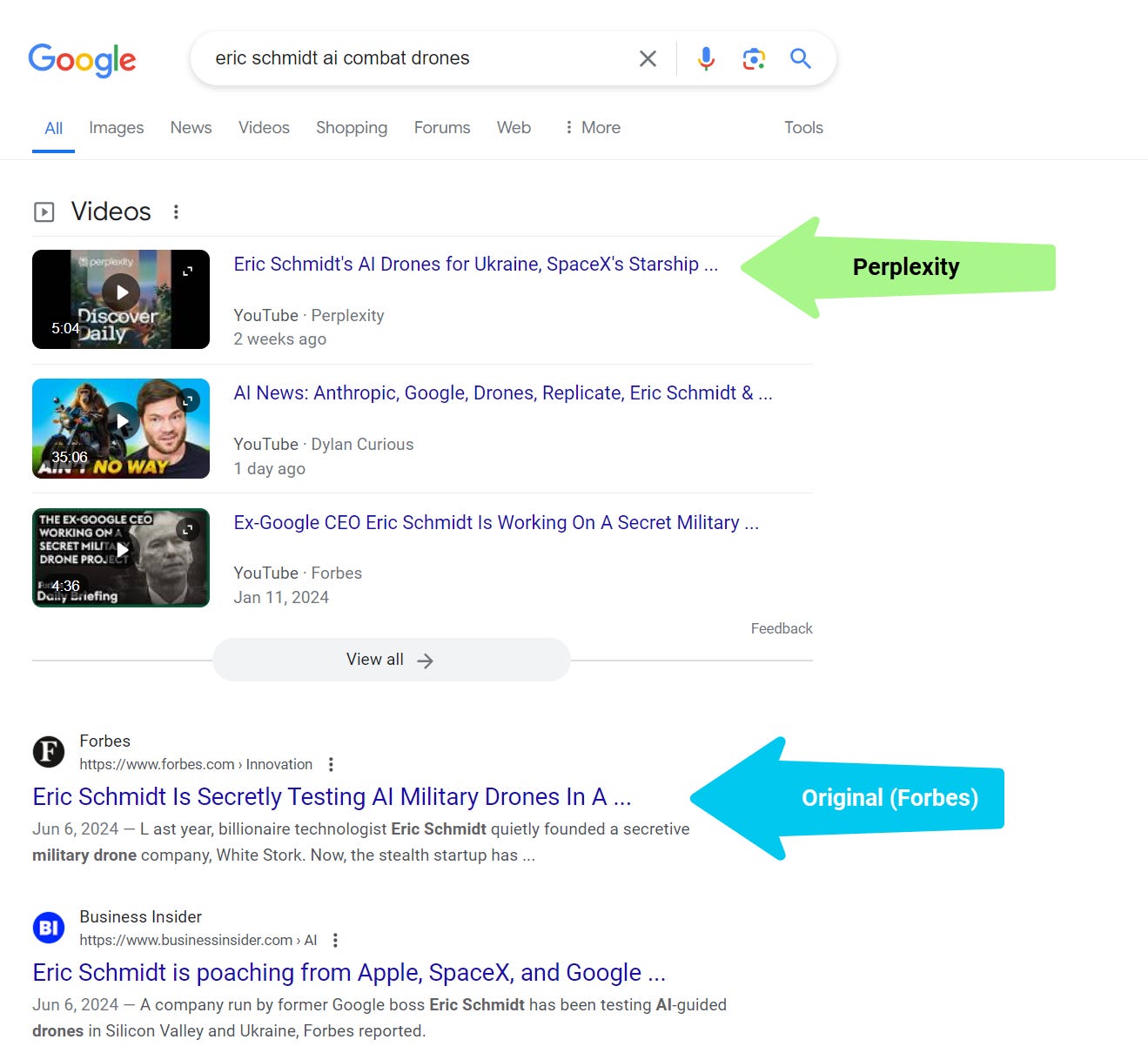
“Perplexity then sent this knockoff story to its subscribers via a mobile push notification. It created an AI-generated podcast using the same (Forbes) reporting — without any credit to Forbes, and that became a YouTube video that outranks all Forbes content on this topic within Google search.”

Perplexity outranks publishers with video podcasts summarizing articles (Image Credit: Kevin Indig)

Google will have to figure out how to prevent LLMs from repurposing the content of publishers.

What remains after examining the facts is the realization of how difficult it is to balance giving an AI  answer while sending traffic to sources. Why should users click when most of their questions are answered?

On the other side of the coin, publishers themselves can provide summaries of their articles. Therefore, the key challenge for Perplexity – and anyone else who wants to create large-scale AI content for Search – is adding unique value on top of AI summaries.

The path to unique value from AI summaries and other AI content is personalization.

A system that can recognize your preferences of level of understanding for a topic can make AI summaries more useful to you. Perplexity is a wrapper around different LLMs, but if it collects significant information about users and personalizes output, it can add value beyond fast answers.

Device operating system makers like Alphabet and Apple have the biggest advantage when it comes to user data since they sit on top of the food chain.

A strong example is Apple Intelligence, which could likely answer questions currently provided by guides and tutorials on Google or Perplexity.

Apple Intelligence (abbreviated “AI” – nice one, Apple!) has full context through location (Apple Maps), third-party app usage, Siri prompts, email (Apple Mail), and other sources, which creates a nice base to personalize results on. The web is just one body of knowledge, with a much sexier one waiting on our Dropbox, Gmail inbox, and iPhone photos.

Today, personalized answers are a vision and a demo.

But at some point in the future, personalization will create better answers than any generic LLM summary and surely more than any human-written guide.

The value of defined and generic knowledge is on a collision course with LLM bombers. At the same time, the value of personalized knowledge, human experience, and trustworthy expert expertise is skyrocketing.


AI startup Perplexity wants to upend search business. News outlet Forbes says it’s ripping them off; Integrator vs Aggregator Growth

Perplexity AI Is Lying about Their User Agent

Perplexity CEO Aravind Srinivas responds to plagiarism and infringement accusations

What is Perplexity Pages?

Introducing Perplexity Pages

Wikipedia:About

Why Perplexity’s Cynical Theft Represents Everything That Could Go Wrong With AI


Featured Image: Paulo Bobita/Search Engine Journal

How To Leverage Trust To Boost Your International Expansion via @sejournal, @gemmafontane

E-E-A-T is a mix of factors that help Google determine if the content is relevant and helpful for users in order to prioritize it in their search results.

In recent articles, we covered how to leverage Experience, Authority, and Expertise to boost a company’s international strategy.

However, there is still one very important area to cover within the E-E-A-T family: Trust. Although it is the last one we approached, it is certainly not the least important. Quite the contrary.

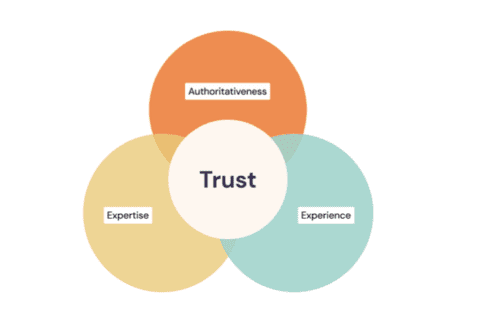
As Google’s search quality rater guidelines indicate, Trust, which considers the extent to which the page is accurate, honest, safe, and reliable, is the most important member at the center of E-E-A-T.

No matter how experienced, expert, or authoritative a website is, if it is untrustworthy, it will have low E-E-A-T.

trust-eeat-235Image from Google’s search quality rater guidelines, May 2024

Showing trust is incredibly relevant for “Your Money or Your Life” (YMYL) topics. These are the ones that can have a significant impact on an individual’s or society’s health, finances, safety, security, knowledge, or well-being.

But what happens when we want to create international strategies? How can we leverage E-E-A-T to boost our international expansion and especially show that we are honest and reliable to users from all around the world?

Let’s discover some detailed actions that can be implemented to achieve these international results.

How To Show Trust To Users From All Around The World

Accessibility And Usability

One of the first steps in trying to sell a product or service internationally is to ensure that users in each region can properly access the site.

This means the website must be fast, secure, display correctly, and be usable for them. It should allow users to easily search for relevant information and purchase the product or service.

International Brand Name

Beyond making the site accessible, it is also highly recommended that consumers can find the brand easily.

Whenever possible, it is advisable to have an “international” brand or domain name that is easy to remember, spell, and look for online for users from any country worldwide, even though they don’t speak the local language.

Localization: The Key Element To Show Trust

Localization is fundamental to demonstrating to users from different regions around the world that your site is reliable and trustworthy. Each country, language, or region has its singularities.

We cannot try to sell our product with the same message and strategies to users from all target markets, as we won’t transmit enough confidence for them to see that we are the most expert, experienced, and authoritative website in our sector.

For this, when we want to sell internationally, it is very important to:

  • Analyze the languages spoken in each region to evaluate how and if it is a priority to include them on the website.
  • Transcribe, not just translate. The knowledge users have about our products or services may differ in each region. Therefore, it is key to adapt the message to each market.
  • Make sure that the language is displayed by default when users search for it from their location. That’s why it is very important a proper translation, and also an hreflang configuration on the site.
  • Understand the local buying habits of the product or service in the region and the cultural customs with its use.
  • Study how users search for products or services to define the best type of content to create: text, videos (e.g., tutorials or how-to’s), images (e.g., demonstrating and teaching the product’s use).

For example, when we look for the keywords “Tió de Nadal” or “Caga Tió” – which have the same meaning – a local Christmas tradition celebrated in Catalonia, Spain, the results and the type of message we have to create are for local users.

Surely, this type of search will have an informational purpose, but it can also be transactional since the tradition is already well-known in the country.

tio de nadal: Google search resultsScreenshot from search for [tio de nadal], Google, May 2024

On the other hand, if we search for the same in the United States, the keyword will have a more informational aim since users are not so used to the tradition, and with this type of search, what they want to discover is more information about this custom, before seeing transactional results.

So, the type of content will be more descriptive.

Ssearch for caga tio: GoogleScreenshot from search for [caga tio], Google, May 2024

For all these reasons, it is essential to geolocate content in each region in order to transmit sufficient confidence to potential customers.

Transmit That You Are The Safest Site

One of the main factors that can make selling on an international scale difficult is failing to demonstrate that the website is sufficiently secure.

We must remember that when a user buys one of our products, they will not be able to make physical claims regarding legal aspects, reimbursements, etc. Therefore, it is essential to accurately and properly communicate all aspects related to payment methods and shipping so users know that we are a reliable, safe, and trustworthy site.

To achieve this, it is highly recommended to:

  • Include the currency of each country on the product page.
  • Incorporate the most common payment methods used in each country. Whether it is by credit card, Bizum, or PayPal, we should include not only the payment methods we are accustomed to but also those familiar to users in the target region.
  • Detail the shipping system. From delivery time to return conditions, shipping company, and tracking code, we must provide all necessary information to instill confidence in a person who may live thousands of miles from where the products are located.
Credit card option on websiteScreenshot from author, May 2024

Tell Who You Are With A Detailed “About Us” Page

For companies with a local focus, explaining who they are is very important. When selling on an international scale, it becomes essential.

We have to consider that the user who wants to buy our product or service may not have any prior knowledge of the business, the product we sell, or who we are.

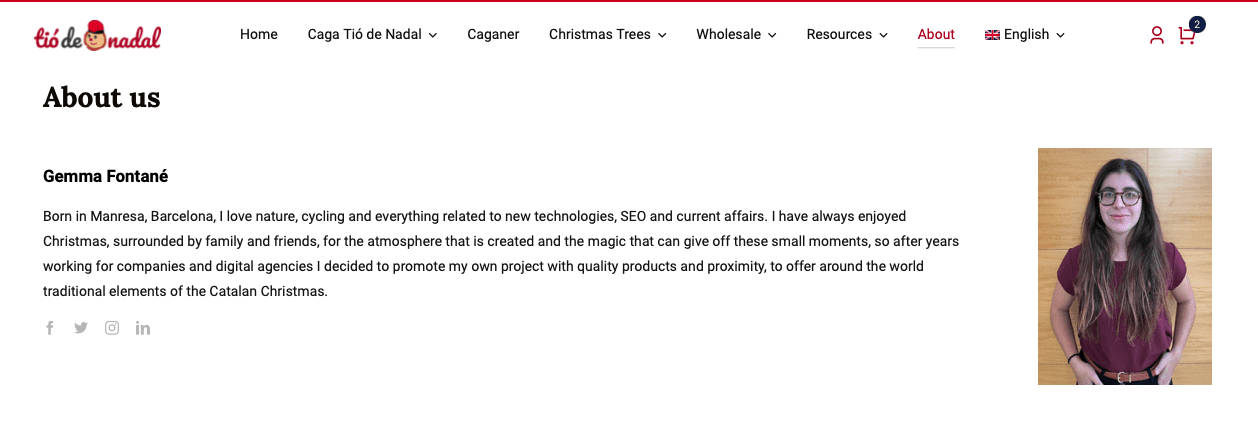
That’s why we need to create a highly detailed “About Us” page, including information such as:

  • Company location and origins, with images or videos.
  • The manufacturing process and product creation details.
  • Detailed information about the team members, including links to other platforms, if possible, such as social networks.
  • Demonstrate knowledge of the subject matter through awards, certifications, quality seals, etc.
  • Include ratings and opinions from third parties.
About us pageScreenshot from author, May 2024

Reliable Customer Service

Finally, to encourage users to purchase a product or service on an international website, it is essential to demonstrate that there is reliable customer service.

We need to communicate that there are real people behind the website.

To show reliable customer service on a site, some actions we can take include:

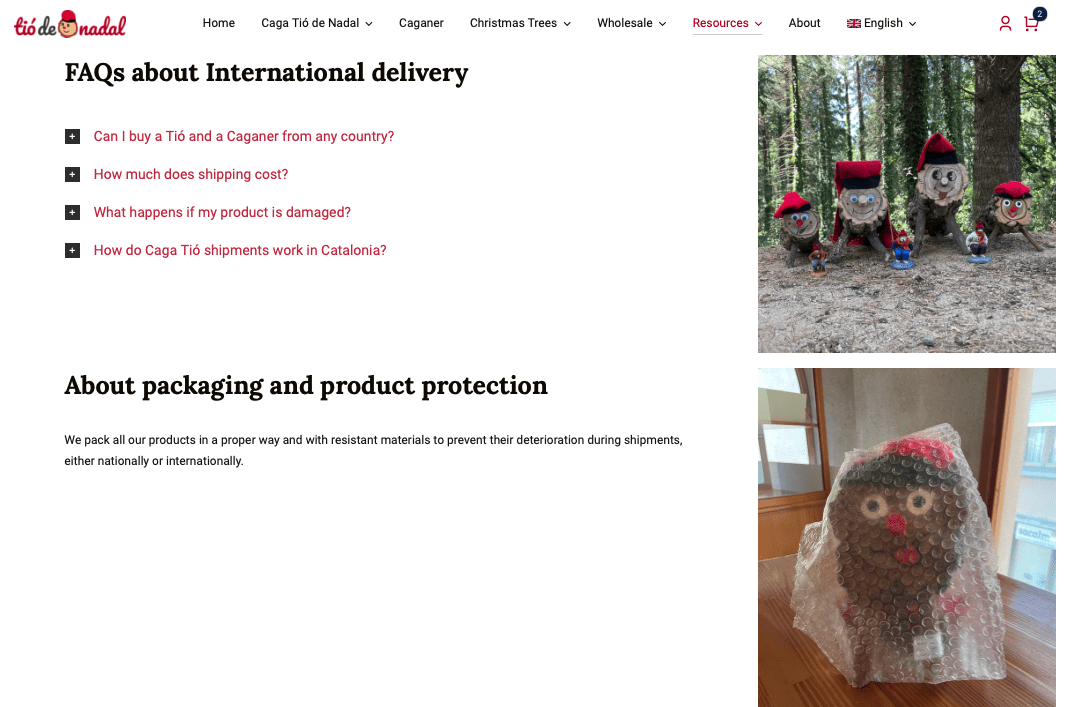
  • Include a FAQ page with a focus on international questions, such as those regarding international shipping.
  • Provide direct and human contact options. Whether via chat, WhatsApp, phone, or email, offering users the opportunity to get their questions or doubts answered quickly by a human representative will help build confidence.
  • Include your location. Link it with Google My Business, complete with a detailed profile including images and information.
  • Display reviews of your customer service on your site so users can see the experiences of others.
FAQs about international deliveryScreenshot from author, May 2024

Link To Other Platforms And Sites

Finally, another action we can implement to build trust with users from around the world is to show them that we have profiles on other social networks and demonstrate how others talk about us.

To do this, we can:

  • Create and link to other social network profiles.
  • Get mentions from local influencers or sector leaders.
  • Get featured on local relevant websites.
  • Get listed on relevant directories in our sector.
Caga Tio YouTube videoScreenshot from YouTube, May 2024

Leverage Trust To Boost International Strategies

Trust is very important for YMYL topics.

However, we shouldn’t forget how important it is in other sectors or sites, such as for when we want to sell internationally.

Showing that a site is accurate, honest, safe, and reliable is also a key element in building trust with users worldwide – along with showcasing that we have experience, authority, and expertise related to our sector, products, and service.

More resources: 


Featured Image: BRO.vector/Shutterstock

Google Updates Guidance On EEA Carousels Beta Structured Data via @sejournal, @martinibuster

Google updated the structured data guidance on a beta carousels structured data that is intended for users in the European Economic Area, which is related to Google’s preparations for the Digital Markets Act (DMA). The new guidance covers how to use this structured data on summary or category pages and for paginated categories.

Carousel (Beta) Rich Results For Aggregators & Suppliers

The Carousel (Beta) rich results is intended for sites about travel, local, and for shopping queries shown to users in the EEA. Google search users can scroll horizontally across tiles that contain information specific to the context of the search. Sites that use this new structured data become eligible to be featured in the new carousel rich results.

The original announcement from February 2024 explained that display for shopping queries will at first be limited to Czechia, France, Germany and the UK.

Updated Documentation

The new documentation consists of a new three sentence paragraph that is added to the current Structured data carousels (beta) documentation.

This is the new guidance that was added to the documentation:

“Mark up all items that are on the summary or category page. For paginated categories, add an ItemList to each subsequent page and include the entities that are listed on that page. For infinite scroll, focus on marking up the entities that are initially loaded in the viewport.”

The changelog has a notation that explains the reason for the update:

“Marking up categories with many items for structured data carousels (beta)

What: Added guidance on how to mark up categories with many items to the structured data carousels (beta).

Why: We received a question through our feedback button about how to implement this markup for categories with many items, such as paginated content or infinite scroll.”

Read the updated documentation:

Structured data carousels (beta) – Guidelines

Featured Image by Shutterstock/JHVEPhoto

Synthesia’s hyperrealistic deepfakes will soon have full bodies

Startup Synthesia’s AI-generated avatars are getting an update to make them even more realistic: They will soon have bodies that can move, and hands that gesticulate.

The new full-body avatars will be able to do things like sing and brandish a microphone while dancing, or move from behind a desk and walk across a room. They will be able to express more complex emotions than previously possible, like excitement, fear, or nervousness, says Victor Riparbelli, the company’s CEO. Synthesia intends to launch the new avatars toward the end of the year. 

“It’s very impressive. No one else is able to do that,” says Jack Saunders, a researcher at the University of Bath, who was not involved in Synthesia’s work. 

The full-body avatars he previewed are very good, he says, despite small errors such as hands “slicing” into each other at times. But “chances are you’re not really going to be looking that close to notice it,” Saunders says. 

Synthesia launched its first version of hyperrealistic AI avatars, also known as deepfakes, in April. These avatars use large language models to match expressions and tone of voice to the sentiment of spoken text. Diffusion models, as used in image- and video-generating AI systems, create the avatar’s look. However, the avatars in this generation appear only from the torso up, which can detract from the otherwise impressive realism. 

To create the full-body avatars, Synthesia is building an even bigger AI model. Users will have to go into a studio to record their body movements.

COURTESY SYNTHESIA

But before these full-body avatars become available, the company is launching another version of AI avatars that have hands and can be filmed from multiple angles. Their predecessors were only available in portrait mode and were just visible from the front. 

Other startups, such as Hour One, have launched similar avatars with hands. Synthesia’s version, which I got to test in a research preview and will be launched in late July, has slightly more realistic hand movements and lip-synching. 

Crucially, the coming update also makes it far easier to  create your own personalized avatar. The company’s previous custom AI avatars required users to go into a studio to record their face and voice over the span of a couple of hours, as I reported in April

This time, I recorded the material needed in just 10 minutes in the Synthesia office, using a digital camera, a lapel mike, and a laptop. But an even more basic setup, such as a laptop camera, would do. And while previously I had to record my facial movements and voice separately, this time the data was collected at the same time. The process also includes reading a script expressing consent to being recorded in this way, and reading out a randomly generated security passcode. 

These changes allow more scale and give the AI models powering the avatars more capabilities with less data, says Riparbelli. The results are also much faster. While I had to wait a few weeks to get my studio-made avatar, the new homemade ones were available the next day. 

Below, you can see my test of the new homemade avatars with hands. 

COURTESY SYNTHESIA

The homemade avatars aren’t as expressive as the studio-made ones yet, and users can’t change the backgrounds of their avatars, says Alexandru Voica, Synthesia’s head of corporate affairs and policy. The hands are animated using an advanced form of looping technology, which repeats the same hand movements in a way that is responsive to the content of the script. 

Hands are tricky for AI to do well—even more so than faces, Vittorio Ferrari, Synthesia’s director of science, told me in in March. That’s because our mouths move in relatively small and predictable ways while we talk, making it possible to sync the deepfake version up with speech, but we move our hands in lots of different ways. On the flip side, while faces require close attention to detail because we tend to focus on them, hands can be less precise, Ferrari says. 

Even if they’re imperfect, AI-generated hands and bodies add a lot to the illusion of realism, which poses serious risks at a time when deepfakes and online misinformation are proliferating. Synthesia has strict content moderation policies, carefully vetting both its customers and the sort of content they’re able to generate. For example, only accredited news outlets can generate content on news.  

These new advancements in avatar technologies are another hammer blow to our ability to believe what we see online, says Saunders. 

“People need to know you can’t trust anything,” he says. “Synthesia is doing this now, and another year down the line it will be better and other companies will be doing it.” 

Meet the architect creating wood structures that shape themselves

Humanity has long sought to tame wood into something more predictable. Sawmills manufacture lumber from trees selected for consistency. Wood is then sawed into standard sizes and dried in kilns to prevent twisting, cupping, or cracking. Generations of craftsmen have employed sophisticated techniques like dovetail joinery, breadboard ends, and pocket flooring to keep wood from distorting in their finished pieces. 

But wood is inherently imprecise. Its grain reverses and swirls. Trauma and disease manifest in scars and knots. 

Instead of viewing these natural tendencies as liabilities, Achim Menges, an architect and professor at the University of Stuttgart in Germany, sees them as wood’s greatest assets. Menges and his team at the Institute for Computational Design and Construction are uncovering new ways to build with the material by using computational design—which relies on algorithms and data to simulate and predict how wood will behave within a structure long before it is built. He hopes this work will enable architects to create more sustainable and affordable timber buildings by reducing the amount of wood required. 

Menges’s recent work has focused on creating “self-shaping” timber structures like the HygroShell, which debuted at the Chicago Architecture Biennial in 2023. Constructed from prefabricated panels of a common building material known as cross-laminated timber, HygroShell morphed over a span of five days, unfurling into a series of interlaced sheets clad with wooden scale-like shingles that stretched to cover the structure as it expanded. Its final form, designed as a proof of concept, is a delicately arched canopy that rises to nearly 33 feet (10 meters) but is only an inch thick. In a time-lapse video, the evolving structure resembles a bird stretching its wings. 

HygroShell takes its name from hygroscopicity, a property of wood that causes it to absorb or lose moisture with humidity changes. As the material dries, it contracts and tends to twist and curve. Traditionally, lumber manufacturers have sought to minimize these movements. But through computational design, Menges’s team can predict the changes and structure the material to guide it into the shape they want. 

“From the start, I was motivated to understand computation not as something that divides the physical and the digital world but, instead, that deeply connects them.”

Achim Menges, architect and professor, University of Stuttgart in Germany

The result is a predictable and repeatable process that creates tighter curves with less material than what can be attained through traditional construction techniques. Existing curved structures made from cross-laminated timber (also known as mass timber) are limited to custom applications and carry premium prices, Menges says. Self-shaping, in contrast, could offer industrial-scale production of curved mass timber structures for far less cost. 

To build HygroShell, the team created digital profiles of hundreds of freshly sawed boards using data about moisture content, grain orientation, and more. Those parameters were fed into modeling software that predicted how the boards were likely to distort as they dried and simulated how to arrange them to achieve the desired structure. Then the team used robotic milling machines to create the joints that held the panels together as the piece unfolded. 

“What we’re trying to do is develop design methods that are so sophisticated they meet or match the sophistication of the material we deal with,” Menges says. 

Menges views “self-shaping,” as he calls his technique, as a low-energy way of creating complex curved architectures that would otherwise be too difficult to build on most construction sites. Typically, making curves requires extensive machining and a lot more materials, at considerable cost. By letting the wood’s natural properties do the heavy lifting, and using robotic machinery to prefabricate the structures, Menges’s process allows for thin-walled timber construction that saves material and money.

The shape, structure, and construction process of Menges’s HygroShell pavilion are all based on data that shows how different materials change over time.

If they were self-shaped, curved elements could halve the material requirements for certain structural features in a multistory timber building, Menges says. “You would save a lot of material simply because curvature adds stiffness. That’s why we see everything is curved in nature.”

Menges began his career in the late 1990s, at a time when architects had just begun to use powerful new software to design buildings. This shift opened new possibilities, but often those digital designs ran afoul of the material’s physical constraints, he says. It was the tension between the physical and the digital that inspired Menges to pursue computational design.

“From the start, I was motivated to understand computation not as something that divides the physical and the digital world but, instead, that deeply connects them,” he says. 

His interest in self-shaping structures was inspired by pinecones, which—long after falling from trees—retain the biological programming to open and expose their seeds as temperatures rise. “That’s a plant motion that does not require any motors, nor does it require any muscles,” Menges says. “It is programmed into the material.” 

Pinecones made him realize that just as robots are programmed to perform certain actions, materials like wood can be manipulated to carry out specific behaviors that are hard-coded in their DNA as a response to a stimulus.

Apart from the HygroShell, Menges has used self-shaping techniques to create proof-of-concept projects like the Urbach Tower, a 45-foot spiraling wood structure overlooking the fields of the Rems Valley near Urbach, Germany. Instead of using energy-intensive mechanical processes that require heavy machinery, the team prefabricated a dozen curved, self-shaped wood panels and assembled them on site, reducing the time it would otherwise take to build such a structure. 

And in 2023, his team worked with researchers from Germany’s University of Freiburg to create the livMatS Biomimetic Shell, a structure made from 127 wooden cassettes, each resembling the shape of a honeycomb. Menges used self-shaping to design a system of 3D-printed wooden window blinds that opened and closed in response to changes in relative humidity. Embedded in the wood shell is a solar gate that closes in warm weather, shading the space, and opens during colder months to provide passive solar heating. Compared with a conventional timber building, this structure has half the environmental impact over its life cycle.

Menges’s work is coming at a time when the sustainability of mass timber buildings—those with structural components made from engineered wood instead of steel or concrete—is under scrutiny. Concerns range from where the timber is sourced to whether preserving forests sequesters more carbon than harvesting them for building material, even if building with wood reduces carbon emissions relative to producing concrete and steel. There are also worries about what happens to all the wood left behind during the logging process. Trees may be a renewable resource, but they require decades to mature and are already threatened by climate change. That’s what led Menges and others to advocate for more efficient building practices that don’t waste wood. 

The design of the Urbach Tower, a proof-of-concept project, emerged from a new self-shaping process for its curved wood components.
ITECH/ICD/ITKE UNIVERSITY OF STUTTGART

Architects face a dilemma, however. Mass-timber buildings could be built using less wood, but the less material is used, the more susceptible the structure is to fire, says Michael Green, principal of Michael Green Architecture in Vancouver. 

“The way we protect wood is by overbuilding it to create a thickness that can resist a certain amount of time under fire,” Green says. The standards depend on the type of building and the variety of wood used, but Green generally adds around 3.6 centimeters (1.4 inches) of extra material to his structures for each hour of required burn time. The more people occupy a building, the longer it is required to resist fire and, in the case of mass-timber buildings, the thicker the wood structure. 

Green sees Menges’s work as important foundational research that may lead to breakthroughs influencing wood architecture in decades to come. But he doesn’t see self-shaped architecture being widely deployed outside the towers and pavilions Menges has already designed. 

exterior view of livMat
interior view of livMat

The livMatS Biomimetic Shell features 3D-printed wooden window blinds that open and close in response to changes in relative humidity.

“It’s teaching us less about what we are actually going to build in the next five years and more about what we need to learn so we can develop other products that support that,” he says. 

Even without widespread adoption of self-shaping techniques, Menges believes, computational design will continue to unlock new ways of building with wood. He sees a future where the knots, crooks, and branches of trees are viewed not as defects but as construction tools, each with its own unique properties. 

“A tree does not have a defect,” he says. “It’s an anatomical feature. What we need to learn is what kind of building systems we develop that integrate these features, and not strive for the homogeneity that is simply not there.” 

The Download: hyperrealistic deepfakes, and using math to shape wood

This is today’s edition of The Download, our weekday newsletter that provides a daily dose of what’s going on in the world of technology.

Synthesia’s hyperrealistic deepfakes will soon have full bodies

Startup Synthesia’s AI-generated avatars are getting an update to make them even more realistic: They will soon have bodies that can move, and hands that gesticulate.

The new full-body avatars will be able to do things like sing and brandish a microphone while dancing, or move from behind a desk and walk across a room. They will be able to express more complex emotions than previously possible, like excitement, fear, or nervousness. 

These new capabilities, which are set to launch toward the end of the year, will add a lot to the illusion of realism. That’s a scary prospect at a time when deepfakes and online misinformation are proliferating. Read the full story and watch our reporter’s avatars meet each other.

—Melissa Heikkilä

Meet the architect creating wood structures that shape themselves

Humanity has long sought to tame wood into something more predictable, but it is inherently imprecise. Its grain reverses and swirls. Trauma and disease manifest in scars and knots. 

Instead of viewing these natural tendencies as liabilities, Achim Menges, an architect and professor at the University of Stuttgart in Germany, sees them as wood’s greatest assets. 

Menges and his team at the Institute for Computational Design and Construction are uncovering new ways to build with wood by using algorithms and data to simulate and predict how wood will behave within a structure long before it is built. He hopes this will help create more sustainable and affordable timber buildings by reducing the amount of wood required. Read our story all about him and his work

—John Wiegand

This story is from the forthcoming print issue of MIT Technology Review, which explores the theme of Play. It’s set to go live on Wednesday June 26, so if you don’t already, subscribe now to get a copy when it lands.

Live: How generative AI could transform games

Generative AI could soon revolutionize how we play video games, creating characters that can converse with you freely, and experiences that are infinitely detailed, twisting and changing every time you experience them.

Together, these could open the door to entirely new kinds of in-game interactions that are open-ended, creative, and unexpected. One day, the games we love playing may not have to end. Read our executive editor Niall Firth’s story all about what that future could look like. 

If you want to learn more, register now to join our next exclusive subscriber-only Roundtable discussion at 11.30ET today! Niall and our editorial director Allison Arieff will be talking about games without limits, the future of play, and much more.

The must-reads

I’ve combed the internet to find you today’s most fun/important/scary/fascinating stories about technology.

1 Big Tech firms are going all-in on experimental clean energy projects
Due to the fact AI is so horribly polluting. But the projects range from ‘long shot’ to ‘magical thinking’. (WP $)
Making the grid smarter, rather than bigger, could help. (Semafor)
How virtual power plants are shaping tomorrow’s energy system. (MIT Technology Review)

2 Google is about to be hit with a ton of AI-related lawsuits
Its AI Overviews keep libeling people—and they’re lawyering up. (The Atlantic $)
Why Google’s AI Overviews gets things wrong. (MIT Technology Review)
Another AI-powered search engine, Perplexity, is running into the exact same issues. (Wired $)
Worst of all? There’s currently no way to fix the underlying problem. (MIT Technology Review)

3 Apple is exploring a deal with Meta
To integrate Meta’s generative AI models into Apple Intelligence. (Wall Street Journal $) 
+ Apple is delaying launching AI features in Europe due to regulatory concerns. (Quartz

4 NASA is indefinitely delaying the return of Starliner
In order to give it more time to review data. (Ars Technica)

5 Chinese tech companies are pushing their staff beyond breaking point
As growth slows and competition rises, work-life balance is going out the window. (FT $)

6 Used electric vehicles are now less expensive than gas cars in the US
It’s a worrying statistic that reflects the cratering demand for EVs. (Insider $)
The problem with plug-in hybrids? Their drivers. (MIT Technology Review)

7 Check out these photos of San Francisco’s AI scene
The city is currently buzzing with people hoping to make their fortune off the back of the boom. (WP $)

8 The next wave of weight loss drugs is coming
The hope is that they might be cheaper, and come with fewer side effects. (NBC)

9 Elon Musk is obsessed with getting us to have more babies
He’s funding and promoting some pretty wacky theories about a coming population collapse. (Bloomberg $)
+ And we’re losing track of the number of kids he has himself. (Gizmodo)

10 Before smartphones, you could pay people to Google stuff for you
In the noughties, if you were arguing with friends over something factual, you could just call AQA to settle it. (Wired $)

Quote of the day

“The internet has just gotten so much duller.”

—Kelly, a copywriter from New Hampshire, tells the Wall Street Journal about the impact of AI online. 

The big story

How a tiny Pacific Island became the global capital of cybercrime

CHRISSIE ABBOTT


November 2023

Tokelau, a string of three isolated atolls strung out across the Pacific, is so remote that it was the last place on Earth to be connected to the telephone—only in 1997. Just three years later, the islands received a fax with an unlikely business proposal that would change everything.

It was from an early internet entrepreneur from Amsterdam, named Joost Zuurbier. He wanted to manage Tokelau’s country-code top-level domain, or ccTLD—the short string of characters that is tacked onto the end of a URL—in exchange for money.

In the succeeding years, tiny Tokelau became an unlikely internet giant—but not in the way it may have hoped. Until recently, its .tk domain had more users than any other country’s: a staggering 25 million—but the vast majority were spammers, phishers, and cybercriminals.

Now the territory is desperately trying to clean up .tk. Its international standing, and even its sovereignty, may depend on it. Read the full story.

—Jacob Judah

We can still have nice things

A place for comfort, fun and distraction to brighten up your day. (Got any ideas? Drop me a line or tweet ’em at me.)

+ Feeling challenged? Why not try the Japanese approach of ‘ukeireru’ to tackle what’s bothering you.
+ The incredibly weird origins of pop hit Maniac have to be read to be believed.
+ This summer is already chock-full with pop bangers—don’t miss out.
+ Why short novels are the best.