Why Microsoft made a deal to help restart Three Mile Island

This article is from The Spark, MIT Technology Review’s weekly climate newsletter. To receive it in your inbox every Wednesday, sign up here.

Nuclear power is coming back to Three Mile Island.

That nuclear power plant is typically associated with a very specific event. One of its reactors, Unit 2, suffered a partial meltdown in 1979 in what remains the most significant nuclear accident in US history. It has been shuttered ever since.

But the site, in Pennsylvania, is also home to another reactor—Unit 1, which consistently and safely generated electricity for decades until it was shut down in 2019. The site’s owner announced last week that it has plans to reopen the plant and signed a deal with Microsoft. The company will purchase the plant’s entire electric generating capacity over the next 20 years.  

This news is fascinating for so many reasons. Obviously this site holds a certain significance in the history of nuclear power in the US. There’s a possibility this would be one of the first reactors in the country to reopen after shutting down. And Microsoft will be buying all the electricity from the reactor. Let’s dig into what this says about the future of the nuclear industry and Big Tech’s power demand.  

Unit 2 at Three Mile Island operated for just a few months before the accident, in March 1979. At the time, Unit 1 was down for refueling. That reactor started back up, to some controversy, in the mid-1980s and produced enough electricity for hundreds of thousands of homes in the area for more than 30 years.

Eventually, though, the plant faced economic struggles. Even though it was operating at  relatively high efficiency and with low costs, it was driven out of business by record low prices for natural gas and the introduction of relatively cheap, subsidized renewable energy to the grid, says Patrick White, research director of the Nuclear Innovation Alliance, a nonprofit think tank. 

That situation has shifted in just the past few years, White says. There’s more money available now for nuclear, including new technology-agnostic tax credits in the Inflation Reduction Act. And there’s also rising concern about the increased energy demand on the power grid, in part from tech giants looking to power data centers like those needed to run AI.

In announcing its deal with Microsoft, Constellation Energy, the owner of Three Mile Island Unit 1, also shared that the plant is getting a rebrand—the site will be renamed the Crane Clean Energy Center. (Not sure if that one’s going to stick.)  

The confluence of the particular location of this reactor and the fact that the electricity will go to power data centers (and other infrastructure) makes this whole announcement instantly attention-grabbing. As one headline put it, “Microsoft AI Needs So Much Power It’s Tapping Site of US Nuclear Meltdown.”

For some people in climate circles, this deal makes a lot of sense. Nuclear power remains one of the most expensive forms of electricity today. But experts say it could play a crucial role on the grid, since the plants typically put out a consistent amount of electricity—it’s often referred to as “firm power,” in contrast with renewables like wind and solar that are intermittently available.

Without guaranteed money there’s a chance this reactor would simply have been decommissioned as planned. Reopening plants that shuttered recently could provide an opportunity to get the benefits of nuclear power without having to build an entirely new project. 

In March, the Palisades Nuclear Plant in Michigan got a loan guarantee from the US Department of Energy’s Loan Programs Office to the tune of over $1.5 billion to help restart. Palisades shut down in 2022, and the site’s owner says it hopes to get it back online by late 2025. It will be the first shuttered reactor in the US to come back online, if everything goes as planned. (For more details, check out my story from earlier this year.)

Three Mile Island may not be far behind—Constellation says the reactor could be running again by 2028. (Interestingly, the facility will need to separately undergo a relicensing process in just a few years, as it’s currently only licensed to run through 2034. A standard 20-year extension could have it running until 2054.)

If Three Mile Island comes back online, Microsoft will be the one benefiting, as its long-term power purchase agreement would secure it enough energy to power roughly 800,000 homes every year. Except in this case, it’ll be used to help run the company’s data center infrastructure in the region.

This isn’t the first recent sign Big Tech is jumping in on nuclear power: Earlier this year, Amazon purchased a data center site right next to the Susquehanna nuclear power plant, also in Pennsylvania.

While Amazon will use only part of the output of the Susquehanna plant, Microsoft will buy all the power that Three Mile Island produces. That raises the question of who’s paying for what in this whole arrangement. Ratepayers won’t be expected to shoulder any of the costs to restart the facility, Constellation CEO Joe Dominguez told the Washington Post. The company also won’t seek any special subsidies from the state, he added.

However, Dominguez also told the Post that federal money is key in allowing this project to go forward. Specifically, there are tax credits in the Inflation Reduction Act set aside for existing nuclear plants. 

The company declined to give the Post a value for the potential tax credits and didn’t respond to my request for comment, but I busted out a calculator and did my own math. Assuming an 835-megawatt plant running at 96.3% capacity (the figure Constellation gave for the plant’s final year of operation) and a $15-per-megawatt-hour tax credit, that could add up to about $100 million each year, assuming requirements for wages and price are met.

It’ll be interesting to see how much further this trend of restarting plants might go. The Duane Arnold nuclear plant in Iowa is one potential candidate—it shuttered in 2020 after 45 years, and the site’s owner has made public comments about the potential of reopening. 

Restarting any or all of these three sites could be the latest sign of an approaching nuclear resurgence. Big tech companies need lots of energy, and bringing old nuclear plants onto the grid—or, better yet, keeping aging ones open—seems to me like a great way to meet demand.

But given the relative rarity of opportunities to snag power from recently closed or closing plants, I think the biggest question for the industry is whether this wave of interest will translate into building new reactors as well.  


Now read the rest of The Spark

Related reading

Read my story from earlier this year for all the details on what it takes to reopen a shuttered nuclear power plant and what we might see at Palisades. 

In the latest in our virtual events series, my colleagues James Temple, Melissa Heikkilä, and David Rotman are having a discussion about AI’s climate impacts. Subscribers can join them for the discussion live at 12:30 p.m. Eastern today, September 25, or check out the recording later. 

AI is an energy hog, but the effects of the technology on emissions are a bit complicated, as I covered in this newsletter.  

Three more things

It’s been a busy week for the climate team here at MIT Technology Review, so let’s do a rapid-fire round: 

  1. Countries including Germany, Sweden, and New Zealand are ending EV subsidies. I wrote about why some experts are worried that the move is coming too soon for some of them
  2. A proposal to connect two of the US’s largest grids could be crucial to cleaning up our electricity system. The project just got a major boost in the form of hundreds of billions of dollars, and it could represent a long-awaited success for energy entrepreneur Michael Skelly, as my colleague James Temple covered in a new story.  
  3. Finally, there’s just one week until we drop our 2024 list of 15 Climate Tech Companies to Watch. Check out this preview story about the list, and keep your eyes peeled next week for the reveal. 

Keeping up with climate  

The US Department of Energy just announced $3 billion in funding to boost the battery and EV supply chain. (E&E News)

→ A single Minnesota mine could unlock billions of tax credits in the US. (MIT Technology Review)

Cheap solar panels are making that energy source abundantly available in Pakistan. But the boom also threatens making power pulled from the grid unaffordable. (Financial Times)

Individual action alone won’t solve the climate crisis, but there are some things people can do. Check out this package on how to decarbonize your life through choices about everything from food to transportation. (Heatmap News)

A group of major steel buyers wants a million tons of low-emissions steel in North America by 2028. These kinds of commitments from customers could help clean up heavy industry. (Canary Media)

This startup wants to use ground-up rocks and the ocean to soak up carbon dioxide. The result could transform the oceans. (New York Times)

North America’s largest food companies are struggling to cut emissions. The biggest culprit is their supply chains—the ingredients they use and the transportation needed to move them around. (Inside Climate News)
California is suing ExxonMobil, claiming the company misled consumers by perpetuating the myth that recycling could solve the plastic waste crisis. Only a small fraction of plastic waste is ever recycled. (The Verge)


Space travel is dangerous. Could genetic testing and gene editing make it safer?

This article first appeared in The Checkup, MIT Technology Review’s weekly biotech newsletter. To receive it in your inbox every Thursday, and read articles like this first, sign up here.

Recently, global news has been pretty bleak. So this week, I’ve decided to focus my thoughts beyond Earth’s stratosphere and well into space. A couple of weeks ago, SpaceX launched four private astronauts into orbit, where they performed the first ever spacewalk undertaken by private citizens (as opposed to astronauts trained by national agencies).

The company has more ambitious plans for space travel, and it’s not alone. Elon Musk, the founder of SpaceX, claimed on Sunday that he would launch uncrewed missions to Mars within two years, and crewed missions four years after that if the uncrewed missions were successful. (Other SpaceX timelines for reaching the Red Planet haven’t panned out.) NASA refers to Mars as its “​​horizon goal for human exploration.” China previously announced plans for a human mission as early as 2033 and recently moved up its timeline for an uncrewed sample return mission by two years. And the UAE has a 100-year plan to construct a habitable community on Mars by 2117.

None of this will be straightforward. Long-distance space travel can wreak havoc on human health. There’s radiation and microgravity to contend with, as well as the psychological toll of isolation and confinement. Research on identical twin astronauts has also revealed a slew of genetic changes that happen when a person spends a year in space.

That’s why some bioethicists are exploring the idea of radical treatments for future astronauts. Once we’ve figured out all the health impacts of space travel, they argue, we should edit the genomes of astronauts ahead of launch to offer them the best protection. Some have even suggested this might result in the creation of an all-new species: Homo spatialis. If this is starting to sound a bit like sci-fi, that’s because—for now, at least—it is. But there are biotechnologies we can use to help space travelers now, too.

Space travel is risky. When it comes down to it, a space launch essentially involves strapping humans into a capsule and exploding a bomb beneath them, says Paul Root Wolpe, who served as NASA’s senior bioethicist for 15 years.

Once you’re in space, you’re subject to far higher levels of radiation than you’d encounter on Earth. Too much radiation can increase a person’s risk of cancer and neurological disorders. It can also harm body tissues, resulting in cataracts or digestive diseases, for example. That’s why agencies like the US Department of Labor’s Occupational Safety and Health Administration set limits on radiation exposure. (NASA also sets limits on the amount of radiation astronauts can be exposed to.)

Then there’s microgravity. Our bodies have adapted to Earth’s gravity. Without that gravitational pull, strange things can happen. For one thing, internal fluids can start to pool at the top of the body. Muscles don’t need to work as hard when there’s no gravity, and astronauts tend to experience loss of muscle mass as well as bone.

Five years ago, scientists working with NASA published the results of a groundbreaking study comparing two identical twins—one of whom spent a year in space while the other remained on Earth. The twins, Mark and Scott Kelly, were both trained astronauts. And because they have the same set of genes, researchers were able to compare them to assess the impact of long-term space travel on how genes work.

The researchers found that both twins experienced some changes to the way their genes worked over that period, but they changed in different ways. Some of the effects in the space-faring brother lasted for more than six months. These changes are thought to be a response to the stress of space travel and perhaps a reaction to the DNA damage caused by space radiation.

Space travel comes with other risks, including weight loss, permanent eye damage caused by what is known as “spaceflight-associated neuro-ocular syndrome,” and psychological distress as a result of being far from friends and loved ones.

And if all that weren’t enough, injuries are also common on space missions, says Wolpe, who is now founding director of the Center for Peace Building and Conflict Transformation at Emory University. Tools and equipment can float around, knocking into people. Bungee cords snap. “Astronauts are supposed to wear safety goggles at all times, but they didn’t,” says Wolpe. “The injury list is lengthy … it’s really surprising how many injuries were [sustained] by astronauts on the space station.”

Commercial space travel brings a new set of dangers. Until very recently, the only people who traveled to space went through rigorous health tests and training programs overseen by national agencies. That isn’t the case for private space travel, where the rules are determined by the individual company, says Wolpe.

Astronauts are screened for common conditions like high blood pressure and diabetes. Space tourists might not be. We’re still learning the basics when it comes to the impact of space travel on health. We have no idea how it might affect a person who has various disorders and takes multiple medications.

Could gene editing protect astronauts from these potential problems? People who have adapted to high altitudes on Earth have genetic factors that allow them to thrive in low-oxygen environments—what if we could confer these factors to astronauts? And while we’re at it, why not throw in some more genetic changes—ones that might protect them from bone or muscle loss, for example?

Here’s where we get into Homo spatialis territory—the idea of a new species better suited to a life in space, or on a planet other than Earth. For the time being, this approach is not an option—there are currently no gene therapies that have been designed for people undertaking space travel. But one day “it might be in the best interests of the astronauts to undergo some genetic intervention, like gene editing, to safeguard them,” says Rosario Isasi, a bioethicist at the University of Miami. “It might be more than a duty, but a condition for an astronaut going on these missions.”

Wolpe is not keen on the idea. “There is some integrity to being human, and to the human body, that should not be breached,” he says. “These kinds of modifications are going to … end up with a number of disasters.” Isasi also hopes that advances in precision medicine, which will make possible bespoke treatments for individuals, might sidestep the need for genetic modifications.

In the meantime, genetic testing could be helpful for both astronauts and space tourists, says Wolpe. Some body tissues are more vulnerable to radiation damage, including the thyroid gland. Genetic tests that reveal a person’s risk of thyroid cancer might be useful for those considering space travel, he says.

Whether people are going into space as tourists, employees, scientists, or research subjects, figuring out how to send them safely is vitally important. After all, space tourism is nothing like regular tourism. “You’re putting [people] in a situation the human body was never designed to be in,” says Wolpe.


Now read the rest of The Checkup

Read more from MIT Technology Review’s archive

Scientists can test-drive space missions in extreme and remote environments here on Earth. “Analogue astronaut facilities,” which have been set up in deserts and in the Antarctic, simulate the isolating experience of real space travel, Sarah Scoles reports.

Astronaut meals could be set for a slightly weird overhaul. The prepackaged food currently used has a shelf life of around a year and a half. Making food from astronauts’ breath could one day be an alternative solution for longer space missions, writes Jonathan O’Callaghan.

Only 11 people can fit on the International Space Station at once. Perhaps a self-assembling space habitat—complete with a sea-anemone-inspired sofa—could provide alternative living quarters, writes Sarah Ward.

More than a dozen robotic vehicles are scheduled to land on the moon in the 2020s, and there are plans in the works for “lunar economies” and “permanent settlements,” reports Jonathan O’Callaghan in this piece that explores what’s next for the moon.

The International Space Station is getting old, and there are plans to destroy it by 2030. Now NASA is partnering with private companies to develop new commercial space stations for research, manufacturing, and tourism, reports David W. Brown.

From around the web

The team that earned the Nobel Prize for developing CRISPR is asking to cancel two of their own seminal patents. My colleague Antonio Regalado has the scoop. (MIT Technology Review)

In an attempt to protect young children from allergic reactions, did pediatricians inadvertently create an epidemic of peanut allergies? (Wall Street Journal)

Only 6% of the plastic produced in the US in 2021 ended up getting recycled, according to a Greenpeace report. It’s one of the reasons why microplastics are so ubiquitous. (National Geographic)

Axolotls age slowly, and no one really knows what they die. It now appears they pause at least one aspect of the aging process partway through their lives. (New Scientist)

“Mpox” has become the established name for a viral disease that has been responsible for over 200 deaths in the last couple of years—but only in the English language. Multiple names are still used in Spanish, French, and Portuguese, some of which have racist connotations. (The Lancet)

Being a living kidney donor today is less risky than it was a couple of decades ago. Data collected between 1994 and 2009 estimated 3.1 deaths within 90 days per 10,000 donations. This figure declined in the years between 2013 and 2022, to less than 1 death per 10,000 donations. (JAMA Network)

Sorry, AI won’t “fix” climate change

In an essay last week, Sam Altman, the CEO of OpenAI, argued that the accelerating capabilities of AI will usher in an idyllic “Intelligence Age,” unleashing “unimaginable” prosperity and “astounding triumphs” like “fixing the climate.”

It’s a promise that no one is in a position to make—and one that, when it comes to the topic of climate change, fundamentally misunderstands the nature of the problem. 

More maddening, the argument suggests that the technology’s massive consumption of electricity today doesn’t much matter, since it will allow us to generate abundant clean power in the future. That casually waves away growing concerns about a technology that’s already accelerating proposals for natural-gas plants and diverting major tech companies from their corporate climate targets

By all accounts, AI’s energy demands will only continue to increase, even as the world scrambles to build larger, cleaner power systems to meet the increasing needs of EV charging, green hydrogen production, heat pumps, and other low-carbon technologies. Altman himself reportedly just met with White House officials to make the case for building absolutely massive AI data centers, which could require the equivalent of five dedicated nuclear reactors to run.  

It’s a bedrock perspective of MIT Technology Review that technological advances can deliver real benefits and accelerate societal progress in meaningful ways. But for decades researchers and companies have oversold the potential of AI to deliver blockbuster medicines, achieve super intelligence, and free humanity from the need to work. To be fair, there have been significant advances, but nothing on the order of what’s been hyped.

Given that track record, I’d argue you need to develop a tool that does more than plagiarize journalism and help students cheat on homework before you can credibly assert that it will solve humanity’s thorniest problems, whether the target is rampant poverty or global warming.

To be sure, AI may help the world address the rising dangers of climate change. We have begun to see research groups and startups harness the technology to try to manage power grids more effectively, put out wildfires faster, and discover materials that could create cheaper, better batteries or solar panels.

All those advances are still relatively incremental. But let’s say AI does bring about an energy miracle. Perhaps its pattern-recognition prowess will deliver the key insight that finally cracks fusion—a technology that Altman is betting on heavily as an investor.

That would be fantastic. But technological advances are just the start—necessary but far from sufficient to eliminate the world’s climate emissions.

How do I know?

Because between nuclear fission plants, solar farms, wind turbines, and batteries, we already have every technology we need to clean up the power sector. This should be the low-hanging fruit of the energy transition. Yet in the largest economy on Earth, fossil fuels still generate 60% of the electricity. The fact that so much of our power still comes from coal, petroleum, and natural gas is a regulatory failure as much as a technological one. 

“As long as we effectively subsidize fossil fuels by allowing them to use the atmosphere as a waste dump, we are not allowing clean energy to compete on a level playing field,” Zeke Hausfather, a climate scientist at the independent research organization Berkeley Earth, wrote on X in a response to Altman’s post. “We need policy changes, not just tech breakthroughs, to meet our climate goals.”

That’s not to say there aren’t big technical problems we still need to solve. Just look at the continuing struggles to develop clean, cost-competitive ways of fertilizing crops or flying planes. But the fundamental challenges of climate change are sunk costs, development obstacles, and inertia.

We’ve built and paid for a global economy that spews out planet-warming gases, investing trillions of dollars in power plants, steel mills, factories, jets, boilers, water heaters, stoves, and SUVs that run on fossil fuels. And few people or companies will happily write off those investments so long as those products and plants still work. AI can’t remedy all that just by generating better ideas. 

To raze and replace the machinery of every industry around the world at the speed now required, we will need increasingly aggressive climate policies that incentivize or force everyone to switch to cleaner plants, products, and practices.

But with every proposal for a stricter law or some big new wind or solar farm, forces will push back, because the plan will hit someone’s wallet, block someone’s views, or threaten the areas or traditions someone cherishes. Climate change is an infrastructure problem, and building infrastructure is a messy human endeavor. 

Tech advances can ease some of these issues. Cheaper, better alternatives to legacy industries make hard choices more politically palatable. But there are no improvements to AI algorithms or underlying data sets that solve the challenge of NIMBYism, the conflict between human interests, or the desire to breathe the fresh air in an unsullied wilderness. 

To assert that a single technology—that just happens to be the one your company develops—can miraculously untangle these intractable conflicts of human society is at best self-serving, if not a little naïve. And it’s a troubling idea to proclaim at a point when the growth of that very technology is threatening to undermine the meager progress the world has begun to make on climate change.

As it is, the one thing we can state confidently about generative AI is that it’s making the hardest problem we’ve ever had to solve that much harder to solve.

Beardbrand’s Lawyer Recaps ADA Lawsuit

Last year my company, Beardbrand, was sued for alleged violations of New York laws similar to the  Americans with Disabilities Act. The claim was frivolous.

It’s not in my nature to settle a bogus claim, so I hired Mark Berkowitz, a New York-based lawyer experienced in accessibility matters. We made clear to the plaintiff’s attorney our refusal to pay the claim. The attorney eventually dropped the case.

I asked Mark to recap the process. The entire audio of our conversion is embedded below. The transcript is edited for length and clarity.

Eric Bandholz: Give us a rundown of your work.

Mark Berkowitz: I’m an attorney and partner at Tarter Krinsky & Drogin LLP in New York. I have a background in intellectual property, starting as an electrical engineer before transitioning into a patent attorney and litigator. Over time, I shifted toward trademark litigation and eventually began working extensively with ecommerce merchants, including Amazon sellers, handling various forms of litigation.

Beardbrand was the target of a very common lawsuit involving the Americans with Disabilities Act. Yours was one of 4,000 to 5,000 new cases each year. These lawsuits stem from a series of laws designed to protect disabled individuals, such as those who are blind or use wheelchairs. At some point, certain courts and the U.S. Department of Justice broadened the definition of “public accommodation” to include websites. Websites must meet certain accessibility standards, even though no legal requirement outlines what they must do.

Plaintiffs’ lawyers select an individual to represent a class, claiming that a website doesn’t provide adequate accommodations for disabled people. This is a gray area because no concrete law specifies what constitutes sufficient accessibility. There are guidelines, but nothing definitively says, “You must meet this standard.”

In your case, the plaintiff filed the lawsuit in a New York state court, which is common for these cases. Your options for handling the lawsuit vary depending on whether you’re in federal or state court.

Bandholz: Why is that?

Berkowitz: It depends on the statute they use to sue. In federal court, lawsuits are typically filed under Title III of the Americans with Disabilities Act. This statute doesn’t provide monetary damages but can hold you accountable for litigation costs. The threat in federal cases is that they’ll drag you through a lengthy legal process, forcing you to spend a lot of money, which is why many people choose to settle.

In state court, however, particularly in New York, they’re suing under state and city laws, which allow for monetary damages. Some of these damages can be significant. One key difference in state court cases is that you can argue the plaintiff never reached out to you before filing the lawsuit. They claim they couldn’t use your website, but they didn’t try to notify you before suing.

That approach is common sense — if they had contacted you, you could have helped them. This argument has been accepted in other cases, and we used it in Beardbrand’s defense. We pointed out that the complaint didn’t specify what the plaintiff did beyond visiting the website and suing. When they tried to amend the complaint, they still didn’t address this issue. We pushed even harder at that point, showing they were being litigious without advancing the case. Eventually, they gave up.

Some people would rather have quick finality, pay a set amount, and be done with it. Not everybody has the stomach for what you did. If you’re willing and able to fight, the plaintiff will eventually give up.

Bandholz: As ecommerce operators, we’re willing to fight for our businesses, but these predatory lawyers are not honorable. They started at $75,000. We might have settled if they’d started lower, but their high offer pushed me to fight harder out of principle.

Berkowitz: Exactly. They came down to a certain point, but it was clear they had a floor they didn’t want to go below — whether it was a firm policy or just how they operate. We let the case run for a bit, and then we hit them with some motions, which brought it to an end.

For some people, it’s easier just to pay and move on, but for those willing to fight, the plaintiff’s lawyers often give up when they realize you’re not backing down.

Bandholz: What can ecommerce operators do to avoid these lawsuits?

Berkowitz: The best practice is to make your website as compliant as possible. Most businesses aim for the WCAG 2.0 standard at the intermediate level. Your developer should know these guidelines and how to adjust your website accordingly.

Some basic practices include ensuring good contrast for text, using accessible fonts and colors, adding proper page titles, and enabling screen readers to navigate the site effectively. However, even with all these measures, there will always be something a plaintiff can point to as a flaw. You can use a dozen website scanners — they’ll always find something wrong.

Bandholz: Is it possible to recover attorney fees or counter-sue these plaintiffs?

Berkowitz: Unfortunately, no. There’s no real way to counter-sue in these cases. You could theoretically recover attorney fees if you took the case to trial and won, but that would take years and cost hundreds of thousands of dollars. It’s usually not worth it. If the plaintiffs back down, it’s often best to take it as a win and move on.

Bandholz: Can plaintiff lawyers see that an ecommerce defendant settled?

Berkowitz: To an extent. They can see that the company was sued, and a dismissal was filed. They’re going to assume that a settlement was reached. In most cases, they may not know what happened behind the scenes. In some cases, plaintiff attorneys have been able to get consent judgments, where the defendant admits that their websites were not compliant and would make them compliant in the future. Merchants become a target when they do that.

Bandholz: How do these plaintiff lawyers decide which ecommerce businesses to target?

Berkowitz: They likely use various tools to identify successful companies. There are public databases that provide estimates of sales volumes for specific websites. They probably also monitor social media and the news for businesses that are getting much attention.

Your company, Beardbrand, had a lot of media coverage, and you were even on Shark Tank. Even if that was years ago, it’s still a sign of success that might catch their attention. Some businesses inadvertently make themselves targets by bragging about their growth or success on social media.

Bandholz: What makes for a good lawyer-client relationship?

Berkowitz: It is crucial to work with a lawyer who understands your situation and goals. Be upfront about what you’re willing to spend and how far you want to take the case. Transparency on both sides is key to a good relationship.

As a client, be honest about any past issues with your website, whether or not you’ve tried to make it accessible. Surprises can be detrimental to your case. As lawyers, we say, “Bad facts, no problem” as long as we know about them. Just be clear about what you want to achieve and any obstacles you’ve faced.

Bandholz: Where can people find you?

Berkowitz: You can find us at TarterKrinsky.com or contact me on LinkedIn.

WordPress Gives WP Engine Users A Reprieve via @sejournal, @martinibuster

Matt Mullenweg posted on WordPress.org that WP Engine users have been granted a reprieve from the block on the WordPress plugin and theme repository until October 1st, allowing them to access updates as usual.

WordPress Versus WP Engine

Matt Mullenweg and popular web host WP Engine have been locked in a conflict for the past week over a commercial licensing fee that other web hosts pay but WP Engine does not. The issue between them stems from the frustrations on Mullenweg’s side with the perception that WP Engine is not giving back enough to WordPress in the way that they should. Prominent figures in the WordPress industry like Joost de Valk agree with Mullenweg that companies, including WP Engine, should give back more to WordPress.

WP Engine has offered their side of the story have gone as far as to send a formal cease and desist letter for what they perceive as an unfair attack on their business.

Regardless of who is right or wrong, WordPress users on WP Engine are caught in the middle of this conflict, with their businesses disrupted by Mullenweg’s decision to block WP Engine from accessing the WordPress.org plugin and theme repository, preventing them from updating plugins and themes.

Temporary Reprieve

Mullenweg posted on WordPress.org that he has heard from WordPress users and has decided to give the WordPress users a chance for WP Engine to set up a solution so that they won’t be inconvenienced. WP Engine has until October 1st to engineer a workaround.

He wrote:

“I’ve heard from WP Engine customers that they are frustrated that WP Engine hasn’t been able to make updates, plugin directory, theme directory, and Openverse work on their sites. It saddens me that they’ve been negatively impacted by Silver Lake‘s commercial decisions.

WP Engine was well aware that we could remove access when they chose to ignore our efforts to resolve our differences and enter into a commercial licensing agreement. Heather Brunner, Lee Wittlinger, and their Board chose to take this risk.

…We have lifted the blocks of their servers from accessing ours, until October 1, UTC 00:00. Hopefully this helps them spin up their mirrors of all of WordPress.org’s resources that they were using for free while not paying, and making legal threats against us.”

Read more at WordPress.org:

WP Engine Reprieve

Featured Image by Shutterstock/Vladimka production

Yoast Co-Founder Suggests A WordPress Contributor Board via @sejournal, @martinibuster

Joost de Valk, co-founder of the Yoast SEO plugin, published an article calling for more equitable contributions from large WordPress companies, greater financial transparency, and a new board that represents the voices of contributors and companies.

Joost de Valk Supports Matt Mullenweg

Joost de Valk’s article is supportive of WordPress and agrees with Automattic’s CEO Matt Mullenweg that WP Engine should contribute more to WordPress. He praises Mullenweg and Automattic for the amount of contributions they make to WordPress, contrasting Mullenweg’s example against those who are financially benefiting the most from WordPress but don’t contribute on a level that’s reflective of their rewards.

He writes:

“I agree with Matt about his opinion that a big hosting company such as WPEngine should contribute more. It is the right thing to do.”

Joost writes that these aren’t just words to him, that they reflect his values and actions, sharing that his organization contributed so much time to the Gutenberg Project that it was literally at the expense of his own for-profit venture in that, while they “still made a lot of money” their revenue did experience a dip.

He thus envisions creating a board that’s representative of stakeholders as a way to encourage a healthy sustainable open source ecosystem with greater transparency and community representation.

Business Success Informs His Opinion

His idea for cultivating a health self-perpetuating open source community has been his guiding principle and is what he credits for his business success. In a 2013 WordCamp presentation he shared his experience of spending many years contributing to WordPress and creating a wildly popular plugin while not yet making any money. He reached a point where he had a day job to support his WordPress hobby and had to decide how to flip that so that they hobby became his day job.

In that presentation (The Victory Of The Commons) he described two ways of thinking about his situation, one in which he just goes all-in and focuses on doing what’s best for him and another path where he does what’s best for him and the WordPress community.

Joost credits his wife with suggesting to solve his problem by looking at it within the framework of the Tragedy Of The Commons. The Tragedy Of The Commons is a concept of how individuals can decide to either manage a shared resource to create a sustainable living for the community or behave in self-interest and eventually deplete the resource, thus harming the entire community.

He shared the following in that 2013 WordCamp presentation:

“So, if everyone in the WordPress community, if we all looked at it like this, we can make money and make sure that we reinvest that money, we’d grow.”

He said that creating something and giving it away is not necessarily good. He said it’s better for everyone to make “piles and piles of money” with the work but giving some of that back supports you and the community in a self-sustaining circle. He insisted that reinvesting “in the pasture” was paramount to working within the WordPress open source community.

“Reinvest some of that profit into all of our main pasture, WordPress. We all benefit.”

New WordPress Foundation Board

One of the solutions that Joost suggests is the creation of a board that provides representation to those who contribute to WordPress. Joost uses the analogy of taxation with representation as the basis for a WordPress Foundation board so that those who contribute can also be heard as part of the decision making process.

What he envisions isn’t a governing board with decision making power but one that serves in an advisory position that can participate as part of a dialogue within the decision-making structure.

He writes:

“I think this could actually help Matt, as I do understand that it’s very lonely at the top.

With such a group, we could also discuss how to better highlight companies that are contributing and how to encourage others to do so.”

The three main points he makes are:

1. Representation Of Stakeholders

“In my opinion, we all should get a say in how we spend those contributions. I understand that core contributors are very important, but so are the organizers of our (flagship) events, the leadership of hosting companies, etc. We need to find a way to have a group of people who represent the community and the contributing corporations.”

2. Facilitation Of Transparent Discussions

“Now I don’t mean to say that Matt should no longer be project leader. I just think that we should more transparently discuss with a ‘board’ of some sorts, about the roadmap and the future of WordPress as many people and companies depend on it.”

3. Encouragement And Recognition Of Contributions

“With such a group, we could also discuss how to better highlight companies that are contributing and how to encourage others to do so.”

Transparency With Money

One of the points that Joost brings up is somewhat separate from the creation of a contributor board and it’s about the payments made to Automattic for trademark deals.  He says that thing mingling of money creates a situation where it’s uncertain how much of it is used by Automattic as contributions to WordPress.

He writes:

“…let everybody see how the money flows.

Currently the way it works is that the money for trademark deals flows to Automattic, but we don’t know how much of the contributions Automattic does are paid for by Newfold, whom we now all know are paying for the use of the trademark. Maybe the money should go directly into the foundation? If not, I think we should at least see how many of the hours contributed by Automattic are actually contributed by Newfold.”

WordPress May Be At A Crossroad

WordPress may be at a historic crossroad that could lead to different outcomes. Joost suggests doubling down on open source by engaging with the entire WordPress community, returning to the ideal of reinvesting in “the pasture” to create a sustainable system that allows everyone to make “piles and piles of money” and achieve the goals users are working toward.

Featured Image by Shutterstock/Shutterstock AI Generator

Faceted Navigation: Best Practices For SEO via @sejournal, @natalieannhoben

When it comes to large websites, such as ecommerce sites with thousands upon thousands of pages, the importance of things like crawl budget cannot be understated.

Building a website with an organized architecture and smart internal linking strategy is key for these types of sites.

However, doing that properly oftentimes involves new challenges when trying to accommodate various attributes that are a common theme with ecommerce (sizes, colors, price ranges, etc.).

Faceted navigation can help solve these challenges on large websites.

However, faceted navigation must be well thought out and executed properly so that both users and search engine bots remain happy.

What Is Faceted Navigation?

To begin, let’s dive into what faceted navigation actually is.

Faceted navigation is, in most cases, located on the sidebars of an e-commerce website and has multiple categories, files, and facets.

It essentially allows people to customize their search based on what they are looking for on the site.

For example, a visitor may want a purple cardigan, in a size medium, with black trim.

Facets are indexed categories that help to narrow down a production listing and also function as an extension of a site’s main categories.

Facets, in their best form, should ideally provide a unique value for each selection and, as they are indexed, each one on a site should send relevancy signals to search engines by making sure that all critical attributes appear within the content of the page.

Example of Facet Navigation from newegg.comExample of Facet Navigation from newegg.com, August 2024

Filters are utilized to sort items with a listings page.

While the user can use this to narrow down what they are looking for, the actual content on the page remains the same.

This can potentially lead to multiple URLs creating duplicate content, which is a concern for SEO.

There are a few potential issues that faceted navigation can create that can negatively affect SEO. The main three issues boil down to:

  • Duplicate content.
  • Wasted crawl budget.
  • Diluted link equity.

The number of highly related pieces of content continues to grow significantly, and different links may be going to all of these different versions of a page, which can dilute link equity and thus affect the page’s ranking ability as well as create infinite crawl space.

You need to take certain steps to ensure that search engine crawlers aren’t wasting valuable crawl budgets on pages that have little to no value.

Canonicalization

Turning facet search pages into SEO-friendly canonical URLs for collection landing pages is a common SEO strategy.

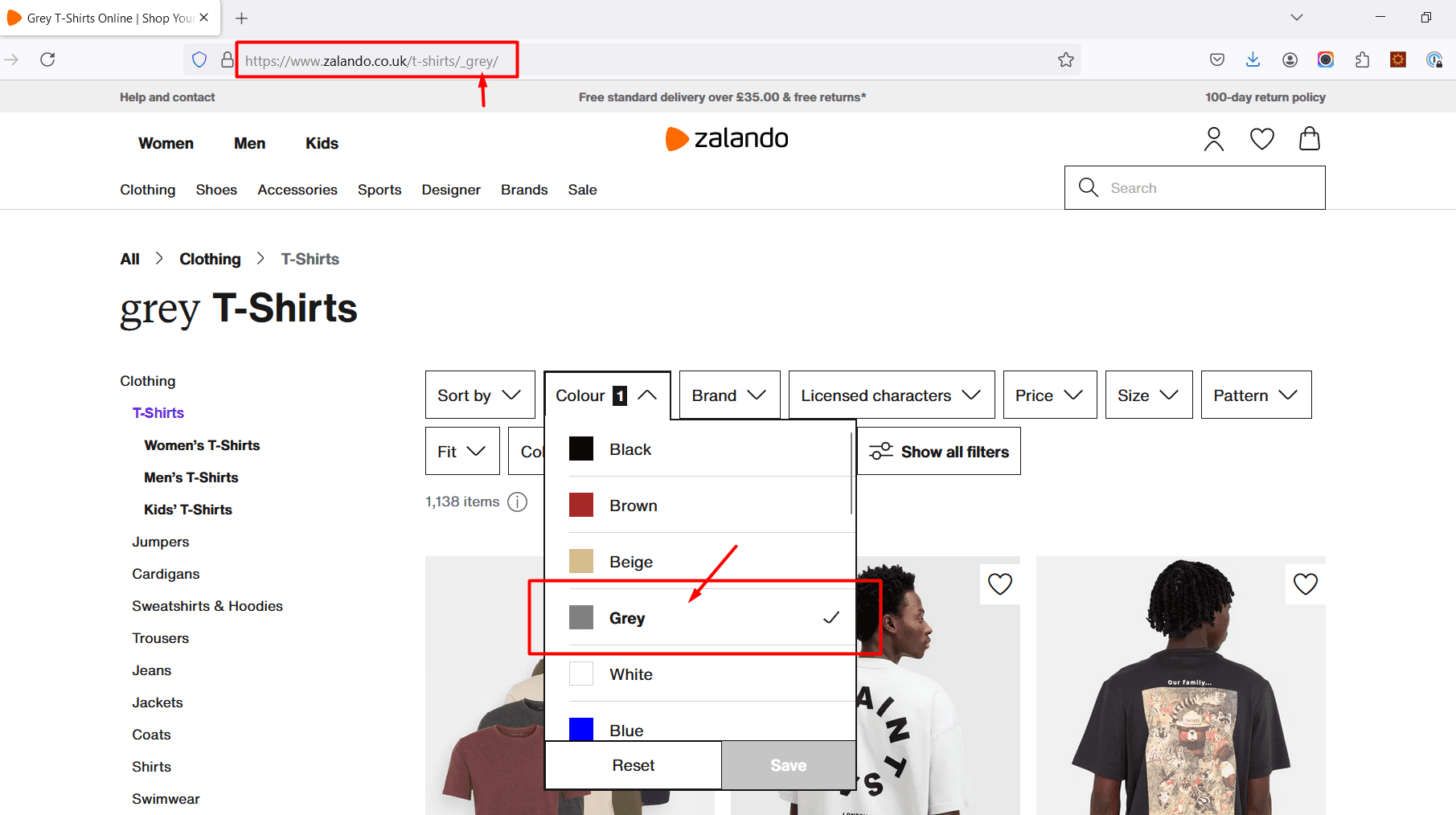
For example, if you want to target the keyword “gray t-shirts,” which is broad in context, it would not be ideal to focus on a single specific t-shirt. Instead, the keyword should be used on a page that lists all available gray t-shirts. This can be achieved by turning facets into user-friendly URLs and canonicalizing them.

For example, Zalando’s facets are great examples where it uses facets as collection pages.

Facets as collection pagesScreenshot from Zalando, August 2024

When you search in Google [gray t-shirts] you can see Zalando’s facet page ranking in the top #10.

Zalando's gray t-shirts page ranking in Google searchScreenshot from search for [gray t-shirts], Google, August 2024

If you try to add another filter over a gray t-shirt, let’s say the brand name ‘Adidas,’ you will get a new SEO-friendly URL with canonical meta tags and proper hreflangs for multiple languages in the source code

https://www.zalando.co.uk/t-shirts/adidas_grey/


However, if you decide to include a copy on those pages, make sure you change the H1 tag and copy accordingly to avoid keyword cannibalization.

Noindex

Noindex tags can be implemented to inform bots of which pages not to include in the index.

For example, if you wished to include a page for “gray t-shirt” in the index, but did not want pages with price filter in the index, then a noindex tag to the second result would exclude it.

For example, if you have price filters that have these URLs…

https://www.exampleshop.com/t-shirts/grey/?price_from=82

…And if you don’t want them to appear in the index, you can use the “noindex” meta robots tag in the tag:

This method tells search engines to “noindex” the page filtered by price.

Note that even if this approach removes pages from the index, there will still be crawl budget spent on them if search engine bots find those links and crawl these pages. For optimizing crawl budget, using robots.txt is the best approach.

Robots.txt

Disallowing facet search pages via robots.txt is the best way to manage crawl budget. To disallow pages with price parameters, e.g. ‘/?price=50_100’, you can use the following robots.txt rule.

Disallow: *price=*

This directive informs search engines not to crawl any URL that includes the ‘price=’ parameter, thus optimizing the crawl budget by excluding these pages.

However, if any outbound links pointing to any URL with that parameter in it existed, Google could still possibly index it. If the quality of those backlinks is high, you may consider using noindex and canonical approach to consolidate the link equity to a preferred URL.

Otherwise, you don’t need to worry about that, as Google confirmed they will drop over time.

Other Ways To Get The Most Out Of Faceted Navigation

  • Implement pagination with rel=”next” and rel=”prev” in order to group indexing properties from pages to a series as a whole.
  • Each page needs to link to children pages and parent. This can be done with breadcrumbs.
  • Only use canonical URLs in sitemaps in case you choose to canonicalize your facets search pages.
  • Include unique H1 tags and content in case of canonicalized facet URLs.
  • Facets should always be presented in a unified, logical manner (i.e., alphabetical order).
  • Implement AJAX for filtering to allow users to see results without reloading the page. However always change the URL after filtering so users can bookmark their searched pages and visit them later. Never implement AJAX without changing the URL.
  • Make sure faceted navigation is optimized for all devices, including mobile, through responsive design.

Conclusion

Although faceted navigation can be great for UX, it can cause a multitude of problems for SEO.

Duplicate content, wasted crawl budget, and diluted link equity can all cause severe problems on a site. However, you can fix those issues by applying one of the strategies discussed in this article.

It is crucial to carefully plan and implement facet navigation in order to avoid many issues down the line when it comes to faceted navigation.

More resources:


Featured Image: RSplaneta/Shutterstock

All screenshots taken by author

How To Set Up Your First Paid Search Campaign via @sejournal, @brookeosmundson

Paid search advertising is a powerful way to drive traffic and conversions for your brand.

However, setting up your first campaign can feel overwhelming if you’re new to the game. Even if you’re a PPC pro, it can be hard to keep up with all the changes in the interfaces, making it easy to miss key settings that can make or break performance.

In this guide, you’ll find the essential steps to set up a successful paid search campaign, ensuring you’re equipped with the knowledge to make informed decisions that lead to positive results.

Step 1: Define Your Conversions & Goals

Establishing clear goals and understanding what constitutes a conversion is the foundation of a successful paid search campaign.

This clarity ensures that every aspect of your campaign is aligned with your business objectives.

Identify Your Key Performance Indicators (KPIs)

In order to identify those KPIs, it’s crucial to understand the overarching business objectives. Begin by mapping out your broader business goals.

Ask yourself, “Am I aiming to increase sales, generate leads, boost website traffic, or enhance brand awareness?”

From there, you can define specific KPIs for each objective. Some examples include:

  • Sales: Number of transactions, revenue generated.
  • Leads: Number of form submissions, phone calls, appointments created.
  • Traffic: Click-through rate (CTR), number of sessions.
  • Brand Awareness: Impressions, reach.

Set Up Conversion Tracking

Knowing your goals is one thing, but being able to accurately measure them is a completely different ballgame.

Both Google and Microsoft Ads have dedicated conversion tags that can be added to your website for proper tracking.

Additionally, Google Analytics is a popular tool to track conversions.

Choose what conversion tags you need to add to your website and ensure they’re added to the proper pages.

In this example, we’ll use Google Ads.

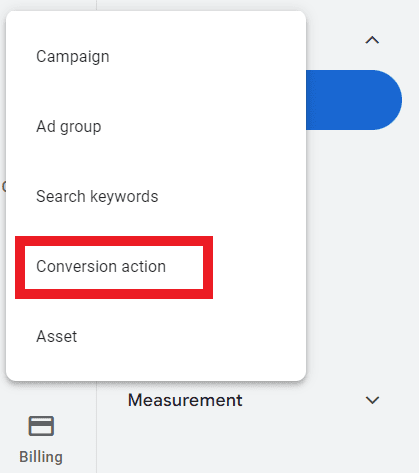
To set up conversion tracking using a Google Ads tag, click the “+” button on the left-hand side of Google Ads, then choose Conversion action.

Create a conversion action in Google AdsScreenshot from Google Ads, September 2024

You’ll choose from the following conversions to add:

  • Website.
  • App.
  • Phone calls.
  • Import (from Google Analytics, third party, etc.).

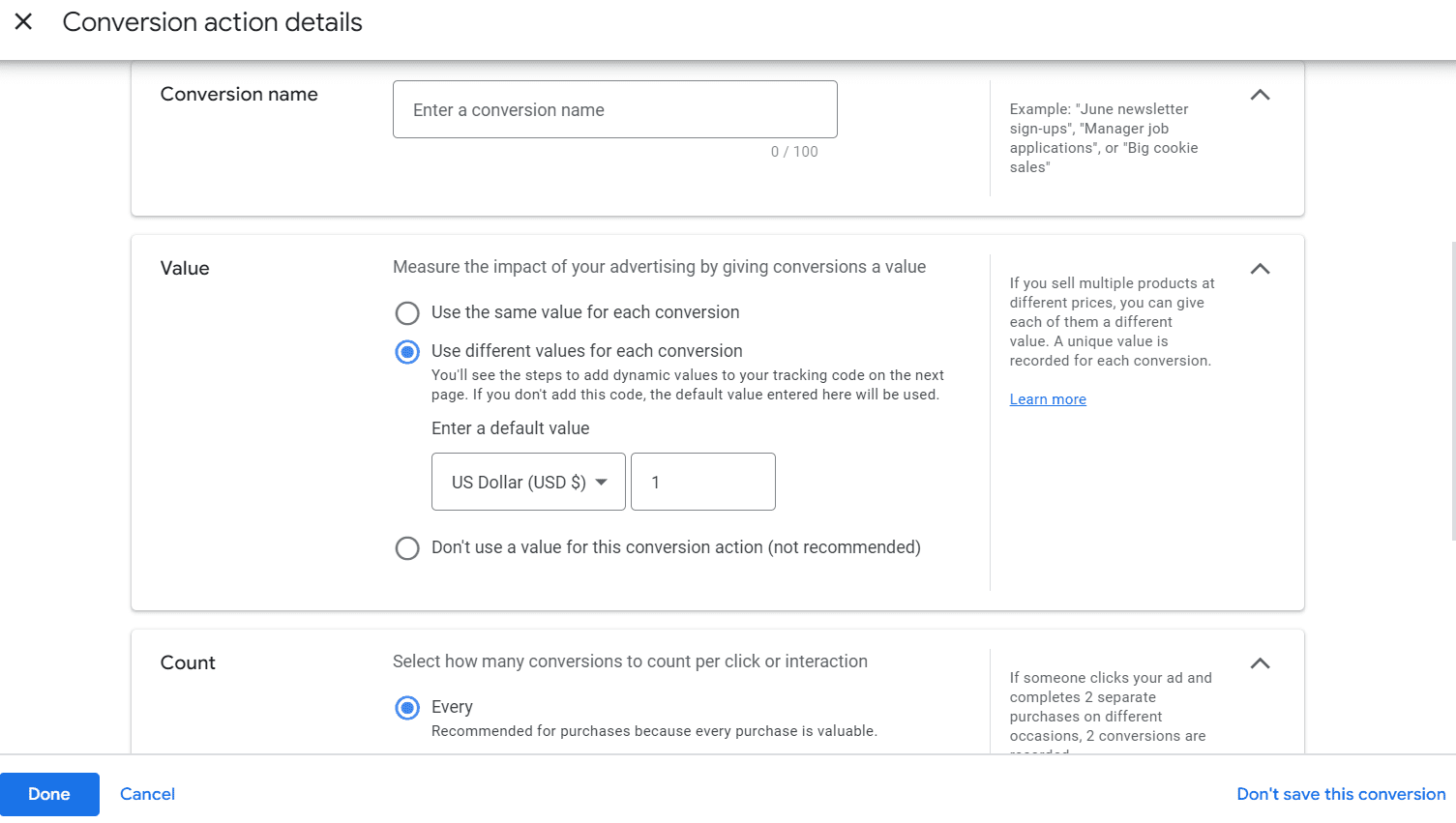
After choosing, Google Ads can scan your website to recommend conversions to add, or you have the option to create a conversion manually:

How to create a manual conversion action in Google Ads.Screenshot from Google Ads, September 2024

During this step, it’s essential to assign value(s) to conversions being created, as well as the proper attribution model that best represents your customer journey.

Most PPC campaigns are now using the data-driven model attribution, as opposed to a more traditional “last click” attribution model. Data-driven attribution is especially helpful for more top-of-funnel campaigns like YouTube or Demand Gen campaign types.

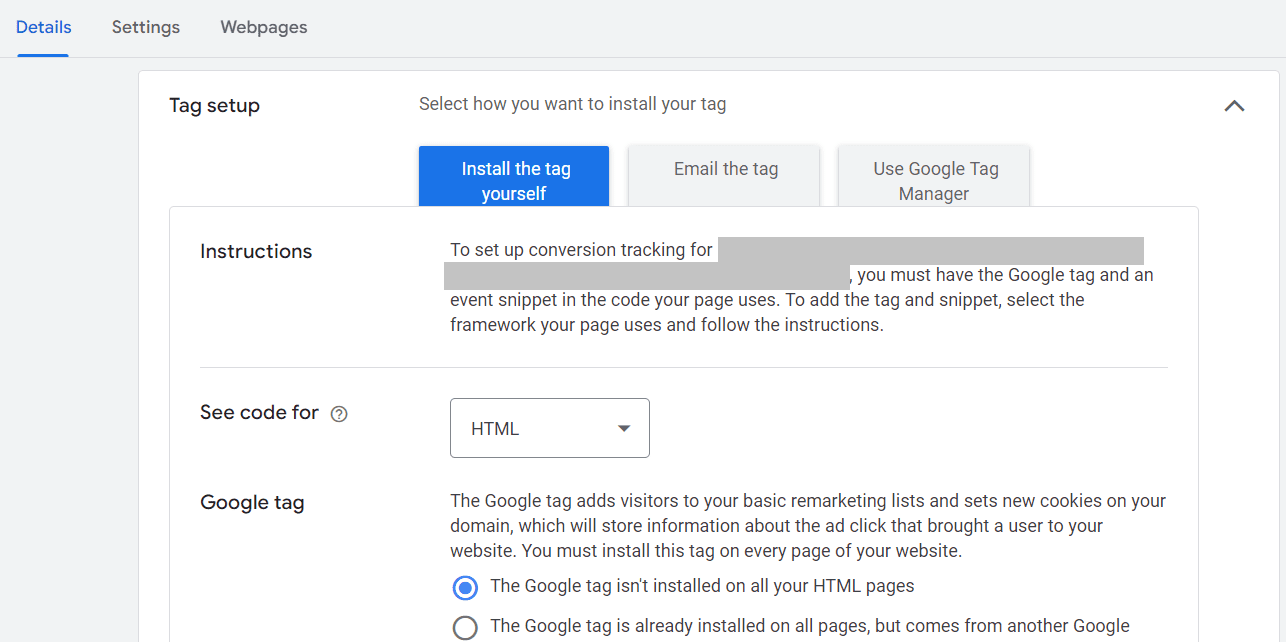
After the conversion has been created, Google provides the necessary code and instructions to add to the website.

Google Ads conversion code snippet exampleScreenshot from Google Ads, September 2024

Enable Auto-Tagging

Setting up auto-tagging from the get-go eliminates the need to append UTM parameters to each individual ad, saving you time during setup.

It also allows for seamless data import into Google Analytics, enabling detailed performance analysis within that platform.

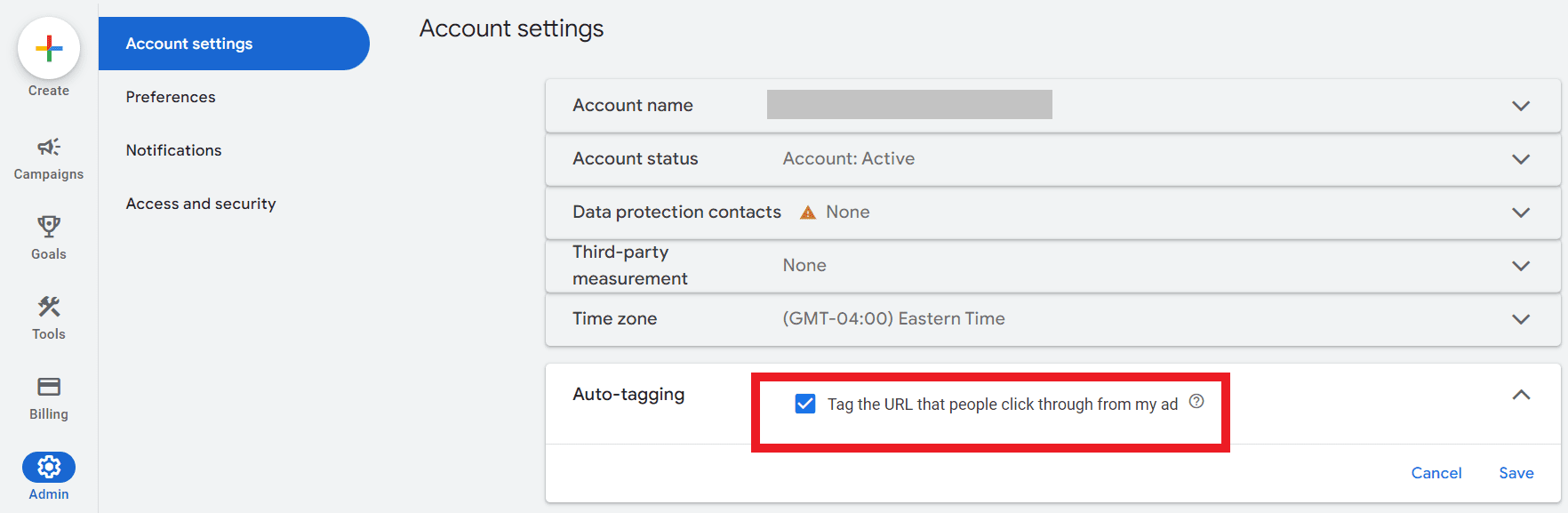
To enable auto-tagging at the account level, navigate to Admin > Account settings.

Find the box for auto-tagging and check the box to tag ad URLs, then click Save.

Turn on auto-tagging in Google Ads in the account settings.Screenshot from Google Ads, September 2024

Step 2: Link Any Relevant Accounts

Linking various accounts and tools enhances your campaign’s effectiveness by providing deeper insights and seamless data flow.

Now, this step may come sooner if you plan to import conversions from Google Analytics into Google Ads, as the accounts will have to be linked prior to importing conversions.

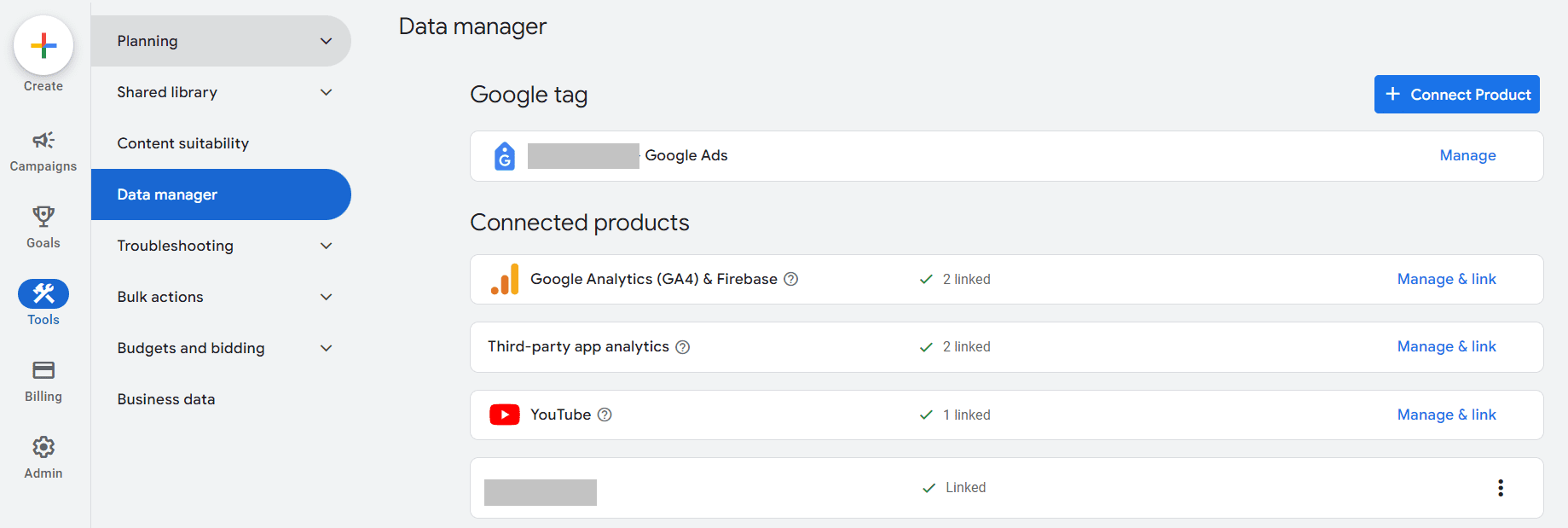
To link accounts, navigate to Tools > Data manager.

Where to find Linked Accounts in Google Ads.Screenshot from Google Ads, September 2024

You can link accounts such as:

  • Google Analytics.
  • YouTube channel(s).
  • Third-party analytics.
  • Search Console.
  • CRM tools (Salesforce, Zapier, etc.).
  • Ecommerce platforms (Shopify, WooCommerce, etc.).
  • Tag Manager.
  • And more.

Step 3: Conduct Keyword Research & Structure Your Campaign

Now that you’ve got the foundations of goals and conversions covered, it’s time to complete some keyword research.

A robust keyword strategy ensures your ads reach the right audience, driving qualified traffic to your site.

Start With A Seed List

Not sure where to start? Don’t sweat it!

Start by listing out fundamental terms related to your products or services. Consider what your customers would type into a search engine to find you.

Doing keyword research into search engines in real-time can help discover additional popular ways that potential customers are already searching, which can uncover more possibilities.

Additionally, use common language and phrases that customers use to ensure relevance.

Use Keyword Research Tools

The Google Ads platform has a free tool built right into it, so be sure to utilize it when planning your keyword strategy.

The Google Keyword Planner gives you access to items like:

  • Search volume data.
  • Competition levels.
  • Keyword suggestions.
  • Average CPC.

All these insights help not only determine what keywords to bid on but also help form the ideal budget needed to go after those coveted keywords.

When researching keywords, try to identify long-tail keywords (typically, these are phrases with more than three words). Long-tail keywords may have lower search volume but have higher intent and purchase considerations.

Lastly, there are many paid third-party tools that can offer additional keyword insights like:

These tools are particularly helpful in identifying what competitors are bidding on, as well as finding gaps or opportunities that they are missing or underserving.

Group Keywords Into Thematic Ad Groups

Once you have your core keywords identified, it’s time to group them together into tightly-knit ad groups.

The reason for organizing them tightly is to increase the ad relevance as much as possible. Each ad group should focus on a single theme or product category.

As a good rule of thumb, I typically use anywhere from five to 20 keywords per ad group.

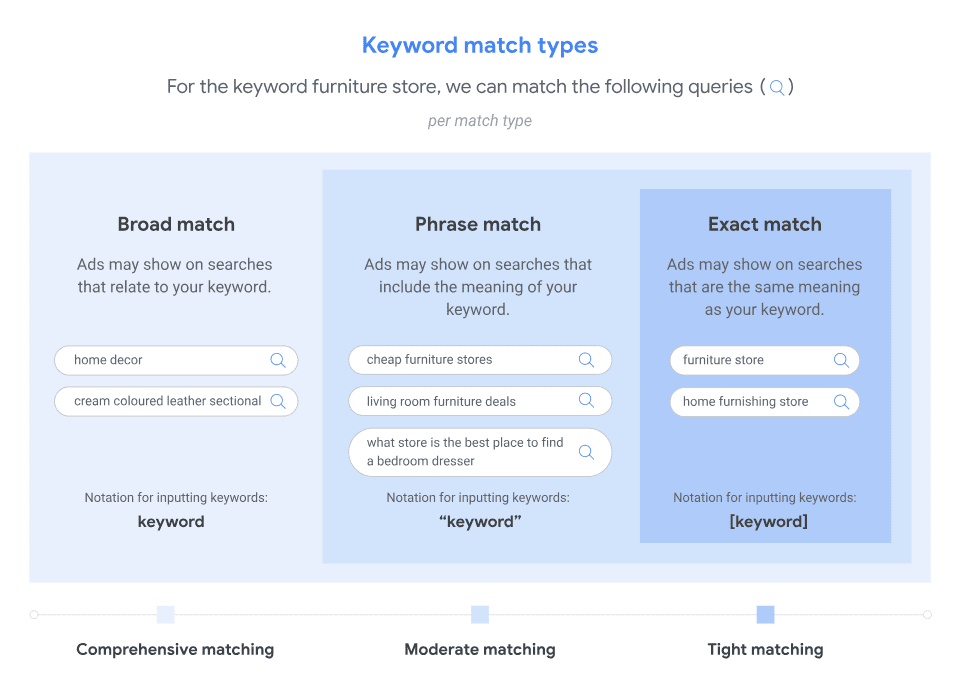
Another item to keep in mind is which match types to use for keyword bidding. See the example below from Google on the three keyword match types available:

  • Broad.
  • Phrase.
  • Exact.
The difference in keyword match types in Google AdsImage credit: support.google.com, September 2024

Create A Hierarchical Campaign Structure

Once your ad groups have been segmented, it’s time to build the campaign structure(s).

You’ll want to divide your account into campaigns based on broader categories, such as:

  • Product lines.
  • Geographic regions.
  • Marketing goals.
  • Search volume.

For example, you can create one campaign for “Running Shoes.” Within that campaign, you create three ad groups:

  • Men’s running shoes.
  • Women’s running shoes.
  • Trail running shoes.

Now, there may be times when you have a keyword with an abnormally higher search volume than other keywords within a particular category.

Depending on your budget, it may be worth segmenting those high-volume search term(s) into its own campaign solely for better budget optimization.

If a high-volume keyword is grouped into ad groups with low-volume keywords, it’s likely that most of the ads served will be for the high-volume keyword.

This then inhibits the other low-volume keywords from showing, and can wreak havoc on campaign performance.

Utilize Negative Keywords

Just as the keywords you bid on are crucial to success, so are the negative keywords you put into place.

Negative keywords can and should be added and maintained as ongoing optimization of any paid search campaign strategy.

The main benefit of negative keywords is the ability to exclude irrelevant traffic. They prevent your ads from showing on irrelevant searches, saving budget and improving CTR over time.

Negative keywords can be added at the ad group, campaign, or account level.

Step 4: Configure Campaign Settings

Now that you’ve got the campaign structure ready to go, it’s time to start building and configuring the campaign settings.

Campaign settings are crucial to get right in order to optimize performance towards your goals.

There’s something to be said with the phrase, “The success is in the settings.” And that certainly applies here!

Choose The Right Bidding Strategy

You’ll have the option to choose a manual cost-per-click (CPC) or an automated bid strategy. Below is a quick rundown of the different types of bid strategies.

  • Manual CPC: Allows you to set bids for individual keywords, giving you maximum control. Suitable for those who prefer more hands-on management.
  • Target Return on Ad Spend (ROAS): Optimizes bids to maximize revenue based on a target ROAS you set at the campaign level.
  • Target Cost Per Acquisition (CPA): Optimizes bids to achieve conversions at the target CPA you set at the campaign level.
  • Maximize Conversions: Sets bids to help get the most conversions for your budget.

Set Your Daily Budget Accordingly

Review your monthly paid search budget and calculate how much you can spend per day throughout the month.

Keep in mind that some months should be different to account for seasonality, market fluctuations, etc.

Additionally, be sure to allocate campaign budgets based on goals and priorities to maximize your return on investment.

You’ll also want to keep in mind the bid strategy selected.

For example, say you set a campaign bid strategy with a Target CPA of $30. You then go on to set your campaign daily budget of $50.

That $50 daily budget would likely not be enough to support the Target CPA of $30, because that would mean you’d get a maximum of two conversions per day, if that.

For bid strategies that require a higher CPA or higher ROAS, be sure to supplement those bid strategies with higher daily budgets to learn and optimize from the beginning.

Double-Check Location Settings

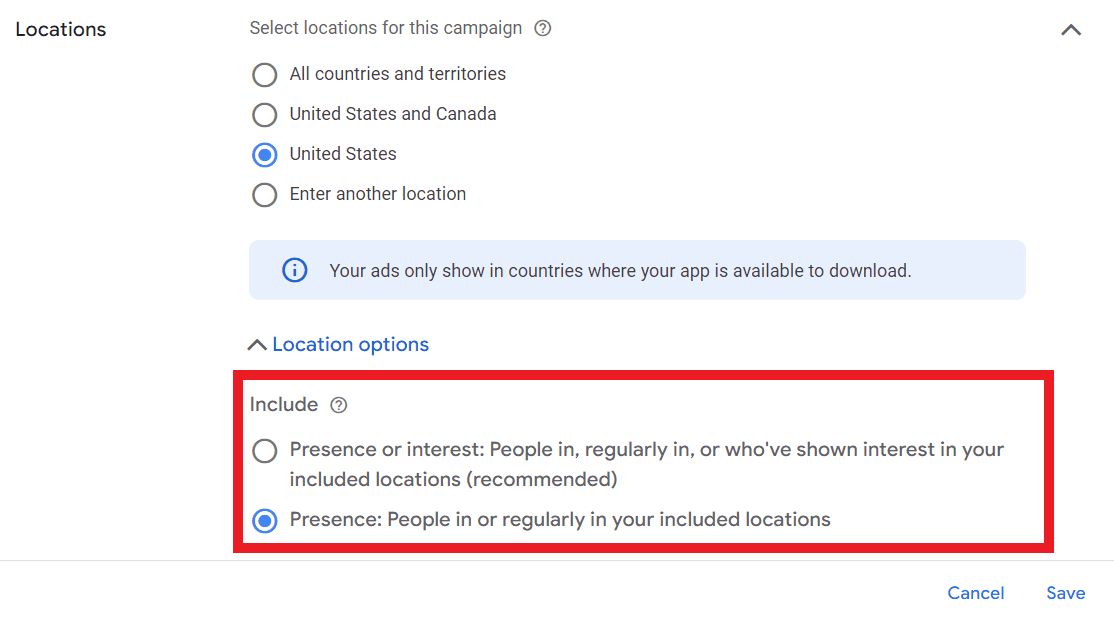
When choosing locations to target, be sure to look at the advanced settings to understand how you’re reaching those users.

For example, if you choose to target the United States, it’s not enough to enter “United States” and save it.

There are two options for location targeting that many fail to find:

  • Presence or interest: People in, regularly in, or who’ve shown interest in your included locations.
  • Presence: People in or regularly in your included locations.
Location settings in Google AdsScreenshot from Google Ads, September 2024

Google Ads defaults to the “presence or interest” setting, which I’ve seen time and time again where ads end up showing outside of the United States, in this example.

Again, the success is in the settings.

There are more settings to keep in mind when setting up your first paid search campaign, including:

  • Ad scheduling.
  • Audience targeting.
  • Device targeting.
  • And more.

Step 5: Write Compelling Ad Copy

Your ad copy is the gateway to attracting qualified customers.

Crafting the perfect mix of persuasion and relevancy into your ad copy can significantly impact your campaign’s success.

Create Attention-Grabbing Headlines

The headline is the most prominent part of the ad copy design on the search engine results page. Since each headline has a maximum character limit of 35 characters, it is important to make them count.

With Responsive Search Ads, you can create up to 15 different headlines, and Google will test different variations of them depending on the user, their search query, and multiple other factors to get that mix right.

Below are some tips for captivating a user’s attention:

  • Use Primary Keywords: Include your main keywords in the headline to improve relevance and Quality Score.
  • Highlight Unique Selling Points (USPs): Showcase what sets your product or service apart, such as free shipping, 24/7 support, or a unique feature.
  • Incorporate Numbers and Statistics: Use numbers to catch attention, like “50% Off” or “Join 10,000+ Satisfied Customers.”
  • Include a Strong Call-to-Action (CTA): Encourage immediate action with phrases like “Buy Now,” “Get a Free Quote,” or “Sign Up Today.”

Write Persuasive Descriptions

Description lines should complement the headline statements to create one cohesive ad.

Typically, two description lines are shown within any given ad. Each description line has a 90-character limit.

When creating a Responsive Search Ad, you can create four different descriptions, and then the algorithm will show variations of copy tailored to each individual user.

  • Expand on Headlines: Provide additional details that complement your headline and reinforce your message.
  • Address Pain Points: Highlight how your product or service solves specific problems your audience faces.
  • Use Emotional Triggers: Appeal to emotions by emphasizing benefits like peace of mind, convenience, or excitement.
  • Incorporate Keywords Naturally: Ensure the description flows naturally while including relevant keywords to maintain relevance.

Make Use Of Ad Assets (Formerly Extensions)

Because of the limited character count in ads, be sure to take advantage of the myriad of ad assets available as complements to headlines and descriptions.

Ad assets help provide the user with additional information about the brand, such as phone numbers to call, highlighting additional benefits, special offers, and more.

Some of the main ad assets used include:

  • Sitelinks.
  • Callouts.
  • Structured Snippets.
  • Calls.
  • And more.

You can find a full list of available ad assets in Google Ads here.

Step 6: Ensure An Effective Landing Page Design

You’ve spent all this time crafting your paid search campaign strategy, down to the keyword and ad copy level.

Don’t stop there!

There’s one final step to think about before launching your first paid search campaign: The landing page.

Your landing page is where users land after clicking your ad. An optimized landing page is critical for converting traffic into valuable conversions and revenue.

Ensure Relevancy And Consistency

The content and message of your landing page should directly correspond to your ad copy. If your ad promotes a specific product or offer, the landing page should focus on that same product or offer.

Use similar language, fonts, and imagery on your landing page as in your ads to create a cohesive user experience.

Optimize For User Experience (UX)

If a user lands on a page and the promise of the ad is not delivered on that page, they will likely leave.

Having misalignment between ad copy and the landing page is one of the quickest ways to waste those precious advertising dollars.

When looking to create a user-friendly landing page, consider the following:

  • Mobile-Friendly Design: Ensure your landing page is responsive and looks great on all devices, particularly mobile, as a significant portion of traffic comes from mobile users.
  • Fast Loading Speed: Optimize images, leverage browser caching, and minimize code to ensure your landing page loads quickly. Slow pages can lead to high bounce rates.
  • Clear and Compelling Headline: Just like your ad, your landing page should have a strong headline that immediately communicates the value proposition.
  • Concise and Persuasive Content: Provide clear, concise information that guides users toward the desired action without overwhelming them with unnecessary details.
  • Prominent Call-to-Action (CTA): Place your CTA above the fold and make it stand out with contrasting colors and actionable language. Ensure it’s easy to find and click.

Step 7: Launch Your Campaign

Once you’ve thoroughly completed these six steps, it’s time to launch your campaign!

But remember: Paid search campaigns are not a “set and forget” strategy. They must be continuously monitored and optimized to maximize performance and identify any shifts in strategy.

Create a regular optimization schedule to stay on top of any changes. This could look like:

  • Weekly Reviews: Conduct weekly performance reviews to identify trends, spot issues, and make incremental improvements.
  • Monthly Strategy Sessions: Hold monthly strategy sessions to assess overall campaign performance, adjust goals, and implement larger optimizations.
  • Quarterly Assessments: Perform comprehensive quarterly assessments to evaluate long-term trends, budget allocations, and strategic shifts.

When it comes to optimizing your paid search campaign, make sure you’re optimizing based on data. This can include looking at:

  • Pause Underperforming Keywords: Identify and pause keywords that are not driving conversions or are too costly.
  • Increase Bids on High-Performing Keywords: Allocate more budget to keywords that are generating conversions at a favorable cost.
  • Refine Ad Copy: Continuously test and refine ad copy based on performance data to enhance relevance and engagement.
  • Enhance Landing Pages: Use insights from user behavior on landing pages to make data-driven improvements that boost conversion rates.

Final Thoughts

Setting up your first paid search campaign involves multiple detailed steps, each contributing to the overall effectiveness and success of your advertising efforts.

By carefully defining your goals, linking relevant accounts, conducting thorough keyword research, configuring precise campaign settings, crafting compelling ad copy, and optimizing your landing pages, you lay a strong foundation for your campaign.

Remember, the key to a successful paid search campaign is not just the initial setup but also ongoing monitoring, testing, and optimization.

Embrace a mindset of continuous improvement, leverage data-driven insights, and stay adaptable to maximize your campaign’s potential.

More resources: 


Featured Image: vladwel/Shutterstock

New Ecommerce Tools: September 26, 2024

We publish a rundown each week of new products from companies offering services to ecommerce merchants. This installment includes updates on AI assistants, video ads, website builders, multichannel fulfillment, composable commerce, B2B financing, and cross-border and last-mile logistics.

Got an ecommerce product release? Email releases@practicalecommerce.com.

New Tools for Merchants

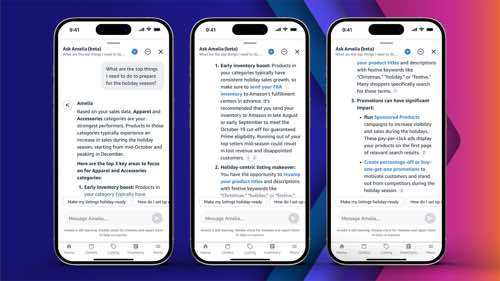
Amazon launches a generative AI-based selling assistant. Amazon has introduced in beta a generative AI-powered personal assistant for sellers, codenamed Project Amelia. Project Amelia can respond to sellers’ questions and offer fast access to critical business metrics and reports. According to Amazon, Amelia will provide a more personalized experience and increasingly gain the ability to converse with sellers, anticipate their needs, take actions, and resolve issues on their behalf.

Web page for Amazon's Amelia

Amazon’s Project Amelia

ShipStation integrates with Google Merchant Center to enhance delivery predictions. ShipStation, a shipping platform with over 400 integrations and partnerships, has announced an integration to Google Merchant Center, utilizing Google’s Content API for Shopping. The feature enables ShipStation customers to offer precise, location-specific delivery predictions on Google at the moment of purchase. ShipStation synchronizes order tracking history with Google, including key timestamps and tracking details. Google’s machine learning models analyze this data to predict accurate delivery times for shoppers.

Saltbox unveils a shipping platform for emerging ecommerce businesses. Saltbox, a flexible warehousing and logistics solutions provider, has launched Parsel, a shipping platform for emerging and scaling ecommerce businesses. Parsel features shipping savings (up to $2 per shipment), automated fulfillment, packing suggestions, and access to exclusive carriers with special rates, all designed to help smaller ecommerce businesses ship faster and more affordably. ​​Parsel integrates with major ecommerce platforms and is designed to work alongside Saltbox’s workspaces and logistics services.

FedEx launches Fdx, a commerce platform for customers. FedEx has announced that Fdx.com is live and available to customers in the U.S. Fdx is a data-driven commerce platform that leverages FedEx network insights to connect the customer journey. Fdx can be customized and scaled based on a company’s needs and brand. Core features include predictive delivery estimates, advanced modeling from CO2 emissions data, branded order tracking, and a centralized branded platform to generate labels, track return status, and view insights.

Home page of Fdx

Fdx

HubSpot launches embedded AI for marketing growth. HubSpot has launched Breeze, its embedded AI to power the marketing platform. Breeze includes Copilot, a chat-based AI companion offering personalized insights and recommendations about leads, customers, and engagements. Copilot can create content, research companies, and summarize tickets. Breeze also includes four agents in beta — Content Agent, Social Media Agent, Prospecting Agent, and Customer Agent — to provide marketing, sales, and service teams with AI experts to get results fast.

Amazon Ads launches an AI video generator. Amazon Ads has launched a tool using generative AI technology to create video ads. The generator uses a single product image to curate custom AI-generated videos tailored to a product’s selling proposition and features. Amazon also introduced live image as part of video generator to create short, animated campaign images. Both video generator and live image are available in beta to select U.S. advertisers.

DreamHost launches an AI-powered website builder for WordPress. DreamHost, a provider of web hosting and managed WordPress services, has released DreamHost Liftoff, an AI website builder to create customized WordPress websites in seconds by answering a few questions. Using AI, users can generate and edit website copy and images directly within the WordPress editor. Liftoff includes WordPress-native components for a faster customization experience. Liftoff is available now to all DreamHost customers at no additional cost.

Home page of Dreamhost

DreamHost

Amazon’s Buy with Prime and Multi-Channel Fulfillment announce enhancements. Amazon Buy with Prime merchants can now launch Amazon Demand-Side Platform campaigns to drive traffic to their ecommerce websites. Buy with Prime merchants can display the Prime brand and real-time delivery estimates in TikTok ads. Also, Prime has expanded payment options with PayPal and enhanced integration with Shopify Checkout. Amazon says its Multi-Channel Fulfillment is speeding up standard delivery, providing real-time delivery estimates, and integrating estimated delivery dates with ads on Google Shopping and TikTok.

Checkout.com partners with Slope to enhance payments for U.S. enterprise merchants. Checkout.com, a digital payments provider, and Slope, a B2B financing platform for enterprise companies, have announced a strategic partnership to boost payment performance for U.S. merchants. Slope provides short-term financing and simple payment options for the B2B sector. Slope selected Checkout.com as its strategic partner. ‍Slope recently announced a $65 million strategic round to expand its order-to-cash automation platform for enterprise clients.

Commercetools launches composable products on AWS marketplace. Commercetools, a provider of composable commerce solutions, has announced that its composable commerce for B2C and B2B products is now available on the Amazon Web Services marketplace. According to Commercetools, customers can quickly find, buy, and deploy software directly from their AWS account, reducing procurement complexity and accelerating time to market. Additional benefits to Commercetools customers include consolidated billing with AWS and enhanced security and compliance through the AWS platform.

ePost Global launches Canada eDGE to streamline ecommerce deliveries. ePost Global, a direct-to-consumer international shipping provider, has launched Canada eDGE to streamline domestic and cross-border ecommerce in that country. Canada eDGE leverages ePost Global’s network of last-mile delivery providers, including postal and postal-alternative carriers, and features complete coverage across Canada, cost-effective shipping solutions, tax advantages for local warehousing and fulfillment, and simplified operations. The network utilizes ePost’s proprietary routing logic and ePost Global’s strategically located East Coast (Toronto) and West Coast (Vancouver) hubs.

Home page of ePost Global

ePost Global

Squarespace Update Strengthens Its Robust Website Builder via @sejournal, @martinibuster

Squarespace announced updates to their Blueprint AI, automating website creation, and enhancing their tool suite—further strengthening their website building platform for small and medium-sized businesses.

Squarespace

Squarespace is known for their easy to use drag and drop interface that allows user to select a template, modify it with a few clicks and to drag and drop web page elements in order to create a professional looking website. Over 2% of all websites are reported to use Squarespace, showing that it’s a popular choice website building platform for small to medium size businesses.

Blueprint AI

Blueprint AI, launched in late 2023, is Squarespace’s proprietary AI website builder that helps users create a website by answering questions related to what kind of site they’re trying to create. The AI then creates a template based on the answers to the questions. Users can then use Squarespace’s full suite of editing features to further modify their website then modify to suit their needs and create a true custom website.

Other Improvements

Squarespace also announced other improvements that help users switch web page layouts and apply changes, a one-click style changer that instantly creates new style combinations, and a new hub for managing the website brand identify.

The announcement explained:

Layout Switcher:
An adaptive layout menu that enables faster website design experimentation—offering a set of flexible compositions with one’s content automatically embedded, then applied instantly to a page.

Site Themes:
One-click styling combinations that make it easier to preview and apply a new website aesthetic—via handpicked font pairings, color palettes, button styles and more, with recommendations aligned to a customer’s brand personality.

Brand Identity Management:
A central hub for crafting and storing one’s unique brand identity that guides Squarespace’s AI writer to instantly generate first draft, on-brand copy populated across key surface areas, including website text, content descriptions, and client documents, among others.”

Takeaways

Squarespace has about 20 years experience helping businesses easily build websites and start doing business online. This announcement shows that Squarespace continues to improve the already excellent platform that gives businesses the chance to effectively compete online.

Read Squarespace’s announcement:

Squarespace Refresh 2024: Introducing a New Era for Entrepreneurs

Featured Image by Shutterstock/IB Photography