Gentleman’s Gazette Thrives on YouTube

Raphael Schneider launched Gentleman’s Gazette in 2010 as a blog for men’s style and apparel. He added his own product line in 2013, selling menswear and accessories.

He emphasizes quality in clothing and content. His YouTube channel, launched in 2015, remains essential for traffic and conversions, owing, he says, to the quality of the videos. “Ten years from now, someone can still benefit from a video we produce today,” he told me.

Raphael first appeared on the podcast in 2018. In this our latest conversation, he addressed the company’s origins, Google search, and, yes, his focus on YouTube.

Our entire audio is embedded below. The transcript is edited for clarity and style.

Eric Bandholz: Tell us about your journey to Gentleman’s Gazette.

Raphael Schneider:  As a teenager in Germany, I earned money selling items on eBay. That’s when I discovered cufflinks. I learned they required French cuff shirts and jackets, which sparked my interest in classic men’s clothing.

I went to law school thinking I could dress well every day, but I realized I hated law, so I moved to the U.S. in 2009 through an exchange program and married my girlfriend, whom I had met earlier as a student. The job market was tough, especially for foreigners, so I turned to clothing and style, my passions.

Blogging was booming then. I launched Gentleman’s Gazette in 2010 to publish articles on men’s style. Readers kept asking where I got my clothes. That led me to create Fort Belvedere, our menswear brand, in 2013. I had no product development experience, and it took time and money to get going.

Early on, I wrongly assumed that building an audience produced easy sales. But I’ve learned a lot, and I love the creativity and independence of entrepreneurship.

Bandholz: Your YouTube channel is impressive.

Schneider: Early on, our main traffic generator was Google organic search. It was our bread and butter for a while, generating around 1.5 million page views annually. Traffic ebbed, so we explored other options.

I dabbled in video as early as 2012, but we fully committed to YouTube in 2015. Being early helped, and video is a strong medium for clothing and style. You can show fabric drape, fit, and personality, which articles can’t always convey.

We chose a personality-driven approach, featuring different hosts to appeal to a broader audience. Some may like me, others might not, so variety helps. YouTube’s landscape has changed. Now there are shorts, algorithms, and more creators, but we adapt. We’re experimenting with travel-style content, allowing viewers to experience places vicariously and inspire their journeys.

Our content isn’t just “look at this pocket square.” It’s about educating and connecting with a niche audience that values classic menswear. While most people wear leisure clothes and aren’t interested in cufflinks, we serve those who are. We continue to produce foundational style content while evolving to keep advanced users engaged.

So, yes, YouTube is an essential marketing tool for us.

Bandholz: Does investing in higher-production travel videos pay off?

Schneider: Last year, we visited London to test travel content. Not everything new pays off immediately, but we track performance carefully — click-throughs via YouTube Shopping, affiliate links in descriptions, and customer feedback. While it’s hard to tie direct sales to a single video, the response from viewers has been positive.

Some videos generate more revenue than others; we analyze patterns and adjust. But we’ve realized it’s about having a range of content: top-of-funnel to raise awareness, mid-funnel like product guides, and bottom-funnel content for ready-to-buy customers, like a deep dive into pocket squares. That mix still works well for us.

Attribution is tricky. A lot gets credited to organic Google search, but we know it’s multi-touch. Someone might discover us through YouTube on mobile, but check out later on desktop via branded search.

With AI and easier video creation on the rise, content production will become cheaper, but we still see value in YouTube. Competing on Instagram is tough. There are millions of creators.

The field is smaller on YouTube, especially with location-specific travel content. Few people can travel to Vienna, speak the language, and do in-depth style content. That’s where we want to stand out — a big fish in a small pond.

Bandholz: How is AI affecting your blog traffic and strategy?

Schneider: Our focus remains on original YouTube content, though we may test YouTube ads since we have an in-house production team. AI is changing things. I’ve always believed in creating timeless value — we make our products and content to last. Ten years from now, someone can still benefit from a video we produce today.

In the past, Google reliably sent traffic if you made comprehensive content. But now, AI tools give people instant answers. They don’t want to click through multiple sites to find their needs. We’ve noticed Google is leaning more on AI Overviews and keeping users on their platform, which doesn’t help small creators like us.

We’re seeing our brand in those AI summaries, which recognize Gentleman’s Gazette as reputable, but we’ve yet to see significant traffic or conversions.

So it’s a major shift. Big players are gaming the system and flooding the web with AI content from old domains. But I still think there’s a market for real, human passion. If you’re into photography, do you want advice from AI or from someone who lives it?

We are using AI in practical ways. For example, I created a voice clone for product videos. For a tie that comes in 14 colors, I recorded just once, and AI handles the rest. Tools like that save time without sacrificing personality. I think that’s the key.

People still connect with people. We’re continuing to invest in that, stay curious, and adapt. The danger isn’t change — it’s resisting change.

Bandholz:  Is organic search traffic from Google still viable for premium-priced products?

Schneider: I’ve spoken to several search-engine experts, and they all say we’ll struggle to rank for high-purchase-intent keywords if you’re selling premium products. Conversion rates are lower for expensive items, so Google favors cheaper alternatives since it prioritizes click-throughs.

That said, we still get organic search traffic. We analyze landing pages and reverse-engineer what people might be searching for.

If someone searches for a niche item, such as a specific silk necktie, we can still rank because few apparel merchants offer those products. The key is to clarify that a premium product has specific features and a cheaper item does not.

Ranking for high-intent short-tail keywords is nearly impossible, but long-tail SEO is still viable. For example, “unlined driving gloves in lamb nappa” is specific enough to rank and reach the right buyer.

Ultimately, though, it’s more about brand affinity, like with Beardbrand, your company. People come for the lifestyle, the philosophy — they connect to the identity. That’s where premium brands still have power.

Bandholz: Where can people buy your stuff?

Schneider: Our site is GentlemansGazette.com. Follow us on YouTube, Instagram, and Facebook. I’m on LinkedIn.

Do More With Less: How To Build An AI Search Strategy With Limited Resources [Webinar] via @sejournal, @hethr_campbell

Feeling overwhelmed by AI in search?

Working with limited time, tools, or a small team?

You’re not alone. As search engines evolve, it’s becoming harder to keep up, especially if your resources are stretched thin.

Join us for “Do More With Less: How To Build an AI Search Strategy With Limited Resources,” a practical webinar designed to help small teams create a strong, AI-powered SEO strategy that actually works.

Why This Webinar Is Worth Your Time:

You don’t need a big budget or a large team to get results. You just need a smart plan and the right tools to help you stay ahead.

In this session, you’ll learn how to:
✅ Build a step-by-step SEO roadmap that uses AI effectively.
✅ Prioritize what matters through smarter audits and tools
✅ Keep up with the latest changes in AI-powered search

Presented by Vincent Moreau, SEO Consultant at Botify, this session will give you practical steps you can use right away.

What Makes This Session Different:

We’re focused on real solutions for real constraints. If you’re looking to grow with limited resources, this is your chance to learn how.

Let’s simplify your strategy and make AI work for your SEO goals.

Can’t make it live? No problem. Sign up anyway, and we’ll send you the full recording.

Why Meaning Matters Most In Branding (And How To Build It)

Building a genuine emotional connection is crucial for forming a meaningful bond with your audience and transforming them into your most loyal customers.

In this episode, Katie Morton, editor-in-chief of Search Engine Journal, and Mordy Oberstein, founder of Unify Brand Marketing, explore why meaning is the foundation of successful brand marketing.

They break down how branding compounds over time, why emotional connections matter, and how to differentiate between surface-level and deep emotional engagement.

You can watch the full video here and find the full transcript below:

Why Meaning Matters Most In Branding – And How To Build It [Full Transcript]

Katie: Hey, everybody! It’s Katie and Mordy, and we’re here to talk about brands.

I’m Katie Morton, editor-in-chief of Search Engine Journal, and this is Mordy Oberstein, who is the founder of Unify Brand Marketing. He’s an expert on branding.

I’m so excited to be doing this series with Mordy. I know that I’m going to learn a lot, and so will you.

Mordy: I’m stoked about this. I see that; I have pure self-interest. I see a lot of performance marketing and brand marketing fusing together.

People on the performance side are talking about brand, which I’m excited to show them. Like, okay, here’s exactly why: If you’re on the performance side, you should be talking about brand.

Katie: Yeah, well, especially these days, right? So, today, we’re going to talk about – well, Mordy’s going to teach us a lot about why meaning matters most in branding and how to build it. Tell me about “meaning in brand.”

Mordy: Meaning matters most because meaning is absolutely everything for brand.

Brand is fundamentally about connection – everything starts from there. And that’s kind of why branding – it’s compounding over time, which is a little bit different than, say, performance marketing, where you’re just running PPC ads.

Brand compounds over time. Just like you don’t get married after one date (unless, I guess, you’re in [Las] Vegas) – you don’t form a bond with an audience after one activity, one asset, or one moment. Connection compounds.

It’s also very associative. Think about Nike back in the day, building up associations off the back of Michael Jordan – literally off the back of Michael Jordan – and reverse, but at the basis of all of that is meaning.

Fundamentally – I know this might sound a little bit weird – we as human beings are creatures of meaning, not utility.

Everything we do, in a weird way, is a search for meaning. The search for meaning is the search for being, the search for existing.

Wow. I know we just got super existential like two minutes in, but that’s actually good because branding is super existential. And that’s why the glue that holds the connection together is meaning. And I’ll prove it to you.

The More Meaningful You Are As a Brand, The Deeper The Connection

So, imagine you had a friend – which, for me, is hard to imagine – but every week, you and this friend went to a baseball game.

Every day (that would be impossible because they don’t play baseball every day, and they stop playing for five months), but imagine they played all year round, and you went every single day for five years.

Or, let’s say you played Dungeons & Dragons in your mom’s basement (whatever floats your boat) once a week for five years. That’s got to be a good friend to keep doing that for five years together.

But that’s nowhere near as close as you are to, let’s say, your mom – assuming that you are close. Conceptually, even if you hardly ever see your mom, you’re still far closer to her. Why?

Because your friend, in this case, helps you relax, have a good time, and connect over common interests.

Your mom, though – your mom helped shape who you are. She provided for you. She gave you life. All of that deeper stuff. And that’s far more meaningful than what your friend provides you with in this particular case.

The more meaningful, the more core to actual existence, the more connection is possible. The more core you as a brand are to your audience’s actual existence, the stronger the bond.

The more meaningful your brand is, i.e., the more it speaks to things that are core and integral to your audience and their very being, the more connection you’re going to have with them.

So, there is no brand without meaning because there’s no genuine connection without meaning. Meaning has to be at the core of your brand strategy.

And I will tell you, 99.9999% of the time, it is not.

The net outcome of that is you spend tons of time either trying to build up a brand that doesn’t work or trying to elicit a reaction, whether it be a payment, social media engagement, or whatever it is, from your audience.

It’s like moving a mountain. If you want your performance not to be like moving mountains, you need to have a brand that has meaning. If you want to push user activations, you first have to connect in a meaningful way.

Because what you’re basically asking a user to do when you ask them to convert or whatever it is, you’re basically asking them to give you a loan for, I don’t know, $500, whatever you’re charging for your product.

You’re asking them to do it for a total stranger. When was the last time you opened your wallet for a total stranger? I mean, you should – it’s good to be generous – but this is business, not charity.

I know, but I do want to say there are practical things to do here.

I know that was very conceptual, but I did that on purpose because brands should be conceptual. I didn’t want to start with the pragmatics of it, but there are actual practical things you could be doing.

So, just to run through a few of them:

Takeaway 1: Think Micro Level

One thing that helps me is to think about it at the micro level.

When you start talking about connection, audience, creating relationships, and getting people to be motivated, when you keep it at the micro level, like between you and a friend or you and another person, it’s really easy to see how that works.

But for some reason, when we zoom out to brands and companies, we start to lose that basic sense of reality, and those things become difficult. So, fine – keep it at the micro level.

What works for actual relationships, identity, and resonance between two people also works at the macro level. Extrapolate from there.

Takeaway 2: Differentiate Between Surface-Level Emotions And Core, Integral Emotions

The second thing – and I probably should have started with this because it’s more important – is to differentiate between surface-level emotions and core, integral emotions.

You have to be honest about that.

For example, fun is a very surface-level emotion, whereas things like connection or overcoming struggle are much deeper and more meaningful.

So, you need to be honest with yourself and understand what kind of emotional targeting your brand identity actually goes after. If it’s surface-level, don’t do that.

To help you do that, you can use a rubric to break down those emotional experiences.

If you’re trying to elicit an emotional reaction from an audience, targeting an emotional state of mind rather, with an audience, ask yourself: Is the emotional state you’re targeting surface-level? Neutral? Mildly deep? Does it have significant resonance? Is it deep or dripping with meaning? Or is it existential – does it produce a visceral reaction?

Like when you’re watching a movie – mine is Field of Dreams. When the dad and the kid play catch, you just can’t help yourself from crying.

If your brand can produce that kind of emotional connection, you’ve hit the mark.

Takeaway 3: Lean Into What’s Meaningful To You

The third thing is to lean into what’s meaningful to you.

It’s a two-way street. You can’t just target the audience – it’s a relationship.

So, what’s meaningful to you matters also. You can’t fake it till you make it. You have to understand who you are, what’s meaningful to you, and how that fits into the audience’s context.

Takeaway 4: Tap Into Who You Already Are

You should think about this more as tapping – I know we say building brand, but it’s more like tapping – into yourself, and understanding and really being honest with who you are, what you are, and what you’re trying to do, versus building something.

It’s more of tapping into something that’s already there – super helpful.

Katie: That was awesome. That was so profound of me. That’s awesome, Mordy. Cool.

Mordy: Like, hey, Paul, I interviewed Paul McCartney. Remember when he was in the Beatles? Yeah, that was awesome, man. I’m dating myself with that skit, by the way.

Q&A

Is It Universally Applicable? How Do You Apply It To An Unemotional Product Or Service?

Katie: I have a question for you. Is this universally applicable? Let’s say you are selling Mordy’s Widgets and Shakes, and you’re a company that sells cogs for wheels and milkshakes.

Mordy: Strong brand identity right there – cogs and milkshakes.

Katie: Right? Yeah. So, but, you know, milkshakes – people emotionally eat. And so, like, that’s an easier one, obviously, to connect with people on.

But cogs are really, like, they’re pretty – you know, like, the clockwork thing might be pretty unemotional.

So, would you appeal to people’s need for control or accuracy or precision?

Like, how do you apply this to something that might seem like an unemotional product or service?

Mordy: So, people ask me this kind of, like, all the time. What I just outlined is a process, and that process is universal. So, I’m not talking like – it always will look slightly different when it’s applied.

But the thing with brand, maybe different than maybe other disciplines, is that it’s all about process, and the process should be relatively universal.

So, let’s say you’re talking about widgets. First off, there’s a reason why you went into that business.

There’s a reason why you think it’s important that people have this widget.

There’s a reason why – there’s an impact that you’re trying to make on people’s lives. There’s a story there, right? There’s meaning in that. If there wasn’t meaning to that, why are you doing it?

Katie: Right? Even if it’s something like efficiency or cost savings.

Mordy: Yeah, no – like, just doing something, right? And then, but I would always – like, if it’s an efficiency – like, people will stop. Why is that efficiency important to that person? Like, what’s going on? Imagine it’s, like, a busy parent, and you’re making their lives more efficient.

So, we say, “Our product makes it more efficient.” I wouldn’t stop there. Right? Go to the next: What does that efficiency look like to that person? And why does it matter? Yeah.

Katie: How would that touch them emotionally – to feel like their life works, that they have a car that they can trust?

Mordy: I feel like a cog in a machine.

Katie: Don’t we all at times, Mordy? Don’t we all?

How Do You Bring Messaging To A Deeper Level?

Katie: So, and then, the other question I actually wanted to ask you is this: So, what if – let’s go back to the ice cream. What if it just feels surfac-y and it doesn’t feel deep? How do you bring it to that deeper level?

Like, as opposed to, like, you know, “I had a bad day, and I want to eat a pint because I know it’ll feel better.” It’s very surfac-y. But, like, what’s under that? How do you go deeper?

Mordy: So, personally, in that particular case, like, what’s going on is making you want to eat like that? Like, there’s clearly something going on.

Now, you know, as someone who would sit down with a pint, this inevitably pops up. I’ll tell you where it pops up a lot – where you have, like, a year in the vertical – I’ll say digital marketing agencies.

We all kind of sound the same. Sorry. We offer PPC and SEO, and, like, well, what else do we say?

So, again, it’s all about tapping in. If you can tap into why digital marketing is meaningful to you, like I said before, it’s a two-way street.

There has to be part of you involved in this connection – the meeting of two identities: your audience’s identity and your identity.

So, if you were like, “Oh, tap into yourself. Why did you get into digital marketing? Why do you think it’s important for people to have this? What do you think it does for them?”

Again, all of that motivation and reasoning and story behind what you did and how you got here – there’s usually an underlying level of meaning in there that you just haven’t sat down and really gotten in touch with.

Think of it like therapy for your brand.

Katie: Yeah, I really like that, Mordy.

Wrapping Up: What’s Next?

Katie: So, I think that in future episodes, we will get more into things like, “So, how does that translate into messaging or calls to action?” Or, you know, all the various things that brands can help with.

So, just teasing that a little bit – there’s definitely more to come.

Mordy: We’re going to get into a lot of, “How does brand actually impact your performance?” I’ll give you a spoiler alert: It makes it a lot cheaper.

Katie: Nice. All right. All right, Mordy, do you have any final thoughts for today, or should we wrap it up?

Mordy: Oh, no, I’m saving my thoughts for the next episode. Tease.

Katie: Yeah. No, all good things. All right. Well, that’s it for today. Have a good one. I am Katie Morton. This is Mordy Oberstein, signing out. Bye.

Mordy: Bye.

More Resources:


Featured Image: Paulo Bobita/Search Engine Journal

Amazon Sellers: Inventory Management Tips For 2025 via @sejournal, @AMZRobynJohnson

Anyone with experience selling on Amazon will tell you that the most important part of your business is making sure that you stay in stock.

Inventory stockouts not only lose the incremental sales, but also impact your organic rankings and diminish your advertising efforts.

Managing inventory levels has become more complex as Amazon has rolled out several programs that penalize sellers for both holding too much and too little inventory.

Mismanagement of inventory levels can also influence your capacity limits, directly impacting the amount of inventory that Amazon will allow you to send into the Fulfillment by Amazon (FBA) program.

There are also fees for excess or low inventory that can hurt your bottom line as a business owner.

There are specific tips and tactics for determining and maintaining your ideal inventory levels on FBA, which include understanding:

  • Capacity Limits & Inventory Performance Index (IPI).
  • Storage Fees.
  • Low Inventory Fees.
  • Placement Fees.

Capacity Limits And IPI Scores

Inventory Performance Index

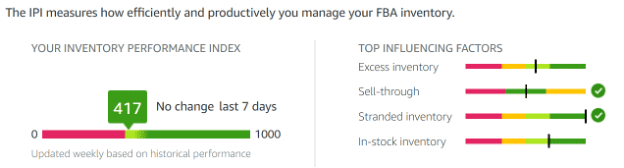
This is the primary metric that Amazon uses to determine how well you control your inventory levels over time.

This directly impacts what Amazon will allow you for FBA capacity limits. Meaning, if your score is low, Amazon may limit the amount of inventory you are allowed to store at FBA warehouses.

This metric is a 12-week rolling average, and it factors in four main components to calculate your score: Excess Inventory %, Stranded Inventory %, Sell-Through Rate, and In-Stock Rate.

Excess Inventory

Amazon considers an item to have excess inventory “if it has over 90 days of supply based on the forecasted demand.”

Excess inventory percentages help sellers plan when to restock or remove inventory from FBA.

This is one of the most critical factors influencing IPI as it measures where a seller’s profitability may take a hit due to storage fees and holding costs for slow-moving FBA inventory.

Stranded Inventory

This component refers to products unavailable for sale due to listing issues.

It occurs when your listing doesn’t meet Amazon guidelines, pending compliance or hazmat issues, or when a listing error prevents the listing from showing as active.

In these instances, your products become stranded and unable to move while incurring FBA storage fees.

Sell-Through Rate

Amazon calculates sell-through as “units shipped over the past 90 days divided by the average number of units on hand in their fulfillment centers during that time period.”

This is a key component to utilize when forecasting how much inventory should be in FBA at all times.

Sell-through will be your guide to a balanced inventory, avoiding stockouts, and preventing excessive fees.

In-Stock Rate

Amazon looks at the percentage of time your products have been in stock during the past 30 days, with additional weight given to items that have sold more units over the past 60 days.

If you maintain a high in-stock rate, it will result in fewer lost sales.

Amazon uses the IPI score to grade how effectively you manage your FBA inventory utilization. (Screenshot from Amazon, April 2025)

How does your IPI score impact your available storage volume?

Amazon dictates your storage capacity limits based on your IPI score and sales performance, so maintaining healthy inventory levels will improve your overall account standing.

Total Capacity Limit

This refers to the amount of inventory you can ship to Amazon’s FBA warehouses and the overall maximum number of units you can store at Amazon’s fulfillment centers at any particular time.

Capacity limits are reviewed and adjusted monthly. Any changes for the next month will be announced on the third Monday.

Accounts active for less than 39 weeks are not subject to these restrictions, as Amazon will use this period to determine how much capacity your FBA business needs as you grow.

It is important to note that this is only true for those accounts on the Professional Seller Plan; those with the Individual Seller Plan are limited to 15 cubic feet per month.

Your total storage usage includes all the units currently stored at Amazon, any units in route, and all shipments, including those that have been prepared but not yet sent to Amazon.

  • Available Inventory: Sellable items stored in fulfillment centers and ready to be shipped to customers.
  • Inbound Units: Inventory shipped but not yet received at an Amazon fulfillment center.
  • Reserved Units: Units tied to pending customer shipments; items in transit between fulfillment centers after initial receipt. Units undergoing review, investigation, or are currently in the receiving process before being made available for sale.
  • Unfulfillable Inventory: Items marked unsellable due to damage, customer returns deemed unsellable, or expired/defective inventory.

What Can Sellers Do To Improve Their IPI score?

You can’t improve what you can’t track, so the first step is always to monitor your inventory metrics.

You can find your IPI and capacity limits by going to the Seller Central top-left menu > Inventory > FBA Inventory. On the next screen, click on Inventory > Inventory Performance.

Your IPI score will be displayed at the top left of the page. Below, you can see a breakdown of the four main elements of IPI.

Your storage capacity will be listed at the bottom of the page, under the small gray box labeled “Capacity Monitor.”

You can view your Inventory Performance Index through this path on Amazon. (Screenshot from Amazon, April 2025)

Improving Your IPI

IPI Score on Amazon. In the bottom middle, you see the Capacity Monitor. (Screenshot from Amazon, April 2025)

Increasing your IPI score on Amazon can take two to 12 weeks, so planning with enough time is essential to success.

If your IPI is below the 400 limit that Amazon requires, you need to start taking aggressive action today.

It is important to highlight that Amazon’s system does not weigh each influencing factor equally when determining your IPI score.

Excess inventory and sell-through rate are the parameters that have the most significant impact on IPI.

In contrast, stranded inventory and restock rates can play a minor role in the overall score.

You will get more traction by prioritizing the first two components rather than spreading your efforts equally across all four elements.

The minimum threshold for a healthy IPI is a score of 400. However, Amazon can increase or decrease the minimum IPI at any time.

For example, during the height of the pandemic, Amazon changed the minimum IPI to 500, but it has been reduced back to 400 since then.

For this reason, we advise our clients to aim for a total IPI of at least 50 points over the current IPI requirement.

Some product mixes make maintaining a high IPI easier than others. For example, suppose you are a small brand with few products that move consistently. In that case, your IPI will generally tend to be higher.

Recommended Actions To Improve IPI

Excess Inventory

Remove slow-moving items; excess inventory is generally one of the top two reasons your IPI score could be low.

Screenshot from Amazon, April 2025

The first step to addressing excess inventory is to pull back inventory you don’t expect to sell.

Focus on SKUs that have gone out of fashion or merchandise experiencing a significant demand drop, like seasonal products.

If you don’t expect to sell a product within three months, you should pull back the inventory to sell on a different channel by creating a removal order.

Run the numbers and consider promotions on low-selling SKUs; sometimes it makes more sense to discount and/or advertise certain products to help them sell faster rather than recalling inventory from Amazon.

While Amazon is great at logistics and moving items through its process, it isn’t great at returning items to sellers. If possible, we want to proactively take action to avoid pulling back inventory and risking damage.

Remember, you may need to create a case with Seller Support to claim reimbursement for damaged or lost units that were part of a removal order.

Optimizing a listing that is not moving can also help increase the sell-through rate.

Evaluate your detail pages and look for opportunities to optimize. Review your reviews and returns and address them in your bullet points, images, and A+ to increase conversions and sell-through rate.

Sell-Through Rate

Prioritize sending fast-moving items to FBA. Amazon looks at this to identify whether the items you’re selling are things customers want to purchase.

The way that we improve the sell-through rate is to send in small shipments of items that will sell out very quickly.

Suppose you’re currently using LTL (Less Than Truckload) or FTL (Full Truckload). In that case, we recommend moving to small parcel shipments during this process to send more frequent shipments without going out of stock for long periods.

As you’re restocking items, you want to prioritize those that will move quickly, sending small quantities of items that will sell out as soon as they arrive or shortly after.

This increases your overall sell-through rate and significantly impacts your overall IPI.

It is vital that, no matter how fast you think a product will move through as you send these products in, you’re testing small batches to make sure that things will sell at the pace you anticipate.

Stranded Inventory

Inventory held in FBA warehouses and unavailable for sale affects your overall IPI.

Fixing stranded inventory can make a slight difference. However, if you need to move your IPI significantly, this component will not make a considerable difference.

It would be best to address stranded inventory weekly or bi-weekly, depending on your general sell-through rate.

In-Stock Rate

This is probably the most frustrating metric of the IPI because Amazon tells you that you can’t restock items because they’re not selling fast enough.

At the same time, it’s trying to encourage you to ensure you stay in stock.

We have found that this metric is given very little weight, and you’re better off focusing on the two key metrics: excess inventory and sell-through rate.

As you work to increase your overall IPI, it is essential to remember that it can take several weeks to improve.

You must give the IPI enough time to move before determining whether your actions are making a difference. It can be tempting to check your IPI often. However, your IPI score is only recalculated once a week.

Suppose you need to raise your IPI quickly or by a significant amount. In that case, you may need to take overly aggressive actions in pruning your inventory and pumping fast-moving items through your account to increase your score to the required amount.

If you have to bid for a capacity increase, you should only do this if you have the data to support being able to sell through that higher quantity of items, so you do not incur extra fees.

Additional Options To Combat Low IPI And Storage Capacity Issues

Some brands we work with have focused on selling their fastest-moving SKUs.

At the same time, they utilize third-party sellers to carry their slower-moving items while they work on increasing their averages.

We have several reliable third-party resellers to whom we can refer our clients if it’s ever an issue.

Suppose you don’t want to utilize third-party sellers. In that case, the alternative is to increase your total number of Merchant Fulfilled offerings.

Remember, Merchant Fulfilled offerings generally don’t compete well against FBA offers, so watch your competition to determine feasibility.

Another step you can take is to allocate your FBA warehouse space to items with the highest margin and smallest dimensional size, as they are highly profitable and sell quickly.

Leaving items with lower profitability or moving slower through Merchant Fulfilled (MF).

Expanding Capacity Limits

Suppose you’re currently experiencing a capacity limit. In that case, Amazon can increase your capacity limit for a specific period of time by submitting a request, subject to Amazon’s approval.

It is important to remember that if the storage limit increase request gets approved, your account is subject to paying a “reservation fee” for each cubic foot of capacity requested, and it will be charged at the end of the specified period.

This fee is subject to a credit depending on your sales achieved during the period (performance credits are earned at $0.15 for every dollar of sales you generate using the additional capacity).

Inventory Stock-Based Fees

As margins are tighter than ever, understanding how Amazon fees are calculated is crucial to profitably planning inventory levels on the marketplace.

When inventory levels are managed effectively, these fees usually make up a very small percentage of the costs to sell on Amazon.

However, when too much or too little inventory is sent, these fees can skyrocket.

Storage Fees

Amazon wants inventory turned in four to six weeks on average.

When sellers send in too much inventory, it can take up valuable space in the FBA warehouse. Amazon first started to combat this with storage fees.

The storage fees [gated link] are made up of the “Base Monthly Storage Fee” and the “Storage Utilization Fee” (formerly known as the Long Term Storage Fee).

Base Monthly Storage Fee

This fee is charged for all inventory at the fulfillment centers. It is calculated by the cubic foot at the ASIN level. The cost of the fee is variable by:

  • Time of Year.
  • Size Tier of the ASIN.
  • Hazmat Status (Dangerous Goods Program).
  • Exempted Status (new sellers, sellers with less than 25 cubic feet of storage, and SKUs in the FBA New Selection program).
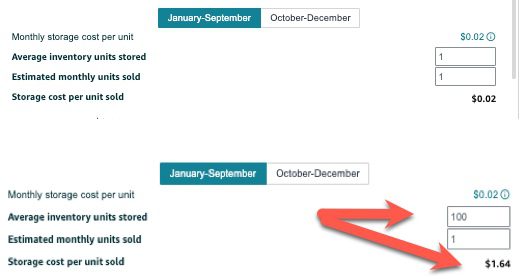
Amazon now shows you the estimated storage fees in their FBA revenue calculator. You can see that the longer you plan to store inventory, the more expensive storage becomes. (Screenshot from Amazon, April 2025)

Storage Utilization Fee

For items that are at the FBA warehouses aged over 30 days, you are charged a storage utilization fee that is calculated by the number of units aged over 30 days by the size of the item in cubic feet, at a fee that is determined by:

  • Size Tier.
  • Storage Utilization Ratio.
  • Hazmat Status (Dangerous Goods Program).
  • Exempted Status (new sellers, sellers with less than 25 cubic feet of storage, and SKUs in the FBA New Selection program).

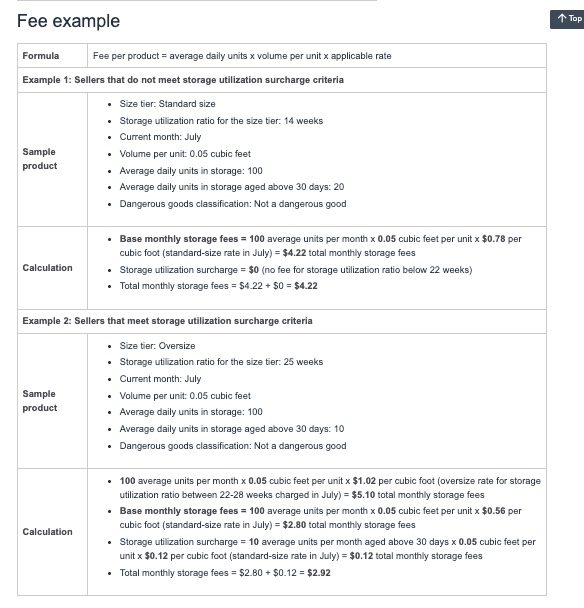
Here is an example of fees provided by Amazon for a total of 100 units on one ASIN:

When inventory is managed to have an average of four to six weeks, the storage fees are usually much less than those of traditional 3PL warehouses.

As Amazon implemented these policies (as well as the IPI/Capacity policies below), sellers started to focus on maintaining as little inventory on Amazon as possible.

This meant that Amazon started to see products out of stock more often. To combat this, Amazon instituted a new fee called the “Low Inventory Level Fee.”

Screenshot from Amazon Seller Central Support, giving an example of storage fees (April 2025).

The longer the inventory is at Amazon, the more you will be charged per cubic foot for excess inventory fees.

Low Inventory Level Fee

The low inventory fee [gated link] is designed to ensure that Amazon has popular products in stock, ready for customers to buy.

These fees are rarely applied as long as inventory levels are managed to that four to six weeks mark. However, you need to understand how they work, especially if you have high-velocity items at Amazon.

If Amazon sees that you have less than 28 days of inventory available based on both your sales velocity over the last 30 and 90 days, they will charge a per-unit fee for each item you sell on Amazon FBA. This fee is assessed on a weekly level.

Fast-moving items can get very expensive. This means it is just as important to have adequate inventory at Amazon as it is to avoid overstocking.

Calculating Inventory Needs

As we work with our clients for inventory restock recommendations, we look at the sell-through rate at the 30- and 90-day sales velocity and cross-reference that with previous year’s sales on Amazon.

We also look for events in previous years, such as stockouts, significant external factors like being featured on TV or having a large influencer, and occasionally external factors like weather temperatures for seasonal items.

Excess inventory should be called back, disposed of, or pushed with ads/promotions to keep inventory levels healthy.

From Amazon’s perspective, it wants to ensure that customers have favorable shopping experiences and quickly get the products they want. This means ensuring that the products most likely to be sold are available.

Amazon looks at how you have managed inventory in the past and whether customers are purchasing your products to determine how much space is allocated to you.

The better Amazon feels you are at managing your space at Amazon’s FBA warehouses, the more storage space you will be allowed.

Monitoring Inventory Matters

To succeed on the platform, you must take an active role in your Amazon inventory management.

In prior years, simply avoiding restocks was enough. However, these new requirements require a greater focus on monitoring your sell-through rate and storage utilization on Amazon.

More Resources:


Featured Image: PeopleImages.com – Yuri A/Shutterstock

New Ecommerce Tools: May 8, 2025

Every week we publish a rundown of new products from companies offering services to ecommerce merchants. This installment includes updates on agentic AI commerce, mobile wallets, B2B transactions, one-click checkout, application hosting, AI-powered promotions, and enterprise-ready fulfillment.

Got an ecommerce product release? Email releases@practicalecommerce.com.

New Tools for Merchants

eBay sellers can apply for a $10,000 grant to grow their business. eBay is giving away $10,000 grants and other perks to 50 active sellers in the U.S. through its annual Up & Running program, now in its sixth year, in partnership with Hello Alice. The 50 winning sellers will receive $10,000 in cash, a $500 stipend to purchase essential technology from eBay Refurbished, and access to eBay education and seller resources to help scale efficiently. Sellers must apply by June 6, and eBay will email winning grant recipients in August.

“Up & Running” from eBay and Hello Alice.

Kibo announces agentic Launchpad to accelerate smarter commerce at scale. Kibo Commerce, a provider of composable selling tools, has announced the launch of Agentic Launchpad. Launchpad is a pre-built integration package connecting Kibo’s Shopper and CSR agents to leading commerce platforms and Kibo’s recently launched Converge Tech Ecosystem partners, including Akeneo and OneRail. According to Kibo, Launchpad delivers real-time product discovery, live inventory insights, conversational checkout, and automated post-purchase care across every touchpoint.

Volt’s one-click PayTo solution available to Shopify customers in Australia. Volt, a global real-time payments platform, has announced its expansion with Shopify to Australia. Shopify merchants can offer Australia-based consumers a one-click checkout experience, powered by Volt’s PayTo, a real-time payment system. Volt’s one-click checkout mimics the traditional card-on-file consumer experience, but utilizes an instant payment scheme. Because shoppers set up a payment agreement with merchants during their first purchase, normally by simply entering their payment ID, future purchases are automatically pre-authorised.

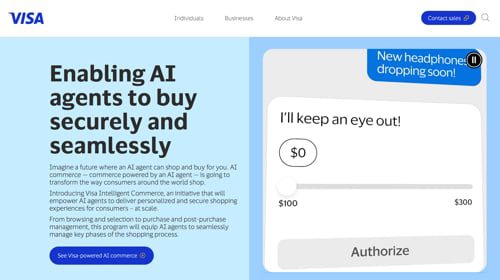
Visa launches Intelligent Commerce platform. Visa has launched Intelligent Commerce, a platform to let artificial intelligence agents purchase products on behalf of users. The system replaces traditional card details with tokenized digital credentials that authorized AI agents can access securely. Users maintain control by setting specific parameters, such as spending limits and merchant categories, while the AI handles the transaction details. The initiative is built on a network of partnerships with leading AI companies.

Web page for Visa Intelligent Commerce

Visa Intelligent Commerce

Reveel and ProShip partner on integrated parcel shipping. Reveel, a shipping intelligence platform, and ProShip, a multi-carrier shipping software provider, have unveiled an integrated parcel shipping service that draws on ProShip’s automation and Reveel’s advanced analytics and order-level cost intelligence capabilities. Reveel connects carrier invoice data with order and SKU info; ProShip centralizes and automates the management of multiple carriers. With ProShip’s automated carrier management and label generation, as well as Reveel’s invoice reconciliation, businesses can allocate and analyze parcel costs with precision, according to the companies.

PayPal debuts contactless mobile wallet. PayPal is expanding in physical stores across Germany this summer. PayPal’s first-ever contactless mobile wallet will launch to PayPal consumers in that country. Consumers will access the contactless feature through the latest version of the PayPal app (iOS and Android). Consumers can select PayPal with a simple tap of their phone at any location that accepts Mastercard contactless payments.

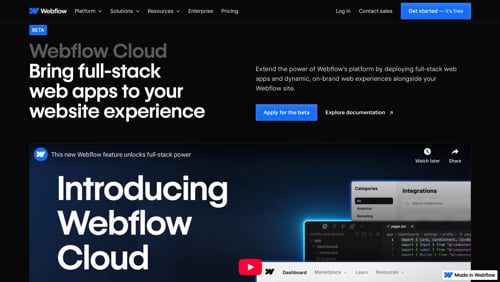
Webflow Cloud launches for full-stack app hosting. Webflow, a platform to build, manage, and optimize websites, has introduced Cloud, allowing teams to host and deploy full-stack web applications natively within Webflow. Businesses can run dynamic apps, backend logic, and integrated web experiences directly alongside their websites without relying on separate hosting. With Webflow Cloud, technical teams can deliver advanced functionality such as headless ecommerce sites, gated content experiences, personalized onboarding workflows, and custom booking systems.

Web page for Webflow Cloud

Webflow Cloud

ShipBob Plus launches for mid-market and enterprise merchants. ShipBob, a global supply chain and fulfillment platform for small and mid-market ecommerce merchants, has launched Plus, an enterprise-ready fulfillment service for fast-growing brands. ShipBob states its Plus offering combines global fulfillment across four key pillars: Supply Chain, Technology, Support, and Access. Per ShipBob, Plus enables high-performing brands to unlock accelerated growth, improve operational resilience, and achieve cost efficiencies through a high-touch, customized fulfillment experience.

Affirm introduced AdaptAI, its AI-powered promotions platform. Affirm, a pay-over-time payment network, has launched AdaptAI, its AI-powered promotions platform, to its merchant partners. AdaptAI enables Affirm to deliver personalized financial benefits (exclusive interest rates, special repayment terms, and immediate cash savings) directly to consumers via the Affirm app and Affirm card. Merchants can deliver these promotions and credit offers, which are optimized specifically for a customer’s shopping preferences, spending habits, and purchase details, at the point of purchase.

Mastercard unveils Agent Pay agentic payments technology. Mastercard has launched its agentic (self-directing) payments program, Mastercard Agent Pay, to enhance generative AI conversations by integrating seamless payments experiences into the tailored recommendations and insights already provided on conversational platforms. The program introduces Mastercard Agentic Tokens, which build upon Mastercard’s tokenization capabilities. Mastercard will work with (i) acquirers and checkout players to enhance tokenization capabilities and (ii) Microsoft to integrate Azure OpenAI Service and Copilot Studio.

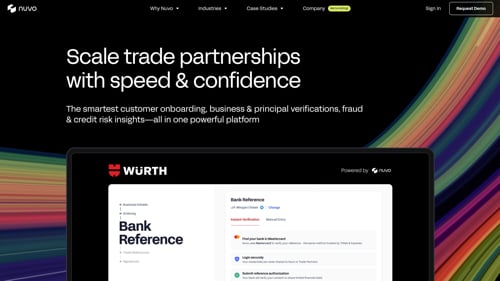
Nuvo raises $45 million to develop B2B trade. Nuvo, a network for B2B global trade, has raised $45 million from Sequoia Capital, Spark Capital, Founders Fund, Index Ventures, Human Capital, Foundation Capital, Susa Ventures, and Pear VC. By enabling companies to exchange verified profiles with potential partners, Nuvo provides instant access to critical trust signals, including verification status, creditworthiness, banking information, and trade history. As its network grows, Nuvo states its payments infrastructure and AI systems will power the intelligent foundations needed to connect and coordinate trade.

Home page of Nuvo

Nuvo

Charts: U.S. Banking Technology Trends

KPMG’s annual U.S. banking technology survey is a “pulse-check of the priorities of leadership across the industry.” For 2025, the accounting and consulting firm queried 200 U.S. banking executives from large and small institutions across various departments to assess their tech expertise, investment plans, and readiness for inevitable change.

The firm then assembled the findings in its “2025 Banking Technology Survey” report issued in April.

Per the KPMG report, U.S. banking executives are adopting generative AI across the entire company, seeing it as essential to their long-term relevance.

Moreover, 42% of respondents believe that by the end of 2025, genAI will handle 21% to 40% of daily tasks, allowing employees to focus more on higher-value work.

Furthermore, most banks are upgrading their payments platforms, reflecting the preferences of today’s consumers.

How Google Protects Searchers From Scams: Updates Announced via @sejournal, @MattGSouthern

Google has announced improvements to its security systems, revealing that AI now plays a crucial role in protecting users from scams.

Additionally, Google has released a report detailing the effectiveness of AI in combating scams in search results.

Google’s AI-Powered Defense Strategy

Google’s report highlights its progress in spotting scams. Its AI systems block hundreds of millions of harmful search results daily.

Google claims it can now catch 20 times more scammy pages before they appear in search results compared to three years ago. This comes from investments in AI systems designed to spot fraud patterns.

Google explains in its report:

“Advancements in AI have bolstered our scam-fighting technologies — enabling us to analyze vast quantities of text on the web, identify coordinated scam campaigns and detect emerging threats — staying one step ahead to keep you safe on Search.”

How Google’s AI Identifies Sophisticated Scams

Google’s systems can now spot networks of fake websites that might look real when viewed alone. This broader view helps catch coordinated scam campaigns that used to slip through the cracks.

Google says its AI is most effective in two areas:

  1. Fake customer service: After spotting a rise in fake airline customer service scams, Google added protections that cut these scams by more than 80% in search results.
  2. Fake official sites: New protections launched in 2024 reduced scams pretending to be government services by over 70%.

Cross-Platform Protection Extends Beyond Search

Google is expanding its scam-fighting to Chrome and Android, too.

Chrome’s Enhanced Protection with Gemini Nano

Chrome’s Enhanced Protection mode now uses Gemini Nano, an AI model that works right on your device. It analyzes websites in real-time to spot dangers.

Jasika Bawa, Group Product Manager for Chrome, says:

“The on-device approach provides instant insight on risky websites and allows us to offer protection, even against scams that haven’t been seen before.”

Android’s Expanded Defenses

For mobile users, Google has added:

  • AI warnings in Chrome for Android that flag suspicious notifications
  • Scam detection in Google Messages and Phone by Google that spots call and text scams

Multilingual Protection Through Language Models

Google is improving its ability to fight scams across languages. Using large language models, Google can find a scam in one language and then protect users searching in other languages.

This matters for international SEO specialists and marketers with global audiences. It shows that Google is getting better at analyzing content in different languages.

What This Means

As Google enhances its ability to detect deceptive content, the standard for quality keeps rising for all websites.

Google now views security as an interconnected system across all its products, rather than as separate features.

Maintaining high transparency, accuracy, and user focus remains the best strategy for long-term search success.

10Web Releases API For Scaled White Label AI Website Building via @sejournal, @martinibuster

10Web has launched an AI Website Builder API that turns text prompts into fully functional WordPress websites hosted on 10Web’s infrastructure, enabling platforms to embed AI website creation into their product workflows. Designed for SaaS tools, resellers, developers, and agencies, the API delivers business-ready sites with ecommerce features, AI-driven customization, and full white-label support to help entrepreneurs launch quickly and at scale.

Developer And Platform Focused API

10Web AI website builder API was designed for developers and platforms who serve entrepreneurs, enabling them to embed website creation into their own tools so that non-technical users (entrepreneurs and small business owners) can launch websites with zero coding or technical knowledge.

10Web describes their product capabilities:

“Text-to-website AI: Generates structure, content, sections, and visuals

Plugin presets: Define default tools per client, project, or vertical

Drag-and-drop editing: Built-in Elementor-based editor for post-generation control

Managed WordPress infrastructure: Hosting, SSL, staging, backups, and DNS

Dashboards & sandbox: Analytics, developer tools, and real-time preview”

Learn more at 10Web:

Integrate the #1 AI Website Builder API into your platform

Featured Image by Shutterstock/Surf Ink

New AI Models Make More Mistakes, Creating Risk for Marketers via @sejournal, @MattGSouthern

The newest AI tools, built to be smarter, make more factual errors than older versions.

As The New York Times highlights, tests show errors as high as 79% in advanced systems from companies like OpenAI.

This can create problems for marketers who rely on these tools for content and customer service.

Rising Error Rates in Advanced AI Systems

Recent tests reveal a trend: newer AI systems are less accurate than their predecessors.

OpenAI’s latest system, o3, got facts wrong 33% of the time when answering questions about people. That’s twice the error rate of their previous system.

Its o4-mini model performed even worse, with a 48% error rate on the same test.

For general questions, the results (PDF link) were:

  • OpenAI’s o3 made mistakes 51% of the time
  • The o4-mini model was wrong 79% of the time

Similar problems appear in systems from Google and DeepSeek.

Amr Awadallah, CEO of Vectara and former Google executive, tells The New York Times:

“Despite our best efforts, they will always hallucinate. That will never go away.”

Real-World Consequences For Businesses

These aren’t just abstract problems. Real businesses are facing backlash when AI gives wrong information.

Last month, Cursor (a tool for programmers) faced angry customers when its AI support bot falsely claimed users couldn’t use the software on multiple computers.

This wasn’t true. The mistake led to canceled accounts and public complaints.

Cursor’s CEO, Michael Truell, had to step in:

“We have no such policy. You’re of course free to use Cursor on multiple machines.”

Why Reliability Is Declining

Why are newer AI systems less accurate? According to a New York Times report, the answer lies in how they’re built.

Companies like OpenAI have used most of the available internet text for training. Now they’re using “reinforcement learning,” which involves teaching AI through trial and error. This approach helps with math and coding, but seems to hurt factual accuracy.

Researcher Laura Perez-Beltrachini explained:

“The way these systems are trained, they will start focusing on one task—and start forgetting about others.”

Another issue is that newer AI models “think” step-by-step before answering. Each step creates another chance for mistakes.

These findings are concerning for marketers using AI for content, customer service, and data analysis.

AI content with factual errors could hurt your search rankings and brand.

Pratik Verma, CEO of Okahu, tells the New York Times:

“You spend a lot of time trying to figure out which responses are factual and which aren’t. Not dealing with these errors properly basically eliminates the value of AI systems.”

Protecting Your Marketing Operations

Here’s how to safeguard your marketing:

  • Have humans review all customer-facing AI content
  • Create fact-checking processes for AI-generated material
  • Use AI for structure and ideas rather than facts
  • Consider AI tools that cite sources (called retrieval-augmented generation)
  • Create clear steps to follow when you spot questionable AI information

The Road Ahead

Researchers are working on these accuracy problems. OpenAI says it’s “actively working to reduce the higher rates of hallucination” in its newer models.

Marketing teams need their own safeguards while still using AI’s benefits. Companies with strong verification processes will better balance AI’s efficiency with the need for accuracy.

Finding this balance between speed and correctness will remain one of digital marketing’s biggest challenges as AI continues to evolve.


Featured Image: The KonG/Shutterstock

Ultimate PPC Campaign Optimization: 6 New Ways To Easily Run Dozens Of PPC Campaigns For Different Sectors via @sejournal, @CallRail

Tip #1. Boost Relevance: Use Industry-Specific Conversion Signals To Customize Google Ads Messaging

Increasing clicks is as easy as increasing how relevant your ads are to your potential customers.

Sounds easy, but when you’re managing different brands, many industries, or multiple brick-and-mortar locations, it can quickly become difficult to understand exactly what each individual person needs.

What’s New That You Should Change & Try

Google Ads Responsive Search Ads and Assets (Structured Snippets) now allow faster VOC-driven testing.

Voice-of-customer (VOC) insights from tools like CallRail reveal what customers actually say before converting.

Now, you can use this real language to supercharge your ad messaging.

Is This Change Worth It?

Yes.

When you align your ad messaging with what your customers actually say, you boost ad relevance, increase clickthrough rates, and lower your cost per lead by matching real search intent.

You’ll see:

  • Higher relevance: This is crucial in paid advertising is critical because it directly impacts three major outcomes: cost, performance, and customer experience.
  • Lower Costs: Ad platforms like Google Ads reward high relevance with better quality scores, which can lower your cost per click (CPC) and help you win better ad placements without paying a premium.
  • Higher Engagement: When your ads match exactly what users are searching for or thinking about, you naturally boost clickthrough rates (CTR) because the ad feels more useful and timely.
  • Better Conversion Rates: Relevant ads lead to more qualified traffic, meaning users are more likely to take action once they land on your site, whether that’s calling, booking, or buying.
  • Improved Brand Trust: Ads that clearly resonate with real customer language and needs feel authentic, which strengthens brand credibility over time.

Which Industries Benefit Most From This PPC Engagement Boosting Technique?

  • Legal Services: Top keywords we’ve identified for you are [free consult] & [local attorney]
  • Home Services: [emergency repair] & [same-day service] are great seed keywords for this industry.
  • Medical/Dental: [accepts insurance] & [licensed doctor] are good starting points for PPC keyword lists.

Your industry not listed? See other industry insights here.

How did we discover those seed keywords?

By analyzing customer responses, transcripts, and chats for true language keywords that your customers are likely typing into search or ChatGPT.

How To Find Your Best PPC Conversion Signals

Effort Manual Method CallRail
Time Required High Low
Accuracy Depends on human analysis Automated and precise
Insights Available CTRs, keyword performance CTRs, keyword-level call tracking, automated trends
Effort Intensive Minimal

Manual Method For Finding PPC Conversion Signals

  • Analyze Campaign Data: Manually review metrics like click-through rates (CTR), conversion rates, and cost per conversion to evaluate performance.
  • Identify High-Performing Keywords: Manually analyze calls to find and optimize keywords driving the best results while excluding irrelevant terms.
  • Track User Behavior: Use tools like Google Analytics to observe user actions, such as pages visited or time on site, before converting.
  • Tie Conversions to Campaign Factors: Manually connect conversion data to specific ads, keywords, or timeframes for insights.
  • Challenges: Time-intensive, prone to human error, and limited in precision without advanced tools.

CallRail Method for Finding PPC Conversion Signals

  • Call Tracking: Easily and quickly track inbound calls back to specific ads, campaigns, or keywords to identify high-performing strategies.
  • Keyword-Level Attribution: Automatically pinpoint which keywords drive calls or form submissions without manual effort.
  • Automated Insights: Leverage AI-generated call transcripts, summaries, and data to detect patterns, trends, and high-performing campaigns effortlessly.
  • Integrations: Connect with platforms like Google Ads or HubSpot to centralize and streamline conversion tracking.
  • Key Benefits: Saves time, eliminates guesswork, provides precise and actionable insights to optimize PPC campaigns effectively.

The Manual Way:

  1. Spend hours manually analyzing call transcripts for high-intent phrases.
  2. Create tightly themed ad groups based on these phrases.
  3. Constantly refine keyword match types to match real search behavior (favor phrase match for accuracy).
  4. Use dynamic keyword insertion carefully to keep VOC language in ads.

Easy Way With CallRail: 

  1. Use CallRail’s free trial to extract VOC insights.
  2. Insert VOC themes into responsive search ad headlines and structured snippets.

Tip #2. Save Time: Automate Campaign Creation With Pre-Built Google Ads Templates & CRM Signals

Launching campaigns faster without sacrificing quality can transform how efficiently your agency operates.

Is This Change Worth It?

Absolutely.

When you automate campaign creation, your team gets more time back to focus on strategy instead of setup.

It means:

  • Faster launches.
  • Fewer errors.
  • Campaigns that are tailored more precisely to your clients’ real needs.

What’s New That You Should Change & Try

Google Ads Customer Match and Microsoft Ads Customer Match now enable direct CRM syncing to personalize campaigns automatically.

You can dynamically create or adjust campaigns based on real customer behavior without manual uploads.

Why Do This

Automating your campaign setup drastically reduces your manual workload, speeds up your time-to-market, and helps your team personalize campaigns at scale across locations or services.

Which Industries Benefit Most From This Time-Saving PPC Technique?

  • Franchise & Multi-Location Retail
  • Home Services (HVAC, plumbing, roofing)
  • B2B SaaS with structured sales pipelines

How To Set Up Automated PPC Campaign Launching

The Manual Way:

  1. Build templated campaign structures with core keywords, ads, and extensions.
  2. Pre-create negative keyword lists to prevent budget waste.
  3. Use shared audiences and budgets across locations.

Easy Way With CallRail:

  1. Connect CallRail and your CRM to automatically trigger ad group or campaign launches.

Tip #3. Maximize ROI: Make Budget Optimization Dynamic With Real-Time Call Quality Feedback

Prioritizing ad spend on only the highest quality leads gives you better results without raising your budget.

Is This Change Worth It?

Definitely.

Budget optimization with real-time PPC feedback ensures that you’re spending on what actually drives value: qualified leads.

It’s one of the fastest ways to improve ROI and prove your worth to your clients.

What’s New That You Should Change & Try

Google Ads Offline Conversion Imports and Enhanced Conversions for Leads now allow you to sync call quality and CRM outcomes directly into Google Ads bidding models.

Why Do This

Prioritizing your budget based on high-quality leads maximizes your ROI, eliminates wasted ad spend, and delivers more valuable outcomes for your business or agency.

Which Industries Benefit Most From This Budget Optimization Technique

  • Healthcare & Dental Clinics
  • Legal & Financial Services
  • Auto Services

How To Optimize Your Budget Based On Real-Time Call Quality

Manual Way:

  • Score calls manually within your CRM for quality.
  • Adjust campaign-level bid adjustments or device-level bidding based on quality trends.
  • Create automated rules to pause poor-performing keywords or boost strong ones.

Easy Way With CallRail:

  1. Use call scoring to automatically sync quality signals.
  2. Set Google Ads offline conversion imports to trigger budget shifts based on call outcomes.

Tip #4: Boost Engagement: Use Enhanced Click-to-Call Campaigns With Visual SERP Signals

Visual and call-first strategies make it easier for customers to connect and convert faster.

Is This Change Worth It?

Yes, especially if your audience is mobile-first.

Adding call-focused enhancements and visuals doesn’t just boost engagement—it shortens the path between search and conversion, making it easier for ready-to-buy users to reach you.

What’s New That You Should Change & Try

Google Ads Call Ads, Image Extensions, and Microsoft Ads Multimedia Ads now create visually compelling, mobile-first experiences optimized for immediate customer action.

Why Do This

Upgrading your ads with richer visuals and call-driven formats helps you drive higher engagement on mobile, improve click-to-call rates, and accelerate customer connections.

Which Industries Benefit Most From This Engagement-Boosting Technique

  • Restaurants & Local Retail
  • Urgent Services (locksmiths, HVAC repair)
  • Senior Services (assisted living, home care)

How To Enhance Your Click-to-Call Campaigns

Manual Way:

  • Add call extensions and image extensions to mobile ads.
  • Schedule call ads during business hours only.
  • Use structured snippets highlighting key services.

Easy Way With CallRail:

  1. Integrate CallRail click-to-call tracking.
  2. Analyze peak call times and optimize ad schedules accordingly.

Tip #5: Smarter Targeting: Layer First-Party Lead Journey Data Into Performance Max Campaigns

Bringing offline lead intelligence into your campaigns boosts targeting precision and conversion rates.

Is This Change Worth It?

Absolutely.

Using your first-party data to influence Performance Max campaigns gives you more control, better targeting, and higher returns, especially in a world where third-party cookies are disappearing.

What’s New That You Should Change & Try

Google Ads Performance Max campaigns now support Customer Value Mode (2024 smart bidding innovation) to better optimize for high-value leads.

Why Do This

Feeding your first-party lead journey data into campaigns improves your targeting precision, nurtures your prospects at the right moment, and increases your conversion rates while lowering acquisition costs.

Which Industries Benefit Most From This Smart Targeting Strategy

  • Real Estate
  • Home Improvement & Contractors
  • Higher Education & Vocational Schools

How To Layer Lead Journey Data Into Your Performance Max Campaigns

Manual Way:

  1. Export CRM lead journey stages manually.
  2. Create custom audience segments inside Google Ads.
  3. Build distinct asset groups based on customer intent (“researching,” “ready to buy”).

Easy Way With CallRail:

  1. Use CallRail to sync call outcomes and CRM data into Google Ads.
  2. Automate audience signal feeding to Performance Max.

Tip #6: Lower CPCs: Run Campaigns By Location With Local Keyword + Phone Call Clustering

Geo-targeted strategies help you win more conversions while keeping your ad costs low.

Is This Change Worth It?

Definitely.

Location-based clustering lets you dominate profitable micro-markets without blowing your budget. It’s one of the smartest ways to lower CPCs and outmaneuver bigger competitors.

What’s New That You Should Change & Try

Google Ads Location Extensions, Dynamic Location Insertion, and Microsoft Ads Location Extensions now provide better local customization tools, enhanced by AI call tracking.

Why Do This

Using hyperlocal targeting based on real-world call and keyword data helps you increase your relevance, lower your CPCs, and dramatically improve your local conversion rates.

Which Industries Benefit Most From This Geo-Targeting Upgrade

  • Multi-Location Healthcare
  • Legal Services in competitive markets
  • Home Services (regional licensing differences)

How To Run Localized Campaigns With Call Clustering

Manual Way:

  1. Segment geo-targeted campaigns by ZIP code.
  2. Analyze location performance reports weekly.
  3. Use ad customizers to insert city/region names dynamically into ad copy.

Easy Way With CallRail:

  1. Leverage CallRail’s AI keyword clustering to identify top-performing regions.
  2. Automatically adjust geographic targeting based on call conversion trends.

Scale Smart, Not Wide

Scaling PPC for your SMB clients across different sectors is no longer about throwing more campaigns against the wall and hoping something sticks. It’s about smarter personalization, automation, and quality-driven optimizations.

Tangible PPC elements like keywords, ad groups, budget rules, and conversion actions remain critical to long-term success, especially when fueled by clean first-party data.

By implementing even 1–2 of these new methods per client vertical, you can reduce your manual work, improve your lead quality, and drive better outcomes for your agency and your clients.

Ready to future-proof your PPC strategy?

Start with data. Start with automation. And start by refining the tangible parts of your campaigns to dominate every sector you serve.